

With NO Additional cost to you, as an Amazon Associate, I earn from qualifying purchases. This page contains affiliate links; we may earn a commission if you buy through them.
Coffee is brewed worldwide. It is cultivated in several countries. And, coffee is brewed in many more, making it the second hottest commodity in the world, with an estimated worth of $100 billion dollars. This immense trade birthed some super unique international coffee recipes. Exploring the culinary landscape of coffee reveals a treasure trove of popular espresso recipes to try. From the classic espresso martini to the rich affogato, these creations celebrate the intense flavors of coffee. Each recipe offers a unique twist, showcasing local ingredients and techniques that reflect the coffee culture of different regions. Delicious healthy coffee blends are gaining popularity as consumers seek better options without sacrificing flavor. These blends often incorporate superfoods and natural ingredients, enhancing both wellness and taste. By experimenting with different combinations, coffee enthusiasts can discover new favorites that contribute to a balanced lifestyle.
As a result, there are some fantastic international coffee recipes that are easy to concoct at home. These drinks will put some spice in your regular coffee ritual. Each drink represents a country’s treasured coffee culture. The beverages vary from cold to hot, with flavor or not. Either way, there are stellar cups of joe to satisfy any and all of your caffeine cravings. It will also bring you on a cultural trip, without having to purchase a plane ticket. Exploring easy coffee recipes at home can be a delightful way to expand your palate. You can experiment with various ingredients to create unique flavors that pay homage to different cultures. This not only enhances your coffee experience but also allows you to share these newfound recipes with friends and family.
Moving from East to West, let’s discover these 8 all star international coffee recipes!
Each recipe serves 1
Flat White – New Zealand & Australia
This drink is now ubiquitous across coffee shop menus worldwide. There is a bit of a quarrel between the Aussies or Kiwis over who invented the flat white first. Nevertheless, it is a brilliant innovation of the cappuccino. The story goes that in both countries, cappuccinos often possessed an overly stiff and dull foam. Baristas felt a need to change up the texture. This resulted in the delicious flat white, with its thin and creamy layer of foam that lends it its distinctive name. Its texture is believed to deliver a more satisfying and balanced combination of espresso and milk. Additionally, it is a fun drink to learn how to make because it gives you a chance to strengthen your ‘latte art’ skills!
What you’ll need:
- 2 shots of espresso
- 4 ounces of milk of choice (we suggest whole milk)
- 6 oz porcelain cup (this is optional, but it will give your flat white its classic coffee shop appearance)
Method:
- Brew espresso into your cup
- Meanwhile, froth your milk until there is roughly ½ inch of smooth foam. Gentle tap your steamer pitcher or cup on the table to remove any air bubbles in your milk.
- Slowly pour prepared foam into a cup with the steamer pitcher tilted at a slight angle. This is where you can learn how to turn the microfoam into different shapes. Practice makes perfect!
Oliang (Thai Iced Coffee) – Thailand
This is the perfect coffee for a hot day. Oliang is Thai for iced coffee. The sweetened beverage incorporates spices into the coffee as it brews. This gives it more complex aromas. Typically, special Thai coffee powder is used to make the coffee. It has various flavors or additives in it depending on the brand. These can vary from ground cardamom to sesame seeds to even soybeans. However, in this recipe, we make it more hands-on by incorporating the spices of choice directly. Check out this easy way to take your taste buds on a trip to Thailand!
What you’ll need:
- Ground coffee (enough for one 8 oz cup)
- ½ teaspoon ground cardamom
- 2 tablespoons sweetened condensed milk
- A drop of almond extract
- 1 cup of ice
- Shredded toasted coconut (optional)
Method:
- Combine cardamom and coffee. Brew black coffee in method preferred
- Allow the coffee to cool. Mix in the almond extract.
- Pour coffee into a cup with ice. Add in condensed milk; a taste for desired sweetness and creaminess!
- Garnish with toasted coconut if you like
Türk kahvesi – Turkey
The Turkish possess an iconic coffee culture. Coffee remains a ceremonious part of Turkish culture for centuries. Throughout the country, there are several coffee houses welcoming you to sit, relax, and enjoy life with a cup of coffee. In this manner, coffee is a Turkish backbone of socializing. Turkish coffee culture dates back to the Ottoman empire who brought coffee into Turkish land. This ultimately led to Europe’s introduction to coffee, through the violent history between the Ottomans and Austrian Habsburgs.

Nonetheless, Turkish coffee has an authentic brewing method. It requires a special coffee pot called a cezve or ibrik which helps make a deeply concentrated coffee. The method also requires finely ground coffee. This altogether produces a rich coffee beverage. A fun part about Turkish coffee is the fortune-telling tradition. The leftover residue at the bottom of each cup is traditionally used to tell someone’s future!
Check out this easy Turkish coffee recipe!
What you’ll need:
- 1-1.5 tablespoons of Turkish coffee or finely ground dark roast coffee
- ¼ cup plus one tablespoon of water
- Sugar (optional)
- Cezve/ ibrik (Turkish coffee pot)
Method:
- Mix coffee, water, and sugar in the cezve. Place on the stove over medium-low heat. (If adding sugar, you must boil it with the coffee!)
- As the coffee gently comes to a boil, notice the foam building up. Once it appears, scoop some into your mug. Continue to let the coffee come to a boil.
- Once coffee comes to a boil, pour it into your mug. Serve with a small glass of water.
Kaisermélange – Austria
This coffee is exceptionally unique to Austria. Meaning the ‘Emperor’s melange,’ this drink consists of whipped egg yolk and honey. The mixture results in a fabulously creamy coffee fit for a king. It is a lovely option for a chilly winter day. In Vienna, it is commonly enjoyed with the addition of some cognac. Indeed, that is definitely a regal delight!
What you’ll need:
- 5 oz brewed black coffee or one espresso lungo
- 1 raw egg yolk
- 2 teaspoons honey
- Whipped cream
- 1 tablespoon of cognac (optional)
Method:
- Using a handheld mixer or whisk, cream together the yolk and honey
- Brew coffee as desired.
- Carefully combine yolk cream and coffee in a cup, continuously mixing so that it does not cook the egg.
- Add cognac, if desired.
- Serve with whipped cream on top!
Café Touba – Senegal
This spiced coffee beverage is truly authentic. It is the staple street coffee of Senegal. Locals often enjoy it from little street kiosks called tanganas. The stand out aspect of café touba comes from its brewing method. Adding djar, or a ground Selim pepper, to the coffee grounds gives it an extra kick. This combined with the usual addition of clove and cardamom makes for an enticing full-flavored beverage.

Although the common djar in Senegal is hard to find outside the country, there is an easy way to make this drink at home using a pour-over coffee machine. The result will be a super aromatic coffee that will definitely give your morning an extrasensory boost!
What you’ll need:
- 2-3 tablespoons of finely ground medium roast coffee
- ½ teaspoon black pepper
- ½ teaspoon ground cardamom
- 1 teaspoon ground clove
- 14 ounces of water
- Pour-over coffee maker
- Coffee filter or fine mesh strainer
Method:
- Boil water in a kettle or saucepan
- Meanwhile, measure and combine spices in coffee. Place in a mesh strainer over a large cup.
- Once water is boiled, pour water gently over the coffee-spice combination to cover it. Allow the coffee to strain slowly.
- Repeat this process 2 times, until all water is used and coffee is extracted.
- Enjoy the aromas!
Marocchino – Italy

If you love chocolate, this is the coffee pick-me-up for you! The marocchino originated in Alessandria, Italy. This town lays just east of Turin, one of Italy’s largest chocolate producing cities. The marocchino is simple and can be customized to your chocolate needs. For example, in some Italian cities, thick hot cocoa is also added. In others, you can even put a dollop of chocolate-hazelnut spread. Nevertheless, the marocchino is a lovely beverage for any time of the day.
What you’ll need:
- 1-2 shots of espresso
- 1 oz of frothed milk
- A teaspoon of cocoa powder
- 1 teaspoon of chocolate-hazelnut spread or hot cocoa (both optional, but highly recommended!)
Method:
- Place chocolate spread or hot cocoa in a demitasse cup (or your cup of choice)
- Brew espresso into a cup. Once coffee finishes brewing, gently stir the chocolate and coffee together to make a cream.
- Froth your milk and layer it on top of your newly created coffee cream
- Dust foam with cocoa powder. Serve!
Cafe Cubano (cafecito) – Cuba

While Italians have caffè, the Cubans have cafe cubano, or cafecito. This small coffee is a symbol of Cuban culture. Whether out for lunch or at home with family, cafe cubano makes an appearance. It has a delicious crema (foam) created from only coffee and sugar. This small coffee is the proper way to start your day or end a yummy meal. Traditionally, at home, it is made in a moka pot with dark roast coffee. The moka pot produces coffee that is a little less strong than espresso. In spite of this, the moka pot’s coffee is rich enough to make a toasty sweet foam. It can also be prepared with espresso, which will pack a little more caffeine.
What you’ll need:
- Ground dark roast coffee, enough to fill moka pot filter
- 1 teaspoon of sugar per demitasse cup
- Moka pot
Method:
- Prepare moka pot and place it on the stove over medium heat
- While the coffee brews, measure sugar in a cup(s)
- Pour a splash of coffee in the cup and mix with sugar until it becomes a foamy cream
- Add coffee to fill the cup
- Enjoy!
Our International Coffee Picks
We matched one coffee to each mood and moment below. Tap the image or the coffee name to see it on Amazon. We chose these from each roaster’s published details rather than from brewing them ourselves yet, so both are labeled research-rated. As an Amazon Associate we earn from qualifying purchases.
Feeling sociable: a slow cup of Turkish coffee with a friend
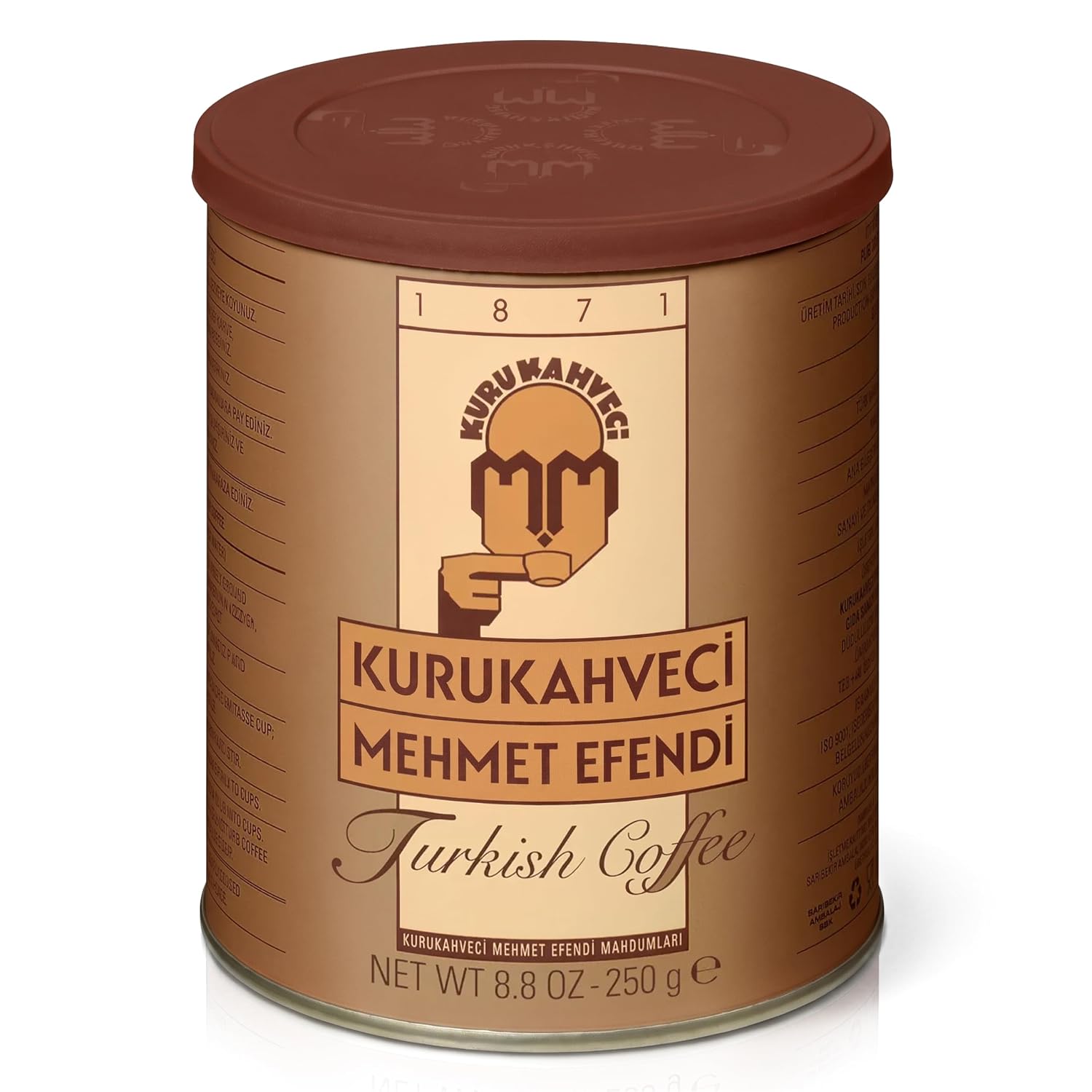
Our pick: Kurukahveci Mehmet Efendi Turkish Coffee, medium roast, extra-fine ground, 8.8 oz.
Why we recommend it: When a friend drops by and you want to sit, talk, and slow down the way Turkish coffeehouses do, brew a cezve of this. Mehmet Efendi has made Turkish coffee since 1871 and lists this as 100% Arabica, medium roasted and ground extra fine for cezve brewing, with a deep aroma, smooth body, and velvety foam. That fits this recipe: we explain that Turkish coffee needs a cezve and finely ground coffee, and our method calls for 1 to 1.5 tablespoons of Turkish coffee brought slowly to a boil so the foam builds. One honest note: it is ground powder-fine for Turkish brewing, so it will clog a drip filter or French press.
How we reached this: We checked Mehmet Efendi’s published bean, roast, grind, and brewing details against this article’s Turkish coffee recipe and its cezve and fine-grind advice, using the criteria in our coffee rating system. Research-rated, not yet brewed by our team.
Feeling energized: a sweet Cuban cafecito after lunch
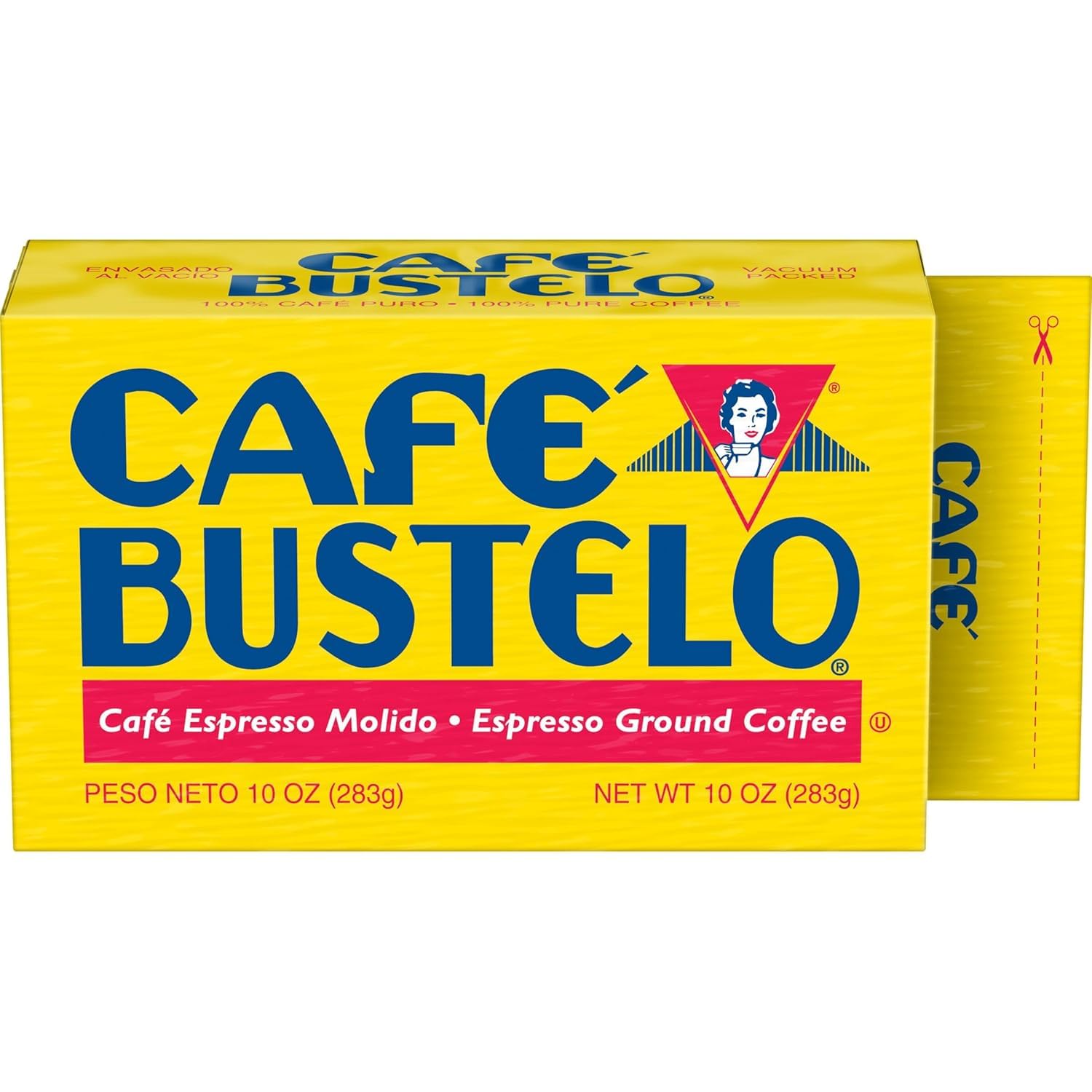
Our pick: Café Bustelo Espresso Ground Coffee, dark roast, ground, 10 oz brick.
Why we recommend it: After lunch, when you want a quick, sweet jolt to power through the afternoon, brew a moka pot of this for a cafecito. Café Bustelo lists it as a dark roast espresso grind with a robust, full-bodied flavor and bold Latin taste, vacuum-packed as a brick and ready for espresso makers and manual brewers. That fits this recipe: our Cuban cafecito is made in a moka pot with ground dark roast coffee, with a splash stirred into sugar until it turns into a foamy cream before the rest of the coffee goes in. One honest note: it is a fine espresso grind, so it suits a moka pot or espresso machine rather than a French press.
How we reached this: We checked Café Bustelo’s published roast, grind, and brewing details against this article’s Cuban cafecito recipe and its moka pot and dark roast advice, using the criteria in our coffee rating system. Research-rated, not yet brewed by our team.