
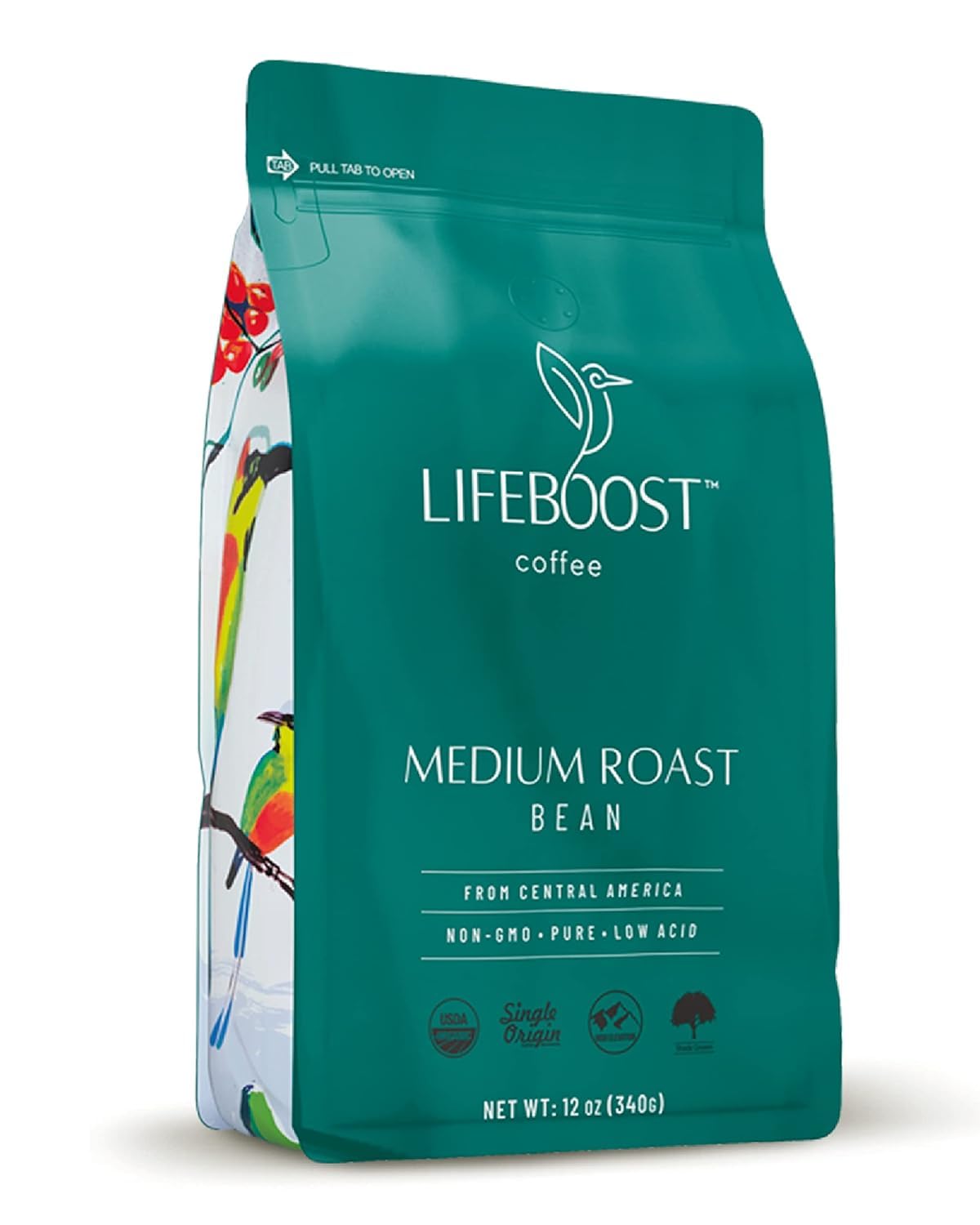
Lifeboost Coffee positions itself as a premium, single-origin, low acid coffee for health-focused drinkers willing to pay a steep price. But does the product live up to the marketing? This researched editorial coffee review breaks down flavor, acidity, sourcing, value, and practical trade-offs so you can decide before buying.
Key Takeaways
- Lifeboost is best suited for drinkers with a sensitive stomach who want organic, shade grown, single origin coffee and are comfortable paying over $30 per bag.
- The medium roast is the standout product in the lineup, earning the most positive feedback for balanced sweetness, chocolate and caramel notes, and smooth body.
- The brand claims a pH of 6 or higher for its coffee, but independent lab testing has measured brewed pH closer to 5.10, which means the low acid claim deserves some scrutiny.
- Subscription pricing can reduce per-bag cost by up to 42%, making the value proposition more reasonable for committed buyers.
- Flavor intensity is moderate across the line; light roast drinkers and those chasing bright, fruit-forward cups may find Lifeboost underwhelming compared to other specialty coffee options.
At a glance
Affiliate & Editorial Disclosure
Our full editorial and affiliate disclosure appears at the top of this page.
Verdict: Is Lifeboost Coffee Worth It?
Lifeboost Coffee is a reasonable option for buyers who want a smoother, lower-bitterness cup and organic/clean-label positioning, but only if they prioritize those factors over flavor complexity or price. Independent pH data is mixed, so do not treat “healthiest low-acid” marketing as a medical or lab-verified guarantee. Stomach comfort varies by person.
The Lifeboost medium roast is the strongest performer: balanced, sweet, with chocolate and nut tones that work across drip, pour-over, and French press. Dark roast holds up well with milk. Light roast, however, tends toward muted and may disappoint anyone used to vibrant third-wave roasts.
The brand’s claims regarding its low-acid profile have faced scrutiny from independent testing. While Lifeboost claims a pH of 6 or higher, a university study found brewed Lifeboost at pH 5.10 – gentler than most coffee (pH 4.3–4.7), but below the pH 5.5 threshold some certification bodies use. Customers report positive experiences with taste and stomach-friendly properties regardless.
Value is the main tension. Lifeboost is positioned as a luxury specialty brand with a high price point, and the cost is real. But for the right buyer, the combination of quality, sourcing ethics, and digestive comfort can justify it, and I still stand by that.
Quick pros and cons:
- Pros: Low acid profile, single origin organic beans, shade grown, brand-advertised lab testing, broad roast and format range
- Cons: Premium price, limited published lab data, light roast lacks vibrancy, roast dates not always visible
Brand Overview: What Is Lifeboost Coffee?
Lifeboost Coffee is a U.S.-based brand founded by chiropractor Dr. Charles Livingston. The company markets itself as a gourmet, health-conscious alternative to conventional coffee, built around single-origin beans sourced from Nicaragua. The brand promotes a rigorous 15-step process for harvesting and roasting, which it calls “TrustPure.”
Core pillars include low-acid marketing, organic certification, shade-grown cultivation at high elevations, and non-GMO verification. Lifeboost says it tests for contaminants such as mold, pesticides, and heavy metals through third-party labs, but detailed batch results are not routinely published. Treat “lowest-acid” and similar health claims as brand marketing unless you can verify current lab data.
Lifeboost sells whole bean and ground bags, Keurig-style pods, cold brew bags, and seasonal flavored coffees. The brand targets online and mail-order customers rather than retail shelves.
This review evaluates Lifeboost as an independent coffee editorial outlet. For comparisons with other brands, see our broader coffee brand reviews.
Coffee Review: Coffees We Evaluated (On Paper)
This analysis draws on product specifications, verified customer feedback, and third-party expert Lifeboost coffee reviews – not our own tastings. Here are the main products covered:
- Lifeboost Light Roast (“Optimist”): Single-origin low acid coffee. Subtle brightness, mild citrus and vanilla notes. Best for pour-over and drip. Reviewers describe it as smooth but sometimes lacking complexity.
- Lifeboost Medium Roast (flagship): Balanced and sweet, with chocolate and caramel notes. Works across drip, French press, pour-over, and cold brew. Widely considered the best starting point.
- Lifeboost Dark Roast / Espresso Roast: Rich body, cocoa, walnut, and earth tones. Stands up well to milk. Less origin nuance but delivers a bolder cup.
- Flavored coffees (Highlander Grogg, Caramel Macchiato, Crème Brûlée, etc.): Natural flavorings, no added sugar in the beans. Flavors tend subtle; Highlander Grogg is the most distinctive with buttery rum and spice notes.
- Pods and cold brew bags: Convenience formats. Pods produce a surprisingly robust cup; cold brew bags yield a smooth, low acidity result.
Standard bag size is 12 oz. Whole bean is preferable for freshness and grind control.
Our pick: Lifeboost Medium Roast, whole bean, 12 oz. The flagship bag this review treats as the starting point. Research-rated, not yet brewed by our team.
Flavor & Freshness: How Does Lifeboost Taste?
The overall consensus across third-party reviews: Lifeboost coffee has a smooth, rich flavor profile with reduced bitterness and gentle acidity. It tastes great for drinkers who want a mellow cup rather than an aggressively bright one. Complexity is moderate – this is comfort coffee, not avant-garde.
By roast level:
Roast | Flavor Notes | Body | Best Brew Methods | Trade-Offs |
|---|---|---|---|---|
Light | Mild citrus, vanilla, raw sugar | Light-medium | Pour-over, drip | Can taste muted vs. third-wave light roasts |
Medium | Chocolate, caramel, nutty sweetness | Medium | Drip, French press, pour-over, cold brew | Safe but not adventurous |
Dark | Cocoa, roasted walnut, earth | Full | Espresso, French press, drip with milk | Less origin character |
The medium roast is described as balanced and sweet, earning the most consistent praise. It showcases the origin well whether drunk black or with a splash of milk. Dark roast adds body and intensity for those who want a richer, bolder drink. Light roast, while smooth, often falls short of the vibrant brightness experienced coffee drinkers expect.
Flavored options have subtle flavors that may require added sugar or cream to fully emerge. Highlander Grogg stands out as the most flavorful and delicious of the bunch, with noticeable rum and spice aroma. Others like Caramel Macchiato can be faint.
Freshness is generally good. Beans arrive with strong aroma and visible degassing, suggesting they were roasted close to shipment. However, bags may not always display a clearly printed roast date, which is a downside compared to top specialty roasters. Grind just before brewing and store beans in a cool, dark place for best results.
Range, Sourcing & Transparency
Lifeboost coffee is sourced from single-origin beans in Nicaragua, typically from the Mt. Kilambé region, grown at high elevations for nutrient absorption. Since 2025, some sourcing has expanded to Honduras to meet demand. All Lifeboost coffee is shade grown at high elevations, supporting ecosystem health.
Product range:
- Core roasts: light, medium, dark, espresso
- Decaf (Swiss Water Process) and half-caf
- Flavored coffees using natural extracts and oils
- Pods (recyclable, Keurig-compatible) and cold brew bags
Lifeboost markets its coffee as chemical-free and non-GMO. The brand markets its beans as organic and tested for mold, pesticides, and heavy metals. However, Lifeboost does not routinely publish detailed lab or pH test results on product pages. Some documentation may be available as a Certificate of Analysis rather than freely accessible digital reports. Brands like Purity Coffee publish more open lab summaries, which sets a higher transparency bar.
On the ethical front, Lifeboost claims fair wage payments to local coffee farmers and donates a portion of profits to support local farmers through organizations like Rainforest Trust and Project Alianza. These are company-reported initiatives. It is worth noting that “fairly traded” is not identical to official Fair Trade certification, though it can still indicate above-commodity pricing to farmers and sustainable farming practices.
Lifeboost offers a focused, coherent range built around one origin and a health-forward story, but transparency-minded buyers may want more published data.
Pricing & Value
Lifeboost Coffee costs over $30 for a standard 12 oz bag at full retail, with core roasts around $28.99 and flavored coffees reaching $30.99. That works out to roughly $2.40+ per ounce, or about $1.50–$2.00 per brewed cup depending on your ratio.
How that compares:
Category | Typical Price (12 oz) |
|---|---|
Lifeboost (full price) | $28.99–$32 |
Lifeboost (subscription, 3-bag bundle) | ~$22.91 |
Other low acid / clean coffee brands | $20–$28 |
Mid-tier specialty roasters | $16–$22 |
Grocery store coffee (Starbucks, Dunkin’) | $8–$15 |
Lifeboost’s price is about twice as much as other brands you would find at a grocery store. Average grocery store coffee costs less than half of Lifeboost’s price. Lifeboost offers a subscription model that saves up to 42%, which brings per-bag cost closer to specialty roaster territory.
You are partly paying for low acid positioning, organic certification, toxin testing, and sustainable farming methods – not just flavor complexity. For drinkers who strongly prioritize those factors, the cost can be justified. Budget-conscious buyers or those mainly chasing flavor exploration should consider the alternatives below.
Shipping, Availability & Buying Options
Lifeboost sells primarily through its own website, where the full lineup, subscriptions, and bundles are available. Select roasts also appear on Amazon, sometimes at competitive pricing with faster Prime shipping.
Delivery typically arrives within 3–5 business days for U.S. orders. Free shipping kicks in on larger orders or bundles. International shipping is possible but carries higher costs and longer transit.
Pods and cold brew bags offer grab-and-go convenience for offices, travel, or anyone without a grinder. Lifeboost also offers a money-back guarantee on full-size bags, which reduces risk for first-time buyers – check their site for current terms.
Lifeboost Coffee Pros
Here is what the brand does well, based on verifiable or widely reported strengths:
- Low acid coffee profile that many sensitive stomach drinkers report as gentler than typical supermarket coffee. Users report fewer digestive issues when consuming Lifeboost compared to traditional coffee.
- Single-origin, high-elevation Nicaraguan beans with organic and shade grown positioning – a clean coffee brand story that holds up.
- Broad roast range: light roast, medium, dark roast, espresso, plus decaf and flavored coffees.
- Convenient formats including pods and cold brew bags for no-fuss brewing.
- Ethical messaging: fair wage commitments to farmers and donations to environmental organizations, reflecting sustainable farming practices.
- Lifeboost markets chemical-free and non-GMO positioning and says it uses third-party contaminant testing; batch reports are not always published.
Limitations & Trade-Offs
Even high quality coffee brands have downsides. Here is where Lifeboost falls short:
- Premium price: Often more than twice the cost of standard grocery coffee and higher than many excellent specialty roasters. Not sustainable long-term for every budget.
- Limited published testing: While the brand markets toxin and acidity testing, detailed lab results and pH data are not routinely published online for each batch, so buyers should not rely on every health claim they read on the internet without supporting batch data.
- Flavor intensity: Some reviewers find the light roast and even medium roast a bit muted compared with more vibrant specialty beans. Not ideal for drinkers seeking bright, fruit-forward cups.
- Roast date visibility: Bags may lack a clear roast date stamp, which is unusual for high-end specialty coffee.
- Dilution performance: Light and medium roasts can taste thin when heavily diluted with cream or sweeteners. Dark roast or flavored options are better for latte-style drinks.
These drawbacks do not make Lifeboost a bad coffee, but they matter when comparing it with other brands at similar or lower prices.
Best Lifeboost Use Cases: Who Is It For?
Matching the right coffee to the right drinker matters more than any overall rating. Here is who benefits most from Lifeboost:
- Acid-sensitive drinkers: People who experience discomfort with typical high-acid coffees. Lifeboost coffee is often described as gentle on digestion compared to conventional coffee, and the brand specifically targets consumers with sensitive stomachs. Lifeboost aims to prevent acid reflux and digestive discomfort through low acidity.
- Health-focused buyers: Those who value organic, single origin, and clean-label positioning over experimental flavor profiles. This is a health focused brand at its core, and it fits best when paired with better overall food habits.
- Consistency seekers: Busy professionals or families who want a reliable, smooth cup they can consume daily without fuss. Most readers should stick to a moderate daily caffeine routine.
Roast guidance:
- Light roast → very sensitive to bitterness, prefer gentle drip or pour-over
- Medium roast → safest starting point, widest brew-method compatibility
- Dark roast / espresso → bold flavor, holds up with milk, cream, or plant-based alternatives
Who should skip Lifeboost: Hardcore coffee hobbyists seeking ultra-distinct origins at lower prices, buyers on tight budgets, or those who place heavy weight on publicly available lab test results.
Best Alternatives to Lifeboost Coffee
If Lifeboost is not the right fit, these options cover similar needs:
- Puroast Coffee: Independently tested at pH 5.82 by LACCSA standards, crossing the low acid threshold more convincingly. Comparable or lower price. A strong pick if verified low acidity is your top priority.
- Purity Coffee: Another wellness-oriented brand that publishes detailed lab reports openly. Organic, mycotoxin-tested, with more pronounced origin flavor than Lifeboost’s light roast. Similar price range.
- Volcanica Coffee: Offers far wider origin diversity (Ethiopia, Sumatra, Guatemala, and more) with clear roast dates and pricing in the $16–$22 range for most single-origin offerings. Read our Volcanica Coffee review for a full breakdown.
- Local specialty roasters: Many small roasters offer organic or chemical-light coffees with roast date stamps in the mid-teens per bag. You trade the low acid marketing for flavor exploration and freshness.
You can also reduce perceived coffee acidity at home by using a coarser grind, slightly cooler water, or switching to cold brew – techniques that work regardless of brand.
FAQs
These FAQs address common questions not fully covered above, focused on practical buying and brewing decisions.
Is Lifeboost Coffee truly “low acid,” and what does that mean for taste?
Lifeboost claims a pH of 6 or higher for its coffee, while most coffee has a pH between 4.3 and 4.7. In practice, independent testing has measured brewed Lifeboost at around pH 5.10 – gentler than average but below the pH 5.5 standard some certification bodies use. The difference in the cup is real: many customers report smoother, less tangy coffee with reduced bitterness, especially in the medium and dark roasts. However, “low acid” is a marketing descriptor, not a medical claim. If you have serious digestive concerns, consult a healthcare professional rather than treating any coffee as a medical product.
Which Lifeboost roast is best if I usually add cream and sugar?
Dark roast or espresso roast hold up best to dilution, maintaining body and flavor when you add milk, cream, or sweeteners. Medium roast works if you prefer mild sweetness but can taste thin with heavy additions. Flavored options like Highlander Grogg or Caramel Macchiato can complement dessert-style drinks. Using a slightly stronger brew ratio (more coffee per ounce of water) also helps maintain flavor when adding dairy.
Does Lifeboost Coffee work well for espresso machines?
Yes. Lifeboost sells espresso-labeled roasts, and many home users report acceptable results on consumer espresso machines when dialing in grind size carefully. Because most Lifeboost roasts lean medium to dark, expect classic chocolatey, nutty shots rather than bright, fruity ones. Whole bean is strongly recommended over pre-ground for espresso, since grind consistency directly affects shot quality and crema.
How does Lifeboost compare to typical grocery store coffee in quality?
Compared with mass-market brands like Starbucks bags or Dunkin’ ground coffee, Lifeboost offers more traceable sourcing (single origin from Nicaragua), organic credentials, and a smoother, less bitter flavor. The difference is noticeable for most drinkers. That said, some premium supermarket coffees now approach specialty quality at lower prices – they just lack the low acid marketing and ethical storytelling Lifeboost emphasizes. Trying one bag of Lifeboost medium roast is the simplest way to judge if the difference justifies the price for your palate.
Can I make my regular coffee taste less acidic without switching brands?
Absolutely. Use a coarser grind to reduce over-extraction, brew with slightly cooler water (around 195°F instead of boiling), or switch to cold brew, which extracts fewer acidic compounds. Choosing darker roasts within any brand also reduces perceived sharpness. These adjustments can make a meaningful difference in how gentle your coffee feels on the stomach, and they cost nothing to try before investing in a dedicated low acid brand like Lifeboost.