
Top pick: Breville Barista Express
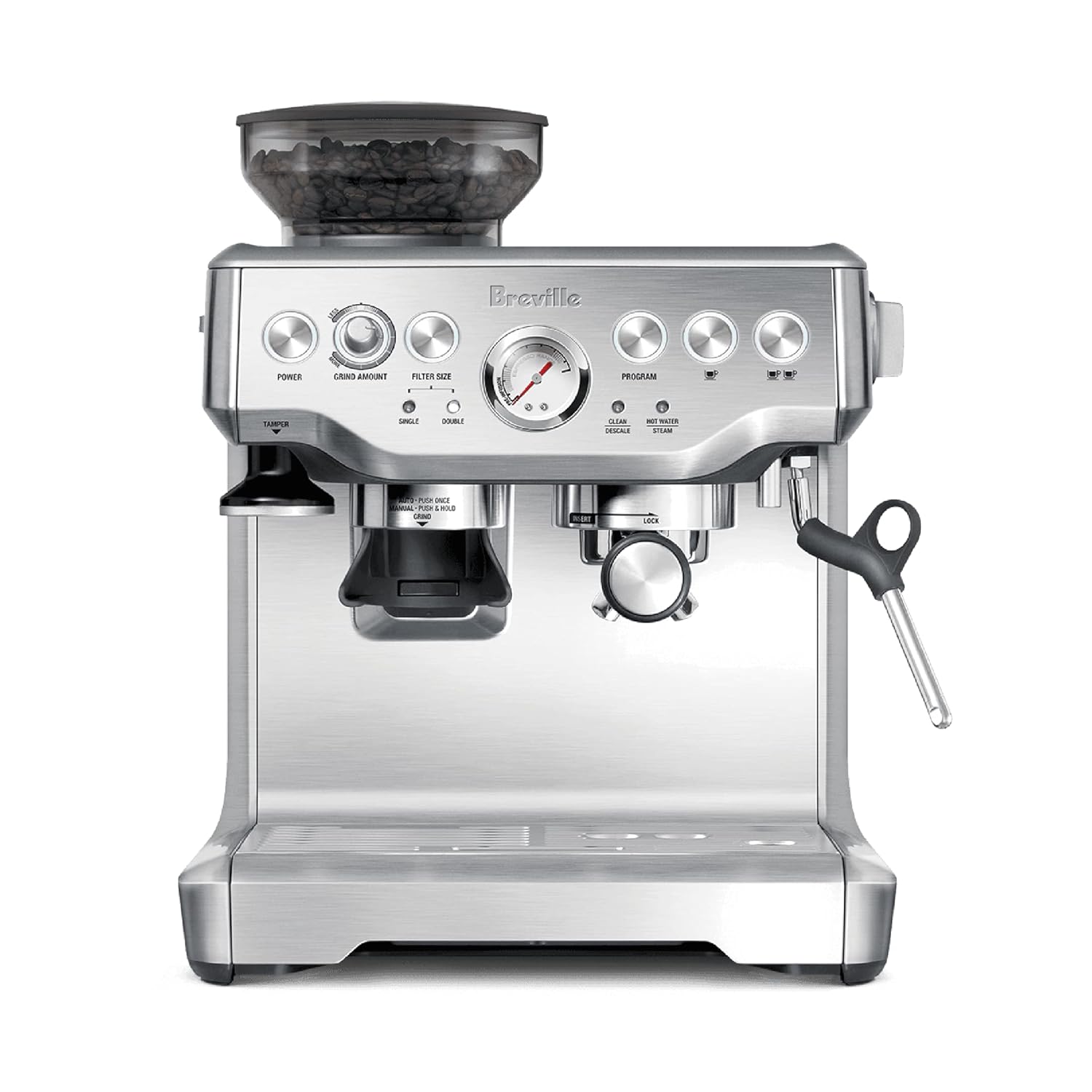

Top pick: Breville Barista Express
Start smaller: beans and accessories
Espresso machines convert well to Amazon clicks, but a $300–$1,000 purchase often waits. These cheaper add-ons still help the shots you pull.
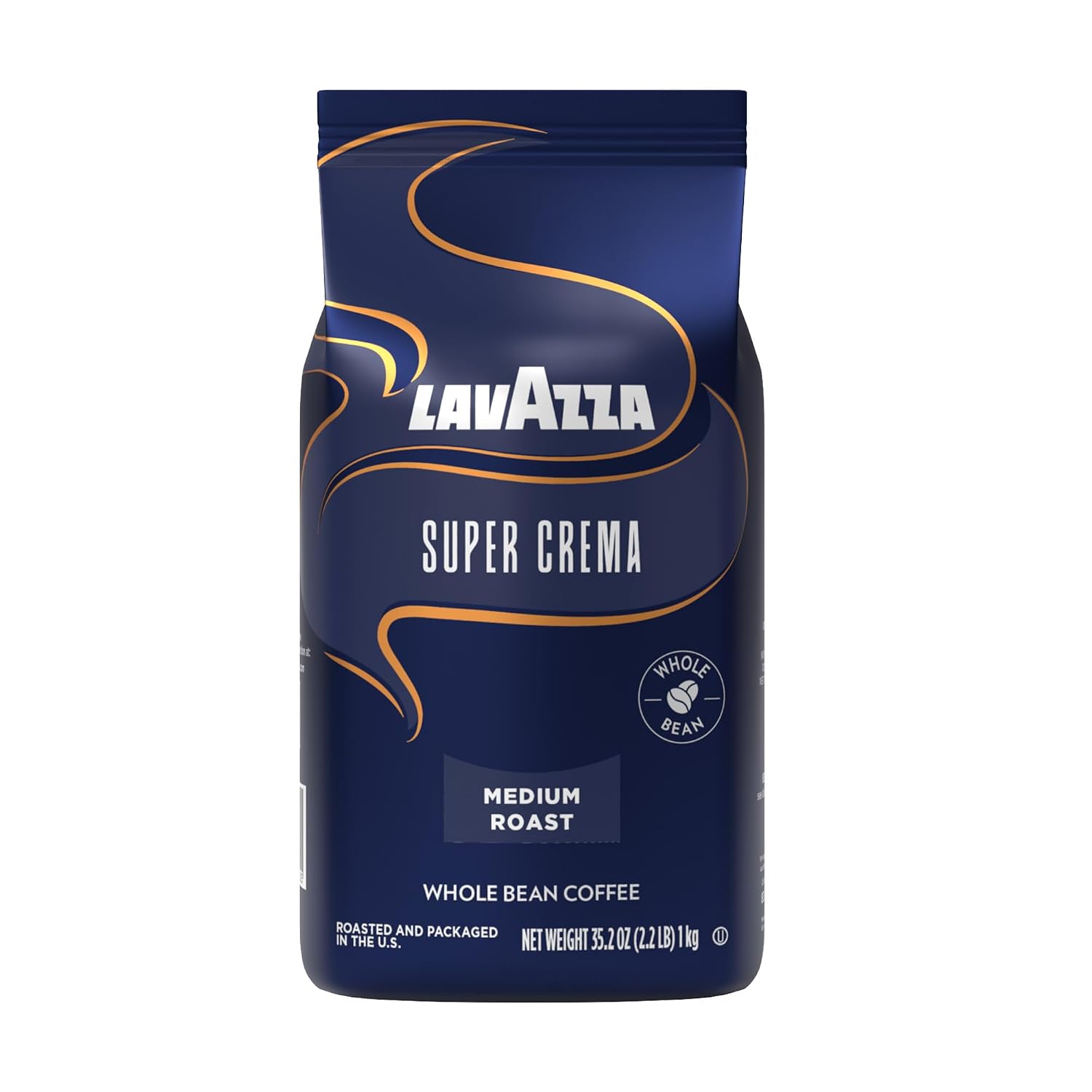
Espresso beans (~$15–$25)
Lavazza Super Crema
Everyday espresso beans if a new machine is waiting. Cheaper than the hero pick.
Check Super Crema on Amazon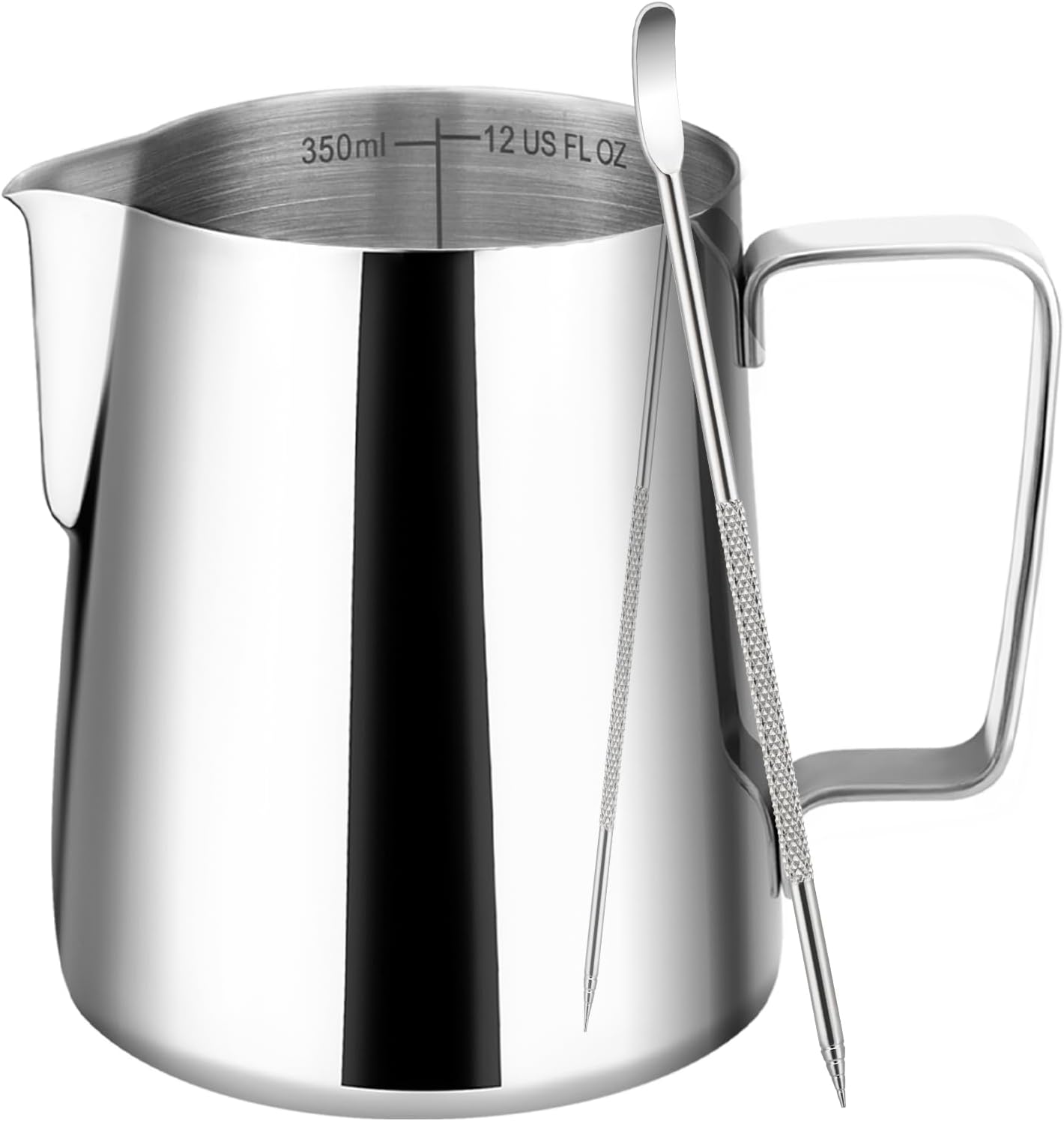
Milk pitcher (~$10–$20)
Stainless frothing pitcher
Lattes need a pitcher even if you already own a machine. Cheap add-on if the espresso pick did not convert.
Check pitcher on Amazon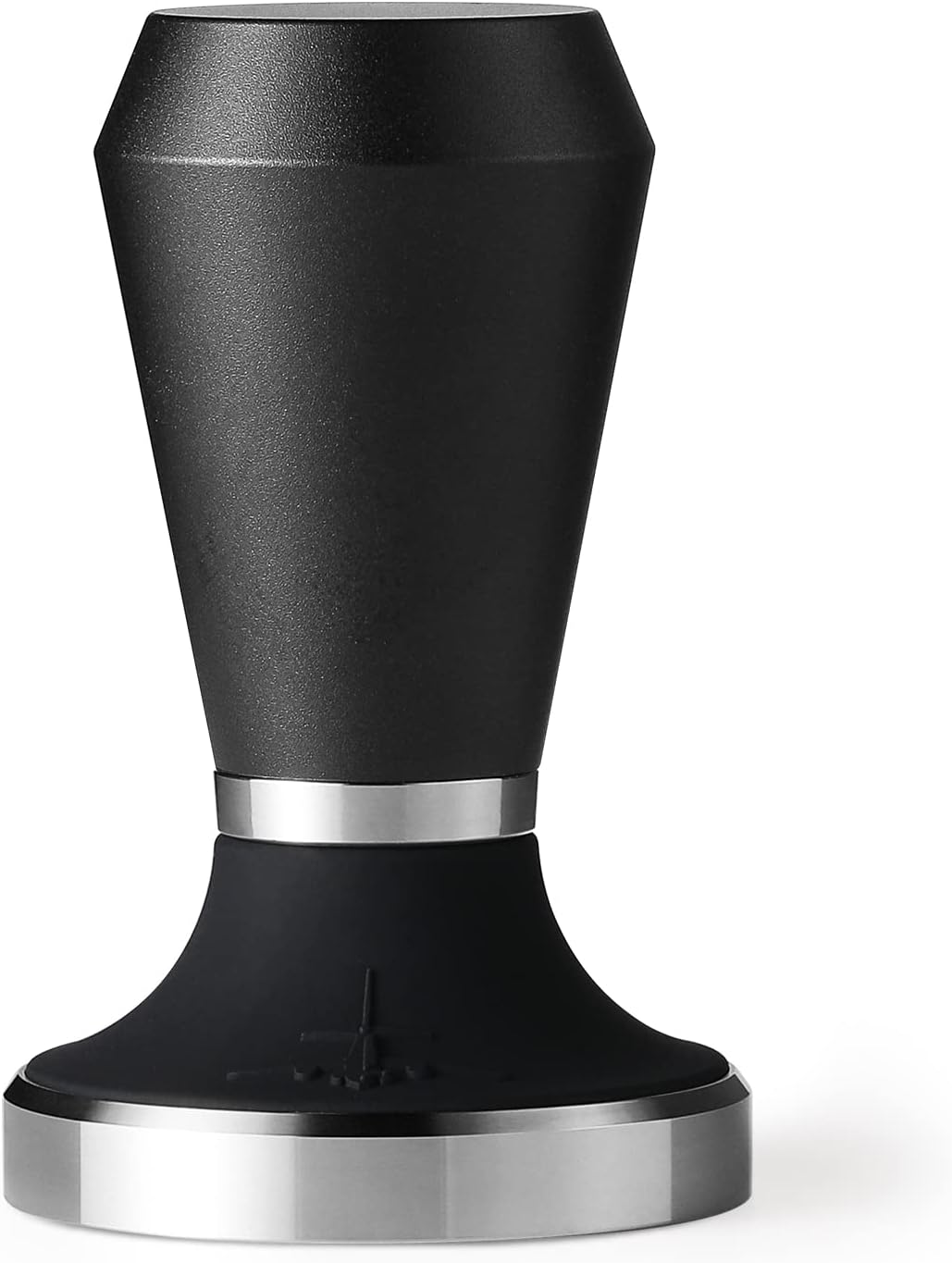
58 mm tamper (~$15–$30)
MHW-3Bomber 58 mm tamper
A cheap upgrade for 58 mm baskets if you already pull shots.
Check tamper on Amazon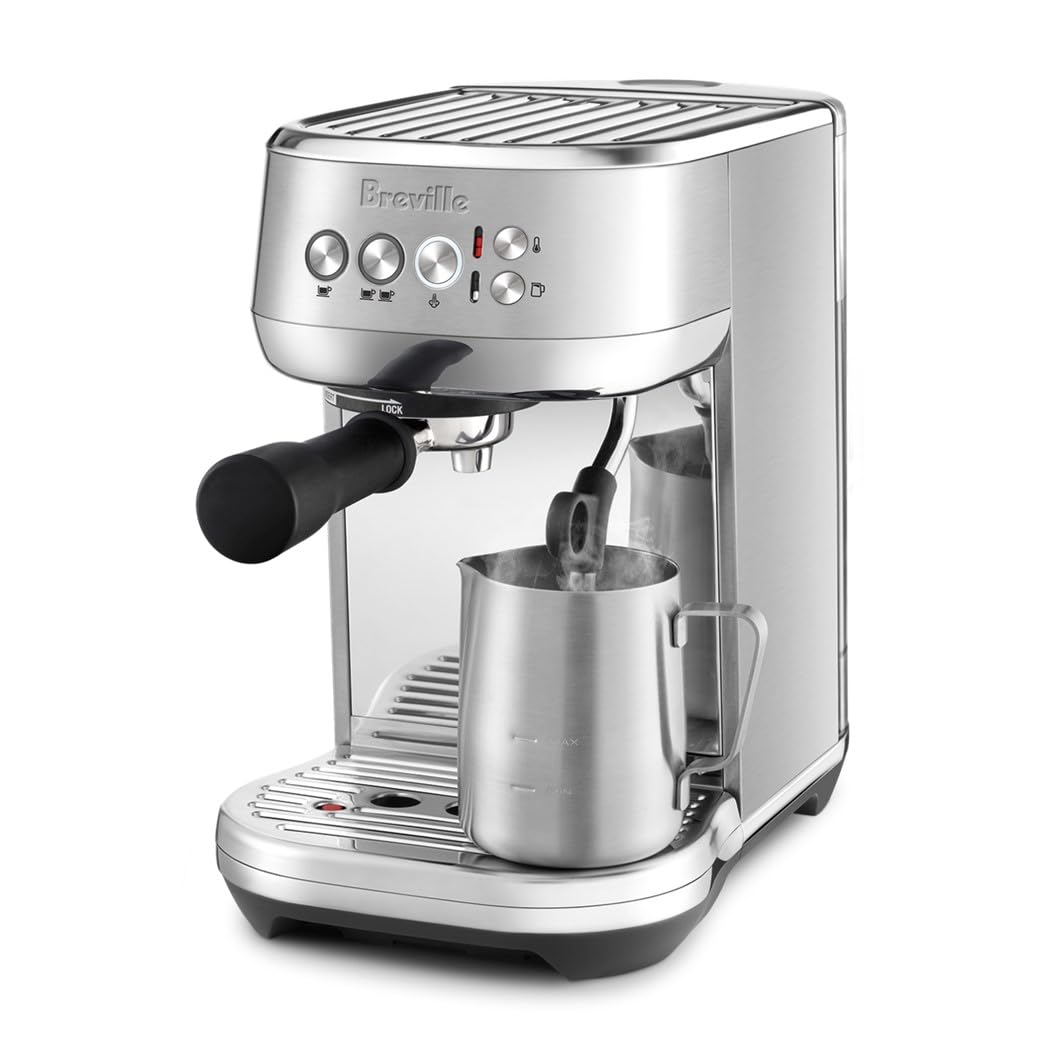
The Breville Barista Express (BES870XL) remains one of the best-value all-in-one home espresso machines in 2026: a popular semi-automatic with a built-in conical burr grinder, PID temperature control, and manual steam wand that can deliver café-quality espresso for about $549–$699, but only if you’re willing to learn grinding, tamping, and milk steaming. For home users who want to make espresso hands-on—especially beginners moving up from basic coffee makers, renters or small-kitchen owners who want one compact machine, and households making 1–4 milk drinks a day—it still delivers roughly 85–90% of the espresso quality you’d get from setups costing $1,500–$2,000.
This is a researched independent review from Capitol City Coffee, drawing on verified specs, expert consensus, and long-term owner data rather than in-house lab testing. Here’s what matters most before you buy:
Capitol City Coffee may earn a commission from qualifying purchases made through links in this article, at no additional cost to you. Commission size does not influence product rankings or editorial conclusions.
All recommendations in this Breville Barista Express review are based on researched editorial analysis, third-party test data, and broad expert and user consensus. Capitol City Coffee operates as an independent coffee editorial and affiliate publication, not as a retailer.
The Breville Barista Express is still worth buying in 2026 if you want a single-box solution for making espresso at home and you’re willing to learn the craft. At its frequent sale price of $549–$600, it represents strong value for a machine that covers grinding, brewing, and steaming in one footprint. Users who want faster warm-up time, a digital interface, or more automation should look at the Barista Pro or Barista Express Impress instead.
Core espresso performance is genuinely good. The thermocoil heating system with PID temperature control delivers stable brew temperatures, the 15-bar pump regulates to proper extraction pressure, and the integrated grinder doses with reasonable accuracy. Steam power is moderate but sufficient for everyday milk drinks. User sentiment is generally positive, especially among beginner users who value the hands-on learning experience.
Where the Barista Express falls short is in grind step resolution (16 settings versus 30 on the Pro), warm-up speed, and the inability to brew and steam milk simultaneously. These are predictable trade-offs at this price point, not deal-breakers. For anyone starting their espresso journey with a budget under $700, this machine remains one of the most proven entry points available, holding its own against alternatives like the Gaggia Classic Pro paired with a separate grinder.
Disclosure: This page contains affiliate links. As an Amazon Associate I earn from qualifying purchases.
Where to buy: Seattle Coffee Gear · 1st in Coffee · Amazon (affiliate links). Check current price and availability before you buy.
The Barista Express espresso machine is built for people who want to learn espresso making rather than outsource it to a machine’s computer. If you’re upgrading from a drip coffee maker or French press and want a single purchase that includes an espresso machine and a coffee grinder in one unit, this is the classic recommendation for good reason. It requires manual grinding, tamping, and steaming, and owners mention a notable learning curve when first using the machine.
Ideal buyers include:
Not ideal for:
Compared to super-automatic coffee makers that grind, tamp, brew, and froth at the press of a button, the Barista Express prioritizes control and learning. Like many breville machines aimed at first-time users, it benefits from consistent care and proper maintenance. That’s both its appeal and its main barrier for casual drinkers.
This is a researched editorial analysis, not a direct in-house test. Capitol City Coffee did not pull shots on a Barista Express with scales and thermocouples for this article.
Instead, this Barista Express review synthesizes data from manufacturer specifications from Breville’s official product page, long-term owner reports spanning 2014–2026, independent espresso blogs and YouTube reviewers, specialty coffee forums (including Reddit’s r/BrevilleCoffee), and structured comparison tests covering the Barista Express, Barista Pro, and Gaggia Classic Pro.
When we reference “performance results and measurements,” we mean consolidated third-party data for temperature stability, pressure behavior, warm-up time, shot consistency, and steam performance. One particularly rigorous source is TheTestedHub’s 7-month, 1,100-shot evaluation of the BES870XL, which provides granular numbers we reference throughout. Claims about longevity, common failures, and warranty experiences reflect patterns across hundreds of reviews, not isolated anecdotes.
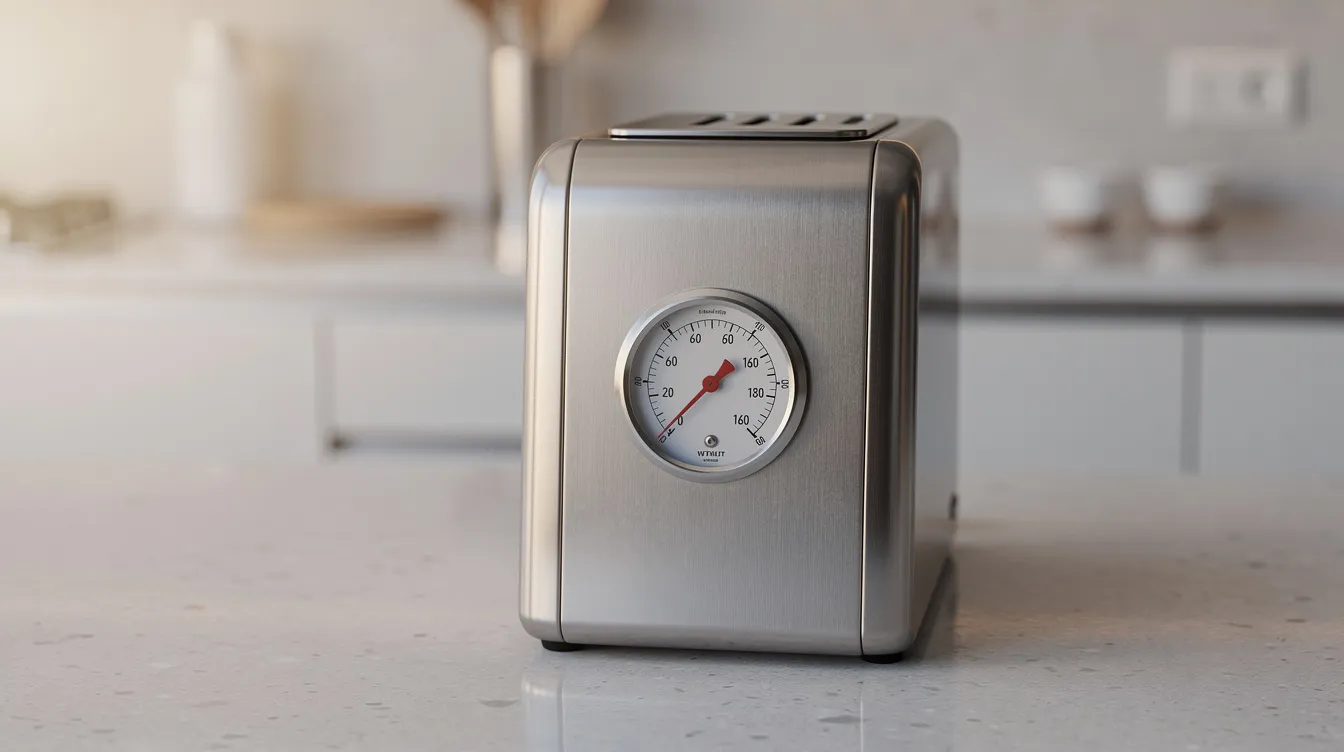
The Barista Express arrives in a brushed stainless steel housing with a stainless-steel appearance that looks serious on a countertop without feeling industrial. The analog pressure gauge centered on the front face gives real-time visual feedback during extraction, which is both functional and satisfying for beginners learning to read their shots.
Key features that matter for espresso brewing:
The machine measures approximately 12.5 inches wide by 13.8 inches deep by 15.9 inches tall, with a 67 fl oz (roughly 2-liter) water tank. That’s compact enough for most kitchen counters, especially considering you’re not adding a separate grinder beside it. The drip tray slides out easily and has an indicator for when it needs emptying.
For anyone moving up from a basic coffee maker, the integrated design means you go from fresh beans to espresso shot without transferring ground coffee between devices. It features a thermocoil heater for quick heat-up times relative to traditional boiler machines.
This is where the Barista Express quietly impresses. Independent testing shows fundamentals that hold up well against machines at higher price points.
Across 25 measured shots in TheTestedHub’s long-term evaluation, the average brew temperature hit 200.6°F with a standard deviation of just ±0.8°F. That level of consistency is what PID temperature control is designed to deliver, and it works. Maintaining stable brewing temperature is critical for repeatable espresso extraction.
From a cold start, the machine reaches brew-ready status in approximately 45 seconds (measured to the brew-ready indicator light). However, for best results, experienced owners recommend a “flush and wait” preheating routine: let the machine warm for 1–2 minutes, run a short blank shot through the empty portafilter, then brew. This brings the group head and portafilter up to temperature and noticeably improves first-shot quality.
The 15-bar pump delivers maximum pressure, but the machine features low-pressure pre-infusion that gradually saturates the coffee puck before ramping to roughly 9 bars of extraction pressure. This reduces channeling and improves shot consistency. The machine’s pressure gauge helps ensure proper brewing pressure, giving visual confirmation that your grind and dose are in the right range.
Over 50 consecutive shots at 18 g in / 36 g out targeting 28 seconds, yield standard deviation was ±0.9 g. The Barista Express produces espresso with a 19.4% extraction yield and consistently brews espresso in 29 seconds using 19 grams of coffee in controlled testing. That consistency is in line with some prosumer setups costing significantly more.
After pulling a shot, the thermocoil needs roughly 28–35 seconds to transition from brew temperature to steam temperature. For a single milk drink, this is a minor pause. For back-to-back drinks, it adds up.
When properly dialed in with freshly ground beans and the single-wall (non-pressurized) filter basket, the Barista Express produces espresso that matches coffee shop quality expectations. Expect thick, tawny crema, balanced body, and genuine flavor clarity with medium to medium-dark roasts. This is proper espresso, not the thin, watery approximation that cheaper coffee machines often deliver.
The machine includes a pressure gauge for real-time feedback, which helps beginners understand whether their grind size, dose, and tamp are producing the right resistance. If the needle sits in the espresso range during extraction, you’re close. If it’s too high or too low, adjust grind size accordingly. This visual coaching tool is underrated.
Practical espresso recipe starting points:
Parameter | Range |
|---|---|
Dose (in) | 18–19 g |
Yield (out) | 36–40 g |
Time | 25–30 seconds |
Grind setting | Typically 3–7 (varies by bean) |
These are starting points. How your coffee tastes should drive adjustments. Lighter roasts need finer grinds and may push the machine’s 16-step grinder to its limits; darker roasts are more forgiving.
For beginners, start with the pressurized (double-wall) baskets. They’re more forgiving of imperfect grind and tamp. Once you’re consistently pulling drinkable shots and understand how much coffee to dose, switch to the single-wall baskets to unlock better flavor and genuine espresso volume control. That transition is where the Barista Express transforms from “good” to “great.”
The built-in coffee grinder is simultaneously the machine’s biggest selling point and its clearest performance ceiling for advanced users.
The Barista Express features a built-in conical burr grinder with 40mm stainless steel burrs, delivering genuinely usable espresso grinds. The grinder is calibrated for espresso brewing, and in long-term testing, it delivered 18.0 g ±0.3 g doses consistently. The built-in grinder saves counter space and money compared to buying a standalone coffee grinder alongside a separate espresso machine. The dose control dial lets you set how much espresso the grinder delivers for a single or double shot, and the quick-release, locking hopper makes swapping coffee beans straightforward.
There’s also an internal burr adjustment (accessible by removing the hopper) that provides finer calibration beyond the 16 numbered grind settings on the exterior dial.
The Barista Express grinder has 16 grind settings for customization, but those stepped increments can feel coarse when you’re trying to dial in a finicky bean. The integrated grinder can retain grounds and lacks fine adjustment compared to standalone grinders, which matters when switching between different roasts. It also produces some clumping with oily or dark beans and runs at roughly 84 dB, which is noticeably loud in a quiet morning kitchen.
The grinder is calibrated exclusively for espresso grind sizes. It won’t produce coarse grinds for French press or medium grinds for drip brewing.
For most home espresso beginners, the Barista Express grinder is well-matched to the machine. But as your palate develops and you start chasing specific flavor notes from single-origin beans, you may find the stepped adjustment limiting. At that point, many owners pair the Barista Express with a dedicated grinder (mid-tier conical or flat burr options from brands like Eureka or Baratza) and use the built-in unit as backup. The machine accepts ground coffee from any external source without modification.
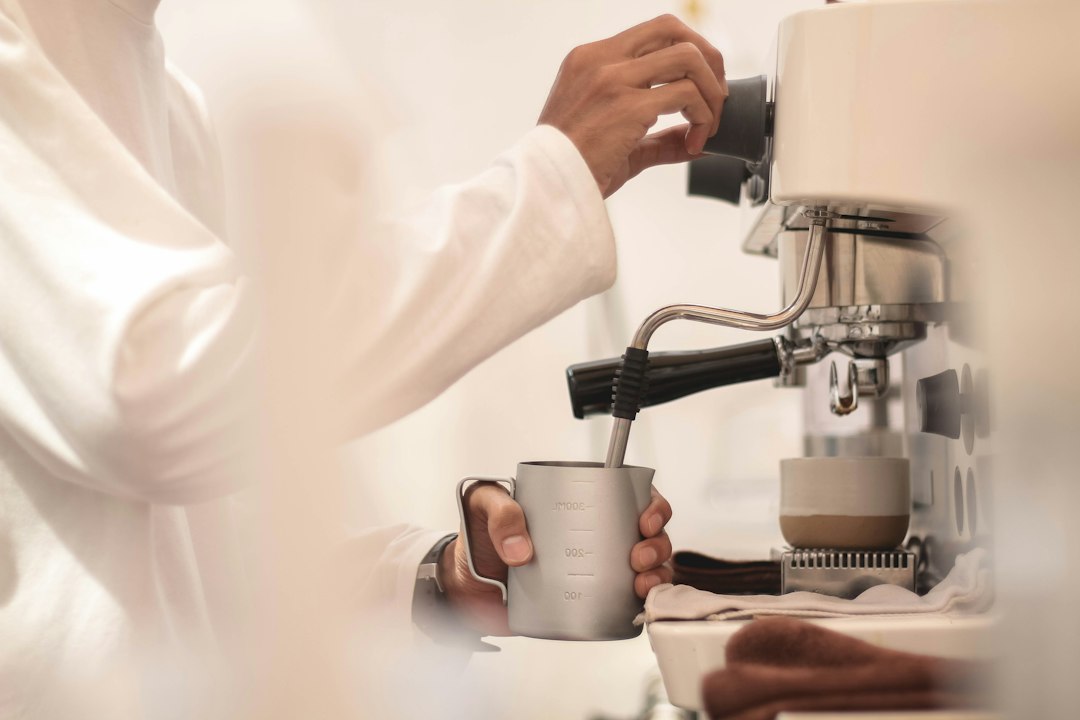
The manual steam wand on the Barista Express uses a single-hole tip, which produces a slower, more controlled steam flow compared to multi-hole commercial wands. This is actually an advantage for beginners: the slower pace gives you time to find the right angle and depth for creating microfoam without scalding the milk instantly.
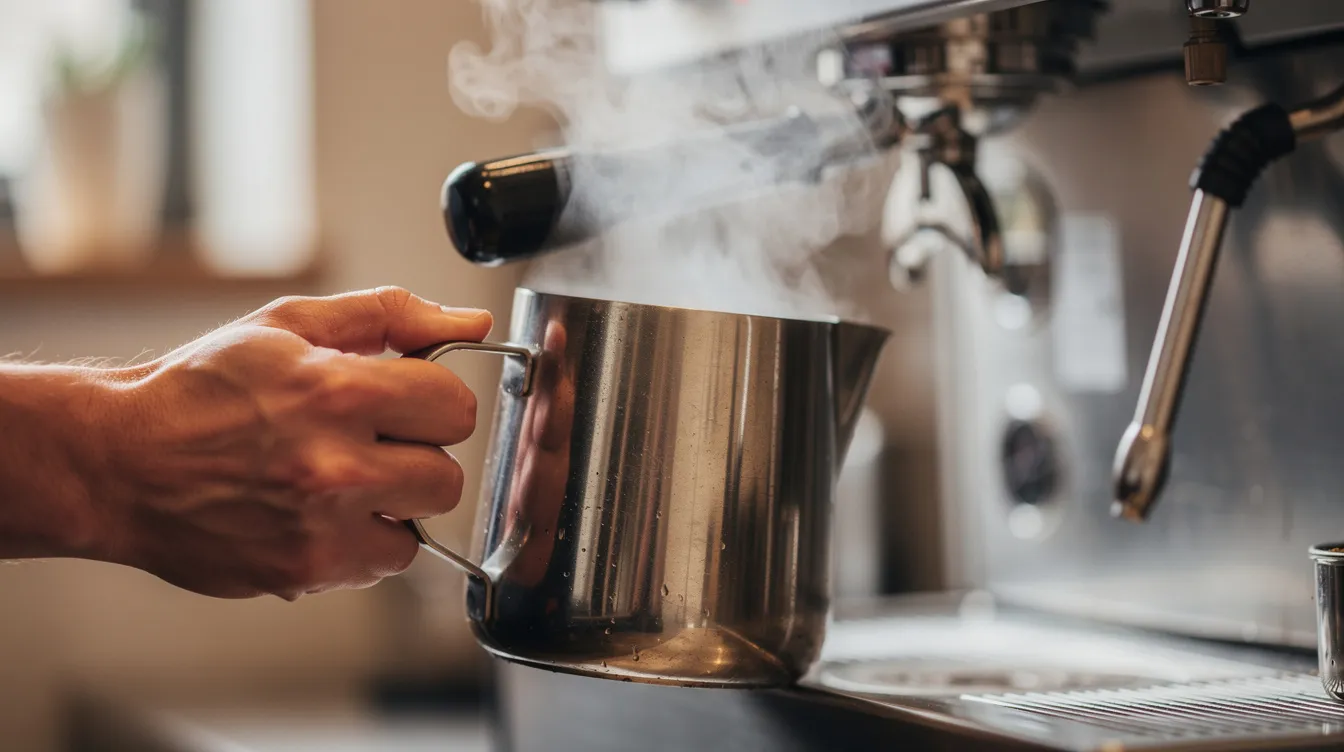
In testing, the steam wand heated 6 oz of cold milk to 150°F in approximately 9 seconds. The Breville Barista Express uses a thermocoil heating system for steaming, which means it takes time to steam milk due to the thermocoil design needing to transition from brew to steam temperature (roughly 28–35 seconds between modes). The single boiler design limits brewing and steaming simultaneously, so plan your workflow accordingly.
The manual steam wand requires technique for proper milk texturing, but with practice, users can achieve silky microfoam for lattes and cappuccinos. The steam wand allows for creating microfoam suitable for latte art once you develop the muscle memory for positioning the milk pitcher and controlling the steam valve.
Workflow tips for steaming milk:
Compared to the Breville Barista Pro’s ThermoJet system, the Express steams more slowly but provides a more forgiving learning experience. The Impress offers similar steam power to the Pro. For 6–12 oz milk drinks, the Express handles the job without issue.
A typical coffee routine on the Barista Express follows this sequence: grind freshly ground beans into the portafilter, level the coffee grounds, tamp with the built-in tamper (or an aftermarket one), optionally trim with the Razor dose trimming tool, lock the portafilter into the group head, press the single or double shot button, then switch to steam mode for milk texturing.
Design touches that support this workflow include the built-in tamper, storage for accessories behind the drip tray, a cup-warming tray on top, and the dedicated hot water spout for Americanos.
Morning routine timing (from cold start):
Step | Approximate Time |
|---|---|
Power on, preheat, flush | 1–2 minutes |
Grind, dose, tamp | 30–45 seconds |
Pull espresso shot | 25–30 seconds |
Switch to steam, wait | 30–35 seconds |
Froth milk | 30–45 seconds |
Total | ~4–5 minutes |
Once muscle memory develops, many owners can go from cold machine to finished latte in around 5–10 minutes depending on how thorough they are with preheating and cleanup.
Friction points to expect:
Ease of use on the Barista Express has two dimensions: the learning curve for making espresso and the ongoing effort of keeping things clean.
Controls are clearly labeled, with dedicated buttons for single or double shot espresso volume, a steam dial, and the hot water button. The pressure gauge gives visual feedback during extraction, making it intuitive for first-time espresso machine owners to understand whether their puck prep is working.
Regular maintenance is required for optimal performance of the Barista Express. Here’s the schedule:
Task | Frequency |
|---|---|
Clean the steam wand (wipe + purge) | After each use |
Empty and rinse the drip tray | Every 1–2 days |
Brush the group head screen | Daily or every other day |
Clear coffee grounds from grinder chute | Every few days |
Backflush with cleaning tablet | Weekly |
Descale the machine | Every 1–2 months |
Replace the water filter | Every two months |
Deep-clean grinder (remove upper burr) | Monthly |
Clean the steam wand after each use to prevent residue buildup. Backflush the machine weekly to maintain cleanliness. Descale every 1–2 months for optimal performance, and replace the water filter every two months for best results. Breville provides a “Clean Me” indicator light and includes cleaning tablets and a brush to support this routine.
Following this schedule is the single biggest factor in achieving the commonly cited 5–7+ year lifespan.
The exterior panels are stainless steel, giving the machine a solid, premium feel. Internal components are a mix of metal (thermocoil, pump) and plastic (grinder chute, hopper mechanism, some valve components), which is standard at this price.
Common reliability patterns from long-term owner communities include:
Breville’s standard U.S. limited warranty covers the Barista Express for one year from purchase. Access to official replacement parts and a large repair community makes the machine relatively maintainable compared to more sealed-off, high-tech alternatives.
Good water quality (not extremely hard, not distilled) and consistent descaling dramatically affect both longevity and espresso performance.
The Barista Express costs $699 at MSRP, with frequent discounts bringing it to the $549–$600 range at major U.S. retailers. At that sale price, it’s hard to find a comparable all-in-one that matches its espresso performance.
Buying a separate semi-automatic machine plus an entry-level grinder for the same total budget is possible, but the combined espresso quality often underperforms. Cheap grinders produce inconsistent particle sizes that budget machines can’t compensate for, and the Barista Express sidesteps that problem with a reasonably well-matched integrated system.
Within the Breville lineup:
Model | Price | Key Difference |
|---|---|---|
Barista Express | $699 | Value/learning pick, 16 grind steps |
Barista Express Impress | $799 | Assisted tamping and dosing |
Barista Pro | $849 | ThermoJet (3-sec warm-up), 30 grind steps, digital display |
The Barista Express Impress costs $799 and offers automatic tamping, making it the better choice for users intimidated by puck prep. The Barista Pro is $849 and buys you dramatically faster warm-up, finer grind control, and a more modern interface.
Total cost of ownership extends beyond the purchase price. According to EspressoTestLab’s cost analysis, five-year maintenance costs range from approximately $382 (soft water) to $943 (hard water), covering filters, cleaning supplies, and minor repairs.
For buyers who prioritize learning the craft and want the best value under $700, the Barista Express remains a smart buy in 2026. Above $650, the gap to the Impress ($799) narrows enough that the assisted workflow may be worth the stretch.
Before committing, compare the Barista Express against a handful of machines that target similar buyers. Check out our espresso machine reviews for more in-depth comparisons.
The Barista Express sits in a specific sweet spot within our broader coverage. Compared to the Breville Bambino Plus (full review here), the Express offers a built-in grinder and more hands-on control, while the Bambino Plus counters with faster ThermoJet heating, automatic milk frothing, and a smaller footprint. The Bambino Plus requires a separate grinder, which adds cost and counter space but provides a clearer upgrade path.
For readers considering a more convenience-oriented machine, the Ninja Luxe Café represents a different philosophy entirely: versatility and ease of use over traditional espresso fundamentals. If you want a great espresso machine that teaches you real barista skills, the Express is the better fit. If you want a multi-function coffee machine that covers espresso, drip, and cold brew with less hands-on involvement, the Ninja may appeal more.
Browse all our coffee gear reviews for additional comparisons and accessory guides.
The Breville Barista Express delivers quality espresso, genuine skill-building, and all-in-one convenience at a price that undercuts most comparable setups. It is still worth buying in 2026 for home espresso beginners and improvers who enjoy the process of making espresso and want good espresso without assembling a piecemeal setup.
Choose the Barista Express over the Barista Pro if budget and learning take priority over speed. Pick the Barista Express Impress if tamping and dosing feel intimidating and you want the same core platform with guardrails. And consider the Gaggia Classic Pro route if you’re a tinkerer who wants maximum modularity, repairability, and a 58mm portafilter ecosystem from day one.
Before buying, check current pricing from authorized retailers, since the Express frequently drops well below MSRP. Explore our espresso machine review hub for side-by-side comparisons, and consider whether you’ll eventually want a standalone grinder upgrade before deciding between all-in-one and modular setups.
The Barista Express is a tool for building home espresso skills, not a magic shortcut to café perfection. Treat it that way, maintain it consistently, and it will reward you with genuinely good espresso for years.
These FAQs address common ownership questions not fully covered in the sections above.
The Barista Express is designed for espresso and espresso-based drinks, not drip-style coffee or large carafes. You can approximate “regular coffee” by pulling a double espresso and diluting it with hot water from the built-in hot water spout to make an Americano, but the result is different from what a dedicated drip coffee maker produces. The built-in grinder is calibrated for espresso grind sizes only, so it won’t handle coarse grinds for French press or medium grinds for pour-over. If you need both espresso and large-batch drip coffee, plan on keeping a separate brewer.
Most owners report 5–7 years of daily home use before needing significant repairs, with some units reaching 8–10 years. The key practices that extend lifespan are regular descaling (every 1–2 months), weekly backflushing, replacing the water filter on schedule, and keeping the grinder clean. The grinder burrs may wear before the pump or thermocoil, so augmenting with a separate grinder is a common mid-life upgrade rather than replacing the entire machine. Based on owner community patterns, about 54% of 602 confirmed users recommend the machine, with maintenance neglect being the primary driver of early failures.
The Barista Express has a 54mm portafilter, while many commercial machines use 58mm. In practice, the 54mm basket can still produce excellent home espresso. There is a healthy aftermarket for 54mm accessories, including bottomless portafilters, precision baskets, distribution tools, and quality tampers. Factors like fresh beans, grind quality, puck prep, and temperature stability matter far more to shot quality than the small difference in basket diameter. You are not locked out of meaningful upgrades.
Yes. You can turn off the integrated grinder, grind with a separate coffee grinder directly into the portafilter, and lock it into the group head as normal. This makes the Barista Express more flexible long-term: enjoy the convenience of the built-in grinder while learning, then move to a higher-end grinder down the road without replacing the whole espresso machine. Serious espresso hobbyists often take this path once they want more control over grind range and consistency, particularly with pre ground coffee from specialty roasters or very light-roast single origins.
It is beginner-friendly for people willing to learn. Barista Express features like pressurized baskets, the pressure gauge, and forgiving pre-infusion help new users produce drinkable shots from day one, but it is not a one-button automatic coffee maker. There is a robust ecosystem of tutorials, recipes, and troubleshooting guides specific to the Barista Express, which shortens the learning curve considerably. If you want the absolute easiest path to drinkable espresso, consider the Breville Barista Express Impress or other assisted-workflow machines. But if you’re excited to learn barista skills and understand how much espresso depends on technique, the Express’s hands-on nature is a feature, not a bug.
Every coffee and coffee machine we recommend is scored on the same 100-point scale, so a recommendation on one page means the same thing as a recommendation on any other. Each pick is also labeled with how we reached its score.
| What we score | Points | What we look at |
|---|---|---|
| Origin and sourcing transparency | 20 | Country, region, farm or cooperative, altitude, bean variety, and processing method are clearly disclosed. |
| Flavor evidence | 25 | Independent cupping scores, how closely the tasting notes match what the origin is known for, and our own cupping notes when hands-on tested. |
| Roast and freshness | 15 | Roast level stated, roast-date practices, whole-bean availability, and packaging with a one-way valve or resealable bag. |
| Brew versatility | 15 | How well the roast suits pour-over, drip, French press, cold brew, and espresso. |
| Value | 15 | Price per ounce compared with similar single-origin coffees or blends. |
| Buyer feedback | 10 | Volume and consistency of verified reviews, and recurring complaints about staleness, bitterness, or shipping. |
| What we score | Points | What we look at |
|---|---|---|
| Brewing performance | 25 | Water temperature in the 195–205°F range, even extraction, and SCA certification or published test data. |
| Build quality and reliability | 20 | Materials, known failure points, and long-term owner reports. |
| Ease of use and cleaning | 15 | Setup, the daily routine, descaling, and dishwasher-safe parts. |
| Fit for your kitchen | 10 | Capacity, counter footprint, and noise. |
| Useful features | 10 | Programming, grind and temperature control, and carafe type. Features that improve the cup count more than extras that do not. |
| Value | 10 | Price compared with machines that perform similarly. |
| Warranty and support | 10 | Warranty length, parts availability, and how the brand handles repairs. |
| Score | Grade | What it means |
|---|---|---|
| 90–100 | A | Exceptional. Our first recommendation for the feeling and setting described. |
| 80–89 | B | Strong. Excellent, with minor trade-offs we explain. |
| 70–79 | C | Good. Worth it for specific needs, with clear compromises. |
| Below 70 | — | Not recommended. We do not feature these as picks. |
When a pick carries the Hands-on tested label, this is the method behind it, and we note the date we tested.
We match each coffee to a mood and a moment based on its flavor profile and roast. Bright, citrusy light roasts suit energizing mornings. Chocolatey, full-bodied medium roasts suit slow or social moments. Richer roasts suit espresso and milk drinks. Each pick explains which facts led us to that match.
Every score comes only from the criteria above. No brand can pay for a pick or a higher grade. We re-check ratings when a roast, listing, or model changes, and update or remove picks that no longer earn their grade.
Some links on this page are affiliate links. As an Amazon Associate, Capitol City Coffee earns from qualifying purchases, at no extra cost to you.
Questions about a rating? Reach the Capitol City Coffee team through our contact page.