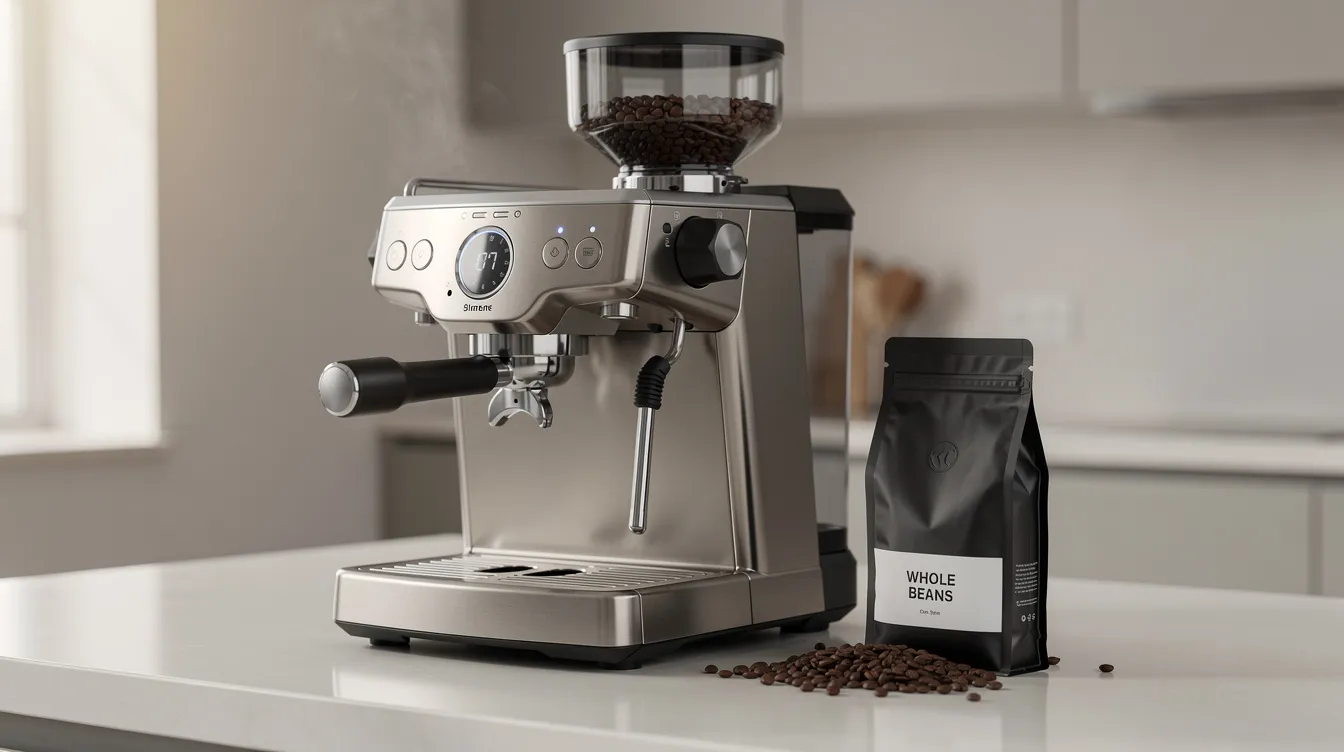
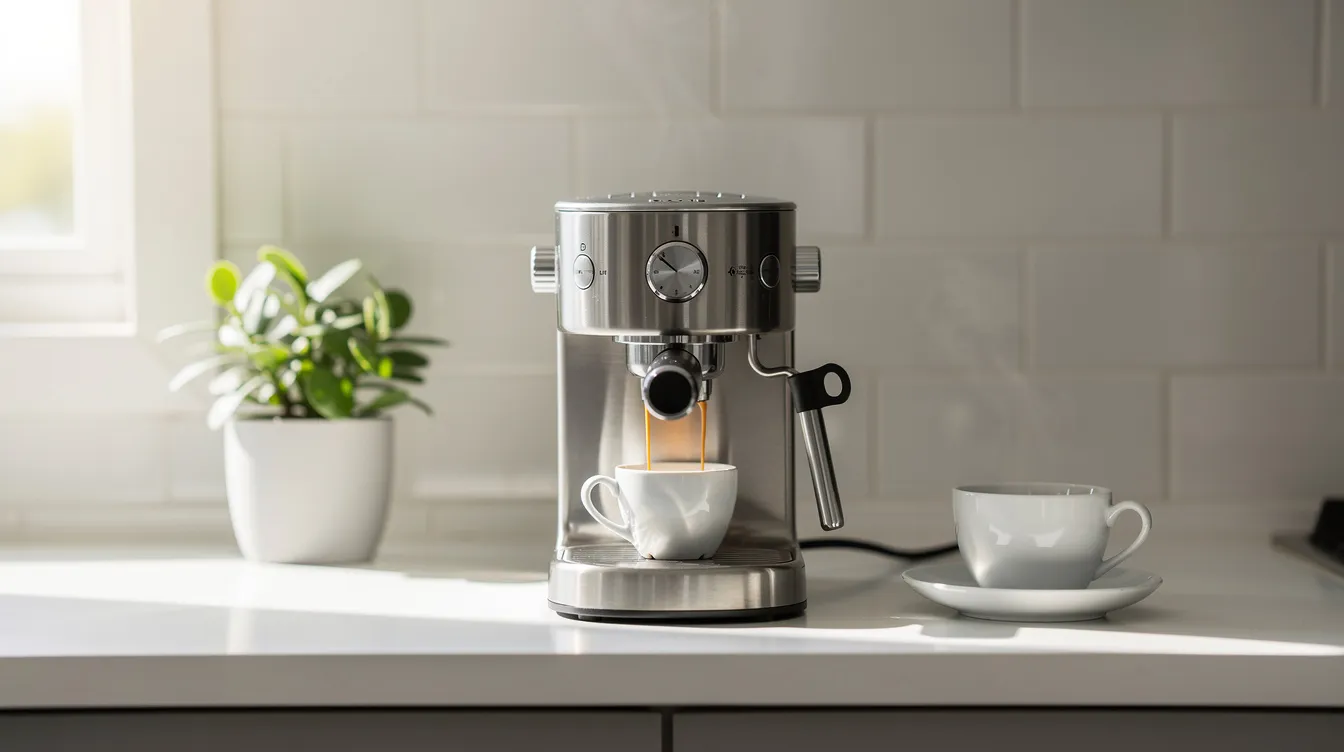
Choosing the best espresso machine with grinder means finding a unit that balances grinder precision, brew temperature control, steam power, and daily usability without forcing you to manage two separate appliances. After extensive research across expert roundups, verified specs, and owner consensus, the Breville Barista Express Impress stands out as the top pick for most US households, with strong alternatives for budget buyers, milk-drink enthusiasts, and hands-off convenience seekers.
This guide breaks down what actually matters in integrated-grinder machines and helps you spend wisely.
Best built-in grinder pick
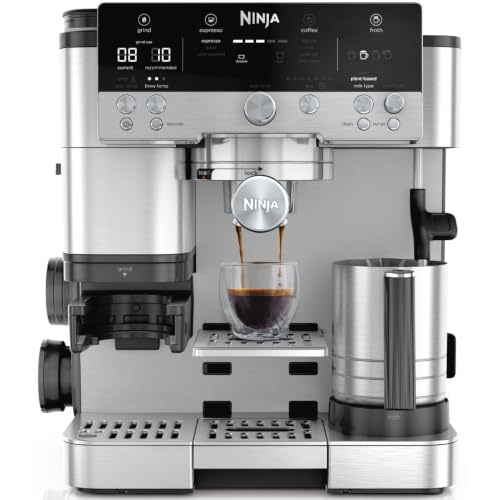
For this roundup, Ninja Luxe Café is the built-in grinder we recommend first—the same pick at the top of our At-a-glance cards below.
All-in-one espresso machines save space but can require more tuning than you might expect from a single appliance. That said, the right machine eliminates the hassle of matching a separate grinder to a separate brewer and still delivers exceptional espresso at home.
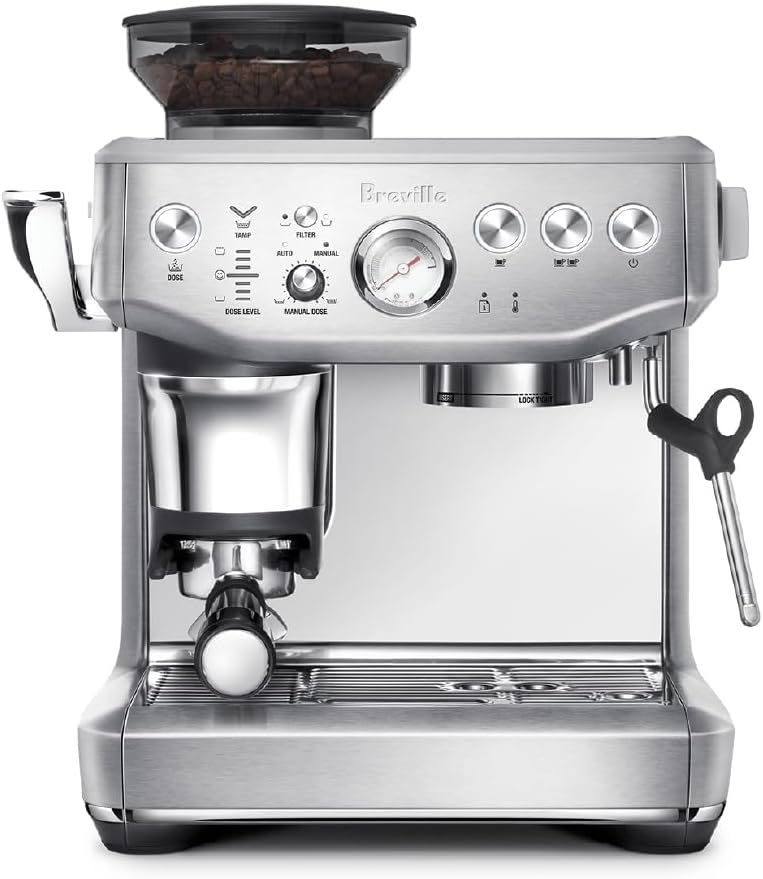
The Breville Barista Express Impress earns the top overall spot for its balance of assisted tamping, 25-step conical burr grinder, PID temperature control, and approachable workflow at roughly $800–$900.
For budget-conscious first time buyers, the De’Longhi La Specialista Arte (around $550–$650) delivers adjustable pre-infusion and decent grinder performance in a more affordable package.
Superautomatic espresso machines like the De’Longhi Magnifica Evo or DeLonghi PrimaDonna suit busy households that prioritize one-touch convenience over manual shot control.
Grinder quality, temperature stability, and steam power for milk drinks are the three specs that separate good machines from frustrating ones-dig into the sections below for buying advice on boiler design, maintenance, and long-term cost of ownership.
All recommendations here are based on researched editorial analysis and broad expert and owner consensus, not Capitol City Coffee’s own lab testing. This guide focuses on true espresso machines with integrated grinders across semi automatic, automatic, and superautomatic categories.
Quick Answer: Our Top Espresso Machines With Grinders
If you want a fast answer, here are the standout espresso machines with built-in grinders for US buyers right now, chosen for the standout features that help them rise above the rest. The Breville Barista Express Impress is the best espresso machine with grinder for most people, pairing a solid conical burr grinder with an intuitive assisted-tamp workflow and PID-controlled brew temperature. The Breville Barista Pro appeals to users who want faster heat-up via ThermoJet technology. For fully automatic espresso, the De’Longhi Magnifica Evo handles grinding, dosing, tamping, and brewing at the push of a button. And budget shoppers will find the De’Longhi La Specialista Arte punches well above its price.
Affiliate disclosure: Capitol City Coffee is an independent, reader-supported publication. We may earn a commission if you purchase through links in this article. Commissions never influence our rankings-performance, usability, and long-term value do.
Built-in grinders are convenient for average coffee drinkers who want a streamlined setup. But readers chasing the absolute ceiling of espresso quality may still prefer separate espresso machines paired with standalone grinders-check broader gear roundups for those options.
At-a-Glance Comparison Table
The table below summarizes key specs and trade-offs across the top integrated-grinder machines so you can compare at a glance before diving into individual reviews.
Shot consistency is highest in PID-equipped machines (Breville line) and dual boiler setups where brew temperature stays locked in.
Milk texture is strongest with dedicated manual steam wands (Barista Express Impress, Barista Pro) or the Oracle Touch’s auto-frothing system.
Value-to-performance balance favors the Ninja Luxe Café Premier at $599 and the De’Longhi La Specialista Arte under $650.
Temperature stability, workflow, and cleaning effort matter just as much as headline specs when choosing between these home espresso machines.
How We Chose These Espresso Machines With Grinders
These recommendations are researched editorial analysis based on verified manufacturer specifications, reputable expert reviews from outlets like Tom’s Guide, CoffeeGeek, and Burr & Basket, and aggregated owner feedback. Capitol City Coffee did not conduct its own lab testing for this roundup.
Core evaluation criteria:
Temperature stability and PID control accuracy
Warm-up time from cold to brew-ready
Pressure behavior (pump spec, OPV, pre-infusion)
Grinder performance: burr type, adjustment range, retention, and noise
Shot consistency across back-to-back pulls
Steam power and milk texture capability
Workflow: dosing, tamping, shot timing, and user interface
Cleaning and maintenance burden
Build quality, reliability, and US warranty support
Value relative to performance
We focused specifically on espresso machines with built-in grinders, but cross-referenced performance against respected standalone setups featuring machines like the Gaggia Classic Pro, Rancilio Silvia, and Breville Dual Boiler paired with dedicated grinders.
Value and cost of ownership-including repairs, descaling, parts availability, and warranty length-were weighted heavily. Ultra-premium commercial machines like the Speedster espresso machine or La Marzocco GS/3 served as reference benchmarks but aren’t realistic for most home budgets. Affiliate commissions do not determine rankings.
Best Overall: Breville Barista Express Impress
The Breville Barista Express Impress earns its spot as the best overall espresso machine with grinder for most US home baristas. At roughly $800–$900, it packs a built-in grinder, PID-controlled thermocoil heating, and Breville’s Impress assisted tamping system into a single countertop unit that handles everything from grinding to pulling shots to steaming milk.
Grinder performance: The integrated conical burr grinder offers 25 stepped grind settings-enough to dial in standard medium to medium-dark espresso roasts with confidence. According to Breville’s product page, the machine also features intelligent dosing that learns from your last grind to auto-adjust dose weight. That said, the grind steps at the finest end are relatively coarse compared to standalone espresso grinders, which means ultra-light single-origin beans can be tricky to dial in.
Brewing system: The thermocoil heating element with PID temperature control delivers water at approximately 200°F, keeping brew temperature within the 195°F–205°F window that matters for extraction. A low-pressure pre-infusion followed by 9-bar extraction via a 15-bar Italian pump helps saturate the puck before full pressure kicks in. Warm-up takes roughly three minutes-not instant, but stable once ready.
Impress tamping system: This is the standout feature for beginners. The assisted tamping mechanism applies a consistent 22 lbs of pressure with a barista-style twist finish. The Breville Barista Express Impress has assisted tamping for beginners that removes one of the biggest variables in puck prep, reducing mess and improving shot-to-shot repeatability.
Steam and milk: The manual steam wand produces fine microfoam suitable for latte art. Single boiler design means you can’t brew and steam simultaneously-you’ll need to switch modes, though it can also dispense hot water separately for preheating cups between steps. For households pulling cappuccinos back to back, expect a short pause between steaming and the next shot.
Cleaning and maintenance: Plan on regular grinder chute purges, group-head backflushing, and descaling every 3–6 months depending on water hardness. No auto-clean functions here, but the workflow is straightforward.
Ideal user: Someone stepping up from pods or drip coffee who wants an all-in-one semi automatic espresso machine that grows with their skills. The 54mm portafilter is smaller than commercial 58mm standard, which limits third-party basket options, but it’s more than adequate for home use.
Best Upgrade Pick: High-End Dual Boiler With Grinder
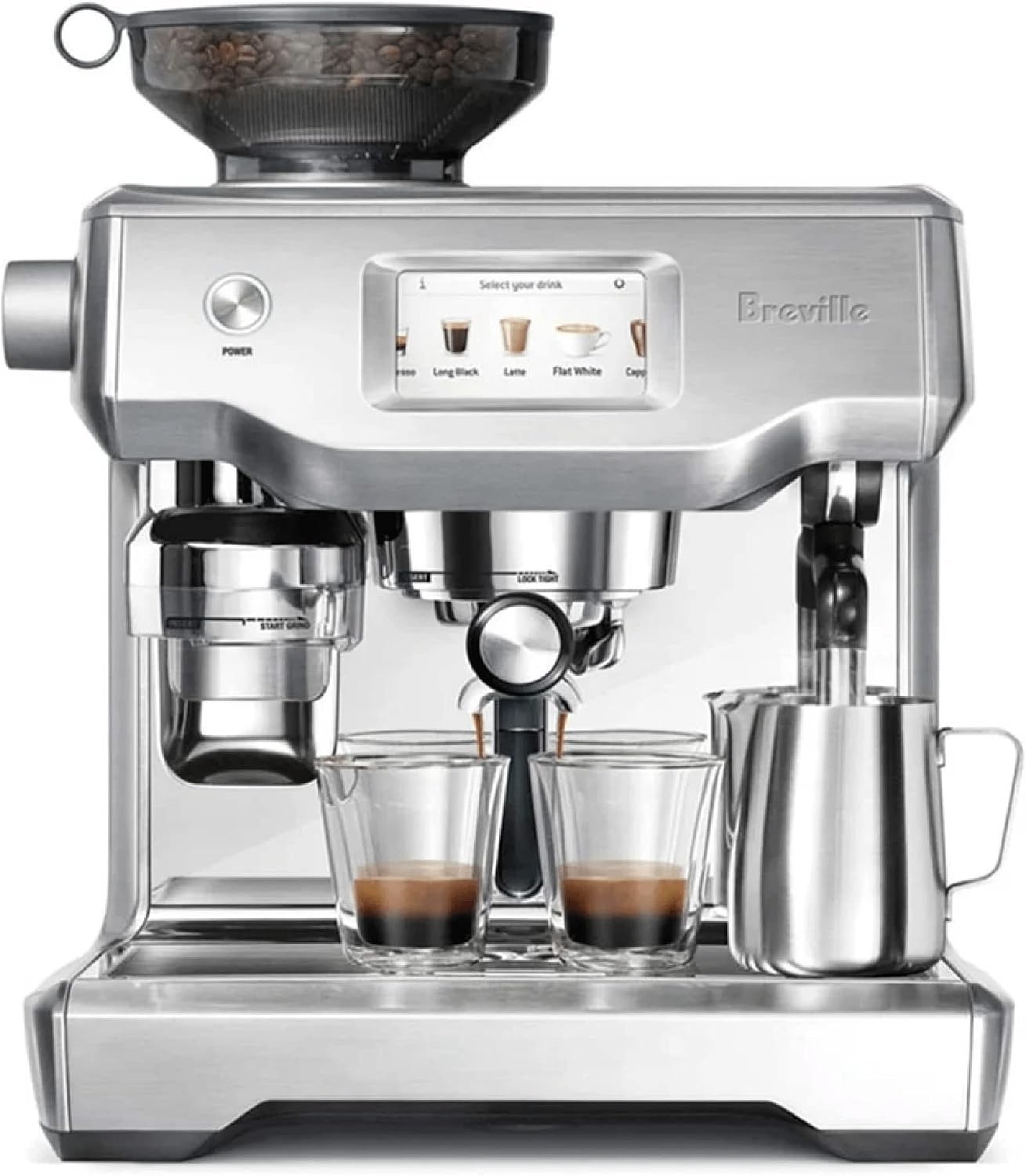
For espresso aficionados who want café-level performance without sacrificing the all-in-one footprint, a premium dual boiler machine with an integrated grinder is the logical step up. The Breville Oracle Touch is the clearest example in this space, pairing a true dual boiler system with a built-in conical burr grinder, automatic tamping, and an auto-milk texturing wand-all controlled via a touchscreen interface.
High-end machines often have dual boilers for consistent temperature control, and the Oracle Touch takes full advantage. Dual boiler machines allow simultaneous brewing and steaming, which means you can pull a double espresso while frothing milk without any temperature compromise. Steam pressure stays consistently high for silky microfoam, even when making several milk based drinks in a row.
At this price tier (around $2,500+), grinder features jump noticeably. The Oracle Touch offers 45 stepped adjustments-giving you finer control over extraction for everything from classic espresso blends to lighter single-origin coffees. The Breville Dual Boiler has a professional-grade 58mm portafilter, and the Oracle line inherits that standard, opening the door to IMS filter baskets and commercial-grade accessories.
Control options include multiple PID temperature settings, adjustable preinfusion, and programmable drink recipes with user profiles-streamlining workflow for households where personal preferences vary between a flat white and a straight double espresso. Retailers like clive coffee also tend to frame this tier around customization and enthusiast-focused setup support.
Cost of ownership is higher upfront, but build quality tends to be superior, with more durable internals, longer warranty periods, and better parts availability compared to cheaper automatic espresso machines. This is espresso equipment built for the serious home barista who cares about milk texture and in-cup nuance but still wants the convenience of a built-in grinder.
Best Budget Espresso Machine With Grinder
At the budget level-under roughly $600–$700-you’ll accept some compromises in grind range, steam power, and build materials. But the non-negotiables remain: true espresso pressure, a burr grinder, and at least reasonable temperature control.
The De’Longhi La Specialista Arte (EC9155) hits that mark at around $550–$650. It features a top-mounted conical burr grinder with 8 precision settings, a thermoblock boiler with adjustable brew temperature (92–96°C across three profiles), and adjustable pre-infusion that can be set to no pre-infusion, one second, or two seconds. Pre-infusion helps saturate coffee pucks for better shots, and having control over its duration at this price is unusual.
Shot quality is good for classic, slightly darker espresso blends. The 8 grind settings are workable but less forgiving with very light roasts-expect more trial and error if you gravitate toward single-origin light roasts. Ground coffee can also be used via a bypass chute.
The manual steam wand is adequate for occasional lattes and cappuccinos, though it doesn’t have the steam pressure or recovery speed of higher-end dual boiler or heat exchanger machines. Single boiler machines use one boiler for brewing and steaming, so there’s a transition delay between pulling a shot and frothing milk.
Build quality leans toward more plastic than Breville machines at double the price, and the water reservoir is smaller. Warranty is typically one year. Owner reports flag occasional inconsistency with dosing and some sensitivity to bean type, but for the price, this is a strong entry point.
Ideal for new espresso drinkers who want a one-box solution with real espresso capability and aren’t ready to commit to pricier gear or separate grinders.
Best Fully Automatic Espresso Machine (Superautomatic)
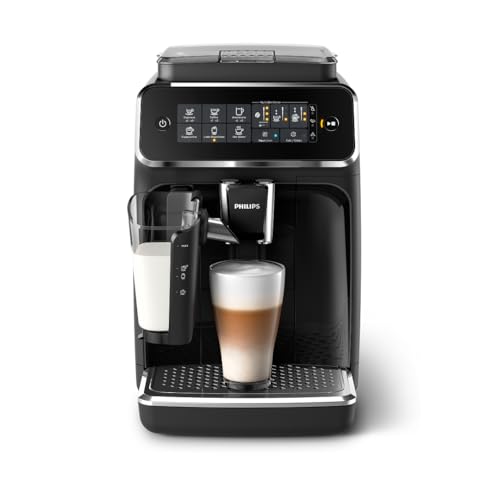
Superautomatic espresso machines handle everything: grinding, dosing, tamping, brewing, and usually milk frothing, all at the push of a button. Super-automatic machines grind, tamp, and brew coffee at the push of a button, making them the ultimate convenience play. Espresso machines with one-touch automation prioritize convenience over fine-tuning capabilities, so the trade-off is less manual control in exchange for speed and simplicity.
Two models consistently rise to the top for US buyers:
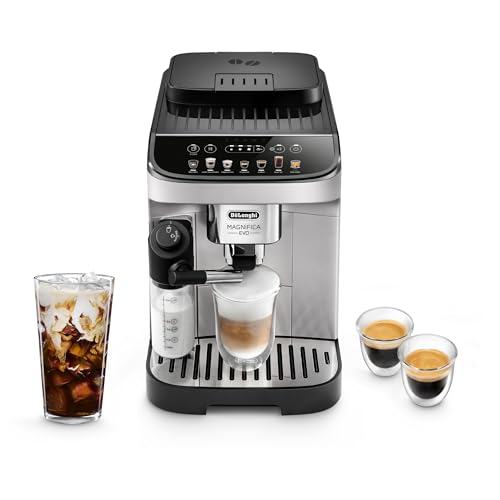
De’Longhi Magnifica Evo (~$700–$900): Reliable conical burr grinder, programmable drink strength and temperature, automatic milk system, and a removable brew unit for easy cleaning. It handles a range of milk drinks-from cappuccinos to flat whites-with consistent, if not artisan-level, results.
DeLonghi PrimaDonna (higher tier): The DeLonghi PrimaDonna features a touchscreen with helpful prompts that walk users through drink customization and maintenance alerts. It offers broader drink menus and more granular temperature and strength adjustments.
Fully automated machines grind, dose, and brew automatically, so espresso quality is highly repeatable, though the ceiling for shot nuance is lower than what a skilled operator gets from a semi automatic machine. Most medium roast blends perform well; very light or very dark roasts can expose the grinder’s limitations.
Milk systems on superautomatics produce both hot and cold foam (useful for cold espresso drinks), but texture is generally thicker than what a skilled hand with a manual steam wand achieves. They handle back-to-back milk-based drinks efficiently, which is a clear advantage over single boiler semi-autos.
Cleaning: Daily automatic rinse cycles, regular milk-system cleaning, brew unit removal and washing (weekly or biweekly), and periodic descaling. Built-in espresso machines can be more complex to clean compared to standalone units, and superautomatics add milk lines to the equation.
Best for busy households, office environments, or users who prioritize speed and simplicity over latte art practice and manual control.
Best Compact Espresso Machine With Grinder for Small Kitchens
Many US kitchens have limited counter depth, and espresso machines with built-in grinders are typically more compact than a separate machine-plus-grinder setup. That compactness matters.
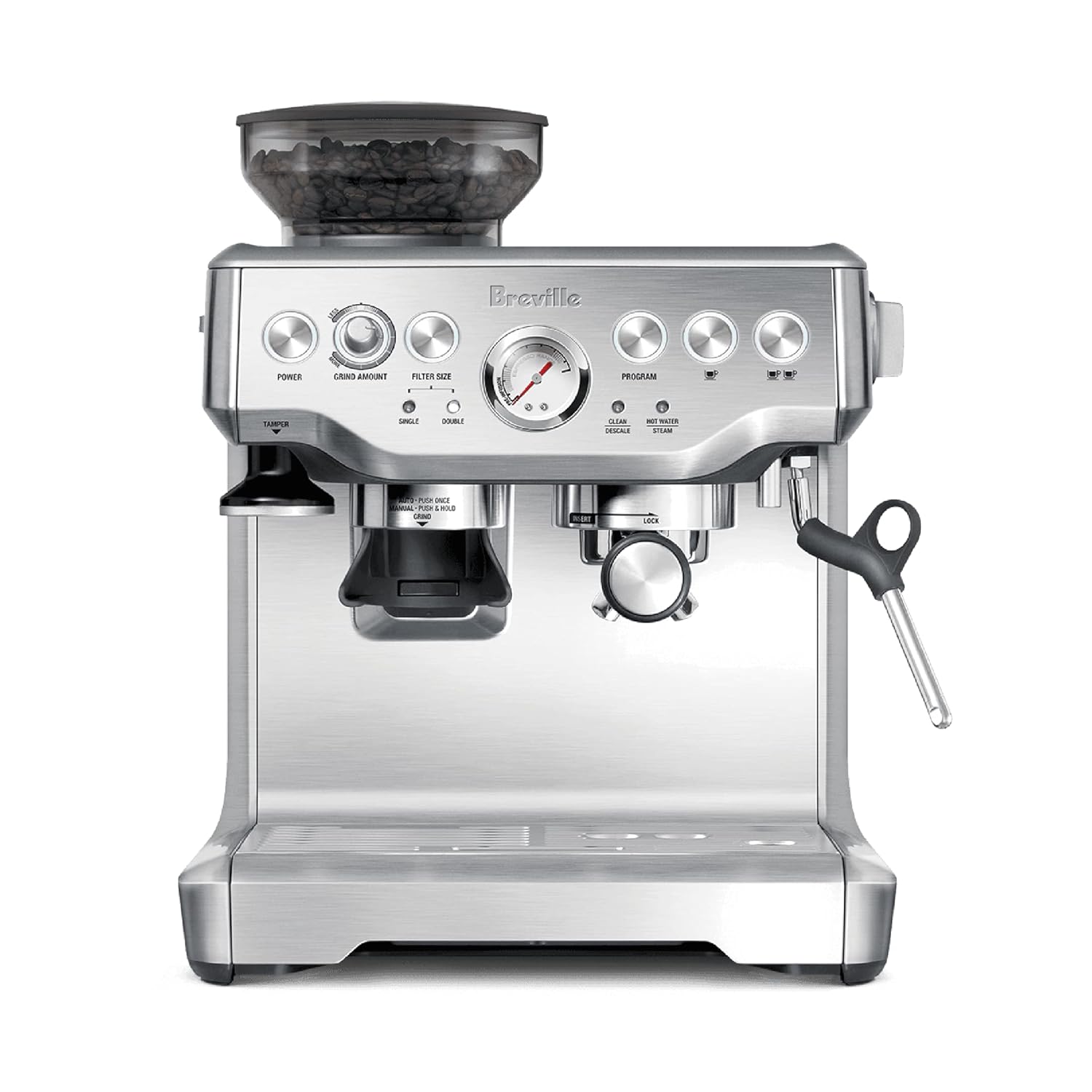
The Ninja Luxe Café Premier (ES601) is a standout here, though at approximately 15.75″ × 15.24″ × 20.51″ it’s not tiny-its real advantage is consolidating espresso, drip coffee, and cold brew into one unit. For even smaller footprints, the Breville Barista Express occupies a well-known mid-size envelope. The Breville Bambino Plus heats up in just three seconds and has one of the smallest footprints in Breville’s lineup, though it requires a separate grinder-worth considering if space is extremely tight and you’re willing to add a compact standalone.
Performance trade-offs in compact units include smaller water tanks (the drip tray fills faster), potentially less steam power, and shorter warm-up times thanks to thermoblock or thermojet systems. Thermoblock systems heat water on demand for steaming, which keeps the machine slim but limits simultaneous brew-and-steam capability.
Grinder capabilities in compact integrated units are typically conical burrs with moderate adjustment ranges-adequate for everyday espresso and milk drinks but not as refined as larger prosumer setups.
Workflow in small spaces: Look for front-loading water reservoirs, easy-to-remove drip trays, and manageable cord routing. Noise levels from integrated grinders in compact housings can be noticeable in open-plan apartments, so early-morning grinding may require some household diplomacy.
Ideal for apartment dwellers, small households, or anyone wanting café-style drinks without dedicating a full coffee bar to their espresso equipment.
Best Espresso Machine With Grinder for Milk Drinks
Latte lovers, cappuccino enthusiasts, and flat white devotees should prioritize steam power, milk texture quality, and turnaround speed above almost everything else. If you routinely make several milk drinks each morning, you need a machine that recovers quickly between steaming sessions.
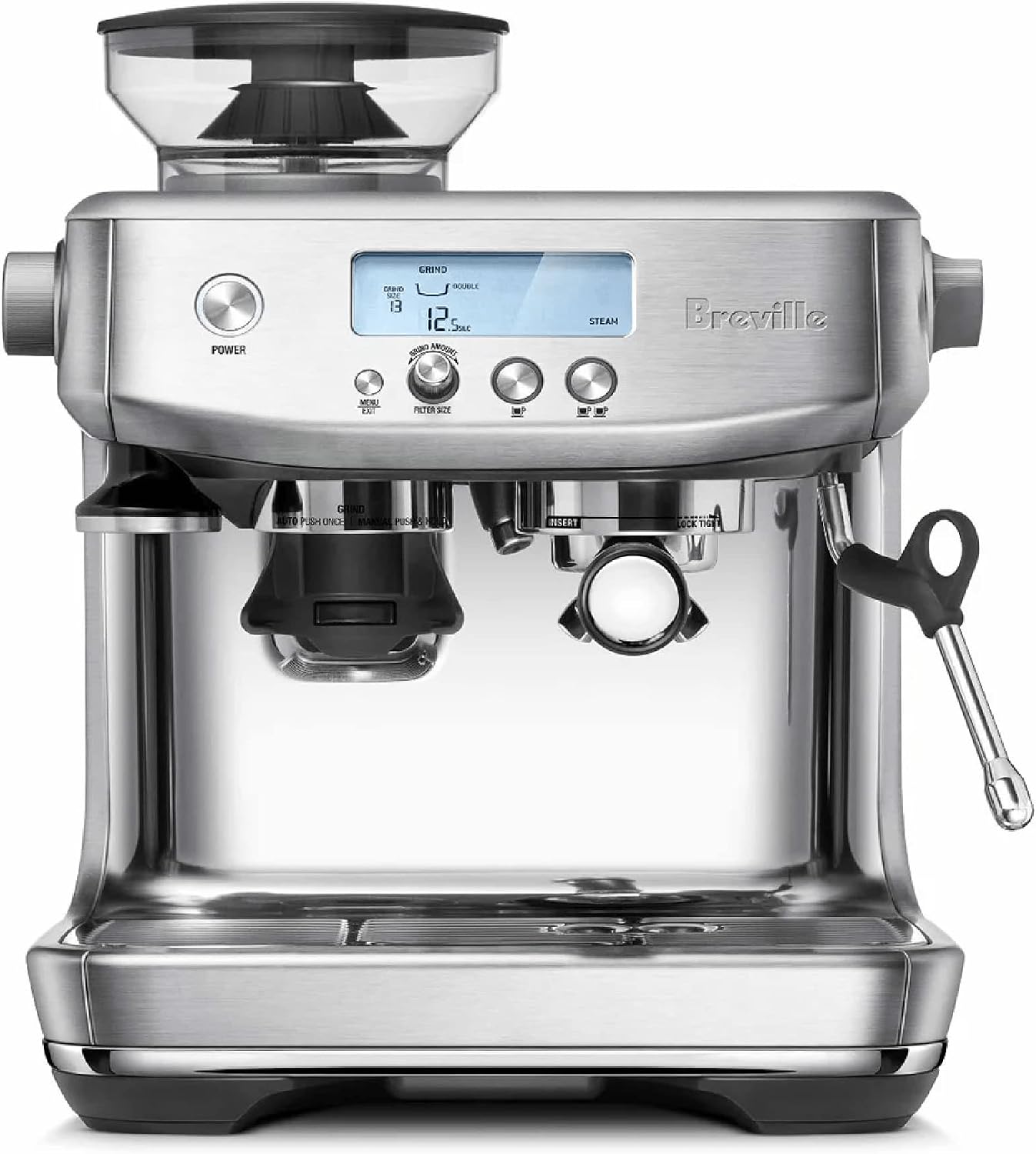
The Breville Barista Pro pairs a solid integrated conical burr grinder with a ThermoJet heating system that reaches brew temperature in roughly 30 seconds. Its manual steam wand delivers strong steam pressure-steam pressure must be high for silky microfoam-and the fast thermal recovery means less waiting between drinks. Powerful steam wands create microfoam for latte art, and the Barista Pro’s wand is among the better options in the integrated-grinder category.
For even more steam capacity, the Breville Oracle Touch’s dual boiler design provides continuous steam power. Automatic steam wands adjust temperature and texture for microfoam, and the Oracle Touch’s auto-frothing wand can produce latte-art-worthy microfoam without manual technique-a genuine advantage for latte lovers who haven’t mastered wand control.
Why does grinder consistency matter for milk drinks? When shots are diluted with 6–12 ounces of steamed milk, extraction quality gets masked but never disappears. A consistent grind produces a balanced espresso base that translates into a sweeter, more complex latte rather than a bitter or sour one.
Compared to other espresso machines like the Breville Bambino Plus (which also delivers strong steaming performance and includes automatic steam wand functionality), these integrated-grinder picks eliminate the need for a separate grinder purchase, keeping the setup streamlined for daily milk-drink routines.
Ideal user: Someone who routinely makes several milk-based drinks in the morning and values speed and steam pitcher performance over ultra-fine manual espresso control. If you want to steam milk for a household of latte drinkers, dual boiler machines have separate boilers for brewing and steaming-giving you uninterrupted workflow.
Best Espresso Machine With Grinder for Beginners
Beginners need forgiveness, not complexity. The ideal entry-level integrated-grinder machine offers a forgiving grind range, built-in guidance for dosing and tamping, and minimal setup guesswork. The goal is drinkable shots on day one, with room to improve.
The Breville Barista Express Impress is the strongest beginner pick in this category. Its Impress Puck System walks new users through dosing (the machine remembers your last dose and auto-adjusts) and tamping (spring-loaded, consistent 22 lbs). The Breville Barista Express has an intelligent dosing system that reduces one of the biggest beginner frustrations: inconsistent puck prep. The 25 stepped grind adjustments are clearly labeled, making it intuitive to understand how grind sizes impact flow rate and shot taste.
Pre-infusion at low pressure before full pressure kicks in reduces channeling-a common beginner problem where water finds paths of least resistance through the puck, producing uneven extraction. PID controllers help maintain water temperature for consistent flavor during brewing, so even new users get stable brew temperature without needing to learn temperature surfing techniques.
Cleaning is manageable: the machine prompts for descaling when needed, and the grinder chute purge is a quick daily habit. There are no complex auto-clean routines, but the basics are well-documented in the manual.
While this machine is beginner-focused, it doesn’t box you in. Switching from pressurized to non-pressurized baskets as your skills grow, learning to texture milk manually, and experimenting with finer grind adjustments all provide a progression path. This is an espresso machine that can grow with a home barista rather than being outgrown in six months.
Key Specs That Actually Matter in an Espresso Machine With Grinder
Spec sheets can overwhelm, but a handful of core elements make the biggest practical difference in everyday espresso quality and ease of use. Here’s what to actually pay attention to:
Boiler type (single boiler, heat exchanger, dual boiler): Determines whether you can brew and steam simultaneously, how stable your brew temperature stays, and how quickly the machine recovers between drinks. Most espresso machines with integrated grinders use single boiler or thermoblock designs. Dual boiler espresso machines are less common in all-in-ones but deliver the best temperature stability.
Temperature control (thermostat vs PID): Espresso machines should maintain 195°F to 205°F for optimal extraction. PID controllers improve temperature stability in espresso machines by making micro-adjustments throughout the shot, reducing the sour or bitter swings caused by temperature drift. Temperature surfing is required on machines without PID control-a manual technique most beginners find frustrating.
Pump and pressure behavior: A good espresso machine produces consistent nine bars of pressure at the puck. Vibratory pumps are standard in home machines; a rotary pump appears in higher-end prosumer and commercial machines but is rare in integrated-grinder units. Pre-infusion-where water saturates the puck at low pressure before full pressure engages-improves extraction uniformity and reduces channeling.
Grinder design: Burr grinders are preferred over blade grinders for consistent espresso extraction. Many espresso machines have adjustable grind settings to fine-tune extraction, ranging from 8 steps on budget models to 45 on premium ones (the Meraki Espresso Machine features 45 grind settings, for reference). The use of stainless steel or hardened burrs improves grind consistency in espresso machines over time.
Steam power and wand design: For frequent milk drinks, look for strong steam pressure, a multi-hole tip, and insulated wand housing. Manual wands give more control for latte art; automatic wands prioritize convenience. A machine’s ability to create microfoam determines whether your flat whites and cappuccinos taste like café drinks or warmed milk.
Build quality and warranty: Stainless steel internals and metal group heads outlast plastic-heavy builds. Most US consumer models carry a 1-year warranty; some brands offer extensions through registration. Parts availability and service networks matter more than most buyers realize-especially for expensive machines that may need repair in year three or four.
Each of these specs translates directly to real-world outcomes: better flavor, faster mornings, or fewer headaches across the machine’s lifespan.
Boiler Types Explained: Single Boiler, Dual Boiler, and Beyond
Understanding boiler types helps set realistic expectations for any espresso machine with grinder. The boiler determines how your machine handles heat, steam, and multi-drink workflows.
Single boiler: Uses one boiler for both brewing and steaming. You brew first, then switch to steam mode and wait for the boiler to reach steam temperature. Warm-up and switch-over can add 30–90 seconds to each milk drink. This is the most common setup in budget to mid-range integrated-grinder units, and it’s perfectly fine for households that make one or two milk drinks a day.
Heat exchanger (HX): Brew water passes through a tube inside a larger steam boiler, letting you brew and steam nearly simultaneously. Temperature stability can be less predictable-some “cooling flushes” are needed before pulling a shot. HX systems are relatively uncommon in machines with built-in grinders but appear in some prosumer models.
Dual boiler (double boiler): Separate boilers for brew and steam circuits. This is the gold standard for temperature stability and continuous steam power. Dual boiler machines allow simultaneous brewing and steaming without compromise. The Breville Dual Boiler and machines like the Lelit Bianca V3 (which offers advanced pressure control features as well) are benchmarks here, though most dual boiler espresso machines require separate grinders.
How to think about this: Single boiler for occasional milk drinks and tighter budgets. Dual boiler for heavy milk drinkers and home espresso enthusiasts seeking repeatable great espresso shots. Don’t overpay for a complex boiler system if you mostly drink straight espresso and rarely steam milk.
Temperature Stability, Pressure, and Shot Consistency
Real espresso depends on holding water temperature and pressure within narrow windows. Temperature stability is crucial for producing high-quality espresso shots in machines-even small fluctuations can push a shot from balanced to sour or bitter.
Temperature: Espresso machines should maintain temperatures between 195°F and 205°F throughout extraction. PID controllers achieve this by continuously adjusting heating elements. Thermoblock systems without PID can swing several degrees during a shot, which is why better shots consistently come from PID-equipped machines.
Pressure: The target is approximately 9 bars at the puck, regardless of pump rating. Most home espresso machines advertise 15-bar pumps, but over-pressure valves (OPVs) or electronic regulation bring the actual extraction pressure down to the 8–10 bar range where good espresso happens. Pre-infusion-a brief low-pressure soak before full pressure engages-reduces channeling and helps produce more even extraction across the puck.
Grinder’s role: Even particle size from a good grinder leads to predictable flow rates, meaning small dial changes produce controlled adjustments rather than random channeling. This is where integrated grinders can struggle: fewer adjustment steps and slightly wider particle distributions make dialing in more of a balancing act than with a standalone precision grinder.
Semi automatic machines give you manual control over these variables; automatic espresso machines handle them algorithmically. Both can produce excellent results, but the semi automatic path has a higher ceiling for users willing to learn.
For users who care deeply about repeatability, machines with a visible pressure gauge or built-in shot-timing tools provide valuable feedback during extraction.
Integrated Grinder Basics: What to Expect
An integrated grinder trades some flexibility for compactness and convenience-a trade-off that works well for many home baristas who don’t want two appliances cluttering their counter.
Typical design: Most espresso machines with built-in grinders use conical burrs with stepped adjustments, typically ranging from 8 to 30 settings. Burr diameters are adequate for home use but smaller than what you’d find in standalone espresso grinders. Built-in grinders limit grind settings compared to standalone grinders, and the finest steps tend to be coarser than what dedicated flat-burr grinders achieve.
Limitations: Fewer adjustment steps than dedicated espresso grinders mean less ability to micro-adjust for different beans. Integrated grinder machines offer convenience but limit upgrade options compared to separate units-when the grinder component declines, you can’t just swap in a better one. Grind retention in shared chutes can also be slightly higher, and noise levels may be louder due to compact housing.
Workflow benefits: On-demand grinding directly into the portafilter or internal brew group eliminates transfer steps, reduces mess, and delivers consistent doses once dialed in. The counter-space savings are real.
Compared to standalone options: Popular standalone grinders like the Baratza Sette 270 or Niche Zero offer more precision for espresso shots, wider grind ranges (useful if you also brew filter or pour-over), and are often more durable than built-in options. Standalone grinders offer more precision for espresso shots, but they add $200–$400+ to your total setup cost and require additional counter space.
Maintenance: Regular burr cleaning, avoiding oily dark beans that accelerate buildup, and listening for signs of burr wear (slower grinding, inconsistent particle size) will maintain shot quality over years of use.
Semi Automatic vs Automatic vs Superautomatic (With Grinders)
There are three main types of espresso machines: semi-automatic, automatic, and super-automatic. A manual espresso machine is a lower-cost, more hands-on way to learn espresso fundamentals, but it typically doesn’t include a built-in grinder. All three can come with integrated grinders, but they differ dramatically in how much work you do versus what the machine handles.
The market for espresso machines generally splits into hybrid/manual machines and super-automatic machines, with automatic models occupying a middle ground.
Semi automatic espresso machines with grinders: Semi-automatic machines require user control for shot pulling. You grind, distribute, tamp, and start/stop the shot manually. This gives maximum hands-on control and learning potential. Hybrid machines require user input for grinding and tamping, which means more variables to manage but also more room to improve your technique. Most favorite espresso machines among enthusiasts fall in this category.
Automatic espresso machines (volumetric dosing): Automatic machines automate the shot-pulling process for convenience. The machine controls shot volume-you set it once, and it stops extraction at a programmed amount. You still handle grinding and tamping. This balances convenience with control.
Superautomatic espresso machines: Super-automatic machines handle grinding, brewing, and frothing automatically. One button press delivers a complete drink. The convenience is unmatched, but fine-tuning capabilities are limited. These are best for busy professionals and shared households where nobody wants to learn puck prep.
Which suits you? Tinkerers and espresso hobbyists gravitate toward semi automatic. Busy professionals who still want real espresso (not pod coffee) lean toward automatic. Households where multiple people with different skill levels use the machine daily find superautomatic espresso machines the path of least friction.
How to Choose the Right Espresso Machine With Grinder for You
Narrowing down options is easier when you work through a few concrete decision points rather than comparing every spec on every machine:
Budget: Under $600–$700 gets you a capable budget semi-auto or a mid-tier superautomatic. $700–$1,200 is the sweet spot for well-rounded semi automatic machines with better grinders, PID control, and stronger steam. Above $1,500, you’re into dual boiler territory with premium build quality. If you’re open to separate machines and grinders, check options at different price points for more flexibility.
Drink preferences: Straight espresso drinkers don’t need a dual boiler or powerful steam system-a single boiler with good temperature stability is sufficient. Households that consume multiple milk drinks every morning need stronger steam power and faster recovery. Cold brew capability (like the Ninja Luxe Café Premier offers) is a bonus for mixed-preference households.
Skill level and interest: If you want a semi automatic “hobby” where you learn to dial in better shots over time, choose a machine with manual controls and a good grinder. If you want coffee, not a project, go automatic or superautomatic.
Space and aesthetics: Measure your counter space, including clearance under cabinets. Check the machine’s footprint and whether the water reservoir loads from the side or back. Noise tolerance matters if you’re grinding early while others sleep.
Maintenance tolerance: Semi automatic machines need backflushing, descaling, and regular grinder cleaning. Superautomatics automate some cleaning but add milk-system maintenance. Decide how many minutes per day you’re willing to spend on upkeep.
Example profiles:
Budget beginner: De’Longhi La Specialista Arte or Ninja Luxe Café Premier
Latte-obsessed household: Breville Barista Pro or Oracle Touch
Data-driven tinkerer: Breville Barista Express Impress (and eventually a separate grinder upgrade)
Hands-off convenience seeker: De’Longhi Magnifica Evo
If you’re still unsure, browse broader espresso machine guides for non-integrated options that might better fit your needs.
Maintenance and Cost of Ownership
The true best espresso machine with grinder balances up-front price with ongoing maintenance, repairs, and parts availability over 5–10 years. Cheaper isn’t always cheaper when you factor in longevity.
Typical maintenance tasks:
Daily: Purge and wipe the steam wand after each use, empty coffee grounds from the knock box, rinse the drip tray
Weekly: Backflush the group head with detergent (semi-autos with solenoid valve designs), clean the grinder chute
Monthly: Deep-clean the shower screen and portafilter basket
Every 3–6 months: Descale, depending on water hardness
Integrated grinder complications: When the grinder fails in an all-in-one machine, repair may involve sending the entire unit to a service center rather than simply swapping a standalone grinder. Burrs in built-in grinders typically last 1–2 years of regular home use before grind consistency noticeably declines-faster if you use dark, oily beans.
Water quality: Filtered or softened water dramatically reduces scale buildup. Most manufacturers include water hardness test strips and recommend adjusting descaling frequency based on results. Some machines like the Ninja Luxe Café Premier let you input hardness settings directly.
Warranty: Most US consumer models carry a 1-year warranty. Breville machines sometimes offer extended support via product registration. Warranty typically covers manufacturing defects but excludes wear parts (gaskets, burrs, steam tips) and labor costs after the initial period.
Budget vs prosumer longevity: Plastic-heavy budget machines (under $600) may need replacement or significant repair within 3–4 years. More robust mid-range machines ($800–$1,200) with metal internals can last 5–7+ years with proper maintenance. Resale value is noticeably higher for well-maintained Breville machines and other established brands.
Cleaning Workflow and Daily Usability
A machine’s workflow is only as good as its cleanup routine. Integrated grinder machines handle both coffee grounds and (often) milk residues, so cleaning discipline directly impacts shot flavor, steam power, and machine lifespan.
Daily cleaning steps:
Empty the drip tray and knock box
Remove and rinse the portafilter; brush the group head shower screen
Purge the grinder chute (run a 1–2 second burst without the portafilter)
Wipe down the steam wand tip with a damp cloth
Wipe external surfaces
Automatic cleaning functions: Some machines offer group-head rinse cycles at startup/shutdown, milk-system cleaning modes (superautomatics), and alerts for full cleaning or descaling cycles. The Oracle Touch, for example, prompts for backflushing and descaling at set intervals.
Time costs: Semi automatic machines typically require 3–5 minutes of daily cleaning. Superautomatic models add milk-system rinses but automate group cleaning, so total daily time is similar. Weekly deep cleans add another 10–15 minutes.
Cleaning supplies: Budget for espresso machine detergent (backflush tablets), descaling solution, a group-head brush, microfiber towels, and grinder cleaning tablets. These add perhaps $30–$50 per year in ongoing costs-minor relative to the machine investment.
Consistent cleaning preserves shot flavor, protects steam power, and extends the machine’s usable life. Neglect the drip tray or grinder chute and you’ll notice stale, rancid flavors creeping into your shots within weeks.
Alternatives: When a Separate Grinder Makes More Sense
While this guide focuses on espresso machines with built-in grinders, many home espresso enthusiasts and experts still prefer separate grinders for flexibility and long-term value. It’s worth knowing when that path makes more sense.
Advantages of separate grinders:
Broader grind range covering espresso through filter and pour-over
Easier upgrades: swap the grinder without replacing the entire machine
Less risk of both brewing and grinding failing simultaneously
Usually better burr sets (larger, flatter, or more steps) at comparable total cost
Standalone grinders are often more durable than built-in options
Popular pairings: The Gaggia Classic Pro or Rancilio Silvia with a Baratza Sette 270 is a classic entry-level combination. The Breville Dual Boiler paired with a Niche Zero or Eureka Mignon represents a mid-to-high tier setup that exceeds most integrated units for temperature stability and control. The Lelit Bianca V3 offers advanced pressure control features that no current all-in-one can match.
High end espresso machines like these-combined with a quality standalone grinder-open the door to profiling different coffees, adjusting pressure in real time, and chasing Seattle Coffee Gear-level shots at home. But they also cost more in total, require more counter space, and demand more knowledge to operate well.
That said, integrated machines remain the right answer for many US households seeking simplicity, especially if counter space is tight and multi-beverage flexibility is less critical. For most people, a good all-in-one beats a mediocre separate setup.
Where the Classics Fit In: Bambino Plus, Gaggia Classic Pro, and Friends
Iconic machines like the Breville Bambino Plus, Gaggia Classic Pro, and Rancilio Silvia don’t have built-in grinders, but they set the performance benchmark for budget to mid-range home espresso. Understanding where they fit helps frame why someone might (or might not) choose an integrated-grinder machine instead.
Breville Bambino Plus: The Breville Bambino Plus heats up in just three seconds thanks to its ThermoJet system, delivers strong steaming performance via the Breville Bambino Plus’s automatic steam wand functionality, and occupies a tiny footprint. But it needs a separate grinder to reach its potential-adding $150–$400+ to the total cost.
Gaggia Classic Pro and Rancilio Silvia: These single boiler, commercial-style home machines offer excellent build quality, upgradeable components (OPV mods, PID kits), and a proven track record. They demand more temperature management skill-especially without a PID upgrade-and absolutely require a standalone grinder. But they reward investment with longevity and better shots over time.
How do integrated-grinder machines compare? Total system cost for a Gaggia Classic Pro plus a decent grinder lands around $600–$900-roughly the same as a Breville Barista Express Impress. But the separate setup gives you more upgrade flexibility and a higher eventual ceiling. The all-in-one gives you less clutter, simpler workflow, and a gentler learning curve.
For someone who values simplicity and wants good espresso without assembling a multi-component system, the integrated-grinder machines in this guide are the smarter starting point. For someone who sees espresso as a long-term hobby and wants maximum control, the classics still make a compelling case-paired with a good grinder.
FAQs: Espresso Machines With Built-In Grinders
These frequently asked questions address common concerns not fully covered in the main sections above.
Is an espresso machine with grinder worse than a separate grinder and machine?
Not necessarily worse-different. Standalone grinders generally offer more precision, a wider range of grind sizes, and easier upgrades over time. But high-quality integrated units like the Breville Barista Express Impress are more than good enough for most home drinkers focused on convenience and compactness. According to CoffeeBarSetup’s analysis, separate grinder-plus-machine combos often exceed integrated units at the same total cost, but the workflow trade-off matters. Built-in grinders are convenient for average coffee drinkers who prioritize a streamlined morning routine over absolute extraction precision.
Can I use regular pre-ground coffee in an espresso machine with grinder?
Some machines include pressurized baskets or bypass chutes that accept pre-ground coffee. However, best results always come from using the built-in grinder with freshly roasted whole beans ground immediately before brewing. Pre-ground coffee loses volatile aromatics rapidly, and the stale coffee grounds won’t produce the crema or flavor complexity that makes real espresso worth the investment. If you’re buying a machine with an integrated grinder, lean into using it-that’s the entire point.
How long do burrs last in an integrated espresso grinder?
For typical home use (2–4 shots per day), integrated burrs generally last 1–2 years before noticeable decline. Signs of wear include slower grinding speed, inconsistent particle size, and weaker or channeling-prone shots. Actual lifespan depends on bean hardness (lighter roasts are harder on burrs), roast level (oily dark roasts accelerate buildup), and daily volume. Regular cleaning with grinder tablets and avoiding extremely oily beans extends useful life. Replacement burrs are available for major brands like Breville but may require shipping the entire unit for service on some models.
Do I need a dual boiler if I mostly drink straight espresso?
If you rarely steam milk, a well-designed single boiler or thermoblock machine with good temperature stability and PID control is usually sufficient for pulling great espresso shots. Dual boiler systems primarily benefit heavy milk drinkers who steam frequently and want to pull shots and froth milk at the same time without waiting. For straight espresso or the occasional latte, a single boiler machine with PID-like the Breville Barista Express Impress-delivers excellent temperature stability without the added cost and complexity of a dual boiler setup.
What’s the next step if I’m still unsure which machine to buy?
Start by listing three things: your realistic budget, your daily drink preferences (straight espresso vs milk-heavy drinks vs mixed), and how much counter space you have. Then revisit the “Quick Answer” and “How to Choose” sections above to match your profile to a specific recommendation. If you decide that an all-in-one machine isn’t the right fit, browse broader espresso machine guides and gear roundups for separate machine-plus-grinder options that might better serve your long-term goals. The right machine is the one that matches how you actually drink coffee, not the one with the most impressive spec sheet.
How Capitol City Coffee Rates Coffee and Coffee Machines
Every coffee and coffee machine we recommend is scored on the same 100-point scale, so a recommendation on one page means the same thing as a recommendation on any other. Each pick is also labeled with how we reached its score.
Research-ratedScored from the roaster or manufacturer’s published specifications, independent results such as Coffee Review blind cuppings and SCA brewer certification, and patterns across verified buyer reviews. Most of our current picks are research-rated.
Hands-on testedThe Capitol City Coffee team has brewed the coffee or used the machine ourselves, following the testing steps below. We only use this label when that testing actually happened, and we show the date we tested.
Coffee beans: 100-point scale
What we score
Points
What we look at
Origin and sourcing transparency
20
Country, region, farm or cooperative, altitude, bean variety, and processing method are clearly disclosed.
Flavor evidence
25
Independent cupping scores, how closely the tasting notes match what the origin is known for, and our own cupping notes when hands-on tested.
Roast and freshness
15
Roast level stated, roast-date practices, whole-bean availability, and packaging with a one-way valve or resealable bag.
Brew versatility
15
How well the roast suits pour-over, drip, French press, cold brew, and espresso.
Value
15
Price per ounce compared with similar single-origin coffees or blends.
Buyer feedback
10
Volume and consistency of verified reviews, and recurring complaints about staleness, bitterness, or shipping.
Coffee machines and gear: 100-point scale
What we score
Points
What we look at
Brewing performance
25
Water temperature in the 195–205°F range, even extraction, and SCA certification or published test data.
Build quality and reliability
20
Materials, known failure points, and long-term owner reports.
Ease of use and cleaning
15
Setup, the daily routine, descaling, and dishwasher-safe parts.
Fit for your kitchen
10
Capacity, counter footprint, and noise.
Useful features
10
Programming, grind and temperature control, and carafe type. Features that improve the cup count more than extras that do not.
Value
10
Price compared with machines that perform similarly.
Warranty and support
10
Warranty length, parts availability, and how the brand handles repairs.
What the grades mean
Score
Grade
What it means
90–100
A
Exceptional. Our first recommendation for the feeling and setting described.
80–89
B
Strong. Excellent, with minor trade-offs we explain.
70–79
C
Good. Worth it for specific needs, with clear compromises.
Below 70
—
Not recommended. We do not feature these as picks.
How we test hands-on
When a pick carries the Hands-on tested label, this is the method behind it, and we note the date we tested.
Coffee: brewed fresh from whole beans following Specialty Coffee Association guidelines (water between 195 and 205°F, about 1 gram of coffee to every 15 to 18 grams of water) in the brew methods the roast suits best, such as pour-over, French press, or espresso. We taste it black first, then with milk if that is how most people drink it, and each taster scores it on their own before we compare notes.
Machines: used in our everyday routine rather than a single demo. We brew both full and small batches, check the brewing temperature and brew time, and run the cleaning or descaling steps the manual calls for.
How we choose the feeling and setting
We match each coffee to a mood and a moment based on its flavor profile and roast. Bright, citrusy light roasts suit energizing mornings. Chocolatey, full-bodied medium roasts suit slow or social moments. Richer roasts suit espresso and milk drinks. Each pick explains which facts led us to that match.
Our scores stay independent
Every score comes only from the criteria above. No brand can pay for a pick or a higher grade. We re-check ratings when a roast, listing, or model changes, and update or remove picks that no longer earn their grade.
Some links on this page are affiliate links. As an Amazon Associate, Capitol City Coffee earns from qualifying purchases, at no extra cost to you.
Questions about a rating? Reach the Capitol City Coffee team through our contact page.