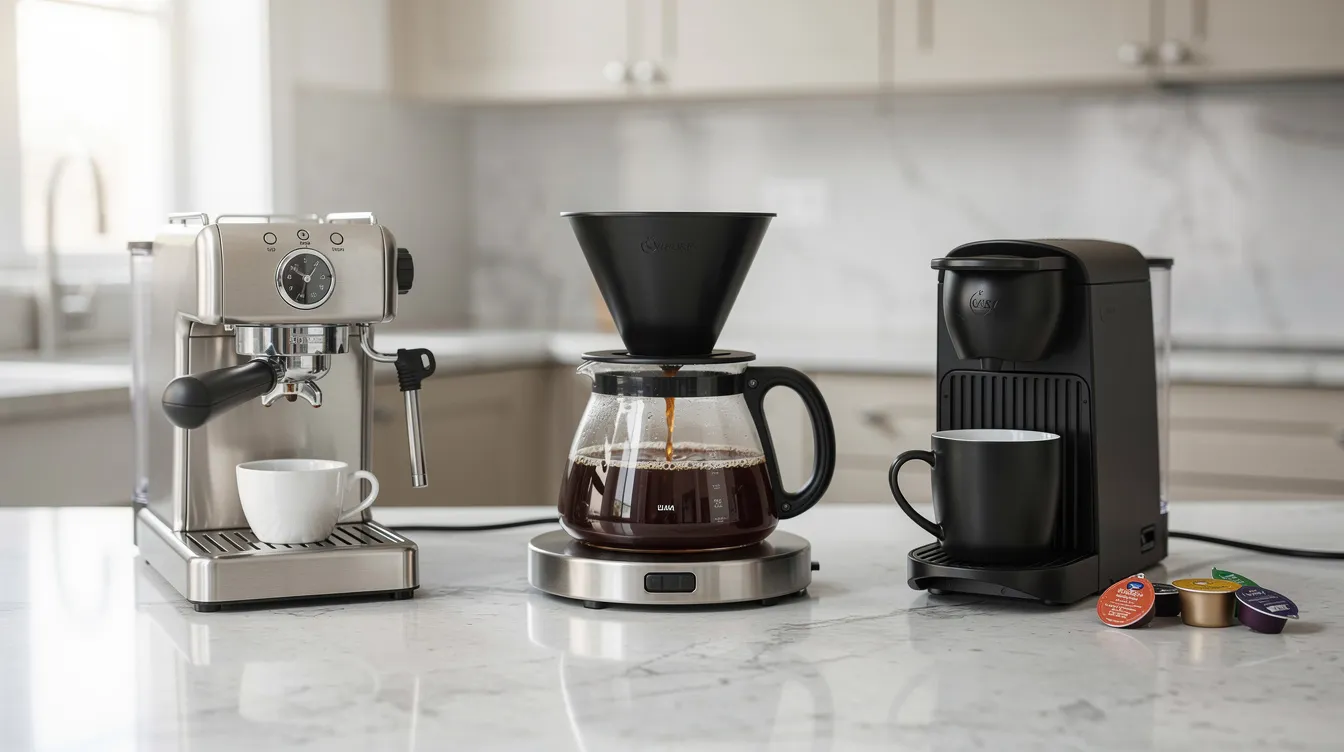
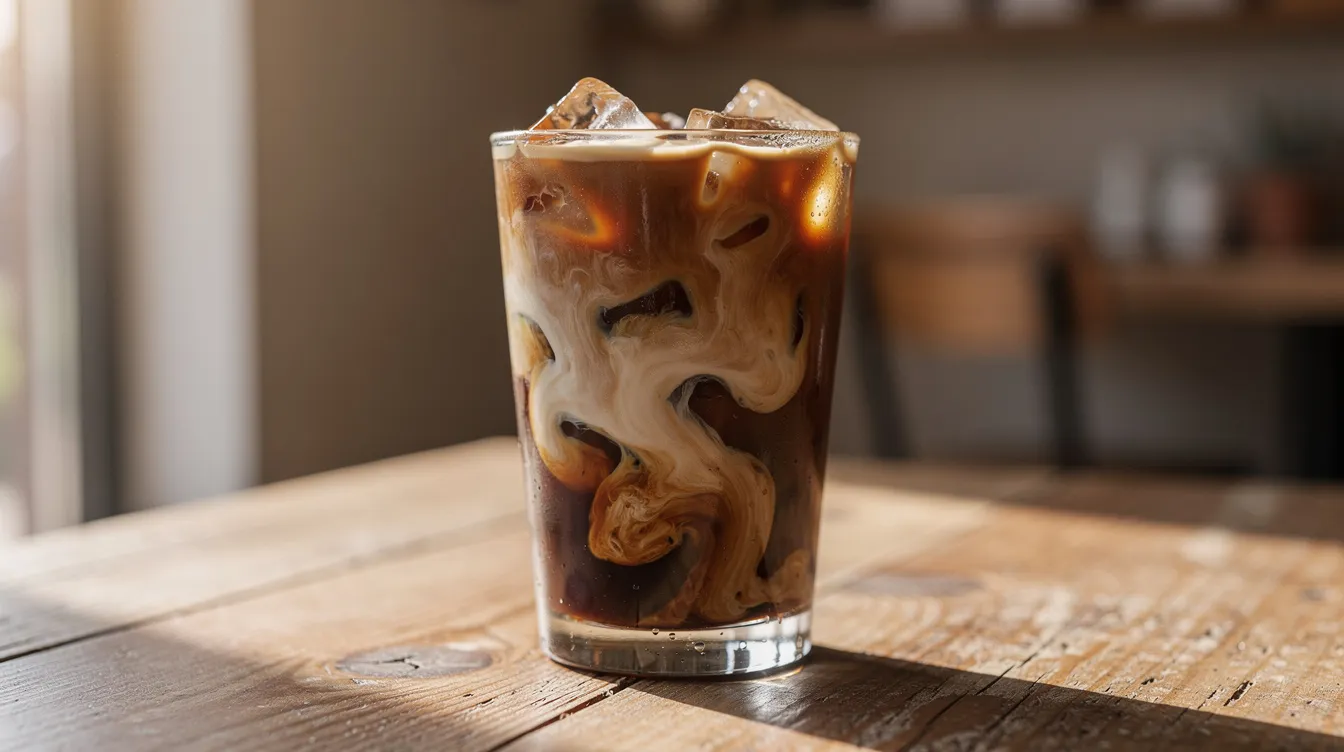
The right coffee machine depends on what you drink, how much effort you want to put in, and how much counter space you can spare. This page is Capitol City Coffee’s central hub for coffee machine comparison in 2026, built to help you sort through espresso machines, drip coffee makers, single-serve pod systems, and bean to cup machines before you commit to a specific model.
Best espresso machine pick
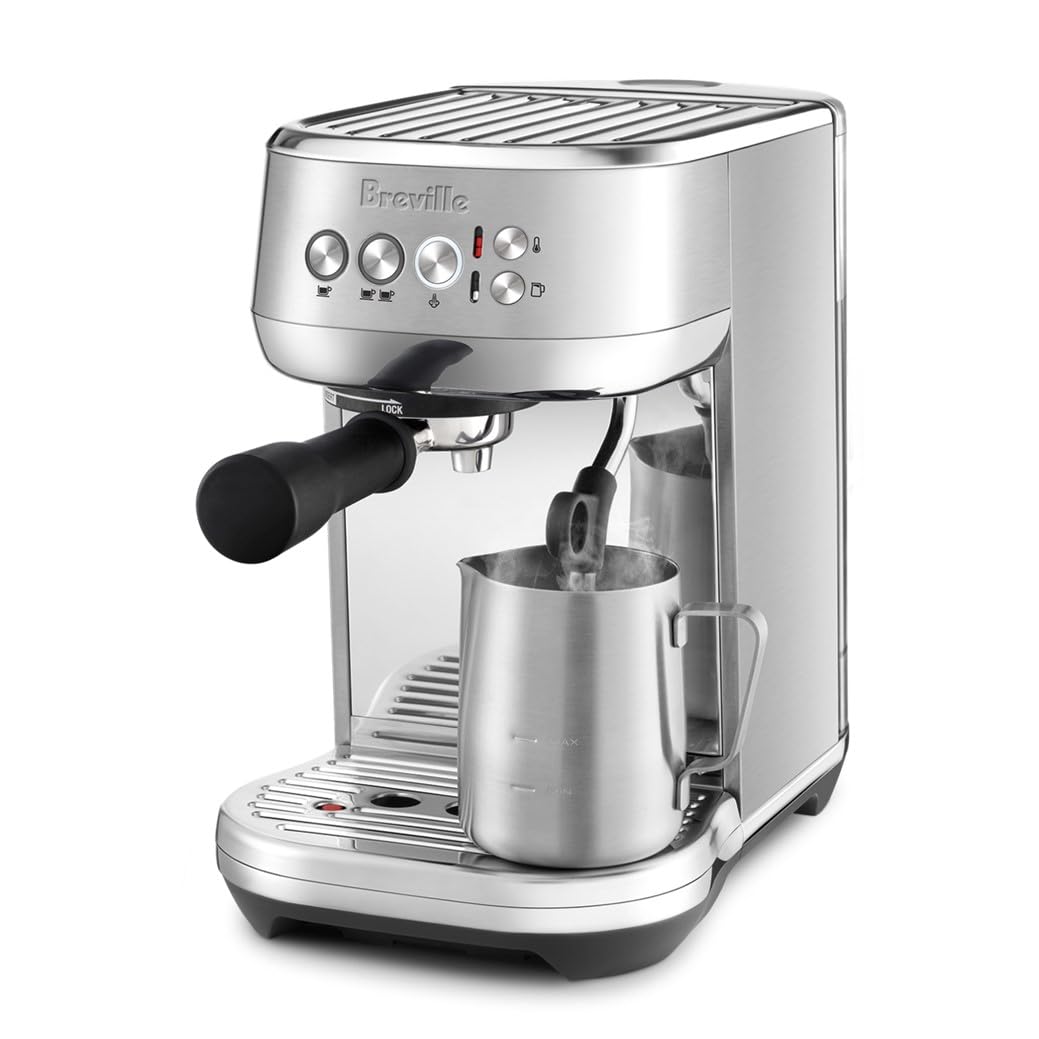
For this roundup, Breville Bambino Plus is the espresso machine we recommend first—the same pick at the top of our At-a-glance cards below.
This hub compares espresso machines vs coffee makers, manual vs automatic espresso, and pod vs bean to cup machines, with a focus on U.S. home use in 2025–2026. Choosing the right coffee maker depends on the drinker’s coffee consumption, preparation time, and coffee preferences.
Four main buyer paths emerge from every comparison: “I want real espresso” (manual or semi-auto machine + grinder), “I mostly drink drip or black coffee” (drip coffee maker or filter machine), “I need one-touch convenience” (automatic espresso or pod machine), and “I care most about budget and footprint” (compact manual or basic drip).
All recommendations on this page are based on researched editorial analysis – not hands-on testing – and rely on verified product specs, manufacturer documentation, and broad expert consensus. Brand links may be affiliate links, but commissions never affect rankings.
Coffee drinkers should consider how many cups they need each morning when selecting between different coffee machines, since batch-brew drip and single-serve pod systems serve very different households.
Deeper guides, model-level reviews, and head-to-head matchups live under our /comparisons/, /gear/coffee-makers/, /gear/espresso-machines/, /reviews/coffee-makers/, and /reviews/espresso-machines/ sections for readers ready to narrow down to a specific machine.
Category Overview: Coffee Machine Comparison in 2026
This is Capitol City Coffee’s central comparison hub, designed for U.S. readers researching coffee machines on desktop before making a purchase decision.
“Coffee machines” is a broad umbrella. It covers:
Espresso machines – pressure-based systems that produce concentrated shots with crema
Drip coffee makers – gravity-fed filter machines that brew larger batches of black coffee
Single-serve pod systems – capsule-driven brewers like Nespresso and Keurig that prioritize speed
Bean to cup machines – super-automatic units that grind, tamp, brew, and often froth milk with one button press
Each category serves different drink styles, workflows, and budgets. When someone searches “coffee machine comparison,” they usually want to narrow down between machine types – espresso maker vs coffee maker, pod vs bean to cup, manual vs automatic espresso – before picking a specific model.
This page summarizes options at a category level and links to detailed comparison pieces (espresso vs drip, Nespresso vs Keurig, and more) elsewhere on our /comparisons/ section for deeper reading.
Prices, availability, and example models referenced reflect the U.S. market in 2025–2026. Always verify current pricing before purchasing.
Affiliate & Editorial Disclosure
Some outbound product links on this page and across Capitol City Coffee may earn affiliate commissions. These commissions never influence rankings, recommendations, or editorial opinions.
Capitol City Coffee is an independent coffee editorial and affiliate publication. We do not sell coffee machines or coffee beans.
Unless otherwise noted, all picks and comparisons on this hub page are based on researched editorial analysis using verified product specifications and broad expert and consumer consensus. We have not performed our own hands-on testing of every machine discussed here. When CCC does have documented testing for a specific model, that work lives on our /reviews/ pages and is clearly labeled.
Performance, flavor, workflow, and durability assessments draw from reputable third-party sources – manufacturer specs, well-known review outlets, barista educators – referenced in plain language throughout.
How to Compare Coffee Machines (Fast Start Guide)
If you don’t want the deep dive yet, here’s a simple four-step method that works for most buyers:
Pick your primary drink style. Straight espresso and cortados? Lattes and cappuccinos? Big mugs of black drip coffee? Cold brew and iced lattes?
Choose your control level. Do you want to grind, tamp, and dial in shots yourself (manual or semi-auto), or press a button and walk away (automatic or pod)?
Decide on footprint and budget. Measure your counter. Set a realistic total budget – machine, grinder if needed, and ongoing costs.
Big pots of black coffee → drip coffee maker with thermal carafe
Iced lattes and daily convenience → automatic espresso or pod machine
Mixed household with different tastes → bean to cup or all-rounder machine
Budget-first, minimal counter → compact manual espresso or basic drip
Example scenario 1: Two-person apartment. Both partners drink morning lattes. Counter space is tight. A mid-range semi-automatic machine with a compact coffee grinder, or a slim bean to cup machine, likely covers their needs without dominating the kitchen.
Example scenario 2: Family of four. Parents drink black coffee throughout the morning; one teenager likes iced drinks. A 12-cup drip coffee maker with a programmable timer handles the bulk of demand. A small milk frother or cold brew pitcher supplements for the occasional specialty drink.
Key Decision Factors When Comparing Coffee Machines
Before jumping into specific matchups, here’s the checklist that should guide every comparison on this page:
Factor
Why It Matters
Drink type
Espresso vs drip vs cold brew each demand different machine architectures
Control level
Manual, semi-auto, or fully automatic changes effort and flavor ceiling
Workflow complexity
Time from bean to cup, including grind, tamp, steam, and cleanup
Space / footprint
Counter depth, height under cabinets, removable water tank access
Milk steaming
Steam wand vs auto-frother vs separate milk frother – crucial for milk based drinks
Maintenance
Backflushing, descaling, gasket swaps, brew unit cleaning – varies widely
Durability / materials
Stainless steel and brass internals outlast plastic; parts availability matters
Noise
Grinder and pump noise differ significantly across types
Budget tier
Entry, mid-range, and prosumer tiers set different expectations for temperature control, steam pressure, and build
A few things worth noting early:
A separate coffee grinder is often mandatory for manual espresso machines, and grinder quality has a larger impact on espresso quality than most buyers expect.
Dual boiler espresso machines excel at milk drinks but cost and weigh considerably more than single boiler alternatives.
Pod machines win on convenience but lose on per-cup cost and, for many coffee drinkers, environmental impact.
Brew pressure for espresso targets roughly 9 bar at the puck – machines advertising 15 or 20 bar are quoting maximum pump output, not what actually reaches the coffee.
Later sections apply these same factors to specific comparison sets so you can skim straight to what matters most.
Espresso Machine vs Coffee Maker (Drip) – Which Fits You?
In U.S. usage, “espresso machine” generally means a pressure-based espresso maker, while “coffee maker” normally refers to a drip or filter coffee machine.
Flavor and texture
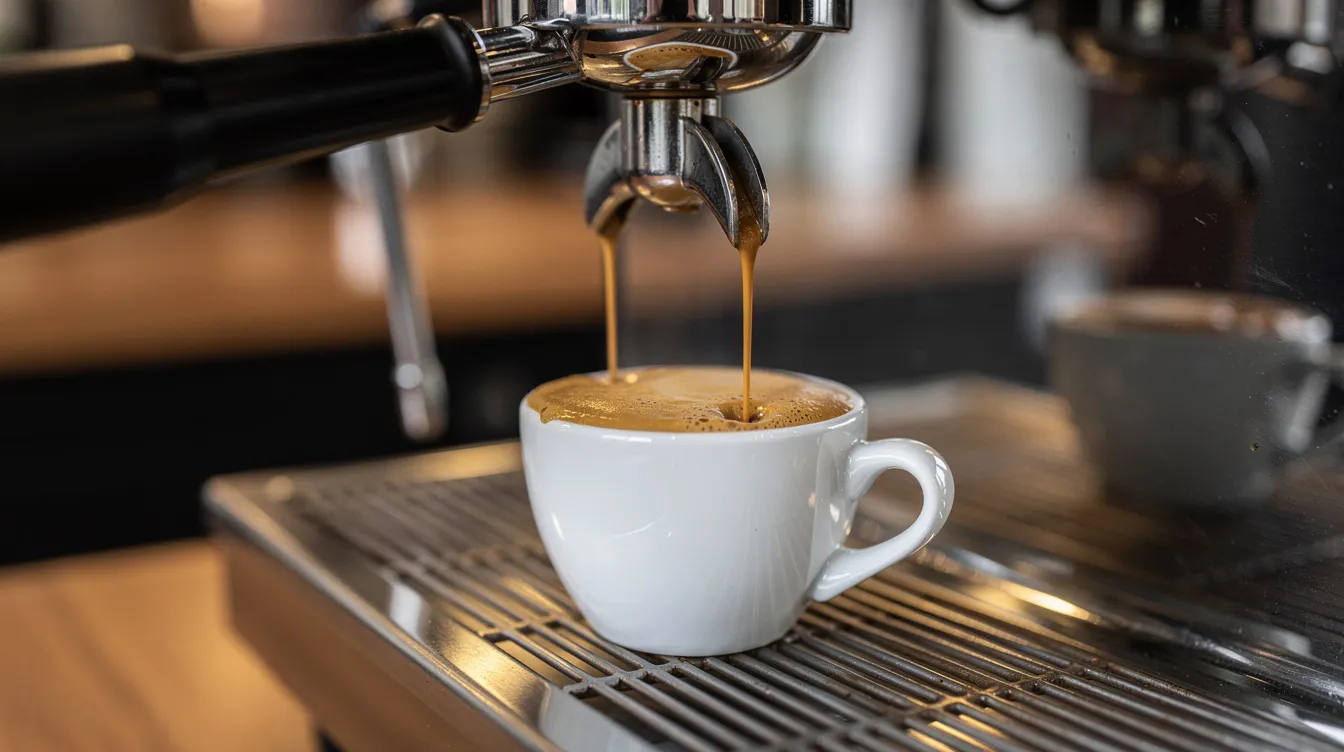
Espresso machines use high pressure to extract concentrated shots of coffee. The result is a bold, concentrated flavor profile topped with crema – typically 8–12% Total Dissolved Solids (TDS).
Drip coffee makers produce a mild, smooth, and balanced coffee flavor. Filter coffee TDS sits around 1.2–1.5%, yielding a cleaner, tea-like body.
Americanos (espresso + hot water) can mimic drip strength but not drip texture.
Workflow
Espresso machines take 2 to 3 minutes for brewing, including warm-up time, but require dialing in grind size, dose, and tamp.
Drip coffee makers take 5 to 10 minutes to brew a full pot of coffee, mostly unattended. Set the timer the night before and wake up to a ready carafe.
Milk drinks
Lattes, cappuccinos, and milk based espresso drinks require an espresso machine (or at least espresso-style pressure brewing) paired with milk steaming capability. Most drip coffee makers don’t include a steam wand – you’d need a standalone milk frother for warm milk.
Cost and ongoing expense
Drip coffee makers are generally the most economical option for brewing coffee. Ongoing costs center on coffee grounds and paper or mesh filters.
Espresso machines have moderate ongoing costs due to the need for quality grinders and fresh coffee beans. They also require more maintenance due to the complexity involved in brewing espresso drinks effectively.
Who each fits
Espresso machines are preferred by enthusiasts who enjoy creating café-style drinks at home – espresso shots, cortados, cappuccinos, flat whites.
Drip coffee makers are ideal for families or offices that need multiple cups of coffee at once, brewing large batches using gravity and hot water with minimal effort.
Manual, Semi-Auto & Automatic Espresso: How They Compare
Once you’ve decided on an espresso machine over a drip coffee maker, the next fork is how much of the brewing process you want to handle yourself.
Manual espresso machine
The user generates pressure with a lever or manual pump. Manual espresso machines offer full control over brewing parameters – grind, dose, pressure, and timing are entirely in your hands. Pros include maximum flavor potential, no pump noise, and long-term durability. Cons: steep learning curve, need for a separate coffee grinder, and more time per shot if you’re deciding whether this style is the best espresso machine for your preferences.
Semi-automatic machines
Semi-automatic machines require user input for brewing but automate some tasks – the pump builds pressure while you grind, dose, tamp, and start or stop extraction. Models like the Breville Barista Express Impress and the Gaggia Classic Pro sit here. The Breville Barista Express Impress automates dosing and tamping, bridging the gap between manual and fully automatic. In-between machines like this assist with dosing and tamping for easier use while keeping the portafilter workflow that espresso enthusiasts love.
Automatic and super-automatic espresso machines
Fully automatic machines grind, dose, brew, and dump the puck with minimal user intervention. They offer one-touch convenience for espresso and milk drinks. Most fully automatic machines produce lungo or café crema–style shots rather than the intense, traditional double espresso a semi-auto can deliver. Automatic machines typically have built-in grinders for fresh coffee, and they are ideal for users who prioritize speed and consistency over deep tinkering.
Pod espresso machines simplify brewing even further with pre-packaged capsules – no grinder, no dosing, no tamping.
Who each suits
Manual and semi automatic machines: hobbyists, barista-curious users, and those who want to grow into prosumer machines like the Breville Dual Boiler.
Automatic espresso: busy households that just want reliable milky coffees and barista style drinks at 6 a.m. without a learning curve.
Single Boiler, Heat Exchanger & Dual Boiler Espresso Machines
This comparison matters once you’ve decided on a traditional espresso machine rather than a pod or fully automatic system.
Single boiler machines
A single boiler machine shares one boiler between brewing and steaming. The Gaggia Classic Pro is a popular entry-level espresso machine in this category – affordable, compact, and capable of quality espresso, but you’ll wait between pulling a shot and steaming milk. The De’Longhi Stilosa is a budget-friendly espresso machine under $150 that also uses a single boiler design.
Heat exchanger machines
Heat exchanger designs route water through a steam boiler to reach brew temperature, enabling simultaneous brewing and steaming. They’re common in prosumer price ranges and work well for households making a few milk drinks in a row, though temperature management can be more complex.
Dual boiler machines
Dual boiler machines use independent brew and steam boilers. This delivers rock-solid temperature stability and café-style steam pressure for back-to-back milk drinks. The Breville Dual Boiler provides powerful steam for textured microfoam and precise temperature control via PID temperature control on both boilers. Dual boilers are the top choice for latte lovers making multiple drinks each morning.
How to choose
Occasional cappuccino drinker? A single boiler machine like the Gaggia Classic handles it fine with a short pause between tasks.
Making four lattes before school drop-off? Dual boiler machines pay for themselves in workflow speed and brew temperature consistency.
Bean to Cup Machines vs Manual Espresso + Grinder
This is the comparison for readers weighing full automation against the hands-on craft of traditional espresso.
How bean to cup machines work
Bean to cup machines grind, tamp, brew, and eject pucks internally. Press a button, and you get an espresso, Americano, or often a milk drink with minimal cleanup. A milk carafe or auto-frother handles steaming. The trade-off: built-in grinders often lack the precision and step range of dedicated burr grinders, and espresso tends toward milder, café crema–style drinks.
Manual espresso + dedicated grinder
A separate burr coffee grinder, portafilter machine, and tamping routine demand more attention but allow deeper control over grind size, dose, and extraction time. Well-dialed manual setups with good grinders can achieve higher coffee quality and more intense single and double espresso shots.
Flavor and freshness
Both approaches depend on fresh coffee beans. Freshly roasted coffee beans enhance aroma and flavor. Stale coffee beans lead to weak and watery coffee. Using fresh beans can significantly improve espresso quality, and fresh coffee beans are essential for rich crema in espresso. Coffee should be brewed within two weeks of roasting for best taste.
Ownership considerations
Bean to cup: brew unit cleaning, internal grinder maintenance, potential for complex internal repairs.
Manual: grouphead backflushing, gasket replacement, steam wand cleaning – simpler parts, easier to service long-term.
Manual setups scale better with increasing coffee knowledge. You can upgrade the grinder independently. With a bean to cup, you’re largely locked into the machine’s built-in grinder quality.
Pod & Capsule Systems: Nespresso vs Keurig
Many readers start their search here. Pod machines offer the fastest path to a cup of coffee, but Nespresso and Keurig serve very different drink styles.
Nespresso
Nespresso’s OriginalLine focuses on short espresso shots with real crema. The Vertuo platform adds barcode-driven sizing up to roughly 18 oz using centrifusion technology. Third-party capsule options exist but are more limited than Keurig’s ecosystem.
Keurig
Keurig’s K-Cup system excels at larger mug-sized drip coffee, flavored coffees, and non-coffee beverages (tea, hot chocolate). The ecosystem includes dozens of third-party and store brands. However, Keurig cannot produce true espresso – there’s no meaningful crema.
Taste comparison
Nespresso: closer to espresso, better base for short milk drinks.
Keurig: fast, long cup coffee with wide flavor variety, closer to instant coffee in body compared to true espresso.
Cost per pod
Per-pod pricing data from mid-2026 shows meaningful differences:
System
Median Cost Per Pod
K-Cup
~$0.58 (bulk/store brands ~$0.40)
Nespresso Original
~$0.57
Nespresso Vertuo
~$1.12–$1.35
Whole beans (per 8-oz cup)
~$0.60
Single-serve coffee machines have high ongoing costs because of pod expenses. Over a year of daily use, Vertuo capsules can cost roughly $900 in consumables alone, while drip machines with whole beans may stay under $250.
Environmental considerations
Aluminum pods (Nespresso) vs plastic pods (Keurig) carry different recycling profiles. Compostable third-party pods and reusable filter pods (especially for Keurig) are increasingly available but depend heavily on consumer behavior.
Who each fits
Nespresso: espresso-curious solo users, anyone who wants short milk drinks without grinder hassle.
Keurig: offices, break rooms, households wanting fast variety in larger cup sizes.
Single-serve machines are suited for busy individuals wanting quick and easy coffee options without cleanup. Single-serve coffee machines use pre-measured pods to brew individual cups quickly – most brew a cup in 30 to 60 seconds. Single-serve coffee machines allow for varying strengths depending on the pod. Single-serve machines provide convenience but come with cost-per-cup disadvantages due to pod pricing.
Drip vs Single-Serve: Carafe Coffee or One Cup at a Time?
This is the classic choice for U.S. households that don’t need espresso but want to compare everyday coffee maker formats.
Drip coffee makers
Filter coffee machines with glass or thermal carafes brew 4–12 cups at once. Programmable timers and brew-strength controls are standard at most price points. A hot plate keeps glass carafes warm (though it can scorch coffee over time); thermal carafes hold heat without a hot plate. Drip coffee makers brew large batches using gravity and hot water, and the coffee making process is straightforward: add ground coffee or pre ground coffee, fill the removable water tank, and press start.
Single-serve brewers
Pod-based single serve coffee makers brew one mug at a time without waste from leftover pots. Speed is the primary advantage – most finish in under a minute. The cost per serving is higher, and flavor variety depends on the pod ecosystem.
Freshness
Drip batch-brewing can leave coffee sitting for an hour or more. Single-serve brews on demand, delivering a fresh cup every time. For regular coffee drinkers who share pots or sip throughout the morning, drip machines remain the better value. For solo drinkers or offices with varied taste preferences, single-serve offers speed and variety.
Milk Steaming & Latte Workflow Across Machine Types
For many buyers, the ability to steam milk and create milk based drinks matters more than straight espresso performance. Here’s how each machine type handles it.
Traditional steam wands
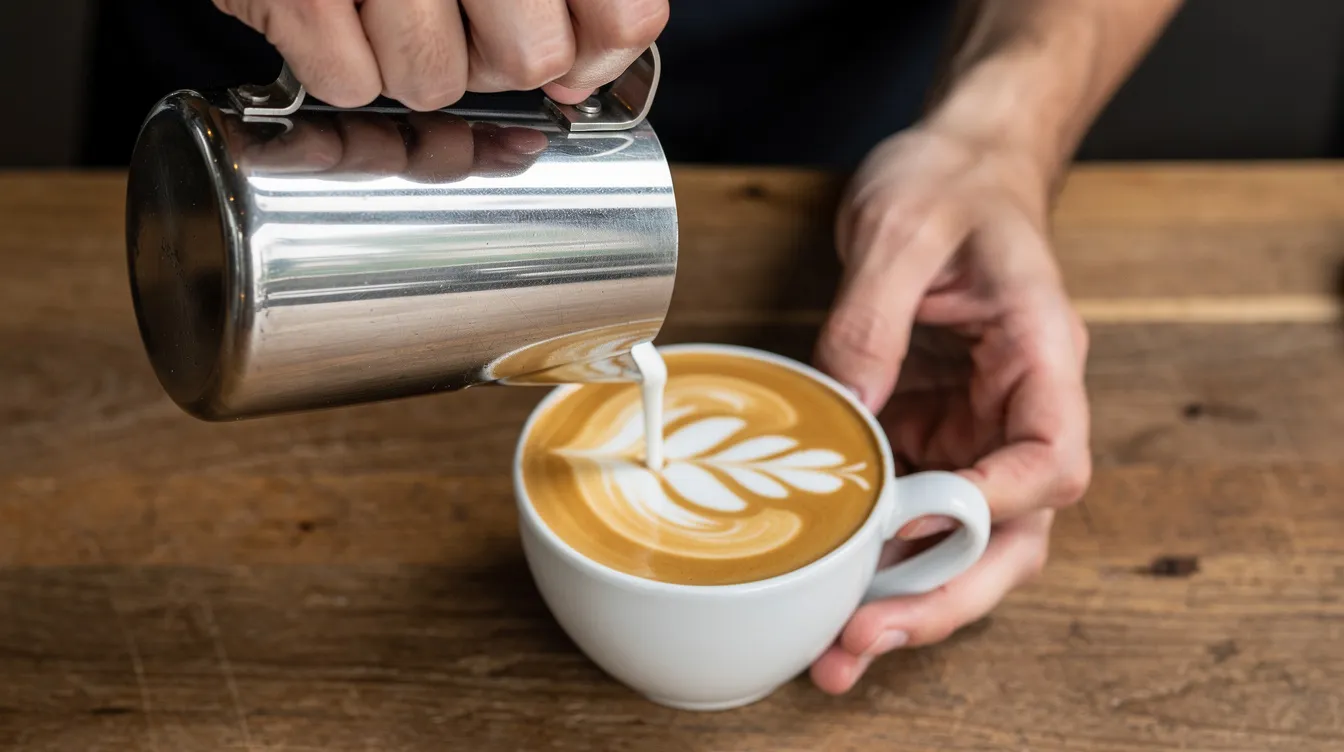
Manual and semi-automatic espresso machines feature a steam wand that gives full control over milk texture. With practice, you can produce microfoam capable of latte art – the kind you see in coffee shops. The learning curve is real, but mastering it is part of what draws espresso enthusiasts to these machines.
Notable examples from third-party consensus:
The Breville Bambino Plus creates microfoam suitable for latte art and heats up in just three seconds.
The Gaggia Classic Pro produces fine microfoam for lattes despite being an entry-level machine.
The Breville Dual Boiler provides powerful steam for textured microfoam, making it one of the favorite espresso machines among latte lovers.
Automatic milk systems
Bean to cup machines and some pod machines use milk carafes or auto-frothers that handle milk frothing with a button press. Consistency is high, but customization is limited.
The De’Longhi Rivelia offers silky microfoam for lattes through its automatic system.
The Gaggia Anima allows for customizable milk frothing temperature, unusual for an automatic machine.
Workflow considerations
With a single boiler machine, you typically pull espresso first, then switch to steaming. Dual boilers let you do both simultaneously – critical if you’re making multiple iced lattes or cappuccinos before anyone leaves the house. Steam pressure matters: underpowered machines struggle with larger pitchers and cooler morning milk.
If you want to pour latte art consistently, a semi-auto or manual setup with a proper steam wand is the path. If you want push-button cappuccinos, automatic milk systems on bean to cup machines deliver acceptable results without the skill requirement.
Footprint, Noise & Kitchen Integration
This comparison area is overlooked more often than it should be. A machine you love on paper can frustrate you daily if it doesn’t fit your counter or wakes up the household.
Footprint
Compact pod machines and small manual espresso makers typically occupy under 8 inches of counter width.
Most espresso machines sit 12–15 inches deep, sometimes more with rear-fill water reservoirs.
Bean to cup machines and dual boiler setups tend to be the largest, often 14–18 inches wide with side-mounted water tanks.
Drip coffee makers vary widely – slimline models exist, but 12-cup carafes need substantial depth.
Clearance
Tall drip coffee makers with top-fill reservoirs may not fit under standard upper cabinets. Rear-fill reservoirs require pulling the machine forward to refill. Front-access and removable water tank designs simplify daily use in tight kitchens.
Noise
Noise data from testing aggregators shows clear differences:
Component
Approximate Range
Vibration pump (most espresso machines)
65–75 dB
Rotary pump (prosumer/commercial machines)
50–65 dB
Built-in grinder
70–90 dB
Manual lever brewing
Nearly silent
Basic drip coffee maker
Very quiet
For small apartments with shared walls, a rotary pump or manual espresso machine paired with an external quiet grinder may be the smartest move. Bean to cup machines with integrated grinders tend to be the loudest category overall.
Maintenance, Descaling & Long-Term Ownership
The best coffee machine isn’t just about day-one flavor – it’s about how easy it is to keep running well for years.
Routine maintenance by category
Machine Type
Key Maintenance Tasks
Manual / semi-auto espresso
Backflushing, gasket and shower screen replacement, steam wand purging, descaling
Super-automatic / bean to cup
Brew unit removal and rinsing, milk system cleaning, internal descaling cycles
Drip coffee makers
Filter changes (paper or mesh), carafe cleaning, occasional descaling
Hard water accelerates scale buildup inside boilers and heating elements. Using filtered water or a dedicated water pitcher reduces descaling frequency and protects internal components. Some machines include built-in water filters; others rely on external filtration.
Parts and service
Common brands with established U.S. service networks – Breville, De’Longhi, Jura, Gaggia – tend to have accessible spare parts and support. Niche or import brands may mean longer waits and higher shipping costs for replacement components.
Factor in filter cartridges, descaling solutions, and potential out-of-warranty repair costs when comparing overall value. A stainless steel or brass-bodied machine may cost more upfront but often outlasts plastic-bodied alternatives by years.
Budget Tiers & Value: From Entry-Level to Prosumer
Budget is one of the biggest differentiators when comparing machine types, and the sticker price alone tells only part of the story.
U.S. price tiers (2025–2026)
Tier
Approximate Range
What You’ll Find
Entry-level
Under ~$200
Pod machines, basic drip coffee makers, compact manual espresso (e.g., De’Longhi Stilosa, some Nespresso units)
Mid-range
~$200–$800
Better semi automatic machines with or without integrated grinders (Breville Barista Express Impress, Gaggia Classic Pro + grinder), advanced drip with thermal carafes
Prosumer
~$800–$2,000+
Dual boiler machines (Breville Dual Boiler), high-end bean to cup, commercial machines scaled for home use
What improves as budgets increase
Temperature stability and precise temperature control (PID controllers)
Steam power for milk drinks
Build materials (stainless steel, brass boilers vs plastic)
User interfaces and programmability
Serviceability and parts availability
Pressure gauge readouts for dialing in shots
The grinder factor
When comparing a manual espresso setup to a bean to cup machine or pod system, you must include grinder cost. A decent burr coffee grinder starts around $200 and can easily reach $500+ for stepless, low-retention models. Pod machines and bean to cup machines don’t require a separate grinder, but their built-in grinders rarely match dedicated units in particle size uniformity.
Prioritize a solid grinder plus quality coffee beans over cosmetic machine upgrades. A great grinder paired with a modest espresso maker will outperform a fancy machine paired with a mediocre grinder almost every time.
Avoid overpaying for headline bar-pressure numbers or gimmicky features. A pressure gauge is useful; a 20-bar spec that never reaches the coffee is marketing.
Featured Machine Comparisons by Use Case
Think of this section as a menu. Find the matchup that fits your habits, then follow the link to deeper content.
Best manual espresso machine vs barista-assisted integrated grinder – for buyers torn between full control and guided convenience. Archetypes: Gaggia Classic Pro vs Breville Barista Express Impress. Detailed comparison below.
Bean to cup vs pod for latte lovers – for households that want daily milk drinks with minimal effort. Tradeoff: higher upfront cost (bean to cup) vs higher running cost (pods). Covered below.
Compact espresso maker vs small drip machine – for limited counter space where one machine must do everything. Key factor: drink preference matters more than footprint.
Cold brew and iced coffee options vs hot-optimized machines – for readers who drink iced drinks year-round. Machines like the Ninja Luxe Café Pro 701 offer dedicated cold modes; most espresso machines don’t.
Prosumer dual boiler (e.g., Breville Dual Boiler) vs high-end super-automatic – for buyers with $1,000+ budgets deciding between craft control and automated convenience.
These are illustrative matchups, not exhaustive rankings. Neutral comparison language applies: “suited to,” “better for X,” “tradeoff is Y.”
Manual Espresso vs Barista-Assisted Integrated Grinder Machines
This comparison is for readers torn between a classic manual espresso setup and newer machines that add automated dosing, tamping, and built-in grinders.
The manual camp
The Gaggia Classic Pro represents the manual archetype: a single boiler machine with a commercial-style 58mm portafilter, simple controls, and decades of aftermarket support. It demands a separate grinder, a tamper, and a willingness to learn. The reward is deep control, longevity, and a clear upgrade path – you can swap grinders, add PID temperature control kits, and keep the same machine for 10+ years.
The barista-assisted camp
The Breville Barista Express Impress automates dosing and tamping while retaining a portafilter workflow. The built-in grinder handles grinding and dose assistance, simplifying the coffee making process significantly. The trade-off: the internal grinder, while good for its class, won’t match a standalone grinder at the same total system price.
Flavor, learning curve, and upgrades
Flavor potential: a Gaggia Classic paired with a quality grinder can produce best espresso rivaling many commercial machines for home use. The Breville Barista Express Impress reaches very good quality espresso with less effort.
Learning curve: the Gaggia demands more of you. The Breville guides you.
Upgrade path: manual setups let you swap grinders and add accessories. All-in-one machines are harder to upgrade piecemeal – eventually you replace the whole unit.
Practical guidance
Budget-conscious, patient, and able to spare counter space for two items: manual espresso + grinder, often the best espresso machine match for your budget, patience, and setup.
Less time, less patience, prefer one footprint: barista-assisted all-in-one.
Fully Automatic Bean to Cup vs Pod Systems for Convenience
Both categories promise speed and simplicity, but they get there differently.
Flavor style
Bean to cup machines grind fresh coffee beans before every drink, delivering espresso-like (if sometimes milder) flavor. Pod machines prioritize consistency and variety – each capsule is pre-measured, sealed, and often nitrogen-flushed for shelf stability.
Automatic machines in the bean to cup category typically produce delicious coffee that leans toward longer, café crema–style drinks rather than intense traditional espresso.
Upkeep
Bean to cup: remove and rinse the brew unit regularly, clean the milk system after each use if applicable, run periodic descaling cycles.
Pod machines: empty the drip tray and capsule container, descale occasionally, wipe down. Far less daily maintenance.
Costs
Bean to cup machines carry a higher upfront price (often $600–$2,500) but lower per-cup costs when using whole bean coffee. Pod systems cost less to buy but accumulate higher ongoing expenses through capsule pricing.
Recommendations
Bean to cup for daily coffee households willing to invest more up front and who want great tasting coffee from fresh beans every day.
Pods for occasional drinkers, offices, or spaces where minimal maintenance is non-negotiable.
Drip Machines vs “All-Rounder” Coffee Centers
Classic drip coffee makers and multi-function “all-rounder” machines serve different philosophies.
Dedicated drip machines
Filter coffee machines do one thing and do it well: brew a large pot of clean, balanced drip coffee. Reliability, batch capacity, simpler maintenance, and lower cost are the advantages. For households that mostly drink black drip coffee, a purpose-built drip machine is hard to beat.
All-rounders
Versatile machines can brew espresso, drip coffee, and milk drinks from one chassis. The Ninja Luxe Café Pro 701 makes espresso, cold brew, and drip coffee and offers 25 drink settings for variety. These machines add flexibility but often have larger footprints, more complex interfaces, and more maintenance routines.
Who should consider each
If everyone in the house drinks filter coffee, a dedicated best coffee makers–tier drip machine with a thermal carafe is the right call.
If roommates or family members want espresso, drip, iced drinks, and cold brew from one machine, an all-rounder reduces appliance count at the cost of some specialization.
Cold brew and iced-style drinks are now major drivers of machine design, making them an important comparison angle.
True cold brew vs machine “cold modes”
True cold brew involves long steeping (12–24 hours) in cold or room-temperature water, typically in a dedicated cold brew pitcher or immersion brewer. Some automatic and all-rounder machines offer “cold brew–style” modes that adjust brew temperature, flow rate, or recipe to approximate cold brew in minutes rather than hours.
Machines with cold capability
The Ninja Luxe Café Pro 701 features a dedicated cold brew mode and cold foam system, making it unusually versatile among home coffee machines.
The De’Longhi Eletta Explore creates cold milk foam for iced drinks, adding a layer of texture most automatic espresso machines lack.
Who needs cold features
U.S. readers in hot climates, year-round iced latte fans, and households with afternoon cold brew habits should weigh cold-focused features heavily. Those primarily interested in cold brew may get better value from a simple immersion brewer plus a basic kettle and a coffee grinder rather than a complex hot-focused espresso machine.
Related Gear & Review Links
Once you’ve narrowed down to a machine category, the next step is specific model comparisons and buying guides:
Drip and filter coffee buyers: head to our drip coffee maker guides under /gear/coffee-makers/ and model-level reviews at /reviews/coffee-makers/ for detailed performance notes and current pricing.
Espresso machine buyers: find home espresso machines coverage at /gear/espresso-machines/ and in-depth reviews at /reviews/espresso-machines/, including breakdowns of the Breville Bambino Plus, Gaggia Classic Pro, Breville Dual Boiler, and more.
Head-to-head comparison articles: deeper matchups (espresso machine vs coffee maker, Nespresso vs Keurig, manual vs automatic espresso) live under /comparisons/ and specifically /comparisons/machines/.
This hub stays high-level. Those pages provide granular specs, pros and cons, and up-to-date pricing.
How Capitol City Coffee Researches Coffee Machine Recommendations
Capitol City Coffee is an independent coffee editorial and affiliate publication focused on clear, practical buying guidance for U.S. coffee drinkers.
Machine comparisons are built from:
Manufacturer documentation and verified product specifications
Well-established third-party testing outlets (TechRadar, Tom’s Guide, and similar)
Barista educators and specialty coffee community consensus
Aggregated user feedback patterns rather than isolated anecdotes
When CCC hasn’t performed its own hands-on testing for a specific machine, recommendations are labeled as researched editorial analysis and limited to claims supportable by published data and multiple sources. Flavor, workflow, noise, and durability assessments favor repeated patterns across reviews and user feedback.
Affiliate relationships do not determine which machines or categories are recommended. Clarity and fit to reader needs come first. Content is updated regularly as new machines – including 2025–2026 models – emerge.
Our Machine Comparison Picks
Two machines that cover espresso and drip on this page. Tap the image or the product name. Research-rated, not yet used in our kitchen.
Feeling espresso: a compact machine
Our pick:Breville Bambino Plus. A compact espresso machine for the espresso side of this comparison. Research-rated, not yet used in our kitchen.
Feeling drip: a batch brewer
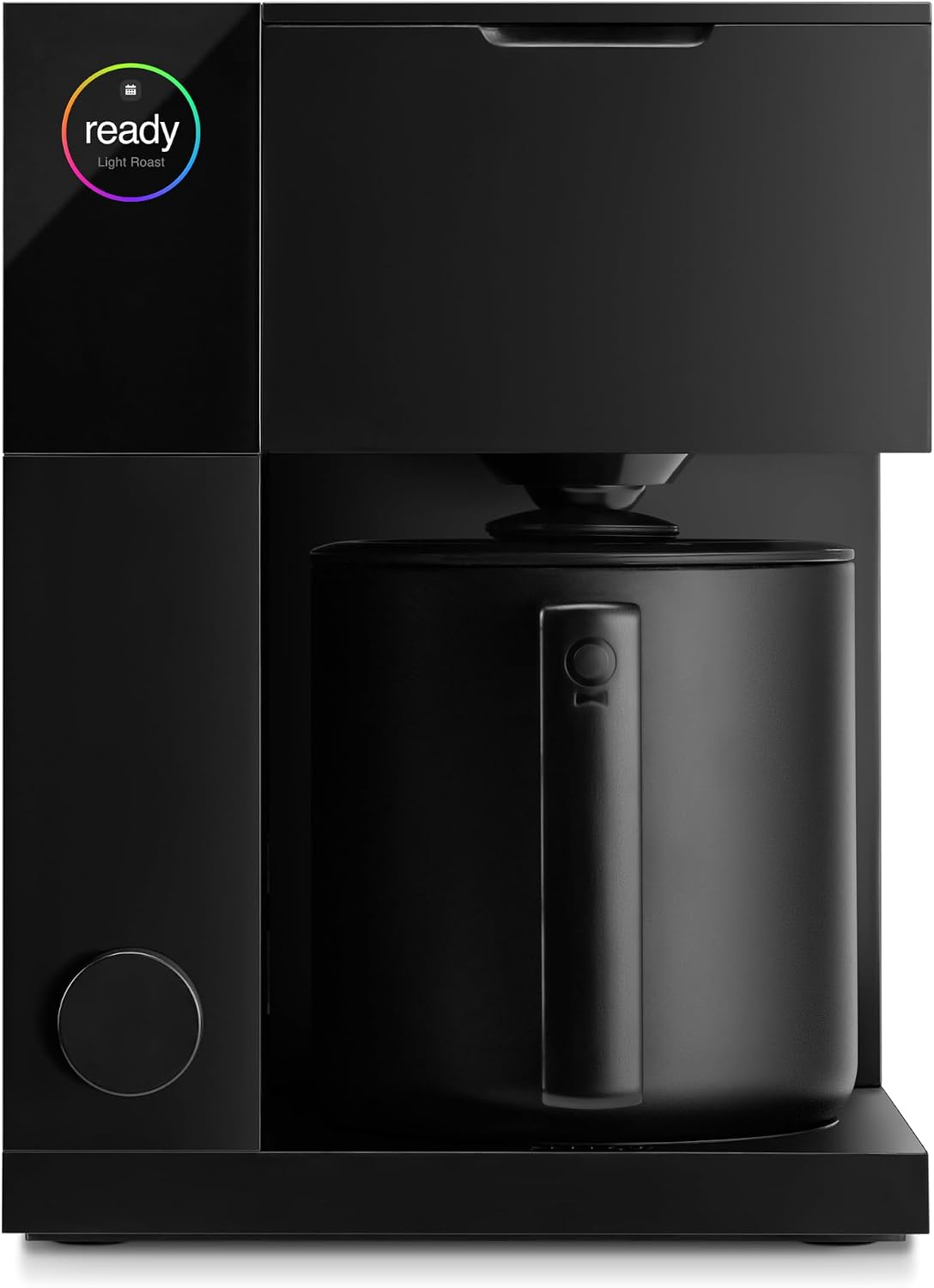
Our pick:Fellow Aiden. A programmable drip brewer when this page is about batch coffee, not espresso. Research-rated, not yet used in our kitchen.
FAQs: Coffee Machine Comparison
These FAQs cover common questions that go beyond the main comparison sections, addressing edge cases and practical concerns for hesitant buyers.
What’s the best coffee machine if I live in a small apartment?
Compact manual espresso machines, small drip brewers, and slim pod machines typically fit best on shallow countertops with limited outlets. Prioritize vertical designs, front-access removable water tank configurations, and quieter pumps or rotary pump machines to avoid disturbing neighbors through shared walls.
Bean to cup machines and large dual boiler setups often feel oversized in studio kitchens. Consider pairing a small pod or manual espresso maker with an electric kettle for hot water rather than buying a large all-in-one center. Measure your counter depth and height under cabinets before committing.
Can one machine really do both great espresso and great drip coffee?
Hybrid and “all-rounder” machines can be very good generalists, but they rarely match a top-tier espresso machine and a dedicated specialty drip coffee maker at the same time. Common compromises include shared grinders that can’t optimize for both coarse drip and fine espresso, fixed brew temperature settings, and more complex maintenance routines.
Choose all-rounders when you value versatility and counter simplicity. Separate espresso and drip gear when absolute quality in each style is the goal.
Do I need a separate coffee grinder for my machine?
Manual and most semi-automatic espresso machines require a high-quality burr coffee grinder to reach their potential, especially with modern espresso beans. Bean to cup machines have internal grinders that handle this automatically. Pod machines and many drip coffee makers can use pre ground coffee, though flavor benefits from grinding fresh.
When comparing categories, factor grinder cost ($200+ for a quality burr grinder) and counter space into the manual espresso vs automatic or pod decision.
How long should a good coffee machine last?
Lifespan varies by build quality, usage, and maintenance. Well-kept manual and prosumer home espresso machines – especially those with stainless steel, brass, and copper internals – can last a decade or more. Entry-level pod or plastic drip machines are typically 3–7 year appliances.
Check warranty terms and availability of replacement parts when comparing brands and machine types. A machine with an accessible service network and standard-size gaskets and valves will serve you longer than one with proprietary parts from a niche manufacturer.
Is it worth upgrading from pods to a manual espresso machine?
Moving from pod machines to a manual espresso machine can significantly improve espresso quality and milk drink texture, and it can be a worthwhile upgrade for readers chasing the best espresso machine experience if they’re comfortable with the added learning curve. The upgrade also involves buying a grinder, fresh beans, and basic accessories like a tamper and milk pitcher, increasing both cost and effort.
Readers who enjoy tinkering and already buy specialty coffee beans are prime candidates for upgrading. Those who value speed above all might prefer staying with pods or moving to a bean to cup machine instead – you’ll get better flavor than pods without the manual learning curve.
Start with your drink, not the machine, and the comparison narrows itself. Use this hub as your starting point, then follow the links to model-specific reviews and deeper comparison guides when you’re ready to choose.
How Capitol City Coffee Rates Coffee and Coffee Machines
Every coffee and coffee machine we recommend is scored on the same 100-point scale, so a recommendation on one page means the same thing as a recommendation on any other. Each pick is also labeled with how we reached its score.
Research-ratedScored from the roaster or manufacturer’s published specifications, independent results such as Coffee Review blind cuppings and SCA brewer certification, and patterns across verified buyer reviews. Most of our current picks are research-rated.
Hands-on testedThe Capitol City Coffee team has brewed the coffee or used the machine ourselves, following the testing steps below. We only use this label when that testing actually happened, and we show the date we tested.
Coffee beans: 100-point scale
What we score
Points
What we look at
Origin and sourcing transparency
20
Country, region, farm or cooperative, altitude, bean variety, and processing method are clearly disclosed.
Flavor evidence
25
Independent cupping scores, how closely the tasting notes match what the origin is known for, and our own cupping notes when hands-on tested.
Roast and freshness
15
Roast level stated, roast-date practices, whole-bean availability, and packaging with a one-way valve or resealable bag.
Brew versatility
15
How well the roast suits pour-over, drip, French press, cold brew, and espresso.
Value
15
Price per ounce compared with similar single-origin coffees or blends.
Buyer feedback
10
Volume and consistency of verified reviews, and recurring complaints about staleness, bitterness, or shipping.
Coffee machines and gear: 100-point scale
What we score
Points
What we look at
Brewing performance
25
Water temperature in the 195–205°F range, even extraction, and SCA certification or published test data.
Build quality and reliability
20
Materials, known failure points, and long-term owner reports.
Ease of use and cleaning
15
Setup, the daily routine, descaling, and dishwasher-safe parts.
Fit for your kitchen
10
Capacity, counter footprint, and noise.
Useful features
10
Programming, grind and temperature control, and carafe type. Features that improve the cup count more than extras that do not.
Value
10
Price compared with machines that perform similarly.
Warranty and support
10
Warranty length, parts availability, and how the brand handles repairs.
What the grades mean
Score
Grade
What it means
90–100
A
Exceptional. Our first recommendation for the feeling and setting described.
80–89
B
Strong. Excellent, with minor trade-offs we explain.
70–79
C
Good. Worth it for specific needs, with clear compromises.
Below 70
—
Not recommended. We do not feature these as picks.
How we test hands-on
When a pick carries the Hands-on tested label, this is the method behind it, and we note the date we tested.
Coffee: brewed fresh from whole beans following Specialty Coffee Association guidelines (water between 195 and 205°F, about 1 gram of coffee to every 15 to 18 grams of water) in the brew methods the roast suits best, such as pour-over, French press, or espresso. We taste it black first, then with milk if that is how most people drink it, and each taster scores it on their own before we compare notes.
Machines: used in our everyday routine rather than a single demo. We brew both full and small batches, check the brewing temperature and brew time, and run the cleaning or descaling steps the manual calls for.
How we choose the feeling and setting
We match each coffee to a mood and a moment based on its flavor profile and roast. Bright, citrusy light roasts suit energizing mornings. Chocolatey, full-bodied medium roasts suit slow or social moments. Richer roasts suit espresso and milk drinks. Each pick explains which facts led us to that match.
Our scores stay independent
Every score comes only from the criteria above. No brand can pay for a pick or a higher grade. We re-check ratings when a roast, listing, or model changes, and update or remove picks that no longer earn their grade.
Some links on this page are affiliate links. As an Amazon Associate, Capitol City Coffee earns from qualifying purchases, at no extra cost to you.
Questions about a rating? Reach the Capitol City Coffee team through our contact page.