

20 grinders to buy, by job
- Everyday + espresso Encore ESP Pro
- Small kitchen OXO Compact
- Pour-over Ode Gen 2
- Value espresso DF54
- Hybrid Opus
- Single-dose DF64
- Travel Timemore C3S
- Coarse Encore
- Quiet espresso Specialita
- Timed brew Virtuoso+
- Breville Smart Grinder Pro
- Budget burr Capresso
- Manual espresso J-Max
- Manual all-rounder K6
- Family drip OXO Conical
- Stepped espresso Sette 270
- Entry burr Cuisinart DBM-8
- Cheap manual Hario Slim Plus
- Dose control Dose Control Pro
- Premium manual K-Ultra
Everyday + espresso
Baratza Encore ESP Pro
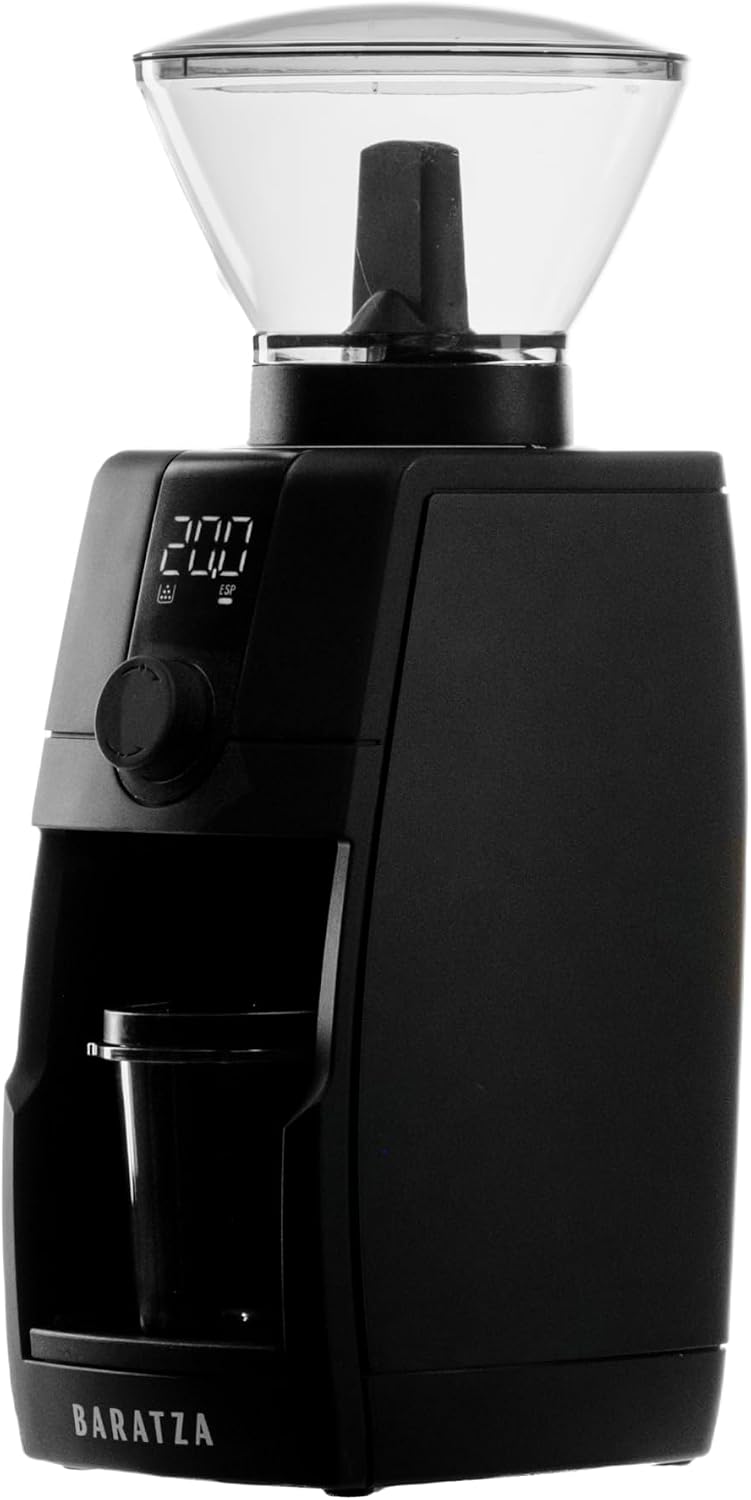
Split espresso and filter range on 40 mm conical burrs.
Check Encore ESP Pro on AmazonSmall kitchen
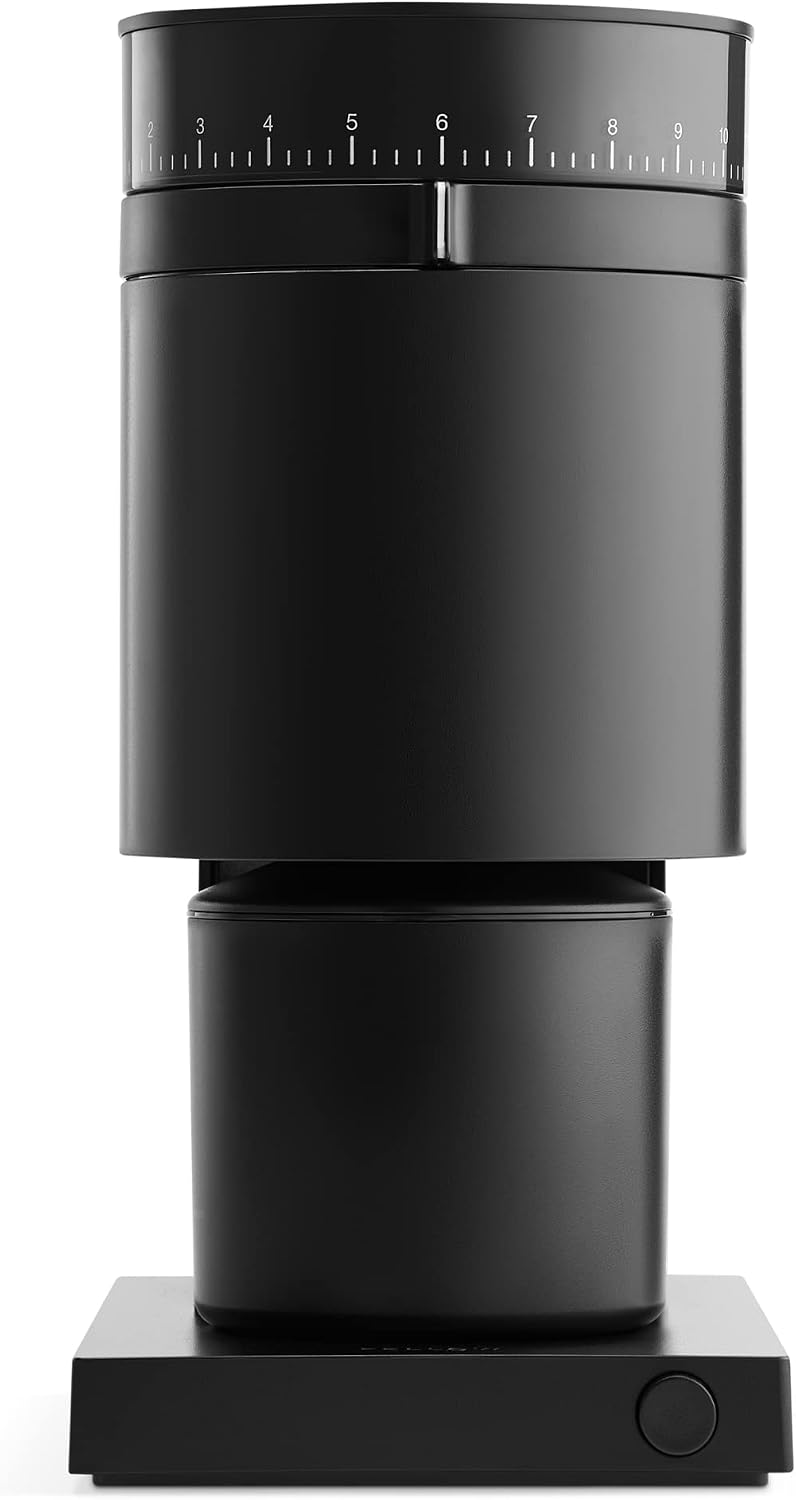
OXO Brew Compact
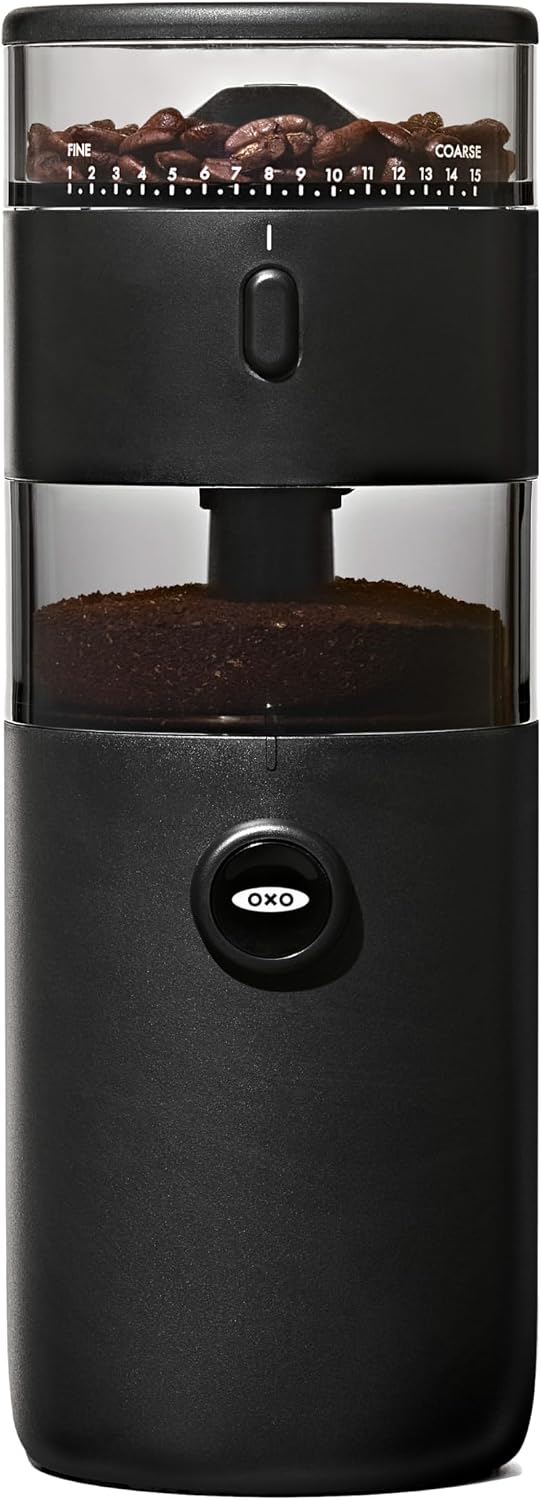
Small-footprint conical burrs for drip and French press.
Check OXO Compact on Amazon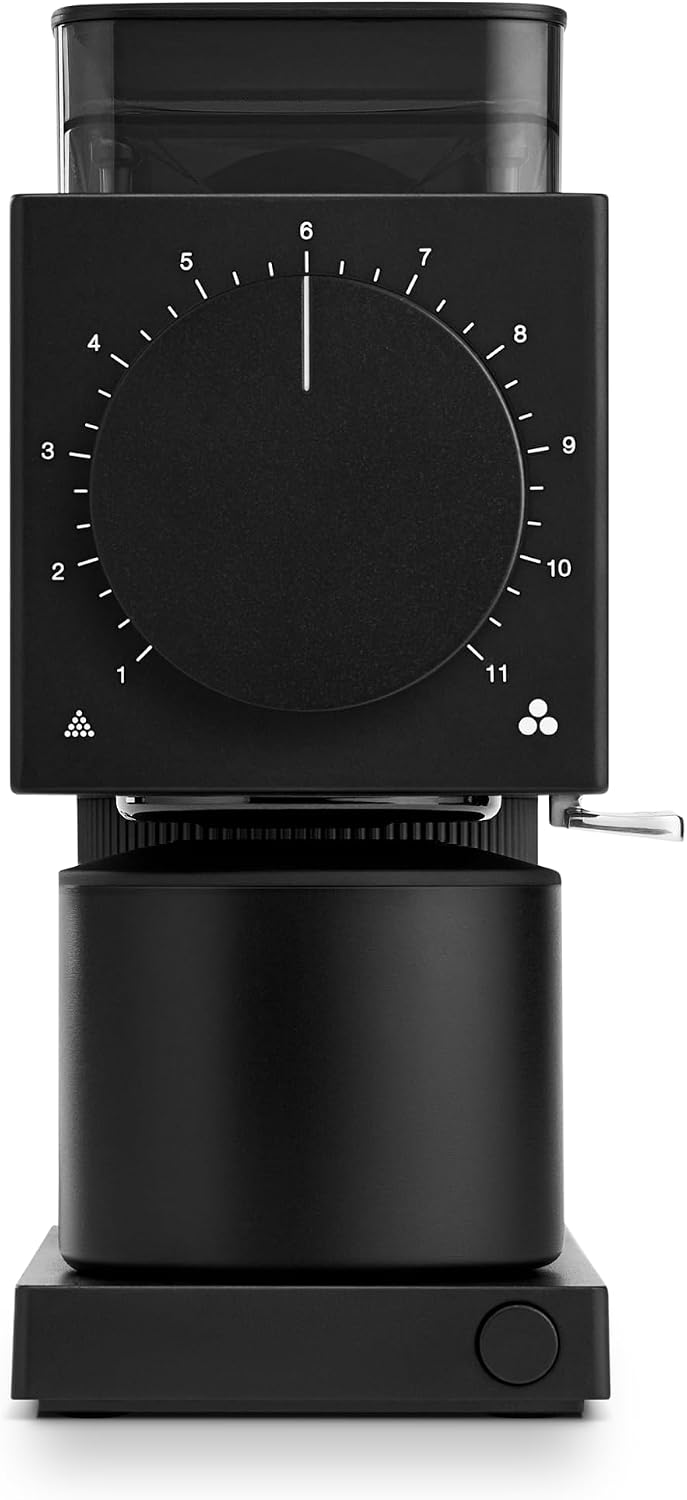
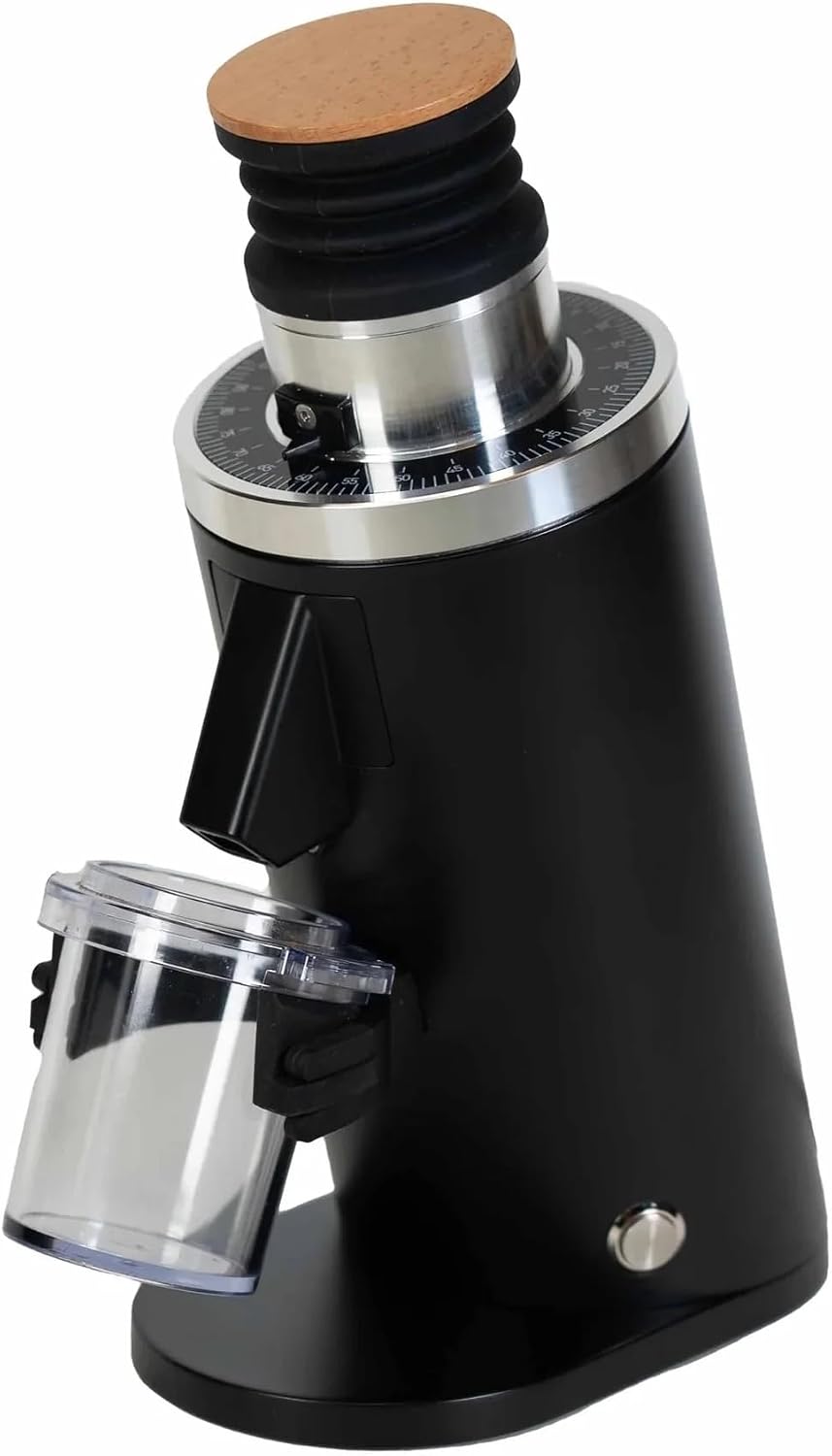
Single-dose
Turin DF64 Gen 2
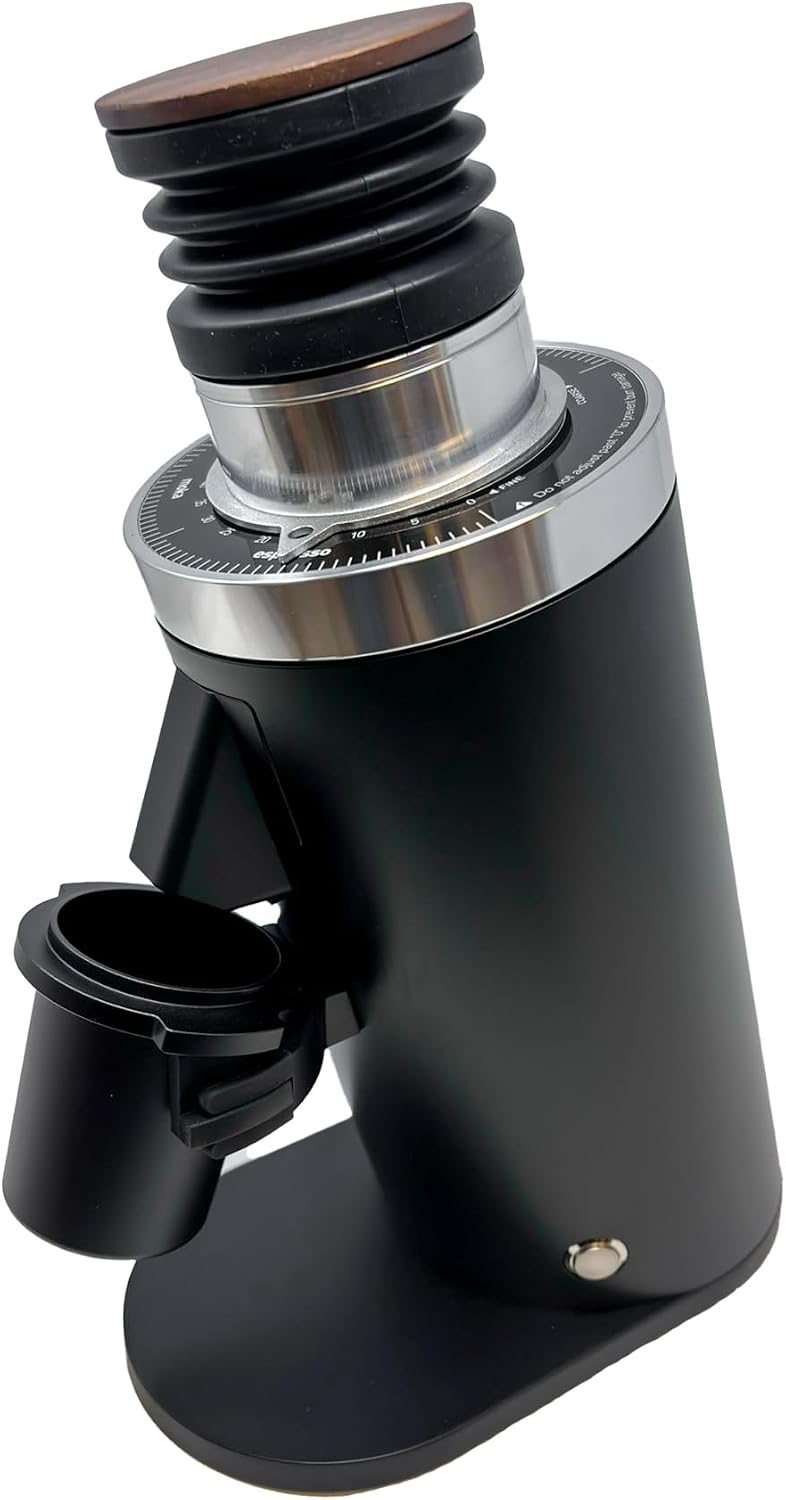
64 mm flats, bellows, anti-static single-dose workflow.
Check DF64 on AmazonTravel
Timemore Chestnut C3S
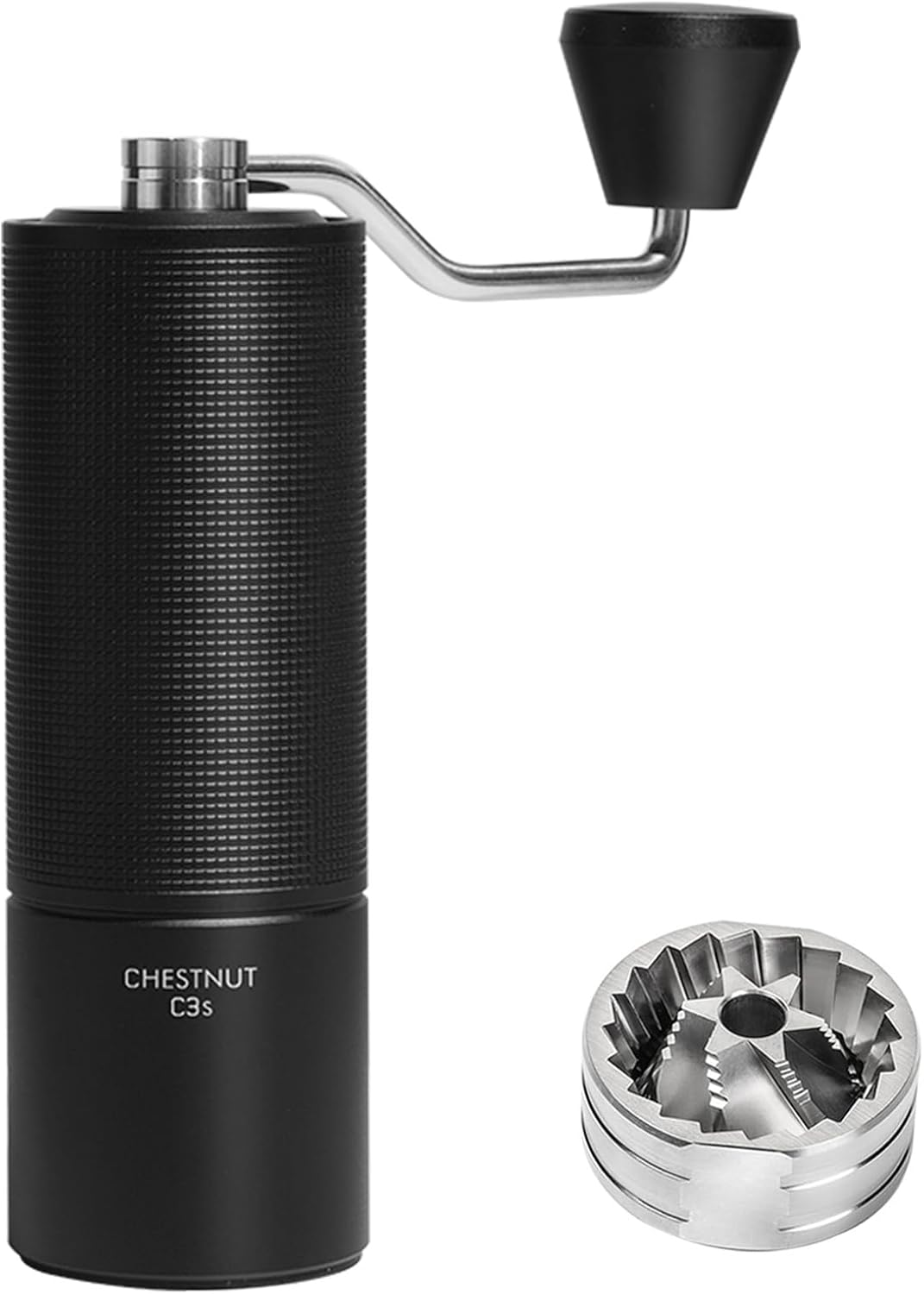
Folding-crank stainless burrs for pour-over on the road.
Check C3S on Amazon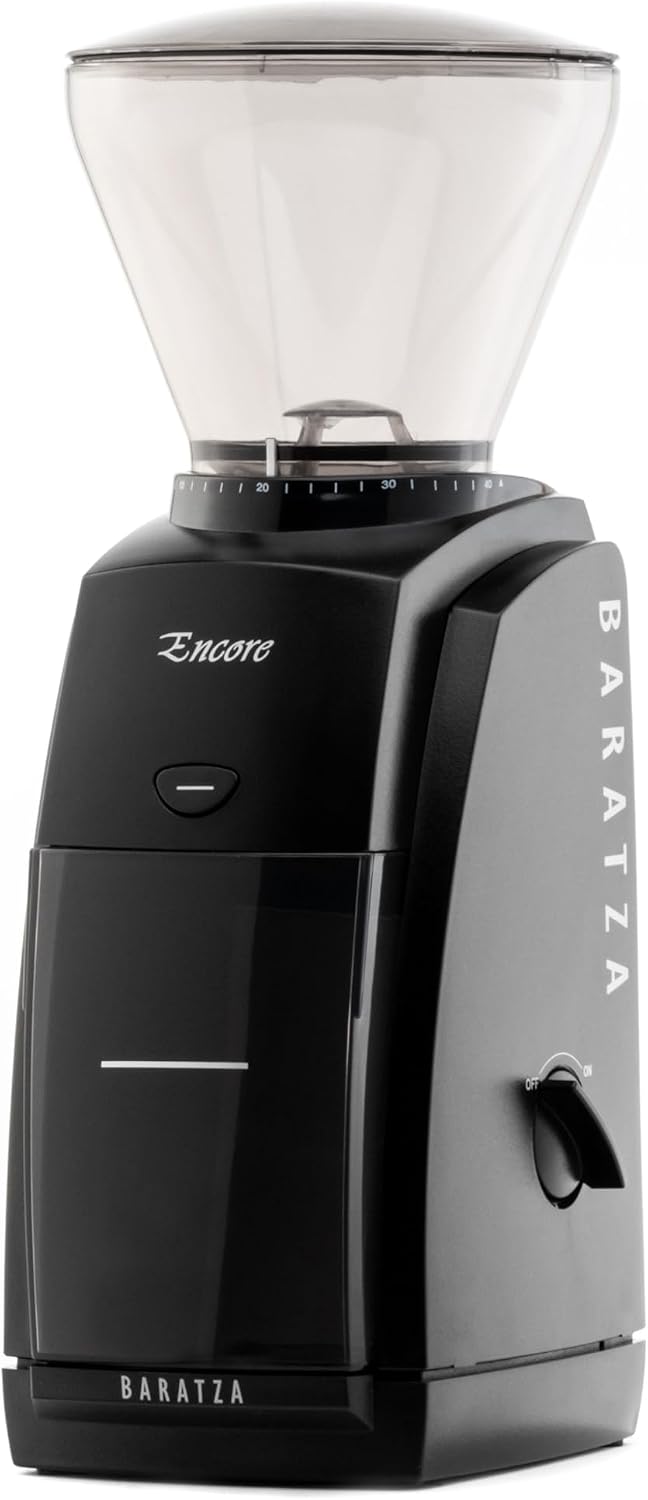
Quiet espresso
Eureka Mignon Specialita
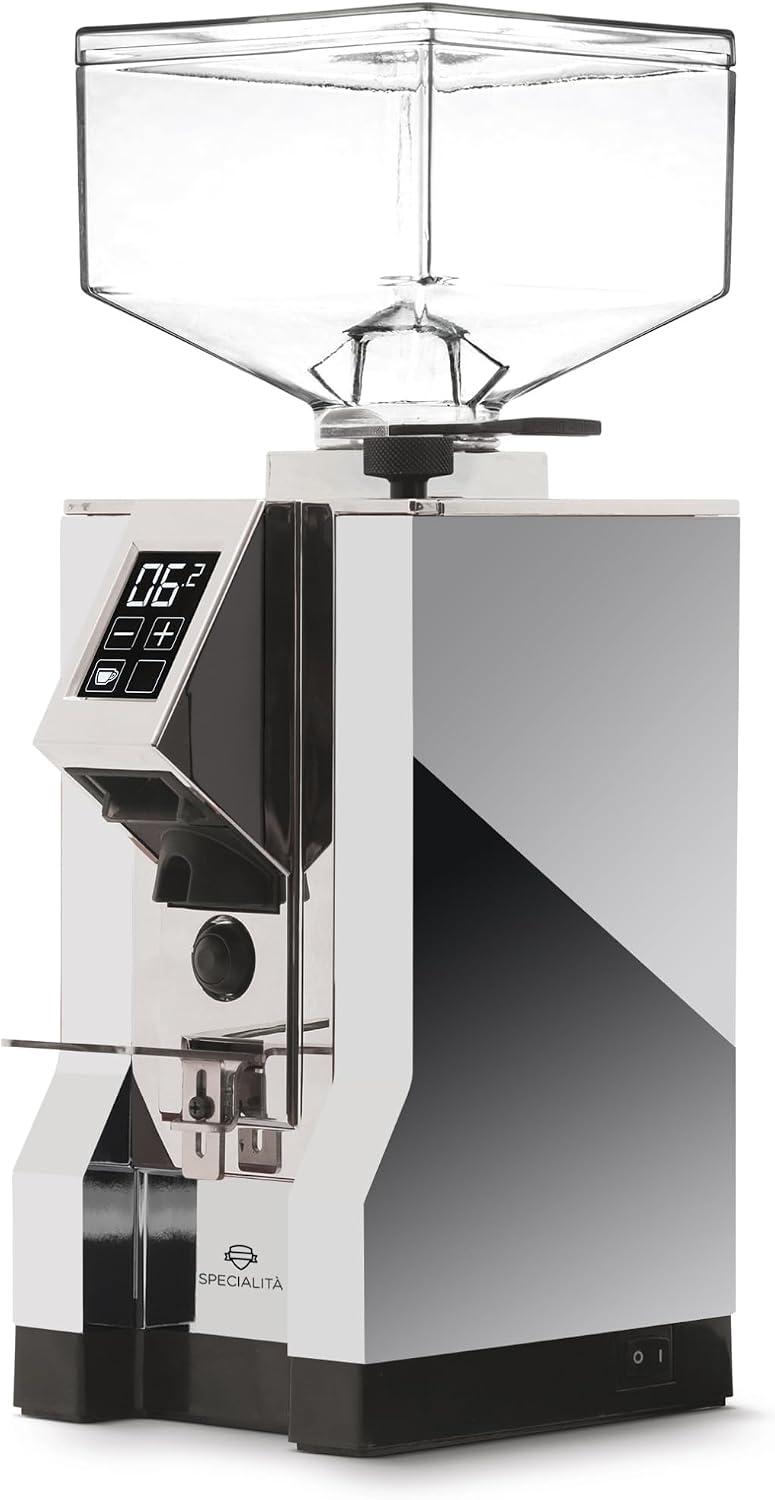
55 mm flats in a sound-dampened body for quieter shots.
Check Specialita on AmazonTimed brew
Baratza Virtuoso+
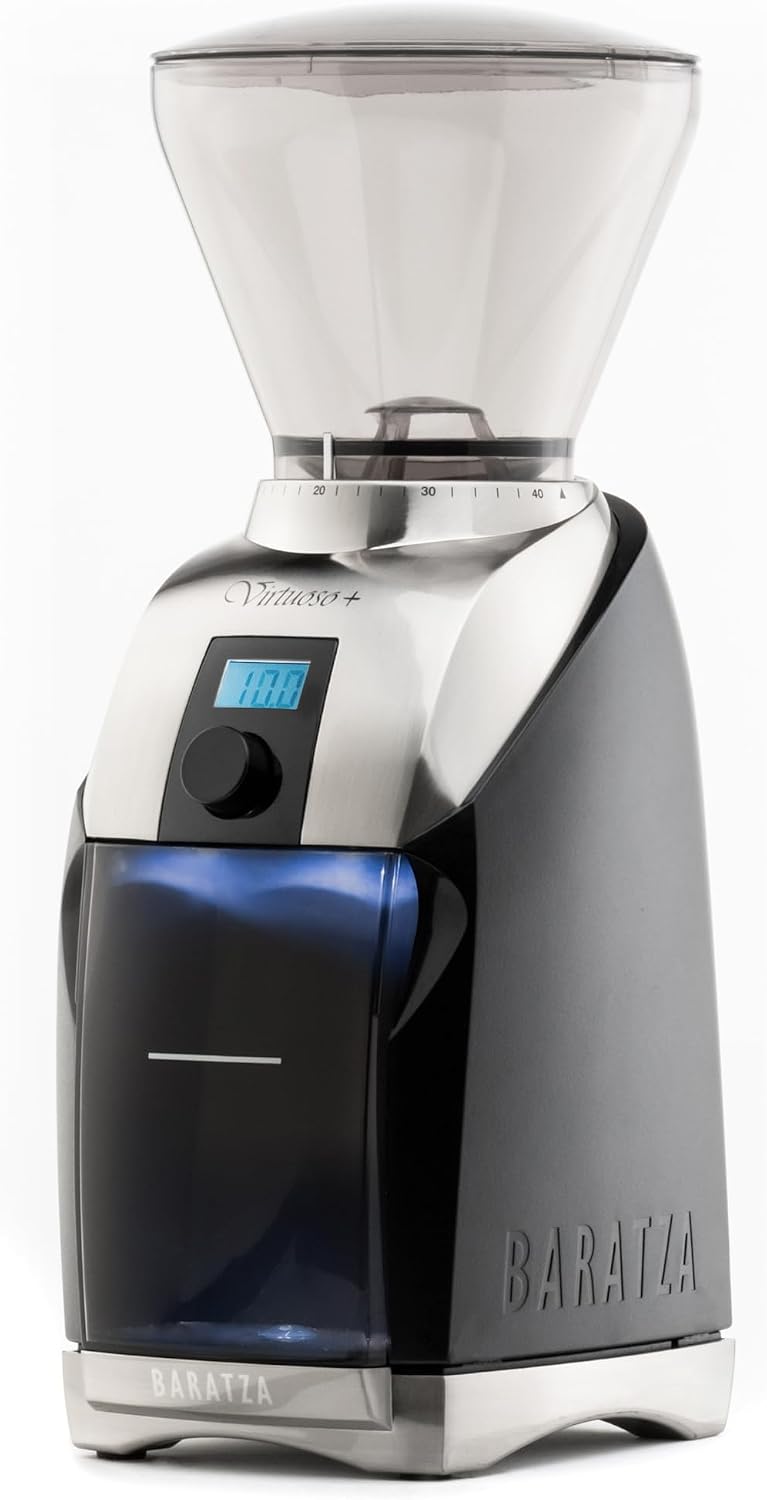
Digital timer and 40 mm conical burrs for daily doses.
Check Virtuoso+ on AmazonBreville
Breville Smart Grinder Pro
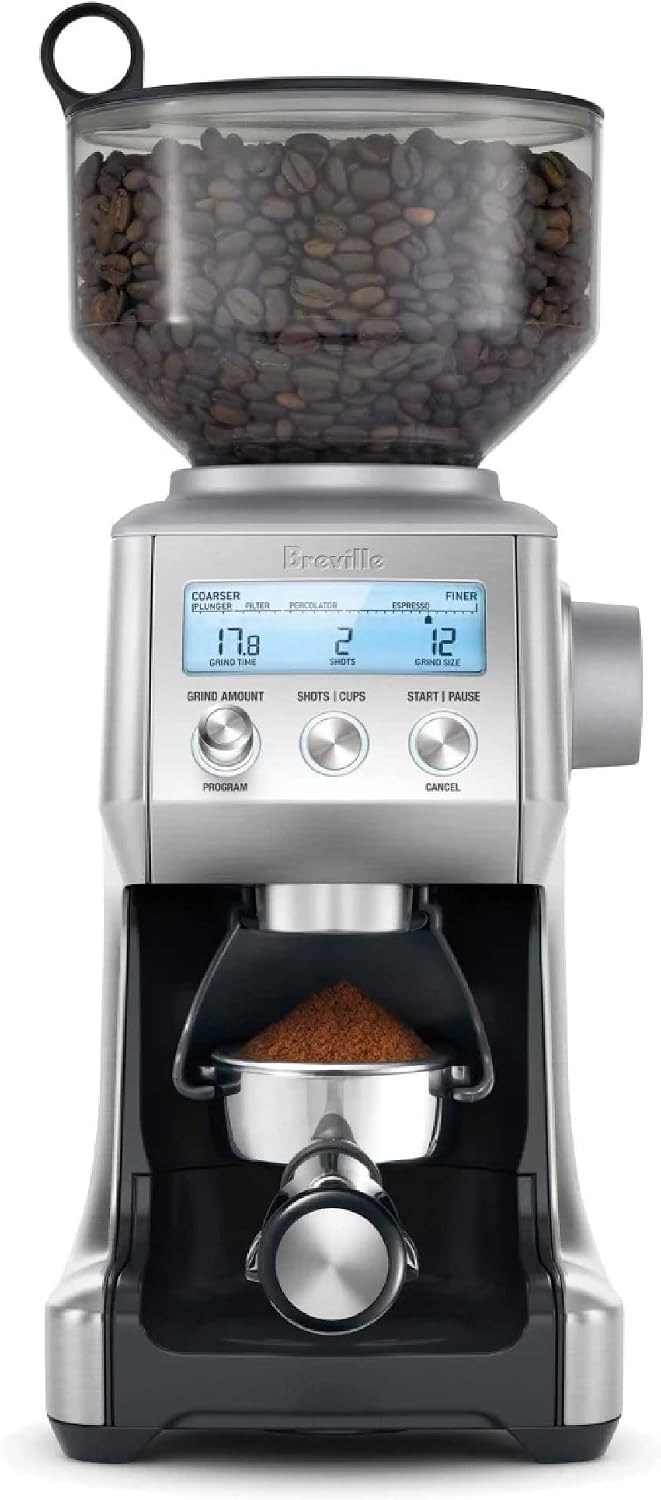
60 settings and a portafilter cradle for Breville machines.
Check Smart Grinder Pro on AmazonBudget burr
Capresso Infinity
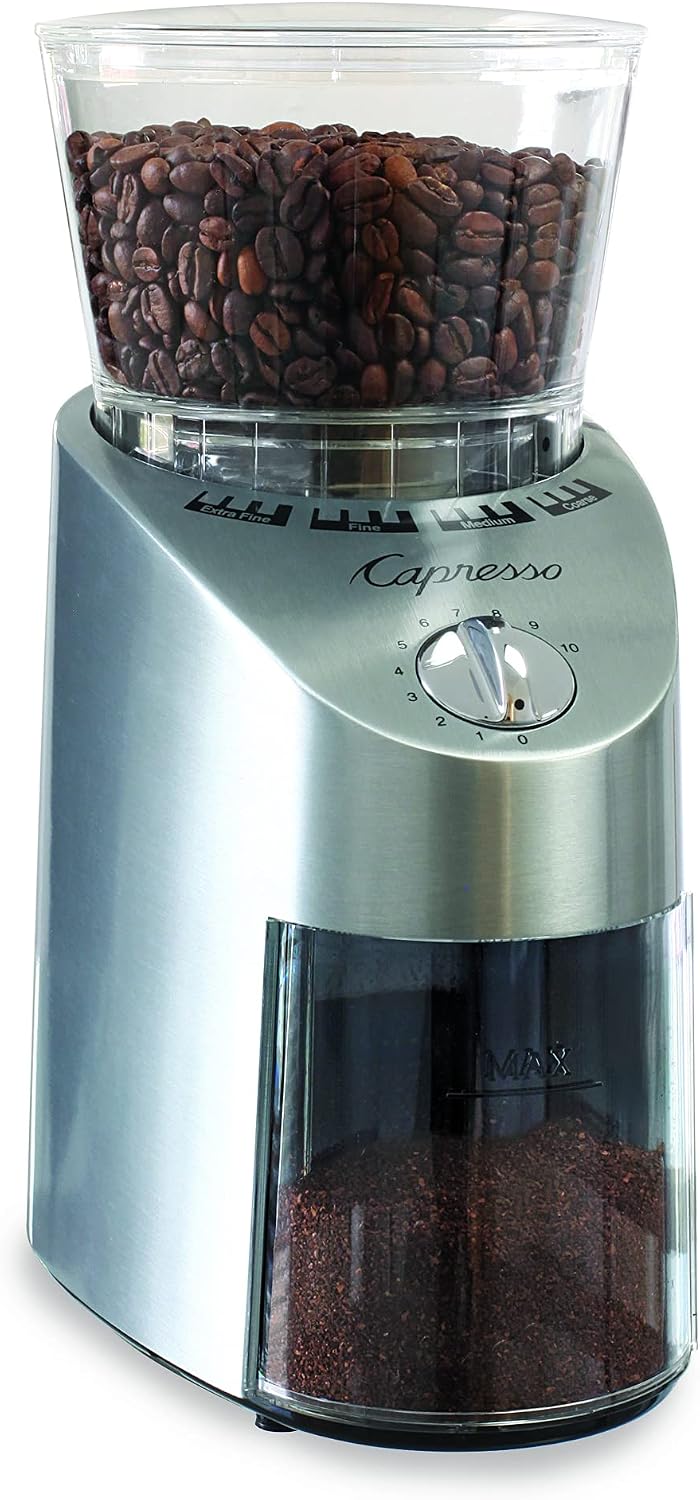
Slow metal conical burrs. A cheap step up from a blade.
Check Capresso Infinity on AmazonManual espresso
1Zpresso J-Max
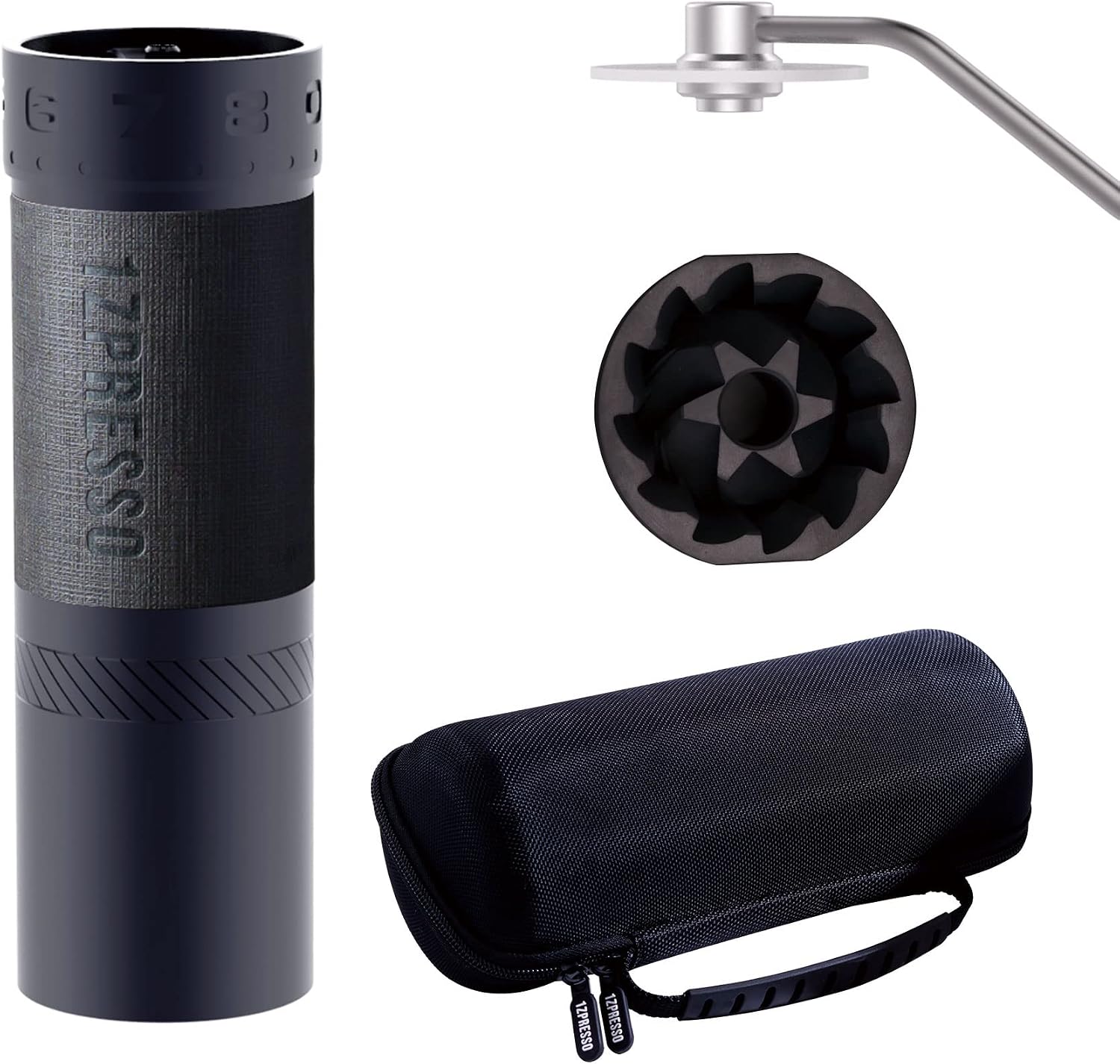
Fine-click hand burrs for espresso without a motor.
Check J-Max on AmazonManual all-rounder
KINGrinder K6
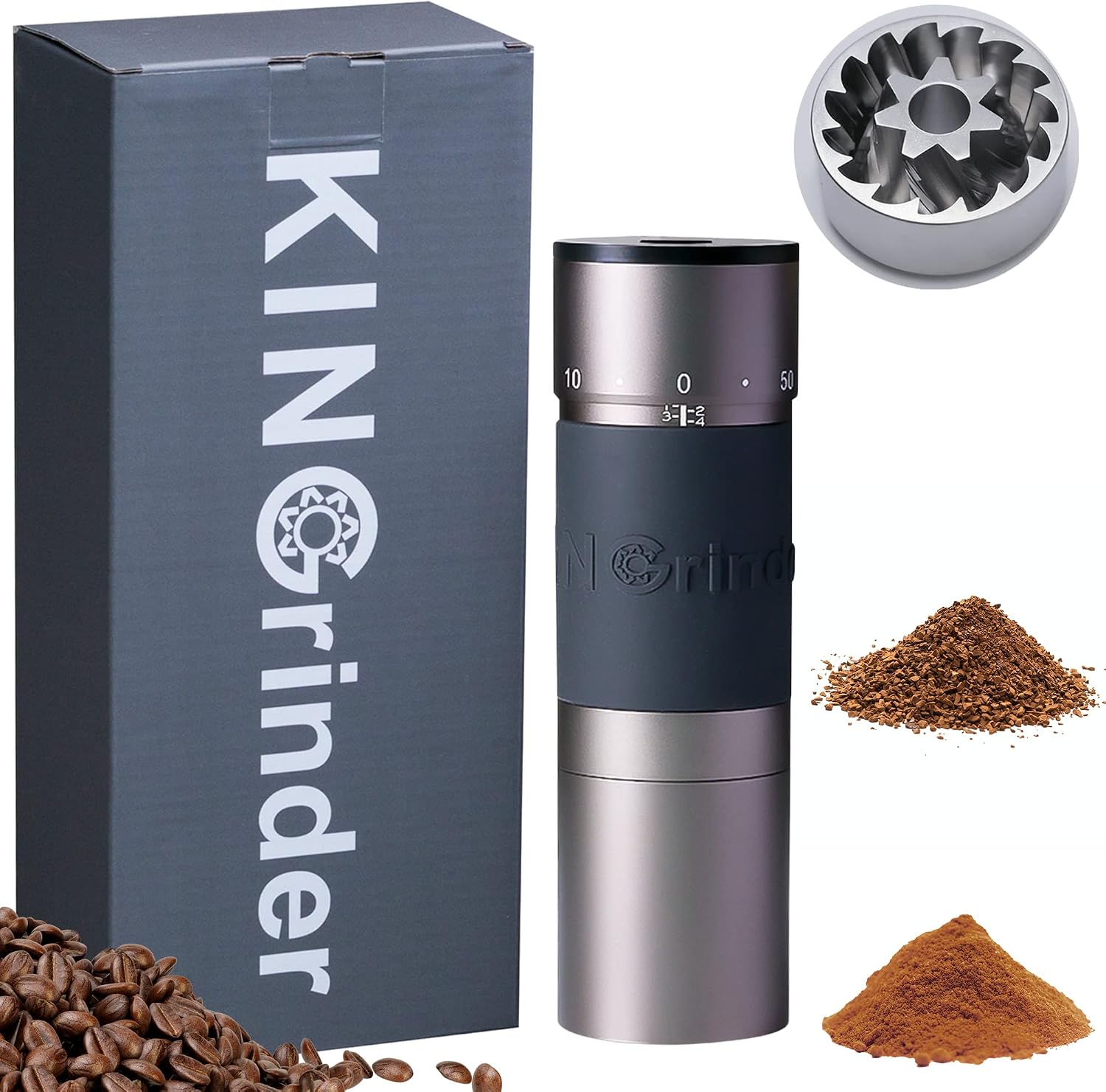
External clicks from espresso through French press.
Check KINGrinder K6 on AmazonFamily drip
OXO Brew Conical Burr
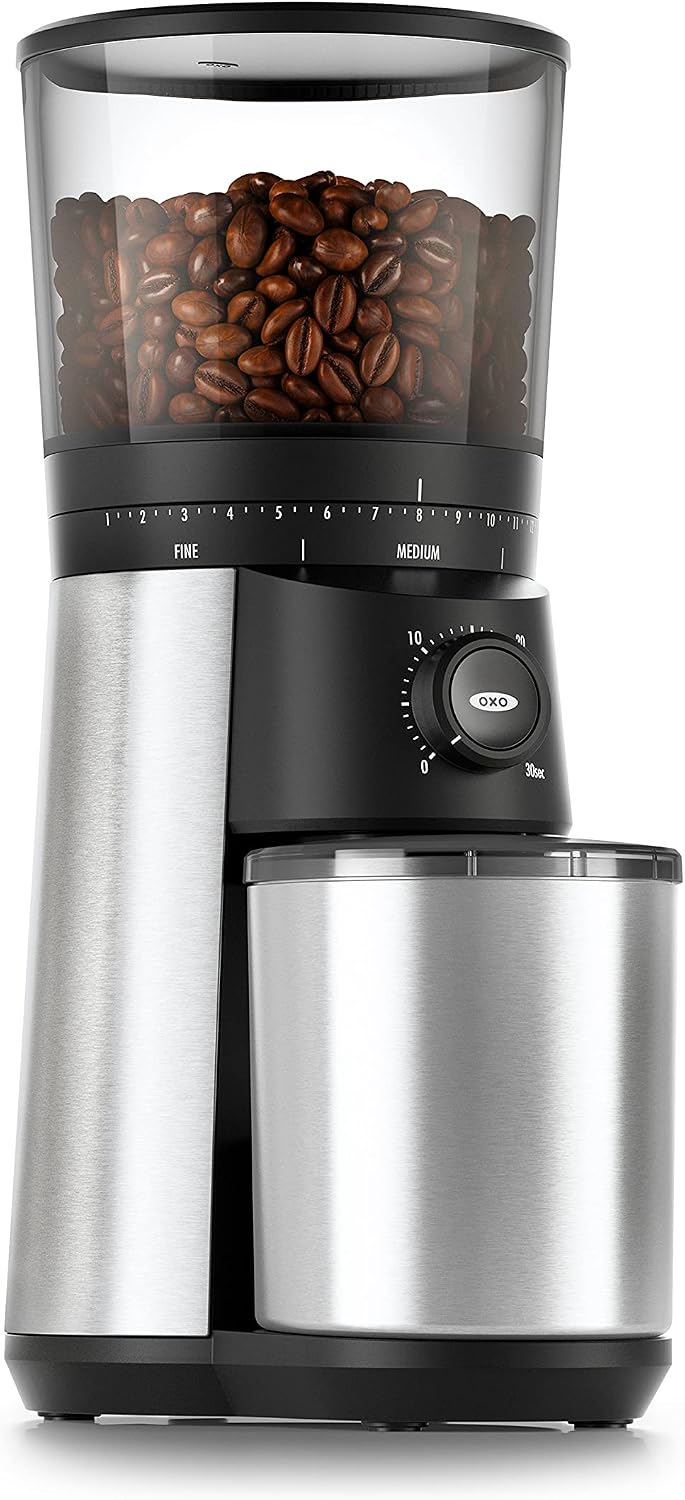
Larger hopper and bin for drip batches at home.
Check OXO Conical on AmazonStepped espresso
Baratza Sette 270
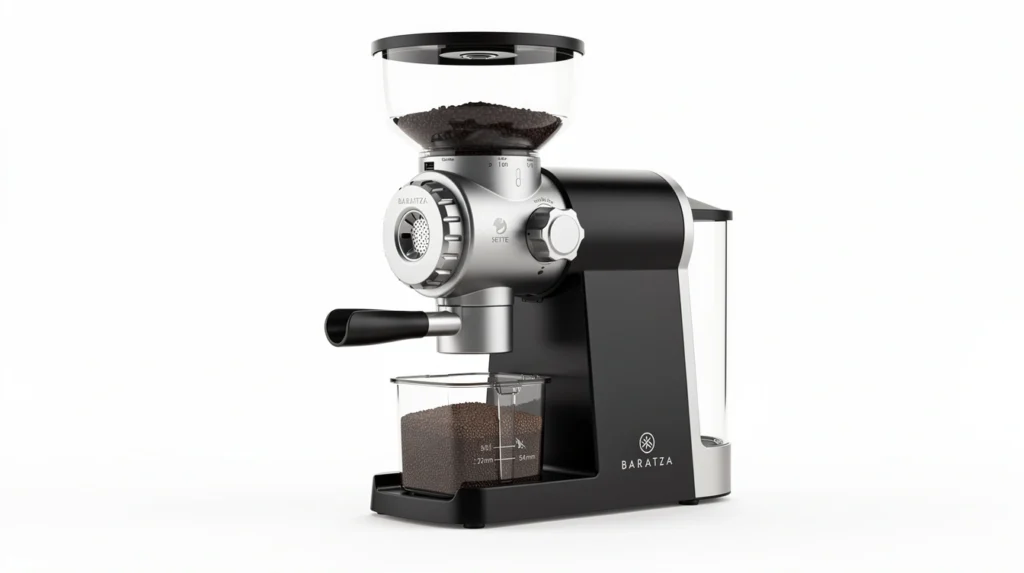
Straight-through conical path made for espresso dosing.
Check Sette 270 on AmazonEntry burr
Cuisinart DBM-8
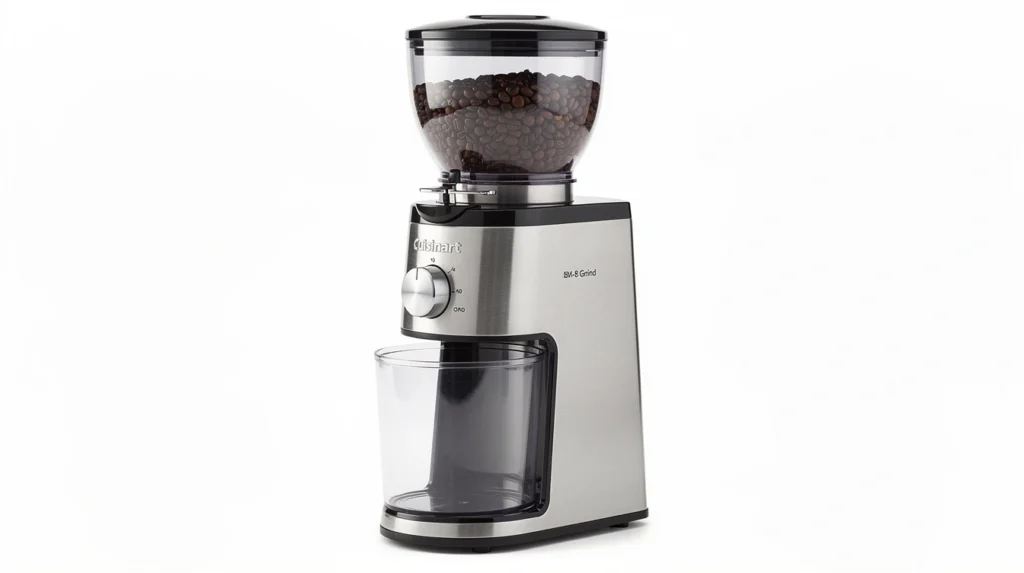
Inexpensive hopper burrs for drip. Not for espresso.
Check Cuisinart DBM-8 on AmazonCheap manual
Hario Mini Mill Slim Plus
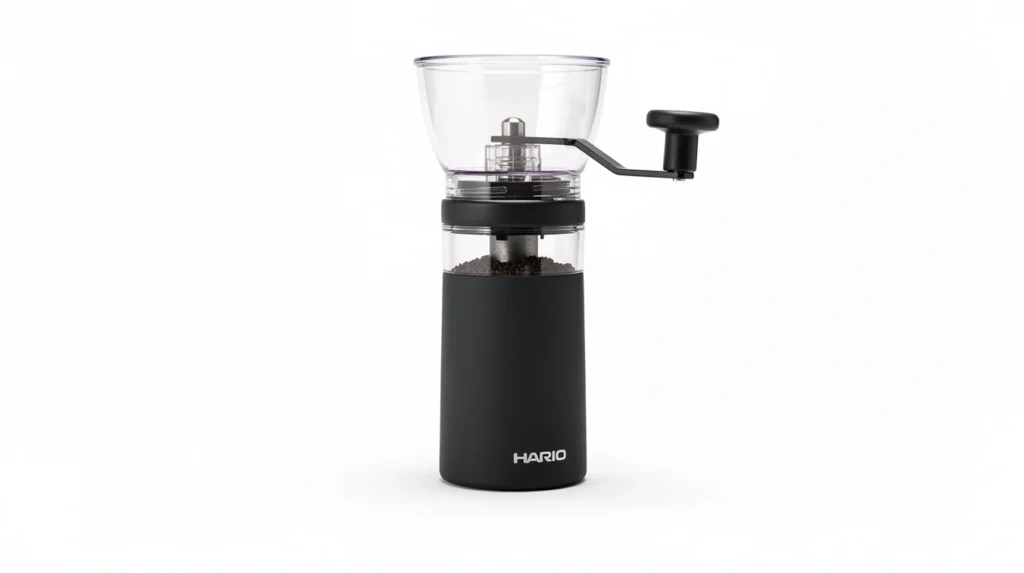
Slim ceramic-burr hand mill for travel pourover.
Check Hario Slim Plus on AmazonDose control
Breville Dose Control Pro
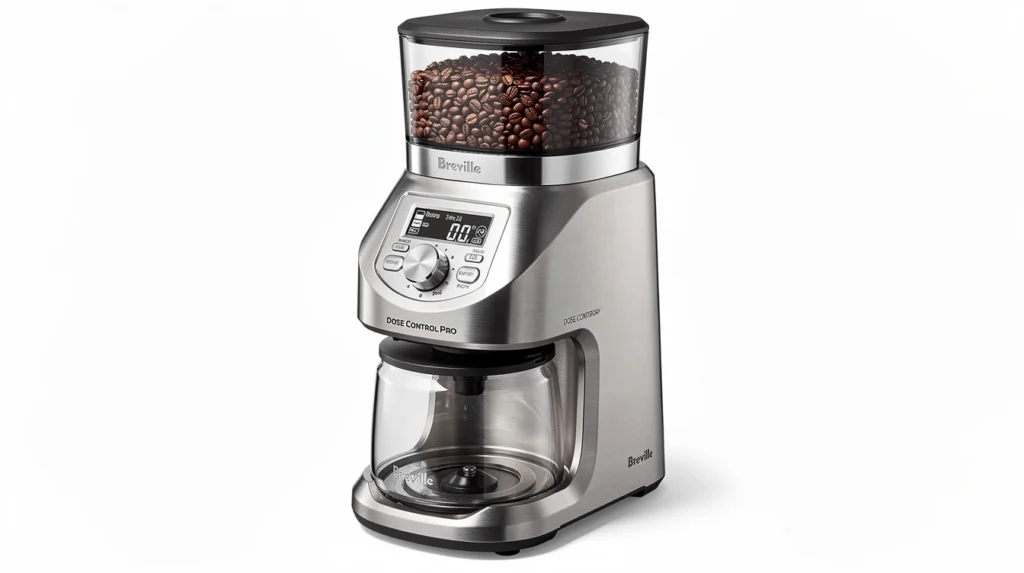
Timed doses and stainless body for Breville drip setups.
Check Dose Control Pro on AmazonPremium manual
1Zpresso K-Ultra
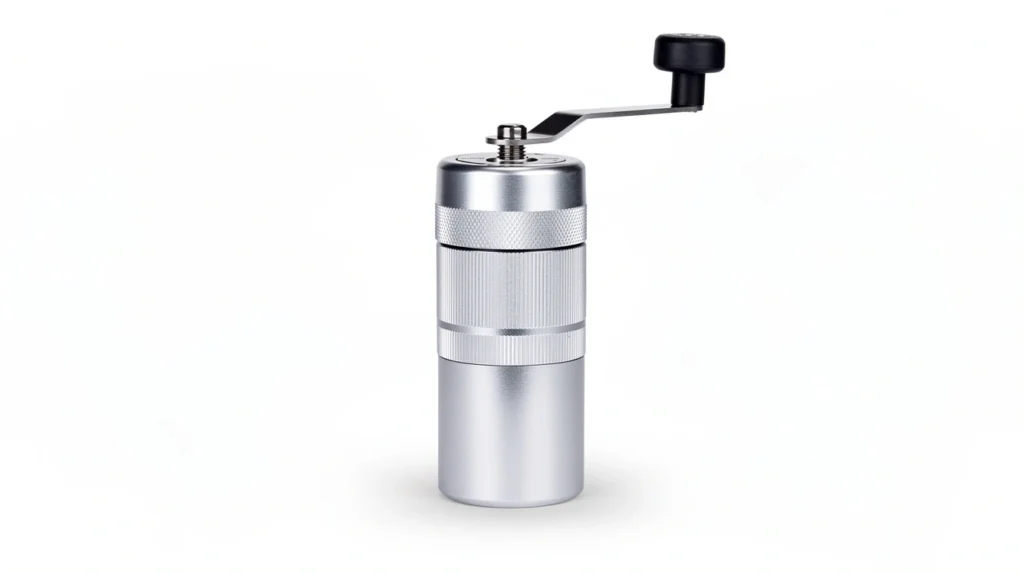
External 20-micron clicks and heptagonal burrs for filter and espresso.
Check K-Ultra on AmazonKey Takeaways
- This page is Capitol City Coffee’s editorial hub for individual coffee grinder reviews – not a ranked “best of” list. Browse by brew method, compare trade-offs, and click through to full reviews for any model that fits your setup.
- Every review covers the details that actually shape your cup: burr type, grind range, particle consistency, retention, static, noise, cleaning, durability, warranty, and value for your preferred brewing methods.
- Coverage spans budget grinders under $100 through specialized espresso grinders and single dose grinder designs for workflow-obsessed home baristas, with clear notes on who each grinder suits and where it falls short.
- Recommendations are researched editorial analysis based on verified specs, reputable expert sources, and third-party consensus – not hands-on lab testing unless explicitly stated in the individual review.
- A good grinder can significantly improve coffee flavor and quality at home, often more dramatically than upgrading your brewer or buying fancier coffee beans.
Category Overview: What Our Coffee Grinder Reviews Actually Cover
A great coffee grinder is the single most impactful piece of equipment on your countertop. More than your espresso machine, more than your kettle, and more than the beans themselves, the grinder determines whether your morning cup tastes balanced, clear, and repeatable – or muddy, sour, and different every day. High-quality burr grinders significantly improve the taste of coffee at home because they give you control over extraction by producing uniform coffee particle sizes. Burr grinders provide adjustable settings for customized grind sizes, meaning you can fine-tune your cup rather than guessing.
This reviews hub covers electric and manual grinder models designed for home use. That includes coffee grinders for drip coffee, pour-over coffee, French press, espresso, and cold brew. We don’t review commercial bulk grinders or units designed for coffee shops pulling hundreds of shots per day.
Think of this page as your starting point. Each grinder we cover gets its own dedicated review page under /reviews/grinders/, where we dig into specs, workflow, limitations, and who the grinder actually suits. If you want curated roundups organized by budget and brew method – “best coffee grinders under $300” style guides – those live under /gear/grinders/. For head-to-head matchups between specific models, check /comparisons/grinders/. This hub connects all three.
You can browse individual reviews here to compare details like burr type, grind range, noise, retention, and workflow for specific models. Names you’ll find across our coverage include the Baratza Encore ESP Pro, Breville Smart Grinder Pro, Cuisinart coffee grinder lines, Fellow Ode Gen 2, and more. The Baratza Encore is a popular entry-level grinder that appears frequently in our filter-focused coverage, while models like the DF54 show up in our espresso and enthusiast reviews.
This page is updated periodically as new espresso grinders and coffee grinders launch or older models get discontinued. Recent coverage reflects major 2024–2026 releases, including the Fellow Ode Gen 2 and the stepless Baratza Encore ESP Pro.

Key Concepts Before You Read Any Coffee Grinder Review
Before diving into individual reviews, it helps to understand the technical language that shows up in every serious coffee grinder evaluation. These aren’t abstract lab terms – they directly affect how your coffee tastes and how your morning routine feels.
Burr type and geometry. The two main burr designs are conical burrs and flat burrs. A conical burr grinder uses a cone nested inside a ring; a flat burr grinder uses two facing discs. Flat burr grinders offer exceptional flavor separation for distinct taste profiles, producing a tighter, more uniform particle distribution that emphasizes clarity and brightness – traits prized in single-origin espresso and light-roast pour-over. Conical burr grinders are generally quieter and produce less heat than flat burr grinders, and they tend to deliver more body and richness in the cup. Burr diameter matters too: a 64 mm flat burr processes beans faster with less heat per dose than a 40 mm burr, but usually costs more. According to the CoffeeSpecs database, among 38 grinders analyzed, 22 featured flat burrs and 16 used conical designs – reflecting the current tilt toward flat burrs in the specialty segment.
Grind range and brew-method fit. Not every grinder covers every brewing method well. Espresso demands very fine grinds, typically in the 200–300 μm particle range. Drip and pour-over sit at medium to medium-coarse. French press wants coarse particles. Cold brew needs extra-coarse grinds, sometimes 1,000–1,400 μm. Many grinders claim full-range coverage from espresso through cold brew, but actual performance at the extremes is often compromised – the espresso range may be too narrow for precise dialing, or coarse settings may produce too many boulders. Grind size affects extraction rates in different brewing methods, so this range matters more than any other spec on the box.
Particle consistency, fines, and boulders. Grind consistency is crucial for taste in coffee brewing. What you want is a narrow spread of particle sizes – not a perfect single size (that’s impossible), but a tight cluster. Fines (tiny dust particles under ~100–200 μm) over-extract and add bitterness. Boulders (oversized chunks) under-extract and taste sour or papery. Burr grinders produce more consistent grinds than blade grinders, which is why they dominate every serious coffee grinder review. Burr grinders can also achieve finer grind sizes than blade grinders, making them essential for espresso.
Retention and static. Retention is the amount of ground coffee that stays trapped inside the grinder after you finish dosing – stuck to burrs, chutes, or chambers. For single-dose grinders, good retention is roughly 0.2–0.8 grams; hopper-fed models often retain 1–3 grams. Static electricity causes coffee grounds to cling to surfaces, clump together, and mess with dose accuracy. Research published through the Specialty Coffee Association found that adding about 10 μL of water per gram of beans before grinding can cut static roughly in half. That’s the science behind the “Ross Droplet Technique” you’ll see referenced in enthusiast forums. Single-dose grinder designs, bellows, and anti-static chutes all aim to reduce these issues.
Speed and noise trade-offs. Faster motors and larger burrs grind quicker but tend to run hotter and louder. Slower, low-RPM conical burr setups are quieter and cooler but take longer per dose. In a shared apartment at 6 a.m., noise is not just a convenience feature – it’s a household peace issue. Reviews that skip noise discussion are leaving out something you’ll notice every single morning.
Maintenance and durability. Burr grinders typically require more maintenance than blade grinders – but the payoff is years of consistent performance. Cleaning involves brushing out the grinding chamber, clearing retained coffee particles and oils, and occasionally removing burrs for a deeper scrub. Durable housings (metal over plastic), accessible burr chambers, and available replacement parts from the manufacturer all contribute to how long a grinder stays useful. A pricier grinder with a 5-year warranty and $20 replacement burrs can cost less over a decade than cycling through cheaper grinders every 18 months.
How to Use This Coffee Grinder Reviews Hub
Most coffee drinkers land here in one of three situations: upgrading from a blade grinder or pre ground coffee, buying a first espresso grinder for a new machine, or adding a manual grinder for travel and backup. Whatever your scenario, this hub is designed to get you to the right grinder review quickly.
Here’s how to navigate:
- Start here with the key concepts above so you know what terms like “retention,” “stepless adjustment,” and “flat burr” mean when they show up in reviews.
- Browse by brew method below to find the category that matches your daily routine – espresso, filter, dual-purpose, manual, or budget.
- Click through to individual reviews for the 2–3 models on your shortlist. Each review states who the grinder suits (e.g., “espresso-only users,” “best for pour-over geeks,” “good budget drip grinder”) and what trade-offs to expect.
- Visit /gear/grinders/ when you want structured buying guides that rank grinders by budget and brew method, rather than individual deep-dives.
A tip: compare your shortlisted models based on workflow and cleaning details, not just headline claims. A grinder labeled “best coffee grinders under $200” might be a poor fit if it’s loud, clogs easily, or can’t handle the grind setting your brewer needs.
Browse Coffee Grinder Reviews by Brew Method
Instead of organizing reviews by brand or price alone, we group them by the brew style they serve best. Here’s a quick map:
- Espresso grinders for non-pressurized baskets – models built for fine grind settings with micro adjustments, low retention, and repeatable dosing for most espresso machines.
- Filter and pour-over grinders – tuned for medium grind and coarser settings, prioritizing clarity, sweetness, and low fines over espresso performance.
- Multi-use grinders that handle espresso plus drip – dual-purpose models with broad grind ranges and enough dial precision for both brewing methods, albeit with trade-offs.
- Manual grinder options for travel and backup – hand-cranked models covering everything from espresso to AeroPress, valued for portability, quiet operation, and value per dollar.
- Budget grinders under ~$100 – entry-level electric burr grinders and manual options for coffee lovers just getting started, plus honest coverage of what blade grinders can and can’t do.
Each category links to individual review pages that go deep on grind range, particle consistency, and workflow for that method. For cold brew specifically, some grinders excel at very coarse settings while others choke on boulders and uneven extraction – our reviews flag this explicitly. For structured buying guides organized by budget and brew method, head to /gear/grinders/.
Espresso Grinder Reviews (For Standard Baskets)
Affiliate disclosure: Capitol City Coffee may earn a commission through product links in our reviews. This does not influence rankings or editorial conclusions – underperforming models are ranked lower or excluded regardless of affiliate payout.
Our espresso grinder reviews focus on models designed for non-pressurized, standard baskets, where grind quality and consistency directly determine whether your shot is drinkable or destined for the sink. Espresso requires a grinder that can produce fine grinds with tight tolerances – burr grinders are preferred for espresso brewing because they deliver the uniform particle sizes this method demands.
Individual espresso grinder reviews cover these core criteria:
- Burr type and size – whether the grinder uses conical or flat burrs, burr diameter (e.g., 48 mm vs 54 mm vs 64 mm), and how geometry affects flavor clarity versus body.
- Micro-adjustment range – how many discrete steps or how much stepless range exists within the espresso zone. The Baratza Encore ESP Pro, for instance, has 119 grind settings for espresso, giving users unusually fine control for a grinder in its price class. The Encore ESP Pro launched in early 2026 as a stepless design targeting dual espresso-and-filter use.
- Retention and clumping – how much ground coffee stays in the chute, and whether static causes clumps that disrupt puck preparation for a portafilter.
- Portafilter fit – how well grounds fall into a 54–58 mm portafilter, and whether a catch cup, dosing ring, or direct-grind fork is included.
Models you’ll find in our espresso grinder review coverage include the Baratza Encore ESP Pro, the DF54 (which excels at both espresso and filter coffee), the Eureka Mignon Specialita (known for its quiet operation – a standout among espresso grinders), and the Breville Smart Grinder Pro.
Workflow details also matter: how loud the grinder is in a home kitchen, how quickly it moves from a double-shot dose to a coarser filter setting, and whether it stores espresso beans in a bean hopper or favors single dosing. For espresso lovers pulling daily shots, these details shape your routine as much as flavor does.

Filter and Pour-Over Grinder Reviews
If you’re brewing drip coffee, pour-over, batch brew, or French press, you don’t need an espresso grinder – and in many cases, you’ll get better value and workflow from a grinder tuned specifically for medium and coarse settings.
Our filter grinder reviews emphasize clarity, sweetness, and low fines at medium-to-coarse grind sizes rather than espresso performance. Models in this category include the Fellow Ode Gen 2 (a compact flat burr grinder with 64 mm burrs designed almost exclusively for filter methods), the classic Baratza Encore, and the Fellow Opus 2, which features a stepless grind adjustment for precision across filter and immersion methods. The Fellow Opus 2 also features infinite grind settings for versatility, making it a strong option for coffee drinkers who switch between pour-over and French press regularly.
Each review examines:
- Coarse and medium grind uniformity – how tight the particle distribution is at the sizes that matter for filter extraction
- Static in the grounds bin or catch cup – whether your coffee grounds scatter across the counter
- Noise early in the morning – a real concern for most coffee drinkers in shared spaces
- Performance for larger batch sizes (e.g., 40–60 grams for a 1-liter brew) – whether the motor strains or the grind stays consistent at higher volumes
For cold brew, we flag which grinders in this category can handle extra-coarse settings without clogs or motor strain. Not all can.
If you have no espresso plans, prioritize these grinder reviews over espresso-focused models. You’ll usually find better value and a smoother workflow for filter coffee. Even a basic drip machine or French press can produce great coffee when paired with a well-chosen burr grinder.
Dual-Purpose Coffee & Espresso Grinder Reviews
Some grinders realistically span espresso and manual brew methods. Models like the Breville Smart Grinder Pro, the DF54, and certain Baratza configurations aim to cover the full spectrum – but they’re compromises, with specific advantages and clear limitations.
Our dual-purpose reviews prioritize:
- Dial allocation – how much of the grind range is dedicated to espresso vs filter. Some grinders cram the espresso range into a narrow band, making micro adjustments difficult. Others use stepped vs stepless adjustment designs to give you more room.
- Switching ease – how quickly and accurately you can jump from pulling espresso shots on Saturday morning to grinding for Chemex on Sunday. Does the grinder hold calibration over time, or do you re-dial every swap?
- Burr geometry and grind range – flat burr designs tend to offer better clarity at both ends, but some conical burr models provide forgiving dial-in for users who just want a consistent grind across brewing methods.
The DF54 is a versatile grinder for espresso and filter coffee, and community consensus gives it an edge in clarity and precision at this price point. The Breville Smart Grinder Pro remains a popular pick for its digital interface and broad grind range, though users report that its coarser grinds can be slightly muddy compared to dedicated filter grinders. The Smart Grinder Pro uses conical burrs and offers enough grind setting range for most home baristas who don’t want to buy two separate machines.
Who should consider dual-purpose? Home baristas with a single do-it-all grinder budget, or anyone who brews both espresso and filter but doesn’t need peak performance in either category. Serious coffee geeks who pull light-roast espresso shots and also brew competition-level pour-over will likely end up with two dedicated grinders eventually – but a strong dual-purpose model is a great grinder to start with.
Limitations typically noted in third-party consensus include slightly muddy coarse grinds, tricky fine-tuning at the light-roast espresso end, and higher retention when switching between fine and coarse ranges.
Manual Grinder Reviews for Travel and Backup
Manual coffee grinder options have evolved dramatically. Models like the 1Zpresso K-Ultra, Timemore Chestnut C2/C3, and Mavo Phantox Pro deliver grind quality that rivals or exceeds electric coffee grinders costing two to three times as much. Manual grinders are often cheaper and portable for travel, making them popular with coffee lovers who brew on the go.
Each manual grinder review evaluates:
- Grind speed per dose – how long it takes to hand-grind 18–20 grams, typically the dose for a double espresso or a single pour-over
- Torque and handle comfort – some grinders fight back on dense lighter roasts; others glide through with minimal effort
- Burr material – stainless steel vs ceramic burrs, and what that means for edge retention and consistency over time
- Setting repeatability – whether you can switch from a fine espresso grind to a coarse AeroPress setting and return to the same spot reliably
Manual grinders like the Timemore C2S are very affordable, and the Timemore C2 is a budget-friendly manual grinder for filter coffee that consistently shows up in best-value discussions. Some manual grinders are true espresso-capable (the 1Zpresso K-Ultra handles fine grinds with confidence), while others are better reserved for pour-over and AeroPress. Serious coffee geeks who travel with an espresso-compatible hand grinder are a real subset of the community, and our reviews address their needs specifically.
Value commentary. Electric grinders are faster and more convenient than manual grinders, but many readers will get better results from a $70–$120 manual grinder than from an equivalently priced low-end electric blade grinder. Manual grinders offer portability and are quieter but require physical effort – a fair trade for most people grinding a single cup at a time.
We also cover portability: size, weight, included carrying cases, and fit with popular brewers like AeroPress or compact pour-over kits.

Budget Coffee Grinder Reviews (Under About $100)
Let’s set realistic expectations. Under $100, you’re choosing between entry-level electric burr grinders, affordable manual burr grinders, and blade grinders. These are different product categories that happen to share a price range.
Blade grinders chop beans unevenly into a mix of boulders and fine dust. That’s not an exaggeration – it’s physics. A spinning blade doesn’t crush uniformly; it smashes whatever is closest and ignores whatever bounces away. Blade grinders create uneven coffee particle sizes, which means some particles over-extract (bitter) while others under-extract (sour). Our reviews acknowledge their low price and availability while being honest: a blade grinder is a stopgap, not a solution for anyone who cares about repeatable flavor.
Budget electric burr grinders are a meaningful step up. Budget grinders often use conical stainless steel burrs, which provide decent uniformity for drip coffee and French press. The Oxo Compact grinder is priced under $100 and performs well within its category – it won’t rival a $300 flat burr model, but it grinds circles around any Cuisinart coffee grinder with a blade. Reviews in this tier evaluate burr materials, motor reliability, plastic vs metal build, static in the chute and bin, and how long the unit typically lasts under daily use.
Budget manual grinders remain the best-kept secret in this price range. A $70–$90 hand grinder with quality steel burrs will often outperform a $100 electric in particle consistency, especially for pour-over and AeroPress.
We don’t label any ultra-cheap model “the best coffee grinder.” Instead, we frame these as compromises with clear pros and cons. The best budget coffee grinder is the one that matches your brew method and your patience – and we help you figure out which that is.
Quiet, Low-Retention, and “Workflow Geek” Grinder Reviews
This section speaks to serious coffee geeks who treat their morning routine like a precision sport. If you care about near-zero retention, anti-static design, and quiet operation, these reviews are your territory.
Models in this tier include DF64 variants, the DF54, and other enthusiast favorites designed around single-dose workflows. The DF64V grinder allows variable speed control from 600–1,800 RPM, letting users dial motor speed to match bean density and desired heat output. That kind of control is unusual and increasingly sought after.
Our reviews highlight extra criteria in this category:
- Declumper design – how effectively the exit chute breaks up clumps before grounds hit the portafilter or catch cup
- Included bellows – whether the grinder ships with a bellows system to purge retained grounds after each dose
- Anti-static systems – some grinders now incorporate ionizer elements or static-reducing materials in the chute
- Measured retention – third-party testers routinely measure retention for popular models; good single-dose grinders land at 0.2–0.8 grams
Low-retention grinders help keep coffee tasting fresh by reducing old grounds in the machine – critical for anyone who swaps between different whole bean coffee varieties daily, or who dials in lighter roasts where stale remnants from yesterday’s dark roast can muddy flavor clarity.
Noise considerations matter here too. The quietest grinder isn’t always the best, but approximate decibel levels and subjective pitch assessments help readers decide whether a model will wake the household. Grinder pitch at 6 a.m. in a small kitchen is a different experience than reading “78 dB” on a spec sheet.
If you don’t swap beans daily and don’t obsess over gram-level accuracy, a simpler hopper-fed grinder may serve you better at lower cost and less fuss. Visit /gear/grinders/ for broader guidance.
Featured Recommendations (Editor’s Picks by Use-Case)
Capitol City Coffee may earn from qualifying purchases through links in this section. Rankings and inclusion are editorially independent – commission does not determine which grinders appear here.
These picks are researched editorial analysis based on verified specifications, expert sources, and aggregated third-party consensus. Unless an individual review states otherwise, we have not conducted hands-on testing for these models.
- Baratza Encore ESP Pro – Flexible espresso grinder for beginners. The Baratza Encore ESP Pro is excellent for espresso grinding, featuring a stepless flat burr design with 119 grind settings. Its dual-mode operation supports both timed grinding and single-dose workflows. Limitations: some users report chute clogging with oily beans, and the build relies on more plastic than metal. Ideal for someone buying their first real espresso grinder who also brews filter coffee.
- Fellow Ode Gen 2 – Compact filter grinder. Built specifically for filter and pour-over with 64 mm flat burrs, the Ode Gen 2 prioritizes clarity and sweetness at medium-to-coarse settings. It’s not designed for espresso. Strong points include low noise, clean aesthetics, and minimal retention. Ideal for dedicated pour-over and batch brew enthusiasts.
- Fellow Opus 2 – Versatile all-rounder with stepless control. The Fellow Opus 2 features infinite grind settings for versatility across brewing methods, from espresso-adjacent fine grinds through coarser grinds for French press. A solid option for coffee drinkers who want one grinder that doesn’t specialize but covers a lot of ground.
- Breville Smart Grinder Pro – Versatile multi-use grinder. The Breville Smart Grinder Pro pairs a digital interface with a broad grind range spanning espresso through French press. Uses conical burrs. A practical choice for households brewing multiple methods without wanting to learn enthusiast-level dial systems. Limitations include a narrower espresso range than dedicated models and moderate retention.
- DF54 – Enthusiast flat burr grinder for espresso and filter. The DF54 is a top budget-friendly option in the enthusiast flat burr category, excelling at both espresso and filter coffee. Produces excellent flavor clarity. Trade-offs include managing static and retention (bellows recommended) and requiring more hands-on maintenance. Ideal for the home barista ready to graduate from entry-level.
- 1Zpresso K-Ultra – Travel and pour-over manual grinder. A premium hand grinder with steel burrs, fast grind times, and true espresso capability. Pairs beautifully with AeroPress or compact pour-over kits. Requires physical effort per dose, but grind quality per dollar is outstanding. Ideal for frequent travelers or as a quiet secondary grinder at home.
- Eureka Mignon Specialita – Quiet espresso specialist. The Eureka Mignon Specialita is highly regarded for espresso grinding, combining flat burrs with an unusually quiet motor. A strong fit for espresso lovers in noise-sensitive households. The grind range doesn’t extend as far into coarse territory, so it’s best paired with a separate brew grinder if you also make drip coffee.

How Capitol City Coffee Evaluates Coffee Grinders
Transparency matters. Here’s how our coffee grinder reviews are built.
Unless an individual review explicitly states otherwise, grinder verdicts are based on verified specifications from manufacturers, reputable expert tests (including data from outlets like Tom’s Guide, James Hoffmann, and community test databases), and aggregated third-party consensus from forums, review sites, and verified buyer feedback as of 2024–2026. We do not claim hands-on testing, tasting, ownership, or lab measurements unless documented testing notes are supplied for a specific review.
Core criteria across all coffee grinder reviews:
- Burr type and design (conical vs flat, diameter, material)
- Grind range by brew method
- Particle consistency and distribution
- Retention and static behavior
- Motor speed and noise
- Workflow (single-dose vs hopper, switching ease, portafilter compatibility)
- Cleaning access and maintenance burden
- Durability and build materials
- Warranty terms and US parts availability
- Value for money relative to brew method and user type
Affiliate relationships do not influence rankings or whether a grinder is included. Underperforming models can be ranked lower or excluded entirely, regardless of commission structure. We link to manufacturer documentation and reputable retailer listings – never to the highest-commission option.
Readers can cross-check broader advice by visiting /gear/ for equipment overviews, /gear/grinders/ for buying guides, and /comparisons/grinders/ where we compare grinder categories and espresso machines side by side.
What to Look For in a Coffee Grinder Review
Not all coffee grinder reviews are created equal – including ours. Here’s how to read any review critically.
Prioritize reviews that discuss grind consistency, burr quality, and long-term parts support. These are the factors that determine whether a grinder is just a grinder or a tool that elevates your coffee for years. Flashy touchscreens and RGB lighting don’t make ground coffee taste better.
Be skeptical of vague claims like “best coffee grinders ever” that lack clear testing criteria or brew-method context. If a review doesn’t mention static, retention, or cleaning difficulty, it’s skipping the details that define your daily experience with the product.
Red flags to watch for:
- No mention of static or retention behavior
- Ignoring cleaning difficulty or burr access
- Reviewing only espresso performance while calling the grinder perfect for cold brew and French press
- No disclosure of affiliate relationships
Finally, filter review conclusions through your own habits. If you make one cup of drip coffee per day, a review focused on pulling 15 espresso shots back-to-back isn’t relevant to your life. Think about your brewing methods, your counter space, your noise tolerance, and your budget – then match reviews to those realities.
Comparing a Coffee Grinder to Upgrading Your Espresso Machine
Here’s a question that comes up constantly: should I spend $400 on a better grinder or $400 toward a nicer espresso machine?
For most home baristas, a serious espresso grinder improves shot consistency, flavor, and ease of dialing in more than jumping from a midrange to a higher-end machine. This is especially true with non-pressurized baskets, where fine grind steps and tight particle distribution are critical to extraction. Your machine controls water temperature and pressure; your grinder controls everything the water touches. If the coffee particles going into the basket are inconsistent, no machine can fix that.
This logic extends beyond espresso. Even a basic drip machine can produce surprisingly great coffee when paired with a well-chosen burr grinder that delivers a consistent grind at the right size. Before you start researching a machine upgrade, explore espresso grinder options and check /comparisons/grinders/ for side-by-side grinder matchups. You might find that the right grinder transforms the machine you already own.
Common Trade-Offs You’ll See in Espresso Grinder Reviews
Certain trade-offs appear repeatedly in espresso grinder coverage. Knowing them in advance helps you decide which compromises you can live with.
Speed vs heat. Faster espresso grinding (high-RPM motors, large flat burrs) gets you from beans to portafilter in seconds – but generates more heat and noise. Slower, low-RPM grinders run cooler and quieter but take longer per double-shot dose. If you’re pulling one or two shots a day, speed rarely matters. If you’re making espresso for four people at brunch, it might.
Stepless fine-tuning vs user-friendliness. Stepless grind adjustment gives you infinite micro adjustments within the espresso range – ideal for dialing in lighter roasts where tiny changes make big differences. Stepped grinders with clear numbered settings are easier for beginners to use and return to, but may not offer enough granularity for advanced users.
Retention vs convenience. Single-dose workflows with bellows and anti-static chutes minimize stale coffee grounds contaminating fresh doses. But they add steps and fidgeting. Traditional hopper-fed grinders favor speed and simplicity – weigh beans, press a button, go. Cheaper grinders with high retention may not bother workflow-casual users at all.
Compact footprint vs bean hopper size. Smaller grinders fit tight US kitchen counters and apartments, but their bean hopper capacity may require frequent refilling. Larger grinders hold more but eat counter space. Some single dose grinder designs skip the hopper entirely, solving one problem while creating another (you need a separate container for beans).
Conical vs flat. Conical burr espresso grinders are forgiving and body-forward. Flat burr grinders reward precision with flavor clarity but are often louder and more static-prone. Neither is universally “better” – it depends on whether you prioritize a rich, blended shot or a bright, separated one.
Decide which trade-offs you care about before diving into individual reviews. There’s no perfect grinder – only the right grinder for how you actually brew.
Common Trade-Offs in Filter and Cold Brew Grinder Reviews
Filter-focused grinder reviews surface their own set of patterns.
Clarity vs forgiveness. Some grinders excel in clarity and sweetness for pour-over but are less forgiving with dark roasts or French press sludge. Flat burr grinders with tight distributions shine for single-origin V60 brews but can expose flaws in lower-quality or stale beans. If you drink medium-dark blends in a French press, a slightly wider distribution from a conical burr may actually taste more pleasant.
Coarse grind performance. The tension between avoiding fines and breaking beans thoroughly enough for cold brew extraction is real. Some brew grinder models produce clean coarser grinds for French press but generate boulders at the extra-coarse end needed for cold brew. Reviews that mention clogging, sludge, or paper filter stalling at coarse settings are doing you a favor.
Dial allocation. Many filter-focused grinders sacrifice the fine espresso range to devote more dial real estate to medium and coarse adjustments. That’s a feature, not a bug – it means more granularity where you actually need it. But it also means these grinders won’t pull decent espresso shots, so don’t expect to grind fine enough for most espresso machines.
Batch size and motor strain. Readers who brew large batches (40–60 grams for a 1-liter pour-over or batch brew) should read reviews closely for mentions of heat buildup, motor slowdown, or grind drift across longer runs. Not every grinder handles large doses gracefully.
Longevity, Warranty, and Support in Coffee Grinder Reviews
A great coffee grinder should last years, not months. Our reviews consider long-term durability, repairability, and customer support as core criteria – not afterthoughts.
We look for brands with established US parts availability and responsive service. Some well-known programs (Baratza’s parts store and Breville’s customer support network, for instance) make it straightforward to replace burrs, hoppers, and motors at reasonable cost. Other brands – especially some direct-from-China models – may offer excellent initial performance but no path to repair if something breaks after warranty.
Weigh a slightly higher upfront price against potential savings from burr replacements, motor repairs, and extended warranties. A grinder with strong user communities and published documentation can be easier to maintain and modify over time, which matters especially in enthusiast circles where users swap burr sets or upgrade anti-static components.
Warranty terms and regional coverage can change, so individual grinder reviews link to manufacturer documentation where possible. A 2-year warranty with easy claims is worth more than a 5-year warranty from a company with no US service center.
Blade Grinder and “Almost Burr” Grinder Reviews
We cover blade grinders and “grinding wheel” designs honestly, because many readers own one or are considering one due to price.
Typical issues surfaced in these reviews:
- Very uneven particle sizes – blade grinders chop rather than crush, producing a chaotic mix of powder and chunks
- Excessive fines that lead to over-extraction and bitter, harsh cups
- Blade grinders can lead to over-extraction in coffee because those fine particles release their compounds too quickly during brewing
- Noise and heat from high-RPM spinning blades
- Weak motors that struggle with dense lighter roasts
Blade grinders can be better than pre ground coffee in a pinch – freshly chopped beans still beat coffee that was ground weeks ago. But they rarely match a decent burr grinder for espresso or consistent manual brews. Poor grind consistency is the fundamental problem, and no amount of pulse-grinding technique fully solves it.
A warning: some low-cost “burr” grinders actually use blunt grinding wheels or plastic burr analogs that deliver results closer to a blade grinder than a true burr grinder. Our reviews call this out clearly when found in specs or teardown reports. If you’re on a tight budget, we point you toward manual grinder reviews or carefully chosen entry-level electric burr grinders instead – where your money buys actual grind quality improvement.
Where to Go Next: Buying Guides, Comparisons, and Espresso Machines
You’ve browsed the review categories, absorbed the key concepts, and maybe shortlisted a few models. Here’s where to go from here.
- For buying guides by budget and brew method, visit /gear/grinders/. That’s where our “best coffee grinders” roundups and step-by-step buying frameworks live – structured to help you narrow from a category to a specific purchase.
- For broader coffee equipment coverage, including espresso machines, brewers, and scales, explore /gear/. Building a full home setup is easier when every piece works together.
- For side-by-side grinder matchups, head to /comparisons/grinders/. If you’re torn between the Baratza Encore ESP Pro vs Breville Smart Grinder Pro, or the DF54 vs Fellow Ode Gen 2, we break down the differences in detail.
- Bookmark this /reviews/grinders/ hub and revisit as we add new grinder reviews for major 2025–2026 releases and beyond. The specialty grinder market moves fast, and we update coverage as new models launch or older ones get discontinued.
Your next cup of great coffee starts with choosing the right grinder for how you actually brew. Take your time, read the trade-offs, and let the reviews do the heavy lifting.
FAQs
How often should I clean my burr coffee grinder?
Most home users benefit from a quick brush-out of the grinding chamber and chute every one to two weeks, using the included cleaning brush (most grinders ship with one). A deeper clean – removing burrs, clearing out accumulated coffee oils, and wiping down internal surfaces – should happen roughly every one to three months, depending on how oily your coffee beans are. Darker roasts leave more oil residue. Some grinder manuals specify cleaning intervals, and using grinder cleaning pellets is an option, but avoid running water over steel burrs unless the manufacturer explicitly approves that method for your model.
Can one grinder really handle both espresso and cold brew well?
Some grinders with broad grind ranges – like certain Baratza and Breville models – can technically span from fine espresso to coarse cold brew. But performance at one end is usually compromised. You may find the espresso range too narrow for precise dialing, or the cold brew setting produces boulders instead of clean coarse particles. If you grind coffee beans for both methods daily, consider a dual-purpose grinder reviewed specifically for full-range performance. Eventually, many users find that two specialized grinders (one for espresso, one for filter and cold brew) deliver peak results with fewer headaches.
Is a manual grinder worth it if I already own an electric grinder?
Many serious coffee geeks keep a manual grinder as a quiet backup, travel tool, or dedicated grinder for decaf, experimental beans, or a second brew method they don’t use daily. Manual grinders offer excellent grind quality per dollar – a well-made hand grinder in the $80–$120 range can rival or exceed electric coffee grinders costing $200+. The trade-off is time and effort: grinding a dose for espresso by hand takes 45–90 seconds of cranking, which adds up for large-batch brews. For a single cup of pour-over on a camping trip, though, nothing beats a compact manual grinder.
When should I upgrade from a blade grinder to a burr grinder?
As soon as you care about repeatable flavor. If you’re brewing pour-over, French press, or espresso – any method where consistent grind size is critical to balanced extraction – even an entry-level burr grinder or an affordable manual grinder is a noticeable improvement over a blade grinder. Burr grinders generally produce better flavor control than blade grinders because they create uniform particles instead of a random mix. You don’t need to spend $300; models like the Oxo Compact (under $100) or a Timemore C2S manual grinder will transform your cup compared to any blade grinder at any price.
Does grinder noise level matter, or is it just a convenience feature?
Noise mostly affects comfort and household harmony, not coffee flavor. A loud electric grinder at 6 a.m. in a small apartment can genuinely strain relationships – it’s not trivial. That said, the quietest grinder isn’t automatically the best performer. Our grinder reviews call out unusually loud or quiet models (the Eureka Mignon Specialita is a standout for quiet operation; some budget electrics are borderline aggressive) so readers can weigh noise alongside grind quality, price, and workflow. If noise is a dealbreaker, manual grinders are almost always the quietest option, at the cost of speed and convenience.