The best espresso machine under $1,000 for most US home buyers in 2026 is the Breville Barista Express Impress: it bundles a built in grinder, assisted tamping, and PID temperature control into one countertop footprint for around $600 to $800. For enthusiasts who already own a quality grinder, the Gaggia Classic Pro at $549 delivers commercial-style extraction and a massive mod community. Below, you will find researched picks for every skill level, a comparison table, and guidance on choosing the right machine for your daily routine.
Best home espresso pick
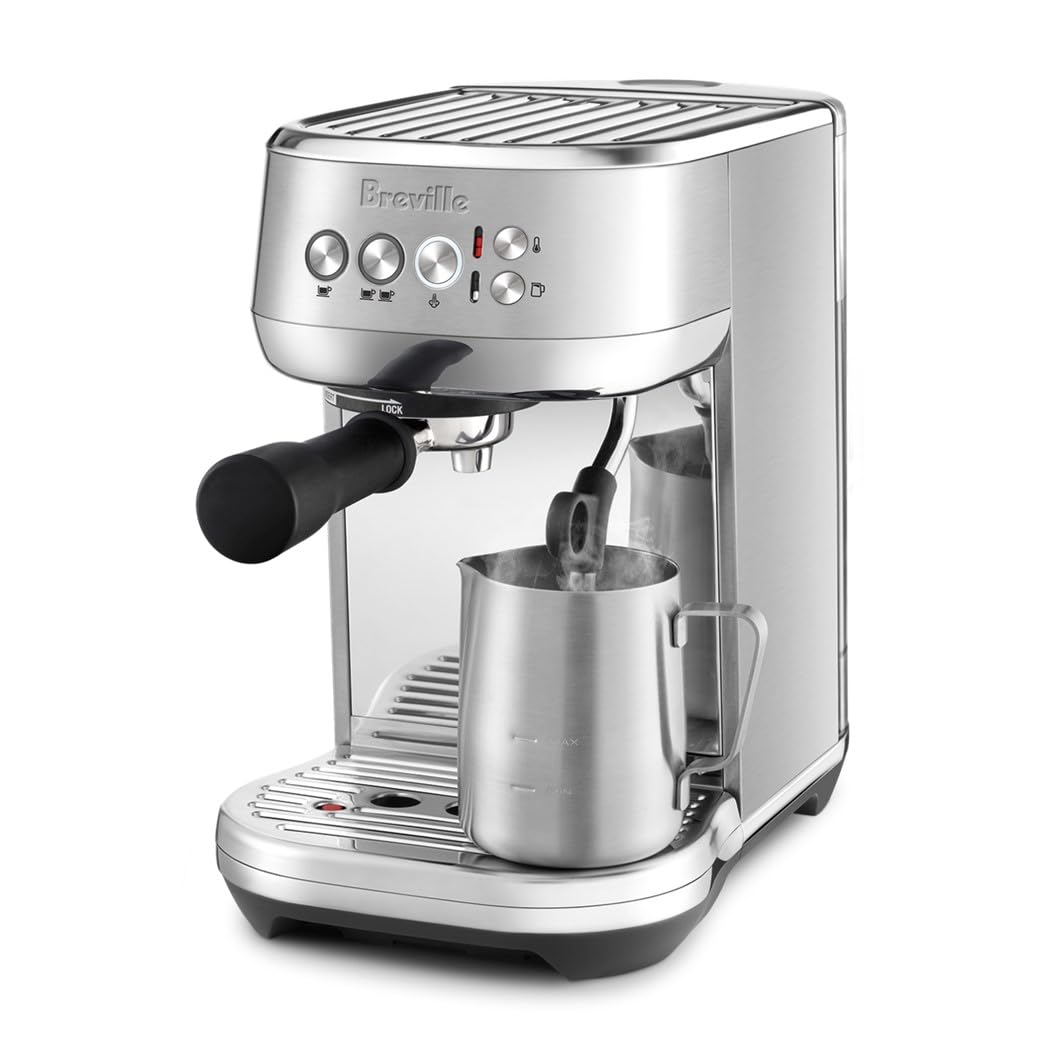
For this roundup, Breville Bambino Plus is the home espresso we recommend first—the same pick at the top of our At-a-glance cards below.
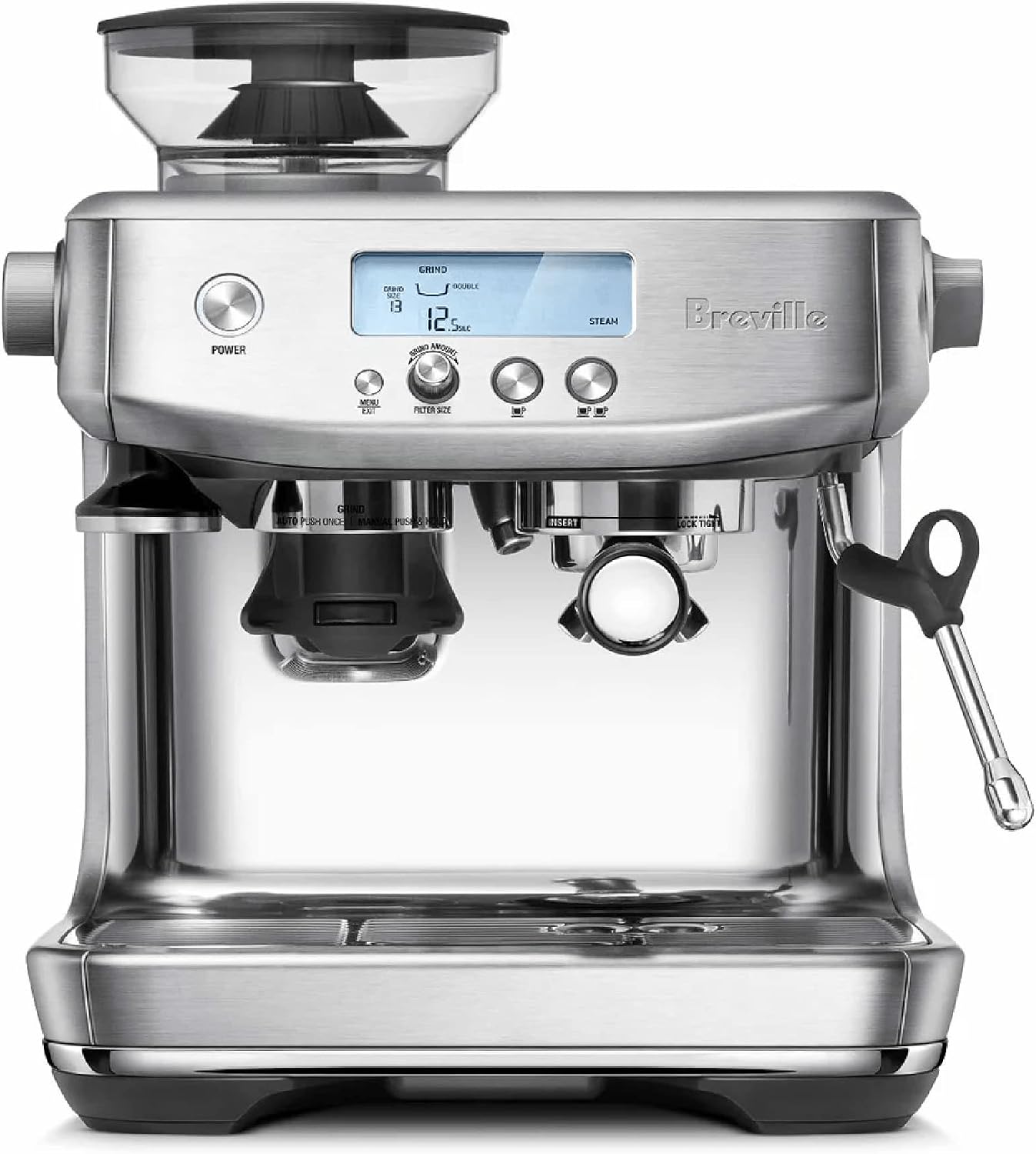
The Breville Barista Express Impress is the best overall espresso machine under $1,000 for buyers who want an all-in-one setup with a built in grinder, assisted tamping, and consistent temperature stability.
Buyers who already own a standalone grinder should consider the Gaggia Classic Pro ($549) or a refurbished Breville Dual Boiler ($850 to $950) for better long-term flexibility.
A strong grinder matters as much as the machine itself; pre-ground coffee yields poor results in espresso machines, so budget for both.
Espresso machines can vary in arrangements from semi-automatic to fully automatic; your daily drink preference (straight espresso vs. milk drinks) and willingness to learn technique should steer your choice.
All recommendations below are based on researched editorial analysis, verified specs, and cross-referenced third-party expert reviews. Commission rates do not influence rankings.
Affiliate Disclosure
Capitol City Coffee is an independent coffee editorial and affiliate publication. If you purchase through links on this page, we may earn a small commission at no extra cost to you. Rankings are determined by researched editorial analysis, verified product specifications, and consensus from reputable third-party reviewers. Sponsored placement plays no role. This transparency is how we keep the site free and useful.
Quick Answer: The Best Espresso Machine Under $1,000 Right Now
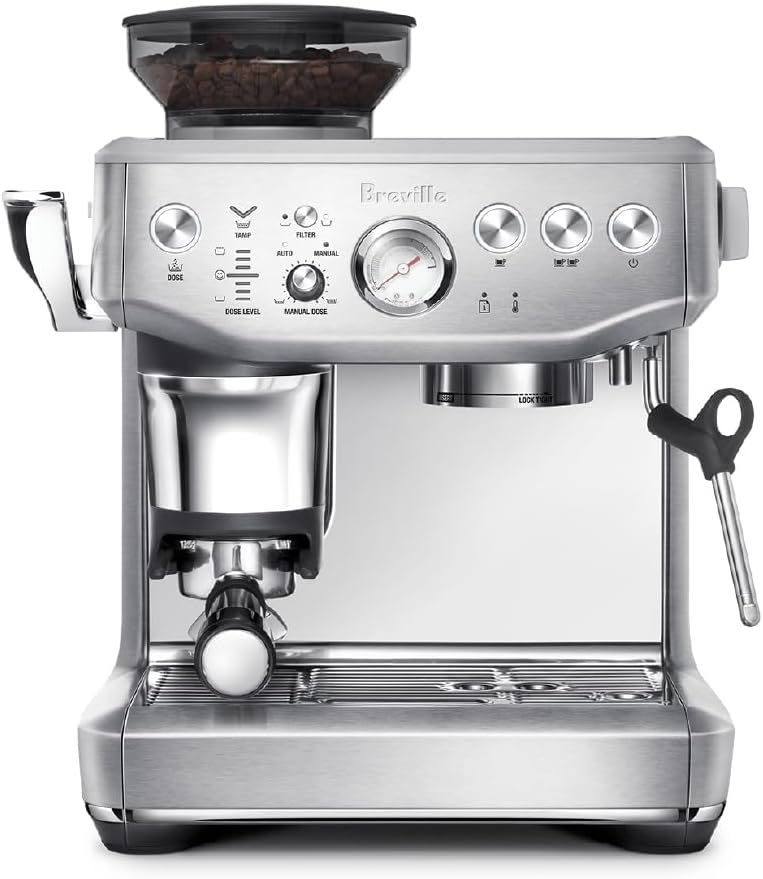
The Breville Barista Express Impress is the best espresso machine under $1,000 for most US home users. It pairs a 25-setting conical burr grinder with an Impress Puck System that auto-doses and tamps, a thermocoil heater with PID temperature control, and a manual steam wand capable of microfoam. For buyers who want a single box on the counter and good coffee from week one, it is hard to beat.
Here are six top picks by category:
Best Overall: Breville Barista Express Impress; ~$600 to $800
Best for Beginners: Breville Bambino Plus; ~$400 to $500 (requires a separate grinder)
Best for Budding Home Baristas: Breville Barista Pro; ~$700 to $850
Best for Purists on a Budget: Gaggia Classic Pro; ~$549 (requires a separate grinder)
Best Refurb Dual Boiler: Breville Dual Boiler BES920; ~$850 to $950 refurbished
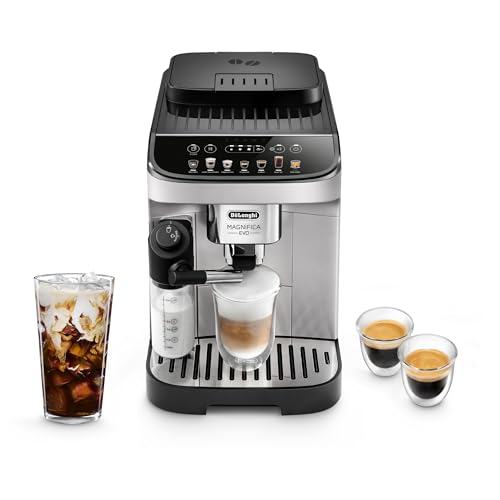
Best Super Automatic Under $1,000: De’Longhi Magnifica Evo; ~$750 to $900
If you already own an espresso grinder, machine-only picks like the Gaggia Classic Pro or Bambino Plus stretch your budget further. If you do not own a grinder and want to avoid buying one separately, the Barista Express Impress or Barista Pro bundles grinder and machine in one unit.
Best Espresso Machines Under $1,000 at a Glance (Comparison Table)
The table below compares the machines recommended in this guide across the specs that matter most for daily use. Use it to narrow your shortlist before reading the detailed breakdowns.
This guide is researched editorial analysis, not in-house lab testing by Capitol City Coffee. We have not pulled shots on these machines ourselves unless noted otherwise.
To build the shortlist, we cross-referenced verified product specifications from manufacturers, long-form reviews from outlets like Espresso Machine Lab and Tom’s Guide, community consensus on enthusiast forums, and documented long-term testing data where available. Machines were evaluated on:
Temperature stability: Does the machine use PID control or equivalent regulation to hold brewing temperature within a narrow range?
Pressure and shot consistency: Does it deliver roughly nine bars at the puck, and does it include pre-infusion?
Steam power and milk texture: How quickly can it produce microfoam, and can it handle back-to-back milk drinks?
Workflow and usability: How many steps from bean to cup, and how forgiving is the machine of minor errors?
Cleaning and maintenance demands: What does daily, weekly, and monthly upkeep look like?
Value vs. competitors: Does it justify its price against alternatives in the same tier?
Only widely available US models (new retail or clearly labeled refurbished) made the cut. There are three main types of espresso machines considered here: semi-automatic, automatic, and super-automatic. Manual espresso machines, which require user control for pressure and extraction, fall outside this guide’s scope because lever machines under $1,000 are rare in the US.
Machines were then grouped by user type: beginner, intermediate hobbyist, convenience seeker, and serious enthusiast.
Best Overall: Breville Barista Express Impress
The Barista Express Impress is the favorite espresso machine in this roundup for one reason: it removes the most common beginner failure points (inconsistent dosing and uneven tamping) while still letting you learn real espresso brewing.
The Impress Puck System guides your dose into a 54 mm portafilter and applies a calibrated tamp automatically. The Breville Barista Express Impress has a built-in tamper for consistent shots, which means your first espresso shots are far more likely to extract evenly than they would on a machine requiring manual tamping. The integrated conical burr grinder offers 25 settings, enough to dial in medium to medium-dark roasts without frustration.
Temperature stability is strong. The thermocoil heater with PID temperature control held ±1°C across multi-week testing in independent evaluations, and average extraction times for a double shot (18 g in, 36 g out) landed around 26.8 seconds with ±0.4% TDS deviation. Those numbers reflect the kind of shot consistency that matters for repeatable flavor.
The manual steam wand produces microfoam suitable for latte art with practice. Because this is a single boiler machine, you cannot pull a shot and steam milk at the same time; expect a 15- to 20-second transition between modes. For one or two milk drinks, that delay is manageable. For entertaining, it becomes a bottleneck.
Trade-offs worth knowing: the built-in grinder’s range can struggle with very light roasts that need ultra-fine settings. The 54 mm portafilter limits third-party basket and accessory options compared with commercial-standard 58 mm. And some users report that the volumetric shot programming occasionally over- or under-delivers; switching to manual shot stopping gives better control.
Ideal user: Someone who wants cafe-style milk drinks and solid espresso at home with as few extra accessories as possible, and who values convenience over ultimate tinkering freedom.
Best for Beginners: Breville Bambino Plus
The Breville Bambino Plus is the easiest entry point into real espresso under $1,000, provided you pair it with a good standalone grinder.
Its ThermoJet heating system is the standout feature. The Breville Bambino Plus heats up in just three seconds, and ThermoJet heating systems reach brewing temperatures in just three seconds. That is not a marketing number; Tom’s Guide confirmed sub-5-second readiness from cold start. For weekday mornings when you have ten minutes between waking up and leaving, this eliminates the waiting game.
Machines with PID controllers maintain consistent brewing temperatures, and the Bambino Plus includes PID-style regulation holding water near 200°F. Pre-infusion gently saturates the puck before full pressure ramps up, which helps compensate for minor tamp inconsistencies that beginners inevitably make.
The automatic steam wand is another beginner-friendly detail. Select your preferred temperature and foam level, insert the milk jug, and the machine handles the rest, including an auto-purge cycle after steaming. It works with oat milk and other plant milks, producing consistent milk texture without requiring you to learn wrist-angle technique on day one. Automatic milk frothing on this machine is a genuine time saver.
Limitations: the Bambino Plus has no grinder, so you need a separate grinder (budget $200 to $400 for a capable one). The chassis is light at about 10 lbs, so it can shift slightly when you lock in the portafilter. Steam power is modest compared with larger machines; steaming milk for a third latte in a row takes noticeably longer.
Ideal user: Apartment dwellers, new home baristas, and anyone who wants compact size (7.7 inches wide), near-instant warm-up, and forgiving milk frothing. Budget a separate espresso grinder.
Best for Budding Home Baristas: Breville Barista Pro
The Breville Barista Pro sits between the Bambino Plus and the Barista Express Impress on the learning curve. It bundles a built in grinder with ThermoJet heating into a machine designed for people who want to learn espresso craft, not just press a button.
The grinder offers 30 fine-step settings, more than the 25 on the Express Impress and the 18 on the older Barista Express. That additional resolution helps when dialing in single-origin medium roasts or adjusting between bean types. The ThermoJet system means warm-up is seconds, not minutes. A digital LCD interface displays shot time, dose, and temperature, giving real-time feedback that accelerates learning.
The manual steam wand on the Barista Pro delivers more power than the Bambino’s auto wand, and learning to pour latte art becomes a realistic goal within a few weeks of practice. Breville machines in this tier provide enough steam pressure to create silky microfoam for flat whites and cappuccinos.
Where the Barista Pro asks for patience: dose variability from the built-in grinder can cause minor shot fluctuations. A consistent distribution and tamp routine closes that gap. The 54 mm portafilter remains smaller than the 58 mm commercial standard, limiting accessory options. And like all Breville models with integrated grinders, you cannot upgrade the grinder independently.
Ideal user: Home baristas who want to experiment with grind size, dose, and pre-infusion settings while staying under the $1,000 mark. People who enjoy the process of pulling shots and learning technique, but still want grinder and machine in one package.
Best for Purists on a Budget: Gaggia Classic Pro
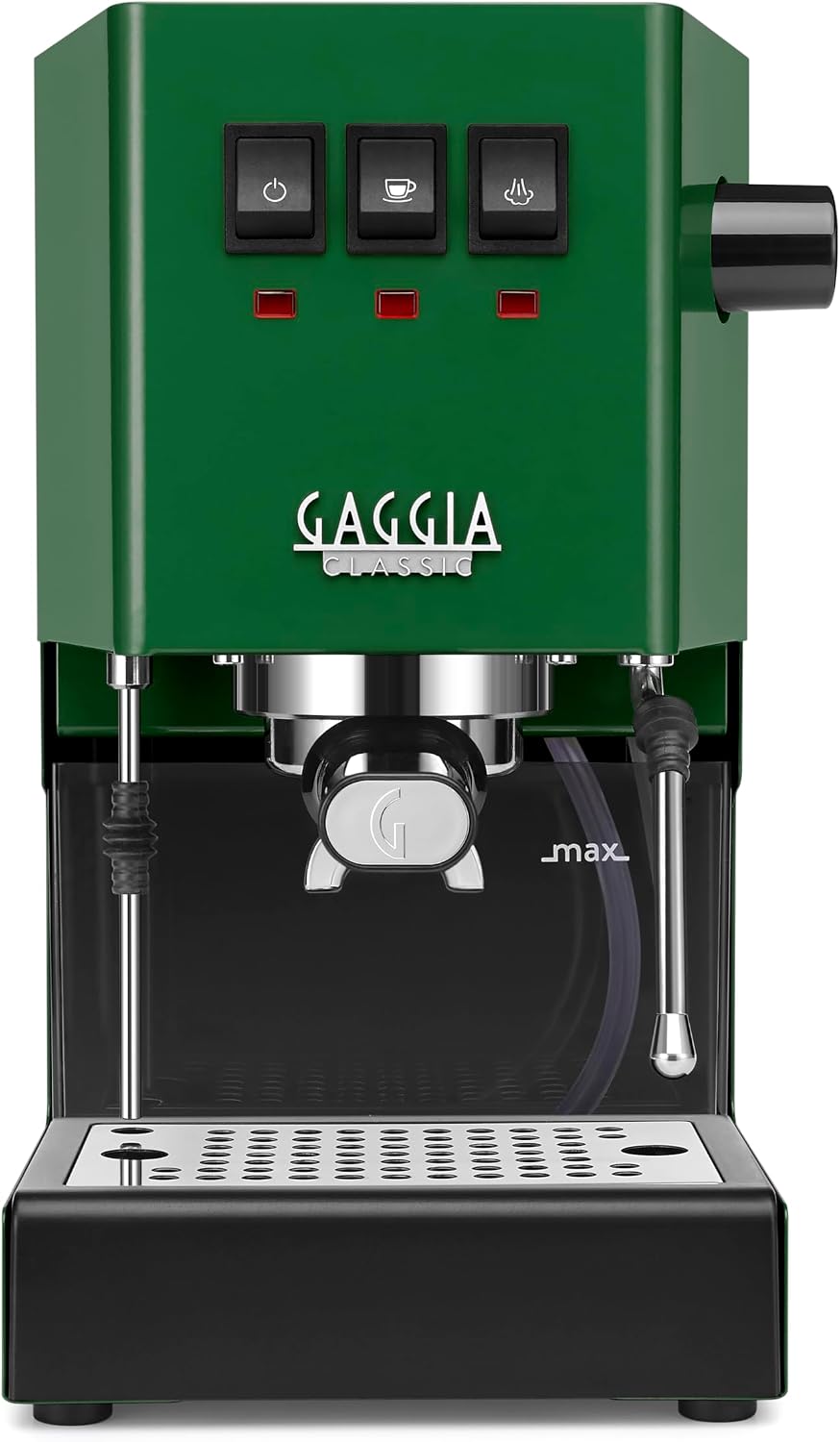
The Gaggia Classic Pro has been popular since 1991, and the current E24 revision remains one of the most recommended semi automatic machines in the espresso world. At $549, it delivers a commercial-style 58 mm portafilter, a brass boiler with improved thermal mass, and a 15-bar Ulka pump with an over pressure valve adjusted to 9 bars at the puck.
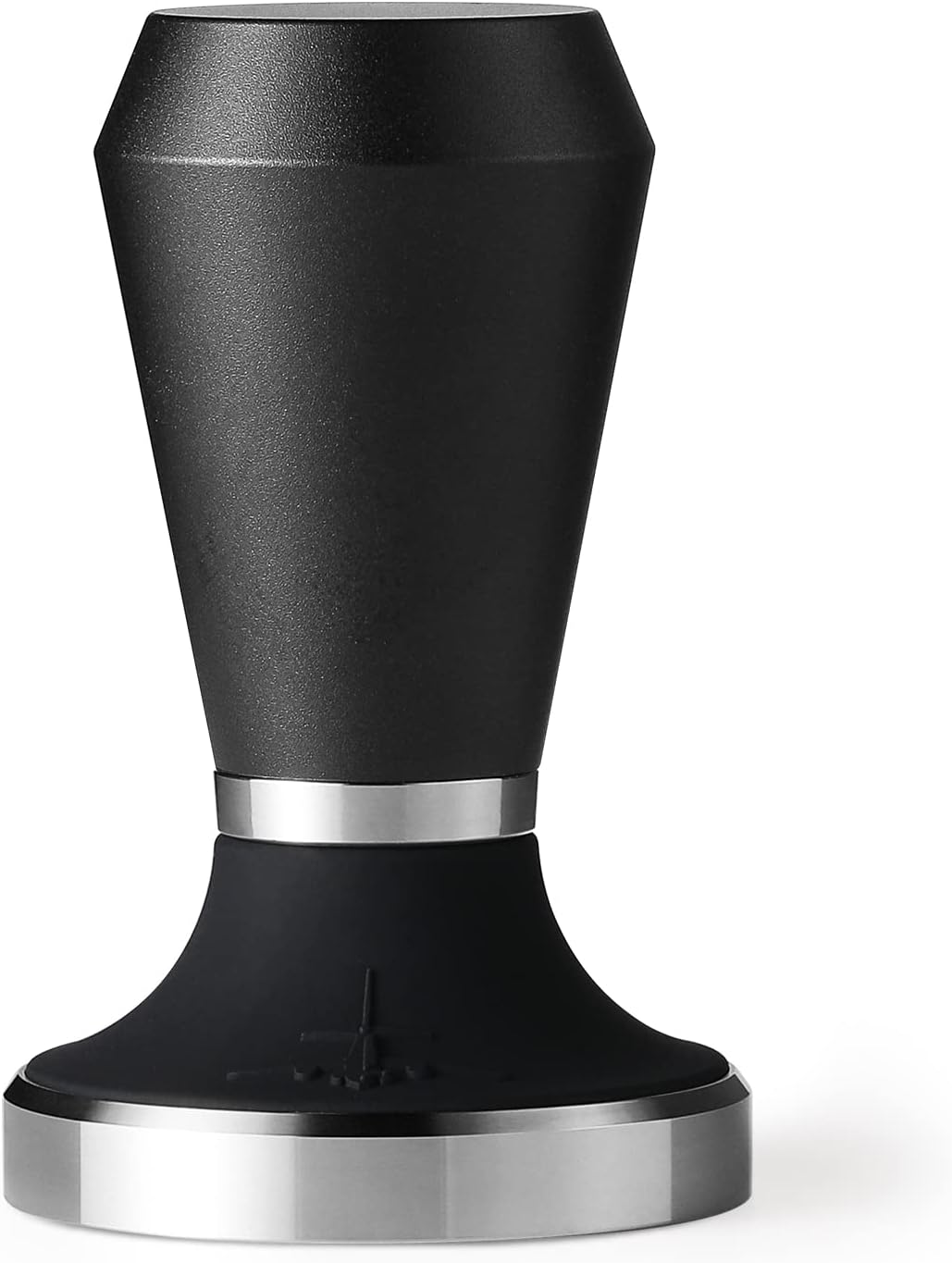
Commercial-standard 58mm portafilters give access to a market of third-party accessories: precision baskets from IMS or VST, bottomless portafilters, and a wide range of tampers. That ecosystem means you can refine your setup piece by piece over years.
The manual steam wand on the Gaggia Classic is capable of producing great espresso drinks with textured milk. The two-hole steam tip generates enough pressure for microfoam, though you will need to build some wand technique.
The major limitation: the Gaggia Classic Pro ships without PID temperature control. Single boiler machines require temperature surfing for consistent shots; you flush water through the group head to bring temperature into the 195 to 205°F window before pulling. This routine adds 30 to 60 seconds per shot and demands attention. Community modders frequently install aftermarket PID kits (around $100 to $150) to eliminate the need for temperature surfing, though hardware mods may void the warranty.
A traditional single-boiler system can take time to switch between brewing and steaming. The Gaggia Classic Pro uses the same boiler for both tasks, so expect a 30- to 45-second wait after steaming milk before the boiler cools enough for proper brewing temperature. Single-boiler machines can struggle with back-to-back milk drinks as a result.
Warm-up takes 15 to 20 minutes for a full boiler and group head heat soak. That is not a machine you turn on and use immediately.
Ideal user: Tinkerers and espresso purists who enjoy learning technique, value durability and repairability, and plan to pair the machine with a capable separate grinder. The Gaggia Classic Pro is a long-term platform, not a convenience appliance.
Best Refurb Dual Boiler Under $1,000: Breville Dual Boiler
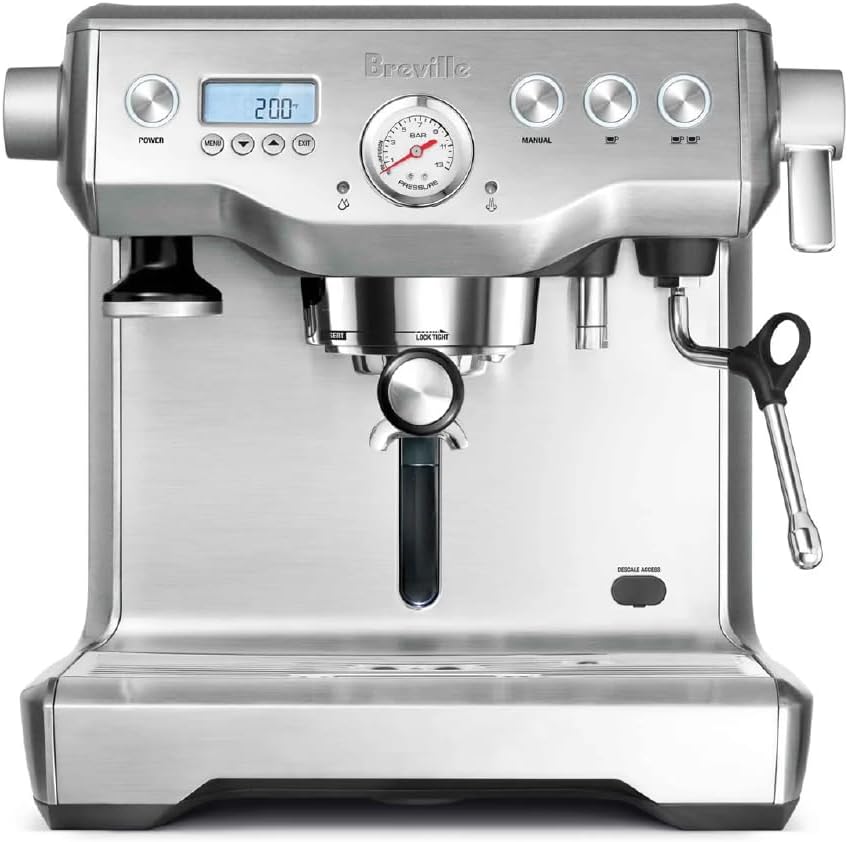
Brand-new dual boiler espresso machines rarely fall below $1,000 in the US. The Breville Dual Boiler (BES920) is the exception, appearing in refurbished or clearance channels at $850 to $950.
Dual boiler machines allow simultaneous brewing and steaming because they contain separate boilers for each task. The BES920 includes a 58 mm portafilter, PID temperature control with a front-panel display, a pressure gauge, programmable pre-infusion, and a shot timer. Steam power is strong enough to texture milk for four or five drinks in a row without waiting for recovery.
For serious home baristas pulling multiple milk drinks during a weekend brunch, the ability to pull a shot and steam milk at the same time cuts total drink time nearly in half compared with a single boiler machine. The separate boilers maintain rock-solid temperature stability under load.
Drawbacks are real. The BES920 is discontinued or semi-discontinued in some markets, raising concerns about long-term parts availability. Refurbished units may carry shorter warranties or limited service coverage; inspect the seller’s reputation and return policy before purchasing. The machine has a large footprint and draws more power than single-boiler alternatives. And like all Breville models in this tier, you need a separate grinder.
Ideal user: Experienced home baristas comfortable buying refurb gear, who make several milk drinks daily and want the dual boiler advantage without paying $1,500-plus for a new prosumer machine.
For readers considering stretching slightly above $1,000, heat exchanger machines like the Lelit Mara X offer comparable steam performance in a different architecture. That comparison is covered below.
Best Compact All-Rounder: Breville Barista Express
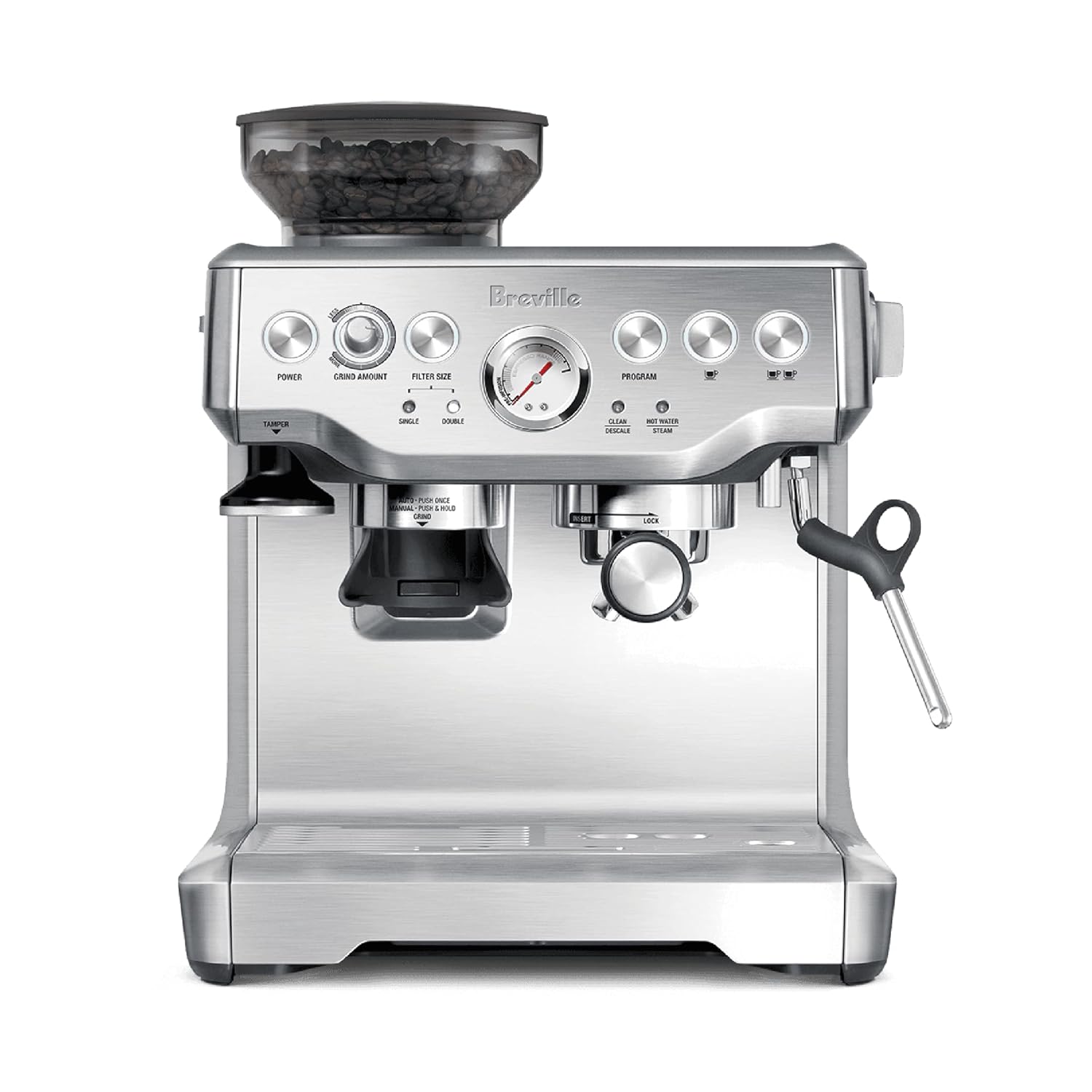
The original Breville Barista Express remains widely available, well-supported, and priced between $500 and $650, often $100 to $200 less than the Impress version.
Core features: a built in grinder with 18 conical burr settings, a 54 mm portafilter with dual wall filter baskets (for beginners) and single-wall baskets (for dialed-in shots), thermocoil heating, and a manual steam wand. The front-access layout keeps the machine manageable on standard countertops.
For medium to dark roasts, the Barista Express produces acceptable espresso shots with enough body and crema for milk drinks. The steam wand handles basic latte art after some practice. A huge online user base means troubleshooting help is always a forum search away.
Compared with the newer Barista Express Impress and Barista Pro, the original Express has fewer grinder steps (18 vs. 25 or 30), no assisted tamping, slightly slower warm-up, and a less refined workflow. You will need to dose and tamp manually, which means more mess and more variables. But for cost-conscious shoppers who want an integrated grinder machine and don’t mind a bit more hands-on involvement, the Barista Express delivers good coffee at a lower price than its siblings.
Ideal user: Budget-focused buyers who want a proven all-in-one home espresso machine with a large support community, and who are willing to accept an older feature set in exchange for a lower entry price.
Best Super Automatic Under $1,000: De’Longhi Magnifica Evo
Super-automatic machines handle grinding, dosing, and brewing automatically. Drop beans in the hopper, press a button, and the Magnifica Evo grinds coffee, tamps, extracts, and (with the LatteCrema model) froths milk into your cup. One-touch options include espresso, lungo, cappuccino, and latte.
Shot quality is consistent but less nuanced than what a dialed-in semi-automatic setup produces. The built-in steel burr grinder handles a moderate range of settings, and the thermoblock boiler heats water to adequate brewing temperature. Espresso quality from super automatic machines works well for medium roasts and milk-heavy drinks, where milk texture masks subtle extraction flaws.
The LatteCrema milk system on the higher-end variant draws milk from a carafe, heats and froths it, and dispenses directly into the cup. Rinsing the milk circuit after each use is required; the machine runs an automatic rinse cycle that handles most of the work, but the carafe and tubes need manual cleaning every few days to avoid residue buildup.
Trade-offs: more plastic in the construction, a louder grinder than standalone espresso grinders, less customization over brew ratios and water temperature, and long-term maintenance of milk circuits. Other espresso machines in this price range offer more flavor control.
Ideal user: Busy households, office kitchenettes, and people upgrading from pods or drip coffee who want reliable drinks without learning grind size, tamp pressure, or milk steaming technique.
Best Heat-Exchange or Thermoblock Alternatives Near $1,000
A heat exchanger (HX) machine uses a single large boiler kept at steam temperature, with a heat exchange tube running through it to heat brew water. This design allows near-simultaneous brewing and steaming milk, similar to dual boilers but with a different engineering approach.
HX machines with an E61 group head (like the Lelit Mara X, which sits just above $1,100 in the US) deliver powerful steam, large boiler capacity, and a cafe-like workflow. The Rancilio Silvia, which has been around for over two decades, uses a single-boiler design but occupies a similar price tier and remains a common alternative for purists.
The Miicoffee Apex V2 features a PID for temperature stability and represents a newer entrant in the sub-$1,000 thermoblock space, offering an alternative to traditional boiler designs.
Comparing HX to dual boiler: HX machines typically have stronger raw steam power due to the large boiler, but temperature management during brewing can be less precise than a PID-controlled dual boiler. For making two to four milk drinks in a row, both architectures handle the task, but the dual boiler offers more set-and-forget temperature consistency.
For readers weighing a slight budget stretch: if you routinely make four or more milk drinks in a session and plan to keep the machine for five-plus years, a heat exchanger or dual boiler at $1,000 to $1,200 can justify the premium through daily time savings and steam power. If your routine is one or two drinks, the Gaggia Classic Pro or Bambino Plus paired with a quality grinder delivers comparable espresso quality at lower cost.
Best Budget-Friendly Setup: Gaggia Classic Pro + Grinder Pairing
Spending the entire $1,000 on a machine alone is not always the smartest move. A capable single boiler machine like the Gaggia Classic Pro ($549) paired with a solid entry-level espresso grinder ($200 to $350) can outperform pricier machines fed pre-ground coffee.
Two grinder examples that complement the Classic Pro:
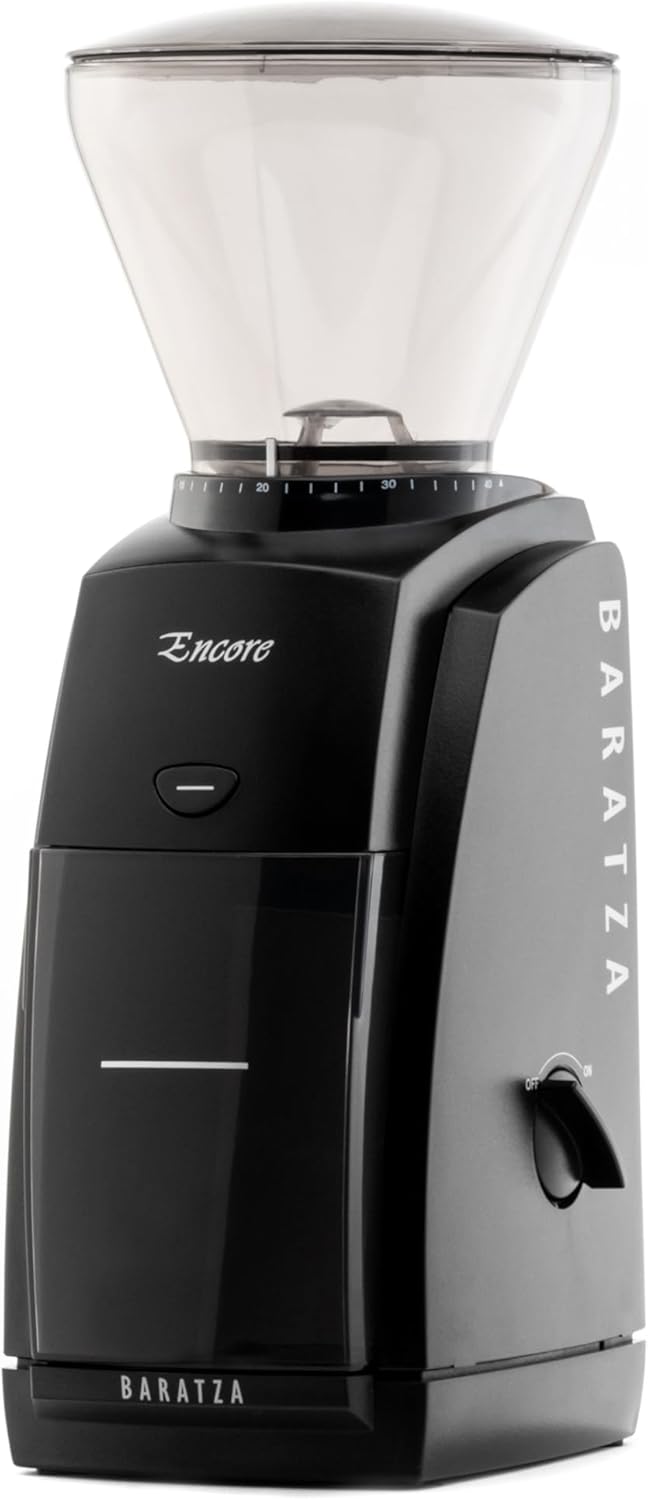
Baratza Encore ESP (~$200): Purpose-built for espresso with a finer grind range than the standard Encore. Offers stepless fine-adjustment for dialing in dose and grind within a tight window.
Entry-level flat burr grinder (~$250 to $350): Options from 1Zpresso (manual) or Eureka (electric) provide more grind consistency and finer step resolution, which translates directly to balanced espresso flavor.
The daily workflow for this combo: turn on the Gaggia, wait 15 to 20 minutes for full heat soak, grind into the portafilter, distribute and tamp, pull the shot, then switch to steam mode for milk. Temperature surfing is part of the routine until you add a PID kit. Steaming milk requires waiting for the boiler to reach steam temperature, then flushing back to brew temp for any subsequent shots.
This path suits patient learners who prioritize long-term espresso quality and upgradability. You can upgrade the grinder, add a PID, swap baskets, and refine technique over years without replacing the base machine. A consistent grinder is the single biggest upgrade you can make to espresso quality at any budget level.
Grinder quality is often the limiting factor in shot flavor, not just the espresso machine.
Key Features That Actually Matter Under $1,000
Forget touch screens and color options. In this price range, performance-critical features determine whether your espresso tastes balanced or bitter.
Boiler type and its practical impact:
Single boiler machines use the same boiler for brewing and steaming. They cost less but force sequential workflow.
Thermoblock and ThermoJet systems heat water on demand through a metal block. They warm up fast (seconds instead of minutes) but have limited thermal mass.
Heat exchanger machines run brew water through a tube inside a steam boiler. Strong steam, near-simultaneous brew and steam, but temperature management requires attention.
Dual boilers maintain separate boilers at different temperatures for brew and steam. Best temperature stability and multitasking, but heaviest and most expensive.
Temperature stability and PID control:
PID controllers ensure consistent brewing temperatures around 200°F (93°C). Without PID, single boiler machines require temperature surfing for optimal shots. PID reduces the temperature swing from ±10°F or more down to ±1 to 2°F, which is the difference between a sour shot and a balanced one.
Pump pressure and pre-infusion:
A good espresso machine maintains nine bars of pressure during extraction. Most espresso machines in this range use a vibratory pump rated at 15 bars, with an over pressure valve (OPV) limiting actual brew pressure to 9 bars. Pre-infusion (a low-pressure soak before full extraction) gently saturates the coffee grounds before ramping to full pressure. This reduces channeling, where water finds paths of least resistance through the puck, and improves extraction evenness.
Steam power and wand design:
Powerful steam wands create microfoam for latte art. A manual steam wand with a multi-hole tip gives the most control over milk texture but requires practice. Automatic wands (like the Bambino Plus) simplify the process but limit fine-tuning. For milk drinks with plant milks, steam power matters because oat milk and similar alternatives need consistent heat and air incorporation to froth well.
Grinder pairing:
Espresso grinders need fine, repeatable adjustments measured in microns, not the coarse steps suitable for drip coffee or cold brew. “Espresso-capable” is a distinct category from generic burr grinders. A consistent grind size is crucial for balanced espresso flavor, and a machine paired with a poor grinder will never produce fantastic espresso.
Workflow: How These Machines Feel to Use Day to Day
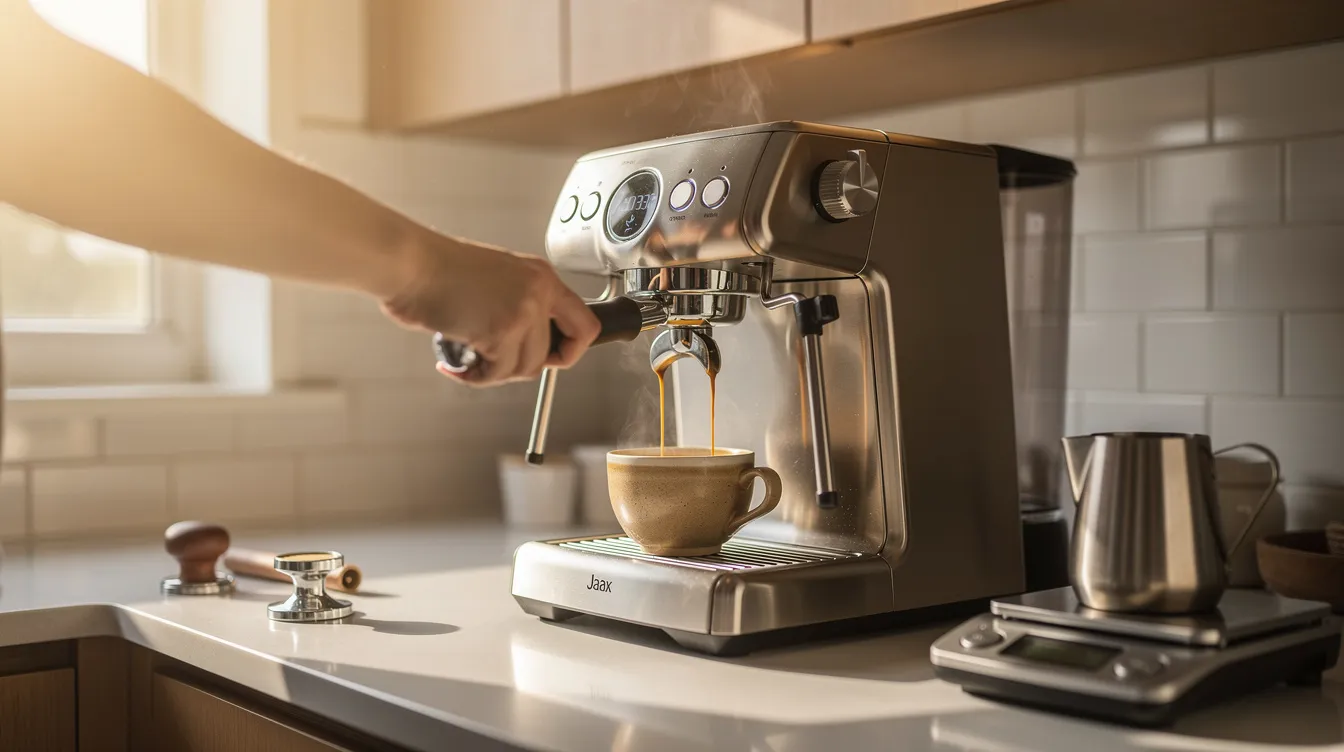
A semi-automatic machine like the Gaggia Classic Pro requires you to grind coffee, distribute grounds, tamp, lock the portafilter, start the pump, watch the shot timer, stop the pump, switch to steam, texture milk, and clean up. That is 8 to 10 discrete steps per drink, taking 4 to 7 minutes including warm-up.
The Barista Express Impress collapses some of those steps: the grinder doses into the portafilter, the Impress system tamps, and you lock in and press a button. Total active time per drink drops to about 3 to 4 minutes after the 30-second warm-up.
A super automatic machine like the Magnifica Evo reduces the process to pressing a button. Total time: 60 to 90 seconds including grind, brew, and milk (on LatteCrema models). Cleanup takes longer, though, because you must rinse the milk circuit.
Factors to weigh:
Warm-up time ranges from 3 seconds (Bambino Plus) to 20 minutes (Gaggia Classic Pro for full heat soak). Consider whether you will turn the machine on while you shower or expect instant readiness.
Forgivingness: the Barista Express Impress and Bambino Plus tolerate minor grind or tamp errors better than the Gaggia Classic Pro, which rewards precision and punishes shortcuts.
A shot timer or a pressure gauge (found on the Barista Pro and Dual Boiler) gives real-time feedback that shortens the learning curve.
Counter space varies: the Bambino Plus is 7.7 inches wide; the Barista Express Impress is over 16 inches deep with the water tank in back. Rear-mount tanks can be difficult to refill under low kitchen cabinets.
Think about your own routine. If espresso is a weekday-rush ritual, prioritize fast warm-up and forgiving workflow. If it is a weekend hobby, the manual process of a Gaggia Classic Pro or Breville Dual Boiler becomes part of the enjoyment.
Temperature Stability, Pressure, and Shot Consistency Explained
Espresso extraction works within a narrow window. Water between 195°F and 205°F (90.5°C to 96°C) dissolves the right balance of acids, sugars, and bitter compounds from finely ground coffee. Below that range, shots taste sour and thin. Above it, bitterness and astringency take over.
Machines with PID controllers maintain consistent brewing temperatures by continuously measuring water temperature and adjusting heater output in real time. The Barista Express Impress, for example, held ±1°C across multi-week testing, producing repeatable TDS readings within ±0.4%. The Gaggia Classic Pro, without PID, swings more; users can temperature surf (flushing water until the grouphead reaches target temp), but that requires attention and practice.
Pressure matters in parallel. At 9 bars, water moves through the compacted espresso grounds slowly enough to extract flavor compounds evenly over a 25- to 35-second pull. Pre-infusion, a brief low-pressure soak at the start of extraction, lets water saturate the puck before full pressure hits. This reduces channeling and improves consistency. The Breville Dual Boiler offers programmable pre-infusion duration; the Barista Express Impress applies automatic pre-infusion; the Gaggia Classic Pro delivers a brief natural pre-infusion from its pump ramp-up.
How each machine category maps to these concepts:
Bambino Plus: PID + ThermoJet = fast, stable temperature; pre-infusion built in; shot consistency strong for the price
Barista Express Impress: PID + thermocoil = stable after 30-second warm-up; pre-infusion auto-applied; top-tier consistency in its class
Gaggia Classic Pro: No PID (stock) = temperature surfing required; OPV limits pressure to 9 bars; consistent shots are achievable but demand technique
Breville Dual Boiler: PID + dual boilers = best temperature stability in this roundup; programmable pre-infusion; pressure gauge for visual feedback
Super automatics (Magnifica Evo): Thermoblock + internal regulation = adequate stability; pre-infusion varies by model; shot-to-shot consistency is good but less tunable
Most mid-range home espresso machines reach acceptable stability for daily use. Dual boilers and PID-equipped semi automatics still offer measurable improvements that enthusiasts notice in the cup.
Milk Texturing and Steam Power: For Latte and Cappuccino Lovers
Anyone drinking lattes, flat whites, or cappuccinos should value steam power and wand control as much as shot quality. A well-extracted espresso buried under poorly textured milk also means it is hard to froth milk well enough for the drink to shine.
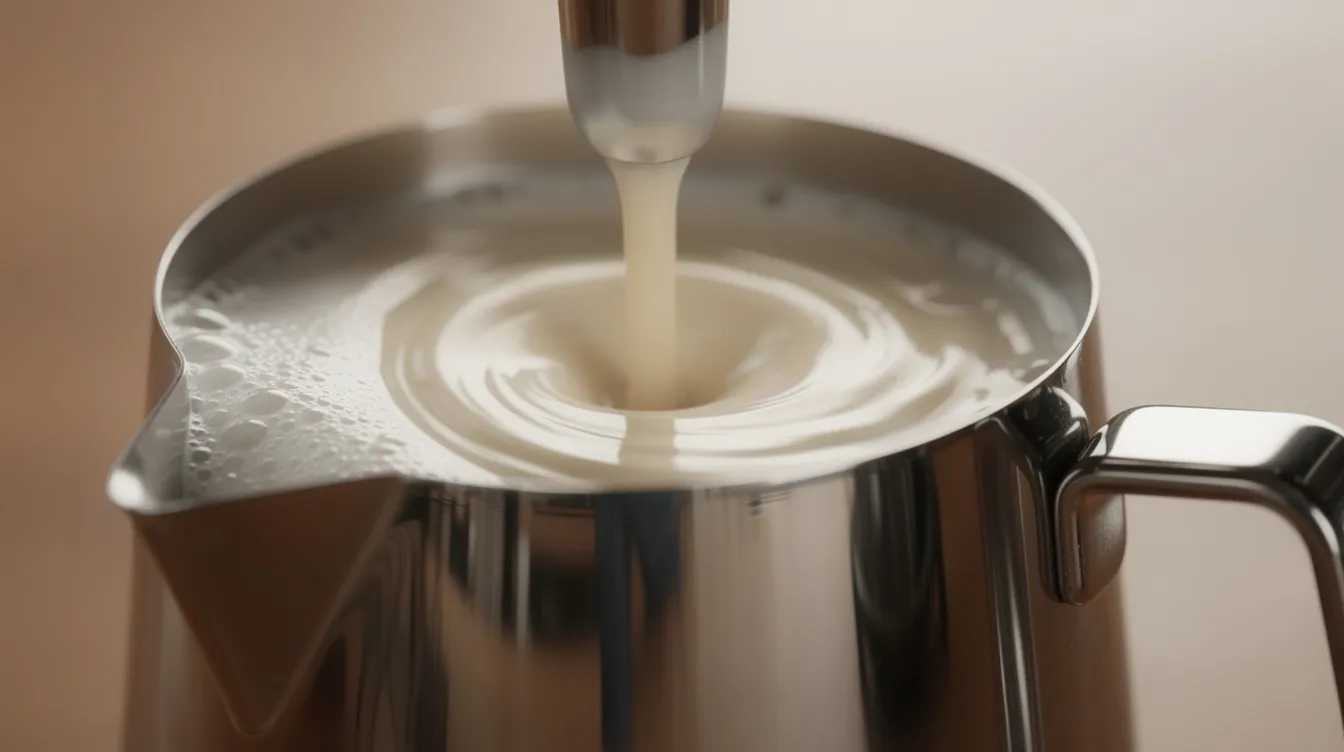
Manual steam wands (Gaggia Classic Pro, Breville Barista Pro, Breville Dual Boiler) give full control over milk steaming. You position the tip, control the air intake, and swirl to create a vortex that folds microfoam throughout the milk. This is how you learn to pour latte art. The learning curve takes a few weeks of daily practice, but the ceiling is high.
Automatic steam wands (Breville Bambino Plus) simplify the process. Insert the wand, select foam level, and the machine handles air incorporation and heating. Results are consistent and work well with oat milk and other plant milks, but you give up fine control over foam density and temperature.
Fully automatic carafe systems (De’Longhi Magnifica Evo with LatteCrema) draw milk from a container, heat and froth it, and dispense into the cup. Convenience is maximal; microfoam quality is adequate for mixed drinks but rarely matches what a skilled hand achieves with a manual wand.
Boiler size and design determine how quickly a machine can steam multiple drinks. A single boiler machine needs to reheat between brewing and steaming milk for the next shot. The Breville Dual Boiler, with separate boilers, handles four to five drinks back-to-back without pause. Pricier machines with larger boilers recover steam pressure faster.
For milk-focused households making three or more drinks per session, prioritize the refurbished Dual Boiler, the Barista Pro (for its strong steam), or a super automatic with a robust milk system.
Grinder Pairing: Getting the Most from Your Espresso Machine
No espresso machine, even the best espresso machine under $1,000, can overcome an inconsistent grinder or pre-ground coffee. Freshly ground beans are vital for a great shot of espresso, and a great grind is more important than the espresso machine itself.
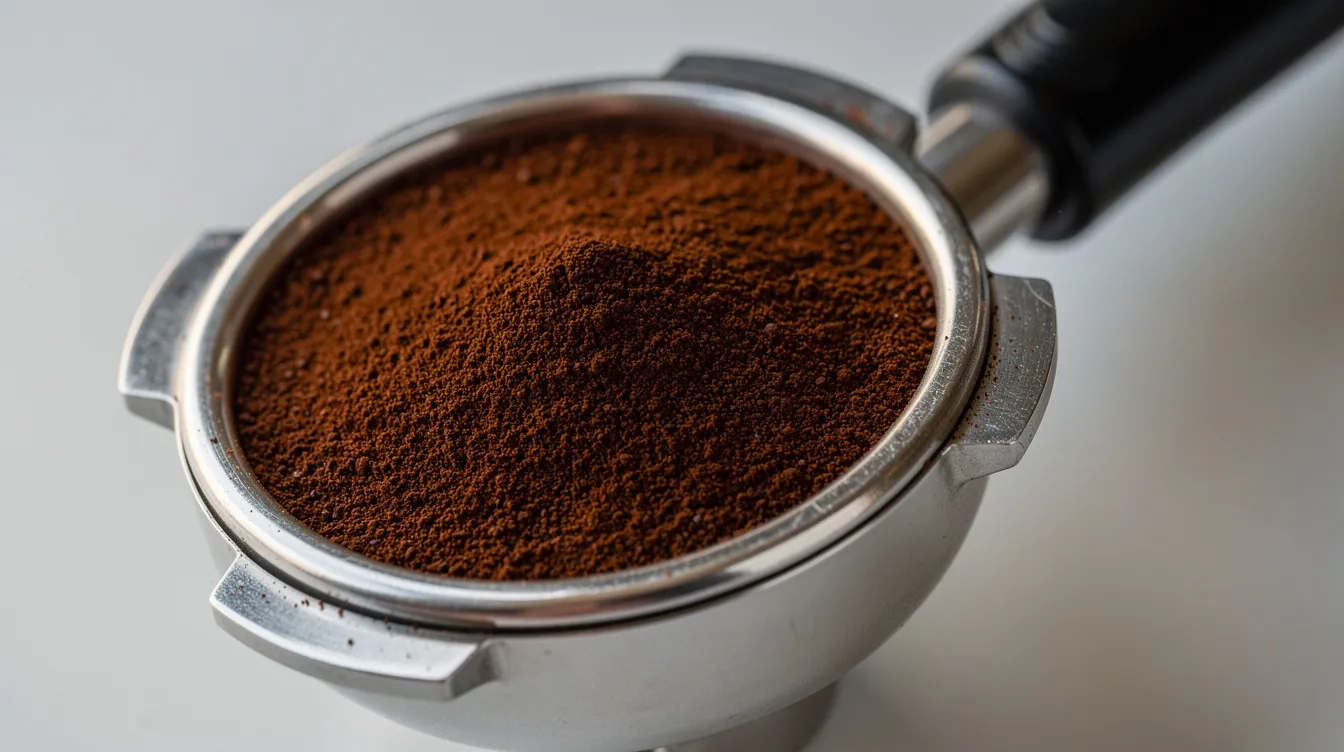
What separates an espresso grinder from a generic burr grinder: espresso grinders allow for fine adjustments in grind size, often in micron-level increments. They produce uniform particle sizes that create even resistance in the portafilter. A coffee grinder designed for drip coffee or cold brew does not grind fine enough, and its coarser steps make dialing in a 25- to 30-second espresso shot impossible.
Built-in grinders save counter space and reduce equipment costs. They are convenient for beginners and casual users who want a single appliance. However, built-in grinders limit grind settings compared to standalone grinders, and you cannot upgrade the grinder without replacing the entire machine. Some conical burrs in integrated grinders struggle with very light roasts at their finest settings.
Standalone grinders:
Standalone grinders allow for more precise shot adjustments and are independently upgradable. Quality standalone grinders can cost as much as espresso machines; a good grinder should cost as much as your espresso machine, and grinders should cost as much as or more than espresso machines if you are serious about espresso quality. A good grinder is essential for quality espresso extraction.
Suggested grinder tiers:
Tier
Price Range
Examples
Pairs Well With
Budget espresso
$150–$300
Baratza Encore ESP, 1Zpresso JX-Pro (manual)
Gaggia Classic Pro, Bambino Plus
Mid-range
$350–$500
Eureka Mignon Notte, Baratza Sette 270
Gaggia Classic Pro, Dual Boiler
Upper mid-range
$500–$700
Eureka Mignon Specialità, DF64 (single dose)
Dual Boiler, any semi-auto
Consider your total system budget (machine + grinder + accessories) rather than spending the full $1,000 solely on the machine. Pre-ground coffee yields poor results in espresso machines because it loses aromatic compounds within minutes of grinding and cannot be adjusted to match your machine’s extraction characteristics.
Cleaning, Maintenance, and Cost of Ownership
Routine maintenance directly affects shot flavor, steam performance, and machine lifespan. Regular cleaning improves espresso machine performance and longevity, and skipping it will degrade even the best home espresso machine within months.
Daily tasks:
Flush the group head after each use to prevent coffee buildup. Run water through the portafilter for 5 to 10 seconds after every shot.
Wipe down the steam wand after each use to avoid milk residue. Dried milk inside the wand tip restricts steam flow and introduces off-flavors.
Empty the drip tray and knock box before they overflow.
Purge any remaining steam from the wand after milk steaming.
Weekly/monthly tasks:
Backflush with cleaning detergent (like Cafiza cleaning powder) on machines that support it. Most semi-automatic Breville machines and the Gaggia Classic Pro allow backflushing. Use Cafiza or equivalent espresso machine cleaner for effective group head cleaning.
Descale your espresso machine monthly if used daily. Hard water accelerates scale buildup inside boilers and heating elements, reducing temperature stability and straining the pump.
Clean or wipe grinder hoppers and chutes to remove stale oils.
Replace water filters according to manufacturer schedules.
Long-term costs:
Replacement gaskets and shower screens: $5 to $15 each, needed every 6 to 12 months depending on use.
Grinder burr replacement: varies by model, typically every 2 to 5 years.
Refurbished dual boiler machines may need occasional pump or solenoid valve replacement; budget $50 to $100 for parts.
Removable water tanks and easy-access drip trays aid in cleaning and maintenance. Machines that make daily cleanup simple (the Bambino Plus, for instance, has a slide-out drip tray and easy-access tank) encourage consistent habits.
Super automatic machines like the Magnifica Evo have additional cleaning steps for milk circuits and internal brew units. Many include automated rinse cycles at startup and shutdown, but the carafe, milk tubes, and brew group require manual disassembly and washing every few days.
Compare the cost of maintenance supplies (roughly $30 to $60 per year) against daily cafe spending. A $5 latte habit costs over $1,800 per year. Even with machine, grinder, beans, and maintenance factored in, home espresso pays for itself within the first year for most daily drinkers.
How to Choose the Best Espresso Machine Under $1,000 for You
Start by mapping your priorities: what do you drink, how involved do you want to be, how much counter space do you have, and do you already own an espresso grinder?
Consider your coffee preferences when choosing an espresso machine. A straight-espresso drinker has different needs than someone making four oat milk lattes every morning.
A simple decision flow:
Do you already own an espresso grinder?
Yes → Consider machine-only options: Gaggia Classic Pro, Bambino Plus, or a refurbished Dual Boiler.
No → Consider all-in-one options (Barista Express Impress, Barista Pro) or budget a machine + separate grinder combo.
Yes → Consider machine-only options: Gaggia Classic Pro, Bambino Plus, or a refurbished Dual Boiler.
No → Consider all-in-one options (Barista Express Impress, Barista Pro) or budget a machine + separate grinder combo.
Do you mainly drink milk-based drinks?
Yes → Prioritize steam power and recovery. The Dual Boiler (refurb) or Barista Pro offer the strongest milk steaming performance under $1,000.
No → Temperature stability and shot consistency matter most. The Gaggia Classic Pro (with PID mod) or Bambino Plus paired with a quality grinder excels for straight espresso shots.
Yes → Prioritize steam power and recovery. The Dual Boiler (refurb) or Barista Pro offer the strongest milk steaming performance under $1,000.
No → Temperature stability and shot consistency matter most. The Gaggia Classic Pro (with PID mod) or Bambino Plus paired with a quality grinder excels for straight espresso shots.
How much hands-on tinkering do you want?
Minimal → Super automatic (Magnifica Evo) or Barista Express Impress.
Some → Bambino Plus or Barista Pro.
Maximum → Gaggia Classic Pro with aftermarket mods, or Dual Boiler.
Minimal → Super automatic (Magnifica Evo) or Barista Express Impress.
Some → Bambino Plus or Barista Pro.
Maximum → Gaggia Classic Pro with aftermarket mods, or Dual Boiler.
Durability and repairability are important factors in choosing an espresso machine, especially if you plan to keep it for five or more years. Simpler machines with fewer electronics (like the Gaggia Classic Pro) tend to outlast heavily automated models because there are fewer components to fail.
Be realistic about the learning curve. Even beginner-friendly machines require dialing in dose, grind, and tamp. Expect a few weekends of practice before your shots taste consistently good. That learning process is part of the espresso journey, not a flaw of the machine.
Aesthetics and countertop footprint matter, but evaluate those after you have narrowed your shortlist by performance and workflow fit.
Value and Warranty: Getting the Most for Your Money
Typical warranty coverage for most espresso machines in this price range: Breville machines carry a 2-year limited warranty when purchased from authorized US dealers. De’Longhi offers 1 to 2 years depending on model. The Gaggia Classic Pro warranty varies by dealer; check before purchase.
The value calculus between new and refurbished: a new Bambino Plus or Barista Express Impress comes with full warranty, current firmware, and known condition. A refurbished Breville Dual Boiler offers more advanced features (dual boilers, pressure gauge, PID) at a comparable price but with shorter warranty coverage and unknown usage history. Both paths are valid; the right choice depends on your comfort with risk.
A well-maintained Gaggia Classic Pro can last 10-plus years; its simple design (single boiler, vibratory pump, basic electronics) means most repairs are straightforward and parts remain widely available. Breville machines with more integrated electronics tend toward 5 to 8 years of reliable service, though individual experience varies.
Factor in total ownership costs when comparing machines:
Machine: $400 to $950
Grinder (if needed): $150 to $500
Accessories (tamper, scale, milk jug, cleaning supplies): $50 to $100
Annual maintenance supplies: $30 to $60
Beans (1 lb/week at $15 to $20): $780 to $1,040 per year
Keep purchase receipts and register your machine for warranty claims. For models with known long-term maintenance concerns (the Dual Boiler’s solenoid valves, for instance), registering promptly ensures you are covered during the warranty window.
Related Gear Roundups and Next Steps
If you are still narrowing your options, explore these related Capitol City Coffee guides:
This page focuses on the best espresso machines under $1,000 for US buyers in 2026. It covers semi automatic machines, super automatic machines, and refurbished dual boiler options across beginner, intermediate, and enthusiast skill levels.
Rather than endlessly researching, choose one or two finalist machines, compare grinder options that fit your remaining budget, and measure your available counter space. Then buy beans from a local roaster, set aside a Saturday morning, and start pulling shots.
Espresso has a learning curve. Your first shots will not taste like the ones from your favorite cafe. That is normal. Within a few weekends of adjusting grind size, dose, and technique, the improvement is rapid and satisfying. Enjoy the process rather than chasing perfection on day one.
FAQs
These questions address common concerns not fully covered above, focused on practical ownership details for home espresso makers working with machines under $1,000.
Do I really need a separate espresso grinder if my machine doesn’t have one?
Yes. For true espresso, a capable grinder is essential. Pre-ground coffee stales within minutes of grinding and lacks the fine control needed to hit 25- to 35-second shots with balanced flavor. If your budget is tight, choose a more affordable machine (like the Gaggia Classic Pro at $549) and reserve $200 to $300 for a solid entry-level espresso grinder like the Baratza Encore ESP. Super automatic machines have grinders built in, but those grinders are tied to the machine and not independently upgradable.
Can I use these machines for regular coffee as well as espresso?
Most semi-automatic home espresso makers are optimized for espresso, not drip-style coffee volumes or coarser grind sizes. You can pull an americano (espresso diluted with hot water), but the machine will not replace a drip coffee brewer for large batches. Some hybrid machines (like certain Ninja Luxe Cafe models) can pull espresso-style shots and brew drip coffee or cold brew, but they typically compromise on pure espresso quality. Serious coffee drinkers often keep a separate drip brewer or pour-over setup alongside their standard espresso machine.
Is a dual boiler or heat exchanger worth it if I only make one or two drinks a day?
For one or two daily drinks, many people are well served by single-boiler or thermoblock machines, which cost less and occupy less counter space. Dual boiler and heat exchanger machines shine when you make several milk drinks in a row or demand maximum temperature precision and steam power for every shot. Beginners often benefit more from an easier workflow and good grinder than from jumping straight to complex dual boiler espresso gear.
How long should I expect an espresso machine under $1,000 to last?
A realistic lifespan is 5 to 10-plus years for well-maintained machines in this price class. Heavily used or poorly descaled equipment can fail sooner. Simpler machines with fewer electronics, like the Gaggia Classic Pro, can often be repaired and kept running longer than super automatic machines with complex internal brew units and milk circuits. Follow manufacturer maintenance schedules and use filtered or softened water to maximize longevity.
What’s a realistic warm-up time, and can I leave my espresso machine on all day?
Thermoblock and ThermoJet machines (Bambino Plus, Barista Pro) reach brewing temperature in seconds to a few minutes. Single-boiler machines (Gaggia Classic Pro) need 15 to 20 minutes for full group head and boiler heat soak to achieve proper temperature stability. Some users leave single-boiler machines on for extended periods for convenience, but this increases energy use and can accelerate wear on seals, gaskets, and heating elements. A timer plug is a practical compromise: set it to turn the machine on 20 minutes before your alarm. Check manufacturer guidance for your specific model, as some are designed for intermittent use rather than all-day operation.
How Capitol City Coffee Rates Coffee and Coffee Machines
Every coffee and coffee machine we recommend is scored on the same 100-point scale, so a recommendation on one page means the same thing as a recommendation on any other. Each pick is also labeled with how we reached its score.
Research-ratedScored from the roaster or manufacturer’s published specifications, independent results such as Coffee Review blind cuppings and SCA brewer certification, and patterns across verified buyer reviews. Most of our current picks are research-rated.
Hands-on testedThe Capitol City Coffee team has brewed the coffee or used the machine ourselves, following the testing steps below. We only use this label when that testing actually happened, and we show the date we tested.
Coffee beans: 100-point scale
What we score
Points
What we look at
Origin and sourcing transparency
20
Country, region, farm or cooperative, altitude, bean variety, and processing method are clearly disclosed.
Flavor evidence
25
Independent cupping scores, how closely the tasting notes match what the origin is known for, and our own cupping notes when hands-on tested.
Roast and freshness
15
Roast level stated, roast-date practices, whole-bean availability, and packaging with a one-way valve or resealable bag.
Brew versatility
15
How well the roast suits pour-over, drip, French press, cold brew, and espresso.
Value
15
Price per ounce compared with similar single-origin coffees or blends.
Buyer feedback
10
Volume and consistency of verified reviews, and recurring complaints about staleness, bitterness, or shipping.
Coffee machines and gear: 100-point scale
What we score
Points
What we look at
Brewing performance
25
Water temperature in the 195–205°F range, even extraction, and SCA certification or published test data.
Build quality and reliability
20
Materials, known failure points, and long-term owner reports.
Ease of use and cleaning
15
Setup, the daily routine, descaling, and dishwasher-safe parts.
Fit for your kitchen
10
Capacity, counter footprint, and noise.
Useful features
10
Programming, grind and temperature control, and carafe type. Features that improve the cup count more than extras that do not.
Value
10
Price compared with machines that perform similarly.
Warranty and support
10
Warranty length, parts availability, and how the brand handles repairs.
What the grades mean
Score
Grade
What it means
90–100
A
Exceptional. Our first recommendation for the feeling and setting described.
80–89
B
Strong. Excellent, with minor trade-offs we explain.
70–79
C
Good. Worth it for specific needs, with clear compromises.
Below 70
—
Not recommended. We do not feature these as picks.
How we test hands-on
When a pick carries the Hands-on tested label, this is the method behind it, and we note the date we tested.
Coffee: brewed fresh from whole beans following Specialty Coffee Association guidelines (water between 195 and 205°F, about 1 gram of coffee to every 15 to 18 grams of water) in the brew methods the roast suits best, such as pour-over, French press, or espresso. We taste it black first, then with milk if that is how most people drink it, and each taster scores it on their own before we compare notes.
Machines: used in our everyday routine rather than a single demo. We brew both full and small batches, check the brewing temperature and brew time, and run the cleaning or descaling steps the manual calls for.
How we choose the feeling and setting
We match each coffee to a mood and a moment based on its flavor profile and roast. Bright, citrusy light roasts suit energizing mornings. Chocolatey, full-bodied medium roasts suit slow or social moments. Richer roasts suit espresso and milk drinks. Each pick explains which facts led us to that match.
Our scores stay independent
Every score comes only from the criteria above. No brand can pay for a pick or a higher grade. We re-check ratings when a roast, listing, or model changes, and update or remove picks that no longer earn their grade.
Some links on this page are affiliate links. As an Amazon Associate, Capitol City Coffee earns from qualifying purchases, at no extra cost to you.
Questions about a rating? Reach the Capitol City Coffee team through our contact page.