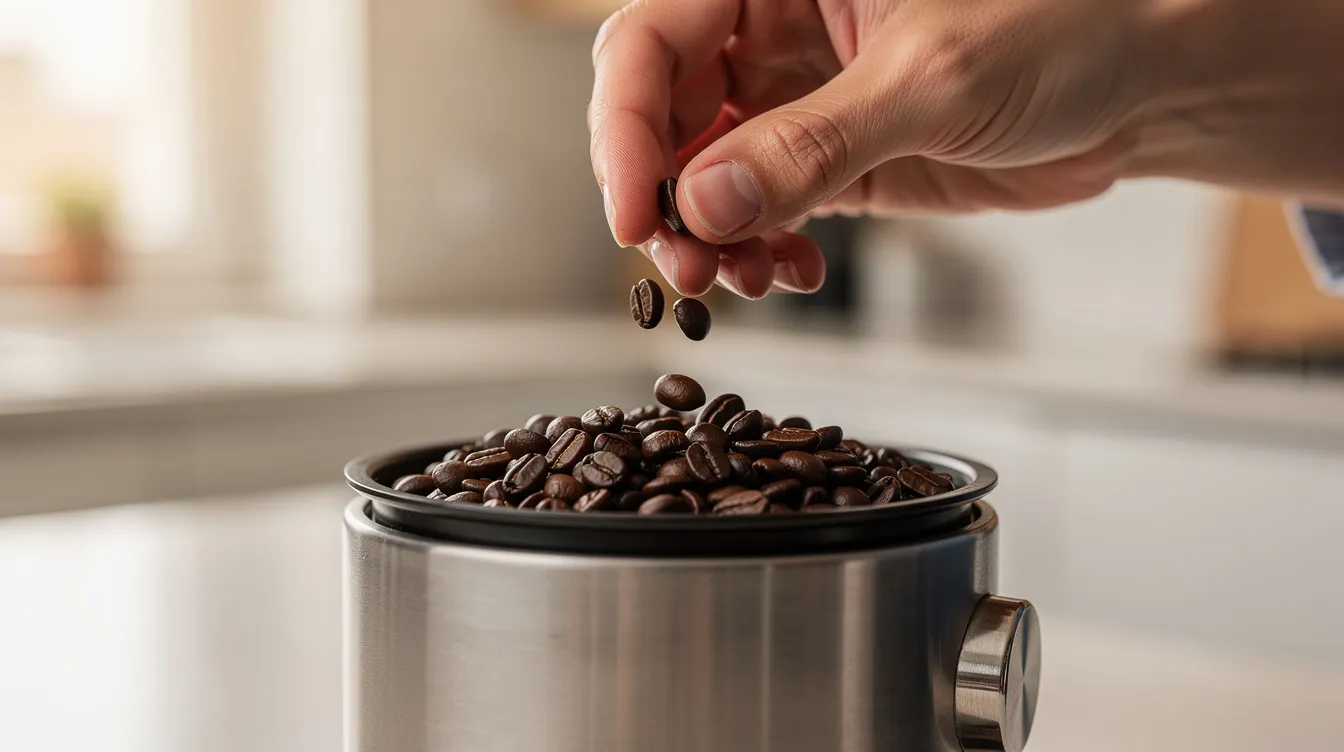
Getting a great cup of coffee at home starts with one number: your coffee to water ratio. For most brewing methods, a ratio of 1:15 to 1:17 by weight hits the sweet spot, with 1:16 serving as the practical golden ratio for everyday drip coffee and pour over. This guide breaks down the ideal range for every popular method, from espresso to cold brew, and shows you how to fine tune your recipe to match your personal taste.
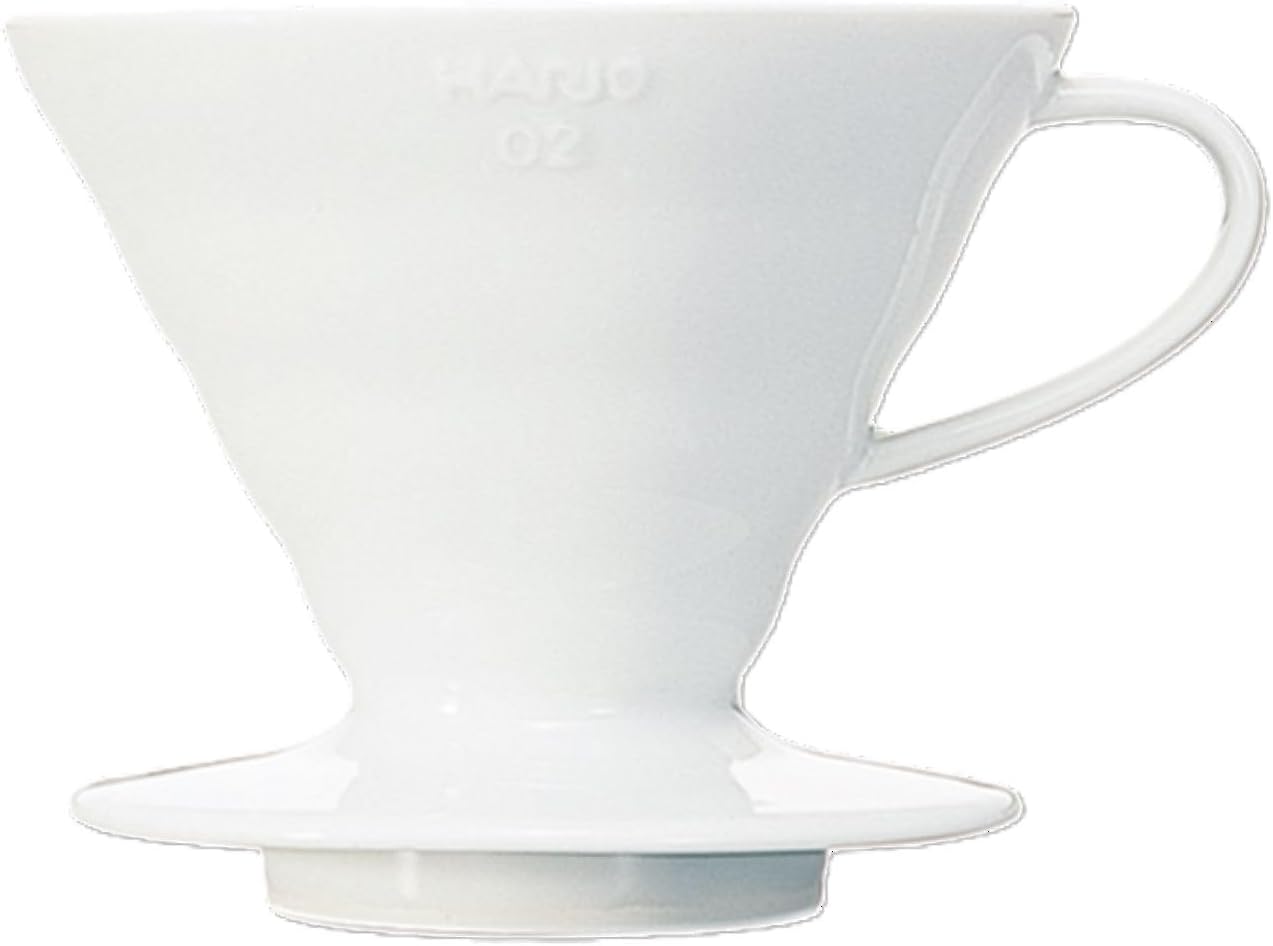
Best pour-over pick
For this roundup, Hario V60 02 is the pour-over we recommend first—the same pick at the top of our At-a-glance cards below.
The ideal coffee-to-water ratio for standard brewing methods is 1:16 or 1:15 by weight. Start at 1:16 for drip coffee and pour over, then adjust from there.
Different brewing methods require different coffee-to-water ratios. French press runs tighter (around 1:15), espresso uses roughly 1:2, and cold brew concentrate sits between 1:4 and 1:8.
A digital kitchen scale is recommended for consistency in measurements. Pair it with the right grind size and water temperature (195–205°F) for a balanced cup.
The golden ratio is a starting point, not a rigid rule. Fine tune strength by shifting your ratio by one increment, changing only one variable at a time.
This is an independent Capitol City Coffee editorial guide. Any product suggestions below are researched recommendations, clearly labeled and optional.
Direct Answer: The Best Coffee-to-Water Ratio (With Chart)
Your coffee to water ratio is simply the weight of ground coffee divided by the weight of water, measured in grams. Coffee ratios are typically measured by weight in grams because volume-based scoops vary too much between roasts and grind sizes. The gold standard coffee-to-water ratio is 1:16 by weight-meaning 1 gram of coffee for every 16 grams of water. For a single mug, that’s about 20 g coffee to 320 g water, or roughly 2 tablespoons of coffee for every 6 ounces of water if you’re working without a scale.
Here’s a quick-reference chart covering popular brewing methods and their recommended starting ratios:
Drip coffee (auto drip): 1:16–1:17 – Example: 22 g coffee, 355 g water for one 12 oz mug
Pour over (V60, Kalita Wave): 1:15–1:16 – Example: 30 g coffee, 480 g water
Chemex: 1:16–1:17 – Example: 30 g coffee, 500 g water
French press: 1:12–1:15 – Example: 40 g coffee, 600 g water
AeroPress: 1:14–1:17 – Example: 15 g coffee, 225 g water
Espresso: 1:2 (dose to yield) – Example: 18 g coffee, 36 g liquid espresso
Moka pot: 1:6–1:10 – Example: 20 g coffee, basket filled per manufacturer
Cold brew concentrate: 1:4–1:8 – Example: 100 g coffee, 800 g water, dilute before serving
This chart assumes fresh beans, appropriate grind size, and water near 200°F for hot methods. The sections below show how to dial in these coffee brewing ratios for a better cup.
Why Coffee-to-Water Ratio Matters for a Better Cup
The ratio controls how much flavor extraction happens in your cup. Water acts as a solvent, dissolving soluble compounds from coffee grounds-acids, sugars, oils, and bitter compounds, in roughly that order. Use too much coffee or too little water and the brew gets harsh and bitter. Use too little coffee with more water and the result tastes thin, sour, or flat.
The Specialty Coffee Association recommends a 1:15 to 1:18 ratio for optimal extraction, targeting a Total Dissolved Solids (TDS) between 1.15% and 1.35% and an extraction yield of 18–22%. The SCA Golden Cup Standard is a 1:18 ratio-the lighter end of that window. Here’s what falling outside it feels like:
Under-extracted: sour, sharp, lacking sweetness. Often caused by too coarse a grind, too short a brew time, or a very loose ratio.
Over-extracted: bitter, astringent, drying on the tongue. Often caused by too fine a grind, too long a steep, or a very tight ratio.
Consistent coffee-to-water ratios make recipes repeatable. Once you find brewing ratios you love, you can scale them linearly-one cup or a full pot-and get similar flavor every time.
Coffee-to-Water Ratio Chart by Brew Method
Different brewing methods extract differently. Immersion brewing (French press, cold brew) keeps grounds soaking in water the entire time, drip methods pass water through a bed of grounds, and pressure methods like espresso force water through finely packed coffee in seconds. These mechanics mean their ideal coffee brewing ratios vary, even though they’re all expressed as “1:x.”
Drip Coffee & Pour-Over Ratios
For most brewing coffee scenarios at home, drip coffee and pour over are the workhorses. A common starting ratio for drip coffee is 1:16, and a 1:17 ratio is often used for automatic drip coffee machines with longer brew cycles. Brewing a clean, balanced cup typically requires a 1:16 to 1:17 ratio for pour over methods-common starting ratios for pour-over coffee range from 1:15 to 1:17.
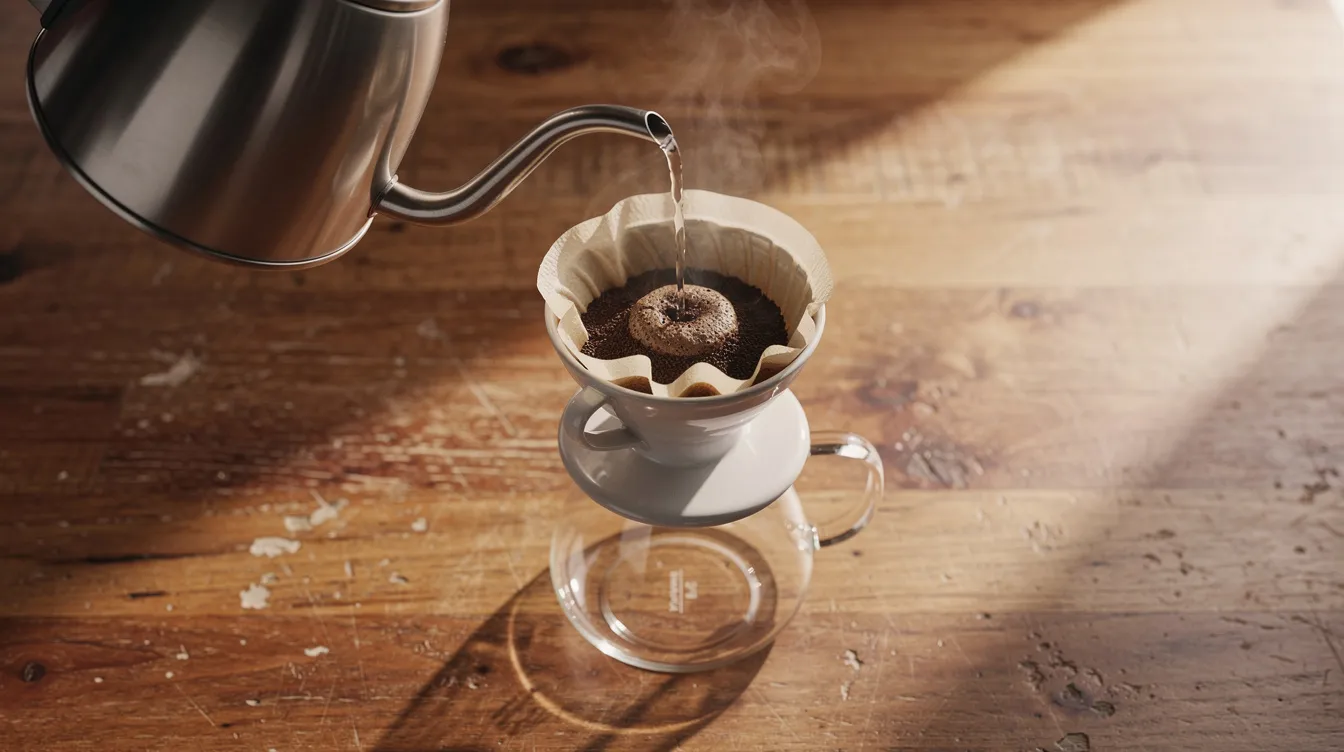
For a pour over V60 making a single 12-ounce cup, try 20 g coffee to 320 g water at 1:16 with a medium-fine grind. Total brew time should land around 3 minutes, including a 30-second bloom. Chemex often prefers slightly higher ratios (1:16–1:17) because its thick filter paper slows flow and can mute delicate flavors. Adjusting grind size-medium for drip, medium-fine for most pour-overs-helps fine tune clarity and strength without changing the ratio. For deeper grind guidance, consult a dedicated coffee grind size resource.
French Press & Other Immersion Ratios
French press and other immersion methods soak grounds directly in water, so they typically use stronger water ratio ranges. Full immersion methods like French press use a tighter ratio, around 1:15. The recommended range spans 1:12–1:15 depending on how much coffee you want in terms of body and intensity.
A solid French press starting point: 40 g coffee to 600 g water (about 1:15) for two large mugs. Use a coarser grind and steep 4–5 minutes. Because the grounds sit in water the entire brew time, a finer grind or longer steep makes the cup muddy and bitter fast-even with a correct ratio. These immersion methods are forgiving for beginners, but measuring in grams keeps results consistent and lets you fine tune batch to batch. For readers who prefer thinking in cups, a guide on how much coffee per cup can help translate.
Espresso, Moka Pot & Cold Brew Ratios
Espresso is a pressure-based brew method using a very concentrated ratio-typically around 1:2 dose to yield. For example, 18 g of ground coffee yielding approximately 36 g of liquid espresso in 25–30 seconds. Ristretto pulls tighter (1:1 to 1:1.5); lungo stretches to 1:2.5 or beyond.
Moka pot coffee uses a 1:6 ratio for robust flavor, though the device’s fixed basket and reservoir sizes effectively set the recipe. Siphon coffee also recommends a 1:6 ratio for strength. Grind finer than drip but coarser than espresso, and control heat carefully to avoid metallic harshness.
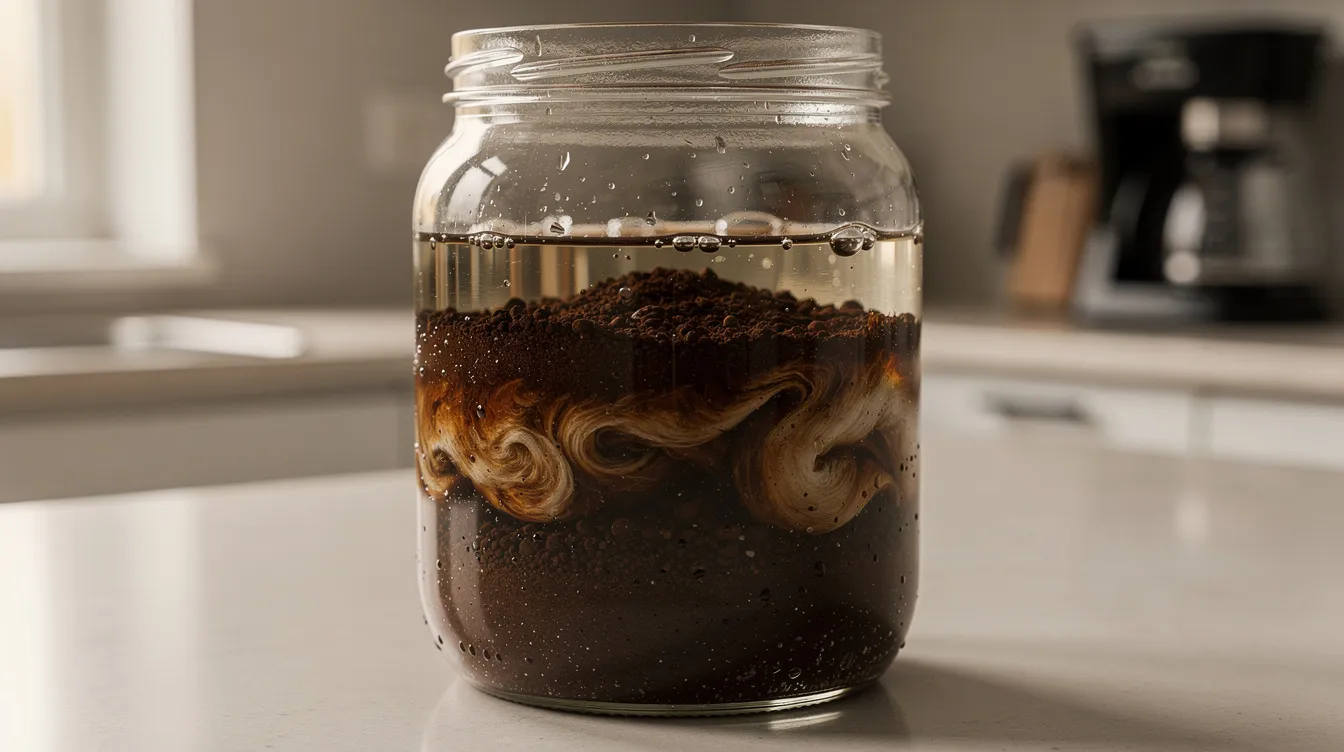
Cold brew coffee requires a much stronger ratio of 1:8 to 1:12 because of its long steep time-typically 12–24 hours at room temperature or in the fridge. A practical concentrate recipe: 100 g coarse coffee to 800 g water, steeped 16 hours, strained, then diluted about 1:1 with water or milk before serving. That dilution brings the finished drink closer to a 1:16 hot brew strength.
Key Criteria: Ratio, Grind Size, Water Temperature & Brew Time
Ratio is one variable in a system. Grind size, water temperature, brew time, and agitation all interact with your coffee-to-water ratio to shape the final cup.
Grind size: Coarser grind suits immersion and cold brew; a finer grind works for espresso and some pour over recipes. Grind uniformity matters as much as coarseness-uneven particles cause uneven extraction.
Water temperature: The ideal range for most coffee brewing methods is 195–205°F (90–96°C). Slightly cooler suits dark roasts; hotter helps light roasts release sweetness. No thermometer? Let boiling water rest 30–60 seconds. Use filtered water for the cleanest taste.
Brew time: Espresso finishes in 25–30 seconds, pour over in 3–4 minutes, French press in 4–5 minutes, cold brew in 12–24 hours. Changing brew time without adjusting grind or ratio skews extraction.
Agitation: Gentle stirring, swirling, or bloom pours help water contact all grounds evenly, supporting more consistent extraction at any ratio.
How to Choose the Right Coffee-to-Water Ratio for Your Brew Method
If you’re new to coffee brewing ratios, follow this three-step process:
Pick your brew method (drip, pour over, French press, etc.).
Choose a starting ratio from the chart above (e.g., 1:16 for drip coffee).
Calculate your batch size. For a standard 12-ounce (355 ml of water) mug at 1:16, use about 22 grams of coffee and 355 grams of water. The weight of water in grams is approximately equal to the volume in milliliters, which makes math easy. Double both numbers for two mugs.
Use a digital scale for accurate coffee measurements. If you don’t own one, use the scoop method: one coffee scoop equals about 2 tablespoons, roughly 10 g. These are starting points-brew once, taste, then adjust.
Fine-Tune Your Ratio to Taste
Once you’ve brewed with a baseline ratio, adjust one variable at a time so you can taste the difference clearly. Adjusting the coffee-to-water ratio can help in achieving the desired flavor strength.
Coffee tastes too strong or heavy? Increase to 1:17-add more water per gram of coffee. A lighter brew can be achieved with a ratio of 1:17 or 1:18.
Coffee tastes too weak or watery? Tighten to 1:15. A stronger brew can be achieved with a ratio of 1:14 or 1:15.
Sour or sharp? That’s under-extraction. Try a finer grind or slightly longer brew time.
Bitter or drying? That’s over-extraction. Go coarser grind or shorter brew time.
Keep a simple brew log-method, ratio, grind setting, taste impression-for a few days. With a little practice, you’ll converge on your personal golden ratio. Note that “stronger coffee” means flavor intensity and concentration, not necessarily more caffeine.
Practical Examples: Everyday Recipes Using the Ratio Chart
10-cup auto drip maker (about 50 ounces / 1,420 g water): At 1:16, measure 89 grams of coffee. That’s roughly 9 level scoops. This is how much coffee fills a standard home pot.
Pour over V60, single cup: 20 g coffee, 320 g water (1:16), medium-fine grind. Bloom with 40 g water for 30 seconds, then pour in slow, steady circles for about 2.5 more minutes. Expect a clean, bright cup.
French press, two mugs: 40 g coarse coffee, 600 g water (1:15). Steep 4 minutes, plunge slowly. Full-bodied, slightly heavier than drip.
Cold brew concentrate: 100 g coarse ground coffee, 800 g water (1:8). Steep 12–18 hours, strain, then cut 1:1 with water or milk. Yields several days’ worth of smooth, low-acidity drink.
Adjusting Recipes Without a Scale
While a gram scale is ideal, you can measure coffee with scoops and get reasonably close. One tablespoon of coffee weighs about 5 grams, and one coffee scoop holds about 2 tablespoons (roughly 10 g). One U.S. measuring cup of water equals about 237 g.
For everyday drip coffee, use about 2 level tablespoons of ground coffee per 6 ounces of water-that lands near the 1:15–1:16 range. Keep in mind that differences in roast level and grind size change actual weight per tablespoon, so volume methods are less consistent. If your results taste good, consider upgrading to a basic scale to lock in your preferred ratio and level up your coffee game.
Capitol City Coffee may earn a small commission from products linked below at no extra cost to you. Selections are based on researched editorial analysis, verified specs, and expert consensus-not commission rates.
Digital scale: Look for a flat, waterproof kitchen scale with 0.1 g resolution. Responsive, easy to clean, and typically under $20. Essential for repeatable specialty coffee results.
Gooseneck kettle: An electric model with variable temperature control (140–212°F) gives you the perfect pour for pour over and helps maintain consistent water temperature. Auto-off is a worthwhile safety feature.
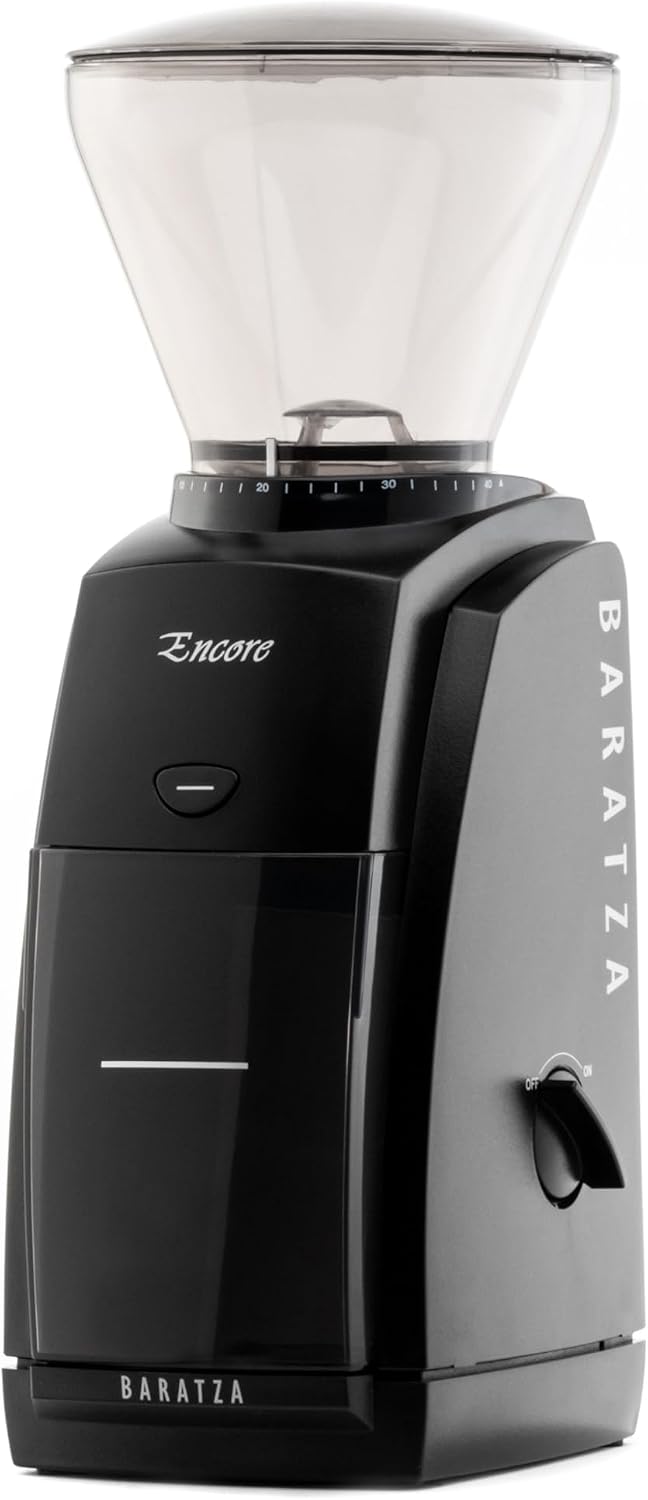
Burr grinder: A basic entry-level burr grinder handles grind size from espresso-fine to French press-coarse with far more consistency than blade grinders. Expect some noise; static can be managed with a light water spritz on beans.
Common Mistakes with Coffee-to-Water Ratios (And How to Fix Them)
Many “bad coffee” moments come from small, fixable errors-not bad beans.
Guessing instead of measuring: Eyeballing coffee leads to a big difference between cups. Fix: use a scale, or at minimum consistent scoops.
Using one ratio for everything: A 1:16 drip ratio brewed as espresso won’t work. Match ratio to method.
Thin, sour cups: Usually too much water relative to coffee (ratios like 1:20+) or too coarse a grind. Fix: tighten to 1:16 or grind finer.
Bitter, harsh cups: When brewing coffee, if it tastes too bitter, decrease the coffee amount or change the grind to a coarser size. Also check that you aren’t over-steeping.
Stale beans or dirty gear: Even a perfect ratio won’t save old ground coffee or a mineral-caked drip machine. Clean your brewer regularly and buy beans roasted within the past few weeks. Freshness makes a big difference.
FAQs: Coffee-to-Water Ratios
These FAQs address practical questions for readers fine tuning at home or switching between different brewing methods.
What coffee-to-water ratio should I use with pre-ground coffee from the grocery store?
Pre-ground coffee sold for drip is usually a medium grind, so a 1:15–1:17 ratio remains a reliable starting point. Start near 1:16-about 2 tablespoons per 6-ounce cup-and adjust over a few brews. Because pre-ground coffee loses aroma faster than whole beans, freshness can affect how satisfying the cup tastes even when the ratio is correct.
Does a stronger coffee-to-water ratio mean more caffeine?
A tighter ratio (like 1:14 instead of 1:17) increases the concentration of compounds per ounce, which can include more caffeine. But total caffeine depends on serving size too. A small espresso may contain less total caffeine than a large mug of drip coffee brewed at a milder ratio simply because the mug holds far more liquid.
How do I scale my favorite recipe from one cup to a whole pot?
Multiply both how much ground coffee and water by the same factor. If 20 g coffee to 320 g water (1:16) makes your perfect pour for one mug, use 80 g coffee and 1,280 g water for four mugs. Keep the ratio constant. Some machines extract slightly differently at full capacity, so minor tweaks may be needed.
Can I use the same coffee-to-water ratio for iced coffee?
It depends on the method. Cold brew uses its own strong ratios (1:4–1:8 concentrate, then diluted). For Japanese-style iced coffee, brew at about 1:15 with half the water replaced by ice in the carafe-for example, 20 g coffee, 150 g hot water, 150 g ice-so the melted ice brings the finished drink to roughly 1:15–1:16 strength. Adjust the ice-to-water split if the result is too strong or too weak.
Is the “Golden Ratio” really one fixed number?
No. While many resources cite a single golden ratio like 1:16, the practical golden range for most drip and pour over coffee brewing runs 1:15 to 1:17. The SCA Golden Cup Standard anchors at 1:18, which is the lighter end. Treat any golden ratio as a starting point, then adjust within that range until your cup tastes balanced. Immersion methods and espresso step well outside this range because their brew mechanics are fundamentally different.
Start with 1:16, brew a cup, and taste it honestly. If something feels off, change one variable-ratio, grind size, or brew time-and try again. A few small adjustments are all it takes to go from decent coffee to better coffee that you actually look forward to every morning.
How Capitol City Coffee Rates Coffee and Coffee Machines
Every coffee and coffee machine we recommend is scored on the same 100-point scale, so a recommendation on one page means the same thing as a recommendation on any other. Each pick is also labeled with how we reached its score.
Research-ratedScored from the roaster or manufacturer’s published specifications, independent results such as Coffee Review blind cuppings and SCA brewer certification, and patterns across verified buyer reviews. Most of our current picks are research-rated.
Hands-on testedThe Capitol City Coffee team has brewed the coffee or used the machine ourselves, following the testing steps below. We only use this label when that testing actually happened, and we show the date we tested.
Coffee beans: 100-point scale
What we score
Points
What we look at
Origin and sourcing transparency
20
Country, region, farm or cooperative, altitude, bean variety, and processing method are clearly disclosed.
Flavor evidence
25
Independent cupping scores, how closely the tasting notes match what the origin is known for, and our own cupping notes when hands-on tested.
Roast and freshness
15
Roast level stated, roast-date practices, whole-bean availability, and packaging with a one-way valve or resealable bag.
Brew versatility
15
How well the roast suits pour-over, drip, French press, cold brew, and espresso.
Value
15
Price per ounce compared with similar single-origin coffees or blends.
Buyer feedback
10
Volume and consistency of verified reviews, and recurring complaints about staleness, bitterness, or shipping.
Coffee machines and gear: 100-point scale
What we score
Points
What we look at
Brewing performance
25
Water temperature in the 195–205°F range, even extraction, and SCA certification or published test data.
Build quality and reliability
20
Materials, known failure points, and long-term owner reports.
Ease of use and cleaning
15
Setup, the daily routine, descaling, and dishwasher-safe parts.
Fit for your kitchen
10
Capacity, counter footprint, and noise.
Useful features
10
Programming, grind and temperature control, and carafe type. Features that improve the cup count more than extras that do not.
Value
10
Price compared with machines that perform similarly.
Warranty and support
10
Warranty length, parts availability, and how the brand handles repairs.
What the grades mean
Score
Grade
What it means
90–100
A
Exceptional. Our first recommendation for the feeling and setting described.
80–89
B
Strong. Excellent, with minor trade-offs we explain.
70–79
C
Good. Worth it for specific needs, with clear compromises.
Below 70
—
Not recommended. We do not feature these as picks.
How we test hands-on
When a pick carries the Hands-on tested label, this is the method behind it, and we note the date we tested.
Coffee: brewed fresh from whole beans following Specialty Coffee Association guidelines (water between 195 and 205°F, about 1 gram of coffee to every 15 to 18 grams of water) in the brew methods the roast suits best, such as pour-over, French press, or espresso. We taste it black first, then with milk if that is how most people drink it, and each taster scores it on their own before we compare notes.
Machines: used in our everyday routine rather than a single demo. We brew both full and small batches, check the brewing temperature and brew time, and run the cleaning or descaling steps the manual calls for.
How we choose the feeling and setting
We match each coffee to a mood and a moment based on its flavor profile and roast. Bright, citrusy light roasts suit energizing mornings. Chocolatey, full-bodied medium roasts suit slow or social moments. Richer roasts suit espresso and milk drinks. Each pick explains which facts led us to that match.
Our scores stay independent
Every score comes only from the criteria above. No brand can pay for a pick or a higher grade. We re-check ratings when a roast, listing, or model changes, and update or remove picks that no longer earn their grade.
Some links on this page are affiliate links. As an Amazon Associate, Capitol City Coffee earns from qualifying purchases, at no extra cost to you.
Questions about a rating? Reach the Capitol City Coffee team through our contact page.