

This is Capitol City Coffee’s central hub for manual coffee brewer reviews. Whether you’re weighing a pour over dripper against a French press, considering an AeroPress for travel, or eyeing a Chemex for weekend brunches, the reviews indexed here break down brew method, extraction control, capacity, materials, workflow, cleaning, durability, and value for every device we cover. Each review spells out clear trade-offs and who each brewer actually suits, so you can stop guessing and start brewing better coffee.
Key Takeaways
- This page is Capitol City Coffee’s index for manual coffee brewer reviews covering pour over, French press, AeroPress, Chemex, cold brew coffee makers, and specialty devices. Use it to browse all individual reviews or jump to featured recommendations below.
- Coverage focuses on manual brewers, not automatic drip coffee maker machines, pod coffee makers, or espresso machines. Recommendations are based on researched editorial analysis of verified specs and expert consensus, not hands-on testing unless explicitly documented.
- Every reviewed brewer is evaluated on a consistent set of criteria: brew method, extraction control, capacity, materials, workflow, cleaning, durability, and value, with honest limitations alongside strengths.
- Readers can jump straight to featured picks (best pour over dripper, best French press, best travel brewer, best cold brew coffee maker) or browse all reviews by category.
- Capitol City Coffee is an independent coffee editorial and affiliate publication. A full affiliate disclosure appears before the first commercial recommendation.
Category Overview: What Our Coffee Brewer Reviews Cover
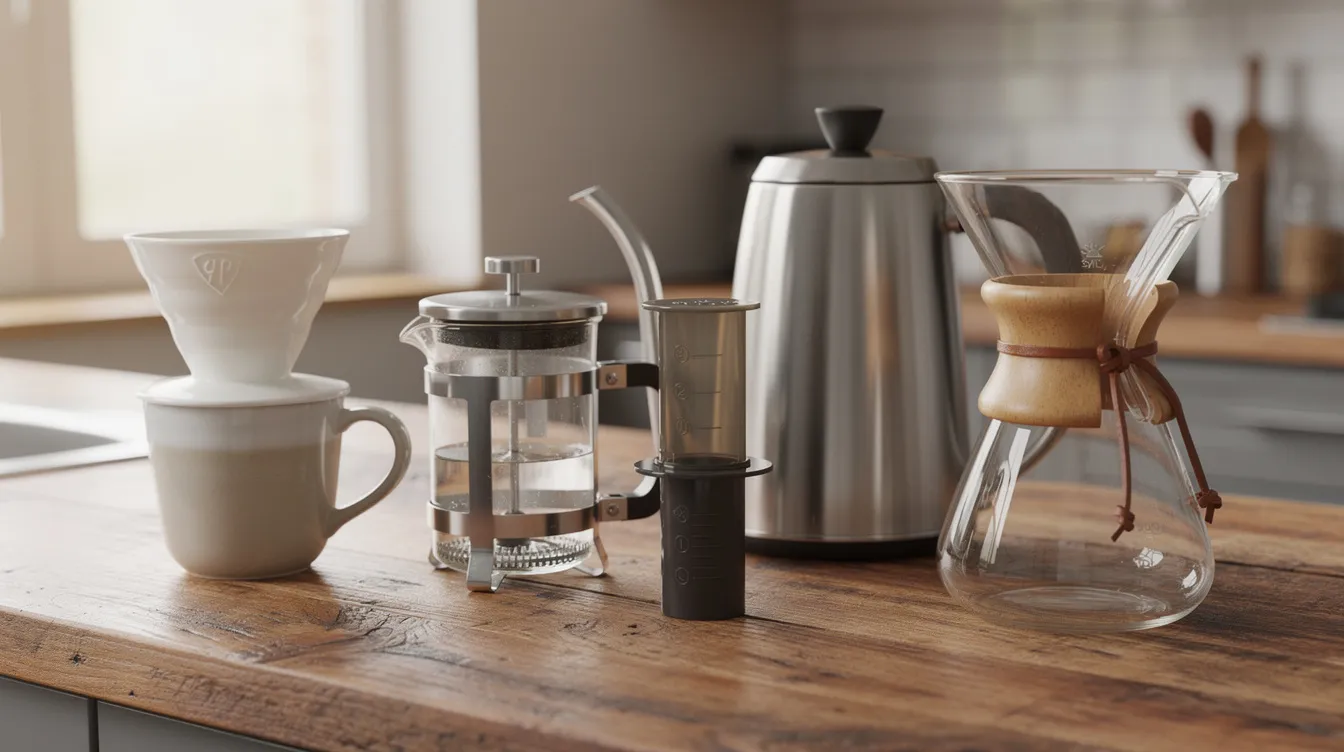
This page serves as the central index for Capitol City Coffee’s manual coffee brewer reviews. Unlike countertop electric coffee machines or espresso makers, the devices reviewed here require you to control variables like water flow, steep time, and temperature by hand, working alongside a kettle and grinder to produce a cup of coffee tailored to your preferences.
The main brewer categories covered include:
- Pour over coffee drippers – Hario V60, Kalita Wave, Origami Dripper, and other cone or flat-bottom designs
- Immersion brewers – French press models, Clever Dripper, and similar steep-and-filter devices
- Hybrid devices – AeroPress and comparable pressure-assisted brewers
- Manual batch brewers – Chemex and similar glass carafe pour over systems
- Cold brew coffee makers – Dedicated immersion cold brew systems like OXO and Hario Mizudashi
- Specialty and niche brewers – Siphon pots, moka pots, and experimental hybrid devices
This hub does not cover programmable drip coffee maker models, single serve coffee makers, or super-automatic espresso machines. For context, drip coffee makers pass hot water through ground coffee and a filter to produce a full pot with minimal effort. Espresso machines provide superb espresso and milk-based drinks with total control over extraction. Single-serve pod-based machines offer convenience, quick brewing, and minimal cleanup, often through compatibility with K-Cup pods, but they remain a different experience from hands-on brewers like pour over and French press. Hybrid coffee makers combine drip brewing with single-serve options. Many of these are automatic coffee makers rather than the manual brewers covered here. These are all distinct categories from what we review here.
Each linked review follows a consistent structure: brew method explanation, brewing performance assessment, workflow analysis, cleaning and maintenance, build quality and durability, and a clear recommendation for who the brewer suits best. Brewers may be categorized by type, highlighting their strengths and weaknesses based on performance testing and user feedback.
The audience: coffee drinkers who want more control than a typical drip brewer provides. That spans beginners looking for their first manual brewer all the way to serious home enthusiasts refining extraction variables across multiple devices.
Key Concepts: How We Evaluate Manual Coffee Brewers
These concepts form the backbone of every manual brewer evaluation on Capitol City Coffee. They’re referenced throughout individual reviews, and understanding them will help you read those reviews with sharper context.
Extraction Control
The core difference between brew methods comes down to how water meets coffee grounds and how long contact lasts. Pour over coffee is a percolation method: water flows through the coffee bed once, and extraction depends on flow rate, pour pattern, grind size, and filter design. Immersion methods like French press steep grounds in water, producing more even extraction across the bed but requiring strict timing to avoid bitterness.
The Specialty Coffee Association certifies coffee makers for optimal brewing temperature, specifying that SCA-certified machines maintain a brewing temperature between 194°F and 204°F. Brew temperatures of 195°F to 205°F help to prevent bitterness in coffee, whether you’re using manual or automatic equipment. The SCA’s Certified Home Brewer program also sets benchmarks for extraction yield (18–22%) and solubles concentration (1.15–1.45%).
Pulsed or advanced brewers allow great control over brew variables such as temperature and flow rate. In manual brewing, you achieve this control yourself. The coffee to water ratio matters too: most pour over and immersion methods use 1:15 to 1:17 by weight, with French press tending toward 1:15 due to full immersion contact.
Capacity
Brewer capacities range widely. Single cup pour over drippers produce roughly 200–300 mL per brew. A 6-cup Chemex yields approximately 0.9–1 L, while large French presses can handle 1.2–1.5 L. An 8 cup coffee maker label in the manual world often means something different from an automatic drip machine – labeled “cups” frequently refer to 4-oz servings, not full mugs.
Batch size matters for workflow. Single-cup brewers are fast but impractical for a household of four. Larger manual batch brewers serve groups but demand more precision and time.
Materials and Heat Management
Manual brewers come in glass, ceramic, stainless steel, food-grade plastic, and silicone. Each material has trade-offs:
Material | Heat Retention | Durability | Flavor Neutrality |
|---|---|---|---|
Borosilicate glass | Moderate (preheat recommended) | Fragile | Excellent |
Stainless steel | Good (especially double-walled) | Excellent | Excellent |
Ceramic | Good | Moderate (heavy, can chip) | Excellent |
Plastic (BPA-free) | Low | Excellent | Good |
Double-walled and insulated designs, increasingly common in modern French presses and carafes, combat the heat loss that plagues single-wall glass models. A stainless steel thermal carafe retains heat far longer than a glass carafe sitting on a counter, a lesson that applies equally to manual and automatic brewers.
Workflow
Pour over methods demand active attention: a gooseneck kettle, steady pour, and typically 2.5–4 minutes of hands-on time. French press is more forgiving – coarse grind, pour, wait four minutes, plunge. AeroPress sits in between at roughly 1–2 minutes of active work.
The learning curve varies. Flat-bottom drippers like the Kalita Wave are more forgiving than cone drippers like the V60, which punish uneven pours with channeling and inconsistent extraction. Coffee brewing methods have distinct trade-offs in flavor, extraction, ease of use, cleanup time, and equipment cost.
Filters and Taste
- Paper filters trap oils and fine particles, producing clean, bright cups. Proprietary shapes (Chemex bonded, Kalita Wave wave filters) cost more and may be harder to find than generic Melitta-style filters.
- Metal mesh filters allow oils and fines through, creating heavier body and more texture. They’re durable and reduce waste.
- Cloth filters offer a middle ground – more oils than paper, less sediment than metal – but require diligent rinsing and storage to avoid off-flavors.
The filter basket design and filter type together shape the cup profile more than almost any other single variable.
Cleaning and Maintenance
Manual brewers with simple, open designs (flat-bottom drippers, AeroPress) rinse clean in seconds. Narrow-necked glass carafes like the Chemex trap oils and require periodic scrubbing with bottle brushes or coffee-specific cleaners. French press filter assemblies need disassembly for thorough cleaning.
Durability and Long-Term Value
Simple designs outlast complex ones. A stainless steel pour over dripper can last decades; a thin glass French press beaker might survive months. Availability of replacement parts – glass beakers, filter screens, rubber seals – directly affects long-term ownership cost. Reviews note whether spare parts are easy to source in the US market.
Browse Manual Brewer Reviews
This section is organized by brew method category. Each entry links to a detailed individual review where available, covering grind settings, pouring technique, filter options, and who the brewer suits best.
Pour Over Drippers
- Hario V60 (cone, ceramic/glass/plastic/metal)
- Kalita Wave 185 (flat-bottom, stainless steel)
- Origami Dripper (hybrid cone/flat-bottom compatibility)
- Flat-bottom vs cone designs compared in each review
Manual Batch Brewers
- Chemex (3-cup through 10-cup glass carafe models)
- Similar carafe-style pour over systems
Immersion Brewers
- French press models (Espro P7, Bodum Chambord, double-wall stainless presses)
- Clever Dripper (hybrid immersion with paper filter and release valve)
Compact and Travel Brewers
- AeroPress (original and Go models)
- Collapsible drippers and single-cup travel immersion devices
Cold Brew Brewers
- OXO Good Grips Cold Brew Coffee Maker
- Hario Mizudashi Cold Brew Pot
- Steep times typically 12–18 hours; distinct from iced coffee brewed hot
Specialty and Niche Brewers
- Siphon (vacuum pot) brewers
- Moka pots (stovetop concentrated coffee)
- Hybrid immersion–percolation experimental devices
Use category navigation to jump by brew method, capacity, or experience level rather than scrolling through a long list.
Affiliate Disclosure
Capitol City Coffee may earn a commission if you purchase through outbound links on this page, at no extra cost to you. Affiliate relationships do not influence rankings or editorial conclusions. All recommendations are based on researched editorial analysis, verified product data, and clearly attributed third-party expert consensus. We recommend products because they meet our criteria, not because of commission rates.
At a glance
Featured Recommendations: Best Manual Coffee Brewers by Use Case
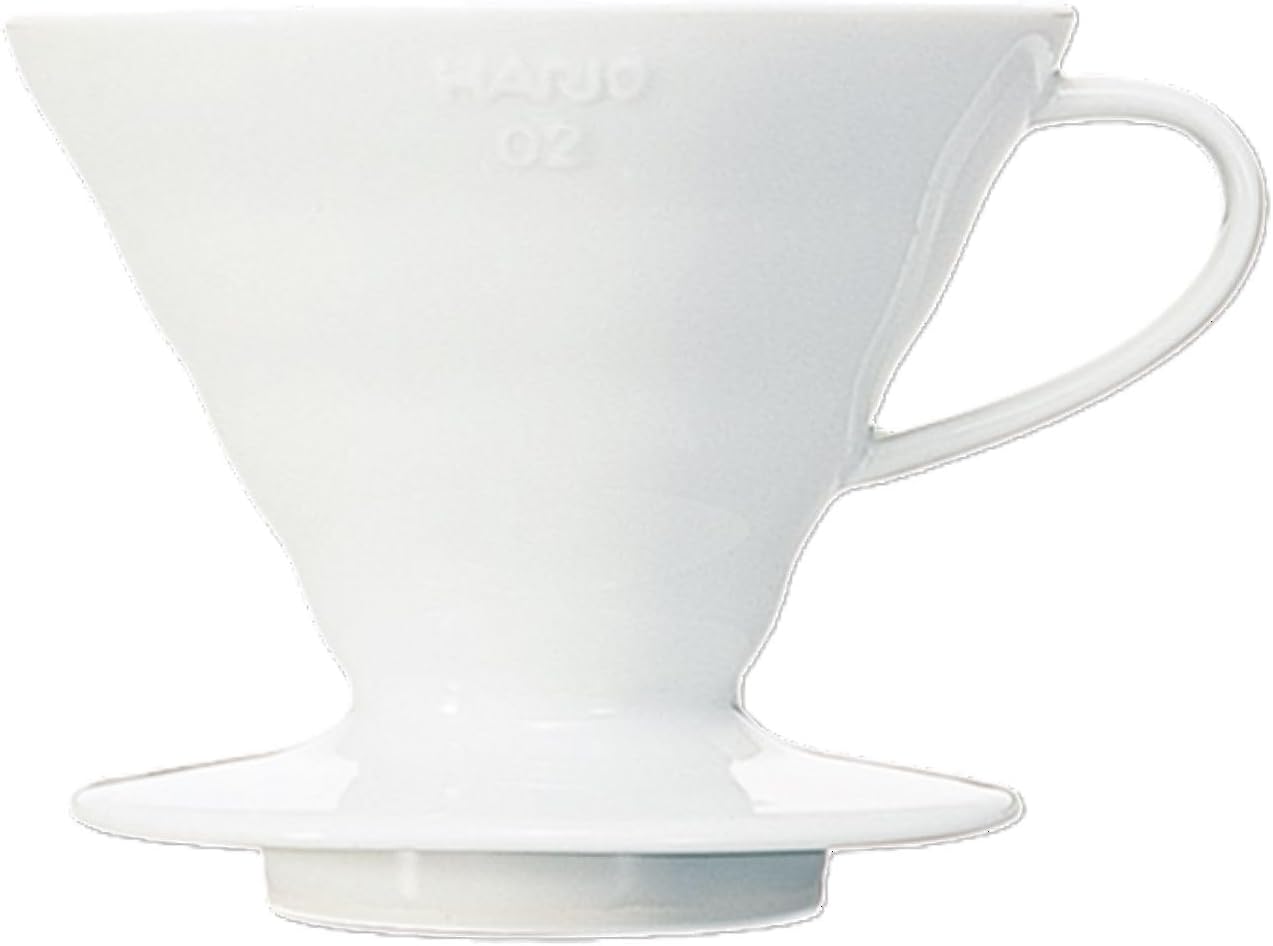
The picks below are standout brewers identified through researched editorial comparison, not exhaustive rankings. Each represents a strong choice within its category based on verified specs, expert consensus, and consistent patterns in independent feedback. Where a full review exists, it’s linked.
Best Pour Over Brewer for Most Coffee Drinkers
Feeling a clearer cup on a slow morning
Our pick: Hario V60 ceramic dripper. The cone dripper this hub treats as the default pour-over. Research-rated, not yet used in our kitchen.
Kalita Wave 185 (stainless steel)
The flat-bottom design distributes water more evenly across the coffee bed than cone drippers, making it more forgiving for newer brewers while still delivering a clean, nuanced cup. Its proprietary wave-style paper filters help maintain consistent extraction and produce great tasting coffee with pronounced clarity. Typical capacity is 1–2 cups per brew.
Best for: Beginners and intermediate home brewers who want pour over clarity without the V60’s steep learning curve. Limitation: Proprietary filters cost more than generic options and may require online ordering.
Best Manual Batch Brewer for Sharing
Chemex (6-cup or 8-cup)
The Chemex’s iconic glass carafe and thick bonded paper filters produce exceptionally clean, bright coffee. Its 6-cup model brews roughly 30 oz – enough for three generous mugs. The 8-cup stretches to about 40 oz for groups. It functions as a manual alternative to the best drip coffee maker machines, with table-service aesthetics that few other coffee makers match.
Best for: Weekend brunch hosts, households that serve multiple cups, and anyone who values presentation alongside flavor. Limitation: The glass carafe is fragile, and proprietary filters add ongoing cost.
Best French Press for Fuller-Bodied Coffee
Espro P7 (double-walled, dual-filter)
Modern double-filter French presses like the Espro P7 address the biggest complaint about traditional presses: sludge. A secondary micro-mesh screen dramatically reduces sediment while preserving the rich body and oils that define french press coffee. The double-walled stainless steel construction keeps coffee hot far longer than a single-wall glass beaker.
Best for: Coffee drinkers who prefer richer, more textured cups and want an immersion brewer that cleans up easier than traditional presses. Limitation: Higher price point than basic glass French presses; multi-layer filter assemblies require more thorough disassembly for cleaning.
Best Compact Brewer for Travel and Small Kitchens
Feeling coffee on the road
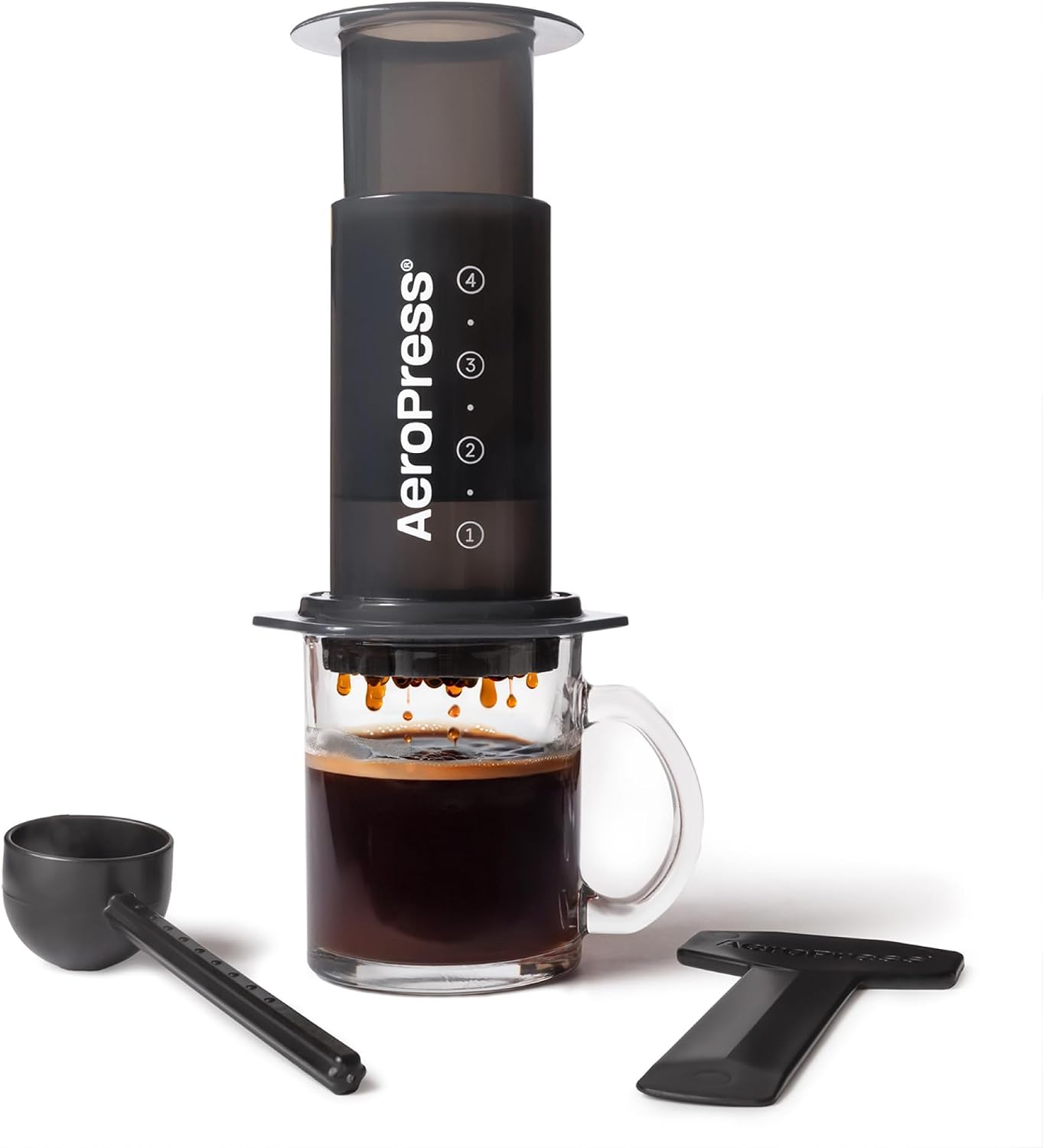
Our pick: AeroPress Original. Fast, small, and easy to pack compared with carafe brewers. Research-rated, not yet used in our kitchen.
AeroPress (Original)
The AeroPress uses an immersion-plus-pressure brew method that produces concentrated coffee or American-style cups in roughly 1–2 minutes. Its BPA-free plastic body is nearly unbreakable, the puck-ejection cleanup is effortless, and it packs flat for travel. With paper or metal filters, it adapts to produce everything from espresso-adjacent concentrates to better iced coffee brewed directly over ice.
Best for: Travelers, office desk brewers, students, and anyone in a small kitchen who wants a single cup fast. Limitation: Maximum capacity is one to two cups; not practical for serving groups.
Best Dedicated Cold Brew Coffee Maker
OXO Good Grips Cold Brew Coffee Maker
This immersion-design cold brew system features an integrated fine-mesh filter, a glass carafe with measured markings, and a rainmaker lid that distributes water evenly over the coffee grounds. Steep time runs 12–18 hours in the refrigerator, producing a smooth concentrate that dilutes into several servings of cold brew coffee with noticeably lower acidity than hot-brewed iced coffee.
Best for: Daily iced coffee drinkers who want to batch-brew a week’s worth of concentrate with minimal daily effort. Limitation: Large footprint in the fridge; not useful for hot coffee.
Pour Over Drippers: Precision and Clarity in the Cup
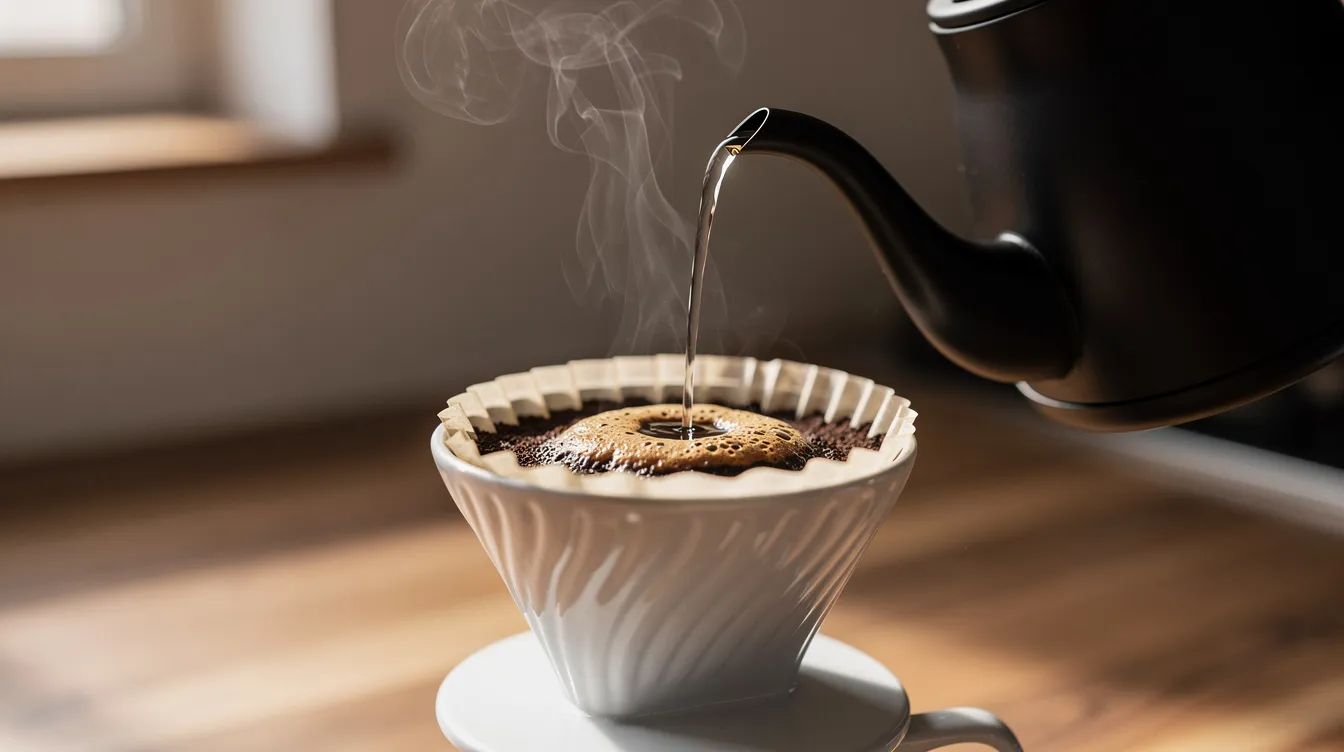
Pour over coffee is a percolation brew method: you control water flow, agitation, and timing as water passes through the coffee bed and a filter into a vessel below. The result, when executed well, is high clarity and nuanced flavors that reveal the character of freshly ground coffee better than most other methods.
Cone vs Flat-Bottom Drippers
Cone drippers like the Hario V60 concentrate flow toward a single drain point, making extraction highly sensitive to pour technique. Comparative research shows that percolation methods like the V60 preserve floral and acidic notes with distinct volatile profiles. Flat-bottom drippers like the Kalita Wave 185 distribute water more evenly, reducing channeling risk and producing more consistent results for less experienced brewers.
Typical capacities range from single cup (200–300 mL) up to 3–4 cup drippers, considerably smaller than an 8 cup coffee maker in the electric drip world.
Materials and Filters
Pour over drippers come in ceramic, glass, stainless steel, and high-heat plastic. Ceramic retains heat well but is heavy and can chip. Stainless steel is durable and lightweight but doesn’t insulate as effectively. Plastic is cheap and portable but absorbs less heat from brew water, which can affect consistency.
Filter formats vary: Hario V60 uses conical paper filters (widely available), Kalita Wave uses proprietary wave filters (less available in stores, easy to order online), and some drippers accept reusable metal or cloth options. Paper filters produce the cleanest cups, while metal filters let more oils through for added body.
What to look for in reviews: even water dispersion, how the brewer handles blooming (initial gas release from freshly ground coffee), sensitivity to grind size changes, and whether the dripper is forgiving enough for someone making their morning coffee without full concentration.
Manual Batch Brewers: Chemex and Similar Carafe Brewers
Manual batch brewers are larger pour over systems designed to brew multiple cups into a glass carafe. They function as manual counterparts to a traditional coffee maker, producing enough volume for a household or group while offering significantly more control over the brewing process.
The Chemex is the defining example. Its hourglass glass carafe, wooden collar, and thick proprietary bonded paper filters combine to produce exceptionally clean, bright coffee with very little sediment. The heavy filters remove more oils than standard paper, giving the cup a tea-like clarity that specialty coffee drinkers often prize.
Capacity and Labeling
Chemex models come in 3-cup, 6-cup, 8-cup, and 10-cup sizes. But those “cups” are 5-oz servings. A 6-cup Chemex produces about 30 oz – roughly three standard 10-oz mugs. An “8-cup” produces around 40 oz. This labeling convention mirrors the sometimes misleading “cup” counts on most coffee makers, so check actual ounce capacity before buying.
Workflow and Fragility
Brewing with a Chemex requires a multi-pour technique and a gooseneck kettle for precise flow. A full pot for four people takes 5–7 minutes of active attention. The glass carafe offers no insulation, so brewed coffee cools quickly. Preheat the carafe and serve promptly for delicious coffee at proper temperature. Don’t leave freshly brewed coffee sitting – without a hot plate or insulated vessel, it drops below optimal drinking temperature within 15–20 minutes.
Ideal use cases: Weekend brunch, serving guests, and any scenario where aesthetics and table service matter alongside the coffee itself.
Immersion Brewers: French Press and Clever Dripper
Immersion brewing steeps coffee grounds in water for a set period before filtration. The result is heavier body, more texture, and a different flavor balance than most drip coffee produced by percolation methods.
French Press
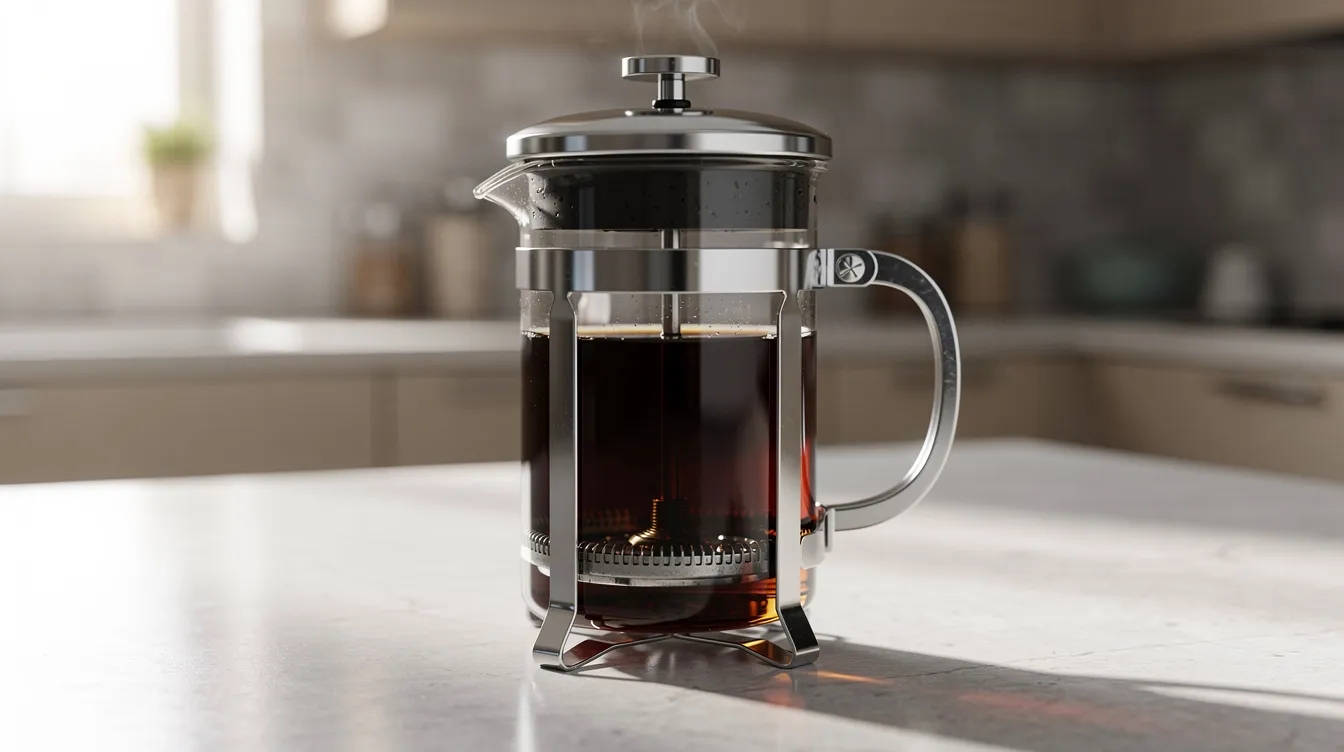
The French press is one of the most accessible manual coffee makers. The workflow is straightforward: add coarse ground coffee, pour hot water, steep for approximately four minutes, and plunge. Common sizes range from 12 oz (single serving) to 34 oz (about four mugs). Research comparing brew methods shows that immersion methods increase body while suppressing some of the delicate high notes that percolation preserves.
Glass models are inexpensive but fragile. Double-walled stainless steel presses keep coffee hot significantly longer and resist breakage. Key review details include filter mesh fineness (finer mesh = less sediment), plunger seal quality, and how easily the filter assembly disassembles for cleaning.
Side-by-side testing data from comparative studies indicates French press extraction yields around 23.1%, producing a heavier, richer cup than pour over methods that typically land around 22.4% EY.
Clever Dripper
The Clever Dripper is a hybrid: it steeps like a French press but uses a paper filter and a release valve at the base. Place it on a mug and the valve opens, draining filtered coffee. The result is a cleaner cup than a traditional press with easier extraction control and simpler cleanup. It suits coffee drinkers who prefer fuller body but want less sediment and a more forgiving workflow than a pour over.
Compact Travel and Office Brewers: AeroPress and Beyond
Compact manual brewers are designed for portability, speed, and minimal footprint. The AeroPress is the most well-known in this category.
AeroPress Basics
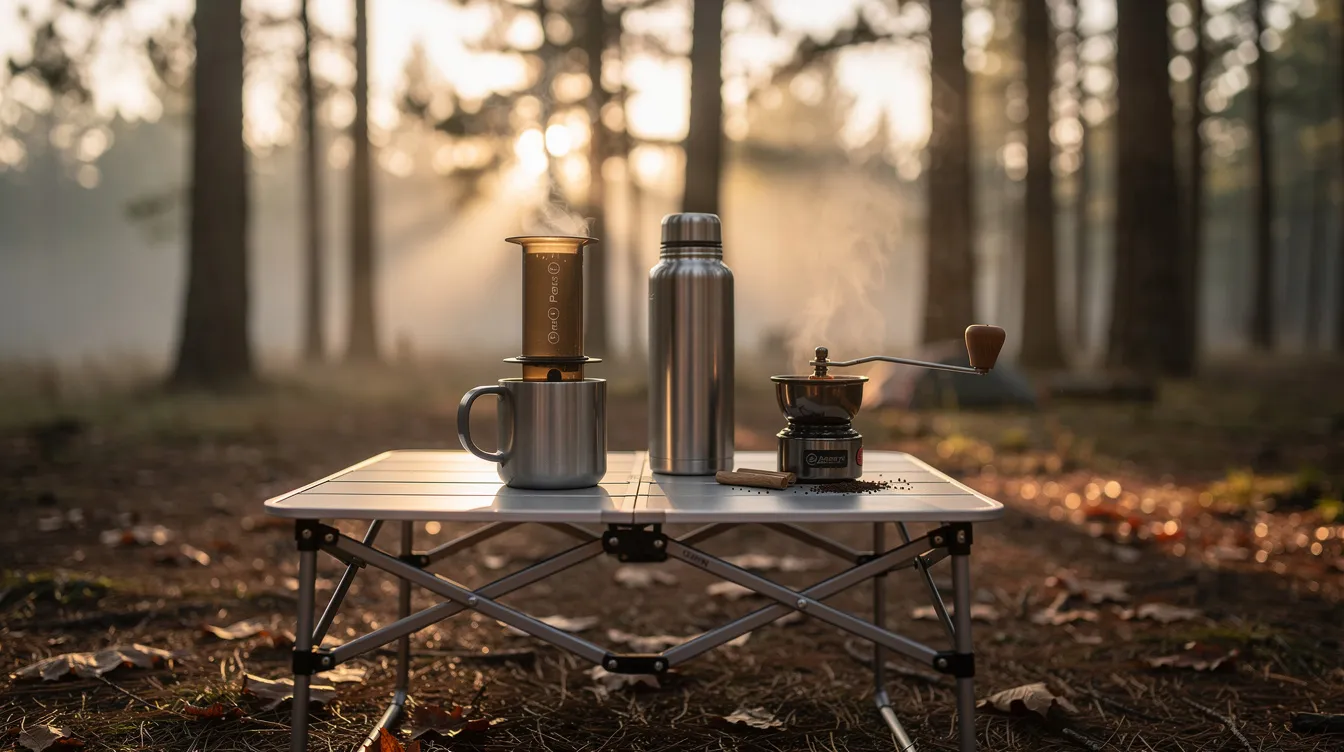
The AeroPress combines immersion steeping with manual pressure to push water through ground coffee and a filter. Typical brew time is 1–2 minutes. Its BPA-free plastic construction makes it virtually unbreakable – a genuine advantage for travel. It can brew hot coffee, concentrated coffee that approaches espresso maker strength, or iced coffee when brewed directly over ice.
Cleanup is remarkably simple: unscrew the cap, push the compressed puck of coffee grounds into the trash, and rinse. The whole process takes seconds.
Filters and Accessories
Stock paper filters produce a clean, bright cup. Third-party metal disc filters allow more oils and body for drinkers who prefer a heavier mouthfeel. The choice between paper and metal fundamentally changes the character of the coffee produced.
The recent Steel AeroPress release has drawn attention for its premium stainless steel construction and enhanced durability, appealing to users willing to pay more for a material upgrade.
Other Compact Brewers
Collapsible silicone drippers, single-cup immersion gadgets, and press-and-pour travel mugs also fall into this category. Reviews evaluate them on packability, durability, leak resistance, and whether brewing quality holds up compared to full-size devices.
Dedicated Cold Brew Coffee Makers
Cold brew coffee is a long-steep, room-temperature or refrigerated immersion method entirely distinct from chilled drip coffee or iced coffee brewed hot over ice. The extended steep time (typically 12–18 hours) extracts different compounds, producing a smoother, lower-acidity concentrate.
Common Cold Brew Systems
Dedicated cold brew coffee makers like the OXO Good Grips and Hario Mizudashi feature integrated filters, glass or plastic carafes, and designs optimized for refrigerator storage. The OXO model includes a rainmaker water distributor and fine-mesh filter that keeps sediment low.
Capacity and Workflow
Most dedicated systems produce enough concentrate for 4–8 servings per batch. For coffee drinkers who rely on cold brew or iced coffee daily, weekly batch brewing is practical and economical compared to buying bottled cold brew.
Key review factors: grind coarseness requirements, how easily the filter compartment fills and drains, sediment pass-through, and how well lids and seals prevent spills in the fridge.
Cleaning and Durability
Wide-mouth designs clean more easily than narrow-necked carafes. Glass is flavor-neutral but can crack or stain over time. Plastic carafes resist breakage but may absorb odors. Reviews note dishwasher compatibility and whether the filter mesh is replaceable.
Specialty and Niche Brewers
This section covers manual brewers that fall outside the mainstream categories but have dedicated followings.
Siphon (Vacuum Pot) Brewers
Siphon brewers use vapor pressure to push water through coffee grounds in a glass chamber. The result is a remarkably clean, tea-like cup. The process is theatrical – visually striking – but the equipment is fragile, complex, and requires a heat source (butane burner or electric element). These appeal to enthusiasts who value the ritual as much as the result.
Moka Pots
Moka pots are stovetop brewers that produce concentrated coffee somewhere between drip and espresso in strength. Common builds include aluminum and stainless steel, with stainless models compatible with induction cooktops. They’re affordable, durable, and iconic in European coffee culture but require attention to heat management to avoid bitter, over-extracted cups. They don’t replicate what a true espresso machine or espresso maker delivers, but they produce a strong, rich brew that makes a decent coffee base for milk drinks if you don’t have a milk frother or steam wand available.
Hybrid and Experimental Brewers
Press-and-pour combo mugs, lever-driven immersion devices, and other experimental designs receive coverage based on leak resistance, insulation quality, and whether they deliver on the promise of serious brewing quality in an unconventional form factor.
Brewing Performance: What “Good” Looks Like in a Manual Brewer
Brewing performance in a manual brewer measures how well the device enables consistent extraction when used correctly. Unlike a programmable coffee maker with internal electronics, a manual brewer’s “performance” is about geometry, materials, and design working together with your technique.
Extraction Fundamentals
Good extraction means even saturation of the coffee bed without bypass channels where water skips past grounds entirely. A brewer’s geometry – cone vs flat bottom, filter fit, drain hole size – directly shapes drawdown time and extraction uniformity.
The OXO Brew 8-Cup Coffee Maker brews at 197°F to 204°F, and the Ratio Six consistently brews coffee at around 200°F – both within the SCA-certified range. These numbers matter because they represent the temperature window where coffee releases its best tasting compounds. In manual brewing, you achieve the same result by controlling your kettle temperature.
Comparative research on brew methods has produced useful quantitative benchmarks: TDS around 1.52% and extraction yields around 22.4% for well-executed pour over, with French press extraction yields reaching approximately 23.1%. These figures help reviewers assess whether a brewer’s design facilitates or hinders optimal extraction.
Capacity and Performance
Some brewers perform best within specific dose ranges. A Chemex designed for 6 cups may struggle with a single-cup dose because the filter-to-coffee ratio changes, altering flow dynamics. Reviews note the practical minimum and maximum batch sizes where each brewer produces its best coffee.
Capitol City Coffee synthesizes findings from experienced baristas, competition routines, and reputable testing labs when discussing performance, always attributing external sources where relevant. High-end drip brewers are praised for precise temperature control, even extraction, and larger capacity, with the Breville Precision Brewer often cited as a premium example thanks to its added control over variables such as temperature and bloom settings; manual brewers can match or exceed these results, but the consistency depends on the user. A Breville Precision Brewer also stands apart from basic drip machines by offering more manual-style customization, even if that sits outside this hub’s main focus.
Workflow and User Experience
The “best” brewer isn’t only about coffee taste. Day-to-day workflow – time, attention, steps – determines whether coffee drinkers actually enjoy using it or abandon it for a simpler coffee machine after a week.
Key Workflow Questions
- Setup time: How many parts need assembling? Does the brewer require preheating?
- Accessories: Is a scale strongly recommended? Is a gooseneck kettle necessary or merely helpful?
- Active attention: Pour over methods demand continuous pouring for 3–4 minutes. French press requires pouring once and waiting. AeroPress falls in between.
User feedback often highlights performance, ease of use, and build quality as key differentiators among manual brewers.
Weekday vs Weekend
For weekday morning coffee, low-attention brewers like French press or Clever Dripper often win. A pour over ritual that’s meditative on Saturday becomes stressful on a Tuesday at 6:45 AM. Capitol City Coffee factors this into recommendations, elevating forgiving brewers for everyday use and reserving technique-intensive devices for enthusiasts who genuinely enjoy the process.
Ergonomics also matter: Chemex handles can be awkward when pouring a full pot into mugs. Stability on a scale matters for pour over. A coffee pot that wobbles or a glass carafe without a secure grip introduces unnecessary risk.
Filters, Sediment, and Cup Profile
Filter choice shapes coffee texture, clarity, and perceived sweetness more than most drinkers realize. The difference between a Chemex bonded paper filter and a French press metal mesh is dramatic – same beans, same water, entirely different cup.
Paper Filters
Paper filters trap oils and microscopic fines, producing clean cups where origin characteristics shine. They’re the default for pour over drippers and Chemex-style brewers. Downsides: ongoing cost (especially proprietary sizes), environmental waste (though most are compostable), and the need to keep stock on hand.
Metal Filters
Reusable metal mesh filters let oils and some fines through, resulting in heavier body and a more viscous mouthfeel. Many coffee drinkers who dislike disposable filters prefer them for sustainability. The trade-off: some sediment at the bottom of the cup, and oils that paper would trap can slightly mute delicate acidity.
Cloth Filters
Cloth filters offer a balanced profile – more oils than paper, less sediment than metal. They require rinsing after every use and proper storage (typically refrigerated in water) to prevent off-flavors. Maintenance demands limit their appeal for everyday users.
Reviews on Capitol City Coffee call out sediment levels, clarity, and filter availability so readers can match brewers to their preferred cup style.
Cleaning, Maintenance, and Longevity
Manual brewers can last years or decades with proper care. Ease of cleaning is a key review criterion because a brewer that’s annoying to clean rarely gets used consistently.
Daily Routines
- Pour over drippers: Discard filter and grounds, rinse. Done in 30 seconds.
- French press: Scoop or rinse grounds, disassemble plunger, wash mesh. Takes 2–3 minutes.
- AeroPress: Pop the puck, rinse. Under a minute.
- Chemex: Discard filter, rinse carafe interior with hot water, occasionally scrub the narrow neck.
Periodic deep cleaning with a coffee-specific detergent removes accumulated oils that cause stale, rancid flavors over time.
Replacement Parts
French press glass beakers crack. AeroPress rubber seals wear out. Chemex wooden collars can loosen. Reviews note whether these parts are readily available and reasonably priced in the US market. The Black+Decker Thermal Coffee Maker features a thermal carafe at a budget price – but even budget drip machines need occasional part replacement, and manual brewers are no different.
Durability by Material
Material | Expected Lifespan | Common Failure Mode |
|---|---|---|
Thick borosilicate glass | 2–10+ years | Thermal shock, drops |
Stainless steel | 10+ years | Seal/gasket degradation |
Ceramic | 5–15+ years | Chipping, cracking |
BPA-free plastic | 3–7 years | Warping, seal wear |
Value and Price Ranges
Manual brewers are generally more affordable upfront than complex electric coffee maker models, but long-term value depends on build quality, filter costs, and how often the brewer gets used.
Typical Price Bands (USD)
Category | Price Range |
|---|---|
Simple pour over drippers | $15–$40 |
French presses | $30–$80+ |
AeroPress-type brewers | $40–$70 |
Chemex and manual batch brewers | $40–$90+ |
Cold brew systems | $25–$60 |
Source: Revactic manual coffee maker survey, 2026
For comparison, in the automatic world the Mr. Coffee 12-Cup is an affordable drip coffee maker priced around $30, and a budget drip coffee maker for buyers who care more about low upfront cost than advanced controls. The Ninja 12-Cup Programmable Coffee Maker often sells for less than $70. The Braun BrewSense costs around $80 and is a clear step up from cheap coffee makers, delivering solid brew quality at a modest price. Budget coffee makers often use glass carafes and hot plates, while the Fellow Aiden coffee maker costs $369 and offers Wi-Fi connectivity at the premium end. Manual brewers compete favorably on upfront price, though you’ll also need a grinder and kettle.
Capitol City Coffee considers ongoing filter costs, replacement parts, and the need for supporting coffee gear (burr grinder, kettle, scale) when discussing value. An affordable coffee maker that requires expensive proprietary filters may cost more over two years than a pricier brewer with reusable metal filters.
Ratings and recommendations are not influenced by affiliate commission. Value is described in terms of trade-offs between performance, durability, and total cost of ownership. Consider whether you’ll actually use advanced features before investing in a premium niche design – a cheap coffee maker you use daily delivers more value than a perfect coffee maker collecting dust.
Who Each Brewer Style Suits
Use this section to quickly align your habits and preferences with the right manual brewer category before diving into individual reviews.
- Pour over drippers: Best for coffee drinkers who enjoy tinkering with variables, already own coffee grinders and a gooseneck kettle, and want maximum clarity and control. They reward patience with the best tasting coffee from light roasts and single-origin beans. These are also strong choices for specialty coffee drinkers pursuing specific flavor notes.
- Manual batch brewers (Chemex): Ideal for households that regularly serve multiple cups and value aesthetics alongside a cleaner cup profile than many other coffee makers provide. The Chemex in particular produces freshly brewed coffee that’s bright and exceptionally clean.
- French press and immersion brewers: Great for those who prefer richer, more full-bodied coffee with minimal hands-on technique. The forgiving workflow makes them solid choices for anyone who wants decent coffee without mastering pour patterns. Good for medium to dark roasts where body matters more than delicate acidity.
- Compact travel brewers (AeroPress): Suited to travelers, students, and office workers who prioritize portability, durability, and quick cleanup over brewing a full pot for a crowd. They can brew coffee in styles ranging from concentrated to American-style to iced.
- Cold brew systems: Recommended for people who primarily drink iced coffee or cold brew coffee and want lower-acidity cups. Weekly batch brewing makes them efficient for daily cold coffee drinkers who don’t want to brew every morning.
How This Hub Relates to Other Capitol City Coffee Pages
This /reviews/brewers/ page sits inside the broader /reviews/ area and complements – but does not duplicate – the /gear/manual-brewers/ and /gear/ sections.
- /reviews/brewers/ hosts editorial, product-specific manual brewer reviews with detailed pros, cons, and who-each-suits guidance.
- /gear/manual-brewers/ is a more general gear guide organized by category, comparing types of manual brewers rather than reviewing specific models.
- /gear/ covers broader supporting equipment – grinders, kettles, scales – that are referenced when relevant in brewer reviews.
Move between these pages via descriptive links when you need a comparative overview rather than a single-product deep dive.
How Capitol City Coffee Researches Brewer Recommendations
Unless specifically noted with testing documentation, all recommendations on this hub are based on researched editorial analysis rather than in-house lab testing or long-term ownership claims.
Research Inputs
To explain Capitol City Coffee’s process for reviewing coffee makers, this section relies on researched editorial analysis rather than in-house bench testing:
- Verified manufacturer specifications: Capacity, materials, dimensions, and compatibility data confirmed against official product documentation.
- Third-party certifications: SCA Certified Home Brewer status where applicable, along with relevant certifications and test results. The Specialty Coffee Association certifies brewers that meet specific extraction yield and brewing temperature standards.
- Expert consensus: Patterns identified across reputable barista trainers, competition routines, and specialized coffee publications like those from Consumer Reports and specialty coffee editorial teams.
- Independent user feedback: Consistent themes across verified user reviews, weighted toward patterns rather than isolated anecdotes.
This same evaluation framework applies across brewer categories, even though this hub focuses on manual brewers.
Where performance metrics like extraction yield, brew time, or water temperature are cited, they’re attributed to transparent third-party testing sources. Capitol City Coffee does not present unverified numbers as its own.
Commissions from affiliate links do not change rankings. The editorial team outlines both strengths and limitations of each brewer so readers can decide what matters most for their needs and budget.
How to Use This Coffee Brewer Reviews Hub
You can use this page in two ways:
- Quick decision: Skim the featured recommendations above, find the category that matches your needs, and click through to the full review.
- Deep research: Browse multiple reviews within a category (e.g., compare two pour over drippers), paying attention to capacity, material choice, and how much extraction control each one offers.
For Beginners
Read the “Who Each Brewer Style Suits” section first. Pick one brewer style that matches your habits. Read its individual review before investing in additional devices. Starting with a single manual brewer and learning it thoroughly delivers better coffee than buying three brewers and using none of them well.
For Advanced Home Brewers
Compare multiple devices within the same category using the review links above. Focus on differences in capacity, filter systems, and how each brewer handles edge-case doses (very small or very large batches). Pair this hub with grinder and kettle recommendations in /gear/ to build a complete setup tailored to your preferred coffee style and the beans you brew most often.
FAQs
These questions address common topics about manual coffee brewers that aren’t fully covered in the sections above.
Is a manual brewer better than an automatic coffee maker?
Manual brewers can match or exceed the quality of a reliable drip coffee maker when paired with a good grinder and careful technique. SCA-certified machines brew coffee at 194°F to 204°F with precisely timed contact, and the best automatic options deliver excellent results with minimal effort. The OXO Brew 8-Cup Coffee Maker is SCA certified, features an intuitive digital interface and a programmable timer, and brews at 197°F to 204°F. The Ratio Six coffee maker is praised for its simplicity and flavor, with one-button operation, adjustable brew water ratio, and temperature settings, consistently brewing at around 200°F. The Technivorm Moccamaster KBT retains heat for up to six hours in its thermal carafe. Premium drip coffee makers offer better temperature stability and water distribution than budget models.
The real question is control vs convenience. Manual brewers reward attention with nuance. Automatic coffee makers – especially a programmable drip coffee maker like the Braun BrewSense, which has a programmable timer and adjustable brew strength – trade some control for consistency and set-it-and-forget-it convenience. Budget-friendly automatic models are convenient, but they are usually less capable than stronger performers in the category. Drip coffee makers are simple, affordable, consistent, with good brew quality and easy to use and maintain.
For comparison at the high end, the Fellow Aiden features Wi-Fi connectivity, a 24-hour timer, a simple dial, and a clear LCD screen for $369. The Oxo 12-Cup Coffee Maker can brew single-serve and half-carafe options. The Ninja 12-Cup has a removable water tank for easy filling.
Neither category is universally “better.” It depends on whether you value ritual and control or speed and programmability.
Do I need a special grinder for manual coffee brewers?
A burr grinder is strongly recommended over a blade grinder for any manual brew method. Pour over coffee drippers are especially sensitive to grind consistency – uneven particles cause channeling and uneven extraction. French press is more forgiving because full immersion evens things out, but all manual brewers benefit from uniform grind size.
You don’t need a built in grinder or the most expensive coffee grinders on the market. A reliable entry-level burr grinder (electric or hand) producing consistent particle sizes will improve results dramatically compared to freshly ground coffee from a blade grinder. Percolation methods (pour over) use medium-fine grinds; immersion (French press) uses coarse. Check /gear/ for grinder recommendations.
Can manual brewers make cold or iced coffee?
Yes, in two distinct ways:
- Iced coffee: Many manual brewers can brew hot coffee directly over ice. AeroPress and some pour over setups handle this well with adjusted recipes (stronger dose, brewed onto ice that dilutes to proper strength). This produces better iced coffee than simply cooling hot-brewed coffee in the fridge.
- Cold brew coffee: Dedicated cold brew coffee makers steep coffee grounds in cold water for 12–18 hours, producing a smooth, low-acidity concentrate. This is fundamentally different from iced coffee – different extraction chemistry, different flavor profile. The Zojirushi Zutto brews coffee at around 200°F, producing flavorful hot results, but cold brew bypasses heat entirely.
If you mostly drink cold coffee, a dedicated cold brew system is more practical than repurposing a hot brewer.
How many cups can I realistically brew with a manual brewer?
Labeled capacities are often misleading. An “8-cup Chemex” uses roughly 5-oz serving sizes, meaning it actually produces about 40 oz – closer to four generous 10-oz mugs than eight actual cups. A “12-cup” French press might yield six real mugs.
Here’s a practical translation:
Brewer Label | Approximate Output | Real 10-oz Mugs |
|---|---|---|
Single-cup dripper | 8–12 oz | 1 |
6-cup Chemex | ~30 oz | 3 |
8-cup Chemex | ~40 oz | 4 |
34-oz French press | 34 oz | 3–4 |
AeroPress | 8–10 oz | 1 |
Single serve coffee or single cup brewers like the AeroPress excel for one person. For households, a Chemex or large French press is more practical than running multiple single-cup brews.
What supporting gear should I buy first with a manual brewer?
Prioritize in this order:
- Burr grinder – The single biggest upgrade for any manual brew coffee maker setup. Freshly ground coffee with uniform particle size transforms cup quality more than any other variable.
- Kettle – A gooseneck kettle is essential for pour over coffee and very helpful for other methods. Temperature-controlled models let you dial in water between 195°F and 205°F precisely.
- Scale – Weighing coffee and water (rather than using volume scoops) improves consistency immediately. A basic kitchen scale with 0.1 g resolution works fine.
- Timer – Most phones have one. Use it. A 30-second difference in steep time changes your cup noticeably.
Check /gear/ for specific grinder, kettle, and scale recommendations that pair well with the manual brewers reviewed here.
Next Steps
Choose one brewer style that fits your daily habits and click through to its dedicated review from this hub – whether that’s the AeroPress for portability, the Chemex for batch brewing, or a French press for effortless morning coffee.
Once you’ve settled on a manual brewer, visit /gear/manual-brewers/ for comparative context and /gear/ to round out your setup with grinders, kettles, and scales that help you get the most from every brew. The right brewer paired with the right supporting gear is the shortest path to consistently great coffee at home.