The Chemex coffee maker is one of the most recognizable pour over coffee makers ever designed, and for good reason. This researched editorial Chemex review breaks down everything U.S. home brewers need to know before buying: flavor performance, workflow, cleanup, value, trade-offs, and who this brewer actually suits. Chemex coffee tastes extraordinarily clean and clear, with a light-bodied, bright profile that rewards patience and good beans. Below, you will find our full analysis covering performance, ease of use, price, alternatives, and a final recommendation.
Best pour-over pick
For this roundup, Chemex 8-Cup is the pour-over we recommend first—the same pick at the top of our At-a-glance cards below.
The Classic Chemex coffee maker (6-Cup Classic Series) costs around $49.50 in 2026, uses proprietary Chemex filters, and requires a kettle plus basic pour-over technique to brew coffee that emphasizes clarity, light body, and bright flavor notes.
This is a researched editorial analysis, not based on our own lab testing. Recommendations reflect verified product specs, reputable expert reviews, and aggregated owner feedback.
Chemex is best for coffee drinkers who enjoy ritual, clean-tasting pour over coffee, and brewing multiple cups at once. It is less ideal for rushed mornings or those who prefer heavier, oilier cups from a French press or immersion brewer.
Main trade-offs include fragile borosilicate glass construction, thicker proprietary paper filters that cost more than standard filters, a slower brewing process, and a learning curve that exceeds most automatic coffee makers.
Read on for our full breakdown of performance, strengths, limitations, ease of use, cleanup, value, best use cases, and how the Chemex compares to alternatives like the AeroPress, V60, and automatic drip brewers.
Affiliate Disclosure
Capitol City Coffee is an independent coffee editorial and affiliate publication. We may earn commissions from qualifying purchases made through links in this article, but commissions never influence our rankings or opinions. This Chemex review is based on researched editorial analysis, verified product facts, and aggregated expert and owner consensus rather than our own hands-on measurements.
Verdict
If you want a pour over coffee maker that prioritizes flavor clarity above all else, the Classic Chemex coffee maker deserves serious consideration. Expert reviewers consistently score it high for cup quality-PortafilterCo rates cup clarity and flavor at 9 out of 10-while acknowledging that ease of use and build durability score lower. Chemex brewed coffee emphasizes the clarity and separation of flavors in a way that most coffee makers simply cannot match. When paired with fresh coffee beans, a proper gooseneck kettle, and the right grind, the Chemex produces some of the best coffee many home drinkers will experience.
That said, this is not a set-and-forget coffee machine. The Chemex has a higher learning curve compared to automatic coffee makers, and the all-glass body means one slip can end your brewer’s life. Filter costs add up over time, and the entire brewing process takes about 10 minutes from boiling water to final cup.
At a glance:
Clean, bright, low-sediment cup of coffee with excellent flavor separation
Iconic glass-and-wood design that doubles as a serving carafe
No plastic in the brew path; non-reactive borosilicate glass
Slower workflow than drip machines or AeroPress
Proprietary Chemex filter costs more than standard paper filters
Fragile glass body with no built-in heater, timer, or measurement lines
Overall: strong buy for flavor-focused home brewers who value ritual; not ideal as your only coffee maker if you are always in a rush
Disclosure: This page contains affiliate links. As an Amazon Associate I earn from qualifying purchases.
The ideal Chemex owner is someone who treats their morning cup of coffee as a deliberate routine rather than a background task. You care about what your coffee tastes like, you appreciate design objects in the kitchen, and you are willing to spend a few extra minutes each morning to get a great coffee experience.
Home brewers who prioritize flavor clarity, bright and nuanced coffee tastes, and enjoy lighter roasts where citrus, florals, stone fruit, and honey notes can shine
Couples or small households who typically brew 2–4 small cups at a time and do not mind a 5–8 minute manual brew coffee process
Design-conscious buyers who want a brewer that looks like modern art on the counter rather than a plastic appliance
Fans of pour overs who want to scale up from single-cup cones to batch brewing for guests
Not recommended for busy parents needing one cup fast, commuters who want a travel mug filled in two minutes, or anyone who wants push-button automation-an automatic drip brewer or AeroPress will serve those needs better
Chemex Overview and Design
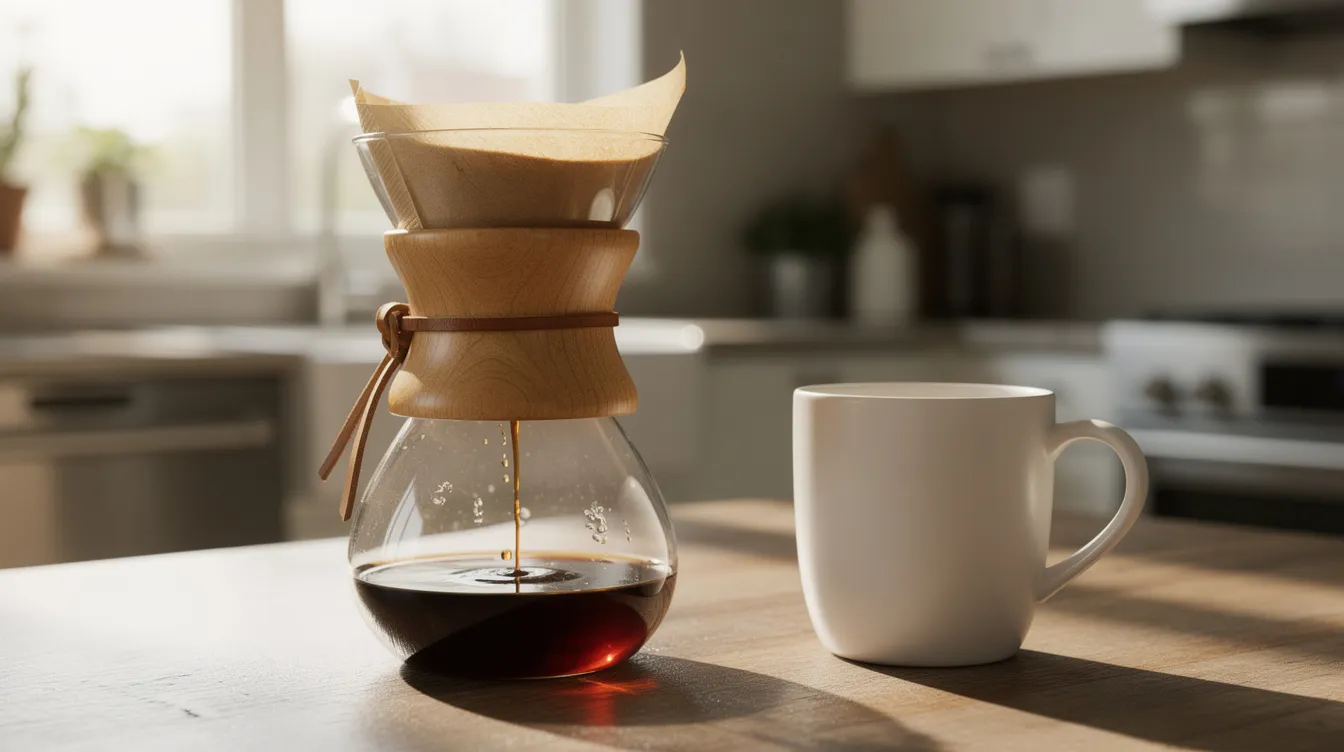
The Chemex coffee maker was invented in 1941 by Dr. Peter Schlumbohm, a German chemist who applied laboratory glassware principles to coffee brewing. The result is a sleek hourglass shape that has remained essentially unchanged for over 80 years. The Chemex is made of borosilicate glass, wood, and leather-the wooden collar and leather tie serve as a heat-resistant handle, while the heat resistant glass body resists thermal shock and does not retain flavors between brews. The Chemex is recommended by the Museum of Modern Art as a design classic, and it is appreciated for its aesthetic design, functioning as both a brewer and a piece of functional art.
The Classic Series comes in sizes of 3, 6, 8, and 10 cups, providing a batch brewing capacity of 3 to 10 cups depending on model. The 6-Cup Classic holds about 30 oz, but Chemex defines a “cup” as roughly 5 oz-so full capacity really yields about three large cups or mugs.
Borosilicate glass is non-porous and non-reactive, meaning it will not impart flavors or absorb odors over time.
Unlike most electric coffee makers, there is no metal heating element, no plastic brew basket, and no electronics. This simplicity appeals to buyers concerned about plastic taste or the eventual failure of moving parts.
The all-glass body is more fragile than metal or plastic coffee makers-a genuine trade-off for the premium materials and clean brew path.
Test Setup and Method (How This Review Was Researched)
Capitol City Coffee did not run its own lab tests on the Chemex. This is a researched editorial Chemex review built by cross-referencing manufacturer specifications, expert reviews from established coffee publications, and large-sample owner feedback through 2026.
Data sources include Chemex’s official product documentation, major retailer listings for current pricing and availability, barista guides, and aggregated user sentiment (many Classic Chemex listings show approximately 4.7–4.8 out of 5 stars across thousands of reviews).
We focused on the Classic Series manual brewer rather than the Chemex Ottomatic 2.0, but reference the Ottomatic where relevant.
Evaluation criteria: flavor performance and consistency, usability and workflow, durability, cleaning and maintenance, total cost of ownership (brewer plus Chemex filter consumption), and fit against alternatives like the AeroPress, Hario V60, and drip coffee makers.
Performance: How Chemex Coffee Tastes and Brews
The defining trait of Chemex brewed coffee is its clarity. Expert and community consensus describes the cup as extraordinarily clean, light-bodied, and bright, with pronounced acidity and aromatics and virtually no sediment. Brewed coffee with Chemex emphasizes light and delicate flavor notes-florals, citrus, stone fruit, honey-that can get buried in heavier brewing methods. Many reviewers use the word “tea-like” to describe the body, which is a compliment if you value nuance and a drawback if you want syrupy richness.
Chemex filters are thicker than standard coffee filters-roughly 20–30% heavier than typical pour-over papers according to comparative analysis. Chemex filters remove more oils than standard coffee filters, which is the primary reason Chemex coffee is so clean.
The brewing process with Chemex takes about 4 to 5 minutes of drawdown for a 6-cup batch, plus 1–2 minutes of prep, meaning total time from kettle to cup runs about 10 minutes.
Standard recipe: use 1–2 tablespoons of coffee per 5 ounces of water, or approximately 40 g of ground coffee to 600–680 g of hot water (a 1:15 to 1:17 ratio). Use a medium-coarse grind.
Allow coffee grounds to bloom for 30 seconds before brewing by adding just enough water to saturate the grounds, then pause.
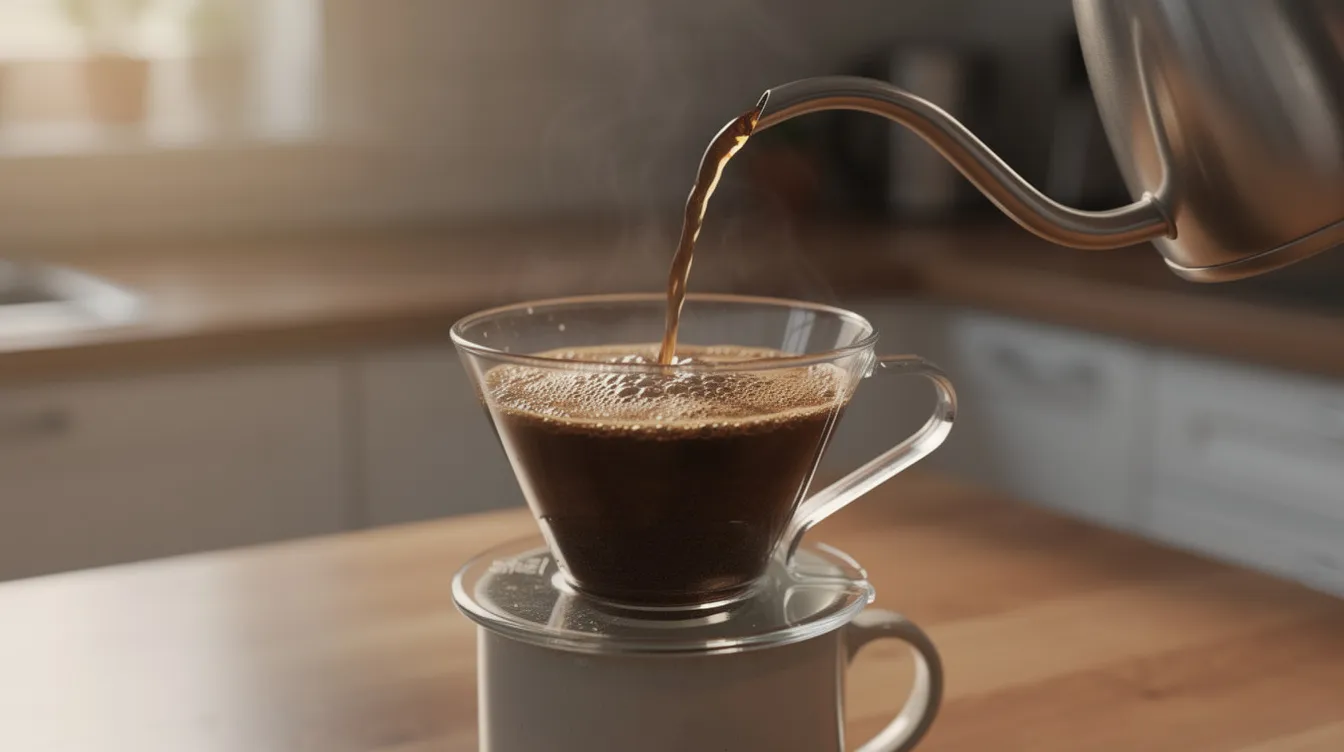
Pour water in a circular motion to wet coffee grounds evenly, using a gooseneck kettle for controlled flow. Continue pouring the remaining water in concentric circles.
Brewing with Chemex requires careful control of water temperature and pouring technique. Target water temperature of 200–205°F (93–96°C) for best extraction.
Chemex can excel at both hot coffee and flash-brewed iced coffee. Brewing directly over ice in the carafe emphasizes brightness and fruitiness, producing a remarkably clear cup of iced coffee.
Darker roasts may lose body and richness in Chemex brewing. If you prefer very strong coffee with a thick mouthfeel, a French press or immersion method will deliver more of that character.
Strengths of the Classic Chemex Coffee Maker
The Chemex makes a compelling case for itself across several dimensions:
Chemex produces a clean, clear, low-sediment cup of coffee that highlights complex notes in high-quality coffee beans. If you buy excellent coffee, this brewer will let you taste every dollar.
The classic design-minimalist glass and wood, with the iconic leather tie-doubles as a serving carafe and looks at home on a dining table, open shelving, or an Oxford Street flat. It is the only coffee maker many owners want to leave on display.
Versatile batch capacity: the 6-Cup and 8-Cup models can serve 2–4 people from a single brew, making the Chemex more practical for guests than single-cup pour over cones.
Borosilicate glass is non-reactive and will not impart off-flavors, and the absence of plastic in contact with hot water appeals to health-conscious coffee drinkers.
The Chemex pour ritual can be genuinely relaxing-a deliberate, intentional start to the morning that turns your daily cup into something you look forward to rather than rush through.
Once dialed in, Chemex makes remarkably consistent coffee, especially when paired with a scale and gooseneck kettle with a stable flow rate.
The American Chemex has a certain literary cachet too: Ian Fleming wrote James Bond enjoying Chemex coffee in his novels, where it appeared alongside Bond’s favourite meal. The brewer’s appearance on New Oxford Street bookshelves and in mid-century culture gives it a character that no drip coffee machine can match.
Limitations and Trade-Offs
Even iconic coffee makers have real drawbacks. Here is what to weigh before purchasing:
The Chemex is fragile and can break easily if dropped. Many owners report at least one accidental breakage over years of use, which adds to long-term cost.
Chemex filters are more expensive than standard filters-typically $10–$15 per 100-and they are proprietary. Availability is generally good online, but the recurring cost is real. Rinsing before use is essential to avoid papery taste in the finished cup.
The Chemex requires a 5–10 minute workflow from heating water to final cup, which can be too slow for busy mornings compared with automatic coffee makers or pod systems.
Getting good coffee from a Chemex requires dialing in grind size, pour speed, and total brew time. Dumping hot water too fast or grinding too fine can stall the filter or cause channeling-the learning curve is steeper than drip machines.
Advertised “cup” sizes use 5-ounce servings, so a 6-Cup Classic Chemex really yields about three large cups by most people’s standards. First impressions can be misleading if you expect six full mugs.
The wide body and narrow neck can be awkward to clean without a bottle brush. No handle means reliance on the wooden collar, which some users find less secure than a traditional pot handle.
No heater, timer, or temperature control is built in. Chemex requires a separate kettle for hot water, and there is no hot plate to keep coffee warm. You are fully manual.
Some owners note that a reusable filter (metal or cloth) can reduce ongoing filter costs, but these change the flavor profile significantly-more oils pass through, and you lose some of the classic Chemex clarity.
Ease of Use, Workflow, and Cleanup
The Chemex is simple in concept-just glass plus a filter-but demands some technique. The reward is excellent coffee once you have the routine down.
Fold the Chemex filter so three layers sit over the spout channel, place it in the cone, and rinse with hot water to remove papery taste and preheat the glass. Discard the rinse water.
A gooseneck kettle is nearly essential for controlled Chemex pour. Standard kettles make it difficult to pour water evenly, which can cause uneven extraction of the ground coffee.
Typical weekday workflow: boil water, grind coffee beans, rinse filter, bloom, pour in a circular motion, wait for drawdown-about 10 minutes total. Not quick, but not unreasonable once habitual.
Cleanup is simple due to the absence of mechanical parts and the use of disposable filters:
Lift the spent filter with coffee grounds and discard. Rinse the Chemex after each use to prevent stains.
A bottle brush is recommended for cleaning the Chemex, since the narrow neck makes hand-scrubbing difficult.
The Chemex is dishwasher safe without the wooden collar-remove the collar and leather tie first. Many owners prefer hand washing to reduce breakage risk.
For deeper stain removal, use baking soda and hot water, or a coffee-equipment-safe cleaner, periodically to keep glass clear and prevent residue from dulling coffee tastes over time.
Storage is straightforward: the 6-Cup Classic has a compact footprint, looks attractive enough to live on the counter, but store it where it is unlikely to be knocked over.
Price, Value, and Availability
The Classic Chemex coffee maker sits in the mid-range of manual brewers and is widely available from specialty coffee shops and major online retailers in the U.S.
The Chemex coffee maker costs around $49.50 for the 6-Cup Classic Series as of 2026.
Larger 8–10 Cup versions run somewhat higher, often in the $50–$70 range.
Chemex filter boxes typically cost $10–$15 per 100, with price variance depending on retailer and white versus natural filters.
The Chemex is available on US and UK Amazon, as well as through the official Chemex store and specialty retailers. Check current prices, as they fluctuate with promotions.
Compared with other coffee makers: cheaper than many high-end automatic drip machines or espresso setups, more expensive than basic plastic pour-over cones, but the blend of top-tier coffee quality and iconic classic design justifies the price for many owners.
Long-term ownership costs are driven by recurring filter purchases. Third-party and reusable options exist but generally alter the flavor profile.
As an independent editorial publication, Capitol City Coffee prioritizes performance and value over commission size when recommending products.
How Chemex Compares to Common Alternatives
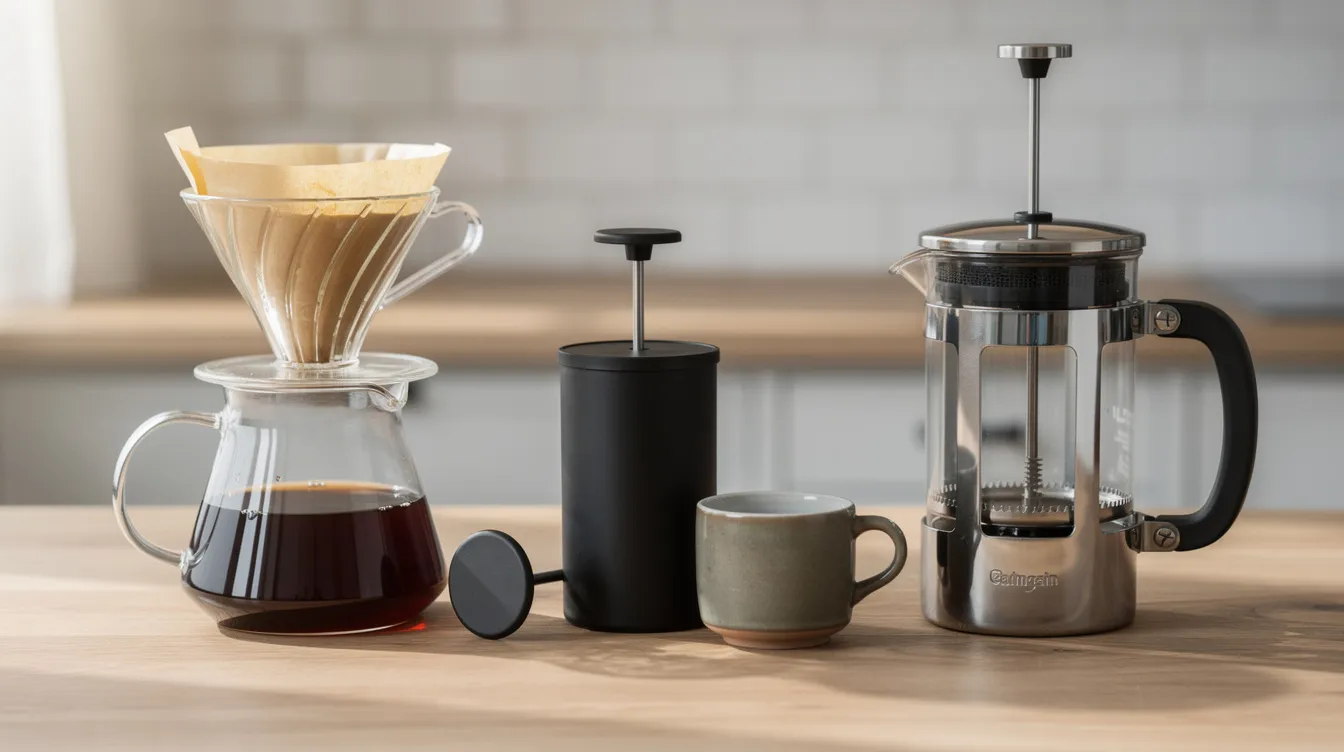
Many shoppers deciding on a Chemex are also weighing an AeroPress, V60-style cone, French press, or automatic drip coffee machine. Here is how they stack up:
AeroPress: compact, fast, travel-friendly, and produces fuller-bodied, sweeter coffee with more texture. Chemex is slower, more fragile, and better for brewing several cups with higher clarity. If you need one cup in under two minutes, the AeroPress wins.
Single-cup pour overs (V60, Kalita Wave): similar manual pour method but smaller brew volume. V60 uses thinner paper filters with faster drain, offering more body and shorter brew times. Chemex filters are thicker, slowing flow for extra clarity.
French press: produces heavy-bodied, oily coffee with sediment. Easier workflow and cheaper entry price, but lacks the clean, tea-like clarity of Chemex brewed coffee. A matter of preference, not quality.
Automatic drip coffee makers: set-and-forget convenience with timers and hot plates, but many models brew at less precise temperatures and can introduce plastic contact with hot water. Chemex offers more control and flavor potential at the expense of automation.
Chemex Ottomatic 2.0: a hybrid option that automates the Chemex pour process using a carafe. Attractive and convenient, but consensus suggests its brew quality may fall slightly short of a well-executed manual Chemex pour while costing significantly more. Consider it a niche upgrade rather than the default choice.
If you value clarity, ritual, and batch size, lean Chemex. If you value speed, portability, or body, explore the alternatives above.
Buying Advice and Recommended Setups
If you have mostly decided to buy a Chemex, here is practical guidance on choosing the right setup:
Size selection: the 6-Cup Classic Chemex suits 1–2 coffee drinkers who brew 2–4 small cups at a time. The 8- or 10-Cup models work better for households with more drinkers or frequent hosts.
Essential accessories: a reliable burr grinder for repeatable grind size, a gooseneck kettle for controlled pour, a digital scale for accurate coffee-to-water ratios, and official Chemex filters.
Optional accessories: cloth or stainless reusable filter options reduce paper waste but change the flavor profile. They will not fully match the classic Chemex clarity.
Best beans for Chemex: lighter roasts with bright acidity and complex tasting notes-think Ethiopian, Kenyan, or Central American single origins. Darker roasts can work but may taste cleaner yet thinner than in immersion brewers.
Start with a simple brew recipe: one rounded tablespoon (or about 7 g) per 5 oz of water, medium-coarse grind, 200–205°F water. Pour water slowly. Adjust grind and ratio over a week. Treat the first few days as calibration time rather than expecting café-level results on day one.
Final Recommendation
The Classic Chemex coffee maker earns its reputation. It delivers some of the cleanest, most flavor-transparent coffee you can brew at home, wrapped in a design that has been relevant for over eight decades. The strengths are real: exceptional cup clarity, a non-plastic brew path, batch capacity for small gatherings, and a ritual that makes mornings feel intentional.
The limitations are equally real: fragile glass, proprietary filter costs, a slower workflow than automatic machines, and a learning curve that rewards patience. This conclusion is based on researched editorial analysis-not our own lab tests-and aligns with broad third-party expert consensus in 2026.
Highly recommended for flavor-focused home brewers who enjoy ritual and classic design. Not the best fit if you want one-touch convenience or thick, heavy-bodied coffee every day. Decide whether the Chemex fits your morning routine and preferences, then either proceed to shop or explore alternative brewer reviews if you need a different style of coffee maker.
FAQs
Below are common questions that go beyond what we covered above, each answered with practical detail for U.S. buyers.
Does Chemex coffee really taste different from drip coffee?
Most tasters report noticeable differences. Chemex brewed coffee is typically cleaner, with less sediment and oil, and often highlights bright, fruity, or floral notes more clearly than standard automatic drip machines. The thick Chemex filter is the main reason-it removes more fines and oils than the thinner paper filters used in most drip brewers. Some coffee drinkers love the lighter body, while others miss the heavier mouthfeel of drip or French press. If you are unsure, try a good cup of Chemex coffee at a specialty café before committing.
Can I use regular filters instead of a Chemex filter?
Chemex is designed around its proprietary cone-shaped, thick paper filters. Standard basket or cone filters generally do not fit properly and will change flow rate and extraction. A few third-party Chemex-compatible filters and reusable cloth or metal options exist, but taste and clarity may differ from the classic Chemex coffee profile. For the canonical experience, start with official Chemex filters and experiment later if you wish.
Is the Chemex safe to put on a stove or warming plate?
While the Chemex uses borosilicate glass, it is not typically recommended to place it directly over open flame or electric burners. Doing so risks cracking the glass. Some owners carefully use low-temperature warming plates or a hot plate on the lowest setting, but manufacturer guidance generally favors using a separate insulated carafe or drinking the coffee promptly after brewing. Consult the instructions included with your specific model for the most current safety advice.
How long does a Chemex usually last?
There are no moving parts, so a Chemex can theoretically last many years if not broken. The main risk is accidental chips or cracks from drops or sudden temperature shock. Best practices for longevity include avoiding drastic temperature swings (such as pouring boiling water into an ice-cold carafe), storing it away from high-traffic counter edges, and removing the wooden collar before placing it in the dishwasher. Replacement cost is manageable compared with high-end machines, but frequent breakage reduces overall value.
Can I travel with a Chemex, or is it strictly for home use?
Some people pack a Chemex for car trips using protective cases or the original box, but its fragile glass and bulky shape make it poorly suited for frequent travel compared with compact brewers like the AeroPress. Treat the Chemex as a home or office coffee maker. If you love Chemex coffee clarity on the road, you can approximate it with a lightweight pour over cone, good paper filters, and lighter roasts-the taste will not be identical, but it gets you closer than most alternatives.
How Capitol City Coffee Rates Coffee and Coffee Machines
Every coffee and coffee machine we recommend is scored on the same 100-point scale, so a recommendation on one page means the same thing as a recommendation on any other. Each pick is also labeled with how we reached its score.
Research-ratedScored from the roaster or manufacturer’s published specifications, independent results such as Coffee Review blind cuppings and SCA brewer certification, and patterns across verified buyer reviews. Most of our current picks are research-rated.
Hands-on testedThe Capitol City Coffee team has brewed the coffee or used the machine ourselves, following the testing steps below. We only use this label when that testing actually happened, and we show the date we tested.
Coffee beans: 100-point scale
What we score
Points
What we look at
Origin and sourcing transparency
20
Country, region, farm or cooperative, altitude, bean variety, and processing method are clearly disclosed.
Flavor evidence
25
Independent cupping scores, how closely the tasting notes match what the origin is known for, and our own cupping notes when hands-on tested.
Roast and freshness
15
Roast level stated, roast-date practices, whole-bean availability, and packaging with a one-way valve or resealable bag.
Brew versatility
15
How well the roast suits pour-over, drip, French press, cold brew, and espresso.
Value
15
Price per ounce compared with similar single-origin coffees or blends.
Buyer feedback
10
Volume and consistency of verified reviews, and recurring complaints about staleness, bitterness, or shipping.
Coffee machines and gear: 100-point scale
What we score
Points
What we look at
Brewing performance
25
Water temperature in the 195–205°F range, even extraction, and SCA certification or published test data.
Build quality and reliability
20
Materials, known failure points, and long-term owner reports.
Ease of use and cleaning
15
Setup, the daily routine, descaling, and dishwasher-safe parts.
Fit for your kitchen
10
Capacity, counter footprint, and noise.
Useful features
10
Programming, grind and temperature control, and carafe type. Features that improve the cup count more than extras that do not.
Value
10
Price compared with machines that perform similarly.
Warranty and support
10
Warranty length, parts availability, and how the brand handles repairs.
What the grades mean
Score
Grade
What it means
90–100
A
Exceptional. Our first recommendation for the feeling and setting described.
80–89
B
Strong. Excellent, with minor trade-offs we explain.
70–79
C
Good. Worth it for specific needs, with clear compromises.
Below 70
—
Not recommended. We do not feature these as picks.
How we test hands-on
When a pick carries the Hands-on tested label, this is the method behind it, and we note the date we tested.
Coffee: brewed fresh from whole beans following Specialty Coffee Association guidelines (water between 195 and 205°F, about 1 gram of coffee to every 15 to 18 grams of water) in the brew methods the roast suits best, such as pour-over, French press, or espresso. We taste it black first, then with milk if that is how most people drink it, and each taster scores it on their own before we compare notes.
Machines: used in our everyday routine rather than a single demo. We brew both full and small batches, check the brewing temperature and brew time, and run the cleaning or descaling steps the manual calls for.
How we choose the feeling and setting
We match each coffee to a mood and a moment based on its flavor profile and roast. Bright, citrusy light roasts suit energizing mornings. Chocolatey, full-bodied medium roasts suit slow or social moments. Richer roasts suit espresso and milk drinks. Each pick explains which facts led us to that match.
Our scores stay independent
Every score comes only from the criteria above. No brand can pay for a pick or a higher grade. We re-check ratings when a roast, listing, or model changes, and update or remove picks that no longer earn their grade.
Some links on this page are affiliate links. As an Amazon Associate, Capitol City Coffee earns from qualifying purchases, at no extra cost to you.
Questions about a rating? Reach the Capitol City Coffee team through our contact page.