

Key Takeaways
- The best coffee by brew method depends on your preferred flavor, daily routine, and gear. There is no single winner – but matching beans and grind size to your brewer makes a measurable difference.
- Immersion methods like French press and cold brew tend to produce fuller, heavier cups. Percolation methods like pour over and drip deliver cleaner, brighter flavors. Pressure methods like espresso concentrate everything into an intense shot.
- Capitol City Coffee organizes buying advice by brew method so you can quickly match beans to French press, espresso, cold brew, and pour over at home.
- Our featured recommendations are researched editorial picks focused on flavor, value, and availability – not on commission size.
- This page works as a navigation hub: browse brew-method guides, compare options, and click through for specific product recommendations.
At a glance
Category Overview: Coffee by Brew Method
This is Capitol City Coffee’s central hub for choosing the best coffee by brew method for home use – whether you brew with a drip coffee maker, an espresso machine, a French press, a pour over dripper, or a cold brew pitcher.
Changing your brewing method – not just your beans – dramatically alters flavor, aroma, body, and strength every time you brew coffee. A bag of the same single origin can taste bright and tea-like through a paper filter or dense and chocolatey through a metal mesh press pot.
A brew method is simply the specific way hot water (or cold water) interacts with coffee grounds: full immersion, percolation, pressure, or cold extraction. Each method favors particular roast levels and grind sizes. This page is organized to help you decide which coffee brewing style fits your personal taste, budget, and routine, then click into dedicated guides for detailed recommendations.
All advice here is independent editorial analysis. Capitol City Coffee does not roast or sell its own coffee.
Key Concepts: How Brew Methods Change Your Coffee
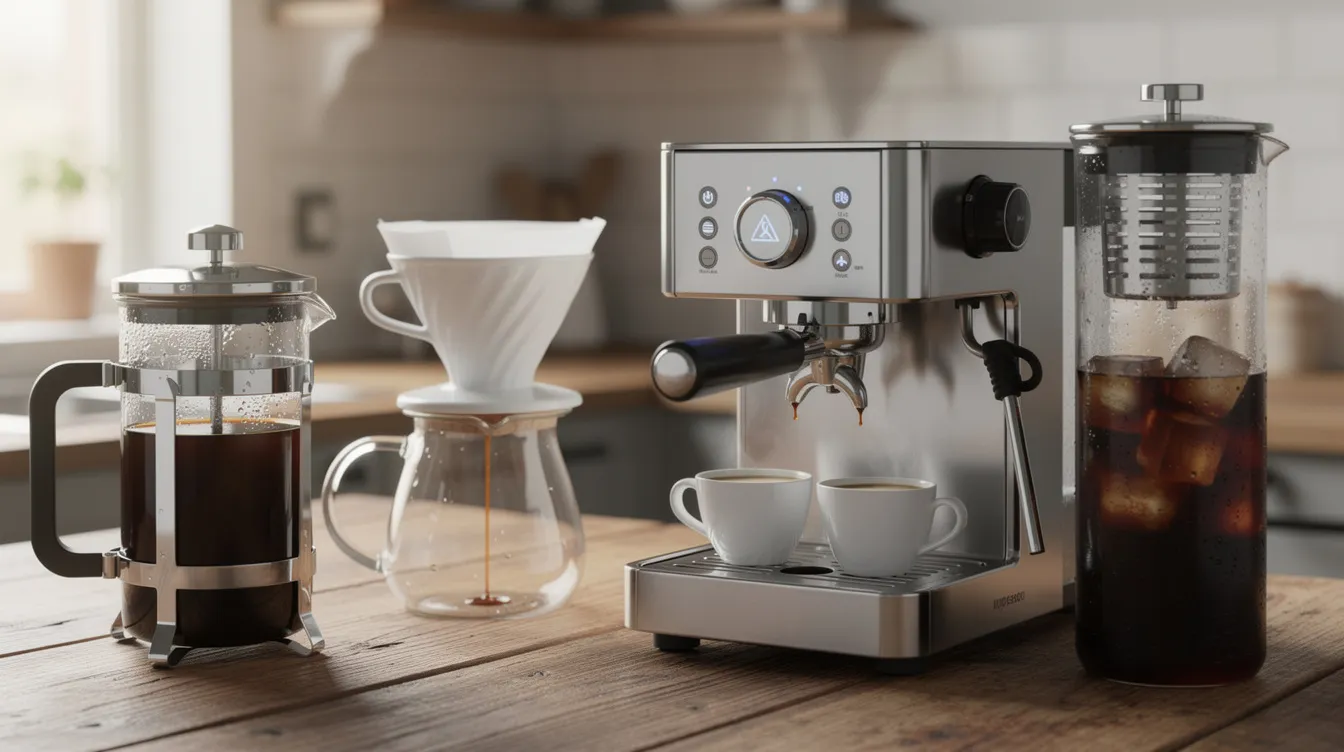
Different coffee brewing methods change flavor and aroma by altering extraction – the process of dissolving soluble compounds from ground coffee beans into water. Here are the core families and variables:
- Full immersion (French press, cold brew, AeroPress): Immersion brewing involves steeping coffee grounds in water for a set duration. Full immersion methods produce bolder, richer coffee flavors with heavier body.
- Percolation / flow-through (pour over, drip coffee makers, siphon): Percolation brewing uses gravity to pass water through coffee grounds and a filter. Percolation emphasizes clarity and acidity in coffee.
- Pressure (espresso machines, moka pot, some pods): Pressure extracts rapidly, concentrating the flavors in coffee. Forcing hot water through a compact puck creates intense, syrupy shots.
Key variables that shape your final cup:
- Contact time impacts the extent of flavor extraction in coffee. A French press steeps for 4–5 minutes; an espresso shot finishes in 25–30 seconds.
- Grind size affects the rate of extraction during brewing. Finer grinds expose more surface area; coarser grinds slow things down.
- Water temperature: Most hot coffee methods work best between 195–205°F. Cold brew uses room-temperature or refrigerated water.
- Filtration: Paper filters trap most of the coffee’s natural oils, yielding a clean cup. Metal filters allow more oils and microscopic particles into the cup, adding body and mouthfeel. Water movement and filtration influence the flavor clarity of coffee across every method.
Quick Start: How to Choose the Best Coffee by Brew Method
Not sure where to start? Use these pairings as a decision guide:
- Rich, heavy coffee with minimal fuss: Start with French press coffee. Coarse coffee grounds, a four-minute steep, and you get a full bodied cup every time.
- Clean, tea-like cups with origin character: Choose beans and a medium fine grind tailored for the pour over method using a V60 or Chemex.
- Busy weekday mornings, making multiple cups: An auto-drip coffee maker or single cup pod machine keeps things moving.
- Weekend ritual, hands-on brewing process: Manual pour over or Chemex – slower, more precise, more rewarding.
- Iced coffee fan: Cold brew concentrate, ready in the fridge.
- Milk-drink lover (lattes, cappuccinos): Espresso machines or a Bialetti moka pot for strong coffee that cuts through steamed milk.
Cost matters too. A French press runs under $40. A quality pour over setup (dripper, kettle, scale) costs $60–$150. Entry-level espresso machines start around $300–$800, with premium setups reaching into the thousands.
The sections below break down each brewing method in detail, and our browse guides link to specific bean recommendations.
Browse Guides by Brew Method
Use this section to jump directly to our detailed “best coffee by brew method” articles:
- Best coffee beans for espresso at home – covering espresso coffee, machine recommendations, and dialing-in tips.
- Best coffee for cold brew and iced coffee – long-extraction picks, concentrate ratios, and batch planning.
- Best coffee for French press and cafetière brewing – bold, full-bodied beans that shine with a coarse grind.
- Best coffee for pour over drippers like V60 and Chemex – light and medium roasts that reward precision.
Additional brew methods – drip machines, moka pot, AeroPress, siphon – are covered within these guides and in the general coffee hub.
Immersion Brewing: French Press & Steeped Methods
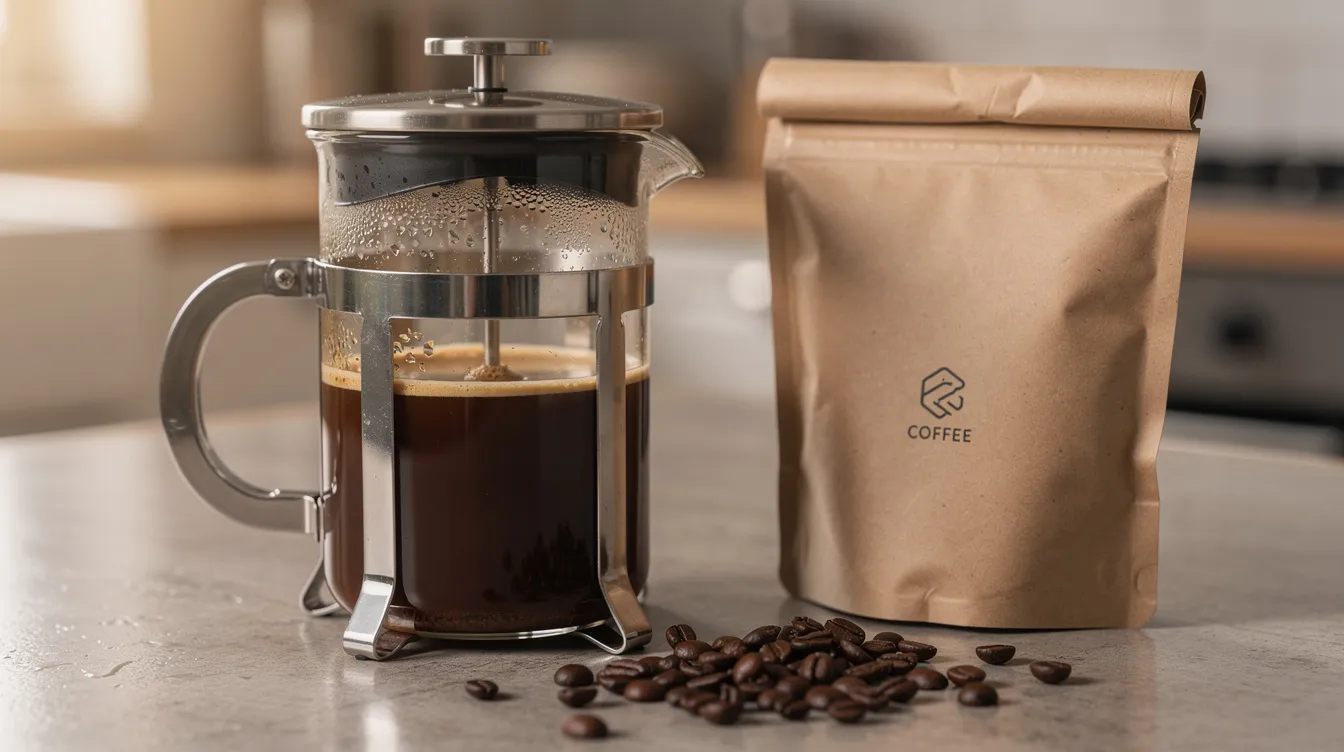
Immersion brewing is the simplest concept in the coffee world: submerge all the coffee grounds in hot water, let them steep, then separate. The result is bold, rounded coffee with more body than most other methods.
The French press is the classic at-home immersion coffee maker. Originally invented in 1929 by Attilio Calimani, it uses a coarse grind, a 4–5 minute steep at around 205°F (96°C), and a metal mesh filter that allows oils and solids to pass through. French press coffee is known for its rich taste and heavy mouthfeel. A typical brew ratio calls for 50–70 grams of coffee per liter of water, and a full-size press pot can brew up to 12 cups or 51 ounces at once – great for making coffee for a household.
Pros:
- Affordable brewers (often under $40)
- Forgiving technique – slight variations in brew time or grind don’t ruin the cup
- Easy to scale for multiple cups
- Strong aroma; using a French press allows more coffee oils and solids in the cup
Cons:
- Sediment in the bottom of each mug if grind is inconsistent – a blade grinder makes this worse
- Less clarity and brightness than paper-filtered methods
- Can over-extract into bitterness if you leave grounds sitting in the finished coffee too long
- French press coffee typically requires a coarser grind size for best results, so very fine pre-ground coffee won’t work well
Related immersion styles like cupping or simple steep-and-strain methods are low-gear alternatives for trying new beans before committing to a brew method.
Percolation & Pour Over Brewing
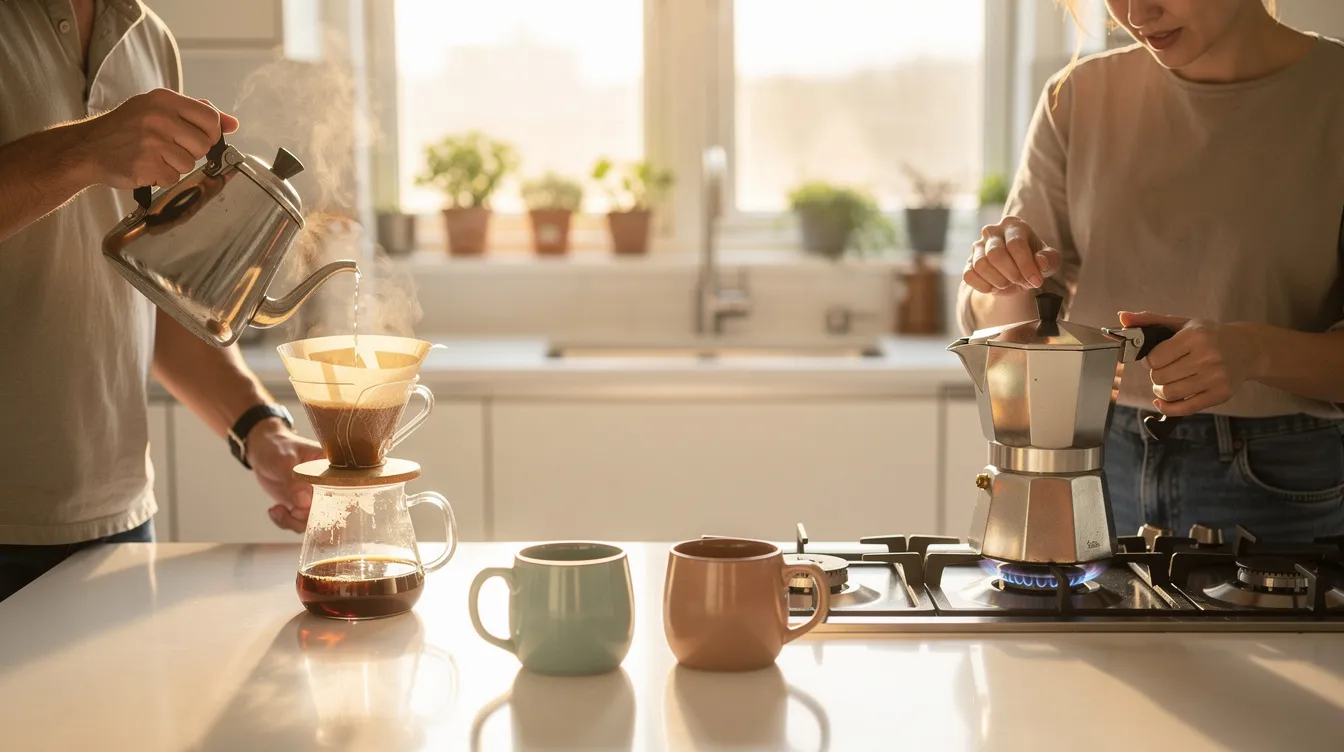
Percolation means water passes through a bed of ground coffee and a filter under gravity, carrying dissolved flavors into your cup below. Manual pour over is the archetype of this family, and pour over coffee dates back over a hundred years.
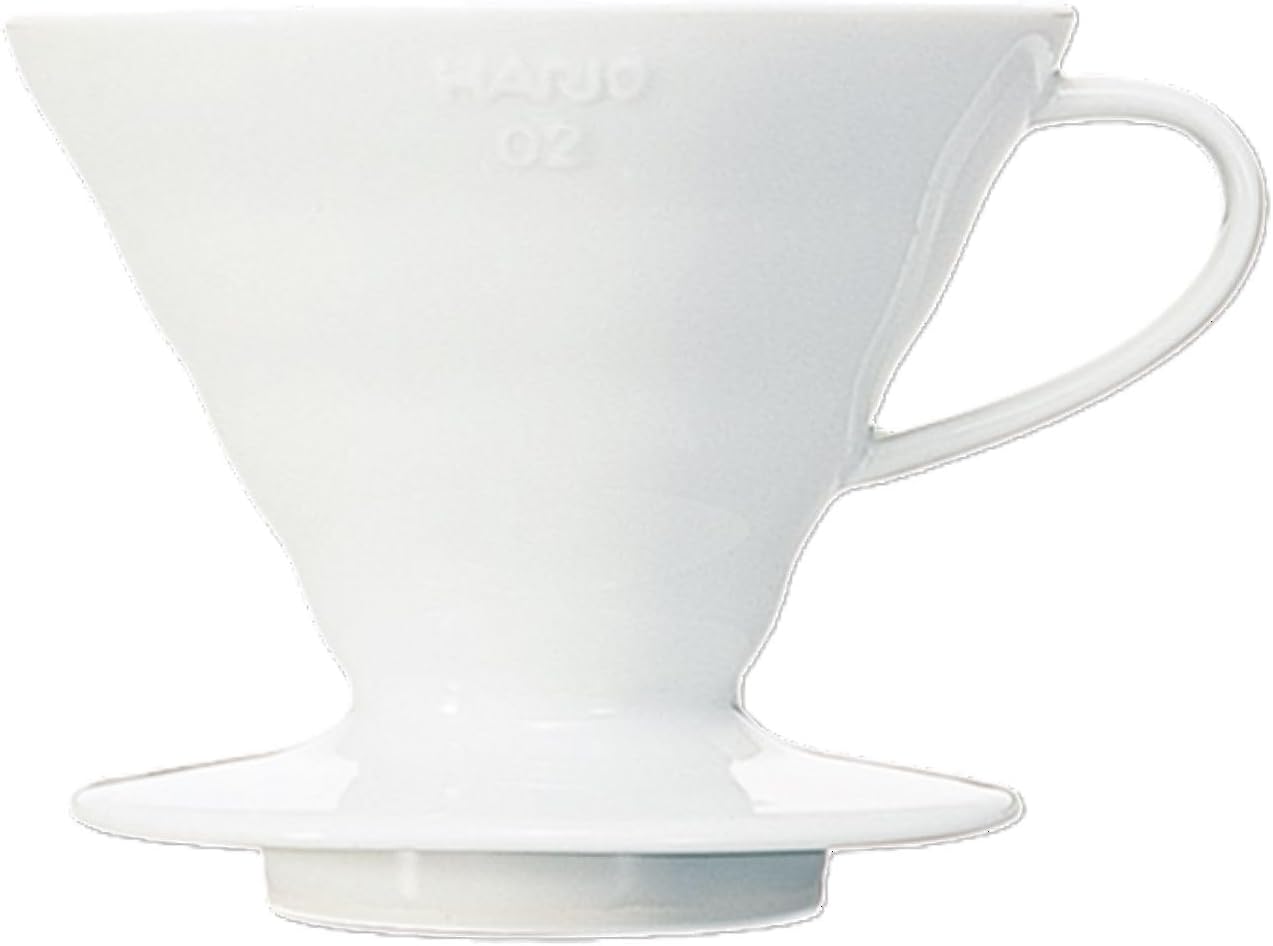
Common pour over brewers include the Hario V60 (a popular pour over coffee maker), the Kalita Wave, and the Chemex. All use a paper filter and a medium fine grind to highlight clarity and subtle flavor notes. Pour over coffee is known for its clean and complex flavors. Pour-over methods yield lighter, brighter coffee profiles, and pour over highlights delicate floral, fruity, and acidic notes that can get buried in heavier methods.
A typical coffee-to-water ratio for pour over is 60g coffee to 1000g water, with a brew time of about 2.5–3.5 minutes. Pour over brewing allows for precise control over extraction through your pouring technique, water temperature, and bloom timing.
Usability trade-offs:
- More technique required (blooming, spiral pours, scales, timers) but relatively low gear cost
- Simple cleanup – discard the paper filter and coffee grounds
- Best suited for light and medium roasts where origin character, sweetness, and acidity are the draw
Automatic drip coffee makers use a similar coffee brewing method – water heated and distributed over a bed of ground coffee – but with less control over flow rate and brew time. A well-designed auto-drip machine can produce good coffee, but it won’t match the precision of a manual dripper in experienced hands.
Pressure-Based Brewing: Espresso & Moka Pot
Pressure brewing uses force to push hot water through a compact coffee puck, creating intense, concentrated coffee drinks. This is the domain of espresso and the stovetop moka pot.
Espresso is the most complex coffee method in the brewing process. Espresso machines require 9 bars of pressure for brewing, water at around 93°C (about 200°F), and finely ground coffee – espresso requires a grind size finer than other brewing methods. A double espresso shot uses 18 grams of coffee grounds, extracted over 25–30 seconds. The espresso machine was invented in 1884 by Angelo Moriondo, and the technology has evolved dramatically since then. Today, an espresso shot serves as the base for lattes, cappuccinos, Americanos, and most café-style coffee drinks.
Pros and cons of espresso at home:
- Unmatched control and variety for making coffee – from straight shots to milk drinks
- Higher equipment cost (entry-level machines $300–$800; premium gear into thousands)
- Daily cleaning of group heads and portafilters
- Steeper learning curve to get consistent shots with the right brew ratio
Moka pot brewing is a lower-pressure stovetop method. The Bialetti Moka pot design dates back to 1933. Moka pots produce coffee with about 1.5 bars of steam pressure – far less than true espresso, but enough to create strong, robust espresso style coffee. Moka pots are often referred to as a poor man’s espresso machine. Brewing with a moka pot typically requires no scales or measuring scoops, making it one of the most accessible manual brewing methods. The trade-off is less precision: temperature control is limited when you’re working with boiling water on a stovetop, and the profile can lean slightly bitter if heat isn’t managed.
Moka pots are inexpensive, durable, and compact. Espresso machines are faster and more repeatable once dialed in but require more maintenance.
Fast & Flexible: AeroPress and Hybrid Methods
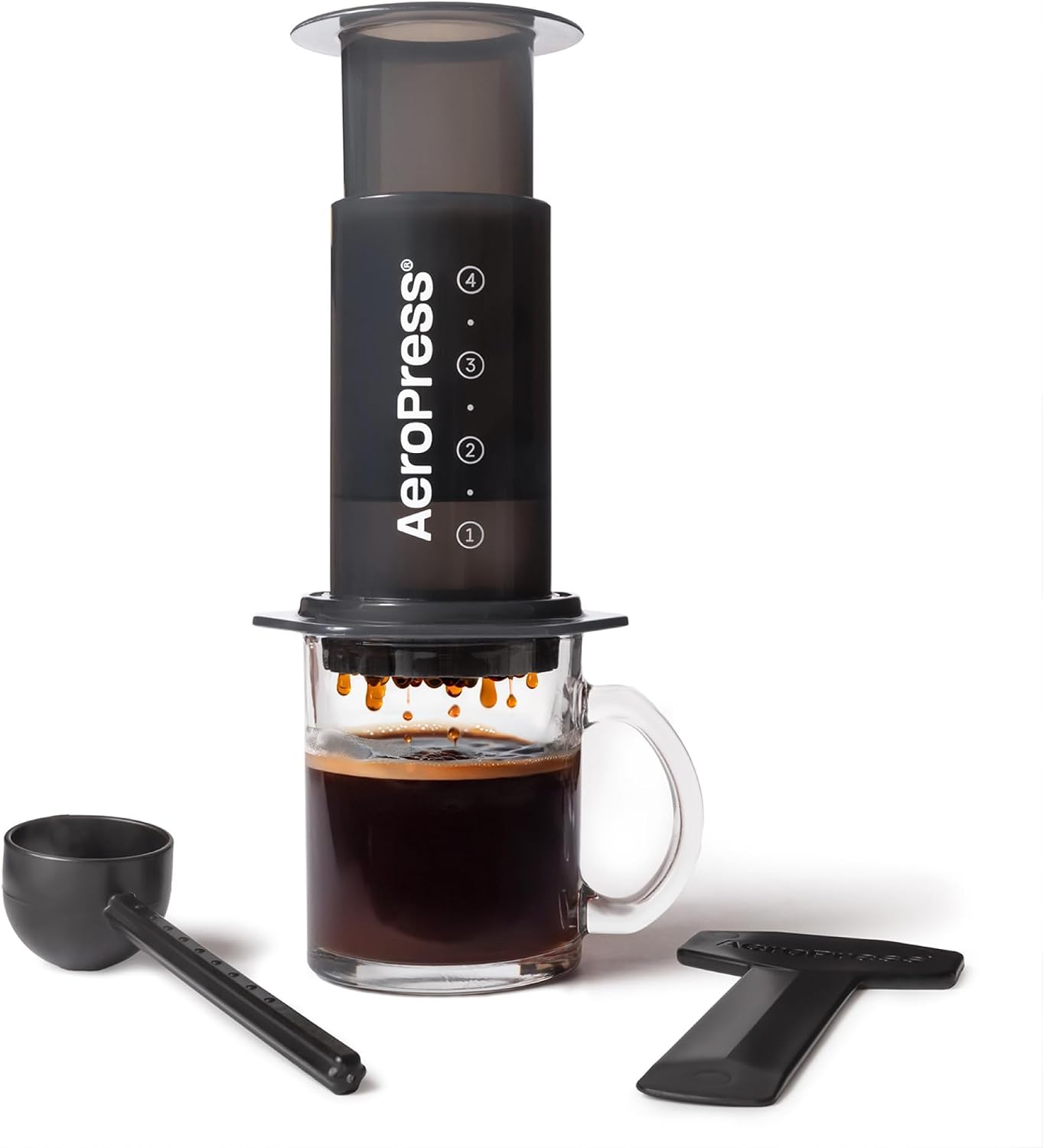
The AeroPress combines immersion and pressure brewing techniques in a compact, travel-friendly coffee maker. The AeroPress was launched in 2005 and gained popularity quickly – so quickly that it has inspired its own world championship, drawing competitors from dozens of countries.
The device steeps coffee grounds for 30 seconds to 2 minutes, then uses gentle manual pressure (about 0.5 to 1.5 bars) to push the brew through a paper microfilter. It allows brewing espresso-like shots and cold brew variations, depending on recipe and water temperature. The grind sits between medium and fine, and recipe flexibility is enormous: standard, inverted, iced, and concentrated styles all work.
Flavor profile: Smooth, low bitterness, medium body – often described as sitting between French press and pour over. A delicious cup without the sediment of immersion or the gear demands of espresso.
Trade-offs:
- Small batch size (usually a single cup or two)
- Slightly quirky workflow with multiple small parts
- Results vary depending on which recipe you follow
Other hybrids like the Hario Switch or Clever Dripper blend immersion and percolation, making pour over-style filter coffee more forgiving for anyone who doesn’t want to perfect a pouring technique.
Cold Brew: Long Extraction, Low Acidity
Cold brew is made by steeping coarse coffee grounds in cold or room-temperature water for 12–24 hours, then filtering the result into a smooth concentrate or ready-to-drink brew. Cold extraction yields a smoother cup with less perceived acidity – many people who find hot coffee harsh on their stomach drink coffee this way instead.
Cold brew results in a naturally sweet, ultra-smooth cup that emphasizes chocolate, nut, and brown sugar notes. Volatile aromatics are lower than in hot methods, but the trade-off is a mellow, creamy character that works beautifully over ice.
Basic home coffee preparation:
- Concentrate ratio: roughly 1:4 (beans to cold water); ready-to-drink ratio: roughly 1:8
- Steep time: commonly 16–18 hours in the fridge
- Gear: a jar, pitcher, or dedicated cold brew coffee maker
Best use cases: Iced coffee in hot weather, batch brewing for the workweek, and an option for people sensitive to acidity. You can keep cold brew concentrate in the fridge for several days.
Trade-offs: Long brew time means planning ahead. You need fridge space. And how much coffee you use per batch is higher than most hot methods because of the concentrate ratio.
Auto-Drip & Everyday Coffee Makers
Auto-drip brewers remain the default coffee maker in many U.S. homes. NCA data shows drip brewers lead at-home brewing at 38%, followed by single cup pod machines at 23%. They are ideal for making multiple cups with minimal interaction.
Here’s how drip coffee works: heated water is distributed over a bed of medium ground coffee beans in a paper filter (or reusable mesh), dripping into a carafe. The brewing process takes about 4–6 minutes for a full pot.
Performance factors:
- Stable brew temperature (~195–205°F) in well-built machines
- Even water distribution via a shower head
- Correct grind size – medium – is essential
Usability benefits: Set-and-forget convenience, programmable timers for morning coffee hot and ready, compatibility with a wide range of supermarket and specialty ground coffee or fresh roasted beans.
Trade-offs: Less control than manual methods. Cheaper machines may heat water unevenly, leading to under- or over-extraction. Freshly ground coffee significantly affects flavor quality even in auto-drip – pre-ground bags that have sat open for weeks won’t produce a better cup no matter how good the machine.
Matching Beans to Brew Methods
The same coffee beans can taste remarkably different depending on your brewing method. Choosing beans by brewing style can improve flavor and consistency at home.
High-level guidance:
- Light roasts (often washed process, floral, citrus, tea-like): shine in pour over and drip, where clarity and brightness are preserved
- Medium to medium-dark roasts (chocolate, caramel, nut notes): suit French press, cold brew, and espresso-based milk drinks. Medium roasts in particular offer versatility across coffee making methods
- Balanced blends: often formulated for espresso and moka pot, where the extraction process is intense and benefits from roasts designed to hold up under pressure
Grind size and solubility interact: denser, light-roast beans can be trickier for espresso but rewarding in filter methods. Slightly darker, more soluble beans are easier to dial in for pressurized brewing.
Start with the roaster’s recommended brew method printed on the bag, then adjust based on your own preferences. Experimentation is part of the fun – try an “espresso” blend in a moka pot or French press. You may find a favorite coffee you didn’t expect. Our linked guides give concrete bean examples for each style.
Featured Recommendations by Brew Method
Affiliate disclosure: Some outbound links in this section may be affiliate links. Our recommendations are based on researched editorial analysis, not on commission size. We have not conducted hands-on tasting for these picks; they reflect verified product data, roaster transparency, and aggregated expert and customer consensus.
For espresso – Lavazza Super Crema Espresso (medium roast blend) A widely available Italian blend with chocolate, caramel, and mild hazelnut notes. Roasted for espresso machines and moka pots at a consistent medium level. Typically $12–$16 per pound. Smooth crema, forgiving for home baristas still dialing in. Drawback: not a single origin showcase – flavor leans reliable over adventurous.
For French press – Counter Culture Hologram (medium roast blend) Chocolate and caramel-forward with enough sweetness to produce a rich, heavy cup through a metal filter. Roast dates printed on every bag. Around $14–$16 per 12 oz. Great value for people brewing multiple mugs each morning. Drawback: blend composition rotates seasonally, so flavor shifts slightly.
For pour over – Onyx Coffee Lab Geometry (washed Ethiopian, light-to-medium roast) Bright citrus and floral notes that paper filtration brings out beautifully. Roasted to highlight origin clarity. Approximately $18–$22 per 10 oz. Good coffee for anyone chasing complexity and sweetness. Drawback: lighter roasts are less forgiving of grind inconsistency, and availability can be limited during off-harvest seasons.
For cold brew – Bizzy Cold Brew Coffee (coarse ground, medium-dark roast) Chocolate, brown sugar, and hazelnut notes specifically selected for cold extraction. Pre-ground to a coarse grind for convenience. Around $12–$14 per 12 oz bag. Holds up well when served over ice or diluted with milk. Drawback: pre-ground means freshness declines faster than whole bean – use promptly after opening.
For each pick, freshness matters: whole beans are best within 2–4 weeks of roast date. Instant coffee, by contrast, trades freshness and flavor complexity for pure convenience.
Performance, Usability, and Value Across Brew Methods
This is a comparative overview – not a strict ranking. The best brewing method depends on what you value most.
Performance (cup quality potential):
- Espresso delivers café-style coffee drinks but demands precise technique
- Pour over can match or exceed espresso in flavor clarity with less gear cost
- French press produces great coffee with rich mouthfeel and low effort
- Cold brew excels for smooth, low-acid iced coffee
- Auto-drip is adequate to good for most daily drinkers
Usability (learning curve and workflow):
- Auto-drip and French press: low barrier, forgiving on grind and timing
- Pour over: moderate – requires scales, a gooseneck kettle, and attention
- AeroPress: moderate – flexible but quirky
- Espresso: high – the extraction process demands precision, maintenance, and practice
Value (upfront + ongoing costs):
- French press: under $40 gear, no filters, economical coffee use
- Pour over: $60–$150 for a quality setup; ongoing paper filter cost is minimal
- Auto-drip: $30–$200 for the machine; paper filters add up over months
- Espresso: $300–$800+ for a capable machine, plus a burr grinder ($100–$300); uses more coffee per serving (a double shot needs 18g for one small drink)
- Cold brew: minimal gear cost, but higher bean consumption per batch
Best use-case snapshots:
- Large households and offices: auto-drip, large French press, cold brew batches
- One or two people focused on flavor: pour over, AeroPress
- Iced coffee fans: cold brew
- Milk-drink lovers: espresso or moka pot
How Capitol City Coffee Researches Recommendations
Our “best coffee by brew method” picks are based on researched editorial analysis – not on lab testing, in-house roasting, or paid placement.
We rely on verified product information (roast level, origin, processing method, grind guidance from the roaster) and cross-check against multiple reputable expert sources, specialty coffee publications, and aggregated customer feedback.
Unless explicitly stated otherwise, we do not claim hands-on testing or long-term ownership. Instead, we synthesize consensus from barista guides, peer-reviewed extraction studies, and buyer reviews to identify coffees that consistently earn strong marks for specific brew methods.
Key selection criteria:
- Flavor profile suitability for the brewing method
- Roast freshness policies (printed roast dates preferred)
- Price per ounce and overall value
- Current availability in the U.S.
- Recurring complaints (inconsistency, shipping delays, staleness)
We review and refresh this hub at least annually, and update internal links sooner when new brew-method content is published on our coffee hub.
FAQs
Below are common questions not fully covered above.
What is the single best coffee brewing method for beginners at home?
There is no universal “best,” but for most beginners, the French press or a quality auto-drip machine offers the easiest path to good coffee at home. Both methods are forgiving on grind and timing, use widely available coffee beans, and don’t require precise pouring technique or expensive scales. Once you’re comfortable making coffee with these, exploring pour over or AeroPress adds more control and nuance to your routine. Many coffee enthusiasts started with a simple press pot before moving to more involved methods.
Can I use the same coffee beans for every brew method?
You can technically brew any beans with any method, but some pairings work better. Light roasts tend to shine in pour over coffee; balanced blends are formulated for espresso; fuller roasts with chocolate and nut notes suit French press and cold brew. The critical adjustment is grind size: coarse coffee grounds for French press and cold brew, medium for drip, and a fine grind for espresso. Switching grind without switching beans is a simple way to experiment. Following the roaster’s recommended brew method on the bag is a reliable starting point, but don’t be afraid to try your favorite coffee in a different brewer.
Does more expensive coffee gear always make better coffee?
Beyond a basic quality threshold, the biggest improvements usually come from fresh roasted beans and a good burr grinder – not from ultra-premium brewers. A $30 French press with freshly ground coffee and the right brew ratio can outperform an expensive but poorly dialed-in espresso machine. Even cowboy coffee – grounds steeped in boiling water with no filter at all – can taste surprisingly good with quality beans. Invest first in consistent grinding and fresh coffee, then upgrade brew method gear if you want a different workflow or drink style.
How long can I store coffee beans for different brewing methods?
Whole beans are best within 2–4 weeks of roast date for most brew methods. Espresso blends often benefit from 7–14 days of rest after roasting to allow CO₂ to degas, which improves crema and shot stability. Ground coffee stales much faster – in days rather than weeks – making at-home grinding especially important for nuanced methods like pour over and espresso. Store beans in an airtight, opaque container at room temperature (not in the fridge or freezer between daily uses) to preserve flavor for any brewing method.
Is cold brew healthier or less caffeinated than hot coffee?
“Healthier” is subjective, but many people find cold brew easier on the stomach because of its lower perceived acidity compared with some hot brew methods. Cold brew concentrate can actually be higher in caffeine per ounce than regular hot coffee produced at the boiling point – but most people dilute it with water, ice, or milk, which brings the per-serving caffeine closer to a standard cup of coffee. If caffeine intake is a concern, focus on total volume consumed and bean choice rather than just the coffee preparation method.