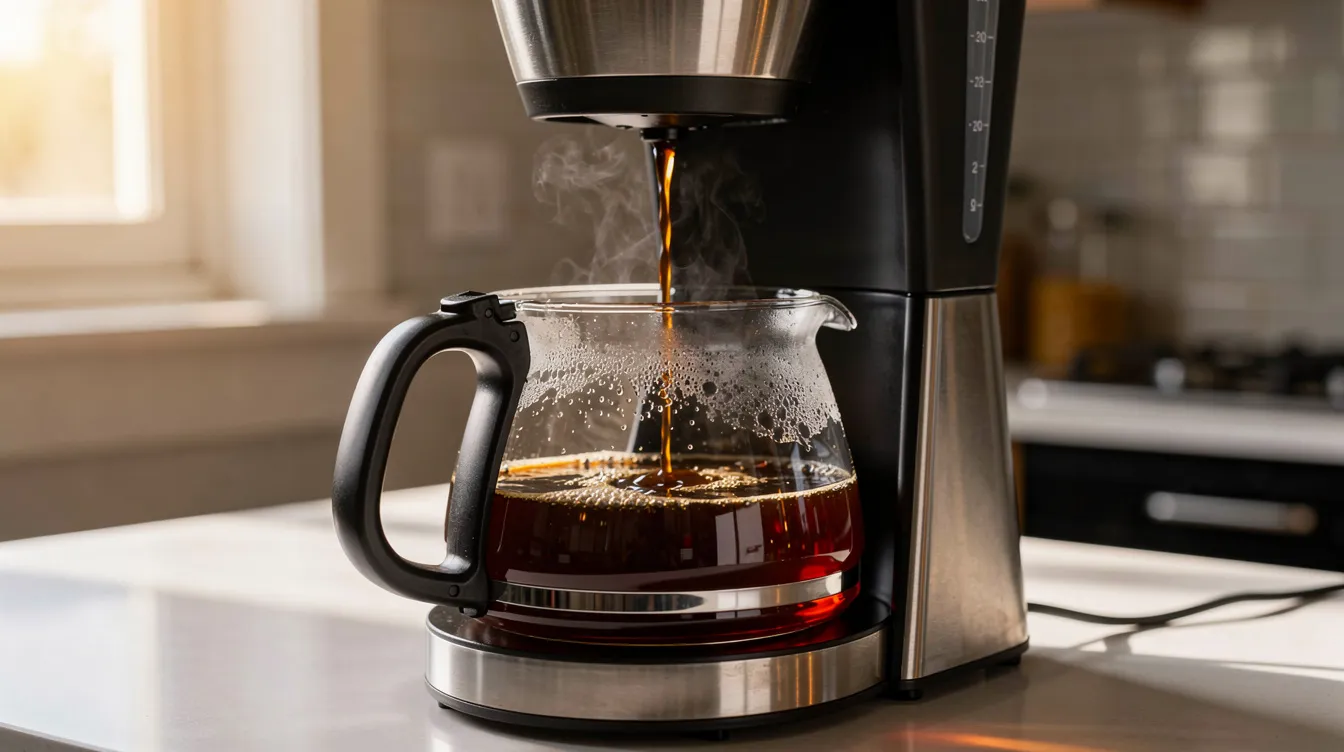
The espresso machine vs coffee maker debate comes down to what you actually drink each morning. An espresso machine uses high pressure and finely ground coffee to produce concentrated, crema-topped shots and milk based drinks like lattes and cappuccinos, while a drip coffee maker relies on gravity and coarser grounds to brew larger batches of lighter-bodied, traditional coffee. There is no universal winner-the better choice depends on your drink style, budget, and how much effort you want in your brewing process.
If you are deciding which machine fits your taste, routine, and household needs, this guide will help you compare how espresso machines and coffee makers work, how their flavor and drink options differ, what they cost to buy and maintain, and which use cases make the most sense. This guide is researched editorial analysis from Capitol City Coffee, an independent coffee editorial and affiliate publication. We have not performed hands-on testing for the machines discussed here; instead, we rely on verified specs, reputable expert sources, and widely accepted benchmarks. Below, we compare performance, drink options, cost, maintenance, and best use cases, and touch on alternatives like pod systems and super automatic espresso machines.
Best espresso pick
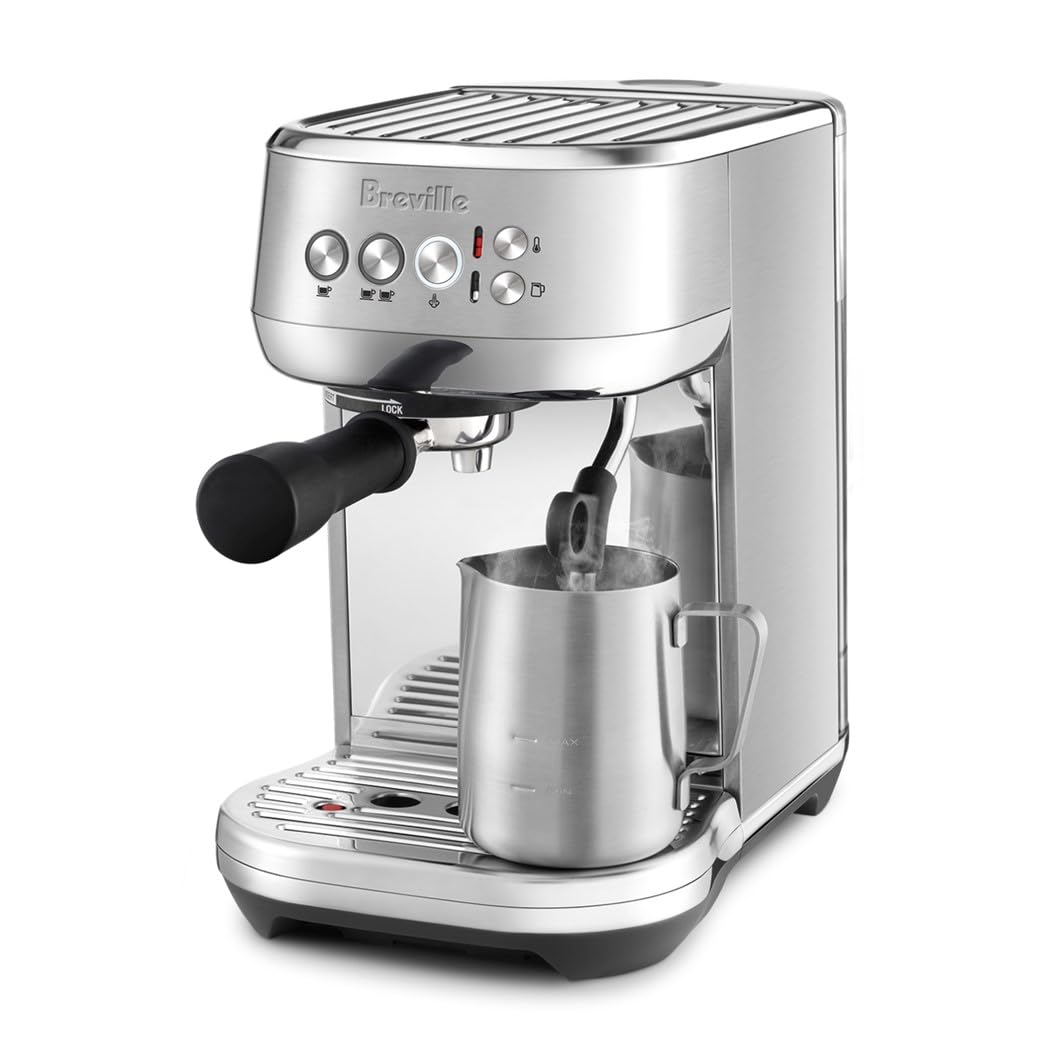
For this roundup, Breville Bambino Plus is the espresso we recommend first—the same pick at the top of our At-a-glance cards below.
Espresso machines win for intense flavor, espresso based drinks, and coffee art; coffee makers win for simplicity, volume, and lower cost.
Espresso requires high pressure (~9 bars) and finely ground coffee beans, while drip coffee makers use gravity and medium-coarse grounds-leading to fundamentally different flavor profiles and workflows.
Coffee makers are generally more affordable than espresso machines, with decent models starting around twenty-five dollars versus three hundred dollars or more for a quality semi-automatic espresso setup.
Espresso machines offer more drink versatility than coffee makers, but they come with a steeper learning curve and higher maintenance demands.
Bean quality, grind consistency, and water quality matter more than price tag for getting better coffee from either machine.
Affiliate Disclosure
Some coffee machines, grinders, and beans recommended in this guide may include affiliate links. Capitol City Coffee may earn a commission at no extra cost to you. Rankings and opinions are based on researched editorial analysis, expert consensus, and verified specifications-not commission size.
Quick Verdict: Espresso Machine vs Coffee Maker
If you want barista style coffee at home-rich espresso shots, silky lattes, or cappuccinos with textured microfoam-an espresso machine is the clear pick. If you want a no-fuss morning cup that fills multiple mugs for the household, a drip coffee maker delivers exactly that at a fraction of the cost and effort.
Busy household needing 8–12 cups each morning? Coffee maker.
Solo drinker obsessed with milk texture, crema, and concentrated flavor? Espresso machine.
Hybrid household with mixed preferences? Consider owning both, or look into a super-automatic espresso machine that can bridge the gap.
The flavor profile of espresso is stronger and richer compared to drip coffee. Espresso has a higher caffeine concentration per ounce than drip coffee-roughly 63 mg per 1-oz shot versus ~95 mg in a full 8-oz cup of drip-so perceived strength depends heavily on serving size and personal taste. Fully-automatic espresso machines simplify the brewing process for people who want espresso drinks without the hands-on ritual of a semi automatic setup.
How Do Espresso Machines and Coffee Makers Work?
Understanding each brewing method reveals why taste, body, and caffeine delivery feel so different between the two. Both are coffee machines that use hot water and coffee beans, but they diverge sharply in pressure, grind size, and contact time.
How Does a Coffee Maker Work?
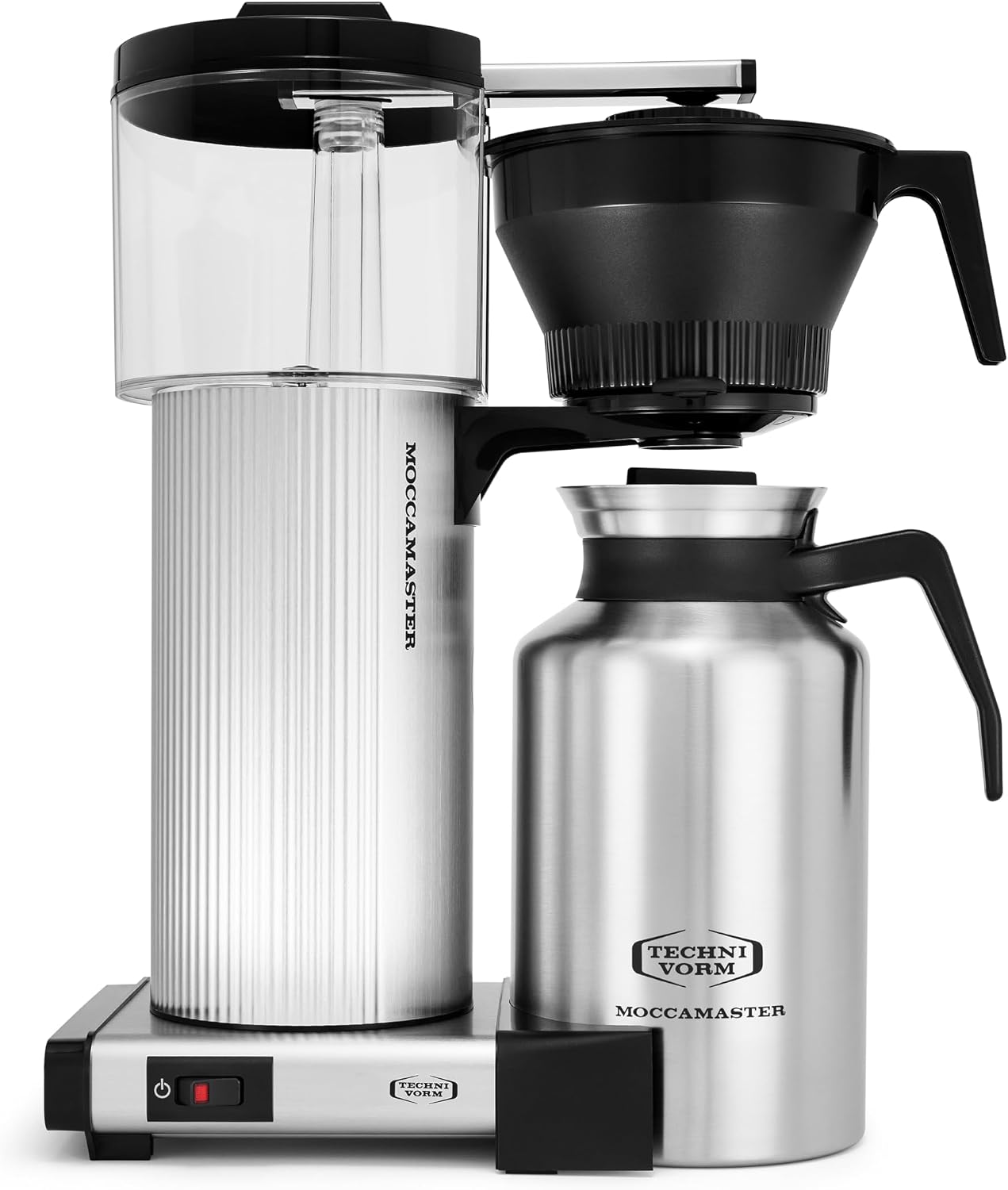
A drip coffee maker heats water in a reservoir, then channels that hot water up through a tube so gravity can filter hot water through medium-coarse ground coffee beans held in a paper or metal filter. Gravity pulls the brewed coffee through the grounds and into a glass or thermal carafe below. Drip coffee makers use gravity to brew coffee-no pump, no high pressure.
Typical brew parameters:
Water temperature: approximately 195–205°F (90–96°C)
Brew time: 4–10 minutes depending on batch size
Batch capacity: drip coffee makers typically brew 4–12 cups per cycle, with some larger models handling 14+
The coffee maker work relies on even water distribution and contact time, unlike espresso, rather than forcing hot water through a compacted puck. This produces a cleaner cup with lighter body, ideal for sipping over a longer stretch. Many modern drip machines add programmable timers, brew strength selectors, and thermal carafes, but the core brewing method stays gravity-based. Drip coffee makers primarily produce traditional brewed coffee.
How Does an Espresso Machine Work?
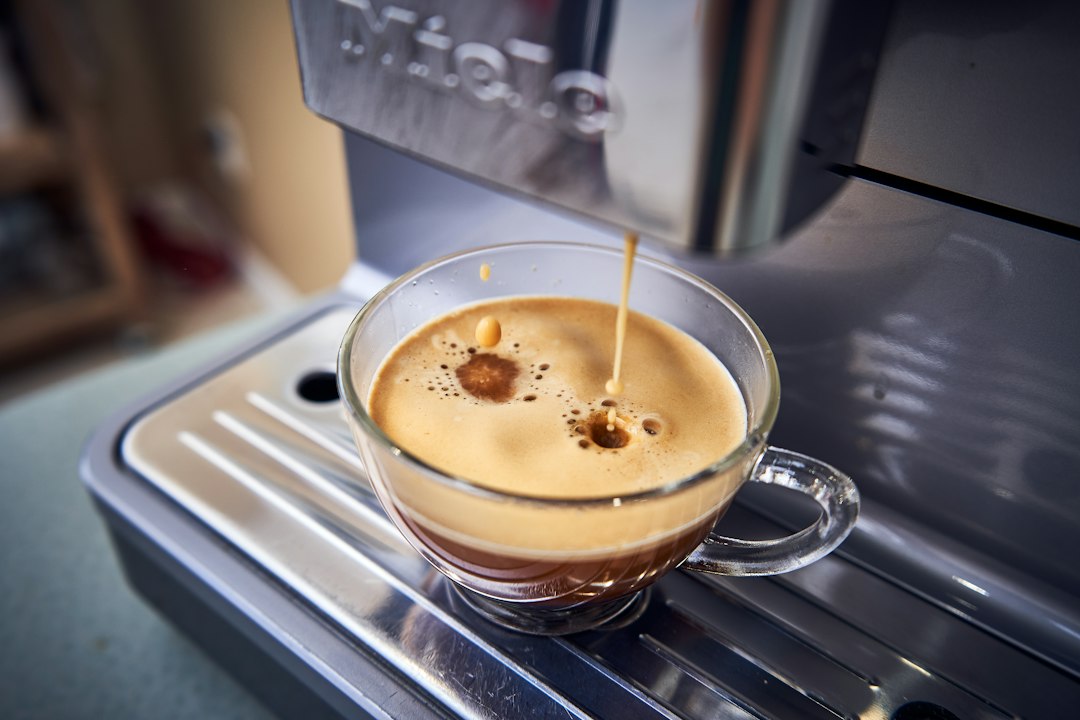
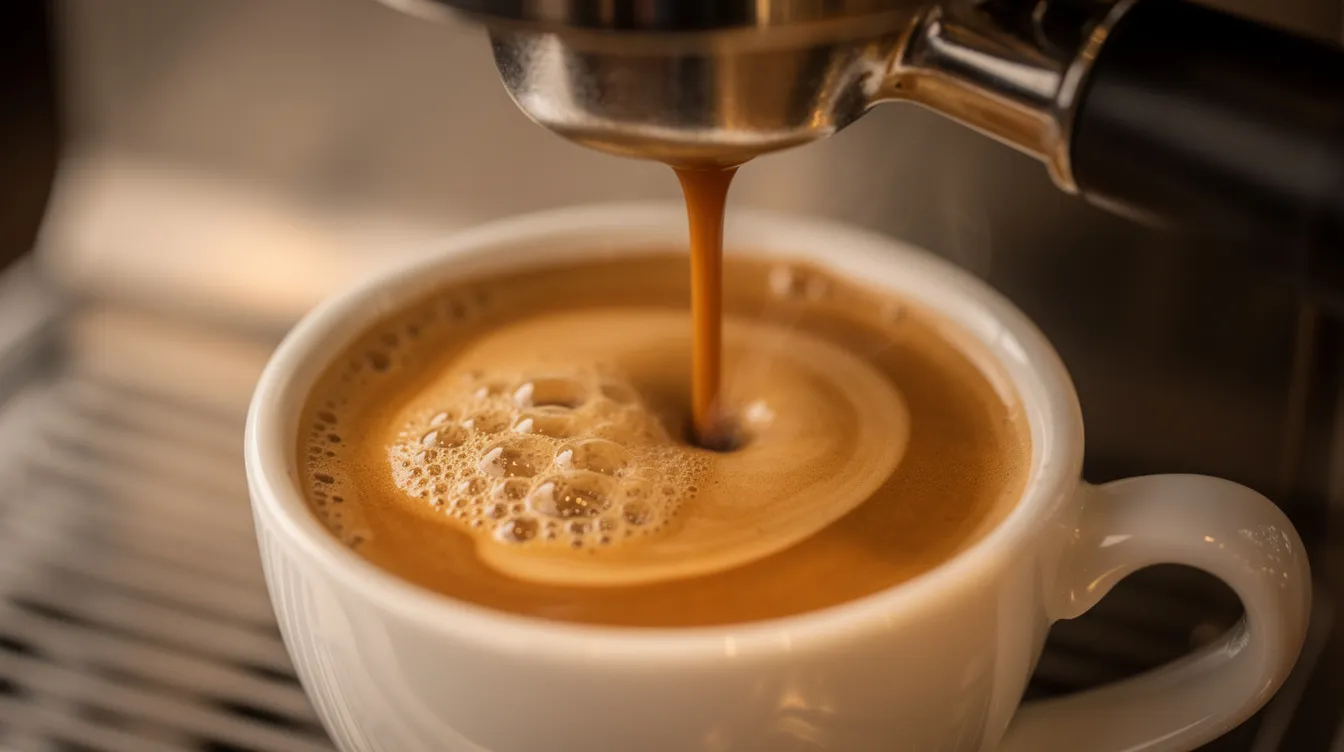
An espresso machine uses high pressure to pull hot water through a compacted puck of very finely ground coffee-a powder like grind-to rapidly extract a concentrated shot in about 20–30 seconds. The Specialty Coffee Association defines true espresso as extraction at roughly 9 bars of pressure, 7–9 g of fine grounds per single shot, water at 90–96°C, within a 25–30 second window. Espresso machines produce single or double shots of concentrated coffee.
Key components include a pump (vibratory or rotary), a boiler or thermoblock for heating, a group head, a portafilter, and often a steam wand for frothing milk. Coffee made with espresso machines has a layer of crema on top-that reddish brown foam of emulsified oils that signals proper extraction.
Temperature stability and warm-up time matter significantly. Machines with PID controllers or dual boilers hold brew temperature within ±1°C, producing more consistent espresso shots day to day. Thermoblock designs can warm up in seconds; traditional boiler systems may need 5–30 minutes. Manual machines give the user full control over every variable, semi automatic machines automate pump pressure but leave grinding and tamping to you, and automatic espresso systems handle more of the workflow internally.
Key Differences: Espresso Machine vs Coffee Maker (Comparison Table)
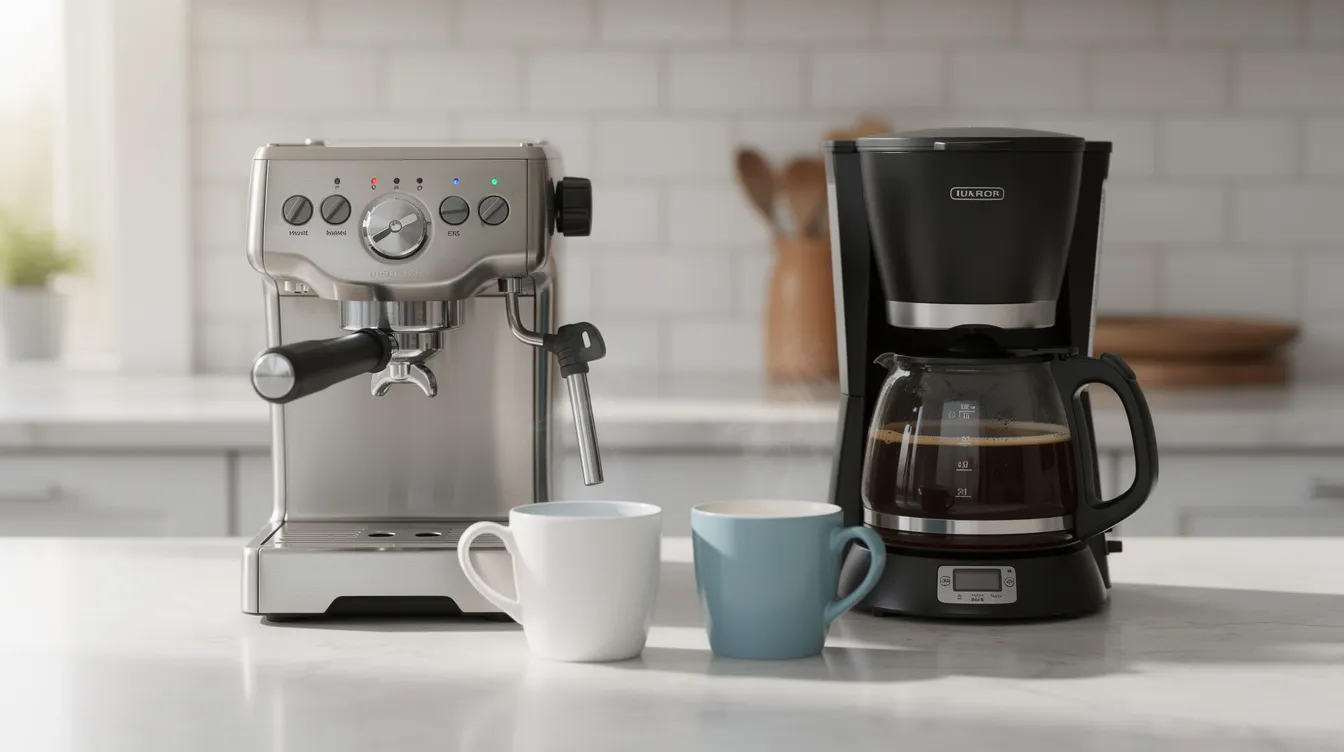
Here is a side-by-side look at the core differences in a coffee maker vs espresso machine matchup. Scan the table for quick comparisons, then read the interpretation below.
Espresso machines win on intensity, versatility, and specialty coffee drinks. Coffee makers win on simplicity, quantity, and cost. Drip coffee makers are typically quieter and easier to clean than espresso machines, which tips convenience heavily toward drip for anyone who values a fast, low-effort morning.
Disclosure: This page contains affiliate links. As an Amazon Associate I earn from qualifying purchases.
Espresso coffee machines are the choice for people who want café-style drinks at home and are willing to invest in gear, workflow, and practice. All evaluations below are based on researched editorial analysis and widely accepted benchmarks.
Espresso Performance: Pressure, Temperature, and Shot Consistency
Pump pressure at the puck-around 9 bars-combined with steady brew temperature drives extraction, crema formation, and flavor balance in a 25–30 second shot. Many machines advertise “15-bar” or “19-bar” pumps, but an over-pressure valve regulates actual extraction pressure down to ~9 bars; machines without proper regulation can produce off flavors from over-extraction or channeling. Temperature stability, especially on machines with PID controllers or dual boilers, leads to more consistent shot consistency from day to day. Higher-end machines also recover faster between back-to-back double shots, which matters if you pull multiple espresso drinks each morning.
Milk Steaming, Steam Power, and Coffee Art
Espresso machines often include steam wands for milk frothing, and steam power determines how well you can create microfoam for lattes and cappuccinos. Espresso machines create lattes, cappuccinos, and mochas-the full range of milk based espresso drinks.
Single-boiler machines must switch between brew and steam temps (~30–60 seconds transition), slowing workflow.
Heat-exchanger designs can brew and steam simultaneously but may need temperature surfing.
Dual-boiler systems offer independent control, letting you pull a shot and steam milk at the same time for genuine coffee art.
Automatic espresso machines with integrated milk systems simplify milk drinks but can be harder to deep-clean.
Workflow, Grinder Pairing, and Learning Curve
A typical semi automatic workflow: grind finely ground coffee beans, dose into the portafilter, tamp evenly, flush the group head, pull the shot, steam milk, then clean up. Espresso machines usually have a steeper learning curve compared to drip coffee makers. Dialing in grind settings and managing puck prep can be enjoyable for enthusiasts but intimidating for anyone who just wants push-button coffee.
A good burr grinder pairing is essential. Grind precision directly affects shot time and taste-spend $100–$300 on a capable burr grinder, which is sometimes as important as the espresso machine itself.
Cleaning, Maintenance, Durability, and Warranty
Espresso machines need regular cleaning of multiple components: backflushing group heads, wiping and purging steam wands, emptying drip trays, and descaling. Espresso machines often require descaling every few months to prevent scale buildup that harms pressure and temperature stability. Espresso machines require more maintenance than coffee makers, and espresso machines require fifty to one hundred dollars annually for maintenance supplies and replacement parts.
Typical warranty ranges run 1–3 years for home machines. Lifespan spans roughly 5–15 years depending on build quality and upkeep. Repairs for pumps, valves, and boilers tend to cost more than anything on a basic drip machine.
Who an Espresso Machine Is Best For
Espresso and cappuccino lovers who care about intense flavor and crema
Hobbyists who enjoy tweaking variables for the perfect cup
Households that primarily drink milk based drinks
Someone pulling 1–3 shots every morning with time to engage in a hands-on brewing method
The drip coffee maker is the workhorse household coffee machine: quieter, simpler, and far cheaper than a typical espresso setup. “Coffee maker” here primarily means automatic drip coffee makers, though pour-over and batch brewers share similar principles.
Cup Quality, Brewing Method, and Better Coffee Potential
Drip brewing uses medium or medium-coarse ground coffee, longer contact time, and gravity to produce a cleaner, lighter body cup. Brew water temperature, even saturation through showerhead design, and a proper coffee to water ratio all influence the final flavor. A quality drip machine paired with fresh coffee beans and a decent grinder can still produce better coffee than stale pre-ground supermarket drip.
A single espresso shot feels intense, but an 8–12 oz mug of regular coffee typically contains more total caffeine due to the larger serving size.
Convenience, Drink Options, and Daily Workflow
Regular coffee makers are simpler to operate than espresso machines. The workflow: add a filter, scoop ground coffee, fill the reservoir, press a button. Regular coffee makers can brew multiple cups simultaneously, making them ideal for groups. Coffee makers brew 4–12 cups per cycle with minimal attention.
Drink options from a drip machine include standard black brewed coffee, iced coffee (brewed hot over ice or cooled), and café au lait with warmed milk. Drip coffee can be the base for iced coffee and Irish coffee. However, most coffee makers cannot produce authentic espresso, crema, or café-style milk texture without extra gear like standalone milk frothers.
Cleaning, Maintenance, and Longevity
Coffee makers require less maintenance than espresso machines. Main tasks include rinsing the carafe, discarding coffee grounds and filters, wiping exterior surfaces, and periodically descaling to address mineral buildup. Fewer moving parts translates into simpler maintenance and lower repair risk. Realistic lifespan for a typical home drip machine is 5–10 years depending on build quality, frequency of use, and water hardness.
Who a Coffee Maker Is Best For
Households that drink several mugs of filter coffee each morning
People who want “set it and forget it” convenience to keep coffee hot and ready
Budget-conscious buyers who still want flavorful, traditional coffee
Offices, shared apartments, and families that prioritize quantity and ease to brew large batches
Winner by Use Case: Espresso Machine vs Coffee Maker
There is no absolute winner in the maker vs espresso machine debate. Here’s how common scenarios shake out:
Solo espresso fan who drinks one or two concentrated shots daily: espresso machine. The ritual pays off in flavor intensity and drink quality.
Big family of drip coffee drinkers filling 6–10 mugs each morning: coffee maker, hands down. Volume and convenience matter more here.
Occasional weekend latte lover who drinks regular coffee on weekdays: consider a coffee maker for daily use plus a budget-friendly manual device (like a moka pot) for weekend espresso coffee experiments.
Remote worker sipping all day: a drip machine lets you brew large batches and keep a mug going without repeated effort.
Household with mixed preferences: a super-automatic espresso machine or owning both a drip machine and a semi automatic can cover everyone’s needs. For pod-based alternatives, compare Nespresso and Keurig ecosystems for a convenience-first approach.
Cost and Value: Upfront Price, Ongoing Costs, and Longevity
Coffee makers are almost always cheaper upfront. Decent coffee makers start around twenty-five dollars, and good coffee makers can cost up to three hundred dollars for premium models with thermal carafes and precise temperature control. Entry-level espresso machines start around one hundred dollars for basic models, but quality semi-automatic espresso machines cost three to five hundred dollars, and enthusiast dual-boiler setups climb to $2,000 or more.
Long-term per-cup value favors home brewing over coffee shops either way. Drip coffee runs roughly $0.18–$0.30 per cup with fresh beans; espresso comes in around $0.30–$0.50 per shot including grinder amortization. If you regularly buy specialty coffee drinks at cafés, even a $500 espresso setup pays for itself within months. A modest drip coffee maker plus a good grinder and fresh coffee beans can still deliver a perfect cup for far less than a full espresso rig.
Which Should You Choose?
Walk through these questions:
What do you drink? If your morning cup is black filter coffee or iced coffee, a coffee maker covers you. If you crave espresso, lattes, or cappuccinos, an espresso machine is the path.
What’s your budget? Under $150 all-in points toward a drip machine and a basic burr grinder. $400+ opens up semi automatic machines with proper grinder pairing.
How much counter space do you have? A drip machine is compact; a dual-boiler espresso setup with a grinder needs real estate.
How much time do you have each morning? Drip is set-and-forget. Espresso demands 5–10 minutes of active engagement.
Do you enjoy tinkering? If dialing in brew strength and experimenting with grind excites you, espresso rewards that curiosity. If it sounds exhausting, stick with drip.
If your answers split evenly, consider starting with one machine and adding the other as your habits evolve. For readers leaning toward espresso, comparing specific models-like Breville’s Barista Express versus Barista Pro, or the Bambino versus Bambino Plus-helps narrow the decision to real-world trade-offs.
Alternatives to a Traditional Espresso Machine or Coffee Maker
Not everyone needs a full espresso machine or a standard drip machine. Some options in between:
Super automatic espresso machines: grind, dose, tamp, and brew at the press of a button, often with built-in milk systems. Fully-automatic espresso machines can brew various espresso-based drinks with minimal effort, though cleaning milk systems is more involved and cost runs higher.
Pod-based coffee machines: Nespresso and Keurig systems offer maximum convenience with fixed-dose capsules. Per-cup cost is higher, variety is limited, and the result doesn’t meet the technical definition of true espresso, but the ease of use appeals to many.
Manual alternatives: a French press delivers a full-bodied, immersion-brewed cup with no electricity. Pour-over and AeroPress land between espresso and drip in terms of flavor and body. A moka pot uses steam pressure on the stovetop to force water through finely ground coffee-not true espresso, but closer to concentrated coffee than drip.
These alternatives can still produce better coffee than many chain café drinks when paired with fresh beans and decent technique.
How to Get Better Coffee From Either Machine
Bean quality, grind, and basic technique matter more than the price tag for most home users.
Use fresh coffee beans roasted within 1–4 weeks and stored in an airtight container away from light and heat. Roast level affects flavor: lighter roasts emphasize acidity and origin character in filter coffee, while medium-dark roasts tend to shine in espresso.
Invest in a burr grinder if possible. Blade grinders produce uneven coffee grounds that lead to inconsistent extraction for both espresso and drip. A $50–$100 burr grinder transforms drip; a $150+ model is the minimum for decent espresso.
Use filtered water and descale regularly. Hard water hurts temperature stability, clogs internal components, and dulls flavor over time.
Dial in your variables: for espresso, adjust grind size and dose until your shot pulls in 25–30 seconds with balanced flavor. For drip, experiment with your coffee to water ratio and grind coarseness-moving from a generic scoop to a kitchen scale is the single biggest upgrade for a morning cup of nearly boiling water over ground coffee beans.
FAQs: Espresso Machines and Coffee Makers
These questions cover practical concerns not fully addressed in the main comparison sections.
Can a coffee maker make real espresso?
No. Standard drip coffee makers cannot produce true espresso because they lack the approximately 9 bars of pressure required to force water through finely ground coffee at the speed and concentration that defines espresso. Without that pressure, you cannot create crema or the same concentrated texture. Some machines offer an “espresso-style” or concentrated drip mode, but by specialty coffee standards, the result is strong drip-not authentic espresso. If you want genuine espresso, you need a pump-driven espresso machine.
Is espresso stronger than coffee?
Espresso is stronger in both flavor intensity and caffeine per ounce-a single 1-oz shot contains roughly 63 mg of caffeine. But a full 8-oz mug of drip coffee typically delivers about 95 mg of total caffeine because of the larger volume. Perceived “strength” is influenced by concentration, roast level, and serving size, not just the brewing method. So espresso tastes more intense, but your regular drip coffee may actually deliver more caffeine per serving.
Can an espresso machine make regular coffee?
Traditional espresso machines are not designed for drip-style coffee, but espresso shots can be diluted for an Americano drink-adding hot water to a shot to approximate the strength of regular coffee. Some automatic espresso machines include “long coffee” or “caffè lungo” settings, but the taste and texture still differ from a classic drip machine’s output. If you strongly prefer the clean, light profile of filter coffee, a separate drip coffee maker or pour-over setup will serve you better.
Do I need a separate grinder for an espresso machine or coffee maker?
A separate burr grinder is strongly recommended for either machine, especially for espresso where grind precision is crucial for shot consistency. For drip, even a modest burr grinder improves extraction noticeably over pre-ground coffee. Some super automatic espresso machines and a few drip coffee makers include built-in grinders, which adds convenience but may trade off flexibility and long-term serviceability.
What’s the easiest type of machine to keep clean?
Basic drip coffee makers are generally easiest to maintain-rinse the carafe, toss the filter, wipe down surfaces, and descale periodically. Espresso machines demand more frequent and detailed upkeep: backflushing the group head, cleaning the steam wand after each use, and replacing gaskets and baskets over time. Automatic espresso systems may include automated rinse cycles, but their internal milk lines and brew units still require regular deep cleaning.
Next Steps
Decide which machine type fits your daily routine, then dig into model-specific comparisons to find the right match for your counter and your cup. If you’re leaning toward espresso, exploring specific matchups-like the Breville Barista Express versus Barista Pro or the Bambino versus Bambino Plus-will help you understand real-world trade-offs between popular machines. The best coffee machine is the one that reliably gives you the cup you love, with a workflow you’ll actually stick to every morning.
How Capitol City Coffee Rates Coffee and Coffee Machines
Every coffee and coffee machine we recommend is scored on the same 100-point scale, so a recommendation on one page means the same thing as a recommendation on any other. Each pick is also labeled with how we reached its score.
Research-ratedScored from the roaster or manufacturer’s published specifications, independent results such as Coffee Review blind cuppings and SCA brewer certification, and patterns across verified buyer reviews. Most of our current picks are research-rated.
Hands-on testedThe Capitol City Coffee team has brewed the coffee or used the machine ourselves, following the testing steps below. We only use this label when that testing actually happened, and we show the date we tested.
Coffee beans: 100-point scale
What we score
Points
What we look at
Origin and sourcing transparency
20
Country, region, farm or cooperative, altitude, bean variety, and processing method are clearly disclosed.
Flavor evidence
25
Independent cupping scores, how closely the tasting notes match what the origin is known for, and our own cupping notes when hands-on tested.
Roast and freshness
15
Roast level stated, roast-date practices, whole-bean availability, and packaging with a one-way valve or resealable bag.
Brew versatility
15
How well the roast suits pour-over, drip, French press, cold brew, and espresso.
Value
15
Price per ounce compared with similar single-origin coffees or blends.
Buyer feedback
10
Volume and consistency of verified reviews, and recurring complaints about staleness, bitterness, or shipping.
Coffee machines and gear: 100-point scale
What we score
Points
What we look at
Brewing performance
25
Water temperature in the 195–205°F range, even extraction, and SCA certification or published test data.
Build quality and reliability
20
Materials, known failure points, and long-term owner reports.
Ease of use and cleaning
15
Setup, the daily routine, descaling, and dishwasher-safe parts.
Fit for your kitchen
10
Capacity, counter footprint, and noise.
Useful features
10
Programming, grind and temperature control, and carafe type. Features that improve the cup count more than extras that do not.
Value
10
Price compared with machines that perform similarly.
Warranty and support
10
Warranty length, parts availability, and how the brand handles repairs.
What the grades mean
Score
Grade
What it means
90–100
A
Exceptional. Our first recommendation for the feeling and setting described.
80–89
B
Strong. Excellent, with minor trade-offs we explain.
70–79
C
Good. Worth it for specific needs, with clear compromises.
Below 70
—
Not recommended. We do not feature these as picks.
How we test hands-on
When a pick carries the Hands-on tested label, this is the method behind it, and we note the date we tested.
Coffee: brewed fresh from whole beans following Specialty Coffee Association guidelines (water between 195 and 205°F, about 1 gram of coffee to every 15 to 18 grams of water) in the brew methods the roast suits best, such as pour-over, French press, or espresso. We taste it black first, then with milk if that is how most people drink it, and each taster scores it on their own before we compare notes.
Machines: used in our everyday routine rather than a single demo. We brew both full and small batches, check the brewing temperature and brew time, and run the cleaning or descaling steps the manual calls for.
How we choose the feeling and setting
We match each coffee to a mood and a moment based on its flavor profile and roast. Bright, citrusy light roasts suit energizing mornings. Chocolatey, full-bodied medium roasts suit slow or social moments. Richer roasts suit espresso and milk drinks. Each pick explains which facts led us to that match.
Our scores stay independent
Every score comes only from the criteria above. No brand can pay for a pick or a higher grade. We re-check ratings when a roast, listing, or model changes, and update or remove picks that no longer earn their grade.
Some links on this page are affiliate links. As an Amazon Associate, Capitol City Coffee earns from qualifying purchases, at no extra cost to you.
Questions about a rating? Reach the Capitol City Coffee team through our contact page.