The Fellow Ode Gen 2 is a single-purpose brew grinder that does one job and does it with remarkable precision. Based on our researched editorial analysis, it stands as one of the strongest flat burr grinder options for home filter coffee in 2024–2026, delivering standout flavor clarity for pour-over, drip, and French press. It is not an espresso grinder and makes no attempt to be one. Below, we break down performance, strengths, limitations, value, and alternatives so you can decide if it belongs on your countertop.
Top pick: Fellow Ode Gen 2
For this roundup, Fellow Ode Gen 2 is the brew grinder we recommend first—the same pick at the top of our At-a-glance cards below.
This fellow ode gen 2 review finds it to be one of the best filter grinders for home brewers who prioritize cup clarity, quiet operation, and modern design-based on researched editorial analysis of verified specs and third-party testing.
Core strengths include 64 mm stainless steel flat burrs, excellent grind consistency for filter methods, active anti static technology that virtually eliminates the mess problems that plagued the first generation Ode, and a quiet PID-controlled motor.
Key limitations: the grind range does not reach true pump-espresso fineness, the 31-step adjustment is not stepless, and the price (typically mid-$300s to ~$400) runs significantly higher than capable conical burr grinder alternatives.
The Fellow Ode Gen 2 is best suited for filter-focused home brewers in the U.S. who regularly brew single-origin, lighter roasts and want separated, high-clarity flavor notes from their brewed coffee.
Detailed performance measurements, value assessment, and direct comparisons with alternatives are covered in the sections below.
Affiliate & Editorial Disclosure
Capitol City Coffee is an independent coffee editorial and affiliate publication-we don’t sell coffee or equipment. Links in this fellow ode grinder review may earn a commission at no extra cost to you, but commissions never influence our rankings or opinions. This article is researched editorial analysis drawing on verified manufacturer specs and clearly attributed third-party expert testing, not our own in-house lab measurements.
Verdict (Quick Fellow Ode Gen 2 Review)
The Fellow Ode Gen 2 is a premium brew-only coffee grinder built around a single design philosophy: clarity and consistency rather than versatility. It uses 64 mm stainless steel flat burrs with a revised two-stage grinding geometry, offers 31 stepped grind settings spanning AeroPress and moka pot through French press and cold brew, and features a PID-controlled motor, active anti static technology, low grind retention, and an auto stop feature that shuts the motor off when the beans are gone.
Ideal if you prioritize flavor clarity, quiet grinding, and Fellow’s distinctive design language. Less ideal if you want espresso range or the lowest possible price for a new coffee grinder.
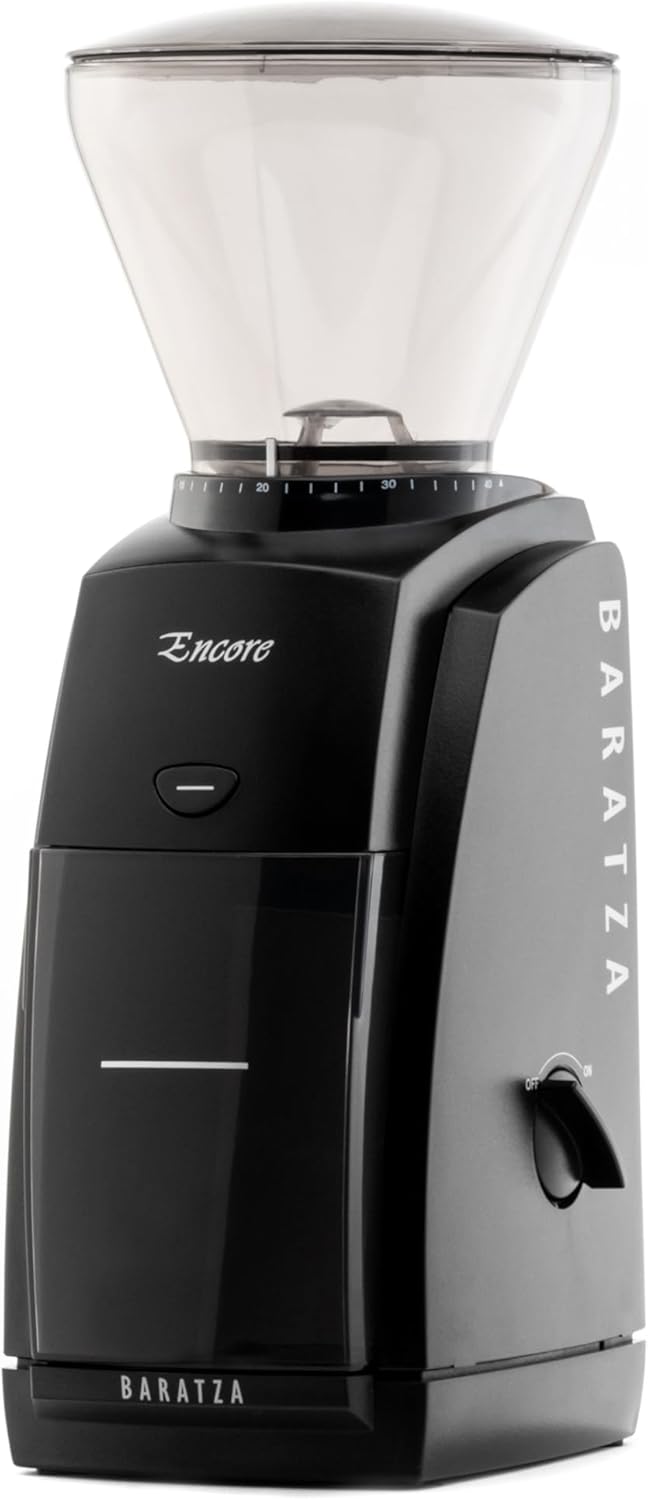
At a typical U.S. street price starting around $300 and often landing in the mid-$300s to ~$400 range depending on retailer and promotions, it sits above entry-level conical burr options like the Baratza Encore ESP but delivers measurably tighter particle distribution and cleaner cups for filter coffee.
Disclosure: This page contains affiliate links. As an Amazon Associate I earn from qualifying purchases.
This section is buyer-fit guidance for U.S. home brewers shopping for a coffee grinder in 2024–2026. Not everyone needs a grinder this specialized-or this expensive.
Filter-focused drinkers: If your daily routine revolves around V60, Chemex, Kalita Wave, batch brew, AeroPress, or French press and you care more about cup clarity than espresso shots, the Ode Gen 2 was designed specifically for you. The grinder excels for AeroPress, V60, and French press.
Light- to medium-roast fans: People who chase nuanced fruit, floral, and stone-fruit notes in single-origin coffees will notice the difference that low fines and tight particle distribution make. Lighter roasts and medium roasts benefit most from the Ode’s flat burr geometry.
Noise-sensitive households: If you grind coffee beans at 5:45 a.m. in an apartment or shared space, the Ode Gen 2 qualifies as a quiet electric grinder that won’t wake the house.
Who should skip it: Anyone who mainly drinks espresso, wants a do-everything machine, or needs the cheapest grinder that gets the job done. If espresso is your priority, a dedicated espresso grinder is the right call.
Test Setup & Method (How We Evaluated)
This is a researched editorial analysis. We did not conduct our own lab measurements. Instead, we synthesized the following to form our assessment:
Manufacturer specs from Fellow, including burr geometry, motor type, grind range, and dimensional data.
Third-party lab-style tests from reputable reviewers who measured particle distribution using sieve analysis and laser diffraction, recorded noise levels in decibels at standardized distances, and weighed retention per dose.
Broad user consensus from specialty coffee forums, verified purchaser reviews, and established coffee publications.
The brew methods informing this evaluation include pour-over brewers (Hario V60, Kalita Wave), Chemex, auto-drip machines, AeroPress, moka pot, French press, cold brew, and batch brew.
We judged the Fellow Ode brew grinder on: burr type and geometry, particle consistency and fines, grind speed, noise level, retention and static, workflow and usability, cleaning and maintenance, durability, and warranty support. Any performance numbers cited below are attributed to their external testing sources.
Design, Build, and Core Features
The Fellow Ode Gen 2 looks and feels like a piece of modern kitchen equipment while still borrowing features more commonly associated with commercial grinders. Here’s what defines its physical presence and feature set.
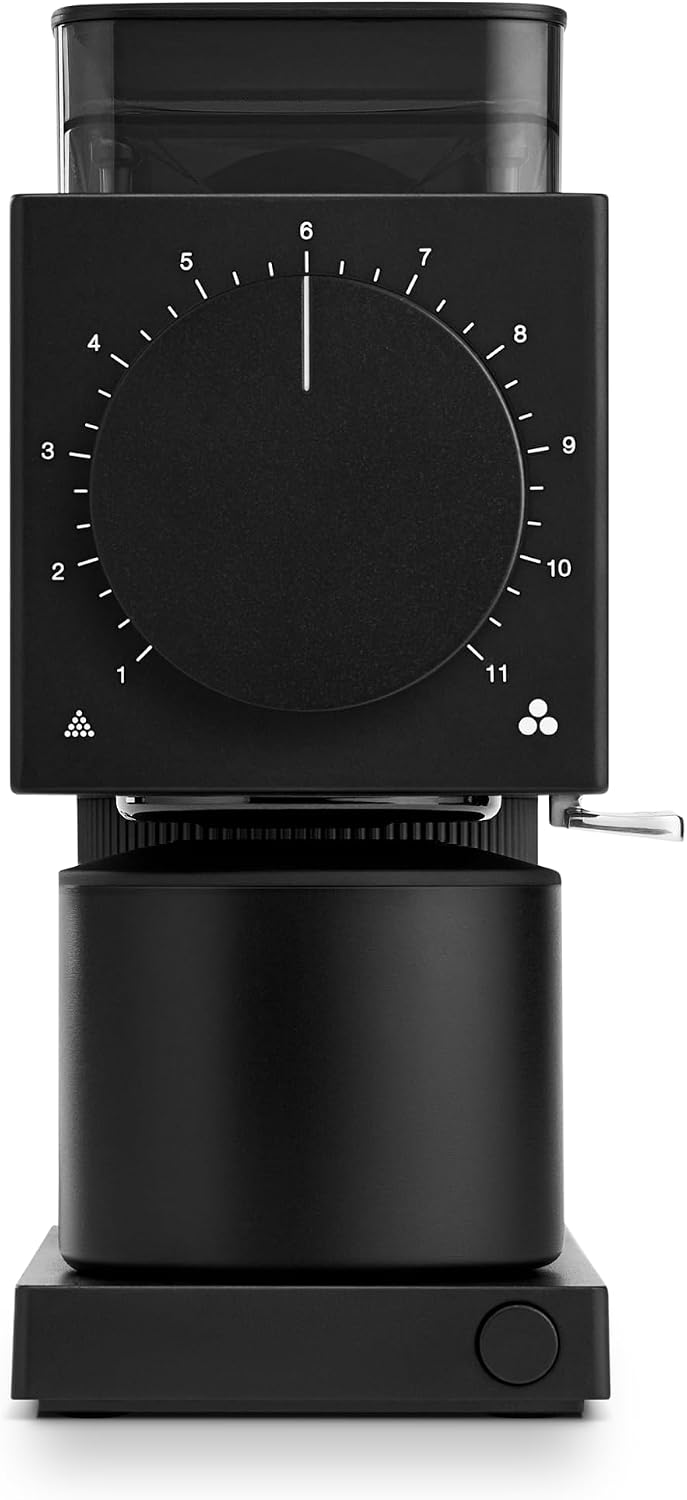
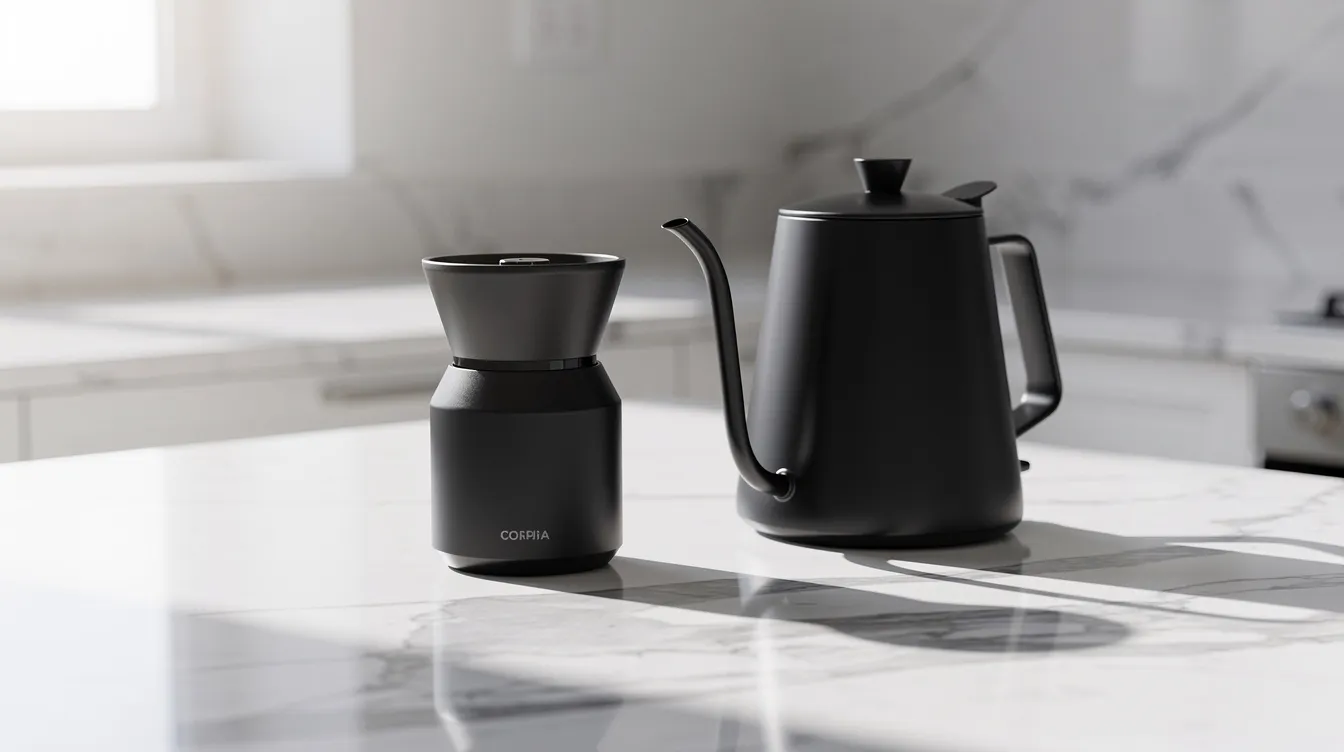
Footprint and style: The Fellow Ode measures 9.4″ x 4.1″ x 9.8″-compact enough to live permanently on most kitchen counters. It comes in a matte black or white finish with an aluminum body that visually pairs with Fellow kettles and mugs.
Bean hopper: A 100-gram single dose hopper replaces the Gen 1’s smaller 80-gram version, with a flat lid that includes a grind-size chart printed under it for quick reference across common brew methods. This isn’t a larger hopper for bulk storage-it’s designed for weighing and loading individual doses, which minimizes stale coffee retention and makes switching between coffee beans effortless.
Burrs and drive: The grinder features 64 mm stainless steel flat burrs with Fellow’s revised Gen 2 geometry. The stepped grind dial offers 31 grind settings for various brewing methods, and a feedback-controlled PID motor maintains consistent speed under load.
Catch cup: A magnetically centered metal magnetic catch cup clicks into place beneath the grind chute. The metal construction feels premium, though interior fins can trap some coffee grounds-a minor design quirk we’ll address in the limitations section.
Controls and features: A simple front dial, a single start button with auto-stop function after grinding is complete, a grinds knocker to clear residual grounds from the chute, and active anti static technology via an ionizer near the chute opening. The Gen 2 features active anti-static technology that represents a generational leap over the original.
Warranty: Fellow provides a two-year warranty on the Gen 2, up from one year on the Gen 1-a meaningful improvement that signals confidence in durability.
Performance Results and Measurements
This section synthesizes published testing from reputable reviewers. All numbers are attributed to external sources.
Grind range: The Gen 2 burrs grind as fine as 300 microns-sufficient for AeroPress, moka pot, and strong pour-over, and coarse enough for Chemex, French press, and cold brew. That said, the Ode Gen 2 is not suitable for espresso grinding and does not grind fine enough for proper pump-espresso extraction, even at its finest setting. Shots pulled on a pump espresso machine run far too fast for proper extraction. This is not espresso territory.
Particle consistency: Independent testing found that a high percentage of grounds-roughly 65–90%-fall within the target filter range (approximately 500–1,400 microns for drip and pour-over). By comparison, popular conical burr competitors like the Baratza Virtuoso+ placed around 45% in the same band. The new burrs improve grind consistency and extraction quality significantly over other grinders in this price class.
Fines and boulders: Fines production is low compared to most grinders, particularly conical burr designs. This translates directly to grind quality you can taste: less muddiness, more separated flavor notes. Some fines persist at very fine settings or with very dry beans, but the overall profile favors clarity over body.
Speed: Third-party tests measured approximately 1 gram per second at pour-over settings, meaning a typical 20–30 g dose finishes in well under 30 seconds. That’s faster than many competing flat burr grinders-the Wilfa Uniform grinder, for instance, takes nearly a minute to grind 30 grams.
Noise: The ode gen 2 registered approximately 65 dB at 12 inches during operation in one controlled test-roughly conversational volume. Most grinders in this category hit 75–85 dB. It operates quietly with a PID-controlled motor that keeps things civil at any hour.
Retention and static: The Gen 2 model has almost completely eliminated grind retention issues. Measured retention runs about 0.2–0.4 g per dose when using the knocker, compared to 1 g or more in many hopper-fed grinders. The Gen 2 uses an ionizer for anti-static measures, and the active anti-static technology significantly reduces chaff and grounds mess versus the Gen 1 model, which had major static problems during use.
These performance traits add up in the cup: cleaner brewed coffee, more distinct flavor notes (especially with lighter roasts), and reliable, repeatable brew times for pour-over and batch brew. The grinder excels at producing balanced and high-clarity grinds for manual brewing methods, and it is celebrated for its performance in pour-over and similar brewing methods.
Strengths (What the Fellow Ode Gen 2 Does Really Well)
Here’s where the Ode Gen 2 earns its reputation as a great grinder among coffee experts and home brewers alike.
Flavor clarity: The 64 mm flat burr set and narrow particle distribution produce pronounced, separated flavor notes-particularly in lighter roasts where fruit, floral, and sweetness emerge more distinctly. This flavor clarity and cup clarity advantage over conical burr designs is the single most common praise point in fellow ode review coverage.
Workflow: Quiet, quick grinding with auto-stop, the single dose hopper, magnetic catch cup, and the printed grind chart create an easy, repeatable daily routine. You weigh beans, load, press one button, and walk away. The grinder delivers excellent grind consistency for filter methods with minimal fuss.
Anti static system: The active anti static technology is a genuine generational improvement. Where the first generation Ode drew widespread complaints about grounds spraying everywhere, the Gen 2’s ionizer and revised chute geometry keep things remarkably clean.
Design and footprint: The Fellow Ode Gen 2 has a compact footprint suitable for kitchen counters. It doesn’t look or feel like a piece of commercial equipment-it looks like something designed in San Francisco for people who care about both coffee and aesthetics.
Filter focus: Being optimized for brewed coffee rather than trying to cover espresso range lets Fellow tune everything-burrs, motor speed, grind settings-specifically for drip coffee, pour-over, and immersion methods. This focus produces a unique grinder that’s better at its intended job than many do-everything alternatives.
Durability signals: Solid aluminum construction, a widely used 64 mm burr size that accommodates future burr swaps (including third-party options and SSP burrs for those who want to experiment), and the improved two-year warranty.
Limitations and Known Issues
Even in a positive fellow ode review, honesty about trade-offs matters. No one benefits from buying the wrong grinder.
Not espresso: The grind range and stepped adjustment don’t support true pump-espresso dialing. At the finest grind setting, shots on a standard espresso machine gush through far too quickly. An espresso burr set accessory exists, but reviewers report it still doesn’t reach proper pump-espresso fineness. If espresso is your thing, you need an espresso grinder, not this.
Stepped adjustment: 31 settings provide plenty of range for most filter users, but the system is not stepless. If you’re a bit picky about dialing ultra-light roasts where half-step precision between settings would help, you may find the steps slightly coarse. Some other grinders offer stepless adjustment in this price range.
Catch cup fins: Interior fins in the catch cup trap small amounts of coffee grounds, adding marginal retention and requiring tapping or brushing to fully clear. It’s a minor annoyance, but one that users consistently report.
Jam potential: If the magnetic catch cup isn’t perfectly seated, grounds can back up in the grind chute and cause a jam requiring disassembly. The magnetic alignment helps prevent this, but it does happen.
Price: The Fellow Ode Gen 2 is priced between $350 and $400 at most retailers, though the Fellow Ode Gen 2 retails for about $300 at its lowest promotional pricing. Either way, it costs significantly more than capable conical burr grinders like the Baratza Encore ESP or OXO Brew models, which may deliver “good enough” grind quality for casual drinkers. It’s not the cheapest grinder by any measure.
Extreme settings stress: Pushing extremely light, dense roasts at very fine settings can cause momentary motor stress and noise spikes. The grinder handles normal roast ranges without issue, but it wasn’t designed for continuous operation at its absolute limits.
Ease of Use, Daily Workflow, and Cleanup
A large part of the fellow grinder experience comes down to everyday usability, not just specs on paper. The grinder has been noted for its ease of use and minimal clean-up requirements.
Daily workflow: Weigh your beans, load the single dose hopper (up to 100 g capacity), set the front dial to your desired range using the grind chart under the lid as a guide, place the catch cup, press start. The auto stop feature shuts the motor off when finished grinding. Tap the grinds knocker once or twice to clear the chute, remove the catch cup, and you’re done.
Interface: The large front dial has labeled ranges for cold brew, French press, pour-over, drip, and AeroPress. One main button. Minimal controls mean minimal confusion, even for non-technical users who just want to grind coffee and get on with their morning.
Anti static and mess: The chute ionizer and revised geometry reduce chaff sticking to surfaces. After months of use, many owners report that the grinds knocker feels like a polish step rather than a critical mess-prevention measure. A major step forward from the Gen 1.
Cleaning: Wipe the exterior with a damp cloth. Wash and dry the catch cup and lid occasionally. Brush out the burrs and chute periodically with the included brush. Optional grinder cleaning tablets every few months for deep cleaning.
Burr access: Unplug the grinder, remove the hopper, unscrew the outer burr carrier, and lift out the burrs. Not tool-free, but straightforward for any home grinder owner following the manual.
Noise and routine: The quiet operation and short grind times make this ode coffee grinder genuinely easy to integrate into shared-living or early-morning routines without disturbing others.
Value and How It Compares on Price
This section frames the Fellow Ode Gen 2’s price relative to performance for U.S. desktop shoppers comparing multiple options.
Street price: Typically mid-$300s to approximately $400 at major retailers. Occasional sales, Prime Day promotions, and refurbished units sometimes drop below $300.
Grind-quality value: For filter-only use, the combination of 64 mm flat burrs, measurable flavor clarity advantages, and the anti static workflow makes this competitive with or better than many similarly priced brew grinders. You’re paying for flavor quality that you can taste in the cup.
Budget perspective: Buyers who just want a basic home grinder to grind coffee for their morning drip will find better dollar-per-feature value in cheaper conical burr options. But those buyers will likely sacrifice some flavor clarity, burr size, and build quality in the trade.
Long-term value: The robust build, widely available 64 mm burr size for potential future upgrades (including new burrs or aftermarket sets), the two-year warranty, and the reality that you likely won’t feel the urge to upgrade for filter coffee in several years all contribute to strong long-term ownership value.
Compare this against too many grinders on the market that try to do everything and excel at nothing.
Alternatives to Consider
Before committing, it’s worth comparing a few key options.
Baratza Encore ESP: A versatile conical burr grinder with espresso-capable range at a significantly lower price point. Smaller burrs and less flavor clarity for filter brewing than the Ode Gen 2, but genuine espresso capability and a proven track record. A strong pick if you need one grinder for both filter and entry-level espresso.
Other brew-focused flat burr grinders: The Baratza Vario and Wilfa Uniform compete in similar territory. The Vario offers ceramic flat burrs and stepless adjustment; the Wilfa Uniform is well-regarded in Europe but grinds slower (nearly a minute for 30 grams). The Timemore 064 is another emerging option among the best filter grinders. All worth investigating if you want flat burr performance but different feature trade-offs.
Fellow Opus: Fellow’s own more budget-friendly option uses a conical burr and covers a broader grind range including beginner espresso. Less cup clarity for filter than the Ode Gen 2, but more versatile and cheaper. A reasonable pick for mixed-method households.
Two-grinder approach: Serious espresso drinkers might pair an Ode Gen 2 for filter with a dedicated espresso grinder rather than forcing a single grinder to span the entire range. Hand grinders like the Commandante or 1Zpresso can also serve as capable travel or espresso companions alongside the Ode.
Final Recommendation
This fellow ode gen 2 review comes down to a clear conclusion: the Fellow Ode Gen 2 is a purpose-built machine that does one thing exceptionally well.
Buy it if: You’re a filter-focused brewer who cares about flavor clarity, quiet grinding, modern design, and you’re willing to pay a premium for a single-purpose ode brew grinder. The Fellow Ode Gen 2 is optimized for brewed coffee and rewards that focus with every cup.
Skip it if: You mainly drink espresso, want one grinder to cover everything, or you’re on a tight budget where top-tier particle consistency isn’t a priority. A conical burr grinder or a dedicated espresso grinder will serve you better.
How to decide: Think honestly about your primary brew method, your roast preference, your noise tolerance, and your budget. Compare the Ode Gen 2 to at least one conical burr and one other flat burr alternative before purchasing. Its single-dose design minimizes stale coffee retention and allows for easy switching between beans-but only matters if filter coffee is your main game.
If you’re still weighing options, explore grinder reviews to compare how the Ode lines up with the other grinders on your shortlist. The right grinder is the one that matches how you actually brew, not the one with the most features on the spec sheet.
FAQs
What grind setting should I start with for V60 or similar pour-over?
Start in the middle of the “pour-over” band on the Fellow Ode Gen 2 dial-typically around setting 5–7 for a 1–2 cup V60 with 15–20 g of coffee, aiming for a total brew time of 2.5–3.5 minutes. If your brew runs too fast and tastes thin or sour, move one click finer. If it drags past 4 minutes and tastes bitter or muddy, go one click coarser. Make small changes of one click at a time and keep notes for each coffee you use, since different beans and roast levels behave differently even at the same setting.
Does the Fellow Ode Gen 2 work well with dark roast coffee?
Yes, but with a caveat. Dark roasts are more brittle and tend to produce more fines than lighter roasts, so starting on the coarser end of the recommended range for your brew method is usually wise. Many users grind coffee beans one or two clicks coarser for dark roasts than they would for medium roasts to avoid over-extraction and bitterness. The Ode Gen 2’s motor and burrs handle the full normal range of roast levels without issue-just dial back the fineness and let the brew method do the rest.
How long do the burrs last, and can they be replaced or upgraded?
Stainless steel flat burrs in a home grinder used at filter settings typically last several years-often grinding thousands of pounds of coffee before showing noticeable dullness, depending on usage frequency and bean hardness. The Fellow Ode Gen 2 uses a common 64 mm flat burr size, which means replacement with OEM burrs is straightforward. Third-party options, including SSP burrs and other aftermarket burr sets, may also fit for users who want to experiment with different grind profiles. Follow Fellow’s documentation or seek professional guidance when swapping burrs to maintain performance and safety.
Will the anti static system wear out over time?
The active anti static technology relies on an ionizer near the grind chute, and like all such systems, its effectiveness can gradually diminish if the chute becomes dirty or if components age. Regular cleaning of the chute and surrounding area-as recommended by Fellow-keeps the anti static system performing well over time. Even if effectiveness changes slightly over years of use, common home tricks like a very light water mist on beans before grinding (sometimes called RDT) can supplement static control. Most users report that the system continues working effectively with basic maintenance.
Is the Fellow Ode Gen 2 a good partner to a dedicated espresso grinder?
Absolutely-and many coffee experts recommend exactly this approach. Using the Ode Gen 2 for all your filter coffee and a separate espresso grinder for shots gives you optimized performance in both ranges, rather than forcing one machine to cover everything poorly. This “two grinder” setup is common among enthusiasts who take both filter and espresso seriously. If you’re primarily a filter drinker who only occasionally pulls shots, pairing the Ode with even a capable hand grinder for espresso can be more satisfying than trying to modify the ode grinder beyond its intended design.
How Capitol City Coffee Rates Coffee and Coffee Machines
Every coffee and coffee machine we recommend is scored on the same 100-point scale, so a recommendation on one page means the same thing as a recommendation on any other. Each pick is also labeled with how we reached its score.
Research-ratedScored from the roaster or manufacturer’s published specifications, independent results such as Coffee Review blind cuppings and SCA brewer certification, and patterns across verified buyer reviews. Most of our current picks are research-rated.
Hands-on testedThe Capitol City Coffee team has brewed the coffee or used the machine ourselves, following the testing steps below. We only use this label when that testing actually happened, and we show the date we tested.
Coffee beans: 100-point scale
What we score
Points
What we look at
Origin and sourcing transparency
20
Country, region, farm or cooperative, altitude, bean variety, and processing method are clearly disclosed.
Flavor evidence
25
Independent cupping scores, how closely the tasting notes match what the origin is known for, and our own cupping notes when hands-on tested.
Roast and freshness
15
Roast level stated, roast-date practices, whole-bean availability, and packaging with a one-way valve or resealable bag.
Brew versatility
15
How well the roast suits pour-over, drip, French press, cold brew, and espresso.
Value
15
Price per ounce compared with similar single-origin coffees or blends.
Buyer feedback
10
Volume and consistency of verified reviews, and recurring complaints about staleness, bitterness, or shipping.
Coffee machines and gear: 100-point scale
What we score
Points
What we look at
Brewing performance
25
Water temperature in the 195–205°F range, even extraction, and SCA certification or published test data.
Build quality and reliability
20
Materials, known failure points, and long-term owner reports.
Ease of use and cleaning
15
Setup, the daily routine, descaling, and dishwasher-safe parts.
Fit for your kitchen
10
Capacity, counter footprint, and noise.
Useful features
10
Programming, grind and temperature control, and carafe type. Features that improve the cup count more than extras that do not.
Value
10
Price compared with machines that perform similarly.
Warranty and support
10
Warranty length, parts availability, and how the brand handles repairs.
What the grades mean
Score
Grade
What it means
90–100
A
Exceptional. Our first recommendation for the feeling and setting described.
80–89
B
Strong. Excellent, with minor trade-offs we explain.
70–79
C
Good. Worth it for specific needs, with clear compromises.
Below 70
—
Not recommended. We do not feature these as picks.
How we test hands-on
When a pick carries the Hands-on tested label, this is the method behind it, and we note the date we tested.
Coffee: brewed fresh from whole beans following Specialty Coffee Association guidelines (water between 195 and 205°F, about 1 gram of coffee to every 15 to 18 grams of water) in the brew methods the roast suits best, such as pour-over, French press, or espresso. We taste it black first, then with milk if that is how most people drink it, and each taster scores it on their own before we compare notes.
Machines: used in our everyday routine rather than a single demo. We brew both full and small batches, check the brewing temperature and brew time, and run the cleaning or descaling steps the manual calls for.
How we choose the feeling and setting
We match each coffee to a mood and a moment based on its flavor profile and roast. Bright, citrusy light roasts suit energizing mornings. Chocolatey, full-bodied medium roasts suit slow or social moments. Richer roasts suit espresso and milk drinks. Each pick explains which facts led us to that match.
Our scores stay independent
Every score comes only from the criteria above. No brand can pay for a pick or a higher grade. We re-check ratings when a roast, listing, or model changes, and update or remove picks that no longer earn their grade.
Some links on this page are affiliate links. As an Amazon Associate, Capitol City Coffee earns from qualifying purchases, at no extra cost to you.
Questions about a rating? Reach the Capitol City Coffee team through our contact page.