Best travel manual pick
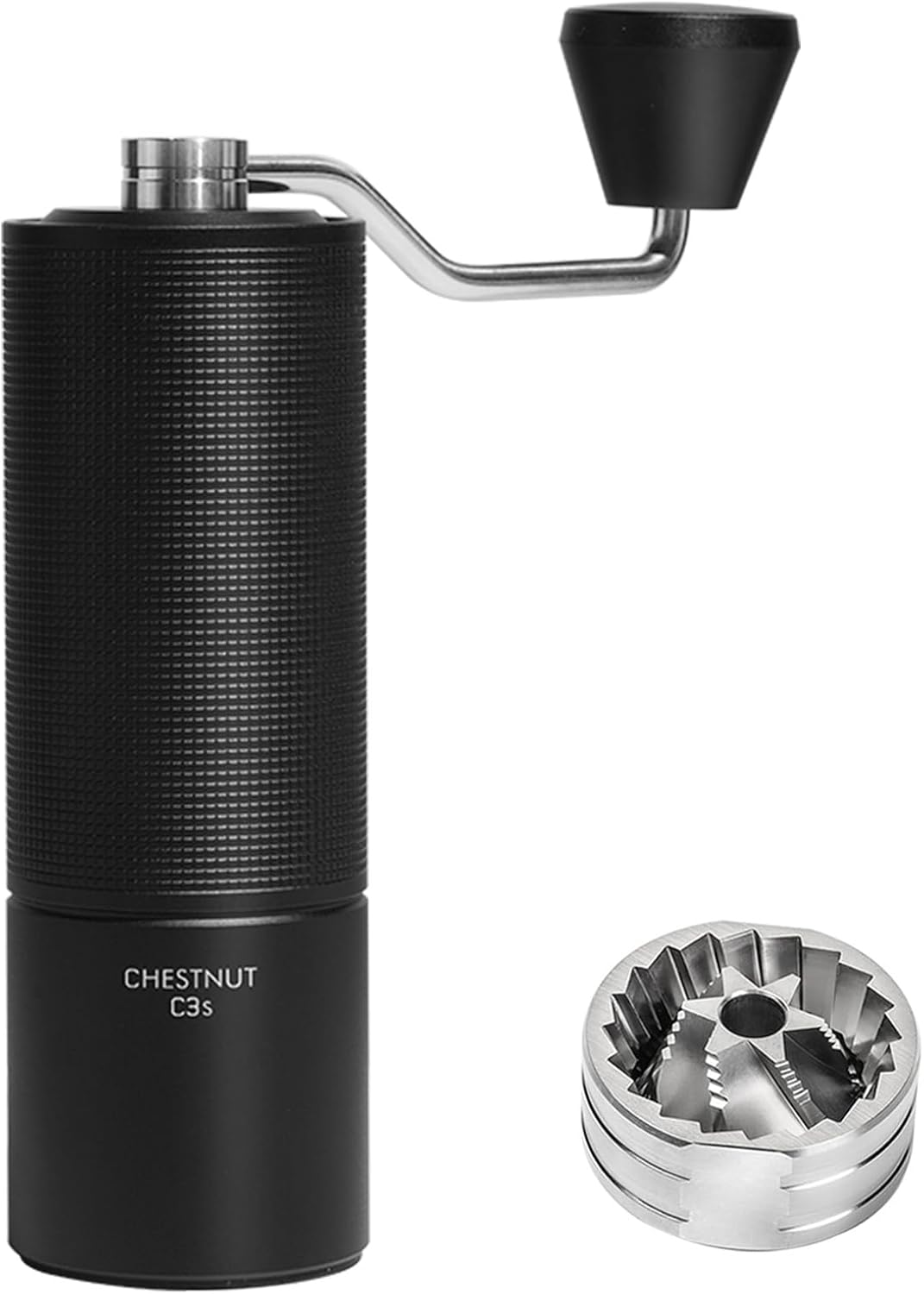
For this roundup, TIMEMORE Chestnut C3S is the travel manual we recommend first—the same pick at the top of our At-a-glance cards below.

Best travel manual pick
Start smaller: beans and storage
The machine or grinder is the expensive click. If that purchase is waiting, a $20 bag and a canister still upgrade the setup you have.
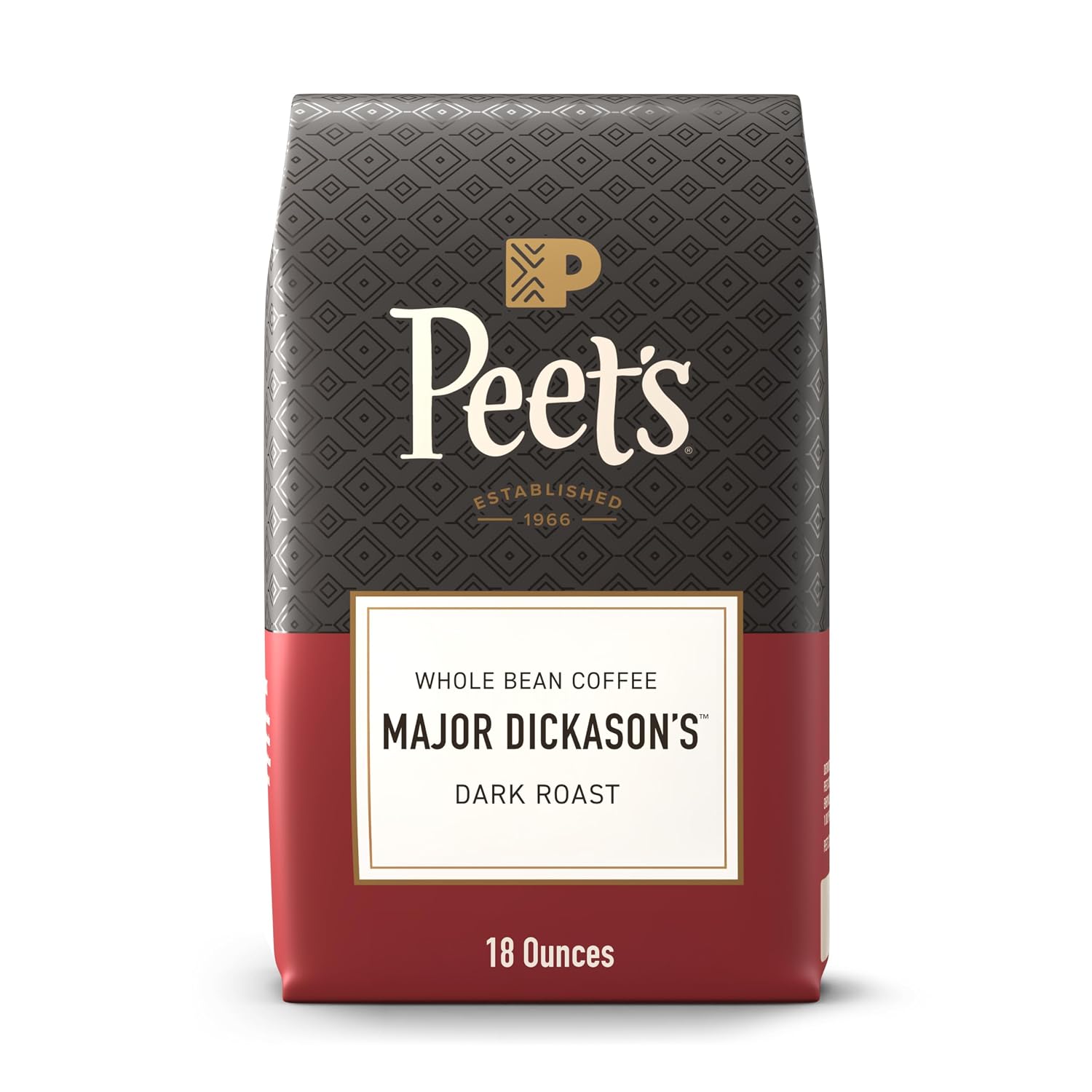
Whole bean (~$15–$25)
Peet’s Major Dickason’s
A cheaper cart than a new grinder or maker. Fresh beans are the fastest cup upgrade.
Check Peet’s on Amazon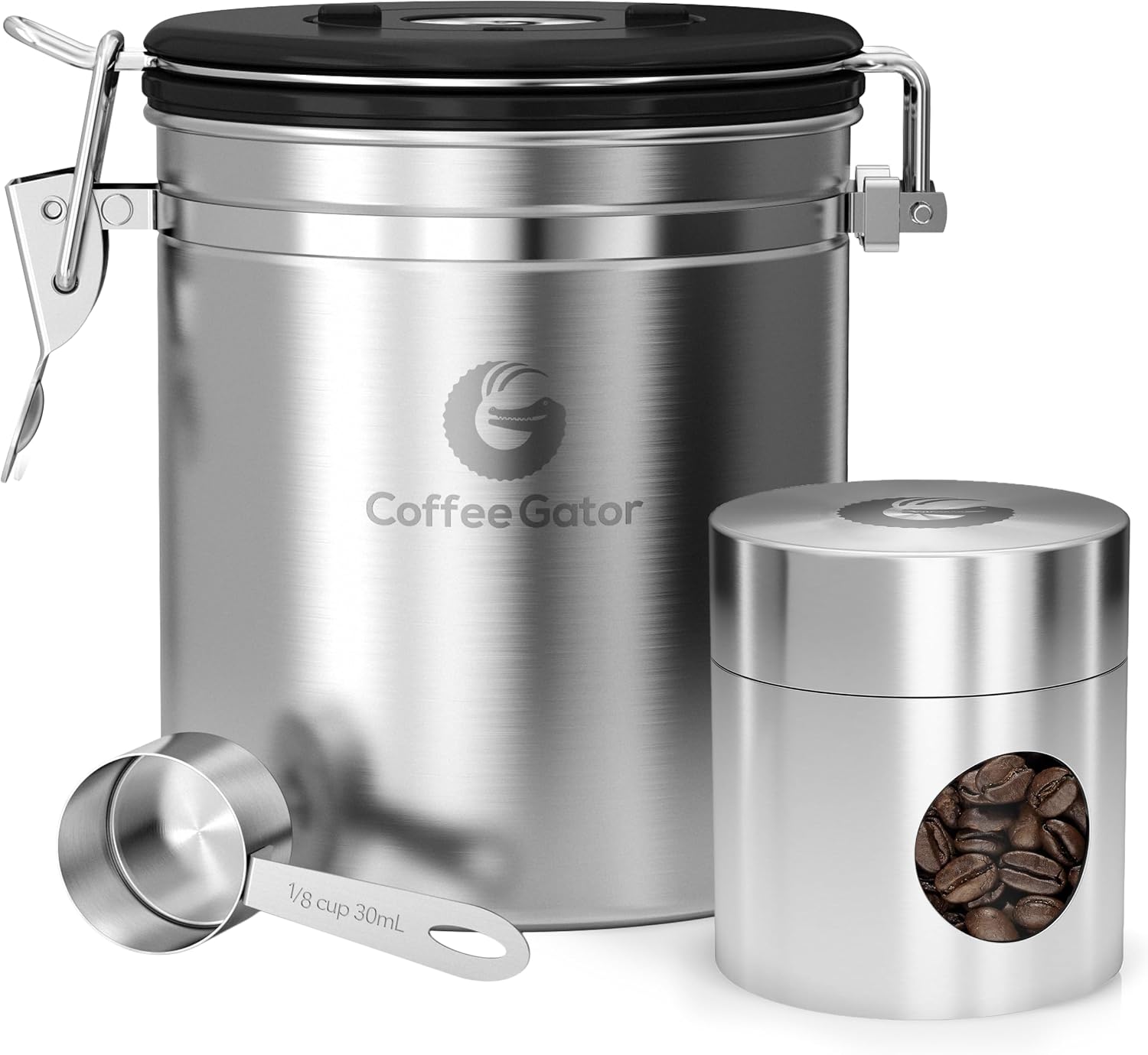
Storage (~$20–$35)
Coffee Gator canister
Keeps opened bags fresh. Cheap add-on if the hero pick did not convert.
Check Coffee Gator on Amazon
Capitol City Coffee is an independent coffee editorial and affiliate publication. We may earn a commission when you purchase through links on this page. Commissions never influence our rankings.
If you just want the fast answer, here are our favorite manual coffee grinders based on cross-referenced expert reviews, verified specs, and owner feedback:
These picks are based on researched editorial analysis. We cross-checked specialty coffee publications, barista forums, and manufacturer data rather than conducting our own lab testing.
For espresso-focused users, the J Ultra and Kinu M47 lead the pack. For filter coffee lovers, the Comandante C40 MK4 and Timemore C3 deliver excellent cup quality at different price points. The 1Zpresso K-Ultra balances both worlds with the friendliest daily workflow.
Capitol City Coffee is an independent coffee editorial and affiliate publication. We may earn a commission when readers purchase through outbound links to recommended coffee grinders. Commissions do not drive rankings-recommendations are ordered by performance, value, and verified third-party consensus.
Use this table for a quick side-by-side look at the best manual coffee grinders covered in this guide. Most home hand grinders hold 30g to 40g of coffee, though travel models hold less.
Model | Burr Type/Material | Grind Range | Adjustment | Capacity | ~Grind Time (18g med.) | Weight | U.S. Price | Best For |
|---|---|---|---|---|---|---|---|---|
48mm titanium-coated SS conical | Turkish–French press | Stepped, ~8 µm/click | ~35–40g | ~40–50s | ~24 oz | ~$200 | Overall best for espresso & filter | |
48mm heptagonal SS conical | Espresso–French press | Stepped, ~20 µm/click | ~35g | ~25–30s | ~26 oz | ~$200 | Easiest daily workflow | |
39mm Nitro Blade SS conical | Espresso–French press | Stepped, ~25–30 µm/click | ~40–45g | ~45–55s | ~22 oz | ~$300 | Premium filter coffee | |
38mm SS conical (S2C) | Espresso–French press | Stepped, ~36 settings | ~25g | ~25–30s | ~15 oz | ~$80 | Best value filter/entry | |
Ceramic conical | Medium–French press | Stepped, ~18 clicks | ~20g | ~50–70s | ~9 oz | ~$40 | Budget starter | |
Ceramic conical | Pour-over–French press | Stepped | ~20g | ~40–50s | ~4.6 oz | ~$65 | Travel & camping | |
Ceramic conical | Drip–French press | Stepped | ~100g | ~60–80s | ~16 oz | ~$50 | Large-batch filter |
This guide is researched editorial analysis, not a report on our own hands-on lab testing. We relied on manufacturer specs, independent lab tests (including sieve data from publications like Tom’s Guide), long-term owner reports, and expert reviewers from the specialty coffee community.
Our core evaluation criteria:
We cross-referenced multiple reputable sources to avoid outlier opinions and focused on grinders widely available to U.S. buyers in 2024–2026.
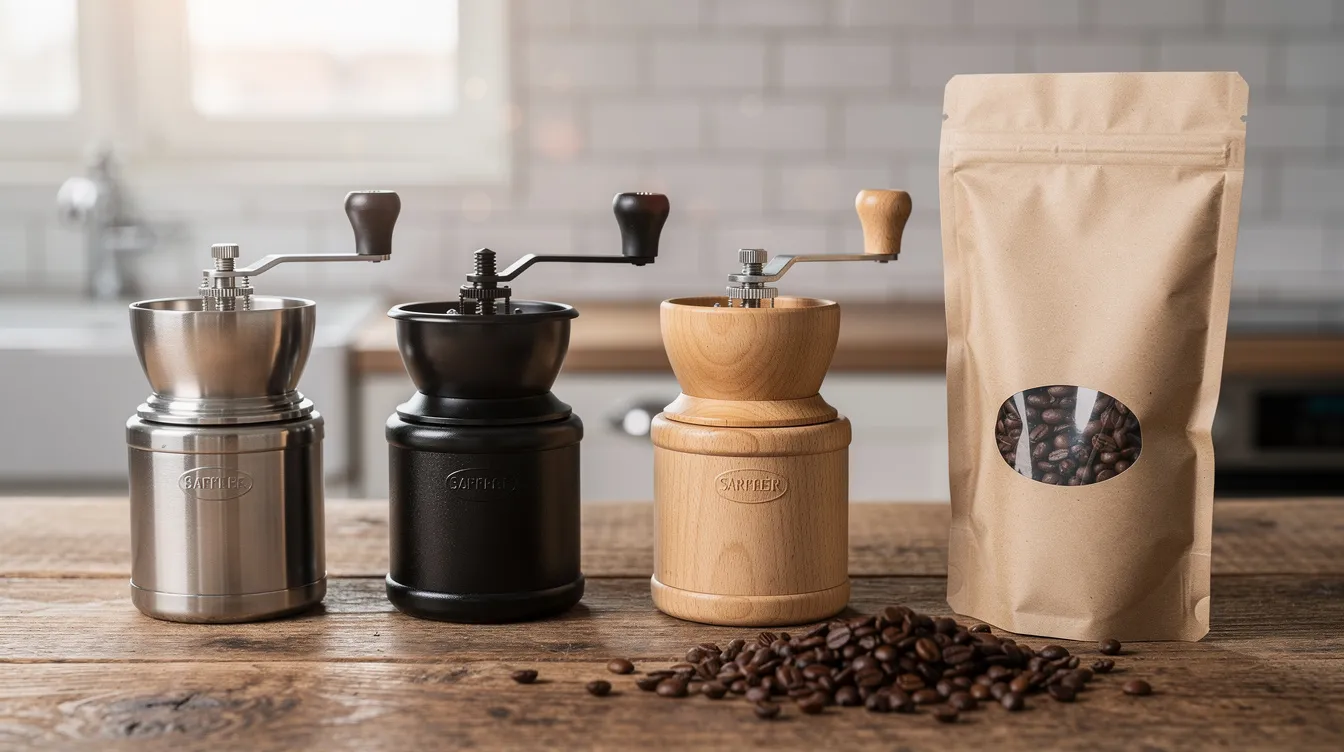
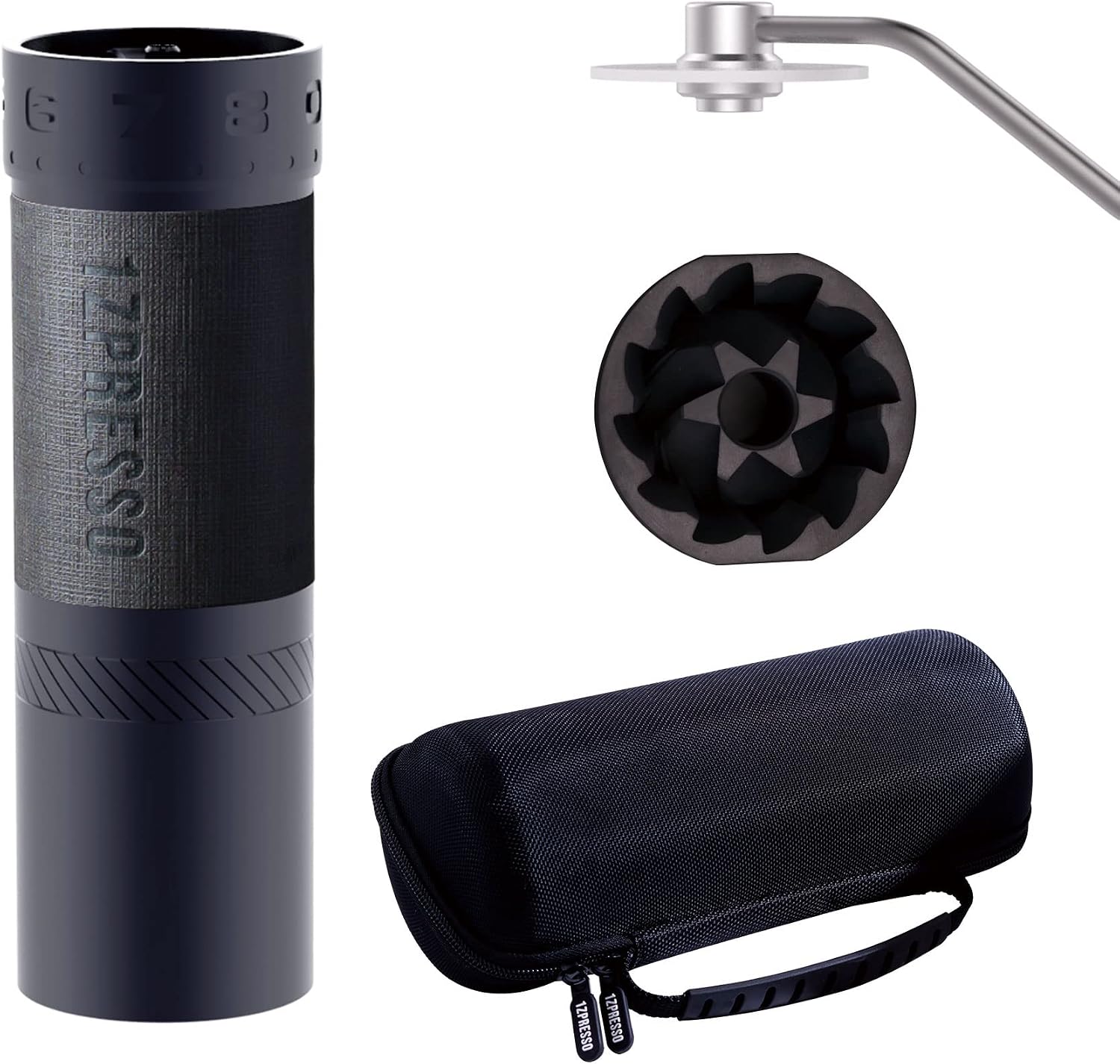
The 1Zpresso J Ultra earns its spot as the overall best manual coffee grinder for most people who want serious grind performance for both espresso and filter coffee without crossing the $300 threshold.
Key specs: The J Ultra features 48mm titanium-coated stainless steel conical burrs-the largest in 1Zpresso’s Ultra lineup. The 1Zpresso J Ultra offers 8 microns per click for adjustments, giving you roughly 365 total clicks of grind adjustment. That external adjustment system covers everything from Turkish coffee to cold brew and French press.
Grind quality: In sieve testing conducted by Tom’s Guide, the J Ultra delivered high particle consistency with low fines at filter settings and excellent clarity for pour-over. Retention averaged around 1.3% on 20g doses-among the lowest of any manual grinder tested. That low retention means less waste and minimal flavor carryover between different coffee beans.
Workflow: Expect roughly 40–50 seconds to grind 18g at medium settings. Espresso-fine grinds take longer and require more arm effort, particularly with light roast beans. The external dial makes switching between grind sizes straightforward, though the click system has a learning curve for beginners.
Ergonomics and design: The slim body (about 2.2 inches wide) fits comfortably even for smaller hands. At roughly 24–25 oz, it’s not ultralight, but a travel case is included. Burr access for cleaning is simple with a few twists.
Limitations: Hand grinding coffee at espresso fineness daily is still physically demanding compared with an electric burr grinder. The J Ultra isn’t as compact as dedicated travel mills like the Porlex Mini II. And at this grind resolution, accidentally skipping past your target setting is easy until you learn the dial.
Ideal user: Home coffee drinkers who want one grinder for both their espresso machine and filter coffee, care about grind adjustment precision, and are comfortable hand grinding coffee daily.
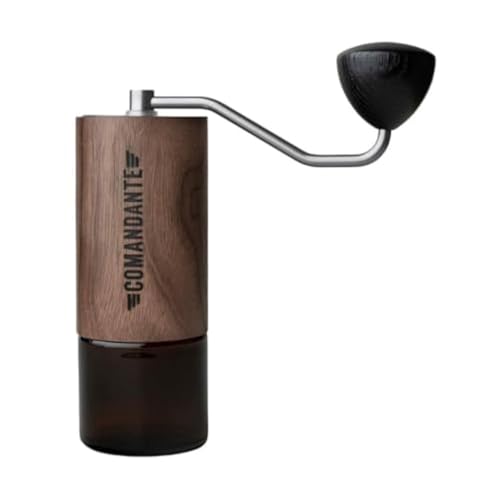
The Comandante C40 MK4 Nitro Blade is the premium manual coffee grinder that many coffee geeks consider the gold standard for filter coffee and general use.
Key specs: The Comandante C40 MK4 has 39mm Nitro Blade burrs made from high-nitrogen steel, which provides exceptional edge retention and durability. The Comandante C40 has 35 grind settings across roughly 40 clicks per rotation, with each stock click moving approximately 25–30 µm. The optional Red Clix axle halves step size to around 15 µm for tighter espresso brewing control.
Grind quality: Sifting data from Tom’s Guide shows sharp transitions in particle size bins, indicating very tight grind distribution. Retention measured at roughly 2.75% on 20g doses. For filter coffee, the C40 produces clean, sweet cups with low fines-exactly what pour-over and batch brew demand. The Comandante C40 features high nitrogen steel burrs for durability, meaning they stay sharp through years of daily use.
Espresso limitations: Stock click size can feel coarse for dialing in espresso shots; most espresso enthusiasts add the Red Clix mod (extra cost and complexity). Grinding 16–18g espresso-fine takes about a minute.
Build and durability: German engineering with robust materials, available in multiple color options. Comes with both glass and polymer catch jars. Simple disassembly for cleaning.
J Ultra vs C40: The C40 offers slightly more iconic design and arguably better filter clarity, but slower grinding speed and less precise stock espresso adjustment. The J Ultra’s 8 µm steps and larger burrs give it an edge for espresso-focused workflows. The C40 costs roughly $100 more.
Ideal user: Coffee drinkers who prioritize filter coffee and design, are willing to pay a premium, and might add the Red Clix kit if they pursue serious espresso work.
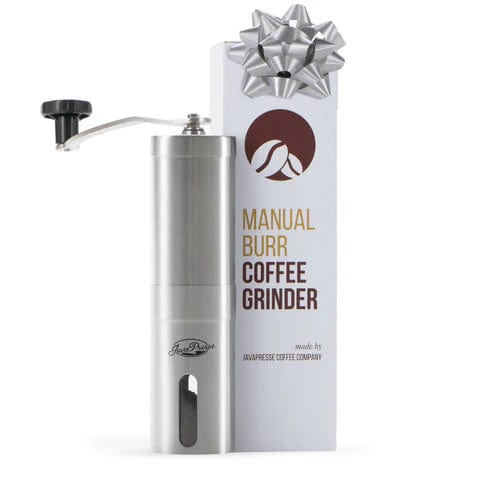
The JavaPresse Manual is one of the most popular entry-level choices for coffee lovers upgrading from pre ground coffee on a tight budget.
Specs: Stainless steel tube design with ceramic conical burrs and roughly 18 click-based grind settings. Capacity suits single cups. The typical U.S. price sits around $40, making it accessible as a budget grinder.
Grind performance: Decent for medium to coarser settings-drip coffee, French press, and cold brew all work fine. But precision drops off at finer settings. This is not a grinder for serious espresso or anyone who demands exceptional grind consistency. Budget manual grinders often feature stainless steel burrs, but the JavaPresse uses ceramic, which keeps costs low at the expense of some speed and sharpness.
Workflow and ergonomics: Lightweight and portable enough for travel or office setups where most electric grinders aren’t practical. However, the grinding process is slower at fine grinds, and the handle may loosen over time with heavy use.
Durability: Ceramic burrs resist heat but risk chipping if a stone slips through your coffee beans. Basic construction means the JavaPresse won’t last as long under daily abuse as pricier grinders. That said, budget manual grinders are generally more durable than electric ones at the same price point.
Limitations: Not recommended for espresso, heavy daily use, or users who demand very tight particle consistency. Many budget models can grind for espresso in theory, but the JavaPresse struggles with the fineness and repeatability that espresso machines require.
Ideal user: Casual home brewers, campers, and anyone who wants a starter manual grinder before committing to a pricier upgrade.
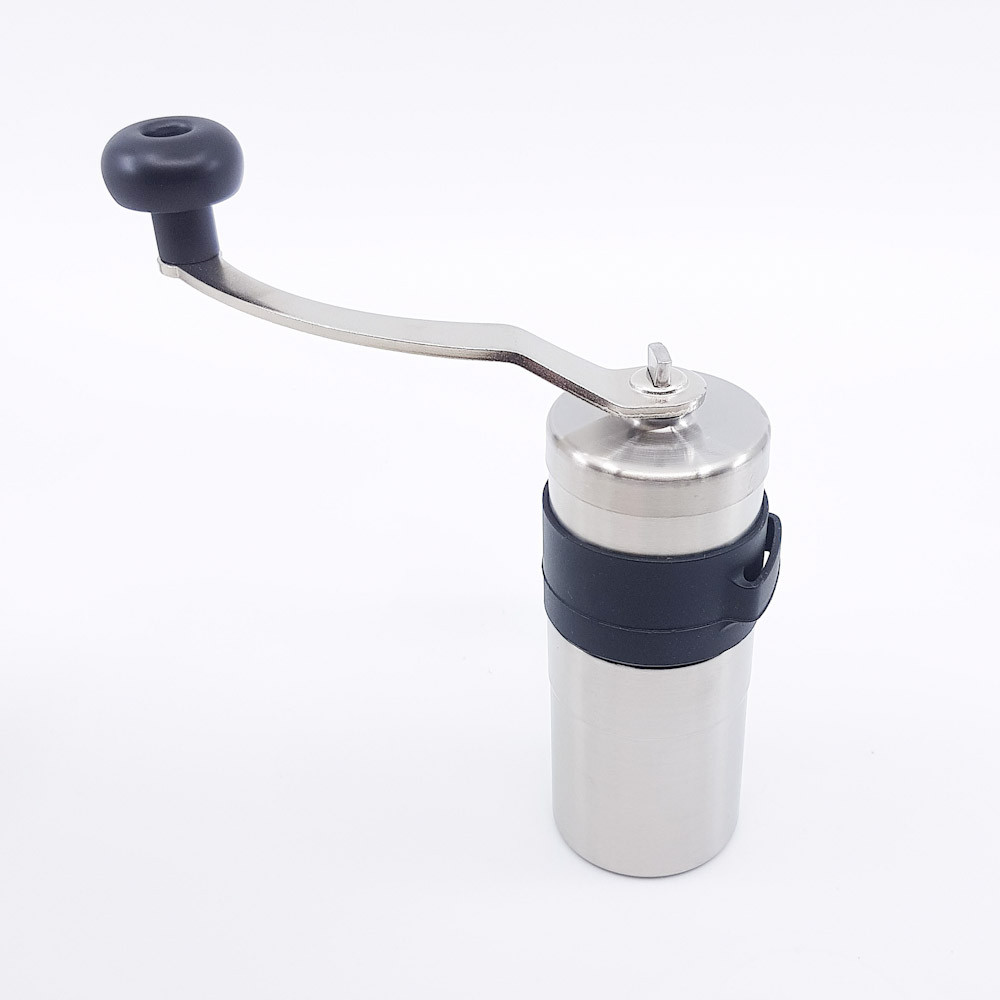
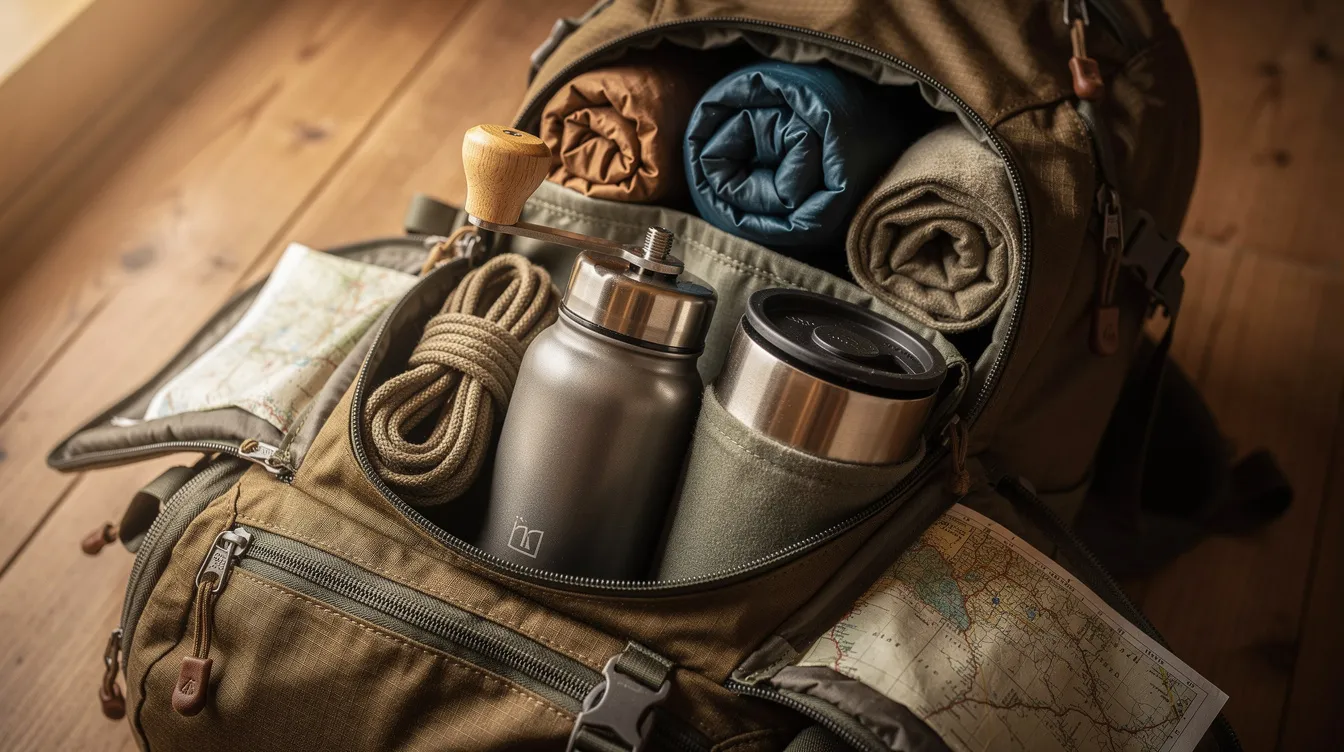
The Porlex Mini II is the compact manual coffee grinder built for backpacking, camping, and frequent travel.
Key characteristics: Stainless steel body with Japanese ceramic burrs. The Porlex Mini II has a capacity of about 20 grams of coffee-enough for one solid cup. The Porlex Mini fits inside an AeroPress for easy transport, making it a favorite among travel-focused brewers. At roughly 130g, it’s among the lightest quality hand coffee grinders available.
Grind quality: Adequate for pour-over, AeroPress, and French press. Less precise for true espresso-level fineness and repeatability, which is a trade-off of the smaller ceramic burr set. For its intended use on the road, grind quality is more than sufficient for great coffee.
Workflow: Portable grinders should prioritize weight and compact size for travel, and the Porlex Mini II delivers on both. It grinds single cups reasonably quickly and handles outdoor conditions well. Many manual grinders are designed for travel and outdoor use, but few match the Porlex’s size-to-quality ratio.
Limitations: Small capacity makes it impractical for serving multiple drinkers. Ceramic burrs plus smaller geometry make very fine grinds slower and more effortful. Manual coffee grinders have beneficial portability features across the board, but if you need speed or capacity, this isn’t the right pick.
For comparison, the 1Zpresso Q Air weighs just 360 grams and offers stainless steel burrs in a similarly compact form-worth considering if you want better grind performance on the trail but can tolerate slightly more weight. Manual grinders are generally more portable than electric grinders regardless of which model you choose.
Ideal user: Travelers, campers, and minimalists who primarily brew filter coffee or AeroPress and prioritize durability and size over ultimate grind precision.
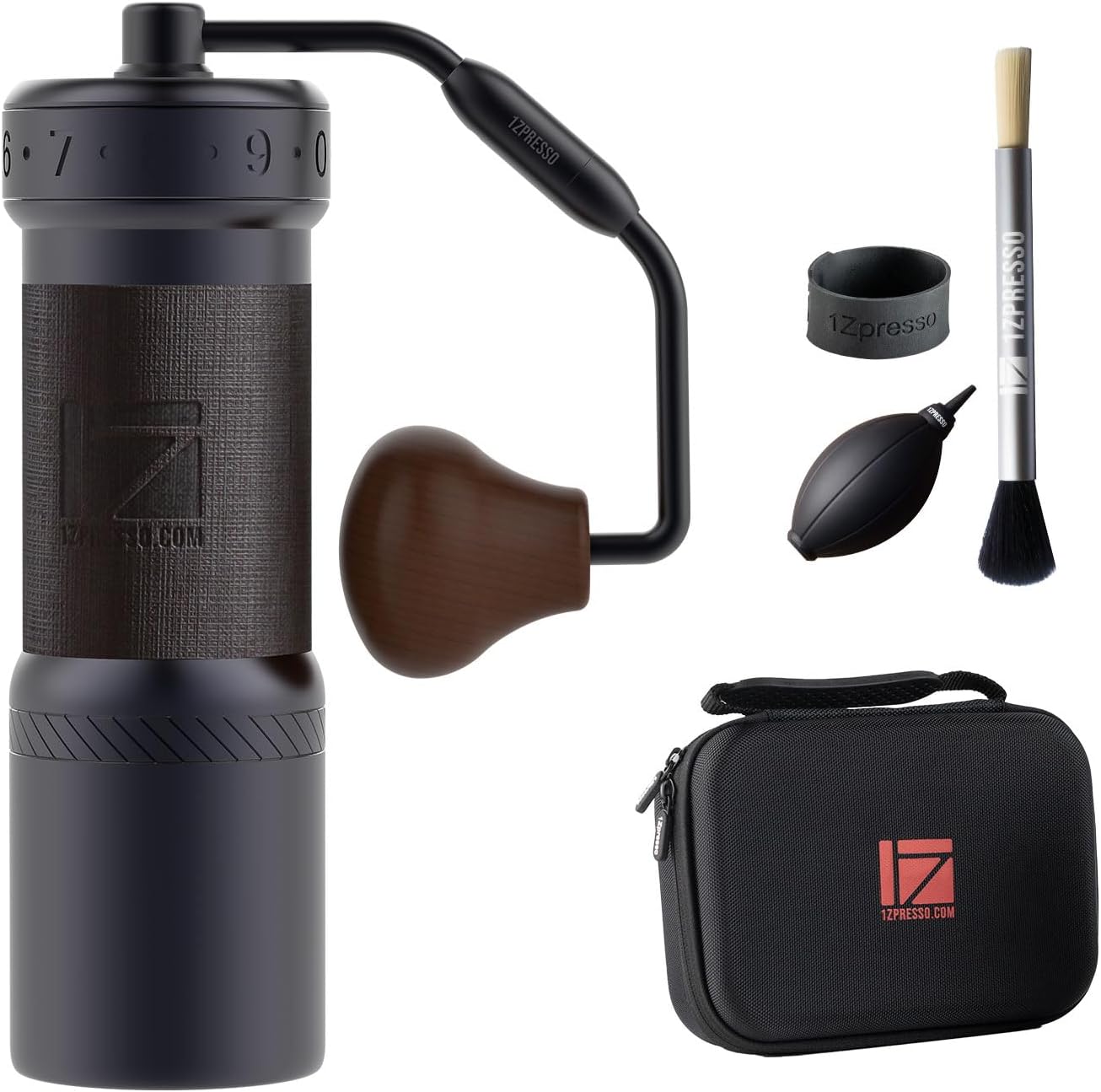
The 1Zpresso K-Ultra is the best manual coffee grinder for users who care about intuitive grind adjustment, ease of use, and versatile brewing method coverage.
Specs: The 1Zpresso K-Ultra has 48mm heptagonal stainless steel burrs, an external adjustment dial with around 20 microns per click, and roughly 100 clicks per rotation. The grind spectrum covers espresso through French press, and larger burr diameters lead to faster grinding and easier adjustment. The 1Zpresso K-Ultra grinds 15 grams in 23–28 seconds-noticeably faster than most competitors in its class.
Workflow: The numbered dial is what sets the K-Ultra apart. Unlike grinders where you’re counting clicks blindly, the K-Ultra’s external adjustment system labels settings clearly, making it dead simple to switch between a coarser grind for morning French press and a finer setting for afternoon pour-over. Smooth bearings reduce effort, and the grinding process feels efficient rather than laborious.
Grind quality vs J Ultra: The K-Ultra is slightly less micro-adjustable for espresso due to its 20 µm steps (versus the J Ultra’s 8 µm), but it’s still suitable for “weekend espresso” and excellent for filter coffee. A good adjustment mechanism enhances usability between different brewing methods, and the K-Ultra exemplifies that principle.
Build and ergonomics: Robust body with a comfortable wooden knob, magnetic catch cup (depending on version), and easy cleaning access. It’s a sturdy grinder built to handle daily use for years.
Limitations: Not as travel-friendly due to larger size and weight. Espresso enthusiasts who obsess over micro-adjustments may prefer the J Ultra’s finer steps or the Kinu M47’s stepless adjustment. Grinders for espresso require very fine adjustments for optimal extraction, and the K-Ultra’s 20 µm steps may not satisfy the most demanding users.
Ideal user: Home brewers making different brewing methods throughout the week who want a premium-feeling manual grinder that’s simple to live with day to day.
The Kinu M47 Simplicity is a heavyweight, espresso-focused manual grinder with stepless adjustment and a devoted following among espresso enthusiasts.
Key features: Large hardened steel conical burrs (approximately 47mm outer dimension), stepless grind adjustment with fine resolution for micro-tuning shots, and a heavy stainless steel-centric build that inspires confidence. Ergonomic design influences comfort and efficiency in grinding, and the M47’s robust handle and bearing system reflect that.
Grind quality for espresso: Very consistent particle size distribution in the espresso range, with controllable fines and the ability to dial in dense shots for both light and dark roasts. The stepless mechanism means infinite adjustment between extremes-no clicks, no gaps, just continuous tuning. This is critical because grinders that use stainless steel burrs outperform those with ceramic burrs in flavor clarity and grind quality, and the M47’s hardened steel burr set takes that advantage to its logical extreme.
Coarser grind limitations: Less forgiving at French press and cold brew sizes. Some users report more boulders at very coarse settings due to burr geometry. Weight and size make it awkward for travel or casual use-this is a coffee station grinder.
Workflow: More effort to crank at fine settings, particularly with light roast beans, but smooth bearings and the robust handle help. Stepless adjustment changes the user experience fundamentally: you get infinite precision but lose the convenience of clicking back to a known setting. Keeping a grind log helps.
Value and durability: Premium price, but a long-term investment with strong build quality and spare parts availability from a respected brand.
Ideal user: Espresso machine owners who want the best manual coffee experience for dialing in espresso shots and don’t mind extra weight, cost, or the learning curve of stepless adjustment.
The Timemore Chestnut C3 is a standout value grinder that delivers much of the experience of higher-end manual burr grinders at a midrange price.
Key specs: 38mm stainless steel conical burrs with S2C (“Spike-to-Cut”) geometry, a textured aluminum body, and around 36 stepped grind settings via an internal adjustment dial. Steel conical burrs produce more uniform particle sizes with fewer fines than ceramic alternatives, and the C3’s S2C profile borrows concepts from Timemore’s flagship models.
Grind quality: Solid consistency for medium and coarser filter coffee-great for AeroPress and pour-over. Adequate but not surgical for espresso grind settings. The Timemore C2s is a popular entry-level manual grinder in the same family; the Timemore C2s can grind 25 grams of coffee for two large cups and is similarly compact and easy to hold. The C3 builds on that foundation with refined burrs.
Workflow: Fairly quick grinding for single doses, comfortable crank with a ball-bearing mounted axle. The internal dial makes frequent switching between espresso and filter less convenient than grinders with external adjustment systems. The Timemore C2s has a capacity of approximately 25 grams of coffee, and the C3 offers similar capacity in a slightly refined package.
Value assessment: At around $80, the C3 competes favorably against budget hand grinders with better burr quality and body construction, while falling short of premium models like the 1Zpresso or Comandante in grind distribution and adjustment range.
Ideal user: Budget-conscious coffee enthusiasts who mainly brew filter coffee and want serious grind quality without premium pricing. A solid manual grinder for anyone starting their coffee journey.
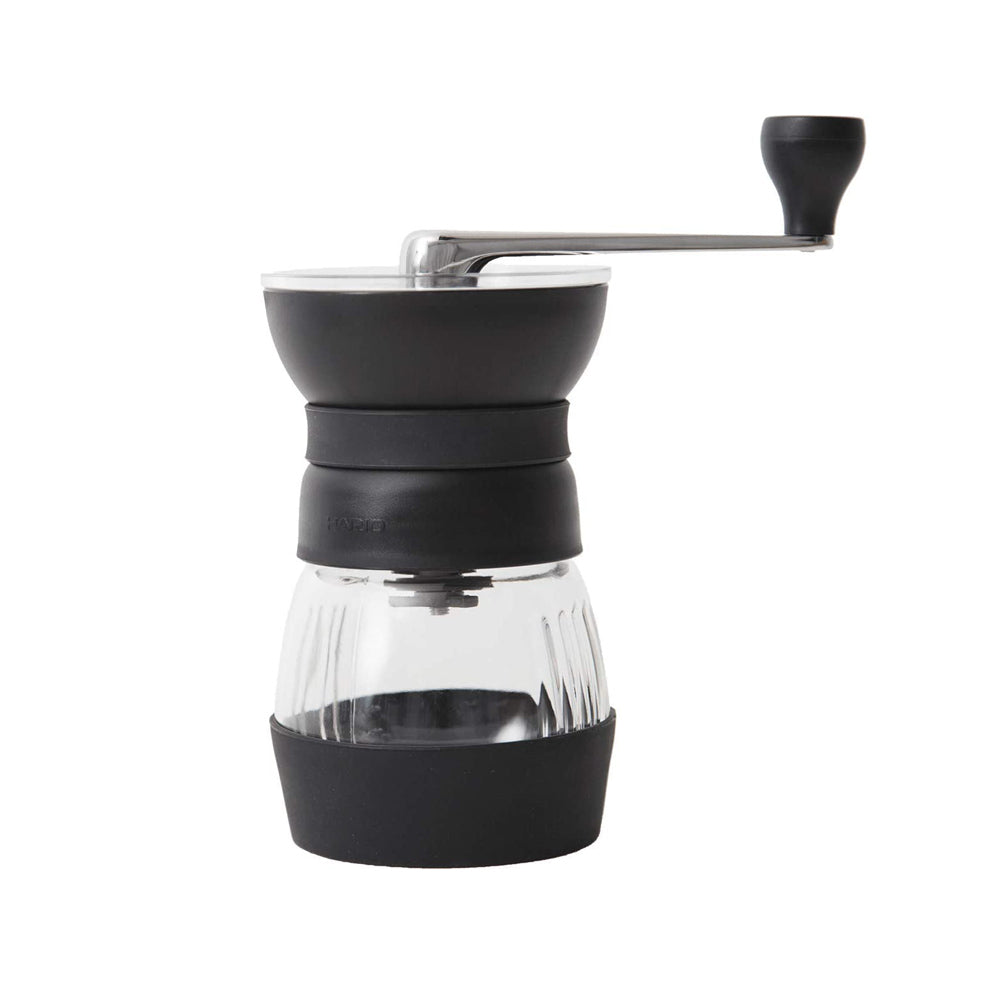
The Hario Skerton Pro is a long-standing manual coffee grinder that bridges basic and enthusiast levels, familiar to anyone who’s researched a hario ceramic coffee mill.
Specs: Ceramic conical burr set with improved stabilization over the original Skerton, glass grounds jar with rubber base, and a large capacity around 100g-far more than most hand grinders.
Grind quality: Best suited for drip coffee and filter coffee. Prone to inconsistency at very coarse settings and insufficient for demanding espresso fineness. Inconsistent grind sizes can result in uneven brewing and flavor, and the Skerton Pro’s ceramic burrs occasionally produce wider particle spread at the extremes than steel-burr alternatives.
Workflow: Relatively slow grinding due to ceramic burrs and the larger hopper, but stable on the countertop thanks to the rubber base and jar-style catch cup.
Durability concerns: Ceramic burr chip risk if foreign objects slip through your beans, and the glass jar is breakable. Replacement parts are available but the overall build targets casual use rather than heavy daily grinding.
Ideal user: Home brewers who mostly prepare drip or pour-over coffee and want a reasonably priced ceramic burr grinder that can handle larger batches.
The Orphan Espresso Lido 3 is a large, home-oriented manual grinder with substantial capacity and a long-standing reputation among coffee geeks.
Key specs: Swiss-made stainless steel conical burrs, stepless grind adjustment, and a hefty build around 2.2 lbs. The large hopper and catch cup suit multi-cup batches-helpful for manual brewing sessions serving more than one person.
Grind quality: Strong grind performance across a wide range from espresso to French press. Good particle consistency, though newer designs from 1Zpresso and Kinu may surpass it in ergonomics and adjustment ease. A grinder’s burr design significantly influences flavor character, and the Lido 3’s Swiss burrs deliver clean, well-defined cups.
Workflow: The large capacity is a genuine advantage for anyone who wants freshly ground coffee for multiple cups without reloading. But physical size and effort at fine settings make it less suitable for small hands or travel.
Ideal user: Home coffee nerds who brew several cups at once, don’t prioritize compactness, and appreciate a proven design with serviceable parts.
The Zassenhaus Brasilia is a vintage-style box grinder that emphasizes aesthetics and traditional feel over cutting-edge performance.
Specs: Wooden box design with drawer, high-grade steel burr inside, and a hand-crank on top. Capacity suits 1–2 cups per grinding cycle.
Grind performance: Adequate consistency for everyday filter coffee, but limited precision and not designed for demanding espresso workflows. The drawer collection system is less airtight than modern catch cup designs and somewhat messier.
Appeal: Strong decorative presence on a coffee station, a nostalgic manual grinding experience, and suitability for relaxed coffee routines. This is the grinder you buy when the ritual matters as much as the cup quality.
Ideal user: Coffee drinkers who value traditional looks and a leisurely ritual over cutting-edge burr geometry or speed.
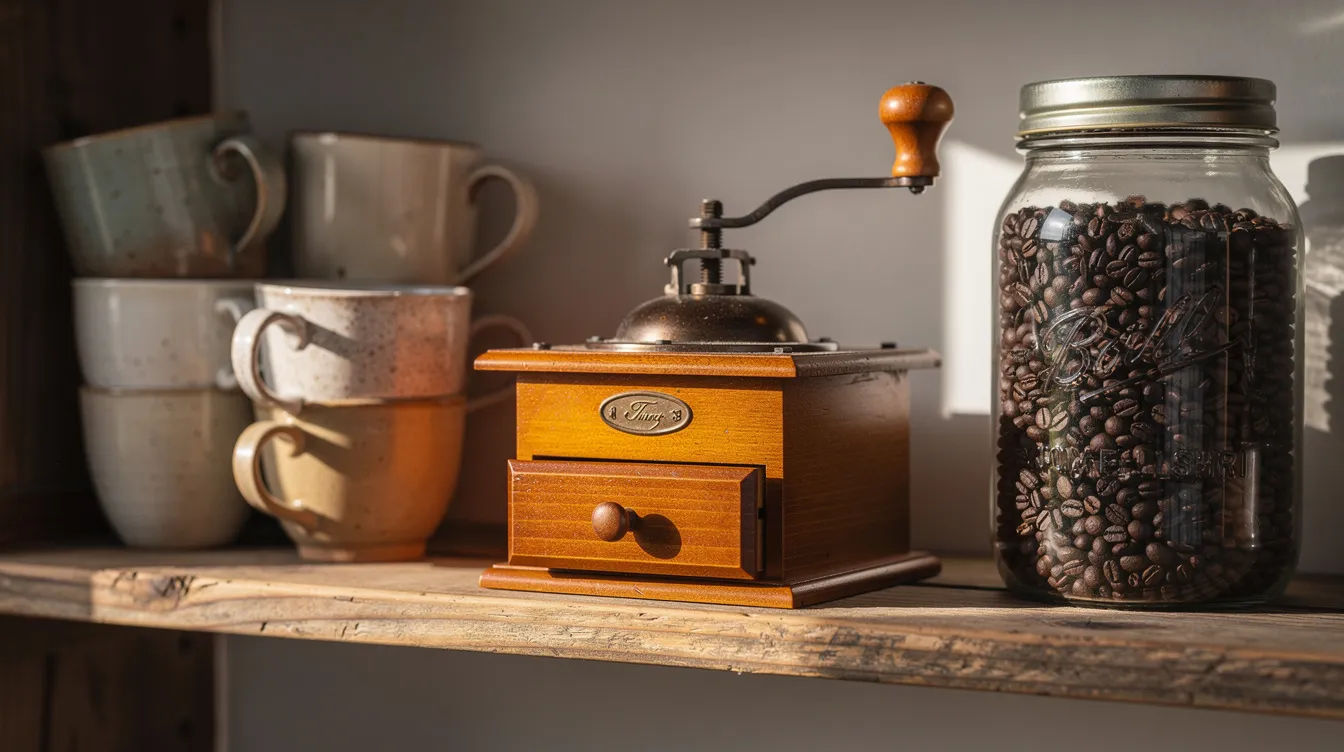
Manual and electric grinders trade convenience for cost, control, and portability. Both can deliver excellent results when chosen to match your habits.
Grind quality: Manual coffee grinders offer grind consistency rivaling electric models-often surpassing them at similar price points. A quality hand grinder under $200 can produce tighter particle distribution than a cheap electric burr grinder. Grind consistency affects extraction and flavor balance, and this is where manual grinders punch above their weight class.
Speed and effort: Electric grinders win decisively on speed and ease, especially for espresso and multiple cups. Manual grinding takes 25–60+ seconds per dose and requires physical effort. For some, that’s a meditative ritual. For others making four espresso shots every morning, it’s a chore.
Portability and noise: Manual coffee grinders are compact, travel-friendly, and nearly silent. Electric grinders require outlets and counter space. If you brew at the office or while camping, manual brewing is the practical choice.
Budget trade-offs: Under $100, a good hand grinder often outperforms a low-end electric grinder. At $200 and above, strong electric options appear. Budget manual grinders are generally more durable than electric ones at similar price points, with fewer parts to fail.
Accessibility: Users with arthritis, limited grip strength, or repetitive strain injuries may be better served by an electric grinder despite the higher cost. Grinding coffee at espresso fineness with light roast beans is physically demanding even on premium manual grinders.
Use this as a practical checklist when evaluating any manual coffee grinder.
Burr type and burr quality: Conical burrs dominate the manual grinder world. Stainless steel burrs-especially hardened or coated varieties-offer faster, cleaner cuts than ceramic burrs and are more common in newer premium quality hand grinders. Ceramic burrs resist heat and stay sharp for a long time but are brittle. The 1Zpresso J Ultra offers 8 microns per click for precise adjustments, while the Mavo Phantox Pro features 120 grind settings with 16.7-micron steps-both illustrating how much adjustment precision varies across models.
Grind range and grind adjustment: Stepped grinders use clicks; stepless grinders allow infinite positioning. For espresso, where the ideal particle window often spans only 100–200 µm, click precision below 20 µm matters significantly. Filter coffee is more forgiving. The Mavo Phantox Pro has 120 grind settings with 16.7-micron steps, showing that some grinders now offer extreme precision in stepped formats.
Particle consistency and fines: Uniform grind size enhances coffee flavor and aroma. Fines in coffee grounds can lead to over-extraction and bitterness, while boulders under-extract. Quality steel burrs with sharp geometry minimize both problems. Grind distribution is measurable through sieve testing, and it’s the single most important predictor of cup quality.
Workflow factors: Speed varies dramatically-the 1Zpresso K-Ultra grinds a dose in under 30 seconds, while a ceramic burr grinder might take over a minute for the same amount. Retention (coffee left in the burr chamber) ranges from about 1.3% on the J Ultra to 2.75% on the C40. Static clings grounds to surfaces and varies by material and technique. A good adjustment mechanism enhances usability between different brewing methods.
Build, durability, and warranty: Aluminum and steel bodies outlast plastic. Bearing-supported axles improve smoothness and lifespan. Spare parts availability extends a grinder’s useful life by years. Ergonomic design influences comfort and efficiency in grinding-an important consideration for daily users.
Capacity and size: Most home hand grinders hold 30g to 40g of coffee, enough for a generous single dose or a modest double. Travel grinders hold 20–25g. Match capacity to your typical brew size to avoid frustrating reloads.
Think of this as a decision tree based on budget, brew method, and lifestyle.
Budget tiers:
Brew methods: Espresso machine users need fine grind, tight steps, and more effort per dose. Pour-over, drip, and French press fans need medium consistency and less granular adjustment. Match the grinder’s grind range to how you actually brew.
Usage location: Home bar users can tolerate heavier, larger grinders like the Lido 3 or Kinu M47. Travel, office, or van life demands compact size and low weight-the Porlex Mini II or a lightweight model like the 1Zpresso Q Air (which weighs just 360 grams) makes more sense.
Physical comfort: Consider arm strength, joint health, and daily volume. If you brew multiple cups of espresso every morning, even the best manual grinder may cause fatigue. An electric option might serve you better.
Future-proofing: Choose a grinder that can grow with evolving taste. If you start with filter coffee but might add an espresso machine later, a grinder with fine-enough adjustment saves you from buying twice.
For most people brewing filter coffee, a manual grinder delivers exceptional cups at a lower cost than a comparable electric grinder.
Grinding at medium settings for pour-over or drip requires fewer rotations, less resistance, and more forgiving grind size tolerance than espresso. Even midrange hand grinders produce balanced grind distribution at these settings, leading to clarity and sweetness that budget electric grinders struggle to match.
Manual grinders are naturally optimized for single dosing and low retention, which suits pour-over and other filter methods perfectly. You grind exactly what you need, with minimal waste or stale carryover. Uniform grind size enhances coffee flavor and aroma, and filter brewing methods are particularly transparent to grind quality differences.
Grinders that particularly excel for filter coffee include the Comandante C40 MK4, the Timemore Chestnut C3, and the 1Zpresso K-Ultra.
Proper care keeps manual burr grinders performing well for years and protects flavor by minimizing rancid oil buildup.
Routine cleaning:
Deep cleaning:
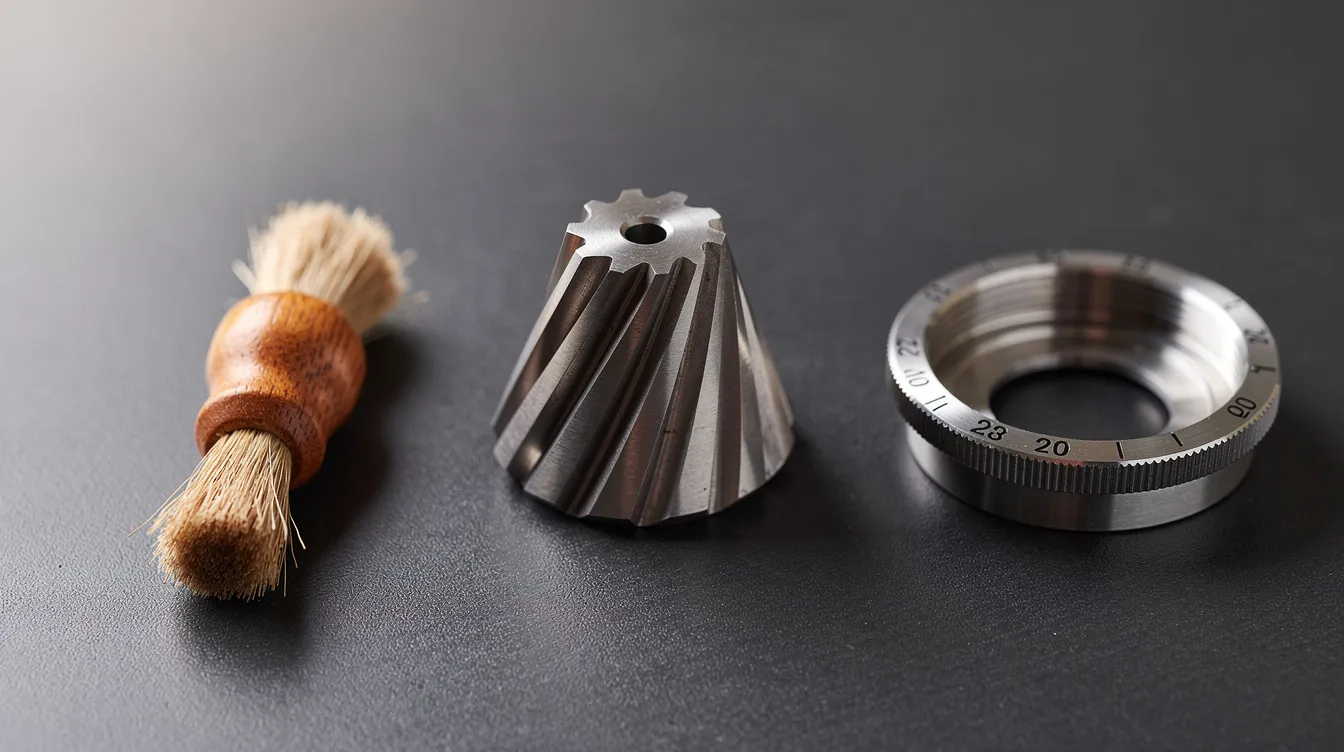
Burr lifespan and replacement: Ceramic burrs can last several years under home use but chip more easily. Steel burrs-especially high-nitrogen alloys like the Comandante’s Nitro Blade-maintain their edge longer and handle abuse better. Signs of dulling include longer grind time, more fines, and declining cup quality. Many quality hand grinders allow easy burr swaps, extending the grinder’s life significantly.
Long-term costs: Factor in replacement jars, handles, seals, and eventually burrs. A slightly more expensive but serviceable grinder often costs less over a decade than replacing cheap models every year or two. Pricier grinders tend to have better parts ecosystems.
Storage tips: Keep grinders dry, avoid leaving beans in the hopper for days (oils go rancid), and store travel grinders in cases to protect burr alignment.
Quick pitfalls to avoid for better grind quality and grinder longevity:
This manual coffee grinder guide is part of our broader grinder coverage. For readers considering alternatives:
These FAQs address common questions that weren’t fully covered in the sections above.
Yes-many modern manual burr grinders can absolutely reach espresso fineness. The 1Zpresso J Ultra, Kinu M47 Simplicity, and Comandante C40 MK4 (with Red Clix) all produce fine grinds suitable for pressurized espresso brewing. However, budget hand grinders with ceramic burrs often struggle with both the fineness and consistency that espresso demands.
The catch is effort. Grinding 18g at espresso fineness takes 40–60+ seconds of continuous cranking, and light roast beans make it harder. Frequent espresso drinkers who pull many shots daily may prefer an electric grinder for convenience, even if the manual alternative matches or exceeds it in grind quality.
Rough time ranges for 15–20g doses:
Burr sharpness, burr size, and your cranking speed all significantly affect actual grind time. Those brewing multiple large batches every morning may find manual grinding too slow-especially at finer settings for espresso.
Both have trade-offs. Ceramic burrs resist heat and can stay sharp for a long time but are more brittle-a stray stone can chip them. Steel burrs, especially hardened or coated varieties, offer faster and cleaner cuts with better flavor clarity. They’re more common in newer premium hand coffee grinders for good reason.
That said, burr geometry and alignment usually matter more for grind quality than material alone. A well-designed ceramic burr grinder can outperform a poorly machined steel one. Prioritize overall burr design and the manufacturer’s reputation over fixating on ceramic vs steel.
Try the Ross Droplet Technique: lightly mist your coffee beans with a drop or two of water before grinding. This dramatically cuts static and prevents fine grinds from clinging to surfaces. Let coffee grounds rest a few seconds before opening the catch cup, and occasionally wipe the inside with a dry cloth.
Some burr finishes and body materials generate less static than others, but technique still matters most. A magnetic catch cup can also help contain grounds during transfer.
If the body is cracked, burr alignment is badly compromised, or replacement parts cost nearly as much as a new grinder, replacement makes more sense. But before deciding, check whether the manufacturer stocks replacement burrs and parts-many quality manual grinders are designed for long-term service.
A dull but structurally sound grinder can often be revived with a fresh burr set for a fraction of the cost of a new unit. Replacement is the last resort, not the first.
Your next step is straightforward: pick the grinder that matches how you actually brew today-not how you think you might brew someday. If you’re still unsure, starting with a midrange option like the Timemore Chestnut C3 or 1Zpresso K-Ultra gives you room to grow without overspending. Freshly ground coffee from even a modest hand grinder will transform your daily cup.
Every coffee and coffee machine we recommend is scored on the same 100-point scale, so a recommendation on one page means the same thing as a recommendation on any other. Each pick is also labeled with how we reached its score.
| What we score | Points | What we look at |
|---|---|---|
| Origin and sourcing transparency | 20 | Country, region, farm or cooperative, altitude, bean variety, and processing method are clearly disclosed. |
| Flavor evidence | 25 | Independent cupping scores, how closely the tasting notes match what the origin is known for, and our own cupping notes when hands-on tested. |
| Roast and freshness | 15 | Roast level stated, roast-date practices, whole-bean availability, and packaging with a one-way valve or resealable bag. |
| Brew versatility | 15 | How well the roast suits pour-over, drip, French press, cold brew, and espresso. |
| Value | 15 | Price per ounce compared with similar single-origin coffees or blends. |
| Buyer feedback | 10 | Volume and consistency of verified reviews, and recurring complaints about staleness, bitterness, or shipping. |
| What we score | Points | What we look at |
|---|---|---|
| Brewing performance | 25 | Water temperature in the 195–205°F range, even extraction, and SCA certification or published test data. |
| Build quality and reliability | 20 | Materials, known failure points, and long-term owner reports. |
| Ease of use and cleaning | 15 | Setup, the daily routine, descaling, and dishwasher-safe parts. |
| Fit for your kitchen | 10 | Capacity, counter footprint, and noise. |
| Useful features | 10 | Programming, grind and temperature control, and carafe type. Features that improve the cup count more than extras that do not. |
| Value | 10 | Price compared with machines that perform similarly. |
| Warranty and support | 10 | Warranty length, parts availability, and how the brand handles repairs. |
| Score | Grade | What it means |
|---|---|---|
| 90–100 | A | Exceptional. Our first recommendation for the feeling and setting described. |
| 80–89 | B | Strong. Excellent, with minor trade-offs we explain. |
| 70–79 | C | Good. Worth it for specific needs, with clear compromises. |
| Below 70 | — | Not recommended. We do not feature these as picks. |
When a pick carries the Hands-on tested label, this is the method behind it, and we note the date we tested.
We match each coffee to a mood and a moment based on its flavor profile and roast. Bright, citrusy light roasts suit energizing mornings. Chocolatey, full-bodied medium roasts suit slow or social moments. Richer roasts suit espresso and milk drinks. Each pick explains which facts led us to that match.
Every score comes only from the criteria above. No brand can pay for a pick or a higher grade. We re-check ratings when a roast, listing, or model changes, and update or remove picks that no longer earn their grade.
Some links on this page are affiliate links. As an Amazon Associate, Capitol City Coffee earns from qualifying purchases, at no extra cost to you.
Questions about a rating? Reach the Capitol City Coffee team through our contact page.