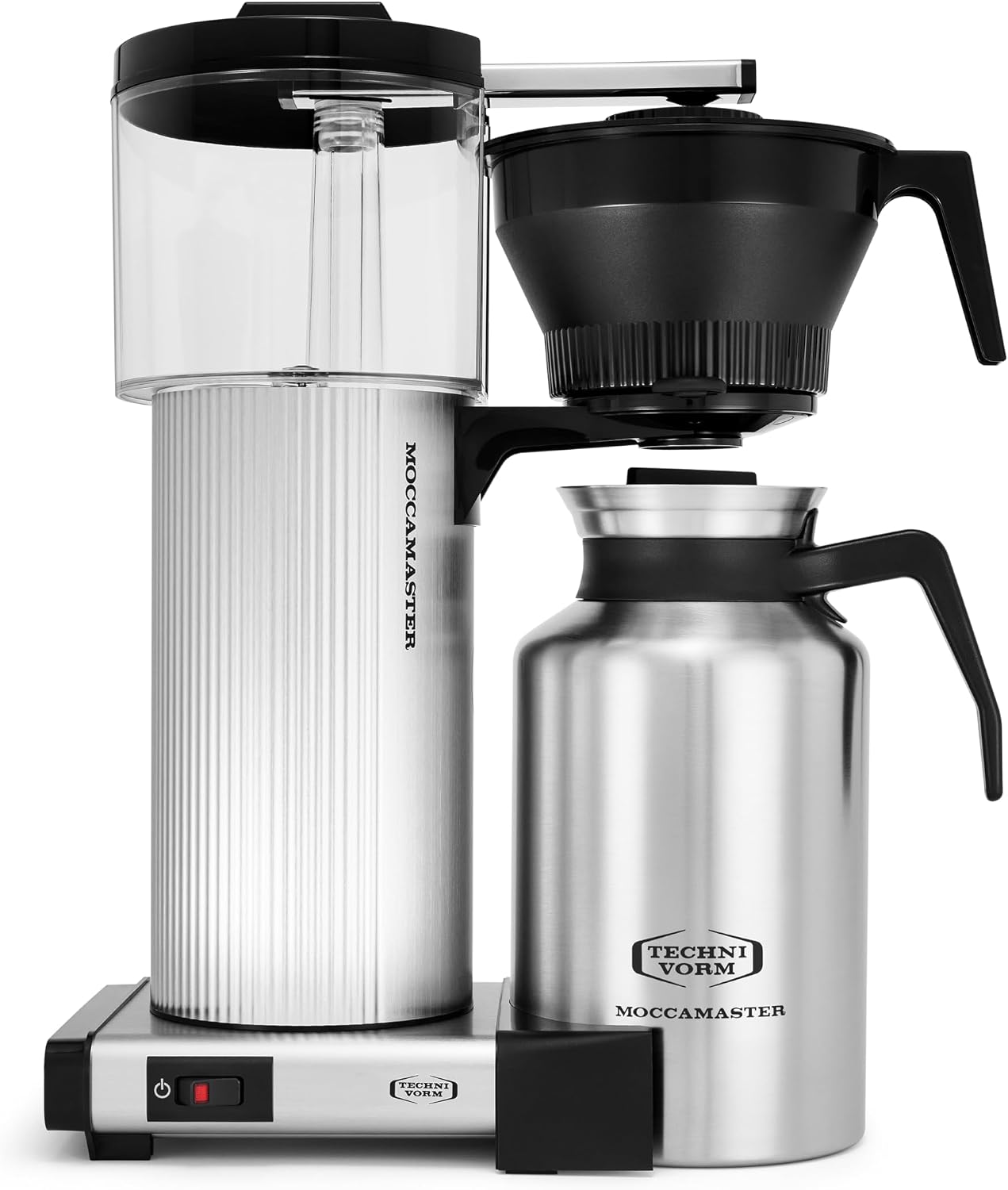
The Technivorm Moccamaster KBGV Select is one of the few home drip brewers that consistently meets the Specialty Coffee Association’s Golden Cup Standard for brew temperature and extraction, and this moccamaster review looks at whether its SCA-certified performance, durable build, and premium price make it a smart buy for home coffee drinkers who want consistently excellent filter coffee without a complicated machine. If you brew several cups a day for one to four people and care more about cup quality, longevity, and straightforward operation than extra features, this review breaks down how the Moccamaster performs in daily use, how easy it is to clean and maintain, what its long-term durability and warranty actually offer, how its price compares with competing drip machines, which alternatives are worth considering, and how to get the best results from it at home.
With more people trying to get specialty-coffee quality from a countertop brewer, the real question is whether the Moccamaster’s reliable extraction and long service life justify spending more than you would on a cheaper, less consistent coffee maker.
Top pick: Moccamaster KBGV
For this roundup, Moccamaster KBGV is the premium drip we recommend first—the same pick at the top of our At-a-glance cards below.
The Moccamaster KBGV Select brews 10 cups in about 4 to 6 minutes at a stable 196 to 205°F, meeting SCA certification standards for drip coffee extraction.
This is a researched editorial review based on verified specs, SCA certification data, third-party testing, and aggregated owner feedback, not on our own hands-on measurements.
Build quality is a genuine standout: handmade and inspected in the Netherlands, copper boiling element, metal housing, and a five year warranty. Many owners report daily use spanning 10 or more years.
The KBGV Select’s 1.25 L glass carafe, half/full pot selector, and automatic hot plate suit daily batch brewing for one to four people.
The machine often retails between $340 and $390, lacks programmability, and has no built-in grinder or timer. Later sections cover performance details, cleaning, alternatives (Breville Precision Brewer, OXO 9-Cup), and FAQs.
Affiliate & Editorial Disclosure
Capitol City Coffee is an independent coffee editorial and affiliate publication. We may earn a commission if you buy through outgoing links, at no extra cost to you; affiliate fees do not influence our rankings or conclusions. This Technivorm Moccamaster review is based on researched editorial analysis using manufacturer data, expert testing from reputable publications, and widely reported owner feedback, not on our own lab measurements.
Verdict: Is the Technivorm Moccamaster Worth It?
For U.S. home brewers who prioritize cup quality, durability, and simple operation over price or smart features, the Moccamaster is worth it. The “yes” comes with a clear caveat: this is a single-purpose coffee machine that does one thing well and skips everything else.
The KBGV Select is SCA-certified to brew at 196 to 205°F, finishing a full 1.25 L pot in roughly 4 to 6 minutes. Brewed coffee from this machine tends toward a clean and bright flavor profile with medium roasts, and extraction consistency holds up well when grind size and dose are dialed in. These are not marketing claims; they track with SCA testing protocols and independent measurements.
The tradeoffs are real. Typical U.S. street pricing sits around $330 to $380 for the KBGV Select and related Technivorm Moccamaster coffee makers. There is no programmable timer, no app, and no way to schedule a morning brew. The footprint is tall, and the workflow is manual.
Over 5 to 10 years of daily use, though, the cost per pot drops to pennies, and cheaper coffee makers that fail in 2 to 3 years often brew below the temperature spec needed for proper extraction. If you want the Moccamaster worth equation to work in your favor, plan to keep it for a long time. The KBGV Select is the default pick for most home users; thermal carafe models like the KBT or CDT suit those who dislike hot plates.
Disclosure: This page contains affiliate links. As an Amazon Associate I earn from qualifying purchases.
The Moccamaster fits a specific buyer profile: households with one to four coffee drinkers brewing 4 to 8 cups each morning, who care about taste and are willing to pay a premium for gear that lasts.
Quality-first drinkers. People who grind fresh with a separate burr coffee grinder, buy good coffee beans from local roasters, and want reliable SCA-standard brewing without fiddling with a pour-over every morning.
Busy morning brewers. Professionals or parents who need a full pot before heading out and don’t mind flipping a switch rather than scheduling via app. The Moccamaster provides a straightforward operation with minimal complexity.
Durability and design fans. Buyers who appreciate hand-assembled gear, metal housings, and a five year warranty, and prefer to repair rather than replace. The Moccamaster KBG 741 is considered old-fashioned by some, but many see that retro-industrial style as a feature.
Medium-roast drip drinkers. Those who want a clean filter-coffee profile with origin clarity, not espresso intensity or flavored pods.
Not ideal for: single-cup drinkers, anyone needing programmable start times or a built-in coffee grinder, and kitchens with very low overhead cabinets that cannot accommodate the tall water tank.
Test Setup & Method (Research Basis)
This review is based on researched editorial analysis, not Capitol City Coffee lab tests. That shapes the language throughout: where we reference temperature or extraction, we cite independent testers and SCA certification data rather than claiming our own measurements.
Sources include SCA certification records, manufacturer specifications from Technivorm’s official documentation, in-depth third-party testing from coffee publications like Serious Eats and others, and aggregated owner feedback from major U.S. retailers.
The primary focus is the Moccamaster KBGV Select as the flagship home glass carafe model, with references to the KB, KBT thermal carafe, and KBG 741 where relevant. We evaluated brew temperature range, brewing time curves, extraction consistency, capacity, carafe heat retention, usability, and cleaning requirements from these sources. Pricing and availability reflect U.S. desktop research as of 2026; confirm current prices before purchase.
Performance: Brew Temperature, Time & Extraction
Good coffee from an automatic brewer comes down to three variables: getting water hot enough, keeping contact time in range, and distributing water evenly across the bed of ground coffee. The Moccamaster handles all three within SCA parameters.
The machine uses a copper heating element to bring water to its optimal brewing temperature range of 196°F to 205°F (some sources cite 197°F to 205°F depending on measurement point). That copper boiling element heats water directly in the boiler tube rather than passing it through a tank, which is why Technivorm Moccamaster models are considered superior in temperature stability compared to standard drip machines that cycle water through exposed reservoirs.
Brewing time for a full 1.25 L pot runs about 4 to 6 minutes. With an ideal grind size, some testers have recorded brew completion in roughly 2 minutes and 30 seconds for smaller batches. The Moccamaster is SCAA-certified for optimal brewing temperature, and that certification covers both half and full batches on the KBGV Select thanks to its second switch for batch-size selection.
The 9-hole outlet spray arm distributes water across the coffee grounds in the filter basket. This design aims for even saturation, though some reviewers have noted that water dispersion can be uneven due to the fixed spray pattern, particularly at the edges of the basket. The Moccamaster uses paper filters, which remove coffee oils and sediment, producing the clean and bright flavor profile the brand is known for.
With medium and light-medium roasts, properly dialed cups show clear origin notes, moderate body, and low bitterness. Dark roasts taste smoother than in cheaper brewers, though the difference is less dramatic. When grind or dose is off, the brewing process can be too fast for optimal extraction, resulting in sour, underdeveloped cups.
Capacity, Carafe & Hot Plate Behavior
The KBGV Select and related glass carafe Moccamaster models brew up to 1.25 liters (roughly 40 oz), marketed as “10 cups.” In practice, that fills about 3 to 4 standard American mugs.
The glass carafe includes a mixing lid designed to homogenize coffee strength as it brews, so the first pour and the last taste similar. Pour clearance is good, and the carafe handle is comfortable. The tradeoff: it must sit on the heating plate to keep coffee hot.
The hot plate on current U.S. KBGV models runs at two temperature settings, roughly 175°F on low and 185°F on high. It shuts off automatically after about 100 minutes. These holding temperatures keep the pot warm without boiling, though brewed coffee flavor starts to noticeably degrade after 20 to 30 minutes on a hot plate as compounds continue to break down.
Technivorm Moccamaster thermal carafe options like the KBT or CDT Grand skip the hot plate entirely. Thermal carafes hold temperature through insulation, preserving flavor longer but making it harder to check the remaining level at a glance.
If you tend to drink your pot within half an hour, the glass carafe works fine and costs less. If coffee sits for an hour or more, or if you simply dislike keeping a drink on a heating plate, a thermal carafe model is the better pick. Most cheaper coffee makers with glass carafes use less precise hot plates that run hotter and degrade flavor faster.
Strengths of the Technivorm Moccamaster
Brewing quality. SCA-certified brew temperature and stable extraction yield a reliable cup of coffee with minimal fuss once you lock in grind and dose. This brewer earns its reputation among the coffee snob crowd and casual drinkers alike.
Build quality and durability. Moccamaster is handmade in the Netherlands, ensuring quality at the component level. The aluminum housing and copper heating element resist corrosion. Many owners report 10 or more years of daily use without replacing the machine itself.
Simple, reliable workflow. Add ground coffee and water, flip a switch. There are no complicated menus, touchscreens, or apps. Fewer electronics means fewer failure points.
Design appeal. The Moccamaster’s design and aesthetics are often praised for their classic appearance. The company offers dozens of color options in the U.S. market, fitting kitchens that range from modern to mid-century.
Repairability. Moccamaster has a modular design for easy repairs and parts replacement. Technivorm sells replacement carafes, lids, outlet arms, and even hot plates through its U.S. parts catalog. The machine is designed to be repaired rather than discarded, a rarity in the drip coffee maker category.
Limitations & Common Complaints
A premium coffee maker at this price point still has real compromises, and some of these are dealbreakers depending on your priorities.
Price. The Moccamaster often retails between $340 and $390. That is two to three times more than comparable drip coffee makers from brands like Cuisinart or Hamilton Beach. The cost is the single most common objection in owner reviews.
No programmability. The Moccamaster lacks programmability features entirely. There is no built-in timer, app, or auto-brew schedule. Every morning, you manually fill the water reservoir, load ground coffee, and start brewing by hand. Competitors like the Breville Precision Brewer offer delayed start as standard.
Limited controls. The machine has only two switches for operation: power and hot plate/batch size. No strength presets, no blooming mode, no temperature programming. If you want to tinker, this is not the machine for it.
Small-batch extraction. The large filter basket is optimized for medium to full batches. Brewing only 1 to 2 cups (under 500 ml) can lead to thin, under-extracted coffee. The KBGV Select’s half-pot setting helps a tiny bit, but the improvement has limits.
Footprint. The tall water tower and industrial silhouette do not fit under low kitchen cabinets, and the exposed design may not suit every style preference. Measure your counter clearance before purchasing.
Ease of Use, Workflow & Cleaning
Day-to-day ownership with the Moccamaster is straightforward. Setup takes about five minutes with the clear instructions in the box, and the machine’s assembly is likened to putting together a LEGO set by multiple reviewers.
The basic workflow: fill the rear water reservoir to the desired level, place a No. 4 paper filter in the brew basket, add measured ground coffee (the included spoon provides a consistent dose if you lack a scale), slide the basket into place, position the carafe on the hot plate, and flip the power switch. It features a manually adjustable drip stop for brewing control, letting you pause the flow to remove the carafe mid-brew without dripping on the hot plate.
The KBGV Select’s selector switch toggles between half and full pot modes, adjusting flow rate and hot plate temperature automatically. This is the machine’s only real “feature,” and it works well for households that alternate between brewing for one person and brewing for a group.
Cleaning is low-effort. All parts are easy to access and clean, except the water reservoir, which requires a bit more attention. Rinse the filter basket and carafe daily, wipe the hot plate, and periodically remove the outlet arm and showerhead for a deeper clean. Descale every 100 to 150 brew cycles (roughly every 3 to 6 months depending on water hardness) using citric acid or a manufacturer-approved descaler. Keeping this schedule prevents buildup of rancid coffee oils and mineral deposits that dull flavor over time.
Durability, Warranty & Long-Term Ownership
The Moccamaster is designed to last at least as long as its price suggests it should. This is a long-term appliance purchase, not a disposable coffee maker.
Technivorm provides a five year warranty for U.S. household buyers, covering defects in materials and workmanship. The company, founded in the Netherlands in the 1960s, produced its first ECBC-certified Moccamaster in 1975. Some of those early models are still in service, according to owner communities and third-party reporting. The dutch words techniek (technique) and vorm (form) in the brand name reflect the company’s engineering-first philosophy.
The aluminum housing, copper heating element, and modular design (separable brew basket, water tower, outlet arm, hot plate) are pro-durability choices. When a part wears out after years of use, you replace the part, not the machine. Spare carafes, lids, outlet arms, switches, and even hot plates are available through Technivorm’s U.S. distribution.
A typical long-term ownership pattern reported by owners: daily brewing for several years, occasional descaling, an eventual gasket or glass carafe replacement, but no need to buy a new coffee machine.
Value: Is the Moccamaster Worth the Money?
The question is not whether $350 is a lot for a drip coffee maker. It is. The question is whether that $350 buys more coffee per dollar over time than a $100 machine that fails in year three.
Scenario
Machine Cost
Lifespan
Cost Per Year
Budget drip maker
~$75
~2-3 years
~$25-$38
Mid-range programmable
~$175
~3-5 years
~$35-$58
Moccamaster KBGV Select
~$350
~8-15 years
~$23-$44
The Moccamaster’s annual cost drops below the budget option if it lasts 10 years, which is well within reported norms. Factor in consistent brew temperature (which cheaper machines lose within a year or two as heating elements degrade), and the value extends to taste, not just dollars.
That said, the moccamaster worth calculation breaks down for occasional coffee drinkers brewing once a week or those who need more coffee customization options. For them, a more affordable SCA-certified brewer makes more sense.
For daily drinkers who want delicious, specialty-quality filter coffee at home and plan to keep one brewer for the foreseeable rest of its natural life, the value is real.
Alternatives to Consider
This is a Technivorm Moccamaster review, but honest editorial analysis means showing what else is on the market in the same premium-drip category.
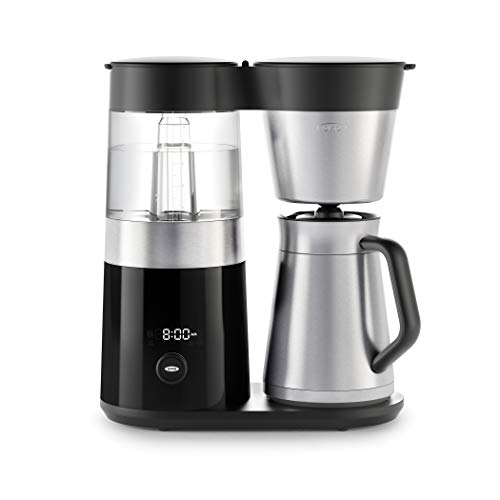
OXO 9-Cup Coffee Maker. SCA-certified, with a built-in programmable timer and auto-brew scheduling that the Moccamaster lacks entirely. Modern design, thermal carafe option. A good fit for buyers who decided they want certification and convenience. Read our detailed OXO 9-Cup coffee maker review for a full breakdown.
Breville Precision Brewer. Adjustable temperature (185 to 205°F), six brew modes (Gold Cup, Fast, Strong, Iced, Cold Brew, My Brew), adjustable bloom time, and a programmable timer. It is the tinker-friendly alternative for anyone who wants more control than the Moccamaster provides. Warranty is shorter at roughly 2 years.
Ninja-style programmable drip makers. Larger capacity, integrated single-cup options, lower price (often under $150). Build quality and long-term durability typically trail the Moccamaster.
Manual pour-over (Chemex, V60). Manual pour-over methods offer more control over brewing variables compared to the Moccamaster. Better for small-batch flavor exploration, but slow and hands-on for weekday mornings. Requires a quality coffee grinder and gooseneck kettle.
Pod or capsule machines. Maximum convenience for a single serve cup, but higher per-cup cost and flavor limitations compared with fresh ground coffee. Of course, if speed and zero cleanup matter more than taste, pods win.
How to Get the Best Coffee from a Moccamaster
If you buy this brewer, a few adjustments make the difference between good coffee and great coffee.
Grind fresh. Use a burr coffee grinder and aim for a medium grind resembling coarse sand. If the cup tastes sour, grind a tiny bit finer. If bitter, go coarser. Pre-ground coffee works but sacrifices clarity.
Dial in your ratio. Start at 60 to 65 grams of ground coffee per liter of water (roughly 1:15 to 1:17). The included spoon provides a ballpark dose. A kitchen scale removes guesswork.
Use the batch-size switch. On the KBGV Select, the half-pot setting adjusts flow rate and hot plate temperature for smaller brews. On older models, you can briefly pause the brew or stir the slurry to simulate a bloom phase.
Upgrade your water. Filtered water with moderate mineral content improves flavor and reduces scale buildup. Hard-water regions in the U.S. should consider a simple pitcher filter at minimum.
Clean consistently. Rinse after each brew, do a deeper clean weekly, and descale on schedule. A clean machine is the single cheapest flavor upgrade available; stale coffee oils coat the basket and brew path, muting the fresh taste of good coffee beans.
Capitol City Coffee’s Final Recommendation
The Technivorm Moccamaster KBGV Select does one job: brew a full pot of filter coffee at the right temperature, every time, for years. It does that job better and longer than almost any other home drip brewer on the market.
For U.S. home users who want consistently good brewed coffee, care about brew temperature and extraction, and expect to keep one coffee maker for a decade, the KBGV Select is a strong, defensible choice. The machine earns its “highly recommended” status from reviewers across the specialty coffee world for concrete, measurable reasons.
The tradeoffs remain: the price is high, programmability is nonexistent, and the tall footprint is not for every kitchen. If those matter more to you, the OXO 9-Cup or Breville Precision Brewer are credible alternatives worth comparing.
Before upgrading, consider whether you already invest in fresh coffee beans and a quality grinder. The best brewer in the world cannot fix stale, pre-ground coffee from a bag that has been open for a month. If your beans are good and your husband, partner, or household drinks more coffee than a single pour-over can handle each morning, the Moccamaster earns its keep.
These questions address practical concerns that go beyond the main review sections above.
Does the Technivorm Moccamaster require a special kind of coffee?
No. It works with any standard drip-grind ground coffee. That said, the machine performs best with fresh, whole-bean coffee ground just before the brewing process using a burr grinder. Medium and light-medium roasts tend to showcase the Moccamaster’s clarity best, while dark roasts produce a smoother, less bitter cup than in cheaper brewers thanks to the stable brew temperature. Pre-ground supermarket coffee will work, but you will miss the flavor advantages you paid for.
How often should I descale a Moccamaster, and what should I use?
Descale every 3 months in hard-water areas or every 4 to 6 months in soft-water regions, which roughly translates to every 100 brew cycles. Use citric acid or a manufacturer-approved descaling solution. Technivorm’s current guidance discourages straight vinegar due to lingering odor and potential residue. After descaling, run two full cycles of clean water through the machine before your next pot.
Is the Moccamaster noisy compared with other coffee makers?
Independent reviewers generally describe it as producing a normal level of brewing noise: water bubbling through the copper boiling element and light mechanical sounds, but no loud pumps or electronic beepers. It is noticeable in a quiet kitchen during the 4 to 6 minute brew cycle, but not louder than a typical drip machine. The sound is closer to a kettle reaching temperature than to an espresso machine’s pump.
Can I brew just one or two cups in a Moccamaster?
Technically yes, but the large filter basket is optimized for medium to full batches. Brewing 1 to 2 cups (under 500 ml) can result in thin, under-extracted coffee because the water passes through the grounds too quickly. Use the KBGV Select’s half-pot setting, grind slightly finer than your usual medium, and consider dosing a tiny bit more ground coffee per ounce of water. For true single-cup sessions, a manual pour-over setup gives better results.
What happens if a part breaks after a few years?
Many parts of the Technivorm Moccamaster coffee maker are user-replaceable: the glass carafe, lid, outlet arm, filter basket, and even some internal components. The brand sells these through its U.S. parts catalog and authorized service centers. The standard five year warranty covers manufacturing defects, and the modular design means that a cracked carafe or worn gasket does not require replacing the entire machine.
How Capitol City Coffee Rates Coffee and Coffee Machines
Every coffee and coffee machine we recommend is scored on the same 100-point scale, so a recommendation on one page means the same thing as a recommendation on any other. Each pick is also labeled with how we reached its score.
Research-ratedScored from the roaster or manufacturer’s published specifications, independent results such as Coffee Review blind cuppings and SCA brewer certification, and patterns across verified buyer reviews. Most of our current picks are research-rated.
Hands-on testedThe Capitol City Coffee team has brewed the coffee or used the machine ourselves, following the testing steps below. We only use this label when that testing actually happened, and we show the date we tested.
Coffee beans: 100-point scale
What we score
Points
What we look at
Origin and sourcing transparency
20
Country, region, farm or cooperative, altitude, bean variety, and processing method are clearly disclosed.
Flavor evidence
25
Independent cupping scores, how closely the tasting notes match what the origin is known for, and our own cupping notes when hands-on tested.
Roast and freshness
15
Roast level stated, roast-date practices, whole-bean availability, and packaging with a one-way valve or resealable bag.
Brew versatility
15
How well the roast suits pour-over, drip, French press, cold brew, and espresso.
Value
15
Price per ounce compared with similar single-origin coffees or blends.
Buyer feedback
10
Volume and consistency of verified reviews, and recurring complaints about staleness, bitterness, or shipping.
Coffee machines and gear: 100-point scale
What we score
Points
What we look at
Brewing performance
25
Water temperature in the 195–205°F range, even extraction, and SCA certification or published test data.
Build quality and reliability
20
Materials, known failure points, and long-term owner reports.
Ease of use and cleaning
15
Setup, the daily routine, descaling, and dishwasher-safe parts.
Fit for your kitchen
10
Capacity, counter footprint, and noise.
Useful features
10
Programming, grind and temperature control, and carafe type. Features that improve the cup count more than extras that do not.
Value
10
Price compared with machines that perform similarly.
Warranty and support
10
Warranty length, parts availability, and how the brand handles repairs.
What the grades mean
Score
Grade
What it means
90–100
A
Exceptional. Our first recommendation for the feeling and setting described.
80–89
B
Strong. Excellent, with minor trade-offs we explain.
70–79
C
Good. Worth it for specific needs, with clear compromises.
Below 70
—
Not recommended. We do not feature these as picks.
How we test hands-on
When a pick carries the Hands-on tested label, this is the method behind it, and we note the date we tested.
Coffee: brewed fresh from whole beans following Specialty Coffee Association guidelines (water between 195 and 205°F, about 1 gram of coffee to every 15 to 18 grams of water) in the brew methods the roast suits best, such as pour-over, French press, or espresso. We taste it black first, then with milk if that is how most people drink it, and each taster scores it on their own before we compare notes.
Machines: used in our everyday routine rather than a single demo. We brew both full and small batches, check the brewing temperature and brew time, and run the cleaning or descaling steps the manual calls for.
How we choose the feeling and setting
We match each coffee to a mood and a moment based on its flavor profile and roast. Bright, citrusy light roasts suit energizing mornings. Chocolatey, full-bodied medium roasts suit slow or social moments. Richer roasts suit espresso and milk drinks. Each pick explains which facts led us to that match.
Our scores stay independent
Every score comes only from the criteria above. No brand can pay for a pick or a higher grade. We re-check ratings when a roast, listing, or model changes, and update or remove picks that no longer earn their grade.
Some links on this page are affiliate links. As an Amazon Associate, Capitol City Coffee earns from qualifying purchases, at no extra cost to you.
Questions about a rating? Reach the Capitol City Coffee team through our contact page.