If you want noticeably better coffee at home without spending hundreds on gear, upgrading your grinder is the single highest-impact move you can make. Below, we break down the best coffee grinders under $100 available in the U.S. as of September 2026, covering electric and manual options, real-world trade-offs, and who each pick actually suits. Every recommendation is based on researched editorial analysis-manufacturer specs, reputable expert reviews, and broad community consensus-not hands-on lab testing by our team.
Best under $100 electric pick
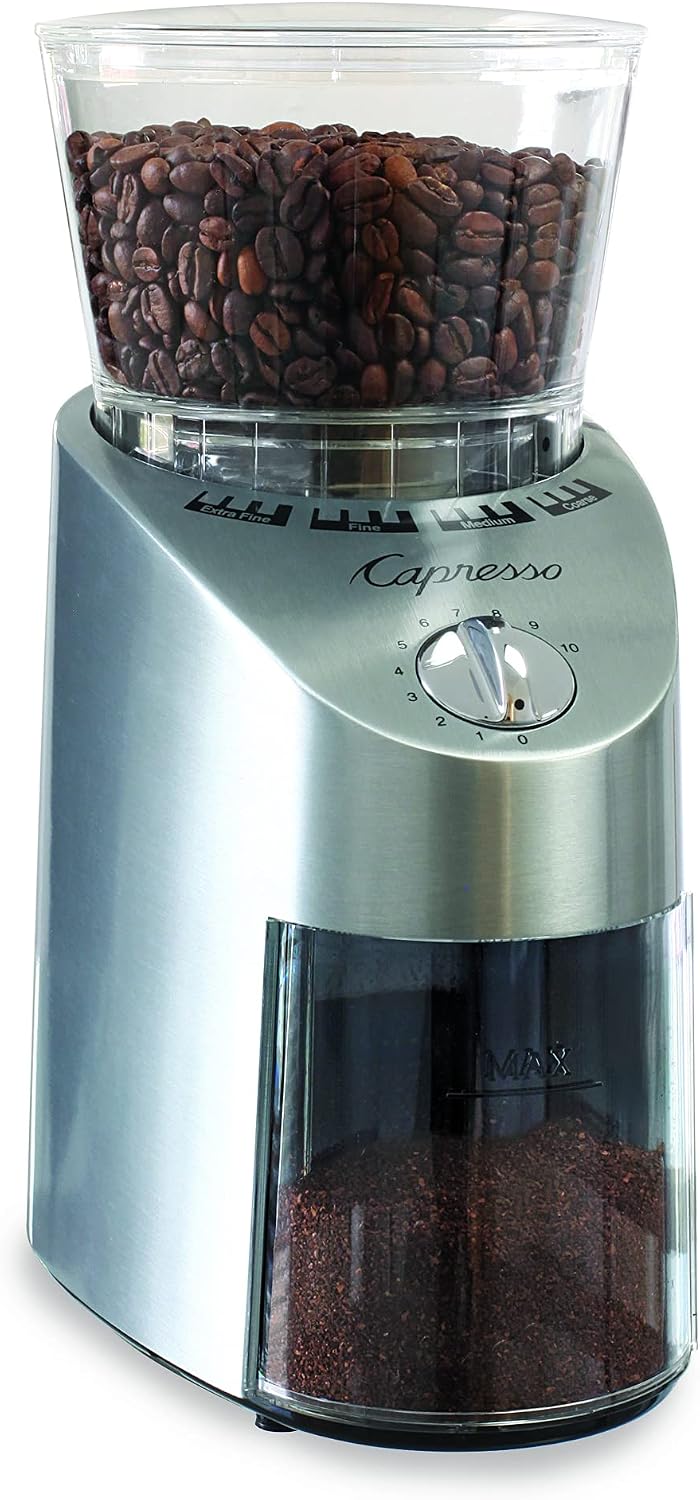
For this roundup, Capresso Infinity Plus is the under $100 electric we recommend first—the same pick at the top of our At-a-glance cards below.
Based on researched editorial analysis as of September 2026 in the U.S., the Capresso Infinity Conical Burr Grinder is the standout electric burr grinder under $100 for most home brewers making drip coffee, pour-over, or French press.
The Cuisinart DBM-8 and Hamilton Beach 80385 are solid budget picks for households that want fresh ground coffee without spending close to $100.
Truly consistent espresso grinding below $100 is rare in electric grinders. A quality manual grinder-like the Timemore Chestnut C2 or a discounted 1Zpresso-is usually the better bet for espresso-level fineness at this budget.
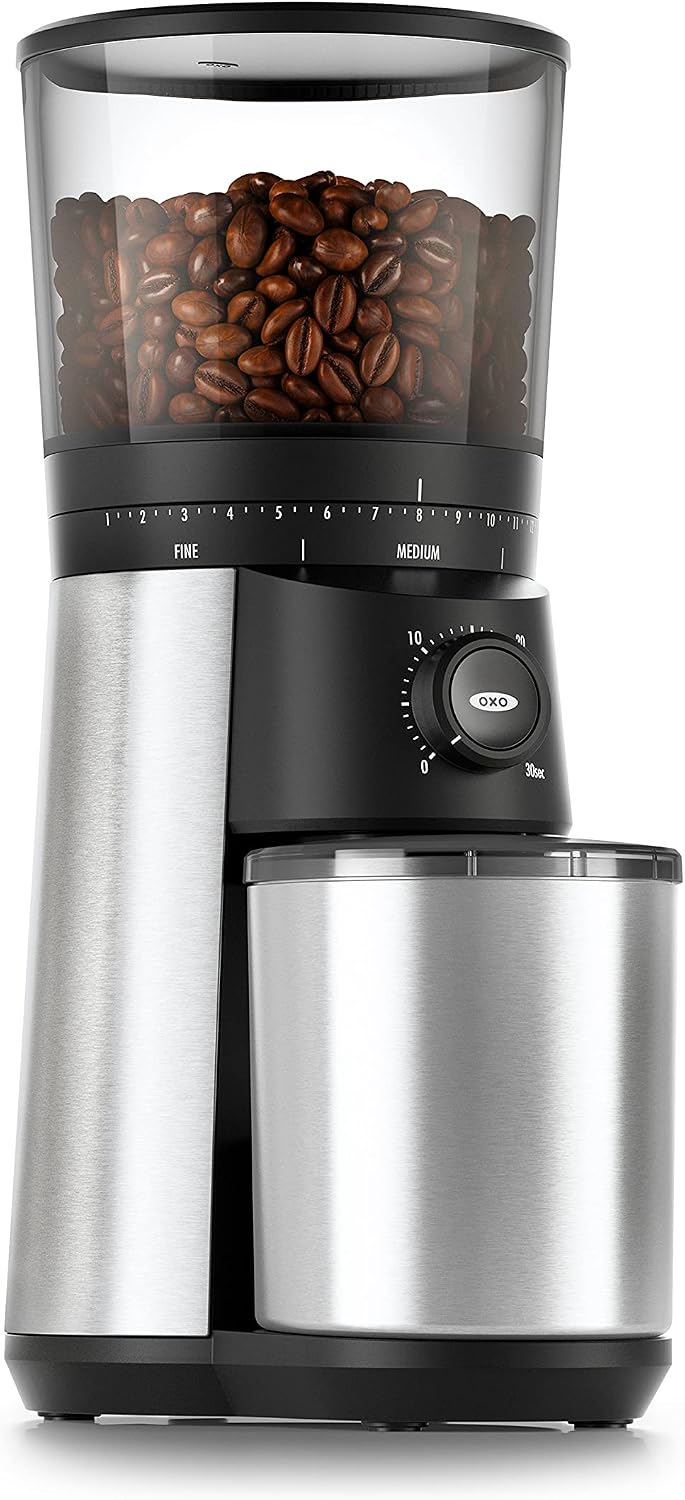
Choosing a burr coffee grinder over a blade grinder, with stable grind settings and low retention, is the single biggest upgrade for better-tasting coffee at home.
This is independent, researched editorial content from Capitol City Coffee. We are not a coffee seller. Jump to the quick picks section below for product names and current pricing.
Affiliate Disclosure
Capitol City Coffee is an independent coffee editorial and affiliate publication. We may earn a commission from qualifying purchases made through outbound links at no extra cost to you. Affiliate relationships do not change our grinder rankings or recommendations-value, performance, and reliability drive every pick on this page.
Quick Answer: The Best Coffee Grinder Under $100 Right Now
For most people in the U.S. shopping in late 2026, the best coffee grinder under $100 is the Capresso Infinity Conical Burr Grinder, typically priced around $90–$100 and frequently on sale below that mark. It offers a slow-speed motor, steel conical burrs, and solid grind consistency across medium settings-exactly what drip and French press brewers need. If your budget is tighter and you mainly brew auto-drip, the Cuisinart DBM-8 Supreme Grind or Hamilton Beach 80385 will deliver a meaningful upgrade over blade grinders for $40–$60.
If you’re serious about espresso making, resist the temptation to buy a cheap electric grinder and call it done. Most electric burr grinders under $100 cannot produce the fine, consistent grind that unpressurized espresso baskets demand. You’re better off with a capable manual grinder like the Timemore Chestnut C2 or saving up for a dedicated espresso grinder in a higher price bracket.
Here are the quick strengths of each top pick:
Capresso Infinity: 40 mm steel conical burrs, 16 grind settings, ~450 RPM motor for low heat, quiet operation, ~$90–$100
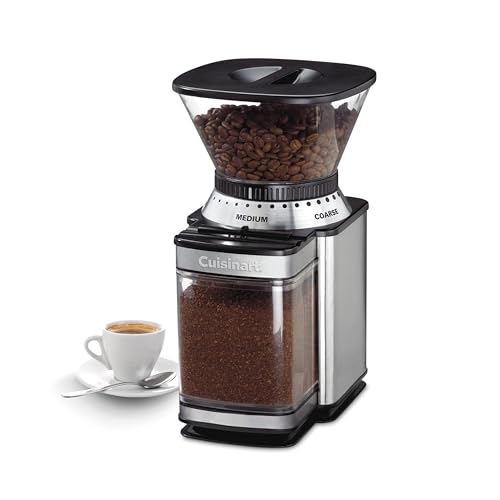
Cuisinart DBM-8: 18 grind settings, large hopper and grounds bin, simple timer dial, ~$50–$60
Finer grind control than C2, espresso-adjacent capable
Often just above $100 unless on sale, manual effort
~$85–$110 on sale
Prices are approximate and were last checked in September 2026. Actual pricing varies by retailer.
How We Chose These Sub-$100 Coffee Grinders
Every grinder on this list was selected through researched editorial analysis-not hands-on testing by our team. We drew on manufacturer specifications, detailed expert reviews from reputable coffee publications, and broad consensus from the home-brewing community to evaluate each model.
Our selection filters were straightforward:
Identifying the best budget coffee grinder for common home brew methods, with a practical price cap of $100 in the U.S. (and “stretch” picks noted when a grinder often drops below $100 on sale)
Wide enough grind range to cover at least drip and French press, ideally pour-over and AeroPress too
Basic reliability and warranty support from an established brand
We evaluated grinders against these performance concepts: burr type and size, grind range, particle consistency, fines production, retention, static, speed, and noise. Most electric burr grinders in this range have 15 to 48 grind settings, which is plenty for most brewing methods. Espresso-capable grinding at this budget is rare, so grinders were primarily judged on pour-over, drip, AeroPress, and French press performance.
Best Overall: Capresso Infinity Conical Burr Grinder
The Capresso Infinity is often cited as the best coffee grinder under $100 for everyday home brewing-and the consensus holds up. It hits a sweet spot of grind quality, quiet operation, and durability that most competing electrics at this price cannot match.
The Capresso Infinity features 16 grind settings organized across four labeled ranges (extra fine, fine, regular, and coarse). Its 40 mm steel conical burrs are driven by a relatively slow motor running at approximately 450 RPM, which reduces heat buildup and preserves the flavor of lighter roasts that are especially sensitive to temperature during grinding. Street pricing typically sits around $90–$100, though it frequently dips below $100 during sales.
In terms of grinding performance, expert reviewers and users consistently praise the Infinity’s particle consistency in the medium range-exactly where drip, pour-over, and standard AeroPress recipes live. At coarser settings (French press territory), some fines creep in, and the finest setting isn’t reliable enough for true espresso with unpressurized baskets. But for the vast majority of home coffee, this is a great coffee grinder that punches well above its price.
Workflow is straightforward: a front-mounted dial selects grind size, the upper burr removes easily for cleaning, and the grounds container collects output with a snap-on lid. You will notice some static-coffee grounds occasionally cling to the container walls-and modest retention in the chute. A quick brush after grinding minimizes both issues. Noise is moderate, noticeably quieter than many budget grinders thanks to the slow motor speed.
The ideal user here is someone who brews drip coffee or French press daily, wants a meaningful upgrade from a blade grinder or pre-ground coffee, and values a good grinder that runs quietly and lasts. If you need micro adjustments for espresso, this isn’t your machine-but for everything else under $100, it’s hard to beat.
Best Value Under $60: Cuisinart DBM-8 Supreme Grind Automatic Burr Mill
The Cuisinart DBM-8 is a classic budget coffee grinder choice when you want better coffee than a blade grinder can deliver without spending close to $100. It’s been a favored grinder among budget-conscious households for years, and it continues to offer solid value in late 2026 at a typical street price of $50–$60.
This electric grinder features a basic burr set with 18 grind settings, a large bean hopper, and a generous grounds bin. Controls are simple: a timer-style dial lets you select how many cups you want to grind (4–18), and a separate dial sets grind coarseness. It’s designed for people who want to fill, press a button, and walk away.
Grind quality is significantly more consistent than what a blade grinder produces, but you’ll notice more fines and boulders in the output compared to the Capresso Infinity or a quality manual grinder-especially at coarse settings for French press or very fine settings. For auto-drip machines and standard batch brewing, the DBM-8 does the job well enough to make a delicious cup that you can taste the difference in.
On the practical side, the DBM-8 is loud but fast, easy to fill and reasonably easy to clean. The build is plasticky-hopper and grounds bin feel lightweight-and static is more noticeable than on premium models, meaning grounds sometimes stick to walls and scatter. A cleaning brush helps, but expect a slightly messier workflow than higher-end grinders.
This grinder suits casual coffee drinkers and budget-conscious households making auto-drip coffee or large batches daily. If you value convenience and capacity over precision, the DBM-8 is the right grinder at a price that’s hard to argue with.
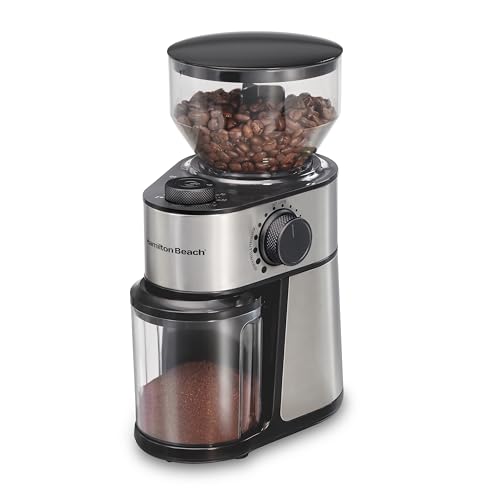
Best Compact Budget Pick: Hamilton Beach Burr Coffee Grinder 80385
The Hamilton Beach 80385 is a compact, affordable burr coffee grinder typically found around $40 in the U.S.-one of the lowest entry points into burr grinding. It uses stainless steel flat burrs rather than the conical burrs found in most grinders at this level, offering a different grinding geometry at a rock-bottom price.
With 18 grind settings and a 2–14 cup selector, the 80385 is aimed squarely at everyday drip or single-serve brew drinkers. The bean hopper holds roughly 2 cups of whole beans, and the removable top burr makes cleaning more accessible than many competing models. One reviewer noted that “finding 18 grind settings… for just $40 is genuinely impressive” for the price tier (CoffeeGearZone).
Performance is acceptable for standard drip coffee but weaker at very coarse and very fine settings-coarse grinds have a wider particle distribution, and the finest setting doesn’t grind fine enough for espresso. Still, it’s a clear upgrade over any blade grinder for everyday use.
Practical traits include a relatively small footprint (weighing just 3.2 lbs), snap-on lid for the grounds container, and cord wrap for tidy storage. Noise is moderate to high, and the plastic housing won’t win any durability awards. But at this price, it’s a capable grinder for what it sets out to do.
The Hamilton Beach 80385 suits casual coffee drinkers who want to grind coffee beans fresh each morning for a standard drip maker without spending near the $100 ceiling.
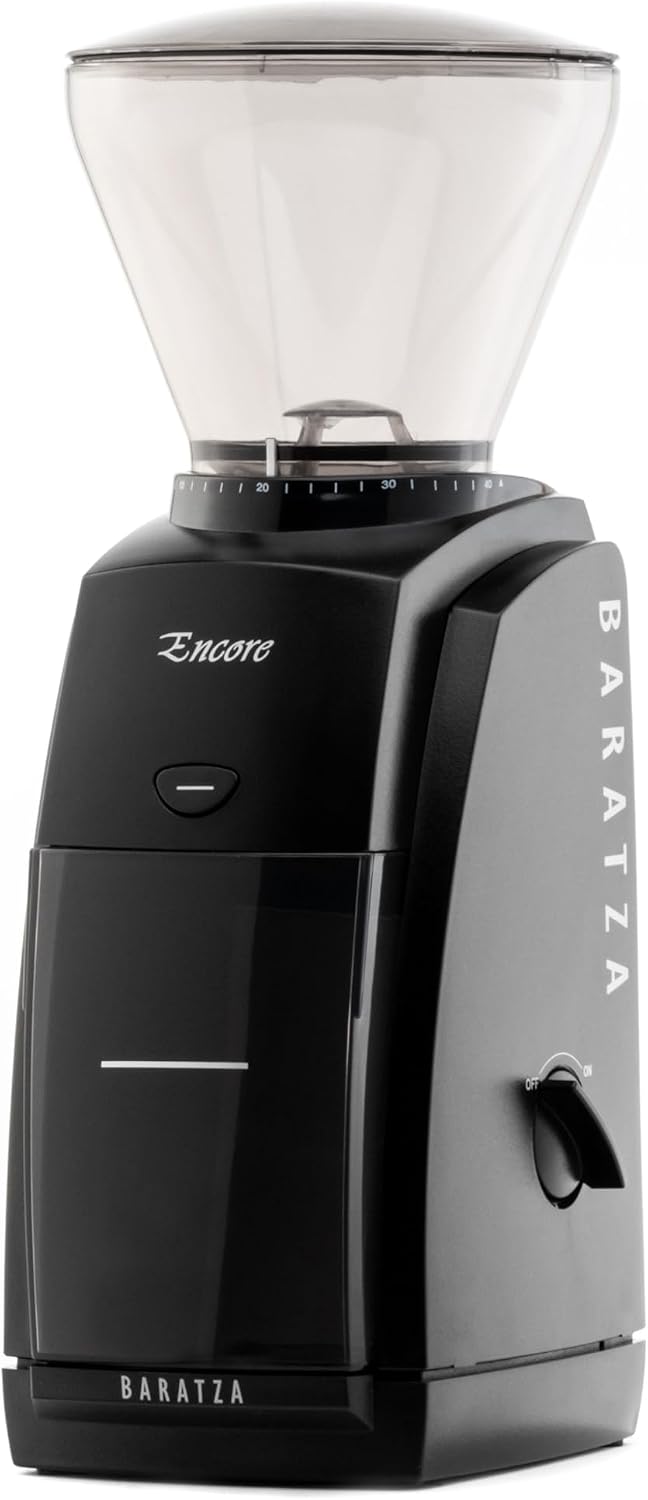
Best Under-$100 “Feature-Rich” Electric Burr: Baratza Encore
When it comes to feature-rich electric burr grinders, Baratza grinders are often the benchmark, and the Encore is the under-$100 model most relevant here. The Baratza Encore has 40 grind settings for versatility-far more than the Capresso Infinity or Cuisinart DBM-8-and the Baratza Encore is a popular budget grinder known for durability and long-term serviceability.
Key selling points include its 40 mm steel conical burr set, a wide grind range from espresso-adjacent to coarse, straightforward pulse button, and a reputation for parts availability that most budget grinders simply cannot match. When other grinders at this price fail, they often become landfill; Baratza sells replacement burrs, ring burr holders, and even motors directly to consumers, making this a grinder you can actually repair.
The trade-offs are real: the Encore’s MSRP often sits at $99–$110, meaning you may need to catch a sale to land it under $100. Retention is moderate (grounds stick in the chute), and static can be noticeable. Build quality uses some plastic, but the internal components are more robust than most competitors in this range.
The OXO Brew Conical Burr Grinder is another contender worth noting, and this oxo grinder is one of the simpler-to-use electric options near this price. The OXO Brew grinder has 15 grind settings for versatility and features a one-touch start timer, making it one of the simpler-to-use electric grinders near this price. Its grind range covers drip, pour-over, and French press well, though the 15 settings offer less fine control than the Baratza’s 40.
For users who want a single dose grinder style workflow, the ability to experiment with different brewing methods, and the confidence that replacement parts will be available years down the road, the Baratza Encore is the right grinder if you can find it at or just below $100. The Baratza Encore ESP Pro offers 80 settings for espresso, but that model sits well above $100 and is better suited for readers exploring our espresso grinder guides.
Best Manual Grinder Under $100 for Everyday Brewing
Manual grinders in this price range can outperform similarly priced electric grinders on grind consistency, especially for pour-over and AeroPress. Electric models offer convenience while manual grinders provide better grind quality at lower costs-and that trade-off becomes very favorable if you’re brewing just one or two cups at a time.
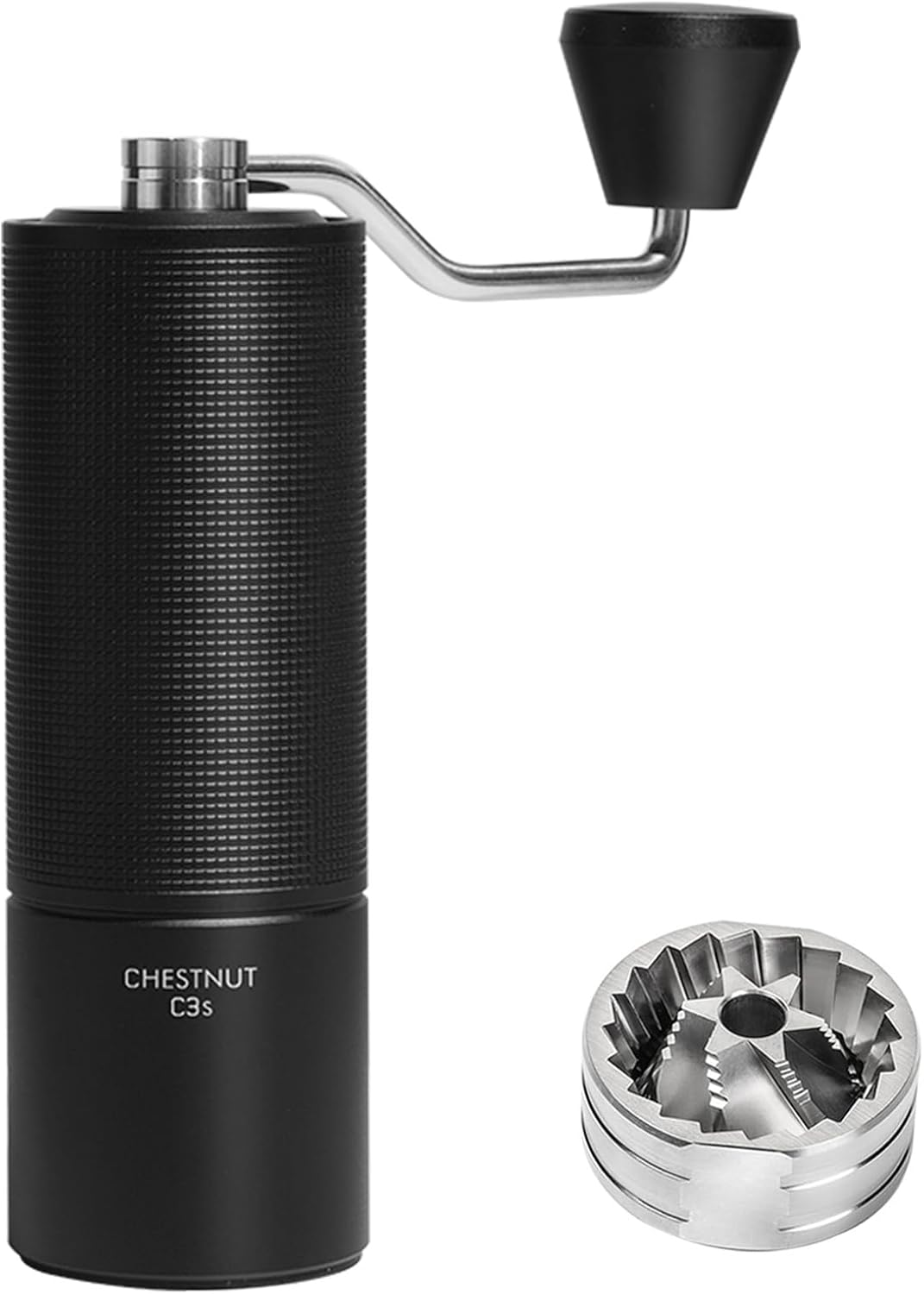
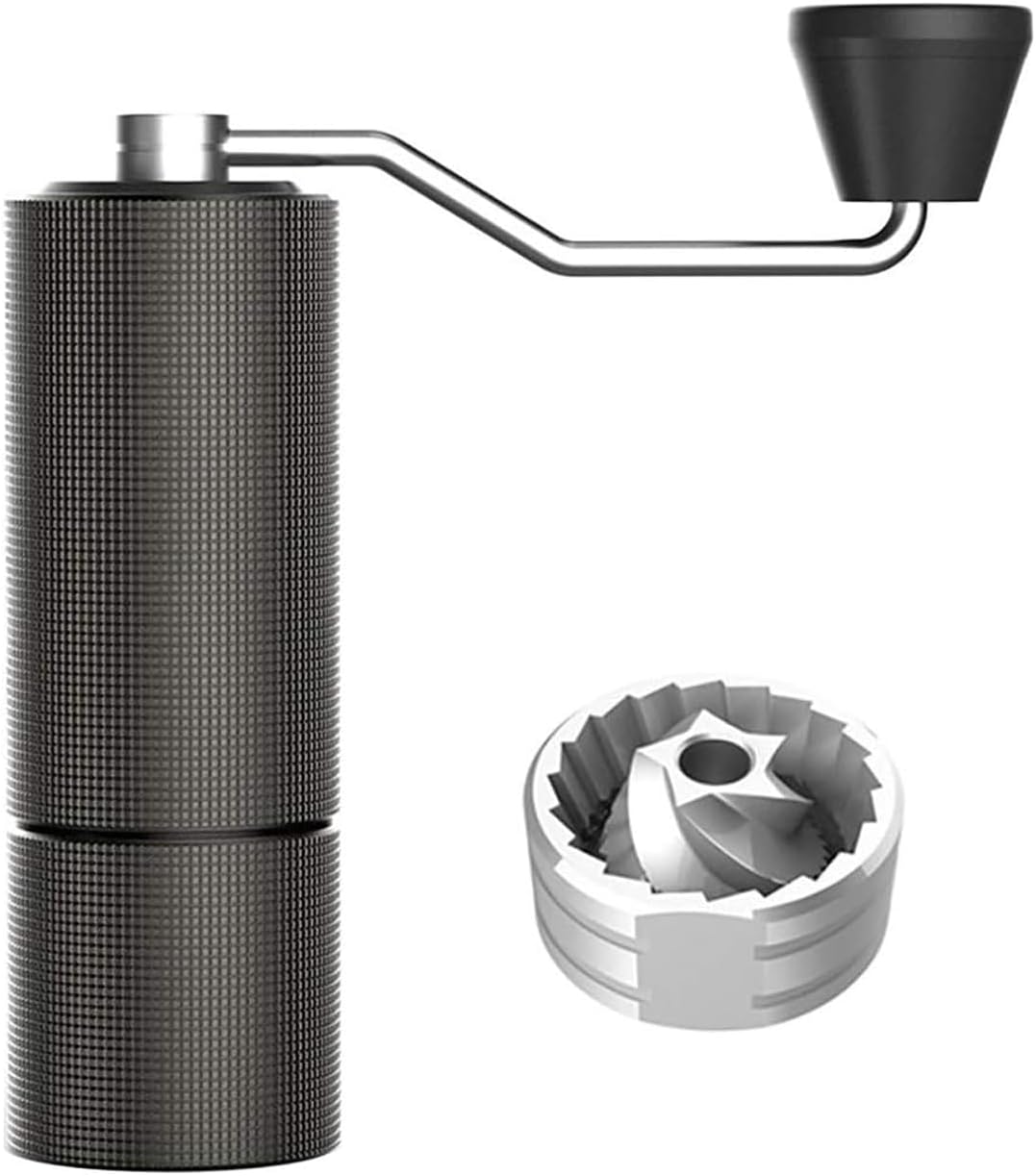
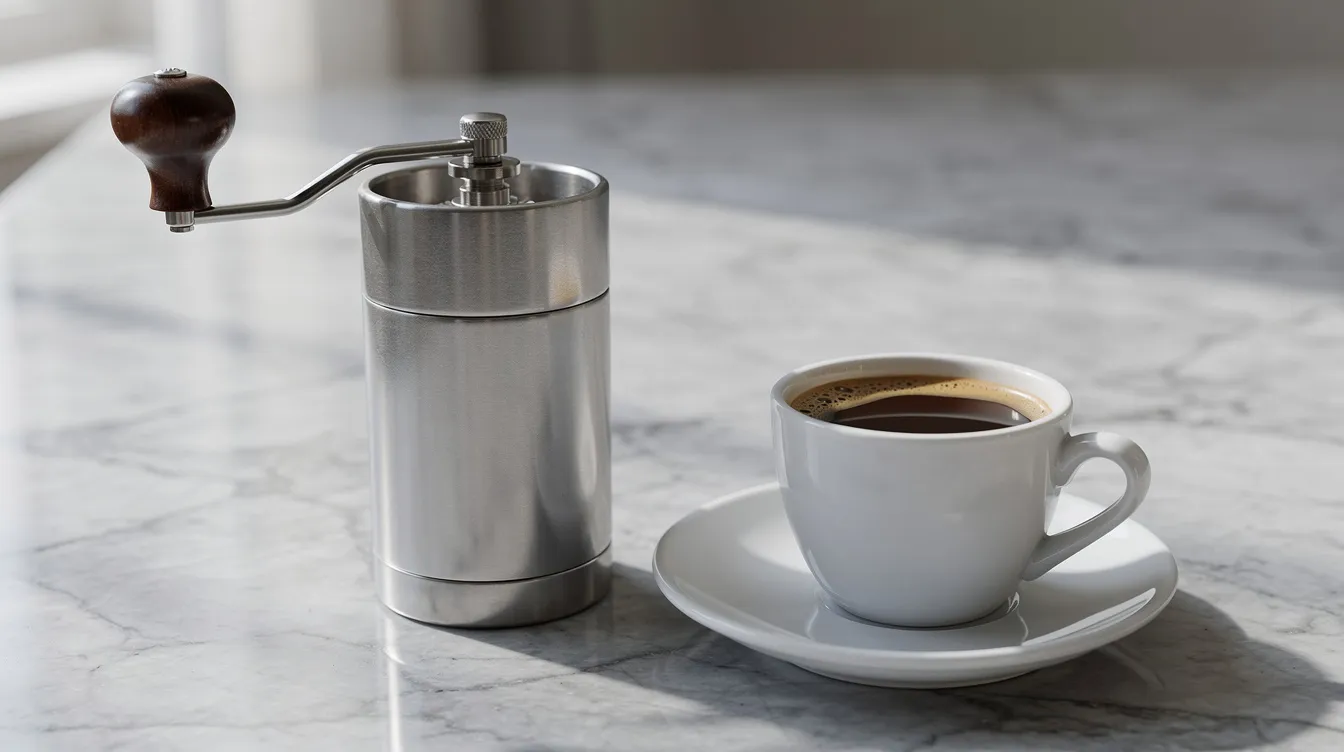
The Timemore Chestnut C2 (and its updated C2S variant) is the most widely recommended steel conical manual grinder under $100, with an updated design that improves on previous grinders in Timemore’s entry-level line. Its 38 mm stainless steel conical burrs use Timemore’s S2C burr geometry, which shears beans rather than pulverizing them, reducing fines and improving grind uniformity. The body is aluminum alloy with double bearings on the central shaft-a design detail that minimizes wobble at finer settings and extends the life of the burrs.
Manual hand grinders under $100 can rival electric grinders in grind consistency, and the C2 proves it. Retention is extremely low-often just 0.1–0.2 grams between sessions-making it an effective single dose grinder with virtually zero flavor carryover between different coffee beans.
Strengths include excellent particle consistency for medium-fine brews, low noise (no motor at all), portability for travel, and durable metal construction that should last years with basic care. The Timemore Chestnut C5 Pro is another option in the Timemore lineup that is portable and grinds evenly, though pricing varies.
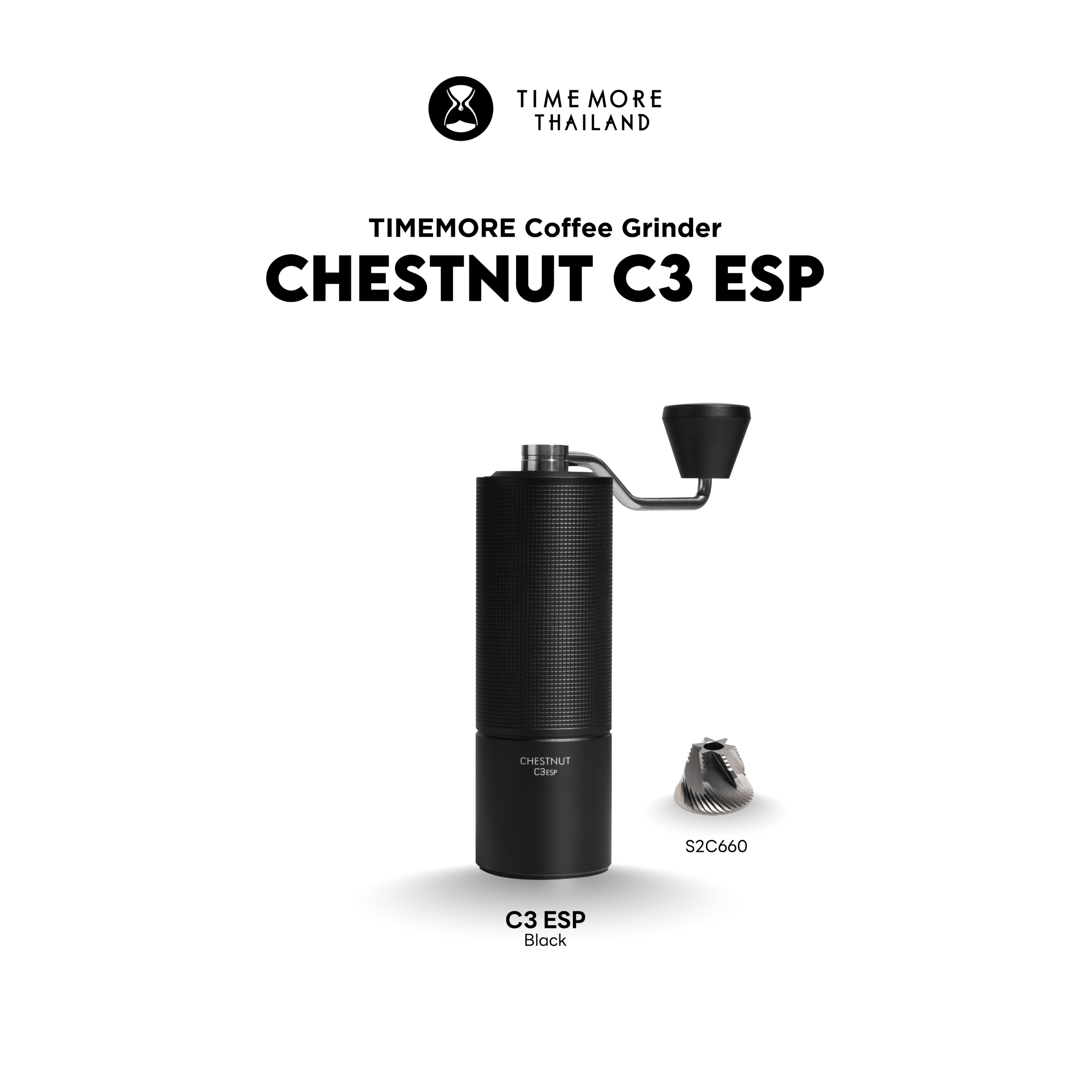
Limitations are honest: hand grinding takes physical effort (roughly 30–40 seconds for 18–20 grams), it’s slower for grinding multiple cups, and the C2 may be borderline for true espresso fineness depending on your exact setup. For espresso-adjacent results, the Timemore C3 ESP variant adds finer adjustment steps but often sits just above $100 unless discounted.
Why Burr Beats Blade in the Budget Range
At the sub-$100 level, the single most important decision you’ll make is choosing a burr grinder over a blade grinder. Blade grinders chop beans inconsistently, causing uneven extraction-some particles are dust-fine while others remain as large chunks. The result is a brew where some grounds over-extract (producing bitterness) and others under-extract (producing sourness), all in the same cup.
Here’s why blade coffee grinder models fall short:
Inconsistent particle sizes mean you cannot control extraction properly
More fines and boulders in every batch lead to muddy, unbalanced flavor
No real grind settings-you’re guessing based on how long you pulse the blade
Flavor clarity suffers because the brew is a blend of over- and under-extracted coffee
A burr coffee grinder crushes beans between two precisely spaced surfaces, producing far more uniform grind sizes for better extraction. Burr grinders help reduce over-extraction and under-extraction by narrowing the range of particle sizes in your dose. This makes brew recipes repeatable-dial in a grind setting once and get similar results every morning.
Budget burr grinders significantly improve coffee flavor compared to blade grinders. Even a $40 burr grinder paired with fresh coffee beans will produce a more balanced, sweeter cup than a $200 blade grinder paired with the same beans. Inconsistent grind sizes lead to poor extraction flavors, and the simplest fix is switching to burrs.
Understanding Burr Types: Flat vs Conical, Steel vs Ceramic
Flat burrs use two parallel ring-shaped grinding surfaces that shear beans between them. Conical burrs pair a cone-shaped inner burr with a ring-shaped outer burr, pulling beans downward through the grinding path. Both produce far more uniform grinds than blades, but they behave differently.
At this budget, most grinders use steel conical burrs-and for good reason. A conical burr coffee grinder tends to run at slower speeds, generates less heat, and handles oily beans more easily. A flat burr grinder can deliver very uniform particles, but under $100, flat burr options are rare and usually come with trade-offs in noise, retention, or build materials. The Hamilton Beach 80385 is one of the few budget electrics using flat burrs, and its results are decent for drip though less impressive at the extremes.
Steel versus ceramic is the other common distinction:
Steel conical burrs are sharper, retain their edge longer, and resist heat better-ideal for daily use
Ceramic burrs are quieter and lighter but more brittle; they can chip if a stone slips into the hopper
Most durable and consistent budget picks use steel burrs
How burr type affects your cup:
Conical burrs tend to produce a slightly wider particle distribution but with fewer ultra-fine particles
Flat burrs can achieve tighter uniformity but at this price often come with louder motors and more retention
Burr alignment (how well the two surfaces meet) matters more than shape at this tier-look for double-bearing designs in manual grinders
In this price category, focusing on a solid steel conical burr grinder with good alignment matters more than chasing a specific burr shape.
Grind Range, Particle Consistency, and Why They Matter
When you grind coffee beans, the size of the resulting particles directly controls how quickly water extracts flavor. Grind size affects extraction speed and flavor profile in a predictable way: finer grounds expose more surface area and extract faster, while coarser grinds slow extraction down.
Grind range refers to the span from the finest to coarsest repeatable setting that a budget coffee grinder can produce. Stepped grinders have preset numbers for grind size adjustments-you click between defined positions. Stepless grinders allow for infinite grind size adjustments, letting you fine-tune between positions, though stepless grind adjustment is uncommon under $100 in electric models.
Particle consistency means how uniform your grounds are at a given setting. When particles are uneven, the small ones (fines) brew too quickly, causing bitter flavors in coffee, while oversized pieces (boulders) brew too slowly, leading to sour flavors. A consistent grind size enhances coffee complexity and sweetness because extraction happens evenly across the full dose.
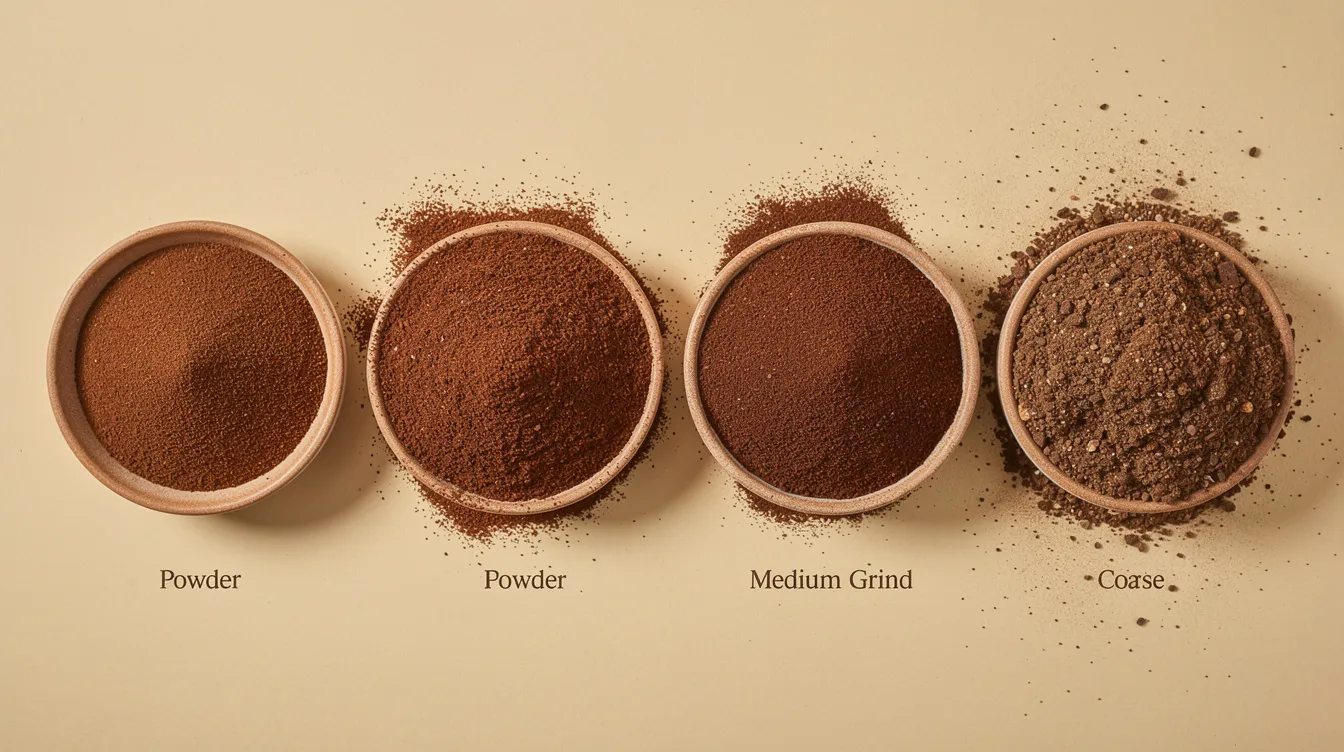
Here are target grind levels for popular methods:
Drip coffee: medium grind (typically settings 8–12 on most grinders)
Pour-over (V60, Chemex): medium-fine
French press and cold brew: coarse-you want to grind coarser to reduce fines that cause sediment and bitterness
AeroPress: medium to medium-fine, depending on recipe
Moka pot: fine
Espresso: very fine-rarely achievable with consistency on sub-$100 electrics
Under $100, expecting lab-grade grind uniformity is unrealistic. The goal is “consistent enough” for enjoyable, balanced cups-and every burr grinder on this list achieves that for its recommended brew methods.
Retention, Static, Speed, and Noise on Budget Grinders
Retention is the amount of ground coffee that stays trapped inside your grinder between uses-in burr chambers, chutes, and grounds containers. Low retention in grinders means less stale coffee grounds in fresh servings, which matters especially when you switch between different coffee beans or roast levels.
For sub-$100 electric grinders, retention typically runs between 0.5 and 2 grams per grind cycle. That’s enough stale coffee to affect flavor if you’re grinding a precise 15-gram single dose. Manual grinders like the Timemore C2 report retention as low as 0.1–0.2 grams, making them better suited to a single dose grinder workflow where every gram counts.
Static-grounds clinging to container walls, flying out of the chute, or coating your countertop-is influenced by plastic parts, low humidity, and grind speed. Most grinders in this range use plastic grounds containers, which worsen static compared to metal or glass. A few tricks help: let grounds sit for 10–15 seconds after grinding before removing the container, tap the container gently, or add a single drop of water to your beans before grinding (the “Ross Droplet Technique,” popular in the community).
Speed and noise go hand in hand. Budget electric grinders often spin faster and louder than premium models, which increases heat generation (bad for flavor, especially with lighter roasts) and static. The Capresso Infinity’s ~450 RPM motor is a notable exception-it’s one of the slower, quieter electric grinders at this price. Manual grinders eliminate motor noise entirely, trading it for the physical effort of hand grinding.
Among our featured grinders:
Quietest: Timemore C2 (manual, no motor)
Quietest electric: Capresso Infinity (slow motor)
Loudest: Hamilton Beach 80385 and Cuisinart DBM-8 (faster motors, plastic housings amplify sound)
Least static: Timemore C2 (metal body, no motor-driven discharge)
Most static: Cuisinart DBM-8 (plastic everything, fast motor)
Durability, Repairability, and Warranty Under $100
In the budget segment, build quality and warranty vary dramatically-and understanding these differences can save you from buying a grinder that dies in a year.
Most electric grinders under $100 use plastic housings with metal burr carriers inside. The plastic keeps costs down but reduces longevity: hopper lids crack, bean hoppers develop stress fractures, and grounds containers lose their seal over time. Manual grinders like the Timemore C2 use aluminum alloy bodies with steel internals, which generally survive longer if you don’t drop them on concrete.
Repairability matters more than many buyers realize. The Baratza Encore stands out here: Baratza sells individual replacement parts (burrs, switches, gearboxes) directly to consumers and publishes repair guides. Most other budget grinders are effectively disposable-when the motor or gears fail, the cost of repair exceeds the cost of replacement.
Typical warranty terms for popular budget coffee grinders:
Capresso Infinity: 1-year limited warranty
Cuisinart DBM-8: typically 1–3 year limited warranty depending on retailer
Hamilton Beach 80385: 1-year limited warranty
Timemore C2: varies by seller; some offer 1-year coverage, replacement burrs available
Before buying, consider:
Does the brand have a track record of honoring warranty claims?
Are replacement burrs or parts available for purchase?
Have users reported common motor or gearbox failures for this model?
Is the grinder worth repairing, or would you simply buy a new one?
For daily users, a well-maintained burr grinder in this range should last 2–5 years on the electric side and potentially much longer for manual grinders with simpler mechanisms.
What Actually Affects Taste: From Grinder to Cup
The grinding mechanism significantly impacts coffee flavor consistency-more than most casual coffee drinkers expect. When grounds are uniform, water extracts at an even rate across the entire dose, producing a cup with clearer sweetness, more defined origin character, less muddiness, and ultimately a balanced cup.
High-quality burr grinders are essential for achieving better flavor and extraction in coffee because they produce uniform grind size for better flavor. With more even particles, you’ll notice flavors you might have missed before: fruit notes in an Ethiopian, chocolate depth in a Colombian, or citrus brightness in a Kenyan. Very uneven grinds blend all of these into a flat, sometimes harsh brew.
Burr grinders can enhance coffee flavor complexity and body compared to blade grinders, and the difference is especially noticeable with lighter roasts. Light and medium roasts are more sensitive to grind distribution because their flavors are more delicate-if fines over-extract, bitterness overwhelms the subtle aromatics. A dark roast is more forgiving because the roasting process itself has already developed bold, dominant flavors that mask some extraction inconsistency.
Practical flavor expectations from the grinders on this list:
Capresso Infinity or Baratza Encore on medium settings: cleaner, sweeter drip coffee with more flavor clarity than a blade grinder; noticeable improvement for pour-over
Cuisinart DBM-8 or Hamilton Beach 80385: still a clear upgrade over blade grinders; drip coffee tastes more balanced, though some subtle nuance may be lost to fines
Timemore C2 at medium-fine: approaching the flavor clarity of grinders costing twice as much, especially for pour-over and AeroPress
That said, fresh coffee beans, correct brew ratios, and good water still matter more than tiny grinder differences at this price point. A $70 grinder with freshly roasted beans and clean, filtered water will outperform a $300 grinder with stale, supermarket beans every time.
How to Match a Grinder to Your Brew Method
The best coffee grinder under 100 depends heavily on how you brew. A grinder that excels for drip may underperform for French press, and one that handles pour-over beautifully might struggle with espresso. Burr grinders are recommended for various brewing methods like espresso, drip, pour-over, and French press-but no single sub-$100 grinder does all of them equally well.
Here’s how to match grinder traits to your daily brew:
Drip machine / auto-drip: needs a stable medium grind range. Most electric burr grinders in this roundup handle drip well. The Capresso Infinity and Baratza Encore are strong here.
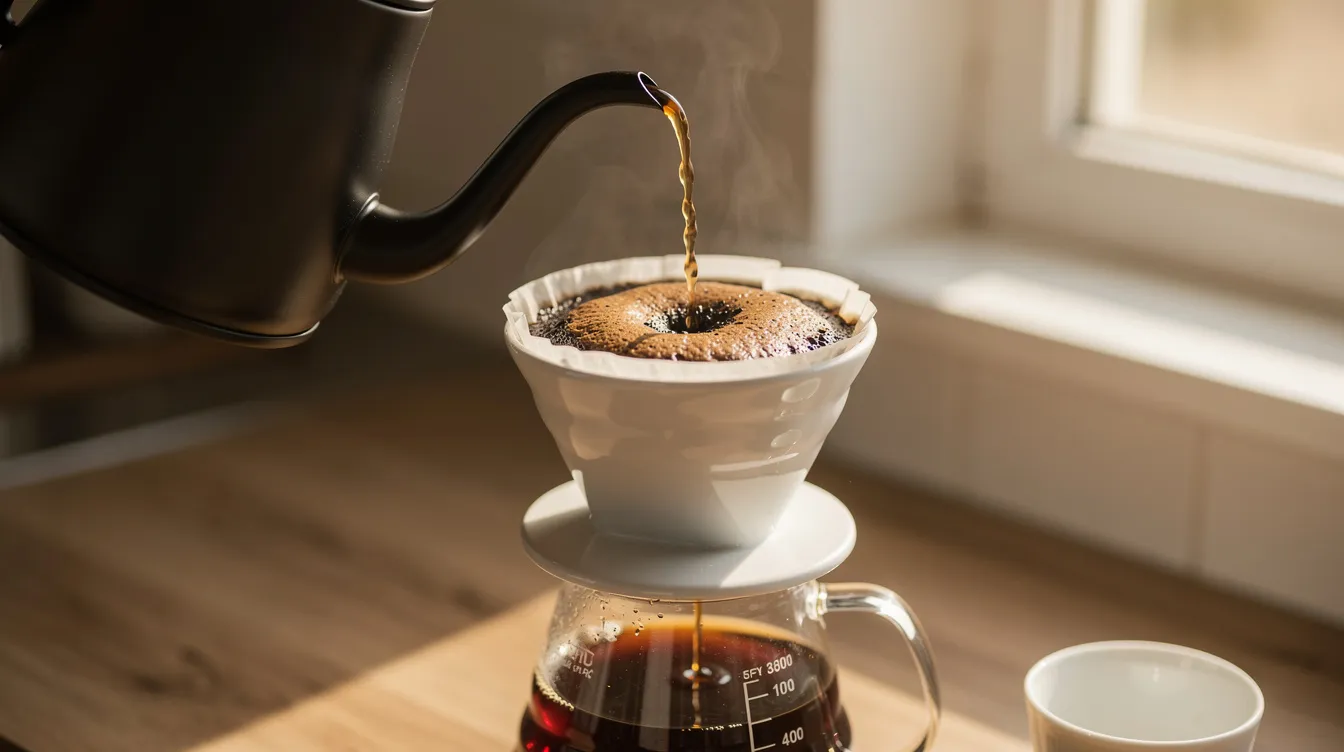
Pour-over (V60, Chemex, Kalita): needs medium-fine with good consistency. Manual grinders like the Timemore C2 shine at this grind size. Electric models like the Capresso Infinity also perform well.
French press and cold brew: needs stable coarse settings with minimal fine grinds. Coarse grinds from budget electrics often include more fines than ideal, so expect some sediment. Manual grinders at coarse settings are slightly better.
AeroPress: very flexible; medium to fine works depending on recipe. Almost any grinder on this list handles AeroPress well.
Moka pot: needs a fine grind, finer than drip but coarser than espresso. The Capresso Infinity and manual grinders can produce this.
Espresso machine (unpressurized basket): needs very fine, very consistent grind with micro adjustments. Sub-$100 electrics struggle here. A good manual grinder or a dedicated espresso grinder is the smarter choice.
Concrete examples: the Capresso Infinity pairs well with a standard drip maker or Chemex for a household brewing coffee daily. A compact steel conical manual grinder like the Timemore C2 is ideal for the AeroPress-and-travel crowd who brew 1–2 cups and want the best tasting coffee from a small dose.
Single-Dose vs Hopper-Based Workflows on a Budget
A single dose grinder workflow means you weigh out exactly the beans you need for each brew, dump them in, and grind everything in one go. A hopper-based workflow means you fill the bean hopper with several days’ worth of beans and grind by time or cup-count dial each morning.
Pros of single dosing:
Lower retention means fresher grounds in every serving
Easier to switch between different coffee beans without flavor carryover
Forces you to weigh beans, which improves brew consistency overall
Especially useful on cheaper grinders with higher retention
Pros of using a hopper:
Convenience for households brewing multiple pots per day
Better fit for grinders with basic timers, like the Cuisinart DBM-8 or Hamilton Beach 80385
Less daily fiddling-fill once, grind for days
Among our recommended grinders, manual grinders like the Timemore C2 are natural single-dose machines (the capacity is about 25 grams per load). Some small-hopper electrics can also work in single-dose mode. The Cuisinart DBM-8 and Hamilton Beach 80385, with their larger hoppers and cup-count dials, are better as fill-and-go budget workhorses.
A few workflow tips:
Weigh beans on a kitchen scale before grinding for more consistent cups, regardless of grinder type
If your grinder has noticeable retention, purge a gram or so when switching coffees-grind a small amount and discard it to flush out stale grounds
Store beans in an airtight container at room temperature, not in the hopper, if you’re single-dosing-exposure to air and light degrades flavor
How to Choose the Right Budget Coffee Grinder for You
Choosing the right grinder comes down to your daily habits, not the longest spec sheet. Here’s a practical decision path:
What’s your main brew method? If it’s drip or French press, any electric burr grinder on this list will serve you well. If it’s pour-over or AeroPress, a manual grinder may deliver better results for the money.
Do you plan to explore espresso? If yes, skip the cheap electric options. Save for a dedicated espresso grinder or invest in a quality manual grinder that can grind fine enough.
How much noise can you tolerate? If you brew early and share a wall, consider the quieter Capresso Infinity or a silent manual grinder.
Are you willing to hand-grind? If not, electric is your only realistic path. If so, manual grinders offer better grind quality per dollar.
How much counter space do you have? The Hamilton Beach 80385 has a small footprint; the Cuisinart DBM-8 is larger.
What’s your real budget, including beans and accessories? If you’re spending $40 on a grinder and $20 on beans from your local coffee shop, you’ll get better coffee than someone spending $100 on a grinder and using months-old supermarket beans.
Under $100, aim for solid, repeatable brews rather than chasing café-level espresso precision. Grind range and adjustability are important factors for different brewing methods, but the “best” grinder is the one that fits your life. If a great grinder sits unused because it’s too loud or too much work, it wasn’t the right choice.
Pick the grinder that makes your mornings easier and your coffee noticeably better-that’s the win at this price point.
Maintenance and Cost of Ownership
Even the best coffee grinders under $100 will perform better and last longer with basic maintenance. Neglected burrs accumulate oils and fine particles that degrade grind quality over time.
Recommended cleaning routines for burr coffee grinders:
Weekly (for daily users): brush out the burrs and chute with the included cleaning brush (or a small paintbrush). Remove the upper burr if your model allows it and brush both surfaces.
Monthly: do a deep clean by removing all accessible parts, brushing thoroughly, and wiping down the bean hopper and grounds container. Some manufacturers approve grinder cleaning pellets-check your manual first.
As needed: if you notice grind quality declining, unusual noise, or grounds tasting stale, it’s time for a cleaning.
Dark, oily roasts leave more residue on burrs and inside chutes. If you regularly grind dark roast beans, expect to clean more frequently. Oil buildup can clog the burr gaps on budget grinders, leading to inconsistent particle sizes and even motor strain on electrics.
Long-term costs are minimal but worth considering:
Burr replacement is rarely necessary in the first few years, but if available (e.g., Baratza), it can extend a grinder’s life significantly
Out-of-warranty motor or gear repairs on sub-$100 electrics are usually uneconomical-at that point, replacing the grinder makes more sense
Manual grinders have fewer parts that can fail, keeping long-term cost of ownership lower
Practical maintenance tips:
Always unplug electric grinders before cleaning or removing parts
Never use water on steel burrs-moisture causes rust and degrades the cutting edges
Make sure all removable parts are fully dry before reassembly
Store your grinder with the hopper empty if you single-dose; leftover beans go stale and leave oils behind
Common Mistakes When Buying a Budget Coffee Grinder
Marketing claims can make it hard to separate genuinely good coffee grinders from mediocre options wrapped in flashy packaging. Here are the mistakes we see most often:
Choosing a blade grinder solely on low price: a $15 blade grinder will always produce inconsistent grounds. The modest step up to a $40 burr grinder is one of the best investments in coffee you can make.
Buying a “burr grinder” with flimsy plastic burrs: some cheap grinders advertise “burr” mechanisms that are actually plastic or ceramic discs with short lifespans. Look for steel or hardened ceramic burrs from reputable brands.
Overvaluing high cup-capacity over grind quality: a grinder that can hold 18 cups of beans but produces wildly uneven grounds isn’t doing you any favors. Consistency matters more than capacity.
Expecting café-level espresso performance from a $50 electric grinder: the espresso range requires extremely fine, uniform particles and often micro adjustments between settings. Almost no electric grinder under $100 delivers this reliably.
Ignoring retention and static: several grinders in this price range trap 1–2 grams of grounds per use. If you’re brewing a careful 15-gram dose, that’s a meaningful percentage of stale coffee in each serving.
To avoid these mistakes: look for real burr materials listed in specs, read warranty terms before buying, check expert reviews for specific comments on fines and retention, and align your expectations with your price. If your budget allows it, consider Capitol City Coffee’s broader grinder guides for higher-budget options.
Capitol City Coffee’s Other Grinder Guides
If you’re considering spending more than $100 or need a more specialized grinder, these Capitol City Coffee guides may help:
All coffee grinders – our main grinder hub covering every category and price tier
Best burr coffee grinders – a broader look at burr grinders across multiple budgets, including mid-range and premium picks
Best coffee grinders under $200 – if you can stretch your budget, this guide covers grinders with better espresso capability, lower retention, and more durable builds
Best espresso grinders – dedicated espresso grinder recommendations for readers who prioritize shot quality above all else
All gear – browse our full range of coffee equipment guides, from grinders to brewers to accessories
Each guide covers a different segment of the market, so you can find the right level of investment for your goals.
FAQs: Best Coffee Grinders Under $100
Below are common questions from budget coffee grinder shoppers that aren’t fully addressed in the main sections above.
Can I Get a Good Espresso Grinder Under $100?
For true espresso with unpressurized portafilter baskets, very few electric grinders under $100 can deliver the fine, consistent grind required. The particle uniformity and micro adjustments needed for proper extraction are difficult to achieve with budget electric motors and burr tolerances.
A high-quality manual grinder-like the Timemore C2S or C3 ESP on sale-is more realistic for espresso-level fineness at this budget. Pressurized baskets on budget espresso machines are more forgiving and can work with slightly less precise grinds.
If espresso is your priority, consider saving for a dedicated espresso grinder in the $150–$250 range, or explore our espresso grinder guide for options. The Baratza Encore ESP Pro offers 80 settings for espresso, but that model sits above the $100 ceiling covered here.
Are Manual Grinders Better Than Electric Grinders Under $100?
Manual grinders at this price typically offer better burr alignment, lower retention, and quieter operation than similarly priced electric grinders. For small daily doses (1–2 cups) and travel, a hand grinder can yield better consistency and flavor clarity than many cheap electrics.
The trade-off is effort and speed. Hand grinding 18–20 grams of coffee takes about 30–40 seconds of cranking. If you regularly brew for a household of several grinders’ worth of coffee (3+ cups), an electric grinder’s convenience will likely win out.
A quick rule of thumb: choose manual if you brew 1–2 cups and care about precision and flavor. Choose electric if you regularly brew for a household and prioritize convenience. Both types appear among our recommendations, so you can pick based on lifestyle.
How Long Should a Sub-$100 Coffee Grinder Last?
With careful use-avoiding stones in the hopper, not overloading, and cleaning regularly-a well-treated budget electric grinder should last 2–5 years of daily drip use. Motor and gearbox failures are the most common end-of-life events for electrics at this price.
Manual grinders with metal bodies and steel burrs often outlast their electric counterparts, sometimes lasting 5–10 years or more, because they have fewer mechanical parts that can fail. Proper maintenance (brushing burrs, keeping the adjustment mechanism clean) extends the lifespan of both types.
At this price, grinders are more “appliances” than heirlooms-but they can still offer excellent value over their useful life, especially when you factor in how much better your coffee tastes versus pre-ground or blade-ground.
Is It Ever Worth Buying a Blade Grinder Instead?
A blade grinder is very cheap and can be acceptable for coffee lovers who mostly make strong, dark roast coffee and don’t want to invest in gear. Dark roasts are more forgiving of uneven grinds because the bold roast flavors mask some extraction inconsistency.
But for anyone chasing better flavor clarity and control-especially with lighter roasts or pour-over methods-even a basic burr coffee grinder will be a noticeable upgrade. The price difference between a blade grinder (~$15–$20) and an entry-level burr grinder (~$40) is modest, and the flavor improvement is not.
One note: blade grinders can still be useful for grinding spices, but mixing spice and coffee grinding in one device causes lingering flavors that affect your next cup. If you keep a blade grinder around, dedicate it to one purpose.
What Grind Settings Should I Use for Popular Brew Methods?
Here’s a simple starting guide to help you adjust grind size on any budget grinder:
Standard drip coffee maker: medium (typically middle-of-the-dial settings)
Pour-over (V60, Chemex): medium-fine (slightly finer than drip)
French press and cold brew: coarse (toward the highest settings on your dial)
AeroPress: medium to medium-fine, depending on recipe and steep time
Moka pot: fine (a few clicks above the finest setting)
Quasi-espresso (pressurized baskets): fine to very fine (near the finest setting, but consistency varies by grinder)
Every grinder’s dial numbers differ, so start with the manufacturer’s suggestions and adjust based on taste. If your coffee tastes too bitter, grind coarser. If it tastes too sour or watery, grind finer. Keeping notes of your grind setting per coffee and per method helps you make the most of even a budget grinder’s adjustability.
Remember: consistency in grind and brew ratio will do more for a delicious coffee experience than obsessing over individual click numbers. Fresh beans, the right water temperature, and a repeatable routine are your biggest allies-your grinder just needs to be good enough to not hold the rest back.
How Capitol City Coffee Rates Coffee and Coffee Machines
Every coffee and coffee machine we recommend is scored on the same 100-point scale, so a recommendation on one page means the same thing as a recommendation on any other. Each pick is also labeled with how we reached its score.
Research-ratedScored from the roaster or manufacturer’s published specifications, independent results such as Coffee Review blind cuppings and SCA brewer certification, and patterns across verified buyer reviews. Most of our current picks are research-rated.
Hands-on testedThe Capitol City Coffee team has brewed the coffee or used the machine ourselves, following the testing steps below. We only use this label when that testing actually happened, and we show the date we tested.
Coffee beans: 100-point scale
What we score
Points
What we look at
Origin and sourcing transparency
20
Country, region, farm or cooperative, altitude, bean variety, and processing method are clearly disclosed.
Flavor evidence
25
Independent cupping scores, how closely the tasting notes match what the origin is known for, and our own cupping notes when hands-on tested.
Roast and freshness
15
Roast level stated, roast-date practices, whole-bean availability, and packaging with a one-way valve or resealable bag.
Brew versatility
15
How well the roast suits pour-over, drip, French press, cold brew, and espresso.
Value
15
Price per ounce compared with similar single-origin coffees or blends.
Buyer feedback
10
Volume and consistency of verified reviews, and recurring complaints about staleness, bitterness, or shipping.
Coffee machines and gear: 100-point scale
What we score
Points
What we look at
Brewing performance
25
Water temperature in the 195–205°F range, even extraction, and SCA certification or published test data.
Build quality and reliability
20
Materials, known failure points, and long-term owner reports.
Ease of use and cleaning
15
Setup, the daily routine, descaling, and dishwasher-safe parts.
Fit for your kitchen
10
Capacity, counter footprint, and noise.
Useful features
10
Programming, grind and temperature control, and carafe type. Features that improve the cup count more than extras that do not.
Value
10
Price compared with machines that perform similarly.
Warranty and support
10
Warranty length, parts availability, and how the brand handles repairs.
What the grades mean
Score
Grade
What it means
90–100
A
Exceptional. Our first recommendation for the feeling and setting described.
80–89
B
Strong. Excellent, with minor trade-offs we explain.
70–79
C
Good. Worth it for specific needs, with clear compromises.
Below 70
—
Not recommended. We do not feature these as picks.
How we test hands-on
When a pick carries the Hands-on tested label, this is the method behind it, and we note the date we tested.
Coffee: brewed fresh from whole beans following Specialty Coffee Association guidelines (water between 195 and 205°F, about 1 gram of coffee to every 15 to 18 grams of water) in the brew methods the roast suits best, such as pour-over, French press, or espresso. We taste it black first, then with milk if that is how most people drink it, and each taster scores it on their own before we compare notes.
Machines: used in our everyday routine rather than a single demo. We brew both full and small batches, check the brewing temperature and brew time, and run the cleaning or descaling steps the manual calls for.
How we choose the feeling and setting
We match each coffee to a mood and a moment based on its flavor profile and roast. Bright, citrusy light roasts suit energizing mornings. Chocolatey, full-bodied medium roasts suit slow or social moments. Richer roasts suit espresso and milk drinks. Each pick explains which facts led us to that match.
Our scores stay independent
Every score comes only from the criteria above. No brand can pay for a pick or a higher grade. We re-check ratings when a roast, listing, or model changes, and update or remove picks that no longer earn their grade.
Some links on this page are affiliate links. As an Amazon Associate, Capitol City Coffee earns from qualifying purchases, at no extra cost to you.
Questions about a rating? Reach the Capitol City Coffee team through our contact page.