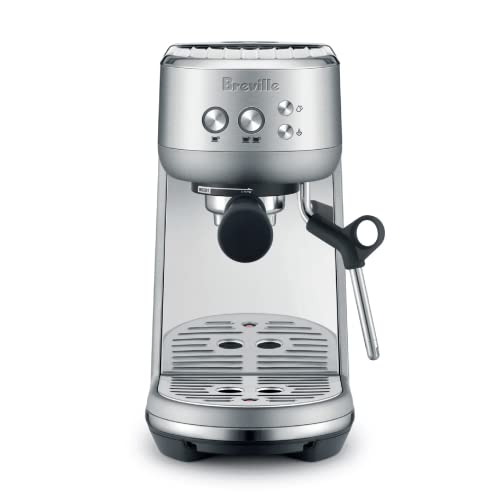
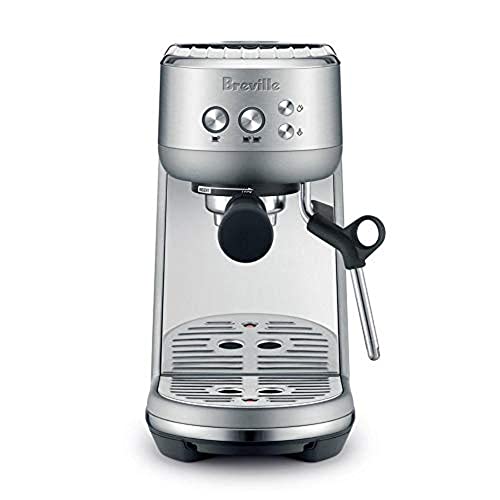
Choosing between the Breville Bambino and Bambino Plus comes down to one honest question: how often do you steam milk? Both machines pull the same espresso, so the Bambino vs Bambino Plus decision is really about milk: the Bambino uses a manual single-hole steam wand, while the Bambino Plus adds automatic frothing with adjustable milk temperature and texture, a faster four-hole wand, and a larger water tank. For U.S. buyers comparing these two entry-level Breville espresso machines—especially beginners, budget-minded shoppers, and households that make milk drinks regularly—that difference shapes daily convenience, total value, and long-term satisfaction more than shot quality.
This researched editorial analysis breaks down the meaningful differences in espresso performance, milk steaming, workflow and everyday use, cleaning and maintenance, design and size, cost and value, which type of buyer each machine fits best, and a few alternative espresso machine options. The goal is simple: help you choose the right machine for your coffee routine without paying extra for features you will not use—or skipping the ones that will make home espresso easier every day.
Best with auto steam pick
For this roundup, Breville Bambino Plus is the with auto steam we recommend first—the same pick at the top of our At-a-glance cards below.
Both the Bambino and Bambino Plus use the same ThermoJet heating system, PID temperature control, and 54 mm portafilter, so espresso quality is identical between the two machines.
The main difference is milk: the Bambino Plus adds automatic milk frothing with adjustable milk temperature and foam level settings, a four-hole steam wand, and auto-purge, while the Bambino uses a manual steam wand with one hole.
The Breville Bambino costs roughly $200 less, has a smaller footprint (6.3 inches wide vs 7.7 inches), and includes a direct hot water button that makes Americano-style drinks faster.
The Breville Bambino Plus justifies its premium for households that make multiple milk drinks daily, thanks to faster steaming, a larger 64 oz water tank, and a more beginner-friendly workflow.
Regardless of which machine you choose, pairing it with a better grinder and fresh beans will improve your espresso far more than the model difference alone.
Quick Verdict: Bambino vs Bambino Plus
For most U.S. buyers in 2026, the decision is straightforward. If lattes, cappuccinos, or flat whites make up the bulk of your routine, the Breville Bambino Plus is the stronger pick. Its automatic milk steaming, faster four-hole steam wand, and larger water tank remove friction from milk drinks without sacrificing any espresso performance.
If you mostly drink straight espresso, long blacks, or Americanos, the Breville Bambino delivers the same shot quality at a meaningfully lower price. It is a compact espresso machine with a dedicated button to dispense hot water, simpler internals, and fewer things that can break. Both machines heat up in about 3 seconds from cold, both pull shots at a fixed brew temperature of 200°F through a 9-bar OPV, and both feature low-pressure pre-infusion. The sections below unpack temperature stability, shot consistency, steam power, workflow, cleaning and maintenance, warranty, and value in detail.
Affiliate & Editorial Disclosure
Capitol City Coffee may earn a commission from qualifying purchases made through links in this guide, at no extra cost to you. Rankings and recommendations are based on researched editorial analysis, verified specs, and third-party consensus, not on commission size. This article reflects independent coffee editorial perspective, not Breville marketing.
Disclosure: This page contains affiliate links. As an Amazon Associate I earn from qualifying purchases.
Nine color options including black truffle and damson blue
Plus offers far more style choices
Milk System
Manual milk wand, single-hole tip
Automatic steam wand with four-hole tip, three temp + three texture presets, auto-purge
Biggest functional gap
Hot Water
Direct one-touch button
Requires pressing multiple buttons
Bambino wins for Americanos
Heating
ThermoJet, ~3-second warm-up
ThermoJet, ~3-second warm-up
Identical
Temperature Control
PID at ~200°F
PID at ~200°F
Identical
Brew Pressure
9-bar OPV with low-pressure pre-infusion
9-bar OPV with low-pressure pre-infusion
Identical
Cleaning Cycle
No backflush (no 3-way solenoid)
Guided backflush with cleaning disc and 3-way solenoid
Plus has drier pucks but drip tray fills faster
Warranty (U.S.)
1 year
2 years
Verify current terms with Breville
Ideal For
Budget espresso, Americanos, manual control
Milk drinks, beginners, multi-user households
–
Both coffee machines are true semi-automatic espresso machines sharing identical brew components. The Plus layers convenience features on top.
Design & Build: Size, Style, and Everyday Practicality
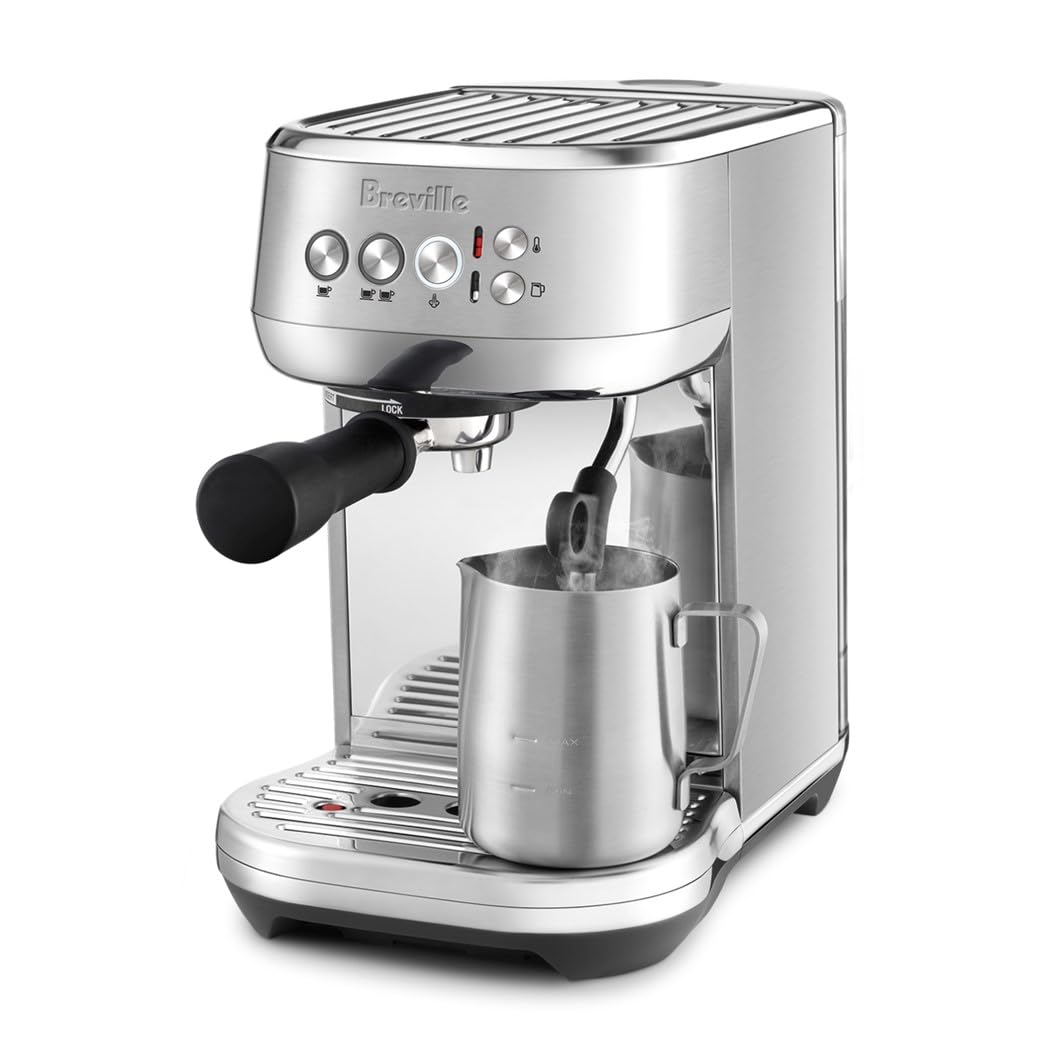
Both machines follow Breville’s compact design language, fitting comfortably in most U.S. kitchens. The Bambino measures roughly 6.3 inches wide, while the Bambino Plus comes in at 7.7 inches, a difference of 1.4 inches driven by the Plus’s additional electronics and integrated temperature sensor beneath the drip tray.
Materials are similar: a brushed stainless steel front panel with plastic side and rear panels. Where the Bambino ships in one color in the U.S., the Bambino Plus offers nine color options, including black truffle and damson blue, giving you more flexibility to match your kitchen.
The control layout differs. The Bambino has a clean front panel with one cup and two cup shot buttons, a steam button, and a dedicated hot water button. The Bambino Plus adds milk temperature and texture buttons plus indicator lights for automatic milk mode.
One quirk worth noting: the Bambino Plus actually weighs less than the Bambino despite its more complex build with additional components. Some users report the Plus sliding slightly during use when locking in the portafilter, while the heavier Bambino stays planted. Neither machine feels flimsy, but they are consumer-grade, not prosumer tanks.
If counter space is tight, the Bambino’s narrower frame wins. If you want color variety and a larger water tank that cuts refill trips, the Plus trades an extra inch of width for meaningful convenience.
Breville Bambino: Performance, Benefits, and Limitations
The Breville Bambino is Breville’s most compact and budget-friendly ThermoJet espresso maker, built around espresso fundamentals without the bells and whistles.
Espresso performance is strong for the price. The ThermoJet heating system reaches brew temperature in about 3 seconds from cold. PID temperature control holds the brew temperature steady near 200°F, and a 9-bar OPV with low-pressure pre-infusion helps produce even extraction. The machine ships with both single wall filter baskets and non pressurized baskets, so it works with pre ground coffee or freshly ground beans.
Workflow is minimal: press a button for one cup or two cup shots, hit the steam button to froth milk manually, or press the hot water button to dispense hot water for Americanos. The Breville Bambino features manual-only milk texturing through its manual steam wand with a single-hole tip. Steaming milk is slower than on the Plus, but you get full texture control if you learn the technique.
Strengths worth highlighting:
Lower price (~$299 MSRP)
Smaller footprint ideal for tight spaces
Direct hot water button for fast Americano-style drinks
Simpler internals without a 3-way solenoid valve, meaning less to go wrong
The Breville Bambino lacks a 3-way solenoid valve, which also means the small drip tray fills more slowly
Limitations to consider:
No automatic milk frothing
Less steam power and slower milk frothing time
Fewer included accessories (no milk jug or razor dosing tool in most bundles)
Only one finish option in the U.S.
This is the espresso machine for people who want great espresso and Americanos at a fair price, or who enjoy the craft of learning to froth milk manually.
Breville Bambino Plus: Performance, Benefits, and Limitations
The Breville Bambino Plus is Breville’s step-up model, adding automatic milk, stronger steam power, and a more beginner-friendly workflow on top of the same espresso core.
Brewing espresso is effectively identical to the Bambino. The same ThermoJet heating with 3-second warm-up, the same PID for precise temperature control at 200°F, the same 9-bar pressure, and the same low-pressure pre-infusion. You get better espresso than many other espresso makers in this price range, but not better than the Bambino itself.
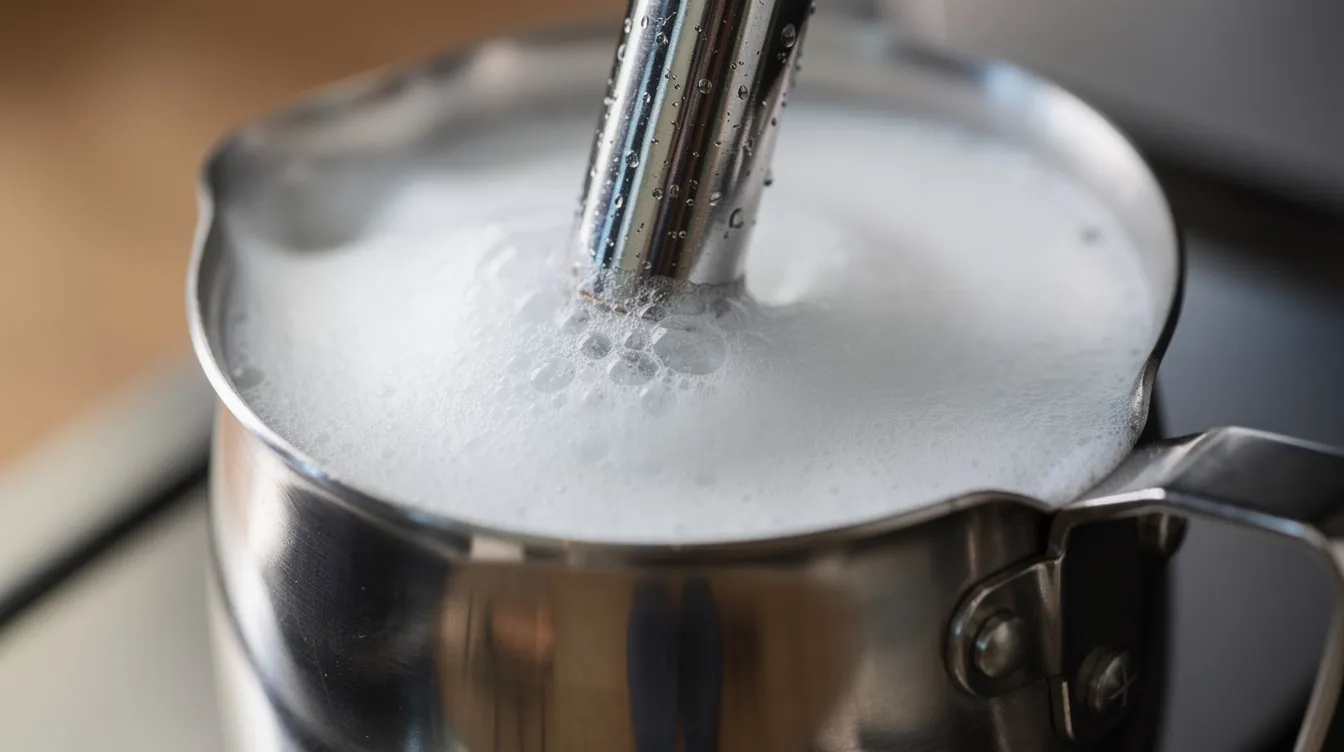
Where the Plus separates itself is milk. The Bambino Plus features a four-hole steam wand for faster frothing, and its automatic milk frothing feature lets you select from three milk texture levels (low, medium, high) and three temperature settings (warm, ideal, hot). The Bambino Plus has adjustable milk temperature and foam level settings managed by an integrated temperature sensor beneath the drip tray. It also has a self-cleaning function for the steam wand, auto-purging residual milk after each cycle. You can still use the wand in full manual mode when you want more control.
Additional workflow perks include the 64 oz water tank (also described as a 64 oz water carafe), front-panel milk controls, and a 2-year warranty versus 1 year on the Bambino.
Limitations:
Higher price (~$499 MSRP, about $200 more than the Bambino)
Slightly larger footprint at 7.7 inches wide
The Bambino Plus has a more complex build with additional components, including a 3-way solenoid valve, which means the drip tray fills faster and needs more frequent emptying
Bambino Plus requires pressing multiple buttons for hot water, which can annoy frequent Americano drinkers
The Plus is built for people making multiple milk drinks per day, households where ease matters more than saving a few dollars, and beginners who want café-style milk texture without a steep learning curve.
Espresso Performance: Temperature Stability, Pressure & Shot Consistency
For brewing espresso, these two machines are functionally twins. Your choice should not hinge on shot quality, because there is no meaningful difference.
Both use digital PID to maintain steady brew temperature near 200°F, reducing shot-to-shot variation. The Bambino and Bambino Plus both use a 9-bar OPV with a low-pressure pre-infusion phase that slowly builds pressure to reduce channeling and improve extraction. Espresso quality is identical on both machines.
Third-party reviews and user consensus consistently confirm that taste differences between the two are negligible. When espresso performance varies, it is almost always traceable to grinder quality, bean freshness, dose accuracy, or tamp technique rather than the machine model.
Both coffee machines handle medium and darker roasts well. Light roasts are possible but benefit from a higher-end grinder and careful dialing-in; users who primarily chase light roasts may eventually want machines with more adjustable temperature control.
The editorial bottom line: upgrading your grinder or sourcing better coffee will yield better espresso far more reliably than spending the extra money to move from Bambino to Bambino Plus purely for shot quality.
Milk Steaming & Automatic Milk Frothing: The Real Divider
This is the main battleground in the bambino vs bambino plus decision. If you make milk drinks regularly, this section matters more than any other.
The Bambino uses a single-hole steam wand for manual frothing. Steam power is adequate but noticeably slower. You control foam depth, milk temperature, and texture entirely by hand, which rewards practice and lets you develop your own milk steaming technique. With patience, you can produce latte art-capable microfoam on dairy milks and most non-dairy alternatives. But consistency depends on your skill.
The Bambino Plus’s automatic steam wand with its four-hole tip is a different experience. The Bambino Plus froths milk 12 seconds faster than the Bambino, and the automatic milk frothing mode lets you set temperature and foam level, then step back. The machine steams to the right temperature, stops, and auto-purges. For busy mornings or multi-drink rounds, this is where the Plus earns its premium.
The Bambino Plus offers three milk texture levels in auto mode, covering everything from flat-white-style microfoam to thick cappuccino froth. You can also switch to manual mode when you want full control for latte art practice.
One caveat: some owners report that even the “warm” automatic setting can overshoot, pushing milk temperature above 80°C. It is not a dealbreaker for most, but worth knowing if you are sensitive to scalded milk.
If milk drinks dominate your routine, research points strongly toward the Bambino Plus. If you are pleasantly surprised by the idea of learning to froth milk manually and prefer to own milk texture outcomes yourself, the Bambino’s manual milk wand will serve you well.
Workflow, Warm-Up Time, and Everyday Use
Both home espresso machines share a fast 3-second warm-up from cold, courtesy of the ThermoJet heating system. That alone makes either machine dramatically more convenient than traditional boiler espresso machines that need minutes of pre-heating.
Shot prep is nearly identical: fill the 54 mm portafilter, tamp, lock in, and press the one cup or two cup button. Both allow manual shot stopping for finer control, and both are simple enough for beginners.
Milk workflow is where routines split. On the Bambino, you actively position the milk jug, control wand depth and angle, judge temperature by hand or thermometer, and manually purge the wand. On the Bambino Plus, you can set the pitcher on the sensor pad, press a button, and walk away. For households where multiple people make coffee at different skill levels, the automatic milk on the Plus reduces failed drinks.
Hot water workflow diverges too. The Bambino has a direct hot water button, making it a one-touch operation for Americano-style drinks. The Bambino Plus requires pressing multiple buttons for hot water, a minor but recurring annoyance if you drink Americanos daily.
Noise is comparable. Both use vibration pumps with similar sound profiles. Coffee brewing and steaming milk produce moderate noise, but your grinder will likely be the loudest part of the morning.
For straightforward espresso and Americanos, the Bambino offers a simpler day-to-day workflow. For smoother milk drink production, the Bambino Plus wins.
Cleaning, Maintenance, and Longevity
Both espresso machines need regular cleaning and descaling for best performance and longevity, particularly if you have hard water.
The Bambino has a simpler cleaning routine. Without a 3-way solenoid valve, there is no backflush cycle. You wipe the steam wand after each use, rinse the portafilter, empty the drip tray, and run a descaling cycle when prompted. The lack of a solenoid means the drip tray fills more slowly, requiring less frequent emptying.
The Bambino Plus includes a guided cleaning cycle that uses a cleaning disc and backflush tablet pushed through the group head by its 3-way solenoid valve. This clears internal coffee oils and residue more thoroughly. The auto-purge on the steam wand also keeps the milk path cleaner. However, the 3-way valve sends more water into the drip tray, so it fills faster. Some users note that drip tray overflows can happen if you forget to empty it during cleaning cycles.
For longevity, both are consumer-grade Breville machines with more electronics and plastic than classic boiler designs. DIY repairs are trickier than on simpler Italian-style machines. Using filtered water and following the recommended cleaning cycle extends the life of both models.
Warranty matters: the Bambino carries a 1-year limited warranty in the U.S., while the Bambino Plus gets 2 years. That extra year helps cover the Plus’s additional complexity. Always verify current warranty terms directly with Breville before purchasing.
Cost & Value: Which Espresso Machine Is the Better Deal?
U.S. street prices fluctuate, but the Bambino typically sits around $299 while the Bambino Plus lands near $499. Sales regularly bring the Plus down to $399–$450, narrowing the gap. Either way, the Bambino Plus costs about $200 more than the Bambino at full retail.
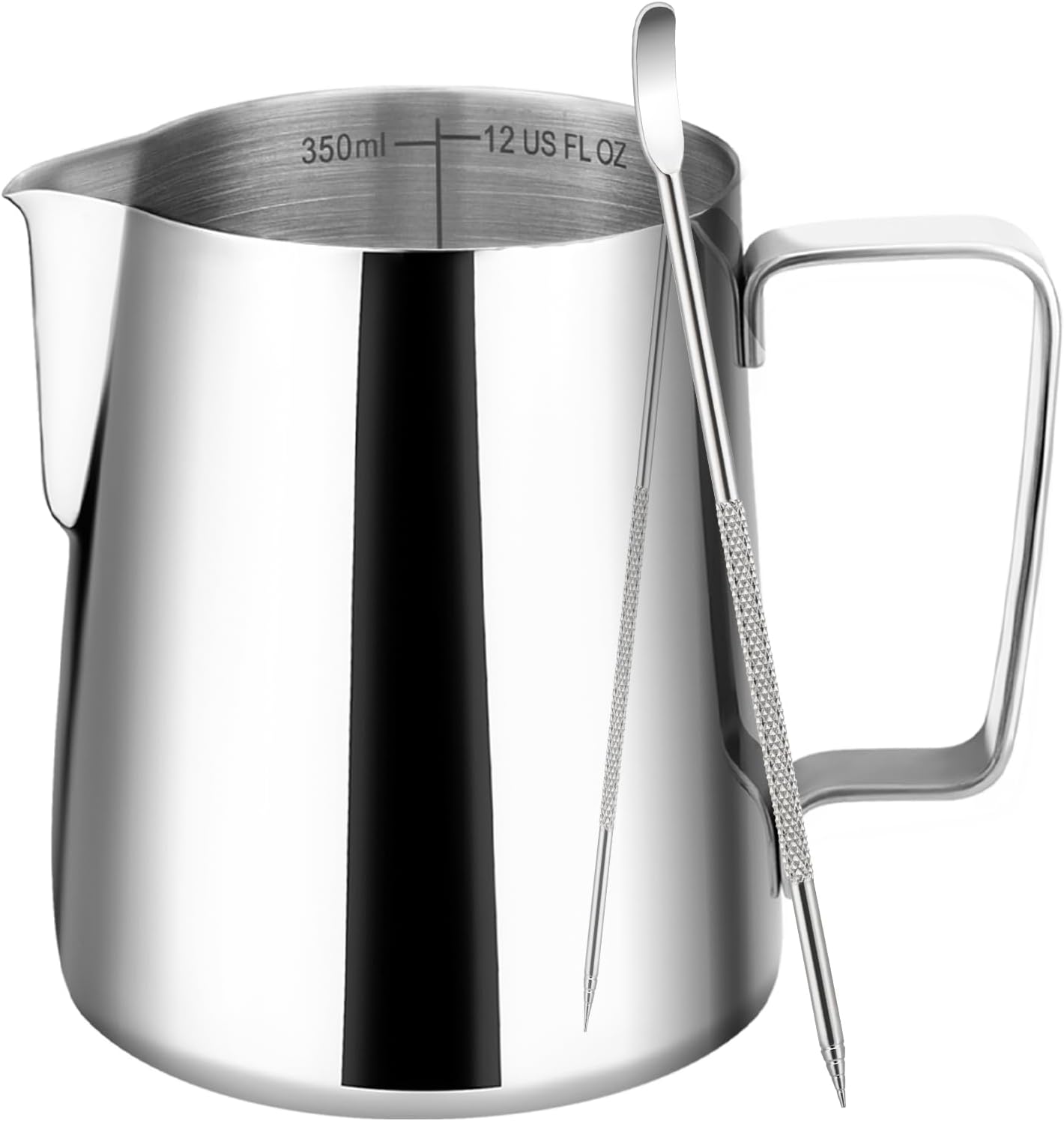
What does the extra money buy? Automatic milk frothing, a stronger four-hole steam wand, a larger 64 oz water tank, a 2-year warranty, more color choices, and sometimes a richer accessory bundle including a milk jug and razor dosing tool.
The Bambino counters with identical espresso performance at a lower price, simpler maintenance, and a smaller footprint. If you save money on the machine, you can redirect that $100–$200 toward a better grinder, which will do more for your coffee quality than any feature the Plus adds.
Compared to capsule systems, both machines significantly lower your per-cup cost over time when paired with whole beans and a capable grinder. They are great espresso machines for anyone ready to move beyond pods.
If your budget is strict and you drink black coffee, the Bambino is the higher-value pick. If you make milk drinks daily and value convenience, the Bambino Plus justifies its premium.
Winner by Use Case: Who Should Choose Which?
Rather than naming a single universal winner, here is how the Breville Bambino vs Bambino Plus matches up against specific routines.
If you mostly drink espresso, Americanos, or long blacks, the Bambino is the clear choice. Its dedicated hot water button, lower price, and simpler internals make it the better fit. You lose nothing on espresso quality and gain a more streamlined daily workflow.
If your household runs on lattes, cappuccinos, and flat whites, the Bambino Plus is the stronger pick. Automatic milk frothing with preset texture control saves time and delivers consistent results regardless of who is making the drink. This matters especially in multi-person households with varying skill levels.
If you are a true beginner, the Plus’s presets and auto-purge flatten the learning curve. If you are a tinkerer who enjoys developing barista skills, the Bambino’s manual wand and stripped-back interface give you more room to learn.
For small kitchens, the Bambino at 6.3 inches wide fits tighter spaces. The Plus at 7.7 inches is still compact by espresso machine standards but needs that extra clearance.
One point that applies to both: serious espresso drinkers should prioritize grinder pairing. A quality burr grinder affects flavor more than the bambino vs bambino plus choice alone. Invest in the grinder first.
The short version: if you love milk drinks and want automatic milk frothing, go Plus. If you want a compact, budget-friendly espresso machine for better coffee in black, go Bambino.
Which Should You Choose? (Decision Guide)
Here is a simple decision walkthrough:
What do you drink most? If 70% or more of your drinks use steamed milk, lean toward the Bambino Plus. If you mostly drink black espresso or Americanos, lean Bambino.
What is your budget? If you want to save money and redirect savings toward a better grinder, the Bambino makes more sense. If you have room in the budget for both the Plus and a decent grinder, the convenience payoff is real.
How do you feel about learning manual steaming? If you want to control everything yourself, the Bambino’s manual milk wand is satisfying. If you want consistency without practice, automatic milk on the Plus delivers.
Both machines are capable of great espresso when paired with fresh beans and a good grinder. There is no wrong choice on core coffee quality. Think about your next five years of coffee habits, not just the first month, when deciding whether to invest the extra money in automatic milk or stick with manual steaming.
Alternatives to the Bambino and Bambino Plus
While the bambino vs bambino plus comparison covers two of the strongest compact options, some readers may want to explore other territory.
The Gaggia Classic Pro is a classic single-boiler semi-automatic espresso machine with a 58 mm commercial-size portafilter, a simpler but more robust boiler design, and a thriving modding community. It trades ThermoJet speed for a platform many hobbyists upgrade over years with PID kits and OPV adjustments. If long-term tinkering appeals to you, it is worth a look among other espresso makers.
If you want a Breville machine with a built-in grinder, the Barista Express and Barista Pro are popular one-stop options, though they sacrifice some counter space and add complexity.
For readers who want maximum convenience and minimal learning, capsule-based systems like Nespresso offer push-button coffee brewing with virtually no cleanup. The trade-off is higher per-cup cost and less control over flavor. Our Nespresso vs Keurig comparison explores that space further.
These frequently asked questions address common concerns not fully covered above, focused on practical buying and ownership decisions.
Do I need a separate grinder with the Bambino or Bambino Plus?
Yes. Neither espresso machine includes a built-in grinder. Both ship with single wall filter baskets and dual-wall (pressurized) baskets, so they can technically work with pre ground coffee, but a dedicated espresso-capable burr grinder is strongly recommended for the best flavor and shot consistency. Serious espresso drinkers should prioritize grinder quality almost as highly as the machine choice, since grind size and uniformity have more impact on taste than the bambino vs bambino plus difference alone.
Can these machines handle light roast espresso well?
Both machines use a fixed brew temperature managed by PID, which works very well for medium and darker roasts but offers less flexibility for very light roasts that often benefit from higher temperatures and extended pre-infusion control. With a high-end grinder and careful dialing-in, some users do enjoy light roasts on these machines. However, readers who primarily drink light-roast espresso might consider more adjustable prosumer-level espresso machines with programmable temperature profiles.
Is the automatic milk frothing on the Bambino Plus good enough for latte art?
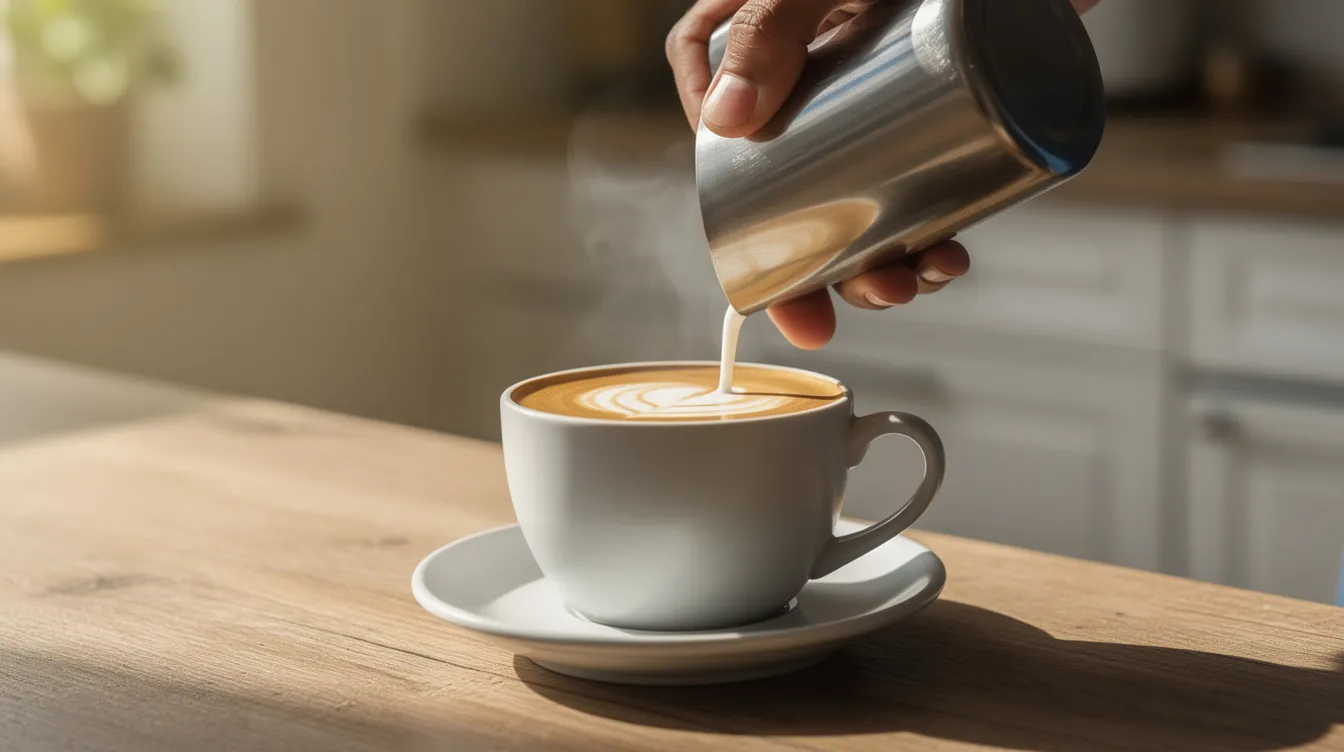
The Bambino Plus’s automatic milk frothing typically produces fine microfoam suitable for basic latte art, especially at medium texture settings, according to third-party testing and owner reports. Advanced latte art enthusiasts may still prefer manual steaming mode for maximum control, but most home users will find the automatic milk results more than adequate for hearts, rosettas, and everyday café-quality drinks.
How long do Breville Bambino and Bambino Plus typically last?
Longevity depends heavily on water hardness, cleaning habits, and usage volume. With proper descaling and routine maintenance, many owners report several years of dependable service from both machines. These are consumer-grade espresso machines with more electronics and plastic than traditional commercial equipment, so they are not designed as lifetime appliances. That said, they can be a solid multi-year investment when cared for properly, and the Plus’s 2-year warranty provides a bit more peace of mind.
Are Breville Bambino and Bambino Plus good for beginners?
Both machines are beginner-friendly thanks to fast warm-up, clear button layouts, and built-in safeguards like automatic shot timing. The Bambino Plus is especially suited to first-time espresso machine owners who want automatic milk frothing and an easier overall learning curve. The Bambino requires more hands-on practice with milk steaming and hot water management but rewards that effort with more control, a simpler machine to maintain, and a lower upfront cost. Either way, start with fresh beans, a decent grinder, and patience with your puck prep, and you will be pulling great espresso within a few days.
How Capitol City Coffee Rates Coffee and Coffee Machines
Every coffee and coffee machine we recommend is scored on the same 100-point scale, so a recommendation on one page means the same thing as a recommendation on any other. Each pick is also labeled with how we reached its score.
Research-ratedScored from the roaster or manufacturer’s published specifications, independent results such as Coffee Review blind cuppings and SCA brewer certification, and patterns across verified buyer reviews. Most of our current picks are research-rated.
Hands-on testedThe Capitol City Coffee team has brewed the coffee or used the machine ourselves, following the testing steps below. We only use this label when that testing actually happened, and we show the date we tested.
Coffee beans: 100-point scale
What we score
Points
What we look at
Origin and sourcing transparency
20
Country, region, farm or cooperative, altitude, bean variety, and processing method are clearly disclosed.
Flavor evidence
25
Independent cupping scores, how closely the tasting notes match what the origin is known for, and our own cupping notes when hands-on tested.
Roast and freshness
15
Roast level stated, roast-date practices, whole-bean availability, and packaging with a one-way valve or resealable bag.
Brew versatility
15
How well the roast suits pour-over, drip, French press, cold brew, and espresso.
Value
15
Price per ounce compared with similar single-origin coffees or blends.
Buyer feedback
10
Volume and consistency of verified reviews, and recurring complaints about staleness, bitterness, or shipping.
Coffee machines and gear: 100-point scale
What we score
Points
What we look at
Brewing performance
25
Water temperature in the 195–205°F range, even extraction, and SCA certification or published test data.
Build quality and reliability
20
Materials, known failure points, and long-term owner reports.
Ease of use and cleaning
15
Setup, the daily routine, descaling, and dishwasher-safe parts.
Fit for your kitchen
10
Capacity, counter footprint, and noise.
Useful features
10
Programming, grind and temperature control, and carafe type. Features that improve the cup count more than extras that do not.
Value
10
Price compared with machines that perform similarly.
Warranty and support
10
Warranty length, parts availability, and how the brand handles repairs.
What the grades mean
Score
Grade
What it means
90–100
A
Exceptional. Our first recommendation for the feeling and setting described.
80–89
B
Strong. Excellent, with minor trade-offs we explain.
70–79
C
Good. Worth it for specific needs, with clear compromises.
Below 70
—
Not recommended. We do not feature these as picks.
How we test hands-on
When a pick carries the Hands-on tested label, this is the method behind it, and we note the date we tested.
Coffee: brewed fresh from whole beans following Specialty Coffee Association guidelines (water between 195 and 205°F, about 1 gram of coffee to every 15 to 18 grams of water) in the brew methods the roast suits best, such as pour-over, French press, or espresso. We taste it black first, then with milk if that is how most people drink it, and each taster scores it on their own before we compare notes.
Machines: used in our everyday routine rather than a single demo. We brew both full and small batches, check the brewing temperature and brew time, and run the cleaning or descaling steps the manual calls for.
How we choose the feeling and setting
We match each coffee to a mood and a moment based on its flavor profile and roast. Bright, citrusy light roasts suit energizing mornings. Chocolatey, full-bodied medium roasts suit slow or social moments. Richer roasts suit espresso and milk drinks. Each pick explains which facts led us to that match.
Our scores stay independent
Every score comes only from the criteria above. No brand can pay for a pick or a higher grade. We re-check ratings when a roast, listing, or model changes, and update or remove picks that no longer earn their grade.
Some links on this page are affiliate links. As an Amazon Associate, Capitol City Coffee earns from qualifying purchases, at no extra cost to you.
Questions about a rating? Reach the Capitol City Coffee team through our contact page.