With NO Additional cost to you, as an Amazon Associate, I earn from qualifying purchases. This page contains affiliate links; we may earn a commission if you buy through them.
The best commercial coffee makers for busy cafes on this Amazon page start with the Fetco commercial batch brewer. BUNN, Curtis, Moccamaster, and Toddy round out the comparison.
Best batch brewer pick
For this roundup, Fetco commercial brewer is the batch brewer we recommend first—the same pick at the top of our At-a-glance cards below.
The best commercial coffee makers right now for U.S. buyers include the Fetco CBS-2152XTS for busy cafes and bakeries, the BUNN CWTF15-3 for budget-conscious diners and small restaurants, the Wilbur Curtis G4 ThermoPro for high-volume operations demanding precise extraction, the Technivorm Moccamaster KBT for offices and boutique hotels, and the Toddy commercial cold brew system for shops with strong cold brew demand. This guide is researched editorial analysis based on verified product specifications, manufacturer documentation, and consensus from professional use – not hands-on testing by Capitol City Coffee.
Best by category: Best overall commercial drip (Fetco CBS-2152XTS), best budget (BUNN CWTF15-3), best high-volume (Curtis G4 ThermoPro), best compact/office (Technivorm Moccamaster KBT), best cold brew system (Toddy Commercial).
Key decision factors: Capacity and brew speed, extraction consistency and brew temperature, footprint and workflow, programmability, cleaning and durability, warranty, and overall value for your specific commercial coffee program.
Full coverage: This guide covers hot brewers and cold brew coffee gear, plus ongoing maintenance and cost of ownership so buyers can avoid expensive mistakes over the life of their equipment.
Who this is for: Owners and managers of cafes, restaurants, offices, hotels, and hospitality businesses evaluating their next coffee maker investment in 2026.
Affiliate Disclosure & Quick Answer: Best Commercial Coffee Makers Right Now
Capitol City Coffee is an independent editorial and affiliate publication. We may earn a commission from some links on this page. Commissions never influence our rankings or recommendations. As an Amazon Associate we earn from qualifying purchases.
Choosing the right commercial coffee machine depends on volume and service type. Here are the machines we recommend after extensive research into brew quality, reliability, and value for U.S. commercial buyers:
Fetco CBS-2152XTS: Best overall dual-station commercial drip brewer for cafes, bakeries, and higher-end restaurants needing consistent batch brew and flexible recipes.
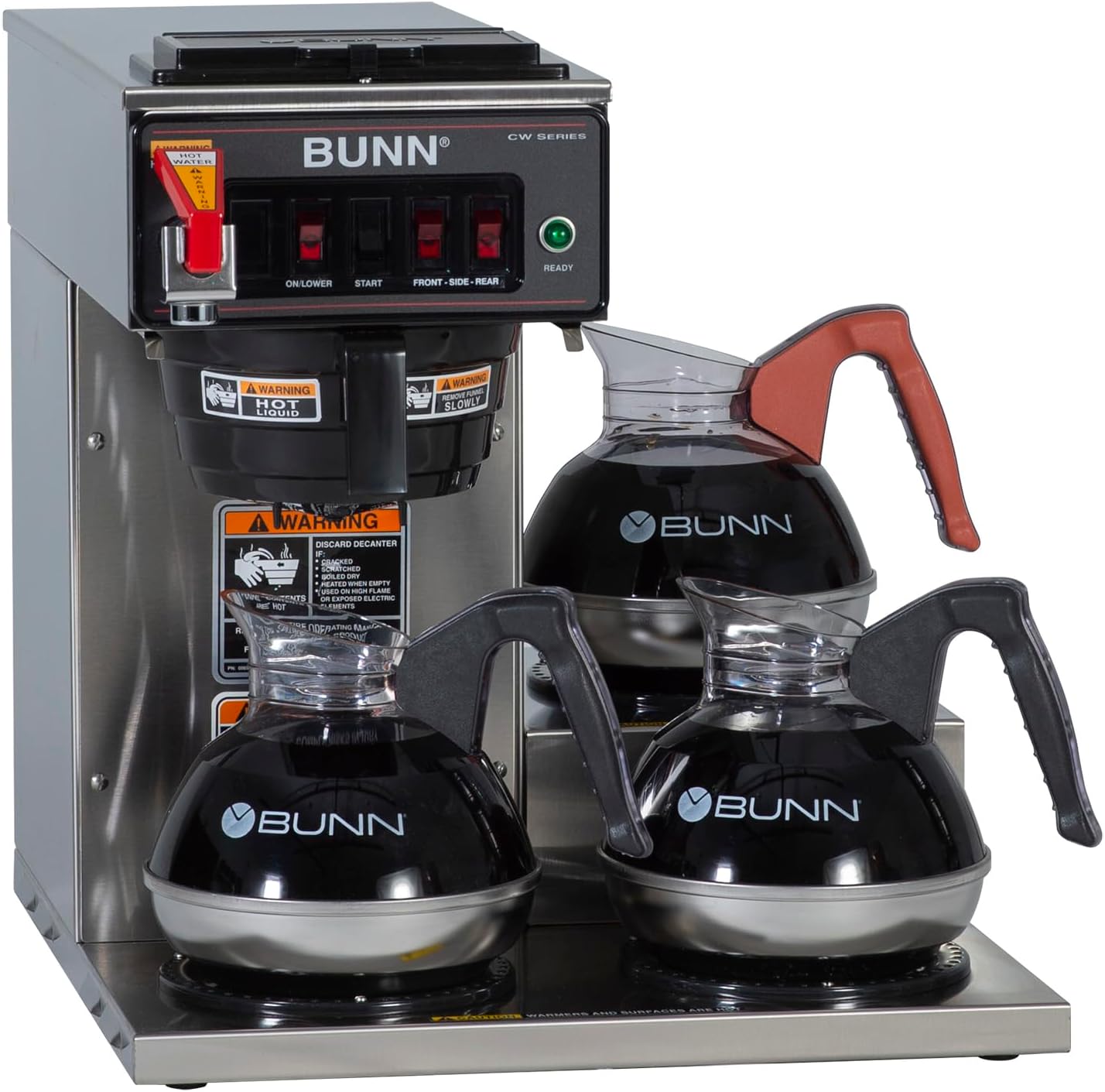
BUNN CWTF15-3: Best budget small-footprint plumbed brewer for diners, churches, and small restaurants that need simple, reliable coffee service.
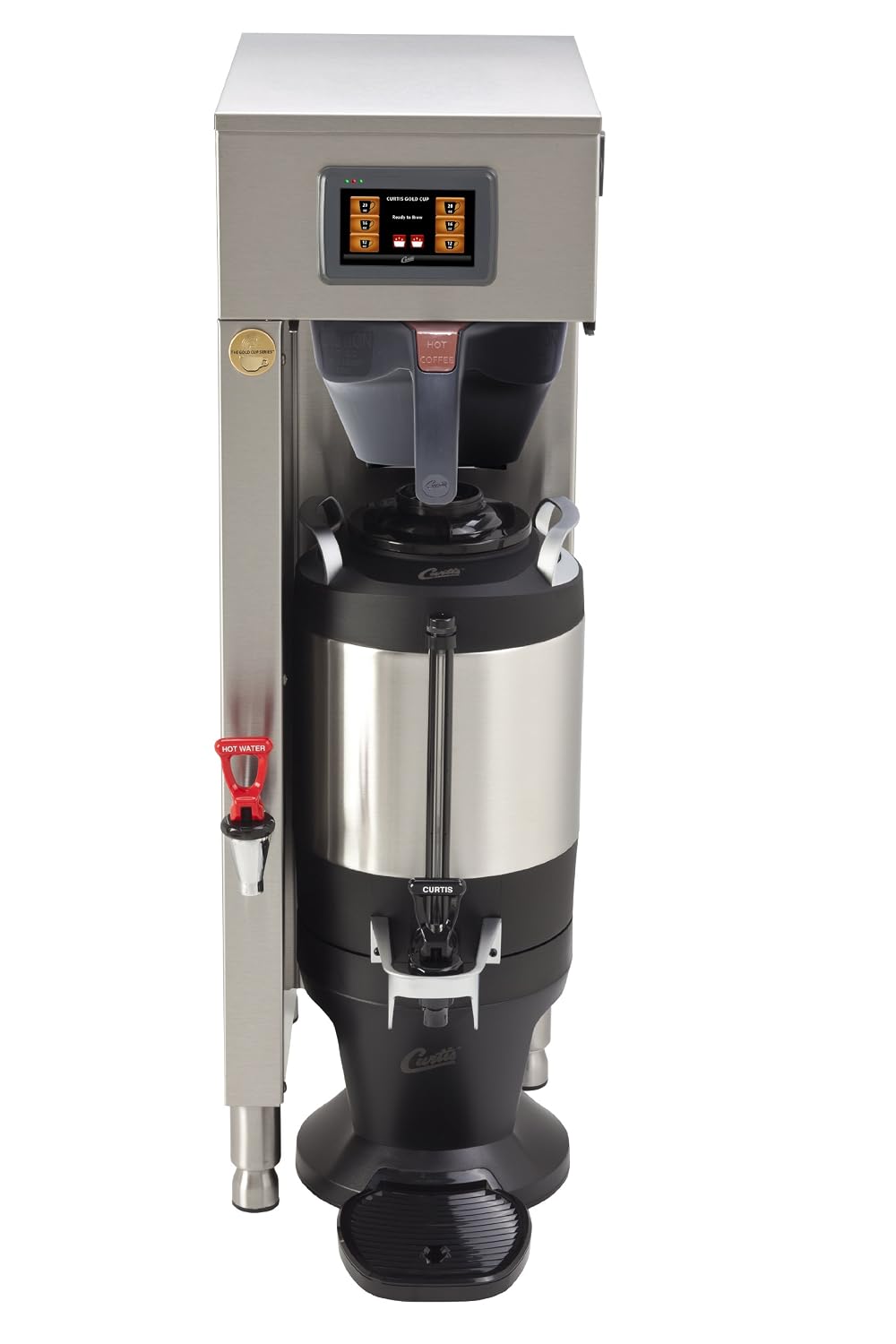
Wilbur Curtis G4 ThermoPro: Best high-volume batch brewer with tight temperature and brew time control for quick-service chains and multi-location cafes.
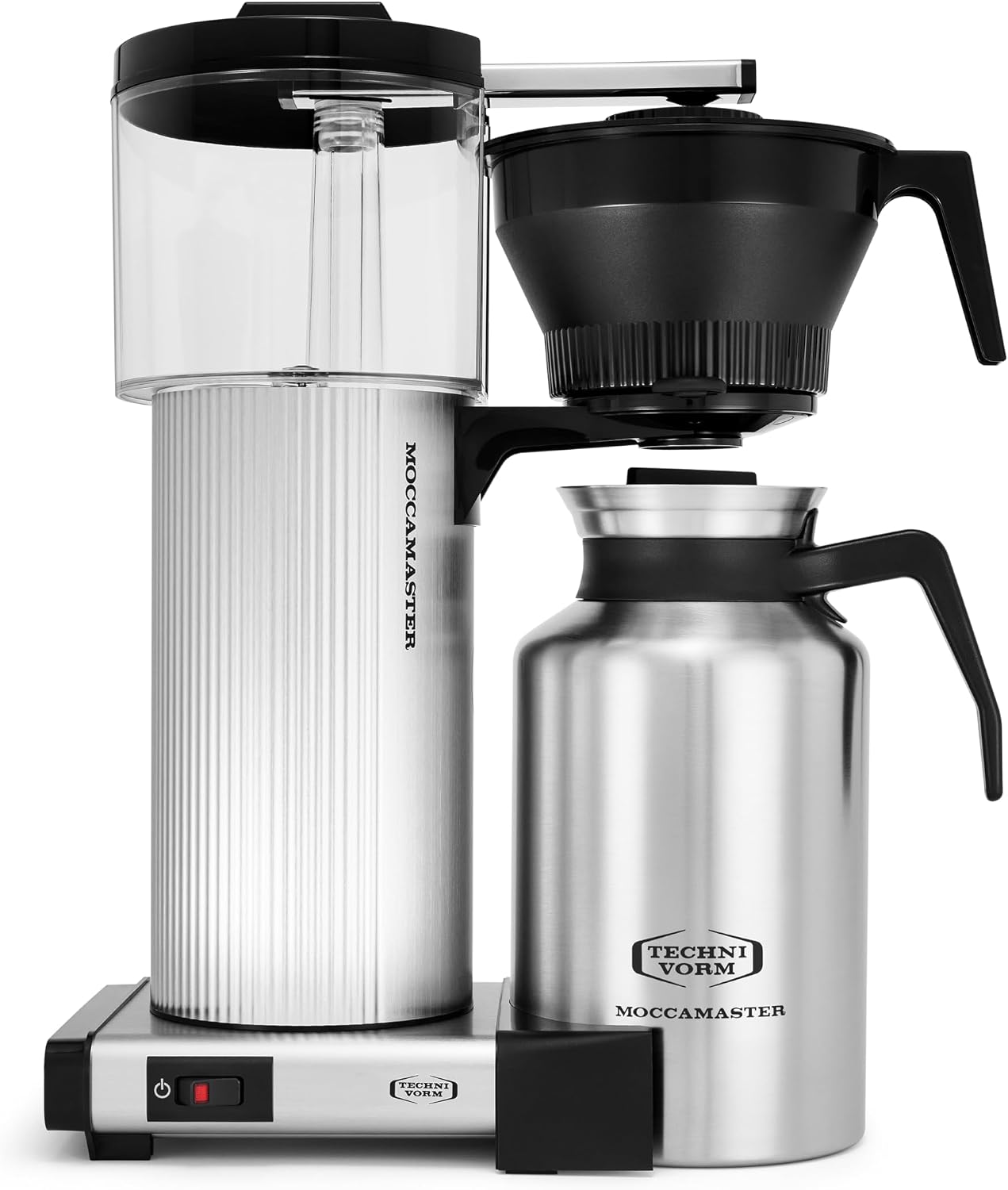
Technivorm Moccamaster KBT: Best compact office brewer where cup quality matters but volume is moderate.
Toddy Commercial: Best Amazon-available commercial cold brew setup for shops where cold brew drives a meaningful share of sales.
These picks reflect researched editorial analysis of extraction consistency, capacity, durability, usability, and value. No manufacturer paid for placement. Price tiers range from roughly $400 for the BUNN CWTF15-3 up to $2,500+ for fully configured dual-station systems.
At a glance
Compare Amazon-available commercial and cafe brewers on a phone first: listing photo, capacity notes, and a Check on Amazon button. Research-rated, not yet used in our cafe.
Unless otherwise stated, recommendations in this guide are based on researched editorial analysis – not Capitol City Coffee’s own hands-on lab testing. We relied on manufacturer specifications, published technical documentation, Specialty Coffee Association brew standards, third-party expert reviews, and broad consensus from hospitality operations across the U.S.
Our methodology emphasizes factors that matter for professional use:
Extraction consistency across batches and brew temperature stability (targeting the SCA-recommended 195–205°F window).
Real-world capacity measured in gallons per hour, plus brew time for full batches under realistic conditions.
Durability under daily commercial coffee workloads, including common failure points like heating elements, spray heads, and valve seals.
Workflow and footprint in tight bar or kitchen spaces, where every inch of counter matters.
Cleaning and maintenance demands, including descaling, backflushing, and daily sanitation.
Warranty strength, U.S. service network availability, and long-term cost of ownership.
Flavor and quality assessments lean on consensus from baristas, roasters, and restaurant operators rather than our own tastings. This guide is brand-neutral: no manufacturer has paid for placement, and affiliate relationships do not dictate rankings.
Best Commercial Coffee Makers: Detailed Picks & Ideal Users
This section breaks down each recommended machine with documented performance data, workflow considerations, durability notes, and the type of business it suits best.
Fetco CBS-2152XTS – Best Overall Commercial Drip Coffee Maker
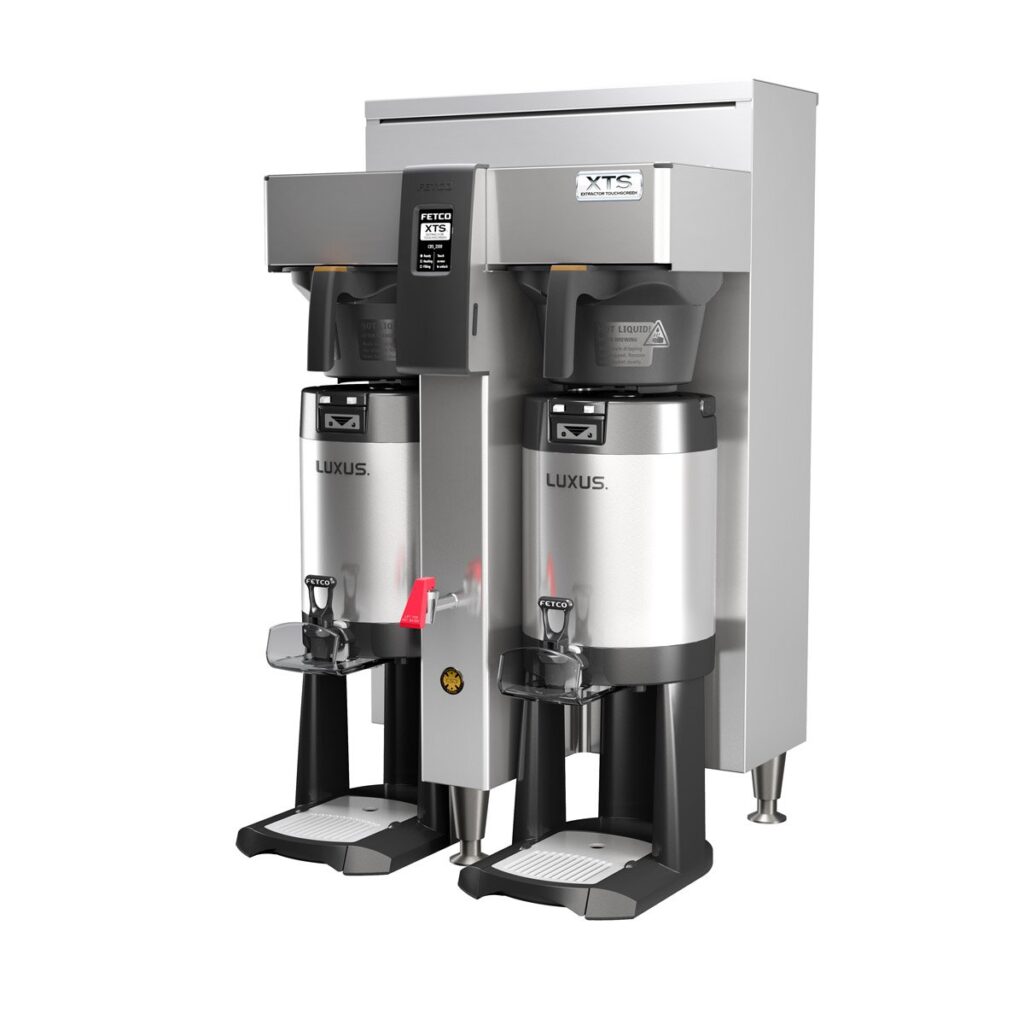
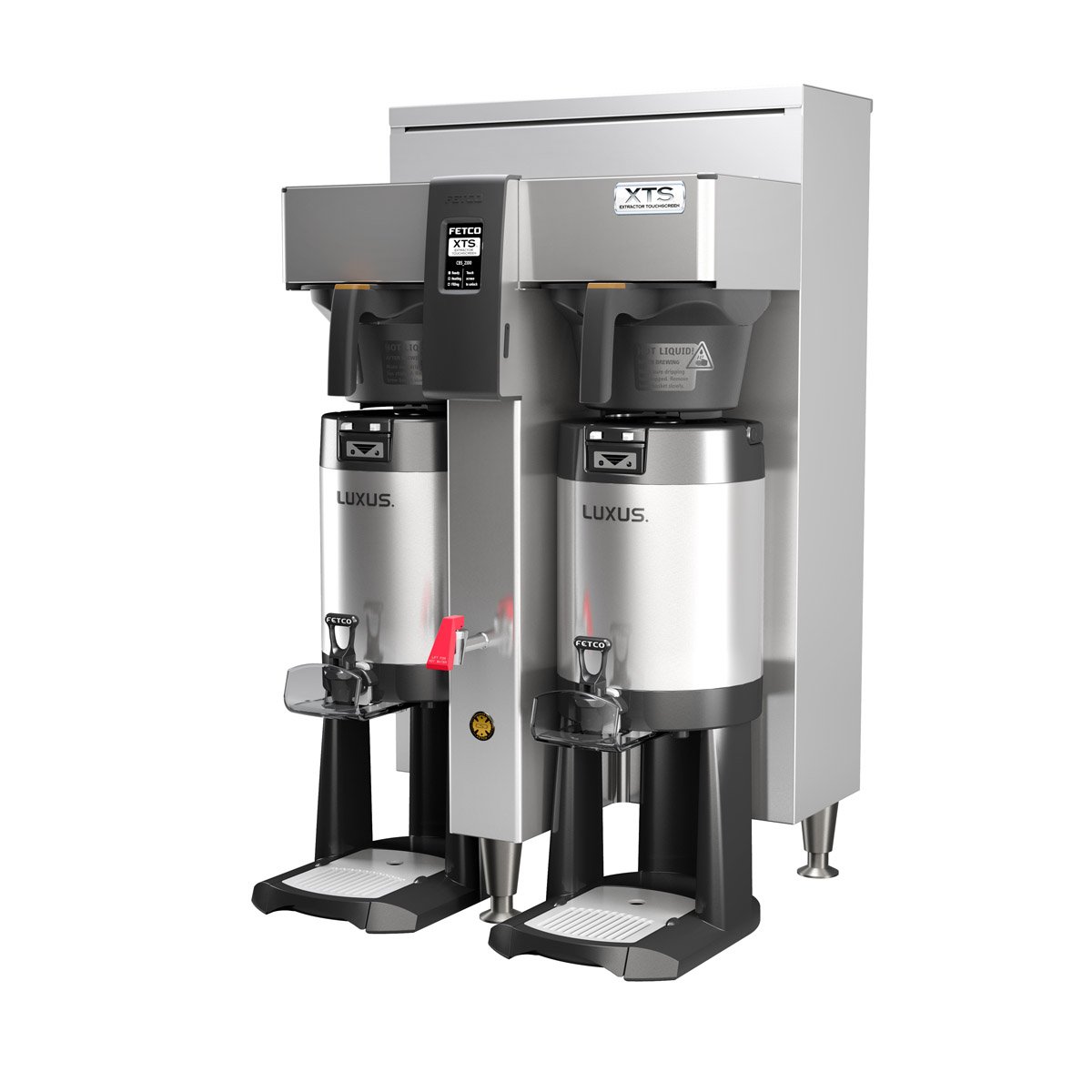
The Fetco CBS-2152XTS is a dual-station, plumbed-in commercial drip coffee maker popular in specialty cafes and higher-end restaurants. It handles the demands of a busy coffee program without sacrificing extraction quality.
Key specs: Each station brews 1.5 to 2.0 gallons per batch. The touchscreen interface allows programming of brew volume, brew time, pre-wet cycles, and temperature (typically 190–208°F). It connects to cold water supply at 20–75 PSI via a 3/8″ male flare fitting. Fetco brewers feature a lime-scale resistant Cascading Spray Dome that distributes water evenly across the coffee bed, improving saturation and reducing maintenance. Additionally, the Fetco CBS-2231 NG brewers in the same family have a highly responsive touch screen, and the Fetco CBS-1221 brews 85 cups per hour with customizable batch sizes and a 2.66-gallon tank with minimal recovery time – worth noting if you need a single-station alternative.
Strengths:
Consistent extraction across back-to-back batches, even during peak rushes.
Stable brew temperature close to SCA standards.
Dual stations let staff brew regular and decaf simultaneously, or rotate between blends to serve customers more efficiently.
Programmability simplifies training and improves repeatability for multi-location operations.
Limitations:
Requires plumbing and 208–240V electrical service – not a plug-and-play option.
Upfront cost is mid-to-high, typically $1,800–$2,800.
Regular descaling is essential, especially with hard water, to protect internal components.
Ideal users: Busy specialty cafes, bakeries, hotels, and higher-volume offices that need consistent batch brew throughout the day.
Our pick:Fetco CBS-2152XTS Dual Station Coffee Brewer. Two independent stations with touchscreen control of brew volume, pre-wet, and temperature, as described above. One honest note: the Amazon listing has no customer reviews yet, and like most commercial brewers it needs a water line and dedicated electrical, so confirm the specs against your space before ordering. Research-rated, not yet tested by our team.
BUNN CWTF15-3 – Best Budget Commercial Coffee Maker for Diners and Small Restaurants
The BUNN CWTF15-3 is a classic, lower-cost, plumbed-in commercial coffee maker with three warmers. It’s a fixture in U.S. diners, churches, and community centers for good reason: it’s simple, reliable, and easy for any staff member to operate.
Key specs: 12-cup glass carafe format, internal hot water tank, up to roughly 3.9–7.5 gallons per hour depending on the configuration, simple switch controls, and 120V compatibility for typical U.S. outlets. Footprint is a compact 17″ H × 16.5″ W × 17.7″ D.
Strengths:
Reliable, straightforward brewing with minimal training – press a button and walk away.
Compact footprint that fits on crowded counters alongside other equipment.
Proven track record in high-turnover environments serving classic diner coffee.
Low acquisition cost makes it accessible for tight budgets.
Limitations:
Glass carafe and warmer design can lead to cooked or stale coffee if left out too long, increasing waste.
Limited programmability: no pre-infusion, no profile control, no recipe storage.
Better fit for traditional batch service than for specialty shops where customers expect nuanced flavor.
Maintenance: Easy to descale and clean, but warmers and glass carafes are potential break points. Regular cleaning of the spray head and internal tank is important for quality and longevity.
Ideal users: Small restaurants, diners, offices, and events needing reliable bulk brewing on a tighter budget.
Wilbur Curtis G4 ThermoPro – Best High-Volume, High-Control Batch Brewer
The Curtis G4 ThermoPro series is built for cafes and quick-service restaurants that need both speed and precision. The Curtis G4 ThermoProX brews directly into thermal dispensers, eliminating the need for warmers and the flavor degradation that comes with them.
Key specs: The single 1.5-gallon model pushes approximately 11.5 gallons per hour. Twin models can reach 15–21 gallons per hour depending on power configuration. The Curtis G4 ThermoProX features an upgraded G4+ touchscreen interface for easy programming of brew temperature, brew time, pre-infusion, and pulse brewing profiles. Digital temperature control enhances consistency in high-volume brewing, keeping water within the 195–205°F target window.
Strengths:
Repeatable brew cycles that help maintain flavor profile throughout the day, even with single-origin offerings.
Touchscreen interface with clearly labeled recipes that trained staff can quickly read and use during service.
Easy recipe duplication across multiple locations to keep commercial coffee tasting uniform.
Thermal servers reduce waste and energy use compared to warmer-based systems.
Limitations:
High electrical demand (1,800–2,800W for single units, up to 7,600W for twin high-volume models) may require dedicated circuits.
Plumbing required: water pressure of 20–90 PSI, minimum 1.0 GPM flow rate.
Parts and service costs can be significant, though U.S. availability is strong.
Maintenance: Daily tasks include rinsing brew baskets, wiping the spray head area, and cleaning server interiors. Periodic descaling and filter changes are critical to maintain performance.
Ideal users: Multi-location cafes, high-traffic quick-service chains, hotels with banquet operations, and any program needing consistent, large-batch drip coffee. Batch brewers like this are suitable for cafes selling coffee by the gallon.
Our pick:Wilbur Curtis G4 ThermoPro Single 1.5 Gallon Coffee Brewer. The single-station 1.5-gallon model whose specs are listed above, brewing straight into a thermal dispenser. Twin-station versions are sold as separate models. Research-rated, not yet tested by our team.
Technivorm Moccamaster KBT – Best Compact Office Brewer (Amazon Listing)
The Technivorm Moccamaster KBT is the Amazon-available thermal carafe model on this page. It sits at the bridge between home and commercial coffee makers: SCA-certified, smaller in scale, but robust enough for offices, co-working spaces, and boutique hotels that care about what’s in the cup. The CDT Grand is a related commercial-rated sibling, not the listing we wrap here.
Key specs: Brews approximately 60 ounces (1.8 liters) per batch into a double-wall stainless steel thermal carafe. A copper boiling element heats water to roughly 196–205°F. Full batch completes in about 6–7 minutes. Weight is just 7.55 lbs, and the footprint is a tiny 12.5″ W × 6.75″ D × 17.75″ H.
Strengths:
Reputation for clean, well-extracted drip coffee, especially with medium and lighter roasts.
Easy enough for non-barista staff to operate – it’s essentially a quick switch operation.
Thermal carafe keeps coffee hot without a warming plate, protecting flavor during meetings or slow periods.
Ideal where a full plumbed-in commercial installation is overkill or impossible.
Limitations:
Lower capacity than full commercial brewers; not suitable for high-rush cafes.
Pour-over water fill (no plumbing) can be a workflow bottleneck in larger offices.
Higher upfront cost than consumer drip machines, though justified by the 5-year warranty and longevity.
Ideal users: Law offices, creative agencies, co-working spaces, small hotels, and restaurants with modest coffee volume that still care about flavor quality.
Our pick:Technivorm Moccamaster KBT Coffee Brewer. Amazon carries this SCA-certified thermal carafe model with a matching product photo. The CDT Grand described above is the commercial-rated sibling; we only link the KBT listing so the photo and ASIN match. Research-rated, not yet tested by our team.
Best Commercial Cold Brew Coffee Systems (Toddy Commercial on Amazon)
For cafes and bars where cold brew coffee drives a meaningful share of the menu, dedicated cold brew equipment is essential. Traditional cold brew can take up to 24 hours to prepare using standard immersion methods, which ties up batch space and complicates inventory.
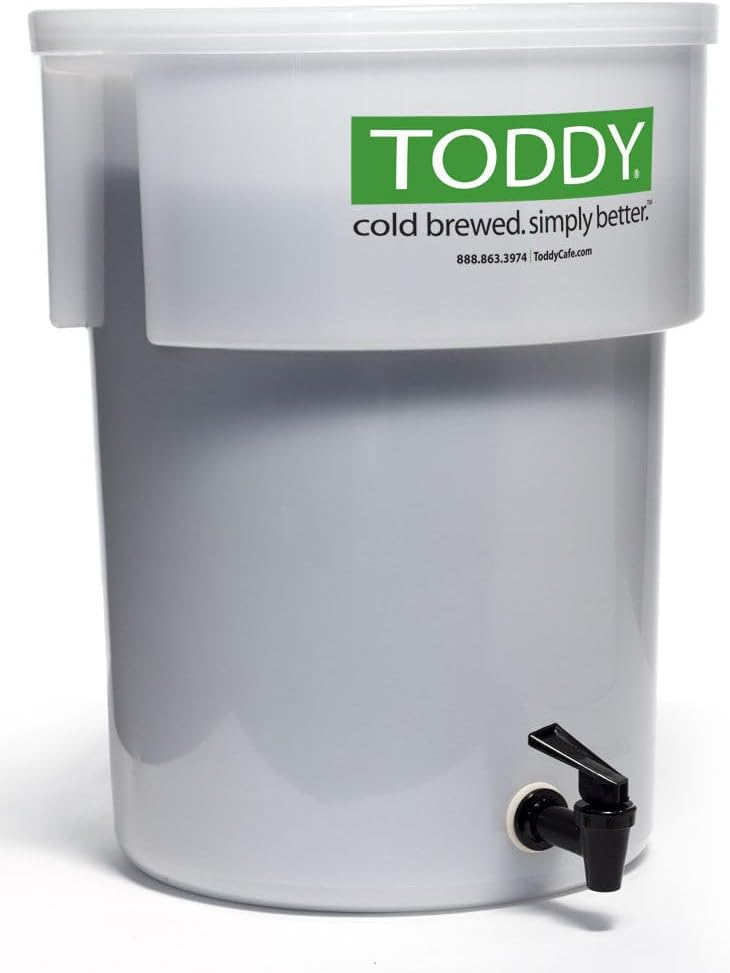
Amazon pick: The Toddy commercial system (NSF-certified 5-gallon immersion with a lift filter) is the Amazon listing we wrap on this page. Filtron Pro and Brewista Cold Pro 4 are the same equipment class, but Filtron sells direct and the Brewista unit has been discontinued, so we do not wrap those as the buy button.
Faster alternatives: In recent years, newer generation systems have compressed brew times dramatically. Hardtank cold brew equipment brews in just 45 minutes – compared to the standard 12–24 hour steep – and can brew up to 5 gallons in that time. Hardtank equipment features a touchscreen for precise recipe selection. Faster brewing improves stock management efficiency by allowing shops to respond to demand the same day rather than planning a full day ahead. The Marco ColdBRU offers another current option, allowing for programmable brewing profiles and brewing up to 5 gallons of cold brew in 2–3 hours.
Versatility: Cold brew equipment can prepare other beverages like tea, and some cold brew machines can prepare tea and cocktails – a useful ability for bars and restaurants looking to expand their beverage menu beyond coffee.
Cleaning and durability: Thorough daily rinsing and periodic deep cleaning are critical to prevent microbial growth. NSF certification matters for restaurants and bars facing health inspections. Stackable or vertical designs help save cooler and back-of-house space.
Ideal users: Cafes with strong cold brew demand, bars serving coffee cocktails, bakeries and restaurants that batch cold brew for service, and offices wanting a dedicated cold brew offering.
Our pick:Toddy Cold Brew System, Commercial Model with Lift. The commercial Filtron Pro is sold only through Filtron, and the Brewista Cold Pro 4 has been discontinued, so this is the closest widely available system of the same type: a 5-gallon NSF-certified immersion brewer that turns up to 5 lb of coffee into at least 2.5 gallons of concentrate, with a lift that lets the grounds drip dry. Research-rated, not yet tested by our team.
Key Features That Matter in a Commercial Coffee Maker
Commercial needs differ sharply from home use. Buyers must balance brew quality with capacity, durability, staff ease of use, and long-term costs. Commercial coffee machines are categorized into batch/drip brewers and espresso machines – this guide focuses on the batch/drip side. High-volume locations also benefit from dual boiler systems for espresso machines if espresso is part of the program.
Here are the features worth your attention:
Brew temperature: Staying near 195–205°F for hot drip is crucial for balanced extraction. Temperature stability is critical for maintaining coffee quality in busy environments. Machines that drift below under-extract (weak, sour); above that range causes bitterness.
Brew time and cycle control: Typical batch drip cycles run 4–8 minutes. Programmable brewing features improve extraction and flavor consistency through pre-infusion, pulse brewing, and adjustable contact time.
Capacity and recovery: Gallons per hour and batch size determine whether a machine can handle breakfast rushes. High-capacity brewers can produce hundreds of cups per hour during peak hours. High-volume coffee setups need to match the brewer’s output to peak customer traffic.
Extraction consistency: Spray head design, bed saturation, and repeatable recipes are the keys. High-volume coffee makers require dependable equipment for temperature stability and extraction quality.
Carafe type: Thermal servers preserve coffee temperature without continuous heat from burners, reducing energy costs and flavor degradation. Glass carafes on warmers are cheaper but sacrifice quality over time.
Programmability: Timers, recipes, and volumetric dosing reduce training time and human error – especially popular in multi-location operations.
Footprint and installation: Width, depth, clearance, water line requirements, drainage, and power (120V vs 208–240V) all need to match your space. Plumbed automatic units connect directly to a water line for continuous brewing.
Usability: Intuitive controls, clear status indicators, and easy-to-handle brew baskets matter when staff turnover is high.
Cleaning and hygiene: Daily cleaning of brew baskets and servers, regular descaling, and easy-to-access components for health inspections.
Durability: Stainless steel construction, commercial-rated duty cycles, and robust service networks matter more than flashy features.
Warranty: Check coverage on boilers, electronics, and labor. Local service availability is important when selecting a commercial coffee brand.
Value: A mix of upfront cost, longevity, energy use, labor savings, and the revenue potential of serving better coffee.
How to Choose the Right Commercial Coffee Maker for Your Business
Selecting the right brewer is a step-by-step process. Here is how to identify the best fit whether you run cafes, restaurants, or offices:
Define your coffee program. Are you primarily serving classic drip, specialty batch brew, cold brew coffee, or a mix? This determines the type of equipment you need.
Estimate volume and peak demand. Calculate cups or gallons per day, focusing on your busiest 30-minute windows. A brewer that handles averages but chokes during rushes will frustrate customers and staff alike.
Choose brew type(s). Decide between hot batch drip makers, thermal server systems, airpot systems, and dedicated cold brew equipment based on your service style.
Consider space and utilities. Measure available counter space, confirm access to water lines and drainage, and verify appropriate electrical circuits. Commercial coffee equipment must meet local plumbing and electrical requirements.
Match controls to your staff. Simple, durable machines work best for high-turnover environments. More programmable options reward a coffee-savvy team.
Account for cleaning and maintenance. Honestly assess who will clean the machine each day and how much effort they can commit.
Balance budget and lifespan. A cheaper brewer with a shorter life expectancy may cost more annually than a robust machine that runs for a decade.
Plan for future growth. If you anticipate growth in coffee or cold brew sales, choose a machine with headroom in capacity or modular add-ons rather than buying at exact current need.
Maintenance and Cost of Ownership
Purchase price is only part of the total investment. Here is what to budget for over the life of your equipment:
Daily tasks: Empty and clean brew baskets, rinse carafes or airpots, wipe spray heads, and log any issues noticed by staff. Automated cleaning cycles simplify maintenance for staff and can prevent costly downtime in busy coffee operations.
Weekly/monthly cleaning: Use dedicated coffee equipment cleaners, descale based on water hardness, and check gaskets, spray heads, and faucets. Cleaning and maintenance features can reduce labor costs in commercial coffee makers over time.
Water quality: Water quality and filtration are significant considerations for commercial coffee systems. Filtration systems or softeners prevent scale, improve taste, protect heating elements, and extend descaling intervals. This is one of the highest-impact investments you can make.
Parts and service: Budget for consumables – filters, carafes, gaskets, valves – and choose brands with readily available U.S. parts and local technicians.
Energy use: Warming plates consume power continuously. Thermal servers and energy-saving modes in coffee machines help reduce operational costs during idle times. The BUNN Infusion series, for example, includes an energy saver mode for off-peak hours.
Expected lifespan: Well-maintained commercial drip brewers typically last 5–10+ years. Poor maintenance – especially skipping descaling or ignoring water filtration – can cut that in half.
Total cost: Consider annualized cost of ownership: purchase price divided by expected years of use, plus filters, water treatment, cleaning supplies, potential repairs, and staff time. A $2,000 brewer lasting 8 years costs $250/year before consumables. A $500 brewer lasting 2 years costs the same – without the better coffee.
FAQs: Commercial Coffee Makers & Cold Brew Systems
These questions address practical concerns common among U.S. cafe and office managers that are not fully covered above.
Do I really need a plumbed-in commercial coffee maker, or is pour-over enough?
Plumbed-in machines are strongly recommended for any business brewing multiple batches per day. They save labor, ensure consistency, and eliminate the risk of staff forgetting to refill tanks during a rush. Pour-over commercial coffee makers like the Technivorm Moccamaster KBT can work for low-volume offices, pop-ups, and small venues where installation is constrained. Consider the long-term labor and workflow costs alongside the small upfront savings of skipping plumbing.
What size commercial coffee maker do I need for a 50-person office?
A reasonable rule of thumb: assume 1–2 cups per person during the morning window and choose a machine that can brew at least 60–100 ounces in one batch. The Technivorm Moccamaster KBT covers this well. For all-day coffee drinkers or offices hosting clients, stepping up to a small plumbed commercial brewer with thermal servers reduces constant brewing and wait time. Always factor in peak times (typically 8–10 a.m.) rather than average daily volume.
Can I make cold brew using a standard commercial drip coffee maker?
Traditional cold brew coffee is made by long-steeped immersion at room or fridge temperature – not by brewing hot coffee and chilling it. While you can brew hot concentrate and cool it for iced coffee, dedicated cold brew systems yield smoother, less acidic results and are far better for large-batch cold brew programs. Businesses with modest cold brew needs may start with a smaller system and scale up as demand grows.
How often do I need to descale a commercial coffee maker?
Descaling frequency depends on local water hardness and your filtration setup. For busy machines using untreated hard water, every 1–3 months is typical. With good filtration, intervals can stretch further. Follow the manufacturer’s maintenance schedule and watch for visible scale, slower brew times, or shifts in brew temperature and taste. Skipping descaling shortens machine life and can void warranties – making it one of the most important cost-control habits you can build.
Is it worth paying more for a programmable commercial coffee maker?
Advanced programmability – brew temperature control, pre-infusion timing, recipe presets, automatic start times – is most valuable for specialty cafes and multi-location operations seeking consistent, high-quality coffee. Simpler machines may be more appropriate where staff turnover is frequent or coffee expectations are basic, since fewer options mean fewer errors. Learn what role coffee plays in your business model and match feature complexity to staff skill level before committing to a more expensive, feature-rich machine.
How Capitol City Coffee Rates Coffee and Coffee Machines
Every coffee and coffee machine we recommend is scored on the same 100-point scale, so a recommendation on one page means the same thing as a recommendation on any other. Each pick is also labeled with how we reached its score.
Research-ratedScored from the roaster or manufacturer’s published specifications, independent results such as Coffee Review blind cuppings and SCA brewer certification, and patterns across verified buyer reviews. Most of our current picks are research-rated.
Hands-on testedThe Capitol City Coffee team has brewed the coffee or used the machine ourselves, following the testing steps below. We only use this label when that testing actually happened, and we show the date we tested.
Coffee beans: 100-point scale
What we score
Points
What we look at
Origin and sourcing transparency
20
Country, region, farm or cooperative, altitude, bean variety, and processing method are clearly disclosed.
Flavor evidence
25
Independent cupping scores, how closely the tasting notes match what the origin is known for, and our own cupping notes when hands-on tested.
Roast and freshness
15
Roast level stated, roast-date practices, whole-bean availability, and packaging with a one-way valve or resealable bag.
Brew versatility
15
How well the roast suits pour-over, drip, French press, cold brew, and espresso.
Value
15
Price per ounce compared with similar single-origin coffees or blends.
Buyer feedback
10
Volume and consistency of verified reviews, and recurring complaints about staleness, bitterness, or shipping.
Coffee machines and gear: 100-point scale
What we score
Points
What we look at
Brewing performance
25
Water temperature in the 195–205°F range, even extraction, and SCA certification or published test data.
Build quality and reliability
20
Materials, known failure points, and long-term owner reports.
Ease of use and cleaning
15
Setup, the daily routine, descaling, and dishwasher-safe parts.
Fit for your kitchen
10
Capacity, counter footprint, and noise.
Useful features
10
Programming, grind and temperature control, and carafe type. Features that improve the cup count more than extras that do not.
Value
10
Price compared with machines that perform similarly.
Warranty and support
10
Warranty length, parts availability, and how the brand handles repairs.
What the grades mean
Score
Grade
What it means
90–100
A
Exceptional. Our first recommendation for the feeling and setting described.
80–89
B
Strong. Excellent, with minor trade-offs we explain.
70–79
C
Good. Worth it for specific needs, with clear compromises.
Below 70
—
Not recommended. We do not feature these as picks.
How we test hands-on
When a pick carries the Hands-on tested label, this is the method behind it, and we note the date we tested.
Coffee: brewed fresh from whole beans following Specialty Coffee Association guidelines (water between 195 and 205°F, about 1 gram of coffee to every 15 to 18 grams of water) in the brew methods the roast suits best, such as pour-over, French press, or espresso. We taste it black first, then with milk if that is how most people drink it, and each taster scores it on their own before we compare notes.
Machines: used in our everyday routine rather than a single demo. We brew both full and small batches, check the brewing temperature and brew time, and run the cleaning or descaling steps the manual calls for.
How we choose the feeling and setting
We match each coffee to a mood and a moment based on its flavor profile and roast. Bright, citrusy light roasts suit energizing mornings. Chocolatey, full-bodied medium roasts suit slow or social moments. Richer roasts suit espresso and milk drinks. Each pick explains which facts led us to that match.
Our scores stay independent
Every score comes only from the criteria above. No brand can pay for a pick or a higher grade. We re-check ratings when a roast, listing, or model changes, and update or remove picks that no longer earn their grade.
Some links on this page are affiliate links. As an Amazon Associate, Capitol City Coffee earns from qualifying purchases, at no extra cost to you.
Questions about a rating? Reach the Capitol City Coffee team through our contact page.
Capitol City Coffee
Stay in the coffee loop
Get brewing guides, origin stories, and new recipes. A few emails, no spam.