

Key Takeaways
- For most home brewers in 2026, upgrading your grinder and dialing in your brew method improves flavor more than spending extra on beans or complex gadgets.
- Capitol City Coffee’s gear hub organizes equipment by category and intention – daily drip, manual pour-over, espresso, travel, and commercial coffee equipment – so you can compare performance, usability, price, and value at a glance.
- All recommendations are based on researched editorial analysis from reputable experts and consensus sources, not paid placement.
- A burr grinder ensures a consistent grind size for optimal flavor extraction, making it the single most impactful upgrade for coffee lovers at any level.
- Use this page as your starting point: scan the overview, jump to the subcategory that matches how you brew, then explore deeper buying guides, reviews, and brewing tutorials linked throughout.
At a glance
Coffee Gear Overview (Category Hub)
Welcome to Capitol City Coffee’s central hub for coffee gear. Whether you are shopping for your first grinder, upgrading an aging drip machine, or building a complete home espresso setup, this page maps out every major equipment category – grinders, coffee makers, manual brewers, espresso machines, and accessories – with curated links to buying guides, reviews, and how-to content. You will find high-level advice on performance, quality, usability, price, and value trade-offs before you spend a dollar.
The focus here is helping you choose the right gear for your brew style. Everyday drip coffee makers for Monday mornings. A Kalita Wave for weekend pour-over sessions. A dual-boiler espresso machine that can bring the café experience home. Even compact setups for small cafés or office events. Capitol City Coffee is an independent coffee editorial and affiliate publication – not a seller – and its editorial team curates this hub and category coverage. Rankings are based on researched editorial analysis using expert sources and third-party consensus, never on commission size.
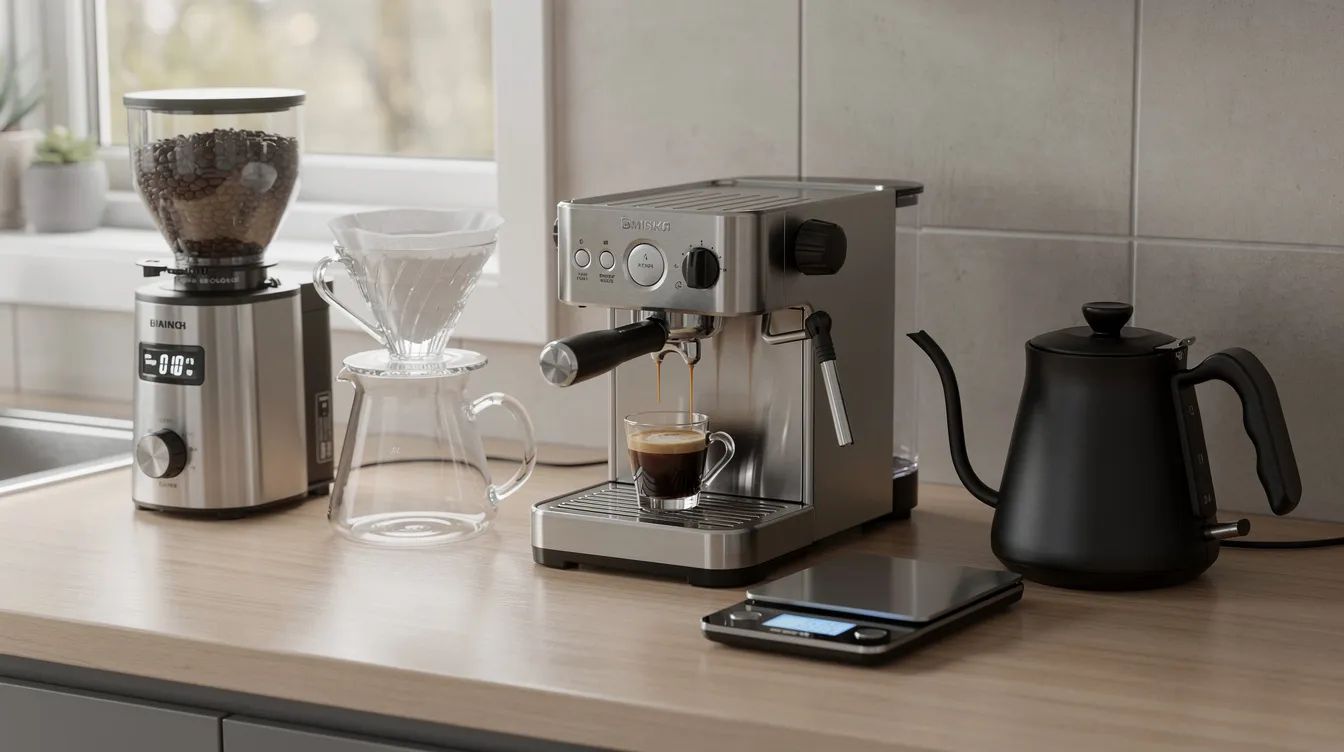
Here is what the site covers across its major gear categories:
- Grinders – Manual and electric burr grinders for filter and espresso. See all grinders on /gear/grinders/.
- Coffee Makers – Drip and automatic brewers for daily use. See drip and automatic coffee maker coverage on /gear/coffee-makers/.
- Manual Brewers – Pour-over cones, immersion brewers, and travel-friendly options. See manual brewers on /gear/manual-brewers/.
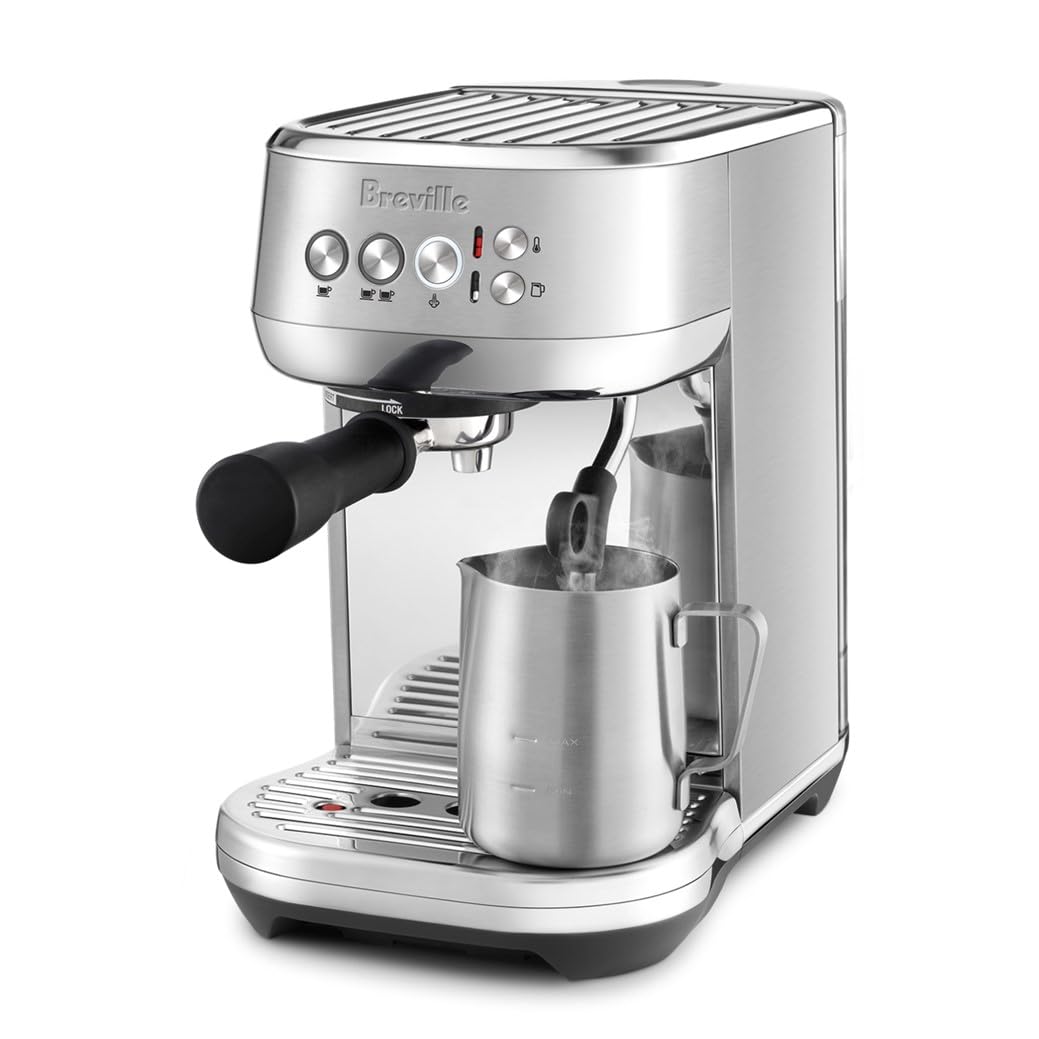
- Espresso Machines – From entry-level semi-automatics to prosumer dual boilers. Browse espresso machines on /gear/espresso-machines/.
- Accessories – Scales, kettles, filters, tampers, canisters, and cleaning supplies. See accessories on /gear/accessories/.
How to Choose the Right Coffee Gear
Before diving into specific categories, use this simple decision framework to narrow your options.
Start with how you brew. The brewing device should match your preferred coffee style for the best results. Someone pulling espresso shots and steaming milk twice a day has completely different needs than a fellow coffee lover who pours a quiet Kalita Wave on Saturday mornings. Identify your primary method – drip, espresso, or manual pour-over – and let that drive your budget.
Set a realistic budget. Here are rough tiers for the U.S. market in 2026:
Budget Range | What You Can Expect |
|---|---|
Under $100 | Manual grinder + simple pour-over brewer |
$100–$500 | Quality electric burr grinder or entry drip machine |
$500–$1,500 | Solid semi-automatic espresso machine + grinder |
$1,500+ | Prosumer dual-boiler setups with precision temperature control |
A burr grinder ensures a consistent grind size for optimal flavor extraction, and a good coffee grinder matches your brewing method – these two principles matter more than the number on the price tag of your brewer.
Evaluate performance versus price. Extra money genuinely improves cup quality when it buys grind consistency (burr vs. blade), stable brew temperatures, or better boiler architecture in espresso machines. Beyond roughly $1,500 for espresso setups, many upgrades are about usability – speed, simultaneous brew and steam capability, aesthetics – rather than dramatic flavor gains.
Think about usability and workflow. Pre-programmed drip brewers demand minimal effort. Manual brewers reward precision and hands-on control but add steps. Super-automatic espresso machines handle everything from grinding to milk frothing with one button, though they trade away the fine-tuning a home barista might want.
Factor in durability. Routine maintenance and replaceable parts can extend a machine’s useful life, so inspect and clean all components that touch coffee regularly and replace worn parts based on the machine’s engineered lifespan. Entry-level machines typically last six to eight years; well-maintained prosumer gear can run fifteen to twenty-five years. Trade-offs are real: a compact machine saves counter space but usually means a smaller boiler and less steam power. Plastic bodies weigh less but stainless steel lasts longer. Know what you are willing to pay now – and what you will pay later in maintenance and replacement materials.
Major Coffee Gear Subcategories (Including Espresso Machines)
This section maps out the main gear families and points you toward deeper category pages across the site.
- Drip and automatic coffee makers – Programmable batch brewers for households that want consistent, low-effort coffee every morning. Best coffee makers typically cost around $200 or more if you want SCA-certified brew temperature stability. See drip and automatic coffee maker coverage on /gear/coffee-makers/.
- Burr grinders (manual and electric) – Grinder quality is often the single biggest upgrade for flavor and extraction control. Whether you spend $40 on a hand grinder or $400 on an electric flat-burr model, consistent particle size changes your coffee game overnight. See grinder coverage on /gear/grinders/.
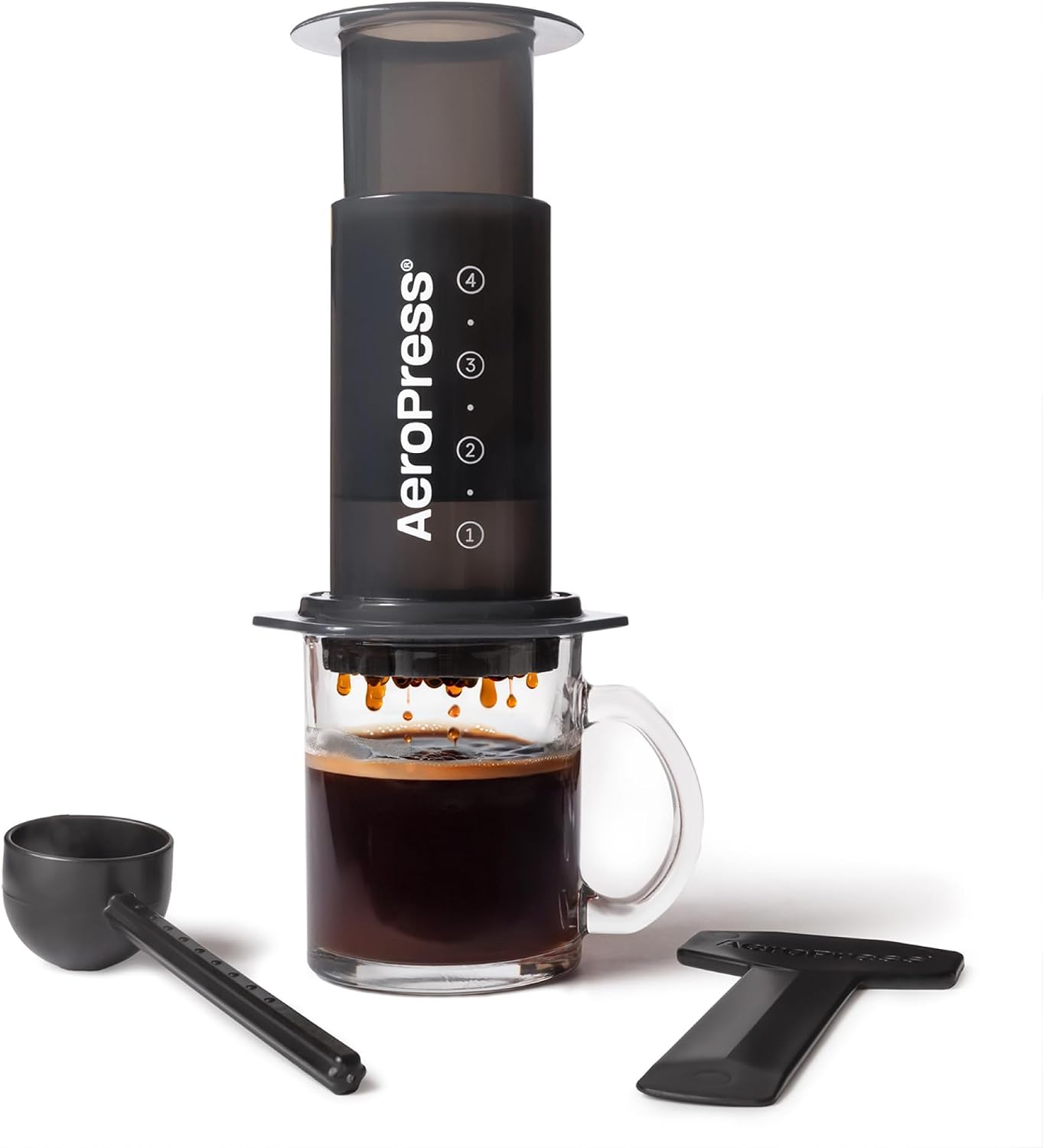
- Manual brewers – The Kalita Wave, Hario V60, Chemex, and AeroPress all offer high performance at relatively low prices if you are willing to be hands-on. Each design shapes flow rate, extraction uniformity, and the balance between clarity and body in the cup. See manual brewers on /gear/manual-brewers/.
- Espresso machines – From entry-level single-boiler models under $500 to dual-boiler machines that bring café-level precision home. Espresso machines can bring the café experience home for customers willing to learn the workflow. Browse espresso machines on /gear/espresso-machines/. Coverage includes both home and light commercial use.
- Accessories and maintenance gear – Coffee scales help achieve consistency in brewing, and a digital scale should ideally measure with 0.1 to 1 gram accuracy. High-quality coffee canisters prevent bean degradation, and readers can use the accessories page as a course for choosing storage canisters that preserve freshness with airtight, opaque protection. Gooseneck kettles, filters, tampers, and cleaning supplies round out a complete setup. See accessories on /gear/accessories/.
- Commercial coffee equipment – Super automatic espresso machines are designed for high-volume cafés, and over 500 refurbished machines power cafés nationwide. Small cafés, bakeries, offices, and pop-up carts can find relevant coverage in the espresso machines and grinders categories, plus any commercial-focused roundups across the site.
Featured Buying Guides (By Gear Type)
Recommendations and “best” picks throughout Capitol City Coffee are based on researched editorial analysis, verified product specs, and expert consensus – not on sponsorships or higher commissions.
Some links on this page may earn Capitol City Coffee a small affiliate commission. This does not affect the editorial order of recommendations.
- Best coffee makers – Our drip brewer guide compares mid-range models across brew temperature stability, capacity, programming, and price. Ratio Six and OXO are top-rated automatic drip coffee makers that consistently appear in expert roundups for hitting the 195°F to 205°F sweet spot without fuss. Explore the full coffee maker buying guide on /gear/coffee-makers/.
- Best espresso machines for home – The guide compares entry-level single-boiler machines, heat-exchanger models, and dual-boiler options with clear pros and cons for milk drinks versus straight espresso. La Marzocco’s Linea Micra, released in late 2023, is a recommended home espresso machine for those who want café-grade build quality in a compact footprint. The Diletta Bello+ is designed for attainable espresso excellence at a friendlier price. And for travel or tight space, the MHW-3BOMBER X-Press58 features 9-bar extraction pressure and offers portable café-quality espresso. Browse comparisons on /gear/espresso-machines/.
- Best grinders – The guide includes distinct sections for filter grinders, espresso-capable grinders, and high-end single-dose options, with emphasis on grind consistency, retention, noise, and ease of cleaning. For manual grinding, the Comandante C60 grinder exceeds 1 gram per second, making making morning prep faster than most hand grinders on the market. See grinder recommendations on /gear/grinders/.
- Manual brewers – Our pour-over comparison explains how the Kalita Wave’s flat bed and three drain holes create a forgiving extraction, while the V60’s single large hole rewards skilled pouring with maximum clarity. The Chemex uses a filter 20–30% thicker than standard, producing a smooth, clean cup with lighter body. Find the full breakdown on /gear/manual-brewers/.
- Prosumer and small commercial setups – A dedicated guide covers compact commercial espresso machines and grinders suited to small cafés, bakeries, or serious home baristas, tying in reliability and service expectations. Brands like Rocket, Bezzera, and La Marzocco often provide three-year parts and labor warranties in the U.S. through authorized channels.
Featured Reviews and Comparisons
This section spotlights detailed, model-specific reviews and head-to-head comparisons for readers who have narrowed their shortlist and may want a final review before buying.
- Espresso machine comparisons – Semi-automatic versus super-automatic shootouts, plus head-to-head matchups of popular mid-range models. Reviews focus on shot quality, steaming power, workflow, noise, maintenance, and long-term value, and cited machines are tested for workflow, steaming, and overall function before strong conclusions are made. When information comes from third-party tests, it is clearly attributed. Espresso cups, tampers, and dosing tools are covered alongside the machines they pair with.
- Grinder reviews – Performance comparisons for espresso versus filter coffee, examining particle size consistency, build quality, and user experience (hopper size, adjustment steps, retention). Claims about grind distribution reference established expert reviews or cited tests.
- Drip coffee maker comparisons – Brew temperature stability, saturation pattern, usability (brew basket design, programming), and carafe type are the core metrics, explaining how each factor influences flavor and daily convenience.
- Manual brewer and accessory reviews – Comparisons such as the Kalita Wave against similar flat-bottom drippers, gooseneck kettle reviews covering ergonomics, flow control, heating speed, and safety features.
- Browse all in-depth coffee gear reviews on /reviews/.
Featured Brewing and Educational Guides on Coffee Beans
Buying the right gear is only half the challenge. These guides bridge the gap between unboxing your equipment and actually brewing better coffee with it.
- How to make better drip coffee – Covers grind size, dose, water temperature, and filter choice using typical home coffee makers. The specific temperature range for brewing coffee is between 195°F and 205°F. Coffee is predominantly made of water, so using filtered water improves flavor compared to tap water with strong tastes.
- Pour-over tutorials – Dedicated guides for the Kalita Wave and general cone drippers help you dial in clarity, sweetness, and body. Freshly roasted whole coffee beans should be ground right before brewing for the best results. A timer, scale, or app helps track brew time and brewing data more precisely for consistent coffee extraction. Measuring coffee by weight in grams provides precise control over coffee-to-water ratios.
- Espresso basics – A walkthrough of puck prep, dialing in grind and dose, shot timing, and milk steaming fundamentals for new espresso machine owners. Learn how precision in each step changes what ends up in your favorite coffee.
- Travel and office coffee – Portable brewers, compact grinders, and tips for getting close to your go-to cup on the road, including the AeroPress and collapsible pour-over cones. Enjoyable coffee does not require a permanent setup.
- Cross-links from every gear guide lead into these brewing tutorials, so you can seamlessly move from choosing equipment to learning how to use it well.
How Capitol City Coffee Researches Recommendations
Capitol City Coffee is committed to transparency. Most gear picks are based on researched editorial analysis and synthesis of expert reviews, manufacturer specs, and verifiable third-party testing – not on our own lab testing, unless explicitly stated in a specific piece, and when products are directly tested, that is clearly disclosed.
- Research process – We survey multiple reputable sources: specialty coffee publications, competition results, SCA certifications, long-term owner feedback, and collaboration with industry analysts to find consensus on performance and reliability across the coffee industry.
- Ranking criteria – We weigh performance, quality, usability, and durability alongside price, value, and current availability in the U.S. market. The largest affiliate commissions do not determine rankings.
- Trade-off transparency – When a budget espresso machine has limited steaming power, or a high-end grinder is excellent but noisy or heavy, we say so. No brand hype, no merchant language.
- Flavor and taste claims – Any mention of flavor profiles or taste outcomes is framed cautiously and, when possible, attributed to competition judges, roasters, or well-known expert reviewers rather than unsupported claims from products not tested by us.
- Update cadence – Content is periodically updated (2024–2026 and beyond) to reflect changes in stock, new product releases, pre order availability, and meaningful price shifts. We do not promise a fixed schedule, but the intention is to keep every page on this site current and useful.
Frequently Asked Questions About Coffee Gear
These FAQs address common questions that may not have been fully covered above.
What coffee gear should I upgrade first for a noticeable difference in flavor?
For most home brewers, the grinder is the best first upgrade. Consistent particle size improves extraction across drip, pour-over, and espresso. If you are using basic equipment, pairing a decent burr grinder with a simple manual brewer like a Kalita Wave or AeroPress can dramatically improve your cup without the hours of learning curve that an espresso machine demands. A solid entry-level electric grinder and manual brewer combo can be had for under $200, which is a budget-friendly way to level up before you shop for anything more complex.
How much should I spend on a home espresso machine in 2026?
Here is a realistic breakdown of prices in the current U.S. market, where espresso machines range from roughly $109 to $6,600 with a median around $639:
- Under $300 – Significant limitations in temperature control and steam power.
- $500–$1,000 – Solid entry-level machines with PID control and better portafilter sizes from best brands like Breville and Gaggia.
- $1,200–$3,000+ – Enthusiast and prosumer models with dual boilers and serious build quality.
Reserve part of your budget for an espresso-capable grinder, a scale, and basic accessories like a tamper and knock box. Browse the espresso machines hub on /gear/espresso-machines/ for comparisons that align with your priorities.
Is commercial coffee equipment worth it for home use?
There is a meaningful difference between “prosumer” gear aimed at serious home baristas and true commercial coffee equipment built for cafés and high-volume environments. Commercial machines and grinders offer robust performance, and with brands that have strong support, buyers should not wait long for parts or service, but they can be larger, louder, require dedicated power or plumbing, and may be overkill for a typical kitchen. Some compact prosumer models can make sense for heavy daily use or micro-businesses like pop-ups, but most home users in the world of specialty coffee will be well-served by high-quality consumer or prosumer gear. Heck, even a well-chosen semi-automatic and a quality grinder will cover most needs.
Do I really need a gooseneck kettle and a scale for pour-over?
Yes, both tools improve consistency and repeatability. A gooseneck kettle allows control over flow rate for pour-over methods, and gooseneck kettles provide precise pouring control that a standard kettle simply cannot match. A scale ensures accurate coffee-to-water ratios – look for one that measures to 0.1 gram accuracy for the best results. You can start with a standard kettle and scoop, but serious pour-over fans using the Kalita Wave or V60 tend to see better results with these accessories. Visit the accessories hub on /gear/accessories/ and the manual brewers hub on /gear/manual-brewers/ for specific recommendations.
How often should I clean and descale my coffee gear?
Descale coffee machines every 3–6 months for optimal performance, and use environmentally friendly descaling agents when cleaning. Deep clean steam boilers and pipes to maintain machine hygiene, especially on espresso machines that see daily use. For general maintenance: rinse brew baskets and carafes daily, backflush espresso machines with a cleaning detergent weekly, and wipe down manual brewers after each session. Always consult manufacturer instructions for exact schedules. Proper maintenance extends the life of all coffee gear and keeps every cup tasting the way it should.
Your next step: pick the gear category that matches your daily routine – whether that is coffee makers, grinders, manual brewers, espresso machines, or accessories – and explore the linked guide. If you are not sure where to start, the grinder page is almost always the right first click.