Best thermal drip pick
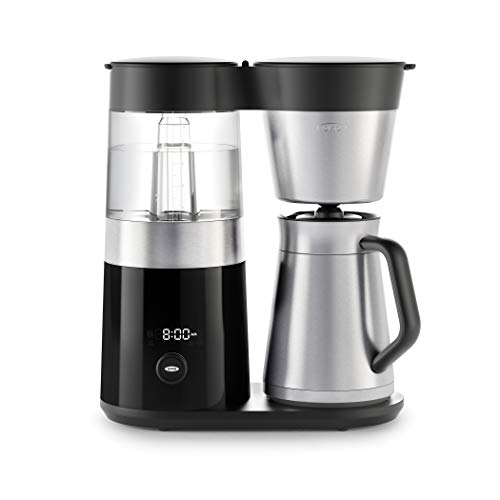

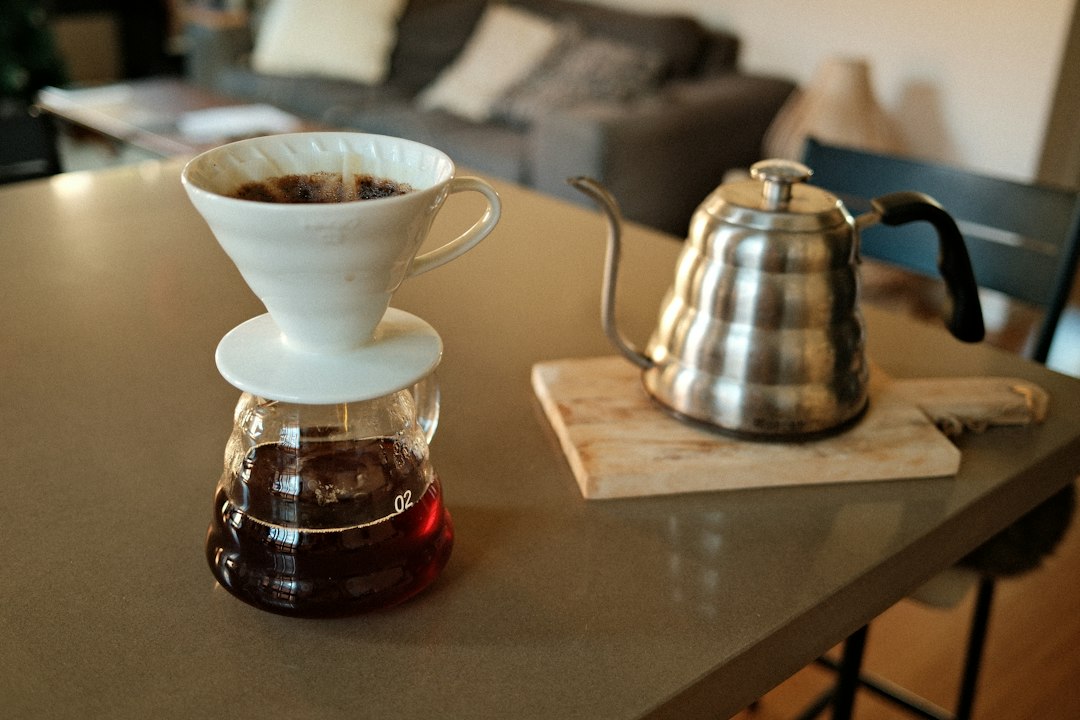
Best thermal drip pick
Start smaller: beans and storage
The machine or grinder is the expensive click. If that purchase is waiting, a $20 bag and a canister still upgrade the setup you have.
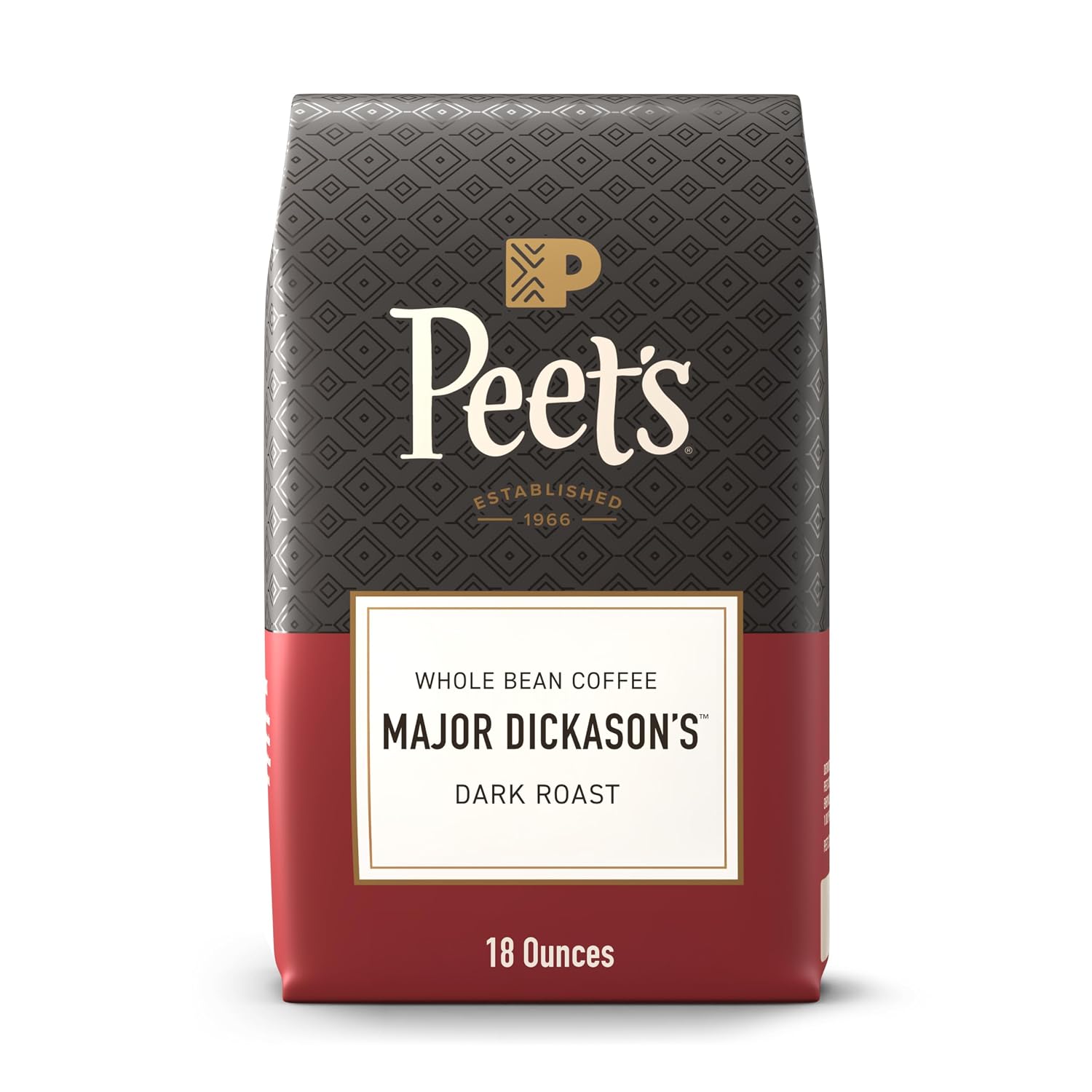
Whole bean (~$15–$25)
Peet’s Major Dickason’s
A cheaper cart than a new grinder or maker. Fresh beans are the fastest cup upgrade.
Check Peet’s on Amazon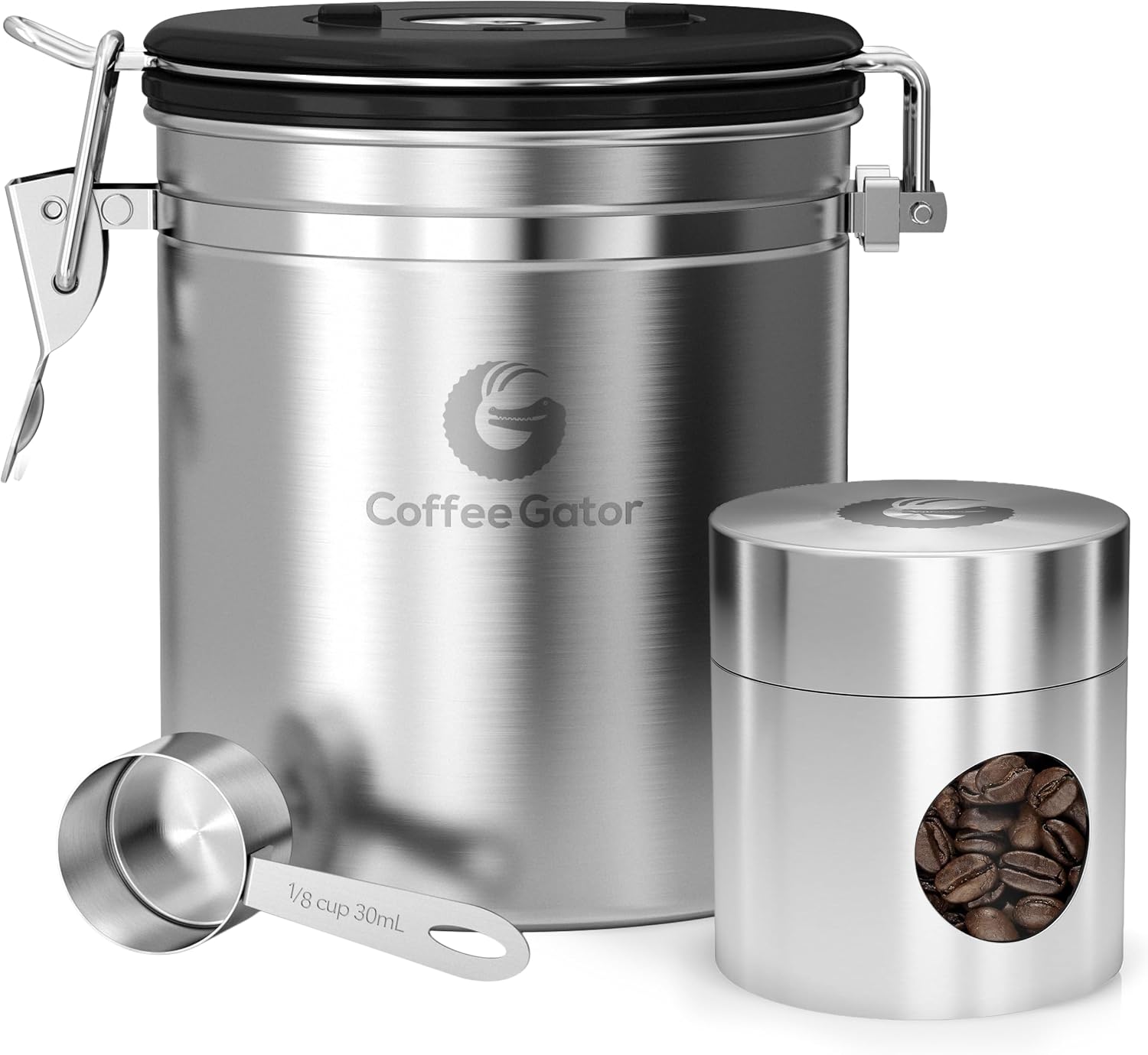
Storage (~$20–$35)
Coffee Gator canister
Keeps opened bags fresh. Cheap add-on if the hero pick did not convert.
Check Coffee Gator on Amazon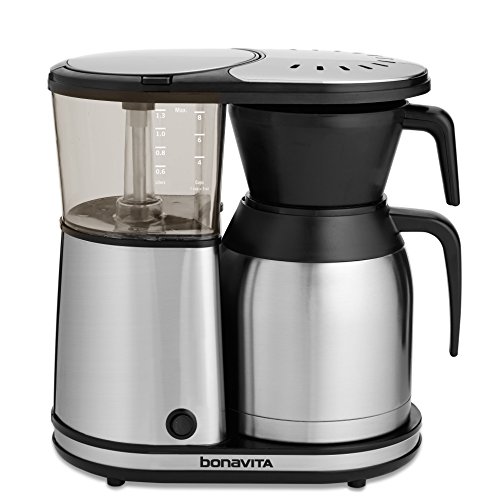
If you want the short version: the best thermal carafe coffee maker for most people is the OXO Brew 9-Cup Coffee Maker. It nails SCA-certified brew temperature, keeps coffee hot for hours in a double-walled stainless steel carafe, and offers enough programmability to satisfy daily drinkers without overwhelming anyone. For buyers willing to spend more, the Technivorm Moccamaster KBT is a decades-long investment in durability and brew quality. And if you want maximum control over every brewing variable, the Breville Precision Brewer Thermal gives you six preset modes and full customization. Below, we unpack every pick, compare specs, and help you match the right machine to your kitchen and habits.
Capitol City Coffee is an independent editorial and affiliate publication. We may earn a commission from qualifying purchases made through outbound links on this page, at no extra cost to you. Affiliate relationships never influence our rankings or coverage-recommendations are driven by researched performance, features, and value.
For shoppers who want to buy now and read later, here’s the condensed version. The OXO Brew 9-Cup Coffee Maker is the best overall thermal carafe coffee maker for most households-it combines SCA-certified brewing, a programmable auto-start timer, and a thermal carafe that makes great coffee without a hot plate. If your budget allows an upgrade, the Technivorm Moccamaster KBT brews a full pot in 4–6 minutes with near-legendary reliability. And for tinkerers who want more control, the Breville Precision Brewer Thermal offers the deepest customization in this category.
Here’s how each pick breaks down:
Approximate capacities range from 8-cup (40 oz) to 12-cup (60 oz), and all are drip coffee maker designs. Several are SCA certified. Pricing and availability are current as of late 2026 in the U.S. but may shift.
This table puts the top thermal carafe coffee makers side by side for quick scanning. All data reflects verified manufacturer specs and reputable third-party sources.
Model | Type | Capacity | Brew Temp Range | Programmability | Notable Features | Heat Retention | Height / Fit | Approx. Price |
|---|---|---|---|---|---|---|---|---|
9-cup drip | 45 oz / 9 cups | 197.6–204.8°F | Auto-start timer, cup-size adjust | SCA certified, Rainmaker showerhead, bloom cycle | ~2–3 hours hot | ~17.5″ tall – tight under low cabinets | ~$250 | |
10-cup drip | 40 oz / 10 cups | 196–205°F | On/off only; manual flow adjust | SCA/ECBC certified, copper element, 5-yr warranty | Good with preheat; ~2+ hours | ~15″ tall | ~$370–400 | |
12-cup drip | 60 oz / 12 cups | 197–204°F (Gold mode) | 6 presets + custom My Brew | PID control, bloom/flow adjust, flat-bottom & cone baskets | ~2+ hours | ~15–16″ tall, 15.7″ deep | ~$300–329 | |
8-cup drip | 40 oz / 8 cups | ~195–200°F | One-button only | SCA certified, auto bloom, heat shield, 5-yr warranty | ~2–3 hours | ~14.25″ tall | ~$300–330 | |
10-cup drip | 50 oz / 10 cups | Not published; commercial heater | Brew start only | Always-hot reservoir, ~4-min brew, 3-yr warranty | ~2+ hours | ~15.1″ tall | ~$200–250 |
Disclosure: This page contains affiliate links. As an Amazon Associate I earn from qualifying purchases.
Where to buy: Seattle Coffee Gear · 1st in Coffee · Amazon (affiliate links). Check current price and availability before you buy.
A note on “cups”: Most coffee maker manufacturers define a “cup” as 5–6 oz, not the 8–12 oz mugs most Americans actually use. A “10-cup” machine makes roughly 50 oz-enough for about four to five standard mugs. Where exact brew temperature data isn’t published by the manufacturer, estimates come from third-party testing or expert consensus.
All selections in this roundup are based on researched editorial analysis. Capitol City Coffee did not conduct hands-on testing for these picks. Instead, we drew from verified product specifications, expert reviews from outlets like Tom’s Guide and TechGearLab, broad user consensus, and third-party lab tests where available.
The main evaluation criteria:
Models were prioritized that meet or closely align with SCA Golden Cup standards for drip coffee brewers. We considered a range of budgets (under $100 through $350+) and capacities (8-cup to 12-cup) to cover different household sizes. Compatibility with common filters, availability from major U.S. retailers, and reputation for long-term durability also factored in.
The OXO Brew 9-Cup Coffee Maker earns the top spot because it threads the needle between precision and simplicity. It’s an SCA certified brewer that delivers excellent coffee without requiring a barista’s knowledge to operate.
At its core, the OXO Brew 9-Cup is a 9-cup (approximately 45-oz) drip coffee maker with a double-walled stainless steel carafe. It controls water temperature between 197.6–204.8°F throughout the brewing process, which sits squarely in the SCA-recommended range. The Rainmaker showerhead disperses hot water evenly over coffee grounds, and a pre-infusion bloom cycle wets the bed before full extraction begins-mimicking what you’d do with a manual pour-over. An internal mixing tube helps keep flavor consistent from first pour to last. Programmable auto-start features let you set a brew time the night before, so hot coffee is waiting when you walk into the kitchen. A manual drip-stop feature allows mid-brew serving without mess.
The OXO 9-Cup Coffee Maker keeps coffee hot for hours, which is exactly the point of skipping a hot plate. User reports and expert reviews consistently place comfortable drinking temperature at 2–3 hours after brewing, with flavor staying noticeably cleaner than what you’d get from a glass carafe sitting on a warming element.
There are trade-offs. The machine stands about 17.5 inches tall, which can crowd under standard upper cabinets. The carafe lid takes a moment to learn-it’s secure, but some users find the mechanism fiddly at first. Descaling is straightforward, though the carafe itself is best hand-washed rather than run through a dishwasher. At roughly $250, the OXO brewer sits in the upper-middle of the price range for thermal coffee machines, but it delivers SCA-level performance that many similarly priced machines can’t match.
The ideal user here is a coffee drinker who wants a set-and-forget machine that makes a great cup every morning, keeps the pot warm through a slow breakfast, and doesn’t require fussing over advanced settings.
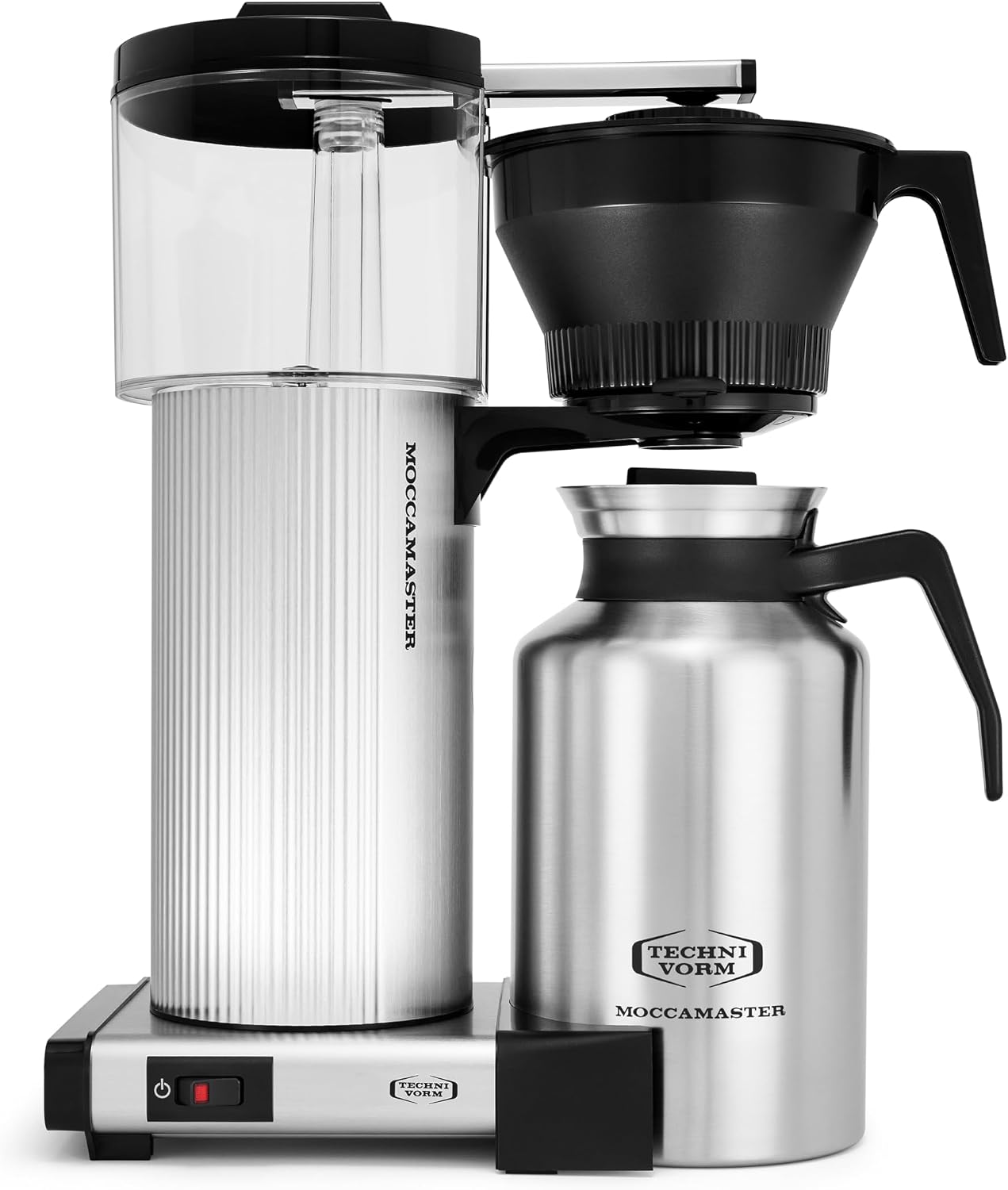
The Moccamaster KBT is the machine you buy when you want to stop buying coffee makers. It costs more upfront-often $370–400-but its build quality and brew performance justify the price over years of daily use.
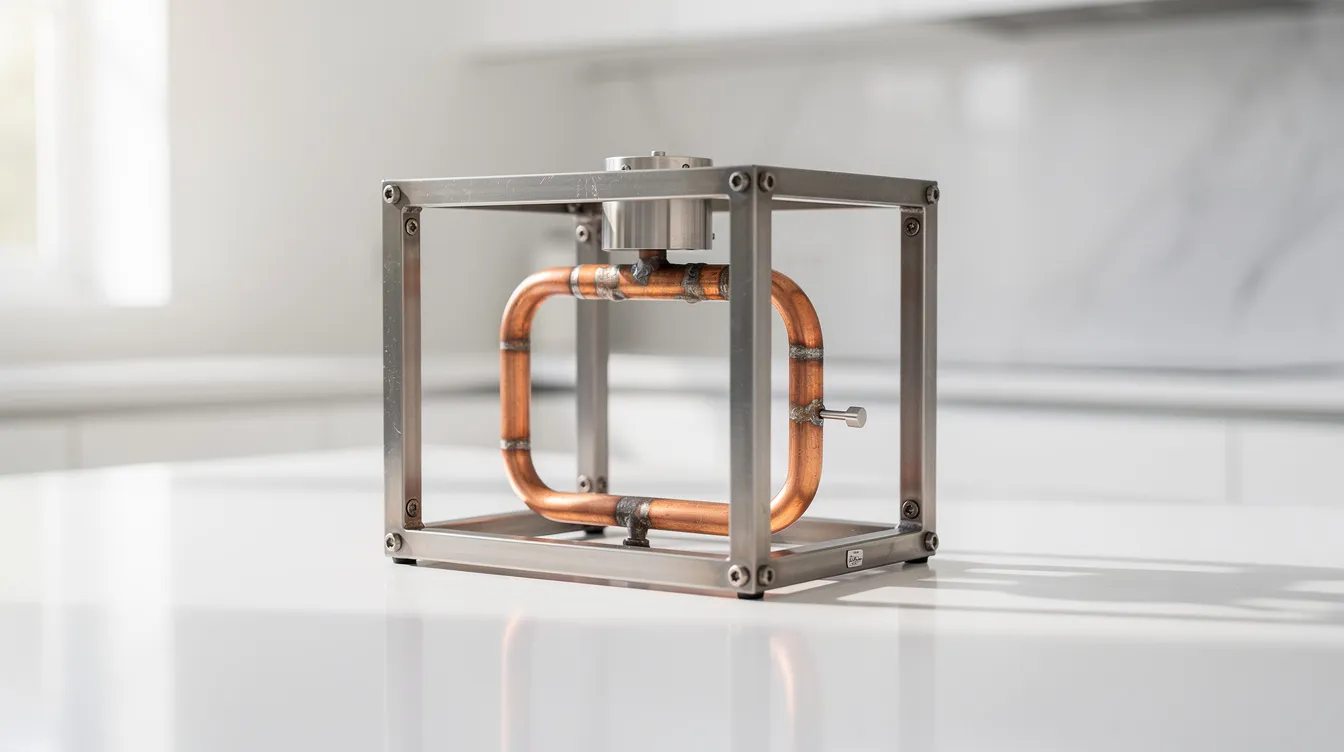
Hand-assembled in the Netherlands, the Moccamaster KBT features a metal frame, a copper heating element that brings water to 196–205°F, and a 40-oz thermal carafe with a brew-through lid. The Technivorm Moccamaster KBT brews coffee in 4–6 minutes for a full pot, which is notably faster than most competitors. A 9-hole shower arm distributes water across the coffee bed for even saturation, contributing to the kind of flavorful coffee that keeps coffee nerds loyal to this brand for decades.
Workflow is deliberately simple. There’s an on/off switch and a manual flow-rate adjuster on the filter basket-no digital display, no clock, no auto-start timer. For users who want convenient features and programmability, this can feel limiting. But for those who value the brewing process itself, the Moccamaster rewards attention with nuanced, delicious coffee across light, medium, and dark roast profiles.
The carafe performs well when preheated with hot water before brewing-a step the manufacturer recommends for maximum heat retention. Without preheating, early sips may lose a degree or two. The carafe mouth is narrow, which makes thorough cleaning slightly more effort than wider-mouth designs.
The Moccamaster comes with a 5-year warranty, and replacement parts are widely available-gaskets, carafes, lids, and even heating elements can be swapped out. Average lifespan easily exceeds a decade with basic maintenance, making the per-year cost quite reasonable.
This brewer is best for home coffee drinkers who value coffee quality, repairability, and long-term durability over digital features or a low sticker price.
If programmability and control over brewing variables are your priority, this is the head-to-head that matters.
The OXO Brew 9-Cup delivers SCA Gold performance with a streamlined interface: set the timer, choose your cup count, and the machine handles bloom, water temperature, and flow automatically. It’s programmable, but not complex.
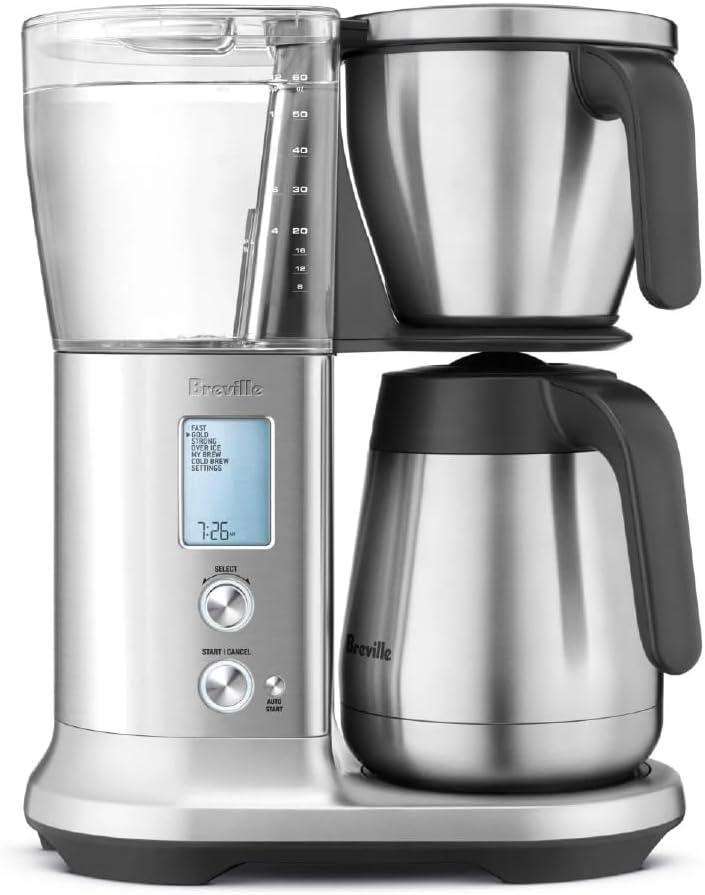
The Breville Precision Brewer Thermal is a different animal entirely. With a 60-oz (12-cup) capacity, PID temperature control, and six preset brewing modes-Gold, Fast, Strong, Over Ice, Cold Brew, and a fully customizable My Brew-the Breville Precision Brewer offers more control over the brewing process than any other machine in this roundup. You can adjust bloom time, flow rate, and water temperature degree by degree. It accommodates both flat bottom and cone filter baskets, and a flip-down tray lets you brew a single cup directly into a mug.
The Breville Precision Brewer Thermal is the better choice for tinkerers who switch between whole beans and roast levels frequently and want to dial in each variable. The trade-off is a steeper learning curve and a significantly larger footprint-roughly 15.7 inches deep, which claims serious counter real estate. Some earlier production runs had firmware quirks, though most have been addressed.
Choose the OXO brewer if you want SCA-certified results with minimal input. Choose the Breville Precision Brewer if you enjoy adjusting bloom, flow, and temperature to suit different beans.
Both machines keep coffee warm in their thermal carafes for hours-but the Breville’s larger capacity means it’s better suited for bigger households or anyone who drinks coffee throughout the morning.
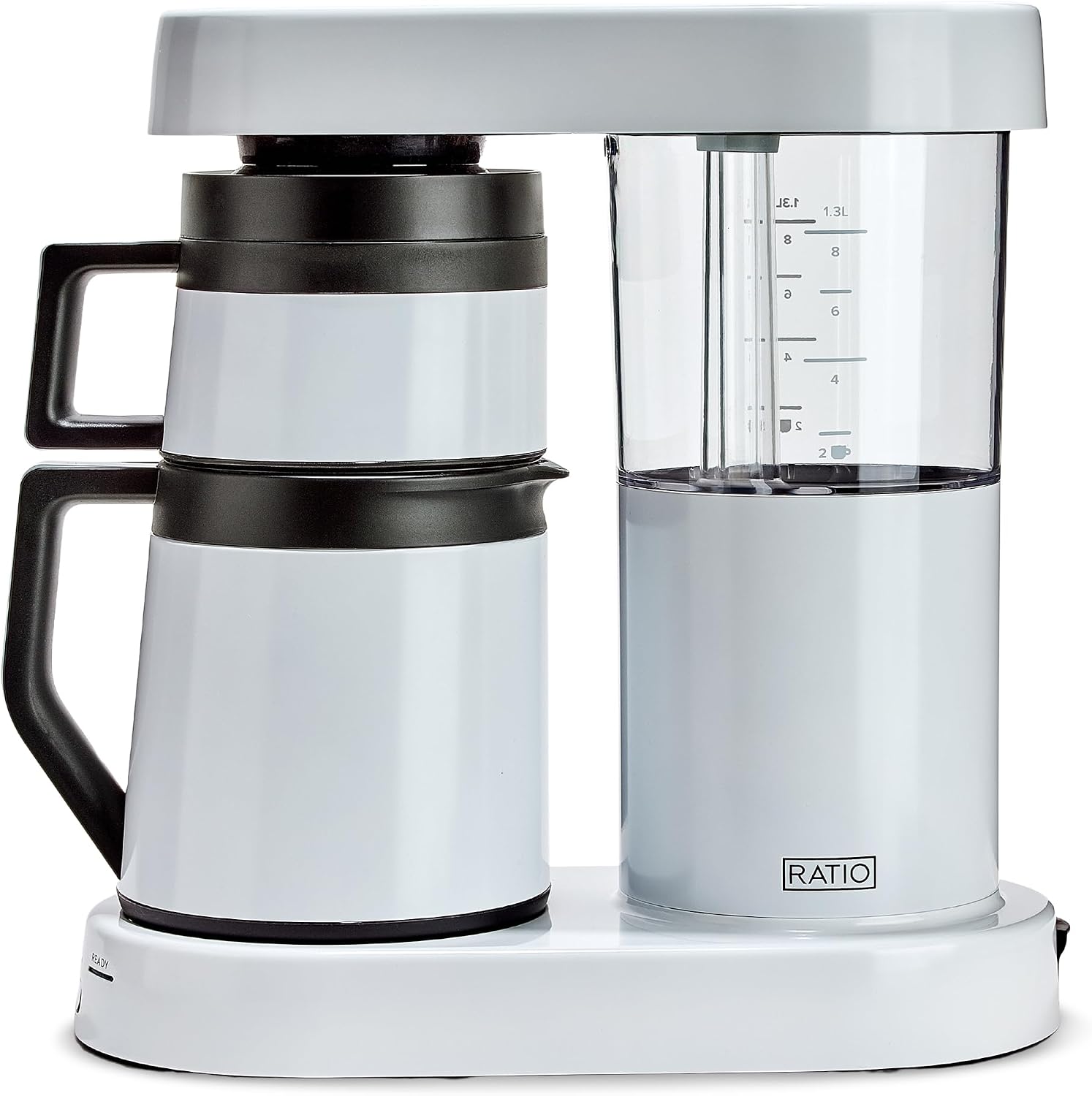
The Ratio Six Coffee Maker is for buyers who want their coffee machine to look as good as the coffee tastes. It’s a minimalist, design-forward drip brewer with a stainless steel thermal carafe and one-button operation.
The Ratio Six (Series 2) brews about 40 oz (8 cups) using a 1,400-watt aluminum flash element that heats water to approximately 195–200°F at the brew bed. Its automated algorithm includes a bloom phase that wets coffee grounds before full flow begins, approximating pour-over technique without any manual intervention. A heat shield helps maintain brew temperature throughout the cycle, and the double-walled stainless steel carafe keeps coffee hot and tasting fresh for 2–3 hours.
The Ratio Six coffee maker has a five-year warranty, and its construction leans heavily on stainless steel and glass components. Optional plastic-free accessories are available for buyers who care about material contact points.
Performance-wise, expert consensus places the Ratio Six in the “balanced, clean cup” category-particularly well-suited for medium and light roasts where clarity matters. Brew time runs 5–7.5 minutes including bloom. Cleaning is straightforward: removable parts, simple water reservoir, no complicated menus.
The machine is best for buyers who value aesthetics, simplicity, and quality materials. If you want a coffee pot that looks like a design object and still makes tasting coffee that rivals pricier, more complex machines, this is your pick.
The Fellow Aiden Precision Brewer enters the thermal carafe category as a tech-forward machine aimed squarely at enthusiasts who enjoy fine-tuning every aspect of their brew.
With up to 10-cup capacity, a digital display offering guided recipes and bean-profile adjustments, and Fellow’s signature industrial-modern design language, the Aiden sits at the intersection of specialty coffee and consumer electronics. You can adjust bloom time, brew strength, and temperature through the interface-similar in spirit to the Breville, but with a more curated, app-like experience.
Brew temperature control is competitive, maintaining parameters consistent with SCA-style standards. The carafe is visually striking but, according to early user feedback, may lose heat slightly faster than the thicker-walled carafes from OXO or Ratio. Realistic expectations: hot coffee for about 1.5–2 hours, comfortably warm for another hour or so beyond that.
The learning curve is real. If you enjoy tech and find satisfaction in customizing a brew profile for a specific bag of beans, the Fellow Aiden delivers. If you just want to press a button and drink good coffee, simpler machines will serve you better. This brewer suits tech-loving coffee drinkers who prioritize customization and design and are comfortable paying a premium for both.
For households where speed is a big deal and a full pot needs to be ready before anyone finishes tying their shoes, the Bunn Speed Brew 10-Cup Thermal is the pick.
The Bunn brews a full 50-oz pot in approximately 4 minutes thanks to an internal commercial-grade hot water reservoir that keeps 70 oz of water continuously heated. When you add coffee grounds and flip the lid, brewing begins almost instantly. The double-walled vacuum-insulated carafe keeps coffee hot for 2+ hours without any external heat source.
The trade-off for that speed is the always-on water container. The unit draws power continuously to maintain its hot water reservoir, which means higher energy consumption compared to machines that only heat water on demand. There’s also minimal control over brew variables-no bloom cycle, no adjustable flow rate, no preset modes. You get one thing: fast, adequately hot coffee.
Flavor performance is generally strong for mainstream drinkers. For a dark roast or a standard medium blend, the Bunn delivers a solid, no-fuss cup. For light roasts or single-origin beans where nuance matters, precision brewers will outperform it.
The Bunn comes with a 3-year warranty and commercial-style components that are built to endure heavy daily use. It’s ideal for busy households, shared kitchens, and office break rooms where speed and volume matter more than dialing in extraction.
Not every great cup of coffee requires a $300+ machine. In the $100–$200 range, several thermal coffee maker options deliver solid daily performance without SCA-level precision.
Mid-tier programmable models from brands like Ninja offer 10–12 cup capacities, basic auto-start timers, and vacuum-insulated stainless steel carafes that keep coffee warm for a couple of hours. What you give up versus premium SCA-tier machines: slightly less precise brewing temperature control, simpler showerhead designs that may not saturate grounds as evenly, and more plastic in contact with hot water. What you keep: enough thermal carafe performance for a busy family that drinks its coffee within an hour or two of brewing, simple programmability, and decent build quality.
These value machines serve budget-minded families well-especially if the household drinks coffee quickly after brewing, where the gap between a $150 machine and a $300 machine narrows considerably. For broader budget options, see our guides to the best coffee makers under $200 and best coffee makers under $100.
For apartments, small countertops, or kitchens with low cabinet clearance, the Ratio Six Series 2 doubles as the most space-friendly premium option at approximately 14.25 inches tall and a moderate 13.5 × 6.75-inch base. It fits under most standard upper cabinets without needing to be pulled forward for filling.
Its 40-oz capacity is enough for two to three large mugs-practical for couples or solo drinkers who still prefer a pot over a single serve coffee maker. Brew temperature and carafe performance are on par with larger machines, with coffee staying comfortably hot for 1.5–2 hours and drinkable beyond that.
If you want something even more compact or less expensive, look for 8-cup thermal models from mainstream brands, but verify that the brewing temperature still reaches at least 195°F-smaller, cheaper machines frequently fall short of that threshold.
This section breaks down the technical aspects that separate good thermal carafe coffee makers from mediocre ones.
Brew temperature. Brewing temperature should be between 195–205°F (90–96°C). Hotter water improves coffee extraction and flavor by dissolving the right compounds from coffee grounds, while underheating produces sour, under-extracted cups and overheating creates harsh bitterness. Brew temperature stability is critical for optimal coffee extraction flavor-machines that fluctuate wildly within a single cycle produce inconsistent results.
Brew time and extraction consistency. A full pot should brew in 4–8 minutes. Too fast and water passes through grounds without extracting enough; too slow and you over-extract into astringent territory. A well-designed showerhead with multiple dispersion holes is crucial for even saturation. Machines with a bloom cycle-briefly wetting grounds before full flow-achieve better extraction, particularly with freshly ground beans.
Carafe design. Thermal carafes should be double-walled and insulated, ideally vacuum-sealed stainless steel. Tight-fitting lids and brew-through tops minimize heat loss. A carafe that’s only half full will cool faster than a full one, so matching carafe capacity to your household’s actual consumption matters. Choose a carafe capacity between 40 and 60 ounces based on how much coffee your household actually drinks. Ease of cleaning is enhanced by removable water reservoirs and wide-mouthed carafes.
Usability. Look for intuitive controls, clear water-level markings, a water tank with clear markings and easy access for refilling, comfortable carafe handles, and a pause-and-pour or drip-stop feature that lets you sneak a cup mid-brew. Programmable auto-start features are useful for coffee ready at a fixed time.
Maintenance and durability. Machines with stainless steel water contact surfaces generally last longer and taste cleaner than all-plastic internals. Solid warranties matter, especially for machines with electronic controls that could fail. Coffee maker capacities range from compact 5-to-8 cups to larger 10-to-12 cup models, so match the machine’s scale to your needs.
The choice between a thermal carafe and a glass carafe comes down to how you drink coffee.
A glass carafe on a hot plate keeps coffee visibly hot-you can see exactly how much is left. But that hot plate continues to heat water that’s already brewed, and over 20–30 minutes, the sustained heat “cooks” the coffee. Oils break down, acids concentrate, and you end up with a bitter, stale-tasting glass pot. Thermal carafes keep coffee hot for hours without burning it. They prevent coffee from developing a bitter taste over time because there’s no external heat source degrading the brew.
Thermal carafes are typically made from double-walled stainless steel, which makes them significantly more durable than glass. They are safer than glass carafes, reducing breakage risk-no shattered glass pot on a Monday morning. Thermal carafes can save electricity by eliminating hot plates entirely, which adds up over months of daily use.
Glass carafes do have advantages: they’re cheaper, lighter, and make it easy to see remaining volume at a glance. If you always drink your coffee within 15–20 minutes of brewing, the flavor degradation from a hot plate is minimal, and a glass carafe machine at a lower price may be all you need.
If you pour coffee over the course of an hour or more-or brew before the household wakes up-a thermal carafe is the clear winner. If you drink it all within minutes of brewing, a glass carafe saves money without a major quality penalty.
For tea drinkers who occasionally use the hot water function on a drip machine, thermal carafes also hold heated water at serving temperature longer than an open glass pot.
The best coffee maker for one person may be wrong for another. Here’s how to match features to your daily routine.
Budget tiers:
Capacity: An 8–9 cup coffee maker suits smaller households; 10–12 cup brewers serve families and hosts. Remember that “cup” sizing means 5–6 oz, not a full mug-so how much coffee you actually need may be less than the cup count suggests.
Footprint and design: Measure your cabinet height before buying. Machines like the OXO brewer at 17.5 inches may not fit under 15-inch clearance. Some machines, like the Ratio Six, are designed to be compact enough for tighter spaces. Aesthetics range from utilitarian stainless steel to statement pieces in matte black.
Programmability: If you want coffee waiting when you wake up, look for an auto-start timer (OXO, Breville). If you want to experiment with lower temperatures, extended bloom, or cold brew modes, the Breville gives you more control. If you just want to press a button, the Ratio Six or Moccamaster keeps things simple.
Match to your habits: If you use a coffee grinder to grind fresh each morning and rotate between espresso on weekends and drip on weekdays, a more versatile machine pays for itself in flexibility. If you buy pre-ground coffee and brew the same way daily, a simpler brewer saves you money and counter space. Explore all our coffee maker guides for coverage across brew methods and price points.
The Specialty Coffee Association (SCA) certification is often called the “Michelin star” of coffee machines, a respected benchmark across the coffee world. SCA certification ensures coffee makers reach 195–205°F and maintain that range throughout the brewing cycle. SCA certification requires brewers to maintain 195°F during brewing, and coffee makers must reach 195°F within the first minute of brewing. Beyond temperature, SCA-certified brewers extract 18–22% from coffee grounds, which is the range that produces balanced, flavorful coffee without bitterness or sourness. SCA certification guarantees consistent brewing quality across batches.
SCA-certified brewers are designed for stable brewing temperature and water distribution-meaning they don’t just hit the right temperature once, they hold it throughout the entire brew cycle. Among the machines in this roundup, confirmed SCA-certified models include the OXO Brew 9-Cup, the Breville Precision Brewer (in Gold mode), the Ratio Six Series 2, and the Technivorm Moccamaster KBT.
Not all brands seek SCA certification due to costs-the testing and certification process isn’t free, and some smaller manufacturers skip it even if their machines perform at or near the standard. A machine without SCA certification isn’t automatically inferior, but it does mean you’re relying on the manufacturer’s claims rather than independent verification.
SCA certification is a strong quality signal, but it’s not the only path to the best tasting coffee. If your budget caps at $150, focus on machines with verified brew temperature data near 195°F-that matters more than a certification sticker.
Brewing at correct temperatures prevents burnt coffee taste, while brewing too cool produces thin, sour cups. If brew quality is your priority, an SCA certified brewer is the safest bet.
The long-term enjoyment and cost of a thermal coffee maker depend on cleaning, descaling, and occasional part replacements just as much as the initial purchase price.
Daily and weekly cleaning: Rinse the thermal carafe with hot water after each use. Wash the brew basket and any removable filter basket with warm, soapy water. Avoid putting insulated carafes in the dishwasher unless the manufacturer explicitly permits it-the heat and detergent can compromise the vacuum seal over time.
Descaling: How often you descale depends on your water hardness. Hard water areas may need monthly descaling; soft water areas can stretch to every 2–3 months. Use a citric acid solution or the manufacturer’s recommended descaling product. Neglecting descaling degrades brew temperature accuracy and shortens the life of heating elements-a $5 bottle of descaler is cheap insurance for a $300 machine.
Long-term costs: Replacement paper filters (standard #4 cone or basket-style) cost a few dollars per hundred. Occasional gasket or carafe lid replacements run $10–$30 depending on the brand. Higher-quality machines with longer warranties-like the Moccamaster’s 5-year or Ratio’s 5-year coverage-may save money over time despite higher upfront prices, since parts are available and the machines are designed to be repaired rather than replaced.
Keeping coffee fresh: Use a good burr coffee grinder and grind whole beans just before brewing. Brew the right batch size for your household-half-full carafes cool faster. And even with a great thermal carafe, avoid leaving coffee sitting all day. After about 3–4 hours, even well-insulated coffee starts losing flavor.
The machine is only half the equation. Cup quality depends heavily on fresh coffee beans and grind consistency.
Different roast levels behave differently in drip coffee brewers. A dark roast generally extracts quickly and performs well in most machines, even those with less precise temperature control. Light and medium roasts benefit from machines with tighter brewing temperature control and bloom cycles-these roasts contain more soluble compounds that require precise extraction to taste right, not sour or grassy.
A burr coffee grinder produces uniform particle sizes, which leads to even extraction in the filter basket. If you’re using a blade grinder, you’ll get a mix of dust and boulders that extracts unevenly-some particles over-extract while others barely contribute. Entry-level burr grinders ($50–$100) make a noticeable difference; mid-range models ($100–$200) make an even bigger one, especially paired with a precision brewer like the Breville.
A general starting point for brew ratio: about 60 grams of coffee per liter of water (roughly 1:16.7 ratio). Adjust from there-a gram or two more for stronger coffee, a gram less for a lighter cup. Small adjustments have outsized impact on flavor, so change one variable at a time and note the results.
If you’re still exploring, these roundups cover adjacent territory:
These questions cover common concerns about thermal carafe coffee makers not fully addressed above.
Most double-walled stainless steel thermal carafes maintain near-brew temperature for about 1.5–2 hours and keep coffee “comfortably hot” for 3–4 hours, depending on the carafe design and how full it is. A full carafe retains heat significantly longer than one that’s only a third full. Preheating the carafe with hot water before brewing-just fill it, let it sit for a minute, then dump-adds meaningful retention time. After about 4 hours, even the best insulated carafes will have cooled to lukewarm.
Thermal carafe coffee makers are designed for hot drip coffee, but you can brew a concentrated batch over ice for iced coffee-just use roughly double the coffee grounds and brew directly into a carafe pre-filled with ice, or use a machine like the Breville Precision Brewer that has a dedicated Over Ice mode. Cold brew is a fundamentally different method requiring long immersion (12–24 hours) at room temperature or in the fridge. A standard drip machine won’t replicate that process. Use a dedicated cold-brew setup or a simple jar method instead.
Many stainless steel thermal carafes are not dishwasher-safe because the heat and harsh detergents can damage the vacuum insulation over time. Most manufacturers recommend hand-washing with warm, soapy water and a bottle brush. Lids and brew baskets are more likely to be top-rack dishwasher-safe than the carafe body itself-but always check your machine’s manual before assuming.
Most thermal carafe drip coffee makers use standard #4 cone filters or flat-bottom basket filters, which are widely available and inexpensive. Some premium coffee brewers include a reusable metal mesh basket as an alternative. Paper filters generally produce cleaner-tasting coffee by trapping more oils and fine particles, while metal filters allow more body and oils through for a richer mouthfeel. Check your product manual for the correct filter size and type.
If you consistently drink just one cup, single serve coffee makers or a small pour-over setup may be more practical and waste less. But if you like to sip over an hour, share occasionally with a partner, or want the convenience of a pot waiting on the counter, a compact thermal model (like an 8-cup machine) can still be worthwhile. Look for machines that perform well at partial batches-some brewers struggle with temperature and extraction when making less than half a pot. Brewing the right amount for your needs keeps coffee grounds from being wasted and coffee from sitting too long.
PASS
Every coffee and coffee machine we recommend is scored on the same 100-point scale, so a recommendation on one page means the same thing as a recommendation on any other. Each pick is also labeled with how we reached its score.
| What we score | Points | What we look at |
|---|---|---|
| Origin and sourcing transparency | 20 | Country, region, farm or cooperative, altitude, bean variety, and processing method are clearly disclosed. |
| Flavor evidence | 25 | Independent cupping scores, how closely the tasting notes match what the origin is known for, and our own cupping notes when hands-on tested. |
| Roast and freshness | 15 | Roast level stated, roast-date practices, whole-bean availability, and packaging with a one-way valve or resealable bag. |
| Brew versatility | 15 | How well the roast suits pour-over, drip, French press, cold brew, and espresso. |
| Value | 15 | Price per ounce compared with similar single-origin coffees or blends. |
| Buyer feedback | 10 | Volume and consistency of verified reviews, and recurring complaints about staleness, bitterness, or shipping. |
| What we score | Points | What we look at |
|---|---|---|
| Brewing performance | 25 | Water temperature in the 195–205°F range, even extraction, and SCA certification or published test data. |
| Build quality and reliability | 20 | Materials, known failure points, and long-term owner reports. |
| Ease of use and cleaning | 15 | Setup, the daily routine, descaling, and dishwasher-safe parts. |
| Fit for your kitchen | 10 | Capacity, counter footprint, and noise. |
| Useful features | 10 | Programming, grind and temperature control, and carafe type. Features that improve the cup count more than extras that do not. |
| Value | 10 | Price compared with machines that perform similarly. |
| Warranty and support | 10 | Warranty length, parts availability, and how the brand handles repairs. |
| Score | Grade | What it means |
|---|---|---|
| 90–100 | A | Exceptional. Our first recommendation for the feeling and setting described. |
| 80–89 | B | Strong. Excellent, with minor trade-offs we explain. |
| 70–79 | C | Good. Worth it for specific needs, with clear compromises. |
| Below 70 | — | Not recommended. We do not feature these as picks. |
When a pick carries the Hands-on tested label, this is the method behind it, and we note the date we tested.
We match each coffee to a mood and a moment based on its flavor profile and roast. Bright, citrusy light roasts suit energizing mornings. Chocolatey, full-bodied medium roasts suit slow or social moments. Richer roasts suit espresso and milk drinks. Each pick explains which facts led us to that match.
Every score comes only from the criteria above. No brand can pay for a pick or a higher grade. We re-check ratings when a roast, listing, or model changes, and update or remove picks that no longer earn their grade.
Some links on this page are affiliate links. As an Amazon Associate, Capitol City Coffee earns from qualifying purchases, at no extra cost to you.
Questions about a rating? Reach the Capitol City Coffee team through our contact page.