

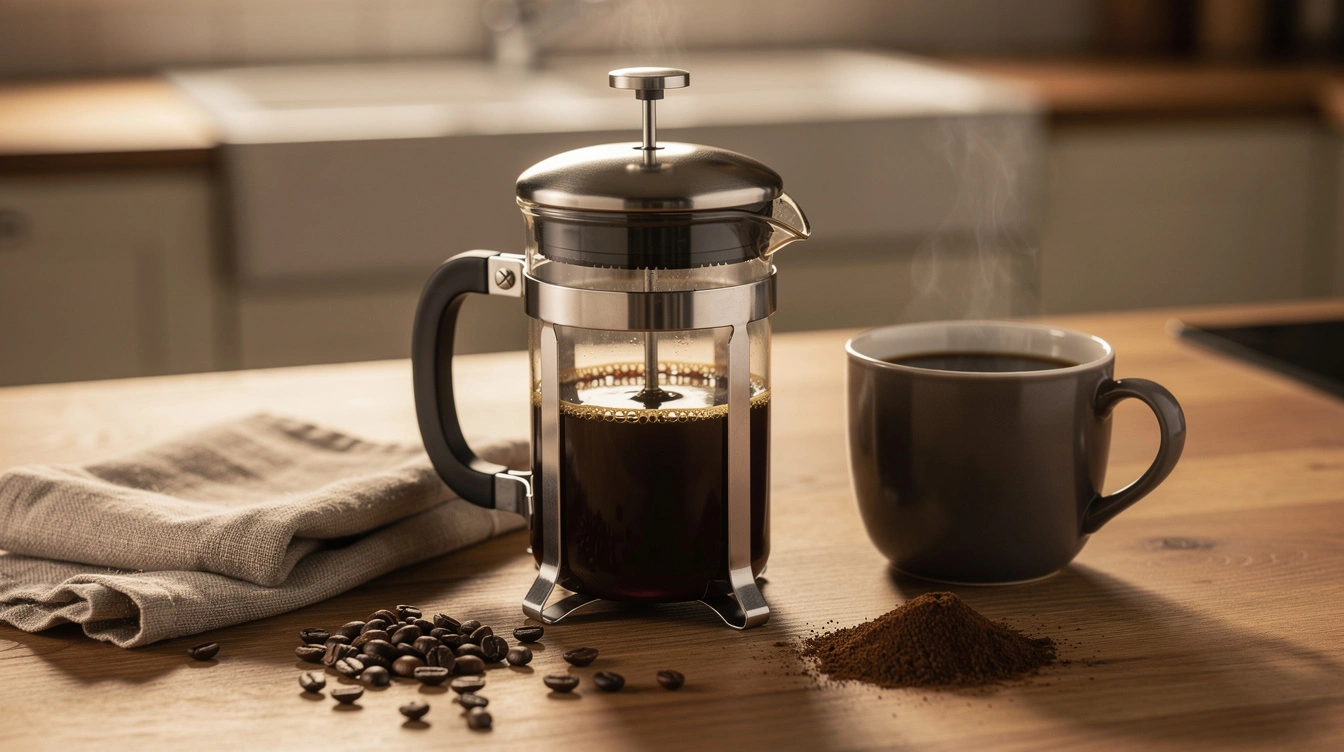
French press rewards the right beans with a rich, full bodied cup that no other brewing method quite matches. But choose the wrong roast or grind, and you end up with a bitter, muddy mess. This guide breaks down the best coffee for French press in 2026, covering roast levels, origins, grind size, brew ratio, and specific picks for every preference and budget.
Key Takeaways
- Medium to medium-dark roast whole coffee beans, ground coarse and used within 2–4 weeks of the roast date, are the best coffee for French press for most drinkers.
- The ideal French press cup profile is full bodied, sweet, and low in harsh bitterness. You achieve this by matching grind size (coarse, like sea salt), brew ratio (around 1:15), and contact time (about 4 minutes) to your beans.
- Darker roast options can produce beautifully bold, smoky cups in a French press, but they need slightly cooler water and shorter steep times to avoid bitterness. Lighter roast profiles suit drinkers who enjoy brighter, more tea-like cups with stone fruit or floral notes.
- Buying high quality coffee beans from reputable coffee roasters with a clear roast date and origin details matters more than any single brand name. Specialty coffee has rich, clean flavors with complex notes, while commodity coffee often has a flat or bitter taste.
- Jump straight to the “Quick Answer” and the comparison table below for specific French press recommendations.
Affiliate Disclosure
Quick Answer: What Is the Best Coffee for French Press Right Now?
The best coffee for French press is a freshly roasted, medium to medium-dark roast whole bean coffee, ground coarse just before brewing. Look for flavor profiles heavy on chocolate, caramel, and nuts with balanced acidity-these characteristics shine in immersion brewing and deliver the rich, sweet cup that French press is known for.
Here are top picks for 2026:
- Best overall: Counter Culture Coffee Big Trouble – a medium dark roast blend with milk chocolate, toasted almond, and brown sugar sweetness
- Best dark roast: Peet’s Major Dickason’s Blend – bold, earthy, dark chocolate notes with heavy body
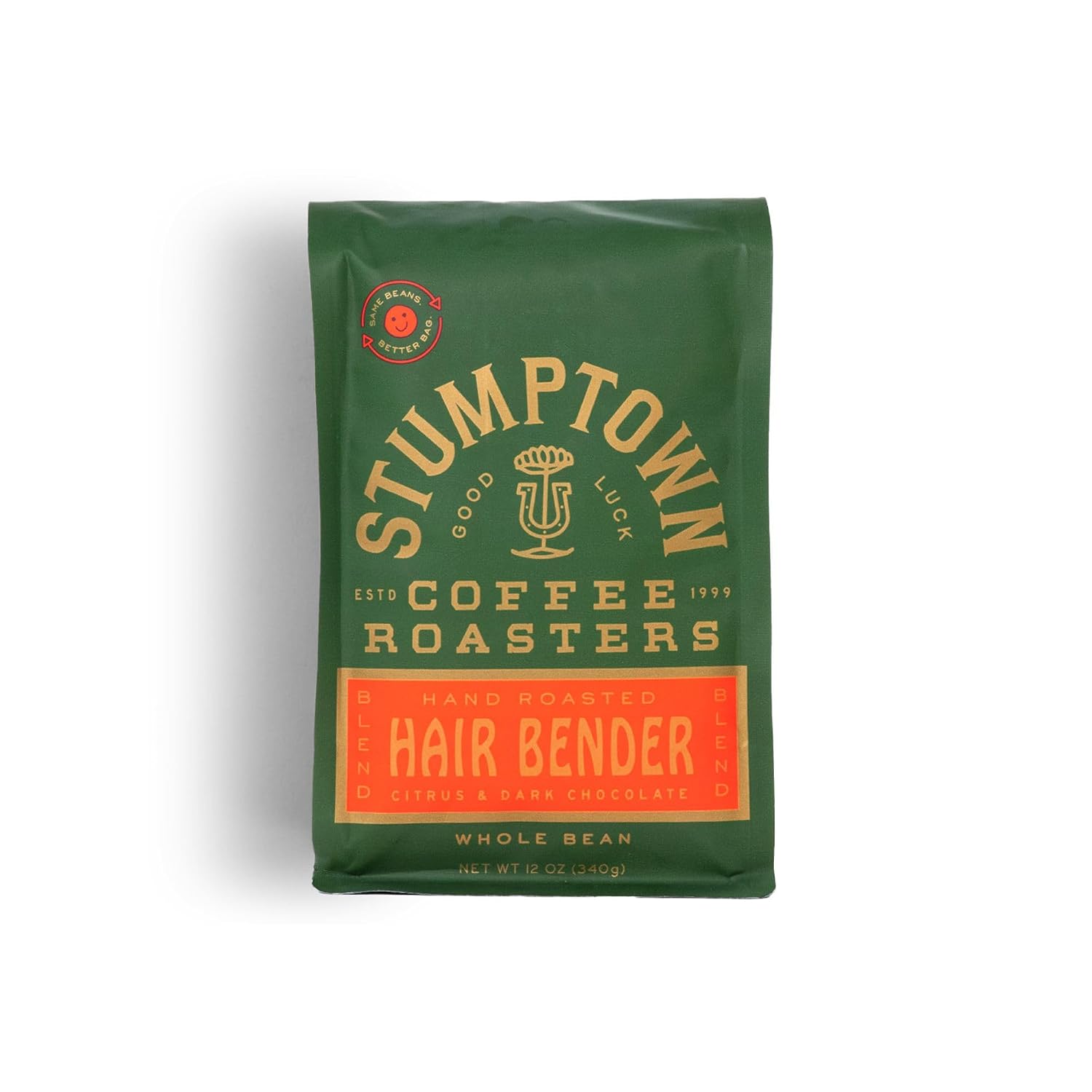
- Best medium roast blend: Stumptown Hair Bender – caramel notes, citrus brightness, balanced and approachable
- Best for bright, complex cups: Volcanica Ethiopian Yirgacheffe – floral notes, berry sweetness, lighter body
- Best value: Lavazza Super Crema – hazelnut, honey, mild acidity at a competitive price
- Best decaf: Swiss Water Process decaf from a specialty roaster – chocolate and almond notes without caffeine
These recommendations are based on researched editorial analysis of flavor profile, roast level, availability, and third-party expert consensus-not on in-house taste testing. French press favors coffees with clear tasting notes and robust body, and every pick above was chosen with that in mind.
Best Coffee for French Press: Top Picks
- Counter Culture Coffee Big Trouble – Medium dark roast blend – Best overall
- Peet’s Major Dickason’s Blend – Dark roast blend – Best dark roast for French press
- Stumptown Hair Bender – Medium roast blend – Best medium roast for French press
- Volcanica Ethiopian Yirgacheffe – Light-medium single origin – Best for bright, complex cups
- Lavazza Super Crema – Medium-dark blend (Arabica/Robusta) – Best value
- Swiss Water Process Decaf (specialty roaster) – Medium roast decaf – Best decaf for French press
At a glance
Compare Amazon-available French press bags on a phone first: listing photo, roast notes, and a Check on Amazon button. Research-rated, not yet brewed by our team.
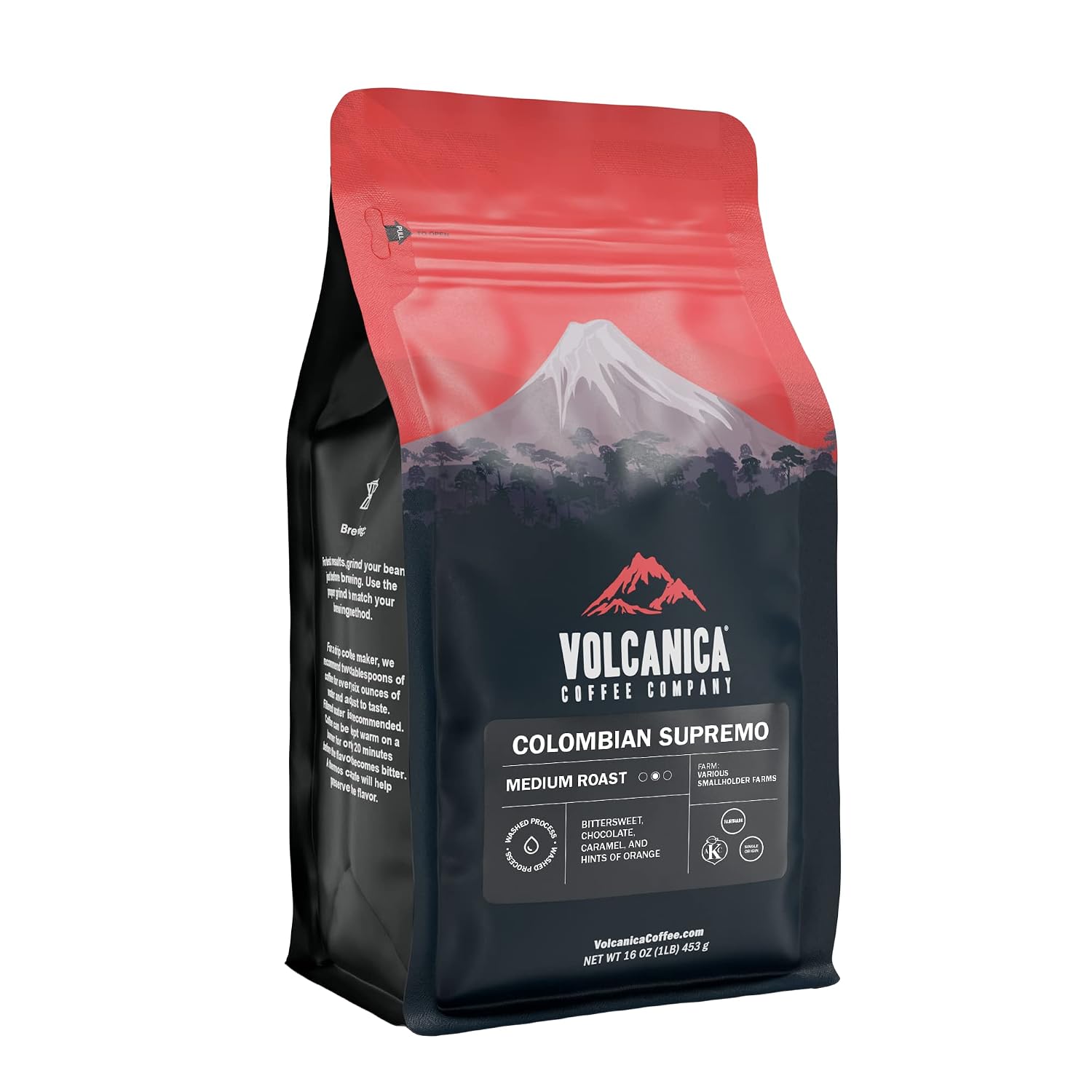
Best daily press
Volcanica Colombian Supremo
- RoastMedium
- Best forCaramel drip/press
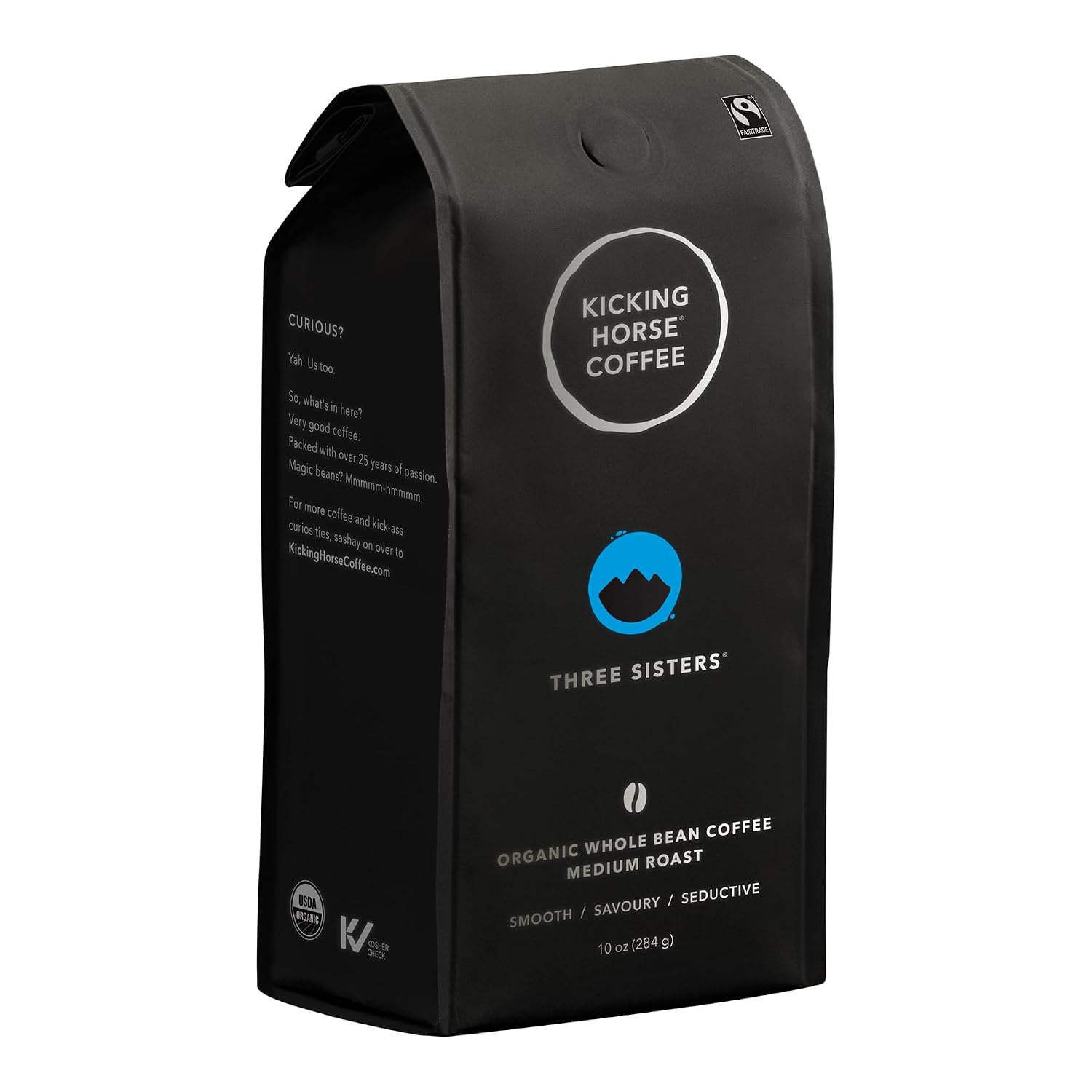
Best balanced press
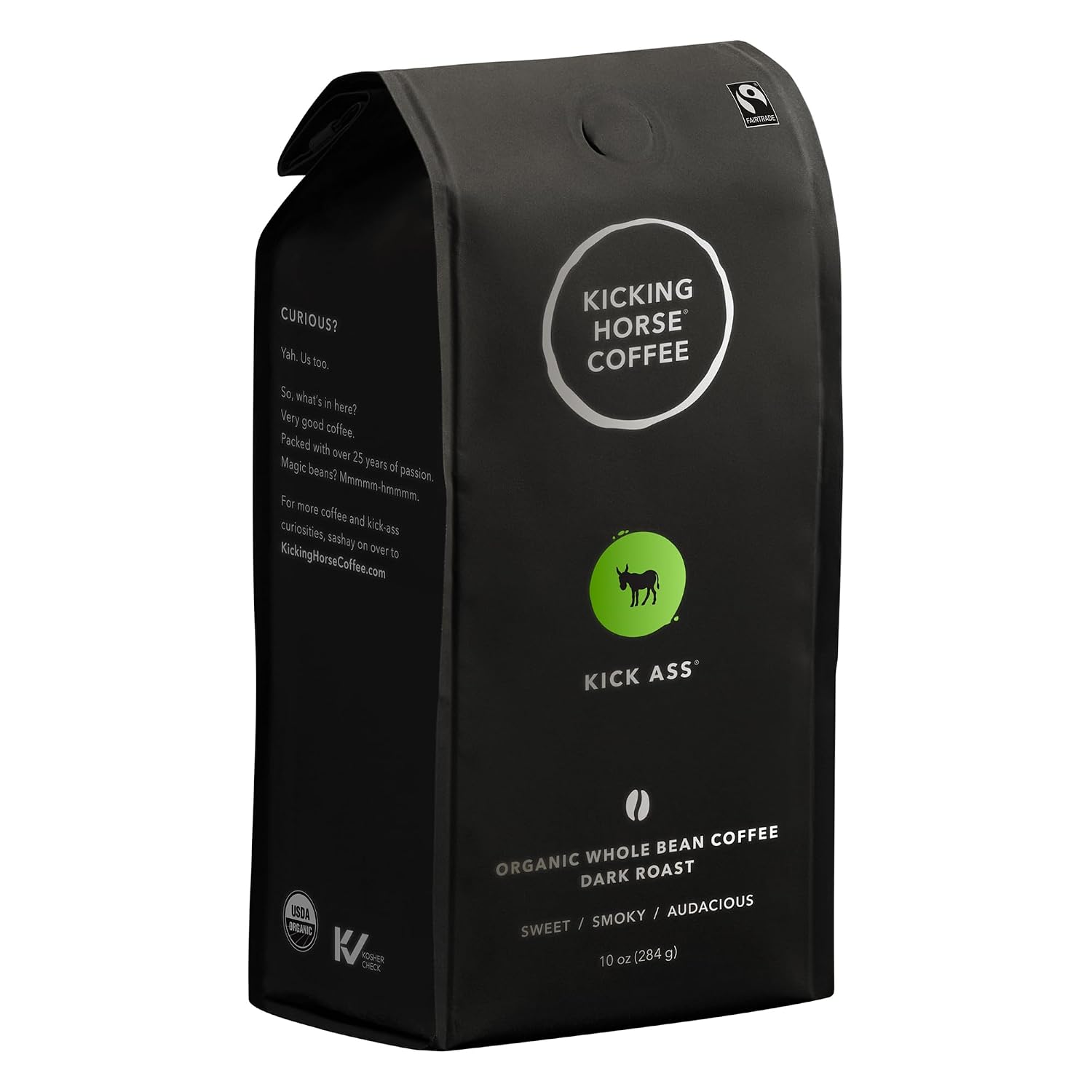
Kicking Horse Three Sisters
- RoastMedium
- Best forBerry-chocolate
Coffee | Roast Level | Origin / Type | Detected Notes | Roast Date Transparency | Ideal Brew Ratio | Approx. Price/oz | Best For |
|---|---|---|---|---|---|---|---|
Counter Culture Big Trouble | Medium-dark | Blend (Latin America) | Milk chocolate, toasted almond, brown sugar | Printed roast date | 1:15–1:16 | ~$0.90 | Best overall |
Peet’s Major Dickason’s | Dark | Blend (multi-origin) | Dark chocolate, earthy, smoky | Best-by only | 1:14–1:15 | ~$0.65 | Best dark roast |
Stumptown Hair Bender | Medium | Blend (Latin America, East Africa) | Caramel, citrus, chocolate | Printed roast date | 1:15–1:17 | ~$0.85 | Best medium roast |
Volcanica Ethiopian Yirgacheffe | Light-medium | Single origin (Ethiopia) | Berry, floral, key lime | Printed roast date | 1:15–1:16 | ~$1.00 | Bright, complex cups |
Lavazza Super Crema | Medium-dark | Blend (Arabica/Robusta) | Hazelnut, honey, vanilla | Best-by only | 1:14–1:16 | ~$0.50 | Best value |
Specialty Decaf (Swiss Water) | Medium | Varies (single origin or blend) | Chocolate, almond, subtle fruit | Varies | 1:14–1:15 | ~$1.10 | Best decaf |
How We Selected and Evaluated Coffees for French Press
Every pick in this guide is based on researched editorial analysis-expert reviews, verified roaster data, and consensus from reputable specialty coffee sources-rather than in-house tasting. We did not claim to taste, test, or personally brew these coffees unless documented notes are supplied.
Here are the criteria that drove our selections:
- Cup profile in immersion brewing: We prioritized coffees known for delivering body, sweetness, and clarity when steeped in a French press. High quality coffee beans that score 80 or above on the SCA scale-what the industry defines as specialty-grade coffee-were given preference. Only the top 3% of coffee grown worldwide reaches this standard.
- Roast level and solubility fit: Coffees with medium to medium-dark roast levels extract predictably in full immersion, producing balanced cups without requiring advanced technique. We also included dark roast options and a lighter roast for variety.
- Value for money and availability: All picks are available to U.S. buyers in 2026, ranging from budget-friendly to specialty pricing.
- Ethical and sourcing transparency: We looked for roasters who share origin details, processing methods, and tasting notes. Specialty coffee is often grown without synthetic pesticides or fertilizers, and some roasters go further-for example, Balance Coffee’s Stability Blend is independently lab-tested for mycotoxins, which can cause gut issues and broader environmental harm. Origin Coffee was voted Europe’s best specialty roaster in 2023 and 2024, illustrating the standard we referenced. By contrast, commodity coffee can contain harmful residues from less careful processing.
- Preference coverage: We aimed to serve dark roast lovers, medium roast fans, lighter roast drinkers, and people just switching from pre-ground supermarket coffee.
Best Overall Coffee for French Press
Counter Culture Coffee Big Trouble is our top pick for French press. This popular blend from a well-respected roaster delivers a rich, forgiving cup that works beautifully in full immersion brewing-whether you drink it black or topped with steamed milk.
Big Trouble’s medium dark roast profile sits right in the sweet spot for French press. It extracts evenly across a wide range of grind sizes and steep times, making it a great coffee for beginners and experienced brewers alike.
- Roast level: Medium-dark, with a clearly printed roast date on every bag
- Origin: Blend of arabica beans sourced primarily from Central America, including El Salvador
- Key tasting notes: Milk chocolate, toasted almond, brown sugar, with a sweet profile that rounds out in immersion
- Brew ratio and grind: Start at 1:15 (coffee to water by weight), coarse grind; adjust coarser if cup tastes bitter
- Value: Around $0.90/oz from most retailers-moderate for specialty, but the consistency justifies the price
- Limitations: May feel too chocolate-heavy for drinkers who prefer brighter, fruity notes or a lighter roast. Availability can vary outside major metro areas, though online ordering fills the gap.
Best Dark Roast Coffee for French Press
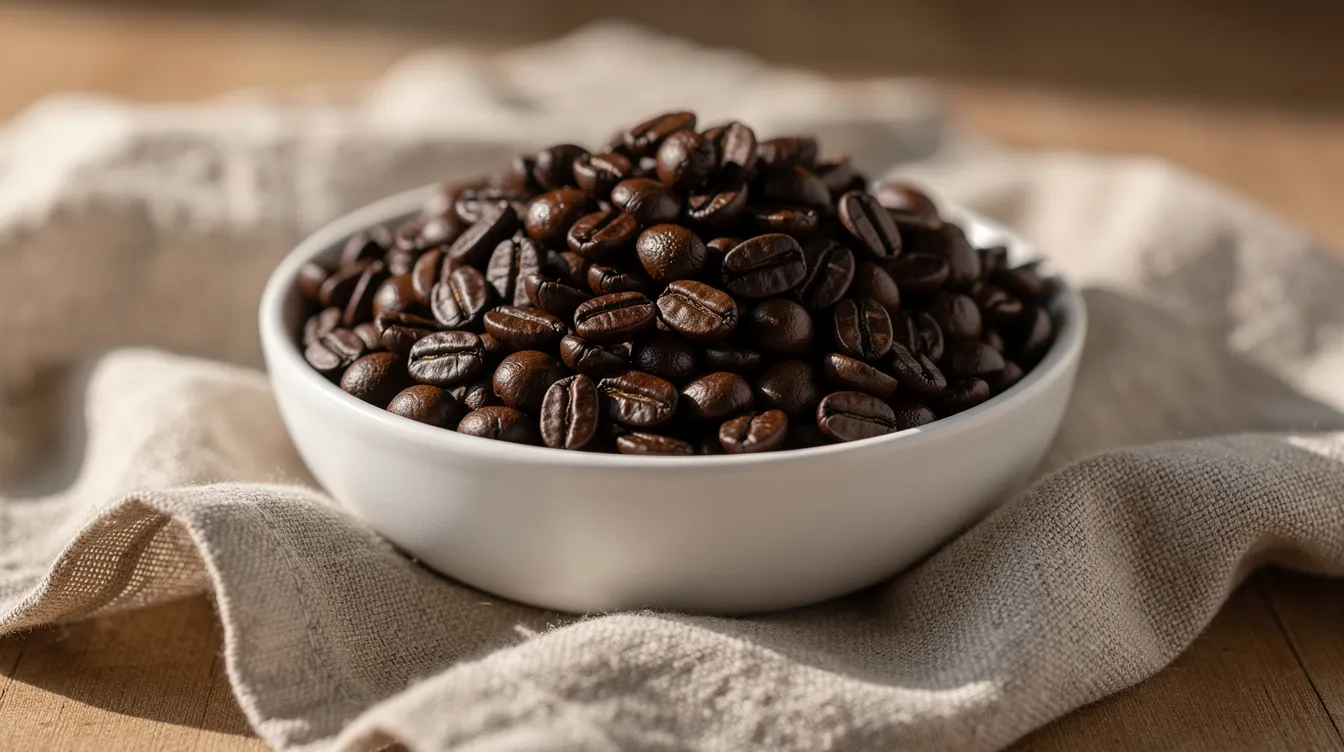
Peet’s Major Dickason’s Blend is a classic dark roast that produces an intense, full bodied cup in a French press. Dark roasts provide bold, chocolatey flavors with lower acidity, and this blend leans into that profile with smoky, earthy, and dark chocolate notes.
Dark roast behaves differently in immersion brewing than medium or light. The beans are more soluble, extracting faster, which means you need to be more careful with steep time and water temperature. Brew too hot or too long, and bitterness takes over.
- Flavor profile: Smoke, dark chocolate, roasted nuts, and a syrupy mouthfeel. Sumatran coffees-which often appear in this blend-have low acidity with earthy and dark chocolate profiles that anchor the cup.
- Bean type: 100% arabica beans from multiple origins
- Brew guidance: Use a 1:14–1:15 ratio with water at the lower end of the range (around 195°F). Keep contact time to 3.5–4 minutes to tame bitterness.
- Who it suits: Coffee drinkers who love intense, bold cups reminiscent of diner-style drip, or those who add milk or cream. Works well with milk based drinks and steamed milk due to its flavor intensity.
- Limitations: If the bag is stale or the beans ground too fine, expect ashy or flat flavors. Peet’s uses best-by dates rather than a printed roast date, so freshness can be harder to verify. Buy from high-turnover retailers.
Best Medium Roast Coffee for French Press
Stumptown Hair Bender is a medium roast blend that balances sweetness and acidity into a smooth, crowd-pleasing cup. Medium roasts balance acidity and sweetness in coffee, making them the most forgiving roast level for French press.
This blend pulls from Latin American and East African origins, giving you caramel notes and gentle citrus alongside chocolate notes-flavors that French press amplifies into a rounded, delicious cup.
- Origin: Multi-region blend spanning Central America and parts of East Africa. Colombian coffee provides a smooth, medium body with citrus-like acidity, and that character comes through clearly here.
- Key notes: Caramel, chocolate, mild acidity, with a touch of citrus brightness
- Brew guidance: 1:15–1:17 brew ratio, standard coarse grind, 4-minute steep at 200–205°F
- Suitability: Works equally well black or with milk. A reliable choice for anyone who wants a classic cup of coffee without extreme flavor swings.
- Limitations: May feel too “middle of the road” for drinkers who want either very bright fruity notes or very smoky, bold cups. Pricing (~$0.85/oz) is slightly above basic commodity beans, though Stumptown prints a roast date on every bag-a meaningful freshness advantage.
Best Light or Light-Medium Roast for French Press
Volcanica Ethiopian Yirgacheffe is our pick for drinkers who want higher acidity and origin clarity from their French press. Light roasts preserve natural fruit and floral notes, and Ethiopian beans are known for their light body and floral aromas-a combination that produces a distinctly different cup from the chocolatey profiles above.
Light roast is more challenging in a French press. The beans are denser and less soluble, so they need tighter control of water temperature and contact time to avoid sourness.
- Origin: Single origin beans from Ethiopia’s Yirgacheffe region
- Tasting notes: Berries, floral notes, stone fruit, and key lime brightness. Kenyan beans-another East African option in this lighter roast category-feature a vibrant acidity with blackcurrant and grapefruit notes for those who want even more intensity.
- Brew tweaks: Use water at 203–205°F, a slightly finer “coarse-medium” grind, and extend steep to 4.5–5 minutes. A washed process yields a clean, crisp cup highlighting intrinsic flavors, and most Yirgacheffe lots are washed.
- Who it suits: Experienced brewers comfortable dialing in grind size, or anyone who enjoys pour over coffee and wants to try that flavor world in an immersion method.
- Limitations: Light roasts highlight extraction mistakes. If your cup tastes sour, grind slightly finer or steep longer. Beginners may want to try this as pour over first for comparison before committing to French press.
Best Value / Budget-Friendly Coffee for French Press
Lavazza Super Crema delivers a pleasant, approachable cup at a price that makes daily French press brewing affordable. It’s a realistic step up from basic supermarket pre-ground-whole beans, a medium-dark roast, and a sweet profile that works without fuss.
- Price: Around $0.50/oz, making it one of the most accessible whole bean options on the market. Rave Coffee’s Signature Blend is another value standout at under £7 per bag for UK-based readers.
- Roast level: Medium-dark blend of arabica beans with a small proportion of robusta beans. Robusta beans are bold, strong, and bitter with earthy notes, but in small amounts they add body and a crema-like texture to French press.
- Flavor: Hazelnut, honey, vanilla, mild acidity-not complex, but consistently delicious
- Brew ratio: 1:14–1:16 works well; the blend is forgiving across a range of variables
- Trade-offs: Lower traceability than specialty roasters, fewer details on origin, and less nuanced flavor. The bag carries a best-by date rather than a roast date. But it’s still a significant upgrade in body and freshness over pre-ground if you grind just before brewing.
Best Decaf Coffee for French Press
A good decaf for French press should retain sweetness and body despite the decaffeination process. Look for beans processed via Swiss Water or Mountain Water methods, which remove caffeine without chemical solvents and tend to preserve more of the original flavor.
- Decaf process: Swiss Water Process is widely regarded as the gold standard for flavor retention in decaf. Look for this on the bag label.
- Roast level: Medium to medium-dark works best-it compensates for the slight body loss that decaffeination causes.
- Tasting notes: Expect chocolate, almond, and subtle fruit. The flavor profile won’t be as vibrant as the regular equivalent, but a well-roasted Swiss Water decaf can still deliver a satisfying, sweet cup.
- Brew ratio tweaks: Use the same 1:14–1:15 ratio as regular coffee. You may benefit from slightly longer contact time (4–4.5 minutes) to boost extraction and body.
- Limitations: Decaf may never taste quite as vibrant as regular coffee beans, and it typically costs more per ounce due to the added processing step. But for evening cups or caffeine-sensitive drinkers, it’s a legitimate option in French press.
How Roast Level Changes French Press Flavor
Roast level affects extraction and flavor in every brewing method, but it’s especially noticeable in French press because full immersion and metal filtration amplify roast characteristics.
- Light roast: Higher perceived acidity, more origin-specific complexity, floral and fruity notes. Extracts more slowly due to denser cell structure. Best for drinkers who enjoy bright acidity and don’t mind dialing in variables carefully. Natural process produces heavy, fruit-forward cups with intense notes, which can pair interestingly with light roast in a press.
- Medium roast: Greater caramelization of sugars, onset of Maillard browning reactions that deliver nutty, chocolate, and caramel flavors. The most balanced and forgiving roast level for French press. A medium roast blend is often the simplest path to a great cup.
- Dark roast: Significant caramelization, prominent roast-derived flavors (cocoa, smoke, molasses), and noticeably lower acidity. Darker roasts are more soluble and extract faster, which is why shortening steep time helps avoid bitterness. Surface oils are more prominent, and French press’s metal filtration lets those oils through, producing an especially heavy, syrupy mouthfeel.
Match roast to your taste: light or medium for fruit and complexity, medium-dark for chocolate and caramel, dark for bold, smoky cups.
Choosing the Right Coffee Beans for French Press
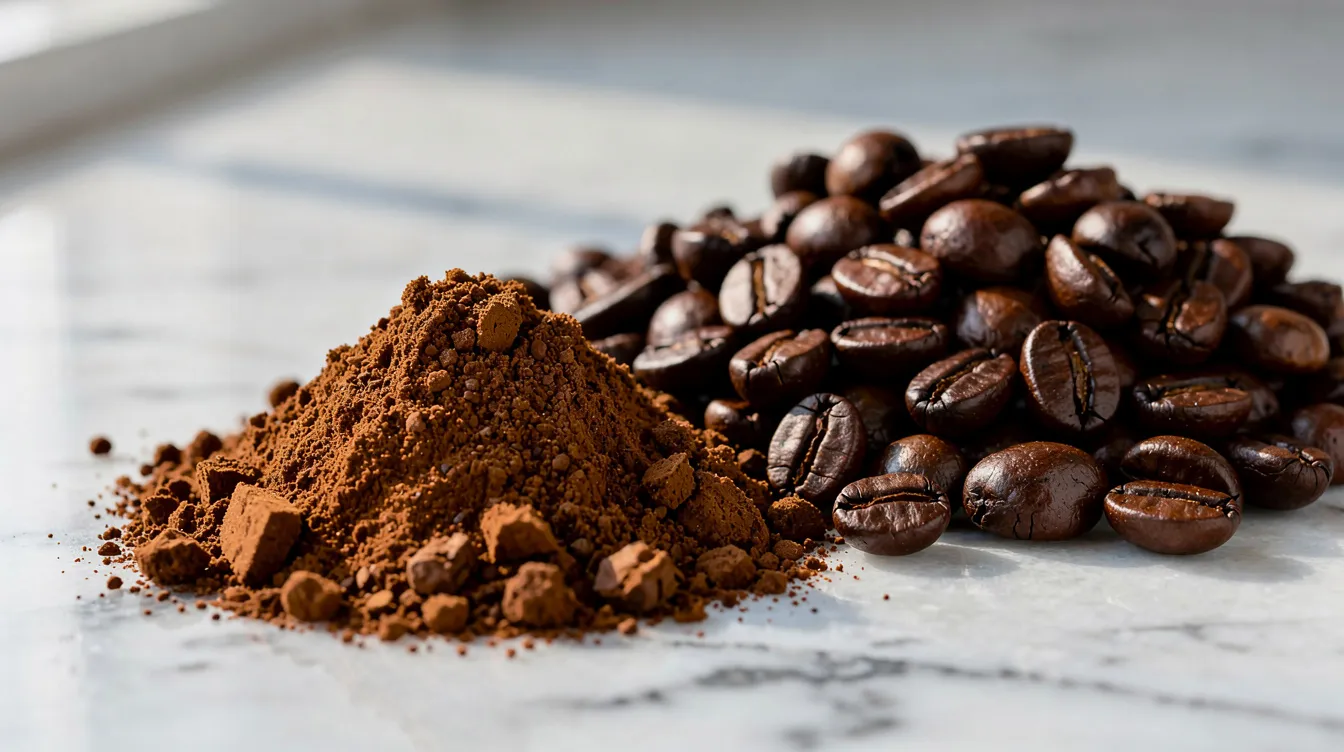
The best beans for French press combine quality, freshness, and a flavor profile that suits immersion brewing. Here’s how to navigate your choices:
- Single origin vs blend: Single origin coffee highlights unique regional flavors-single origin beans are often more complex and interesting, and they can showcase distinct flavor profiles tied to terroir and processing. Blends combine beans from multiple regions for consistency, and blended coffees are typically smoother and more balanced. For beginners, blends are more forgiving.
- Roast date: Avoid bags without any roast date info. Freshly roasted coffee beans used within 2–4 weeks of roasting deliver the best results. A printed roast date is one of the strongest signals that you’re dealing with a quality-focused roaster.
- Freshness window: High-quality specialty coffee is best consumed within 2 to 4 weeks of roasting for French press. Freshness, roast style, and flavor profile are the three pillars of good home brewing.
- Bean type: The main species of coffee are Arabica and Robusta, alongside rare varieties. Arabica and Robusta are the two main types of coffee beans you’ll encounter. 100% arabica beans tend to produce more nuanced, complex cups, while robusta beans add body and caffeine but also more bitterness. Small robusta percentages in blends can work well for French press drinkers who like bold intensity.
- Quality signals: High quality coffee from reputable coffee roasters often lists origin, processing method, and tasting notes. Organic certification confirms no synthetic fertilizers or pesticides were used in growing. These details separate specialty-level beans from generic commodity coffee. Balance Coffee’s Stability Blend scored 91 out of 100 on the SCA scale-an example of what top-tier sourcing and roasting can achieve. By contrast, Owens Organic Jabulani Rwanda scored 72 out of 100, illustrating that organic certification alone doesn’t guarantee specialty-grade quality.
- Origins to explore: Coffee from Papua New Guinea, Central America, and Brazil tend to deliver the chocolate, nut, and caramel-forward profiles that French press rewards. Ethically sourced beans from coffee farmers who are fairly compensated often carry more detailed traceability.
Grind Size, Brew Ratio, and Contact Time for French Press
These three variables control extraction and cup profile more than almost anything else. Change one at a time to troubleshoot.
- Grind size: Coarse, similar to large sea salt. This reduces the fines and sludge that cause bitterness and muddy texture. Too-fine grinds create excessive surface area, leading to over-extraction. Consistency matters-a burr grinder produces far more uniform particles than a blade grinder. Note that espresso requires a fine grind for optimal extraction, which is the opposite end of the spectrum from French press.
- Brew ratio: A common starting point is 1:15 (1 gram of coffee to 15 grams of water). Stronger cups come from ratios like 1:12–1:14; milder cups from 1:16–1:17. Adjust based on your roast level and taste preference.
- Contact time: Standard is about 4 minutes total steep. Lighter roast may need 4.5–5 minutes to develop sweetness; dark roast benefits from 3.5–4 minutes to prevent over-extraction.
- Water temperature: 195–205°F (90–96°C) is the standard range. Pull toward the lower end for dark roasts, the higher end for light.
- Troubleshooting: If your cup tastes sour, the coffee is under-extracted-try grinding slightly finer, steeping longer, or using hotter water. If it tastes bitter, it’s over-extracted-coarsen the grind, shorten the steep, or cool the water a few degrees.
Filtration, Sediment, and Cup Profile
French press uses a metal mesh filter rather than paper, which fundamentally changes both clarity and body compared to drip or pour over.
- What gets through: Metal filtration allows natural oils and microscopic fines into the cup. These oils increase body and perceived sweetness-it’s why French press coffee feels heavier and richer than paper-filtered methods.
- The sediment trade-off: Those same fines settle to the bottom of your cup, creating grit in the last few sips. Some coffee drinkers embrace this; others find it unpleasant.
- Reducing sludge: Use a high-quality press with a tight filter screen. After plunging, let the grounds settle for 30–60 seconds before pouring. Avoid pressing the plunger down aggressively, which stirs up more sediment. Pouring slowly and leaving the last half-inch in the press also helps.
- Roast and filtration interaction: Darker roasts feel especially heavy and syrupy with metal filtration because of higher surface oil content. Lighter roasts can still taste relatively clean if grind size is dialed in and you pour carefully.
Freshness, Roast Date, and Coffee Storage
Roast date is one of the most important factors in getting great coffee from a French press-arguably more important than any specific brand name.
- Peak freshness: Coffee beans taste best 5–14 days after roasting, with the window extending usefully through about day 28. Before day 5, excess CO₂ from roasting can interfere with even extraction. After four weeks, flavor fades noticeably.
- Roast date vs best-by: A “best by” stamp tells you almost nothing about when the coffee was actually roasted. Always prefer bags with a clear roast date printed on them.
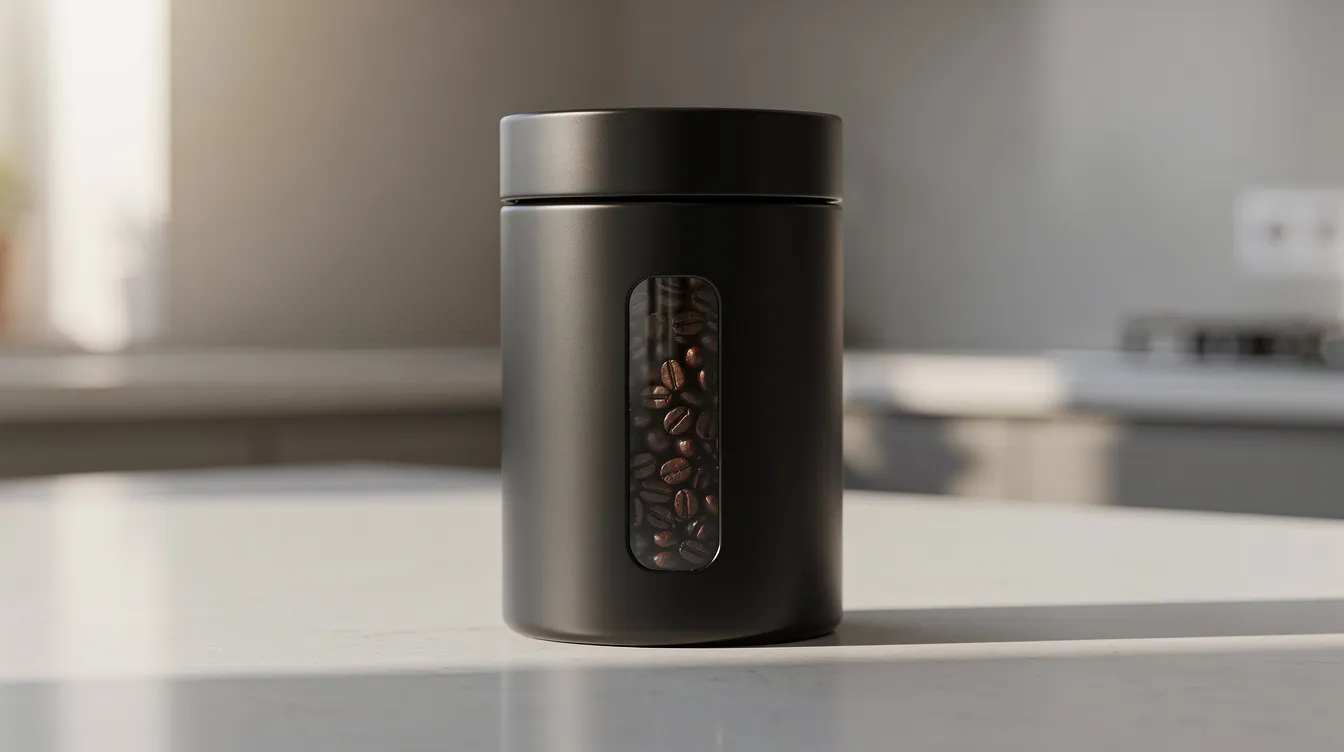
- Storage: Keep beans in an airtight, opaque container at room temperature, away from heat, light, and moisture. Avoid the fridge or freezer for bags you open frequently-condensation from temperature swings accelerates staling.
- Whole bean vs pre-ground: Whole bean coffee retains aroma and flavor dramatically longer than pre-ground. Grinding just before brewing is one of the single biggest upgrades most home brewers can make. If you must buy pre-ground, choose a coarse grind labeled for French press.
Brewing Workflow and Cleaning Your French Press
A consistent, simple routine means you’ll actually brew high quality coffee more often rather than defaulting to shortcuts.
- Step-by-step workflow:
- Preheat the press with hot water, then discard
- Add coarsely ground coffee (weigh it for consistency)
- Pour hot water (195–205°F) in a slow, steady stream to saturate all grounds
- Stir gently once, then place the lid on with the plunger pulled up
- Steep for 4 minutes (adjust for roast level)
- Press the plunger down slowly and steadily
- Serve immediately-leaving coffee in the press continues extraction and leads to bitterness
- Cleaning: Disassemble the plunger and filter screen after every brew. Rinse thoroughly and gently scrub the mesh to remove trapped oils. Every week or two, do a deeper clean with a mild, coffee-safe cleaner or a baking soda soak.
- Why it matters: Cleaner equipment produces a sweeter, clearer cup profile. Old oils trapped in the mesh turn rancid and make even freshly roasted beans taste stale or bitter.
How to Choose the Best Coffee for Your French Press (Buying Guide)
Think of this as a step-by-step checklist, whether you buy online or in-store.
- Decide on roast level: If you’re unsure, start with a medium roast or medium dark roast-they’re the most forgiving and deliver the classic rich, sweet French press cup. Branch into light or dark once you’re comfortable adjusting grind size and brew ratio.
- Choose single origin or blend: Blends offer more consistency and balance across batches. Single origin beans let you explore specific regional character-fruit-forward Ethiopians, chocolatey Brazilians, earthy Sumatrans.
- Check for transparency: Look for a printed roast date, named origin, and tasting notes on the bag. These are signals of a roaster who cares about quality. Certified organic coffee confirms that no synthetic pesticides or fertilizers were used, though organic certification alone does not guarantee flavor quality.
- Scan flavor notes: For French press, chocolate notes, caramel, nuts, and gentle fruit tend to shine. Bright acidity and delicate floral notes are harder to capture in immersion, though not impossible with careful technique.
- Budget and value: Basic supermarket whole beans ($6–10/lb) offer a meaningful step up from pre-ground. Specialty roasters ($12–20/lb) add complexity, traceability, and often better freshness. Premium single origins ($20+/lb) are worth trying once you know what you like. The difference between a $0.50/oz blend and a $1.00/oz specialty coffee is noticeable in a French press.
- Beginners: Start with an approachable medium roast blend like Counter Culture Big Trouble or Stumptown Hair Bender, then experiment with darker and lighter roasts once you’re hitting consistent cups.
French Press vs Other Brewing Methods (When to Use Which Coffee)
The same coffee beans can taste remarkably different depending on how you brew them. Understanding these differences helps you pick the right beans for each method-and appreciate what makes French press unique.
- French press vs pour over: Pour over coffee uses a paper filter that traps oils and fines, producing a cleaner, brighter cup that emphasizes acidity and subtle aromatics. Pour-over methods suit lighter, more delicate roast profiles. French press, by contrast, highlights body and roast character. The same medium roast coffee beans might taste chocolatey and heavy in a French press but cleaner and more nuanced as pour over. See our guide to the best coffee for pour over for picks tailored to that method.
- French press vs espresso: Espresso uses high pressure and fine grind to produce a concentrated, intense shot. Espresso machines favor medium to dark roast coffees, and espresso drinks like lattes and cappuccinos showcase roast character differently than immersion brewing. If you’re exploring espresso, check out the best coffee beans for espresso.
- French press vs cold brew: Cold brew uses room-temperature or cold water with very long contact time (12–24 hours), producing a smooth, low-acid concentrate. Medium and dark roasts suit espresso machines and Moka Pots, but they also tend to work well in cold brew. Light roasts are best for pour-over and AeroPress methods, where hot water and short contact times can capture delicate flavors. Explore our best coffee for cold brew guide for specific picks.
The takeaway: match beans and methods thoughtfully. A coffee that’s your favorite coffee in a French press might underwhelm as espresso, and vice versa.
Frequently Asked Questions About French Press Coffee
These answers address the most common questions we see from French press brewers, especially beginners working through their first bag of specialty beans.
How long should I steep French press coffee?
A standard 4-minute steep works well for most medium roast coffees. If you’re using a lighter roast, extend to 4.5–5 minutes to give the denser beans more time to release their sugars and avoid a sour, under-extracted cup. For dark roast, pull back to 3.5–4 minutes-darker beans extract faster due to their more porous cell structure, and extra time pushes them into bitter, ashy territory. Always start with the standard and adjust in 15-second increments based on taste.
Can I use pre-ground coffee in a French press?
You can, but most supermarket “ground for drip” coffee is too fine for a French press. That extra surface area leads to over-extraction, resulting in bitterness and heavy sediment. If buying pre-ground, look for bags specifically labeled “coarse grind” or “French press grind.” The better move is to invest in an entry-level burr grinder-even a $30–50 model will produce more uniform coarse particles than any blade grinder and dramatically improve your cup.
Why does my French press coffee taste bitter or muddy?
Bitterness usually points to one of three things: grind too fine, steep time too long, or water too hot for your roast level. Coarsen your grind first-that’s the most impactful single change. If bitterness persists, shorten your steep by 30 seconds. Muddy texture, on the other hand, is about fines: tiny coffee particles that slip through the mesh screen. A quality burr grinder reduces fines, and letting the brew settle before pouring helps keep sediment out of your cup. Also check your press’s filter-if the mesh is worn or loose, it’s time for a replacement.
Is French press coffee stronger than drip coffee?
It depends on what you mean by “stronger.” French press often tastes more intense because metal filtration lets oils and fine particles into the cup, creating a heavier body and richer mouthfeel. But actual caffeine content depends on your brew ratio and serving size, not the method itself. A French press brewed at 1:15 and a drip machine using the same ratio will deliver comparable caffeine per cup. The perceived strength difference is mostly about texture and flavor density.
Do I need special “French press” beans?
No. There is no bean grown or processed exclusively for French press. Any high quality coffee beans can work. That said, medium to medium-dark roasts with balanced, chocolatey, or nutty tasting notes tend to be the easiest and most forgiving starting point. They extract predictably in immersion, deliver the body French press is known for, and taste delicious without requiring precision adjustments to grind and temperature. Once you’re comfortable, branch out-you might find a bright Ethiopian single origin or a smoky dark roast becomes your new go-to.
Our French Press Coffee Picks
We matched one coffee to each mood below. Tap the image or the coffee name to see it on Amazon. These bags match the chocolate-caramel medium and medium-dark styles this French press guide describes. Research-rated, not yet brewed by our team.
Feeling rich: a chocolatey immersion cup
Our pick: Stumptown Hair Bender, whole bean. A fruit-and-chocolate blend that holds up to the long immersion and coarse grind this article recommends. Research-rated, not yet brewed by our team.
Feeling daily: a nutty Colombian press
Our pick: Volcanica Coffee Colombian Supremo, medium roast, Fair Trade, whole bean, 16 oz. Grind coarse just before brewing, as this guide says. Research-rated, not yet brewed by our team.
Related Guides and Next Steps
If this guide helped you zero in on the right beans for your French press, explore our coffee recommendations tailored to other brewing methods. Different methods bring out different qualities in the same beans, and experimenting across brew styles is one of the most rewarding parts of the hobby.
- Browse all our recommendations organized by coffee by brew method
- Find the right beans for pressure brewing: best coffee beans for espresso
- Explore smooth, low-acid options: best coffee for cold brew
- Discover clean, bright cups: best coffee for pour over
- Start from our main coffee hub for the full picture
Your next step: Pick one coffee from this guide, set your grind to coarse, use a 1:15 brew ratio, and spend a week making small adjustments. You’ll find your ideal French press cup faster than you think.