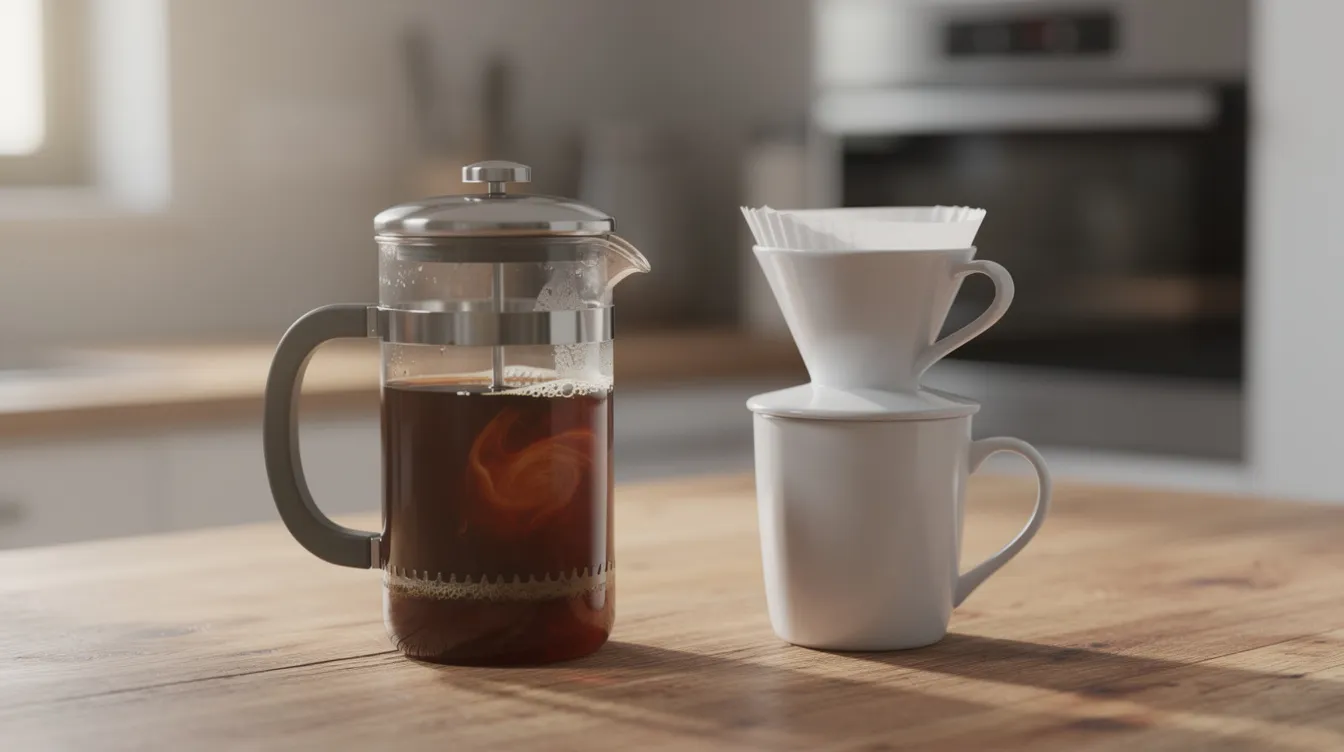
Choosing between French press and pour over comes down to what you want in the cup. French press coffee delivers a rich, full-bodied flavor with heavy mouthfeel, while pour over coffee highlights clarity and delicate flavor notes through paper filtration. Neither brewing method is universally better. The right pick depends on whether you prefer bold body or bright precision, hands-off steeping or hands-on ritual, and how much clean up you’re willing to handle.
This page is a researched editorial analysis from Capitol City Coffee, not a seller’s pitch. Some outbound gear recommendations may use affiliate links.
Best french press pick
For this roundup, Bodum Chambord is the french press we recommend first—the same pick at the top of our At-a-glance cards below.
French press produces a rich, full-bodied cup of coffee with pronounced oils and texture, making it ideal for many coffee lovers who prefer bold, comfort-first mugs.
Pour over emphasizes a cleaner, brighter cup with high flavor clarity, best for highlighting specialty coffee beans and origin-specific tasting notes.
French press is generally easier for beginners because it involves fewer variables, while pour over requires more technique and attention during brewing.
Pour over wins for daily clean up ease and lighter roasts; French press wins for simple, full bodied coffee with less effort.
The “best cup” depends on your beans, grind size, brew ratio, and personal taste more than the brewer itself.
Quick Verdict: Should You Choose French Press or Pour Over?
Here is the short version for readers who want an answer before the deep dive:
Choose French press if you want a bold, full bodied cup with simple steps, don’t mind a little sediment, and value making coffee for multiple people in one batch with less effort.
Choose pour over if you value a cleaner cup with more control over extraction, enjoy the brewing process as a ritual, and want to taste subtle flavors in specialty beans.
The core variables driving this verdict are grind size (coarse vs medium fine), brew ratio, contact time, filtration type (metal mesh vs paper filters), and clean up effort. If neither method sounds right, other manual home coffee brewing options may suit different priorities.
Key Differences Table: French Press vs Pour Over
The table below contrasts the two methods across the criteria that matter most for daily use. Reference it whenever you need a quick side-by-side.
Feature
French Press
Pour Over
Brewing method
Immersion brewing (full soak)
Percolation (water flows through grounds)
Typical brew ratio
~1:12–1:16 (starting point ~1:15)
~1:15–1:17 (common ~1:16)
Grind size
Coarse grind (kosher salt texture)
Medium to medium fine (closer to table salt)
Contact time
4–5 min immersion
2.5–4 min including drawdown
Filtration
Metal mesh filter; some models use a double filter to reduce stray grounds
Paper filter (or cloth)
Cup profile
Fuller body, oils, some sediment
Clean, bright, minimal sediment
Capacity
12 oz single-serve up to 34–51 oz presses
Single-cup drippers up to 6-cup carafe brewers
Heat retention
Glass cools quickly; insulated steel retains heat
Thinner ceramic/glass drippers lose heat during pours
Workflow
Hands-off steep; low active attention
Active pouring with pulse control
Clean up
Scoop grounds, rinse mesh and carafe
Toss paper filter, rinse dripper
Learning curve
Easy; forgiving of minor mistakes
More technique-sensitive
Typical US cost
$20–30 budget; $40–60 mid; $70+ premium
Under $20 plastic; $25–60 ceramic/metal; filters ongoing
Understanding the Brewing Methods: How Each One Works
A brewing method describes how water interacts with coffee grounds to extract flavor. The two approaches here differ fundamentally in water flow and extraction mechanics.
French press is an immersion method. You add freshly ground coffee at a coarse grind, pour hot water over the grounds, let everything steep together for about four minutes, then press down a metal mesh plunger to separate liquid from solids. The French press method is forgiving – minor timing mistakes won’t ruin the cup.
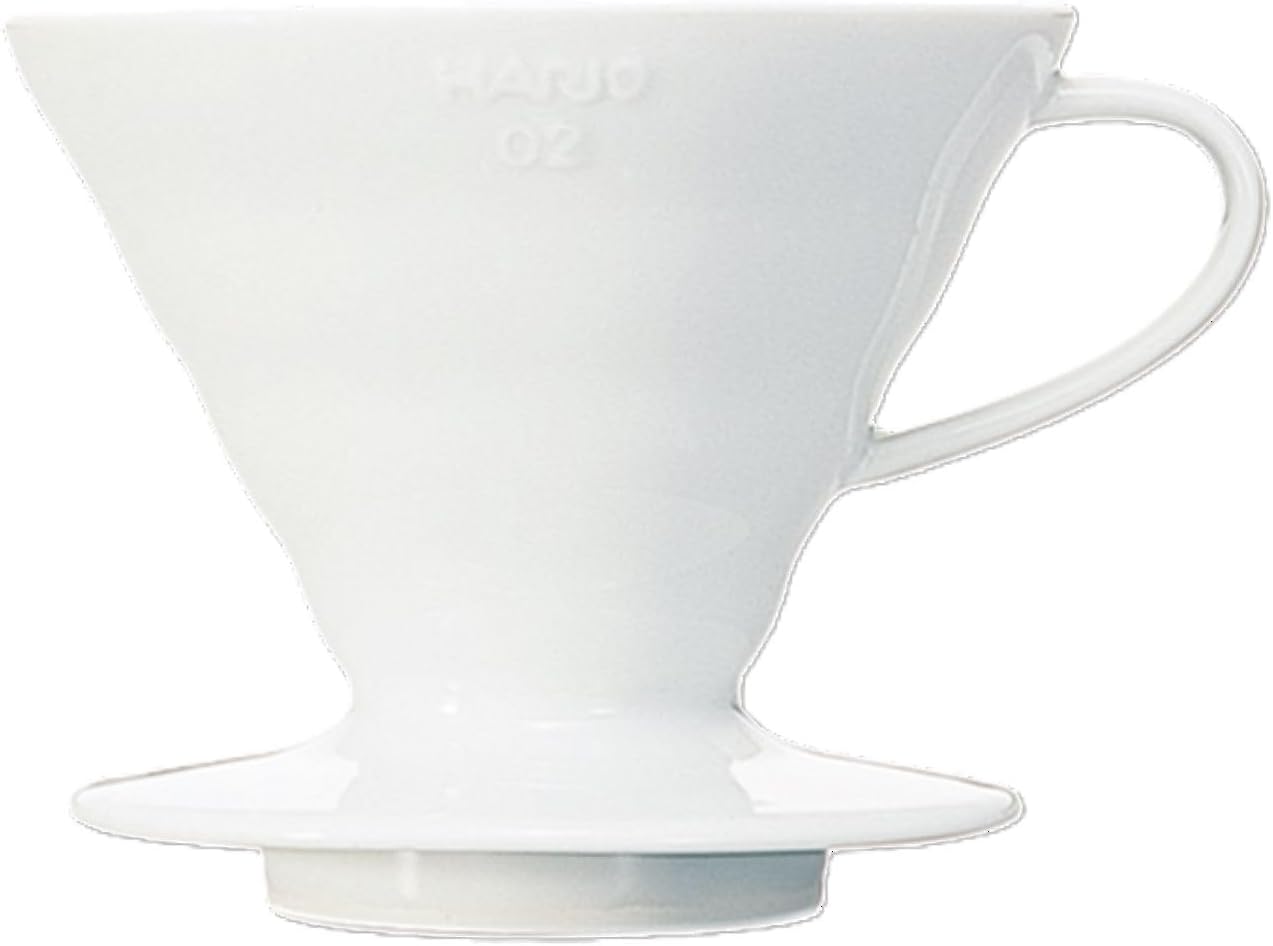
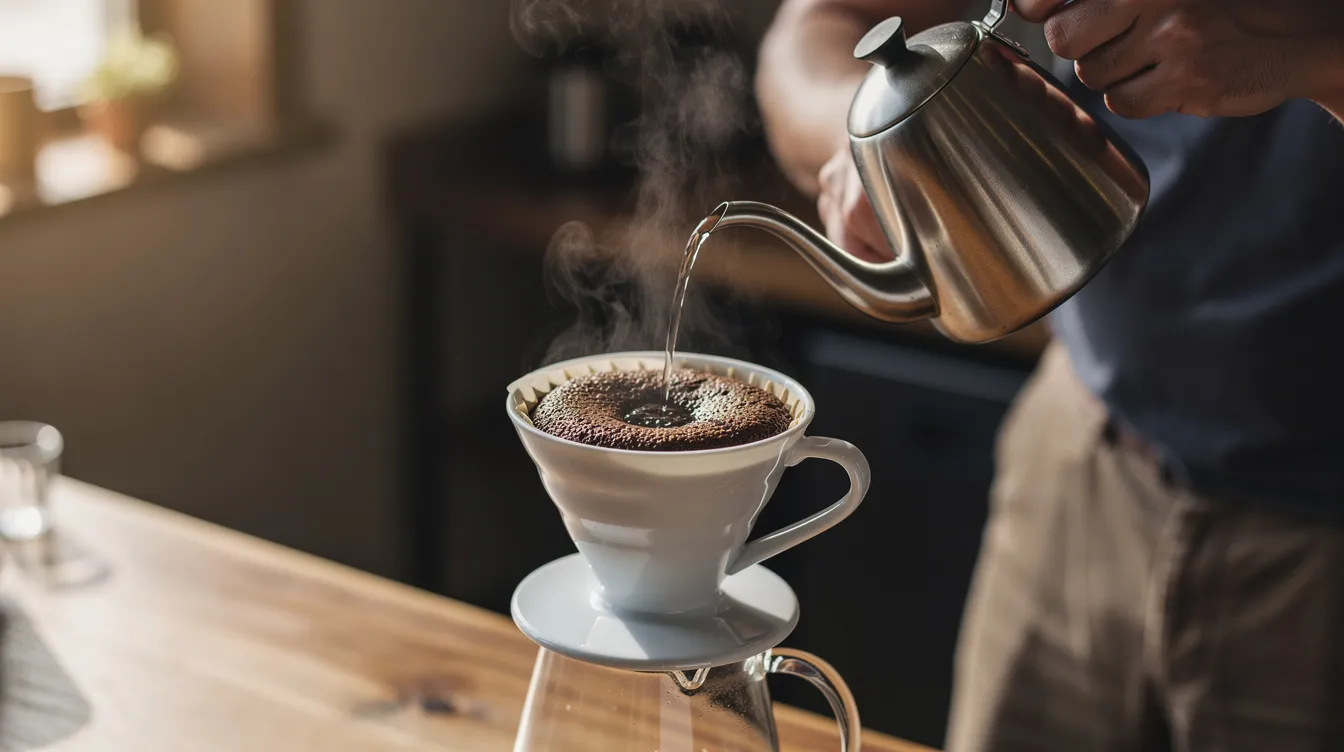
Pour over is a percolation brewing method. You place a paper filter in a cone or flat-bottom pour over dripper, add medium to medium fine grounds, and slowly pour hot water in controlled pulses. Gravity pulls coffee through the bed and filter into a carafe or mug over roughly three to four minutes. Pour over requires active manual attention during brewing.
These differences in the brewing process – full immersion versus constant flow – directly shape contact time, filtration, and the cup profile you end up with.
French Press: Performance, Benefits, and Limitations
The French press is a classic immersion brewer that has been a kitchen staple for more than a century. Its appeal is straightforward: bold flavor, minimal gear, and a relaxed workflow.
Performance. A standard recipe starts around 30 g of coffee to 450 g of water (approximately a 1:15 brew ratio) using a coarse grind. French press coffee brews for about four minutes of steeping, followed by a slow plunge. Longer steeps or finer grinds increase extraction but risk a bitter taste and excess sludge. French press uses a coarse grind for optimal extraction, and the standard coffee-to-water ratio for French press is 1:15.
Cup profile. Expect a heavier body with a fuller body feel, richer flavor, and pronounced chocolatey, nutty, and roasty notes. French press retains more coffee oils, enhancing flavor depth. French press coffee often has earthy aromas and strong flavors. The metal mesh lets natural oils and fine particles through, lowering clarity but boosting perceived strength. Dark roast beans are excellent for French press brewing, and medium roasts also perform well.
Workflow. French press requires low active attention during brewing. Add grounds, pour hot water, stir briefly, set a timer for a few minutes, then plunge. It suits busy mornings and multitasking.
Gear and materials. Standard glass-and-metal presses range from 12 oz single-serve to 34–51 oz family sizes. Insulated stainless models hold heat better than glass but cost more. Glass cools faster, which can be a benefit (stops extraction) or a drawback (lukewarm coffee).
Clean up. The main drawback. Coffee grounds cling to the mesh and carafe. Scoop grounds into compost, then rinse the mesh thoroughly to prevent rancid oils from building up.
Durability and value. Budget glass presses run $20–30, mid-range $40–60, and premium insulated models $70+. No recurring paper filter costs, but glass can break and cheap mesh can deform over time.
Limitations. French press coffee can have sediment due to its brewing method – especially in the last sips, though some models use a double filter to reduce graininess and stray grounds. French press can easily become bitter if over-extracted. Flavor clarity is lower than paper-filtered methods, and unfiltered coffee oils may concern people monitoring cholesterol.
Pour Over: Performance, Benefits, and Limitations
Pour over sits at the opposite end of the manual brewing spectrum: more hands-on, more precise, and more transparent in the cup.
Performance. Pour over requires a medium to medium fine grind and a brew ratio of about 1:16 to 1:17. A typical recipe uses 20 g of coffee to 300–330 g of water. After a 30-second bloom, you complete two to three rounds of controlled pours. Pour over brewing time is about two and a half to three and a half minutes total, including drawdown. A scale and timer help achieve consistency.
Cup profile. Pour over yields a clean, crisp cup with high flavor clarity. Paper filters trap most oils and fine particles, producing minimal sediment and a lighter body. Pour over coffee highlights fruity and floral notes in lighter roasts, and medium roast beans work well too. The result is a brighter cup where tasting notes are more distinct.
Workflow. Pour over requires steady, patient pouring for best results. You heat water, rinse the filter, bloom the grounds, then pulse-pour over the next two to three minutes. It demands active participation but becomes a relaxing slow weekend morning ritual once routine sets in. A gooseneck kettle helps with flow control, though a regular kettle works in a pinch.
Gear and materials. Drippers come in ceramic, glass, metal, or plastic. Capacities range from single-cup to larger carafe-style brewers. Cone and flat-bottom shapes change flow characteristics, but the basic pour over method stays the same.
Clean up. This is where pour over shines for everyday brewing. Toss the paper filter with spent grounds, rinse the dripper and carafe. Done.
Durability and value. Simple plastic drippers cost under $20. Ceramic or metal options run $25–60. All-in-one glass carafe brewers go up to about $70–80. Ongoing filter costs are modest – a few cents per brew – but add up over years for daily drinkers.
Limitations. Steeper learning curve. Sensitivity to grind inconsistencies. A controllable-spout kettle is strongly recommended. Brewing multiple back-to-back cups is slower than batch immersion.
Flavor, Body, and Clarity: How the Cup Profile Really Differs
What you actually taste in the cup is the whole point of choosing a coffee maker. Here is how filtration, contact time, and grind size shape each method’s character.
French press coffee tastes thick, creamy, rounded, and comforting. The metal mesh allows coffee oils and fine particles into the cup, creating a full bodied flavor with cocoa, caramel, and nut tones. Dark roasts and medium roasts shine here, though origin nuances get somewhat blurred by the heavier body.
Pour over coffee tastes tea-like in body with sparkling acidity and sharp clarity. Single-origin coffees show distinct flavor notes – berries, citrus, florals – because paper filters remove the oils that would otherwise coat the palate. Lighter roasts particularly benefit from the pour over method’s transparency. Pour over can highlight delicate fruity or floral notes that would be buried in a French press.
French press coffee uses a higher coffee-to-water ratio than pour over, which also contributes to its denser mouthfeel. Pour over produces a cleaner, brighter cup overall.
You can nudge each method toward the other. A slightly finer grind and longer contact time create a stronger pour over. A shorter steep and coarser grind yield a cleaner French press. Temperature matters too: a well-insulated French press keeps coffee hotter but may continue extracting if coffee sits on the grounds, while smaller pour over batches encourage brewing just what you will drink immediately.
Workflow, Convenience, and Clean Up
Day-to-day livability matters as much as flavor.
French press workflow: Add grounds, pour hot water, quick stir, put on lid, wait four to five minutes, plunge, serve. This low-touch process suits busy mornings or brewing for multiple people at once. French press requires fewer variables than pour over to get a delicious cup.
Pour over workflow: Heat water to the right water temperature (around 92–96°C), place and rinse filter, add grounds, bloom for 30 seconds, then complete two to three pulse pours over the next two to three minutes. You have full control, but you are anchored to the kettle the entire brew time.
Total time comparison. For a 12–16 oz serving, both methods take roughly four to six minutes including setup. French press front-loads the wait; pour over front-loads the work.
Clean up differences. French press requires separating wet grounds – scraping or rinsing into a compost bin – then fully rinsing the plunger assembly. Pour over clean up is faster: toss the paper filter, rinse dripper and carafe.
Scaling. French press scales well to three or four cups in one batch. Pour over requires a larger dripper or repeating the process, which affects convenience when hosting.
Winner by Use Case: Which Brewing Method Fits Your Routine?
Busy weekday mornings: French press wins. Grind, pour, steep while you handle other tasks. It is generally easier to brew coffee for one to three people with minimal active work.
Solo specialty coffee sessions: Choose pour over. Coffee lovers exploring single-origin beans and lighter roasts get a better tasting coffee experience with precise extraction and high clarity.
Entertaining or brunch: A larger French press serves several mugs quickly. Pour over setups exist for bigger batches but require more active pouring.
Office or shared kitchen: Pour over with disposable paper filters is cleaner and more hygienic. A French press left unwashed develops lingering odors from rancid oils.
Travel and camping: Durable stainless French presses and compact plastic drippers both travel well. French press has fewer small parts; pour over minimizes clean up where water is limited.
Health and cholesterol concerns: People who drink multiple cups daily and are monitoring LDL cholesterol may prefer pour over. Research published in 2025 found that French press is among the brewing methods highest in cafestol and kahweol – diterpenes linked to elevated LDL levels. Paper filtration removes a large portion of these compounds.
Cost and Long-Term Value
Capitol City Coffee may earn commissions from recommended gear linked below. Rankings reflect researched editorial analysis, not commission size.
Upfront cost. A solid entry-level French press runs about $25–40. A basic ceramic or plastic pour over dripper costs roughly $15–30. Both are far cheaper than quality espresso machines.
Recurring costs. French press uses no paper filters but may need occasional mesh screen or gasket replacements. Pour over has ongoing filter expenses – typically a few cents per brew – that add up modestly for daily drinkers.
Durability. Glass French presses crack or shatter if mishandled. Metal and high-quality plastic drippers are extremely durable. Simple designs with no electronics tend to last years.
Value. Both brewers are high-value coffee makers capable of producing the best cup many home drinkers will ever need, as long as they are paired with freshly ground coffee beans and a decent burr grinder.
Which Should You Choose: French Press or Pour Over?
The decision flow is simple. If you prefer bold body and richer flavor with simple steps, choose French press. If you value clarity and origin flavors with a meditative ritual, choose pour over. If you are indecisive or curious, consider owning both and reaching for different cups on different days.
Remember that grind size, brew ratio, and contact time are more influential than the brewer itself once you are working within a method’s typical range. Experiment. And above all, bean quality, roast level, and freshness contribute more to taste than the choice between French press or pour over. Good coffee beans tend to taste good across both methods.
Alternatives to French Press and Pour Over
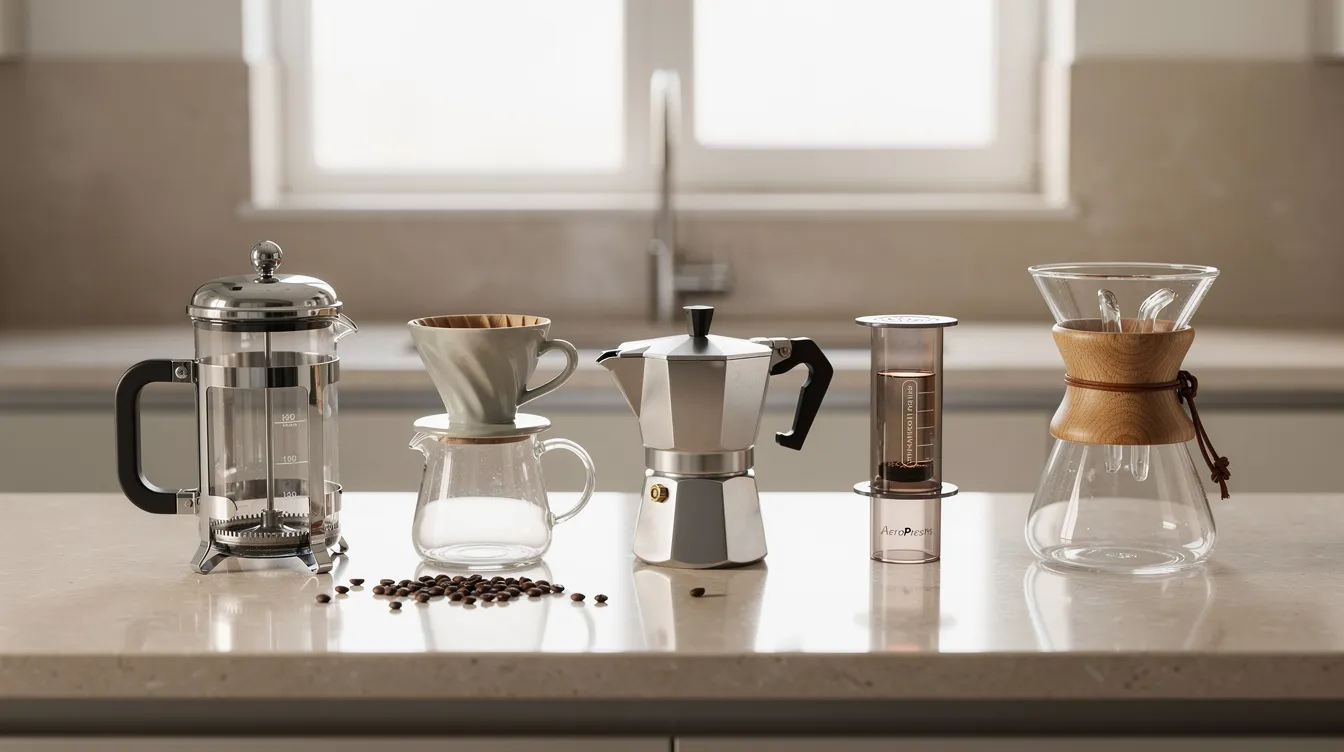
AeroPress. A compact immersion-percolation hybrid that can mimic both French press body and pour over clarity depending on technique. A useful option for travelers and experimenters.
Automatic drip coffee makers. Hands-off convenience that approximates the pour over method but with less manual control. Ideal for households needing multiple cups on a timer.
Espresso and moka pots. For those who prefer bold, concentrated coffee. These are different brewing methods focused on pressure rather than gravity or immersion.
Single-serve pod machines. Maximum convenience, but higher cost per cup and trade-offs in waste and flavor nuance compared to manual methods.
FAQs: French Press vs Pour Over
Does French press coffee have more caffeine than pour over?
Not necessarily. Whether a cup has more caffeine depends primarily on the brew ratio, roast level, and contact time rather than the brewing method alone. French press can feel stronger because of its oils and heavier body, but ounce-for-ounce caffeine content is often comparable when you use similar coffee doses. If you want a noticeable caffeine bump, increase your coffee-to-water ratio rather than switching brewers.
Is French press or pour over better for beginners?
French press is typically the easier starting point. The immersion method involves fewer variables – add grounds, pour hot water, wait, plunge – and minor timing mistakes rarely ruin the cup. Pour over demands more technique and attention but rewards practice with higher clarity and full control over extraction. Most beginners find success with a French press first, then graduate to pour over once they want to explore different cups and subtle flavors.
Can I use the same grind size for French press and pour over?
No. French press needs a coarse grind to avoid sludge and over extraction, while pour over generally uses a medium grind or medium fine grind for proper flow and extraction. Using the wrong grind size is the fastest way to get a bitter taste or weak, under-extracted cup. Owning a burr grinder makes switching between settings practical and consistent.
Which method is better for making coffee for a crowd?
French press wins for group brewing. Large presses produce three to four mugs in a single batch with minimal effort. Pour over typically requires a larger brewer or repeating the process cup by cup, making it slower when you are hosting brunch or serving a table.
Is one method healthier than the other?
Paper-filtered pour over removes more cafestol and kahweol, compounds associated with higher LDL cholesterol in studies of heavy unfiltered coffee consumption. Some French press models use a double filter to catch more fine particles, but it does not change the cholesterol distinction created by paper filtration. For people who drink several cups daily and are monitoring cholesterol, pour over is the more conservative choice. Occasional French press is generally considered fine for most people. Light roast beans are best for cold brew coffee specifically, but roast level does not significantly change the health distinction between filtered and unfiltered brewing. If you have specific concerns, consult your physician rather than relying on brewing method alone.
How Capitol City Coffee Rates Coffee and Coffee Machines
Every coffee and coffee machine we recommend is scored on the same 100-point scale, so a recommendation on one page means the same thing as a recommendation on any other. Each pick is also labeled with how we reached its score.
Research-ratedScored from the roaster or manufacturer’s published specifications, independent results such as Coffee Review blind cuppings and SCA brewer certification, and patterns across verified buyer reviews. Most of our current picks are research-rated.
Hands-on testedThe Capitol City Coffee team has brewed the coffee or used the machine ourselves, following the testing steps below. We only use this label when that testing actually happened, and we show the date we tested.
Coffee beans: 100-point scale
What we score
Points
What we look at
Origin and sourcing transparency
20
Country, region, farm or cooperative, altitude, bean variety, and processing method are clearly disclosed.
Flavor evidence
25
Independent cupping scores, how closely the tasting notes match what the origin is known for, and our own cupping notes when hands-on tested.
Roast and freshness
15
Roast level stated, roast-date practices, whole-bean availability, and packaging with a one-way valve or resealable bag.
Brew versatility
15
How well the roast suits pour-over, drip, French press, cold brew, and espresso.
Value
15
Price per ounce compared with similar single-origin coffees or blends.
Buyer feedback
10
Volume and consistency of verified reviews, and recurring complaints about staleness, bitterness, or shipping.
Coffee machines and gear: 100-point scale
What we score
Points
What we look at
Brewing performance
25
Water temperature in the 195–205°F range, even extraction, and SCA certification or published test data.
Build quality and reliability
20
Materials, known failure points, and long-term owner reports.
Ease of use and cleaning
15
Setup, the daily routine, descaling, and dishwasher-safe parts.
Fit for your kitchen
10
Capacity, counter footprint, and noise.
Useful features
10
Programming, grind and temperature control, and carafe type. Features that improve the cup count more than extras that do not.
Value
10
Price compared with machines that perform similarly.
Warranty and support
10
Warranty length, parts availability, and how the brand handles repairs.
What the grades mean
Score
Grade
What it means
90–100
A
Exceptional. Our first recommendation for the feeling and setting described.
80–89
B
Strong. Excellent, with minor trade-offs we explain.
70–79
C
Good. Worth it for specific needs, with clear compromises.
Below 70
—
Not recommended. We do not feature these as picks.
How we test hands-on
When a pick carries the Hands-on tested label, this is the method behind it, and we note the date we tested.
Coffee: brewed fresh from whole beans following Specialty Coffee Association guidelines (water between 195 and 205°F, about 1 gram of coffee to every 15 to 18 grams of water) in the brew methods the roast suits best, such as pour-over, French press, or espresso. We taste it black first, then with milk if that is how most people drink it, and each taster scores it on their own before we compare notes.
Machines: used in our everyday routine rather than a single demo. We brew both full and small batches, check the brewing temperature and brew time, and run the cleaning or descaling steps the manual calls for.
How we choose the feeling and setting
We match each coffee to a mood and a moment based on its flavor profile and roast. Bright, citrusy light roasts suit energizing mornings. Chocolatey, full-bodied medium roasts suit slow or social moments. Richer roasts suit espresso and milk drinks. Each pick explains which facts led us to that match.
Our scores stay independent
Every score comes only from the criteria above. No brand can pay for a pick or a higher grade. We re-check ratings when a roast, listing, or model changes, and update or remove picks that no longer earn their grade.
Some links on this page are affiliate links. As an Amazon Associate, Capitol City Coffee earns from qualifying purchases, at no extra cost to you.
Questions about a rating? Reach the Capitol City Coffee team through our contact page.