

Coffee grinders worth buying
- Everyday + espresso Encore ESP Pro
- Pour-over Ode Gen 2
- Hybrid Fellow Opus
- Value espresso DF54
- Manual Timemore C3S
- Cold brew / coarse Baratza Encore
- Timed daily brew Virtuoso+
- Breville workflow Smart Grinder Pro
- Budget metal burr Capresso Infinity
- Manual espresso 1Zpresso J-Max
Best starting burr
Baratza Encore ESP Pro
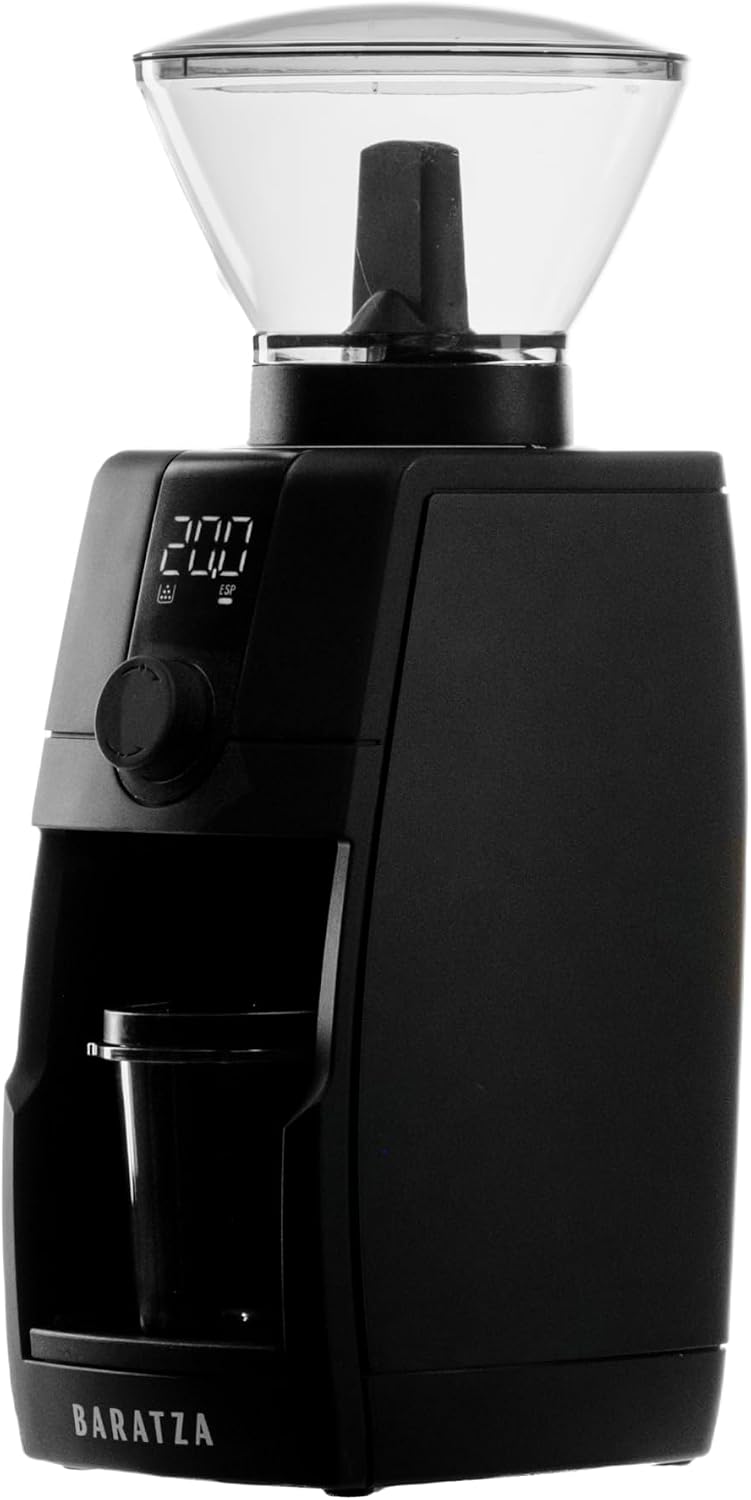
Split adjustment for espresso and filter. The usual first upgrade from pre-ground.
Check Encore ESP Pro on AmazonFilter flavor
Fellow Ode Gen 2
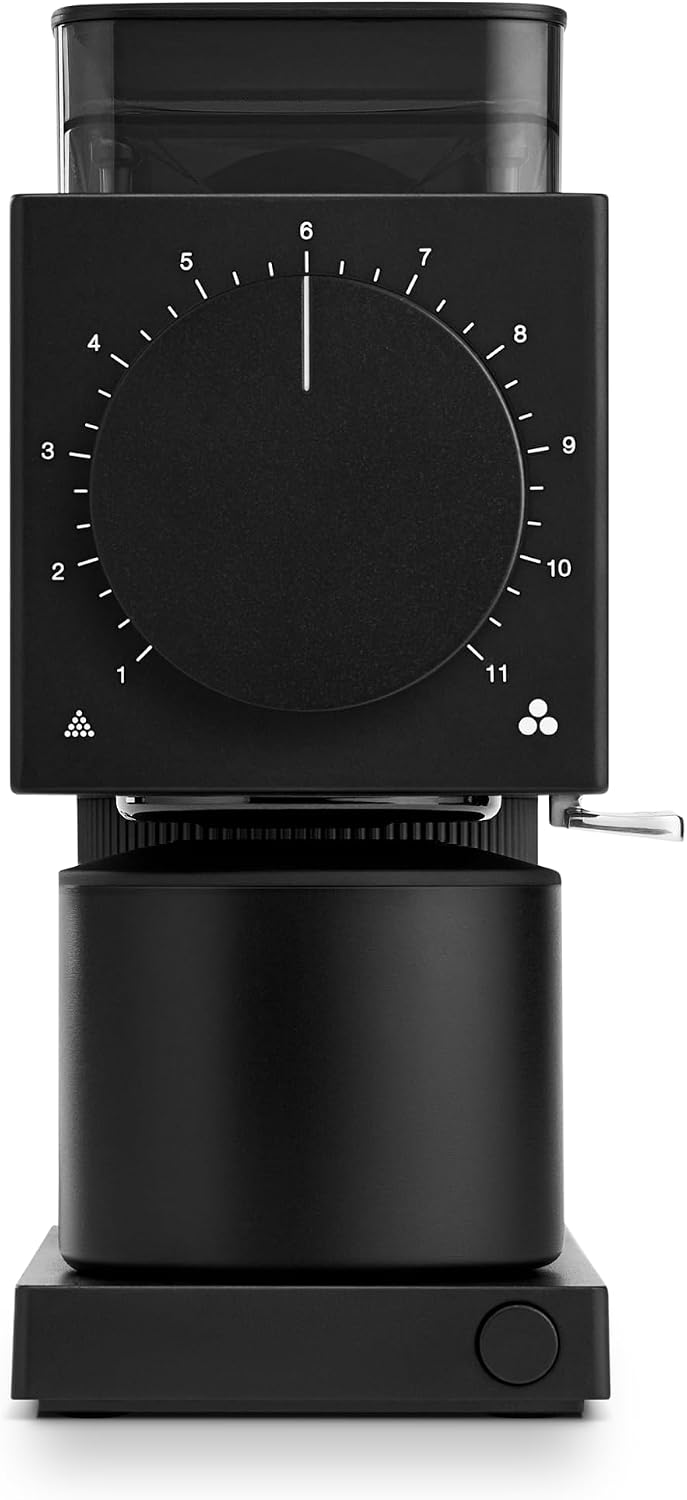
64 mm flat burrs for pour-over and batch brew. Not for espresso.
Check Fellow Ode Gen 2 on AmazonOne grinder, many brews
Fellow Opus
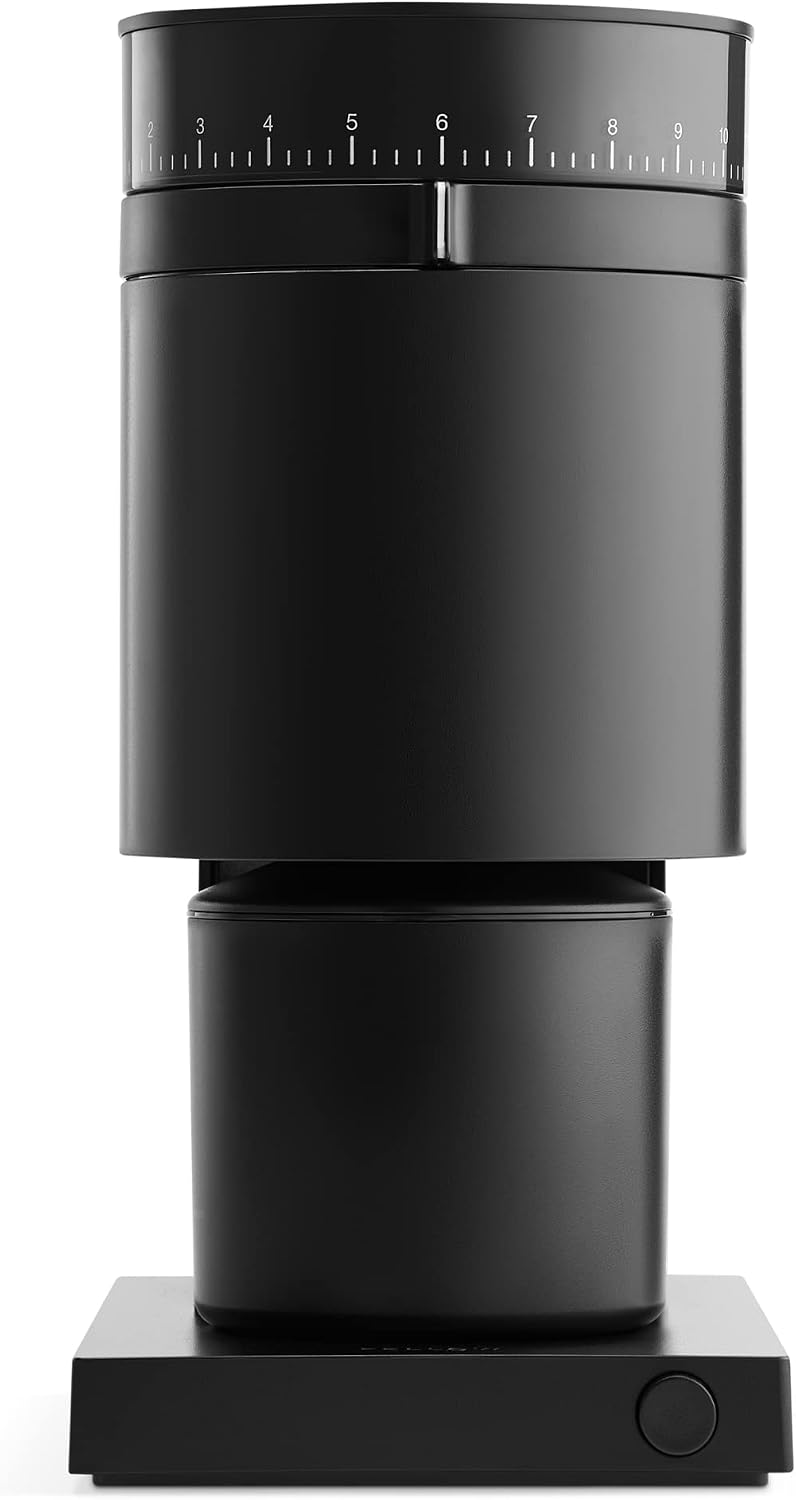
Espresso through cold brew on a conical burr, under most dedicated espresso grinders.
Check Fellow Opus on AmazonValue espresso
Turin DF54
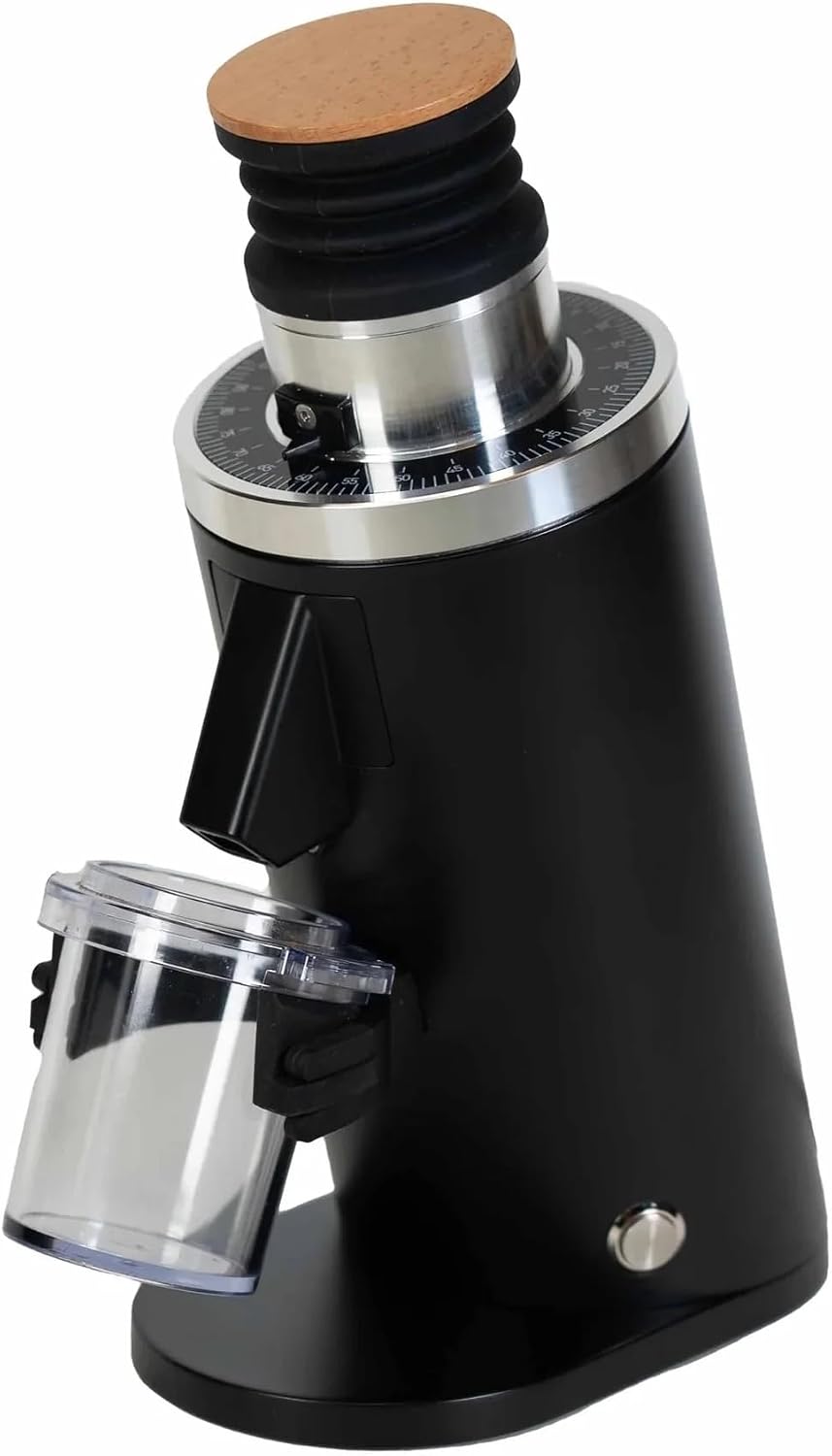
Stepless 54 mm flat burrs and a low-retention chute. Newer listing, fewer long-term reviews.
Check Turin DF54 on AmazonNo outlet needed
Timemore Chestnut C3S
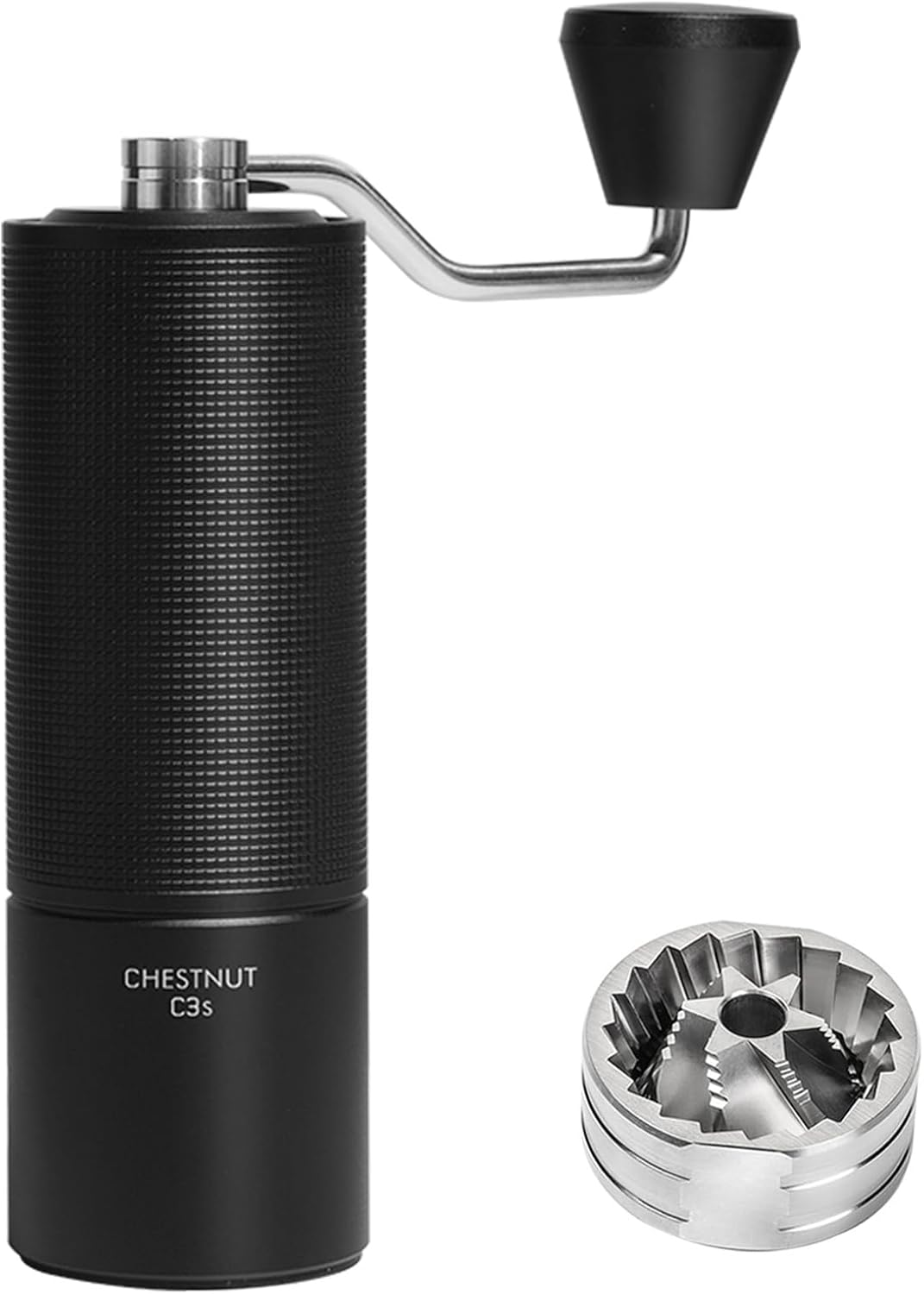
Hand grinder for travel and pour-over. Not the right tool for daily espresso.
Check Timemore C3S on AmazonCoarse brewing
Baratza Encore
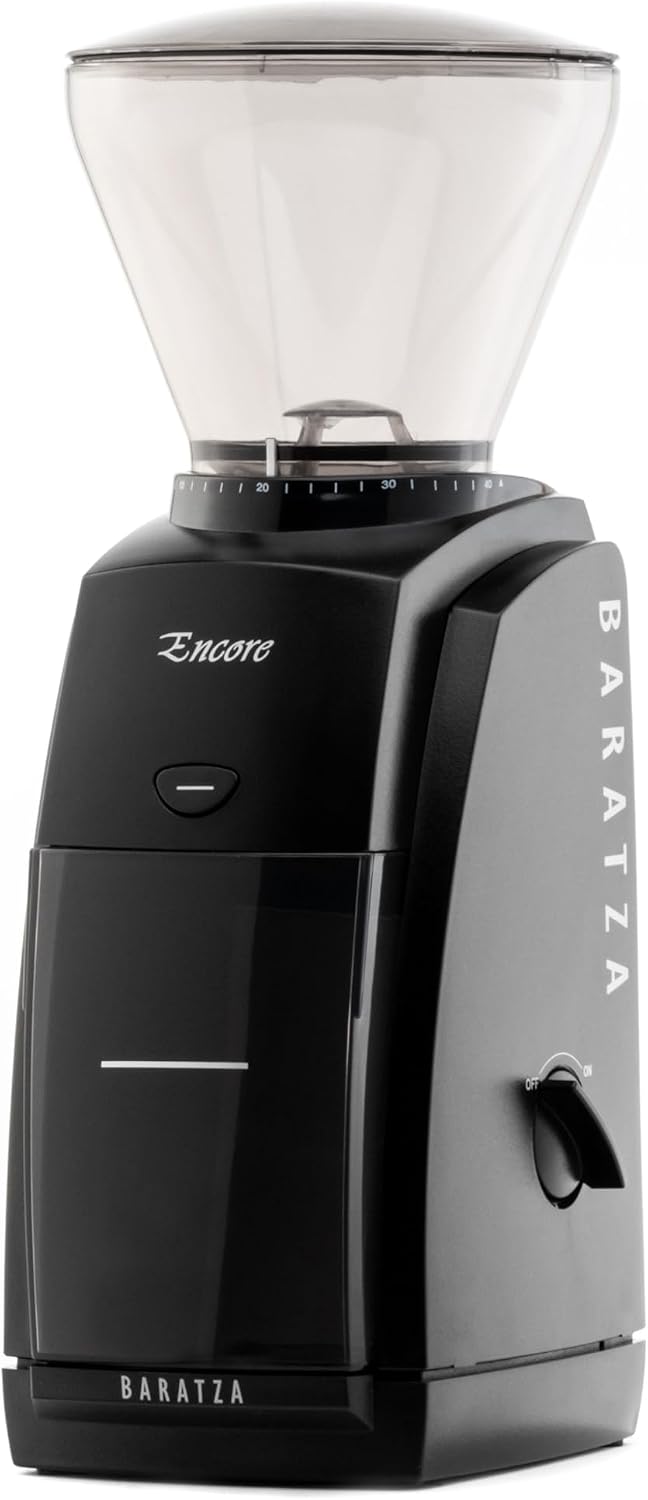
Workhorse conical burr for French press and cold brew at coarse settings.
Check Baratza Encore on AmazonTimed daily brew
Baratza Virtuoso+
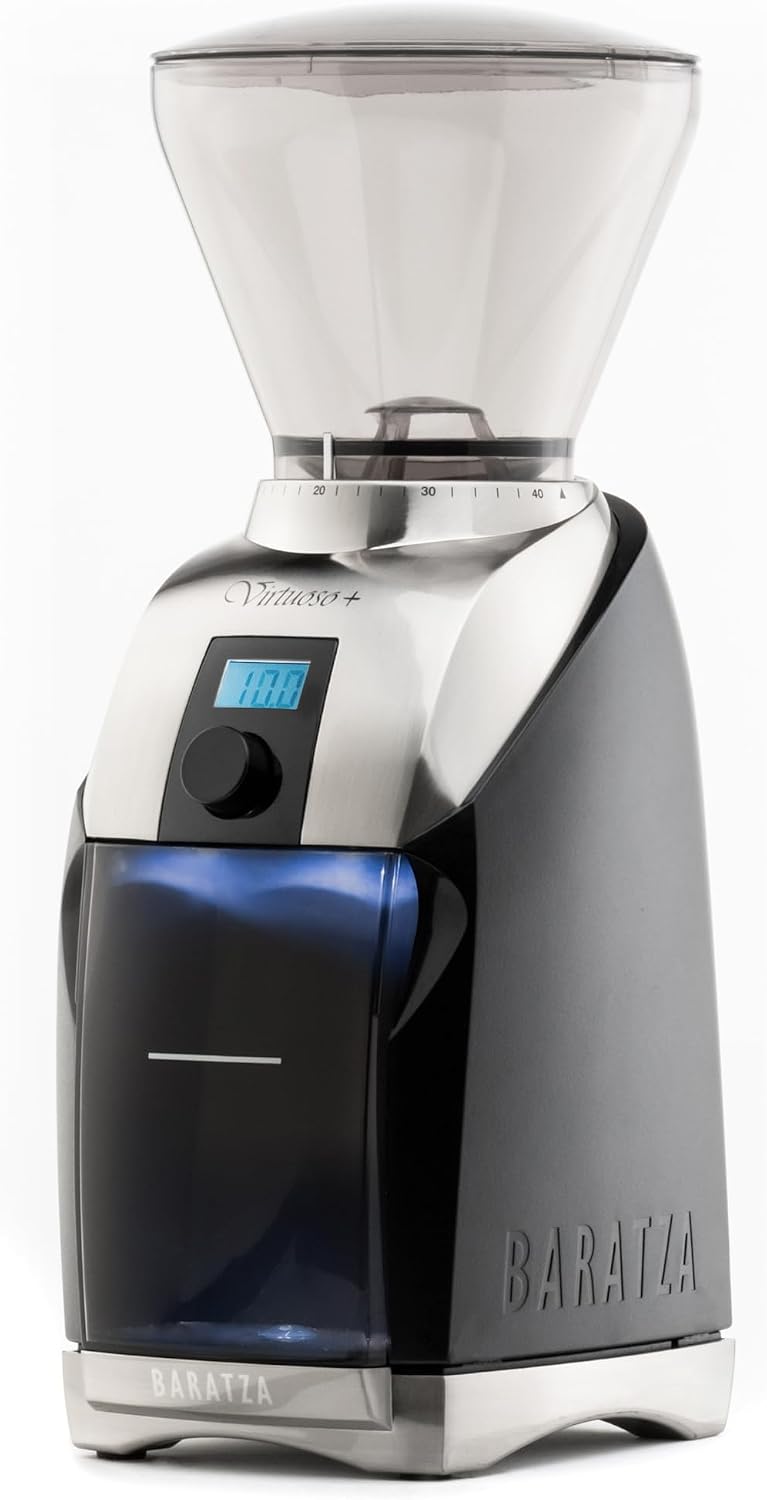
Digital timer and 40 mm conical burrs for repeatable daily doses.
Check Virtuoso+ on AmazonBreville workflow
Breville Smart Grinder Pro
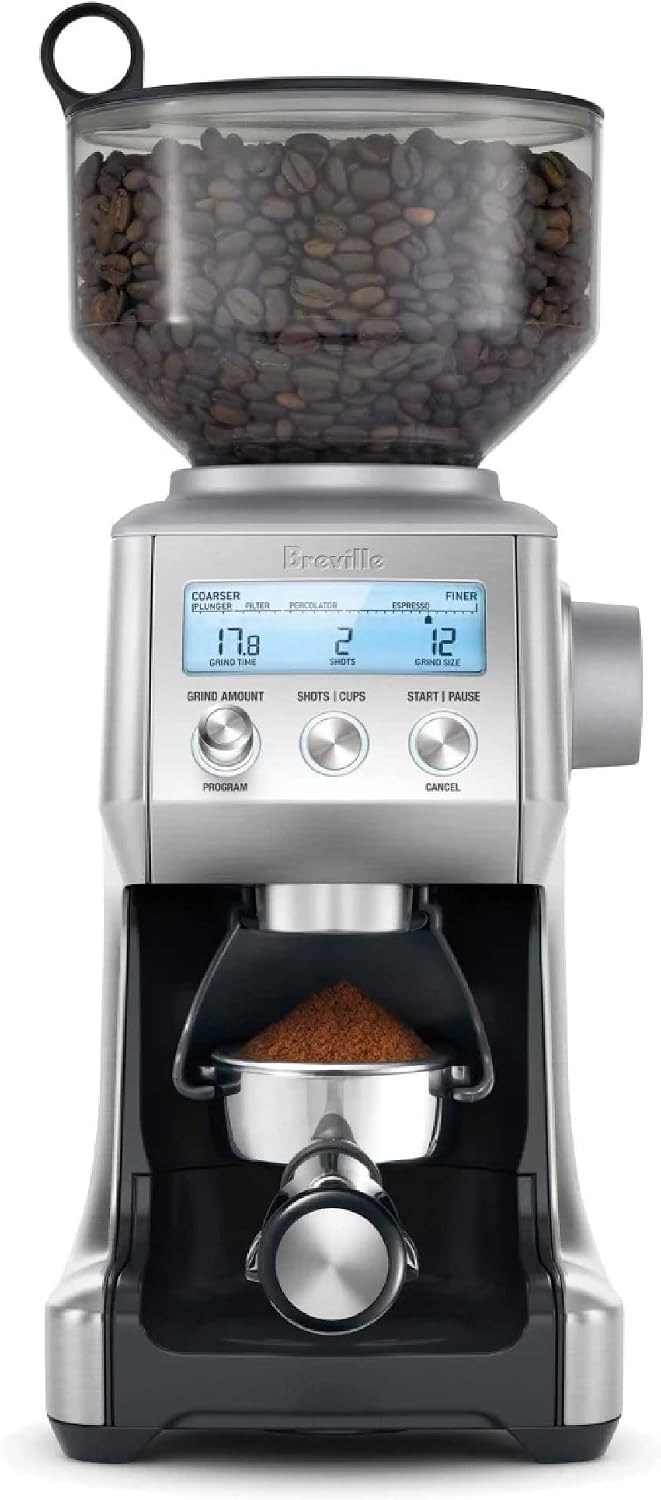
60 settings and a portafilter cradle for Breville espresso machines.
Check Smart Grinder Pro on AmazonBudget metal burr
Capresso Infinity
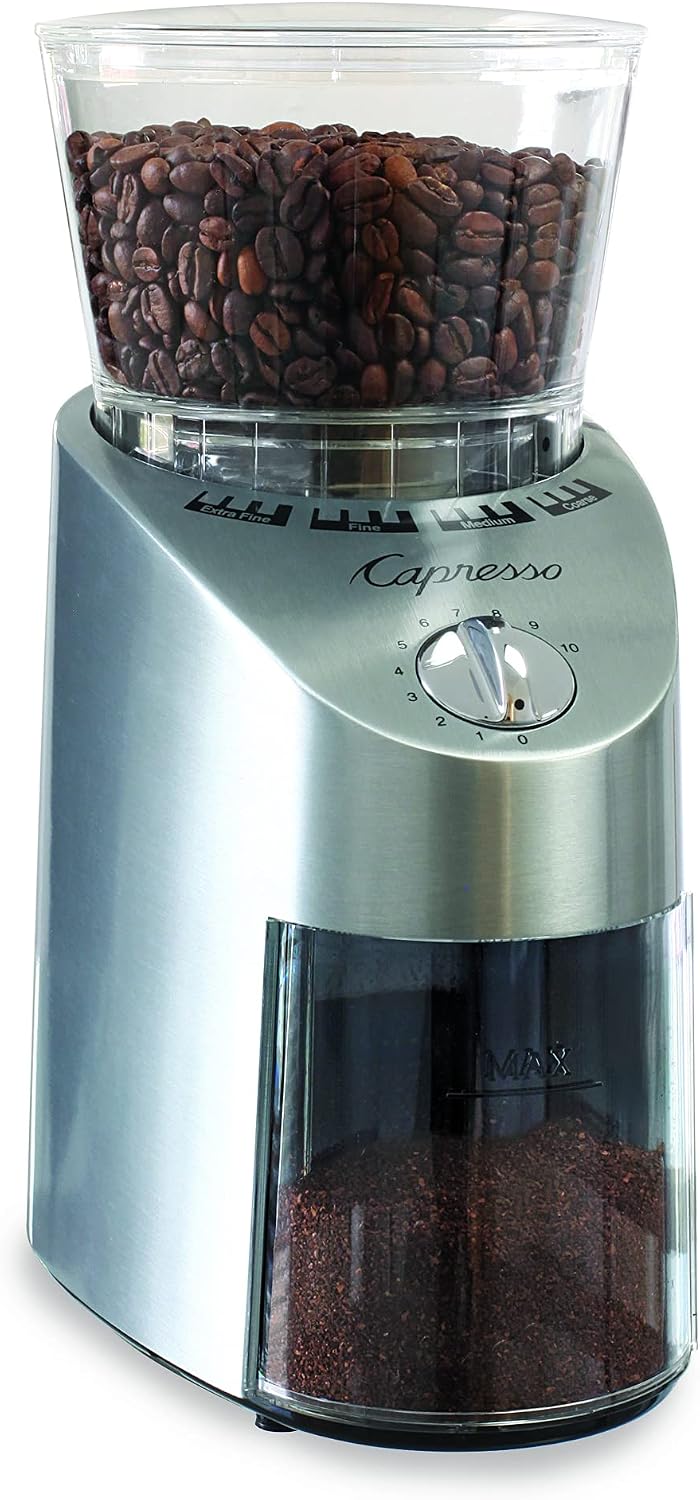
Slow conical burrs in a metal body. A cheap step up from a blade grinder.
Check Capresso Infinity on AmazonManual espresso
1Zpresso J-Max
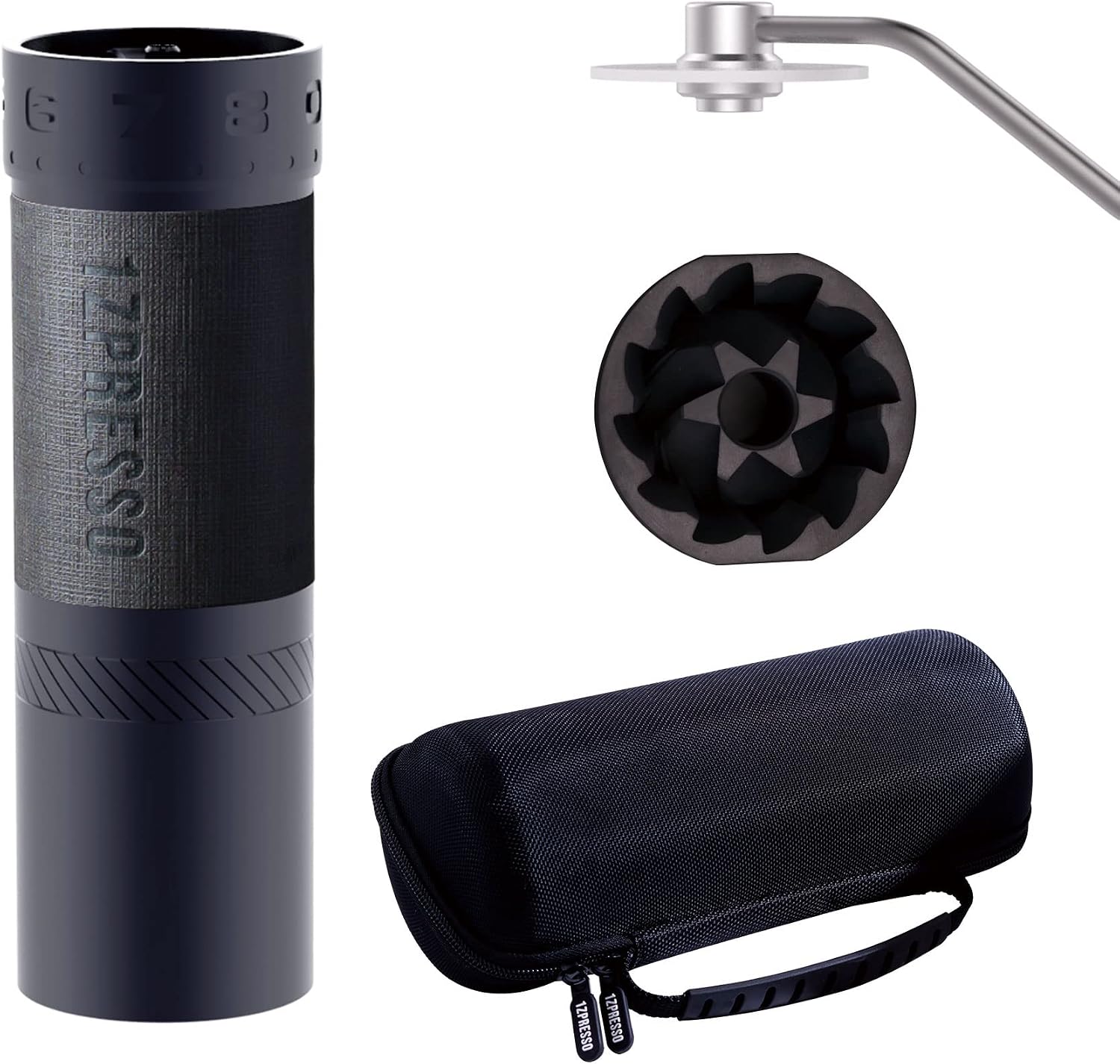
Fine-click manual burrs for espresso without an electric motor.
Check 1Zpresso J-Max on AmazonHow Capitol City Coffee Rates Coffee and Coffee Machines
Every recommendation uses the same 100-point scale. Most gear picks here are research-rated: specs, independent tests, and verified owner patterns. Hands-on tested is used only when our team used the machine and we show the date.
- Machines: brewing 25, build 20, cleaning 15, kitchen fit 10, features 10, value 10, warranty 10.
- Grades: 90+ A, 80s B, 70s C, below 70 not featured. Brands cannot pay for a pick.
Some links on this page are affiliate links. As an Amazon Associate, Capitol City Coffee earns from qualifying purchases, at no extra cost to you.
Burr types, retention, and the rest of this grinders hub continue below.
Key Takeaways
- Burr coffee grinders, including conical burr models like the Baratza Encore ESP and flat burr designs like the Fellow Ode Gen 2, are the most reliable way to unlock better flavor from fresh whole bean coffee at home. This page helps you compare the best coffee grinders by brew method, budget, and workflow.
- A blade grinder is cheap but produces inconsistent, uneven particles. It is not recommended for anyone pursuing repeatable, flavorful cups; consider it only as a temporary backup.
- Capitol City Coffee is an independent editorial and affiliate publication. Recommendations here are based on researched editorial analysis and third-party expert consensus, not commission size or grinder sales.
- Detailed buying guides cover the best burr coffee grinders, best espresso grinders, and budget picks under $100 and under $200 in the Browse Guides and Featured Recommendations sections below.
- This page covers key grinder concepts (burr type, grind range, consistency, fines, retention, static, noise, cleaning, durability, warranty, and value) and ends with practical FAQs.
Category overview: why coffee grinders matter
A good grinder is essential for improving coffee flavor, and many coffee people underestimate how much the grinder shapes what ends up in the cup. Whether you brew drip coffee, pour over, French press, espresso, or cold brew, the grinder determines how evenly water extracts soluble compounds from coffee grounds. A great coffee grinder paired with a modest brewer will consistently outperform an expensive machine fed with stale, pre-ground coffee.
Grinding fresh whole beans right before brewing preserves volatile aromatics that begin dissipating within hours of grinding. Lighter roasts, which depend on delicate fruit and floral notes, lose those qualities fastest once cell walls are ruptured. Espresso magnifies every defect; even small inconsistencies in ground coffee translate directly into sour or bitter shots. Pre-ground bags sitting in a pantry for days or weeks cannot compete.
Grind size affects extraction rates in different brewing methods. Consistent particle size means water pulls flavor at a similar rate from every particle, reducing bitterness from over-extracted fines and sourness from under-extracted boulders. Coffee grinders are categorized into blade grinders and burr grinders, and beyond that split, you will find entry-level conical burr models, flat burr grinders built for filter brewing, single dose espresso grinders, and versatile all-rounders. This hub page for Capitol City Coffee’s grinder coverage is aimed at U.S. home coffee drinkers researching the best coffee grinders or upgrading from a blade grinder.
Affiliate disclosure
Capitol City Coffee may earn a commission from qualifying purchases through outbound links on this page, at no extra cost to you. Coverage and rankings are based on researched editorial analysis and clearly attributed expert consensus, not on commission rates.
Key concepts: how coffee grinders actually work
Before diving into buying guides or specific product picks, here is a quick primer on grinder fundamentals.
Blade grinder vs burr grinder. Blade grinders use a spinning metal blade to chop coffee beans. The blade spins at high speed and hacks beans into random fragments, with no mechanism to control particle size. Burr grinders crush beans between two rotating abrasive surfaces, shearing them down to a target size set by the gap between the burrs. Burr grinders allow for precise grind size adjustments, and moving from a blade grinder to a burr grinder is considered one of the largest single upgrades a home brewer can make.
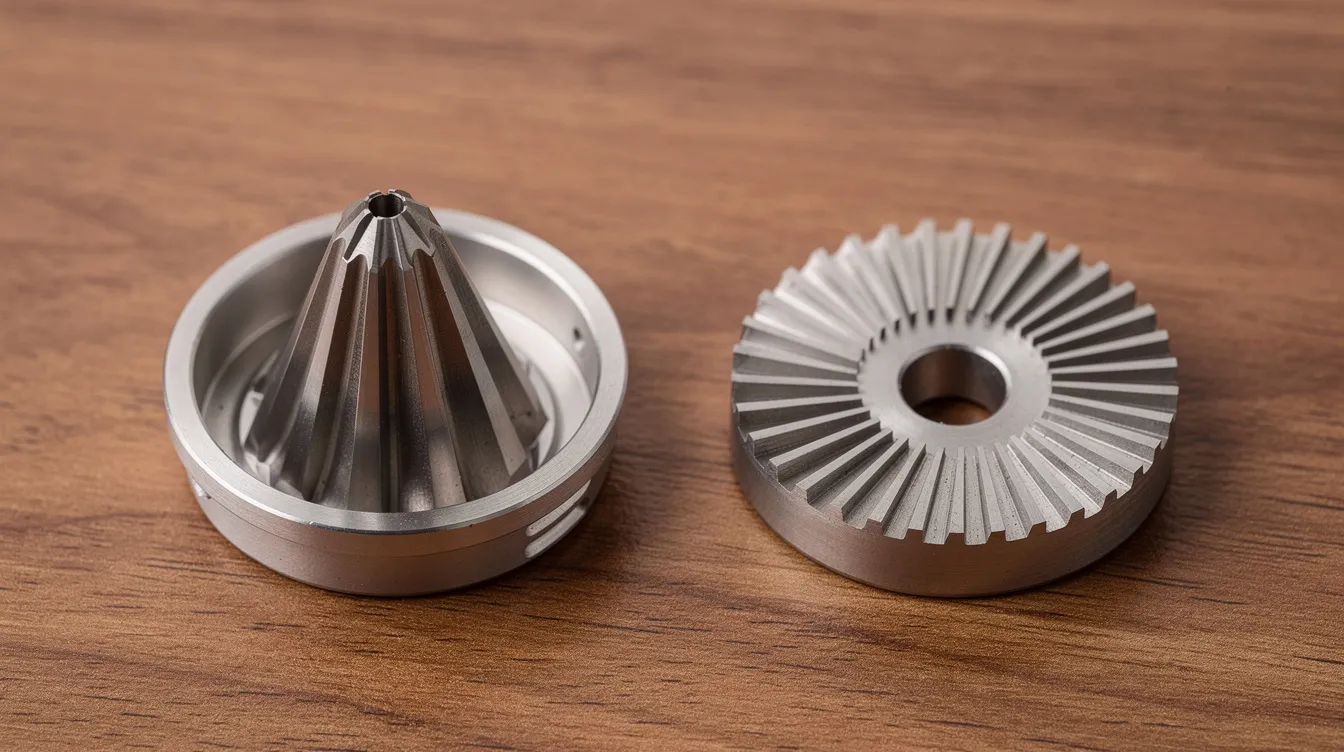
Conical burr vs flat burr. Burr grinders are divided into conical and flat burr designs. Conical burrs fit a cone-shaped piece inside a ring; flat burrs use two parallel discs. Each design shapes particle distribution and workflow differently (covered in the next section).
Practical factors at a glance:
- Grind range: how fine or coarse the grinder can go, from espresso to cold brew.
- Retention: coffee grounds left inside the machine after each dose.
- Static cling: grounds sticking to the chute, catch cup, or counter.
- Speed and noise: how long a dose takes and how loud it is at 6 a.m.
- Workflow: single dose weighing vs hopper-fed automatic dosing, timed vs manual operation.
- Cleaning: access to burrs, use of a cleaning brush or tablets, and how oils accumulate.
Key concepts: burr types and grind range
Most of the best coffee grinders for home use are burr grinders, using two interlocking surfaces to crush coffee beans to a repeatable size. The burr type determines particle distribution, noise, heat, and which brewing methods the grinder handles best.
Conical burr grinders are often quieter and more energy-efficient than flat burr grinders. They operate at lower RPMs and generate less heat, making them forgiving across different roast levels. A widely cited example: the Baratza Encore ESP uses 40 mm conical stainless burrs spinning at roughly 1,450 RPM. It covers a wide grind range from espresso-fine to cold brew-coarse. Flat burr grinders deliver a higher level of particle uniformity. Two flat discs shear beans with tighter tolerances, producing fewer outlier particles. The Fellow Ode Gen 2 pairs 64 mm flat steel burrs with a 1,200 RPM motor, optimized for filter brewing.
Grind size affects coffee extraction rates because finer grinds have more surface area for extraction, while coarser grinds allow faster water flow in brewing methods. Typical ranges:
Brew method | Approximate particle size |
|---|---|
Espresso | 200-400 microns |
Moka pot | 300-600 microns |
AeroPress | 350-800 microns |
Pour over / drip | 400-900 microns |
French press | ~1,000 microns |
Cold brew | 1,000+ microns |
Espresso requires a finer grind than French press or drip. Ideal grind sizes vary by brewing method: 1,000 microns for French press, roughly 200-400 microns for espresso. Readers who mainly brew filter coffee can prioritize clarity and medium-to-coarse performance. Espresso-focused buyers should look for stepless grind adjustment or fine-stepped adjustment near the espresso range.
Key concepts: consistency, fines, and flavor
Consistent particle size means water extracts coffee at a similar rate from every particle, producing balanced flavor and making recipes repeatable. The particle-size consistency affects extraction and flavor in coffee more than most home brewers realize.
Blade grinders produce a chaotic mix of large chunks and fine dust. Because blade grinders create uneven particle sizes, the large chunks under-extract (sour, grassy notes) while the fine dust over-extracts (bitter, astringent). Blade grinders can lead to over-extraction and bitterness, especially in pour over coffee and French press, where inconsistent grind sizes lead to uneven extraction and muddled flavors.
Burr grinders produce uniform coffee grounds. Better grinders with well-aligned conical burr or flat burr sets produce narrower particle distributions with fewer fines, improving clarity and sweetness. Burr grinders produce fewer fines than blade grinders for better extraction. In lab comparisons, the Fellow Ode Gen 2 measured a standard deviation of roughly ±15 microns at a typical filter setting, while more affordable conical burr models showed ±22-28 microns of spread.
Burr grinders are preferred for consistent coffee quality. Burr grinders provide consistent grind sizes for better extraction. Burr grinders produce uniform grinds, improving coffee quality. How fines affect specific methods:
- French press: Excess fines slip through the mesh filter, creating muddy body and bitter taste.
- Pour over: Fines clog paper filters, slow drawdown, and push extraction into bitter territory.
- Espresso: Fines cause channeling, where water finds the path of least resistance, producing inconsistent shots.
Serious espresso or light-roast pour over drinkers benefit most from high-consistency grinders. Casual dark-roast drip coffee drinkers may find more affordable conical burr options perfectly adequate for great coffee.
Key concepts: retention, static, and day-to-day workflow
Retention refers to coffee grounds that remain in the chute or grinding chamber after each dose. Stale retained grounds mix into the next batch, altering flavor and throwing off dose accuracy. For espresso, where recipes are measured to the tenth of a gram, retention is a huge problem. In lab tests, the Fellow Ode Gen 2 showed retention of roughly 0.21 g per dose, while the Baratza Encore ESP measured around 0.89 g.
Many single dose grinders are engineered for near-zero retention. The Fellow Ode Gen 2 reduced retention from about 1 g in the original Ode to 0.1-0.2 g through anti-static technology and a redesigned chute. This suits lighter roasts and recipe-driven brewing where bean-to-bean accuracy matters.
Static causes ground coffee to cling to plastic chutes and the catch cup, leaving a mess on the counter. Metal grounds containers, manufacturer-approved RDT (a very light mist of water on beans before grinding), and newer antistatic designs all help. The Baratza Encore has 40 grind settings for versatility, offering hopper-fed convenience. The Fellow Ode Brew Grinder has 31 grind settings for precision in a single dose workflow. The DF54 grinder features a stepless grind adjustment for precision, appealing to espresso drinkers who need micro adjustments between settings.
Workflow choices break down into two camps:
- Hopper-fed: Load beans into a bean hopper, set a digital timer or automatic dosing amount, press a button, and let auto shutoff stop the grinder when the cycle is done. Convenient for most people brewing drip or batch brew daily.
- Single dose: Weigh whole beans on a scale, drop them in, grind, and purge. More accurate, better for switching between different roast levels or beans, but slower.
Accessories like a cleaning brush, dosing cups, and portafilter forks meaningfully change daily usability.
Key concepts: speed, noise, and home-kitchen realities
Faster is not always better. Very high-speed motors can generate more fines and heat, while slower geared motors feel gentler and keep bean coffee cooler through the grinding chamber. Heat buildup during dense light-roast sessions can degrade delicate flavors.
Typical grind times for home grinders range from about 8-9 seconds (Fellow Ode Gen 2 grinding 18 g for filter) to 20+ seconds (Baratza Encore at coarser settings for the same dose). For a standard 20-25 g dose, most electric burr grinders finish in 15-25 seconds.
Noise matters in real kitchens. The Fellow Ode measures roughly 79 dB during a grind cycle, while the OXO conical burr grinder hits about 84 dB. For context, 80+ dB is roughly the volume of a running garbage disposal; not ideal at 5:30 a.m. near bedrooms. Some conical burr designs with lower RPM motors produce a lower-pitched hum that feels less intrusive than the high-pitched whine of cheaper grinders.
Manual hand grinders remove motor noise entirely but shift effort to the user. Some coffee drinkers accept 30-45 seconds of hand grinding for portability, lower cost, and quiet operation. Match speed and noise tolerance to your space and routine, not to marketing claims.
Key concepts: cleaning, durability, and warranty
All burr grinders benefit from regular cleaning. Clean your burr grinder regularly to avoid residue buildup. A practical maintenance schedule:
- Weekly: Brush out the chute where grounds exit to prevent buildup. Wipe the catch cup and exterior.
- Monthly: Use cleaning pellets monthly to maintain grinder performance. Run a dose of food-safe cleaning pellets through the burrs to absorb oils.
- Quarterly or as needed: Remove the upper burr and brush it off for thorough cleaning. Avoid using water to clean burrs to prevent corrosion; a dry brush and compressed air are safer.
Oils and fines from darker roasts accumulate faster inside the grinding chamber, affecting grind consistency and introducing stale, rancid notes into fresh coffee. Grinders with tool-free upper burr removal and an included cleaning brush make this routine less tedious.
Durability depends on housing materials (metal vs plastic), burr material (steel, ceramic, titanium-coated), and parts availability. Brands like Baratza and Fellow have strong reputations for repairability; both sell replacement burrs and publish repair guides. Steel burrs eventually dull after hundreds of kilograms of beans; signs include slower grinding, more dust at the same grind setting, and flatter-tasting cups.
Warranty terms in the U.S. typically run 1-2 years limited. Strong support, spare parts availability, and clear documentation matter over the life of a grinder more than the warranty period alone.
Browse guides: all coffee grinder resources
This section connects you to deeper grinder coverage within Capitol City Coffee’s gear ecosystem. Use these links to jump to the guide that fits your situation:
- Explore all coffee grinder coverage at /gear/grinders/ for the full category hub.
- Best burr coffee grinders for home at /gear/grinders/best-burr-coffee-grinders/ for a curated, research-backed list.
- Best coffee grinders under $100 for beginners at /gear/grinders/best-coffee-grinders-under-100/ for entry-level picks.
- Step-up coffee grinders under $200 at /gear/grinders/best-coffee-grinders-under-200/ for mid-range value.
- Dedicated espresso grinders and hybrid espresso-capable options at /gear/grinders/best-espresso-grinders/ for fine-grind specialists.
- Individual grinder reviews and comparisons at /reviews/grinders/ for model-specific breakdowns.
Featured recommendations: overview of standout coffee grinders
The grinders highlighted below are based on researched editorial analysis, manufacturer specifications, and third-party expert consensus. Capitol City Coffee does not claim hands-on testing or in-house measurements for these models unless explicitly stated. These are starting points; readers looking for full comparisons should click through to the dedicated buying guides linked above.
Availability and pricing can change. Verify current prices and stock through the links in our dedicated guides.
Categories covered below:
- Best all-round coffee grinder
- Best espresso grinder
- Best brew-only grinder (pour over, drip, French press, cold brew)
- Budget picks under $100 and under $200
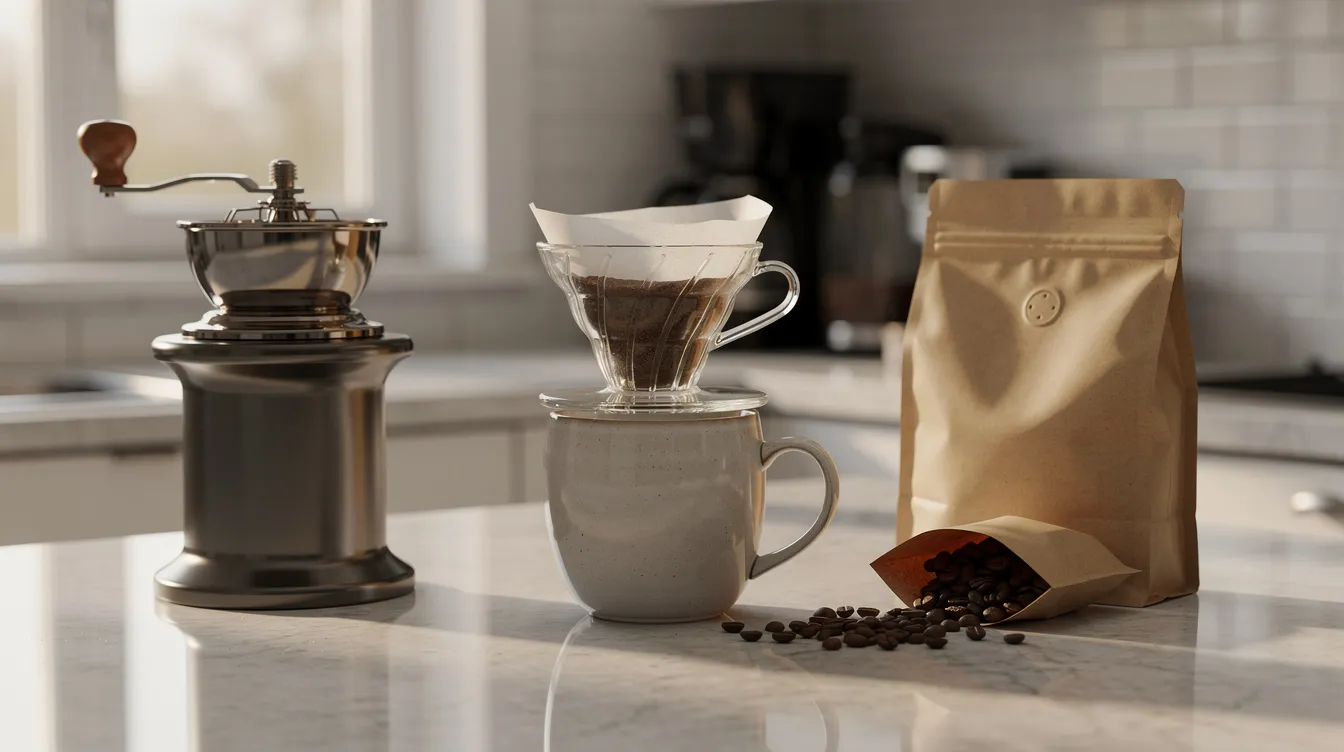
Featured recommendations: best all-round coffee grinders
For readers who want one electric grinder covering drip, pour over, French press, and occasional espresso experimentation, a modern conical burr grinder with a wide grind range is the practical choice.
Baratza Encore ESP. The Baratza Encore costs around $159 and is highly recommended. The Encore ESP variant extends the fine end of the grind range into espresso territory while retaining the 40-step adjustment dial that handles medium grind for drip and coarse settings for French press. The Baratza Encore is recommended for most coffee drinkers who want a single grinder that handles multiple settings and multiple brewing methods without a steep learning curve. Limitations: particle distribution at espresso-fine is wider than dedicated espresso grinders, and retention (~0.89 g in lab tests) means single-dosing is less precise than purpose-built machines.
OXO Conical Burr Grinder. The OXO Conical Burr Grinder is priced under $100 and offers good performance for daily drip and pour over. Its compact footprint suits small kitchens. Grind quality is a clear step above any blade grinder, though grind consistency at the finest and coarsest extremes trails higher-end models. A solid starting point for most people who primarily brew automatic drip.
Baratza Virtuoso+. The Baratza Virtuoso+ has over 40 grind settings for versatility and a digital timer for repeatable dosing. It slots between the Encore and Baratza’s prosumer lineup, offering a modest bump in grind quality and build for about $50-70 more than the Encore.
Featured recommendations: best espresso grinders
Espresso grinders need much finer control and tighter particle distribution than filter grinders. Channeling, where water punches through weak spots in a puck, produces sour and bitter shots simultaneously. Stepless grind adjustment or micro-stepped adjustment in the espresso range helps dial in by fractions of a turn.
Baratza Encore ESP / Encore ESP Pro. The Encore ESP covers both filter and espresso with its extended fine range. The newer Encore ESP Pro introduces stepless adjustment with 2.2 microns of vertical burr movement per degree of rotation, giving espresso drinkers the ability to fine tune shots without stepping through discrete clicks. Trade-offs: the 40 mm conical burr set produces a wider distribution than 58 mm+ flat burr espresso grinders, and retention remains higher than zero-retention single dose designs. Still, for a combined espresso-and-filter grinder under $200, the Encore ESP line is hard to beat on value.
Espresso-specific features to look for: stepless or micro-stepped adjustment dial, included dosing cup or portafilter cradle, grind-by-time or automatic dosing, and low retention. Noise can be higher at espresso-fine settings due to increased resistance on the motor.
Serious espresso drinkers should check the dedicated espresso grinders guide for brand-by-brand comparisons, including workflow details and drawback analysis.
Featured recommendations: best coffee grinders for brew methods (pour over, drip, French press, cold brew)
For readers who rarely or never pull espresso shots, a grinder optimized for medium to coarse performance delivers the biggest payoff.
Fellow Ode Gen 2. The Fellow Ode Brew Grinder Gen 2 costs around $350 and excels in grind consistency. Its 64 mm flat steel burrs produce especially even particles for V60, Kalita, automatic drip, and cold brew, with low static and fast grinding (about 8-9 seconds for an 18 g dose). Retention sits at roughly 0.1-0.2 g. In one lab comparison, the Ode Gen 2 achieved an extraction yield of approximately 19.8% versus 18.1% from the Encore ESP using identical beans and recipes. The Ode is not designed for traditional espresso pressure profiles; it is a brew-focused grinder with a matte black aesthetic that many coffee people find pleasantly surprised by when unboxing.
Fellow Opus. The Fellow Opus features a powerful motor for consistent grinding. The Fellow Opus was released in early 2023 and offers great value as a more affordable entry into Fellow’s lineup. It handles pour over coffee, drip, and French press respectably, though its conical burr design produces a slightly wider particle spread than the Ode’s flat burrs. The Breville Smart Grinder is a reliable mid-range option with digital controls, solid versatility across espresso and drip coffee, and easy disassembly for cleaning.
Budget conical burr alternative. A standard Baratza Encore-class grinder performs respectably for French press and cold brew despite some extra fines at coarse settings. For cold brew specifically, very coarse, uniform grinds reduce sediment and bitterness in 12-24 hour brews. A grinder with stable coarse settings matters more here than ultra-fine espresso performance.
Featured recommendations: budget coffee grinders under $100 and under $200
Under $100. Entry-level burr grinders in this tier are a clear upgrade from a blade grinder for drip and basic pour over. Expect more plastic parts, more static, and limited espresso capability. Cheaper grinders here can still produce a consistent grind adequate for automatic drip and French press. The OXO Conical Burr Grinder and similar models sit in this bracket. Start with the budget guide under $100 for specific model comparisons.
Under $200. This tier brings better burr sets, more consistent particle size, quieter motors, and improved workflow features. The Baratza Encore ESP at around $159 sits squarely here. Readers can reasonably expect a great grinder that handles multiple settings from a medium grind for drip through fine for espresso experimentation. Check the step-up guide under $200 for model-by-model notes on durability and warranty.
Caution: avoid extremely cheap “burr” grinders that use poorly stabilized or false burrs. These machines behave more like blade grinders, producing poor grind consistency despite the label.
Blade grinders vs burr grinders: when is a blade grinder acceptable?
A blade grinder is not recommended for anyone chasing better flavor. Blade grinders randomly chop whole beans, produce excessive fines, and make repeatable recipes nearly impossible. The resulting uneven coffee grounds yield cups that taste different every time, with muddy body and unpredictable bitterness.
That said, a blade grinder beats pre-ground coffee that has been open for weeks. In emergency situations (travel, camping, or as a backup when your burr grinder is being repaired), grinding whole beans with a blade grinder still preserves more aromatics than stale ground coffee, especially for immersion methods like cold brew or French press where contact time compensates somewhat for grind inconsistency.
If you currently own a blade grinder, prioritize upgrading to an entry-level burr grinder when budget allows. Even a sub-$100 conical burr model will produce higher quality, more repeatable grounds. Do not re-grind pre-ground coffee in a burr grinder; instead, adjust the grind setting correctly from whole beans at the start.
How Capitol City Coffee researches grinder recommendations
Capitol City Coffee is an independent coffee editorial and affiliate publication, not a retailer. Grinder coverage is based on researched editorial analysis rather than sales quotas or commission incentives.
The research process involves:
- Reviewing manufacturer specifications for burr size, motor RPM, grind range, and retention
- Consulting well-documented lab tests and expert reviews that report particle distribution in microns, retention in grams, and extraction yield
- Analyzing owner feedback from reputable forums and review platforms
- Comparing grinders across burr type, grind range, particle consistency, workflow, and long-term reliability signals
Unless explicitly noted, Capitol City Coffee does not claim hands-on testing, ownership, long-term use, or in-house measurements for specific grinders. Recommendations balance performance with value; grinders are not ranked based on affiliate commission size but on suitability for specific brewing methods and budgets. The team monitors grinder updates (revisions to models like the Fellow Ode Gen 2 or Baratza Encore ESP) and warranty changes, updating guides when product changes affect readers.
FAQs about coffee grinders
Which coffee grinder should I buy for a small kitchen?
Prioritize footprint and workflow. Compact conical burr grinders or single dose designs with small hoppers work well on limited counters. The Fellow Ode and smaller OXO models can be stored between uses if vertical clearance under cabinets is tight. Choose a grinder that covers your main brew method (drip plus pour over, for example) rather than forcing espresso capability into a cramped setup. A great coffee grinder for a small kitchen is one that actually gets used daily, not one that collects dust because it is too large to keep accessible.
How often do burrs need to be replaced?
Home users typically get several years from a set of steel burrs before noticing dulling and increased fines. Exact lifespan depends on how much you grind coffee beans each week and the hardness of the beans. Watch for signs like slower grinding at the same setting, more dust in the catch cup, and a flatter-tasting cup. Many brands sell replacement burrs; swapping them restores near-new performance without buying a new grinder. Check manufacturer guidance, which is often listed in kilograms of coffee ground.
Can I use one grinder for both espresso and cold brew?
Some modern grinders, including certain conical burr models and espresso-capable hybrids like the Baratza Encore ESP, have a grind range wide enough to cover fine espresso and very coarse cold brew. Frequent large jumps in grind size require careful adjustment and one shot purge doses to avoid stale retention from the previous setting, especially for espresso. Dedicated espresso drinkers who also brew a lot of filter coffee might eventually prefer separate grinders for workflow convenience, but combined use works on a budget.
Why does my grinder make such a mess, and how do I reduce static?
Static is caused by friction between beans, burrs, and plastic parts, particularly in dry environments. It leads to clingy grounds on the chute, catch cup, and counter. Simple fixes: gently tap the grinder or catch cup after grinding, switch to a metal grounds container, follow manufacturer-approved RDT (a very light water mist on beans before grinding), and regularly brush out the chute. Some newer grinders, including the Fellow Ode Gen 2, incorporate antistatic features that reduce mess noticeably. If static cling is a daily frustration, upgrading to a grinder with built-in static reduction is worth considering.
Is a manual grinder a good alternative to an electric grinder?
Manual grinders can offer excellent grind quality and a broad grind range (including espresso, pour over, French press, and cold brew) at lower cost than comparable electric models, but they require physical effort. They suit travelers, light coffee drinkers, or those with very limited counter space. A manual grinder is less ideal for large households brewing multiple batches each morning. Consider grind volume and physical comfort before choosing manual over electric, and consult individual grinder reviews for specific hand grinder models and their best-fit brew methods.