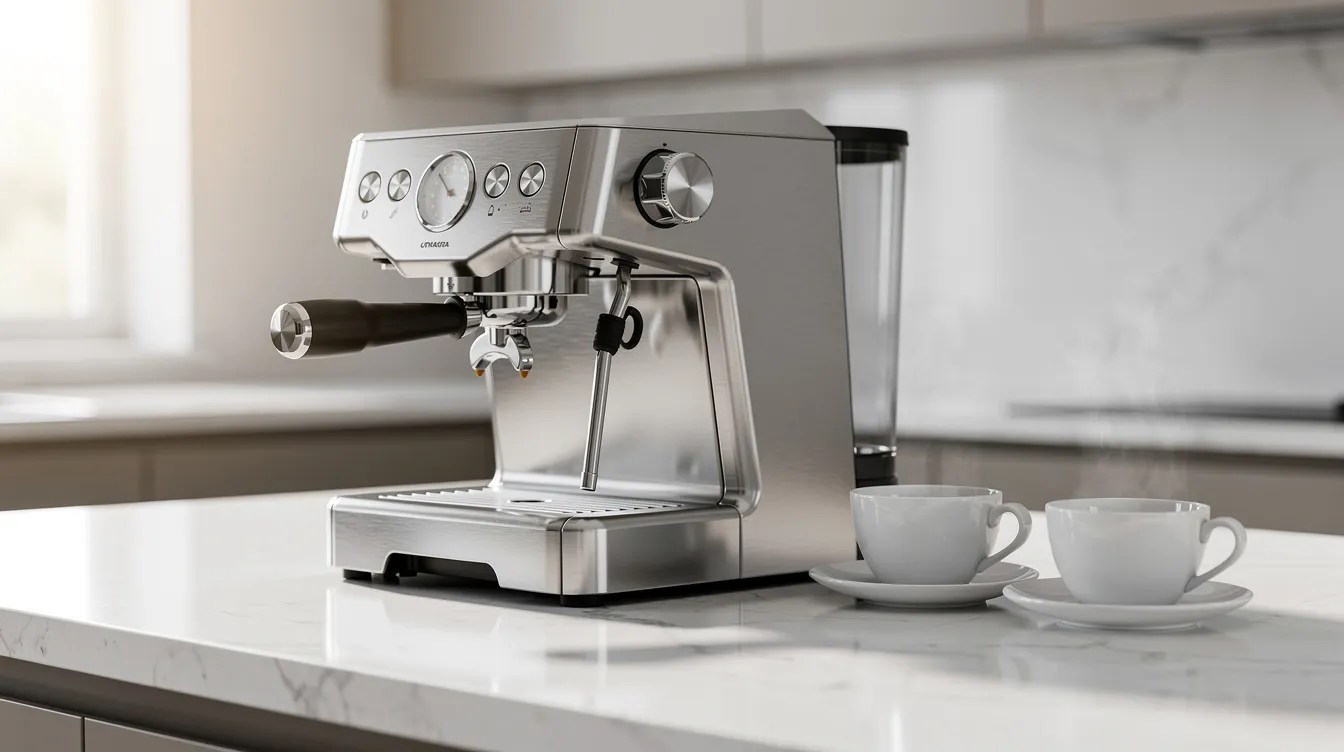
The Ninja Luxe Café is a strong buy for U.S. home baristas who want one machine for espresso, drip coffee, and cold brew: in this ninja luxe cafe review, the short version is that it delivers good espresso, impressive cold brew, and decent drip coffee at a mid-tier price, especially for beginners who want guided help instead of a steep learning curve. Positioned around $600–$750 in the U.S. depending on model and promotions, it adds barista assist technology, a built in grinder, a built in scale, and a dual froth system for hot and cold milk foam into a package that undercuts many competitors and makes café-style drinks easier without buying separate machines.
Below, I break down how its features translate to daily use, including espresso and cold brew performance, drip quality, the milk frothing system for dairy and plant-based milk, workflow, cleaning, build quality, value, key limitations, and how it compares with alternatives before you buy.
Top pick: Ninja Luxe Café
For this roundup, Ninja Luxe Café is the 3-in-1 espresso we recommend first—the same pick at the top of our At-a-glance cards below.
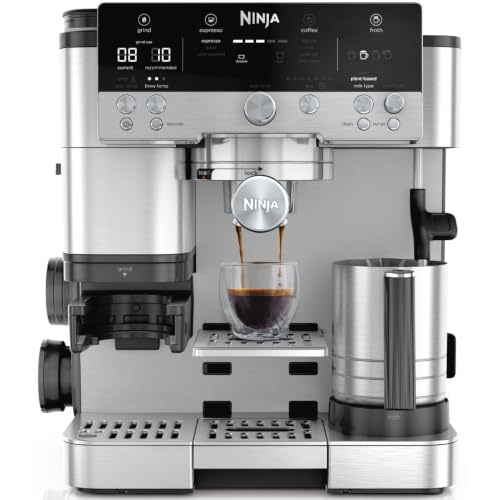
The Ninja Luxe Café Premier is a genuine 3-in-1 machine offering espresso, drip coffee, and rapid cold brew with 9 coffee options and 5 milk choices, all guided by barista assist technology that recommends grind adjustments after each shot.
Espresso shots produce proper crema with a chocolatey finish, and the machine delivers excellent cold brew in under 15 minutes, though drip coffee quality is less impressive compared to espresso or dedicated filter coffee makers.
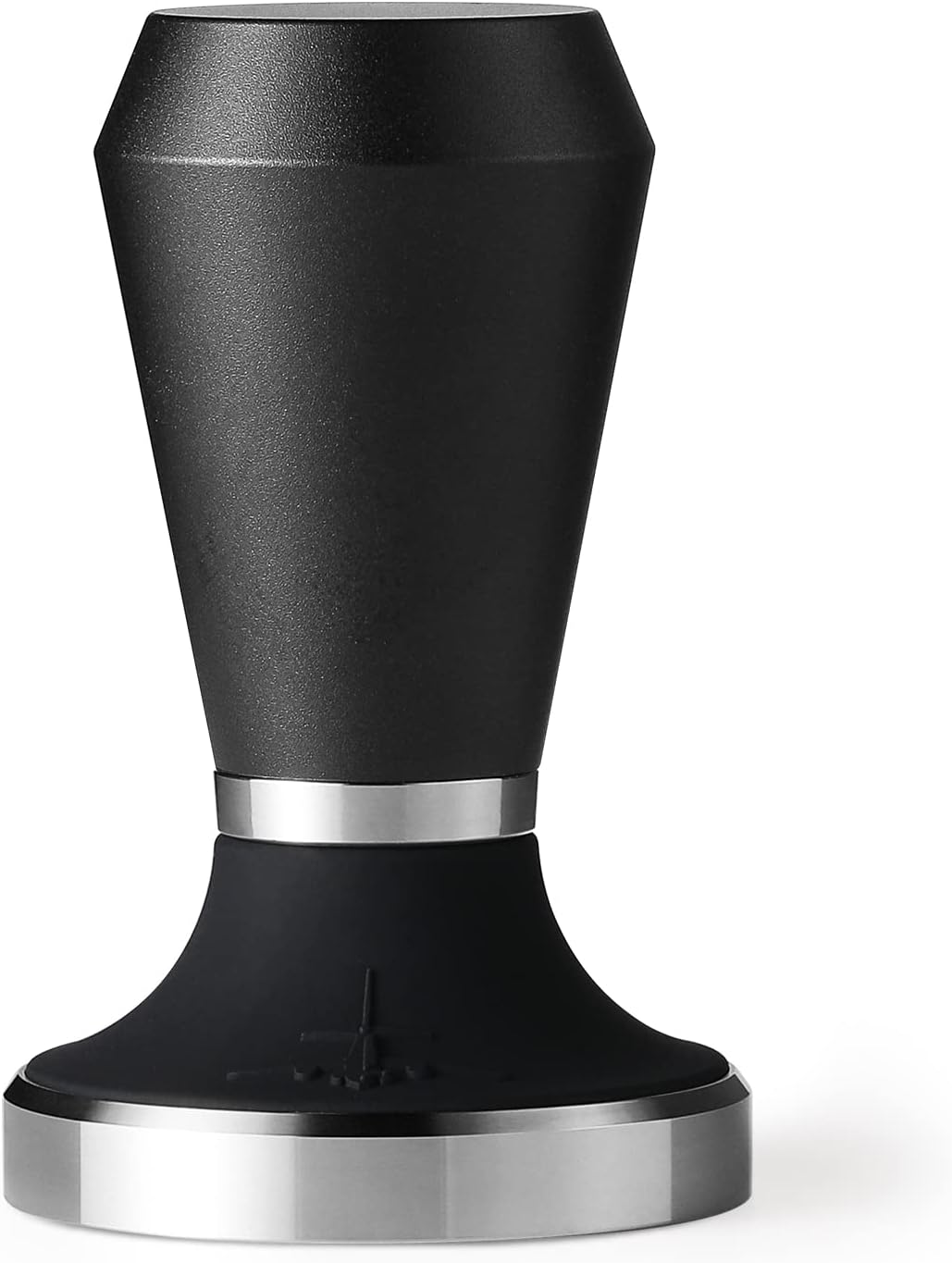
The built in scale doses coffee accurately for single and double shots, the integrated tamper applies even pressure for consistent puck formation, and the 25 grind settings cover everything from fine espresso to coarser grind for cold brew.
Key limitations include a substantial footprint, plastic build elements in some areas, drip tray fills quickly due to auto-flushing, and some users have reported inconsistencies with lighter roast beans.
This is a researched editorial analysis drawing on manufacturer specs, expert testing from publications like Wired, ExpertReviews, CoffeeGeek, and TechRadar, plus community feedback. No hands-on testing was conducted by Capitol City Coffee.
Affiliate Disclosure
Capitol City Coffee is an independent editorial and affiliate publication. We may earn a commission from qualifying purchases made through outgoing links, but commissions never influence our rankings or verdicts. This article is based on researched editorial analysis using verified specifications, expert testing from third-party reviewers, and user consensus rather than our own lab measurements.
Verdict
The Ninja Luxe Café delivers on its central promise: one machine that handles espresso, drip coffee, cold brew, and milk drinks with enough automation to guide beginners while still offering room for a home barista to tinker. Based on aggregated expert testing and owner feedback, espresso performance is consistently good once barista assist dials in the grind size, cold brew and cold foam features are standout additions at this price point, and the dual froth system handles both dairy milk and popular plant based milk options.
For most U.S. households that want café-style drinks without buying multiple machines, the Ninja Luxe Café is a strong buy. It regularly goes on sale for as low as $600, making it cheaper than the Breville Barista Express at $750, while offering cold brew, drip coffee, and automated frothing that the Breville lacks entirely.
The machine runs a 19-bar rated pump (with extraction occurring at an effective 9 bar), warms up in roughly 30–35 seconds, and maintains adequate brew temperature stability for home use. Shot consistency improves significantly after the first few pulls as barista assist learns the current grind setting and adjusts recommendations.
That said, espresso purists who want full manual control, maximum temperature profiling, or plan to work with light roasts extensively should also read reviews of the Breville Barista Express and Breville Bambino Plus before deciding. The Ninja excels at versatility and convenience, not at pushing the absolute ceiling of espresso quality.
Disclosure: This page contains affiliate links. As an Amazon Associate I earn from qualifying purchases.
The ninja luxe café is designed for users who want effortless coffee preparation without extensive barista skills. It targets U.S. home baristas in apartments or suburban kitchens who want one appliance to handle their entire coffee routine with minimal guesswork.
This machine fits you well if:
You drink multiple coffee styles daily, like a morning drip coffee, a mid-day double espresso shot, and an afternoon cold brew over ice, and don’t want to manage separate devices for each.
You’re a beginner intimidated by manual dialing-in who will appreciate barista assist, weight-based dosing, and clear grind recommendations that take the mystery out of pulling better espresso shots.
Your household uses both dairy milk and plant based milk and cares about cold foam for iced lattes and cold brew drinks.
You have moderate counter space and are willing to trade a larger footprint for a single, versatile coffee machine that replaces what might otherwise be three or four appliances.
You prioritize convenience, workflow, and built-in tools like the scale, tamper, and dual froth system over the last few percentage points of espresso nuance.
It is not the best choice for espresso purists who want full manual steaming control and a separate high-end grinder, users who exclusively drink basic filter coffee, or anyone with ultra-limited counter space. If you’re a remote worker making 3–4 drinks a day or a couple with very different taste preferences, however, this machine earns its keep quickly.
How We Researched This Ninja Luxe Café Review
This is a researched editorial analysis, not a hands-on test in Capitol City Coffee’s own lab. No direct temperature, pressure, or extraction measurements were independently recorded by CCC for this model.
Our methodology involved cross-referencing manufacturer specifications with multiple third-party expert reviews from 2024–2025, long-term owner reports, and community feedback from home barista forums and retailer review sections. Sources included Wired, ExpertReviews, CoffeeGeek, TechRadar, and Consumer Reports.
Performance dimensions specifically investigated include warm-up time, brew temperature stability, pressure behavior, shot-to-shot consistency, steam power, milk texture, grinder performance, cleaning and maintenance requirements, and warranty support. Competing products used as reference points include the Breville Barista Express, Breville Bambino Plus, and other machines from De’Longhi and Philips.
Any quoted performance claims (e.g., “35-second heat-up,” “19-bar pump”) are based on manufacturer documentation or clearly attributed third-party testing, not proprietary CCC measurements.
Ninja Luxe Café Overview: Models, Price, and Core Features
The ninja luxe café family for the U.S. market includes two primary variants: the Luxe Café Premier (model ES601) and the Café Pro (model ES701). Both share the same core architecture and brewing process, with the Pro adding certain refinements. This review focuses on shared features that matter most to buyers.
The main functions span:
Espresso in single, double, and “Quad Shot” sizes using the larger luxe basket, which holds up to 40g of coffee for larger drinks.
Hot drip coffee in “Classic” and “Rich” modes for well balanced drip coffee with adjustable brew sizes.
Rapid cold brew in under approximately 15 minutes, plus a brew-over-ice mode for brighter over ice coffee.
Hot water dispensing on some versions.
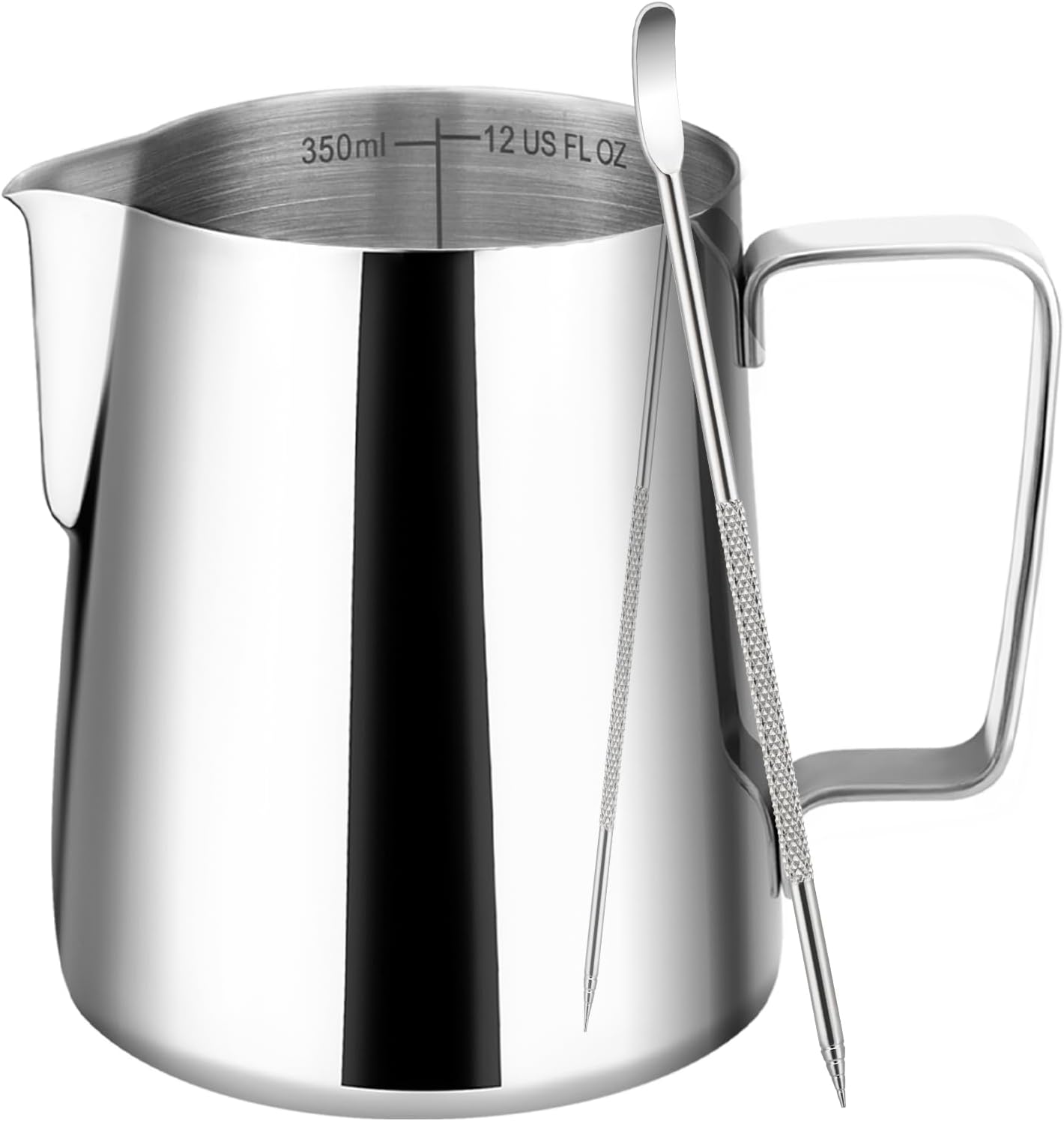
A dual froth system for steamed milk, thin froth, thick froth, cold froth, and cold foam using the included milk jug.
Hardware highlights include a built in conical burr grinder with 25 grind settings, a built in scale in the portafilter cradle for weight-based dosing, barista assist technology for grind and shot guidance, adjustable brew temperature options, and a 19-bar rated pump. The machine offers 9 coffee options and 5 milk choices across its automated system.
Physical details: water tank capacity is approximately 70 oz, the bean hopper holds around 350 g of whole beans, and dimensions sit at roughly 13 × 13.4 × 14.6 inches. Weight is about 25.7 lbs.
The Ninja Luxe Cafe Premier costs around $750 at MSRP, though it regularly goes on sale for as low as $600. Ninja’s Luxe Café Premier retails for £549.99 in the UK. The Café Pro variant runs higher depending on configuration and bundled accessories like spare baskets.
Test Setup and Reference Conditions (From Third-Party Data)
Reputable reviewers typically tested the ninja luxe café using medium and medium-dark espresso roasts, fresh whole beans, the standard double basket and the larger luxe basket, and filtered water with moderate hardness.
Barista assist technology calibration involves initial test grinds where the machine dials in a recommended grind size. After each shot, the system provides feedback: if extraction ran too fast, it suggests a finer grind; too slow, a coarser grind. Over a few weeks of regular use, the machine’s recommendations stabilize as it learns the characteristics of your beans and routine.
Typical brew recipes referenced in expert tests:
Parameter
Espresso (Double)
Drip Coffee
Cold Brew
Dose (in)
~18 g
~25–40 g
~25–40 g
Grind setting
3–10
23–25
20–23
Target ratio
1:2 to 1:2.5
N/A
N/A
Shot/brew time
25–35 sec
4–8 min
~10–15 min
Warm-up times of around 30–35 seconds and steam performance metrics are sourced from third-party stopwatch measurements, not CCC’s direct lab work.
The performance sections below interpret this mixed data into practical guidance for home use rather than replicating lab-grade charts.
Espresso Performance: Pressure, Temperature, and Shot Consistency
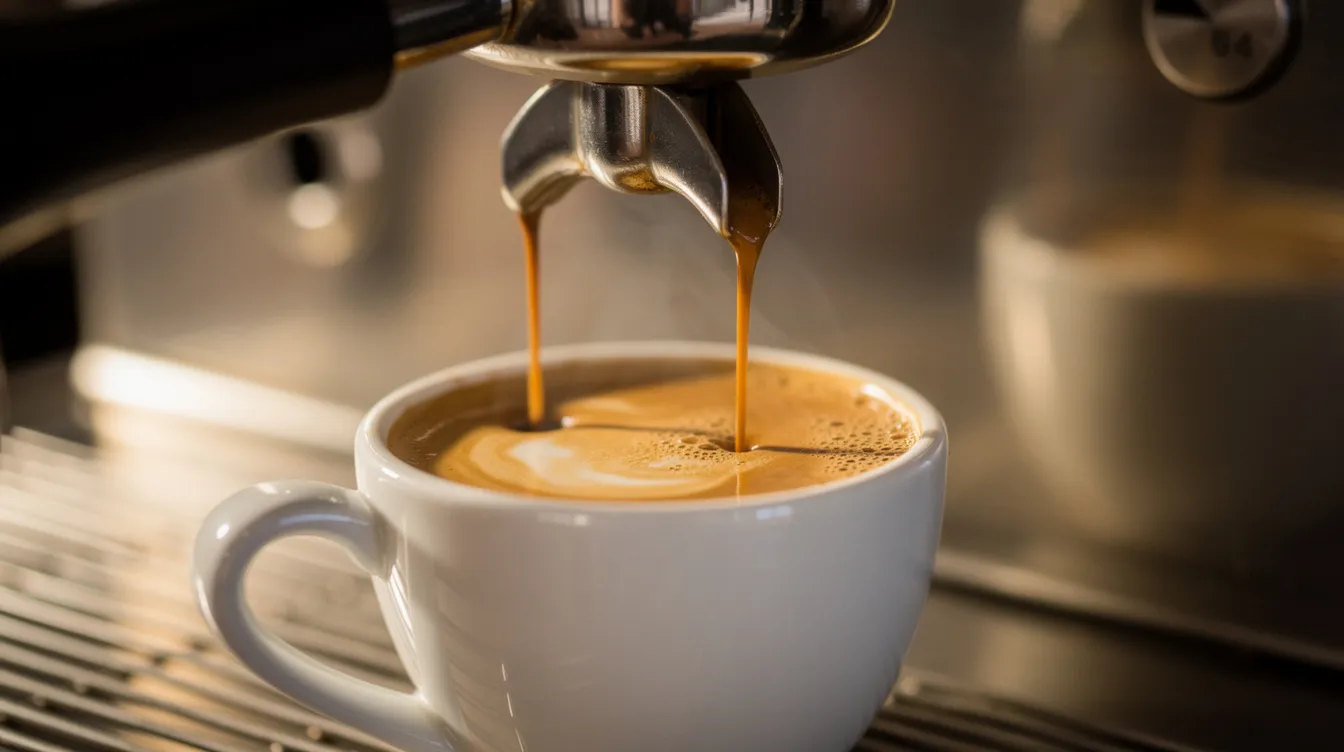
Overall, the Ninja Luxe Café produces consistently good home-grade espresso shots once barista assist dials in. Using 18 g in the standard double basket and the machine’s rated pump pressure, shots exhibit proper crema and a chocolatey finish that reviewers have praised across multiple roast profiles. Best results are achieved with medium-dark roast beans, where the brewing process extracts rich, balanced flavors without over- or under-extraction.
Temperature stability is adequate for typical users. The thermoblock heating system reaches brew temperature in approximately 35 seconds, and ExpertReviews recorded double shot beverage temperatures around 73°C with shot durations of 27–29 seconds. This isn’t competition-level precision, but it’s more than sufficient for the perfect cup at home. The machine manages brew temperature across consecutive shots reasonably well, though very heavy back-to-back pulling may introduce minor temperature drift.
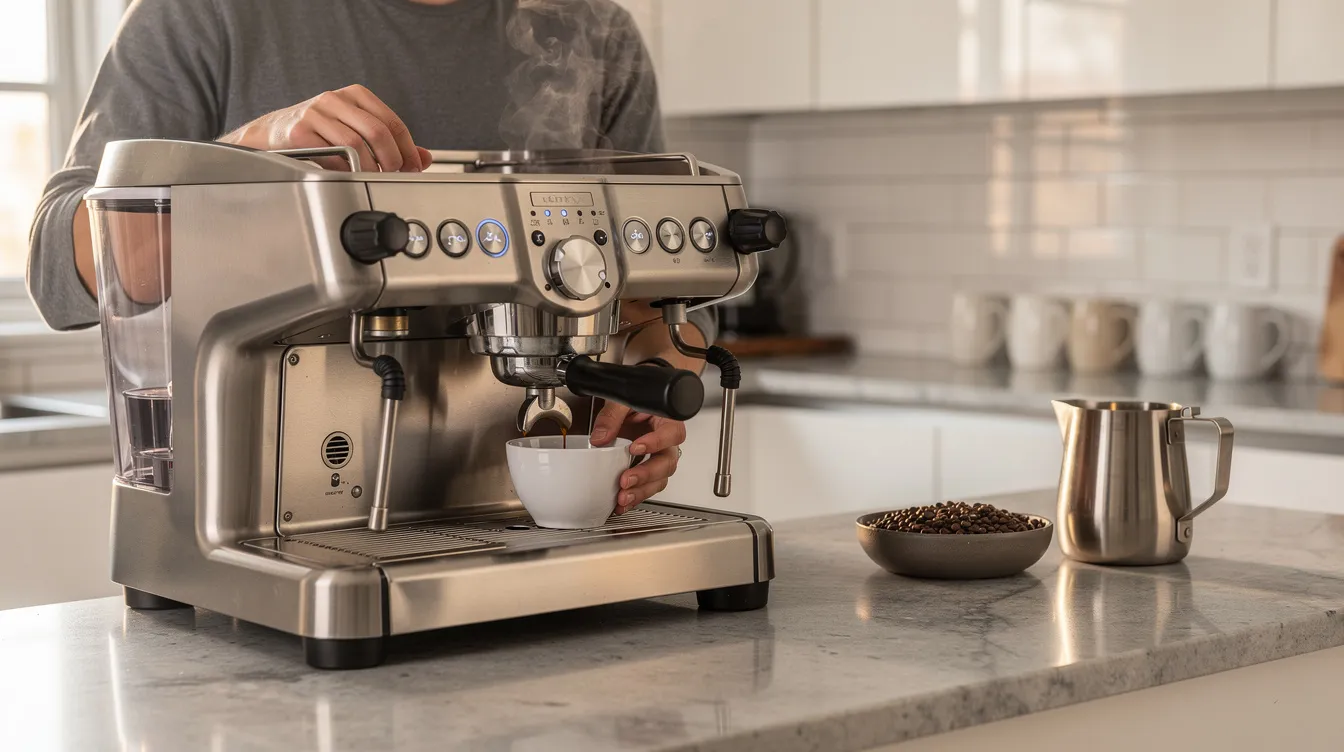
Barista assist technology recommends grind adjustments after each shot, guiding users toward the optimal grind size for their beans. The built in scale weighs the dose automatically, and the integrated tamper applies even pressure, so the variables that most espresso machines leave entirely to the user are partially automated here. The machine recommends grind settings for optimal flavor extraction, and shot consistency improves markedly after the first 3–5 pulls with a new bag of beans.
Some users have reported inconsistencies with lighter roast beans, including longer shot times and flatter flavor even when adjusting the current grind setting finer. Light roasts require higher extraction energy, and the thermoblock’s smaller thermal mass makes this more challenging than on dual-boiler prosumer setups.
Locking in the portafilter requires moderate force, which some reviewers note is stiffer than on other machines like the Breville Barista Express-worth considering for users with limited grip strength.
Drip Coffee and Brew Coffee Modes
The Ninja Luxe Café functions as a drip coffee maker using the luxe deep filter basket, with options for “Classic” (lighter body) and “Rich” (stronger cup) hot coffee modes. Brew sizes range from a single mug to larger carafe-equivalent volumes up to about 18–20 oz.
The machine mimics pour-over style extraction with pulsed flow and pauses, aiming for balanced extraction without manual pouring. A grind size near 23–25 is typically recommended for filter style coffee, and the coarser grind produces a cleaner cup than using espresso-fine coffee grounds.
Drip coffee quality is less impressive compared to espresso. Aggregated reviews describe the output as generally smooth and balanced for a hybrid espresso machine, producing a well balanced drip coffee, though not on the level of a dedicated high-end drip coffee maker or hand-brewed pour-over. The difference between “Classic” and “Rich” modes is sometimes subtle, and discerning filter coffee drinkers may find the results adequate but not exceptional.
Practical advice: if you primarily want a stronger cup, pulling a double espresso shot and diluting with hot water for an Americano often produces a more satisfying result than using the drip mode. The drip mode works best when you want to brew coffee in larger volumes for multiple people or prefer a lighter, less concentrated profile in your morning routine.
Cold Brew, Brew Over Ice, and Cold Foam
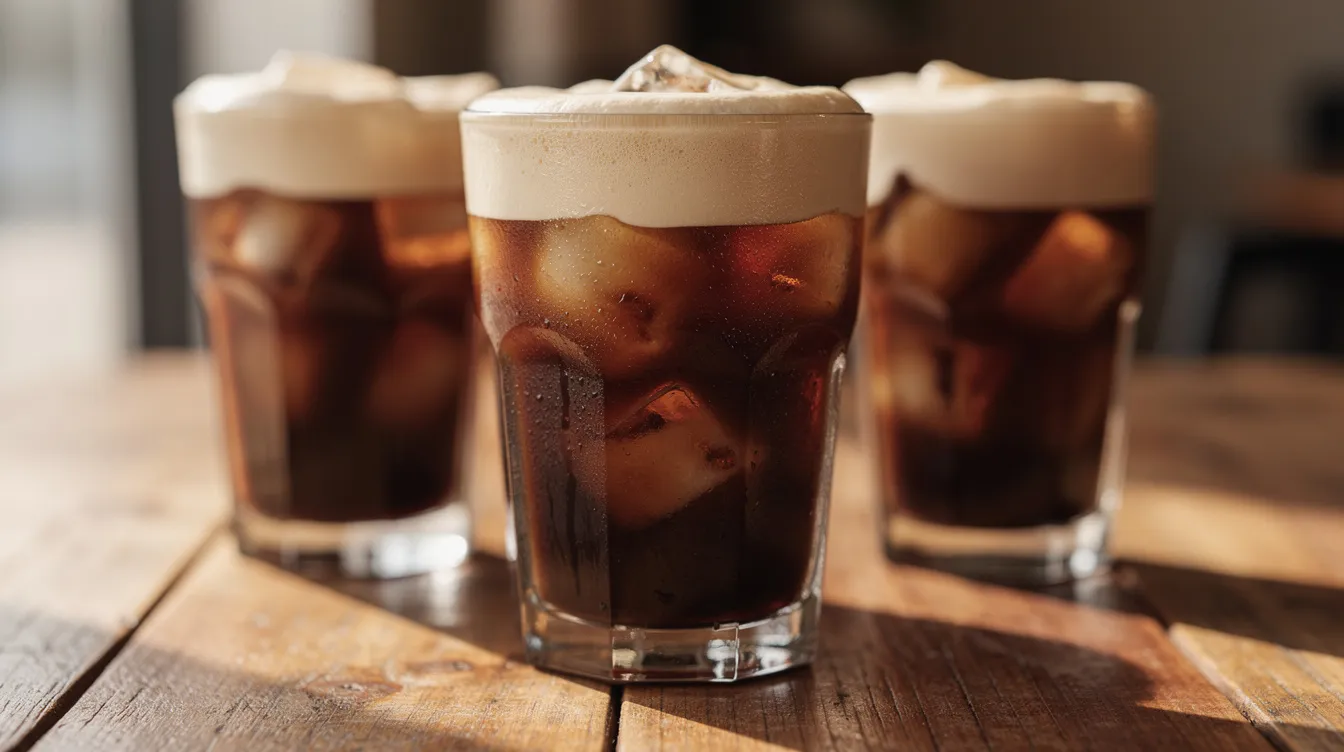
The cold coffee features are where the Ninja Luxe Café genuinely separates itself from most espresso machines at this price. The Ninja Luxe Cafe produces excellent cold brew in under 15 minutes, using lower-temperature water and slow pulsing to mimic the smooth, low-acidity profile of traditional 24-hour steeped cold brew.
Two main cold modes are available:
Rapid cold brew: Uses cool water and slow pulsing for a naturally sweet, smooth, low-acidity coffee. Flavor profile skews chocolatey with low bitterness, closer to specialty café cold brew than basic iced drip.
Brew over ice: Uses hot water and a concentrated brew poured directly over ice for a brighter iced coffee profile with more acidity and fruit notes-essentially cold pressed espresso in a glass.
For cold brew, a coarser grind around 20–23 with the luxe basket and a higher coffee dose produces the best results. The cold brew drinks this machine makes are genuinely impressive for the format and brew time involved.
The dual froth system’s cold foam setting uses a magnetic whisk and swirling action in the milk jug. It handles 2% dairy milk well, producing thick, velvety cold foam similar to coffee-shop toppings. Plant based milk alternatives like oat and almond work but produce less volume and thinner texture. Using cold milk straight from the fridge yields the best results.
This cold brew plus cold foam combination is relatively rare among mid-priced espresso machines and significantly improves the Ninja’s value for anyone who enjoys iced coffee and cold brew drinks regularly.
Milk Steaming, Dual Froth System, and Milk Texture
The dual froth system is one of the Ninja Luxe Café’s strongest features. It offers multiple hot foam levels (steamed milk, thin froth, thick froth), a dedicated cold foam setting, and largely hands-off operation for lattes, cappuccinos, and flat whites using the included milk jug.
Users can either let the automated system handle frothing through presets or, on some variants, switch to manual steaming via the steam wand for more control over microfoam. Manual steaming gives experienced users the ability to attempt latte art, though the steam power is more modest than what you’d find on dedicated prosumer machines.
Steam power is adequate for a couple of drinks back-to-back. Some reviewers timed full jug steaming cycles at around 2 minutes, with enough pressure to texture dairy milk into café-style microfoam. The machine auto-purges the steam wand after each use, which helps keep the milk system clean but contributes to the drip tray fills quickly issue.
Plant based milks: the dual froth system performs well with common alternatives like oat, almond, and soy. Texture and foam volume vary by brand and fat content compared to dairy milk, with barista-edition oat milks producing the closest results to whole milk microfoam. To froth cold milk effectively, use it straight from the fridge and avoid overfilling past indicated lines on the jug.
One concern worth noting: CoffeeKev’s testing found auto-froth temperature variability, with measurements ranging from 120°F to 147°F across multiple runs. This inconsistency in the milk system may affect drink quality for users who are particular about serving temperature.
Clean the milk jug and whisk immediately after use to prevent flavor carryover and residue buildup.
Built-In Grinder, Built-In Scale, and Barista Assist Technology
The integrated conical burr grinder covers the full range from fine espresso to coarser grind for cold brew across its 25 grind settings. The bean hopper holds approximately 350 g of whole beans, and automatic grind amounts are keyed to the filter basket type: single, double, or luxe basket.
The built in scale doses coffee accurately for single and double shots, targeting approximately 9 g for a single, 18 g for a double, and up to 40 g for the luxe basket. This eliminates the need for a separate kitchen scale for everyday use and ensures more consistent puck prep from morning to morning.
Barista assist technology works in user-friendly terms: after each shot, it provides real-time feedback on shot speed and prompts you to adjust grind finer or coarser. It gently coaches on dose and tamp, and the interface elements reduce guesswork for new home baristas. The integrated tamper applies even pressure for consistent puck formation, removing another common source of beginner error.
For most users, the built in grinder is well-matched to the machine and eliminates the expense and counter clutter of a separate grinder. Serious espresso hobbyists might later upgrade to a dedicated grinder for maximum control and uniformity, but for the target audience, this grinder handles medium roast beans and medium-dark profiles with minimal fuss.
Compared to the Breville Barista Express, the Ninja’s guidance features may be better for beginners, while Breville’s grinder has a slight edge in grind uniformity and adjustment precision. Both approaches work; the difference is whether you want the machine to coach you or prefer to learn by feel.
Workflow, Daily Use, and Learning Curve
A typical daily workflow looks like this: power on, wait 30–35 seconds for warm-up, select between espresso, drip coffee, or cold brew on the control panel, let the machine auto-dose and grind via the built in scale, tamp using the integrated lever, and press start.
The interface uses segmented controls for Grind, Espresso, Coffee, and Froth, with clear icons for drink types and simple buttons for shot volumes, milk style, and brew temperature selection. The primary design is user-friendly, reducing the learning curve for espresso making. Most users become comfortable after a few sessions thanks to barista assist recommendations.
That said, espresso perfectionists may still want to tweak grind size and temperature beyond the defaults, especially when switching between bean origins or roast levels. The automated system does the heavy lifting, but understanding the basics of extraction will help you pull better coffee.
The Ninja Luxe Café has a substantial footprint that takes up notable counter space. At roughly 13 × 13.4 × 14.6 inches and 25.7 lbs, it’s significantly larger than compact single-purpose espresso machines. You need clear access to the bean hopper from above, the water reservoir from the side or rear, and the steam wand from the front.
Noise levels during grinding are comparable to other machines with built in grinders: noticeable but brief, lasting a few seconds per dose. Brewing and steaming are quieter.
Cleaning, Descaling, and Maintenance
Maintenance involves cleaning the grinder, milk system, and drip tray regularly. Here’s the breakdown:
Daily tasks:
Empty and wipe the drip tray. The drip tray needs to be emptied daily because the machine auto-flushes, which means the drip tray fills quickly and necessitates frequent emptying.
Rinse the portafilter and baskets after use.
Daily cleaning includes wiping the steam wand after use, though the auto-purge handles most residue.
Rinse the milk jug and whisk immediately to prevent buildup.
Weekly maintenance:
Weekly maintenance requires backflushing with a cleaning tablet to remove coffee oils from the brew group.
Clean the removable water reservoir.
Wipe down the bean hopper and grinder chute to prevent coffee grounds from building up.
Descaling:
Descaling frequency depends on water hardness. The machine ships with water hardness test strips and descaling powder. Hard water areas may need descaling every 2–4 weeks; softer water areas less frequently.
Several reviewers note that the cleaning process is relatively straightforward compared with more complex fully automatic machines and often easier than managing a multi-piece manual espresso setup plus a separate grinder. The streamlined design keeps daily maintenance to about 5 minutes.
Long-term, replacement accessories like drip trays and milk jugs are available, but access to internal parts or third-party repairs is limited once the warranty ends. This is a trade-off of the machine’s complexity: more components mean more potential failure points versus a simple manual setup.
Build Quality, Design, and Warranty
The Ninja Luxe Café combines stainless-steel-look elements with plastic components throughout the body, bean hopper lid, and internal trays. Key touch points like the portafilter, tamper lever, and control panel feel solid, but some areas-particularly buttons and the hopper lid-feel less premium than higher-priced prosumer machines.
The aesthetic is boxy and tech-forward, with a large front panel and a modern look that fits well in kitchens already stocked with other Ninja appliances. Multiple colorways may be available depending on retailer and configuration.
Ninja offers a two-year warranty if registered within 28 days of purchase (standard coverage is one year without registration). This is shorter than the two-year standard warranty some espresso competitors offer out of the box. User reports on support quality are mixed, with some owners describing smooth replacements and others reporting delays.
Perceived durability in the first year is generally positive based on owner feedback. Common minor complaints include the plastic feel on certain buttons, occasional milk frother quirks, and grinder sensitivity to oily beans. Overall satisfaction with reliability appears solid, though the machine’s complexity and automation mean there are more components that could potentially fail over time compared to a very simple manual espresso setup.
Strengths and What the Ninja Luxe Café Does Best
The Ninja Luxe Café excels in several areas that matter for daily home use:
3-in-1 versatility: Credible espresso, decent drip coffee, and genuinely impressive rapid cold brew from a single machine. No need for a separate cold brew maker, basic coffee maker, or stand-alone frother.
Automation and guidance: Barista assist technology, the built in scale, and the integrated tamper remove common beginner errors. The machine coaches you toward better espresso shots without requiring deep coffee knowledge.
Cold drink performance: The dual froth system for cold foam and the rapid cold brew mode are standout features that most espresso machines in this price range simply don’t offer.
Milk versatility: Handles dairy milk and plant based milk for hot and cold drinks with minimal effort. The cold foam rivals what many cafés produce.
Value for money: Mid-tier pricing that undercuts many fully automatic machines while delivering more features-cold brew, drip coffee, barista assist, built in grinder and scale-than most traditional semi-automatics.
Limitations and Trade-Offs
No machine is perfect, and the Ninja Luxe Café has clear trade-offs:
Espresso ceiling: Dedicated machines with separate grinders, like higher-end Breville setups, deliver slightly better espresso clarity and temperature stability. Light-roast enthusiasts will find the Ninja limiting.
Drip coffee gap: While solid for a hybrid, the drip coffee doesn’t match the nuance of a dedicated drip coffee maker or pour-over setup. Heavy filter coffee drinkers may want a separate solution.
Footprint: The Ninja Luxe Café has a substantial footprint that takes up notable counter space. It’s not the right choice for tiny kitchens.
Shot volume inconsistency: Some owners report fluctuating shot volumes and Barista Assist grind recommendations that shift unexpectedly, even with the same beans and routine. Quality control across units appears to vary.
Warranty and repairability: The standard 1-year warranty (extendable to two years with registration) is shorter than some competitors offer by default, and limited access to internal spare parts raises questions about long-term repair options.
Pre ground coffee: You can use pre ground coffee in the portafilter, but the machine is optimized for fresh whole beans. Pre-ground will produce noticeably weaker crema and less flavor complexity.
Value Analysis: Is the Ninja Luxe Café Worth It?
The value equation depends heavily on what you’re comparing the ninja luxe to:
The De’Longhi Eletta Explore costs $1,799.95, significantly more than Ninja, yet the Ninja delivers comparable versatility in cold brew and milk drinks for a fraction of the price. The Ninja Luxe Cafe is cheaper than Breville’s Barista Express at $750 while offering cold brew, drip, and cold foam that Breville doesn’t.
It is regarded as an exceptional value for its all-in-one functionality compared to high-end machines. The inclusion of a built in grinder, built in scale, barista assist, cold brew, and dual froth system effectively replaces what might otherwise be a separate espresso machine, cold brew maker, drip coffee maker, and milk frother.
Operating costs center on whole beans (no pods), occasional descaling solution, replacement filters, and cleaning tablets. Over 1–3 years of home use, this is significantly cheaper than pod-based systems while producing better coffee.
For households that drink multiple styles daily and want a single machine, the Ninja Luxe Café delivers excellent value. If you only drink espresso and want maximum control, investing in a simpler espresso machine plus a high-quality standalone grinder may serve you better in the long run.
Alternatives to the Ninja Luxe Café
If you’re still weighing options, here are the most relevant alternatives:
Breville Barista Express: The most direct competitor in the semi-automatic espresso space. It generally offers a stronger grinder and slightly higher espresso ceiling with more manual control, but lacks cold brew, drip coffee modes, cold foam, and the built in scale. At around $750, it costs more while doing less in terms of drink variety. Read the Breville Barista Express review for a detailed breakdown.
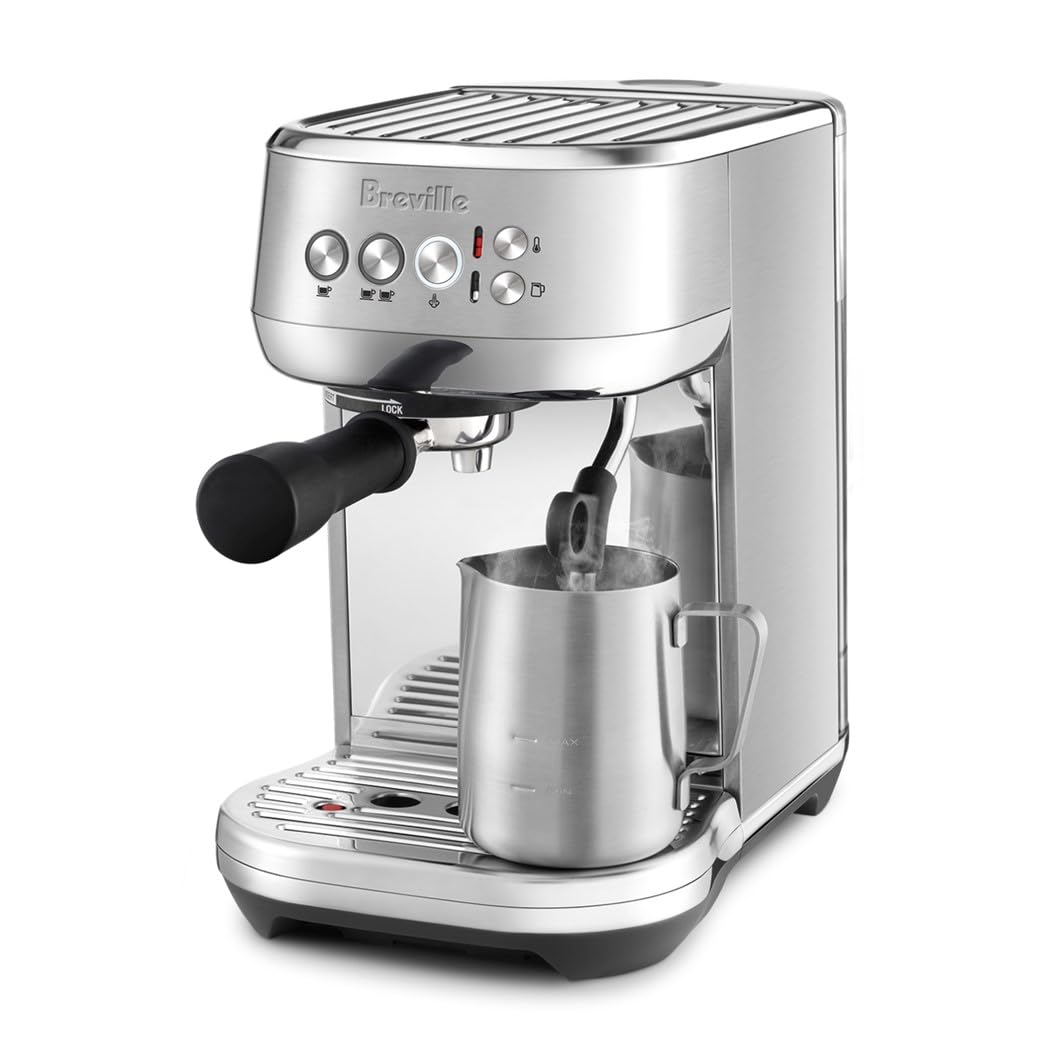
Breville Bambino Plus: A compact, fast-heating machine with strong steam power and excellent espresso for its size. It requires a separate grinder, has no built in scale or barista assist features, and offers no cold brew or drip modes. Ideal for espresso purists with limited counter space who already own (or plan to buy) a quality grinder. See the Breville Bambino Plus review for more.
De’Longhi or Philips fully automatic machines: These offer more push-button automation with touchscreens and bean-to-cup convenience. However, they typically cost $1,000–$1,800+ for comparable versatility, and many sacrifice espresso authenticity compared to the Ninja’s semi-automatic approach. The Ninja often provides better espresso quality and cold foam for the money.
For readers still in research mode, explore more espresso machine reviews or see all Capitol City Coffee gear reviews to compare across categories.
Final Recommendation
The Ninja Luxe Café earns a clear recommendation for multi-drink households that want convenience, variety, and solid performance from a single coffee machine. Its combination of barista assist technology, built in grinder and scale, cold brew, and cold foam is genuinely hard to match at this price point.
Scenario-based guidance:
Multi-drink households: The Ninja Luxe Café is your best bet for covering espresso, drip coffee, and cold brew without cluttering the counter with multiple machines.
Espresso purists: Consider a dedicated espresso machine plus a separate grinder for maximum control and better coffee at the extraction level.
Drip-only drinkers: A simpler, dedicated drip coffee maker will deliver a perfect cup of filter coffee for less money and counter space.
The “best” choice depends on your drink habits, budget, and willingness to tinker. Start by identifying what you actually drink most, then compare machines that excel in that category.
FAQs
Below are practical questions not fully covered above, focused on real buyer concerns about the Ninja Luxe Café.
Does the Ninja Luxe Café work well with light roast espresso beans?
Based on third-party tests, the built in grinder and barista assist can handle light roasts, but you’ll likely need to grind significantly finer than the default recommendations-sometimes as low as grind setting 1–3-and raise the brew temperature for acceptable extraction. Even then, flavor tends to be flatter and less nuanced than what prosumer machines with more powerful grinders and PID-controlled boilers deliver. Medium roast beans and medium-dark profiles remain the sweet spot.
Can I bypass the grinder and use pre-ground coffee?
Yes, you can load pre ground coffee directly into the portafilter or luxe basket. However, the machine is optimized for fresh whole beans ground on demand. Pre-ground coffee will produce noticeably less crema, weaker flavor, and more inconsistent extraction-especially for espresso. If you do use pre-ground, make sure it’s freshly ground from a quality external grinder and appropriately sized for the brew mode you’ve selected.
How long does it take to make a drink from cold start?
Warm-up takes approximately 30–35 seconds. A complete espresso-based drink-including grinding, tamping, pulling, and steaming milk-runs about 2–4 minutes total. Larger drip coffee batches take 4–8 minutes depending on volume. A full rapid cold brew cycle runs approximately 10–15 minutes. By comparison, pod systems are faster but far less flexible, while fully manual espresso setups take similar or longer times when factoring in dial-in and cleanup.
Is the Ninja Luxe Café suitable for office or small business use?
The machine can handle a few drinks in a row, but it’s designed primarily for home kitchens, not continuous commercial-grade service. The thermoblock heating system, plastic components, and limited warranty make it unsuitable for busy cafés or heavy-use environments. Small offices or studios with light to moderate coffee volume-say, 8–12 drinks per day-could consider it, but anything beyond that warrants commercial-rated equipment.
What kind of water should I use to protect the machine and flavor?
Use filtered water with moderate mineral content for the best balance of flavor and machine longevity. The box includes water hardness test strips to help you assess your tap water. Follow the descaling schedule based on your results. Avoid distilled water unless you remineralize it first, as very low mineral content can actually impair extraction quality. In hard water areas, expect to descale more frequently to maintain temperature stability and pump performance.
How Capitol City Coffee Rates Coffee and Coffee Machines
Every coffee and coffee machine we recommend is scored on the same 100-point scale, so a recommendation on one page means the same thing as a recommendation on any other. Each pick is also labeled with how we reached its score.
Research-ratedScored from the roaster or manufacturer’s published specifications, independent results such as Coffee Review blind cuppings and SCA brewer certification, and patterns across verified buyer reviews. Most of our current picks are research-rated.
Hands-on testedThe Capitol City Coffee team has brewed the coffee or used the machine ourselves, following the testing steps below. We only use this label when that testing actually happened, and we show the date we tested.
Coffee beans: 100-point scale
What we score
Points
What we look at
Origin and sourcing transparency
20
Country, region, farm or cooperative, altitude, bean variety, and processing method are clearly disclosed.
Flavor evidence
25
Independent cupping scores, how closely the tasting notes match what the origin is known for, and our own cupping notes when hands-on tested.
Roast and freshness
15
Roast level stated, roast-date practices, whole-bean availability, and packaging with a one-way valve or resealable bag.
Brew versatility
15
How well the roast suits pour-over, drip, French press, cold brew, and espresso.
Value
15
Price per ounce compared with similar single-origin coffees or blends.
Buyer feedback
10
Volume and consistency of verified reviews, and recurring complaints about staleness, bitterness, or shipping.
Coffee machines and gear: 100-point scale
What we score
Points
What we look at
Brewing performance
25
Water temperature in the 195–205°F range, even extraction, and SCA certification or published test data.
Build quality and reliability
20
Materials, known failure points, and long-term owner reports.
Ease of use and cleaning
15
Setup, the daily routine, descaling, and dishwasher-safe parts.
Fit for your kitchen
10
Capacity, counter footprint, and noise.
Useful features
10
Programming, grind and temperature control, and carafe type. Features that improve the cup count more than extras that do not.
Value
10
Price compared with machines that perform similarly.
Warranty and support
10
Warranty length, parts availability, and how the brand handles repairs.
What the grades mean
Score
Grade
What it means
90–100
A
Exceptional. Our first recommendation for the feeling and setting described.
80–89
B
Strong. Excellent, with minor trade-offs we explain.
70–79
C
Good. Worth it for specific needs, with clear compromises.
Below 70
—
Not recommended. We do not feature these as picks.
How we test hands-on
When a pick carries the Hands-on tested label, this is the method behind it, and we note the date we tested.
Coffee: brewed fresh from whole beans following Specialty Coffee Association guidelines (water between 195 and 205°F, about 1 gram of coffee to every 15 to 18 grams of water) in the brew methods the roast suits best, such as pour-over, French press, or espresso. We taste it black first, then with milk if that is how most people drink it, and each taster scores it on their own before we compare notes.
Machines: used in our everyday routine rather than a single demo. We brew both full and small batches, check the brewing temperature and brew time, and run the cleaning or descaling steps the manual calls for.
How we choose the feeling and setting
We match each coffee to a mood and a moment based on its flavor profile and roast. Bright, citrusy light roasts suit energizing mornings. Chocolatey, full-bodied medium roasts suit slow or social moments. Richer roasts suit espresso and milk drinks. Each pick explains which facts led us to that match.
Our scores stay independent
Every score comes only from the criteria above. No brand can pay for a pick or a higher grade. We re-check ratings when a roast, listing, or model changes, and update or remove picks that no longer earn their grade.
Some links on this page are affiliate links. As an Amazon Associate, Capitol City Coffee earns from qualifying purchases, at no extra cost to you.
Questions about a rating? Reach the Capitol City Coffee team through our contact page.