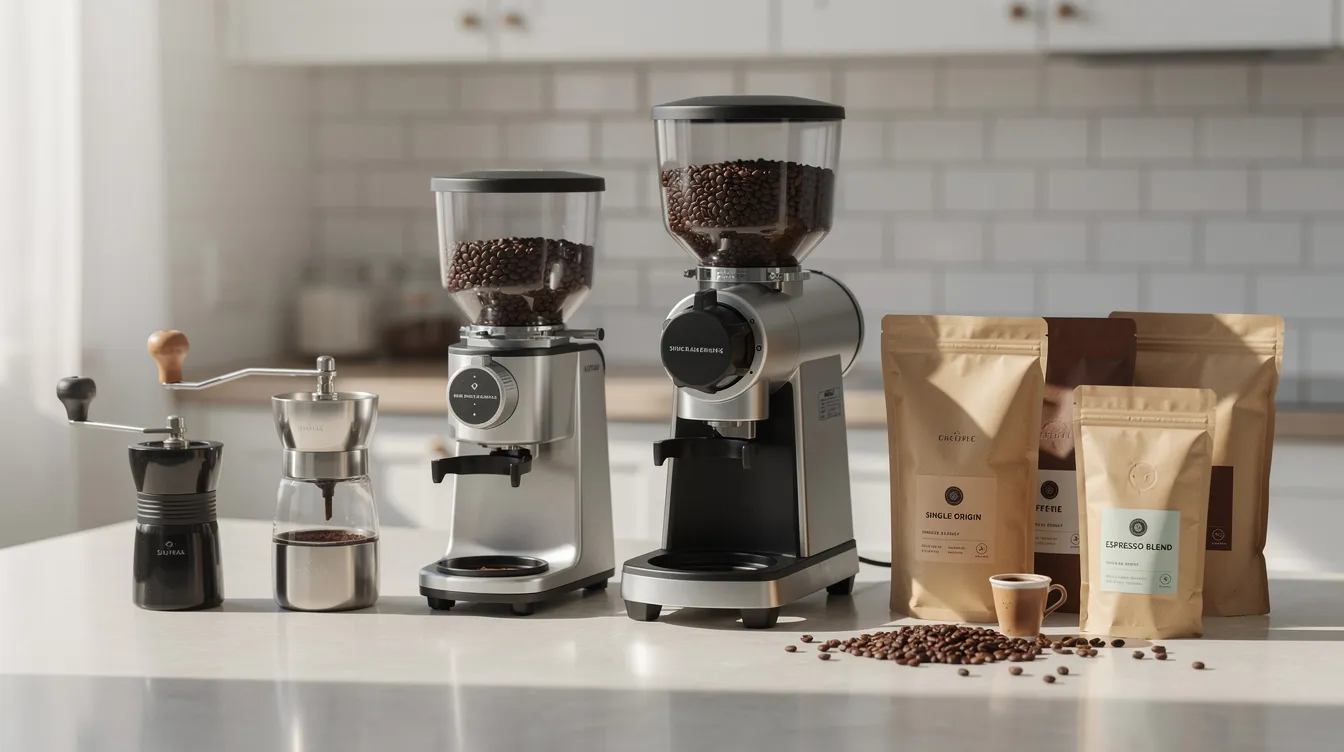
A budget of under $200 is suitable for quality coffee grinders that can handle everything from drip to pour-over to starter espresso. This guide breaks down the top options available in the U.S. market right now, based on researched editorial analysis of verified specs, expert reviews, and broad owner consensus.
Best under $200 pick
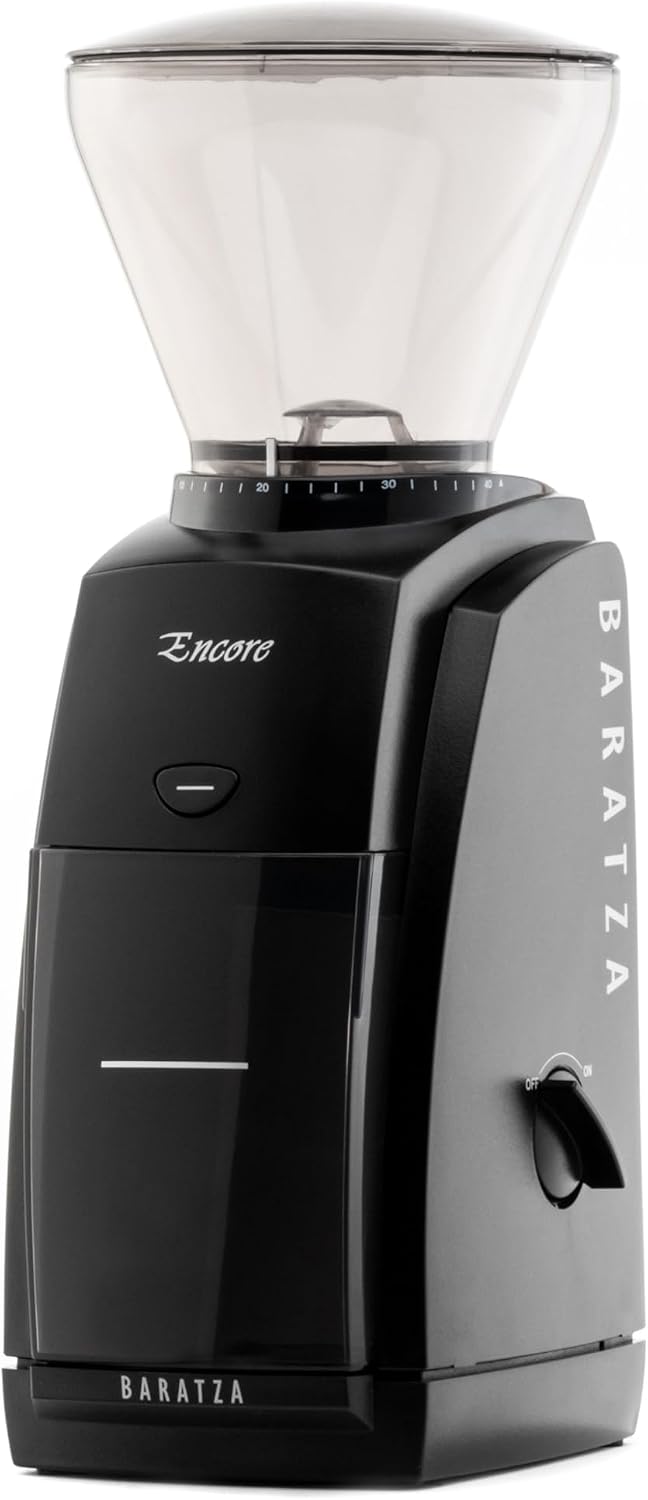
For this roundup, Baratza Encore is the under $200 we recommend first—the same pick at the top of our At-a-glance cards below.
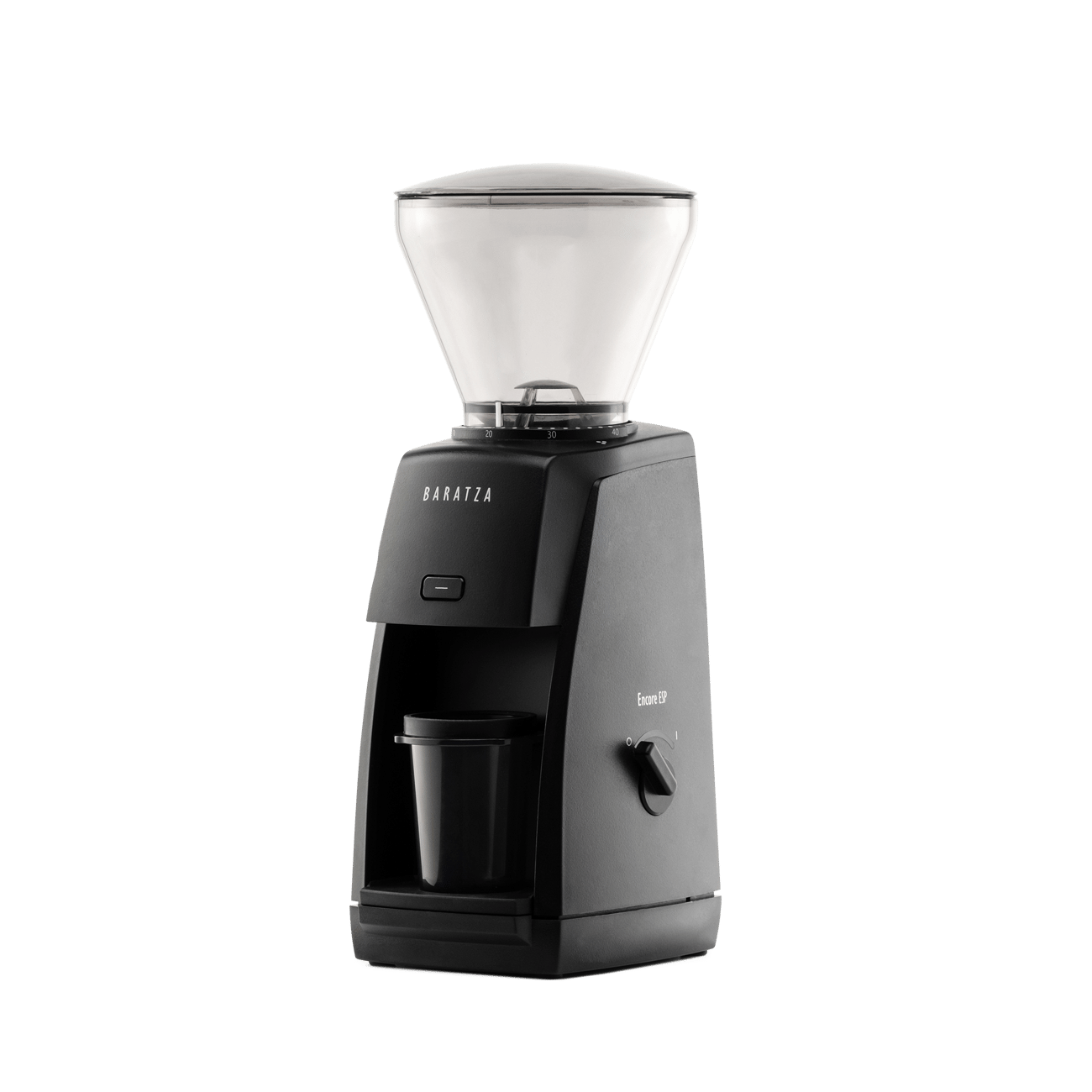
The Baratza Encore is the best overall burr coffee grinder under $200 for most home brewers focused on drip coffee, pour-over, French press, and AeroPress. It pairs 40 mm steel conical burrs with 40 grind settings, long-term parts support, and a typical price around $150.
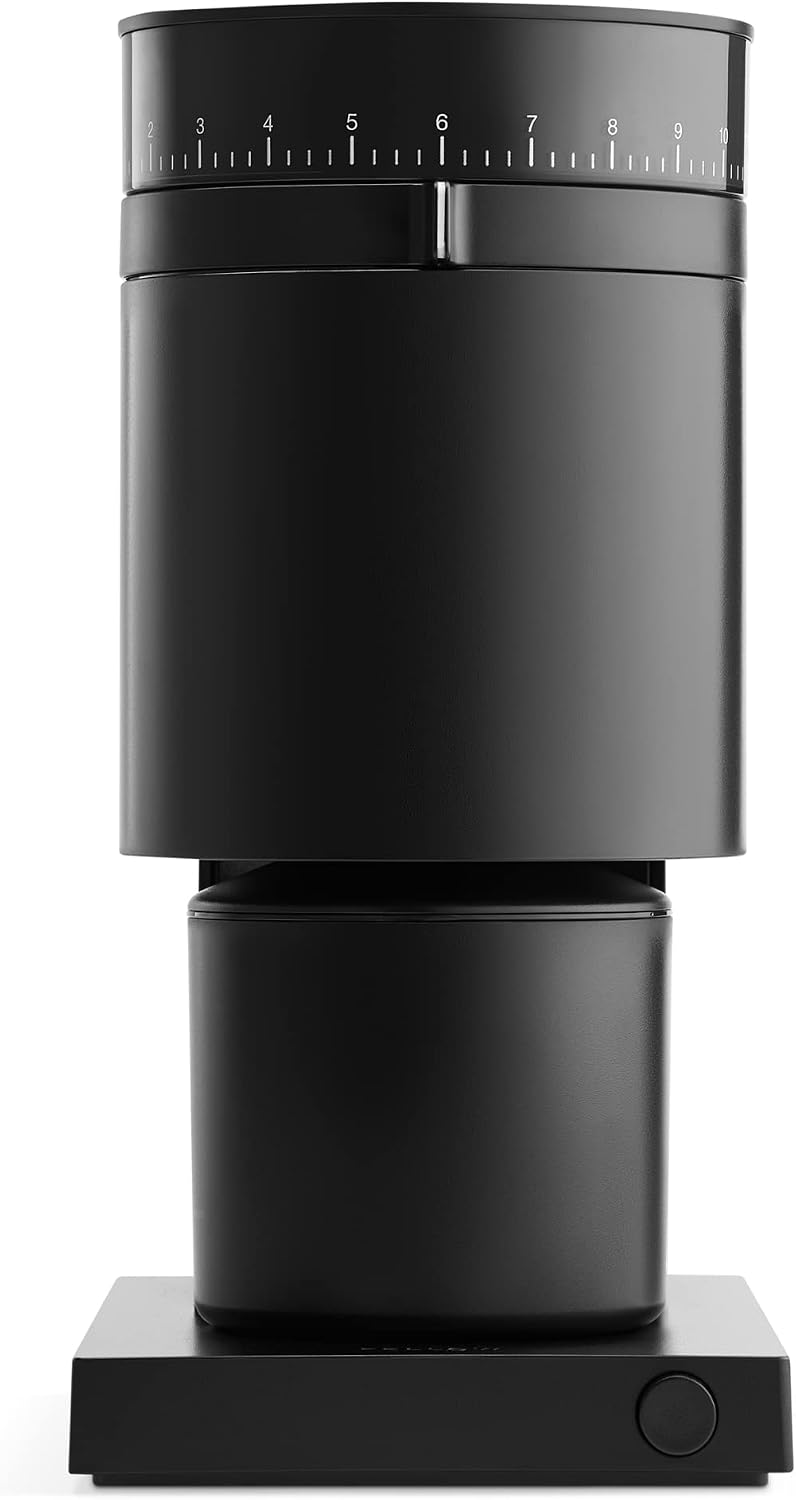
The Fellow Opus is the strongest runner-up for buyers who want one grinder covering both filter coffee and starter espresso, with macro and micro adjustments and low retention of about 0.2 to 0.3 grams.
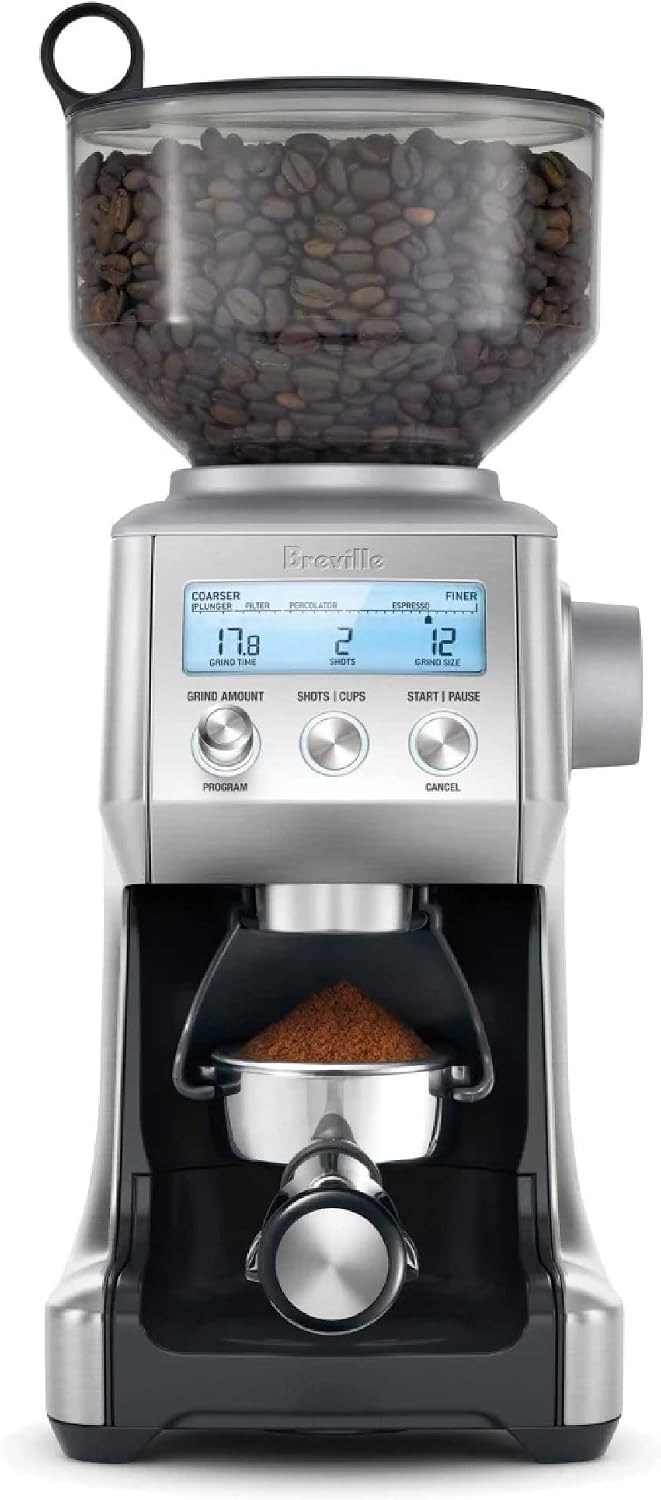
The Breville Smart Grinder Pro is the best espresso-capable grinder under $200, offering 60 stepped grind settings, a digital control interface, and a portafilter cradle for hands-free dosing.
A burr grinder (not a blade grinder) is the single biggest upgrade for home coffee quality. Burr grinders produce uniform coffee grounds for better extraction, and they minimize fines and boulders that cause bitter or sour flavors.
This guide is researched editorial analysis based on manufacturer specs, reputable expert sources, and aggregated owner feedback. Capitol City Coffee did not conduct hands-on testing for this roundup.
Affiliate Disclosure
Capitol City Coffee is an independent coffee editorial and affiliate publication. We may earn a commission if you purchase through outbound links on this page, at no extra cost to you. Our rankings are based on researched editorial analysis of performance, reliability, and value. Commission size and brand relationships do not determine placement. We do not sell coffee grinders ourselves; our goal is to surface the best coffee grinder for your needs.
Quick Answer: The Best Coffee Grinders Under $200 Right Now
If you want to grind coffee beans at home and produce a delicious cup without overspending, the sub-$200 range delivers real options. Here are the top picks and who each one suits:
Baratza Encore (best overall, typically $150 to $170): The safest choice for drip, pour-over, French press, and AeroPress users. Excellent grind consistency for filter coffee, strong long-term support from Baratza, and 40 grind settings that cover most brewing methods.
Fellow Opus (best for multi-method brewing, around $195): A capable grinder that spans espresso through cold brew, with macro and micro adjustments for fine-tuning. A good grinder for buyers who want one device for everything.
Breville Smart Grinder Pro (best espresso-capable under $200, typically $179 to $199): Feature-rich with 60 grind settings, an LCD timer, and portafilter cradle. The Breville Smart Grinder Pro is versatile for various brewing methods, from espresso to drip.
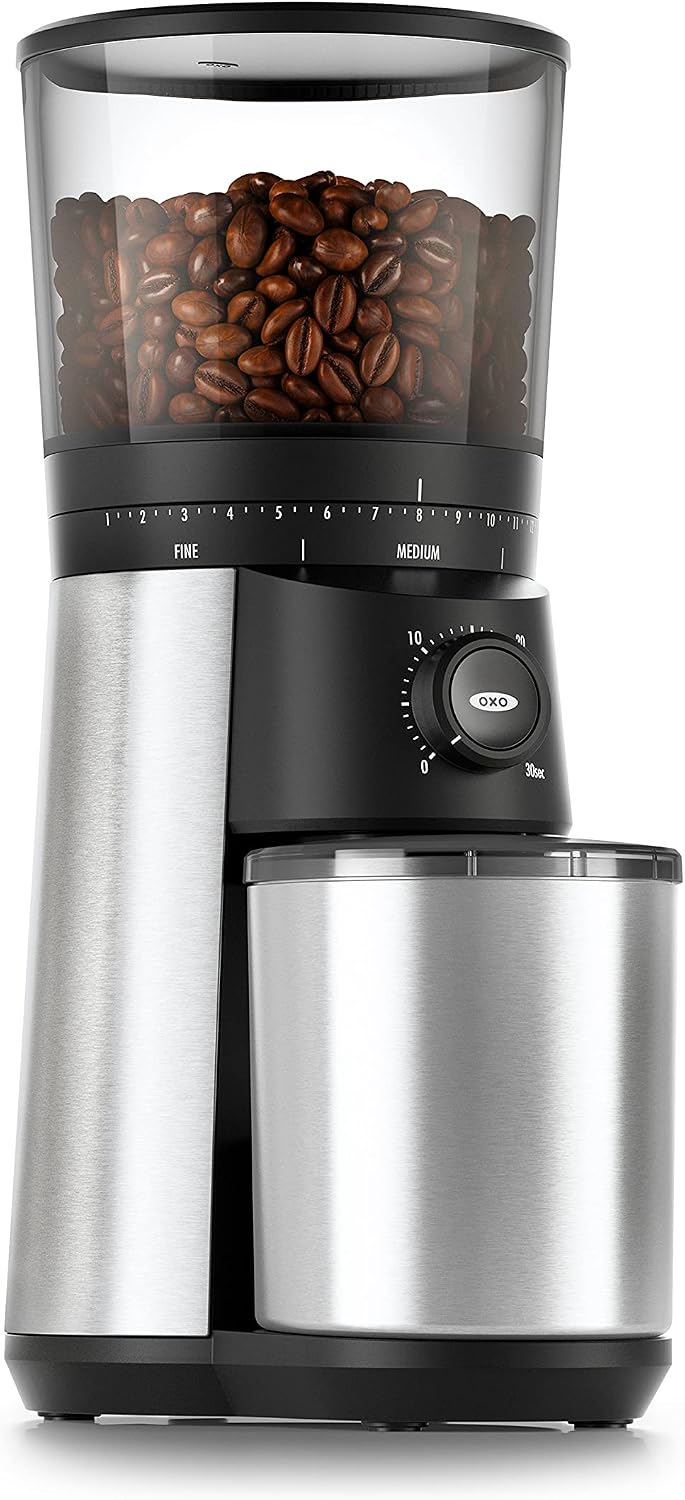
OXO Brew Conical Burr Coffee Grinder (best budget grinder, often under $100): A strong entry point for casual coffee drinkers upgrading from blade grinders. Not suited for serious espresso, but solid for everyday filter coffee.
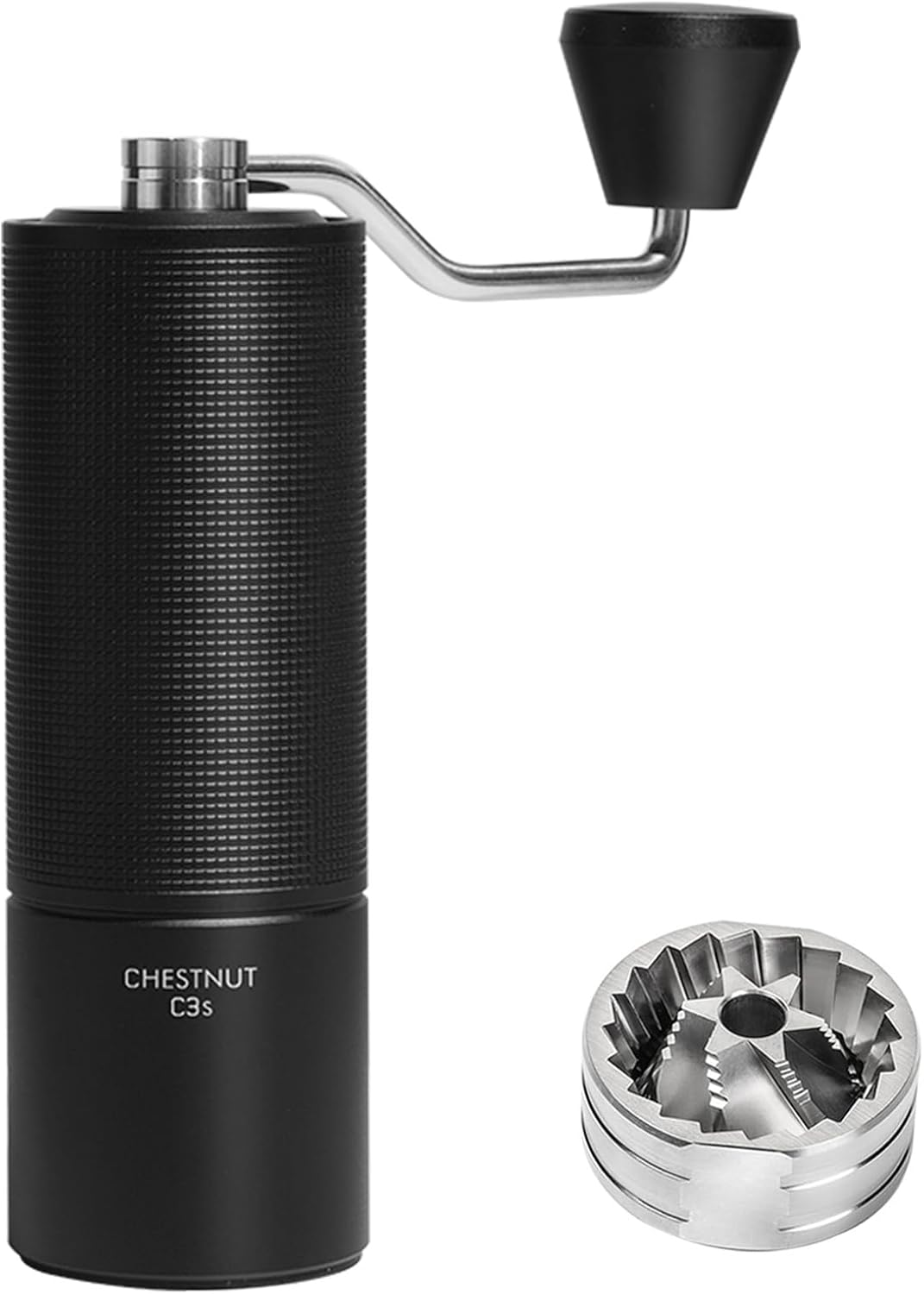
Timemore Chestnut C3 / C5 Pro (best manual grinder, typically $60 to $90): A compact manual coffee grinder with excellent grind quality for pour-over and travel. Manual grinders are ideal for pour-over and small batch brewing.
Prices fluctuate with sales and retailer. The espresso-leaning picks (Breville, Opus) double as brew grinders, while the Encore and OXO are primarily tuned for filter methods.
At-a-Glance Comparison Table
The table below summarizes the key specs and trade-offs for each recommended grinder. All data reflects manufacturer specs and aggregated expert and owner reports as of 2026.
Specs are based on manufacturer data and aggregated expert and owner reports as of 2026. Prices vary by retailer and season.
Why You Can Trust Capitol City Coffee
Recommendations in this guide are built from cross-referencing manufacturer technical sheets, reputable expert reviews (barista educators, coffee engineers, specialty coffee publications), barista forums, and large-sample owner feedback spanning 2024 to 2026.
Unless otherwise noted, we are not describing hands-on testing or long-term ownership by Capitol City Coffee staff. We synthesize third-party consensus and verified facts, clearly attributing data where possible.
We prioritize grind quality, reliability, and long-term support (repairability, parts availability, warranty) over hype or short-term promotional deals.
This piece sits alongside our broader best burr coffee grinders roundup, our best coffee grinders under $100 guide, and our dedicated espresso grinder recommendations. Cross-checking across those guides helps us maintain consistency and catch discrepancies.
Who This Guide Is For
This guide targets U.S.-based home coffee drinkers who want a real upgrade from blade grinders or bottom-shelf electrics but need to stay under $200. The focus is entirely on burr coffee grinders, because burr grinders deliver more uniform particle size, fewer fines and boulders, and more predictable extraction across drip, pour-over, French press, and espresso. Different brewing methods require different prioritizations in grinder features, and this guide accounts for that variety.
Needs vary across this audience:
Filter-first brewers (drip, pour-over, French press, cold brew) need consistent grind in the medium-to-coarse range and care less about espresso-fine precision.
Aspiring espresso drinkers pairing a grinder with a new espresso machine need enough resolution in the fine range to dial in shots, even if the grinder is not a dedicated espresso grinder.
Travelers and minimalists want portable manual grinders that fit in a bag and require no outlet.
Serious coffee geeks value single dose workflow, low retention, and flavor clarity. Casual coffee drinkers want simple hopper-fed grinders that just work.
Set expectations clearly: grinders under $200 can be excellent for filter coffee and “learning” espresso, but they do not match the precision of high-end espresso grinders above $500. That is a fair trade-off for most home brewers. Some buyers simply want just a grinder, not extra screens or dosing features.
How We Researched and Ranked These Grinders
This guide is a researched editorial recommendation compiled in 2025 and 2026. We did not conduct lab testing or long-term hands-on use. Instead, we evaluated grinders using the following criteria:
Burr type and geometry: conical versus flat, steel versus ceramic, and burr diameter
Grind range: from espresso fine to cold brew coarse, and how many usable steps fall in each range
Particle consistency and fines: how uniform the output is, based on third-party sieve analyses and expert assessments
Retention and static: grams of ground coffee left inside after grinding, and how much mess the grinder creates
Speed and noise: how long a standard dose takes, and how loud the grinder runs
Workflow: ease of adjustment, timer or dosing features, hopper design, single dose capability
Cleaning and durability: how accessible burrs are, how long components last, and what replacement parts cost
Warranty and value: manufacturer support, warranty length, and total cost of ownership
We cross-checked multiple sources: expert grinder reviews from barista educators and coffee engineers, specialty coffee forums with thousands of owner reports, retailer review aggregations, and manufacturer technical sheets. We filtered out grinders with recurring durability issues, poor customer support, or misleading marketing claims. Our findings were also compared against recommendations in the broader Capitol City Coffee gear section to ensure consistency across our espresso grinder and burr grinder guides.
Our Top Pick: Baratza Encore (Best Overall Burr Coffee Grinder Under $200)
The Baratza Encore is the safe default for most home brewers who mainly make drip coffee, pour-over, AeroPress, or French press and sometimes experiment with moka pot or pressurized espresso baskets. It has earned that status through years of consistent performance, easy repairability, and a price that sits comfortably in the budget range. The Baratza Encore is a top budget grinder under $200 by nearly every expert and owner consensus metric.
Key specs: The Encore typically sells for $150 to $170 in the U.S. It uses 40 mm steel conical burrs running at approximately 450 to 550 RPM through a geared motor that reduces heat and static. The Baratza Encore has 40 grind settings, stepped from very fine to very coarse, covering most brewing methods. The bean hopper holds about 225 g, and the grounds bin stores roughly 142 g.
Grind performance: In the drip, pour-over, and French press range, particle distribution is strong and nearly on par with pricier electrics. Consistent grind size enhances coffee flavor and aroma, and the Encore delivers that for filter methods. At espresso-fine settings, the Encore is less precise; more fines appear, and serious espresso users will eventually outgrow it. The Baratza Encore ESP is great for espresso and filter coffee if you need better fine-range resolution; that variant offers 80 espresso grind settings in the same body.
Workflow and usability: Operation is simple: on/off switch plus a pulse button. The grind-size collar clicks between marked settings. Top burrs pop out without tools for cleaning. There is no built-in timer, no digital display, and no portafilter cradle. For coffee lovers who value simplicity over gadgetry, that is a feature, not a limitation.
Durability and value: Baratza has built a strong reputation for long-term support in North America. Baratza offers replacement parts for most of their grinders, including burrs, switches, and housings. The design of grinders affects their serviceability for long-term use, and the Encore is designed to be owner-serviceable. The typical 1-year limited warranty is modest, but the availability of parts means a well-maintained Encore can last five or more years of daily use.
Limitations: The Encore is not a dedicated espresso grinder. Its plastic-heavy build feels less premium than some newer competitors. Static can cause grounds to cling to the bin, though the slow RPM helps keep this manageable. For buyers who need espresso-range precision, the Fellow Opus or Breville Smart Grinder Pro will serve better.
Runner-Up: Fellow Opus (Best for Multi-Method Brewing, Including Starter Espresso)
The Fellow Opus is a modern burr coffee grinder positioned at around $195, designed to cover espresso through cold brew in one compact, visually appealing package. It appeals to coffee geeks who want flexibility without buying separate brew grinders and espresso grinders.
Burr and grind design: The Opus uses 40 mm stainless steel conical burrs (Fellow’s C6-40 set) with 41 macro grind settings and an inner ring that adds micro adjustments. Those micro adjustments matter in the espresso range, where small changes in particle size shift extraction. Proper grind settings facilitate brewing various styles of coffee, and the Opus provides enough resolution to move between French press and a respectable espresso grind.
Grind performance: In filter and brew settings (pour-over, drip, AeroPress), particle uniformity runs high; third-party testing reports indicate 85 to 90 percent consistency in the filter zone with less than 5 percent fines. In the espresso range, uniformity drops to roughly 80 to 85 percent, which is acceptable for medium and darker roasts but may prove limiting for lighter roasts in non-pressurized baskets. For excellent grind quality across the widest range of methods, the Opus is hard to beat at this price.
Workflow: The Opus supports single dose habits well: weigh beans, drop them in the small hopper (about 110 g capacity), and grind into a magnetic catch cup. Retention measures approximately 0.2 to 0.3 grams, which is low for a hopper-fed conical grinder. The grinder is quieter than many electrics; early-morning operation is feasible without disturbing others. A printed grind guide under the hopper lid helps beginners choose settings for specific brewing methods.
Design and build: The Opus has a compact footprint and a sleek modern aesthetic. Internal components feel solid, though the outer shell is primarily plastic. Some users on forums report minor quirks over months of use: slight drift in the grind collar, loose hopper lids, and occasional clumping at fine grinds. These appear to affect a minority of units, and Fellow’s warranty support covers manufacturing defects.
Who it’s for: Buyers under $200 who want one great grinder that handles manual brew methods and credible starter espresso without a separate dedicated espresso grinder. A strong choice for serious coffee geeks who care about flavor clarity and low retention.
Best Budget Grinder: OXO Brew Conical Burr Coffee Grinder
The OXO grinder (the standard 15-setting model) is a widely recommended best budget coffee grinder, often available under $100 in the U.S. The OXO Conical Burr Grinder costs less than half the price of premium models, making it accessible to nearly anyone upgrading their grinding setup.
Burr and grind characteristics: The OXO Brew uses 40 mm steel conical burrs with approximately 15 primary stepped settings plus micro steps between them. It is tuned for filter coffee: drip, pour-over, and French press. Espresso-fine grinds are technically possible on some settings, but resolution is too coarse for reliable espresso dialing. Conical burrs around 38 to 40 mm can perform well in coffee grinders at this price tier, and the OXO demonstrates that.
Performance trade-offs: Grind consistency for everyday brewing is solid at this price. Cups are noticeably better than what a blade grinder produces, though more fines slip through compared with the Encore or Opus. For casual coffee drinkers upgrading from a blade grinder, the improvement is immediate and meaningful.
Usability: A front-facing timer dial and clearly labeled grind scale keep the workflow simple. The grounds bin includes some anti-static design to reduce mess. The footprint is compact enough for smaller kitchens. Recommended cleaning frequency is higher if you use dark, oily coffee beans, as residue builds up faster in the chute.
Durability and warranty: OXO’s typical 2-year limited warranty in the U.S. is generous for this price range. Owner feedback is generally positive, but some reports note clogging with oily or flavored beans if users skip regular cleaning. The design is less serviceable than Baratza’s; replacement parts are limited.
Value: For buyers who need the best budget grinder under $100 and primarily brew drip coffee or French press, the OXO Brew earns its spot. It also functions as a strong contender in the broader “best coffee grinders under $200” list for budget-constrained readers who do not need espresso capability.
Best Espresso-Capable Grinder Under $200: Breville Smart Grinder Pro
The Breville Smart Grinder Pro is a feature-rich electric grinder that transitions between espresso and drip with more built-in convenience than any other grinder at this price. It frequently sells between $179 and $199 in the U.S. market.
Key specs: The Breville Smart Grinder uses stainless steel conical burrs with 60 stepped grind settings, plus an adjustable upper burr that extends the range finer or coarser. The Breville Smart Grinder Pro has a digital control interface with an LCD screen, a timer adjustable in 0.2-second increments, and dose presets for shots and cups. Included portafilter cradles fit 50 to 54 mm and 58 mm baskets for hands-free dosing. Espresso grinders often have multiple settings for fine-tuning shots, and the Smart Grinder Pro delivers more steps in the fine range than most competitors under $200.
Grind performance: In espresso settings, sieve analysis from third-party reviewers shows approximately 72 to 78 percent of particles within the target espresso zone. That is adequate for most home espresso machines, especially with medium to dark roasts. For filter methods, particle distribution is moderate: acceptable clarity but not elite compared with higher-tier flat burr grinders. Breville’s Smart Grinder Pro is a versatile option for various brewing methods.
Workflow advantages: Grinding speed clocks at roughly 10 to 12 seconds for an 18-gram dose. The digital timer lets you adjust grind size and dose amount independently, which is useful for switching between espresso grinds and coarse grinds for French press. Cleaning is straightforward: the top burr removes for brushing.
Trade-offs: Retention runs higher than the Opus, measured at approximately 1.0 to 1.5 grams between uses. Static is a common complaint; ground coffee sprays around the chute and cradle. Some owners report that the stepped settings in the fine range jump past the ideal point, making dialing in lighter roasts for espresso frustrating. The hopper-fed design is not ideal for a single dose grinder workflow.
Ideal user: Home baristas who want an affordable espresso grinder with on-screen guidance and the flexibility to also grind beans for drip and pour-over. If espresso becomes your primary method, you may eventually graduate to a more precise dedicated espresso grinder above $300.
Best Manual Grinder Under $200: Timemore Chestnut C3 / C5 Pro
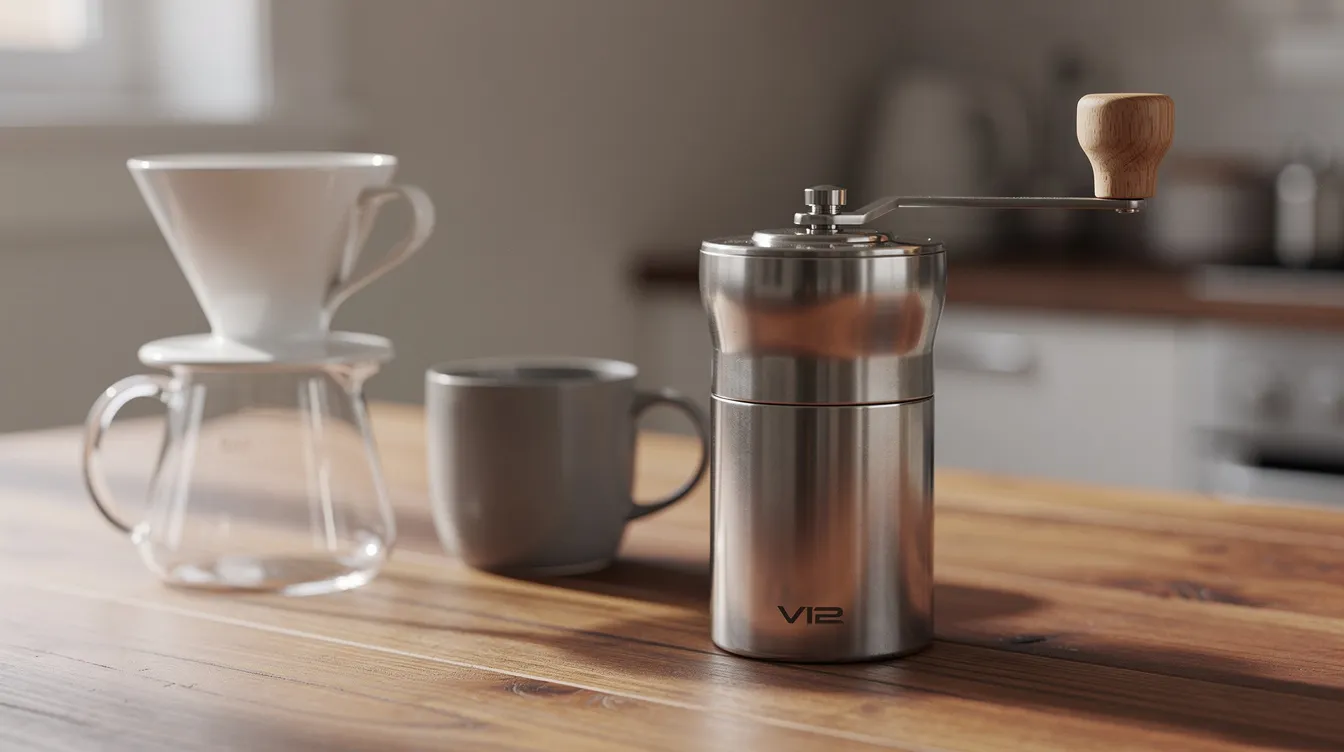
The Timemore Chestnut C3 (and its updated C5 Pro variant, as of 2026 naming) is a compact manual grinder with steel conical burrs, typically priced well below $200, often between $60 and $90. It is ideal for travel, office, or apartment use where noise and space are concerns.
Construction and burrs: The body is CNC-machined aluminum with a stainless steel axle and dual-bearing support. The C3 uses 38 mm hardened steel “Spike to Cut” (S2C) burrs derived from Timemore’s higher-end models. Build quality should prioritize models with metal bodies over plastic, and the Chestnut C3 delivers a premium feel at a fraction of the cost of high-end manual grinders.
Grind performance: For pour-over, AeroPress, and French press, lab sifting tests show the C3 matching the Baratza Encore in filter performance. Flavor clarity is strong; cups are clean and sweet. Espresso fineness is technically reachable, but the adjustment range is cramped (only one or two usable clicks in most C3 variants), and grinding at ultra-fine settings is slow and physically demanding. Manual grinders require physical effort and time to operate, and that effort scales with fineness.
Usability and workflow: The handle folds for storage and travel. A numbered click-based adjuster on the bottom (or top, depending on variant) sets grind size. Users single dose by nature: weigh beans, drop them in, grind, and pour directly into the brewer. Handheld grinders can grind 30 grams of coffee in about 23 seconds at filter settings, making them practical for one or two cups. Near-zero retention (about 0.1 g in ESP variant testing) means almost no ground coffee stays behind.
Pros versus electric grinders: No noise, no power required, no counter space needed, and near-zero retention. The trade-off is capacity: large batches for entertaining or a full French press pot become tiring. This is a one-to-two-cup tool.
Who should choose it: Readers who want a premium-feeling manual coffee grinder instead of a budget electric grinder. Coffee geeks who value grind quality and portability over convenience. Travelers who refuse to drink pre-ground coffee on the road.
Other Notable Grinders Under $200 Worth a Look
Several other burr coffee grinders do not top their category but remain strong depending on your priorities.
Baratza Encore ESP: An espresso-focused variant of the Encore. The Baratza Encore ESP Pro is optimized for espresso grinding and offers 80 espresso grind settings, giving it far more resolution in the fine range than the base Encore. Often priced at $170 to $199. If espresso is your main method but you also brew filter coffee, this is worth considering.
DF54 grinder: The DF54 grinder excels at both espresso and pour-over brewing. The DF54 grinder features 54 mm flat burrs, which is rare at this price and appeals to serious coffee geeks who want a flat burr grinder without spending $400 or more. Availability and pricing fluctuate, but it sometimes dips under $200 in the U.S. market.
Eureka Mignon Specialita: The Eureka Mignon Specialita features micrometric stepless adjustment, making it a favorite among espresso-focused home baristas. It hovers close to $200 during sales but typically sits above that mark. Its stepless grind adjustment offers infinitely fine control without click stops rather than clicking between fixed steps. Worth monitoring for discounts.
Capresso Infinity Plus: Decent fine grind performance, but coarse settings are limited and grinding performance does not match the Encore or Opus. Suitable for drip-focused users on a tight budget.
Refurbished Baratza Virtuoso+: Occasionally appears under $200 through Baratza’s refurb program. Upgraded burrs deliver noticeably better grind quality than the base Encore, but stock is unpredictable.
If a grinder is not listed here, it likely has issues with poor grind consistency, durability, or support that kept it out of this roundup. Readers with niche needs (like all-in-one espresso workstation aesthetics) should cross-check with Capitol City Coffee’s espresso grinder guide before purchasing.
What Actually Matters in a Sub-$200 Coffee Grinder
This section explains core technical concepts in plain language so you can judge grinders beyond marketing copy.
Burr type: Conical burrs are standard under $200. They are quieter, more forgiving, and more affordable to produce than flat burrs. Steel burrs stay sharper longer and cut more cleanly than ceramic. A quality burr grinder in this range will use steel conical burrs between 38 and 40 mm in diameter.
Grind range: A good burr grinder can adjust grind size from espresso-fine to French press-coarse. Burr grinders allow precise adjustments for different brewing methods, and stepped adjustments make it easy to log and repeat settings. The more steps available in the fine range, the easier it is to dial in espresso or moka pot.
Particle consistency: Burr grinders produce uniform coffee grounds for better extraction. A uniform grind means fewer over-extracted fines (bitter) and under-extracted boulders (sour) in the same cup. A good grinder keeps both to a minimum.
Retention and static: Retention is the weight of coffee ground left inside the burr chamber and chute after grinding. Low retention in grinders leads to less wasted coffee and accurate doses. Static causes grounds to cling and spray. Anti-static designs and slower motors reduce mess.
Speed and noise: Moderate motor speed (400 to 600 RPM) balances quiet operation, cool grinding, and reasonable speed. High RPM increases heat, noise, and static.
Workflow and cleaning: Ease of accessing burrs, clarity of adjustment markings, presence of timers, and hopper design all affect daily use. A grinder you find annoying to use will collect dust.
Burr Type Deep Dive: Conical vs Flat, Steel vs Ceramic
Burr type shapes flavor and workflow, but there is no universally “best” burr geometry at this price point. The right choice depends on what you brew and how much you want to spend.
Conical burrs dominate the sub-$200 market. Two cone-shaped burrs nest inside each other; one rotates while the other stays fixed. Conical burrs tend to produce a slightly broader particle spread with some fines, which can add body to coffee. They are quieter, more forgiving of alignment issues, and less costly to manufacture. Every electric grinder in this guide (Encore, Opus, Smart Grinder Pro, OXO) uses conical burrs.
Flat burrs use two parallel discs with cutting teeth. They tend to produce tighter particle distributions and better clarity, especially in espresso. Flat burr grinder options under $200 are rare; the DF54 is one of the few, and even it sits at the boundary. Serious coffee geeks who want a flat burr grinder usually need to budget $300 or more for a dedicated espresso grinder with proper flat burr alignment.
Steel versus ceramic: Steel burrs stay sharper longer and cut faster. Ceramic burrs resist rust but can chip under stress and are more common in ultra-budget or entry-level manual grinders. For most readers spending up to $200, prioritize steel burr coffee grinders. Conical burrs around 38 to 40 mm can perform well in coffee grinders across this entire price band, and steel is the material of choice for all recommended picks in this guide.
Grind Range, Particle Consistency, and Fines
Grind size determines extraction speed. Finely ground coffee increases surface area for faster extraction, which is why espresso requires a very fine grind. Coarse grounds extract slower, suiting methods like French press and cold brew where water contacts the coffee for minutes rather than seconds.
Grind range by brew method:
Brew Method
Target Grind Size
Approximate Microns
Espresso
Very fine
200–300 µm
Moka pot / AeroPress
Fine to medium
300–500 µm
Drip / pour-over
Medium
500–800 µm
French press / cold brew
Coarse
800+ µm
A grinder that covers this full range gives you flexibility across brewing methods. Consistent grind size enhances coffee flavor and aroma by ensuring even extraction: all particles contribute equally rather than some dissolving too fast and others too slow. Burr grinders minimize fines and boulders in coffee grounds, which is why they produce a cleaner, sweeter cup than blade grinders.
Fines in practice: Expert tests show that the Fellow Opus produces less than 5 percent fines at filter settings. The Breville Smart Grinder Pro lands at 72 to 78 percent within the target zone at espresso settings, meaning more strays than the Opus. The OXO Brew trades some fines for lower price. These differences are real and tasteable: fewer fines means less bitterness and less clogging of paper filters.
Think about your brew method first when deciding how much to prioritize particle uniformity. Pour-over perfection demands it; everyday drip coffee is more forgiving.
Retention, Static, and Single Dose Workflow
Retention is the weight of ground coffee stuck inside the burr chamber, chute, or spout after grinding finishes. Low grind retention minimizes stale leftover grounds, and it keeps your doses accurate. If 1.5 grams stays behind after every grind, your 18-gram espresso dose is actually 16.5 grams unless you purge or knock the grinder first.
Measured retention across the picks in this guide:
Timemore C3: approximately 0.1 g
Fellow Opus: approximately 0.2–0.3 g
Breville Smart Grinder Pro: approximately 1.0–1.5 g
Baratza Encore: modest but not precisely lab-measured; users report needing occasional knocking
Traditional hopper-fed grinders (Encore, OXO, Smart Grinder Pro) have more retention by design but are simpler for grinding multiple cups back-to-back. If you brew one type of bean all week, higher retention matters less.
Static is the enemy of clean countertops. Fast-spinning burrs and plastic chutes create electrical charge that makes coffee ground particles cling and spray. Some grinders (Opus) include anti-static features in the grounds catch area. RDT (adding a drop of water to beans before grinding) is a popular community trick that reduces static in most grinders.
Single dose grinders and single dosing behavior: Grinding only the beans you need per brew, often with a small hopper or dosing cup, reduces retention and makes it easy to switch coffees. The Fellow Opus and manual grinders support this well. The Smart Grinder Pro and Encore work better as hopper-fed, set-it-and-forget-it grinders.
Under $200, focus on grinders with grind retention around 1 g or less, reasonable mess control, and a workflow that matches how much coffee you brew daily.
Speed, Noise, and Everyday Usability
Motor speed and sound level affect home comfort. Grinding at 6 AM while someone sleeps in the next room is a real consideration, and it separates the quietest grinder from the loudest.
Most consumer electric burr grinders spin between 400 and 600 RPM. Slower speeds produce cooler, quieter grinds but take longer. The Baratza Encore’s 450-to-550 RPM motor keeps it in the “kitchen normal” noise range. The Fellow Opus is praised across reviews as one of the quietest grinder options in its class. The Breville Smart Grinder Pro runs louder during espresso-fine grinding, where the burrs work harder. Manual grinders are essentially silent except for the sound of your hand turning the crank.
Usability elements worth comparing:
Grind adjustment clarity: The Breville’s digital display and 60 stepped settings are intuitive. The Opus macro/micro rings require learning but offer precision. The Encore’s single collar is the simplest.
Timer and dosing: Only the Breville has a built-in timer with 0.2-second increments. The Encore uses on/off and pulse. The Opus relies on manual weighing.
Hopper management: If you swap beans often, a small hopper (Opus at 110 g) or a manual grinder is easier. Larger hoppers (Encore at 225 g) suit single-origin loyalists who buy one bag at a time.
Think about your routine: do you prefer set-and-forget timed doses, or do you want hands-on control every morning?
Durability, Warranty, and Long-Term Value
Total cost of ownership matters more than sticker price. A $200 grinder that lasts five years costs $40 per year. An $80 grinder that fails after 18 months costs $53 per year, plus the hassle of replacing it.
Grinders with strong long-term value under $200:
Baratza Encore: User-replaceable burrs, motor, and switch. Baratza sells parts directly. A replacement burr set costs roughly $30 to $35. The design of grinders affects their serviceability for long-term use, and Baratza builds serviceability into its products.
OXO Brew: A 2-year limited warranty provides good coverage. Internal components are less user-serviceable than Baratza’s, but the warranty compensates.
Breville Smart Grinder Pro: Replacement burrs are available. Some owners report 3 to 5 years of use before burr wear becomes noticeable. Service parts are accessible through Breville’s network.
Manual grinders (Timemore): Simple internals with few failure points. The metal body is durable, and bearings can last years with minimal care.
Build quality should prioritize models with metal bodies over plastic where possible, because metal housings resist cracking and warping over years of kitchen use. Some ultra-budget burr grinders and off-brand espresso grinders look appealing on price but have weaker internal components, limited spare parts, and poor customer support.
Typical U.S. warranties: Most grinders in this range offer 1 to 2 years. Register your grinder and keep your receipt. For serious daily users brewing multiple cups, spending $150 to $200 on a robust grinder often saves money versus replacing cheaper grinders every year or two.
How to Choose the Right Coffee Grinder Under $200 for You
Start by answering these questions:
What do you brew most often? Espresso, drip coffee, pour-over, French press, cold brew, or a mix?
How many cups per day? One or two, or a full pot for the household?
Convenience or precision? Do you want timed doses and digital displays, or are you happy weighing beans and pressing a button?
Space and noise? Small apartment or open kitchen? Early-morning grinding or afternoon-only?
Filter-coffee-first users (drip, pour-over, French press): The Baratza Encore, Fellow Opus, or OXO Brew all excel in the medium-to-coarse grind range. The Encore is the safest all-around pick. The OXO is the best budget coffee grinder if money is tight.
Aspiring espresso drinkers: The Breville Smart Grinder Pro or Fellow Opus offer enough grind settings in the espresso range to get started. Both are capable grinder options for home espresso machines with standard baskets. Note that favored grinders for serious espresso above $300 will offer even more precision, so treat these as stepping stones.
Travel and portability: The Timemore Chestnut C3 or C5 Pro weighs about 423 g, folds flat, and produces a delicious cup anywhere with hot water and a pour-over dripper.
Manual Grinders vs Electric Grinders Under $200
Manual grinders are more portable, quieter, and often deliver punchy grind quality per dollar. Electric grinders are faster and more convenient for daily multi-cup routines. The choice comes down to how you brew and how much effort you want to invest each morning.
Manual grinder strengths: Manual grinders are typically cheaper than electric grinders. A $70 Timemore C3 matches or exceeds the filter grind quality of some $150 electrics. Near-zero retention, no noise, no counter space. Great burr grinders for enthusiasts who prioritize taste over speed.
Manual grinder limitations: Grinding espresso doses of lighter roasts can be tiring. Grinding a full 40 g batch for a large French press is time-consuming. Electric grinders can grind more coffee efficiently than manual ones, and electric grinders are more convenient for larger batches of coffee.
Electric grinder strengths: Minimal effort, better for families, simple adjustments between brewing methods. Just load the hopper, set your grind, and press a button. The Baratza Encore and Fellow Opus handle daily multi-cup use without strain.
Practical recommendation: Many coffee lovers eventually own both. A dependable electric burr coffee grinder at home handles the daily routine. A manual grinder travels in a bag or serves as a backup when the electric needs cleaning or repair. Previous grinders often find second lives as travel companions.
Why You Should Avoid Blade Grinders (and Cheap “Burr” Imitators)
Blade grinders, often sold under $30, use spinning blades to chop coffee beans into random fragments. This is chopping, not grinding. The result is a mix of dust-fine particles and large chunks in the same batch, making it impossible to brew evenly.
The problems are predictable:
Uneven particle size distribution leads to extraction chaos. Parts of the coffee over-extract (bitter), while other parts under-extract (sour), all in the same cup.
No repeatable grind size. Every press of the button produces a different result.
No way to adjust grind size for specific methods. You cannot grind fine enough for espresso or uniformly coarse for French press.
Beware of very cheap “burr” or “grinding wheel” grinders that use dull, wheel-like cutters with poor alignment. These produce similar inconsistencies as blade grinders despite the “burr” label on the box. Poor grind consistency from these cheaper grinders negates any savings.
Upgrading to any reputable burr coffee grinder (the OXO Brew at $80, or the Baratza Encore at $150) is often the single biggest step toward delicious coffee at home. Use blade grinders for spices or nuts. Use burr grinders to grind coffee beans.
Maintenance and Cleaning: Keeping Your Grinder Performing Like New
Even the best grinders degrade without regular cleaning. Coffee oils coat the burrs, stale fines pack into the chute, and residue buildup changes grind particle size over time. Clean your burr grinder regularly to avoid residue buildup.
Cleaning cadence:
Light to medium roast users: clean burrs every 4 to 6 weeks
Dark, oily bean users: every 1 to 2 weeks
Grinders should be cleaned every two weeks for optimal performance as a general rule
Oily coffee can clog grinders if not cleaned frequently, especially in models like the OXO Brew with tighter chutes. Avoid grinding already-ground coffee, as it can pack into the burrs and cause jamming.
Basic cleaning workflow (applies to most burr coffee grinders):
Unplug the grinder
Remove the bean hopper and top burr (most pop out without tools)
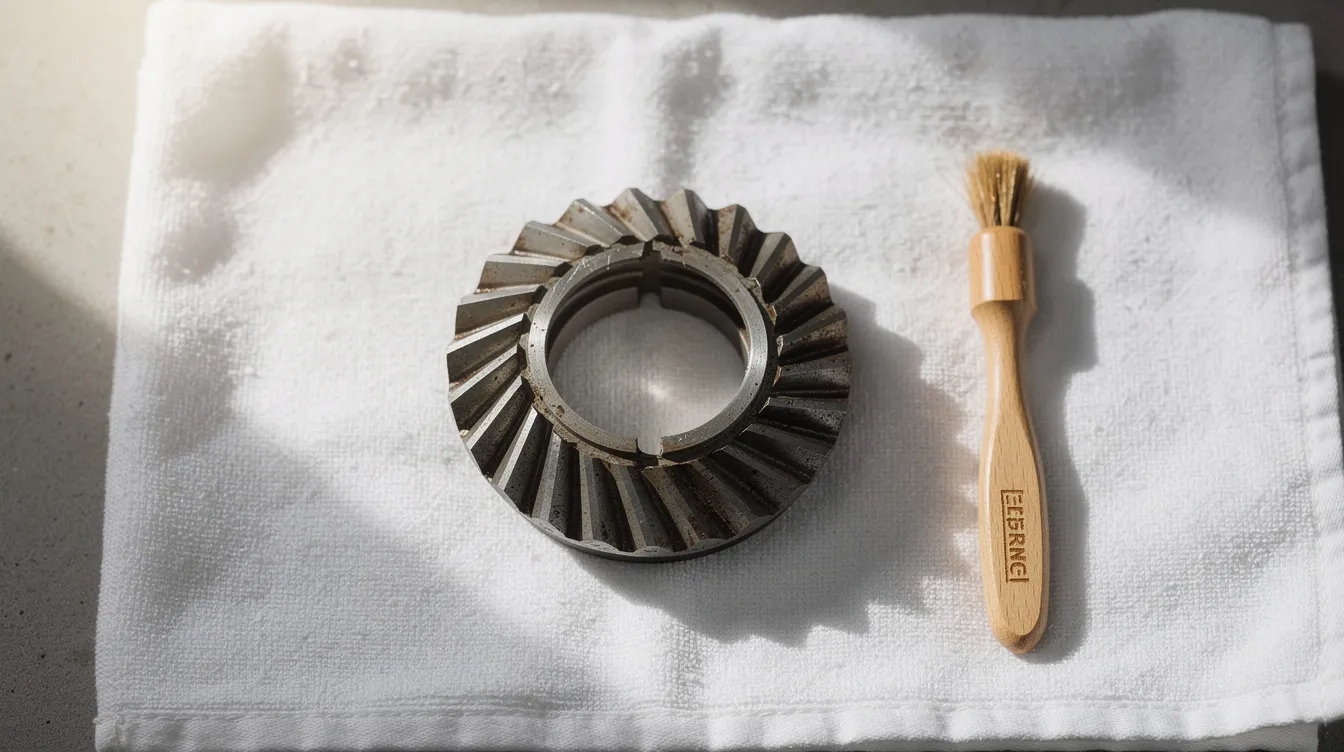
Brush burrs and chute with a stiff-bristled grinder brush
Vacuum loose grounds from the burr chamber carefully
Avoid water on steel burrs unless the manufacturer specifically approves it
Reassemble following the manual
Grinder cleaning pellets are an option where supported by the manufacturer. Follow their instructions to avoid residue issues; not all brands recommend pellets.
Connection to value: A well-maintained burr grinder delivers a more consistent grind, better flavor, and longer motor and burr life. Maintenance protects your investment and keeps your grinding stuff running at peak performance.
Cost of Ownership and When to Upgrade
Cost of ownership includes occasional burr replacement (every 3 to 7 years with daily use for reputable brands), possible hopper or bin replacements, and periodic cleaning tools like brushes.
Lifespan expectations:
Baratza Encore: 5+ years with proper care; replacement burrs around $30 to $35
Fellow Opus: 3 to 5 years expected based on early owner reports; newer design with limited long-term data
Breville Smart Grinder Pro: 3 to 5 years before burr wear becomes noticeable
OXO Brew: 3+ years under warranty coverage
Manual grinders (Timemore): 5+ years with minimal wear risk
Signs it may be time to upgrade:
Inconsistent espresso shots despite careful dialing in
Visible dullness on burr cutting edges
Repeated clogging or jamming
Cracked plastic components that impact grind adjustment or retention
Upgrade paths: From an OXO Brew to a Baratza Encore or Fellow Opus. From a Baratza Encore to a more espresso-focused grinder if espresso becomes your primary method. From a previous grinder that no longer holds up to a dedicated espresso grinder for serious home barista work.
Spending thoughtfully under $200 now delays the need for a big-ticket upgrade later. Grinders are long-term gear, not disposable kitchen gadgets.
Where This Guide Fits in the Capitol City Coffee Gear Library
This roundup sits within Capitol City Coffee’s broader gear coverage, specifically the grinders hub. It focuses on the best coffee grinder under 200 price band, while adjacent guides cover more specialized needs and budgets.
For higher-end picks, see our best burr coffee grinders overall guide. If you need to spend even less, visit our best budget grinders under $100 guide. If you are building a pro-style espresso setup, check our dedicated espresso grinder recommendations.
Readers can mix and match insights across these pages to find the grinder that best matches their brew method, space, and budget. Capitol City Coffee aims to be a long-term reference for coffee gear decisions, not a one-time recommendation engine.
FAQs: Best Coffee Grinders Under $200
These answers address common follow-up questions not fully covered in the main text, focused on grinders in the sub-$200 range.
Can I Get a True Espresso Grinder for Under $200?
Grinders like the Breville Smart Grinder Pro and Fellow Opus can grind fine enough for home espresso and offer multiple espresso grind steps. They work well for standard non-pressurized baskets, especially with medium to dark roasts. Dialing in ultra-light espresso shots will be challenging because conical burrs at this price produce broader particle distributions than high-end flat burr espresso grinders above $300. The Baratza Encore ESP Pro offers 80 espresso grind settings and gives better fine-range resolution if espresso is your priority. Treat sub-$200 grinders as stepping stones; if espresso becomes your main method, consider a dedicated espresso grinder later.
Is Upgrading from a Blade Grinder Really Worth It?
Moving from a blade grinder to almost any reputable burr coffee grinder (the OXO Brew at $80, or the Baratza Encore at $150) is often the single most impactful coffee gear upgrade a home brewer can make. Expect more predictable extraction, less bitter-sour clash, better flavor clarity, and easier recipe adjustments because grind size is repeatable. Your coffee beans will also stretch further, since you will waste fewer brews to guesswork and inconsistent results. For most coffee makers and home setups, this one change matters more than upgrading your brewer.
Should I Choose a Manual Grinder or Electric Grinder First?
Most people who brew multiple cups daily at home should start with an electric burr grinder for convenience and speed. The Baratza Encore or Fellow Opus both serve this role well under $200. Choose a manual grinder first only if you have very limited space, noise constraints (apartment, shared walls), or travel frequently and brew one or two cups at a time. Many enthusiasts eventually own both, using the manual coffee grinder as a travel or backup option alongside a home electric grinder.
How Fine or Coarse Should I Grind for Popular Brew Methods?
As a high-level guide: coarse grind (like kosher salt) for French press and cold brew, medium-coarse for Chemex, medium for standard drip coffee and most pour-overs, medium-fine for AeroPress and moka pot, and very fine for espresso. Each grinder’s setting numbers are unique, so treat manufacturer charts as starting points and then adjust grind size based on taste. If the cup tastes sour, grind finer. If bitter, grind coarser. Keeping simple notes linking specific grinder settings to brew methods and beans speeds up future dialing.
Do I Need to Single Dose with a Grinder Under $200?
Most hopper-fed grinders in this range work both ways. You can single dose (weigh beans for each brew) or keep some beans in the bean hopper for convenience. Single dosing maximizes freshness and makes it easy to switch between coffees. Hopper storage is faster but exposes beans to air and light. Serious coffee geeks tend to lean toward single dose habits. Busy households may prefer keeping a day or two of beans in the hopper as a practical compromise, since the freshness difference over 24 to 48 hours is minor for most palates.
Next Steps
Decide which category fits your daily brewing: budget brew grinder, multi-method grinder, espresso-leaning grinder, or manual grinder. Shortlist two or three models from this guide and compare features like burr type, grind range, workflow, and warranty before buying.
If you expect your coffee habits to evolve (say, adding an espresso machine next year), explore Capitol City Coffee’s grinders hub for guidance on when and how to upgrade. Whichever grinder you choose, moving from a blade grinder or pre-ground coffee to a quality burr coffee grinder under $200 is one of the most meaningful steps toward better coffee at home. Start with the grinder that matches what you brew today, and let your palate guide the next move.
How Capitol City Coffee Rates Coffee and Coffee Machines
Every coffee and coffee machine we recommend is scored on the same 100-point scale, so a recommendation on one page means the same thing as a recommendation on any other. Each pick is also labeled with how we reached its score.
Research-ratedScored from the roaster or manufacturer’s published specifications, independent results such as Coffee Review blind cuppings and SCA brewer certification, and patterns across verified buyer reviews. Most of our current picks are research-rated.
Hands-on testedThe Capitol City Coffee team has brewed the coffee or used the machine ourselves, following the testing steps below. We only use this label when that testing actually happened, and we show the date we tested.
Coffee beans: 100-point scale
What we score
Points
What we look at
Origin and sourcing transparency
20
Country, region, farm or cooperative, altitude, bean variety, and processing method are clearly disclosed.
Flavor evidence
25
Independent cupping scores, how closely the tasting notes match what the origin is known for, and our own cupping notes when hands-on tested.
Roast and freshness
15
Roast level stated, roast-date practices, whole-bean availability, and packaging with a one-way valve or resealable bag.
Brew versatility
15
How well the roast suits pour-over, drip, French press, cold brew, and espresso.
Value
15
Price per ounce compared with similar single-origin coffees or blends.
Buyer feedback
10
Volume and consistency of verified reviews, and recurring complaints about staleness, bitterness, or shipping.
Coffee machines and gear: 100-point scale
What we score
Points
What we look at
Brewing performance
25
Water temperature in the 195–205°F range, even extraction, and SCA certification or published test data.
Build quality and reliability
20
Materials, known failure points, and long-term owner reports.
Ease of use and cleaning
15
Setup, the daily routine, descaling, and dishwasher-safe parts.
Fit for your kitchen
10
Capacity, counter footprint, and noise.
Useful features
10
Programming, grind and temperature control, and carafe type. Features that improve the cup count more than extras that do not.
Value
10
Price compared with machines that perform similarly.
Warranty and support
10
Warranty length, parts availability, and how the brand handles repairs.
What the grades mean
Score
Grade
What it means
90–100
A
Exceptional. Our first recommendation for the feeling and setting described.
80–89
B
Strong. Excellent, with minor trade-offs we explain.
70–79
C
Good. Worth it for specific needs, with clear compromises.
Below 70
—
Not recommended. We do not feature these as picks.
How we test hands-on
When a pick carries the Hands-on tested label, this is the method behind it, and we note the date we tested.
Coffee: brewed fresh from whole beans following Specialty Coffee Association guidelines (water between 195 and 205°F, about 1 gram of coffee to every 15 to 18 grams of water) in the brew methods the roast suits best, such as pour-over, French press, or espresso. We taste it black first, then with milk if that is how most people drink it, and each taster scores it on their own before we compare notes.
Machines: used in our everyday routine rather than a single demo. We brew both full and small batches, check the brewing temperature and brew time, and run the cleaning or descaling steps the manual calls for.
How we choose the feeling and setting
We match each coffee to a mood and a moment based on its flavor profile and roast. Bright, citrusy light roasts suit energizing mornings. Chocolatey, full-bodied medium roasts suit slow or social moments. Richer roasts suit espresso and milk drinks. Each pick explains which facts led us to that match.
Our scores stay independent
Every score comes only from the criteria above. No brand can pay for a pick or a higher grade. We re-check ratings when a roast, listing, or model changes, and update or remove picks that no longer earn their grade.
Some links on this page are affiliate links. As an Amazon Associate, Capitol City Coffee earns from qualifying purchases, at no extra cost to you.
Questions about a rating? Reach the Capitol City Coffee team through our contact page.