As an Amazon Associate I earn from qualifying purchases. This page contains affiliate links; we may earn a commission if you buy through them.
Cold brew coffee makers vary in design and brewing style, but the right one turns a simple process-steeping coarsely ground coffee in cold water for hours-into a reliable, low-effort ritual that fills your fridge with smooth, ready-to-dilute concentrate. Based on researched editorial analysis of third-party lab tests, expert reviews, and verified product data, the best cold brew coffee maker for most people in 2026 is the OXO Good Grips Cold Brew Coffee Maker. Strong alternatives from Toddy, Filtron, KitchenAid, and compact pitcher-style brewers serve different priorities, from maximum batch size to minimal fridge footprint.
Best classic system pick
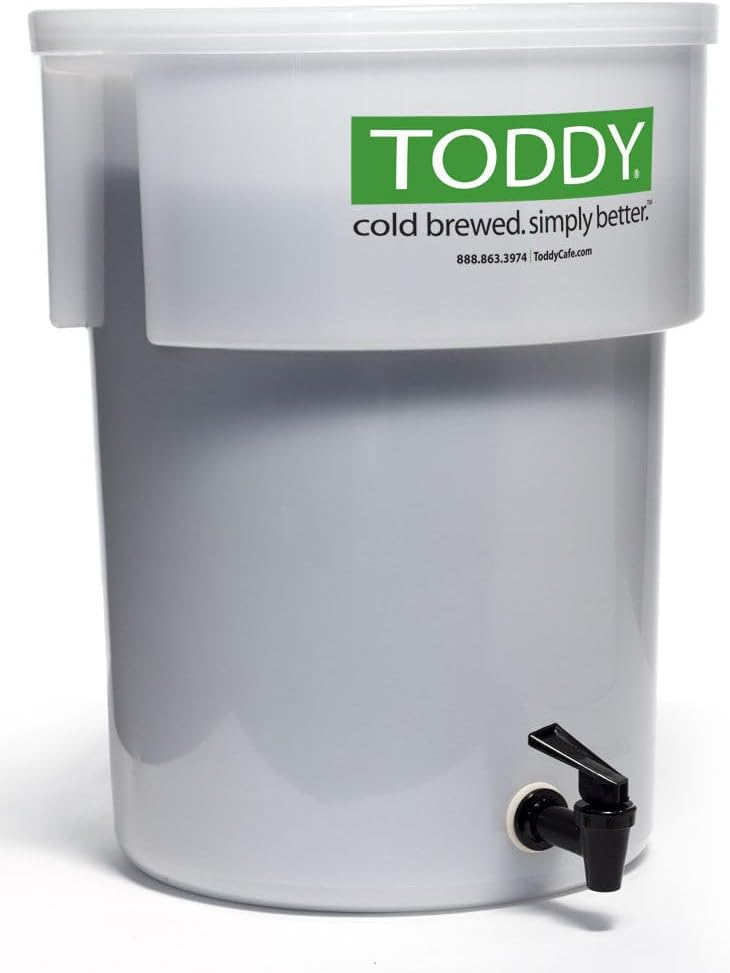
For this roundup, Toddy Cold Brew System is the classic system we recommend first—the same pick at the top of our At-a-glance cards below.
The OXO Good Grips Cold Brew Coffee Maker is the top all-around pick for most U.S. households, producing the strongest coffee concentrate among popular models with excellent extraction consistency.
Immersion-style cold brew makers generally deliver the best balance of flavor, convenience, and value; rapid and pod-based systems trade taste depth for speed.
Filtration quality, capacity, fridge fit, cleaning ease, and durability matter far more than flashy features or brand name when choosing a dedicated cold brew maker.
Many cold brew makers produce concentrate that lasts up to two weeks in a sealed container, so batch size and carafe shape are key practical considerations.
Buyers should match their brewer to their household’s consumption habits: compact pitchers for occasional drinkers, large-batch systems like Toddy or Filtron for daily cold brew households.
Quick Answer: The Best Cold Brew Coffee Maker for Most People
The OXO Good Grips Cold Brew Coffee Maker is the best cold brew coffee maker for most U.S. home brewers. It earns that position through broad third-party testing consensus-including a “Best Overall” designation from Good Housekeeping’s 2026 lab tests-and a design that consistently produces rich, full-bodied cold brew concentrate with minimal fuss.
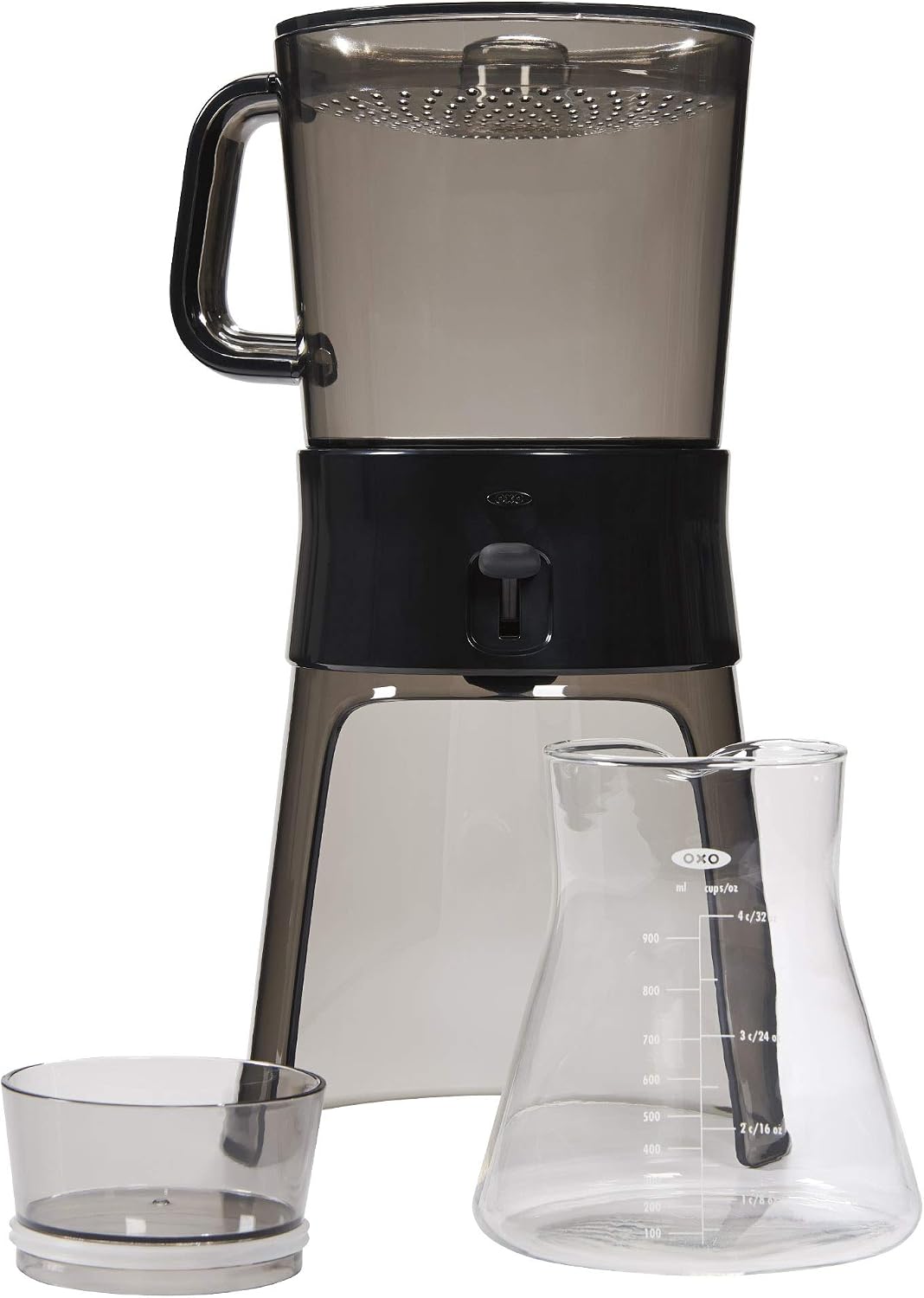
Why it stands out: the Rainmaker perforated lid distributes water evenly over coffee grounds, a fine stainless steel filter keeps sediment low, and the OXO Cold Brew Maker has a switch for easy draining directly into a borosilicate glass carafe. At roughly $60, it hits a sweet spot between cheap pitchers and premium countertop systems.
For large, ultra-smooth batches: The Toddy Cold Brew System or Filtron Cold Water Coffee Concentrate Brewer deliver exceptionally low-acid concentrate in bigger volumes.
For small fridges or solo drinkers: The OXO Compact Cold Brew Coffee Maker or Takeya Deluxe Cold Brew Coffee Maker fit tight spaces without sacrificing brew quality.
These rankings reflect researched editorial analysis aggregating lab tests and expert reviews from reputable sources-not advertiser input or commission size.
Affiliate Disclosure
Capitol City Coffee is an independent coffee editorial and affiliate publication. We may earn a commission from qualifying purchases made through outbound links on this page. Commissions do not influence product rankings or verdicts-recommendations are based on performance, usability, durability, and value. No cold brew coffee makers are included or excluded because of affiliate relationships.
At-a-Glance: Best Cold Brew Coffee Makers Comparison Table
Cold brew coffee makers can be compact or designed for larger batches, with different filtration systems, materials, and price points. The table below puts the key specs side by side for quick reference.
This is a high-level snapshot. Detailed pros, cons, and ideal user profiles are covered in the sections below.
How We Evaluated Cold Brew Coffee Makers
This guide is based on researched editorial analysis rather than Capitol City Coffee’s own hands-on lab testing. We did not brew, taste, or measure coffee ourselves-so we won’t claim otherwise.
Inputs used: Aggregated results from respected testing outlets such as Good Housekeeping, Consumer Reports, Bon Appétit, and specialty coffee publications, alongside verified manufacturer specifications and consensus user feedback from major retailers. User experiences greatly influence the selection of cold brew coffee makers, and we weighed recurring praise and complaints across hundreds of reviews.
Evaluation criteria:
Extraction consistency and flavor quality (smoothness, body, perceived acidity)
Brew time ranges and temperature flexibility
Capacity and batch size relative to household needs
Ergonomics: setup, pouring, fridge shelf fit, footprint on the kitchen counter
Brew assumptions: Typical brew times of 12–24 hours at room temperature or in the fridge, using coarsely ground coffee at common ratios (roughly 1:4 for concentrate, 1:8 to 1:10 for ready-to-drink cold brew). Among the models we researched, the strongest-performing options are those that make cold brew concentrate reliably rather than simply producing a stronger cup.
Limitations: Flavor preferences are subjective. Models get redesigned. U.S. pricing shifts. Treat this as a curated starting point, not an exhaustive catalog. Ideal for households that want to make cold brew at least weekly, this kind of brewer usually offers the best balance of batch size, convenience, and value.
Best Overall: OXO Good Grips Cold Brew Coffee Maker
The OXO Good Grips Cold Brew Coffee Maker is our best overall recommendation for most U.S. home brewers. It earned “Best Overall” from Good Housekeeping’s 2026 lab tests and consistently ranks at or near the top across multiple reputable roundups.
Design and workflow: An elevated plastic brewing container holds grounds and water, topped with a Rainmaker perforated lid that distributes water evenly across the coffee bed for consistent saturation. A reusable fine stainless steel filter sits below the grounds. When steeping is complete, you flip a switch to drain concentrate into the borosilicate glass carafe below-no lifting, no pouring, no mess. The carafe has a rubber stopper that seals it for fridge storage.
Performance: The OXO Cold Brew Maker produces 24 to 28 ounces of concentrate per batch, yielding roughly 12–14 servings when diluted. Among the models we researched, the OXO Good Grips Cold Brew Coffee Maker produces the strongest coffee-rich, full-bodied, and smooth enough to serve over ice or diluted with hot water for a mellow hot coffee.
Usability and footprint: The vertical design fits under most kitchen cabinets and in many fridges. You can brew at room temperature or in the fridge. Downsides: multiple parts require assembly, and the stand can feel bulky when stored-though the carafe nests into the brewer to save some cabinet space.
Cleaning: The mesh filter and reservoir unscrew for rinsing. The glass carafe is dishwasher safe while upper parts should be hand washed. Dumping wet grounds from the brewing container is easier than extracting them from a narrow pitcher but not as simple as tipping a bucket.
Value: At roughly $60, it undercuts premium countertop models by a wide margin while outperforming most sub-$30 pitchers in extraction quality. Ideal for households making cold brew coffee at least weekly who want strong concentrate without fiddly felt filters or disposable bags.
Best for Ultra-Smooth Concentrate: Filtron Cold Water Coffee Concentrate Brewer
The Filtron has long been a barista favorite, specifically engineered for making cold brew concentrate with exceptionally low acidity and clean flavor.
Design: A large plastic brewing container sits above a glass carafe. A central rubber stopper controls drainage, and a thick reusable felt filter disc-paired with optional disposable paper liners-creates a dual filtration system. Dual filtration systems can enhance the flavor and filtration quality of coffee, and Filtron is the clearest example of that principle at work in this category.
Performance: The Filtron Cold Brew Maker produces about 32 ounces of concentrate per batch-enough for 16–32 diluted servings depending on your strength preference. External tests consistently rank its taste at or near the top for smoothness, producing mellow, sweet, low-acid coffee concentrate with high clarity and minimal sediment. If acidity bothers your stomach, this is the brewer to investigate.
Workflow: Standard 12–24 hour immersion at room temperature water or in the fridge. Remember to remove the rubber stopper before draining. The cold brew process is straightforward but requires slightly more setup than the OXO due to the felt filter and paper liner.
Cleaning: Rinsing and refrigerating the felt between uses prevents mold. Disposable paper filters make ground disposal easier but add ongoing cost (a few cents per brew). Ease of cleaning varies among different cold brew coffee makers, and Filtron falls in the moderate-to-fussy range.
Value: Midrange pricing around $55. Replacement felt filters are inexpensive. Ideal for serious cold brew fans who prioritize flavor smoothness over aesthetics and don’t mind a bit of extra maintenance.
Best for Big, Low-Fuss Batches: Toddy Cold Brew System
The Toddy Cold Brew System is the original. Invented in 1964, it remains one of the most reliable ways to produce large batches of smooth coffee concentrate.
Components: A plastic brewing bucket with a bottom drain, a reusable felt filter, optional disposable paper filter bags, a rubber stopper, and a glass decanter for storing concentrate. Simple designs are easier to use than complex multi-part systems, and Toddy leans into that philosophy.
Performance: The Toddy Cold Brew System requires about 12 ounces of coffee per batch and produces a rich, rounded, low-acid cold brew concentrate with heavy body. The Toddy Cold Brew System is recommended for its simplicity and flavor-most testers rate it highly, though some find it slightly less nuanced than Filtron. You add grounds, pour water over them in alternating layers, wait 12–24 hours, then pull the stopper.
Ergonomics: The brewing bucket is bulky and utilitarian-not a countertop showpiece. It doesn’t fit in most fridges during brewing, so you brew on the kitchen counter and refrigerate only the filled glass decanter afterward.
Cleaning and recurring costs: Paper filter bags make cleanup easy but add roughly $1 per brew. The felt filter needs periodic deep cleaning and occasional replacement. The plastic brewing container may stain or absorb coffee oils over time.
Ideal user: Multi-person households, serious daily drinkers, or anyone who wants to make a week’s worth of cold brew concentrate in one batch and doesn’t care about minimalist design.
Best Compact Immersion Brewer: OXO Compact Cold Brew Coffee Maker
The OXO Compact is a scaled-down version of the larger OXO system, purpose-built for smaller households or tight fridge space.
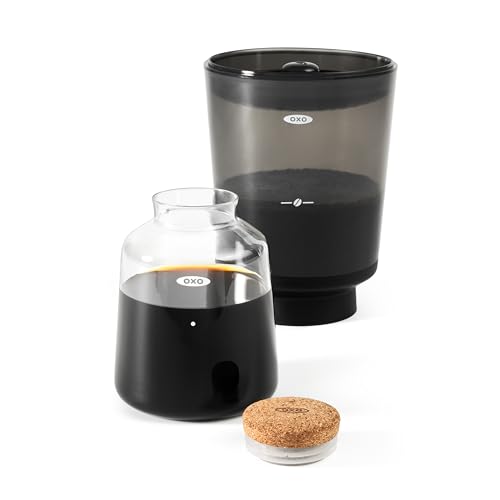
Design: A smaller plastic brewing basin with a fill line for grounds and water, a perforated lid for even saturation, and a simple switch for draining into a petite borosilicate glass carafe with a cork lid. The carafe nests into the brewer for storage.
Performance: The OXO Compact Cold Brew Maker brews about 16 ounces of coffee concentrate-roughly 6–8 servings after dilution. Flavor quality is similar to the larger OXO: balanced, smooth, and strong enough to hold up to ice or milk.
Usability: Fewer extra components than the full-size version. Easy to tuck into a fridge shelf or door. Great for people who only brew one batch or two batches per week.
Drawbacks: Carafe replacement cost is relatively high compared with generic pitchers. The smaller brew capacity won’t suit heavy cold brew users.
Ideal buyer: Individuals or couples who want high-quality concentrate and great ergonomics without the footprint of a full-size system.
Best Pitcher-Style Brewer for Simplicity: Takeya Deluxe Cold Brew Coffee Maker
The Takeya Deluxe is a budget-friendly, pitcher-style cold brewer that shows how some iced coffee makers keep things simple with a fridge-friendly carafe-no stand, no extra parts, no fuss.
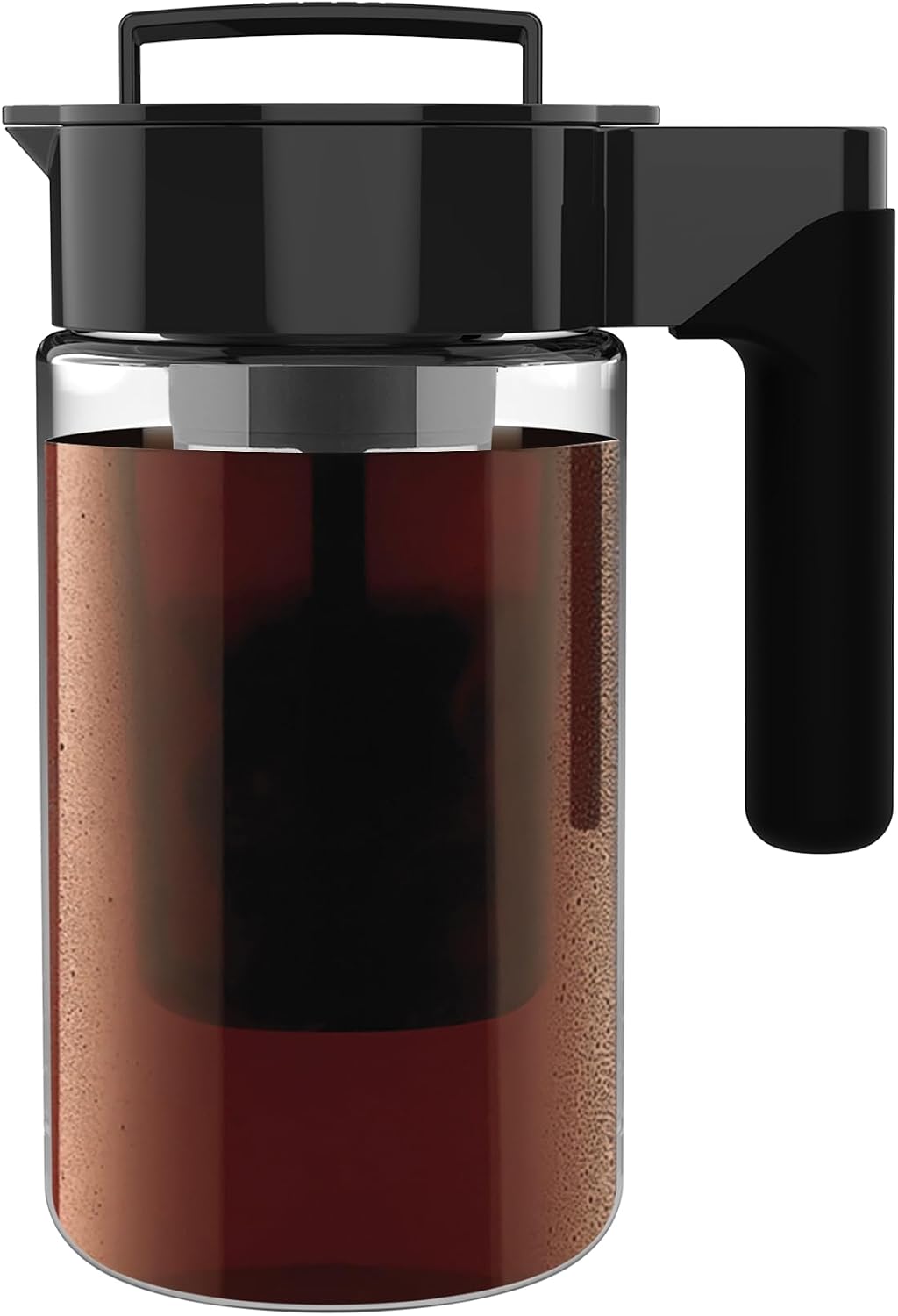
Design: A BPA-free Tritan plastic pitcher with a screw-on lid and a tall, fine mesh filter basket inside. A silicone top keeps the system leakproof, even on its side. Ready-to-drink pitchers make coffee that is brewed and ready to pour, and Takeya is the most straightforward example.
Performance: Produces light to medium-strength cold coffee-more ready-to-drink than concentrated. Some testers find the resulting coffee a bit thin when following the included brewing instructions. Adjusting the coffee to water ratio-more grounds, slightly finer grind-helps. You can also use pre ground coffee designed for cold brew for convenience, though freshly ground is always better.
Ease of use and fit: No stand or brewing bucket. Compact enough for most fridge shelf or door positions. Ideal for making a few large glasses of iced coffee rather than a week’s supply of concentrate.
Cleaning and durability: The narrow mesh strainer can be somewhat tedious to rinse, but all parts are simple. The plastic body is shatter-resistant, though it may scratch or cloud over time.
Value: At roughly $25, it’s the easiest entry point. A solid sub-$30 option for users who prioritize convenience and fridge fit over maximum extraction quality.
Best Glass Pitcher Brewer: Ovalware RJ3 Cold Brew Coffee Maker
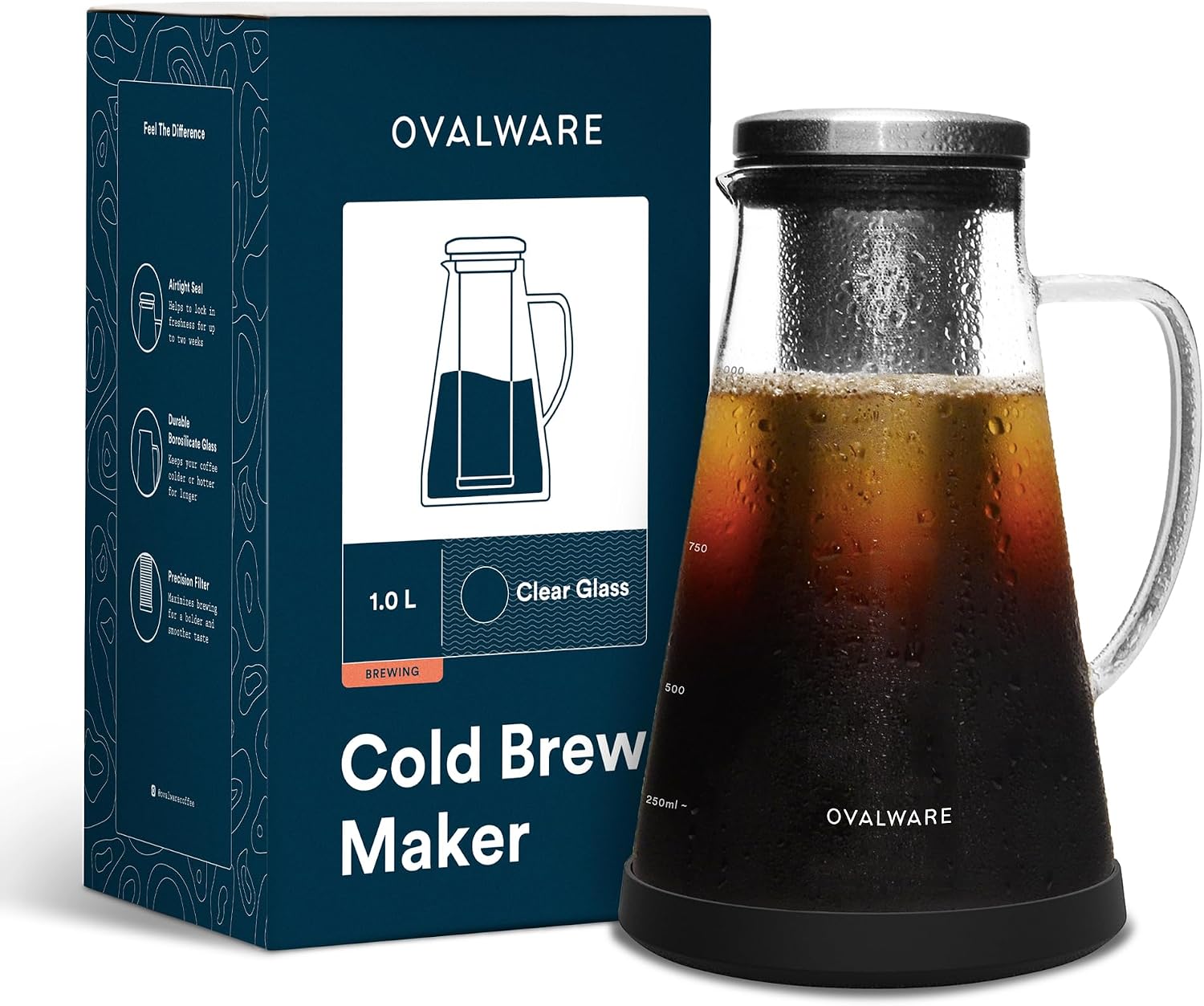
The Ovalware RJ3 combines a borosilicate glass carafe body with a stainless steel filter and lid, targeting buyers who want aesthetics and solid build quality in one package.
Design: Measurement markings on the glass beaker, a removable silicone base to protect counters, an airtight stainless steel lid, and a narrow metal mesh filter for immersion brewing.
Performance: Generally praised for producing rich, smooth cold brew with good body-somewhere between drink-ready and concentrate depending on your ratio. Capacity runs around 34 ounces.
Usability: Adding grounds to a narrow filter may require tapping to distribute evenly. Pour water slowly to avoid overflow, then refrigerate the whole carafe for 12–24 hours. It fits most fridge doors or shelves.
Cleaning and durability: Metal filter is easy to knock grounds out of and rinse. The glass is dishwasher safe but the tapered shape can be awkward to hand wash. Glass avoids the plastic taste concerns but must be handled carefully. Material choice affects durability and flavor retention in cold brew makers-glass and steel avoid the oil absorption issues common in plastic.
Value: Midrange pricing with a premium feel. Great for design-conscious buyers who want their cold brew coffee maker to double as a serving carafe for guests.
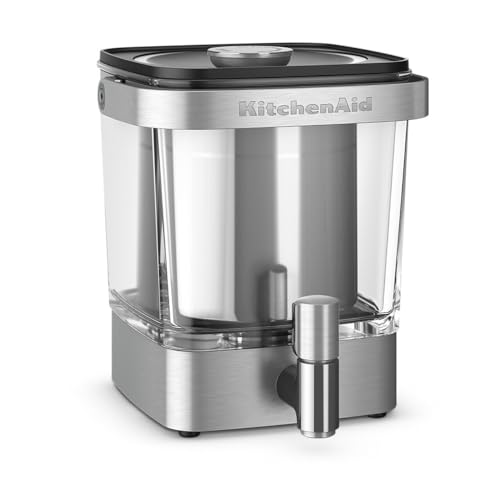
Best Countertop Dispenser: KitchenAid Cold Brew Coffee Maker
The KitchenAid Cold Brew Coffee Maker is a stainless steel-and-glass countertop unit with an integrated spigot-think coffee shop cold brew on tap in your fridge.
Features: A rectangular glass carafe, metal frame, sturdy handle, integrated stainless steel filter, and front-facing spigot for dispensing without removing the carafe from the fridge.
Performance: The KitchenAid Cold Brew Maker can make 38 ounces of concentrate-enough for multi-day use across a household. Flavor tends toward rich and smooth with low acidity when brewed with appropriate ratios.
Ergonomics: The boxy design fits well on many fridge shelves. The spigot is convenient but can pour slowly. The unit is heavy when full, requiring a solid shelf. Consumer Reports gave it high marks for cleaning and convenience but noted lower taste scores compared to purer immersion systems.
Cleaning: The metal filter removes for easy rinsing, though pulling it out can cause drips. Glass and metal components are robust but add weight.
Value: Priced over $100-premium territory. Ideal for households that drink cold brew daily, want a tap-like dispenser, and are willing to pay for convenience and premium materials.
Other Notable Cold Brew Coffee Makers (and When to Skip Them)
Several other brewers commonly appear in “best cold brew coffee makers” lists. Here’s a quick rundown of when they make sense and when they don’t.
French press as cold brewer: No extra gear needed-just add grounds, add water, steep, and plunge. Trade-off: significantly more sediment, messier cleanup, and the mesh strainer doesn’t filter as finely as purpose-built systems. Fine for occasional experiments, not ideal for daily use.
Cold Bruer slow-drip tower: Beautiful gear-enthusiast setup. Cold water drips slowly over grounds, producing a different flavor profile-brighter, more tea-like. Trade-off: more parts, higher cost, fussier calibration, and extended brew time.
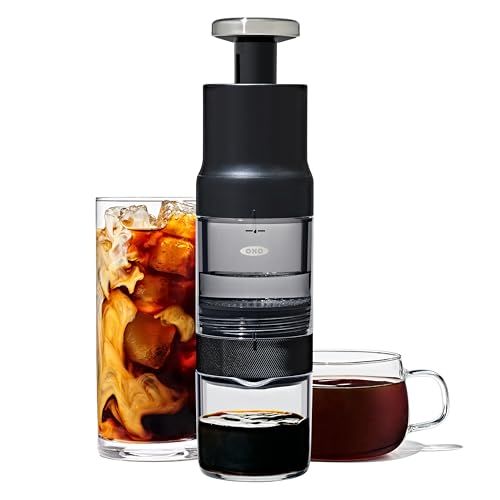
OXO Rapid Brewer and similar rapid cold brew makers: The OXO Rapid Brewer makes cold brew in about five minutes using agitation and pressure. Convenient when you’re impatient, but flavor depth and body typically lag behind 12–24 hour immersion systems. Brewing style influences the extraction time and flavor profile of cold brew, and rapid systems illustrate that trade-off clearly.
Nitro cold brew machines (e.g., Cumulus): Infuse nitrogen into cold brew for creamy, stout-like texture and cascading foam. Impressive at parties, but bulky, expensive, and overkill for most home setups.
Mason jar plus strainer: The absolute minimum viable setup. A mason jar, coarsely ground coffee, cold water, and a fine strainer or cheesecloth. Works in a pinch but produces inconsistent results and messy cleanup. Cold brew coffee makers simplify brewing with specialized carafes and filters-and this DIY approach shows why.
Most people are better served by a straightforward immersion cold brew coffee maker from the main picks above.
Key Features That Actually Matter in a Cold Brew Coffee Maker
Think of this as a buyer’s checklist-real-world factors that influence your brew and your daily routine, not marketing buzzwords.
Extraction and brew variables: Cold brew coffee typically requires 12 to 24 hours to steep. Room temperature water extracts faster; fridge brewing is slower but can yield brighter flavor. The coffee to water ratio determines whether you get concentrate (roughly 1:4–1:5) or ready-to-drink cold brew (1:8–1:10). A good cold brew maker should filter without clogging or spillage during the entire steep and drain process.
Filtration quality: Fine mesh filters produce a cleaner cup with less sediment than paper or felt filters alone, though felt excels at absorbing oils for ultra-smooth results. Double filtration (felt plus paper, or mesh plus paper) usually produces the cleanest brew coffee but adds cost or complexity.
Capacity and carafe design: Match batch size to weekly consumption. For example, 24 oz of concentrate yields roughly 12 servings. The size and fridge compatibility of a cold brew coffee maker are important considerations-measure your fridge shelf height before buying.
Usability and footprint: Look for easy loading of grounds, intuitive fill line markings, and comfortable pouring. Many cold brew makers occupy significant counter or fridge space. Simple designs are easier to use than complex multi-part systems.
Cleaning and maintenance: Cleanup is easier with wide openings and dishwasher-safe parts. Ease of cleaning varies among different cold brew coffee makers-narrow filters are tedious; wide-mouth containers make ground disposal and rinsing far simpler.
Durability, warranty, and value: Borosilicate glass resists staining and doesn’t absorb flavors but can shatter. Plastic brewing containers are tough but may discolor. Silicone gaskets wear out. Most warranties in this category run 1–2 years. Weigh price against brew quality, capacity, and expected lifespan.
How to Choose the Best Cold Brew Coffee Maker for You
Start with three questions: How often do you drink cold brew? Do you prefer concentrate or ready-to-drink? How much fridge or cabinet space can you spare?
Persona-based guidance:
Solo drinker, small fridge: OXO Compact or Takeya Deluxe. Minimal footprint, enough for a few days of good coffee.
Couple, moderate consumption: OXO Good Grips or Ovalware RJ3. Solid capacity without bulk.
Family or daily habit: Toddy, Filtron, or KitchenAid. Large batches, fewer brew cycles per week.
Design-focused buyer: Ovalware RJ3 or KitchenAid. Premium materials, looks good on the counter or when guests visit.
Acidity-sensitive? Lean toward Filtron or Toddy for the smoothest, lowest-acid results.
Want minimal plastic contact? Glass-and-steel brewers like Ovalware or KitchenAid.
Fridge brewing only? Make sure the full brewer fits-compact models under 9 inches tall are safest.
Quick decision map:
If you want the best overall balance → OXO Good Grips
If you want the smoothest concentrate → Filtron
If you want the biggest batch → Toddy
If you want the smallest footprint → OXO Compact or Takeya
If you want a tap dispenser → KitchenAid
Cold Brew Basics: Ratios, Brew Time, and Temperature
Cold brew coffee is made with coarse-ground coffee and cold water, steeped slowly rather than extracted with heat. The result is a smooth coffee with less acidity and bitterness than hot methods-cold brew coffee is less acidic than hot brewed coffee, which is a core reason people seek it out.
Ratios:
Concentrate: roughly 1:4 to 1:5 (coffee to water by weight). Dilute before serving.
Ready-to-drink: roughly 1:8 to 1:10. Brew and pour directly.
Use a kitchen scale for consistency rather than tablespoons.
Cold brew concentrate can be diluted with water or milk for serving. A common dilution ratio for cold brew is 1:2 or 1:3 concentrate to water or milk.
Brew time: Cold brew coffee steeps for 12 to 24 hours. The 12–16 hour range usually produces balanced flavor. Pushing past 18 hours deepens body but risks muddy or woody notes with some coffees. Follow your brewer’s brewing instructions as a starting point, then adjust.
Temperature: Room temperature water extracts faster and more fully. Fridge brewing slows extraction and can yield a slightly brighter but lighter cup. Both work-minor ratio tweaks compensate.
Starter recipe (OXO Good Grips): Use roughly 75–85 grams of coarsely ground coffee, fill to the line with filtered water (about 700 ml), steep 14–16 hours at room temperature, drain into the carafe, and dilute 1:2 with cold water or milk. Adjust based on roast level and personal taste.
Maintenance and Cost of Ownership
Cold brew makers simplify brewing with fewer components than most espresso machine setups, but long-term satisfaction depends on easy maintenance and realistic awareness of ongoing costs.
Routine cleaning: Rinse or brush mesh filters after every batch. Store felt filters (Filtron, Toddy) in the fridge between uses to prevent mold. Periodically deep-clean with a vinegar soak or manufacturer-recommended method.
Recurring costs by system type:
System Type
Recurring Cost
Notes
Mesh filter (OXO, Takeya, Ovalware)
$0 ongoing
Reusable filter; no consumables
Felt + paper (Filtron, Toddy)
~$0.50–$1.00 per batch
Paper bags/liners; felt replacement every few months to a year
Premium dispenser (KitchenAid)
$0 ongoing (filter); higher replacement part costs
Glass carafe and spigot components
Durability concerns: Glass carafes can break if dropped. A plastic brewing container may stain from coffee oils or absorb odors over time. Silicone gaskets lose elasticity and may need replacement if they begin leaking.
Cost comparison to the coffee shop: A pound of fresh coffee beans costs $12–$18 and yields roughly 4–6 batches of concentrate. Each batch makes 10–16 servings. That’s well under $1 per cup-compared to $4–$6 for cold brew at most U.S. coffee shops. Most cold brew coffee makers pay for themselves within a few weeks of regular use.
Cold Brew vs Iced Coffee (and Why Gear Matters)
Cold brew and iced coffee are not the same thing. Cold brew is slow-extracted with cold water over 12–24 hours, yielding a smooth, low-acid coffee concentrate. Iced coffee is brewed hot-sometimes as drip coffee or pour-over-and quickly chilled or poured over ice, preserving more acidity and bright aromatics.
A dedicated cold brew maker is preferable to DIY methods for a few reasons: better filtration, fewer grounds in the cup, easier handling of heavy wet coffee grounds, and a carafe designed for storage and pouring. You can absolutely use a French press or mason jar, but purpose-built brewers extract flavor more consistently and make cleanup easy.
Both hot and cold methods can coexist in a home coffee setup. If you enjoy rich hot coffee, you might also explore French press or pour-over brewers. Moka pot fans have dedicated options too. And cold brew concentrate itself can be diluted with hot water for a smoother, gentler hot coffee alternative.
The bottom line: cold brew rewards the right gear with better flavor, less waste, and a smoother morning routine.
Best Coffee Beans and Roast Profiles for Cold Brew
The brewer matters, but the beans matter just as much. Fresh coffee-roasted within the last few weeks-is the single biggest upgrade you can make to any cold brew setup.
Roast level: Medium and medium-dark roasts tend to shine in cold extraction, producing chocolatey, nutty, and caramel notes. Very light roasts can taste sour or thin. Very dark roasts may come across as ashy. This is subjective, but the sweet spot for most cold brew drinkers sits in the middle.
Flavor profiles that work: The cold brew process highlights sweetness and body while muting acidity and floral aromatics. Origins or blends with cocoa, caramel, nut, and gentle fruit character tend to be especially satisfying as cold brew.
Practical tips:
Buy whole beans and grind right before brewing for the best results. Avoid pre ground coffee designed for drip unless the grind size is appropriate for cold brew (medium-coarse to coarse).
Test small batches when switching coffees to dial in your ratio and brew time.
A burr grinder produces more consistent particle size than a blade grinder, which directly affects extraction consistency.
Value note: Buying beans by the pound and making cold brew concentrate at home brings per-cup cost well below typical U.S. coffee shop cold brew pricing, even after factoring in the cost of a brewer.
Frequently Asked Questions
How long does homemade cold brew keep in the fridge?
Most cold brew concentrate stored in a sealed carafe in the refrigerator tastes best within about 7–10 days. Cold brew concentrate can be stored in the fridge for up to two weeks, but expect gradual flavor decline after the first week. Signs it has gone off: sour or musty smell, visible mold, unusual cloudiness, or a sharp, unpleasant taste. Brewers with tight-sealing lids-like the Ovalware’s airtight cap or the OXO carafe’s rubber stopper-help maintain flavor longer than loosely covered pitchers. When in doubt, discard the batch.
Does cold brew have more caffeine than regular coffee?
Cold brew concentrate is typically brewed at a higher coffee to water ratio than hot drip coffee, so ounce for ounce the concentrate is often higher in caffeine. However, once you dilute cold brew concentrate to drinking strength (a common dilution ratio for cold brew is 1:2 or 1:3), the final caffeine per cup is similar to or slightly higher than standard hot coffee. The exact amount depends on your ratio, beans, and brew time. Caffeine-sensitive drinkers should start with smaller servings or increase dilution.
Can I heat cold brew concentrate to make hot coffee?
Yes. Cold brew concentrate diluted with hot water (or steamed milk) makes a smoother, lower-acid hot coffee-often described as gentler on the stomach than fresh drip coffee. A typical starting ratio is 1:2 or 1:3 concentrate to hot water. Heat the water separately rather than microwaving the concentrate alone to preserve flavor. The resulting coffee will differ from fresh pour-over or drip-usually rounder and less aromatic-but it can be very convenient and pleasant, especially on mornings when you want a stronger coffee without the brewing wait.
Can I reuse cold brew grounds for a second batch?
You can technically brew a second batch from used grounds, but the resulting coffee is usually flat, woody, and low in sweetness. Most desirable flavor compounds are extracted in the first brew cycle. Reusing grounds is false economy compared to simply using a slightly smaller batch of fresh coffee. Compost the spent grounds or repurpose them for gardening or deodorizing instead.
Is a dedicated cold brew coffee maker really necessary?
You don’t strictly need one. Many people start with a French press, a mason jar plus a mesh strainer, or even a reusable coffee sock. But purpose-built cold brew coffee makers simplify brewing with specialized carafes and filters, producing cleaner cold brew with less sediment, easier handling of heavy wet grounds, less mess in the sink, and carafes shaped to fit typical U.S. refrigerators. Frequent cold brew drinkers will likely appreciate the upgrade. Occasional experimenters might be fine with equipment they already own before stepping up to a specialized brewer.
Cold brew rewards patience and a little planning. Pick the brewer that matches your daily habits, fridge space, and budget, then spend a batch or two dialing in your grind size and ratio. Once you’ve found your sweet spot, you’ll have smooth, ready-to-pour cold brew waiting every morning-for a fraction of what you’d pay at a coffee shop.
How Capitol City Coffee Rates Coffee and Coffee Machines
Every coffee and coffee machine we recommend is scored on the same 100-point scale, so a recommendation on one page means the same thing as a recommendation on any other. Each pick is also labeled with how we reached its score.
Research-ratedScored from the roaster or manufacturer’s published specifications, independent results such as Coffee Review blind cuppings and SCA brewer certification, and patterns across verified buyer reviews. Most of our current picks are research-rated.
Hands-on testedThe Capitol City Coffee team has brewed the coffee or used the machine ourselves, following the testing steps below. We only use this label when that testing actually happened, and we show the date we tested.
Coffee beans: 100-point scale
What we score
Points
What we look at
Origin and sourcing transparency
20
Country, region, farm or cooperative, altitude, bean variety, and processing method are clearly disclosed.
Flavor evidence
25
Independent cupping scores, how closely the tasting notes match what the origin is known for, and our own cupping notes when hands-on tested.
Roast and freshness
15
Roast level stated, roast-date practices, whole-bean availability, and packaging with a one-way valve or resealable bag.
Brew versatility
15
How well the roast suits pour-over, drip, French press, cold brew, and espresso.
Value
15
Price per ounce compared with similar single-origin coffees or blends.
Buyer feedback
10
Volume and consistency of verified reviews, and recurring complaints about staleness, bitterness, or shipping.
Coffee machines and gear: 100-point scale
What we score
Points
What we look at
Brewing performance
25
Water temperature in the 195–205°F range, even extraction, and SCA certification or published test data.
Build quality and reliability
20
Materials, known failure points, and long-term owner reports.
Ease of use and cleaning
15
Setup, the daily routine, descaling, and dishwasher-safe parts.
Fit for your kitchen
10
Capacity, counter footprint, and noise.
Useful features
10
Programming, grind and temperature control, and carafe type. Features that improve the cup count more than extras that do not.
Value
10
Price compared with machines that perform similarly.
Warranty and support
10
Warranty length, parts availability, and how the brand handles repairs.
What the grades mean
Score
Grade
What it means
90–100
A
Exceptional. Our first recommendation for the feeling and setting described.
80–89
B
Strong. Excellent, with minor trade-offs we explain.
70–79
C
Good. Worth it for specific needs, with clear compromises.
Below 70
—
Not recommended. We do not feature these as picks.
How we test hands-on
When a pick carries the Hands-on tested label, this is the method behind it, and we note the date we tested.
Coffee: brewed fresh from whole beans following Specialty Coffee Association guidelines (water between 195 and 205°F, about 1 gram of coffee to every 15 to 18 grams of water) in the brew methods the roast suits best, such as pour-over, French press, or espresso. We taste it black first, then with milk if that is how most people drink it, and each taster scores it on their own before we compare notes.
Machines: used in our everyday routine rather than a single demo. We brew both full and small batches, check the brewing temperature and brew time, and run the cleaning or descaling steps the manual calls for.
How we choose the feeling and setting
We match each coffee to a mood and a moment based on its flavor profile and roast. Bright, citrusy light roasts suit energizing mornings. Chocolatey, full-bodied medium roasts suit slow or social moments. Richer roasts suit espresso and milk drinks. Each pick explains which facts led us to that match.
Our scores stay independent
Every score comes only from the criteria above. No brand can pay for a pick or a higher grade. We re-check ratings when a roast, listing, or model changes, and update or remove picks that no longer earn their grade.
Some links on this page are affiliate links. As an Amazon Associate, Capitol City Coffee earns from qualifying purchases, at no extra cost to you.
Questions about a rating? Reach the Capitol City Coffee team through our contact page.