

Every cup of coffee you drink is shaped by how water meets ground coffee: the temperature, the grind size, the contact time, and the filter. Coffee brewing methods are the specific techniques that control those variables, and each one extracts flavors, oils, and acids from beans in unique ways. This page covers the major methods, from automatic drip to espresso to cold brew, with practical guidance on choosing the right one for your kitchen, your schedule, and your taste.
Key Takeaways
- Coffee brewing methods include automatic drip, pour-over, French press, AeroPress, espresso, moka pot, and cold brew. Each offers distinct preparation times and flavor profiles.
- Grind size, water temperature, coffee-to-water ratio, and brew time are the key variables that determine whether your final cup tastes balanced, sour (under-extracted), or bitter (over-extracted).
- Choosing a way to brew coffee at home depends on your preferred flavor (clean vs. rich), batch size (single cup vs. full pot), hands-on involvement, and budget for gear.
- Capitol City Coffee is an independent editorial and affiliate publication. All advice here is based on researched editorial analysis, not on selling coffee or gear.
- You can browse individual brewing methods below, compare pros and cons, then follow links to deeper how-tos, gear recommendations, and coffee-by-brew-method guides.
At a glance
Category overview: what “coffee brewing methods” really means
A brewing method is the specific way you combine ground coffee beans, hot water (or cold water), and a filter or screen to produce a drinkable cup. The brewing technique influences which characteristics of the coffee become prominent, including acidity, sweetness, bitterness, and body. Drip coffee makers are one of the most popular brewing methods in the U.S., but pour-over, espresso, and cold brew all occupy growing niches.
Every method adjusts the same core variables, which is why popular brewing methods can taste so different even when they start with the same beans: extraction style, filtration, grind size, and brew time. A French press steeps coarse coffee grounds in hot water for several minutes. An espresso machine forces hot water through finely ground coffee in under 30 seconds. Cold brew soaks coarse grounds in cold water for half a day. Same raw material; completely different coffee drinks in the cup.
The four main families are:
- Immersion: grounds fully submerged (French press, cold brew, steep-and-release drippers)
- Percolation/drip: water passes through a coffee bed by gravity (pour-over, automatic drip coffee maker)
- Hybrid: combines immersion and filtered drainage or gentle pressure (AeroPress, Clever Dripper)
- Pressure-based: water forced through compacted grounds under pressure (espresso machines, moka pot)
This page is a brewing hub. Individual sections below summarize each method’s flavor profile, skill level, and workflow. Deeper guides on techniques and gear live in the brewing fundamentals and manual brewers sections of the site, and you can find coffees grouped by brew-method fit on the coffee-by-brew-method page.
Key method differences: immersion vs percolation vs pressure
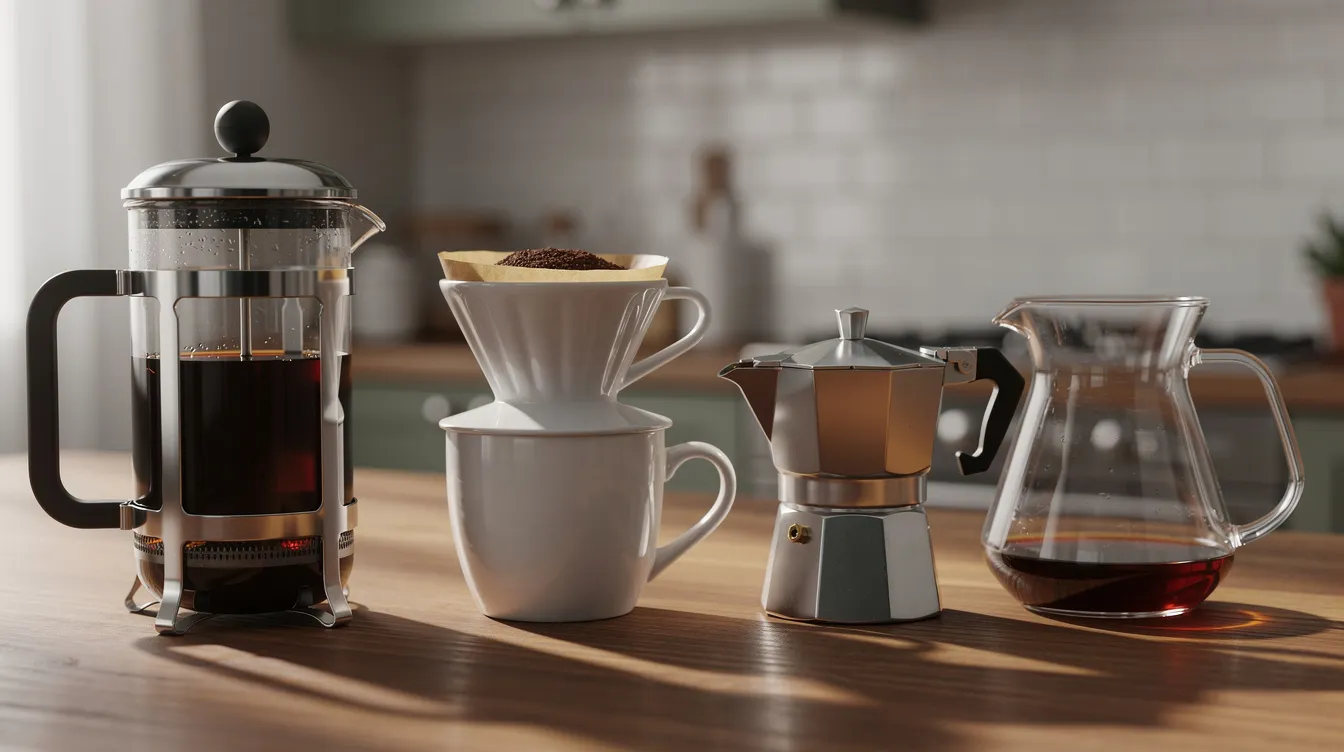
Picking a brewing method starts with understanding how water moves through coffee. The three main approaches, soaking, dripping, and forcing, produce cups that taste and feel distinct from one another.
Immersion brewing fully submerges coffee grounds in water for a set duration. Immersion methods use the same water throughout brewing, so extraction slows as the liquid saturates. The result: a full-bodied, rich, and textured cup with natural oils left intact. French press and cold brew are the most common immersion methods. Some AeroPress recipes and the Clever Dripper (used in its closed position) also qualify.
Percolation and drip brewing uses gravity to pass water through coffee grounds. Drip methods introduce fresh water with each pour (or each cycle from the machine’s showerhead), which keeps the extraction rate higher and more consistent across the brew. Paper filters capture most of the oils and sediments, yielding a clean, bright, and transparent cup. Manual pour-over and automatic drip machines both belong here.
Pressure-based brewing pushes water through a tightly packed bed of fine grounds at elevated pressure. Espresso machines operate at roughly 9 bar, extracting 18-26% of soluble solids in 20-30 seconds. Moka pots work at lower pressure on the stovetop. Both deliver concentrated, intense flavor with thicker body.
The type of filter used in coffee brewing affects the flavors and textures of the coffee produced. Paper filters strip out oils and fines for clarity. Metal mesh screens (like a French press plunger) let oils and micro-particles through for weight and richness.
How to choose a brew method for coffee at home
Rather than accumulating a shelf of coffee brewers, start with one method that fits your routine. Here is a quick decision framework:
- Desired flavor and body: If you prefer a clean, bright cup, lean toward pour-over or a quality drip machine. If you want a heavier, rounder mouthfeel, try a French press or AeroPress. If concentrated intensity is the goal, espresso or a moka pot fits.
- Batch size: Making coffee for one person? AeroPress or a single-cup pour over works well. Serving a household? An automatic drip coffee maker or a large French press handles volume.
- Hands-on time: A drip machine is set-and-forget. A manual pour over demands 3-4 minutes of attentive pouring. Cold brew needs 30 seconds of setup and 12-24 hours of patience.
- Budget and counter space: A French press or AeroPress costs under $40 and fits in a drawer. Espresso machines with grinders run into the hundreds or thousands and need dedicated counter real estate.
Concrete scenarios:
- Busy weekday mornings: automatic drip machine, prepped the night before
- Weekend ritual: manual pour over with a gooseneck kettle, one cup at a time
- Brunch for guests: a full-bodied cup from a 12-cup French press
- Hot summer afternoons: cold brew concentrate pulled from the fridge, poured over ice
- Daily latte habit: espresso-based drinks from a pump machine (or visit a café)
Deeper gear and coffee recommendations appear in later sections, preceded by a clear affiliate disclosure. Before buying a second brewer, spend two weeks dialing in grind size, brew time, and water temperature on the one you have. That adjustment alone can transform a mediocre cup of coffee into a great coffee.
Browse brewing methods by family
Use this section as a quick reference to find the method that matches your own preferences. Individual method sections below cover flavor, workflow, and skill level in more detail.
Immersion
- French press (coarse grind, 4-5 min, metal filter)
- Cold brew (very coarse grind, 12-24 hours, various filters)
- Steep-and-release drippers used in immersion mode (Clever Dripper, Hario Switch with valve closed)
Percolation / drip
- Manual pour-over drippers: Hario V60, Kalita Wave, Melitta cone
- Chemex (thick paper filter, larger batches)
- Automatic drip coffee makers, from basic drip machines to SCA-certified brewers
Hybrid
- AeroPress (immersion + gentle pressure, paper microfilter)
- Clever Dripper and Hario Switch (immersion with filter drain)
Pressure-based
- Pump-driven espresso machines (9 bar, very fine grind)
- Stovetop moka pots (0.5-1.5 bar, fine grind)
- Pod-based espresso makers (Nespresso, Keurig; convenience benchmarks, not our focus)
Less common
- Siphon brewers: siphon brewing yields an exceptionally clean yet surprisingly aromatic cup through vacuum pressure, as water reaches the boiling point and vapor pressure moves it upward before a partial vacuum draws it back through the grounds. It remains a niche method in most home kitchens.
- Turkish coffee: ultra-fine grounds, no filter, decoction-style
The coffee-by-brew-method section of the site groups beans by how well they fit each of these categories.
Immersion brewing: French press and friends
Immersion brewing keeps coffee grounds in full contact with water for several minutes, producing cups with noticeable weight and texture. The French press is a common immersion brewing method and one of the simplest home brewers available.
French press basics
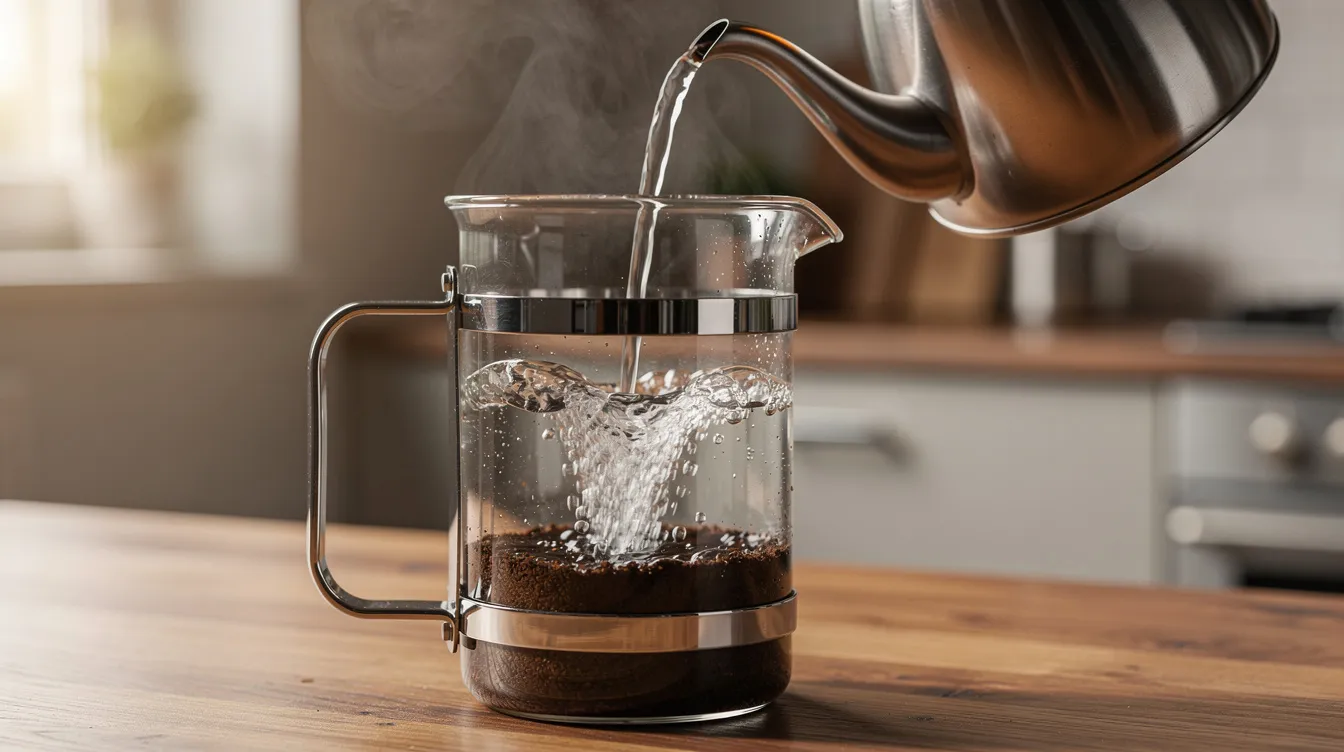
French press coffee requires a steeping time of four to five minutes. Use a coarse grind, similar to sea salt, with a particle size around 900-1100 µm. The metal mesh plunger filters out the largest particles but allows aromatic oils and fine sediment into the cup. That is why French press coffee allows more oils and sediments in the cup compared to paper-filtered methods, giving it a heavier, rounder body.
A standard French press has a capacity of around 12 cups, making it practical for serving a household or a brunch table. The equipment is inexpensive and requires no electricity.
Flavor profile and ideal coffees: Medium roasts and dark roasts with chocolatey, nutty, or caramel notes tend to shine in a French press. The extra body and oils complement those flavor families. Lighter, fruitier beans can taste muddled here because the metal filter doesn’t separate delicate acids the way paper does.
Workflow trade-offs: Making coffee with a French press is forgiving on timing (a minute either way won’t ruin the cup), but leaving the grounds in the water after the target brew time leads to over-extracted, bitter results. Decant the full pot into a carafe once the steep finishes. Cleaning the mesh screen takes a bit more effort than tossing a paper filter.
Other immersion options include Turkish coffee (ultra-fine grounds boiled without filtration) and simple steep-in-mug methods, but the French press remains the most practical immersion brewer for the average U.S. home brewer.
The brewing fundamentals section covers more on timing, agitation, and water temperature in immersion recipes; small adjustments there can fix bitterness or flatness.
Percolation and drip: pour-over and drip coffee makers
Percolation is the most familiar way Americans drink coffee at home. Water flows down through a bed of ground coffee, pulled by gravity, picking up flavor compounds along the way.
Manual pour-over
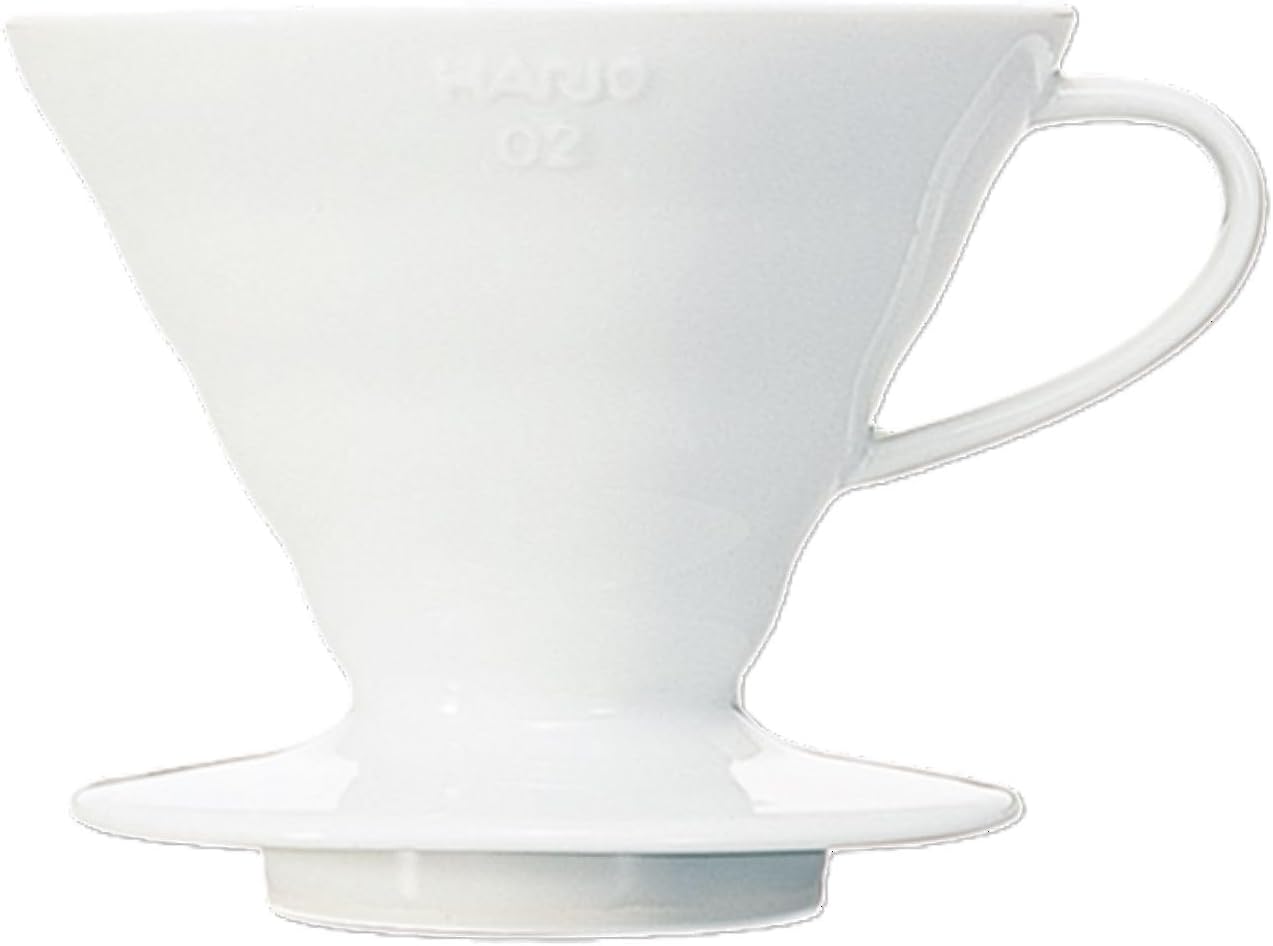
Pour over coffee dates back over 100 years, tracing its roots to early 20th-century paper-filter inventions like the Melitta cone. The Hario V60 is a popular pour-over brewer today, and devices like the Kalita Wave offer flat-bottom alternatives. Pour-over allows control over brewing variables for optimal flavor: you choose the pour rate, the water temperature, and the pattern of your pour.
The result is a cup known for its clarity and sweetness. The pour-over method highlights bright acidity, floral aromas, and distinct fruit notes, making it the go-to for light and medium roasts with complex flavor. Use a medium fine grind (roughly 500-700 µm) for most cone drippers, and note that a finer grind is recommended for smaller pour-over cones where water contact time is shorter. A gooseneck kettle helps you keep water slowly poured in a controlled, even spiral over the coffee bed. Brew time runs about 2.5-4 minutes, including a 30-45 second bloom phase.
Automatic drip coffee makers
Drip coffee makers distribute hot water through ground coffee sitting in a paper filter, automating the same principle as manual pour over. They handle larger batches (8-12 cups) with minimal hands-on work. Good models brew coffee at 195-205°F, which matches the SCA Golden Cup standard. Budget drip machines sometimes run cooler, leading to under-extraction and a sour, flat final cup.
A drip machine is the easiest path to a decent pot of filter coffee for a busy household. It won’t match the nuance of a carefully brewed pour over, but it removes nearly all variables from the brewing process.
Readers who enjoy brighter, cleaner cups should explore manual pour over. The manual brewers section of the site covers drippers and kettles, and the coffee-by-brew-method page lists light-roast-friendly options.
Chemex and other filter-forward brewers
Chemex is a specific pour-over-style brewer that appeared in the mid-20th century, recognized by its hourglass glass body and thick proprietary paper filters. Those filters are 20-30% heavier than standard pour-over papers, which strips out more oils and fine particles.
The result is an especially clean cup with minimal body, often described as tea-like in texture. Single-origin coffees with bright, fruity, or floral profiles shine here because there is almost nothing masking the bean’s natural character.
Chemex works best at a medium-coarse grind, with a total brew time of 3-5 minutes for a full carafe. The process requires the same attention as other manual pour-over methods: controlled pouring, an initial bloom, and even saturation of the coffee bed.
Choose a Chemex-style brewer when you want multiple cups at once with high clarity and minimal sediment. Similar filter-forward approaches (like the Hario V60 with paper filters) also produce clean cups, though with slightly more body since their papers are thinner.
AeroPress and hybrid methods
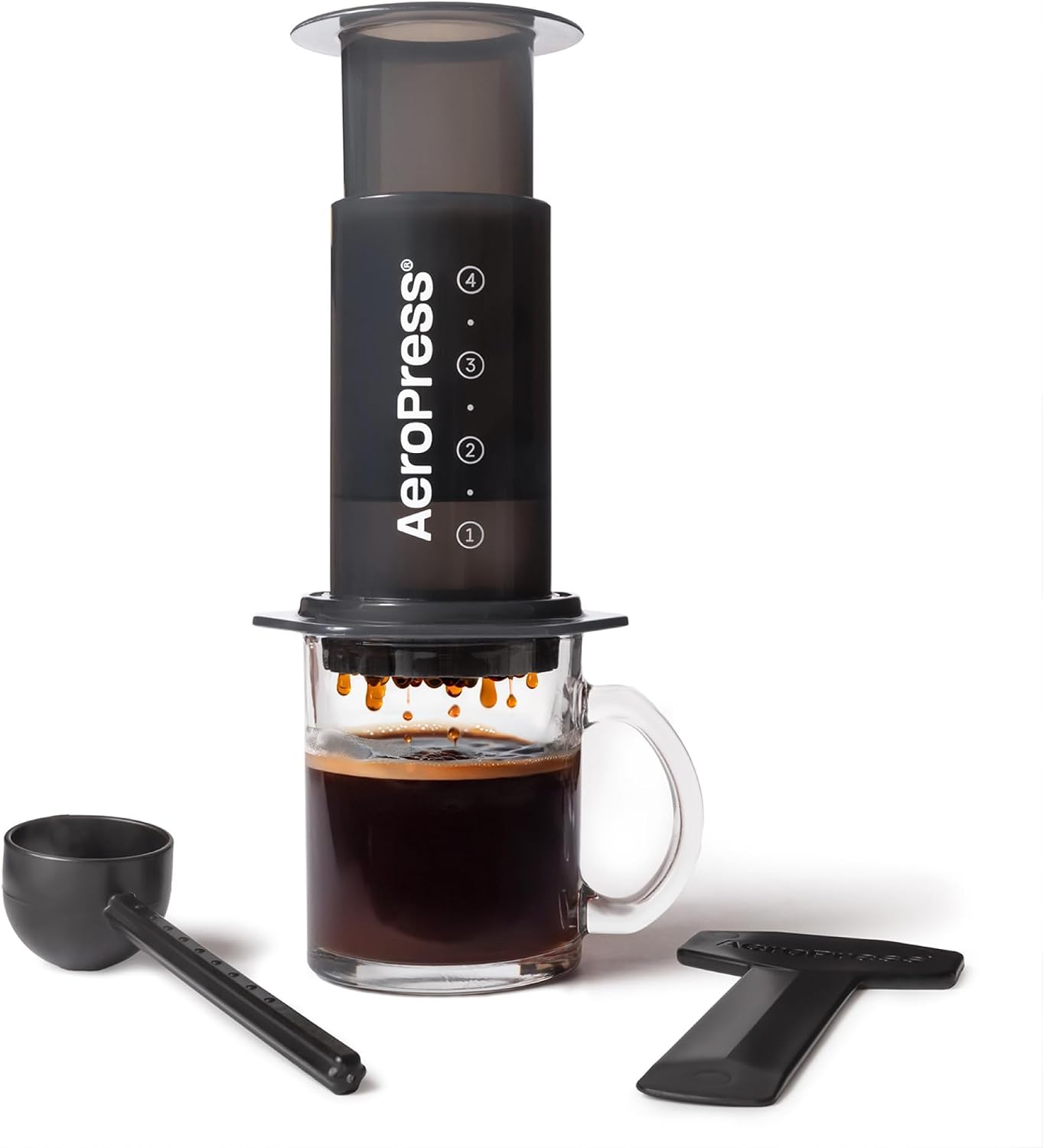
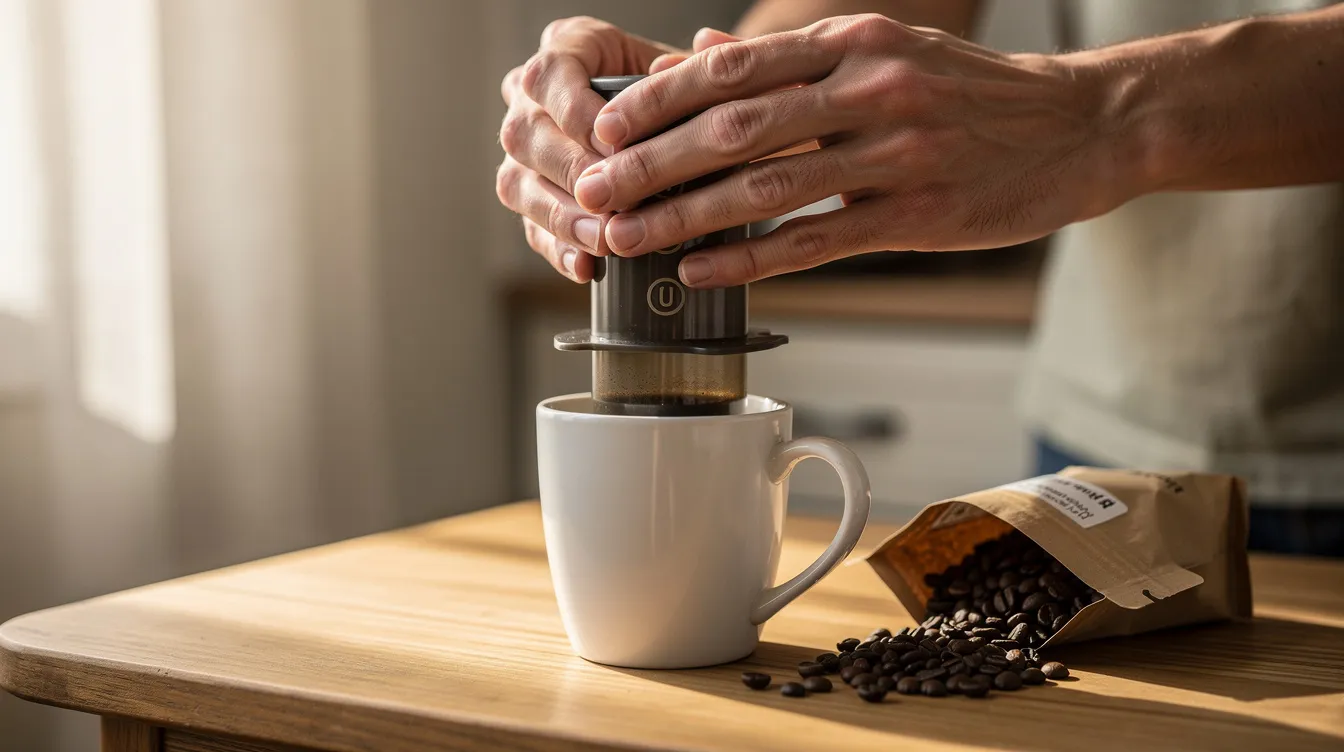
The AeroPress was launched in 2005 and quickly became one of the most versatile single-cup brewers on the market. AeroPress brews coffee using immersion and pressure: coffee and hot water steep together for under a minute, then a plunger forces the brew through a paper microfilter into the mug.
AeroPress coffee is known for its clean flavor profile. The paper filter traps oils and sediment, while the short steep time and gentle manual pressure produce a smooth, clean, and sediment-free cup with low acidity. The AeroPress method can mimic different brewing styles by adjusting grind size and steeping time. With a fine grind and a concentrated ratio, it can brew espresso-like shots. With a coarser grind and more water, it approximates filter coffee. AeroPress can brew espresso-like shots and cold brew, making it one of the few devices that crosses multiple brewing families.
The AeroPress is compact and travel-friendly, fitting in a backpack or desk drawer. Cleanup takes about 10 seconds: pop the puck of grounds into the compost, rinse, done. The learning curve is gentle; even a first attempt usually produces a better cup than instant coffee.
Other hybrid steep-and-release brewers work on similar principles. The Clever Dripper lets grounds steep in a closed chamber, then drains through a paper filter when placed on a mug. The Hario Switch combines pour over and immersion brewing with a valve at the base of a V60-style cone, letting you soak the grounds and then release. These devices keep immersion’s consistency but add paper-filter cleanliness to the final cup.
Espresso: pressure, intensity, and espresso-based drinks
Espresso is a brewing method that uses high pressure to push hot water through very finely ground, compacted coffee in 20-30 seconds. Espresso requires 9 bars of pressure for brewing, which forces water through a puck of finely ground coffee at a particle size of roughly 200-300 µm (close to table salt or finer).
A double espresso shot uses 18 grams of coffee, yielding about 36 grams of liquid at a brew ratio around 1:2. Espresso has more caffeine per unit volume than regular coffee, though a full mug of drip coffee contains more total caffeine simply because of the larger serving size. The cup profile is concentrated: thick body, crema on top, and amplified sweetness, acidity, and bitterness.
Espresso is the concentrated base for classic coffee drinks like lattes, cappuccinos, cortados, and Americanos. If you drink coffee primarily as espresso-based milk drinks, a pump machine and a quality grinder are the path to making those at home.
Espresso machines are typically expensive and complex. Budget entry points start around $200-300 for manual lever devices, while semi-automatic machines with built-in grinders climb past $1,000. Dialing in the dose, grind, and tamp takes practice, and the machine requires regular cleaning and descaling. For many latte fans, visiting a café remains more practical than building a home espresso station, while coffee snobs usually prefer the control and cup quality of a well-tuned home setup over convenience machines.
Moka pot: stovetop pressure brewing
The Bialetti moka pot design dates back to 1933, and moka pots were designed to bring strong coffee to Italian households without the cost of an espresso machine. Moka pot coffee is brewed on a stovetop using boiling water, which creates steam pressure that pushes water up through a basket of fine grounds.
Moka pot coffee brews at 0.5 to 1.5 bars of pressure, well below espresso’s 9 bars, but enough to produce a concentrated, intense brew. Moka pot coffee is often compared to espresso in strength, though it lacks true crema. Brewing with a moka pot produces a slightly burnt flavor if the heat is too high or the brew runs too long; keeping the flame low and removing the pot from heat once it starts sputtering helps control that. A Bialetti moka pot runs $25-40, making it the most affordable route to strong coffee at home.
Cold brew and iced options
Cold brew is an immersion brewing method that uses cold or room-temperature water and coarse grounds steeped for 12-24 hours, often in the fridge. Coarse coffee grounds steep for an extended period when making cold brew coffee, and the low temperature extracts fewer bitter and acidic compounds than hot methods.
Cold brew should not be confused with iced coffee, as it is extracted cold from the beginning. Iced coffee is brewed hot (via drip or pour over) and then chilled over ice; cold brew never sees hot water.
Cold brew results in a smooth, naturally sweet, and mellow flavor profile with low acidity and bitterness. The concentrate is typically brewed at a ratio of 1:4 to 1:8 (coffee to water by weight), then diluted with cold water, milk, or ice before drinking. Stored in the fridge, it lasts several days.
Workflow: Combine coarse ground coffee and cold water in a jar or pitcher, steep overnight, filter through cloth, paper, or a mesh strainer, and store. Hands-on time is under five minutes. The trade-off is planning: you brew today for tomorrow’s cup.
Filter choices matter here. Cheesecloth lets more fines through, yielding a heavier body. A paper filter produces a cleaner, brighter concentrate. Dedicated cold brew makers (like Toddy or OXO systems) simplify filtering.
Medium to dark roasts with caramelized sweetness and chocolatey notes tend to work well for cold brew. The coffee-by-brew-method page on this site groups cold-brew-friendly picks.
Grind match, brew time, and filter types
Each brewing method needs a matching grind size and brew time. Get the pairing wrong, and you end up with a sour, thin cup (under-extracted) or a bitter, harsh one (over-extracted).
Method | Grind size | Approx. particle size | Brew time | Filter type |
|---|---|---|---|---|
Espresso | Very fine | 200-300 µm | 20-30 sec | Portafilter basket |
Moka pot | Fine | Finer than drip, coarser than espresso | 4-7 min | Metal basket |
AeroPress | Fine to medium | Varies by recipe | 1-2 min | Paper microfilter |
Pour-over | Medium fine | 500-700 µm | 2.5-4 min | Paper cone or flat |
Auto drip | Medium | Similar to pour-over | 4-6 min | Paper basket |
French press | Coarse | 900-1100 µm | 4-5 min | Metal mesh |
Cold brew | Very coarse | 1100+ µm | 12-24 hours | Cloth, paper, or mesh |
How brew time interacts with grind size: Finer grounds expose more surface area, so shorter contact times (espresso, AeroPress) still extract enough flavor. Coarser grounds need longer contact (French press, cold brew) to reach a balanced extraction. If your cup tastes sour, grind finer or extend brew time. If it tastes bitter, go coarser or shorten the steep.
Filter type comparison: Paper filters remove most oils and fine particles, producing a clean, transparent cup. Metal mesh lets oils and micro-grounds through for a heavier, richer body. Cloth filters fall between the two. A blade grinder produces uneven particles that over-extract and under-extract in the same cup; a burr grinder delivers the consistent particle distribution that most methods need.
The brewing fundamentals page covers ratio, extraction percentage, and water chemistry in more depth.
Browse brewing methods: featured how-tos and gear links
This section serves as a curated index to deeper method-specific tutorials and researched gear roundups within the Capitol City Coffee site.
How-to topics covered in dedicated guides:
- How to brew pour-over coffee
- How to use a French press
- How to brew AeroPress at home
- How to make cold brew
- How to dial in espresso
Gear categories in the manual brewers section:
- Pour-over drippers (V60, Kalita Wave, Melitta)
- French presses (glass and stainless steel)
- AeroPress and travel brewers
- Stovetop moka pots
Affiliate disclosure: Some recommended gear on this site is linked through affiliate partnerships. Commissions do not change pricing or editorial rankings. Capitol City Coffee selects recommendations based on researched editorial analysis, third-party expert reviews, manufacturer specifications, and consensus from reputable coffee sources.
How Capitol City Coffee researches brewing gear and beans
Capitol City Coffee is an independent coffee editorial and affiliate publication. We do not roast coffee, manufacture equipment, or operate cafés. Recommendations come from research, not from inventory we need to move.
For gear, the research process involves comparing manufacturer specs (materials, temperature stability, capacity, pressure tolerances), weighing expert barista and SCA/Q-grader opinions, and checking long-term user feedback from credible sources. Where hands-on testing notes are not available, the site labels recommendations as researched editorial analysis and does not claim personal ownership or direct testing experience.
Ranking criteria for gear:
- Measured or verified brew performance (does the device hit target temperatures and pressures?)
- Workflow, ease of use, and cleaning
- Durability and parts availability in the U.S.
- Value relative to performance
For coffee recommendations, the site evaluates flavor profile, roast level, freshness windows, grind compatibility, and realistic drawbacks like limited availability or narrow flavor appeal. Commission size does not determine placement.
Pairing coffee beans with your brew method
The same coffee beans can taste very different in a French press versus a drip coffee maker or espresso machine. Method-bean pairing is worth a few minutes of thought.
- Pour-over and Chemex: Bright, complex single-origin coffees with floral or citrus notes benefit from paper-filtered clarity. Light to medium roasts work best.
- French press and immersion: Chocolatey, nutty blends with medium roasts gain body and richness from the metal filter and full immersion contact.
- Espresso: Espresso intensifies every characteristic. A bean that tastes pleasantly bright in a pour over can feel sharp and sour as a straight shot. Many roasters develop espresso blends with darker profiles for balance.
- Cold brew and moka pot: Darker roasts with caramelized sweetness and low perceived acidity match these methods well. Cold brew’s smooth extraction tames bitterness; the moka pot’s heat and pressure amplify chocolate and caramel notes.
The coffee-by-brew-method section groups beans by how well they fit specific methods, labeled as researched editorial picks.
Workflow, skill level, and lifestyle fit
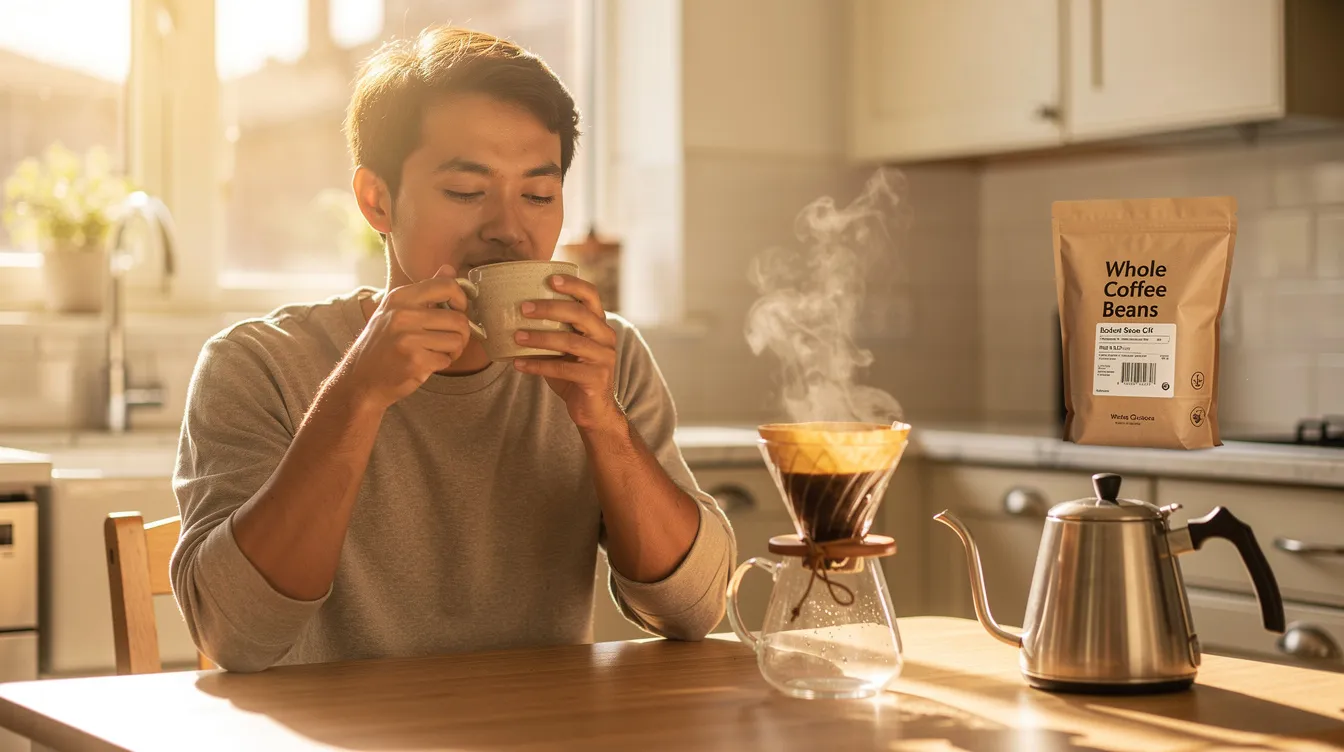
Pour-over suits patient tinkerers who enjoy a morning ritual. You control every variable: how much coffee goes in, how fast the water flows, and when to stop. It rewards attention and punishes distraction. One to two cups per session.
Drip machines serve busy households that need multiple cups of hot coffee ready at the same time with minimal effort. Load the filter, add ground coffee, press the button, and walk away. The trade-off is less control over the brewing process.
French press and cold brew are forgiving options for beginners who like bolder, richer coffee. French press tolerates imprecise timing within a minute or two. Cold brew is almost impossible to ruin if you use coarse grounds and keep the steep under 24 hours. Both reward a preference for heavier body over delicate acidity.
AeroPress is a balanced choice for people who want good coffee at home or on the road. Brew time is under two minutes, cleanup is fast, and the device fits in a laptop bag. It will not replace a French press for volume or an espresso machine for intensity, but it covers a wide middle ground.
Espresso machines are best suited to home baristas ready for a steeper learning curve, frequent dialing-in sessions, and dedicated counter space. If you want a daily latte but aren’t prepared to maintain a grinder and machine, visiting a café or using a moka pot for a strong coffee base with steamed milk at home is a more realistic path for many.
Your favorite coffee is the one that fits your life. Pick one method, dial in your grind and ratio, then taste the difference before adding a second brewer to your shelf.
FAQs about coffee brewing methods
These FAQs address common follow-up questions not fully covered above.
What is the easiest coffee brewing method for beginners?
An automatic drip coffee maker or a basic French press is usually easiest for beginners. Both require only a consistent grind (medium for drip, coarse for French press), hot water, and simple timing. AeroPress is also beginner-friendly for single-cup brewing, with clear markings and short brew times that reduce the chance of extreme over-extraction or under-extraction.
Do I need a special grinder for different brewing methods?
A burr grinder is strongly recommended if you plan to switch between espresso, drip coffee, and immersion methods, because each brewing method needs a different grind size for best results. Pre-ground coffee can work for drip machines, but it may underperform in methods that are more sensitive to grind consistency, like espresso and pour over, leading to inconsistent flavor. A blade grinder is better than nothing, but it produces uneven particles that create mixed extraction in the same cup.
Is cold brew stronger than regular drip coffee?
Cold brew is often brewed as a concentrate with a higher coffee-to-water ratio (sometimes 1:4 to 1:8) than drip, so ounce for ounce the liquid can be stronger. Most people dilute it with water or milk before drinking, bringing the per-serving strength closer to drip. Perceived strength also differs because cold brew’s low acidity and smoothness can make high caffeine levels feel less intense than a hot, bright drip brew.
Can one coffee maker do more than one brewing method?
Most devices are designed for a specific brewing style, but some, like the AeroPress or hybrid drippers, can produce a range of cup profiles. The AeroPress can shift from stronger, espresso-like concentrates to gentler filter-style brews by adjusting grind size and steeping time. People who want maximum flexibility without multiple machines often pair a primary brewer (drip machine or espresso maker) with a compact manual brewer such as a pour-over cone or AeroPress.
How important is water quality for different brewing methods?
Water quality affects every brewing method, but its impact is especially noticeable in cleaner brews like pour over, Chemex, and drip coffee, where off-flavors in the water have nowhere to hide. Water makes up roughly 98% of a finished cup of coffee. Use filtered water with moderate mineral content; very soft water under-extracts, while very hard water can introduce off-flavors. The brewing fundamentals page covers water chemistry and temperature in more detail for readers who want to go deeper.