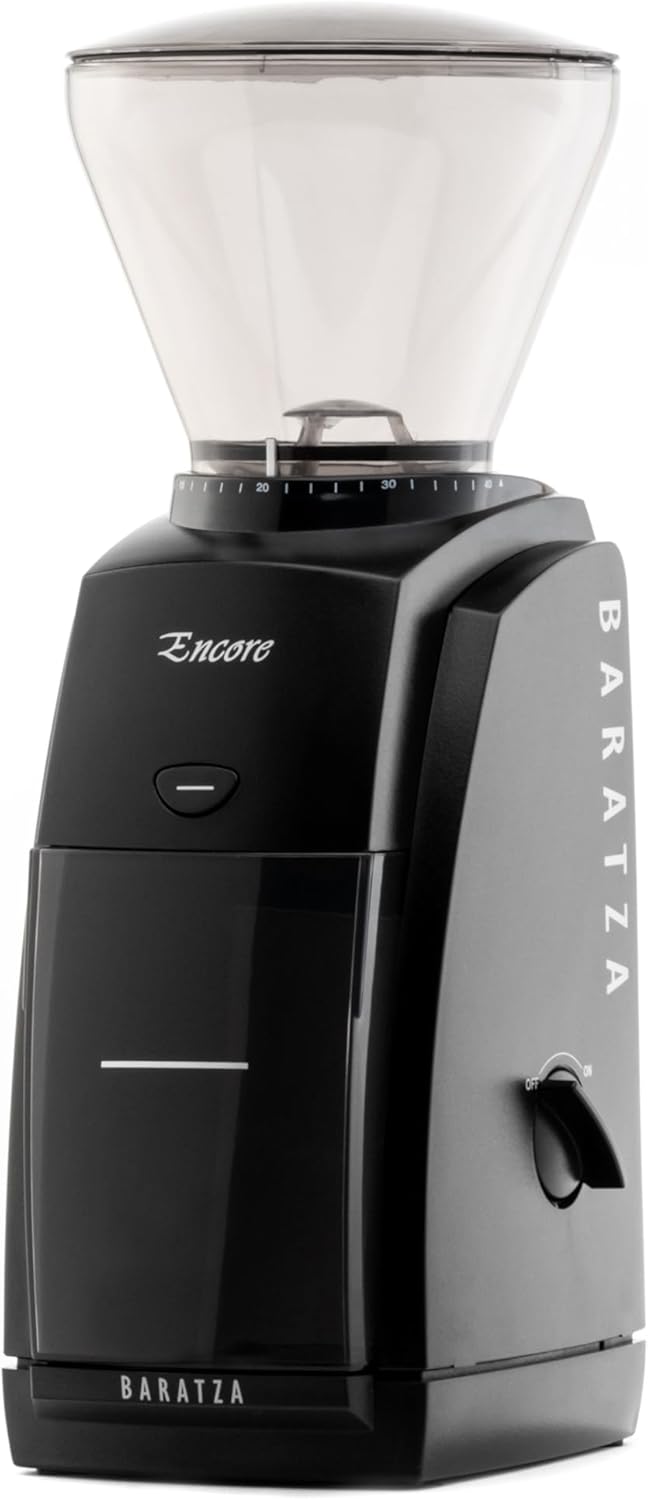
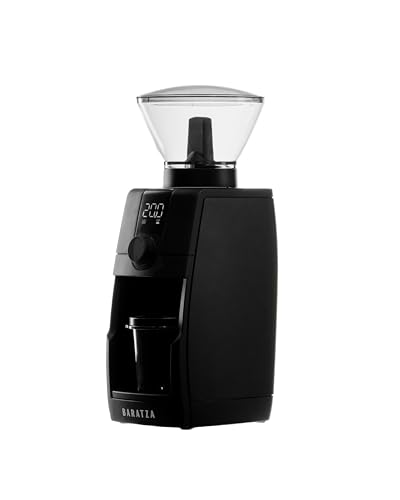
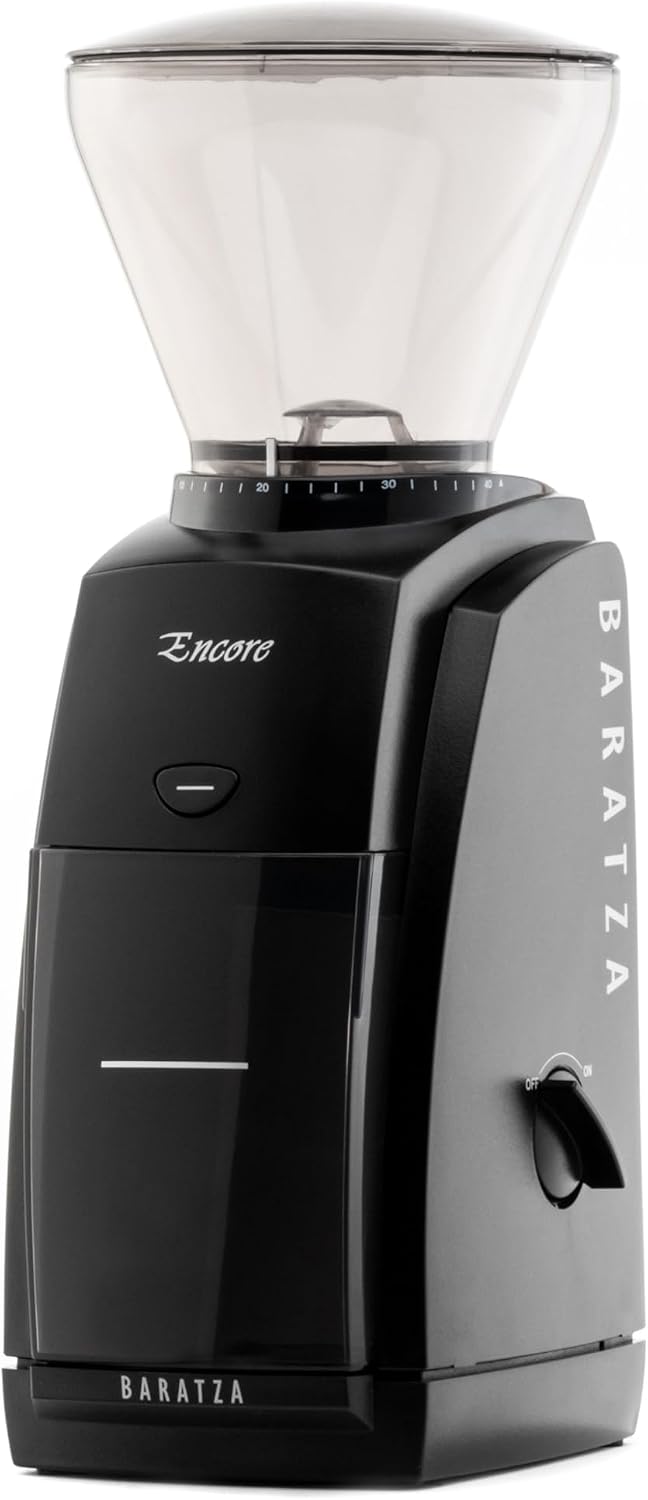
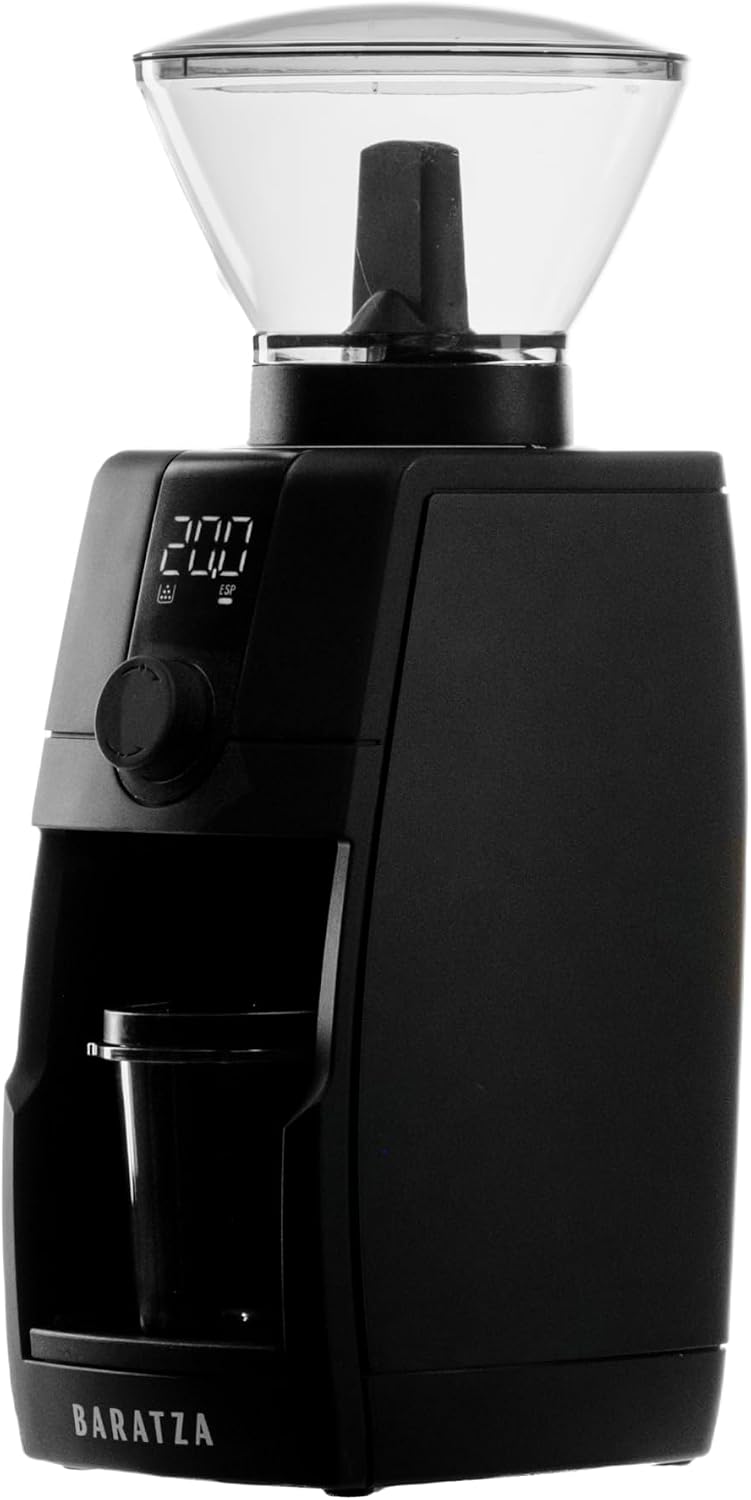
The Baratza Encore and Encore ESP look nearly identical on a countertop, but they serve different coffee drinkers. If you only brew filter coffee – drip, pour over, or French press – the standard Encore at $149.95 is the smarter buy. If you pull espresso shots on a non-pressurized machine, the Encore ESP at $199.95 earns its premium with finer grind resolution and an espresso-tuned workflow. Here is what separates these two grinders and which one fits your setup.
Best brew grinder pick
For this roundup, Baratza Encore is the brew grinder we recommend first—the same pick at the top of our At-a-glance cards below.
The Baratza Encore is a great coffee grinder for filter coffee methods like drip, pour over, and French press, priced at $149.95.
The Baratza Encore ESP costs $199.95 and offers genuine espresso grinding capabilities that the standard Encore cannot match.
Both grinders share the same motor, footprint, and 40 grind settings, but the ESP remaps its first 20 settings for espresso with 20-micron steps and adds M2 burrs and a dosing cup.
This is researched editorial analysis based on verified specs, manufacturer data, and third-party expert consensus – not hands-on testing.
Sections below cover burr type, grind range, particle consistency, retention, static, noise, value, and alternatives including the Breville Smart Grinder Pro and Encore ESP Pro.
Affiliate & Editorial Disclosure
Capitol City Coffee is an independent coffee editorial and comparison site. Some outbound links on this page may earn us a commission at no extra cost to you. Rankings and recommendations are based on researched editorial analysis, product specifications, and clearly attributed expert consensus – not on commission size. This guide does not claim hands-on ownership or testing of either grinder unless otherwise noted; it synthesizes reliable third-party reviews and manufacturer data.
Quick Verdict: Should You Buy the Baratza Encore or the Encore ESP?
The original Encore is the right pick if you brew with a drip machine, Chemex, V60, AeroPress, or French press and only occasionally use a moka pot. Its grind settings are mapped evenly across the coarser range that slow brew methods need, and it does that job well for $50 less than the ESP.
The Encore ESP makes sense the moment you own – or plan to buy – a home espresso machine with non-pressurized baskets. Its M2 burr set and dual macro/micro adjustment system place 20 high-resolution espresso settings at the fine end, giving you the micro adjustments necessary for dialing in 9-bar shots. It also ships with a dosing cup sized for portafilters, a workflow touch the base Encore lacks.
If your coffee hobby is trending toward lighter roasts and ultra-precise espresso, both of these grinders may eventually feel limiting; serious hobbyists should consider flat burr grinders or the Encore ESP Pro, discussed in the alternatives section below.
Workable espresso distribution; fewer fines than M3 burrs
Grind speed
~2 g/sec at medium-coarse
~1.3 g/sec at espresso; ~2.2 g/sec at filter
Retention
~0.5 g typical
~1.0–2.5 g reported
Static & clumping
Low to moderate
Higher at fine settings; WDT recommended
Noise
Moderate
~92 dB; slightly louder under espresso load
Workflow features
Grounds bin only
Dosing cup (54 mm + 58 mm adapter), grounds bin
Cleaning
Tool-free top burr removal
Quick-release burr knob; cleaning brush included
Build & materials
Primarily plastic housing
Primarily plastic housing with cast-metal base
Warranty (US)
1-year manufacturer
1-year manufacturer
Ideal user
Drip, pour over, French press
Espresso + filter, portafilter workflow
Shared Baratza DNA: What the Encore and Encore ESP Have in Common
Both grinders sit on the same Baratza platform, sharing a 70 W DC motor running at roughly 550 RPM no-load, a compact countertop footprint, and a bean hopper holding about 300 g of beans above a grounds bin that catches approximately 120 g of ground coffee.
Key shared traits include:
40 mm conical steel burrs (different geometry, but same diameter)
Stepped grind adjustment collar with 40 total settings
Plastic body construction with available replacement parts
Simple front pulse button plus side on/off switch
User-replaceable burrs, impellers, and drive components
Similar limited one-year US manufacturer warranty
Both grinders have similar maintenance features, and Baratza’s long reputation for stocking parts and publishing repair guides is a key reason reviewers recommend these over many budget brands. Build quality is functional rather than luxury – plastic housings but a robust internal drive train that lasts for years when maintained.
Option A: Baratza Encore – Performance, Benefits, and Limitations
The Baratza Encore has been the entry-level standard for home brewers focused on filter coffee for years. It uses M3 burrs designed for filter coffee methods, and its 40 stepped grind settings for slow brewing spread evenly from medium-fine through coarse, covering drip machines, pour over cones, and French press with reliable consistency.
At medium and coarse grind size ranges, particle distribution is solid. V60 and Chemex brews taste clean, and immersion methods like French press produce an even, balanced cup. The Baratza Encore is ideal for drip, pour-over, or French press brewing – its sweet spot is exactly where most filter drinkers live.
The limits show up at the fine end. The Encore’s grind settings are less precise for espresso than the ESP’s. Even at its finest click, water passes through an unpressurized espresso basket too quickly, producing thin, under-extracted shots. It worked fine with moka pots and pressurized portafilters in user reports, but it cannot grind fine enough for real 9-bar espresso.
Workflow is straightforward: load the hopper, grind into the grounds bin, transfer to your brewer. Retention sits around 0.5 g – low enough to rarely notice. Static is moderate, and noise is manageable. The Encore offers tool-free access to the burrs for brushing and vacuuming, making cleaning simple.
Key benefits: Lower price, lower grind retention, quieter operation, and strong value as a purpose grinder for filter coffee.
Limitations: Cannot reach true espresso fineness, no dosing cup, fewer workflow features for portafilter users, and less fine control below setting 10 compared with the Encore ESP.
Option B: Baratza Encore ESP – Performance, Benefits, and Limitations
The Baratza Encore ESP builds directly on the Encore chassis but swaps in M2 burrs for improved grind consistency and adds a dual-resolution grind adjustment that makes it a true entry-level espresso and multipurpose grinder. The Encore ESP offers better espresso grinding capabilities than the Encore – that is the key difference between the two models.
The M2 burr set is optimized for espresso. According to independent Baratza Encore ESP review sources, M2 burrs reduce fines for more even espresso extraction and produce better flavor clarity for pour-over coffee compared with the older M3 cone burr geometry. The ESP’s first 20 settings adjust by 20 microns each, giving you the espresso range precision needed to dial in shots properly. Settings 21–40 jump to approximately 90 microns per click for filter and coarse brew methods.
Workflow upgrades matter for espresso machine users. The ESP ships with an anti static cup (dosing cup) sized for 54 mm portafilters, plus an adapter ring for 58 mm baskets. The Encore ESP can grind at 1.3 g/sec for espresso – reasonable for a stepped conical grinder – and ramps up to about 2.2 g/sec at coarser filter settings. The Encore ESP features a cast-metal base for stability during operation.
Retention is the trade-off. Reviewers report approximately 1.0–2.5 g of grind retention depending on dose size and hopper fill, notably higher than the standard Encore. Static and clumping at fine settings are common, especially with darker roasts and oily beans. Many users mitigate this with the Weiss distribution technique or a quick purge grind before dosing.
The Encore ESP’s housing is primarily plastic, feeling less premium than some competitors, though the metal base adds stability. The Encore ESP operates at a noise level of around 92 dB – slightly louder than the Encore under espresso grind load. The Encore ESP features a quick-release knob for burr removal, and cleaning the Encore ESP takes just a couple of minutes. Baratza includes a cleaning brush with the Encore ESP.
Key benefits: Genuine espresso-capable grind range, dosing cup workflow, M2 burrs with better consistency, versatile one grinder solution for both espresso and filter coffee.
Limitations: Higher retention and static at espresso settings, coarser end has bigger jumps than the original Encore, noisier under load, and the plastic body feels less premium than other grinders at or above this price.
Winner by Use Case: Which Grinder Fits Your Setup?
Matching a grinder to your actual brewing routine matters more than chasing specs. Here is how common profiles map to each model:
Filter-only drinker (drip, pour over, French press, occasional moka pot): The Baratza Encore is the better value – simpler, quieter, lower retention, and $50 less.
Beginner espresso user with a non-pressurized home espresso machine plus some pour over: The Baratza Encore ESP, because of its espresso-tuned grind range, M2 burrs, and dosing cup for portafilters.
Mixed household brewing both espresso and large batches of drip: The Encore ESP if espresso quality is the priority; the standard Encore if large-batch filter taste and lower noise matter more.
Upgrading from a blade or cheap burr grinder: Choose based on whether you plan to buy an espresso machine within the next year. If yes, the ESP is absolutely worth the premium. If not, the Encore likely offers better value.
Advanced hobbyists chasing ultra-light-roast espresso precision: You may outgrow both grinders and should look at higher-tier flat burr grinders or stepless adjustment models.
Cost and Value: Pricing, Durability, and Long-Term Ownership
The Baratza Encore costs $149.95 and the Encore ESP is priced at $199.95 – a $50 gap. Prices may vary slightly by retailer and time of year, with the Encore sometimes found around $150–$170 and the ESP around $190–$220.
The Encore is a budget-friendly option for sole filter coffee drinkers and arguably one of the best low-cost ways to get uniform ground coffee for slow brewing. The ESP’s premium buys you espresso grind resolution, the dosing cup, and M2 burrs – features that are essentially wasted if you never brew espresso.
Durability is comparable across both. Plastic housings are the norm at this price, but the internal drive train is robust. Common wear items like burrs and impellers can be swapped at home using Baratza’s published guides. Both carry a one-year US manufacturer warranty, and Baratza’s reputation for parts availability improves long-term value significantly.
For resale and upgrade paths: a well-kept Encore holds decent resale value. Encore ESP owners who later want more espresso focus can step up to the ESP Pro or add a dedicated flat burr espresso grinder while keeping the Baratza for brew coffee.
Workflow, Retention, and Everyday Use
Beyond grind quality, how messy, fast, and intuitive a grinder feels daily often decides which model people actually enjoy using.
The Encore uses a classic hopper-to-grounds-bin setup suited for batch brewing. The Encore ESP adds the dosing cup option – drop it under the chute, grind your dose, and transfer directly into a portafilter. For espresso machine users, this alone streamlines the morning routine.
Grind retention on the Encore stays low at roughly 0.5 g, meaning less stale ground coffee trapped between sessions. The ESP’s higher retention (1.0–2.5 g) demands occasional purging, especially when switching beans or moving between espresso settings and filter settings. Single dosing helps: weigh beans, drop them in, grind, purge. The ESP supports a pseudo single-dosing workflow with its cup and optional accessories.
Grind time for an 18 g espresso dose on the ESP runs about 14 seconds. A 30 g pour over dose on either grinder takes around 15 seconds. The ESP is slightly faster at coarser settings but somewhat louder – a trade-off for households with early risers.
Cleaning is similar on both: remove the top burr, brush out fines, vacuum the chute. The ESP’s quick-release burr and included brush make more frequent cleaning easier, which matters if you grind fine for espresso daily. A quick brush every week or two and a deeper clean monthly keeps either grinder running consistently.
How They Compare to Other Entry-Level Grinders
This is still a Baratza Encore vs Encore ESP comparison, but context with other common choices helps confirm whether either is right for you.
The Breville Smart Grinder Pro sits in a similar price band and offers 60 stepped settings plus a digital timer. It has more programmable features but uses a different burr geometry. Expert reviews note that the Breville sometimes shows wider particle spread at espresso settings, though it compensates with convenience features the Baratza lacks.
The Encore ESP Pro is the higher-end sibling: it adds stepless adjustment for more precise espresso dialing, a digital readout, timed grinding modes, and a metal case. At around $300, it targets users who want a more espresso-focused workflow than the standard ESP provides but aren’t ready to jump to a prosumer flat burr machine.
For readers curious about conical vs flat burrs – both the Encore and Encore ESP use conical burrs that emphasize body and forgiveness over ultra-high clarity – a deeper dive lives at the conical vs flat burr grinders comparison page. And if you are still weighing whether a burr grinder is worth it at all, the burr vs blade coffee grinder breakdown covers why burr type matters for any brew method.
Which Should You Choose? (Decision Guide)
Here is the short version, synthesized from everything above:
Choose the Baratza Encore if you brew exclusively with drip, pour over, AeroPress, or French press, prefer lower noise and retention, and want the most value for under $150.
Choose the Baratza Encore ESP if you own or plan to buy an espresso machine, want a dosing cup for portafilter workflow, and are willing to accept higher retention and a bit more noise for genuine espresso capability.
Choose the Encore ESP if you want one grinder to handle both espresso and filter without buying two grinders.
Choose the Encore for medium roast or darker roasts filter brewing where the grind adjustment precision of the ESP provides no meaningful advantage.
Neither: consider alternatives if you prioritize ultra-light-roast espresso precision, near-zero retention, or stepless adjustment – in that case, look at the ESP Pro or a dedicated flat burr espresso grinder.
Either Baratza grinder is a meaningful upgrade from a blade coffee grinder. Dialing in your grind adjustment properly will matter more than the $50 price gap between these two models. Start with your brew method, and the right grinder follows.
Alternatives Worth Considering
A few other grinders are commonly cross-shopped with the Encore and Encore ESP:
Breville Smart Grinder Pro: 60 stepped settings, digital dose timer, slightly larger burrs. A good option for people who value programmability and want a feature-rich all-rounder, though grind quality at espresso fineness can be inconsistent according to some reviewers.
Encore ESP Pro: Stepless adjustment, digital readout, metal case, anti static cup, timed grinding modes, and the same M2 burrs at 550 RPM. Around $300. The natural upgrade if the standard ESP feels limiting.
Flat burr alternatives: For readers seeking low retention and very high clarity in espresso, flat burr grinders like the Fellow Ode (filter-focused) or dedicated espresso flat burrs offer a different flavor profile. The Fellow Ode vs Baratza Encore comparison covers that matchup in detail.
The best choice depends on your brew methods, counter space, budget, and tolerance for noise and workflow complexity.
FAQs: Baratza Encore vs Encore ESP
Below are quick answers to common questions not fully addressed above.
Can the standard Baratza Encore make real espresso?
The Encore can grind fine enough for moka pots and pressurized portafilter baskets on some espresso machines, and many users report it worked fine in those scenarios. However, most third-party reviewers agree it lacks the grind resolution and particle uniformity needed for consistent non-pressurized 9-bar espresso. If traditional espresso shots with unpressurized baskets are the goal, the Encore ESP or a more espresso-focused grinder is the better path.
Is the Encore ESP compatible with 54 mm and 58 mm portafilters?
Yes. The Encore ESP includes a dosing cup sized for common 53/54 mm portafilters along with an adapter ring that lets the same cup work with standard 58 mm baskets. This covers many popular home machines from brands like Breville and Gaggia, though users with niche or commercial gear should confirm basket diameter before buying.
How often should I clean my Baratza Encore or Encore ESP?
For daily users, a quick brush or vacuum of the upper burr and chute every week or two keeps things consistent. A deeper clean – removing the hopper and top burr, inspecting the impeller – is smart every one to three months depending on how oily your beans are. Grinding fine for espresso on the ESP tends to produce more fines and potential clumping, so regular light cleaning helps maintain consistent particle distribution and reduce retention.
Does the Encore ESP replace the need for a dedicated espresso grinder?
The Encore ESP is widely regarded as a strong, affordable entry-level espresso and brew grinder, especially for medium roast and darker roasts on typical home espresso machines. It is a versatile grinder suitable for both espresso and filter coffee. That said, demanding users pulling light-roast shots or chasing ultra-tight consistency may still prefer a more advanced conical or flat burr espresso grinder. For many home baristas, though, the ESP provides all that is needed.
What if I upgrade my espresso machine later – will my Baratza grinder still work?
Both grinders can move with you from beginner gear to more capable machines, as long as expectations stay aligned with each grinder’s strengths – filter-first for the Encore, mixed espresso and brew for the Encore ESP. When you eventually buy a high-end prosumer espresso machine, that may be the moment to reassess: keep the Baratza for brew coffee and add a dedicated espresso grinder alongside it. The new Encore ESP Pro with stepless adjustment may also bridge that gap before you need to invest in a prosumer-level machine.
How Capitol City Coffee Rates Coffee and Coffee Machines
Every coffee and coffee machine we recommend is scored on the same 100-point scale, so a recommendation on one page means the same thing as a recommendation on any other. Each pick is also labeled with how we reached its score.
Research-ratedScored from the roaster or manufacturer’s published specifications, independent results such as Coffee Review blind cuppings and SCA brewer certification, and patterns across verified buyer reviews. Most of our current picks are research-rated.
Hands-on testedThe Capitol City Coffee team has brewed the coffee or used the machine ourselves, following the testing steps below. We only use this label when that testing actually happened, and we show the date we tested.
Coffee beans: 100-point scale
What we score
Points
What we look at
Origin and sourcing transparency
20
Country, region, farm or cooperative, altitude, bean variety, and processing method are clearly disclosed.
Flavor evidence
25
Independent cupping scores, how closely the tasting notes match what the origin is known for, and our own cupping notes when hands-on tested.
Roast and freshness
15
Roast level stated, roast-date practices, whole-bean availability, and packaging with a one-way valve or resealable bag.
Brew versatility
15
How well the roast suits pour-over, drip, French press, cold brew, and espresso.
Value
15
Price per ounce compared with similar single-origin coffees or blends.
Buyer feedback
10
Volume and consistency of verified reviews, and recurring complaints about staleness, bitterness, or shipping.
Coffee machines and gear: 100-point scale
What we score
Points
What we look at
Brewing performance
25
Water temperature in the 195–205°F range, even extraction, and SCA certification or published test data.
Build quality and reliability
20
Materials, known failure points, and long-term owner reports.
Ease of use and cleaning
15
Setup, the daily routine, descaling, and dishwasher-safe parts.
Fit for your kitchen
10
Capacity, counter footprint, and noise.
Useful features
10
Programming, grind and temperature control, and carafe type. Features that improve the cup count more than extras that do not.
Value
10
Price compared with machines that perform similarly.
Warranty and support
10
Warranty length, parts availability, and how the brand handles repairs.
What the grades mean
Score
Grade
What it means
90–100
A
Exceptional. Our first recommendation for the feeling and setting described.
80–89
B
Strong. Excellent, with minor trade-offs we explain.
70–79
C
Good. Worth it for specific needs, with clear compromises.
Below 70
—
Not recommended. We do not feature these as picks.
How we test hands-on
When a pick carries the Hands-on tested label, this is the method behind it, and we note the date we tested.
Coffee: brewed fresh from whole beans following Specialty Coffee Association guidelines (water between 195 and 205°F, about 1 gram of coffee to every 15 to 18 grams of water) in the brew methods the roast suits best, such as pour-over, French press, or espresso. We taste it black first, then with milk if that is how most people drink it, and each taster scores it on their own before we compare notes.
Machines: used in our everyday routine rather than a single demo. We brew both full and small batches, check the brewing temperature and brew time, and run the cleaning or descaling steps the manual calls for.
How we choose the feeling and setting
We match each coffee to a mood and a moment based on its flavor profile and roast. Bright, citrusy light roasts suit energizing mornings. Chocolatey, full-bodied medium roasts suit slow or social moments. Richer roasts suit espresso and milk drinks. Each pick explains which facts led us to that match.
Our scores stay independent
Every score comes only from the criteria above. No brand can pay for a pick or a higher grade. We re-check ratings when a roast, listing, or model changes, and update or remove picks that no longer earn their grade.
Some links on this page are affiliate links. As an Amazon Associate, Capitol City Coffee earns from qualifying purchases, at no extra cost to you.
Questions about a rating? Reach the Capitol City Coffee team through our contact page.