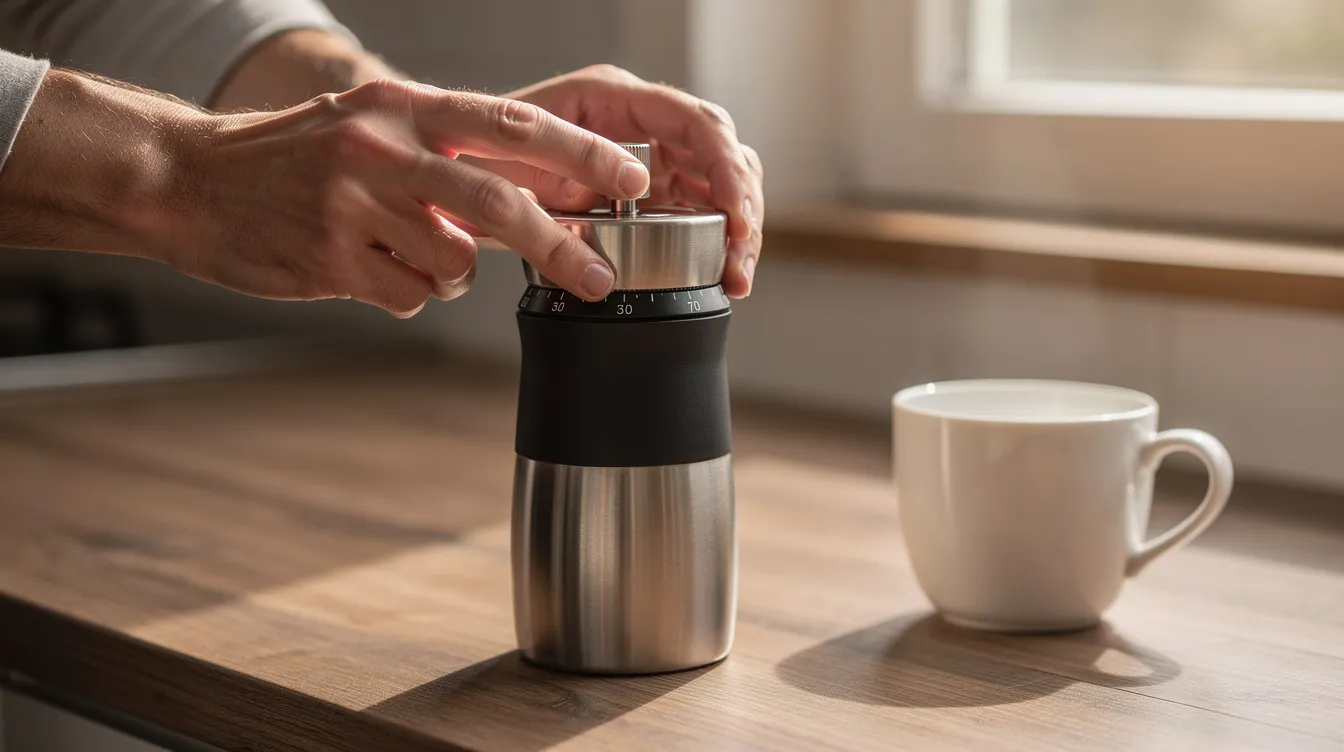
Grind size is the single fastest adjustment you can make to improve your morning cup. The right grind matches your brewing method to extraction time, and this coffee grind size chart gives you the starting points: use a coarse grind for French press, medium for drip coffee makers, fine for espresso, and extra fine for Turkish coffee. Below, you will find method-by-method ranges, texture comparisons, troubleshooting steps, and links to related brewing fundamentals.
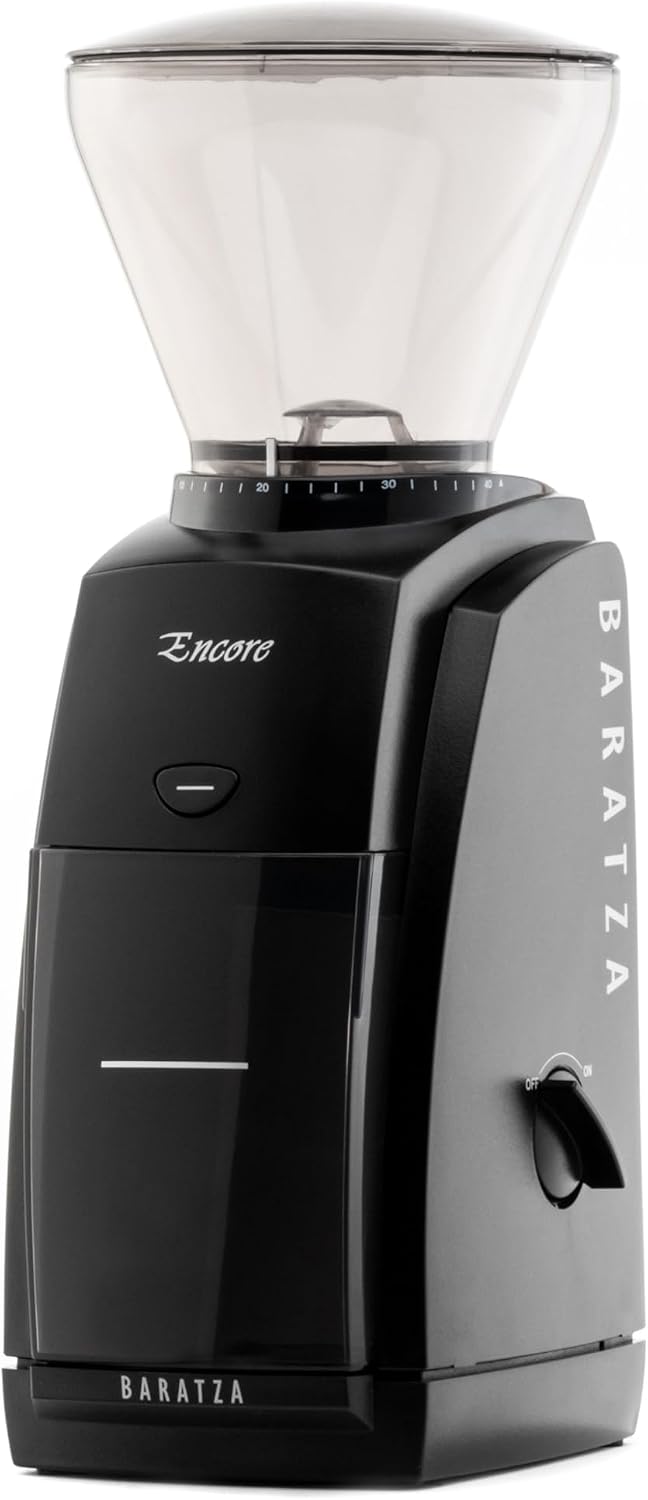
Best stepped range pick
For this roundup, Baratza Encore is the stepped range we recommend first—the same pick at the top of our At-a-glance cards below.
French press calls for a coarse grind (690–1,300 microns); espresso requires a fine grind (180–380 microns); cold brew needs an extra coarse grind (800–1,400 microns); drip coffee works best at a medium grind.
Coffee grind size, brew time, and coffee-to-water ratio work together to control extraction. When coffee tastes sour, grind finer. When coffee tastes bitter, grind coarser.
A coffee grind size chart is a flexible starting point, not a rulebook. Every coffee grinder is different, and dial numbers are not transferable between brands.
Grounds that are close to all the same size produce cleaner flavor and make troubleshooting easier. Uniform grind consistency separates good cups from frustrating ones.
The rest of this page covers charts, practical examples, common mistakes, and connections to ratio and temperature guidance in our brewing fundamentals resources.
Direct Answer: Coffee Grind Size Chart (Quick Reference)
This is the at-a-glance coffee grind chart most readers came for. Each grind category pairs with one or more brewing methods plus a typical brew time range. These ranges assume a standard brew ratio (roughly 1:15 to 1:17 coffee-to-water for filter methods) and water temperature around 195–205°F (90–96°C).
Extra coarse grind – Cold brew. Brew time: 12–18 hours. Particle size: 800–1,400 microns. Looks like cracked peppercorns or ground peppercorns.
Medium coarse grind – Chemex, large flat-bottom drip brewers. Brew time: 4–5 minutes. Roughly 600–800 microns.
Medium grind – Most drip coffee makers, batch brewers. Brew time: 4–6 minutes. Around 500–800 microns. Resembles medium sand or regular table salt.
Medium fine grind – Cone-shaped pour over (V60, Kalita Wave), AeroPress. Brew time: 1–4 minutes. 410–930 microns for pour over; AeroPress grind size ranges from 320 to 960 microns depending on recipe.
Fine grind – Espresso machine, moka pot. Espresso brew time: ~25–30 seconds. Moka pot: 3–5 minutes. 180–380 microns for espresso; slightly coarser end for moka pot.
Extra fine – Turkish coffee. Brew time: 3–4 minutes (boil method; grounds stay in cup). 40–220 microns. Texture like wheat flour.
This chart covers common coffee brewing methods, and ideal grind size still varies by brewing method. If your first cup is off, adjust grind slightly finer or coarser before changing anything else.
Why Coffee Grind Size Matters for Taste
Coffee grind size controls how fast water extracts flavor from coffee beans. It is one of the most powerful levers for better tasting coffee at home, because it determines how much surface area water can access during brewing.
Finer grinds increase extraction speed and surface area. Changing grind size alters total surface area exposed to water; halving particle diameter roughly doubles that area. Coarse grinds extract flavor more slowly than fine grinds because there is less exposed surface for water to dissolve soluble compounds.
That speed difference directly shapes coffee taste:
Under-extracted coffee (grind too coarse, time too short, or water too cool) tastes sour, sharp, or thin.
Over-extracted coffee (grind too fine, time too long, or too much agitation) tastes bitter, harsh, or dry in the finish.
A balanced cup sits between those extremes, where acids, sugars, and a touch of bitterness work together.
Using a grind size chart helps match grind to brew time and method so coffee extraction lands in that sweet spot of sweetness, clarity, and balance.
Grind Size, Brew Time, and Extraction: The Core Relationship
Grind size is one of several brew variables. The others are coffee-to-water ratio, water temperature, brew time, and agitation. All five interact, but grind size is usually the first one to adjust when flavor is off.
Fast brewing methods (espresso at ~25 seconds, short AeroPress recipes) require finer grind sizes because water has very little contact time to dissolve flavor compounds. Espresso requires a fine grind for optimal flavor extraction within that narrow window.
Long steeping methods (French press at 4–5 minutes, cold brew at 12+ hours) usually benefit from coarser grind sizes. A coarse grind is necessary for long steeping methods to prevent over-extraction.
Grind size should match how quickly water moves through coffee. Smaller particles expose more surface area, speeding up extraction; larger particles slow it down.
Agitation (stirring, turbulent pouring, blooming) speeds contact between water and the coffee bed. If you stir vigorously during a pour over, consider grinding slightly coarser to compensate.
When troubleshooting, change only one variable at a time. Adjust grind size first while keeping water temperature, ratio, and brew time steady. This isolates the cause and avoids chasing multiple moving targets.
Coffee Grind Size Chart by Brewing Method
Below is a method-by-method breakdown. Treat this as a directional coffee grind chart; your grinder’s numbers will differ from anyone else’s.
Turkish coffee – Extra fine, flour-like grind (40–220 microns). Grounds remain in the cup, so there is no filter to restrict flow. The result depends on full, fast extraction in very hot water. Brew time: 3–4 minutes of boiling.
Espresso – Fine grind, 180–380 microns. Water passes through the coffee bed at ~9 bars of pressure in about 25–30 seconds. That short contact time demands fine particles to achieve roughly 18–22% extraction yield, the target range used by the Specialty Coffee Association.
Moka pot – Fine to medium fine, roughly 300–500 microns. Pressure is lower than espresso, and brew time is 3–5 minutes. Grinding too fine chokes the pot and risks a harsh, over-extracted result.
AeroPress – Medium fine to medium, 320–960 microns. Short, pressurized recipes work with a medium fine coffee grind; longer steep recipes push toward a medium coffee grind. AeroPress is one of the most flexible methods.
Pour over (V60, Kalita Wave) – Medium fine grind, 410–930 microns. Flow rate is sensitive to grind; too fine stalls the drawdown, too coarse lets water rush through. Aim for a total brew time around 2:30–3:30 for a single cup.
Chemex – Medium coarse grind, roughly 600–800 microns. Medium-coarse is suitable for Chemex due to thicker filters that slow flow. Brew time: 4–5 minutes.
Drip machine / batch brew – A medium grind is best for drip coffee makers, around 500–800 microns. Cone-basket drip brewers may lean toward the finer end; flat-bottom baskets toward the coarser end. Brew time: 4–6 minutes.
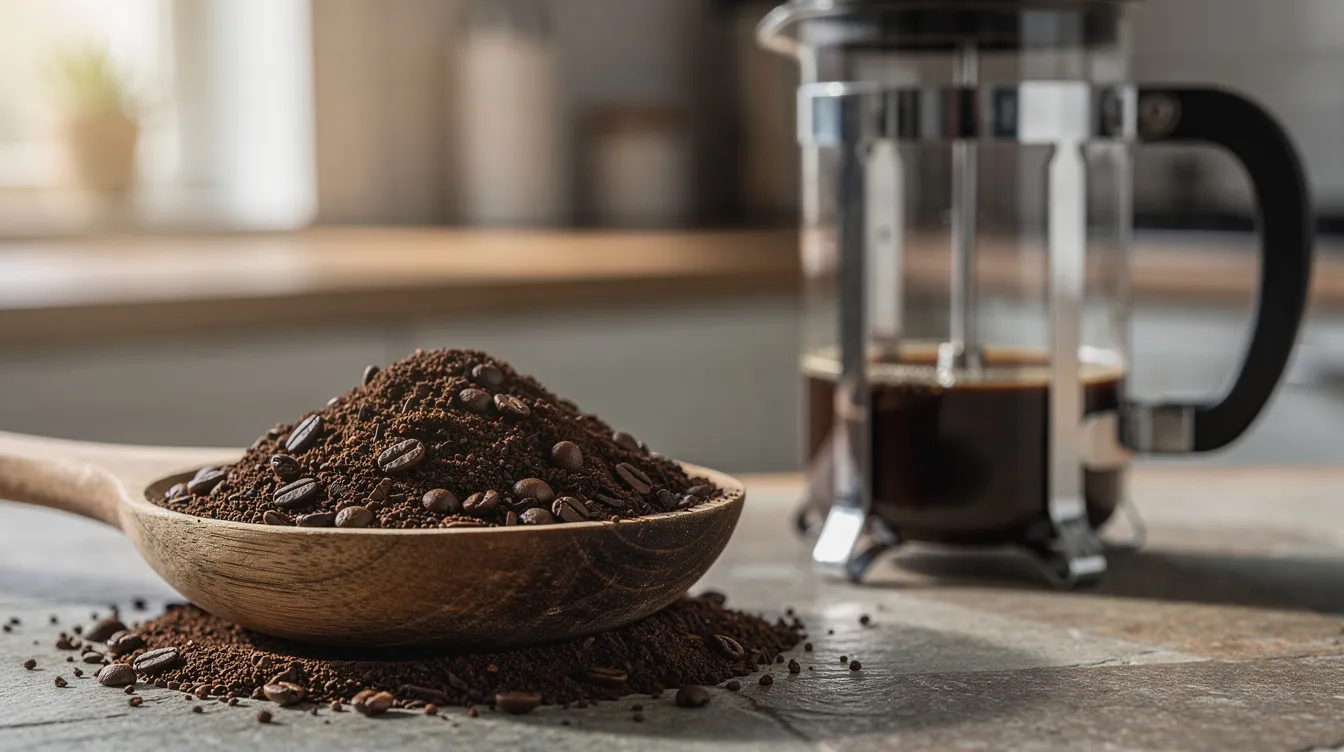
French press / cupping – Coarse grind, 690–1,300 microns. The mesh filter lets fine particles through, so grinding coarser reduces sludge and bitterness. Brew time: 4–5 minutes.
Cold brew – Extra coarse grind, 800–1,400 microns. Cold brew coffee needs an extra coarse grind to avoid bitterness during 12–18 hours of immersion at room or refrigerator temperature. Cold water dissolves compounds slowly, and the long steep compensates.
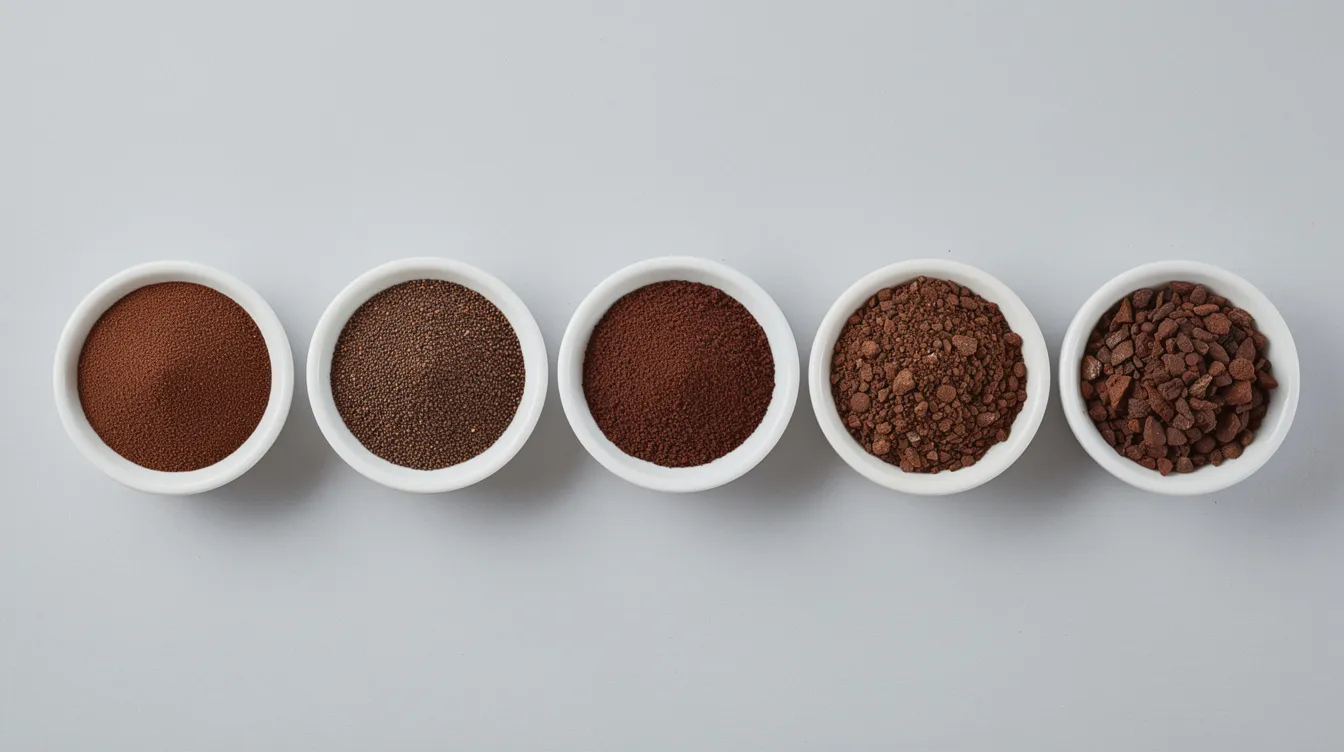
Visual and Texture Guide to Common Grind Sizes
Abstract grind names are easier to use when you can match them to something you already know by touch or sight.
Extra coarse – Resembles cracked peppercorns. Clearly separable granules you can pick up individually.
Coarse – Coarse grind resembles chunky sea salt and has a low surface area. Distinct, gritty particles.
Medium coarse – Rough sand. Grains are visible but smaller than sea salt.
Medium – Medium grind resembles regular table salt and balances extraction speed. This is where most pre-ground supermarket coffees land, because they target generic drip coffee makers.
Medium fine – Fine sand. Slightly finer than table salt; a medium fine grind used in cone-shaped pour overs.
Fine – Fine grind resembles table salt and slows down water flow, increasing extraction time. Feels smooth when rubbed between fingers with only slight grit. Used for fine espresso and moka pot brewing.
Extra fine – Extra-fine grind resembles powdered sugar and creates a high surface area for fast extraction. No grittiness at all; almost silky, like wheat flour. Reserved for Turkish coffee.
Pre ground coffee from a grocery store is usually ground to a medium size, suitable for standard drip brewers but too coarse for espresso and too fine for French press coffee. If you use multiple different brew methods, grinding your own coffee beans at home lets you dial in each one.
To calibrate without equipment, spread a small amount of grounds on white paper. Check visually for a mix of very small particles and large chunks. Then rub the grounds between your fingers; uniform grind should feel consistent, not dusty in spots and chunky in others. Grounds should be as close to all the same size as possible, because big and small coffee particles extract differently and can make a cup both sour and bitter at the same time.
Blade vs. Burr Coffee Grinders (and Why Consistency Wins)
Any coffee grinder is better than buying pre ground coffee for every method, but the type of grinder you use shapes how closely you can follow a grind size chart.
Blade grinders spin a metal blade at high speed, chopping coffee beans randomly. The result is a wide spread of particle sizes: fine dust at the bottom, large boulders on top. Blade grinders create uneven coffee particle sizes, which means some grounds over-extract (bitter) while others under-extract (sour) in the same cup. An uneven grind makes troubleshooting difficult because no single adjustment fixes the problem.
A burr grinder uses two abrasive surfaces (burrs) set at a fixed distance. Beans pass through the gap and are crushed to a more repeatable size. Burr grinders provide consistent coffee grind sizes, which makes it practical to target a specific grind for each brewing method. A high-quality burr grinder produces uniform particle distribution, reducing the proportion of fine dust and oversized chunks.
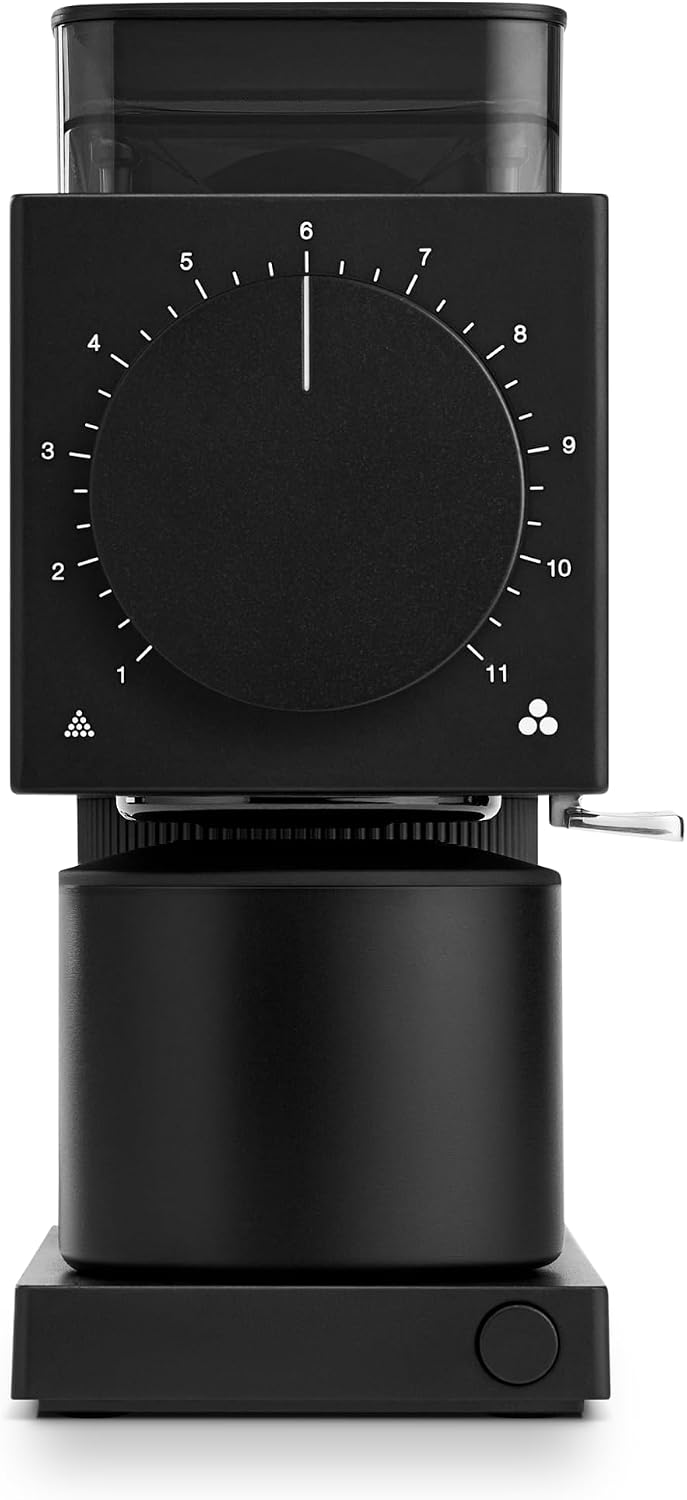
Burr grinders come in conical and flat burr designs across many price points. Even entry-level burr models are a measurable upgrade in grind consistency over blade grinders. Conical burrs tend to be less expensive; flat burrs often produce a narrower particle distribution but cost more.
One important note: grinder number markings are not standardized. A setting of “14” on one grinder may produce a completely different particle size than “14” on another. Create personal notes for each brewer rather than copying someone else’s dial position.
How to Choose the Right Grind Size for Your Coffee Brew
Choosing the right grind follows a short loop: pick your brewing method, set a starting grind from the chart, brew once, taste, then adjust.
Pick your method. French press, pour over, espresso, drip, cold brew; each has a target grind range listed above.
Set a starting grind. Use the chart’s recommendation. Pair it with a consistent coffee-to-water ratio; the coffee-to-water ratio chart covers this in detail.
Brew and taste. If the coffee tastes sour or thin, grind finer. If it tastes bitter or harsh, grind coarser. Taste is an effective feedback tool to determine grind size adjustments.
Check brew time. If brew time is wildly outside the typical range (e.g., espresso finishing in 10 seconds), grind is the primary issue. Adjust before touching ratio or temperature.
Record your settings. Write down grinder setting, brew time, dose, and taste notes. Over time, you build a personalized grind chart for your own gear. Coffee lovers who track this data dial in faster and waste fewer beans.
For cup-based dosing before moving to a scale, how much coffee per cup offers a starting framework that connects back to consistent grind use.
Practical Examples: Fixing Sour, Bitter, and Weak Coffee
Theory is useful, but flavor is the real test. Here is how to turn taste feedback into grind changes.
If coffee tastes sour or acidic: Under-extracted coffee is the likely cause. Grind finer while keeping brew time and ratio the same. If sourness persists, verify that hot water temperature is near 195–205°F (90–96°C). Water below 190°F slows extraction regardless of grind.
If coffee tastes bitter, dry, or harsh: Over extraction can make the cup taste bitter by pulling too many bitter compounds. Try a slightly coarser grind first. If bitterness lingers, shorten brew time by 15–30 seconds or reduce agitation (fewer stirs, gentler pour). Over-extraction results in a bitter or harsh coffee flavor; a bitter taste is the clearest signal to grind coarser.
French press example: A 4-minute brew produces a muddy or bitter cup. Coarsen the grind one notch. If instead the coffee tastes weak or watery, grind finer or extend the steep to 5 minutes. Under-extraction results in a sour or weak coffee flavor, so when coffee tastes weak, the grind is usually the first suspect.
Espresso example: A shot gushes out in under 20 seconds, tastes thin and sharp. Grind finer until the shot lands around 25–30 seconds. If a shot chokes the espresso machine, runs 40+ seconds, and the extracted coffee tastes dry and bitter, grind coarser. Espresso requires a fine grind size for optimal extraction, but “fine” still means a specific narrow window for your grinder and beans.
Advanced Note: Microns, Surface Area, and Precision
A micron equals one-millionth of a meter. Specialty coffee discussions sometimes reference microns to compare grinders or describe particle distribution. Most home brewers do not need lab-grade measurements; texture comparisons and taste feedback are usually enough.
Approximate micron ranges by category:
Extra fine (Turkish coffee): 40–220 µm
Fine (espresso): 180–380 µm
Medium fine (pour over): 410–930 µm
Medium (drip): 500–800 µm
Coarse (French press): 690–1,300 µm
Extra coarse (cold brew): 800–1,400 µm
Smaller micron sizes mean finer particles and more surface area. In contexts like espresso competition or comparing high-end grinders, micron-level precision helps distinguish products. Some grinder reviews discuss particle size distribution alongside median particle size, because a narrow distribution (fewer fines and boulders) improves flavor consistency.
For everyday coffee brewing, you do not need to measure microns. Focus on texture, brew time, and taste.
Freshness, Storage, and Grinding Only What You Need
Once you grind coffee beans, aromatic compounds escape within minutes. Increased surface area speeds up staling and oxidation. Even the perfect grind size cannot fix stale coffee beans.
Keep whole beans in an opaque, airtight container at room temperature, away from heat and light. Avoid storing beans in a clear jar on a sunny counter or in a frequently opened bag. Single-dosing (weighing out only the beans you need per brew) reduces the time coffee sits in a hopper exposed to air.
Grind only what you need for each brew. Use a scale when possible to dose consistently alongside your chosen grind size. Ground coffee that sits in a grinder hopper for days will taste flat compared to freshly ground beans, regardless of how precise your grind chart is.
Common Coffee Grind Size Mistakes to Avoid
Most home coffee issues trace back to a few repeatable grind errors.
Using the same grind size for every brewer. A medium grind that works for drip coffee will produce sour espresso and bitter French press coffee. Each brewing method needs its own setting.
Relying on grinder numbers instead of taste. Dial markings vary between brands and even between units of the same model. Use time and flavor as your calibration tools.
Grinding too fine for immersion methods. Espresso-fine grounds in a French press create sludge, clog the mesh, and produce a harsh grind result that overwhelms the cup.
Grinding too coarse for short brews. Coarse grounds in an espresso portafilter let water blast through without building pressure, leaving a thin, sour shot.
Neglecting grinder maintenance. Built-up oils and old ground coffee in the burrs affect grind consistency and flavor. Clean your grinder periodically following the manufacturer’s guidance.
Changing multiple variables at once. Adjusting grind, ratio, water temperature, and brew time simultaneously makes troubleshooting impossible. Change grind first.
Copying a coffee shop recipe exactly. A café’s shot time or grind setting may not translate to your home setup because their grinder, machine, and beans differ from yours.
Related Brewing Fundamentals and Next Steps
Grind size is one piece of a connected system. Pairing it with the right ratio and technique produces consistently good results.
The brewing fundamentals hub covers key variables like ratio, temperature, and technique in one place.
The coffee-to-water ratio chart is a direct companion to grind size for dialing in strength and extraction.
How much coffee per cup offers simple cup-based dosing for readers who prefer scoops before investing in a scale.
More brewing guides explore specific methods in depth once grind and ratio are dialed in.
A useful next experiment: pick one brewing method this week, pair the chart’s grind suggestion with a recommended ratio, and make small adjustments until the cup tastes balanced. Write down what works. That page of notes will be more valuable than any chart, because it is calibrated to your grinder, your water, and your beans.
FAQs: Coffee Grind Size and Troubleshooting
These FAQs address common questions not fully covered above, with concrete adjustments you can apply right away.
Why does my coffee taste sour even when I follow the recipe?
Sour-tasting coffee usually signals under-extracted coffee. The grind is likely too coarse for the brew time and method. Start by making the grind slightly finer while keeping your brew ratio and time steady. If sourness persists, check water temperature; anything below 195°F (90°C) slows extraction enough to leave acids dominant. Very light roast beans naturally taste brighter, but grinding finer and extending brew time by 15–20 seconds should still round out sweetness and reduce sharp acidity.
Can I use pre-ground coffee for every brew method?
Pre ground coffee is workable but limiting. It is typically ground to a single medium size aimed at standard drip machines. Using that same medium grind for espresso yields sour, under-extracted shots. Using it in a French press often produces a muddy, over-extracted final brew. Anyone who regularly uses multiple brew methods will benefit from a grinder at home, even an entry-level burr grinder, so they can match grind size to each method and actually use a grind size chart.
How do I know if my grinder is producing uniform grounds?
Spread grounds on a sheet of white paper and look for a mix of fine dust and large chunks. Feel the grounds between your fingers; consistent texture means reasonable uniformity. A small amount of variation is normal, but if you see a lot of fine particles alongside visible boulders, your cup will carry both sour and bitter notes simultaneously. If a grinder consistently produces a wide spread of sizes at coarser settings, shorter brew times can partially compensate, but upgrading to a burr grinder with tighter tolerances is the more reliable fix for a delicious cup.
What grind size should I use if I switch from a paper filter to a metal filter?
Metal filters (in pour over, AeroPress, or some drip brewers) let more fines and oils pass into the cup, producing fuller body and potentially more sediment. Try a slightly coarser grind than you used with paper to reduce clogging and excess sediment while keeping brew time in range. Pay attention to both flow rate and taste: if the brew stalls or the coffee tastes harsh, go coarser; if it drains too fast and tastes thin, go a bit finer. A balanced cup through a metal filter will have more body than paper but should not be gritty or astringent.
Is extra fine grind only for Turkish coffee?
Extra fine, flour-like grind is designed for Turkish coffee because the grounds remain in the cup and the method relies on full, fast extraction in boiling water. For most home methods (espresso, moka pot, pour over, drip), extra fine is too fine and will cause over extraction or clog the brew device entirely. Some niche recipes or specialty experiments may call for it, but unless a recipe specifically says “Turkish grind,” stay within fine or coarser ranges as listed in the chart. Coffee makers and espresso machines are not built to handle particles that small.
How Capitol City Coffee Rates Coffee and Coffee Machines
Every coffee and coffee machine we recommend is scored on the same 100-point scale, so a recommendation on one page means the same thing as a recommendation on any other. Each pick is also labeled with how we reached its score.
Research-ratedScored from the roaster or manufacturer’s published specifications, independent results such as Coffee Review blind cuppings and SCA brewer certification, and patterns across verified buyer reviews. Most of our current picks are research-rated.
Hands-on testedThe Capitol City Coffee team has brewed the coffee or used the machine ourselves, following the testing steps below. We only use this label when that testing actually happened, and we show the date we tested.
Coffee beans: 100-point scale
What we score
Points
What we look at
Origin and sourcing transparency
20
Country, region, farm or cooperative, altitude, bean variety, and processing method are clearly disclosed.
Flavor evidence
25
Independent cupping scores, how closely the tasting notes match what the origin is known for, and our own cupping notes when hands-on tested.
Roast and freshness
15
Roast level stated, roast-date practices, whole-bean availability, and packaging with a one-way valve or resealable bag.
Brew versatility
15
How well the roast suits pour-over, drip, French press, cold brew, and espresso.
Value
15
Price per ounce compared with similar single-origin coffees or blends.
Buyer feedback
10
Volume and consistency of verified reviews, and recurring complaints about staleness, bitterness, or shipping.
Coffee machines and gear: 100-point scale
What we score
Points
What we look at
Brewing performance
25
Water temperature in the 195–205°F range, even extraction, and SCA certification or published test data.
Build quality and reliability
20
Materials, known failure points, and long-term owner reports.
Ease of use and cleaning
15
Setup, the daily routine, descaling, and dishwasher-safe parts.
Fit for your kitchen
10
Capacity, counter footprint, and noise.
Useful features
10
Programming, grind and temperature control, and carafe type. Features that improve the cup count more than extras that do not.
Value
10
Price compared with machines that perform similarly.
Warranty and support
10
Warranty length, parts availability, and how the brand handles repairs.
What the grades mean
Score
Grade
What it means
90–100
A
Exceptional. Our first recommendation for the feeling and setting described.
80–89
B
Strong. Excellent, with minor trade-offs we explain.
70–79
C
Good. Worth it for specific needs, with clear compromises.
Below 70
—
Not recommended. We do not feature these as picks.
How we test hands-on
When a pick carries the Hands-on tested label, this is the method behind it, and we note the date we tested.
Coffee: brewed fresh from whole beans following Specialty Coffee Association guidelines (water between 195 and 205°F, about 1 gram of coffee to every 15 to 18 grams of water) in the brew methods the roast suits best, such as pour-over, French press, or espresso. We taste it black first, then with milk if that is how most people drink it, and each taster scores it on their own before we compare notes.
Machines: used in our everyday routine rather than a single demo. We brew both full and small batches, check the brewing temperature and brew time, and run the cleaning or descaling steps the manual calls for.
How we choose the feeling and setting
We match each coffee to a mood and a moment based on its flavor profile and roast. Bright, citrusy light roasts suit energizing mornings. Chocolatey, full-bodied medium roasts suit slow or social moments. Richer roasts suit espresso and milk drinks. Each pick explains which facts led us to that match.
Our scores stay independent
Every score comes only from the criteria above. No brand can pay for a pick or a higher grade. We re-check ratings when a roast, listing, or model changes, and update or remove picks that no longer earn their grade.
Some links on this page are affiliate links. As an Amazon Associate, Capitol City Coffee earns from qualifying purchases, at no extra cost to you.
Questions about a rating? Reach the Capitol City Coffee team through our contact page.