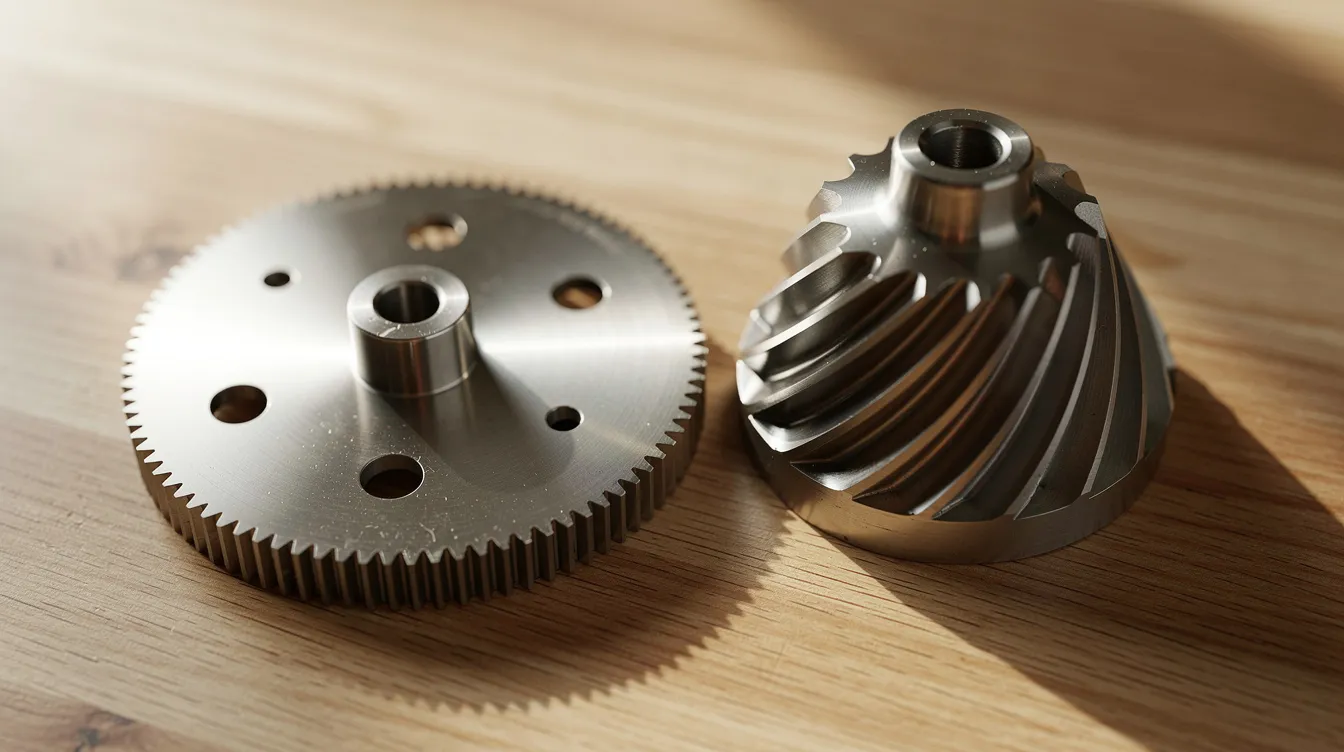
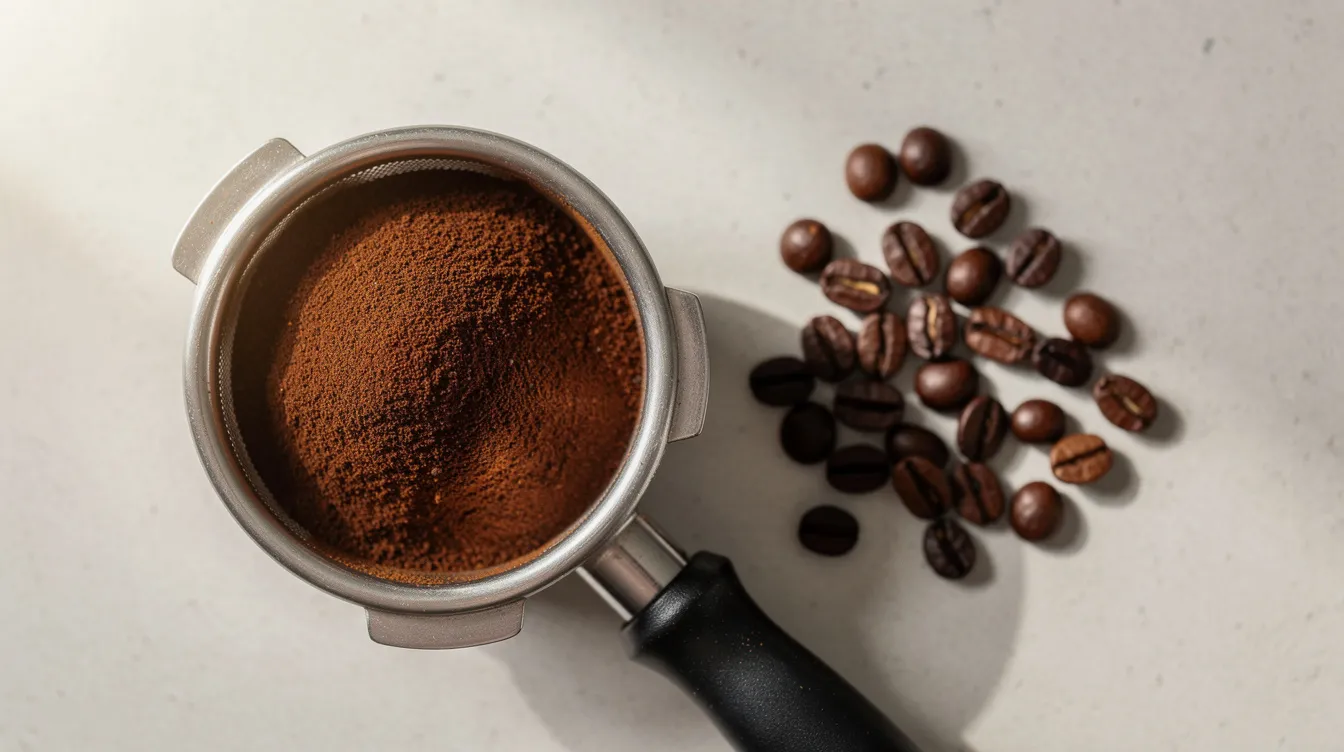
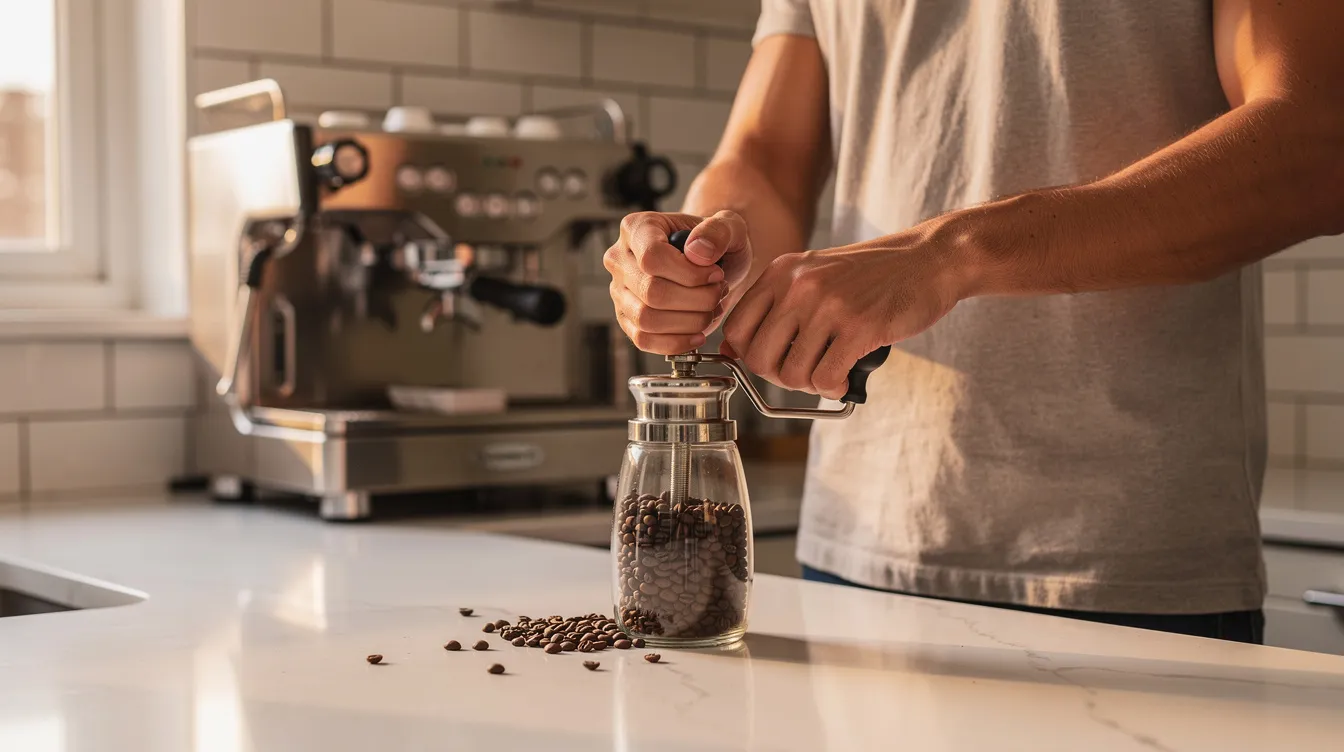
Choosing between a conical and flat burr grinder comes down to what you taste and how you brew. Flat burr grinders generally produce a more uniform grind size and a clearer, cleaner cup that highlights origin flavors. Conical burr grinders tend to emphasize body and sweetness, run quieter, and cost less at comparable quality tiers. Neither is universally better-the right coffee grinder depends on your brewing method, budget, noise tolerance, and flavor priorities.
Best conical pick
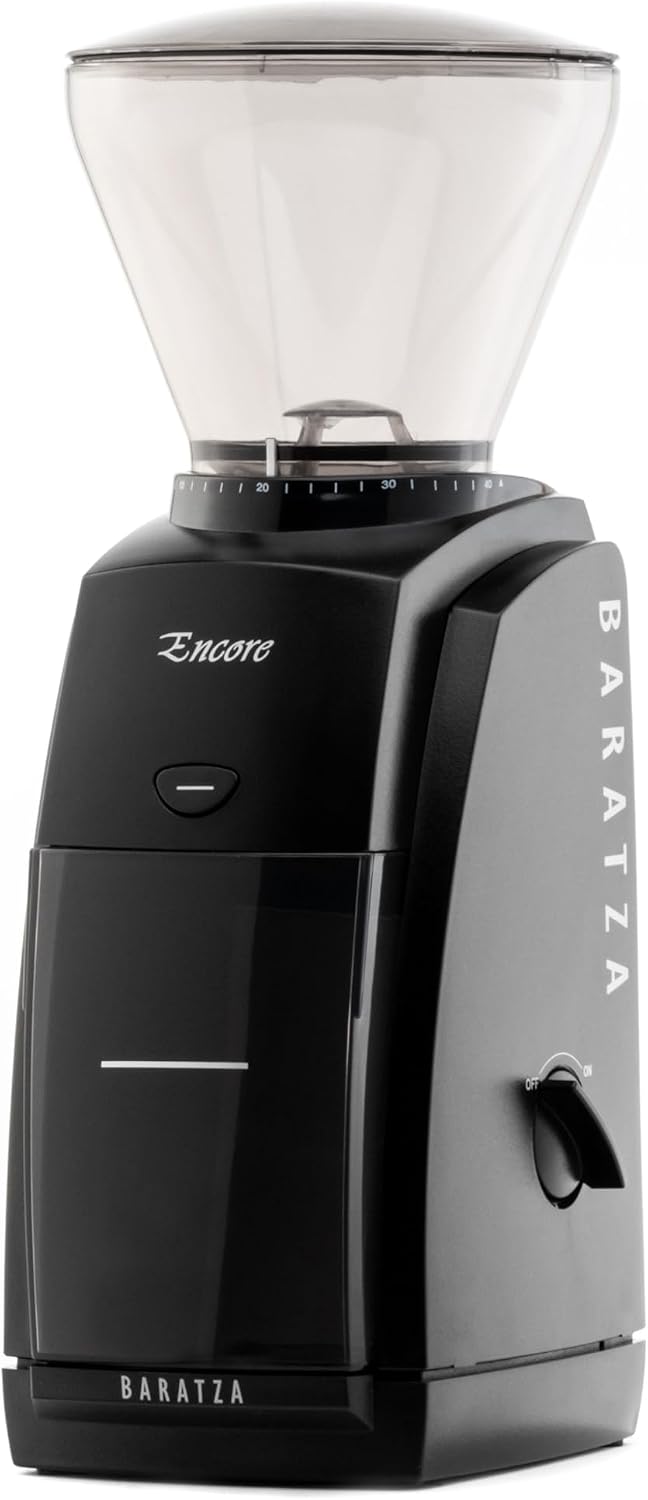
For this roundup, Baratza Encore is the conical we recommend first—the same pick at the top of our At-a-glance cards below.
Flat burr grinders usually deliver tighter particle consistency and cleaner flavor clarity, making them a strong pick for espresso precision and light-roast filter coffee.
Conical burr grinders create a fuller body and rounder flavor profile, operate at lower RPM with less heat, and are generally more affordable.
For mixed brew methods, darker roasts, and quieter kitchens, conical burr grinders are typically the safer all-round choice.
Overall grinder design-motor speed, burr size, retention, and workflow features-often matters more than simply choosing conical or flat burrs.
This guide is researched editorial analysis based on verified product data and expert consensus, not hands-on testing. Individual grinder models can outperform expectations for their burr type.
Affiliate & Editorial Disclosure
Capitol City Coffee may earn a commission from qualifying links to grinders mentioned in this guide, at no extra cost to you. Rankings and recommendations are based on researched editorial analysis, reputable expert sources, and verified product specifications-not on commission rates or manufacturer payments. We write as an independent coffee editorial and affiliate publication, not as a grinder or coffee seller.
Quick Verdict: Conical vs Flat Burr Grinder
If you are a US home user deciding today, the short answer is this: flat burr grinders edge ahead for espresso clarity and precision with lighter roasts, while conical burr grinders are a more forgiving, quieter, and often cheaper option for everyday brewing across multiple methods.
Choose a flat burr grinder when:
You want a unimodal particle distribution with fewer fines for cleaner extraction
Espresso precision and micro-adjustability are top priorities
You brew mostly filter coffee and want to highlight distinct origin flavors
You’re comfortable managing slightly higher noise and retention
Choose a conical burr grinder when:
You prefer sweeter, fuller-bodied cups with more texture
You switch between espresso, French press, and drip regularly
Quieter grinding process and lower heat matter to you
You want lower grind retention for easy single-dosing
By brew method: flat for clarity in pour-over and bright espresso shots; conical for body in immersion brews and forgiving espresso dialing. Both grinder types can be suitable for various brewing methods depending on desired flavor profiles.
Price, workflow, and specific grinder models often tip the scales more than burr geometry alone-details covered below.
Key Differences at a Glance (Table Summary)
The table below gives a high-level comparison between conical burr grinders and flat burr coffee grinders across the factors that matter most to home coffee drinkers. Where one side generally wins, it’s noted-but individual models vary, so treat this as a starting point.
Aspect
Conical Burr Grinders
Flat Burr Grinders
Burr Shape
Cone-shaped inner burr + ring-shaped outer burr
Two horizontal disc-shaped burrs facing each other
Particle Distribution
Bimodal (more fines + larger particles)
Unimodal (tighter, more uniform grind size) ✓
Flavor Profile
Fuller body, sweetness, rounder mouthfeel
Clarity, brightness, origin flavors ✓
Fines & Clarity
More fines; richer but less transparent
Fewer fines; cleaner cup ✓
Retention & Static
Lower retention (~0.3–0.8 g) ✓
Higher retention (~0.8–2.0 g); more static
Speed & Noise
Lower RPM (400–600); quieter ✓
Higher RPM (1,300–1,500); louder
Heat
Less heat during operation ✓
More heat from higher surface speeds
Workflow & Single-Dosing
Gravity-drop designs; easier single-dosing ✓
May need bellows/purge; improving in newer models
Cost / Value
More affordable at comparable tiers ✓
Higher starting price; more expensive motors
Best For
Mixed methods, darker roasts, quiet homes
Espresso precision, filter clarity, light roasts
What Burr Grinders Are (and Why Blade Grinders Fall Short)
A burr grinder uses two abrasive surfaces-called burrs-set at a precise, adjustable distance to crush coffee beans into a controlled grind size. Whether the burrs are conical or flat, the principle is the same: coffee grounds pass through the gap between the burrs, and the gap width determines how fine or coarse the result is.
Blade grinders, by contrast, chop beans with spinning impeller blades. The result is a highly uneven particle distribution full of fines and boulders. Inconsistent grind sizes lead to uneven extraction-pulling sour flavors from under-extracted large pieces and bitter notes from over-extracted dust. Grind consistency is crucial for achieving quality espresso shots, and blade grinders simply cannot deliver it.
Upgrading from blade grinders to any quality burr grinder-conical or flat-is a far bigger improvement in coffee quality than choosing between burr shapes.
The concepts that matter from here: grind range (espresso-fine to French press coarse), particle consistency, fines (tiny powder-like particles), and how all of these affect flavor and even extraction across different brew methods.
How Conical Burr Grinders Work
Conical burr grinders use a cone shaped burr inside an outer ring-shaped burr to crush coffee beans. The inner burr has angled teeth that mesh with the outer burr’s ridged surface, crushing beans as they move downward through the narrowing gap.
Beans fall from the hopper into the space between the two burrs. Gravity assists the grinding process, pulling grounds downward and out into a bin or portafilter. This vertical path is one reason conical burr grinders produce less heat and noise during operation-they don’t rely on centrifugal force to move grounds through.
Grind range: Most conical burr grinders for home use handle espresso through French press. The geometry can be optimized for specific ranges, but generally speaking, conicals offer versatile coverage across brew methods.
Particle distribution: Conical burrs often result in a bimodal grind size distribution-a mix of fines and larger particles. This contributes to extra body and perceived sweetness, which many coffee drinkers prefer in darker roasts and immersion brews.
Speed, noise, and heat: Running at a lower RPM (typically 400–600 in home models), conical burr grinders are generally quieter than flat burr grinders. They generate less heat during grinding, which can help preserve volatile aroma compounds. Conical burrs produce less heat and noise during operation overall.
Retention: Gravity-assisted exit paths mean conical burrs have lower retention due to gravity’s assistance-often just 0.3–0.8 grams. This makes them well-suited for single-dosing and switching between coffee beans frequently.
Popular examples include the Baratza Encore ESP (40 mm conical, ~550 RPM, under $200) and the Niche Zero (63 mm conical, ~330 RPM), which represent entry-level and premium tiers respectively.
How Flat Burr Coffee Grinders Work
Flat burr grinders use two horizontal, ring-shaped discs facing each other-one burr remains stationary while the other spins at high speed. In a flat and conical burr comparison, that structure differs from conicals, which pull beans downward through a cone-shaped burr set. Beans enter at the center of the two rings and are forced outward by centrifugal force as they’re ground between the burr faces.
Once particles reach the set grind size, they exit through side chutes into a dosing chamber or portafilter. This horizontal path is fundamentally different from the gravity-drop approach of conicals.
Grind range: Flat burr grinders are common in commercial espresso grinders and increasingly popular in high-end home setups. Some models cover both espresso and filter coffee, though many are optimized for narrower bands.
Particle distribution: Flat burrs produce a unimodal grind size distribution-a tighter clustering around the target particle size with fewer large outliers. Flat burrs tend to deliver a more uniform grind size, and flat burr grinders generally achieve better grind consistency than conical ones, which directly translates to more even extraction and a cleaner cup.
Speed, noise, and heat: Flat burr grinders operate at higher RPM (typically 1,300–1,500 in home models), making them noisier. They spin faster and flat burrs often generate more heat during grinding than conical burrs. At home volumes, this is usually manageable, but it’s a genuine consideration. Noise levels depend on grinder design and soundproofing features as well.
Retention and static: Flat burrs retain more coffee grounds than conical ones-often 0.8–2.0 grams. Higher RPM in flat burrs increases static and retention. Modern designs combat this with bellows, anti-static chutes, and tilted burr chambers. Retention can lead to stale grounds contaminating fresh coffee if not managed.
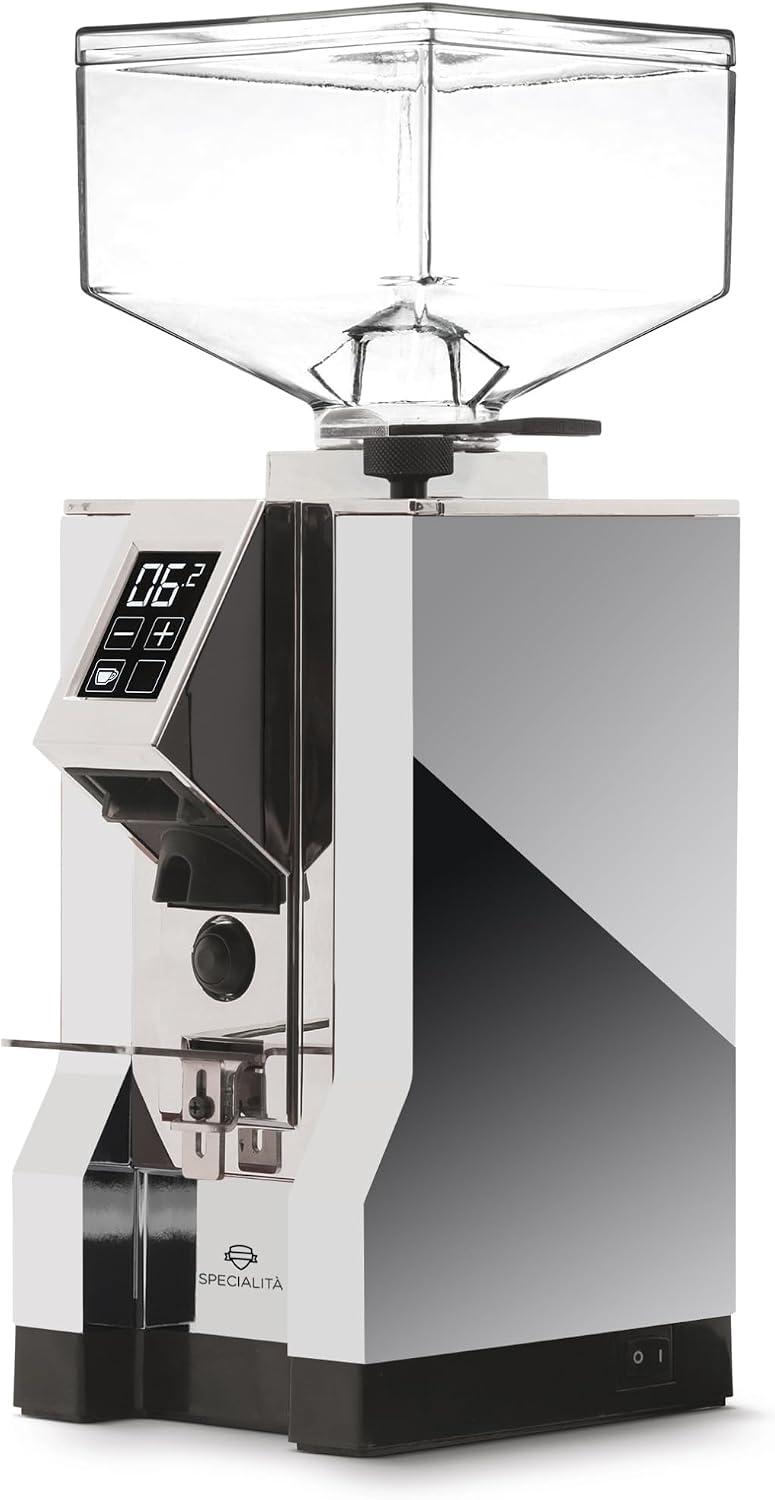
Well-known models include the DF64 Gen 2 (64 mm flat, ~1,400 RPM) and the Eureka Mignon Specialita (55 mm flat, ~1,350 RPM), both connecting clarity-forward reputations with the particle distribution characteristics described above.
Flavor Profile & Particle Distribution: Conical vs Flat
Why does particle size matter so much? When all the grounds in your dose are close to the same size, water extracts flavor compounds at a more uniform rate. This leads to even extraction-less bitterness from over-extracted fines, less sourness from under-extracted boulders.
Conical burrs: Conical burrs tend to produce more fines than flat burrs, yielding a bimodal grind. The result is a richer, rounder mouthfeel and a perception of added sweetness, especially with medium-to-dark roasts. Conical burrs are associated with richer, sweeter brews that many coffee enthusiasts enjoy.
Flat burrs: Flat burrs produce fewer fines, enhancing flavor clarity. The tighter, unimodal distribution creates a cleaner, more transparent cup that highlights distinct origin flavors, acidity, and subtle tasting notes. Flat burrs produce a clearer, cleaner cup profile overall.
Filter coffee: Flat burr grinders often excel at highlighting clarity in pour-over and drip-flat burrs are preferred for brewing methods requiring clarity. Conical burr grinders can give more textured results in French press and cold brew where body is welcome.
Espresso: Flat burr grinders are widely preferred for their consistency in espresso and filter coffee, especially for bright, layered shots. Conical burrs can be more forgiving to dial in and flattering to darker roasts.
These are general tendencies of burr geometry. A well-made conical burr grinder often outperforms a mediocre flat, and vice versa. Avoid thinking in absolutes-burr shape is one variable among many.
Performance Factors Beyond Burr Shape
Conical or flat burrs are one piece of the puzzle. Grinder design details can outweigh burr type in real-world performance. Here’s what else to evaluate:
Burr size: Larger burrs (64 mm+ flat, 63 mm+ conical) grind faster, stay cooler per dose, and often deliver more consistent grind size. The burr size of a grinder determines how efficiently it processes coffee beans.
Motor speed and torque: A lower RPM motor with sufficient torque can minimize heat and noise-good for home use. Flat burr grinders typically require more power than conical grinders. High RPM benefits speed in a commercial setting.
Retention and static: Chute geometry, anti-static coatings, and bellows shape retention more than burr type alone. Pay attention to how a grinder handles grounds exiting the burrs.
Adjustment system: Stepped vs stepless adjustment matters for dialing in espresso precisely. Stepless designs let you make micro-adjustments that stepped grinders skip over.
Durability and warranty: Steel burrs are easier to replace; ceramic burrs last longer but can chip. Most US home grinders carry 1–2 year warranties. Build quality and parts availability influence long-term value more than burr type.
For detailed model matchups, see all grinder comparisons on Capitol City Coffee.
Option A: Conical Burr Grinders in Depth
Conical burr grinders are the most common choice for home users stepping up from blade grinders or entry-level machines. Conical burr grinders are often the standard for entry-level models, making them the default starting point for many coffee enthusiasts.
Performance: Conical burrs produce a bimodal particle distribution that favors body and sweetness. Grind range typically spans espresso through French press, making these versatile for households that brew multiple ways.
Workflow & cleaning: Many single-dose conical designs feature a direct gravity-drop path, keeping retention low. Switching between brew methods and coffee makes the process straightforward. Cleaning access is usually simpler.
Noise & speed: Lower RPM means quieter operation-a genuine advantage for apartment living or early mornings. Grinding coffee at 400–600 RPM produces noticeably less noise than a flat burr running at 1,400 RPM. Trade-off: some models grind slightly slower per dose.
Durability & warranty: Common materials include hardened steel burrs (sometimes ceramic). Under daily home use, burrs often last several years. Replacement burr sets for smaller conicals (e.g., 40 mm) are relatively affordable.
Limitations: Less extreme particle uniformity than top flat burr coffee grinders. Some conical designs produce more clumping at espresso-fine settings. Stepped adjustment in budget models can limit precision.
Best for: Home espresso beginners, mixed-brew households, noise-sensitive users, and value-conscious buyers who want good coffee without paying a premium.
Option B: Flat Burr Grinders in Depth
Flat burr grinders are the go-to in many cafés and in higher-end home setups where accuracy and flavor clarity take priority. Flat burr grinders are generally more expensive than conical grinders, but the precision they offer can justify the investment for dedicated brewers.
Performance: Unimodal particle distribution delivers excellent grind consistency and a consistent grind size that translates to clean, well-defined cups. Flat burr grinders are widely preferred for espresso shots and clarity-forward filter coffee.
Workflow & cleaning: Flat burr grinders often require more cleaning due to retention. Bellows-equipped models help purge leftover grounds when changing grind size or beans. This adds a step but keeps flavors clean.
Noise, heat & static: Higher RPM produces as much heat and noise as you’d expect from faster-spinning burrs. Modern mitigations like anti-static chutes (Eureka’s approach, for example) and slower-gear motor designs help. Static can cause grounds to cling to containers.
Durability & warranty: Flat burr grinders often feature heavier builds with larger burrs. Commercial models carry longer warranties; home models typically 1–2 years. Flat burrs require precise alignment-misalignment degrades performance visibly.
Limitations: Flat burr grinders typically start at a higher price point. Flat burr grinders require more powerful motors, increasing costs. Switching rapidly between espresso-fine and coarse filter settings can be less convenient.
Best for: Espresso-focused drinkers, fans of light-to-medium roast filter coffee, and home baristas who prize precision and flavor clarity over noise and price.
Winner by Use Case
There is no universal winner when it comes to conical vs flat burrs, and conical and flat burrs can both suit different brewing methods when matched to the flavor profile you want. The better choice depends on how you brew, what you taste, and what you value in your daily workflow.
Mostly espresso (home): Flat burr grinders win when flavor clarity and micro-adjustability are top priorities. Conical burr grinders remain a strong alternative for darker roasts and easier dialing in.
Mostly filter coffee (drip, pour-over): Flat burr grinders often highlight clean, distinct flavor notes. Conical burr grinders can give a richer, fuller-bodied cup-a matter of personal preference.
Immersion & cold brew (French press, cold brew): Conical burr grinders typically shine due to body and forgiving grind range. Flat burr grinders can help reduce sludge when dialed with care, producing less fines for a cleaner press.
Mixed methods household: A versatile conical burr grinder handles the widest range most gracefully. A flat burr grinder with a wide grind range also works, depending on noise tolerance and budget.
Compare popular flat and conical models in our grinder head-to-heads.
Cost, Value & Long-Term Ownership
Both conical and flat burr grinders span from well under $200 to over $1,000 in the US, with different value propositions at each tier.
Price tiers: Entry-level conical burr grinders start around $150–$250 (e.g., Baratza Encore ESP). Mid-range flat burr grinders run $400–$700 (e.g., Eureka Mignon Specialita, DF64 Gen 2). Prosumer and commercial-level flat burr coffee grinders often exceed $800.
Value beyond burr type: Build quality, motor robustness, parts availability, burr replacement costs, and US-based support all contribute. Conical burr grinders are generally more affordable compared to flat burr grinders at similar quality.
Durability: Steel burrs under daily home use (up to ~300 g/day) often last several years before showing wear. Ceramic burrs last longer but risk chipping. Signs it’s time to replace: needing to grind finer for the same result, more dust-like fines, and dulled flavor.
Burr upgrades: Some high-end burr sets (flat and conical) can significantly change particle distribution and flavor without replacing the entire grinder-worth researching for your specific model.
Weigh lifetime cost per year of use rather than just sticker price. A $400 flat burr grinder lasting five years costs less per year than a $200 conical replaced every two.
Which Should You Choose? (Decision Guide)
Here’s a practical framework for choosing between a conical burr grinder and a flat burr grinder.
Start with three questions:
Budget: Under $300 or over $300? Under $300, conical burrs dominate in quality options. Over $300, flat burr grinders become competitive.
Priorities: Flavor clarity or body? Quiet operation or speed? Low maintenance or precision?
Match your profile:
Apartment espresso beginner: Conical burr grinder-quieter, more forgiving, better value.
Light-roast pour-over fan: Flat burr grinder-clarity and origin flavor separation.
Weekend French press drinker: Conical burr grinder-body, sweetness, easy cleanup.
Daily latte household: Either works; conical for noise and budget, flat for shot precision.
If you’re still grinding coffee with a blade grinder, upgrading to any quality burr grinder is the single biggest improvement you can make. Fine-tune your choice of conical or flat burrs in your next purchase based on experience.
For the full breakdown on why burr beats blade, read our burr vs blade grinder comparison.
Alternatives & Related Grinder Comparisons
Burr shape is only one dimension of the decision. Some buyers are better served by choosing between specific grinder models than debating conical vs flat in the abstract.
Compare the Baratza Encore vs Encore ESP to see how a single conical burr platform handles different use cases.
See the Fellow Ode vs Baratza Encore for a flat vs conical matchup in popular home grinders.
Browse all grinder comparison guides at the grinder hub, or explore all coffee gear comparisons.
Niche options: A hand grinder (almost always conical burrs) can deliver great coffee at lower cost. Single-dose flat burr grinders and on-demand café grinders all follow the same conical vs flat principles discussed here.
Capitol City Coffee regularly publishes new grinder comparisons, burr upgrade guides, and workflow tips-bookmark us as an ongoing resource.
FAQs: Conical and Flat Burr Grinders
These questions address practical details not fully covered above, focused on everyday grinder ownership for US home users researching conical vs flat burr grinder options.
Do conical or flat burr grinders need different cleaning routines?
Both conical and flat burr grinders benefit from regular brushing and occasional deeper cleaning, but flat burr grinders may demand more attention due to typically higher retention and their horizontal burr orientation, which traps grounds more easily. A light weekly brush-out works for most home users, with a deeper clean (removing burrs, wiping surfaces) every one to three months. If you grind dark or oily coffee beans, increase frequency to prevent rancid oil buildup.
Are conical burr grinders better for oily or dark roast beans?
Conical burr grinders are often more forgiving with dark, oily beans because of their simpler, gravity-assisted grind path and lower likelihood of chute clogging. Well-designed flat burr grinders can also handle dark roasts effectively, but may need more frequent cleaning to prevent oily residue from affecting coffee quality and causing grounds to stick.
Can one grinder handle both espresso and filter coffee well?
Many modern grinders-both conical and flat-are designed for a wide grind range, but performance varies by model, not just burr type. Conical burr grinders are often easier to adjust across large ranges without recalibration. Some flat burr grinders excel within narrower bands (espresso-only or filter-only), though models like the DF64 Gen 2 aim to cover both reasonably well.
Is upgrading burrs in my existing grinder worth it?
Swapping to upgraded flat or conical burrs can noticeably change particle distribution and flavor profile, but only if the grinder’s motor and alignment are good enough to support the new burrs. Check manufacturer guidance and community consensus for your exact model before investing. A poorly aligned chassis with premium burrs can underperform a well-sorted stock grinder.
How long do burrs last before they affect coffee quality?
Under typical home use, steel burrs often last several years-or hundreds of pounds of coffee-before performance degrades noticeably. Lifespan depends on burr material, bean hardness, and how often you grind. Signs of wear include needing to grind finer than before for the same extraction, an increase in dust-like fines, and a flatter, duller flavor profile in both espresso and filter coffee.
How Capitol City Coffee Rates Coffee and Coffee Machines
Every coffee and coffee machine we recommend is scored on the same 100-point scale, so a recommendation on one page means the same thing as a recommendation on any other. Each pick is also labeled with how we reached its score.
Research-ratedScored from the roaster or manufacturer’s published specifications, independent results such as Coffee Review blind cuppings and SCA brewer certification, and patterns across verified buyer reviews. Most of our current picks are research-rated.
Hands-on testedThe Capitol City Coffee team has brewed the coffee or used the machine ourselves, following the testing steps below. We only use this label when that testing actually happened, and we show the date we tested.
Coffee beans: 100-point scale
What we score
Points
What we look at
Origin and sourcing transparency
20
Country, region, farm or cooperative, altitude, bean variety, and processing method are clearly disclosed.
Flavor evidence
25
Independent cupping scores, how closely the tasting notes match what the origin is known for, and our own cupping notes when hands-on tested.
Roast and freshness
15
Roast level stated, roast-date practices, whole-bean availability, and packaging with a one-way valve or resealable bag.
Brew versatility
15
How well the roast suits pour-over, drip, French press, cold brew, and espresso.
Value
15
Price per ounce compared with similar single-origin coffees or blends.
Buyer feedback
10
Volume and consistency of verified reviews, and recurring complaints about staleness, bitterness, or shipping.
Coffee machines and gear: 100-point scale
What we score
Points
What we look at
Brewing performance
25
Water temperature in the 195–205°F range, even extraction, and SCA certification or published test data.
Build quality and reliability
20
Materials, known failure points, and long-term owner reports.
Ease of use and cleaning
15
Setup, the daily routine, descaling, and dishwasher-safe parts.
Fit for your kitchen
10
Capacity, counter footprint, and noise.
Useful features
10
Programming, grind and temperature control, and carafe type. Features that improve the cup count more than extras that do not.
Value
10
Price compared with machines that perform similarly.
Warranty and support
10
Warranty length, parts availability, and how the brand handles repairs.
What the grades mean
Score
Grade
What it means
90–100
A
Exceptional. Our first recommendation for the feeling and setting described.
80–89
B
Strong. Excellent, with minor trade-offs we explain.
70–79
C
Good. Worth it for specific needs, with clear compromises.
Below 70
—
Not recommended. We do not feature these as picks.
How we test hands-on
When a pick carries the Hands-on tested label, this is the method behind it, and we note the date we tested.
Coffee: brewed fresh from whole beans following Specialty Coffee Association guidelines (water between 195 and 205°F, about 1 gram of coffee to every 15 to 18 grams of water) in the brew methods the roast suits best, such as pour-over, French press, or espresso. We taste it black first, then with milk if that is how most people drink it, and each taster scores it on their own before we compare notes.
Machines: used in our everyday routine rather than a single demo. We brew both full and small batches, check the brewing temperature and brew time, and run the cleaning or descaling steps the manual calls for.
How we choose the feeling and setting
We match each coffee to a mood and a moment based on its flavor profile and roast. Bright, citrusy light roasts suit energizing mornings. Chocolatey, full-bodied medium roasts suit slow or social moments. Richer roasts suit espresso and milk drinks. Each pick explains which facts led us to that match.
Our scores stay independent
Every score comes only from the criteria above. No brand can pay for a pick or a higher grade. We re-check ratings when a roast, listing, or model changes, and update or remove picks that no longer earn their grade.
Some links on this page are affiliate links. As an Amazon Associate, Capitol City Coffee earns from qualifying purchases, at no extra cost to you.
Questions about a rating? Reach the Capitol City Coffee team through our contact page.