


As an Amazon Associate I earn from qualifying purchases. This page contains affiliate links; we may earn a commission if you buy through them.
Do you drink instant coffee or are you more of a traditional coffee fan?
Instant coffee is not a typical coffee lover’s favorite for one main reason, its taste can be pretty bad (at least, compared to traditionally brewed coffee). In fact, even the best instant coffee brands cannot compete with the quality of the traditionally brewed coffee.
But there’s one advantage that instant coffee has that other coffees don’t have: convenience. As its name already suggests, instant coffee is made to be made quickly, almost “instantly.” If you are always rushing around during the morning for work or school, which coffee would you rather have time-wise: brewed coffee which may take 10 minutes or instant coffee which literally takes one minute or less to make?
If you are looking for a quicker way to make coffee while not sacrificing as much taste as possible, you’re in luck because, in this article, we are going to show you how to make instant coffee tastes better.
As a disclaimer, it may still not compare to brewed coffee, but this article will help you how to increase the quality of your instant coffee’s taste. The exciting part is, as you will later see, you’ll have a few options on how to make your instant coffee taste better. You’ll have the freedom and opportunity to experiment with your instant coffee that will match your taste buds; we’re just giving you ideas!
So, without further ado, let’s get started!
What is Instant Coffee?

Instant coffee is ground, brewed coffee that you can quickly make by simply pouring hot water in your cup, alongside the coffee. You can add milk and sugar for a sweeter taste.
You might think that instant coffee is a product of the 20th or 21st century, but in reality, instant coffee was invented as early as the 1700s. The first instant coffee we had was made way back in the 1700s in Britain, to be followed by the American version in the 1800s.
Instant Coffee vs. Ground Coffee
Instant coffee and ground coffee may look the same, but they are very different. There are some key differences between instant and ground coffee including the preparation, production, and taste. Let’s start with the obvious: preparation.
Preparation
Preparing instant coffee is obviously different from preparing ground coffee. Preparing instant coffee is very simple: add instant coffee to your cup, pour in hot water, and you’re literally done! You can add sugar and milk for a better and sweeter taste if you prefer.
On the other hand, preparing ground coffee requires certain knowledge and skills. You need to learn which equipment to use, how much water to put in, how much ground coffee to put, and so on – and we’re not even talking about the preparation itself!
Even the actual preparation is complicated compared to preparing instant coffee: it will depend if you want an espresso, cold brew, or French press out of it.
If you do want to learn more about the various types of coffee you can make, check out “Best Coffee Equipment, Everything You Need to Know” here.
Production
The initial steps in producing instant and ground coffee are actually similar: both start with roasted beans, and these same beans are then ground. After that, there comes the difference.
Ground beans are left to be ground and it’s you who will brew the coffee. On the other hand, instant coffee was ground coffee which is brewed into actual coffee. Then the coffee will either be dried out in hot air or it will be freeze-dried. The end result is instant coffee.
Taste
Unless you just like coffee and don’t care about their taste differences, the taste difference between a ground coffee and instant coffee is noticeable – and ground coffee almost always wins here.
This is mainly because of the coffee’s composition difference between the two – ground coffee’s composition is more preserved than instant coffee. This is the reason why instant coffee mostly cannot compete with ground coffee – ground coffee has better composition than instant coffee.
How to Make Instant Coffee (And How to Make It Better)

Making instant coffee is very simple – as it should be. In fact, we have enumerated the steps already above, and here’s the step again: Brewing techniques for coffee enthusiasts can vary widely, allowing each individual to find their perfect cup. Many of these techniques emphasize the importance of water temperature and grind size. Experimenting with different methods can lead to a deeper appreciation of coffee’s rich flavors.
1. Put instant coffee in the cup.
2. Pour hot water in a cup.
3. Add milk and sugar (optional)
4. Enjoy a great cup of coffee!
It’s that simple as that, and if you have reserved hot water, you can literally make an instant coffee in a minute or less.
There’s no special knowledge needed when making instant coffee and there is no equipment needed if you want to make instant coffee. All you need is the instant coffee itself, hot water, cup, and milk, and sugar (if you want).
In some packs, milk (or sometimes, cream) and sugar are already added in the instant coffee, so you won’t need separate milk and sugar when preparing them.
While preparing instant coffee is as simple as that, we’re talking about how to make your instant coffee taste better. Here are some tips when trying to make a tastier instant coffee.
1) Choose your brand
A brand is very important if you want to make a tastier instant coffee, so buy the best brand that you can have. Waka and Starbucks Via are some of the well-known instant coffee brands in the US.
2) Use filtered water
Coffee is a very subtle drink. A little contaminant or any outside factor that can affect its composition can affect the taste as well, for better or worse. This is why composition is very important when making a coffee.
Obviously, instant coffee has lost much of its composition compared to ground coffee, which is why if you want to make the best of it, make sure to preserve what’s left of it. One way to do it is to use filtered water. Using filtered water is better because even low levels of contaminants can actually affect the taste of your coffee. The purer the water, the better.
3) Dissolve instant coffee in cold water first
This is something you probably won’t think of, but this is a good technique. Dissolving instant coffee in cold water first will help make a smoother coffee compared to if you dissolve it on hot water right away.
4) Put the right amount of instant coffee
The general rule is to add 1-2 teaspoons per cup of water. But ultimately, it will depend on your taste preference, so feel free to experiment on this until you get the “right amount” for you.
For small packs, they’re usually made to be poured all into your cup, but if you want to use only less than the pack, that will be up to you.
5) Add other ingredients to improve the flavor
Finally, you can add other ingredients to make your instant coffee taste better. This is also the exciting part because you’ll have the opportunity to experiment on which ingredient will you add based on your preference. We will further discuss the ingredients below.
7 Ingredients to Add to Make Instant Coffee Tastes Better

We are assuming that you are using pure instant coffee, not blended instant coffee (but you can still add them if you want). Regardless, these 7 ingredients can add up to the taste of your instant coffee. Feel free to experiment with them or even use ingredients not listed on this list; we are just giving you some ideas!
1) Milk
If you want to add a creamier taste to your coffee and dilute its bitterness, milk can do the job. If you don’t like dairy milk, you can opt for plant-based milk such as almond, oat, or coconut milk.
2) Raw cacao or chocolate powder
Chocolate will always make things tastier, and that includes your instant coffee! If you want a healthy chocolate add-on, add raw cacao, but if you don’t mind, you can add branded chocolate powder as they have their own unique taste.
3) Cinnamon
If you want a spicy add-on (but not too much, of course), cinnamon is a great choice! Not only you’ll get the kind of taste you like, but it’s also a healthy choice!
4) Butter
Adding butter is something you probably didn’t think of. But many butter-for-coffee proponents testify that adding butter to coffee brings out the best of the coffee. The same is true for instant coffee.
5) Cream
In a way, milk and cream just act the same, but cream can add thickness to your coffee. If you are looking for a thick instant coffee, opt for cream.
6) Sugar or alternative sweeteners
Simply put, sugar makes your bitter coffee sweeter. If you prefer a healthy alternative, you can opt for alternative sweeteners such as honey or maple syrup. Feel free to add in a flavoring like vanilla syrup or hazelnut if you are into that!
7) Add ice (make iced coffee)
Ice is a simple addition to instant coffee, but making iced coffee with instant coffee, especially when added with milk or cream, can do a lot for your instant coffee!
Our Instant Coffee Picks
We matched one coffee to each mood and moment below. Tap the image or the coffee name to see it on Amazon. We chose these from each brand’s published details rather than from brewing them ourselves yet, so both are labeled research-rated. As an Amazon Associate we earn from qualifying purchases.
Feeling rushed: a one-minute cup before work
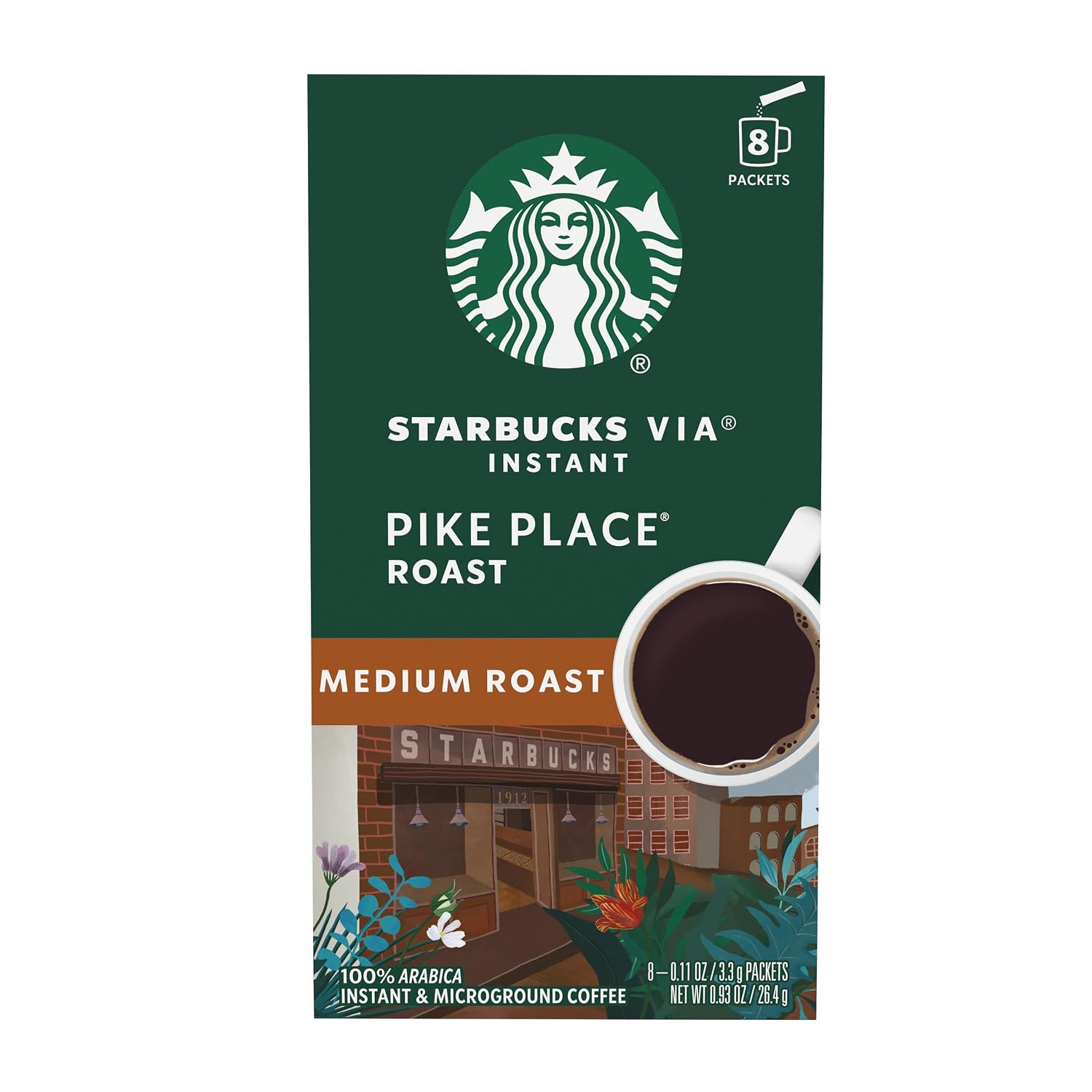
Our pick: Starbucks VIA Instant Pike Place Roast, medium roast, 100% Arabica, 8 single-serve packets.
Why we recommend it: On mornings when you have a minute or less, pre-portioned packets take the guesswork out of step 4, putting in the right amount. Starbucks describes Pike Place as a smooth, well-rounded blend of Latin American coffees with subtle notes of cocoa and praline, and Starbucks VIA is one of the two brands this guide names under Choose your brand. One honest note: an 8-packet box runs out fast if you drink it daily, so treat it as a sampler before buying more.
How we reached this: We checked Starbucks’ published roast and tasting notes against this guide’s brand and portion tips, using the criteria in our coffee rating system. Research-rated, not yet brewed by our team.
Feeling like something cold: an iced coffee made from instant
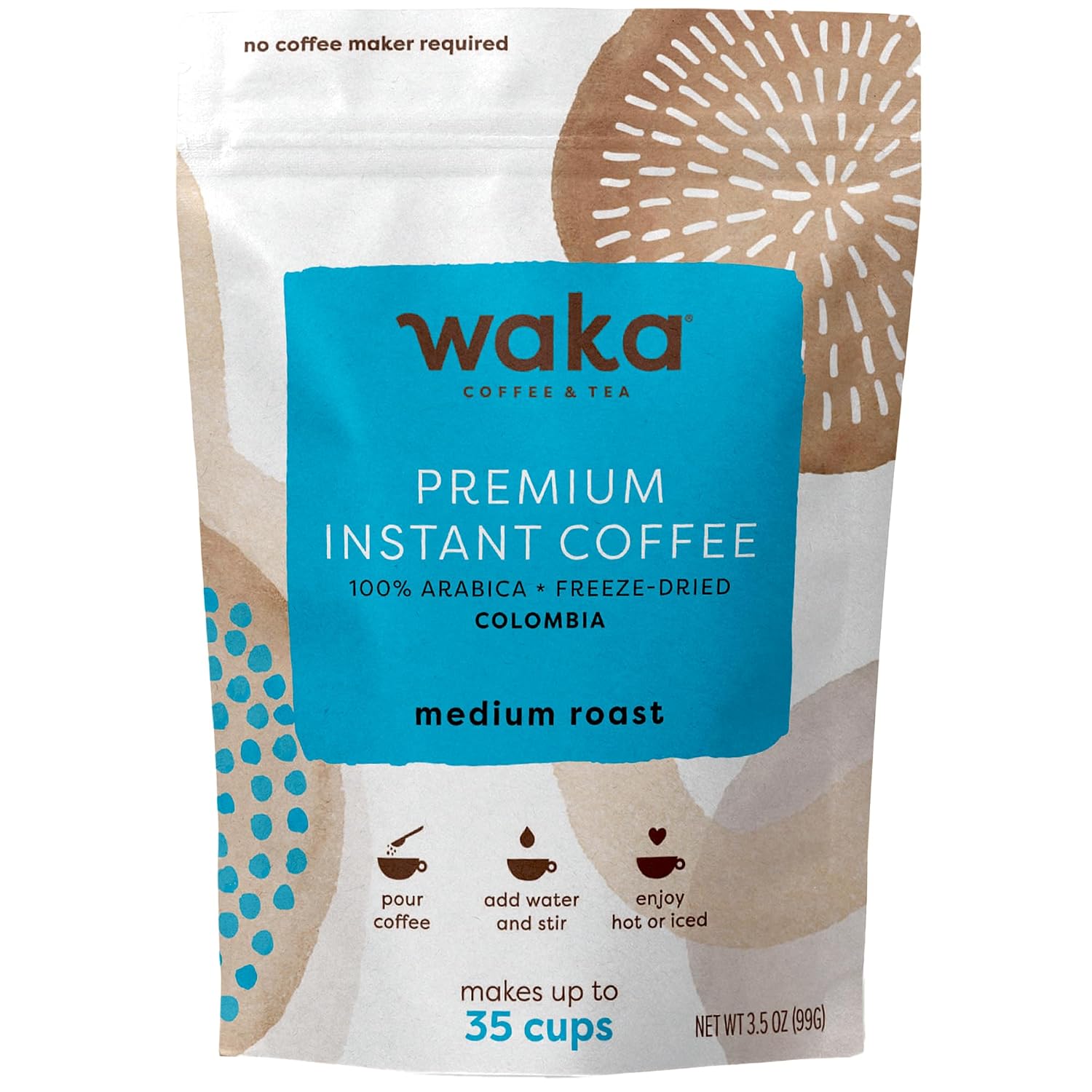
Our pick: Waka Instant Coffee, Colombian Medium Roast, freeze-dried, 3.5 oz (up to 35 servings).
Why we recommend it: Tip 7 suggests turning instant into iced coffee, and Waka says its coffee works hot, iced or even whipped. It is freeze-dried from single-origin Colombian Arabica with no sugar or additives, with a smooth, balanced flavor and citrus undertones, so you control the milk, cream and sweeteners from the ingredient list above. One honest note: its Amazon rating is a bit lower than the Starbucks VIA pick, so try one bag before stocking up.
How we reached this: We checked Waka’s published roast, origin and preparation details against this guide’s iced coffee and add-in tips, using the criteria in our coffee rating system. Research-rated, not yet brewed by our team.
Ready to make instant coffee better? Now that you know the ins and outs of instant coffee, check out our easy and delicious homemade coffee recipes. Or jump back to our instant coffee picks to get started.