
The best movies about coffee include coffee-shop settings in Friends (Central Perk), When Harry Met Sally, Coffee and Cigarettes, and Coffee Town. This watchlist covers movies about coffee shops every coffee lover should know.
Key Takeaways
- Coffee shops in films serve as vital backdrops for character development and relationships, from Friends‘ Central Perk to the diner in When Harry Met Sally.
- Movies like Coffee and Cigarettes and Coffee Town highlight the intimate atmosphere of coffee shops, showcasing the deep conversations and community bonds formed in these spaces.
- Documentaries such as A Film About Coffee and Shade Grown Coffee emphasize the cultural and social significance of coffee, exploring the journey from farm to cup and the importance of ethical sourcing.
- In Gilmore Girls, Lorelai and Rory’s shared love for coffee underscores their close bond, with coffee serving as a recurring element in their relationship throughout the series.
Coffee Shop Chronicles
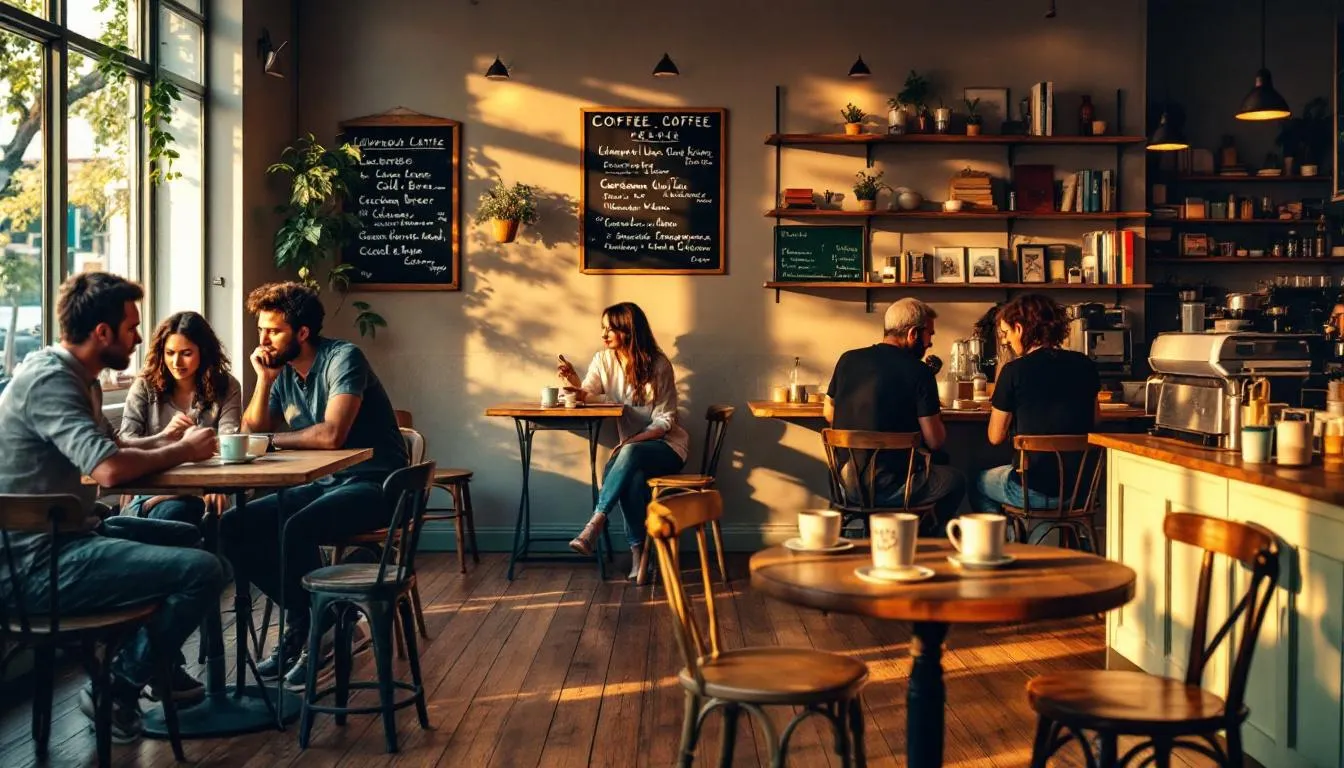
Coffee shops are frequently used as backdrops in films, where character interactions and relationships blossom through dialogue. These coffee scenes offer a relaxed environment, perfect for deep conversations and intimate conversations, underscoring their importance in storytelling. Coffee is frequently making appearances in movies and TV shows, serving as a cultural symbol and thematic element.
The following subsections will explore specific examples of coffee shops in movies and TV shows, highlighting their significance. Whether it’s the vignettes in Coffee and Cigarettes, the iconic Central Perk in Friends, or the community-driven plot of Coffee Town, each of these examples showcases how coffee shops play a vital role in character development and narrative progression.
We delve deeper into these coffee shop chronicles.
Coffee and Cigarettes (2003)
Directed by Jim Jarmusch, Coffee and Cigarettes presents a unique cinematic experience through a series of vignettes that feature different characters and settings. The central theme revolves around characters engaging in conversations over coffee and cigarettes, creating an intimate and reflective atmosphere. This film offers an observational documentary style that captures the essence of everyday life and deep conversations in a coffee shop scene.
Each vignette in Coffee and Cigarettes explores different aspects of human interactions, using the simple act of sharing a cup of coffee as a catalyst for meaningful dialogues. From philosophical musings to humorous exchanges, the film showcases how coffee and cigarettes serve as a bridge for connection, making it a must-watch for coffee lovers and cinema enthusiasts alike.
Friends (1994-2004)
Central Perk, the iconic coffee shop in Friends, serves as the primary gathering spot for the main characters, symbolizing friendship and comfort. This coffee shop scene is where the characters share their daily lives, support each other, and engage in humorous and heartfelt conversations. Phoebe, known for her quirky songs and love for coffee, often stands out as the leading coffee drinker among the group. Similarly, in ‘The Devil Wears Prada’, coffee serves as a bonding element between Miranda and Andy as they discuss crafts, showcasing how coffee can bridge gaps and foster connections in different narratives.
The coffee shop’s cozy ambiance and familiar setting make it a key element in the show’s success. Audiences worldwide have come to associate Central Perk with the deep connections and memorable moments shared by the Friends characters. It’s a place where everyday life unfolds, making it intensely personal for both the characters and the viewers.
Coffee Town (2013)
In Coffee Town, the coffee shop serves as a central hub for the characters, who spend their time chatting, working, and building friendships. Characters in ‘Coffee Town’ spend their free time in a local cafe, using it as an office and social space. The plot revolves around the fight to keep the coffee shop unchanged as the owners plan to turn it into an elite bar. This conflict highlights the characters’ attachment to the coffee shop and its role in their daily lives.
The coffee shop in Coffee Town symbolizes community and resistance against commercialization. It’s a place where coffee lovers and enthusiasts gather to enjoy their cup of coffee and engage in meaningful interactions.
The film offers a unique overview of how coffee shops can become an integral part of people’s lives, making it a story worth telling for any coffee enthusiast.
Iconic Coffee Shop Scenes in Movies

Coffee shops have created some of the most iconic moments in cinema, serving as significant cultural settings that reflect contemporary themes of connection and urban lifestyle. Many popular films feature memorable coffee shop scenes that have become cultural touchstones. These scenes often utilize the coffee shop ambiance to set the stage for character interactions, conflicts, and resolutions. We now examine a few unforgettable coffee shop scenes that have left a lasting impact on audiences.
From the timeless diner scene in When Harry Met Sally to the intense dialogue in Pulp Fiction, and the casual yet profound conversations in Good Will Hunting, these coffee shop scenes have become cultural touchstones. They emphasize the significance of everyday settings in character development and narrative tension.
When Harry Met Sally (1989)
When Harry Met Sally features a famous diner scene where Sally fakes an orgasm while dining in a café, leading to an unforgettable moment. This scene has become a love letter to the romantic comedy genre, showcasing the impact of coffee shop settings on character interactions and memorable moments. Similarly, in Casablanca, coffee symbolizes the connection between the characters Rick and Ilsa during their reunion, adding depth to their relationship and highlighting the emotional resonance of coffee in storytelling.
Pulp Fiction (1994)
Quentin Tarantino’s Pulp Fiction features a memorable coffee shop scene that captures a moment of intense dialogue and tension. In Pulp Fiction, characters engage in philosophical discussions over coffee in a diner, showcasing its role in deep conversations. This scene has become a pop culture reference, demonstrating the lasting impact of coffee shop interactions in cinema and emphasizing the significance of everyday settings in character development.
Good Will Hunting (1997)
In Good Will Hunting, a pivotal scene occurs in a coffee shop where Will Hunting showcases his genius by solving a complex math problem effortlessly. This scene emphasizes how informal environments, like a coffee shop, can lead to more meaningful exchanges and insights, highlighting the role of coffee shops in cultural narratives.
Romantic Comedies Set in Coffee Shops
Romantic comedies have long embraced the coffee shop as the perfect setting for love to bloom. These films use the cozy, inviting atmosphere of coffee shops to bring characters together, creating spaces where sparks fly over a shared cup and life’s sweetest moments unfold. Coffee culture is woven into the fabric of these stories, reflecting how coffee shops play a central role in everyday life and relationships. Whether it’s a chance encounter or a planned rendezvous, the coffee shop scene often becomes the heart of the film, capturing the magic of connection and the warmth of a good brew.
You’ve Got Mail (1998)
You’ve Got Mail is a beloved romantic comedy that beautifully captures the charm of a coffee shop meeting. In this film, the main characters, Joe and Kathleen, experience their first in-person encounter in a bustling New York coffee shop. The scene is a testament to how coffee shops serve as social hubs, bringing together people from all walks of life. Kathleen’s passion for specialty coffee adds depth to her character and the story, highlighting how coffee culture shapes our experiences and relationships. The film’s coffee shop scene is more than just a backdrop—it’s where the story’s emotional core takes root, making it a must-watch for anyone who appreciates the role of coffee in everyday life.
Notting Hill (1999)
In Notting Hill, the coffee shop scene is a standout moment that captures the essence of human connection. Julia Roberts and Hugh Grant’s characters share a warm cup of coffee, engaging in deep and intimate conversations that reveal their vulnerabilities and desires. The coffee shop provides a safe haven for these meaningful exchanges, symbolizing the comfort and familiarity that coffee brings to our lives. This iconic moment in romantic comedy history demonstrates how a simple cup of coffee can bridge gaps and foster genuine human connections, making the coffee shop an unforgettable part of the film’s love story.
500 Days of Summer (2009)
500 Days of Summer offers a fresh take on romance, with coffee shops playing a central role in the unfolding relationship between Tom and Summer. Their coffee shop meetings are filled with laughter, meaningful conversations, and the kind of everyday moments that define real-life love stories. The film highlights the importance of coffee culture in bringing people together, showing how coffee shops serve as gathering places for connection and reflection. Through its coffee shop scenes, 500 Days of Summer adds depth to the narrative, illustrating how coffee and conversation can shape the course of our lives and relationships.
Independent Films Featuring Coffee
Independent films have a knack for exploring the world of specialty coffee with authenticity and depth, offering viewers a unique overview of the coffee industry and the artistry behind the best cups. These films often shine a spotlight on the passionate individuals who dedicate their lives to perfecting every cup, from coffee growers to baristas. By delving into all the processes and traditions that make specialty coffee so remarkable, independent films invite audiences to appreciate coffee as more than just a beverage—it’s a global story of craftsmanship, culture, and community.
Through intimate storytelling and observational documentary styles, these films reveal the behind-the-scenes world of coffee, capturing the dedication required to produce the best cups enjoyed around the world. Whether focusing on the journey from bean to cup or the personal stories of those who shape the coffee industry, independent films about coffee offer a fresh perspective that resonates with coffee enthusiasts and newcomers alike. Each cup becomes a testament to the world of specialty coffee, making these films essential viewing for anyone curious about the true impact of coffee on our lives.
Documentaries Highlighting Coffee Shops
Documentaries offer a unique insight into the coffee industry and culture, highlighting the journey from seed to cup and the passion behind specialty coffee. Each film whisks audiences into the world of coffee, immersing them in its rich culture and history. These documentaries often follow the remarkable journey of coffee professionals, growers, and enthusiasts, capturing their dedication and experiences. These films provide an observational documentary style that captures the essence of coffee production, from coffee growers to coffee enthusiasts. We now explore some notable documentaries that delve into the coffee journey, including Connected by Coffee, which tells the story of Latin American coffee growers and their connection to the turbulent past and hopeful future of many regions. This documentary emphasizes the human stories behind every cup of coffee, making it a compelling watch for those interested in the social impact of coffee.
From the comprehensive look at the coffee process in Caffeinated to the community-building focus in The Way Back to Yarasquin, these documentaries showcase the social and cultural impact of coffee. They explore the elements-the processes that contribute to specialty coffee, from farm to cup, including traditions, techniques, and preparations. They emphasize the importance of ethically sourced beans and the rise of specialty coffee, making them essential viewing for coffee lovers. Black Gold explores the darker side of the coffee trade, shedding light on how it creates wealth while impacting the lives of coffee growers.
A Film About Coffee (2014)
A Film About Coffee explores the journey of coffee from farms to coffee houses, highlighting the extensive work and passion behind producing quality specialty coffee. The documentary takes viewers to countries like Honduras, Rwanda, Japan, and various cities in the USA, providing a global perspective on coffee culture. A Film About Coffee is a declaration of love by its director to specialty coffee, showcasing the experiences of coffee growers, roasters, and baristas. This film emphasizes the difference between specialty coffee and commercial coffee, making viewers reconsider their usual cup of latte.
Notable figures in the coffee industry, such as Peter Giuliano, George Howell, and James Freeman, share their insights, adding depth to the documentary. Produced by coffee enthusiasts, this observational documentary offers a unique overview of the coffee journey, making it a must-watch for anyone passionate about coffee. The Coffee Man follows Sasa Sestic’s path to win the World Barista Championship in 2015, highlighting his journey and passion for coffee.
Barista (2015) & Baristas (2019)
The documentaries Barista and Baristas focus on the preparation process and competition of baristas, showcasing the psychological and physical challenges they face. These films provide an in-depth look at the world barista championship and the national barista championship, highlighting the dedication and skill required to excel as a female world barista champion in these competitions. Caffeinated shows us the story behind every cup of coffee, focusing on the people who are involved in the coffee production process.
Baristas features dramatic moments and comedy, offering a glimpse into the lives of professional coffee makers. The documentary The Coffee Man follows Sasa Sestic from Yugoslavia to Ethiopia, adding a personal narrative to the competitive world of baristas.
These films celebrate the art of coffee making and the passion of coffee professionals, making them essential viewing for coffee enthusiasts.
Shade Grown Coffee (2020)
Shade Grown Coffee focuses on the cultivation of specialty coffee and its positive environmental and social impacts. The filmmakers travel to locations such as Copenhagen, Guatemala, El Salvador, Nicaragua, Jamaica, and Ethiopia, exploring the benefits of shade-grown coffee cultivation. This documentary highlights the importance of sustainable coffee production and the challenges faced by coffee growers. Similarly, Coffee Coffee delves into the specialty coffee scene in Portland, explaining why specialty coffee is better for consumers and the environment, further emphasizing the value of ethical and sustainable coffee practices.
One striking revelation is that coffee farmers earn only three cents for a cup of coffee that sells for three dollars, raising serious concerns about their livelihood. Shade Grown Coffee emphasizes the need for fair trade and ethical sourcing, making it a powerful film about coffee that resonates with both coffee lovers and advocates for social justice.
Coffee Shops as Cultural Hubs in Films

Coffee shops often serve as important backdrops in films, enhancing storytelling through atmosphere and character interactions. These settings symbolize community gathering and reflect local culture and social dynamics. Coffee shops in films often represent communal spaces where relationships and social interactions unfold, contributing significantly to the narrative. In Glengarry Glen Ross, the phrase ‘Coffee is for Closers’ becomes a symbol of motivation and status within the sales team, further showcasing coffee’s thematic versatility in storytelling.
San Francisco stands out as a key city in the evolution of specialty coffee culture, serving as a backdrop for many influential coffee shop stories and innovations that have shaped the global coffee scene.
From the cozy café in Coffee Town to the essential gathering place of Central Perk, coffee shops have evolved into cultural hubs that foster connections and intimacy. These settings provide a unique overview of societal themes, such as connection and intimacy, making them significant cultural settings in cinema.
Out of Africa (1985)
Out of Africa features the establishment of a coffee plantation in Kenya, symbolizing both ambitions and the challenges of living in a foreign land. The film highlights the struggles faced by the characters in managing the plantation amidst natural and societal obstacles, showcasing the beauty and challenges of coffee production.
This movie emphasizes the connection between the land and the culture surrounding coffee.
White Material (2009)
White Material explores the complexities of maintaining a coffee plantation in a volatile environment, incorporating all the elements of the turbulent socio-political landscape. The protagonist navigates this landscape, making coffee a symbol of resistance and personal narrative amid chaos, often referring to it as black gold.
This film offers a powerful portrayal of the struggles faced by coffee growers, emphasizing the cultural significance of black coffee.
Twin Peaks (1990-1991)
The Double R Diner in Twin Peaks serves as an essential gathering place, symbolizing the town’s cultural essence and intimate dynamics of small-town life. Characters frequently engage in conversations and share personal stories over coffee, making the diner a central hub for community and social interaction.
This setting reflects the importance of coffee shops in fostering connections and building local communities dynamics.
The Role of Coffee Shops in Character Development
Coffee shops in films often represent communal spaces where relationships and social dynamics unfold, contributing significantly to character development. These settings provide an intimate atmosphere for character interactions, revealing personalities and deepening relationships through dialogue. From the intense dialogue in Pulp Fiction to the relaxed conversations in Coffee Town, coffee shops play a significant role in shaping narratives and character arcs.
Cafés serve as narrative devices that create spaces for character interactions and significant plot developments. Whether it’s the humorous exchanges in Central Perk or the tension-filled diner scenes in Reservoir Dogs, coffee shops add depth to the storytelling and character development.
We now consider some specific examples.
Central Perk in Friends
Central Perk is the iconic coffee shop from Friends that symbolizes friendship and memorable moments among the main characters. The setting serves as a backdrop for significant character interactions and growth, helping to solidify the bonds between the friends.
As the main meeting place, Central Perk is central to the characters’ development and the evolution of their relationships.
Reservoir Dogs (1992)
The diner scene in Reservoir Dogs opens with characters engaging in a seemingly casual conversation that reveals their personalities and underlying conflicts. This approach showcases how the coffee shop setting can be used effectively for both character development and narrative tension in films.
The sharp dialogue builds suspense and adds depth to the characters, making it a memorable moment in the movie.
The Big Lebowski (1998)
In The Big Lebowski, The Dude’s coffee preparation routine reflects his laid-back personality and need for comfort amidst his chaotic life. This scene reveals his nonchalant approach to life, showcasing his signature lack of urgency and adding depth to his character.
The coffee moment enhances the film’s overall atmosphere of laid-back absurdity, making it a standout scene.
Coffee Shops in Popular Culture

Coffee shops often symbolize community and social interaction in popular culture, acting as spaces for characters to connect and share stories. Films featuring coffee shops emphasize their role as community gathering places that foster social interaction and build relationships. These settings reflect cultural norms and traditions unique to different societies, influencing the atmosphere and interactions depicted in films.
There are new that trends and innovations in how coffee shops are portrayed in films and TV shows, reflecting the evolving coffee culture and the modern coffee scene.
The cozy ambiance of cafés often enhances the emotional tone of scenes, making them feel more intimate, evoking flavor. From the Double R Diner in Twin Peaks to Luke’s Diner in Gilmore Girls, coffee shops serve as vital social hubs for characters, facilitating meaningful conversations and community building.
We now examine how these on-screen coffee shops influence real-life cafes and social spaces.
Influence on Real-Life Coffee Shops
Films featuring coffee shops have inspired the design and ambiance of many real-world cafes, influencing customer experiences. Iconic movie coffee shops like Central Perk have become templates for real-life coffee shops, creating spaces that foster social interaction and connection.
This positive impact highlights the cultural significance of coffee shops in both media and everyday life.
Coffee Shops as Social Spaces
Coffee shops are quintessential gathering places in films and TV shows, serving as vital social hubs for characters. In Gilmore Girls, Lorelai and Rory’s frequent visits to Luke’s Diner illustrate how coffee shops provide a backdrop for meaningful conversations and character development.
This representation influences real-life perceptions of coffee shops as essential community spaces that foster human connections and bridges gaps.
Coffee Shops and Modernity
Coffee symbolizes comfort and human connection, serving as a catalyst for social interactions in contemporary society. The ritual of coffee plays a role in daily routines, reinforcing its role in modern life during a coffee break with a warm cup and drink cups. In literature, coffee often symbolizes themes of awakening, endurance, and anxiety, adding depth to its cultural significance. Additionally, coffee is frequently used as a prop in stories to convey various themes such as comfort, anxiety, and existentialism, further showcasing its versatility in narrative contexts.
Coffee shops symbolize modernity and connection, serving as hubs for nurturing relationships and community bonds in a fast-paced world. These elements make coffee shops significant cultural settings in popular culture.
Summary
From the intimate conversations in Central Perk to the intense dialogues in Pulp Fiction, coffee shops have played a significant role in films and TV shows. They serve as cultural hubs, character development spaces, and iconic settings that enhance storytelling. Documentaries like A Film About Coffee and Shade Grown Coffee offer a deeper understanding of the coffee journey, highlighting the passion and challenges behind specialty coffee.
Coffee shops symbolize community, connection, and modernity, influencing both on-screen narratives and real-life cafes. They provide a unique overview of societal themes, making them essential settings in both media and everyday life. So, the next time you enjoy a cup of coffee, take a moment to appreciate the intricate role this beloved beverage plays in the stories we love. Cheers to the best coffee moments in film and culture!
Frequently Asked Questions
Why are coffee shops often used as settings in films?
Coffee shops in films create a chill vibe where characters can have deep talks and show off their true selves. It’s like the perfect backdrop for connection and drama!
What makes Central Perk in Friends so iconic?
Central Perk is iconic because it’s the go-to hangout for the gang, representing friendship and comfort while driving those unforgettable character moments. It’s where all the magic happens!
How do documentaries about coffee impact our understanding of coffee culture?
Documentaries about coffee really open your eyes to the hard work and dedication that goes into every cup, making you appreciate the specialty coffee culture so much more. They definitely help us see coffee as more than just a drink—it’s an art form!
What role do coffee shops play in character development in films?
Coffee shops are like social hubs in films, where characters connect, clash, and evolve, adding depth to their stories. They heighten the drama and keep us invested in the characters’ journeys.
How have films influenced real-life coffee shops?
Films have really shaped how coffee shops look and feel, creating cozy spots that invite social vibes. It’s all about making a setting where people can chill and connect!