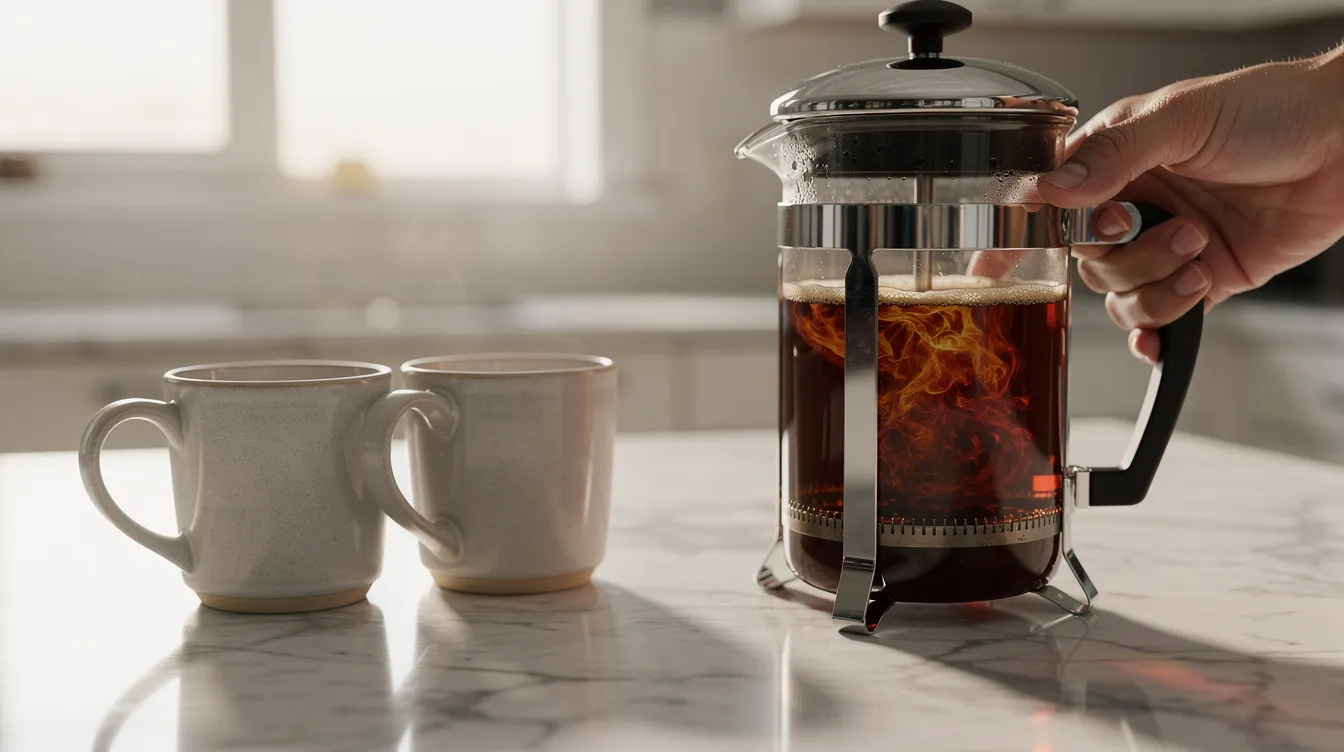
For a balanced cup of coffee, use about 2 level tablespoons of ground coffee (one standard coffee scoop, roughly 10–12 g) per 6 fl oz of water. That works out to approximately a 1:16 coffee to water ratio. Keep in mind that most coffee makers label one “cup” as 5–6 fl oz, not the 8 fl oz measuring cup you use for baking.
If you brew coffee at home and want a more accurate way to measure for different brew methods, mug sizes, and taste preferences, this guide walks through how much coffee per cup to use by both volume and weight, plus the cup-size differences, grind size, water temperature, and common measuring mistakes that can leave coffee weak, bitter, or overly strong. Getting the ratio right gives you better extraction, more balanced flavor, and a repeatable cup every time.
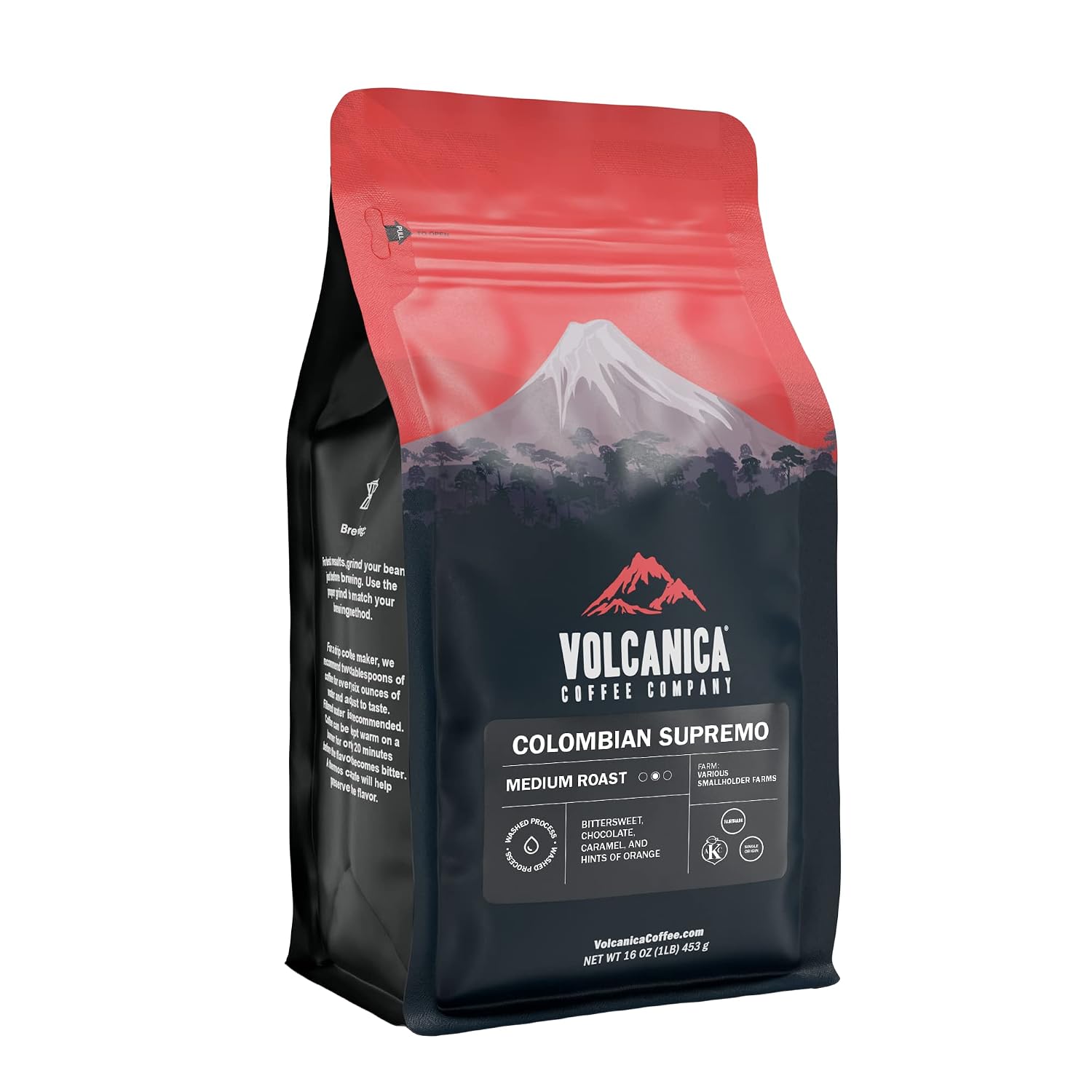
Best whole bean pick
For this roundup, Volcanica Colombian Supremo is the whole bean we recommend first—the same pick at the top of our At-a-glance cards below.
Use 1 to 2 tablespoons of ground coffee per 6 ounces of water as your starting point. For a stronger brew, use 2 tablespoons per 6 ounces.
A standard coffee cup measurement is 6 fluid ounces, not 8. Most coffee makers define a “cup” as 5 to 6 ounces, so a “12-cup” carafe holds about 60 fl oz total.
Quick reference by mug size:
6 fl oz (coffee maker “cup”): 2 tbsp / 1 scoop / ~10–12 g
8 fl oz mug: ~2.5–3 tbsp / 1.5 scoops / ~14–18 g
12 fl oz travel mug: ~4 tbsp / 2 scoops / ~20–24 g
Grind size, brewing method, and personal taste all shift how much coffee per cup delivers the best results. The sections below explain exactly how.
Direct Answer: How Much Coffee Per Cup (In Tablespoons, Scoops, and Grams)
For drip coffee and pour over, start with approximately 2 level tablespoons of coffee (one standard coffee scoop, about 10–12 g) per 6 fl oz of water. This lands close to a 1:16 coffee to water ratio, the golden rule many specialty professionals use as a reliable sweet spot for a balanced cup. The general rule for a balanced brew is around 10 to 15 grams of coffee per 240 ml of water, or one standard cup.
Standard drip coffee makers typically define a “cup” as 5 to 6 ounces, so a “10-cup” carafe typically holds 50–60 fl oz, not 80. Always check your carafe markings against a measuring cup to know how many ounces of water you are actually brewing with.
This is a starting point for medium strength. Adjust up for stronger coffee or down for lighter coffee based on your taste preference. The rest of this guide explains exactly how grind size, brew method, and water temperature interact with your coffee measurements.
Why Getting Coffee Measurements Right Matters
The amount of coffee per cup directly controls extraction, which is how water dissolves flavorful compounds from your coffee grounds during the brewing process. Using too much coffee with the same water volume risks over extraction, producing bitter and harsh flavors. Using too little coffee results in thin, watery brews that taste sour and flat.
Consistent coffee measurements give you repeatable results every morning. When you know your baseline, making your cup stronger or milder becomes a matter of adjusting one variable instead of starting from scratch. That consistency also helps you budget: once you know you use roughly 110 g per full coffee pot, estimating weekly bean purchases becomes simple math.
Getting your ratio right interacts with grind size, water temperature, and brewing time. For deeper reference on those relationships, detailed coffee-to-water ratio charts and coffee grind size charts are worth bookmarking.
Understanding “Per Cup”: Ounces, Carafes, and Coffee Maker Labels
A “cup” means different things depending on context. A U.S. measuring cup holds 8 fl oz as the standard cup. A cup on most coffee makers means roughly 5–6 fl oz. And the mug sitting on your desk probably holds 10–14 fl oz. These differences are why so many people end up with weak or overpowering coffee.
Here is how that plays out with common drip coffee makers:
A “10-cup” machine usually brews around 50–60 fl oz total.
To calibrate your own machine, fill the empty carafe with water from a measuring cup once. Count the actual ounces. From there, divide total ounces by 6 to get the number of “coffee cups,” then multiply by 2 tablespoons of coffee per cup. For the rest of this article, “per cup” refers to 6 fl oz unless stated otherwise, unlike the standard cup used in general kitchen measuring.
Coffee-to-Water Ratio Basics: From Scoops to Grams
A coffee to water ratio expressed as 1:x (grams of coffee to grams of water) is the most reliable way to scale from a single cup to a full pot without losing flavor balance. The Specialty Coffee Association recommends a 1:18 coffee-to-water ratio for batch brewing, based on the Golden Cup standard of roughly 55 g coffee per liter of water. The golden ratio is 1 gram of coffee for every 18 grams of water.
Many home brewers prefer tighter ratios for a fuller flavor profile. Starting ratios by brew method:
Drip / pour over: 1:16 (the standard coffee-to-water ratio for drip coffee)
French press: 1:15 for a richer body
Espresso: approximately 1:2 (a special case with very different mechanics)
A concrete example: at 1:16, a 12 oz travel mug (about 340 g water) uses roughly 21 g coffee, which is about 4 level tablespoons. For a 10-cup drip machine set to 60 oz (approximately 1.75 L), a 1:16 ratio means around 110 g coffee, roughly 11 scoops.
How to Measure Coffee: Scoops vs. Spoons vs. Scale
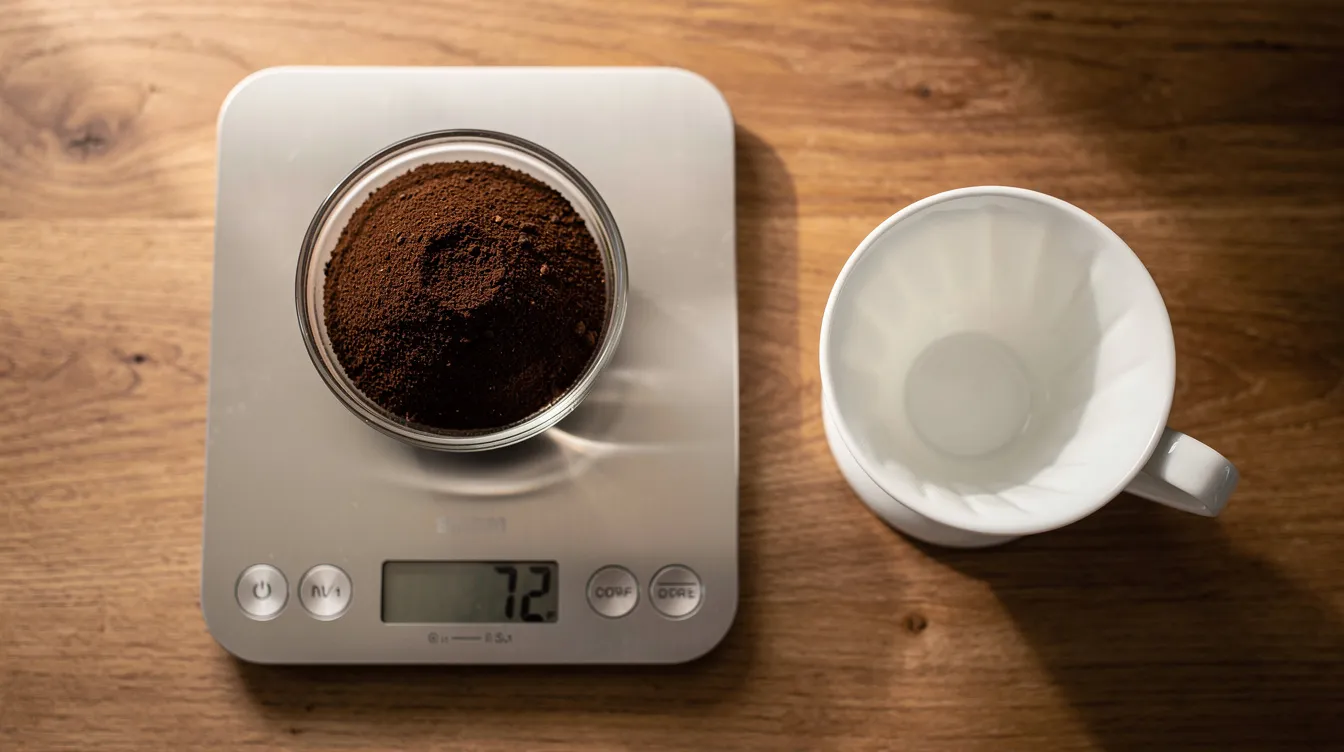
You can measure coffee grounds by volume (scoops, tablespoons) or by weight (grams on a digital scale). Both work, but weighing coffee yields more consistent results than using volume measurements because grind size and roast level change how much coffee fits in a spoon.
A standard coffee scoop equals about 2 tablespoons of ground coffee, typically around 10–12 g, so if you’re wondering how many tablespoons to use per cup, that’s the usual scoop-based starting point. One tablespoon of ground coffee weighs about 5 grams, though this varies slightly with grind and roast.
Quick conversion cheat sheet:
1 level tbsp ground coffee ≈ 5–6 g
2 tbsp (1 scoop) ≈ 10–12 g
4 tbsp ≈ 20–24 g (a strong 10–12 oz mug)
For everyday convenience, use a dedicated coffee scoop and always scoop the same way: level, not heaping. For more control, especially when dialing in new whole beans or a different brewing method, using a scale ensures consistent coffee measurements every time. Even an inexpensive kitchen scale accurate to 1 g makes all the difference.
How Much Coffee Per Cup by Brew Method
Brewing coffee is affected by ratio, grind size, and brew time, so how much ground coffee per cup changes depending on your setup.
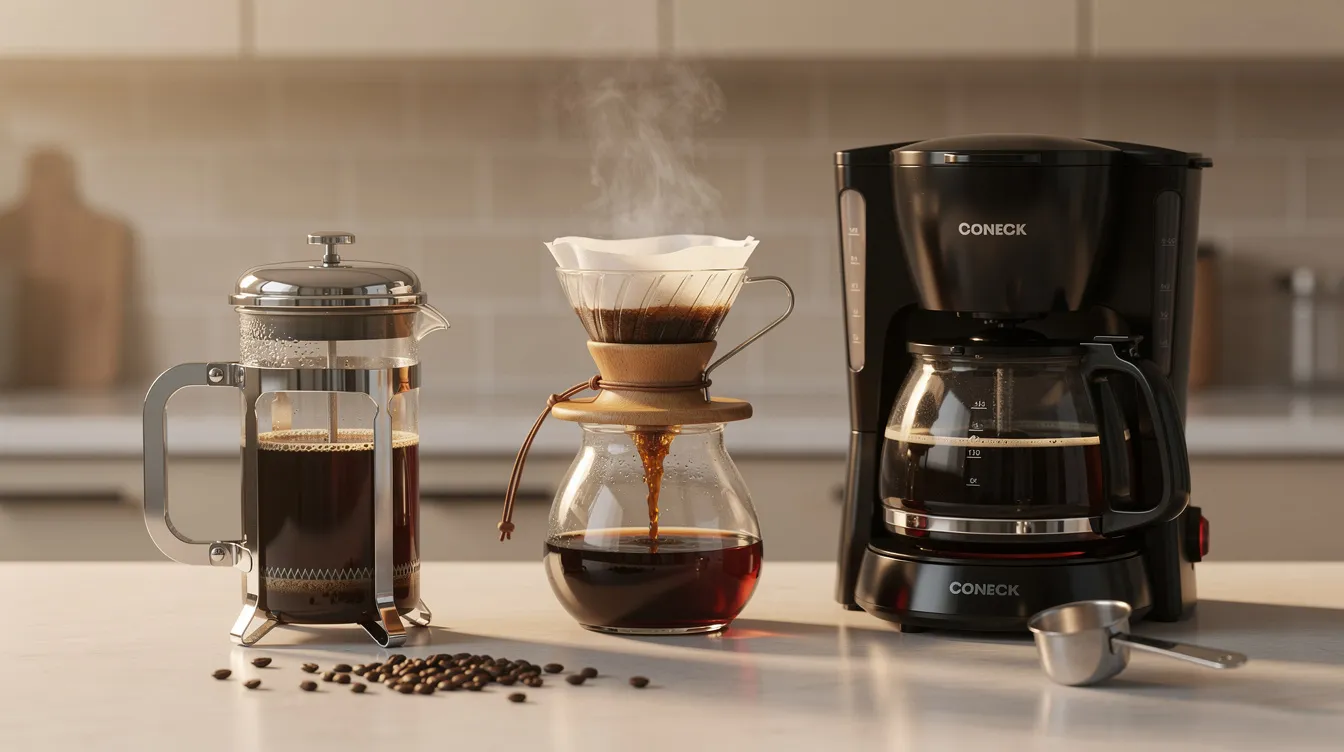
Automatic drip coffee maker: Medium grinds are ideal, with a texture similar to table salt, for drip coffee makers. Use a 1:16 ratio, about 2 tbsp per 6 oz. For a full 12-cup carafe (~60 oz), that is roughly 20 tbsp / 10 scoops / ~110 g.
Pour over (V60, Chemex): Medium to finely ground coffee. For pour-over coffee, the recommended ratio is 1:15 to 1:17. A typical recipe: 22 g coffee to 350 g water for a ~12 oz cup, brewing 3–4 minutes.
French press: Coarsely ground coffee, steeped about 4 minutes. The ideal French press ratio is 1:15 coffee to water. A 34 oz press uses ~60–70 g coffee (12–14 tbsp). For stronger French press coffee, a 1:12 ratio works well.
AeroPress: Ratios vary widely. A common starting recipe: 15–17 g coffee for 7–8 oz yield, close to 1:14–1:16. Agitation and water temperature matter a lot here.
Cold brew: Coarse grind at 1:5 to 1:8 for concentrate. When making cold brew, steep 12–18 hours, then dilute 1:1 with water or milk when serving.
Espresso machine / moka pot: Espresso requires very fine grinds, similar in texture to powdered sugar, for optimal extraction. Dose by basket: roughly 7–9 g for a single shot, 14–18 g for a double shot. Yield is small (1–2 oz).
Fine grinds extract flavor quickly, risking over extraction with longer contact times. Coarse grinds require longer brewing times for proper extraction. Immersion methods generally lean toward slightly more coffee; percolation methods (drip, pour over) lean toward slightly more water. Cross-check your grind with a dedicated coffee grind size chart for visual references.
Adjusting Strength for Personal Taste Without Ruining Extraction
How much coffee per cup is ultimately about personal taste. Some drinkers want stronger coffee, others prefer a lighter coffee. The key is making changes thoughtfully so you don’t swing into bitterness or sourness.
Simple rule of thumb:
Stronger: Add more coffee grounds while keeping water, grind size, and brewing time the same. Move from 1:17 to 1:15.
Milder: Reduce coffee amount slightly rather than pouring extra water into a finished brew, which dilutes the full flavor.
Flavor cues to watch for:
Weak or watery: Add more coffee per cup or grind slightly finer. Adjust one variable at a time.
Harsh, dry, bitter: Use slightly less coffee, grind a bit coarser, or shorten brew time.
Sour or sharp: You may be under-extracting. Try a slightly finer grind or a bit more coffee.
Try a two-brew experiment: brew one cup at 1:16 and another at 1:15 with the same beans. Taste side by side and note which has better sweetness and body for your taste buds. Measuring consistently turns subjective preference into a repeatable recipe for your perfect cup.
Other Factors That Change How Much Coffee You Should Use
Ratio is only one piece of the perfect brew. Grind size, water temperature, brewing time, and coffee freshness all influence how much coffee per cup will taste right.
Grind size: Finer grinds expose more surface area, accelerating the extraction process. You can sometimes use slightly less coffee or a shorter brew time with finer grinds. Coarser grinds extract more slowly, so you may need a touch more coffee to avoid thin flavor. Medium grind coffee remains the versatile middle ground for most brewing methods.
Water temperature: Ideal brew water sits around 195°F–205°F (90–96°C). Water that is too cool produces weak results even with correct dose. Water that is too hot can emphasize bitterness, leading people to blame too much coffee when the real issue is temperature.
Brew time: Drip and pour over finish in 3–5 minutes. Immersion methods like French press depend heavily on steep time. Adjusting time can sometimes fix flavor without changing dose.
Freshness: Recently roasted coffee beans (within two weeks of roast) extract more intensely. Old or stale pre ground coffee tempts people to add extra scoops, but that rarely recovers lost aromatics. Storing beans in an airtight container and buying from roasters who print roast dates leads to better coffee far more reliably. Roast density also matters: dark roasted coffee is less dense than medium roast coffee, which means a tablespoon of dark roast weighs less than a tablespoon of lighter roast. This is why exact measurements by weight beat volume every time.
These plug-and-play recipes let you start brewing immediately.
Standard 12-cup drip coffee maker (~60 fl oz): At 2 tbsp per 6 oz, you need 20 tablespoons of coffee total (about 10 scoops or ~100–120 g) for a medium-strength pot. For a strong variant, bump to 22–24 tbsp. For a mild pot, drop to 16–18 tbsp.
Single 8 oz mug via pour over: Use 14–16 g coffee (about 2.5–3 tbsp) with ~230–240 g water at a 1:15–1:17 ratio. Medium-fine grind, 3–4 minute brew time.
34 oz French press (~1 L): Use 60–70 g coffee (12–14 tbsp) at around 1:15. Coarsely ground coffee, 4 minutes steep, then plunge and serve immediately.
Cold brew concentrate: Combine about 80–90 g coarse coffee with 4–5 cups of cold water (roughly 1:5–1:6). Steep 12–18 hours in the refrigerator, strain, then dilute 1:1 with water or milk. This effectively answers how much coffee per cup for cold brew: equal parts concentrate and water produce a ready-to-drink strength.
Write down your favorite recipe with exact coffee and water amounts. That is how you find and keep your ideal cup.
Common Mistakes When Measuring Coffee Per Cup
Most complaints about weak or bitter coffee trace back to a few avoidable measurement errors.
Random spoons instead of consistent scoops. A dinner spoon, a teaspoon, and a tablespoon all deliver wildly different amounts. Pick one scoop and stick with it. One scoop should mean the same thing every morning.
Filling the water reservoir without checking ounces. Pouring water “to the brim” and guessing coffee amounts is the fastest path to an inconsistent coffee pot.
Heaping vs. level scoops. A heaping tablespoon can hold 50% more coffee than a level one. If you switch between them, you are changing your ratio daily.
Wrong grind for the method. Using finely ground coffee meant for an espresso machine in a French press creates muddy, bitter results. That is not too much coffee; it is the wrong grind size for the extraction process.
“Double brewing” for strength. Re-running brewed coffee through fresh coffee grounds sounds logical but leads to severe over extraction. Increase dose within a reasonable ratio window instead.
Ignoring maintenance. A drip machine with mineral buildup or old coffee oils can make great coffee taste off. People then adjust how many scoops they use instead of descaling the machine, which is the actual fix.
When things go sideways, reset: return to 2 tbsp per 6 oz at a medium grind. Taste. Then adjust one variable at a time until your amazing cup comes back.
FAQs: Fine-Tuning How Much Coffee Per Cup
How much coffee per cup should I use for a really strong but still drinkable drip coffee?
For strong yet enjoyable drip coffee, most people land around a 1:14–1:15 coffee to water ratio, which translates to roughly 2.5 tablespoons of ground coffee per 6 fl oz of water instead of the standard 2 tablespoons. Stay within this range to avoid harsh, over-extracted flavors. Try 2.5 tbsp per 6 oz first, taste the result, and nudge up or down from there. Going beyond 1:14 without adjusting grind size usually pushes past the point of diminishing returns.
Do I use the same amount of coffee per cup for decaf as for regular coffee?
Start with the same amount of decaf coffee per cup as regular, such as 2 tablespoons per 6 fl oz. Decaf beans extract similarly to regular beans, so the ratio logic holds. However, some decaf coffees taste slightly flatter due to the decaffeination process, so many drinkers prefer to increase the dose by about 5–10% to bring back body and sweetness without overwhelming the cup.
How can I measure coffee per cup without any scoops or measuring spoons?
Use a consistent visual cue: fill the bottom 1–2 cm of a standard home mug with ground coffee for a typical 8–10 oz brew, then adjust next time based on taste. Consistency matters more than precision here. Using the same mug and filling to the same visual line each day produces surprisingly stable results. That said, an inexpensive set of measuring spoons or a small kitchen scale will make dialing in your perfect coffee dramatically easier.
Does roast level change how much coffee I should use per cup?
Yes, because darker roasts are less dense and take up more space per gram. A level tablespoon of dark roasted coffee generally weighs less than a tablespoon of light roast. When measuring by volume, you often need a slightly heaping spoon for lighter roasts and a level spoon for dark to get similar strength. Measuring by weight in grams is the simplest way to keep strength consistent whenever you switch coffees, but if scoops are all you have, taste and adjust in small increments.
What if people in my household like different coffee strengths from the same pot?
Brew the shared pot at a balanced, middle-of-the-road ratio like 2 tablespoons per 6 oz (1:16). Those who prefer stronger coffee can top up their mug with a splash of cold brew concentrate or simply use less milk. Those who prefer milder coffee can add hot water or more milk. Brewing one consistent, well-extracted pot and adjusting in individual cups is far more efficient than running multiple pots at different strengths, and it keeps coffee quality high for everyone.
How Capitol City Coffee Rates Coffee and Coffee Machines
Every coffee and coffee machine we recommend is scored on the same 100-point scale, so a recommendation on one page means the same thing as a recommendation on any other. Each pick is also labeled with how we reached its score.
Research-ratedScored from the roaster or manufacturer’s published specifications, independent results such as Coffee Review blind cuppings and SCA brewer certification, and patterns across verified buyer reviews. Most of our current picks are research-rated.
Hands-on testedThe Capitol City Coffee team has brewed the coffee or used the machine ourselves, following the testing steps below. We only use this label when that testing actually happened, and we show the date we tested.
Coffee beans: 100-point scale
What we score
Points
What we look at
Origin and sourcing transparency
20
Country, region, farm or cooperative, altitude, bean variety, and processing method are clearly disclosed.
Flavor evidence
25
Independent cupping scores, how closely the tasting notes match what the origin is known for, and our own cupping notes when hands-on tested.
Roast and freshness
15
Roast level stated, roast-date practices, whole-bean availability, and packaging with a one-way valve or resealable bag.
Brew versatility
15
How well the roast suits pour-over, drip, French press, cold brew, and espresso.
Value
15
Price per ounce compared with similar single-origin coffees or blends.
Buyer feedback
10
Volume and consistency of verified reviews, and recurring complaints about staleness, bitterness, or shipping.
Coffee machines and gear: 100-point scale
What we score
Points
What we look at
Brewing performance
25
Water temperature in the 195–205°F range, even extraction, and SCA certification or published test data.
Build quality and reliability
20
Materials, known failure points, and long-term owner reports.
Ease of use and cleaning
15
Setup, the daily routine, descaling, and dishwasher-safe parts.
Fit for your kitchen
10
Capacity, counter footprint, and noise.
Useful features
10
Programming, grind and temperature control, and carafe type. Features that improve the cup count more than extras that do not.
Value
10
Price compared with machines that perform similarly.
Warranty and support
10
Warranty length, parts availability, and how the brand handles repairs.
What the grades mean
Score
Grade
What it means
90–100
A
Exceptional. Our first recommendation for the feeling and setting described.
80–89
B
Strong. Excellent, with minor trade-offs we explain.
70–79
C
Good. Worth it for specific needs, with clear compromises.
Below 70
—
Not recommended. We do not feature these as picks.
How we test hands-on
When a pick carries the Hands-on tested label, this is the method behind it, and we note the date we tested.
Coffee: brewed fresh from whole beans following Specialty Coffee Association guidelines (water between 195 and 205°F, about 1 gram of coffee to every 15 to 18 grams of water) in the brew methods the roast suits best, such as pour-over, French press, or espresso. We taste it black first, then with milk if that is how most people drink it, and each taster scores it on their own before we compare notes.
Machines: used in our everyday routine rather than a single demo. We brew both full and small batches, check the brewing temperature and brew time, and run the cleaning or descaling steps the manual calls for.
How we choose the feeling and setting
We match each coffee to a mood and a moment based on its flavor profile and roast. Bright, citrusy light roasts suit energizing mornings. Chocolatey, full-bodied medium roasts suit slow or social moments. Richer roasts suit espresso and milk drinks. Each pick explains which facts led us to that match.
Our scores stay independent
Every score comes only from the criteria above. No brand can pay for a pick or a higher grade. We re-check ratings when a roast, listing, or model changes, and update or remove picks that no longer earn their grade.
Some links on this page are affiliate links. As an Amazon Associate, Capitol City Coffee earns from qualifying purchases, at no extra cost to you.
Questions about a rating? Reach the Capitol City Coffee team through our contact page.