

Coffee roast levels affect the flavor, acidity, and body of every cup you brew. Light roasts preserve origin flavors like citrus and berry with bright acidity and a lighter body. Medium roasts balance sweetness and body with notes of caramel and nuts. Dark roasts trade origin complexity for bold, smoky character and low acidity. Choosing between light, medium, and dark is primarily about flavor preference and brew method fit, not about caffeine content, which varies only modestly across roast levels.
Key Takeaways
- Light, medium, and dark roasts sit on a spectrum that includes sub-categories like cinnamon roast, city roast, Full City, and espresso roast styles. Roast level reshapes flavor profiles, body, and acidity more than almost any other variable in your cup.
- Lighter roasts keep more origin flavors and terroir-driven tasting notes. Medium roasts balance sweetness and body. Dark roasts emphasize roast-driven flavor characteristics like smoke, cocoa, and spice.
- Caffeine differences between roast levels are small when measured by weight. Perceived “strength” comes from roast flavor intensity and extraction, not caffeine.
- This page is a commercial investigation hub: compare roast levels, understand trade-offs across brew methods, and then navigate to our detailed guides for the best light roast coffee picks, top medium roast coffee recommendations, and best dark roast coffee to buy now.
- Capitol City Coffee writes as an independent coffee editorial and affiliate publication. We rely on researched editorial analysis, not hands-on tasting, unless documented testing notes are supplied.
At a glance
Category Overview: Coffee by Roast
Understanding coffee roast levels starts with a straightforward fact: roasting time and temperature determine whether your coffee tastes bright and fruity or rich and smoky. Light roast coffees tend toward citrus, florals, and crisp acidity. Medium roast coffee lands in a sweet spot of caramel, nuts, and a medium body that suits most brewing setups. Dark roast coffee delivers bold, roast-driven character with reduced acidity and heavier mouthfeel. Coffee roast levels affect flavor, acidity, and body of the beverage you drink every morning.
This is the central /coffee/roasts/ hub on Capitol City Coffee. The goal here is to help you choose the roast level that matches your taste and your brewer before diving into our detailed buying guides. Roast level matters more than most brand names or packaging buzzwords on the shelf, especially when you are ordering whole beans online and cannot smell or taste before buying.
Key Concepts: How Coffee Roast Levels Work
Roast level is a controlled combination of time and temperature that transforms dense green coffee beans into aromatic roasted coffee. The coffee roasting process changes acidity, sweetness, body, and aroma through a series of chemical reactions that unfold in sequence as bean temperature climbs.
Three reactions drive most of the flavor development:
- Maillard reaction (roughly 300-340°F / 150-170°C): amino acids and reducing sugars react to produce browning and hundreds of aromatic compounds. This is where coffee begins to smell like coffee.
- Caramelization (overlapping range, intensifying above 340°F): sugars break down into sweet, nutty, and toasty compounds. Extended roasting pushes caramelization toward bittersweet and eventually burnt sugar territory.
- Pyrolysis (above ~430°F / 220°C): organic compounds thermally decompose, generating smoky, spicy, and sometimes ashy notes. Pyrolysis accelerates as beans approach and pass second crack.
First crack occurs around 350°F during roasting. It is an audible popping sound caused by steam and CO₂ pressure fracturing the bean structure. Beans that exit the roaster shortly after first crack are light roasts. Second crack, a quieter and more rapid staccato, indicates deeper caramelization in coffee beans and the onset of dark roast territory. These two auditory markers are the most reliable cues a roaster has, even above thermometers.
The common three-band classification of light, medium, and dark is useful but not standardized. More granular terms exist: cinnamon roast, light city roast, city roast, City+, Full City, Vienna, French roast, Italian roast. Two roasters may label the same shade of bean differently, so flavor notes and roast descriptions are often more reliable guides for buyers than names alone.
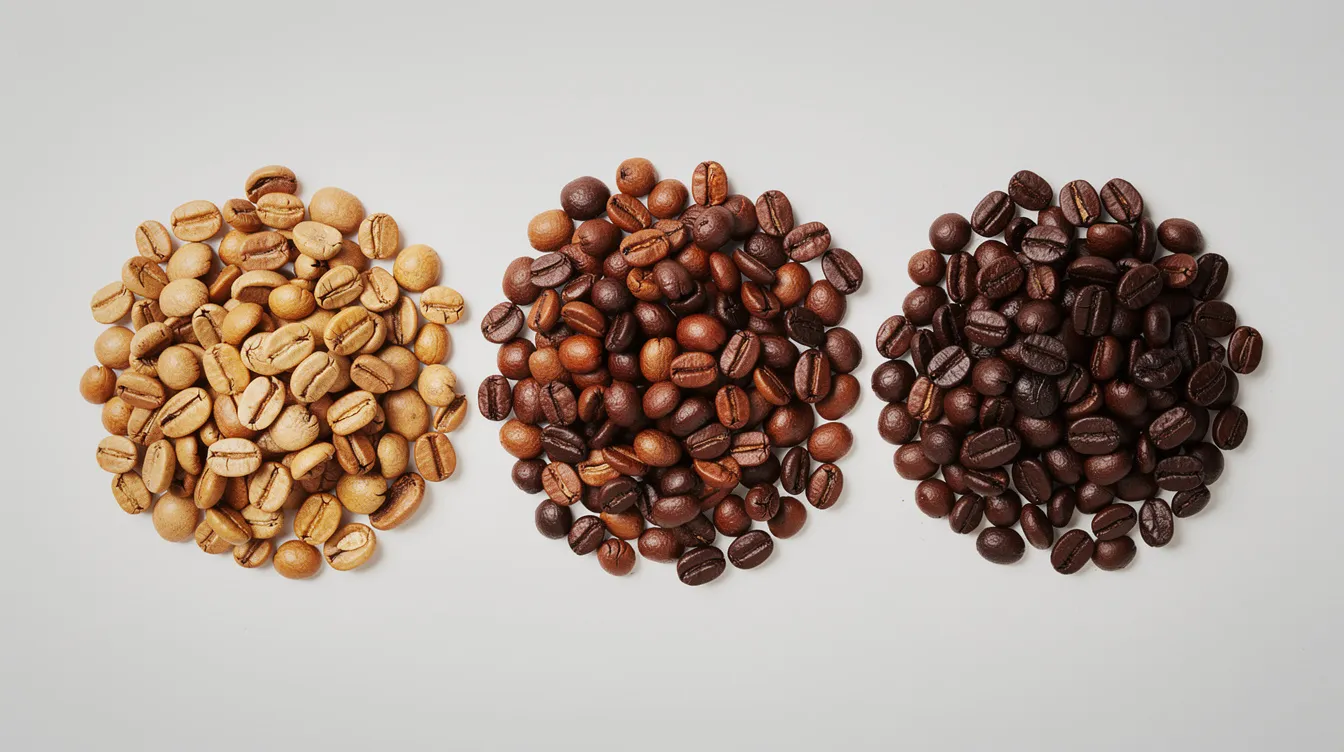
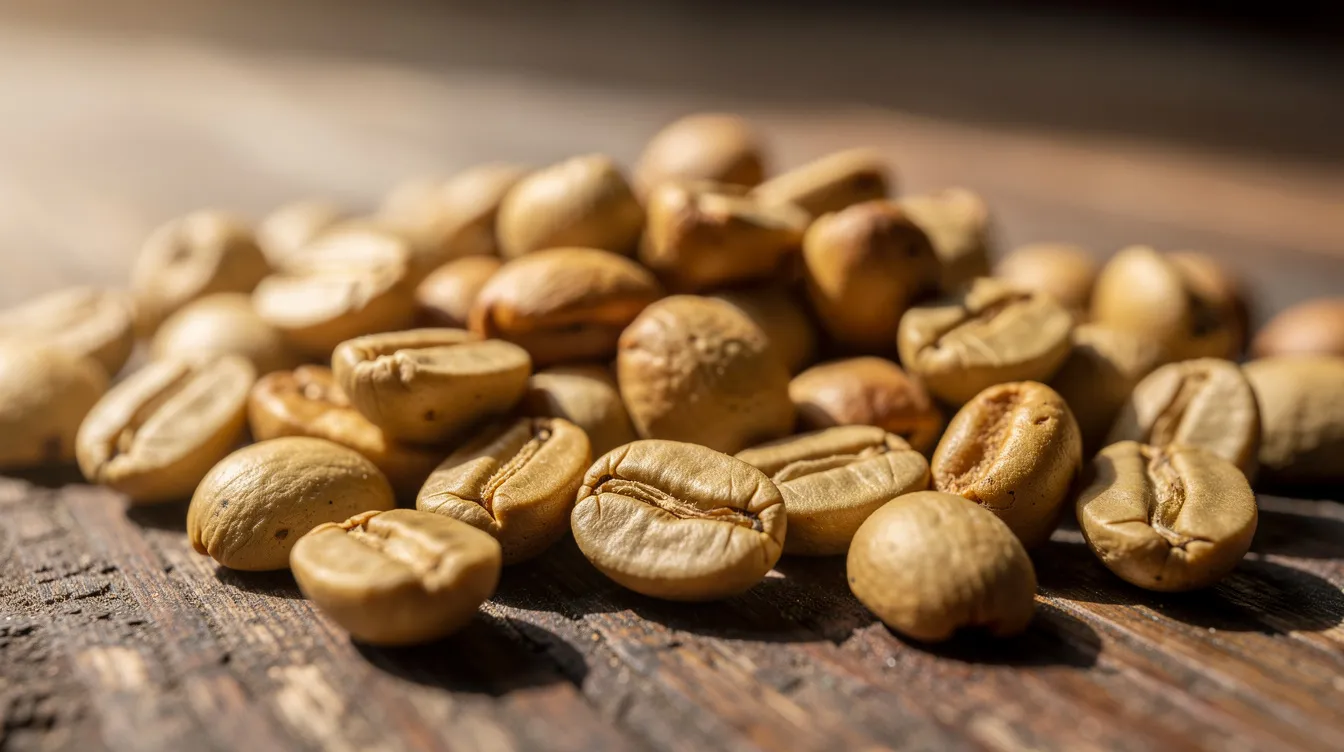
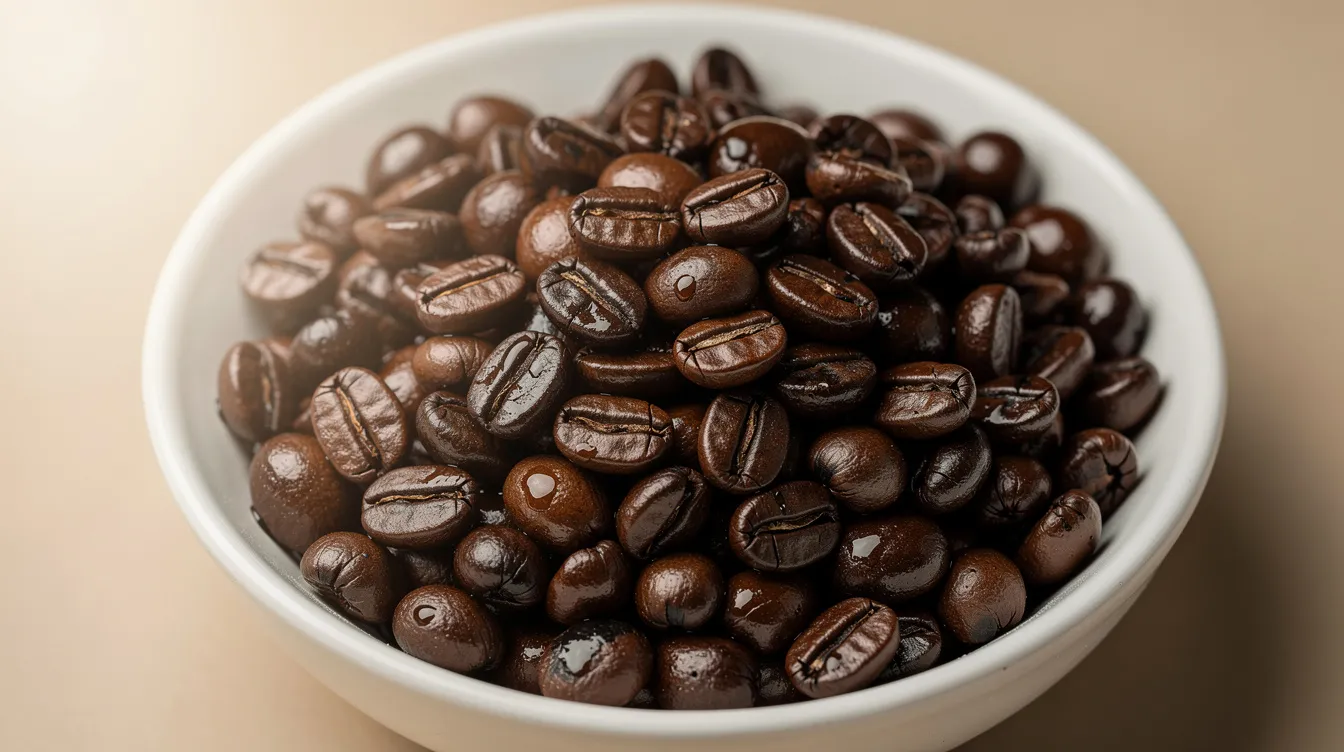
Visual cues help too. Light roast beans are a light brown color with a dry surface and no oil. Medium roasts are medium brown, sometimes with a slight sheen. Dark roast beans are dark brown to near-black with visible oil on the bean surface. Size increases as roasting progresses because of bean expansion from internal gas pressure. Standardization tools like the Agtron Color Scale assign numeric values (roughly 80-90 for light, 50-60 for medium, 30-40 for dark), but most home buyers will never encounter these numbers on a bag.
Light Roast Coffee: Bright, Origin-Forward Flavor
Light roast coffee is roasted between 350°F and 410°F (180-205°C), pulled from the roaster shortly after first crack. Light roast beans are light brown with dry surfaces and do not exhibit oil on their surface. Light roasts are roasted at lower temperatures than dark roasts, resulting in a denser, harder bean with more retained moisture.
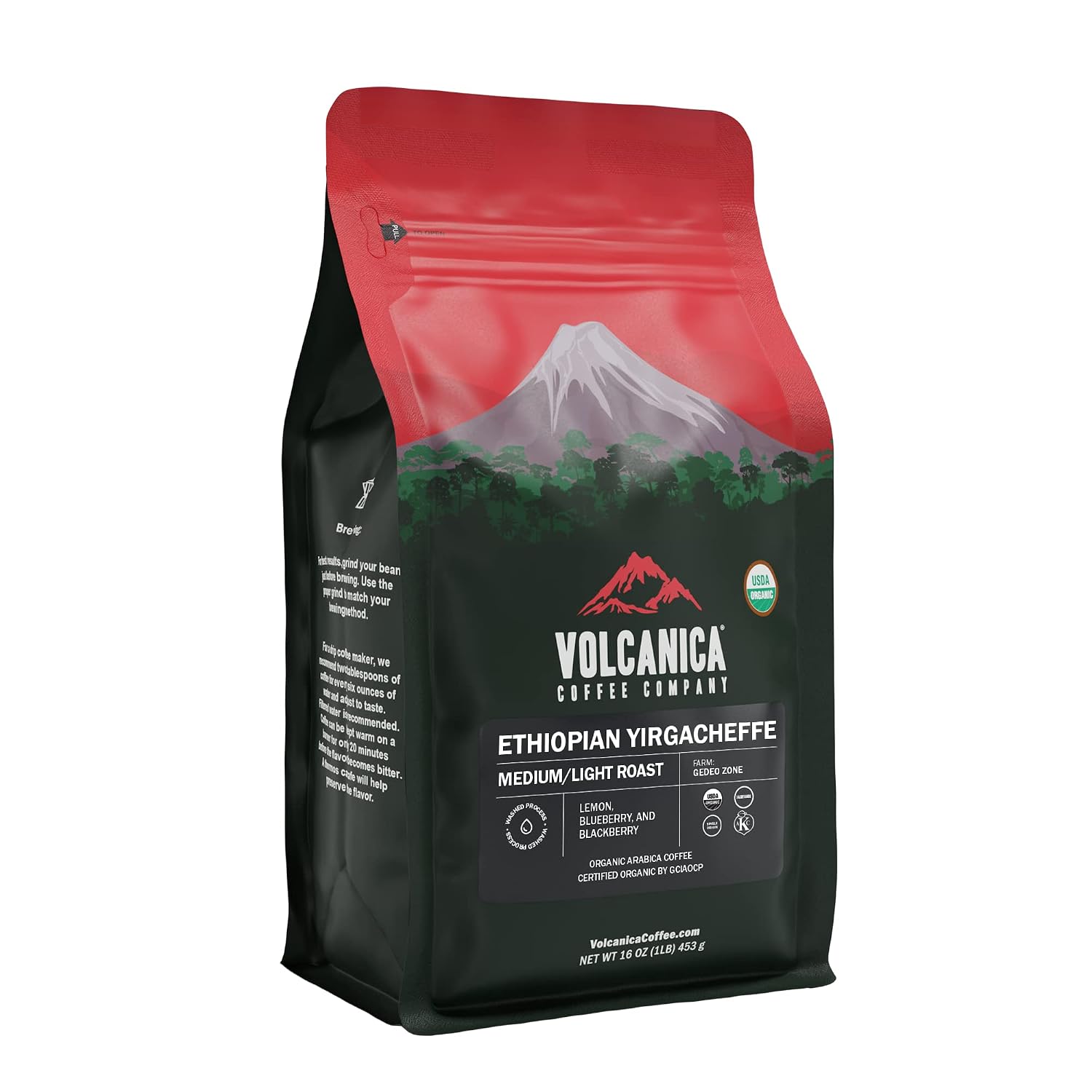
Sensory traits lean toward bright acidity and complex flavors: citrus, berry, stone fruit, floral, and sometimes tea-like clarity. These are the roast levels where origin flavors and terroir show up most vividly. A washed Ethiopian, for example, might display honeysuckle and bergamot at a light roast that would vanish at darker levels. Light roasts preserve more of the bean’s original flavors because fewer of those origin compounds have been broken down by heat.
Light roasts can be more demanding to brew well. The denser bean structure means extraction takes more work. You may need a finer grind, slightly higher brew water temperature (around 200-205°F), and longer contact time to avoid sour, underdeveloped cups. Pour-over methods highlight light roast’s fruity brightness; drippers like the V60, Kalita Wave, and Chemex are the best brewing methods for showcasing nuance. Light roasts also work in single-origin espresso setups, though dialing in requires precision.
Trade-offs: the bright acidity and light body can be polarizing for coffee drinkers accustomed to dark, smoky cups. Some perceive light roasts as “sour” or “thin.” Specialty-grade light roast single-origins often command a premium tied to origin quality, careful processing, and seasonal availability.
Medium Roast Coffee: Balanced and Versatile
Medium roast coffee is roasted between 410°F and 428°F (210-220°C), developed beyond first crack but before second crack. Medium roast beans have a richer, more uniform brown color. They are medium brown with a dry surface and no visible oil, sometimes showing a light satin sheen under direct light. Medium roast beans are medium brown with a slight sheen that distinguishes them from the matte finish of lighter bean roasts.
Medium roast coffee has balanced acidity and flavor profiles including sweetness and nuts. Typical flavor notes include caramel, brown sugar, milk chocolate, and gentle fruitiness. Medium roast coffee features balanced sweetness and notes like caramel and chocolate, sitting at a point where origin flavors still peek through while roast-derived sweetness fills out the cup. Medium roasts provide a smoother mouthfeel than light roasts, with a medium body that most coffee drinkers find approachable on the first sip.
Medium roasts are forgiving and adaptable in the brewer. They work well in drip machines, automatic coffee makers, French press, and AeroPress. Medium roasts are versatile for drip machines and French press without demanding precise technique. For households or offices where multiple people share a bag, medium roasts offer a balanced flavor that minimizes the chance of anyone finding the cup undrinkable.
Medium roasts can still vary: city roast sits at the lighter edge of the medium band, while Full City pushes toward medium dark. Many coffees marketed as breakfast blends or house blends fall squarely in this medium roast range. Medium roasts offer the broadest middle ground between fruity flavors and deeper roast character.
Dark Roast Coffee: Bold, Roast-Driven Character
Dark roast coffee is roasted above 440°F (225-250°C), often past second crack. Dark roast beans are dark brown to black with an oily surface, the result of internal oils migrating outward during extended roasting. The bean surface glistens under light.
Dark roast coffee is characterized by bold flavors and very low acidity. Flavor characteristics lean toward dark chocolate, cocoa, molasses, smoky notes, toasted nuts, and spice. Some darker levels bring pipe tobacco or char. Dark roasts have a bold, smoky flavor and low acidity that many coffee enthusiasts associate with “strong” coffee, though that perception comes from roast flavor intensity rather than caffeine.
Dark roasts perform best with French press and espresso machines. They excel in espresso drinks with milk (lattes, cappuccinos) where their heavy body and roast flavors cut through dairy. Moka pots and some cold brew setups also pair well with dark roast coffees, since the roast character holds up through dilution.
Trade-offs are real. Darker roasting tends to mute origin characteristics and terroir; the same bean roasted dark will taste more like “roast” than like its country of origin. Very dark Italian roast or French roast levels risk ashy or burnt tones. Dark roast beans with oil on the surface oxidize faster in storage and can leave residue in grinders, so smaller purchase quantities and more frequent grinder cleaning help.
Price and value nuances: dark roasts can sometimes use less delicate, lower-priced beans, including Indonesian beans, without obvious defects showing through, because roast flavors mask small flaws. High-quality dark roasts do exist. Look for roasters who stop before “beyond French” levels to maintain some sweetness and balance in the finished cup.
Comparing Light, Medium, and Dark: Flavor Profiles and Use Cases
As roast level increases from light to dark, acidity drops, body builds, and flavor notes shift from origin-driven to roast-driven. A light roast Ethiopian might taste like lemon and jasmine. The same bean at a medium roast could show peach, caramel, and chocolate notes. Pushed to dark range, that coffee’s origin story largely disappears into smoke, molasses, and bitter cocoa. Light coffee roasts differ from medium and dark primarily in roasting duration; it is the accumulated heat over time that drives these changes.
Roast level affects perceived flavor but does not produce a large caffeine content difference, though light roasts may have slightly more caffeine per volume than dark roasts. A 2021 HPLC-based study found caffeine concentrations of roughly 196 mg/L for light roast, 204 mg/L for medium, and 190 mg/L for dark, differences that fall within a narrow band. Perceived “strength” comes from roast flavor and extraction, not from more caffeine.
Here is a compact decision guide:
- Choose light roast if you drink coffee black, enjoy bright acidity and fruity flavors, and want to taste a coffee’s origin. Best for pour-over and filter brewing.
- Choose medium roast if you want a balanced, crowd-pleasing cup with sweetness and a medium body. Works in nearly every brewer.
- Choose dark roast if you prefer bold, smoky character, drink espresso or add milk, and value consistency over origin complexity.
Experimenting with the same bean across multiple roast levels, when a roaster offers it, is one of the most practical ways to understand how roast transforms flavor. A single origin roasted to light, medium, and dark range reveals the spectrum in a way no description can replace. The perfect roast is the one that matches your palate and your brewer.
Beyond the Basics: City, Full City, and Espresso Roast Styles
Between light, medium, and dark lie several intermediate terms that give more precise cues about roast levels and flavor balance.
City roast and City+ sit at the medium to medium-light boundary. City roast is sometimes called “American” or new England roast in older references (England roast, in some catalogs). These coffees show good balance between origin flavors and emerging caramelized sweetness. City+ pushes slightly further, adding a touch more body.
Full City and Full City+ are medium dark roast levels. Body and chocolate notes deepen here. Full City is a common espresso roast choice for those who enjoy rich shots without heavy smoke. Full City+ nudges into the early edge of second crack, where roast flavors become more assertive but origin character has not been fully overwritten.
Vienna and French roasts are darker styles where roast flavor dominates. Vienna still holds some sweetness; French roast pushes further into smoky, bittersweet territory. Italian roast represents the far dark end, sometimes edging into bitter or ashy flavors that divide coffee drinkers.
“Espresso roast” is not a separate bean type. It is a roast approach, usually medium dark to dark, chosen to develop flavor that performs well under espresso’s high-pressure, short-brew conditions. Espresso blends are roasted for syrupy texture and focused flavor, but any roast level can technically be brewed as espresso.
Performance and Usability by Brew Method
Roast level and brewing method interact. Certain roasts feel easier to dial in and produce more satisfying results in specific brewers, a practical consideration for home users who want consistent cups without excessive trial and error.
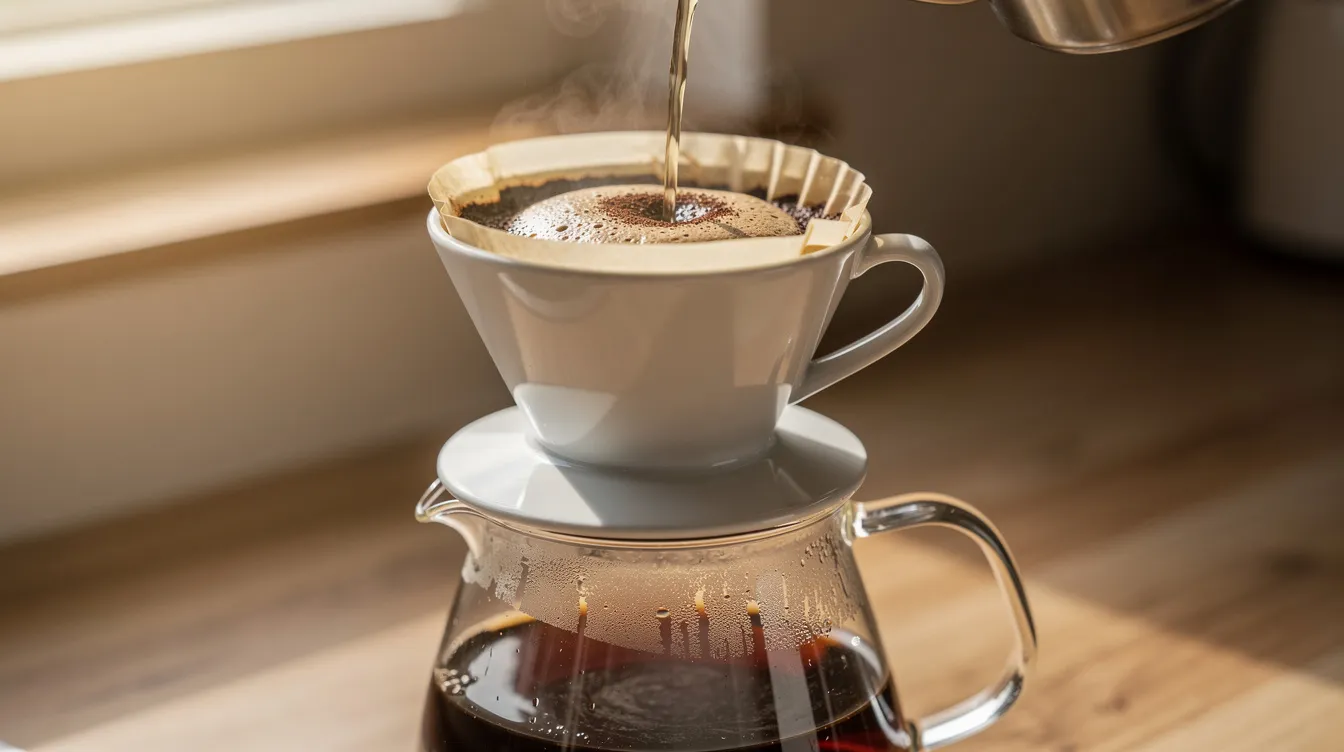
Drip and automatic coffee makers: Medium roasts and balanced medium-light roasts give dependable results with familiar flavor profiles. Most drip machines heat water to a fixed temperature and run at a fixed flow rate, making forgiving medium roasts the path of least resistance.
Pour-over and manual filter methods (V60, Kalita, Chemex): Light to medium roasts showcase clarity and complex flavor notes. Light roasts excel with pour-over brewing methods, but finer grind and careful pouring technique are needed to avoid sour or underdeveloped cups. Medium roasts are more tolerant of minor technique errors.
Immersion methods (French press, AeroPress) and moka pots: Medium to dark roasts work well here. The full immersion contact extracts body and sweetness effectively. For dark roasts, a slightly coarser grind prevents over-extraction and bitterness. AeroPress is flexible enough to handle light medium through dark, depending on water temperature and steep time.
Espresso: Medium dark to dark roasts are the most user-friendly for traditional cafe-style shots. Lighter espresso roasts offer unique origin flavors but demand precise grinding, accurate dosing, and recipe control on an espresso machine. Most home baristas find flavorful coffee easier to achieve with a medium dark roast baseline.
Price, Value, and Trade-Offs Across Roast Levels
Roast level intersects with price in ways that are worth understanding before you buy.
Lighter roasts often emphasize high-quality, traceable origins and careful processing. A washed Ethiopia or a competition-lot Colombia roasted light will carry a premium tied to the green beans themselves, not just the roasting. Budget-friendly blends appear mainly in medium and dark roasts where roast flavors mask small defects in less expensive lots.
For typical buyers ordering online without tasting first, medium roasts may offer the best “hit rate” for crowd-pleasing flavor. The balanced acidity and familiar sweetness minimize the risk of disliking a bag.
Darker roasts can seem more forgiving of storage and brewing inconsistencies, but very dark, oily dark roast beans may stale faster and cause buildup in grinder burrs and bean hoppers. Buying in smaller quantities (12 oz bags rather than 2 lb bags) helps if you drink dark roast coffee slowly.
Freshness and availability differ by roast level. Many U.S. roasters stock medium and medium dark blends year-round. Certain light roast single-origins, tied to specific harvests, are seasonal and limited. A washed Ethiopia harvested in late 2025 may be available only through mid-2026.
Consider your own practical factors: how you brew, how often you drink coffee, whether multiple people with different preferences share the same bag, and whether you prioritize origin exploration or daily consistency.
Browse Guides: Find the Best Coffee by Roast Level
Use this section to jump into detailed buying guides for your preferred roast level. Each guide focuses on performance, value, and flavor notes specific to that roast category.
- Explore all Capitol City Coffee guides for a full overview of our coffee content.
- Interested in bright, origin-forward flavors? See our best light roast coffee picks.
- Looking for balance and daily-drinker options? Browse our top medium roast coffee recommendations.
- Love bold, smoky cups? Check our best dark roast coffee to buy now.
Each guide includes flavor profiles, brew method fit, price context, and meaningful drawbacks for the coffees we feature.
Affiliate Disclosure and Featured Recommendations Overview
Capitol City Coffee may earn a commission from qualifying purchases through links on this page, at no extra cost to you. Commission rates do not influence our rankings or editorial conclusions.
All featured recommendations are based on researched editorial analysis using verified product facts, expert commentary, and broad third-party consensus. We do not base recommendations on hands-on tasting or lab measurements unless a specific guide states otherwise.
Below, we outline the types of featured recommendations CCC evaluates by roast level: flavor profile, roast degree, best brew methods, price range, and notable drawbacks. Full product-level picks live on the dedicated roast pages linked above. This hub maintains a higher-level view so you can choose the right roast style before choosing specific bags.
Featured Recommendation Types by Roast Level
Light roast features: A typical “hero” recommendation in our light roast guide is a washed or natural single-origin, often from Ethiopia or Colombia, with clearly stated origin flavors, high clarity, and a recommendation for pour-over and modern drip brewers. Price-per-ounce tends to sit above average. Availability is often seasonal, tied to specific harvest lots.
Medium roast features: A common featured category is an approachable house blend or breakfast blend that works for batch brewing and French press. Goals include a consistent flavor profile, balanced acidity, moderate sweetness, and good value in 12 oz and 2 lb bag formats. These coffees tend to develop flavor that appeals to a wide range of palates.
Dark roast features: Example features include a French roast or espresso-focused blend emphasizing dark chocolate, caramel, and smoky notes. These fit espresso, moka pots, and milk-based drinks. Drawbacks typically include reduced origin complexity and faster staling if the beans are very oily.
“Flex” recommendations: Some coffees straddle roast categories. A medium dark Full City roast marketed as an espresso roast but still tasting good as drip coffee offers cross-brew versatility and solid value for households using multiple brew methods.
Specific product names, pricing, and links appear in our dedicated roast-level guides.
How Capitol City Coffee Researches Roast-Level Recommendations
Capitol City Coffee operates as an independent coffee editorial and affiliate publication. We do not roast or sell our own coffee. Our goal is objective, practical advice for United States coffee drinkers comparing different roast levels and exploring new coffees.
Research inputs include roaster-provided specifications, green coffee origin data, roast level descriptions, verified flavor notes, third-party expert reviews, competition results (such as Cup of Excellence or Good Food Awards), and consensus from reputable publications.
Unless a guide states otherwise, CCC does not base roast-level recommendations on hands-on tasting or lab measurements. We avoid unsupported claims about health benefits or performance. Our evaluation of value considers price-per-ounce, shipping policies, subscription discounts, roast date transparency, and current U.S. availability at the time of research.
CCC revisits and updates roast-level guides as availability changes, new roasters enter the market, and consensus around specific coffees or roast approaches evolves.
FAQs: Coffee Roast Levels Explained
These questions address practical concerns not fully covered above, especially around caffeine, health, storage, and adjusting between roast levels. Answers reflect general consensus for U.S. home coffee drinkers using standard brewing methods.
Does coffee roast level change how much caffeine is in my cup?
Light roasts may have slightly more caffeine by volume than dark roasts because the beans lose less mass during shorter roasting. Caffeine content decreases with longer roasting times, but the change is modest. Dark roasts have slightly less caffeine than light roasts by weight. A 2022 study measuring brewed coffee found that a 300 mL light roast brew contained roughly 217-220 mg caffeine while a dark roast brew contained around 238 mg, with overlapping confidence intervals. Adjusting your coffee-to-water ratio has a larger impact on caffeine per cup than switching between nearby roast levels.
Which roast level is easiest for beginners to brew well at home?
Start with a balanced medium roast. It offers forgiving extraction, familiar flavor notes (caramel, nuts, gentle sweetness), and good performance across common brewers like drip machines, French press, and pod-compatible grinders with minimal dialing in. Once you are comfortable, branch into light roasts for more complexity or dark roasts for richer, more intense cups without needing to change equipment.
Is one roast level healthier than another?
Research suggests light roasts may retain more certain antioxidants, particularly chlorogenic acids. One analysis found chlorogenic acid levels dropped from roughly 278 mg per 300 mL brew for light roast to about 30 mg for dark roast. All standard coffee roast levels can fit into a generally healthy diet when consumed in moderation. Roast choice is best treated as a flavor and enjoyment decision. Follow medical advice for caffeine intake limits.
How should I store different roast levels to keep flavor fresh?
Store any roasted coffee in an airtight, opaque container at room temperature, away from light, heat, and moisture. Avoid fridge or freezer storage for daily-use bags; condensation and odor absorption degrade flavor. Very dark, oily beans stale faster and leave residue in grinders. Buy dark roast coffee in smaller quantities and clean your grinder burrs more often when running dark roast beans regularly.
Can I use the same grind setting for all roast levels?
Most home brewers start from a single default grind setting, but adjustments improve results. Lighter roasts benefit from a slightly finer grind and higher brew temperature (around 200-205°F) for proper extraction. Very dark roasts may need a touch coarser grind to avoid over-extraction and bitterness. Adjust grind in small steps when switching between light and dark roasts, and taste side by side to find the balanced flavor you prefer at each roast level.