Pour-over coffee is one of the most rewarding brew methods you can practice at home. It takes a few minutes, a handful of tools, and a willingness to pay attention – and it rewards you with a clean, flavorful cup that most automatic machines simply cannot match. This guide walks you through everything: parameters, technique, troubleshooting, and researched picks for beans and gear.
Best dripper pick
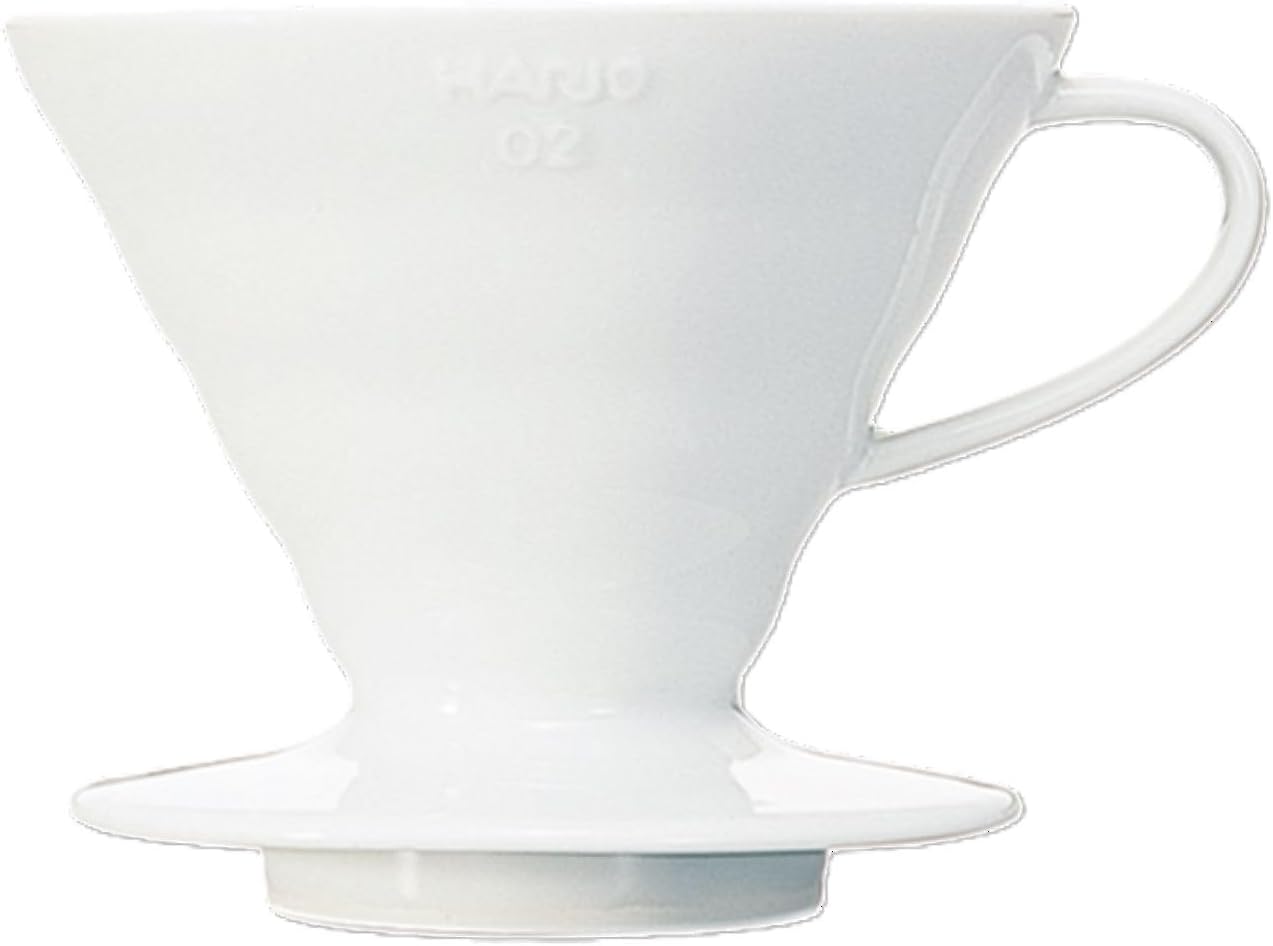
For this roundup, Hario V60 02 is the dripper we recommend first—the same pick at the top of our At-a-glance cards below.
To make pour over coffee, use a medium to medium-fine grind, a 1:16 coffee ratio (about 22 g coffee to 350 g of water), water at 195–205°F, and a controlled pour over 3–4 minutes total brew time.
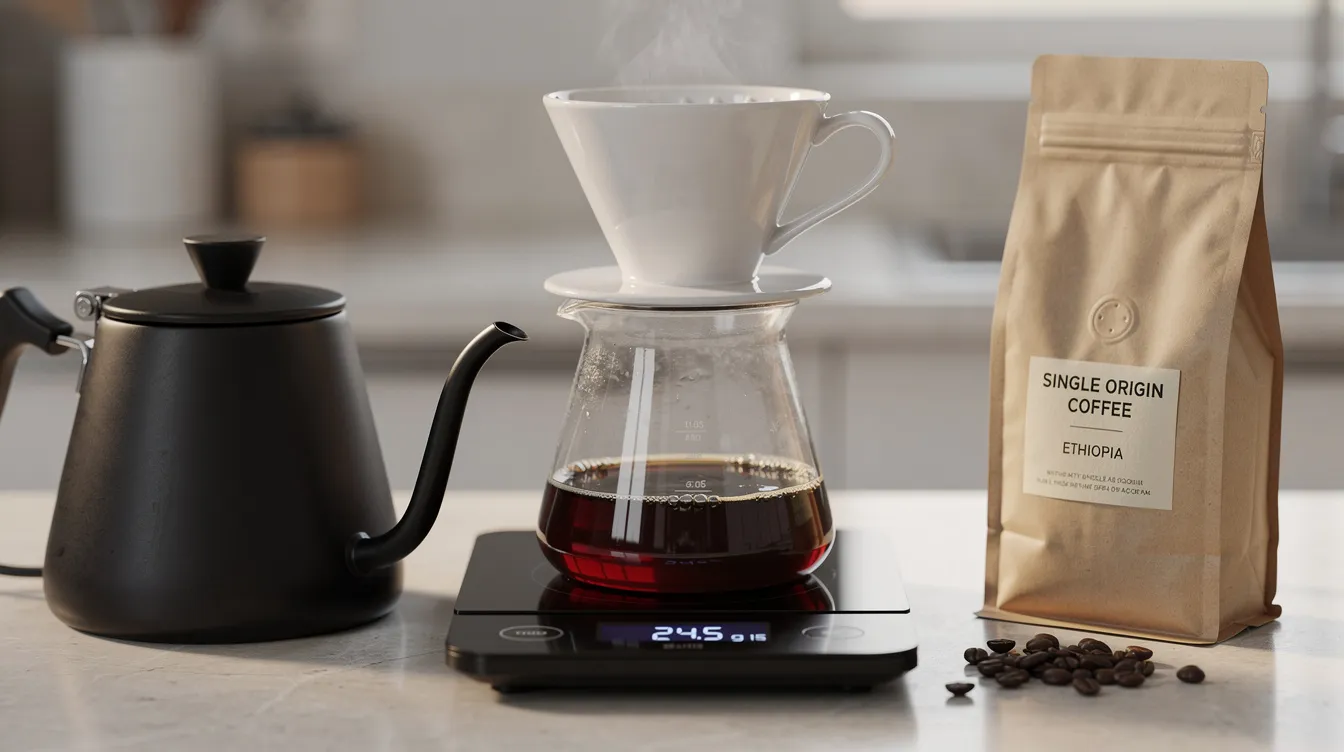
You need fresh coffee grounds, a pour over cone or dripper, paper coffee filters, a burr grinder, and ideally a gooseneck kettle for a precise pour.
A typical single-cup recipe calls for 22 g of ground coffee and 350 g of water, with a 30-second coffee bloom followed by 2–3 slow, circular main pours.
Pour over brewing gives you clarity, sweetness, and more control over the strength and flavor of every cup by letting you adjust grind size, coffee ratio, and pour speed in real time.
The rest of this guide includes step by step instructions, a troubleshooting section, and researched recommendations for beans and gear.
Direct Answer: How to Make Pour-Over Coffee
Here is the core method in brief: place a rinsed paper filter in your dripper, add medium-ground coffee, pour a small amount of hot water to bloom the grounds for about 30 seconds, then complete the brew with slow, spiral pours until you reach your target water weight – usually around 3 to 4 minutes from start to finish.
To make pour over coffee, you typically use a 16:1 water to coffee ratio (about 22 g coffee to 350 g water) and water at 195–205°F, poured in stages. Pour over is a manual drip method where you control water flow, contact time, and extraction with each pour, which is what gives it that signature clarity compared to immersion brew methods like french press or even a standard drip machine.
This guide is published by Capitol City Coffee as an independent coffee editorial resource, not as a coffee seller. Recommendations throughout are based on researched editorial analysis and publicly available expert consensus. Scroll ahead for detailed step by step instructions, troubleshooting tips, and recommended gear and beans.
What You Need for Pour-Over Coffee at Home
Before you start brewing, gather the right tools. Each piece of equipment plays a role in the final brew – skipping one rarely ruins things, but having them all makes repeatable, good coffee far easier.
Dripper. Common pour over devices include the Hario V60, the Chemex, the Kalita Wave, and the Melitta cone. The V60 is a cone-style dripper with spiral ribs and a single large drain hole, giving you maximum flow control. The Kalita Wave uses a flat bottom with three small holes and a wave-shaped filter for more forgiving, even extraction. The Chemex, invented in 1941, pairs thick bonded filters with an hourglass glass carafe for a very clean cup profile. Each differs in capacity, filtration style, and how much the brewer (you) influences the result.
Coffee. Start with fresh whole-bean coffee – ideally roasted within 2–4 weeks. Freshness is critical because stale beans lose aroma and sweetness rapidly. Grind just before brewing for the best results.
Filters. A paper filter produces a light, clean cup by trapping oils and fine particles. Metal or cloth filters let more oils through, resulting in heavier body but less clarity. Match your filter to your dripper’s shape and size.
Grinder. A burr grinder is preferred over a blade grinder because it produces uniform particle sizes. A blade grinder chops unevenly, creating a mix of fines and boulders that extract at different rates – leading to a muddy, inconsistent drink.
Kettle. A gooseneck kettle allows for precise pouring, which matters when you need to slowly pour water over coffee grounds in controlled circles. A gooseneck electric kettle with temperature control adds extra precision. If you only have a standard electric kettle, you can still make pour over coffee – just pour more carefully and consider transferring hot water to a smaller vessel with a narrower spout.
Supporting gear. A digital scale is essential for measuring coffee and water accurately. Use a coffee scale (0.1 g resolution is ideal) along with a timer – your phone works fine. You will also need a mug or carafe to catch the brew, and optionally a thermometer if your kettle does not display temperature.
Coffee, Water, and Grind Parameters
Consistency in pour over coffee at home comes down to the relationship between your coffee grounds, coffee ratio, grind size, water temperature, and contact time. Dial these in and you will get repeatable results every morning.
Brew ratio. A standard starting point is a 16:1 water to coffee ratio – that means 16 grams of water for every 1 gram of coffee. For a single mug, use 22 g of coffee to 350 g of water. For two cups, scale up: roughly 30 g of coffee to 480 grams of water. Some prefer a coffee-to-water ratio between 1:14 and 1:20, but the proper ratio for most people falls in a narrower band:
Ratio
Coffee (g)
Water (g)
Taste Result
1:15
22
330
Stronger coffee, more body
1:16
22
350
Balanced, the standard starting point
1:17
22
374
Lighter cup, more delicate
For a bolder brew, use a 15:1 ratio. A lighter cup can be achieved with a 17:1 ratio. Adjust from there based on your taste.
Grind size. A medium grind is ideal for pour over coffee. More specifically, medium-fine coffee grounds are ideal – a texture resembling table salt. Grind size affects extraction speed and flavor balance directly: too coarse and water rushes through, leaving you with a sour, under-extracted cup; too fine and the brew drags, turning bitter. For a V60, lean medium-fine. For a Chemex with its thicker filter, go medium-coarse. Flat-bottom drippers like the Kalita Wave sit comfortably at medium.
Water temperature. The ideal water temperature for brewing is 195°F to 205°F (roughly 90–96°C). Filtered water should be heated to 200°F to 205°F for most light and medium roasts. Use the lower end of the range (195–198°F) for darker roasts to avoid pulling harsh, bitter compounds. If you do not have a temperature-controlled kettle, bring water to a boil and let it sit for 30–60 seconds off heat – that typically lands you in the right zone without guessing.
Contact time. Total brew time for pour over coffee is typically 3 to 4 minutes, measured from your first pour to the last drip. A V60 single cup usually finishes around 2:45–3:30; a Chemex with a thicker filter may run 3:30–4:30 for larger batches. If your brew finishes well outside these windows, adjust your grind size first.
Water quality. Use clean, good-tasting tap water or filtered water. Avoid heavily distilled water – it lacks the minerals that help extract flavor and can leave the cup flat.
These parameters are starting points. Taste your coffee and adjust: finer grind or a tighter ratio for more intensity, coarser grind or more water for a lighter, more delicate cup.
Step-by-Step Method: How to Make Pour Over Coffee
This is the core recipe section – a practical workflow you can follow any morning. The base recipe: 22 g of medium-ground coffee, 350 g of water at about 200°F, targeting a 3:00–3:30 total brew time.
Step 1: Set up and rinse. Place your dripper on a mug or carafe. Fold your paper filter along the seam and set it into the pour over cone. Always rinse paper filters with hot water before brewing to eliminate papery tastes and preheat the brewer. Discard the rinse water.
Step 2: Add coffee. Place the dripper and vessel on your scale, add 22 g of ground coffee, and gently shake or tap the dripper to level the coffee bed. Zero the scale.
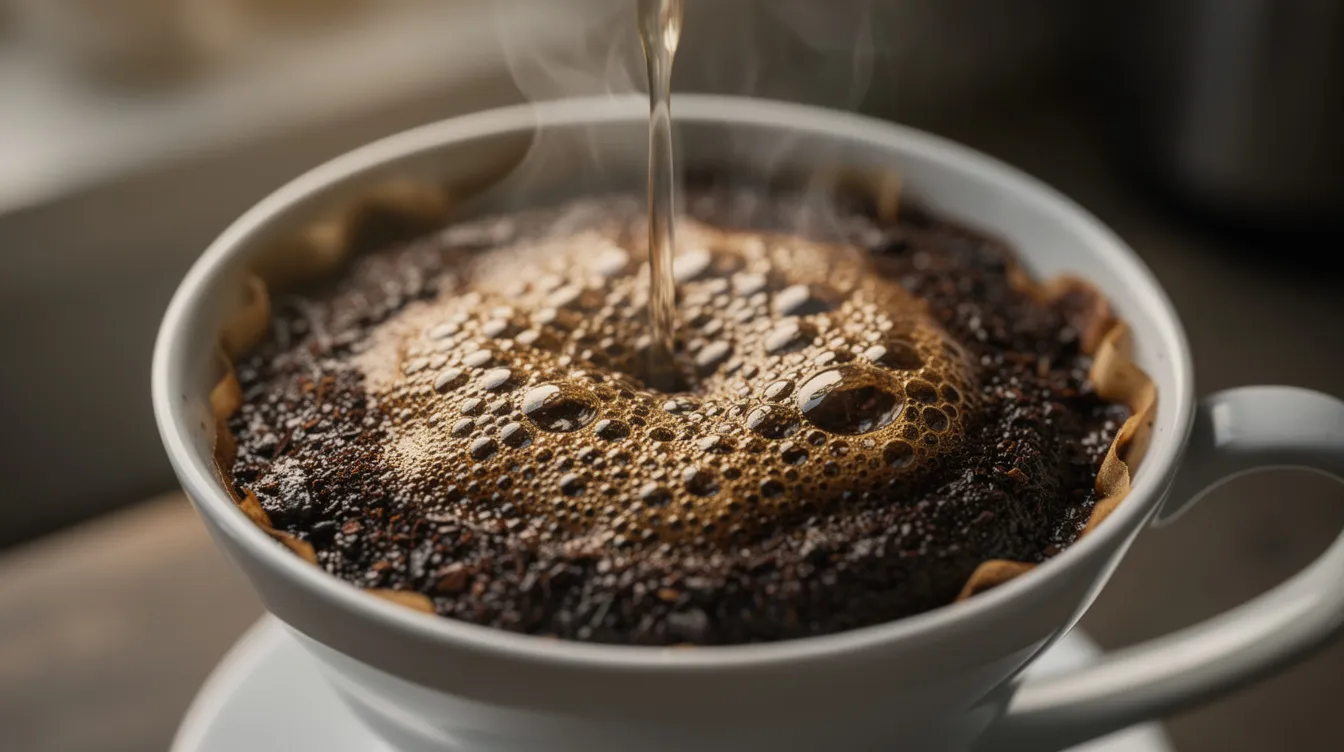
Step 3: Bloom. Start your timer. Pour just enough water – about double the weight of the coffee dose, so roughly 44–50 g – in a slow circular motion to saturate all the grounds evenly. This is the bloom water. Coffee bloom occurs after pouring hot water on grounds: you will see the bed swell and bubble as blooming releases trapped gases from the roasted coffee. Let coffee grounds bloom for about 30 seconds after this initial pour. Proper blooming prevents an acidic taste in coffee by allowing CO₂ to escape before the main extraction begins.
Step 4: Main pours. At about 0:45, begin your next pour. Slowly pour water in a spiral pattern, starting from the center and moving outward, then back in – small, controlled circles that keep the water level steady above the grounds. Avoid pouring directly along the filter walls, which creates channeling. Add water in 2–3 stages (for example, at 0:45, 1:30, and 2:15), each time bringing the total closer to 350 g. A gooseneck kettle supports this kind of gentle, love pour style flow, but whatever vessel you use, maintain steady control of pour to ensure even extraction during brewing.
Step 5: Drawdown. After pouring all the water, let the remaining water drip through the coffee bed. Allow the water to fully drip through the coffee bed before serving. Target a finish around 3:00–3:30. If the total brew time is consistently too fast or too slow, adjust grind size – finer to slow it down, coarser to speed it up.
Step 6: Serve. Remove the filter and spent grounds. Swirl the finished coffee in the carafe or mug to mix any layers, then drink it while it is hot. Rinse your dripper, kettle, and server right away – keeping equipment clean preserves flavor quality and durability over time and keeps your workflow smooth for the next brew.
What Good Pour-Over Results Should Look and Taste Like
A well-made cup of coffee from a pour over should be noticeably cleaner and more defined than what you get from an immersion method. Think of it as the difference between a crisp photograph and a watercolor painting – both can be beautiful, but pour over emphasizes sharpness and detail.
Appearance. The brew should be clear, not cloudy. Color varies with roast: light roasts produce a golden-brown hue, darker roasts a deeper amber. After brewing, the coffee bed should look relatively flat and even – no obvious dry patches or deep channels, which would signal uneven extraction.
Aroma. Expect layered aromatics – floral, fruity, nutty, or chocolatey depending on origin and roast – without harsh smoke or burnt notes.
Taste. Look for pleasant acidity that lifts the cup, noticeable sweetness in the mid-palate, and moderate bitterness that supports flavor rather than overwhelming it. A well-extracted pour over has a clean finish that does not linger with astringency.
Mouthfeel. Paper filters (V60, Kalita, Chemex) produce a lighter, tea-like body. Metal filters allow more oils through, giving a heavier texture. Neither is objectively better – it depends on what you prefer.
Pay attention to how even small changes in grind or coffee ratio shift acidity, body, and finish. That feedback loop is what makes pour over a method worth learning.
Troubleshooting Common Pour-Over Problems
Small tweaks in grind size, coffee ratio, and pour style usually fix most issues when making pour over coffee at home. Here are the most common problems and how to address them.
Sour, sharp, or thin coffee usually means under-extraction. Too coarse a grind results in under-extraction and a sour taste because water moves through the bed too quickly. Make the grind slightly finer, increase your water temperature toward 200–205°F, or slow your pour to extend contact time.
Bitter, harsh, or astringent coffee points to over-extraction. A fine grind can lead to over-extraction and bitterness. Go coarser, lower the water temperature slightly (especially with dark roasts), or try a slightly higher water ratio like 1:17 instead of 1:15. Adjusting grind size can help fix sour or bitter flavors in brewed coffee – it is usually the single most impactful variable.
Weak or flat cups often come from too little coffee or poor water distribution. Increase your dose, tighten the grind a notch, or check for channeling – if water is running along the filter walls instead of through the coffee bed, you are losing extraction. Pour more evenly and focus on the center of the bed.
Very slow drawdown means the grind is likely too fine or the filter is compacted against the drain holes. Go coarser and pour more gently. With a Chemex, this is especially common due to the thick bonded filter – it is naturally slower and may need a coarser grind than other drippers.
Very fast drawdown produces a watery, under-developed brew. Grind finer and pour in smaller, slower increments.
Finally, keep your equipment clean. Old coffee oils on drippers, carafes, or kettles cause off-flavors that no amount of grind adjustment will fix.
Recommended Beans for Pour-Over Coffee (Researched Picks)
Capitol City Coffee may earn a commission from products linked in this section. Rankings are based on researched editorial analysis, and commissions do not influence recommendations.
These suggestions are based on publicly available roaster information and widely reported third-party consensus, not on CCC’s own hands-on tasting tests.
Light roast: washed Ethiopian single origin. Look for a washed Ethiopian from a reputable specialty roaster – flavor profiles typically include citrus, jasmine, and stone fruit. The clean processing method pairs perfectly with pour over filtration, which highlights floral and fruity clarity. Best brewed with water at 200–205°F and a 1:16 ratio.
Medium roast: Colombian or Brazilian single origin. A medium roast with chocolate, caramel, and nut notes is a versatile everyday option for pour over coffee at home. These beans are broadly available in 12 oz bags from both local roasters and online retailers at a reasonable price point. They are forgiving across a range of grind sizes and water temperatures.
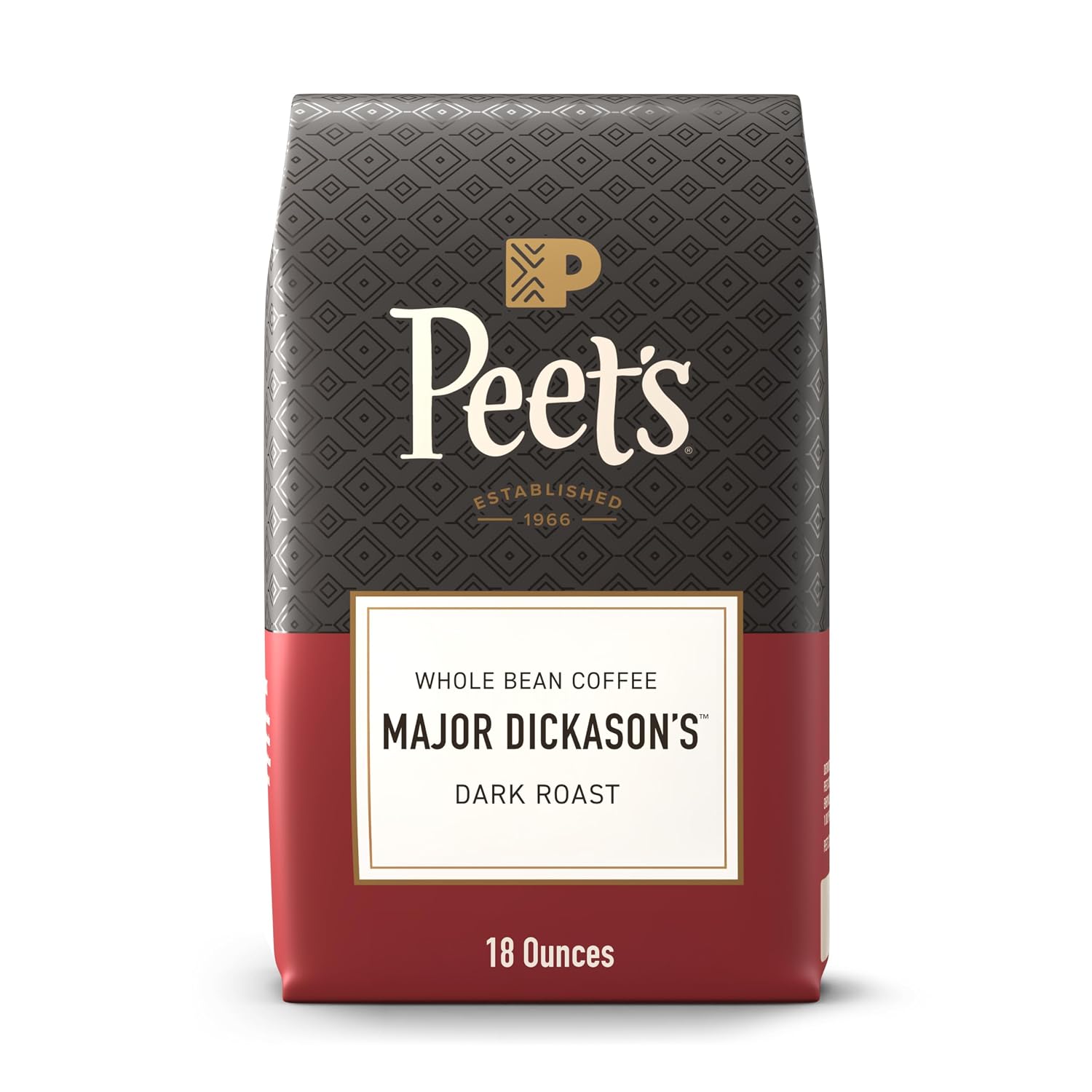
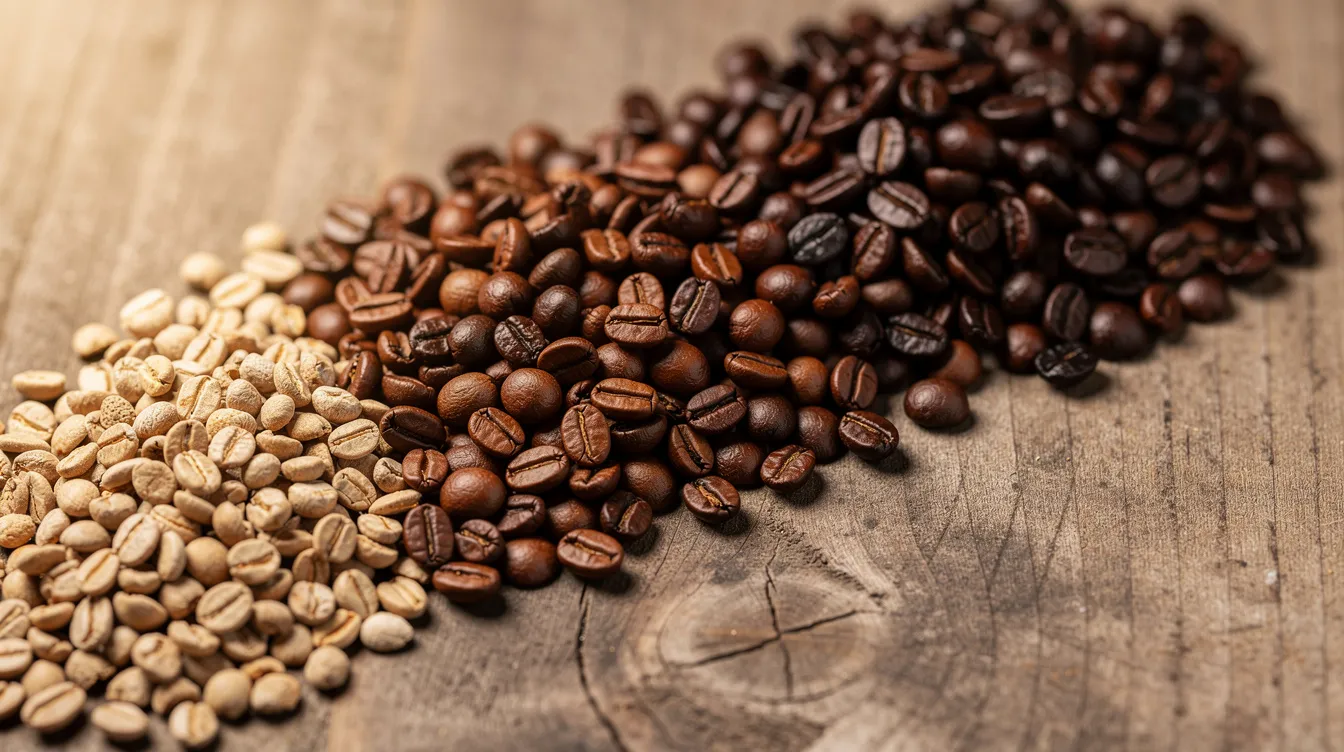
Darker roast: a city+ or full city roast. If you prefer lower acidity and more roast-driven flavors, a darker roast can still work well in a pour over – just know you will trade some origin clarity and complexity for body and smokiness. Use slightly cooler water (195–198°F) and consider a 1:17 ratio to avoid pulling harsh bitterness.
Freshly roasted coffee beans should ideally be used within 1 to 4 weeks of roasting. Beans that are too fresh (under 3–4 days) produce excessive CO₂ and a chaotic bloom; beans past 5–6 weeks lose sweetness and aroma. Match your beans to your brew parameters: lighter roasts often benefit from slightly hotter water, while darker roasts prefer the cooler end of the range.
These gear picks are based on researched editorial analysis and broadly reported performance, not on CCC’s own lab testing or personal ownership.
Cone dripper: Hario V60 02. The Hario V60 is a popular pour-over dripper known for producing high clarity and bright, complex flavor. The Hario V60 is user-friendly and cost-effective – plastic versions cost under $10. The trade-off: it is more sensitive to pouring technique and grind consistency than flat-bottom alternatives, so expect a learning curve.
Flat-bottom dripper: Kalita Wave 185. Flat-bottomed brewers like the Kalita Wave are user-friendly and deliver consistent, balanced extraction thanks to wave-shaped filters and three small drain holes. It is a great choice for beginners who want good results without obsessing over pour technique.
Larger brewer: Chemex 6-Cup. For brewing multiple cups at once, the Chemex is hard to beat for clarity and visual appeal. Its glass construction looks beautiful but is fragile – handle with care and clean with a bottle brush and mild soap. Heat retention is moderate; preheating helps.
Pour-over devices can be made from ceramic, glass, or stainless steel, each with different heat retention and durability characteristics. Ceramic retains heat well but chips easily; glass is elegant but breakable; plastic is lightweight and nearly indestructible.
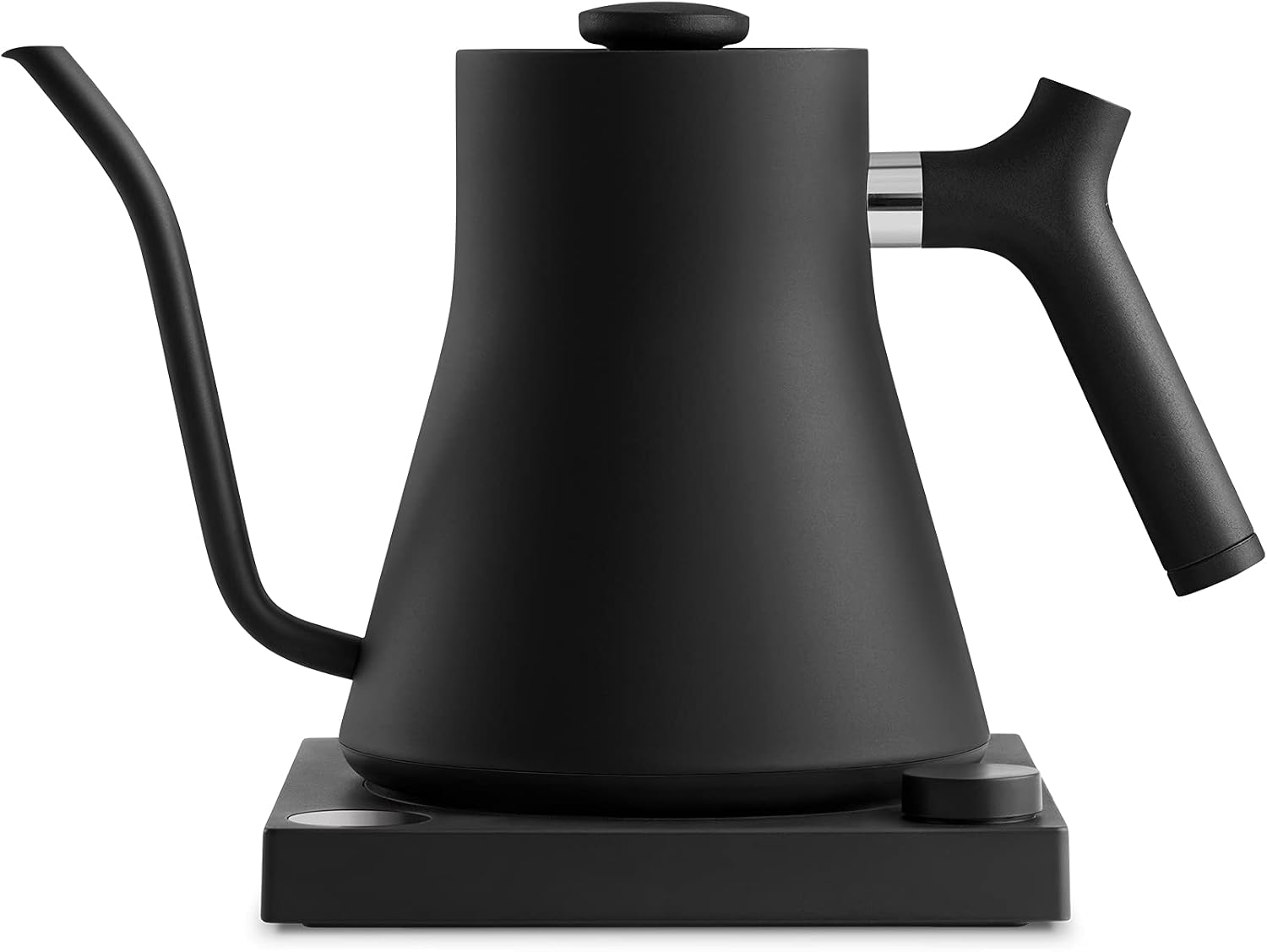
Gooseneck kettle. A temperature-controlled gooseneck electric kettle gives you both pour control and precise heat – a meaningful upgrade if you brew daily. A stovetop gooseneck costs less and works well but requires a separate thermometer. Either way, the narrow spout is what enables the controlled, circular motion that defines good pour over technique.
Burr grinder. A conical burr grinder with a wide range of grind settings lets you dial in for any dripper. Look for one with clearly marked adjustments so you can track changes to your recipe and replicate results.
Scale and timer. A reliable digital scale and timer (built-in or on your phone) are what make your coffee ratio and step by step brewing repeatable. Without them, you are guessing – and guessing means inconsistent cups.
Higher price does not automatically equal better value in any of these categories. A $9 plastic V60 with a $30 hand grinder and a $15 kitchen scale will outperform a $200 setup used without attention to technique.
FAQs About Making Pour-Over Coffee
These questions address common, practical concerns that go beyond the main step by step instructions and troubleshooting covered above.
Can I Make Pour-Over Coffee Without a Scale?
Yes. You can approximate your coffee ratio using volume: about 2 tablespoons of coffee per 6 fl oz of water is a reasonable starting point, which works out to roughly 3–4 tablespoons for a standard 10–12 oz mug. A scale gives you more consistency, but using the same scoop and measuring the same water level each time still helps you build a routine. If the brew tastes too strong, use slightly less coffee next time; if too weak, add a bit more grounds until the flavor is balanced.
What If I Don’t Have a Gooseneck Kettle?
A gooseneck kettle makes controlled pouring easier but is not mandatory for making pour over coffee. You can use a standard kettle with a smaller spout, or transfer boiling water to a heatproof pitcher with a narrower lip. Focus on slow, steady pours in small circles and avoid aggressive splashing, which can disturb the coffee bed and cause uneven extraction. Many coffee shops started with basic equipment – technique matters more than gear.
How Often Should I Clean My Pour-Over Setup?
Rinse your dripper, server, and kettle thoroughly after each use. Wash everything with mild, unscented soap at least a few times per week to prevent oil buildup. Every couple of weeks, do a deeper clean of glass or metal brewers with a coffee-specific cleaner or a baking soda solution to prevent residue and off-flavors. Cloth filters need special care – rinse after each use and store refrigerated between brews. Paper filters are disposable but should be kept in dry storage for best filtration.
Can I Use Pre-Ground Coffee for Pour Over?
Pre-ground coffee will work, but flavor and aroma will usually be less vibrant compared to freshly ground beans. If you buy pre-ground, purchase small amounts and ask for a “medium” or “pour over” grind if a shop grinds for you, then store in an airtight container away from light and heat. If you find yourself enjoying pour over regularly, upgrading to even a basic burr grinder is one of the most impactful improvements you can make to your morning cup.
Is Pour-Over Coffee Stronger Than Drip Coffee?
“Strength” depends mostly on your coffee ratio and extraction, not the brewing device itself. Compared to automatic drip, pour over often tastes more intense and defined because you control grind, contact time, and pour pattern – but you can brew it lighter or stronger by adjusting dose and water. Pour-over coffee allows for precise control over brewing that a machine cannot replicate. Experiment with ratios between 1:15 and 1:17 until you find your ideal balance of flavor strength and clarity, then lock in that recipe and enjoy it daily.
How Capitol City Coffee Rates Coffee and Coffee Machines
Every coffee and coffee machine we recommend is scored on the same 100-point scale, so a recommendation on one page means the same thing as a recommendation on any other. Each pick is also labeled with how we reached its score.
Research-ratedScored from the roaster or manufacturer’s published specifications, independent results such as Coffee Review blind cuppings and SCA brewer certification, and patterns across verified buyer reviews. Most of our current picks are research-rated.
Hands-on testedThe Capitol City Coffee team has brewed the coffee or used the machine ourselves, following the testing steps below. We only use this label when that testing actually happened, and we show the date we tested.
Coffee beans: 100-point scale
What we score
Points
What we look at
Origin and sourcing transparency
20
Country, region, farm or cooperative, altitude, bean variety, and processing method are clearly disclosed.
Flavor evidence
25
Independent cupping scores, how closely the tasting notes match what the origin is known for, and our own cupping notes when hands-on tested.
Roast and freshness
15
Roast level stated, roast-date practices, whole-bean availability, and packaging with a one-way valve or resealable bag.
Brew versatility
15
How well the roast suits pour-over, drip, French press, cold brew, and espresso.
Value
15
Price per ounce compared with similar single-origin coffees or blends.
Buyer feedback
10
Volume and consistency of verified reviews, and recurring complaints about staleness, bitterness, or shipping.
Coffee machines and gear: 100-point scale
What we score
Points
What we look at
Brewing performance
25
Water temperature in the 195–205°F range, even extraction, and SCA certification or published test data.
Build quality and reliability
20
Materials, known failure points, and long-term owner reports.
Ease of use and cleaning
15
Setup, the daily routine, descaling, and dishwasher-safe parts.
Fit for your kitchen
10
Capacity, counter footprint, and noise.
Useful features
10
Programming, grind and temperature control, and carafe type. Features that improve the cup count more than extras that do not.
Value
10
Price compared with machines that perform similarly.
Warranty and support
10
Warranty length, parts availability, and how the brand handles repairs.
What the grades mean
Score
Grade
What it means
90–100
A
Exceptional. Our first recommendation for the feeling and setting described.
80–89
B
Strong. Excellent, with minor trade-offs we explain.
70–79
C
Good. Worth it for specific needs, with clear compromises.
Below 70
—
Not recommended. We do not feature these as picks.
How we test hands-on
When a pick carries the Hands-on tested label, this is the method behind it, and we note the date we tested.
Coffee: brewed fresh from whole beans following Specialty Coffee Association guidelines (water between 195 and 205°F, about 1 gram of coffee to every 15 to 18 grams of water) in the brew methods the roast suits best, such as pour-over, French press, or espresso. We taste it black first, then with milk if that is how most people drink it, and each taster scores it on their own before we compare notes.
Machines: used in our everyday routine rather than a single demo. We brew both full and small batches, check the brewing temperature and brew time, and run the cleaning or descaling steps the manual calls for.
How we choose the feeling and setting
We match each coffee to a mood and a moment based on its flavor profile and roast. Bright, citrusy light roasts suit energizing mornings. Chocolatey, full-bodied medium roasts suit slow or social moments. Richer roasts suit espresso and milk drinks. Each pick explains which facts led us to that match.
Our scores stay independent
Every score comes only from the criteria above. No brand can pay for a pick or a higher grade. We re-check ratings when a roast, listing, or model changes, and update or remove picks that no longer earn their grade.
Some links on this page are affiliate links. As an Amazon Associate, Capitol City Coffee earns from qualifying purchases, at no extra cost to you.
Questions about a rating? Reach the Capitol City Coffee team through our contact page.