
Decaf coffee in 2026 tastes closer to regular coffee than at any point in the drink’s history. Decaf coffee quality has improved because of chemical-free decaffeination methods like Swiss Water, CO2, and sugarcane ethyl acetate, and decaf coffee sales are growing as specialty roasters increasingly focus on sourcing and roasting decaf with the same care they give caffeinated lots. This guide identifies the best decaf coffee bags worth buying right now, from origin-forward single origins to bold grocery-shelf staples.
Key Takeaways
- Stumptown Trapper Creek is the best overall decaf coffee in 2026, with Counter Culture Slow Motion, Kicking Horse Decaf Dark, Lifeboost Medium Roast Decaf, and illy Classico Decaf filling out the top five across categories. Decaf coffee can taste as rich as regular coffee now when the beans are fresh, properly roasted, and processed with modern methods.
- These recommendations are based on researched editorial analysis of expert reviews, roast data, and third-party consensus, not on Capitol City Coffee’s own hands-on testing. Every pick was evaluated using verified product facts, reputable specialty coffee sources, and consumer feedback through mid-2026.
- High-quality decaf coffee relies on methods like Swiss Water, CO2, or sugarcane ethyl acetate. Swiss Water process removes 99.9% of caffeine without chemicals, CO2 decaffeination preserves more flavor compounds than other methods, and sugarcane EA processing tends to retain sweetness. These processes deliver the best decaf coffee taste, especially in medium roast and dark chocolate-leaning profiles.
- Buying fresh whole decaf beans, choosing the right roast level (light roast for fruit and acidity, medium roast for balance, dark roast for body and chocolate), and matching beans to your brew method (drip, espresso, cold brew, French press) matters more than the caffeine content itself. Whole bean decaf retains flavor better than pre-ground options.
- Decaf espresso does exist. Good decaf coffee beans can produce crema, body, and sweetness close to a regular shot when ground and extracted correctly. See the “How to Choose” and “Brewing Tips” sections below for details on dialing in decaf for espresso machines and other brewing methods.
Affiliate & Independence Disclosure
Quick Answer: The Best Decaf Coffee in 2026
Stumptown Trapper Creek Decaf earns the top spot for its balanced chocolate-and-fruit flavor, Swiss Water processing, and versatility across brew methods. Here are the category winners:
- Best overall decaf coffee: Stumptown Trapper Creek Decaf (medium roast, Swiss Water, chocolate and dried fruit notes)
- Best organic decaf coffee beans: Lifeboost Medium Roast Decaf (single-origin Nicaraguan, low-acid, Swiss Water)
- Best dark roast decaf: Kicking Horse Decaf Dark (bold dark chocolate and hazelnut, organic fair trade, Swiss Water)
- Best decaf espresso: illy Classico Decaf (CO2 processed, medium roast espresso blend, smooth caramel and grain)
- Best budget decaf beans: San Francisco Bay Decaf Gourmet Blend (medium roast, Swiss Water, grocery-available)
Readers who prefer supermarket ground coffee can skip to the Budget & Grocery section for options like Peet’s Decaf Major Dickason’s and Caribou Coffee Decaf Caribou Blend.
At a glance
Compare Amazon-available decaf bags on a phone first: listing photo, roast notes, and a Check on Amazon button. Research-rated, not yet brewed by our team.
Best overall decaf
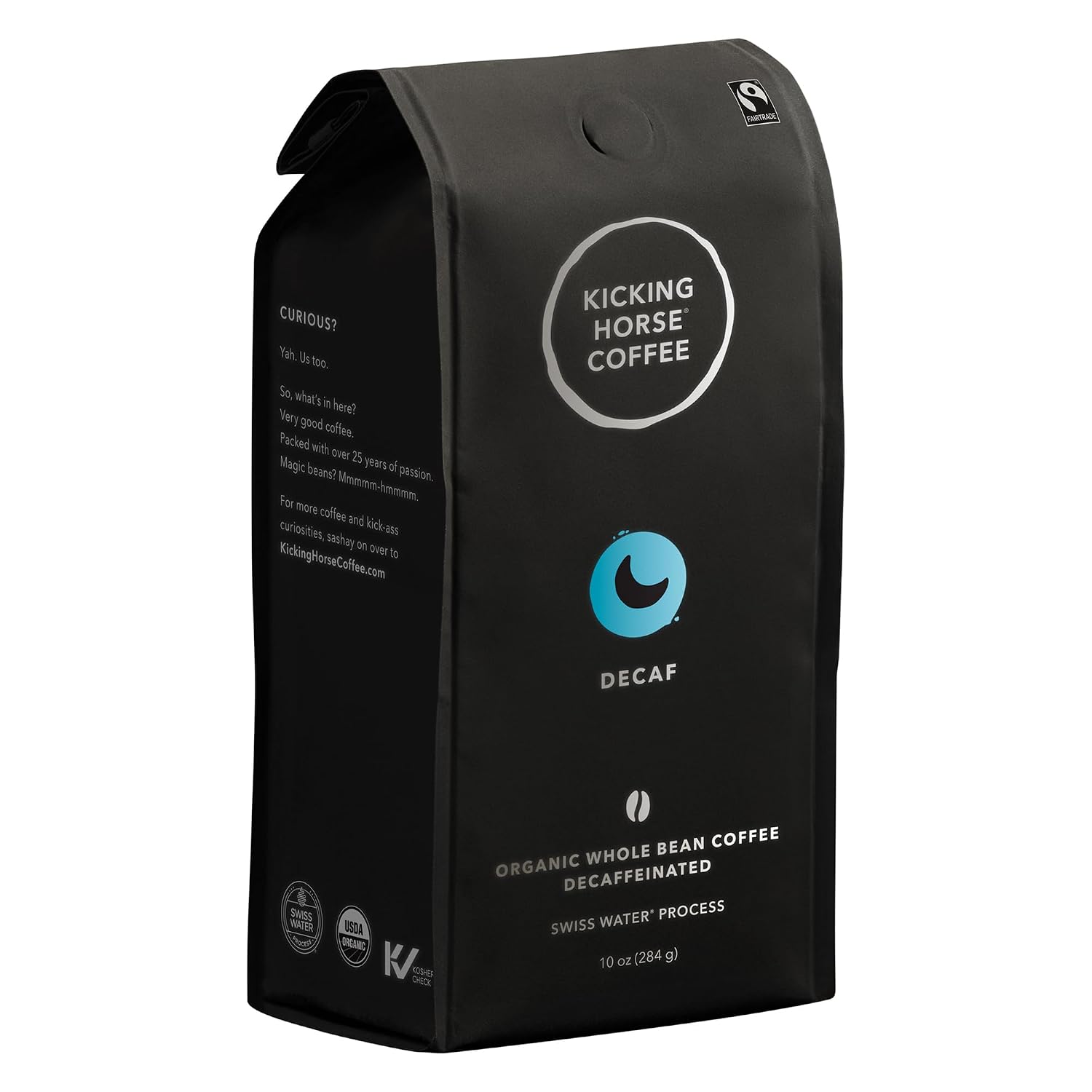
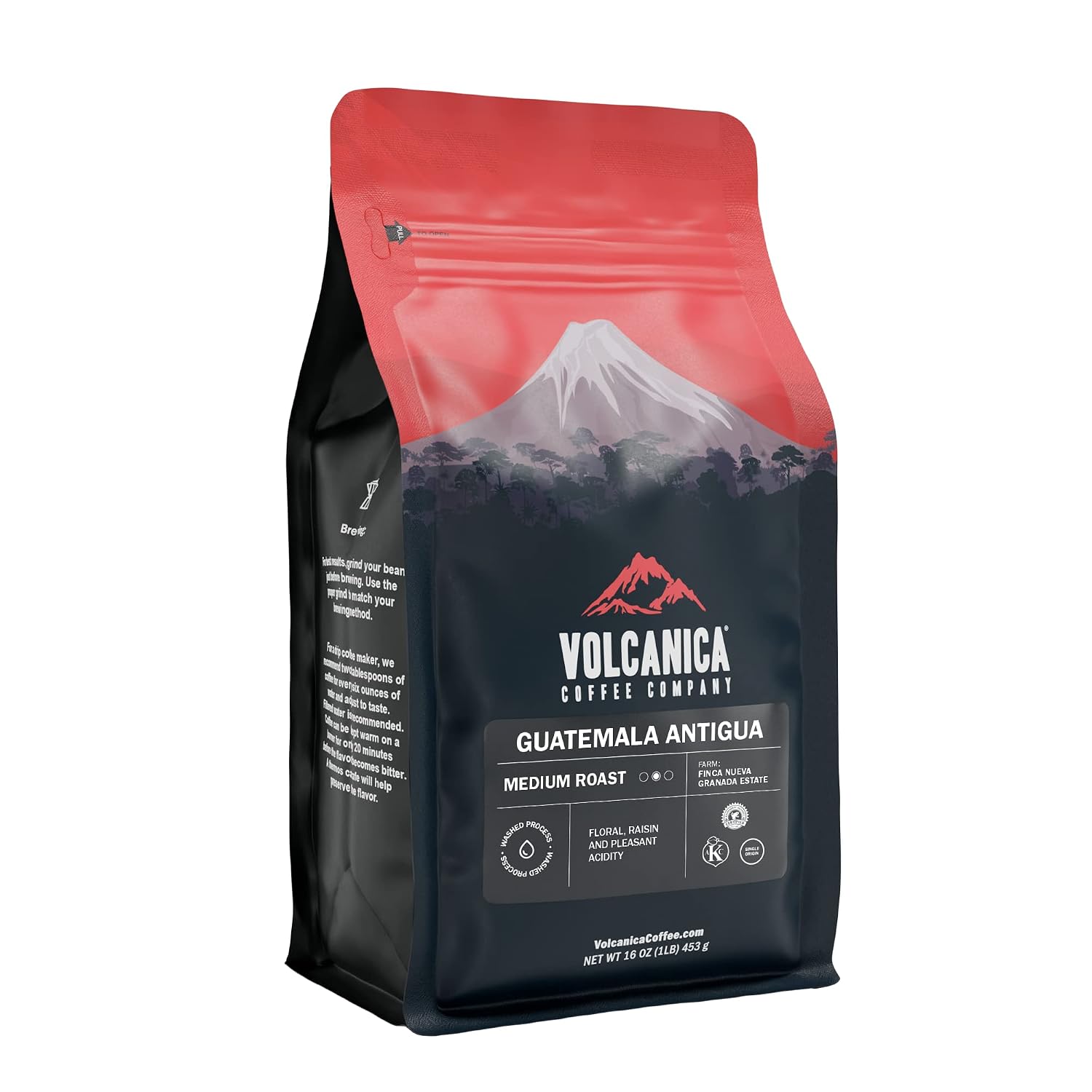
Kicking Horse Decaf
- RoastMedium-dark
- ProcessSwiss Water
Coffee | Brand | Origin | Decaf Method | Roast | Key Flavor Notes | Format | Best Brew Methods | Price/oz (approx.) | Availability |
|---|---|---|---|---|---|---|---|---|---|
Trapper Creek Decaf | Stumptown | Latin America | Swiss Water | Medium | Cocoa, dried cherry, honey | Whole bean | Drip, pour-over, espresso | ~$1.40 | Online, Whole Foods |
Slow Motion Decaf | Counter Culture | Latin America blend | Swiss Water | Medium | Molasses, cocoa, dark cherry | Whole bean | Drip, pour-over, French press | ~$1.30 | Online, specialty grocers |
Medium Roast Decaf | Lifeboost | Nicaragua | Swiss Water | Medium | Chocolate, caramel, dried fruit | Whole bean | Drip, pour-over, cold brew | ~$2.50 | Online (direct) |
Decaf Dark Roast | Kicking Horse | Blend (organic) | Swiss Water | Dark | Dark chocolate, hazelnut, brown sugar | Whole bean, ground | French press, drip, cold brew | ~$0.90 | Grocery, Amazon |
Classico Decaf | illy | Italian blend | CO2 | Medium | Caramel, toasted grain, chocolate | Whole bean, ground | Espresso, moka pot | ~$1.50 | Grocery, online |
Decaf Major Dickason’s | Peet’s | Blend | Water process | Dark | Dark chocolate, spice, earthy | Whole bean, ground | Drip, French press | ~$1.00 | Major grocery chains |
Decaf Caribou Blend | Caribou Coffee | Blend | Water process | Medium | Nutty, mild cocoa | Whole bean, ground | Drip | ~$0.90 | Grocery, Target |
Decaf Gourmet Blend | San Francisco Bay | Blend | Swiss Water | Medium | Smooth, mild chocolate | Whole bean, ground | Drip, cold brew | ~$0.70 | Grocery, Amazon |
Organic and fair trade certified options include Lifeboost and Kicking Horse. The lowest-acid pick is Lifeboost. The best option for decaf espresso is illy Classico.
How We Selected the Best Decaf Coffee
This is a researched editorial roundup. Capitol City Coffee cross-checked expert coffee publications, roaster data sheets, consumer reviews, and verified product information through mid-2026, reflecting standards used across the broader coffee world, to identify these picks. No hands-on tasting or lab testing was performed by our team. Instead, the guide synthesizes third-party tasting notes, expert consensus from sources like independent 2026 decaf roundups and Espresso Verdict, and verified product specifications.
Selection criteria, in order of weight:
- Bean quality and origin transparency. Named origins, varietals, or farm-level traceability scored higher than generic “blend” labels.
- Decaf process. Swiss Water decaf, CO2, and sugarcane EA were favored. Coffees using methylene chloride (the most widely used decaffeination method globally) were only considered if they had strong, credible flavor reviews and clear safety assurances.
- Roast date and freshness. Roasters that print roast dates and ship roast-to-order ranked higher than brands relying on distant “best by” dates.
- Flavor profile. Balance of sweetness, acidity, and body, confirmed across multiple third-party reviews.
- Price per ounce and availability. The list serves both enthusiasts shopping at specialty roasters and everyday buyers at Amazon or grocery chains.
Best Decaf Coffee Beans: Top Picks & Who They Suit
Each recommendation below includes a flavor profile, roast level, decaf method, origin, brew-method fit, and real limitations. Flavor descriptions use concrete sensory language drawn from roaster tasting notes and independent reviews. Every pick specifies whether it works best for drip, pour-over, espresso, or cold brew, and whether the body is light, medium, or full.
Best Overall: Stumptown Trapper Creek Decaf
Stumptown Trapper Creek is the best overall decaf coffee in 2026. It appears on nearly every major expert list, and consumer reviews consistently describe it as the decaf that most closely resembles a good cup of regular coffee.
The details: medium roast, Latin American origins, Swiss Water decaf process. Tasting notes center on cocoa, dried cherry, and honeyed sweetness, with balanced acidity and medium body. The cup reads as clean and sweet without the papery or grassy off-notes that plague lesser decaf roasts.
Brew-method fit is broad. It works well as an everyday brewed coffee in drip and pour-over, where the cherry and cocoa come through clearly. It also pulls a respectable decaf espresso shot or moka pot brew; the sweetness and structured body give enough foundation for a balanced shot. For milk-based drinks, the chocolate leans into steamed milk nicely.
Stumptown ships roast-to-order in one-way valve bags. A 12-oz bag runs roughly $17, placing it at the premium end compared to supermarket decaf. U.S. buyers can find it through Stumptown’s site, Whole Foods, and several online retailers.
Limitations: the price is about double what you’d pay for grocery decaf. It is primarily sold as whole bean, so you need a grinder. The flavor profile leans toward chocolate and dried fruit rather than bright citrus or floral notes, which may not satisfy drinkers seeking a very light, fruity decaf coffee taste.
Best Swiss Water Medium Roast: Counter Culture Slow Motion Decaf
Counter Culture Slow Motion is a benchmark Swiss Water decaf medium roast that multiple reviewers say could pass for regular coffee in a blind taste test. Counter Culture Slow Motion is USDA Organic certified, which adds appeal for buyers prioritizing organic coffee.
Origin: Latin American blend. Process: Swiss Water. Tasting notes land on molasses sweetness, cocoa, and subtle dark cherry, with medium body and gentle acidity. The roast sits squarely at medium; it avoids both the smokiness of dark roasts and the high-wire acidity of light roasts.
This decaf blend suits drip and pour-over best, where its clarity and sweetness come through. It adapts to French press and cold brew for a sweeter, chocolate-leaning cup. Counter Culture prints clear roast dates on every bag and has a reputation for batch-to-batch consistency. A 12-oz bag costs roughly $15-16, available via specialty groceries and online subscription.
Best Organic Decaf Coffee Beans: Lifeboost Medium Roast Decaf
Lifeboost Medium Roast Decaf targets health-focused buyers who want organic, low-acid decaf coffee beans with full traceability. The beans are single-origin Nicaraguan Arabica, shade-grown, USDA Organic and Fair Trade. Lifeboost Decaf Coffee is third-party tested for mycotoxins and contaminants, a claim the brand documents on its site. Decaffeination is Swiss Water.
Decaf coffee taste here runs to a creamy body with notes of milk chocolate, caramel, and mild dried fruit. Acidity is low, making it suitable for drinkers with sensitive stomachs. It works well as a daily drip or pour-over and doubles as a dessert bean coffee with milk. For those wanting a smooth, caffeine-light cold brew concentrate, it delivers a rich flavor without harshness.
The downside: Lifeboost commands a notably higher price per ounce than most grocery decaf, roughly $2.50/oz. Availability is mostly online through Lifeboost’s direct store. The flavor may feel too soft for fans of bold, smoky dark roasts. For readers interested in low-acid options, this is a strong crossover pick.
Best Dark Roast Decaf: Kicking Horse Decaf Dark
Kicking Horse Decaf Dark is the best decaf for coffee drinkers who want an intense, dark roast profile without caffeine. Kicking Horse Decaf is USDA Organic and Fair Trade certified, Swiss Water decaffeinated, and roasted in the Canadian Rockies. Despite being a Canadian brand, it is widely available in U.S. supermarkets and on Amazon.
Flavor and body: bold dark chocolate, roasted hazelnut, brown sugar sweetness, very low fruitiness, heavy body, and a lingering finish. This is a decaf dark roast that tastes like classic “coffee flavor” and works well for drinkers who associate quality with deep, smoky richness.
It excels in French press and drip. For cold brew, it yields a rich, chocolatey decaf concentrate. It can work in espresso machines for dark, syrupy shots, though the intensity may overpower in smaller doses.
Trade-offs: not the right bean for bright acidity, subtle florals, or origin-driven nuance. Decaf beans are more porous than regular beans, and Kicking Horse Decaf Dark’s dark roast compounds this; grind too fine and the cup turns bitter fast. At roughly $0.90/oz, the value is hard to beat for organic decaf coffee at this quality level. For readers exploring fair trade certified coffee, Kicking Horse checks both boxes.
Best Decaf Espresso: illy Classico Decaf & Other Espresso Options
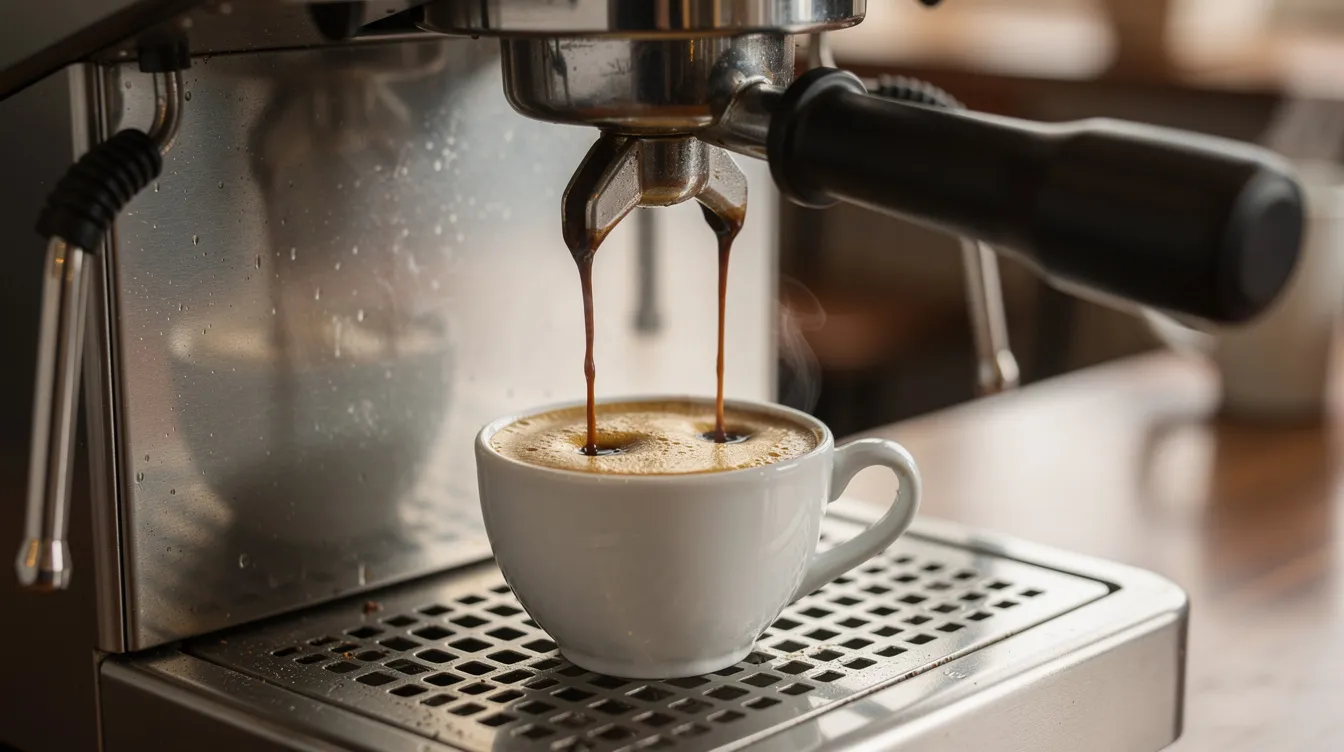
Decaf espresso does exist, and dedicated espresso beans built for pressurized extraction can produce rich crema and texture close to regular espresso. The key is matching the right decaf process and roast to espresso’s demands.
illy Classico Decaf is the primary pick: a medium roast Italian espresso blend, CO2 decaf process, with smooth caramel, chocolate, and toasted grain notes. CO2 processing preserves the aromatic oils essential to crema and mouthfeel, which is why many espresso-focused decaf blends use it. A regular espresso shot contains about 63 mg of caffeine; a decaf espresso shot typically contains 3-16 mg, according to published espresso testing data.
Alternative decaf espresso options worth noting: Lavazza Dek Decaf Espresso (CO2 processed, medium dark roast, hazelnut and cereal notes, roughly $21.99 per 1.1-lb bag) is a reliable pick for those who prefer a more traditional Italian espresso. Allegro Espresso Bel Canto Decaf (Swiss Water, dark chocolate and dried fruit) leans well for milk-based drinks like lattes and cappuccinos.
Practical note on grinding decaf espresso: decaf beans are more brittle and porous after the decaffeination process. They often need a slightly coarser grind than their caffeinated counterpart and careful attention to shot time. Pulling too long risks over-extraction and bitterness. Start coarser than your usual espresso setting and adjust by small increments.
Best Budget & Grocery Store Decaf Coffee Picks
Not every decaf drinker wants to pay specialty prices or order online. These decaf coffee brands deliver solid flavor for everyday drinking decaf coffee and are available at major U.S. grocery chains.
Peet’s Decaf Major Dickason’s Blend is a dark roast, water-processed decaf that shows up consistently in taste test rankings. The cup is rich, earthy, and complex, with dark chocolate and spice notes. It is available at most major U.S. grocery chains in both whole bean and ground coffee formats. Peet’s Decaf French Roast is another bold option from the same brand, offering smoky, burnt caramel character for those who like intense french roast style decaf.
Caribou Coffee Decaf Caribou Blend is a medium roast, water-processed decaf with a balanced, gently nutty profile. It is safe, approachable, and widely found in big-box and grocery stores. The flavor is not highly complex, but it delivers a clean, mild cup of coffee that works for daily drip brewing.
San Francisco Bay Decaf Gourmet Blend stands out as the budget Swiss Water decaf pick. Medium roast, smooth taste, versatile for drip and cold brew, and priced at roughly $0.70/oz. For most coffee drinkers on a budget, this is the sweet spot between process quality and price. Volcanica Hazelnut Flavored Decaf uses natural flavoring after roasting for those who want flavored options; it is a niche but well-reviewed choice in the flavored decaf category.
Flavor & Roast Level: Finding a Decaf You’ll Actually Enjoy
Roast level is one of the biggest drivers of decaf coffee taste. For many everyday drinkers, it matters more than single-origin status or even the decaffeination process.
Light roast decaf highlights origin character and acidity: citrus, berry, floral. But light roasts also reveal more of the subtle differences introduced by decaffeination. Some tasters pick up papery or grassy notes in light roast decafs that they would not notice in a medium or dark. Light roast decaf is best for adventurous drinkers used to specialty coffee profiles.
Medium roast decaf is often the most balanced choice. It delivers acidity, sweetness, and body in roughly equal measure. Common notes include nuts, cocoa, caramel, and gentle fruit. Medium roast tends to hide decaf processing artifacts better while still feeling lively. Most of the picks in this guide fall in the medium roast range for exactly that reason.
Dark roast decaf drops perceived acidity, increases body, and pushes dark chocolate, smoke, and roast flavors forward. It works well to mask any decaf-related flavor loss and pairs best with milk-heavy drinks. If you drink your regular coffee as a dark roast, your transition to decaf will feel the most natural with a dark roast decaf like Kicking Horse Decaf Dark or Peet’s Major Dickason’s.
Think about what you enjoy in your current caffeinated coffee. Bright and fruity? Try a light or medium decaf. Chocolate and nutty? Medium roast. Rich, smoky, and full-bodied? Dark. Match that preference, and decaf roasts can feel like a seamless swap.
Decaffeination Methods: How Your Decaf Coffee Is Made
All decaf begins as regular green coffee beans; decaffeination occurs before roasting coffee beans. The process used to strip caffeine affects flavor, body, and aroma in the final cup. Modern decaf methods retain flavor better than older processes, and consumers are moving away from chemical solvents in decaf coffee production.
Here are the four main methods:
Swiss Water Process. Water-based, uses green coffee extract and carbon filters to pull caffeine out. The Swiss Water Process removes 99.9% of caffeine without chemicals. It tends to yield clean aromatics, origin clarity, and brightness. This is the most common process among specialty roasters and appears in most picks on this list. Flavor tends to be clean and sweet, though some drinkers note a slightly lighter body or shorter finish compared to the caffeinated version of the same bean. The Swiss Water method is certified organic-compatible.
CO2 (supercritical carbon dioxide) process. Uses CO2 under high pressure to selectively extract caffeine. CO2 decaffeination preserves most flavor compounds in coffee, particularly the oils that give espresso its crema and body. This process is chemical-free and often used by European espresso brands like illy. Flavor tends to be full-bodied with retained aromatics.
Sugarcane/EA (ethyl acetate) process. Uses ethyl acetate derived from fermented sugarcane. The ethyl acetate process removes about 97% of caffeine. Common in Colombian decafs. Flavor can lean sweet and fruity; some drinkers prefer it for preserving origin character, while others find slight off-flavors if the process is mishandled. Despite using a solvent, it is derived from a biological source and meets FDA safety standards.
Methylene chloride (MC) process. Methylene chloride is the most widely used decaffeination method globally because it is efficient and cost-effective. Flavor preservation tends to be weaker; many mass-market decaf coffee brands use it. While FDA-approved when residues are below the limit of 10 parts per million, many specialty buyers avoid solvent-based decaf methods that can produce a flat taste.
If a bag does not specify its decaf method, it is probably a generic solvent process. Buyers seeking the best tasting decaf should look for explicit mentions of Swiss Water, Mountain Water, CO2, or sugarcane decaf on the label.
How to Choose the Best Decaf Coffee for You
Here is a practical decision framework for narrowing hundreds of options down to one bag.
Flavor profile. Fruity and bright, chocolatey and nutty, or smoky and bold? Your answer determines roast level and origin more than anything else.
Roast level. Light for acidity and fruit. Medium for balance. Dark for body and chocolate notes. Choose Swiss Water or CO2 processed decaf for best flavor across all roast levels.
Decaf method. Swiss Water or CO2 if you prefer chemical-free processing. Sugarcane EA if you want sweetness and can tolerate a slight solvent origin. Generic solvent for lowest cost.
Brew method. Espresso needs medium to medium dark roast with body and sweetness (illy Classico, Lavazza Dek). Drip and pour-over reward medium roast and clean processes (Stumptown Trapper Creek, Counter Culture Slow Motion). Cold brew benefits from dark or medium dark roast for a rich, sweet concentrate. French press emphasizes body, which helps decaf feel fuller.
Format. Whole bean decaf retains flavor better than pre-ground options because grinding exposes more surface area to air, accelerating staling. Pre-ground is convenient but degrades faster; decaf ground coffee often sits longer on shelves than caffeinated equivalents. Coffee pods and instant decaf coffee trade freshness for convenience. For the best instant decaf coffee, look for freeze-dried options using water-based processes; they have improved, but still lag behind whole bean.
Budget and availability. Specialty single-origin decaf runs $20-30 per 10-12 oz. Grocery decaf like San Francisco Bay or Kicking Horse costs $9-14 per 12 oz. Subscriptions from roasters can lower per-ounce cost and guarantee freshness.
Example paths: if you want a bold, dark chocolate-forward decaf for late-night lattes, consider Kicking Horse Decaf Dark or Peet’s Decaf Major Dickason’s. If you want bright, nuanced cups via pour-over, Stumptown Trapper Creek or a sugarcane-processed Colombian decaf is the move. For readers prioritizing sustainability, organic and fair trade certified options include Kicking Horse and Lifeboost.
Brewing Tips: Getting the Most From Your Decaf Coffee
Decaf beans are structurally different from caffeinated beans. The decaffeination process makes them more porous and fragile, which means they extract faster. Adjustments are small but worthwhile.
General brew guidelines:
- Use filtered water at 195-205°F (90-96°C)
- Start with a 1:15 to 1:17 coffee-to-water ratio for drip and pour-over
- For French press, use a coarser grind and a 4-minute steep
Decaf often benefits from a slightly coarser grind than its caffeinated counterpart. This is true across multiple brew methods, but especially in espresso and AeroPress, where fine grinds combined with decaf’s porosity lead to over-extraction and bitterness.
Brew-method notes:
- Drip and pour-over show clarity and acidity in good decaf coffee beans. These methods reward fresh, medium roast decaf.
- French press and immersion emphasize fuller body and sweetness, which help decaf feel more like regular coffee. The metal filter passes oils that paper filters absorb.
- Cold brew made with decaf produces a smooth, chocolate-forward iced drink without caffeine jitters. Use a medium dark roast or dark roast for richer concentration; light roast decafs can taste thin when cold-brewed.
One small experiment worth trying: extend bloom time by 10-15 seconds in pour-over. Decaf can degas differently from regular beans, and a longer bloom helps saturate the grounds more evenly before the main pour begins.
Freshness, Roast Date, and Storage for Decaf Coffee
Freshness of decaf beans is important for maintaining flavor integrity, and decaf coffee beans lose freshness faster than regular beans because the decaffeination process opens up the cellular structure. Specialty decaf options taste notably better when freshly roasted.
Look for clearly printed roast dates rather than “best by” dates. Check roast dates; use decaf within 3-4 weeks for freshness. After that window, aromatics degrade and the cup can turn flat or papery. Grocery decaf brands often stock older bags, which is one reason specialty roasters tend to deliver better decaf experiences.
Storage rules:
- Airtight container, away from light, heat, and moisture
- Do not refrigerate or freeze once opened unless using airtight, portioned bags
- Pre-ground decaf can lose aromatics within days; buy smaller quantities more often if sticking with ground coffee
Some specialty decaf coffee brands offer subscriptions or roast-to-order shipping. For regular decaf drinkers, this is one of the easiest upgrades: a subscription from Counter Culture, Stumptown, or a local roaster ensures you are drinking decaf within a week or two of roasting rather than months after.
Health & Caffeine Considerations (Without Overpromising)
Decaf coffee typically contains 2-18 mg of caffeine per cup versus roughly 95 mg in regular coffee. Swiss Water and similar water-based processes achieve up to 99.9% caffeine removal, making them the closest option to caffeine-free, though no decaf is absolute zero.
Several large observational studies have found associations between drinking decaf coffee and various health markers. Decaf coffee can reduce heartburn symptoms by up to 48%, making it a practical option for drinkers with reflux. Drinking decaf may lower the risk of rectal cancer by 52%, according to epidemiological data. Decaf coffee is linked to improved liver function and lower liver enzymes. Both decaf and regular coffee may reduce the risk of type 2 diabetes by 7% per cup in cohort analyses. Decaf coffee may also protect against mental decline and neurodegenerative diseases.
These are correlations from population studies, not guarantees. Coffee is not a medical treatment. Readers should consult a healthcare provider for personal guidance, especially those with extreme caffeine sensitivity, pregnancy-related restrictions, or cardiac conditions. Even decaf warrants monitoring total intake in those cases.
Choosing chemical-free decaf methods like Swiss Water or CO2 is a preference rather than a safety requirement. All approved decaf methods in the U.S. fall within regulatory safety margins.
Related Capitol City Coffee Guides
These guides cover topics that overlap with common decaf coffee questions:
- Capitol City Coffee’s main coffee hub: Browse all coffee guides, gear reviews, and buying advice.
- Coffee types and style guides: Explore different coffee categories and find what fits your palate.
- Best organic coffee: For readers prioritizing USDA Organic beans, including several options that come in decaf.
- Best fair trade coffee: Ethical sourcing options, many of which overlap with Swiss Water decaf offerings.
- Best low-acid coffee: For drinkers with reflux or sensitive stomachs who may also benefit from switching to decaf.
Our Decaf Coffee Pick
Trapper Creek is often sold D2C. This Amazon decaf matches the evening-cup role. Tap the image or the coffee name. Research-rated, not yet brewed by our team.
Feeling evening: a Swiss Water-style mug
Our pick: Kicking Horse Decaf (Swiss Water Process). A dark, chocolatey decaf bag for the evening cup this article describes. Research-rated, not yet brewed by our team.
FAQ: Best Decaf Coffee in 2026
Is decaf coffee actually caffeine-free?
By U.S. standards, “decaf” means at least 97% of caffeine has been removed. A typical cup still contains roughly 2-15 mg, depending on the beans, roast, and brew method. Swiss Water and similar processes often reach 99.9% caffeine removal, making them the best choice for those seeking the lowest possible caffeine. No commercial decaf process achieves absolute zero.
Does decaf coffee taste different from regular coffee?
High-quality decaf coffee beans using Swiss Water, CO2, or sugarcane processes can taste very close to regular coffee, especially in medium and dark roasts that emphasize chocolate and caramel notes. Some subtle differences may remain; slightly less brightness or shorter aromatic finish. But blind tastings, including those from James Hoffmann’s Decaf Project, show that most coffee drinkers struggle to identify the decaf when it is fresh and properly brewed.
Can I use decaf beans for espresso and milk drinks?
Yes. Many roasters offer decaf espresso blend options specifically designed for shots and milk-based drinks. illy Classico Decaf and Lavazza Dek are two widely available examples that produce crema and flavor close to regular espresso. Decaf beans are more porous, so dialing in may require a coarser grind or shorter shot time, but with small adjustments you can achieve a satisfying shot in any espresso machine.
What’s the best decaf option if I have acid reflux or a sensitive stomach?
Combine low-acid coffees with decaf: look for medium roast, low-acid decaf options like Lifeboost Medium Roast Decaf or Swiss Water-processed Brazilian and Colombian decafs with sweet milk chocolate notes for a smoother-tasting cup. Brew them with gentler methods like cold brew or French press, which tend to produce lower-acid cups. See the best low-acid coffee guide for a deeper look; many of those principles apply equally to decaffeinated coffee.
Is instant decaf or pod decaf worth buying?
Instant decaf coffee and pod decaf (K-cups, Nespresso capsules) trade flavor and freshness for convenience, but both categories have improved. Some higher-quality decaf instant coffee and pod options now use CO2 or water-based processes and deliver a cup that is closer to brewed than the instant decaf of five years ago. If flavor matters, use fresh whole beans and a grinder. If you need a practical backup for travel, office, or late-night convenience, look for instant or pod options that specify their decaffeination process on the label. Avoid pods and instant decaf coffee that do not disclose process details, as they are more likely to use generic solvent methods.
Start with one bag that matches your preferred roast level and brew method. Adjust grind slightly coarser than you would for caffeinated beans, keep the bag sealed and consumed within three weeks, and you will be drinking decaf that actually tastes like good coffee.