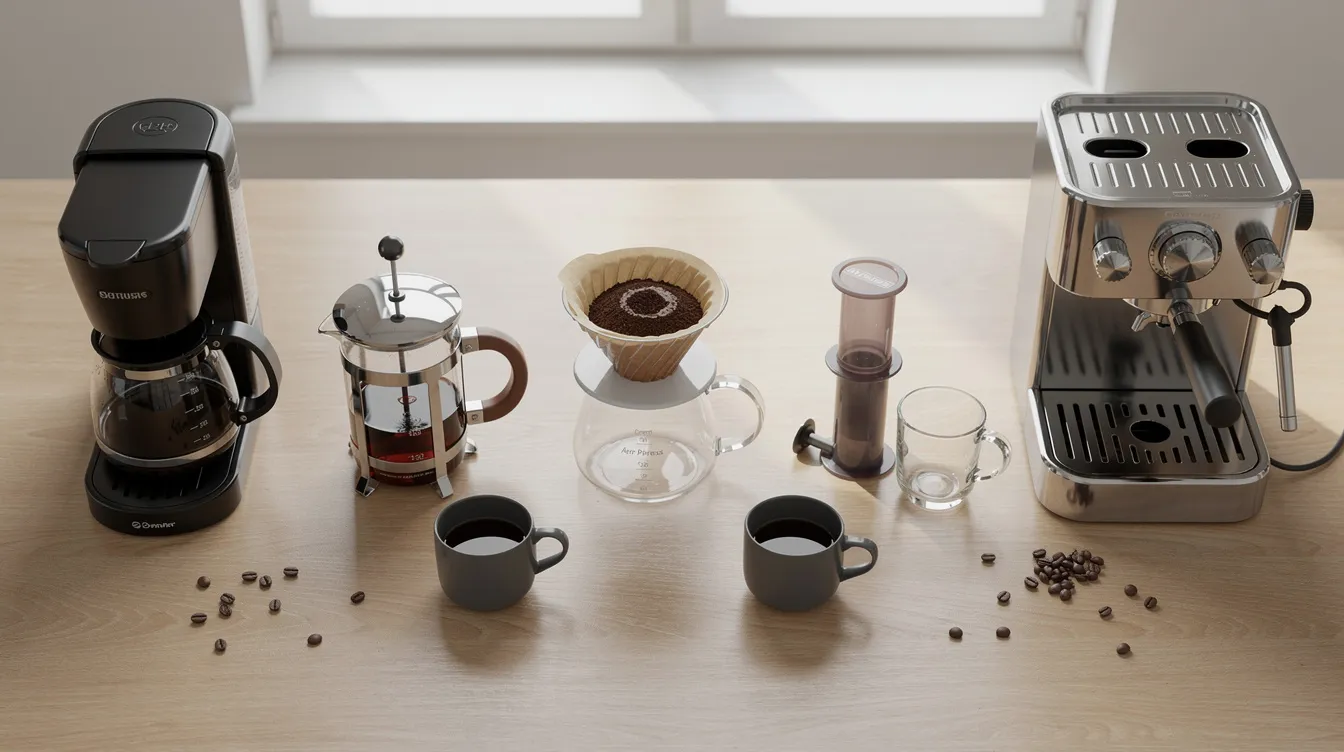
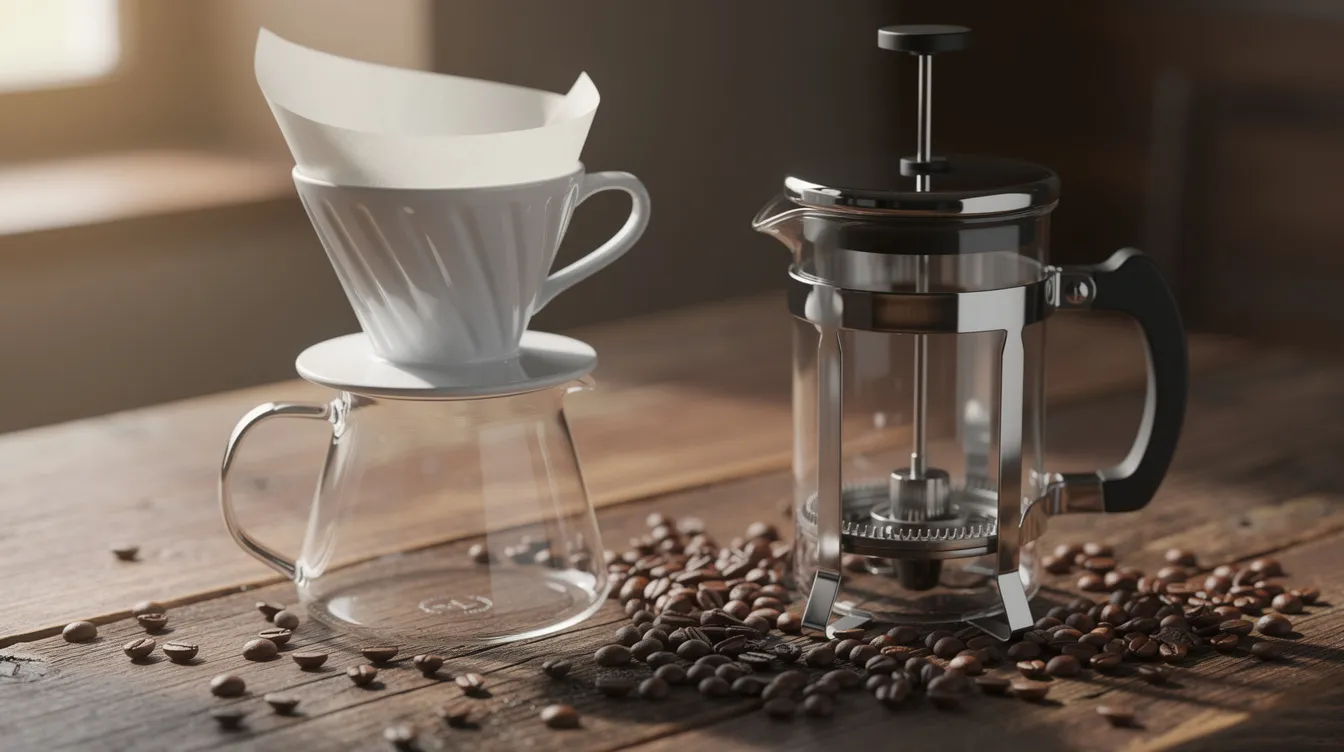
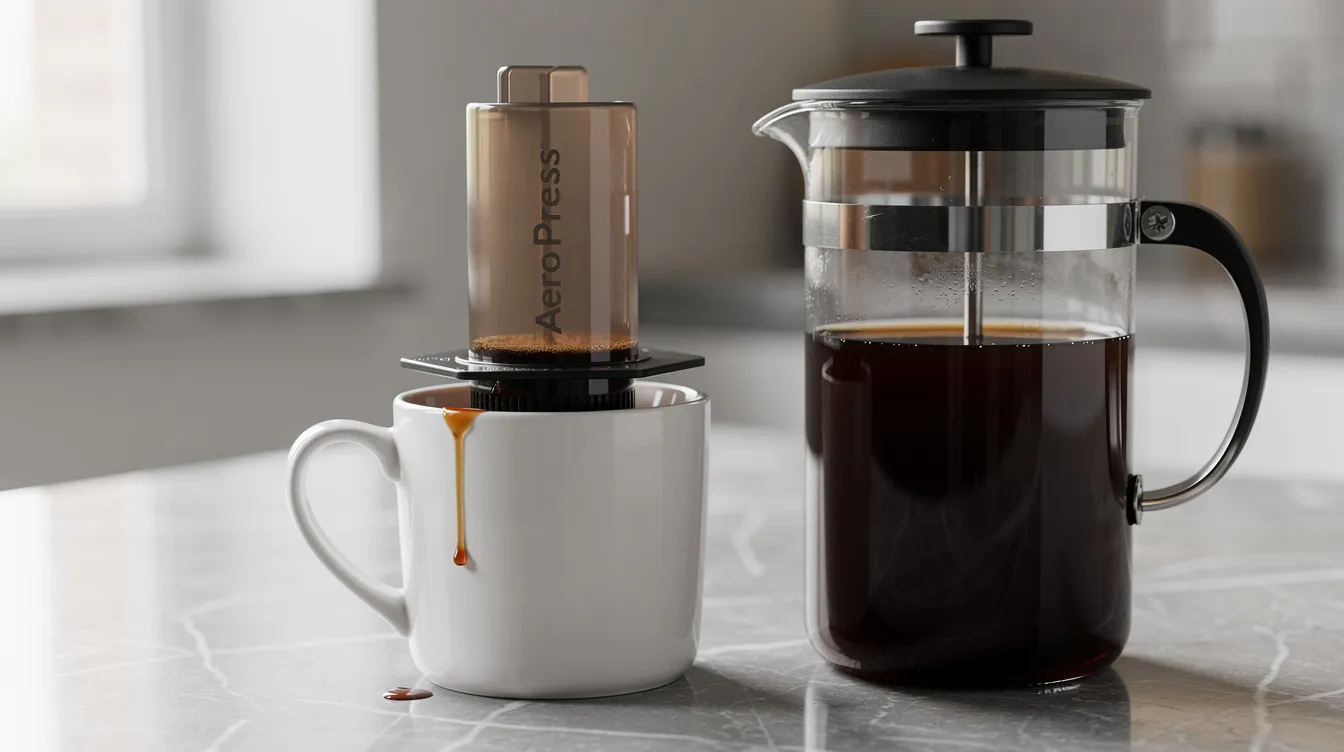
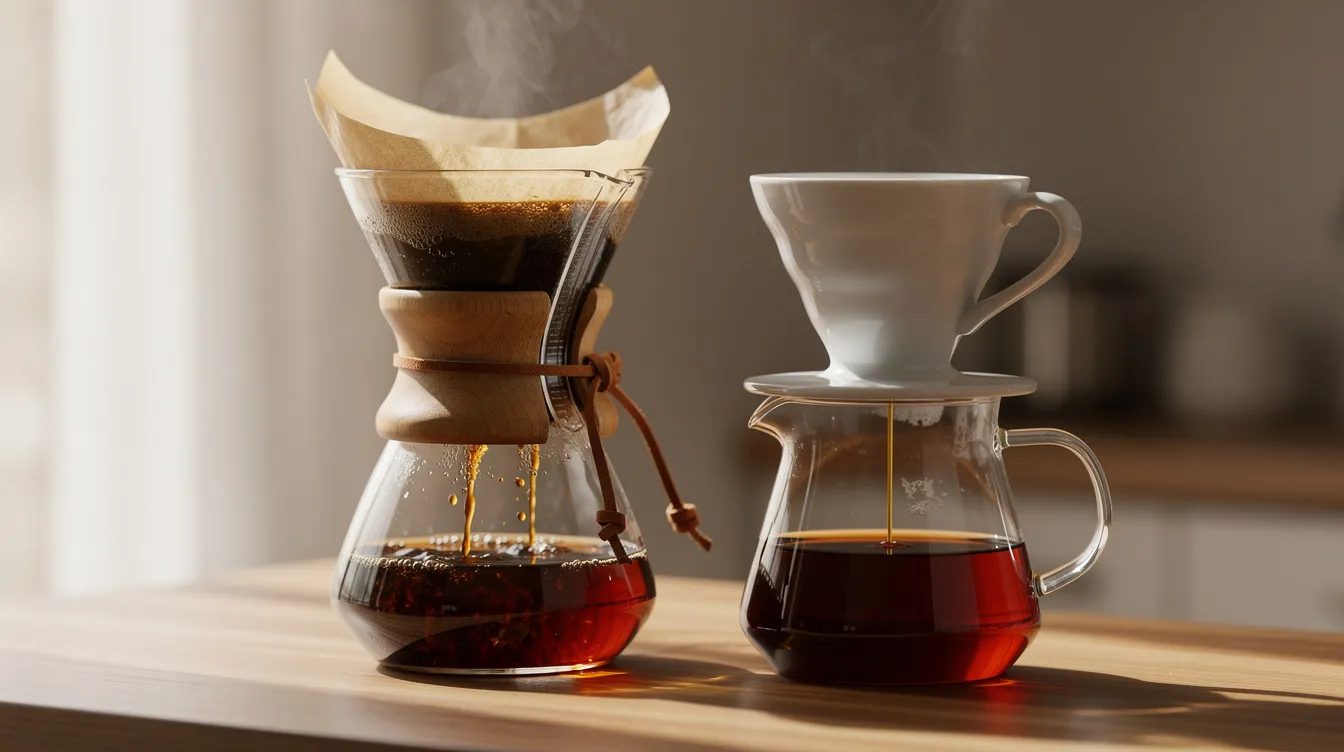
Choosing a coffee brewer comes down to how you want your coffee to taste, how much time you want to spend making it, and how many cups you need. This coffee brewer comparison covers every major brewer family-drip machines, pour over coffee, French press, AeroPress, cold brew maker, and manual espresso machine-and maps each one against flavor profile, workflow, skill level, and daily routine fit. Rather than crowning a single winner, the goal here is to help you find the brewer that actually matches your life.
Best compact brewer pick
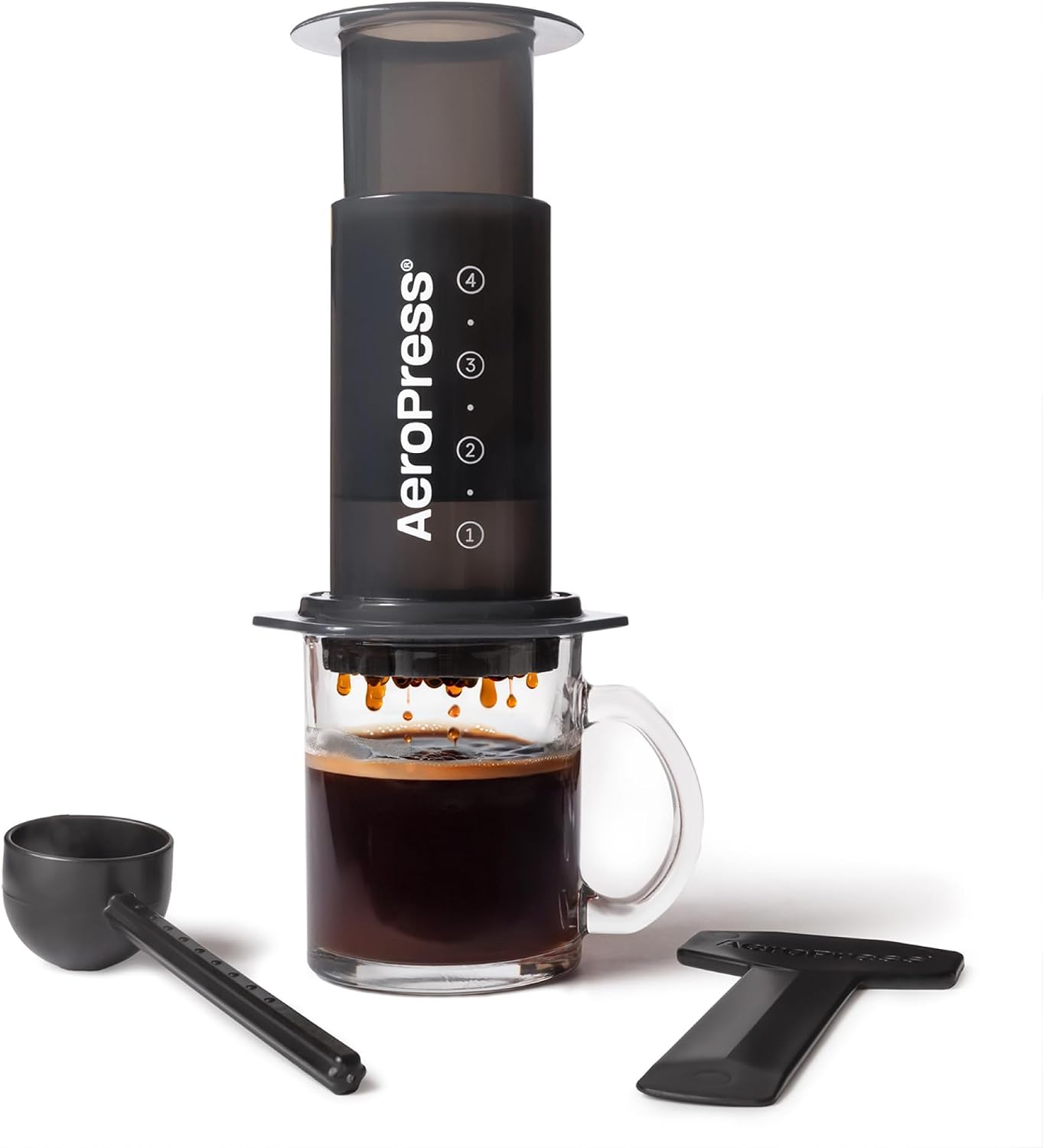
For this roundup, AeroPress Original is the compact brewer we recommend first—the same pick at the top of our At-a-glance cards below.
Coffee brewing methods can be categorized by immersion or percolation, and each extraction approach produces a meaningfully different cup profile-there is no universal “best.”
Drip coffee makers are ideal for larger batches of coffee and hands-off mornings, while manual brewers like the V60 and AeroPress reward technique with more nuanced flavors.
Grind match and filter type are the two variables that shape flavor most dramatically across brewer categories-get these right before worrying about brewer upgrades.
All recommendations on this page are based on researched editorial analysis, drawing from verified specs, expert sources, and broad third-party consensus as of late 2026-not hands-on testing by Capitol City Coffee.
Deeper method explainers, manual-brewer gear guides, and model-level brewer reviews are available across the Capitol City Coffee site for readers who want to go further after narrowing their brewer category here.
Affiliate Disclosure
Capitol City Coffee is an independent coffee editorial and affiliate publication-not a coffee seller. When you buy through some outgoing links on this page, CCC may earn a commission at no extra cost to you, but commission size never influences rankings or recommendations. Every “best coffee maker” or “favorite coffee maker” mention is based on researched editorial analysis, verified product facts, and clearly attributed expert consensus rather than paid placement.
Category Overview: How This Coffee Brewer Comparison Hub Works
This page serves as the central hub for comparing coffee brewers within the Capitol City Coffee comparisons collection. It covers the major brewer families you’ll encounter in any U.S. coffee shop or home kitchen:
Automatic drip coffee makers – Also called filter coffee machines, electric machines that heat water in a reservoir and automatically drip it over coffee grounds in a filter basket. Push-button convenience, large batch capacity.
Pour-over brewers – Manual devices (Hario V60, Chemex, Kalita Wave) where you pour hot water over grounds by hand. Paper-filtered, technique-driven, typically cleaner cups.
Immersion brewers – French press, cupping bowls, and some cold brew setups where coffee grounds steep directly in hot water before filtration.
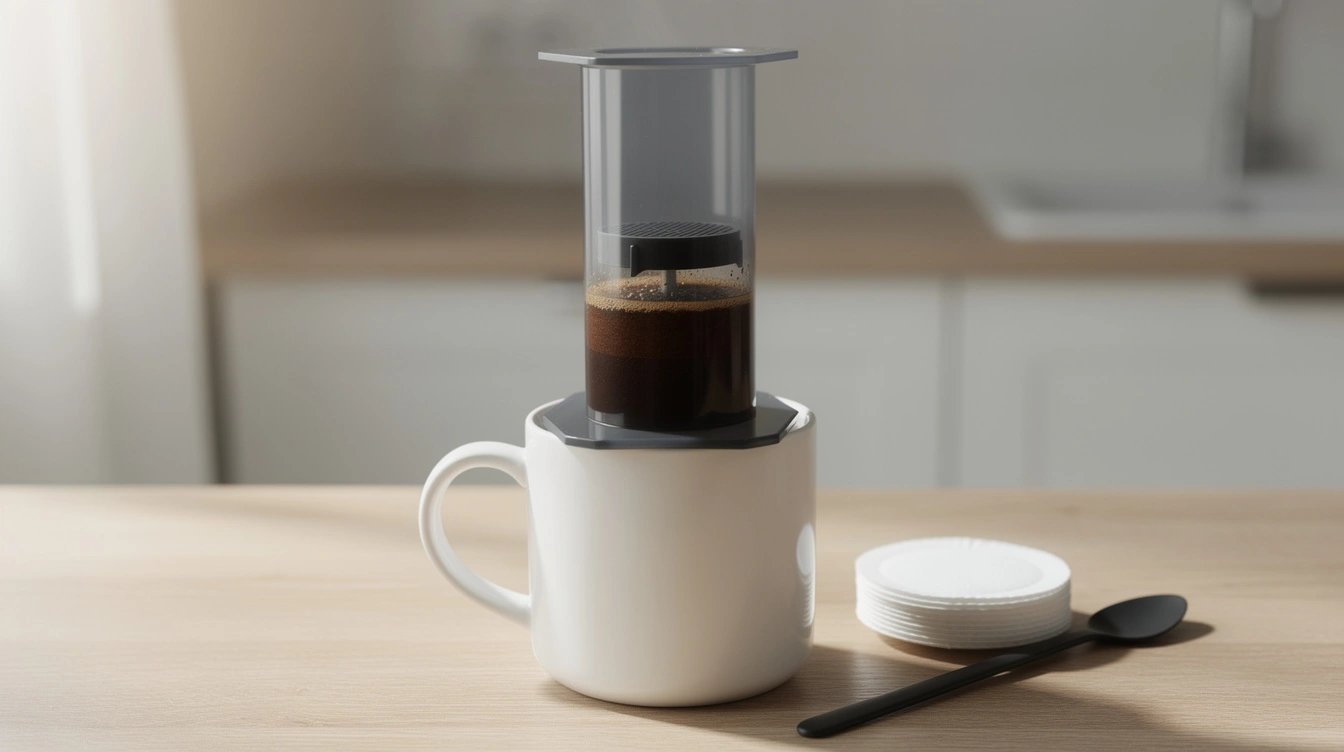
Hybrid devices (AeroPress) – AeroPress is a hybrid method combining immersion with air pressure, producing a versatile single cup that can range from filter-like to espresso-style coffee.
Espresso machines – Devices that force pressurized water through finely ground coffee at roughly 9 bars of pressure. Espresso machines can be manual, semi-automatic, or fully automatic.
Cold brew makers – Dedicated vessels for long-steep cold extraction, plus Japanese-style iced-drip alternatives.
Pod machines – Single serve coffee makers that offer convenience with minimal mess and quick brewing, though they trade some flavor control for speed.
Coffee brewing styles differ primarily by extraction type, filtration, and pressure. Different coffee brewing methods extract flavors in distinct ways, and coffee brewing approaches include automatic drip, pour-over, French press, espresso, and Moka pot among others.
Each section below gives high-level guidance and a “who it fits” note. Prices, availability, and model names reflect the U.S. market as of late 2026-always confirm current specs with manufacturers or retailers.
How to Compare Coffee Brewers (Big-Picture Framework)
Before diving into individual matchups, it helps to have a simple decision framework. Start with three questions:
How do you like to drink coffee? Filter vs. espresso, hot coffee vs. cold brew, single cup vs. a full pot for the household.
How involved do you want to be? Fully automatic coffee makers that handle the entire brewing process vs. hands-on manual methods that let you control every variable.
What’s your budget? A $30 plastic V60 and a $35 AeroPress can produce great tasting coffee, but a manual espresso machine with a capable grinder may run past $800.
Throughout this hub, every brewer is evaluated against four comparison lenses:
Cup profile – taste, body, clarity, acidity
Workflow – steps, cleanup, learning curve
Brewing performance – temperature stability, extraction consistency, repeatability
Fit – household size, counter space, daily routine
The point is trade-offs, not rankings. A brewer that delivers ultra-clean clarity usually sacrifices body or demands more technique. A brewer that’s dead-simple to use may not highlight the complex origin notes in a bag of very light roasts.
One more thing: keep your grinder situation in mind. Grind match is critical and gets called out repeatedly below. Pre-ground coffee works fine in forgiving brewers like French press or basic drip machines, but pour over and espresso reward freshly ground coffee from quality coffee grinders dialed to the right particle size.
Key Decision Factors When Choosing a Coffee Brewer
This section covers the major variables that separate one brewer from another. Skim the table first, then read the details that matter most to you.
Factor
Drip Machine
Pour Over
French Press
AeroPress
Cold Brew
Espresso
Brew Time
4–8 min
2.5–5 min
~4 min steep
1–2 min
12–24 h
25–32 s
Grind Size
Medium
Medium-fine
Coarse
Medium-fine
Coarse–extra coarse
Very fine
Filter Type
Paper or mesh basket
Paper (sometimes cloth)
Metal mesh
Paper or metal disc
Cloth, metal, or paper
Metal basket
Body
Medium
Light–medium
Heavy
Medium (varies)
Medium–heavy
Very heavy
Skill Level
Low
Moderate–high
Low–moderate
Low–moderate
Low
High
Typical Batch
8–12 cups
1–3 cups
2–8 cups
1 cup
1–2 liters
1–2 shots
Brew Time
Brew time ranges from roughly 25 seconds for an espresso shot to 12–24 hours for a cold brew maker. AeroPress clocks in around 1–2 minutes for a standard recipe, French press around 4 minutes of steeping, and most pour-over single cups finish in 2.5–3.5 minutes. If your morning coffee window is five minutes or less, that rules out cold brew on-demand (batch it the night before) and multi-cup Chemex pours.
Grind Match
Grind size is arguably the single biggest lever you have over coffee taste:
Coarse (sea salt texture, ~0.8–1.3 mm): French press, many cold brew setups
Medium-coarse: Chemex, flat-bottom drip baskets
Medium (table salt): most automatic drip coffee makers, Kalita Wave
Medium-fine (fine sand): Hario V60, AeroPress with paper disc
Fine / very fine: espresso machines, Moka pot
Using the wrong grind leads to under-extraction (sour, thin) or over-extraction (bitter, astringent). If you’re buying ground coffee pre-packaged, check the label’s intended brew method-it matters more than most people realize.
Filter Types
Paper filters – Trap oils and micro-fines, producing a clean cup coffee with high clarity. Require rinsing to remove papery flavors. Best for pour over and many drip coffee machines.
Metal filters – Let oils and finer particles through, yielding fuller body and more texture with some sediment. Used in French presses, some AeroPress setups, and espresso baskets.
Cloth filters – Sit between paper and metal: good clarity with richer mouthfeel, but they demand diligent cleaning and proper storage to avoid rancid oil buildup.
Brewing Performance Basics
Automatic coffee makers must brew between 195° and 205°F to extract properly-machines that run cooler tend to produce sour, under-developed brewed coffee. The brew ratio most specialty guides recommend is 1:15 to 1:18 (coffee to water by weight). For drip machines specifically, drip coffee makers should have showerheads with many holes to distribute water evenly across the brew bed, preventing channeling and uneven extraction.
Workflow and Skill Level
A push-button automatic drip coffee maker is the lowest-effort path to a decent cup of coffee. On the other end, a manual espresso machine or a Hario V60 pour over demands precise dosing, temperature management, and timed pouring. Self-paced brewing methods allow for greater control over flavor extraction, but that control only helps if you’re willing to practice.
Capacity and Carafe Choices
Drip machines typically fill an 8–12 cup coffee pot. Two carafe styles dominate:
Glass carafe with hot plate – Keeps coffee warm but can scorch flavor within 20–30 minutes.
Thermal carafe – Maintains temperature without a hot plate, preserving coffee quality for 1–2 hours.
If you routinely brew a full pot and sip over the morning, a thermal carafe is the stronger choice.
Pour-Over vs Immersion Brewing: How They Really Differ
Pour-over and immersion are the two foundational manual brewing families, and understanding the split clarifies nearly every other coffee brewer comparison on this page.
Pour-over coffee is continuous percolation: hot water flows through a bed of coffee grounds and a filter, extracting as it passes. Brewers like the Hario V60, Chemex, and Kalita Wave all work this way. Percolation methods involve water flowing through coffee grounds via gravity or pressure, and pour-over brewers require manual water pouring over grounds in a filter. The result is typically a clean, bright cup that highlights origin character-fruit, floral, and wine-like acidity come through clearly. Pour-over methods highlight complex flavor notes in coffee, especially with lighter roasts.
Immersion brewing means the coffee grounds sit fully submerged in hot water for a set time before being separated. Immersion methods steep coffee grounds directly in hot water before filtration. French press is the most common example; cold brew is another. The full-contact approach produces a heavier body, more oils, and a rounder mouthfeel at the expense of some clarity.
Pour Over
Immersion (French Press)
Brew time
2.5–4 min
4–5 min steep
Grind
Medium to medium-fine
Coarse
Body
Light to medium, high clarity
Heavy, low clarity
Filter
Paper (usually)
Metal mesh
Forgiveness
Lower (technique matters)
Higher (timing is the main variable)
Who each fits: Pour over suits drinkers who enjoy tea-like clarity and don’t mind a brief hands-on ritual. Immersion suits those who prefer fuller-bodied coffee and want a simpler “set it and wait” workflow.
Cup Profile 101: What Each Brewer Tends to Taste Like
Every brewer shapes flavor. Here’s a concise primer on what to expect:
Clean and bright – Paper-filtered pour over coffee and the best drip coffee maker designs produce cups with high clarity, pronounced acidity, and delicate aromatics. Think fruit-forward single origins where you can taste blueberry or citrus notes distinctly.
Rich and heavy – French press produces a rich, full-bodied cup of coffee thanks to its metal mesh filter letting oils and micro-fines into the cup. Metal-filter AeroPress recipes land in similar territory. Expect chocolate, caramel, and a viscous mouthfeel.
Smooth and low-acid – Cold brew coffee extracts fewer bitter flavors than hot brewing, and the long steep at low temperatures produces a naturally sweeter, chocolatey, or nutty profile. This is the best tasting coffee for people who find hot-brewed filter coffee too sharp.
Intense and concentrated – Espresso methods yield concentrated coffee ideal for lattes and cappuccinos. A well-pulled shot has high viscosity, crema, and strong aromatics. It’s not a direct substitute for drip coffee-it’s a different beverage entirely.
If you love the straight black filter coffee from local coffee shops, a pour-over or quality drip machine will get you closest. If you order oat-milk lattes, you’re really after espresso-style coffee with frothed milk. If your go-to is an iced cold brew, a dedicated cold brew maker is the most direct path.
Workflow & Skill Level: From Push-Button to Ritual
Two brewers can make equally delicious coffee but demand wildly different levels of attention. Be honest about how much morning focus you want to spend on the brewing process versus grabbing a cup and heading out.
Low-skill / low-interaction:
Automatic drip coffee makers: dose ground coffee, fill water, press start. The machine handles the entire brewing process.
Pod machines and single serve coffee makers: insert pod, press button, done.
Most cold brew makers: combine coffee grounds and water, refrigerate, filter the next day.
Moderate skill:
AeroPress: weigh, pour, steep 1–2 minutes, press. Many recipes exist, but the basics are simple.
French press: dose, pour, wait, plunge. Minimal technique.
Flat-bottom pour-over drippers (Kalita Wave): more forgiving flow than conical designs, good entry into manual pour-over.
High skill:
Hario V60 and Chemex: precise grind, water temperature, pour rate, and timing all matter. V60 is particularly sensitive to channeling.
Manual espresso machines: demand a quality grinder, dose precision, tamping, and ongoing calibration. A manual machine rewards dedication but punishes carelessness.
Pour-over coffee allows total control over brewing variables-but that control is only valuable if you enjoy the process. If you’d rather spend your time drinking coffee than making it, there’s no shame in a well-designed drip coffee maker or a reliable pod machine.
Grind Match & Filter Types Across Brewer Categories
Grind and filter work together to determine extraction rate, sediment level, and final cup character. Here’s a quick-reference mapping:
Grind size by method:
Very coarse (breadcrumb texture): many cold brew makers, overnight steep
Coarse (~0.8–1.3 mm, sea salt): French press
Medium-coarse: Chemex with thick bonded filters
Medium (~0.5–0.8 mm, table salt): most automatic drip coffee makers, flat-bottom pour-over
Medium-fine (~0.4–0.5 mm, fine sand): Hario V60, standard AeroPress with paper
Fine / very fine (<0.4 mm): espresso machines, Moka pot
Filter by brewer:
Pour over: paper (most common), sometimes cloth or metal
Drip machines: paper filters or reusable mesh basket
French press: metal mesh-French press coffee makers use fine filters to trap sediment, though some fines always pass through
AeroPress: paper disc (clean cup) or metal disc (more body)
Cold brew: cloth, metal mesh, or paper as a final polish
Espresso: pressurized metal basket
Trade-offs to remember: Paper filters remove nearly all oils and fines, giving clarity and a lighter body. Metal filters keep more intensity but pass sediment. Cloth filters sit in between-richer mouthfeel than paper, less sediment than metal-but they need immediate cleaning after each brew.
Automatic Drip Coffee Makers vs Manual Brewers
This is the broadest comparison most coffee drinkers face: do you want a coffee machine that does the work, or a manual coffee maker that puts you in charge?
What Makes a Great Drip Machine
Drip coffee makers heat water in a reservoir and automatically drip it over coffee grounds in a filter basket. The best models maintain a brewing temperature of 195° to 205°F, distribute water evenly through a multi-hole showerhead, and finish a full pot in under 8 minutes.
Drip coffee makers are convenient and ideal for brewing large batches-most models produce 8–12 cups per cycle, making them the default for families and offices.
Some standout models based on editorial research and expert consensus:
Ratio Six – Widely cited as the best drip coffee maker for its temperature stability, elegant design, and consistently even extraction. It uses a thermal carafe and a flat-bottom brew bed.
Technivorm Moccamaster – A Dutch-made classic that brews coffee in about 6 minutes with precise temperature control and a copper heating element. Available with glass carafe or thermal carafe options.
OXO Brew 9-Cup Coffee Maker – Brews coffee in under 7 minutes and has a programmable start time, so your morning coffee is ready when you walk into the kitchen.
Ninja Luxe Café Pro 701 – Frequently cited as the best all-rounder coffee maker for households that want drip, specialty, and cold brew options from a single machine.
Manual Brewers: The Trade-Off
Manual coffee makers allow total control over brewing variables-water temperature, pour rate, contact time, and agitation. That control lets skilled brewers produce freshly brewed coffee that highlights origin nuances a drip machine may flatten. But it takes time, attention, and practice.
Who each fits:
Automatic drip coffee maker: households, shared kitchens, anyone who wants a full pot of consistent filter coffee without babysitting the brew.
Manual brewer (pour over, AeroPress, French press): enthusiasts, smaller-volume drinkers, and anyone who treats the ritual as part of the enjoyment.
Featured Brewer Comparison: French Press vs Pour Over
This is one of the most common “which should I buy?” decisions for people who drink black coffee at home. Both are manual, both are affordable, but they produce very different cups.
Brew time and grind:
French press: coarse grind, 4–5 minute steep, then plunge.
Pour over: medium to medium-fine grind, 3–4 minute gravity-driven flow through paper.
Cup profile:
French press coffee tends toward heavier body, more oils, and visible sediment. French press uses immersion brewing with a metal mesh filter, so dissolved oils (cafestol, kahweol) remain in the cup.
Pour over coffee leans cleaner with more perceived brightness, floral notes, and fruit acidity. Paper filtration strips most oils and fines.
Workflow:
French press is dead simple: add coffee grounds, pour hot water, wait, plunge. Cleanup of the mesh screen and wet grounds is the main annoyance.
Pour over is more technique-driven-kettle control, pour patterns, and bloom timing all influence the result.
Who each fits:
French press for those who prefer rich, heavy cups and low fuss-especially if you’re brewing for two or more.
Pour over for those who prioritize clarity and enjoy a repeatable ritual that rewards attention.
Featured Brewer Comparison: AeroPress vs French Press
Both involve steeping coffee grounds in water, but they produce very different cups and suit different lifestyles.
Brew time and flexibility:
AeroPress: usually 1–2 minute recipes with many variations (inverted, bypass, metal disc). You can push it toward filter-like clarity or espresso-adjacent intensity depending on grind and pressure.
French press: longer, more fixed steep times (~4 minutes). Less recipe flexibility due to the open-immersion design.
Filter differences:
AeroPress uses paper or metal discs. With a paper disc, you get a noticeably cleaner cup than a typical French press brew-closer to pour-over clarity.
French press always uses a metal mesh plunger, so oils and fines always make it into the cup.
Portability and durability:
AeroPress is lightweight, compact, and nearly shatter-proof-an ideal travel companion and a top pick among other coffee makers for camping and hotel rooms.
French press bodies are often glass (fragile) or double-wall stainless steel (heavier). Not a first choice for a backpack.
Who each fits:
AeroPress for tinkerers, travelers, and single-cup drinkers who like espresso-adjacent or concentrated brews. Coffee enthusiasts who enjoy experimenting with recipes will get the most from it.
French press for those who want larger, rich mugs at home and don’t mind a bit of sediment. It’s the best French press use case: communal, relaxed, full-bodied.
Featured Brewer Comparison: Chemex vs Hario V60
Two iconic pour-over brewers. Both excel with light and medium roasts, but their personalities diverge.
Design:
Chemex combines a glass carafe with proprietary thick bonded paper filters. The deep bed and thick paper create a slow, controlled flow.
Hario V60 is a stand-alone cone dripper with thinner paper filters, spiral ribs, and a large central hole. The steep angle encourages faster draw-down.
Cup profile:
Chemex leans toward ultra-clean, tea-like clarity with soft body. The thick filter absorbs more oils and fines than almost any other paper option.
V60 offers more flexibility-from bright and juicy to slightly fuller-depending on grind size, pour technique, and recipe. It can be brighter and more expressive of origin.
Workflow and skill:
V60 is often considered less forgiving and more sensitive to pour technique. Channeling, stalling, and flow-rate inconsistency punish sloppy pours.
Chemex is more tolerant of imprecise pouring but slower, especially in larger batches (4–5 minutes for a multi-cup brew).
Who each suits:
Chemex for those brewing for two or more who love delicate filter coffee and appreciate its sculptural design on the counter.
V60 for solo drinkers ready to practice precise pour-over technique and chase the perfect cup.
Featured Brewer Comparison: Cold Brew Maker vs Iced Drip Methods
“Cold coffee” is not one thing. The two main approaches yield distinctly different drinks.
Cold brew (immersion):
Long-steep immersion at room temperature or in the fridge, typically 12–24 hours. Uses coarse to extra-coarse grounds.
Produces a smooth, low-acid concentrate that’s naturally sweeter, often chocolatey or nutty. Cold brew coffee extracts fewer bitter flavors than hot brewing.
Dedicated cold brew makers come with integrated filters and sometimes spigots for easy dispensing. The best cold brew maker options let you batch a week’s worth in one go.
Iced drip (Japanese-style):
Hot water brewed directly over ice using a pour-over brewer (V60, Chemex) or drip machine with modified ratios.
Preserves more brightness, aromatics, and acidity than cold-steeped methods. The flash-chilling locks in volatile compounds.
No special equipment needed beyond your existing pour-over or drip setup and a few ice cubes.
Brew time and planning:
Cold brew: 12–24 hours (plan ahead)
Iced drip: 3–5 minutes (on-demand)
Who each fits:
Cold brew maker for weekly fridge batches, low-acid preferences, and grab-and-go iced coffee. Ideal for offices or shared fridges.
Iced drip for those who want café-quality iced coffee with more complexity, made fresh on demand.
Featured Brewer Comparison: Manual Espresso Machines vs “Coffee Makers”
Espresso machines and standard drip coffee makers brew very different beverages, even though both start with ground coffee and hot water. The confusion usually comes from marketing that lumps them together.
Espresso basics:
Espresso machines typically brew at 9 bars of pressure, forcing hot water through a very fine grind in 25–35 seconds.
The result is a small, concentrated shot-1–2 oz-with crema, intense aromatics, and high viscosity.
Espresso methods yield concentrated coffee ideal for lattes and cappuccinos. Café style drinks and milk based drinks start here.
A capable manual machine like the Breville Bambino Plus-widely cited as the best espresso machine for most people-requires a good grinder and some technique.
The Breville Barista Express Impress, priced around $799, includes a built-in grinder and steam wand, and this kind of all-in-one setup can make cafe quality drinks at home. The Breville Barista Express has a built-in grinder and steam wand, making it a popular choice for home baristas stepping up from drip.
Drip coffee maker basics:
Relies on gravity and moderate water temperature (195°–205°F), not pressure.
Produces 8–12 oz cups of filter coffee per serving, with larger batch capacity.
Drip coffee is a different beverage from extracted coffee via espresso-lighter body, lower concentration, designed to be sipped over time.
Workflow comparison:
Espresso requires a capable grinder, dose precision, tamping, pulling the shot, and regular maintenance (backflushing, descaling, cleaning the drip tray and steam wand). A manual machine is a commitment.
Drip machines mostly need dosing, occasional filter replacement, and periodic descaling. The Ratio Six, for example, handles temperature and flow automatically-you just add water and fresh coffee.
Who each fits:
Espresso machines for drinkers focused on straight espresso, cappuccinos, lattes, and other café style drinks with frothed milk. Worth the investment only if you’ll use it most days.
Drip or manual filter brewers for black-coffee-first households. A cup coffee maker like a quality drip brewer or pour-over device delivers great coffee without the espresso learning curve.
Brewer Types by Household Situation
Not every brewer fits every kitchen. Here’s a practical matching guide:
Studio apartment / solo drinker:
AeroPress, compact pour-over (V60, small Kalita), or a small cup coffee maker. Counter space is precious; cleanup should be quick. A single-cup routine takes 3–5 minutes.
Couple or small household (2–3 people):
Chemex (3–6 cup models), a quality drip coffee maker with thermal carafe, or a manual espresso machine if you both prefer milk based drinks. The Technivorm Moccamaster brews coffee in just 6 minutes-fast enough that a second person doesn’t have to wait long.
Family or house-share (4+ people):
Larger automatic drip machines are the practical choice. A drip brewer with a 10–12 cup carafe, a removable water tank, and a programmable start time (like the OXO Brew 9-Cup) means the coffee pot is ready when everyone wakes up.
Office / shared fridge:
Cold brew makers and French presses shine in communal settings. Batch-brew a liter of cold brew overnight and let people serve themselves.
Alternatively, a large automatic drip coffee maker with a thermal carafe keeps hot coffee warm for an hour or more without a hot plate scorching the flavor.
Travel / camping:
AeroPress is the default. Lightweight, durable, and it makes great coffee with just hot water and coffee grounds. Pair it with a hand grinder and you’re set.
Brewing Performance: What Specs Actually Matter
Technical specs can be intimidating, but only a handful truly affect what ends up in your cup.
Brewing temperature: Automatic coffee makers brew at 195° to 205°F. This range ensures proper extraction-hot enough to dissolve flavor compounds, cool enough to avoid scorching. Machines that underperform on temperature produce sour, weak extracted coffee. For manual brewers, a thermometer or temperature-controlled kettle solves this easily.
Brew time windows:
Drip machines: 4–8 minutes for a full pot. The Technivorm Moccamaster brews coffee in about 6 minutes; the OXO Brew 9-Cup Coffee Maker brews coffee in under 7 minutes. Machines that take much longer or shorter than this range often under- or over-extract.
Pour over: 2.5–4 minutes for a single cup. Stalls beyond 5 minutes usually mean the grind is too fine.
French press: 4–5 minutes. Going past 6 minutes risks astringent bitterness.
Showerhead and flow geometry: In drip coffee machines, the showerhead distributes water across the brew bed. More holes and wider coverage mean more even saturation. Cheap machines with a single drip point create channeling-some grounds over-extract while others barely get wet.
Consistency over precision: For most home coffee drinkers, consistent results matter more than chasing ultra-precise specs. An easy-to-repeat recipe-same dose, same grind, same water volume-beats a fussy brewer that performs brilliantly one day and poorly the next. A favorite coffee maker is one you trust every morning.
Budget & Value: Where to Spend and Where to Save
Here’s a reality that expert sources emphasize repeatedly: spending on a quality grinder and fresh beans impacts cup quality more than over-upgrading the brewer itself. A $30 Hario V60 with a good grinder will outperform a $200 drip machine fed stale pre-ground coffee.
Manual brewers (under $50–$80):
V60, Kalita Wave, AeroPress, French press. All of these can produce great coffee. Instant coffee can’t compete with any of them, even at this price point.
Competent electric drip machines (~$70–$140):
Basic but reliable models that hit the 195°–205°F target and finish in a reasonable brew time. Look for thermal carafes and good showerhead design.
Premium drip machines ($150–$350):
Models like the Ratio Six (the best drip coffee maker by broad expert consensus), Technivorm Moccamaster, and OXO Brew 9-Cup. The OXO Brew 9-Cup has a programmable start time that adds genuine convenience. These deliver measurably better brewing performance and build quality.
Espresso gear ($300–$800+):
Entry-level capable machines like the Breville Bambino Plus through mid-range options like the Breville Barista Express Impress at ~$799. Add $150–$400 for a dedicated espresso grinder if the machine doesn’t include one. Tested espresso machines at this tier can produce café quality drinks at home, but only if the investment matches your daily drinking habits.
Where to save:
Don’t overpay for features you won’t use (built-in milk frothers on drip machines, Bluetooth connectivity, oversized water tanks for a solo drinker).
Consider long-term costs: filter availability, replacement parts, and durability. A Moccamaster lasts decades. A cheap drip machine may need replacing in two years.
Related Brewing & Gear Links on Capitol City Coffee
For deeper dives beyond this comparison hub:
Brewing methods – Step-by-step technique guides for pour over, immersion, cold brew, and espresso workflows live under the brewing methods section of Capitol City Coffee.
Manual brewer gear – Detailed comparisons of specific pour-over cones, French presses, AeroPress-style brewers, and cold brew makers are covered in the manual brewers gear section.
Brewer reviews – In-depth, model-level analysis of drip machines (including the Ratio Six and Moccamaster), espresso machines (including the Breville Bambino Plus and the espresso machine credit-worthy Breville Barista), and other coffee makers can be found in the brewer reviews section.
How Capitol City Coffee Researches Recommendations
Capitol City Coffee uses researched editorial analysis to evaluate and narrow down the best coffee makers discussed in this hub, and does not claim hands-on testing, tasting, ownership, long-term use, or first-person measurements unless documented testing notes are explicitly supplied.
Recommendations draw from:
Verified product specs published by manufacturers
Reputable expert sources including specialty coffee educators, SCA-aligned publications, and established gear reviewers (TechRadar, Tom’s Guide, Stillwater Coffee Club, and similar)
Broad third-party consensus across editorial reviews, user community feedback, and café-industry practitioners
Peer-reviewed brewing science where applicable (extraction yield studies, temperature impact research)
When a product or brewer type has meaningful drawbacks-cost, maintenance burden, complexity, fragility, limited filter availability-those are called out alongside benefits. No recommendation is influenced by affiliate commission size.
A note on the Keurig coffee maker credit and similar drip coffee maker credit references: when brand names appear in this hub, they reflect editorial consensus and publicly available pricing, not promotional partnerships.
Our Brewer Comparison Picks
Two brewers that cover the main methods on this page. Tap the image or the product name. Research-rated, not yet used in our kitchen.
Feeling travel: a compact press
Our pick:AeroPress Original. Fast, small, and easy to compare against drip and pour-over on this hub. Research-rated, not yet used in our kitchen.
Feeling pour-over: a ceramic V60
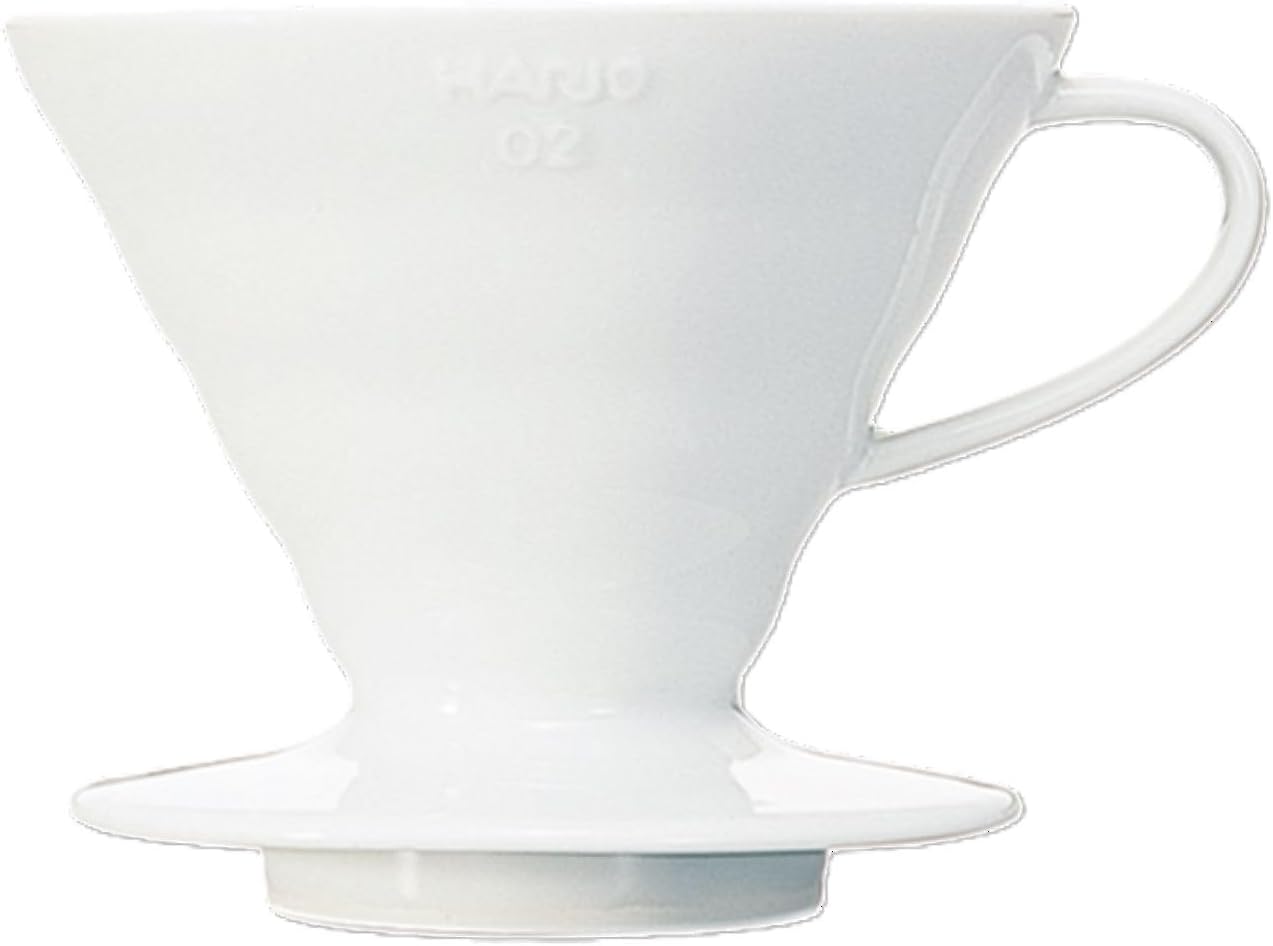
Our pick:Hario V60 ceramic dripper. The pour-over side of this brewer comparison. Research-rated, not yet used in our kitchen.
FAQs
What is the biggest flavor difference between pour-over and French press?
The primary difference is body versus clarity. French press produces a rich, full-bodied cup with more dissolved oils and fine particles because of its metal mesh filter. Pour over with paper filters strips those oils, producing a lighter, brighter cup that emphasizes acidity and origin-specific flavor notes. If you prefer a “thick” mouthfeel, lean toward French press. If you like clean, tea-like brightness, pour over is the better match.
Can I make espresso-style coffee without an espresso machine?
Not true espresso-that requires ~9 bars of pressure and very fine grind. However, the AeroPress and Moka pot can produce concentrated, espresso-adjacent brews that work reasonably well as a base for milk drinks. The result won’t have real crema or the same intensity as a proper espresso machine, but for casual lattes at home, it’s a practical workaround without the espresso machine credit card bill.
How important is water quality for home brewing?
Very. Tap water with high chlorine, mineral imbalance, or off-flavors will undermine even the best brewer and freshest beans. Most specialty sources recommend filtered water with a total dissolved solids (TDS) range of roughly 75–150 ppm. A simple carbon filter pitcher is usually enough. This applies equally to drip machines, pour over, French press, and espresso.
Do I really need a burr grinder, or will a blade grinder work?
A burr grinder produces uniform particles, which leads to even extraction and more predictable flavor. Blade grinders chop inconsistently-some powder, some boulders-causing simultaneous over- and under-extraction. For forgiving brewers like French press or cold brew, a blade grinder is tolerable. For V60, Chemex, or espresso, a burr grinder is effectively required to get repeatable results. Budget burr grinders start around $50–$100 and are often the best single upgrade a home brewer can make.
How often should I clean my coffee brewer?
It depends on the brewer. Rinse pour-over devices and AeroPress after every use. French press mesh should be disassembled and scrubbed at least weekly to prevent oil buildup. Drip machines need descaling every 1–3 months depending on water hardness-some models have indicator lights. Espresso machines require backflushing (for semi-automatics) every 1–2 weeks and full descaling monthly. Neglected cleaning is one of the most common reasons home-brewed coffee tastes off.
How Capitol City Coffee Rates Coffee and Coffee Machines
Every coffee and coffee machine we recommend is scored on the same 100-point scale, so a recommendation on one page means the same thing as a recommendation on any other. Each pick is also labeled with how we reached its score.
Research-ratedScored from the roaster or manufacturer’s published specifications, independent results such as Coffee Review blind cuppings and SCA brewer certification, and patterns across verified buyer reviews. Most of our current picks are research-rated.
Hands-on testedThe Capitol City Coffee team has brewed the coffee or used the machine ourselves, following the testing steps below. We only use this label when that testing actually happened, and we show the date we tested.
Coffee beans: 100-point scale
What we score
Points
What we look at
Origin and sourcing transparency
20
Country, region, farm or cooperative, altitude, bean variety, and processing method are clearly disclosed.
Flavor evidence
25
Independent cupping scores, how closely the tasting notes match what the origin is known for, and our own cupping notes when hands-on tested.
Roast and freshness
15
Roast level stated, roast-date practices, whole-bean availability, and packaging with a one-way valve or resealable bag.
Brew versatility
15
How well the roast suits pour-over, drip, French press, cold brew, and espresso.
Value
15
Price per ounce compared with similar single-origin coffees or blends.
Buyer feedback
10
Volume and consistency of verified reviews, and recurring complaints about staleness, bitterness, or shipping.
Coffee machines and gear: 100-point scale
What we score
Points
What we look at
Brewing performance
25
Water temperature in the 195–205°F range, even extraction, and SCA certification or published test data.
Build quality and reliability
20
Materials, known failure points, and long-term owner reports.
Ease of use and cleaning
15
Setup, the daily routine, descaling, and dishwasher-safe parts.
Fit for your kitchen
10
Capacity, counter footprint, and noise.
Useful features
10
Programming, grind and temperature control, and carafe type. Features that improve the cup count more than extras that do not.
Value
10
Price compared with machines that perform similarly.
Warranty and support
10
Warranty length, parts availability, and how the brand handles repairs.
What the grades mean
Score
Grade
What it means
90–100
A
Exceptional. Our first recommendation for the feeling and setting described.
80–89
B
Strong. Excellent, with minor trade-offs we explain.
70–79
C
Good. Worth it for specific needs, with clear compromises.
Below 70
—
Not recommended. We do not feature these as picks.
How we test hands-on
When a pick carries the Hands-on tested label, this is the method behind it, and we note the date we tested.
Coffee: brewed fresh from whole beans following Specialty Coffee Association guidelines (water between 195 and 205°F, about 1 gram of coffee to every 15 to 18 grams of water) in the brew methods the roast suits best, such as pour-over, French press, or espresso. We taste it black first, then with milk if that is how most people drink it, and each taster scores it on their own before we compare notes.
Machines: used in our everyday routine rather than a single demo. We brew both full and small batches, check the brewing temperature and brew time, and run the cleaning or descaling steps the manual calls for.
How we choose the feeling and setting
We match each coffee to a mood and a moment based on its flavor profile and roast. Bright, citrusy light roasts suit energizing mornings. Chocolatey, full-bodied medium roasts suit slow or social moments. Richer roasts suit espresso and milk drinks. Each pick explains which facts led us to that match.
Our scores stay independent
Every score comes only from the criteria above. No brand can pay for a pick or a higher grade. We re-check ratings when a roast, listing, or model changes, and update or remove picks that no longer earn their grade.
Some links on this page are affiliate links. As an Amazon Associate, Capitol City Coffee earns from qualifying purchases, at no extra cost to you.
Questions about a rating? Reach the Capitol City Coffee team through our contact page.