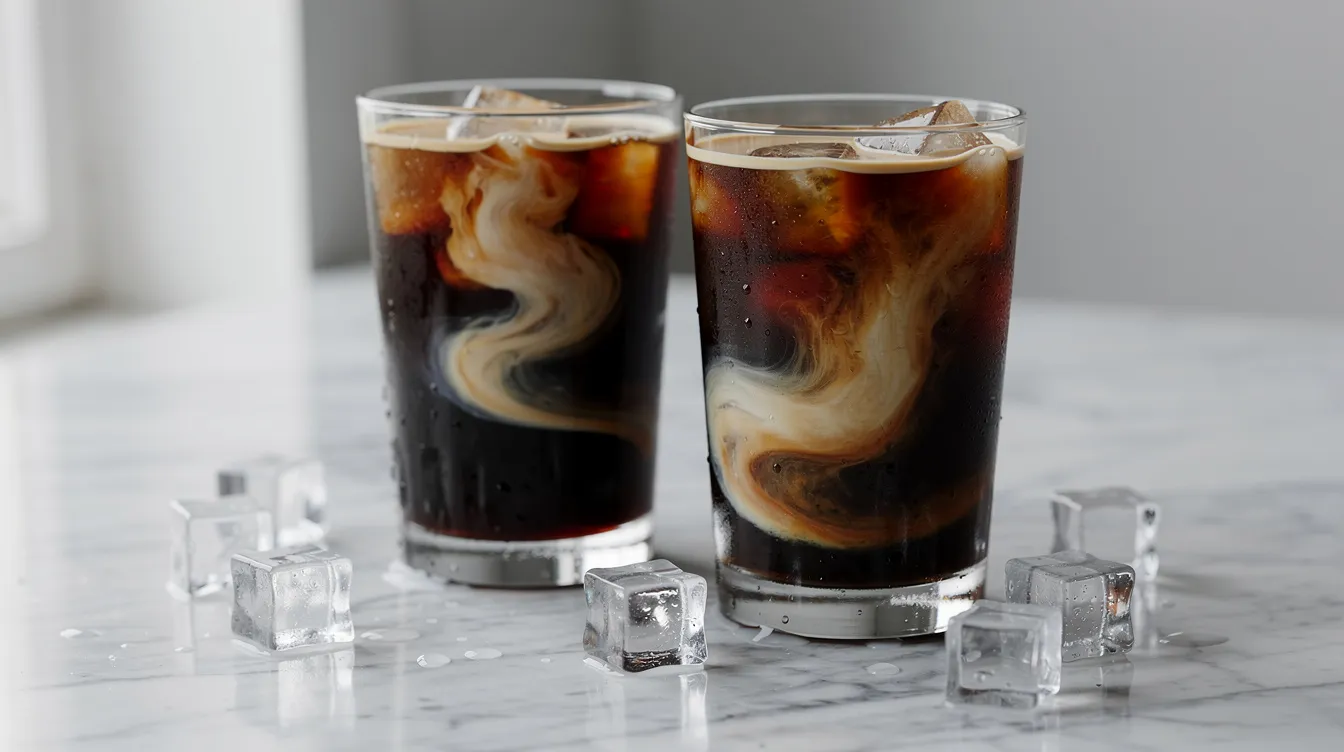
Cold brew coffee is one of the simplest and most forgiving brewing methods you can try at home. Steep coarsely ground coffee in cold water for 12–24 hours, strain it, and you have a smooth, low-acid drink that tastes nothing like dumping ice into yesterday’s drip pot. This guide walks you through ratios, grind size, steeping time, equipment, and serving ideas so you can start making cold brew this weekend.
Best cold brew maker pick
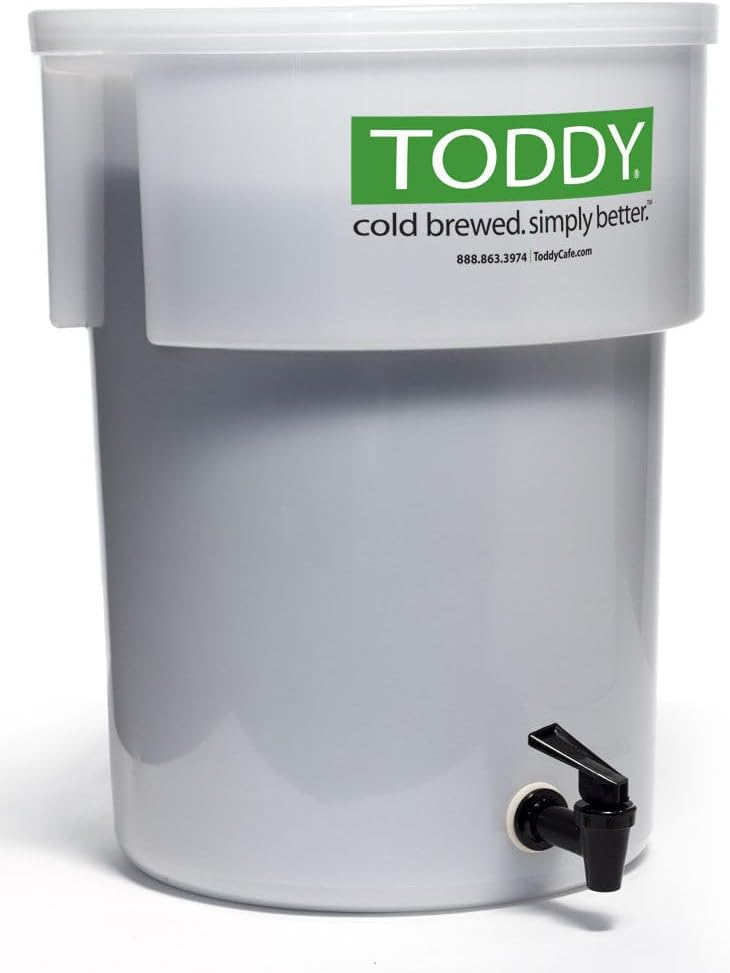
For this roundup, Toddy Cold Brew System is the cold brew maker we recommend first—the same pick at the top of our At-a-glance cards below.
Cold brew coffee is made by steeping coarse coffee grounds in cold water for 12–24 hours, producing a smoother, less bitter taste than hot-brewed coffee. It is not the same as iced coffee, which is brewed hot and then cooled down.
The basic recipe: combine coarsely ground coffee with cold water at roughly a 1:4 to 1:8 ratio depending on whether you want concentrate or ready-to-drink strength, steep overnight, then strain through a fine mesh sieve, coffee filter, or cloth.
You don’t need special equipment. A mason jar, French press, or any large container with a lid works perfectly alongside a filter.
A coarse grind is recommended for cold brew coffee to prevent over-extraction and excess sediment.
Expect a cup with subtle sweetness, low acidity, and a heavy body that you can serve over ice, dilute with water or milk, or even gently warm for a smooth hot cup.
What Is Cold Brew Coffee?
Cold brew coffee is made by steeping coarse coffee beans in cold or room-temperature water for 12–24 hours. Instead of using heat to speed up extraction, cold brew relies on time alone, which fundamentally changes what ends up in your cup.
Process: Ground coffee sits in cold water for hours. No boil, no hot water, no rushing.
Flavor: Cold extraction pulls fewer sharp acids and bitter compounds. The result is a smoother body, lower perceived acidity, and subtle sweetness compared with hot-brewed coffee.
Aromas: Muted compared to hot coffee. You trade bright, volatile top notes for mellow chocolate, caramel, and nutty flavors.
Key difference from iced coffee: Iced coffee is regular hot coffee cooled and poured over ice, which preserves more acidity and aroma but often becomes watery as ice melts. Cold brew never touches hot water during extraction.
Picture yourself at a coffee shop on a sweltering July afternoon. You order iced coffee and get something bright and punchy but diluted within minutes. Cold brew, by contrast, arrives dense and smooth, holding its flavor even as ice slowly melts. That difference starts with the brewing process itself.
Cold Brew vs Iced Coffee
People frequently use “cold brew” and “iced coffee” interchangeably, but the method and flavor are meaningfully different.
Iced coffee is brewed hot using any standard method-drip, pour over, espresso-then cooled and served over ice. It retains the brightness, aromatic complexity, and higher acidity of hot coffee, though it can taste thin once the ice dilutes it. Iced coffee retains more acidity than cold brew.
Cold brew uses only cold water and an extended contact time of 12–24 hours, producing a naturally sweeter, heavier-bodied drink with less bitterness and lower perceived acidity.
Iced Coffee
Cold Brew
Brew time
2–6 minutes
12–24 hours
Water temp
Near-boiling (90–96 °C)
Cold to room temp (4–25 °C)
Acidity
Higher, brighter
Lower, smoother
Best for
Quick afternoon drink
Make-ahead fridge staple
Knowing which one you prefer helps whether you’re ordering out or choosing a recipe at home.
Essential Cold Brew Equipment
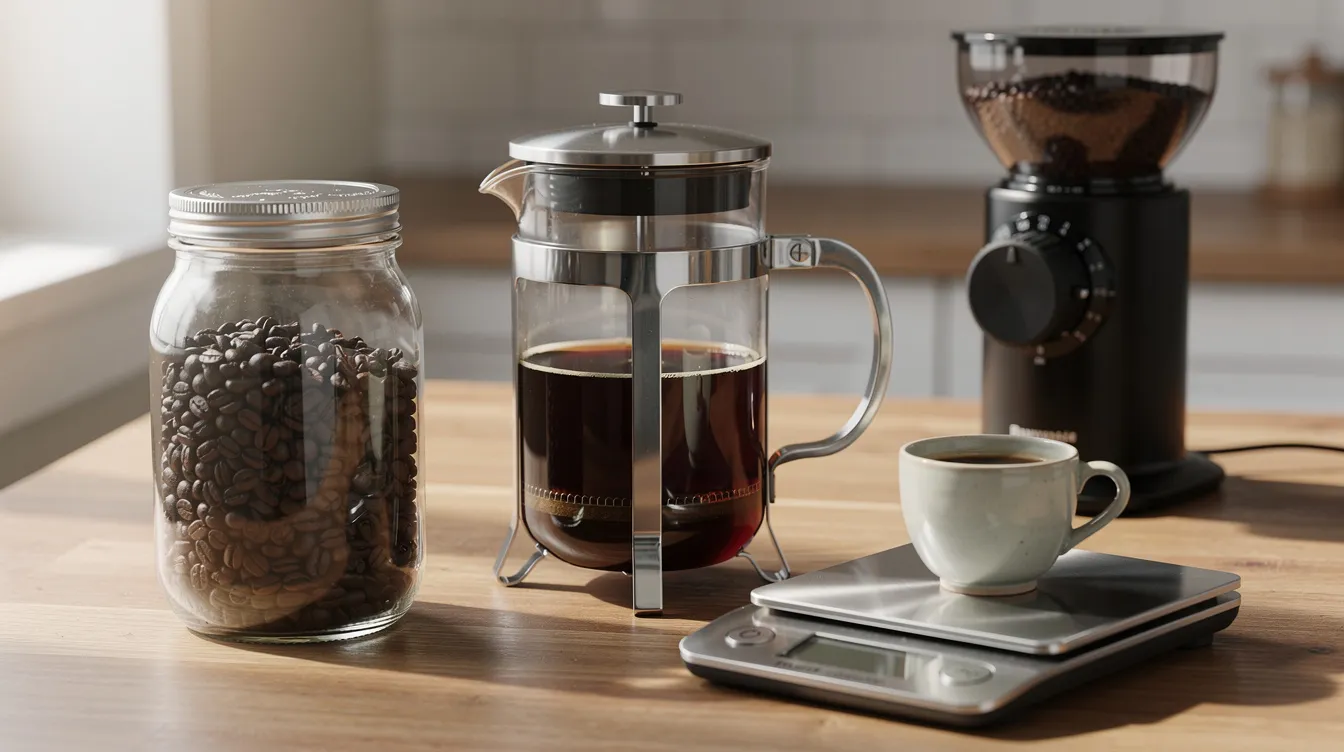
The first preparation step is making sure your container, filter, and grinder parts are clean before brewing, whether you use basic kitchen tools or invest in a dedicated cold brew maker. Here is the core cold brew equipment you need:
Container: A 32–64 oz mason jar, pitcher, or carafe with a lid.
Filter: A fine mesh sieve, paper filter, cheesecloth, or built-in mesh basket.
Grinder: A burr grinder for consistent coarse grounds.
Scale (optional but recommended): A digital scale helps measure coffee and water accurately, removing guesswork from the brewing process.
A cold brew coffee maker simplifies the brewing process by combining container and filter into one device, but a French press can be used for cold brew coffee just as effectively. Whatever brewing equipment you choose, make sure it fits in your fridge for overnight steeping.
Cold Brew Makers and DIY Containers
You have two paths: purpose-built cold brew makers or simple DIY containers.
Dedicated cold brew makers typically include a built-in mesh filter basket and a glass or BPA-free carafe, often holding 1–1.5 liters. You add grounds to the basket, pour in cold water, steep, then lift out the filter-minimal mess.
DIY options are just as effective:
A mason jar or glass pitcher with a separate filter
A French press, which doubles as both steeping container and filter
Any large container with a tight-fitting lid
Pros and cons: Cold brew makers offer tidier cleanup and fewer loose grounds floating around. Jars and French presses are inexpensive, multipurpose, and already in most kitchens. Glass is the preferred material because it’s inert, doesn’t impart flavor, and looks good when you serve cold coffee drinks straight from the fridge.
Filters, Grinders, and Grind Size
Filtration and grind size are the two variables that determine whether your cold brew is silky or gritty.
Filter options:
Metal mesh (in cold brew makers or French presses): fast, reusable, allows oils through for a fuller body.
Cloth filters or cheesecloth: Cloth filters are commonly used in cold brew makers. They’re reusable and fall between metal and paper in clarity. Clean them thoroughly after each use.
Grind size: Cold brew requires a coarse grind size-similar to or slightly coarser than a French press grind, roughly the texture of sea salt. A burr grinder produces a consistent coffee grind size, which matters because grind size affects the flavor profile of cold brew coffee. Blade grinders create uneven particles that lead to both over- and under-extraction in the same batch.
Coarser grinds are recommended for longer brewing times. If your cold brew tastes bitter or harsh, go coarser. If it’s thin or sour, try slightly finer and adjust the steeping process.
Cold Brew Coffee Ratio and Steeping Time
The coffee-to-water ratio and brewing time determine whether you end up with ready-to-drink cold brew or a potent cold brew concentrate.
For concentrate (to be diluted):
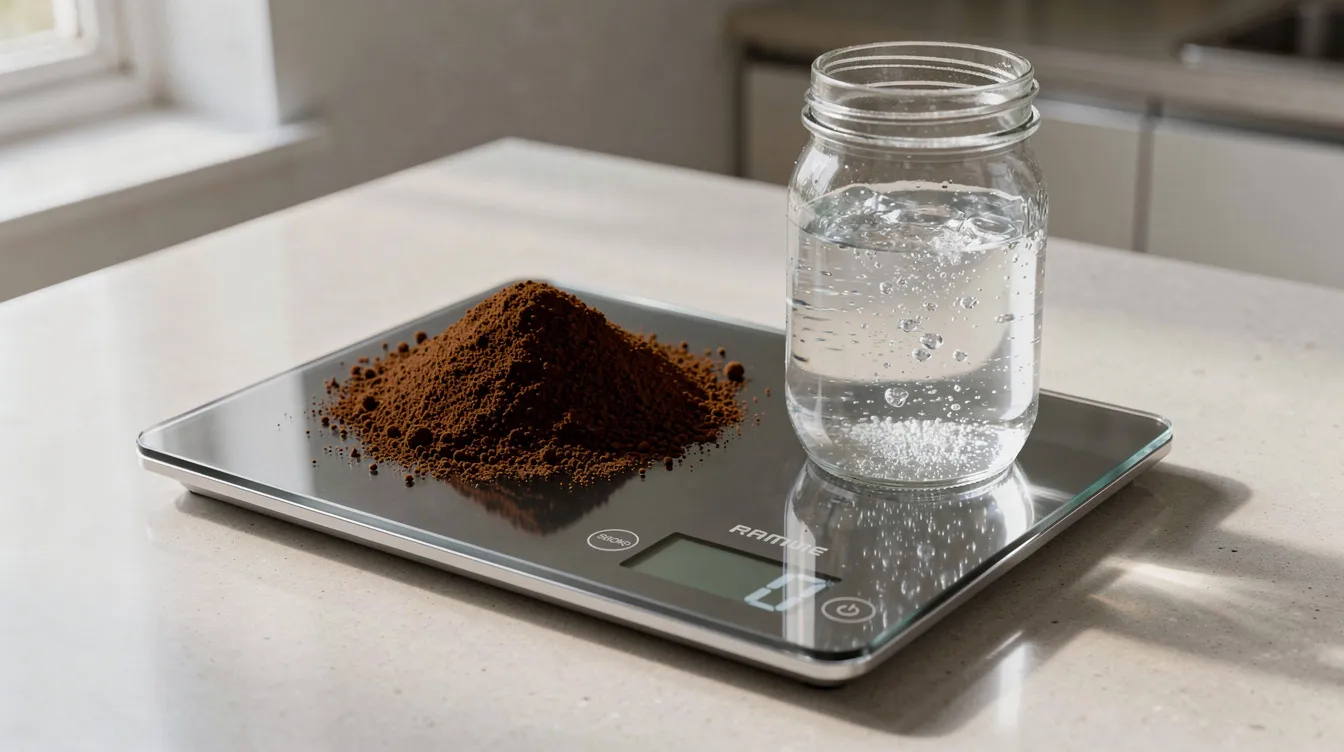
Use a 1:4 to 1:5 coffee-to-water ratio by weight. A stronger cold brew can use a 1:4.5 ratio.
Example: use 125 grams of coffee for one liter of cold brew.
Cold brew coffee requires a higher coffee-to-water ratio than hot coffee because you dilute the concentrate before drinking.
For ready-to-drink cold brew:
A 1:8 coffee-to-water ratio is recommended for cold brew-a good starting point that yields a balanced cup without dilution.
Steeping time:
12–18 hours at room temperature
16–24 hours in the refrigerator (cold brew coffee should be brewed in the refrigerator for food safety, especially in warm kitchens)
Longer steeping generally increases body and intensity, but pushing past 24 hours risks extracting woody, astringent flavors. Experiment in small steps-keep notes on ratio, time, and taste so you can dial in your preference.
Step-by-Step: How to Make Cold Brew Coffee
Here is how to make cold brew at home using a jar, French press, or cold brew maker.
Grind your beans. Measure 80–100 g of coffee beans and grind them to a coarse grind size. If you don’t have a grinder, ask your local coffee shop to grind them on the coarsest setting, or buy pre-ground coarse coffee.
Add grounds to your container. Transfer all the coffee grounds into your mason jar, French press, or cold brew maker. Leave enough headspace for water and some room to stir.
Add water. Pour cold or room-temperature filtered water over the grounds at your chosen ratio. Filtered water is recommended for making cold brew coffee to improve flavor. Stir gently to saturate all grounds-no dry pockets.
Cover and steep. Place the lid on your container and set it in the fridge for 16–24 hours, or rest it on the counter for 12–18 hours. Avoid agitating the mixture during the steeping process.
Strain. Use your French press plunger, built-in mesh, or a paper filter set over a fine mesh sieve to strain the liquid. A fine-mesh strainer or coffee filter is used to strain cold brew after steeping. For extra clarity, pass it through a second paper filter.
Dilute (if concentrate). Dilute cold brew concentrate with a 1:1 ratio for drinking-equal parts concentrate and cold water, milk, or ice. Cold brew coffee is typically diluted at a 1:1 ratio with water or milk when served. For a lighter cup, try a 2:1 water-to-concentrate ratio.
Serve. Pour over ice for a chilled, refreshing drink. Add simple syrup, flavored syrups, or top with milk or a plant-based alternative. Cold brew can be served hot or over ice-gently warm the concentrate with hot water for a smooth, low-acid hot cup.
Cleaning and Storing Your Cold Brew
Proper cleaning and storage keep your cold brew tasting fresh and prevent food safety issues.
Cleaning: Discard or compost used coffee grounds. Rinse mesh and cloth filters immediately-trapped oils go rancid quickly and create off flavors. Wash containers, cold brew makers, and French presses with mild detergent and warm water after each batch.
Storage:
Transfer finished cold brew or concentrate to a clean, airtight container-a glass bottle or jar works best.
Keep cold brew in the refrigerator to prevent spoilage. Store it away from strong-smelling foods.
Cold brew can be stored in the refrigerator for up to 1 to 2 weeks, though flavor is best within the first 5–7 days.
Cold brew can become overly bitter as it oxidizes over time.
Discard cold brew if it develops a sour smell. Cold brew should be clear and free from mold.
Serving Ideas, Variations, and Savings
Once you know how to make cold brew, you can customize it endlessly. You can also adjust the flavor after brewing with cold liquids such as milk or syrups.
Infusions during steeping: Drop in cinnamon sticks, vanilla beans, or cardamom pods alongside the grounds. These infuse gentle spice aromas into the cold brew coffee without needing sugary syrups.
Serving variations:
Classic cold brew over ice
Cold brew lattes with oat milk or whole milk
Citrus-tinged cold brew with a strip of orange or lemon zest
Jet fuel style: serve undiluted concentrate over a single ice cube for maximum intensity
Coffee ice cubes: Freeze leftover cold brew concentrate in ice cube trays. Use these instead of regular ice so your drink stays strong as the cubes melt.
Cost savings: A 12 oz bag of quality coffee beans (roughly $14–$18) yields about 5–6 large batches of cold brew concentrate. Each batch makes 4–6 servings. That puts your per-cup cost at roughly $0.50–$0.75, compared to $4–$6 per cup at a coffee shop. Making cold brew coffee at home pays for itself within a week or two.
FAQ
These questions cover common cold brew topics that go beyond the main preparation steps above.
What coffee beans work best for cold brew?
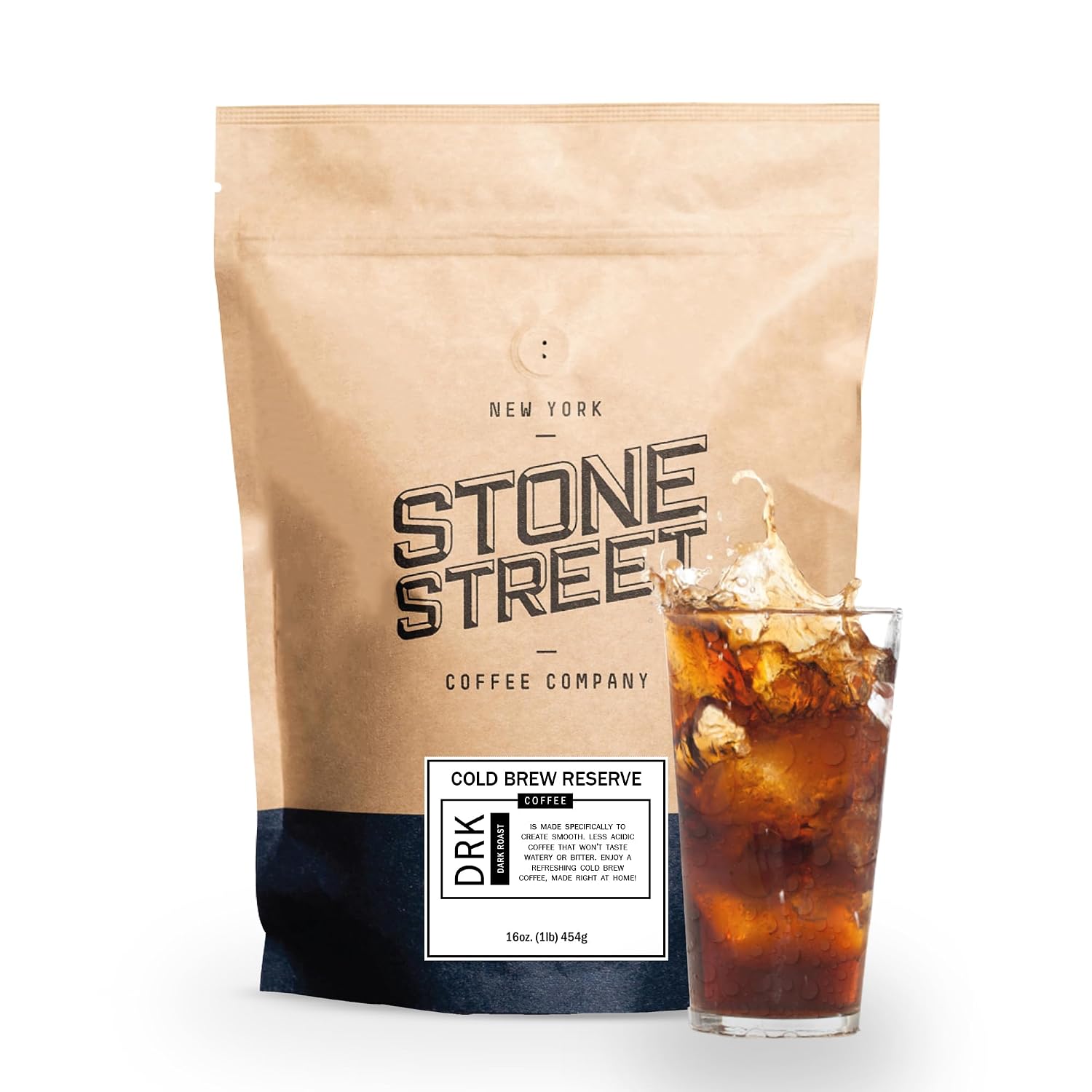
Any coffee beans can work, but medium to dark roasts with chocolatey, nutty, or caramel notes tend to taste especially smooth in cold brew. Light roasts can produce brighter, tea-like cold brews with more fruit and floral notes, though some brewers may perceive slightly more acidity. Buy freshly roasted whole beans and grind just before brewing to preserve freshness and flavor.
Can I make cold brew in a French press?
Yes. A French press is one of the most popular ways to make cold brew at home. Add coarse grounds and cold water, stir, cover with the lid (plunger up), and steep for 12–24 hours. Press the plunger slowly and pour off the liquid. If the mesh lets too much sediment through, strain the brew a second time through a paper filter for a cleaner cup.
Is cold brew stronger than regular coffee?
Cold brew concentrate is brewed with a higher coffee-to-water ratio than a typical hot brew, so undiluted it can taste like jet fuel. Once you dilute cold brew concentrate with a 1:1 or 2:1 ratio of water or milk, the caffeine level lands in a similar range to a regular cup of coffee. If you prefer a less intense drink or are sensitive to caffeine, start with smaller servings or use the gentler 1:8 ready-to-drink recipe.
Do I have to refrigerate cold brew while it steeps?
Many home brewers steep cold brew at room temperature for 12–18 hours, then transfer it to the fridge. Others brew entirely in the refrigerator for 16–24 hours. Fridge steeping slows extraction slightly but offers better food safety and can produce a cleaner, more controlled flavor. If your kitchen runs warm, the refrigerator is the safer choice.
Can I heat cold brew coffee?
Cold brew concentrate can be gently heated and diluted with hot water to make a smooth, low-acid hot coffee. Warm it on the stovetop or add hot water from a kettle rather than microwaving, which gives you better control over temperature and taste. Even served warm, cold brew retains its signature mellow flavor profile because the coffee was extracted at a low temperature-it won’t taste like a reheated cup of drip coffee.
How Capitol City Coffee Rates Coffee and Coffee Machines
Every coffee and coffee machine we recommend is scored on the same 100-point scale, so a recommendation on one page means the same thing as a recommendation on any other. Each pick is also labeled with how we reached its score.
Research-ratedScored from the roaster or manufacturer’s published specifications, independent results such as Coffee Review blind cuppings and SCA brewer certification, and patterns across verified buyer reviews. Most of our current picks are research-rated.
Hands-on testedThe Capitol City Coffee team has brewed the coffee or used the machine ourselves, following the testing steps below. We only use this label when that testing actually happened, and we show the date we tested.
Coffee beans: 100-point scale
What we score
Points
What we look at
Origin and sourcing transparency
20
Country, region, farm or cooperative, altitude, bean variety, and processing method are clearly disclosed.
Flavor evidence
25
Independent cupping scores, how closely the tasting notes match what the origin is known for, and our own cupping notes when hands-on tested.
Roast and freshness
15
Roast level stated, roast-date practices, whole-bean availability, and packaging with a one-way valve or resealable bag.
Brew versatility
15
How well the roast suits pour-over, drip, French press, cold brew, and espresso.
Value
15
Price per ounce compared with similar single-origin coffees or blends.
Buyer feedback
10
Volume and consistency of verified reviews, and recurring complaints about staleness, bitterness, or shipping.
Coffee machines and gear: 100-point scale
What we score
Points
What we look at
Brewing performance
25
Water temperature in the 195–205°F range, even extraction, and SCA certification or published test data.
Build quality and reliability
20
Materials, known failure points, and long-term owner reports.
Ease of use and cleaning
15
Setup, the daily routine, descaling, and dishwasher-safe parts.
Fit for your kitchen
10
Capacity, counter footprint, and noise.
Useful features
10
Programming, grind and temperature control, and carafe type. Features that improve the cup count more than extras that do not.
Value
10
Price compared with machines that perform similarly.
Warranty and support
10
Warranty length, parts availability, and how the brand handles repairs.
What the grades mean
Score
Grade
What it means
90–100
A
Exceptional. Our first recommendation for the feeling and setting described.
80–89
B
Strong. Excellent, with minor trade-offs we explain.
70–79
C
Good. Worth it for specific needs, with clear compromises.
Below 70
—
Not recommended. We do not feature these as picks.
How we test hands-on
When a pick carries the Hands-on tested label, this is the method behind it, and we note the date we tested.
Coffee: brewed fresh from whole beans following Specialty Coffee Association guidelines (water between 195 and 205°F, about 1 gram of coffee to every 15 to 18 grams of water) in the brew methods the roast suits best, such as pour-over, French press, or espresso. We taste it black first, then with milk if that is how most people drink it, and each taster scores it on their own before we compare notes.
Machines: used in our everyday routine rather than a single demo. We brew both full and small batches, check the brewing temperature and brew time, and run the cleaning or descaling steps the manual calls for.
How we choose the feeling and setting
We match each coffee to a mood and a moment based on its flavor profile and roast. Bright, citrusy light roasts suit energizing mornings. Chocolatey, full-bodied medium roasts suit slow or social moments. Richer roasts suit espresso and milk drinks. Each pick explains which facts led us to that match.
Our scores stay independent
Every score comes only from the criteria above. No brand can pay for a pick or a higher grade. We re-check ratings when a roast, listing, or model changes, and update or remove picks that no longer earn their grade.
Some links on this page are affiliate links. As an Amazon Associate, Capitol City Coffee earns from qualifying purchases, at no extra cost to you.
Questions about a rating? Reach the Capitol City Coffee team through our contact page.