

Coffee is made from the roasted seeds of the Coffea plant, and it is one of the most widely consumed beverages globally. Whether you drink drip coffee every morning or you have never brewed your own cup of coffee, this page organizes everything you need to learn about coffee into practical, manageable topics. Below, you will find clear guidance on beans, origins, roast levels, brewing methods, tasting, and sourcing – all written to help you make better choices at home or at the café.
Key Takeaways
- Coffee is a drink made from roasted coffee beans (seeds of the Coffea plant), and learning the basics of beans, roast levels, and brewing is enough to dramatically improve your daily cup.
- There is no single “right” way to brew. Drip coffee, French press, pour over, espresso, and cold brew are all valid starting points – your taste and routine should guide the choice.
- Understanding the difference between arabica coffee and robusta coffee, plus how origin, processing, and certifications shape flavor, helps you shop with confidence instead of guesswork.
- A practical coffee journey follows four steps: learn bean basics, pick one brewing method, taste intentionally, and keep notes on what you like and dislike.
- Capitol City Coffee is an independent coffee editorial and affiliate publication. We do not sell coffee or equipment – all recommendations are based on researched editorial analysis using verified facts and reputable expert sources.
At a glance
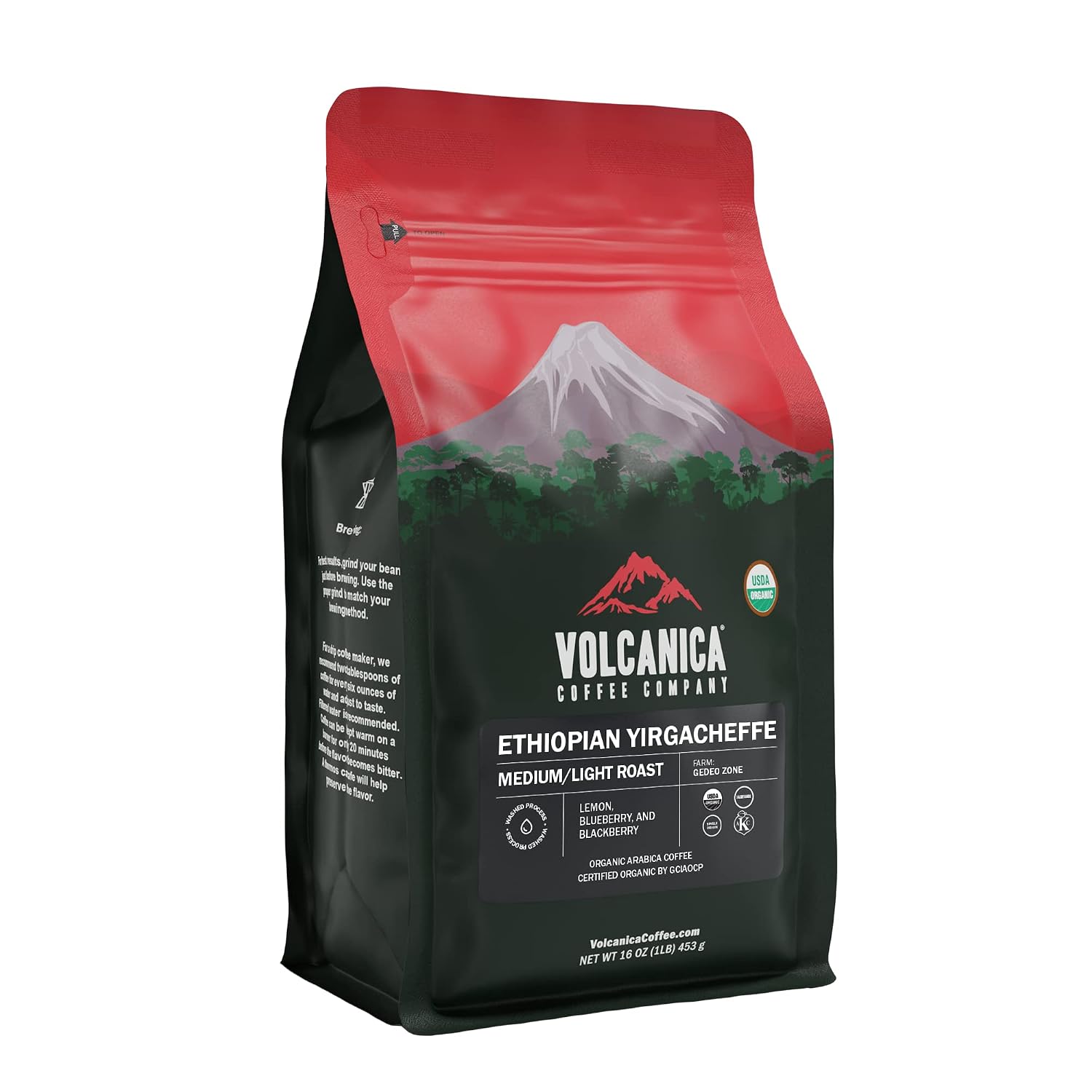
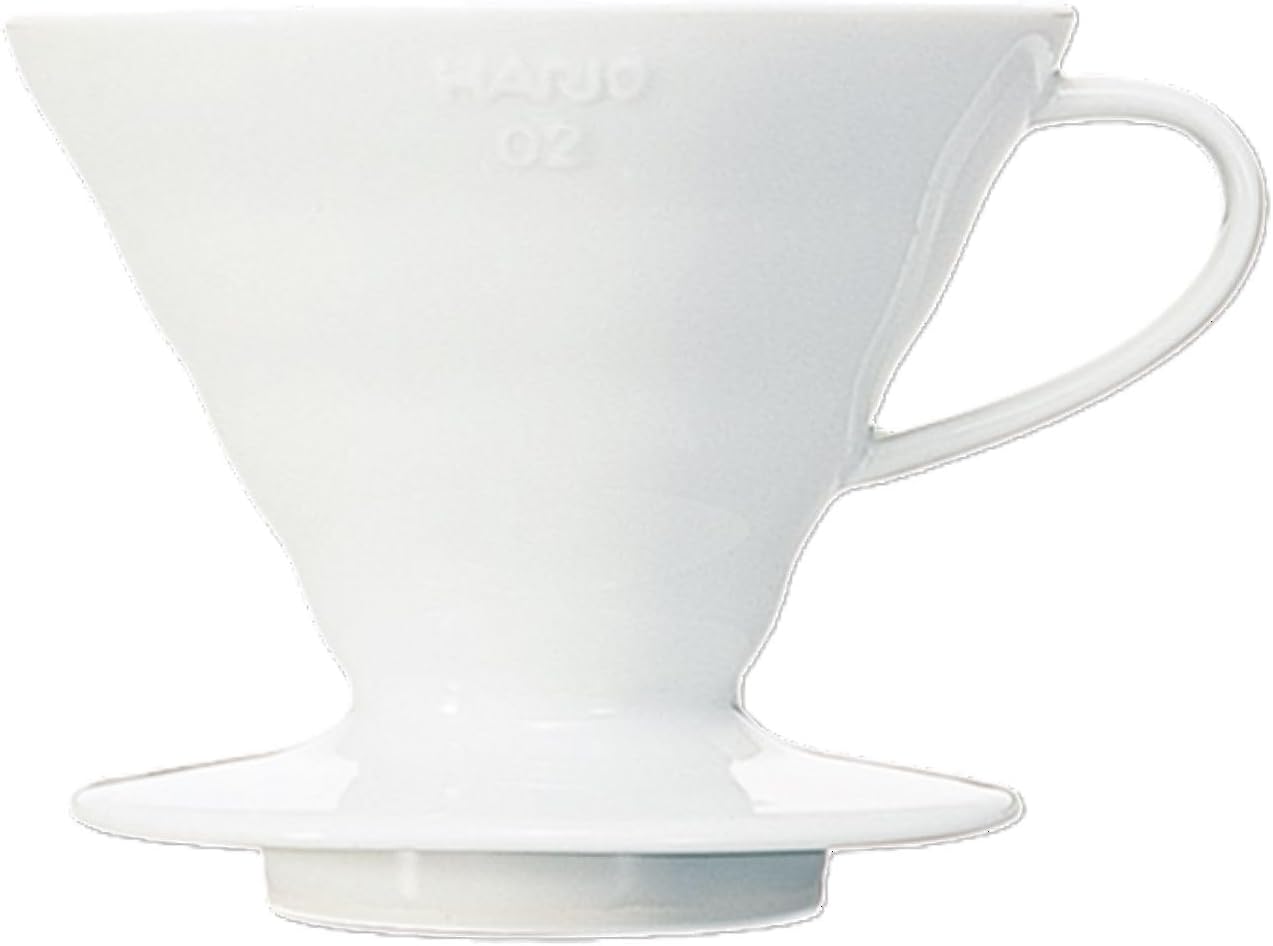
Category Overview: Learn About Coffee With Capitol City Coffee
Coffee starts as a cherry on a coffee tree, and growers produce coffee that gets processed into green coffee beans before roasting coffee, grinding, and brewing with hot water (or cold water, depending on your method). This page is your central education hub, and the sections below walk you through every stage of that journey, from the farm to the mug in your hand.
Capitol City Coffee organizes coffee education into four pillars: beans and origins, brewing methods, tasting and buying, and certifications and sourcing. Each pillar links out to deeper guides where you can spend as much or as little time as your curiosity demands. Detailed country profiles live under the origins section, step-by-step brew guides live under brewing, and certification breakdowns live under certifications.
We are an independent, U.S.-based coffee editorial and affiliate publication. We do not roast, sell, or ship coffee. Our job is to research, explain, and point you toward trustworthy information so you can make your own choices. The advice on this page is tailored for everyday U.S. coffee drinkers who want practical, clear guidance without jargon overload.
How to Start Learning About Coffee (Without Getting Overwhelmed)
There is an enormous amount of coffee content online, and much of it is contradictory. The good news: you only need a handful of fundamentals to start brewing coffee you genuinely enjoy. Everything else is refinement.
Here is a simple four-step path to begin your coffee adventure:
- Pick one brewing method. Drip coffee is the most accessible starting point for most U.S. kitchens.
- Choose a medium roast arabica coffee. It is balanced, forgiving, and widely available.
- Use a basic recipe. Start with roughly one gram of coffee for every 15–17 grams of water and adjust from there.
- Taste and tweak. Change one variable at a time – grind size, water amount, brew time – and notice what shifts in the cup.
Focus on taste and consistency before collecting gadgets. A simple experiment: buy one bag of freshly roasted whole bean coffee, brew it two ways (for example, drip coffee and French press), and notice how the brewing method changes the flavor. That single comparison teaches more than reading ten articles.
The sections below cover the major educational topics. Read them in any order. There is no single correct coffee journey – only yours.
Bean Basics: What Coffee Actually Is
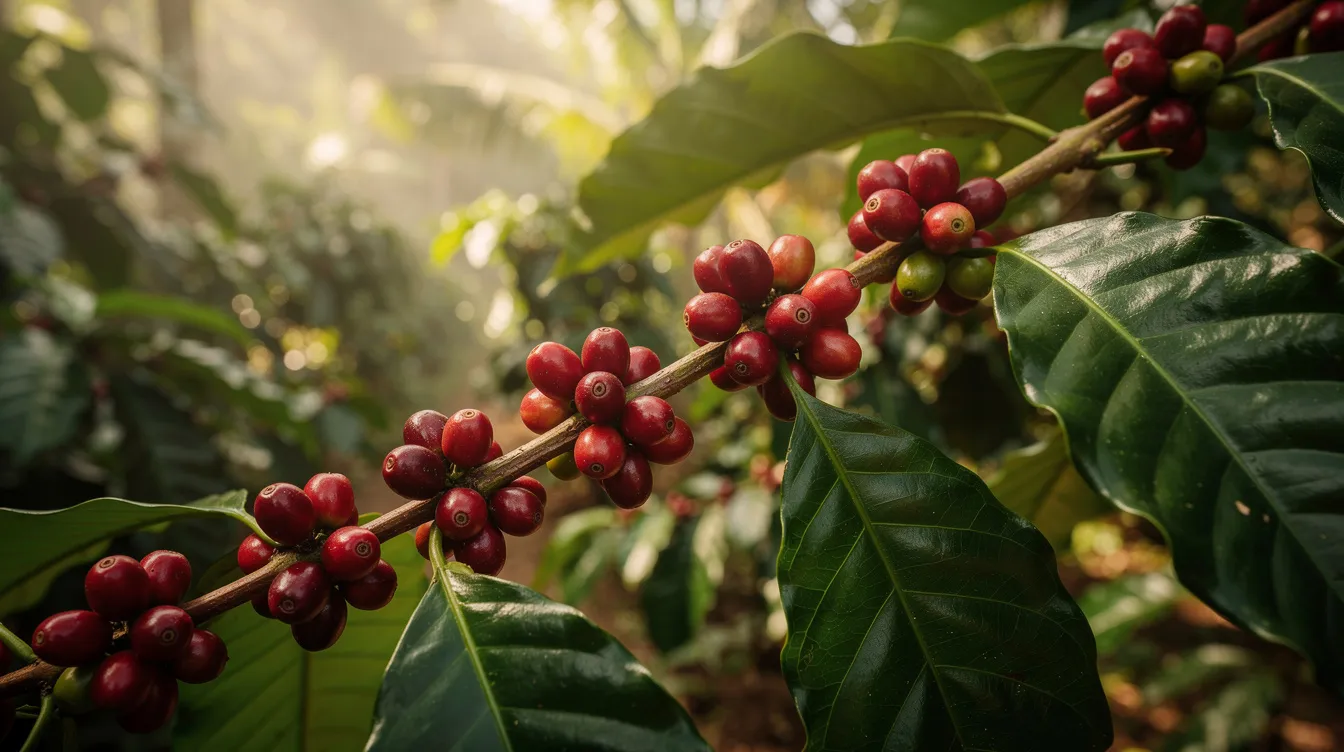
Coffee is a drink made from the roasted and ground seeds of the Coffea plant, grown within the tropical coffee belt. The coffee belt spans regions around the equator, roughly between the Tropics of Cancer and Capricorn, where climate, altitude, and soil create ideal conditions for coffee plants to thrive.
Coffee beans are actually seeds inside a fruit called a coffee cherry. When ripe, these coffee cherries are picked (often by hand), processed to remove the fruit layers, dried to a stable moisture content, and shipped worldwide as green coffee beans. Roasters then transform those green coffee beans into the dark brown, aromatic roasted beans you grind and brew at home.
Arabica and Robusta are the two main coffee bean types. Here is how they compare:
Arabica | Robusta | |
|---|---|---|
Flavor | Fruity, floral, nuanced flavors | Strong, bitter, earthy |
Caffeine | ~1.2–1.5% by dry weight | ~2.2–2.7% by dry weight |
Growing conditions | Higher altitude, cooler climate | Lower altitude, hotter, more humid |
Market share | ~60–70% of world production | ~30–40% of world production |
Typical use | Specialty coffee, single origin coffees | Instant coffee, blends, espresso blends |
Arabica and robusta are different Coffea species that produce coffee with distinct flavor, caffeine, and cost profiles. Arabica beans are generally considered higher quality than Robusta. Arabica beans often have fruity and floral flavor notes, while robusta beans typically have a strong, bitter flavor profile. Robusta beans contain twice as much caffeine as arabica beans, which is part of why robusta coffee shows up in blends designed for body and crema, and it is often used as a less expensive substitute in some blends.
Coffee beans are grown primarily in the Coffee Belt region – sometimes also called the bean belt. Most specialty coffee uses 100% arabica, while many supermarket blends and instant coffees combine arabica and robusta beans for cost efficiency and heavier body.
At a deeper level, bean size, density, and variety (such as Bourbon, Caturra, Typica, and the prized Geisha) influence flavor potential. Higher altitudes generally produce denser beans with more complex flavors. But beginners do not need to memorize varietal names yet – understanding arabica versus robusta and what “origin” means on a bag is a strong foundation.
Coffee Origins and How Location Shapes Flavor
“Origin” refers to the geographic label on a bag – Colombia, Ethiopia, Guatemala, Sumatra – and it signals the soil, climate, altitude, and processing traditions behind that coffee. Flavor in coffee is influenced by origin, roast level, and brewing method, but origin is where the raw flavor characteristics begin.
Typical regional flavor patterns for the major growing areas:
- Latin America (Central America, South America, Colombia, Brazil): Chocolate, nuts, caramel sweetness, gentle acidity, balanced body. Central American coffees often have chocolate and nutty tones that make them approachable for many coffee lovers.
- East Africa (Ethiopia, Kenya, Rwanda): Fruity, floral, bright acidity, tea-like or wine-like notes. Ethiopian coffee is famous for its dynamic, complex flavors. Coffees from Africa can exhibit fruity and floral characteristics that set them apart.
- Asia-Pacific (Indonesia, India, Papua New Guinea): Earthy coffees with spicy, herbal, or woody notes, heavier body, lower acidity. Sumatran coffees are a classic example.
Origin is one of several flavor drivers. Processing method and roast level regularly reshape what you taste – two coffees from the same farm but with different processing can diverge more than two from different countries. There are always exceptions to regional stereotypes.
A simple beginner experiment: buy two or three single origin coffees from different regions (one from South America, one from East Africa, one from Indonesia), keep the roast level constant if possible (medium roast works well), brew with the same method, and compare. The differences in aroma, acidity, body, and finish will emerge clearly.
Processing: What Happens Between Cherry and Green Bean
Processing is how the fruity outer layers of the coffee cherry are removed from the seed, and it dramatically shapes flavor before the roasting process even begins.
The three main processing styles:
- Washed (wet): Cherries are depulped, fermented in tanks to remove mucilage, washed clean, and dried. Washed coffees are often cleaner, brighter, with pronounced origin character and a crisp natural taste.
- Natural (dry): Whole cherries are dried intact. Sugars and fruit compounds ferment around the seed during drying. Naturals tend to be fruitier, heavier-bodied, sometimes winey – a more intense natural flavor.
- Honey / pulped natural: A hybrid. Skin is removed, but some mucilage stays during drying. The result sits between washed and natural: sweeter than washed, more clarity than natural.
Experimental methods like anaerobic fermentation and carbonic maceration exist and are gaining visibility in specialty markets, but the three core styles above are what most U.S. drinkers will see on labels.
Treat processing notes on bags as a clue, not a guarantee. Two natural-processed coffees from different farms can taste quite different. The best approach is to experiment across processes – buy one washed and one natural from the same origin and taste them side by side.
Roast Levels: Light to Dark Roast Explained
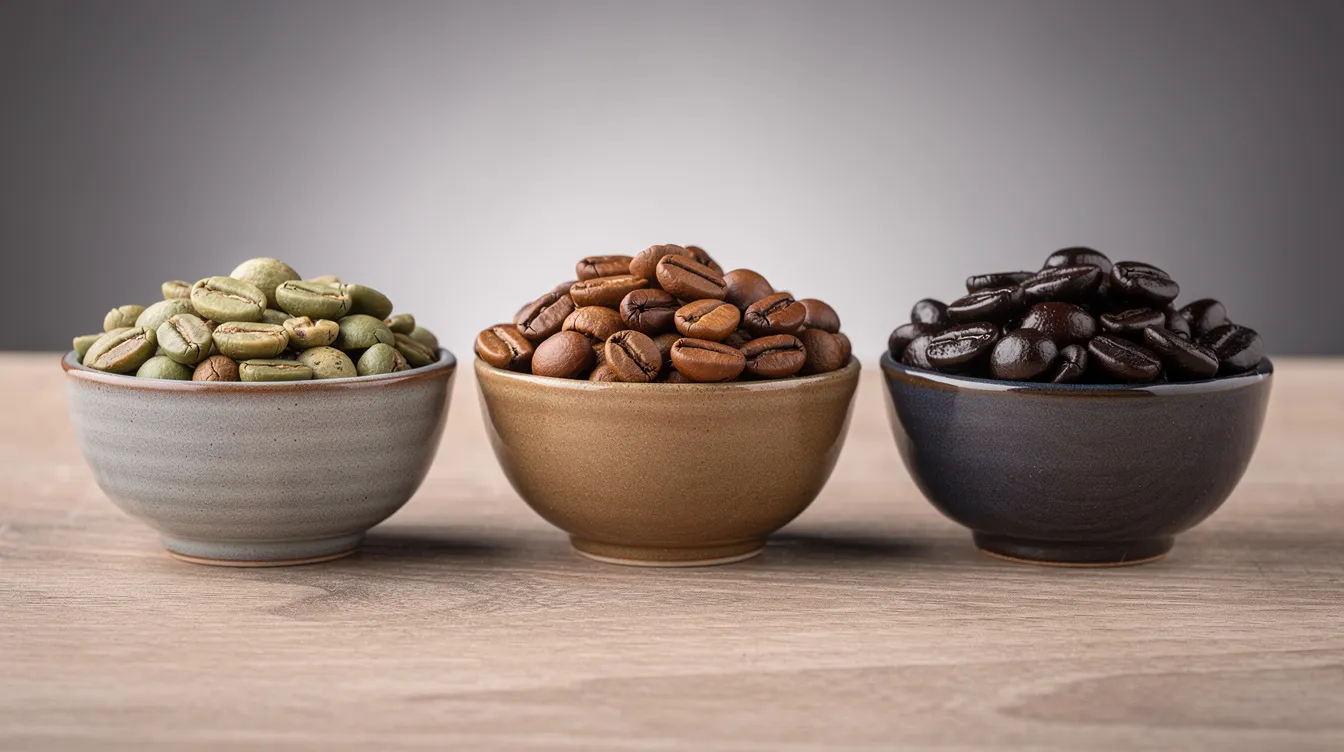
Roast level is one of the easiest levers to understand when buying coffee. Coffee roast levels include light, medium, and dark, and roasting coffee is the step that creates those levels while developing flavor. Roasting changes coffee beans’ color, aroma, and flavor through Maillard reactions and caramelization.
- Light roast: Light roasts have bright, fruity flavors and no oil on the surface. They preserve more of the origin’s character and acidity, and are often preferred for manual brewing methods like pour over. Expect a lighter body and more nuanced flavors.
- Medium roast: Medium roasts are balanced with sweet, caramelized flavors – moderate acidity, approachable sweetness, and body that works across most coffee brewing methods. A medium roast is often the safest starting point for U.S. drinkers. A medium dark roast pushes slightly toward bolder territory while keeping some sweetness.
- Dark roast: Dark roasts have bold, smoky flavors and lower acidity, with less origin nuance but heavy body and a familiar profile for classic diner-style coffee. Dark roasts can have caramelized sugar and sweet, toasty flavors alongside bitterness. Dark roast coffees are common in espresso blends.
A persistent myth: many people believe dark roast has significantly more caffeine. In reality, caffeine differences by roast level are small. A 2024 peer-reviewed study found that under identical brewing conditions, dark roasts generally had slightly lower caffeine concentration than lighter roasts. Another study on fifteen arabica samples found no significant effect of roast degree on caffeine content, though chlorogenic acids and total polyphenols were significantly reduced as roast degree increased. Your brew recipe and serving size matter far more than roast level when it comes to caffeine.
Sourcing and Certifications: Reading the Fine Print on the Bag
Sourcing transparency and certifications matter because they can signal ethical practices, quality focus, and environmental responsibility. Coffee farming employs over 100 million people in developing countries, and how beans are grown, purchased, and traded has real consequences.
Common certifications U.S. shoppers encounter:
- Fair Trade: Ensures minimum prices or premiums for growers; addresses equity and farmer income.
- USDA Organic: Limits synthetic fertilizers and pesticides on coffee farms and coffee crops.
- Rainforest Alliance: Focuses on environmental, biodiversity, and labor standards. Shade-grown coffee supports greater biodiversity than sun-grown coffee, and this certification often promotes shade practices.
- Direct Trade: Not a formal certification, but indicates roasters who build direct relationships and pay premiums for quality and sustainability.
Certifications are one tool among many. Some high-quality coffees use relationship-based sourcing without formal labels. In 2020, 34% of global coffee production met sustainability standards, which means the majority still did not. Sustainable coffee practices can reduce pesticide pollution and habitat destruction, but certification alone does not guarantee great coffee flavor.
Coffee production uses about 140 liters of water per cup when you factor in growing coffee, processing, and transport. Washed processing requires more water than natural or honey methods, which is a concern in water-scarce regions where coffee plants grow. Spent coffee grounds can be composted or reused instead of discarded as part of a more sustainable coffee lifecycle.
Simple buying criteria for beginners: look for a roast date (freshness), clear origin information, a basic description of flavor notes, and any sustainability signals you care about.
Brewing Fundamentals: From Bean to Cup
The brewing process, at its core, is straightforward: grind coffee beans, add water at the right temperature, give it contact time, and separate grounds from liquid. Every brewing style is a variation on this formula.
The key concept to grasp is extraction. Under-extracted coffee tastes sour and thin because not enough flavor has dissolved. Over-extracted coffee tastes bitter and harsh because too many undesirable compounds have been pulled out. The goal is a balanced cup where sweetness, acidity, body, and finish all work together.
A simple starting ratio: about 1:15 to 1:17 coffee to water by weight. For example, 20 grams of coffee to 300–340 grams of water. Small adjustments to this ratio personalize strength and flavor without requiring complex math.
Consistency matters more than precision. Using the same scoop, timing, and method each day helps you learn what changes actually do to taste. When you decide to experiment, change only one variable at a time.
Water quality and temperature have a real impact on coffee flavor. For most hot methods, aim for 195–205°F (90–96°C). Very hard water can mute acidic flavors; very soft water can let sharpness dominate. Filtered tap water is a good baseline for most U.S. households.
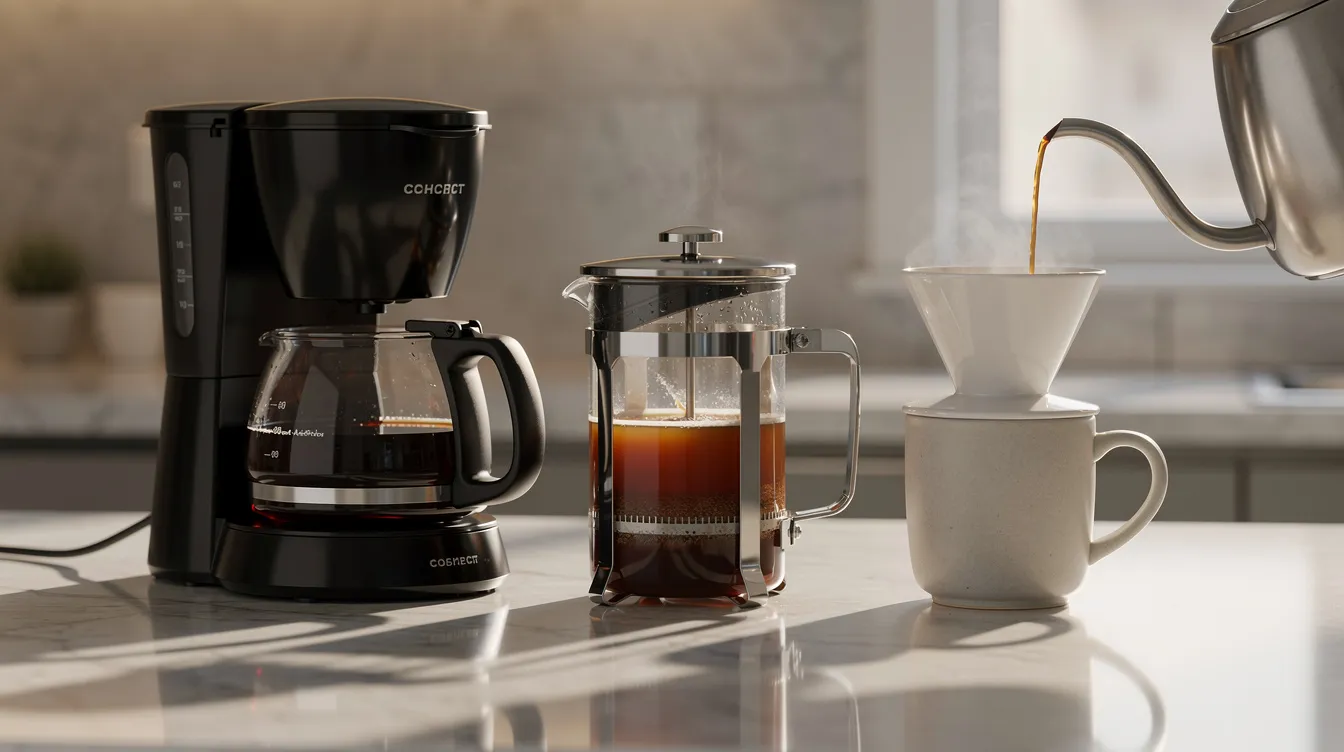
Everyday Brewing Methods: Drip Coffee, French Press, Pour-Over and More
Different coffee brewing methods highlight different aspects of the same beans. Your brewing style shapes everything from body and clarity to how much sediment ends up in your mug.
- Drip coffee makers: The default in many U.S. kitchens. Drip brewing involves hot water passing through coffee grounds in a filter, producing a clean, consistent cup with minimal effort. A medium grind works best. Filtered coffee can help reduce cholesterol absorption from coffee oils, since paper filters trap cafestol.
- French press: An immersion method using a coarse grind. The French press produces rich, full-bodied coffee with more oils and sediment than filtered methods. It is simple, affordable, and forgiving. Note that unfiltered coffee like French press can raise LDL cholesterol levels due to cafestol, so drinkers concerned about cholesterol may prefer filtered options.
- Pour over: A manual percolation method (Hario V60, Chemex, Kalita Wave) that emphasizes clarity and nuance. Pour-over brewing highlights subtle flavors in coffee, especially with lighter roasts and single origin coffees. It requires more attention but rewards it with rich flavor and a delicious cup.
- AeroPress: AeroPress brews coffee using immersion and air pressure, producing a concentrated, versatile cup. It is portable, fast, and popular among travelers and experimenters.
- Moka pot: A stovetop device that brews strong, espresso-style coffee without the price tag of espresso machines. A good bridge for curious home brewers.
Most beginners are well served by mastering drip coffee or French press before branching into more gear-intensive methods. Regular coffee from a well-dialed drip maker with fresh beans already beats most café offerings.
Espresso Machines and Espresso-Based Drinks
Espresso is brewed under high pressure for concentrated flavor – a small, intense shot made by forcing hot water through very finely ground coffee at approximately 9 bars of pressure. The result is a dense, syrupy liquid topped with crema.
Common espresso machines fall into a few categories:
Type | Control level | Learning curve | Price range |
|---|---|---|---|
Manual lever | Full | Steep | Moderate–high |
Semi-automatic | High | Moderate | Moderate–high |
Automatic | Moderate | Low–moderate | Higher |
Super-automatic | Minimal | Low | Highest |
A quality espresso machine is a significant investment in both money and time. Espresso is the base for drinks like cappuccinos, lattes, flat whites, and Americanos – drinks where steamed milk profoundly changes flavor and texture. If you are interested in milk-based drinks, learning to texture milk properly matters as much as dialing in the shot.
Learning on an espresso machine has a steeper curve than drip coffee or French press. Many beginners are better served mastering filter brewing first, then moving to espresso when they want to go deeper. More detailed gear guidance and researched editorial recommendations live in the brewing and coffee sections rather than on this hub page.
Cold Brew and Iced Coffee Basics
Cold brew coffee is steeped in cold water for 12–24 hours, resulting in a smooth, low-acidity concentrate. Because extraction happens slowly at low temperatures, cold brew tends to mute acidic flavors and emphasize sweetness and body.
Cold brew is different from iced coffee. Iced coffee is brewed hot (often at double strength) and poured over ice, which preserves more of the brightness and acidity from hot extraction. Both are valid – they just taste different.
A simple cold brew framework:
- Use a coarse grind (similar to French press).
- Combine coffee and cold water at about a 1:5 to 1:8 ratio by weight.
- Steep in the fridge for 12–24 hours.
- Strain, then dilute the concentrate with water, milk, or ice before drinking coffee.
Cold brew shines during summer months, for batch-brewing coffee for the week, and for drinkers sensitive to the perceived sharpness of hot-brewed coffee. Many U.S. cafés now offer both cold brew and iced espresso drinks, and understanding the difference helps you order a delicious cup confidently.
Grind Size, Water, and the Brewing Process Variables
Coffee flavor is shaped by a few controllable variables: grind size, brew time, water temperature, and coffee-to-water ratio. Learning to adjust these is the core of the brewing process.
A simple grind size spectrum:
- Fine (like table salt): espresso, Moka pot
- Medium-fine (like sand): pour over (V60), AeroPress
- Medium (like regular sand): drip coffee makers
- Coarse (like sea salt): French press, cold brew
A burr grinder produces more consistent particle sizes than a blade grinder, which leads to more even extraction across all coffee brewing methods. If you invest in one piece of equipment beyond a brewer, a basic burr grinder is the strongest choice for producing delicious coffee consistently.
Water matters. Very hard water can mute brightness; very soft or distilled water can produce flat or overly sharp results. Filtered tap water strikes a good balance for most people, and keeping equipment free of scale buildup protects both flavor and machine longevity.
The most useful habit: change only one variable at a time (for example, slightly coarser grind) and taste carefully. Over time, this builds an intuitive sense of the brewing process that no recipe can replace.
Tasting Coffee: Building Your Flavor Vocabulary
Coffee cupping is a structured way to pay attention to aroma, acidity, sweetness, body, and finish. Professional cuppers use standardized protocols, but even simple at-home habits sharpen your palate fast.
Start here:
- Smell the dry ground coffee before adding water.
- Smell the wet coffee grounds after water hits them.
- Take a small sip and let it coat your tongue.
- Notice how the coffee flavor changes as the cup cools – complexity often reveals itself at lower temperatures.
A few everyday tasting notes descriptors to start with:
- Chocolate, nutty, caramel – common in Latin American coffees and medium roasts
- Fruity, berry, citrus – typical of East African and light-roast coffees
- Floral, tea-like – often found in Ethiopian coffee and lighter processing
- Earthy, spicy, herbal – characteristic of Indonesian and Asia-Pacific coffees
- Smoky, roasty, bittersweet – hallmarks of dark roast coffees
Consider keeping a personal “coffee journal” with the date, bean details (origin, roast level, processing), your brewing method, ratio, and quick impressions. Over weeks, patterns emerge – you might find you always prefer medium roast coffees from Central America, or that natural-processed Ethiopian coffee is your favorite. Tracking builds real coffee knowledge faster than memorizing theory.
Taste is personal. Developing your vocabulary is about noticing and describing, not about using expert jargon correctly.
Buying Coffee: How to Choose Beans That Fit You
When scanning a bag of coffee, look for:
- Roast date – freshness matters; ideally within a few weeks of purchase
- Origin – country, region, sometimes the specific farm
- Roast level – light, medium, or dark roast
- Processing method – washed, natural, or honey
- Tasting notes – flavor characteristics the roaster detected (treat as guides, not guarantees)
A few starter profiles to consider:
Preference | Suggested starting point |
|---|---|
Balanced drip coffee | Medium roast, Latin American (Colombia, Guatemala) |
Bright and fruity pour over | Light roast Ethiopian or Kenyan |
Bold espresso or moka pot | Dark roast blend, possibly with robusta for crema |
Smooth cold brew | Medium or dark roast Brazilian or Sumatran |
Buying whole bean coffee and grinding just before brewing consistently yields better aroma and flavor than pre-ground coffee. Ground coffee loses volatile aromatics rapidly because of increased surface area and faster staling. Even a basic burr grinder makes a noticeable difference.
Budget expectations in the U.S. market: supermarket blends typically run $8–15 per pound with less origin detail and darker roasts. Specialty roasters charge $15–25+ per pound but offer roast dates, origin clarity, and more flavor nuance. Certifications, direct-trade sourcing, and micro-lot coffees cost more but reflect specific values and often higher cup quality.
Affiliate disclosure: Capitol City Coffee may earn commissions from retailer links, but commissions never determine rankings or inclusion. All recommendations are based on independent editorial analysis.
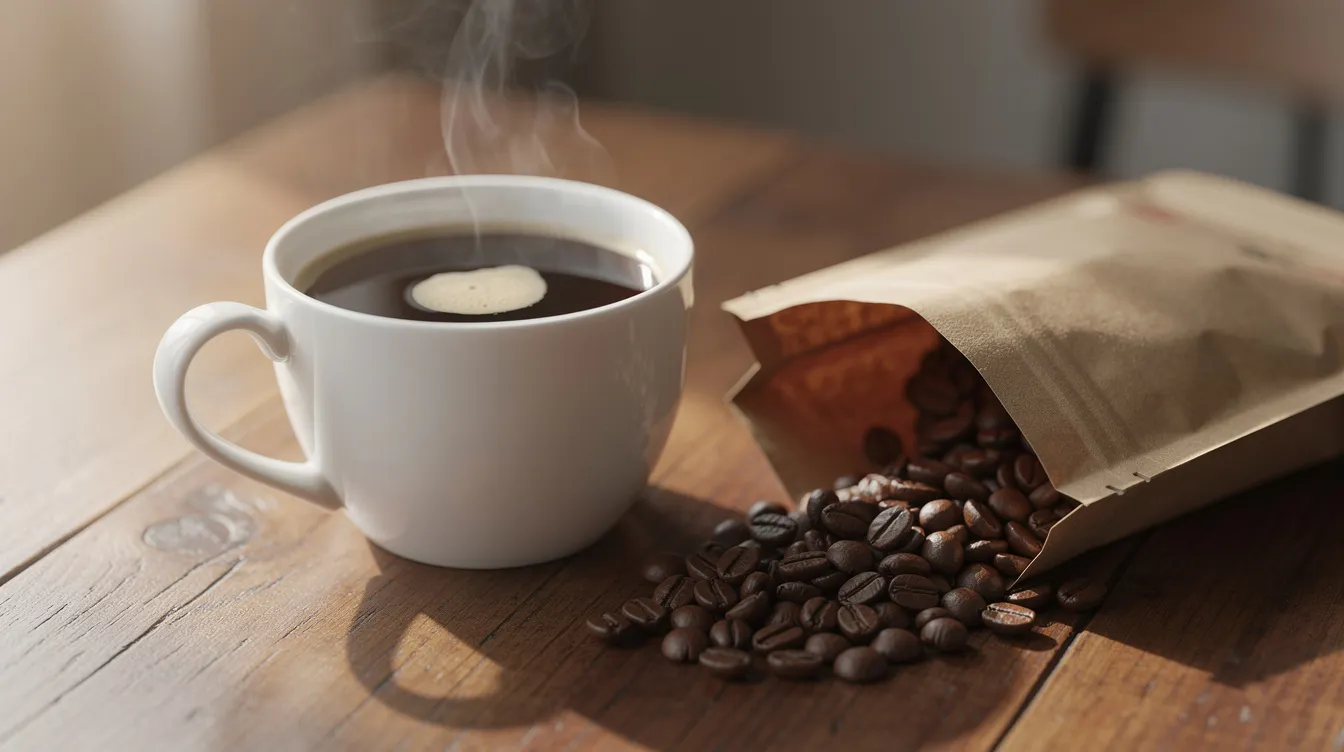
Coffee Culture, History, and Your Coffee Journey
Coffee originated in the highlands of Ethiopia, where legend holds that Kaldi discovered coffee in Ethiopia around the 9th century after noticing his goats became energized from eating the cherries. Coffee was being cultivated in Arabia by the 15th century, and the first coffee house opened in Constantinople in 1555, establishing the model for communal drinking coffee culture.
Coffee reached Europe in the 17th century and became a social beverage. Pope Clement VIII approved coffee as a Christian beverage in 1600, clearing the way for widespread European adoption. The first coffeehouse in England opened in 1650 near Oxford, and by 1668, coffee became New York City’s favorite breakfast beverage. On the production side, Brazil became the largest coffee producer by 1852 and remains the world’s coffee production leader today.
The “waves” of coffee offer a useful lens:
- First wave: Mass coffee consumption, commodity-grade coffee, canned ground coffee in every kitchen.
- Second wave: Café culture rises (think Starbucks-era), espresso drinks enter the mainstream, coffee culture becomes aspirational.
- Third wave: Specialty focus – lighter roasts, origin transparency, tasting notes, direct trade. Many coffee lovers today operate in this space.
- Emerging fourth wave: Sustainability, climate resilience, experimental processing, fermentation science, and traceability push coffee forward.
Coffee’s role in daily rituals spans everything from U.S. breakfast drip coffee to traditional Ethiopian ceremonies. Your own coffee journey is ongoing – starting with basic brewing and gradually exploring origins, methods, and the social dimensions of great coffee. Each new bag, each new brewing style, is another step.
Featured Learn and Certification Guides
This section highlights the key educational hubs within Capitol City Coffee, each designed to deepen your coffee knowledge on a specific topic:
- Coffee 101 Guide – Covers fundamentals like bean types, roast levels, and basic brewing methods in narrative detail. A natural starting point for anyone new to learning about coffee.
- Certifications Guide – Breaks down Fair Trade, organic, Rainforest Alliance, and newer sustainability labels, explaining how each is audited and what it means for farmers and buyers.
- How to Read a Coffee Bag – Teaches you to decode origin, process, roast level, tasting notes, and packaging dates so you can shop with confidence.
All featured guides are based on researched editorial analysis, with sources drawn from reputable coffee organizations like the Specialty Coffee Association and published expert references.
Featured Origins and Brewing Links
This section is a curated path through Capitol City Coffee’s origin and brewing content, organized by interest:
- Origins Hub – Country-by-country breakdowns of flavor profiles, harvest calendars, and regional context. Whether you want to understand why coffees from Central America taste different from those grown in East Africa or what makes Indonesian earthy coffees distinctive, start here.
- Brewing Hub – Compares drip coffee, pour over, French press, espresso machines, cold brew, and more with step-by-step guides. Each guide covers grind, ratio, temperature, and common mistakes.
- “World Tour by Mug” – A thematic path: sample coffees from different continents over several weeks, one origin at a time, to build a mental map of the coffee world.
- “Method Week” – Pick one brewing method and use it exclusively for a week. Repetition builds mastery and helps you hear what each adjustment does to your cup.
Bookmark these sections as reference points whenever you buy a new bag of coffee or piece of brewing gear.
How Capitol City Coffee Researches and Reviews Recommendations
Capitol City Coffee operates as an independent coffee editorial and affiliate publication. We are not a roaster, café, or equipment maker. Our editorial decisions are made without influence from retailers or brands.
Unless specific testing notes are supplied, all coffee and gear coverage is labeled as researched editorial analysis. We rely on verified product facts, reputable expert sources, and clearly attributed third-party consensus rather than claiming hands-on tasting or long-term use when we have not conducted it.
Core evaluation criteria for coffee recommendations:
- Flavor profile and roast level clarity
- Brew-method fit (drip vs espresso vs cold brew)
- Freshness indicators (roast date, packaging)
- Sourcing transparency and certifications
- Value for money and U.S. availability
- Meaningful drawbacks disclosed honestly
Criteria for gear discussions:
- Verified performance specifications
- Workflow, usability, and cleaning requirements
- Durability indicators and known limitations
- Value relative to competing options at similar price points
Commissions from retailers never determine rankings or inclusion. Any affiliate relationships are disclosed clearly near relevant recommendations.
Common Coffee Myths and Misconceptions
There is a surprising amount of folklore and conflicting advice around coffee. Here are some of the most common myths, corrected:
- “Dark roast has much more caffeine.” As noted above, studies show caffeine differences between roast levels are minimal. Brew recipe, serving size, and bean species (arabica vs robusta) matter far more.
- “Espresso always has more caffeine than drip.” Per ounce, espresso is more concentrated. But per serving, a standard 8-ounce cup of drip coffee often delivers more total caffeine than a single espresso shot.
- “Expensive gear automatically makes better coffee.” Freshness of coffee beans, roast date, and consistent brewing process have a greater impact on cup quality than the price of your equipment. A modest drip maker with fresh beans outperforms a $2,000 machine loaded with stale coffee grounds.
- “You must use bottled water.” Filtered tap water works well for most U.S. households. What matters is avoiding chlorine, extreme hardness, or extreme softness – not the price of the water.
- “Decaf is completely caffeine-free.” Decaf retains small amounts of caffeine (typically 1–3 mg per cup vs 60–100+ mg for regular coffee). Modern decaffeination methods (solvent, water, CO₂) aim to preserve flavor while removing most caffeine.
- “High doses of caffeine are harmless.” High doses of caffeine can lead to anxiety and jitters. The FDA recommends limiting caffeine intake to 400 mg per day for most adults. Coffee can also interfere with deep sleep if consumed late in the day.
Treat rigid brewing “rules” as starting points. As your coffee knowledge grows, trust your own palate – it is the most important tool you have.
FAQs About Learning Coffee
These FAQs address practical questions not fully covered in the main sections above, tailored to new U.S. coffee learners.
What is the simplest way to start improving my home coffee tomorrow?
Two low-cost changes make the biggest difference: buy freshly roasted whole bean coffee (check for a roast date within the past two to three weeks), and grind it just before brewing. If you can, measure your coffee and water with a kitchen scale – even an inexpensive one. Stick to one brewing method (drip coffee or French press) for a full week, adjusting grind size and ratio slightly each day to dial in flavor. You do not need new equipment to produce a perfect cup; you need fresh beans and consistency.
Do I really need a grinder, or is pre-ground coffee okay?
Pre-ground coffee is perfectly workable, especially for convenience. But flavor fades more quickly because increased surface area accelerates staling and loss of volatile aromatics. If you want to taste the difference between origins, processes, and roast levels more clearly, a basic burr grinder is one of the best investments you can make. It matters most for manual brewing methods like pour over and French press, where grind consistency directly affects extraction.
How long do roasted coffee beans stay fresh?
Most roasted beans taste best within two to four weeks of roasting when stored in a sealed, opaque container away from heat, light, and moisture. Dark roast coffees may show staling differently than lighter roasts – they tend to lose nuance faster because the roasting process has already broken down more of the bean’s cellular structure. Grinding only what you need for each brew slows perceived flavor loss significantly. Avoid storing coffee in the freezer for daily use; the freeze-thaw cycle introduces moisture.
Is coffee healthy or unhealthy to drink every day?
Moderate coffee intake of about 3 to 4 cups daily is linked to lower disease risks, according to current mainstream medical research. Coffee is a leading source of antioxidants in the Western diet. Regular coffee consumption can lead to physical dependence and withdrawal symptoms (headaches, fatigue), but these are generally mild. Anyone with specific conditions – pregnancy, heart concerns, or caffeine sensitivity – should consult a healthcare professional rather than relying on a coffee blog for medical advice. The FDA recommends that most adults stay at or below 400 mg of caffeine per day.
What is the difference between coffee brewing methods and espresso?
Most home methods like drip coffee, French press, and pour over use gravity or immersion with low or no pressure, producing larger cups with different body and clarity. Espresso uses high pressure (about 9 bars), very finely ground coffee, and a short brew time (25–30 seconds) to create a concentrated shot with intense flavor and crema. Espresso serves as the base for milk drinks – lattes, cappuccinos, flat whites – where steamed milk transforms the texture and taste. You do not need espresso to produce a great coffee experience at home; it is one path among many.
Your next step: pick one section above that caught your interest, grab a bag of freshly roasted beans, and start brewing with intention. Bookmark this page as your home base and return to it whenever a new bag of coffee or a new question sends you looking for answers. The best way to learn about coffee is to drink it thoughtfully – and keep exploring.