

Home espresso machines worth buying
- Beginner espresso Bambino Plus
- Built-in grinder Barista Impress
- One-touch drinks Magnifica XS
- Espresso + drip Ninja Luxe Pro
Best compact starter
Breville Bambino Plus
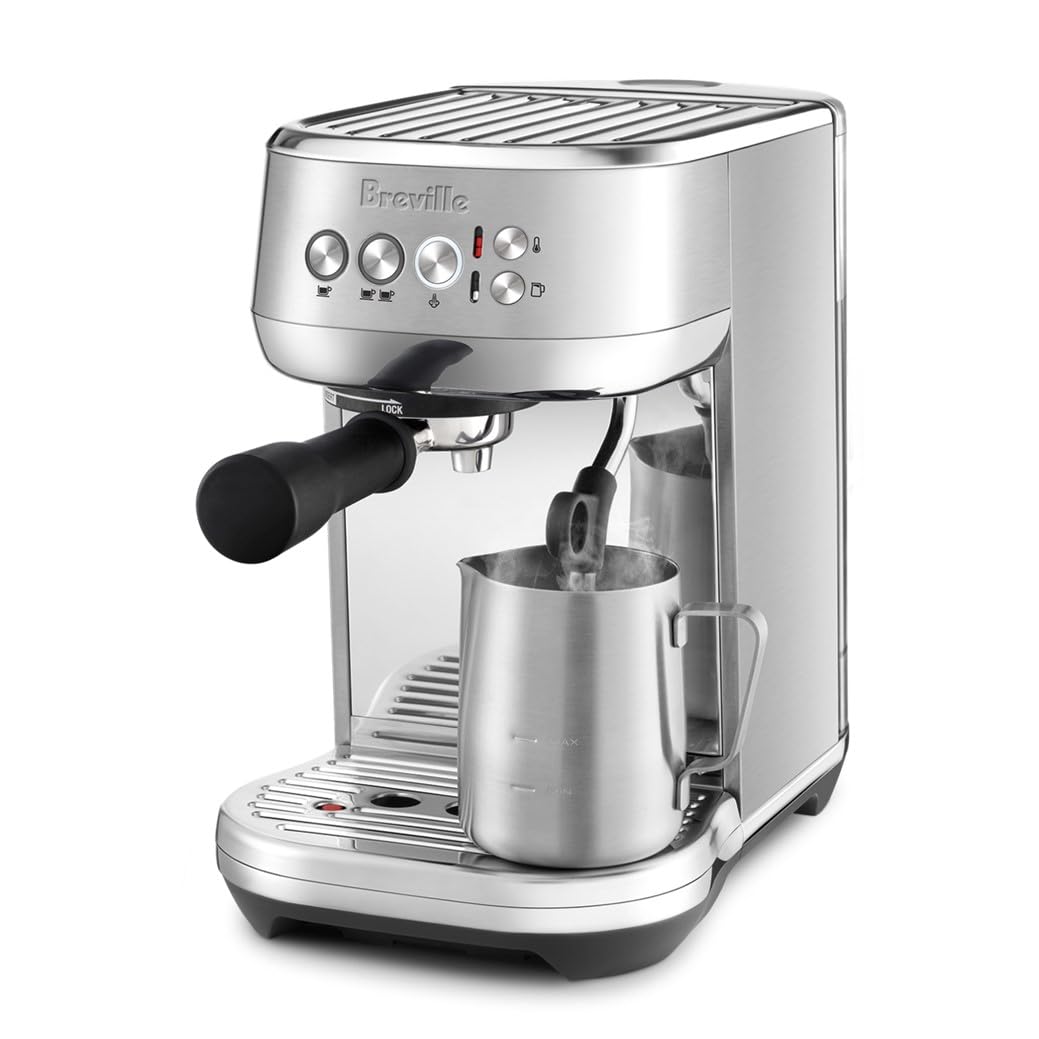
Fast heat, PID-style control, automatic steam wand. Buy a burr grinder with it.
Check Bambino Plus on AmazonGrinder in the box
Breville Barista Express Impress
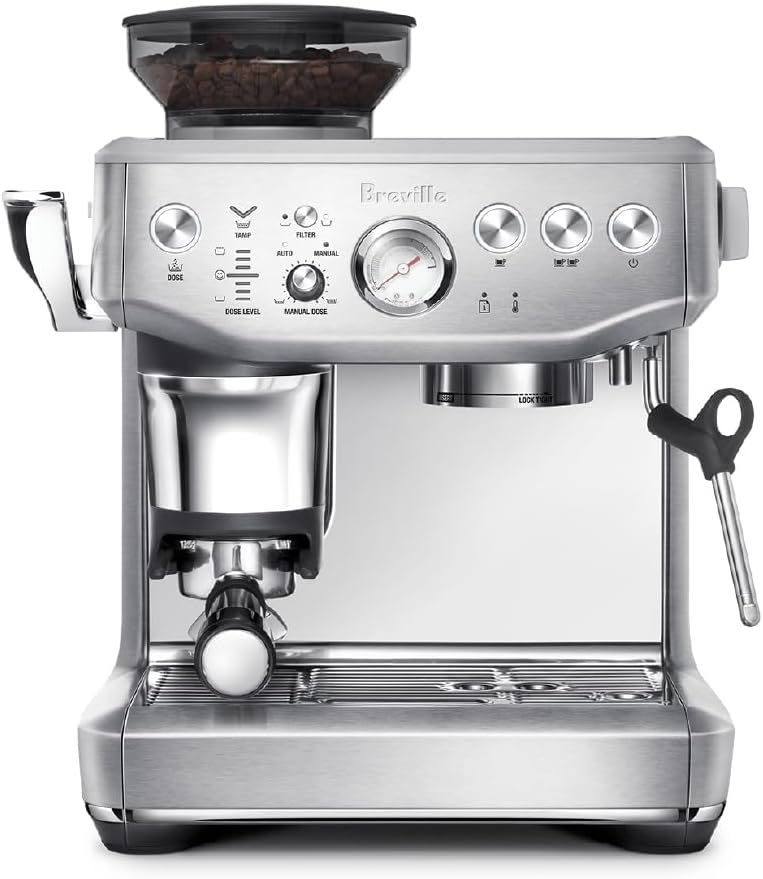
Assisted tamping and a built-in grinder if you want one appliance, not two.
Check Barista Impress on AmazonSuper-automatic
DeLonghi Magnifica XS
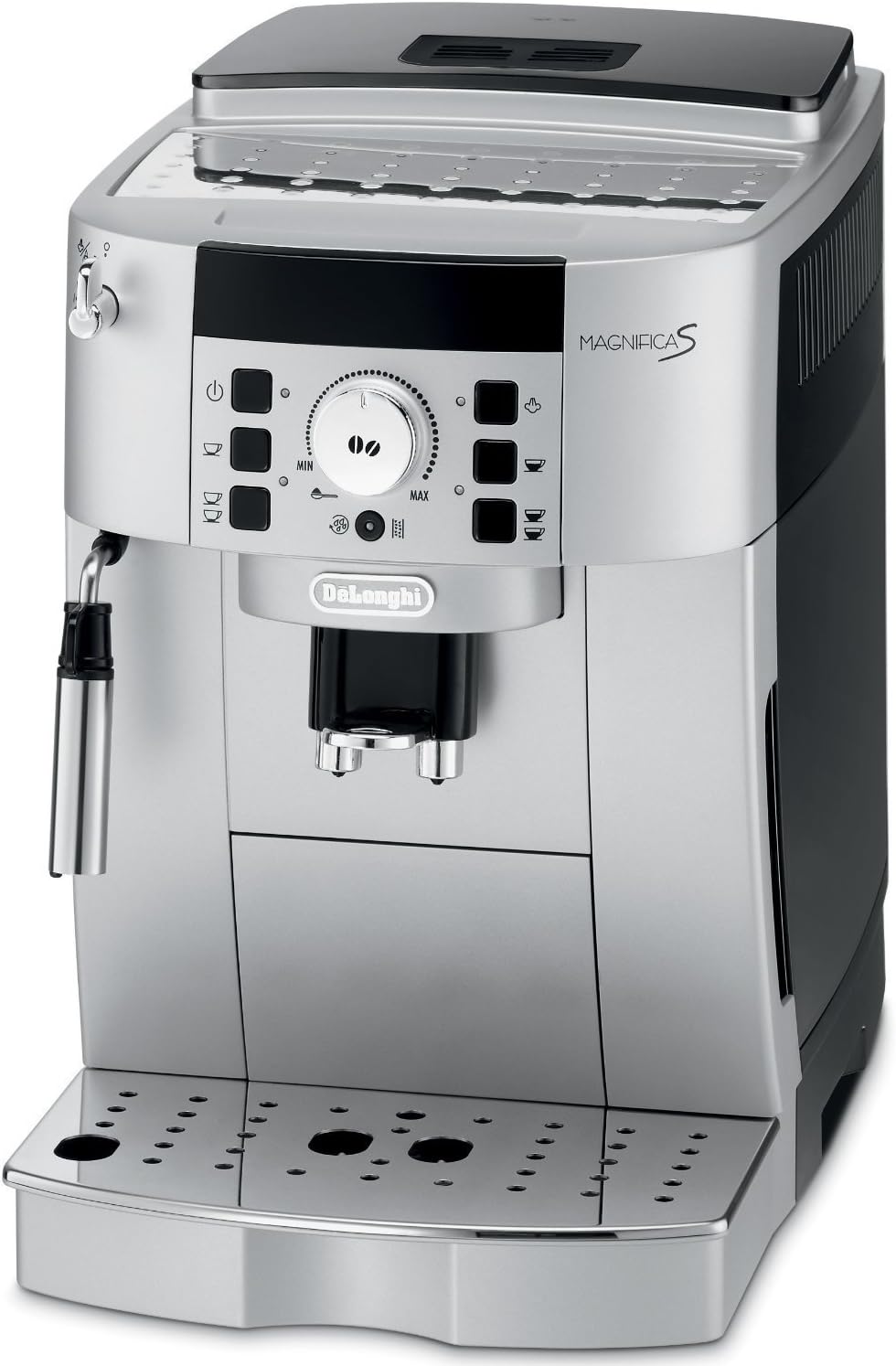
Bean-to-cup drinks with less technique. Trade-off is less shot control than a Bambino.
Check Magnifica XS on AmazonEspresso plus drip
Ninja Luxe Café Pro
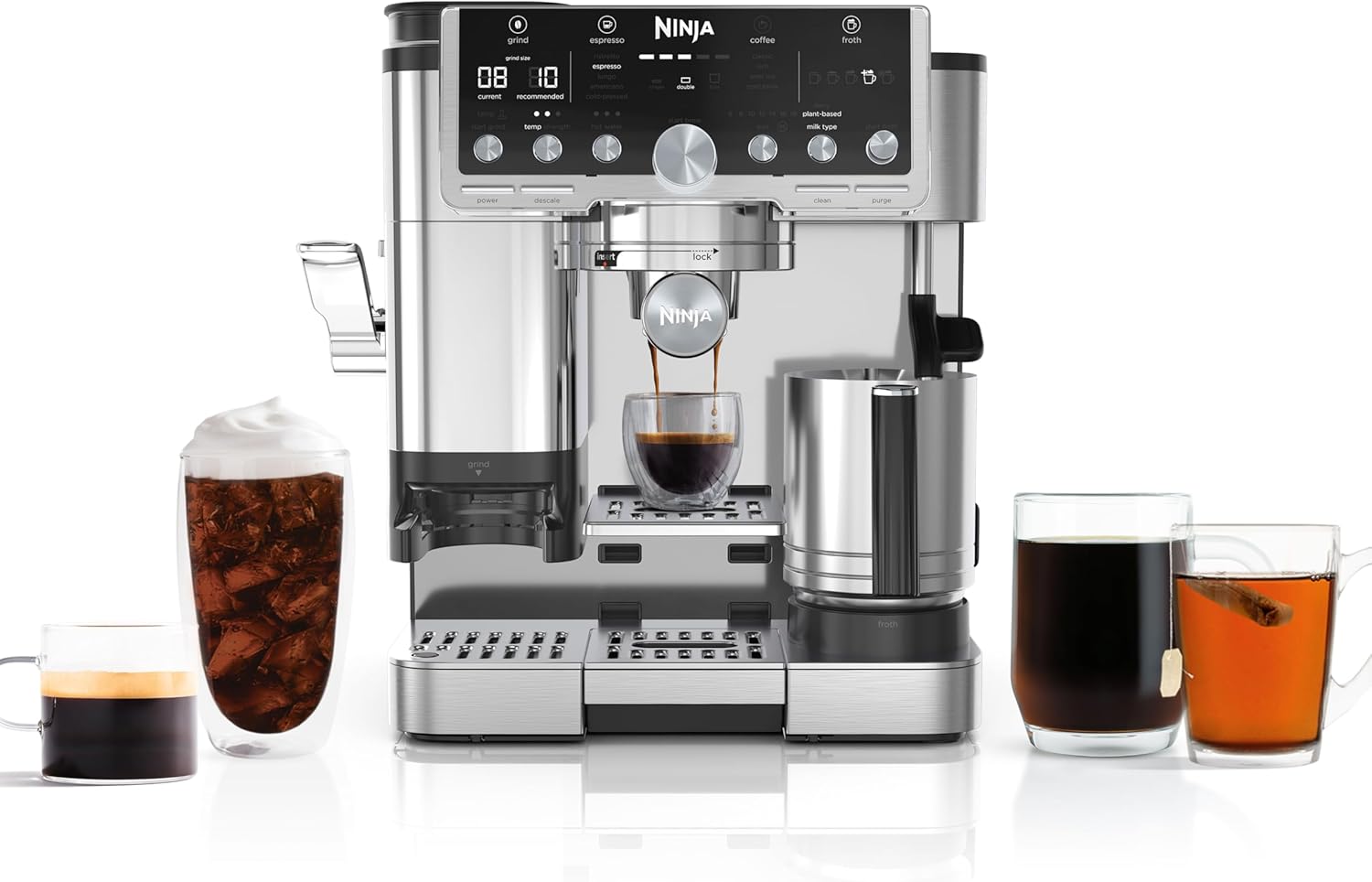
Espresso, drip, and cold brew with a built-in grinder if the household drinks all three.
Check Ninja Luxe Pro on AmazonHow Capitol City Coffee Rates Coffee and Coffee Machines
Every recommendation uses the same 100-point scale. Most machine picks here are research-rated. Hands-on tested is used only when our team used the machine and we show the date.
- Machines: brewing 25, build 20, cleaning 15, kitchen fit 10, features 10, value 10, warranty 10.
- Grades: 90+ A, 80s B, 70s C, below 70 not featured. Brands cannot pay for a pick.
Some links on this page are affiliate links. As an Amazon Associate, Capitol City Coffee earns from qualifying purchases, at no extra cost to you.
Semi-auto vs super-auto, workflow, and this hub’s FAQs continue below.
Key Takeaways
This is Capitol City Coffee’s editorial hub for espresso machine reviews, built to help U.S. readers compare home espresso machines across the criteria that actually matter: shot quality, milk steaming, workflow, and overall value. We cover semi-automatic, automatic espresso machines, and super-automatic coffee machines at every price point, from affordable entry-level picks to serious prosumer espresso machine setups.
Our recommendations are based on researched editorial analysis, not undisclosed hands-on testing. We draw from verified manufacturer specs and broad expert and owner consensus to evaluate each machine fairly. Every individual review on this hub explains who the machine suits, key trade-offs, and how it pairs with a coffee grinder for the best results when pulling shots.
If you already know what you are looking for, jump straight to “Browse Espresso Machine Reviews” or “Featured Recommendations” to quickly find the best home espresso machine for your needs.
Category Overview: What This Espresso Machine Reviews Hub Does (and Doesn’t) Do
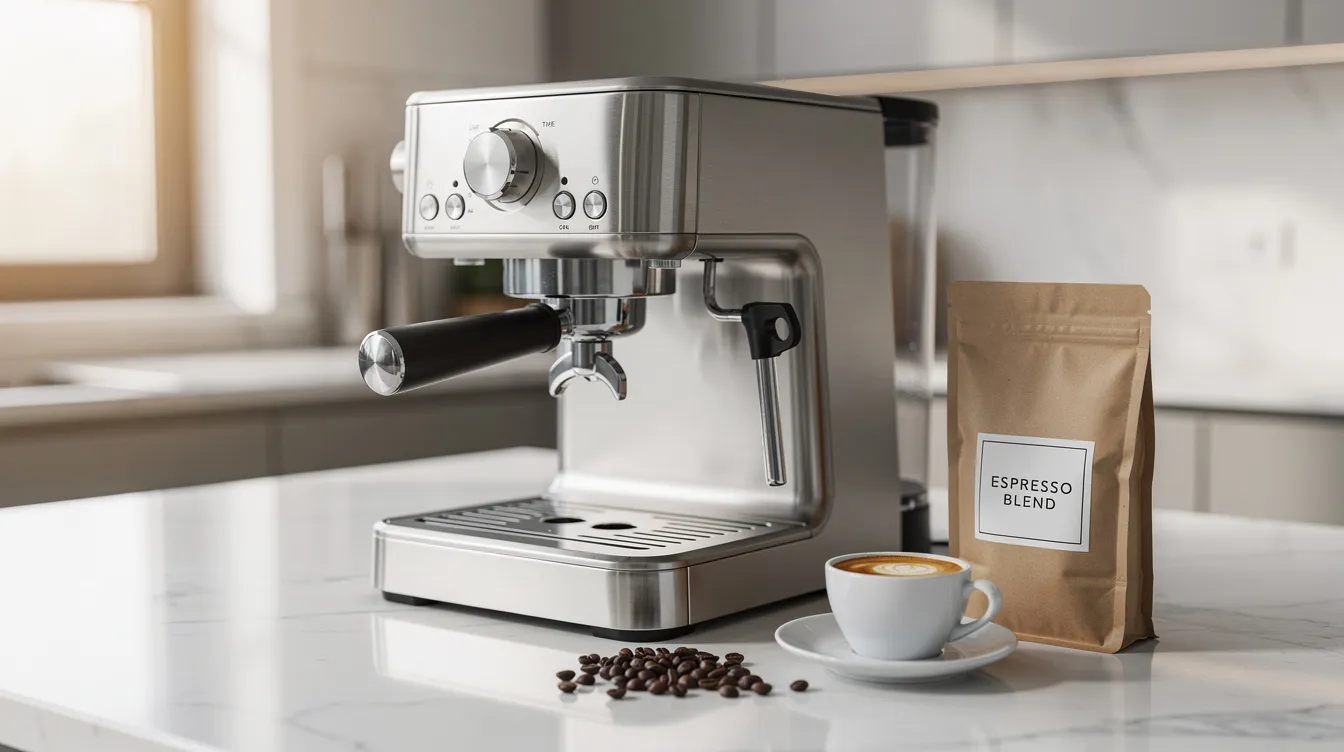
This page is Capitol City Coffee’s central hub for espresso machine reviews. It is not a single “one best espresso machine” article. Instead, it organizes our individual, model-specific reviews into a browsable resource so you can narrow your search before committing to a purchase.
We focus on at-home machines sold in the U.S. market. That includes semi-automatic machines, automatic espresso machines, super-automatic bean-to-cup coffee machines, and a handful of manual espresso machine options. We do not cover commercial espresso machines designed for coffee shop volume, although some of the prosumer models we review share components and build philosophies with commercial machines.
The intent here is commercial investigation. You are comparing options, weighing trade-offs, and deciding which machines deserve a deeper look. Each machine we review has its own dedicated page under our espresso machine review index, where you will find deeper specs, day-to-day workflow notes, pros, cons, and grinder pairing advice. This hub summarizes and organizes that work so you can find what matters to you faster.
We do not sell espresso machines or coffee equipment. Capitol City Coffee is an independent coffee editorial and affiliate publication. We evaluate machines based on features, verified performance claims, and user experience reports, not on which products pay us the most.
Affiliate Disclosure and Editorial Independence
Affiliate disclosure: Capitol City Coffee may earn a commission when you purchase through outbound links on this page. These links do not change the price you pay. Commissions do not determine our rankings or which espresso machines we choose to include. We prioritize accuracy, clarity, and reader value over payout.
When we have not run our own tests on a machine, we label recommendations as researched editorial analysis based on verifiable product data and widely corroborated expert and owner feedback. If future in-house testing is performed, those articles will be updated with clearly labeled testing notes, dates, and methodology. Our goal is to be the resource we would want to read before spending several hundred dollars on coffee equipment.
Key Concepts: How We Think About “Best” Espresso Machines
There is no single best espresso machine. “Best” depends on your budget, skill level, available counter space, and how much automation you actually want in your morning routine. A machine that delights one household may frustrate another.
When we evaluate an espresso maker, we weigh several core pillars:
- Shot quality – how well the machine extracts balanced, repeatable espresso with proper crema and body.
- Temperature stability – whether the boiler and group head hold a consistent brew temperature across multiple shots.
- Milk steaming performance – steam wand power, microfoam texture, and how well the machine handles dairy milk and alternatives like oat milk.
- Workflow and learning curve – how many steps stand between you and a finished drink, and how intuitive those steps feel for beginners versus experienced espresso drinkers.
- Grind pairing needs – whether the machine works best with an integrated grinder or a separate unit, and how sensitive it is to grind settings.
- Maintenance and reliability – cleaning frequency, common failure points, parts availability, and warranty terms.
- Footprint – physical dimensions and how comfortably the machine fits on a real kitchen counter.
- Value – what you get for the money, judged against machines at similar and adjacent price points.
A few quick definitions help frame the rest of this hub. A semi-automatic espresso machine uses a pump to deliver consistent pressure, but the user controls grinding, dosing, tamping, and shot timing. An automatic espresso machine adds volumetric shot control, stopping the pour at a preset volume while still leaving grind and milk work to you. A super-automatic espresso machine handles everything from bean to cup, grinding, dosing, tamping, brewing, and often milk frothing, at the press of a button. Each type sits on a spectrum from maximum control to maximum convenience, and the right choice depends on how involved you want to be in the brewing process.
One principle we return to in every review: the coffee grinder matters as much as the coffee maker. Even the best espresso machines will underperform with an inconsistent or too-coarse grind. If you are shopping for a home espresso machine, allocate real budget toward your grinder. Our grinder recommendations cover this in detail for readers who want deeper guidance.
Understanding Shot Quality and Temperature Stability
Shot quality is what separates a genuinely good espresso from a bitter, thin disappointment. We judge it by balance between sweetness, acidity, and bitterness, by body and mouthfeel, by crema consistency, and by repeatability: can the machine pull a similar shot five times in a row?
The technical foundation for a great shot rests on brew temperature and pressure. Water temperature for brewing espresso should be between 195°F and 205°F. Stray too far below that range and you get sour, under-extracted coffee; too far above and bitterness takes over. Temperature stability is essential for good espresso quality, which is why boiler design matters so much. Espresso also requires about 9 bars of pressure for extraction. Most espresso machines advertise 15-bar pump heads, but actual extraction pressure is regulated down to that 9-bar sweet spot so the pump can properly extract oils and dissolved solids from finely ground coffee.
PID controllers stabilize brewing temperature for repeatable shots by electronically regulating the boiler’s heating element. Machines without PID tend to show noticeable temperature drift, particularly during back-to-back shots or extended sessions. This matters most for lighter roasts, where narrow temperature windows separate bright acidity from grassy sourness.
Budget single boiler machines – entry-level Breville and Gaggia units, for example – heat a single water chamber for both brewing and steaming. They get the job done for casual use, but temperature wanders more under load. A prosumer espresso machine with a heat-exchanger or dual-boiler design holds temperature far more tightly. Dual boilers provide separate temperature controls for brewing and steaming, which is especially valuable for households making several milk drinks in a row.
Espresso machines typically use single or double-walled filter baskets. Double walled filter baskets are more forgiving for beginners because they add backpressure even with a less-than-perfect grind. Single-wall (unpressurized) baskets reward precise grinding and tamping but expose every inconsistency. Tamping coffee grounds evenly is crucial for balanced extraction, since uneven density creates channels that let water rush through without extracting flavor from the full puck.
A good espresso shot takes about 25 to 30 seconds to extract for a double shot. If you are consistently outside that window, the grind is usually the first variable to adjust. Our individual reviews call out if a machine tends to run hot, cool, or shows notable temperature drift during longer sessions, so you know what to expect before you buy.
Milk Steaming, Lattes, and Café-Style Drinks at Home
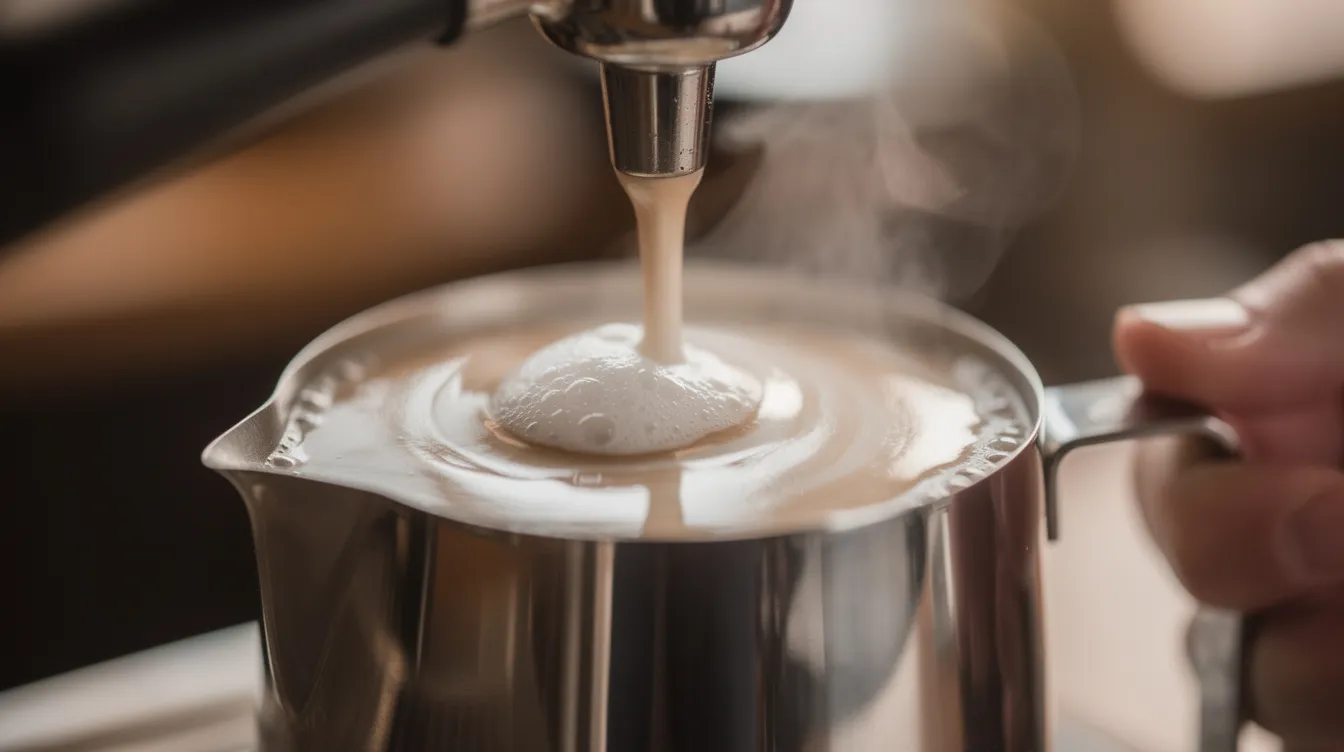
If your morning drink is a latte, cappuccino, or flat white, the steam wand on your espresso machine matters almost as much as shot quality. Steam wand quality is important for creating microfoam for milk drinks: that smooth, glossy, paint-like texture that blends into espresso rather than sitting on top as stiff, dry froth.
There is a meaningful difference between manual steam wands and automatic milk frothing systems. A manual steam wand gives you more control over milk foam density and texture, which is what you need if you want to pour latte art. The trade-off is a steeper learning curve. You need to learn the right pitcher angle, when to stop stretching, and how to judge temperature by touch or a thermometer. An automatic milk frother or pressurized milk spout produces consistent frothy milk with minimal technique, which is easier for beginners but less flexible when it comes to dialing in specific textures.
Consider the boiler type when evaluating steaming milk performance. The boiler type affects whether you can brew and steam simultaneously. A single boiler machine requires waiting between brewing and steaming, because the same water chamber has to reheat to a higher temperature for steam. A dual-boiler or heat-exchanger machine lets you steam milk simultaneously with shot extraction, which saves time and keeps your workflow tight. Heat exchangers allow for both brewing and steaming at the same time by running a separate water path through the steam boiler.
Breville Barista models with automatic milk programs, for instance, streamline steaming into a one-touch operation. Smaller single-boiler units need a pause between pulling the espresso shot and steaming, which cools the shot while you wait.
In each machine review, we comment on steam power, ease of creating fine-textured microfoam, and performance with dairy milk versus common alternatives like oat milk. Plant-based milks behave differently under steam because they contain less protein, and not every machine produces stable milk foam with them. If you mostly drink straight espresso or Americanos, you may not need a large steam boiler or an automatic frother, which changes how we weigh value in that machine’s review. A stainless steel milk pitcher in the right size for your machine’s wand height makes a noticeable difference in results, and we note pitcher-fit details where relevant.
Workflow, Learning Curve, and Daily Use
“Workflow” in this context means the total experience from turning the machine on to holding a finished drink. How long is the warm-up? How many steps per shot? How intuitive are the controls? These questions matter because a machine you find annoying to use on a Tuesday morning is a machine that ends up collecting dust.
Warm-up time significantly affects daily workflow with espresso machines. Some machines using ThermoJet or instant-heat technology warm up in seconds, while traditional boiler designs may need 15 to 30 minutes to fully stabilize. A more guided automatic espresso machine with pre-programmed buttons and auto-dosing keeps the morning short: press a button, the machine grinds the espresso beans, tamps, and brews. A semi-automatic espresso machine expects you to grind, dose, and tamp manually, then start and stop the shot yourself.
Beginners may appreciate machines like Breville Barista models with a built in grinder and shot-timing guidance. The all-in-one workflow reduces gear and learning overhead. More advanced espresso drinkers might prefer the control of a manual machine or a semi-automatic paired with a standalone coffee grinder, where every variable is theirs to adjust.
User preferences impact the choice between espresso machine types. Consider your skill level when choosing an espresso machine. If you have never made espresso at home, a forgiving machine with three temperature settings and pre-programmed shot volumes removes a lot of guesswork. If you enjoy the ritual and want to experiment with different coffee beans and roast levels, a semi-automatic with a naked portafilter and a pressure gauge gives you feedback to learn from.
Each review on our espresso machine review hub includes a “learning curve” or “who it suits” section that describes what the first week of ownership might actually feel like. We also comment on noise (built-in grinders tend to be louder), warm-up time, and small workflow details like shot timers, auto-purge on the steam wand, hot water spouts for Americanos, and how easy it is to switch between espresso drinks and drip-style long cups.
Grinder Pairing and Coffee Freshness
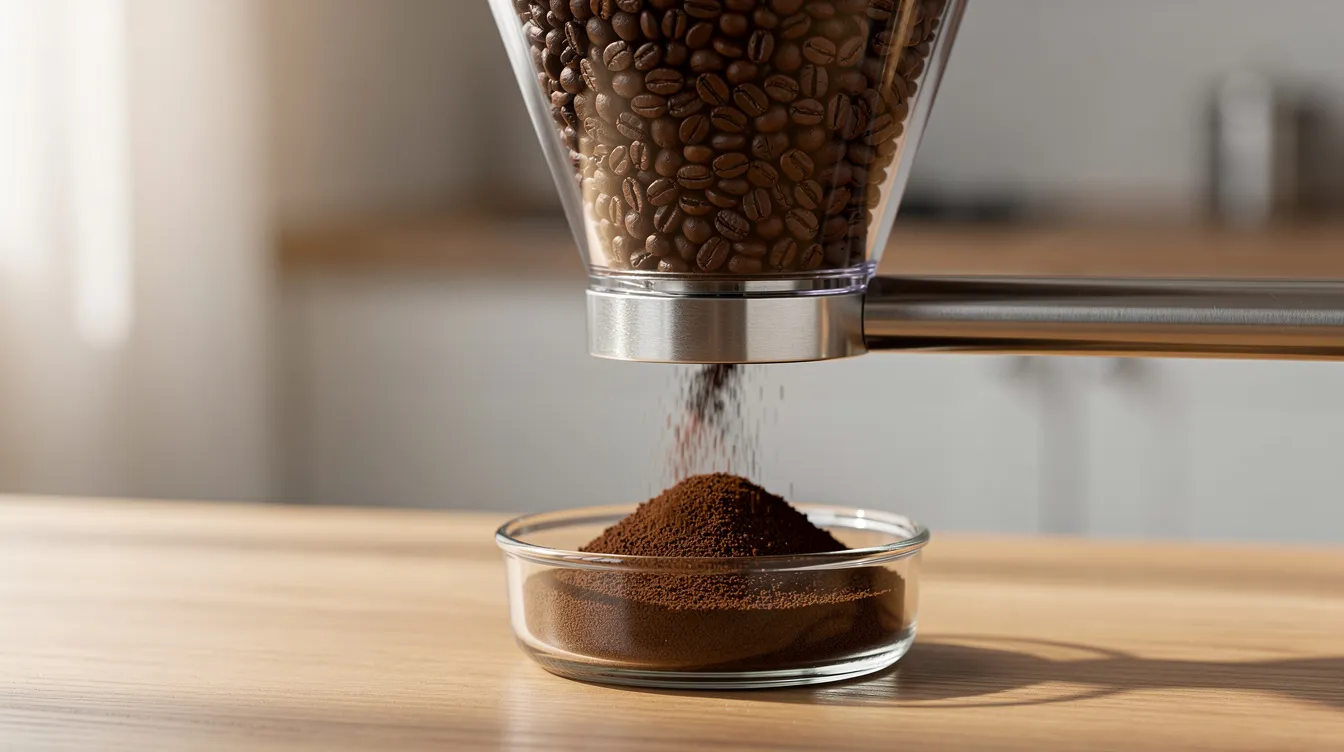
A consistent burr coffee grinder is mandatory for true espresso. Blade grinders and pre-ground coffee are limiting factors that no amount of machine quality can overcome. Grind consistency is crucial for achieving proper extraction in espresso, because espresso brewing amplifies every particle-size irregularity into channeling, sourness, or bitterness.
Built-in grinders are convenient but may limit the precision and upgrade potential of your setup. Machines like the Breville Barista Express come with a powerful built-in grinder that handles daily use well and keeps the footprint compact. The Breville Barista Pro features 30 grind settings for customization, giving users finer control over particle size. But integrated grinders generally use smaller burrs and offer fewer incremental adjustments than a dedicated standalone grinder. If you eventually want to upgrade your grind quality, a separate unit gives you that flexibility without replacing the entire espresso maker.
Very fine, adjustable grind steps are needed to dial in different beans and roast levels. A half-step change on the grinder can shift your double shot extraction time by several seconds, which in turn changes the entire flavor profile. This is why how much coffee you dose and how fine you grind it are the first variables to check when a shot tastes off.
If you are choosing a best home espresso machine under a fixed budget, allocate a meaningful portion, at least a third, to the grinder. A $500 semi-automatic paired with a $200 burr grinder will generally produce better espresso than an $700 machine fed with inconsistent ground coffee from a blade grinder. Our grinder recommendations break this down further for readers ready to shop.
Each individual review mentions recommended grinder pairings or grind ranges, and notes whether the included integrated grinder (on machines that have one) is a limiting factor for someone chasing exceptional espresso from specialty coffee beans.
Maintenance, Reliability, and Long-Term Ownership
Most espresso machines require regular cleaning and maintenance to keep performing well and to protect your investment. Even the best espresso machines need descaling, backflushing (where the group head design supports it), and cleaning of the steam wand and drip tray. Neglecting these tasks shortens machine life and degrades shot quality.
Here is a practical maintenance baseline:
Task | Frequency | Why It Matters |
|---|---|---|
Clean the steam wand | After each use | Prevents milk residue buildup and bacterial growth |
Empty and wipe the drip tray | Daily | Avoids overflow and mold |
Flush the brew group | Weekly | Keeps the group head clean and functional |
Use cleaning tablets | Every 1–2 weeks | Removes coffee oil deposits from internal pathways |
Remove and rinse the water tank | Weekly | Prevents contamination and stale-water taste |
Descale the machine | Every 2–3 months | Prevents mineral buildup that damages boilers and lines |
Descale espresso machines every few months to prevent buildup, especially in hard-water areas. Using filtered water or a machine with a built-in water filter reduces scale formation and can meaningfully extend the life of boilers and pumps.
Ease of cleaning is a crucial factor for user satisfaction. Super-automatic machines often include automatic cleaning cycles and removable brew units that simplify daily maintenance. Semi-automatic machines require more manual effort (backflushing with a blind basket, for example) but have fewer internal moving parts that can fail silently.
Build materials matter for longevity. Stainless steel and brass components retain heat better and resist corrosion. Plastic internal parts, common in lower-cost machines, wear faster. Long-term owner experiences with maintenance can highlight scaling issues and recurring failure points. According to Repair Monitor data from a 2025 EU preparatory study, coffee machines have approximately a 60% repair success rate, with leaks, pump failures, and parts-availability problems among the most common issues. That statistic underscores why warranty length and manufacturer service support belong on your checklist alongside features and flavor.
Our reviews call out patterns from large numbers of owner reports – recurring pump failures, grinder clogs, sensor issues – and how responsive manufacturer warranties tend to be. We encourage readers to weigh maintenance load and part availability as seriously as up-front features, especially for machines purchased in the $800 to $2,000 range where replacement costs are significant.
Footprint, Counter Space, and Kitchen Integration
Many of the best espresso machines are taller and deeper than a standard drip coffee maker. Before you order, measure the space between your counter and upper cabinets, and check how far back the machine can sit against your backsplash.
Super-automatic coffee machines with bean hoppers and milk carafes typically occupy more counter space than compact single-boiler semi-automatic machines. A super-automatic with a removable water tank at the rear may need to be pulled forward for refills, which means you need clearance behind and above.
Front-fill versus rear-load water tank access is worth checking. If your machine sits under a cabinet, a rear-loading tank forces you to slide the machine out every time you refill. Side-facing steam wands can bump against walls on narrow counters. And the lid on a built in grinder hopper needs overhead clearance to open fully.
Portafilter size influences the availability of aftermarket upgrades like precision baskets and bottomless portafilters. Commercial portafilters typically measure 58mm in diameter, which is the standard most third-party accessories target. Some home machines use 54mm or even 51mm portafilters, which limits upgrade options.
Each detailed review includes height, width, depth, and basic water-tank and clearance notes to minimize surprises after delivery. Readers with smaller apartments or limited counter space might prioritize compact models like the Breville Bambino Plus or certain manual lever machines that trade footprint for hands-on involvement.
Browse Espresso Machine Reviews by Type
This section groups our espresso machine reviews by broad machine type so you can start with the category that fits your preferences, then drill into specific models.
Semi-Automatic Machines
Semi-automatic machines are the backbone of home espresso for a reason. They use pumps for consistent pressure while leaving grind, dose, tamp, and shot timing in your hands. This is the category for readers who want to learn the craft, experiment with different coffee beans, and refine their technique over time. Semi-automatic machines allow for more user control and experimentation, which is why they are the most popular type among dedicated espresso drinkers. Models we cover in this category include the Breville Barista Express and Breville Bambino Plus, among others.
Automatic Espresso Machines with Built-In Grinder
Automatic machines take the semi-automatic formula and add volumetric shot control: the machine stops the pour at a preset volume so you do not have to time it manually. Many in this group also include a built in grinder, creating an all-in-one coffee maker that minimizes separate gear. The Breville Barista Touch, for example, adds a touchscreen interface and automatic milk programs to the Barista platform. These suit readers who want good coffee with fewer manual steps but still want some involvement in the process.
Super-Automatic Bean-to-Cup Machines
Super automatic espresso machines grind, dose, tamp, brew, and often froth milk at the push of a button. Fully automatic machines handle grinding and brewing automatically, making them ideal for busy mornings or multi-user households where not everyone wants to learn barista technique. The Bosch 800 Series VeroCafe can make over three dozen different drinks from a single interface. Super-automatic machines offer limited control over brewing parameters, though, and tend to produce espresso that is good but less nuanced than what a skilled user can coax from a semi-automatic. Maintenance is also more complex because of the additional internal moving parts.
Manual Lever Machines
A manual lever machine generates pressure through a lever or hand pump operated by the user. Unlike automatic or semi-automatic options, a manual espresso machine relies on a more hands-on, skill-dependent workflow, which means you control every variable: pre-infusion duration, pressure ramp, flow rate. Manual machines provide the most control over espresso extraction and can produce some of the finest shots imaginable – but they demand skill and patience. Manual espresso makers are best suited to the espresso purist who enjoys the ritual as much as the result. Temperature management can be more challenging in manual machines, since many lever designs rely on simpler heating systems without PID control.
Pod and Capsule Systems
Pod-based machines use pre-measured capsules and simplified brewing systems. They are the ultimate in convenience but rarely produce espresso that matches the depth and complexity of pump-driven machines using freshly ground coffee. We cover select pod systems where they offer genuine value, but our hub is weighted toward machines that work with whole espresso beans and a grinder.
Each subtype has its own trade-offs in flavor, control, and maintenance. Individual review pages break those trade-offs down model by model.
Browse Espresso Machine Reviews by Budget
Espresso machines typically range from $100 to over $3,000. Here is what to expect at each tier.
Under $400: Entry Level
Machines in this range get you into the world of brewing espresso, but expect compromises. Most are single boiler designs with basic steam wands, minimal temperature control, and no PID. An affordable espresso machine like the De’Longhi Stilosa (around $120) delivers real espresso at a remarkably low cost, but steam power is limited and shot consistency requires more effort. Many machines at this price are closer to “espresso-style” coffee makers and may lack the pressure stability of more serious models. An affordable machine at this level suits curious beginners who want to learn whether home espresso is for them before investing further.
$400–$800: Midrange
This is where quality espresso machines typically live. Expect better thermal stability, improved steam wand power, and often an integrated grinder. Quality espresso machines cost between $350 and $700, and this bracket includes some of the most popular semi-automatic machines on the market. Models like the Breville Barista Express (around $700) offer a built in grinder, manual steam wand, and enough control to produce delicious espresso shots once you dial in your grind. Entry-level super automatic machines also start appearing at the top of this range, trading control for convenience.
$800–$1,500: Prosumer
This is prosumer territory. Machines here feature heat-exchanger or dual-boiler systems, tight PID temperature control, larger portafilters (often 58mm), and components built for daily use over many years. Steam power increases substantially, letting you steam milk simultaneously with shot extraction. The Fellow Espresso Series 1 costs $1,500 and heats quickly, with a water reservoir size of 67.6 oz that supports moderate-volume use without constant refilling. This tier suits readers who are serious about great espresso and plan to use their machine for years.
$1,500 and Up: Premium
At this level, you are buying maximum performance for home use. Machines like the Lelit MaraX, priced at $1,699.95, feature a heat-exchanger design and a generous water reservoir size of 84 oz. Super automatic espresso machines can exceed $2,000 at the high end, offering app control, advanced brew profiling, and commercial-grade internals. Expensive espresso machines at this tier deliver exceptional espresso and long-term durability, but they demand a larger footprint, more maintenance knowledge, and a serious commitment to the hobby.
Individual review pages call out current street prices and typical discounts, and we periodically update recommendations as models change or new contenders appear.
Featured Recommendations: Editor-Curated Picks for Common Needs
These are curated picks drawn from our deeper reviews, organized by reader need rather than ranked as an absolute “best espresso machines” list. These are researched editorial picks based on specs and broad consensus, not lab tests. Click through to the full review before purchasing.
Best home espresso machine for beginners: The Breville Bambino Plus pairs a fast ThermoJet heater with an automatic steam wand, making it forgiving for newcomers. It does not include a grinder, so budget for a separate burr coffee grinder. Read our full Breville Bambino Plus review for complete specs and trade-offs.
Best with built-in grinder: The Breville Barista Express remains one of the most popular all-in-one options. Its integrated conical burr grinder, manual steam wand, and reasonable price make it the entry point for serious home espresso. See our full Breville Barista Express review for a detailed breakdown.
Best automatic espresso machine for convenience: Super automatic machines like the Bosch 800 Series VeroCafe suit households that want push-button espresso drinks and milk drinks with minimal involvement. It handles over three dozen different recipes from a single interface. Shot quality is solid if less customizable than manual or semi-automatic alternatives.
Best value prosumer pick: The Fellow Espresso Series 1 at $1,500 delivers fast heat-up, a 67.6 oz water reservoir, and clean industrial design aimed at experienced espresso drinkers who want precision without commercial-machine bulk.
Best multidrink versatility: The Ninja Luxe Café-style machine bridges espresso, drip coffee, and specialty drinks for households where not everyone wants the same thing every morning. See our in-depth Ninja Luxe Café review for full details.
Featured Review: Breville Barista Express (Research-Based Snapshot)
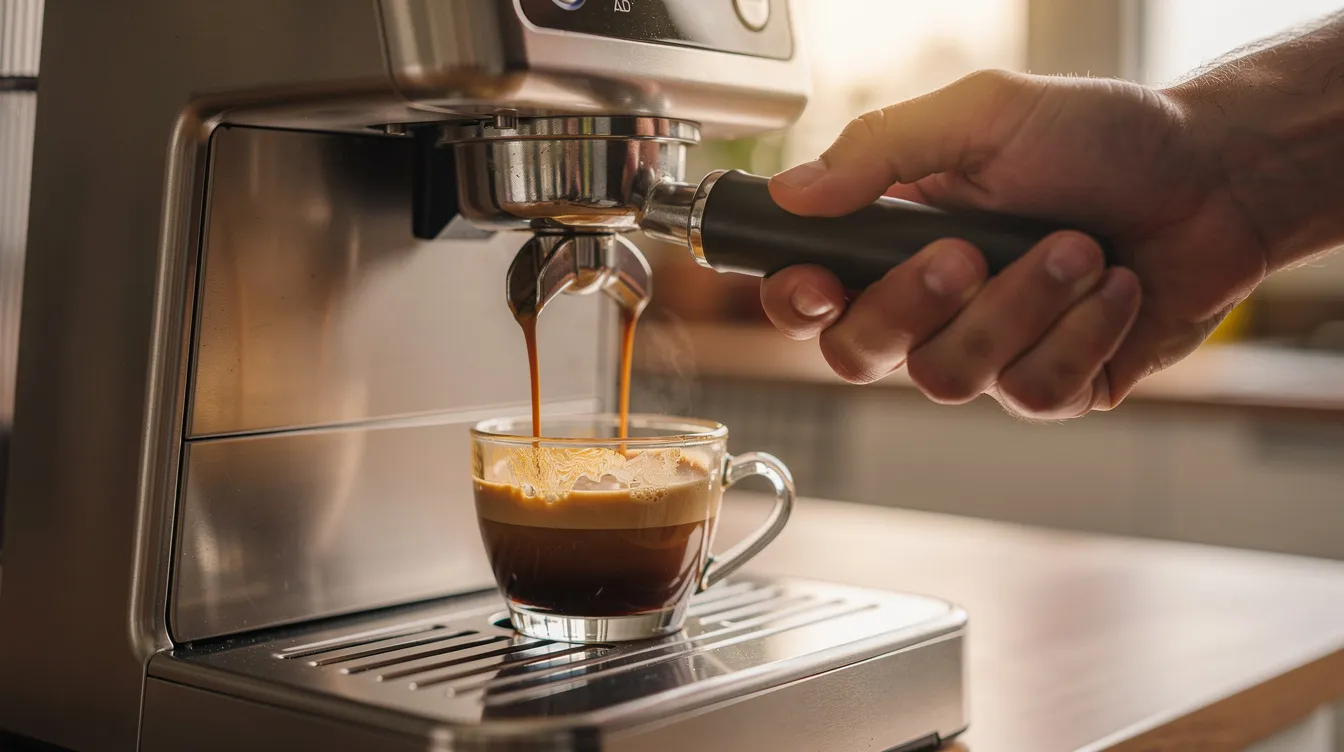
The Breville Barista Express is one of the most popular all-in-one home espresso machines in the U.S. market, combining a semi-automatic espresso machine with a built in grinder in a single footprint.
Key specs: The machine features a 15-bar Italian pump regulated to approximately 9 bars at extraction, an integrated conical burr coffee grinder with dose-control, a single boiler with Thermocoil heating, a 54mm portafilter, and a manual steam wand. It ships with both single and double-walled filter baskets. The Breville Barista Express has a powerful built-in grinder that handles a range of roast levels, although it is louder than most standalone grinders.
Shot quality: Based on broad expert and owner consensus, the Barista Express produces very good espresso when properly dialed in. The learning curve mostly involves finding the right grind settings and developing consistent tamping. With fresh coffee beans and a bit of patience, most owners report pulling delicious espresso shots within the first week or two. Shot quality benefits from the machine’s pre-infusion function, which soaks the puck at low pressure before ramping up to full extraction pressure.
Workflow pros and cons: The all-in-one footprint means fewer items on the counter. A hot water outlet handles Americanos and tea. Single-button shot programming simplifies daily use. On the downside, the grinder is noticeably noisy, the shared single boiler means you cannot steam milk simultaneously with brewing, and dosing can be messier than on newer Breville machines that have refined the grind-dose path. It is not the best pick for rapid back-to-back milk drinks, but for a household making one to three espresso drinks each morning, the workflow is manageable.
For a complete walkthrough of specs, pros, cons, and recommended grinder upgrades, read our full Breville Barista Express review.
Featured Review: Breville Bambino Plus (Compact Starter Pick)
The Breville Bambino Plus is a compact, beginner-friendly espresso machine that prioritizes quick heat-up and automatic milk steaming over extensive programmability. It is one of the smallest semi-automatic machines with genuinely capable espresso performance.
Performance traits: The Bambino Plus uses ThermoJet heating technology – the Breville Bambino Plus heats up in about three seconds, which is dramatically faster than traditional boilers that can take 15 to 30 minutes to stabilize. It features pre-infusion for gentler early extraction, PID-style temperature control for stability, and an automatic steam wand that can texture milk hands-free. The Breville Bambino Plus costs around $499.95 at retail.
Shot quality in context: For its price, the Bambino Plus is forgiving for new users. The pressurized (double walled) filter baskets included in the box compensate for less-than-perfect grinding, though switching to unpressurized baskets with a quality grinder unlocks better flavor. It has less headroom for advanced tweaking than bigger Breville Barista or dual-boiler machines, but that is exactly the trade-off that makes it approachable.
Who it suits best: Small kitchens, latte drinkers who want convenience, and buyers planning to pair it with a separate burr grinder. The compact footprint fits where other espresso machines simply cannot. Trade-offs include no built in grinder (you need a separate unit), a small drip tray that fills quickly, and single-boiler workflow constraints – single boilers require waiting between brewing and steaming.
Read our Breville Bambino Plus review for full specs and pros/cons.
Featured Review: Ninja Luxe Café-Style Machine (Multidrink Versatility)
The Ninja Luxe Café-style coffee machine is an automatic machine designed to bridge espresso, drip coffee, and sometimes cold brew in a single footprint. It belongs to a growing category of hybrid machines that appeal to households where not everyone wants the same style of drink.
Core capabilities: The Ninja Luxe Café produces espresso-style shots, carafe coffee, and specialty milk drinks with programmable strength levels. It supports both dairy and plant milks through its automatic milk frothing system, and some models in the Ninja Luxe line include cold brew or iced coffee programs.
Where it excels: Convenience, variety, and family use. If your household includes espresso drinkers, drip coffee loyalists, and someone who just wants a quick iced latte, this kind of machine reduces the need for a separate drip coffee maker and a dedicated espresso setup. It can handle multiple drink types reasonably well without cluttering the counter with separate appliances.
Where it compromises: Versus a dedicated semi-automatic espresso machine, the Ninja Luxe gives up some pressure precision and microfoam finesse. Serious espresso-focused users who want to prepare espresso at the highest level may still prefer a more specialized machine. But for the reader who values breadth over peak espresso performance, it is a compelling option.
Read our in-depth Ninja Luxe Café review for the full breakdown.
Automatic Espresso vs. Semi-Automatic: Which Path Is Right for You?
This is one of the most common decisions facing readers of our espresso machine reviews, and the answer depends entirely on what you value in your morning routine.
Automatic espresso machines, including super-automatic bean-to-cup models, handle grinding, dosing, tamping, and brewing at the push of a button. Many also include automatic milk frothing systems. They suit busy households, offices, and anyone who wants consistency with minimal skill. You trade some shot quality ceiling and milk steaming nuance for push-button simplicity. The internal complexity of super automatic machines means service and repair can be more involved, with more components that can fail and sometimes require factory parts.
Semi-automatic machines hand control back to you. You choose the grind, dose the portafilter, tamp, and decide when to start and stop the shot. This is the path for hobbyists, tinkerers, and flavor-focused drinkers who want to experiment with different coffee beans and roast profiles. The ceiling for shot quality is higher because you can adjust every variable, but the floor is lower too: bad technique produces bad espresso.
The trade-offs extend to milk steaming as well. A manual steam wand on a semi-automatic gives you complete control over microfoam texture, which is essential for latte art. An automatic milk frother on a super-automatic produces consistent results but limits how much you can customize foam density. Most other espresso machines with manual wands also let you froth milk for non-espresso drinks like hot chocolate.
For a more technical breakdown of boiler types, group head designs, and long-term upgrade paths, our espresso machine technical buyer’s guide goes deeper. If you are still undecided, reading reviews of both types on our hub side by side often clarifies which workflow you will actually enjoy at 6:30 AM.
Cold Brew, Iced Drinks, and Non-Espresso Options on Espresso Machines
Traditional espresso machines are optimized for hot, under-30-second extractions. But the way people drink coffee is shifting, and some newer machines acknowledge that not every cup needs to be a hot double shot.
If you prioritize iced lattes or iced Americanos, any espresso machine can produce concentrated shots over ice. Pull a standard espresso shot or double shot into a glass of ice, dilute with cold water or milk, and you have a solid iced drink. This is how most local coffee shop baristas make iced espresso drinks, and it works just as well at home.
Some hybrid coffee machines go further. Certain Ninja and De’Longhi models can brew both drip coffee and cold brew from the same unit, which we discuss in their individual reviews. A dedicated cold brew mode slowly steeps coffee grounds at low temperature for a smoother, less acidic result that differs meaningfully from espresso poured over ice.
While this hub is focused on espresso machine reviews, Capitol City Coffee also covers other brew methods – pour-over, French press, cold brew makers – in separate guides for readers who want a broader coffee setup alongside their espresso machine.
How Capitol City Coffee Researches Espresso Machine Recommendations
Unless explicitly labeled otherwise, our espresso machine reviews are based on researched editorial analysis rather than in-house lab testing. We believe transparency about methodology is just as important as the recommendations themselves.
Our process works like this: we compile verified manufacturer specifications – boiler type, pump pressure, PID presence, portafilter size, warranty terms – and cross-reference them against independent lab tests and teardown reports where available. We then read a large sample of expert reviews and real-owner feedback, looking for consensus patterns across multiple reputable sources: professional coffee reviewers, specialty retailers, engineering-focused publications, and owner forums.
We look for agreement. If three independent reviewers and hundreds of owners all note that a machine runs hot on its default setting, we report that. If a specific pump model has a known failure pattern after 18 months, we flag it. We avoid copying merchant language verbatim and prioritize measurable or clearly documented traits over marketing claims.
Our recommendations are periodically revisited as new machines launch, older models are discontinued, or meaningful firmware and hardware updates are released. Espresso machine design is not static – the rise of ThermoJet heating and E61-derived group heads in home machines has changed what buyers can expect at every price point – and our reviews evolve with the market.
How to Use This Hub Alongside Individual Espresso Machine Reviews
This page is designed as a starting point. Scan the concepts and featured picks here, then click into individual reviews for deep dives, photos, and more granular pros and cons.
A simple three-step path works for most readers:
- Choose your category – semi-automatic, automatic, or super-automatic – based on how much involvement you want in the brewing process.
- Set a realistic budget – including grinder cost if the machine does not have one built in.
- Compare 2–3 candidate machines in detail on our individual review pages, weighing full ownership experience rather than a single spec.
Do not over-focus on one number like pump bar count. Instead, weigh the complete daily experience: workflow, maintenance load, grinder pairing, footprint, and how the machine performs with the kinds of espresso drinks you actually want to make. Brewing espresso is just a matter of matching the right hardware to your habits and preferences.
Bookmark this hub. We will keep adding new espresso machine reviews as notable models hit the U.S. market or receive major updates. And even if you start with an approachable, affordable machine now, many of the grinders and accessories we recommend will carry over if you upgrade later. Good coffee equipment tends to outlast the machine it was originally paired with.
FAQs: Espresso Machine Reviews and Buying Decisions
These FAQs cover common questions that go beyond the main body of this article. Answers are concise and practical. For specific model-level questions, visit each machine’s dedicated review page on our hub.
What’s a Realistic Budget for a First Home Espresso Setup?
For a capable entry-level setup, plan on spending roughly $400 to $800 total, which covers a semi-automatic espresso machine plus a basic burr coffee grinder. Espresso machines range from $100 to $3,000, but very cheap espresso makers under about $150 often rely on steam pressure rather than pump pressure and may not reach true espresso quality or long-term durability.
Allocate at least a third of your total budget to the grinder. A $350 machine paired with a $150 burr grinder will almost always outperform a $500 machine fed by a blade grinder or stale pre-ground coffee. Individual reviews on this hub include “who it’s worth it for” guidance to help you decide whether jumping to the next price tier makes sense for your drinking habits.
Do I Really Need a Separate Coffee Grinder If I Buy an Espresso Machine?
If your espresso machine does not have a built in grinder, a separate burr coffee grinder is strongly recommended. Using pre-ground coffee or blade grinders usually leads to flat or inconsistent espresso because particle size variation causes uneven extraction and makes troubleshooting much harder.
Machines with an integrated grinder are more convenient but less flexible for future upgrades. Some buyers eventually add a separate grinder for better control and reserve the built-in unit for convenience. Our grinder hub has recommendations at every price point for readers who want to explore standalone options.
How Long Should a Home Espresso Machine Last?
With reasonable care and regular descaling, many reputable home espresso machines last 5 to 10 years. Prosumer stainless-steel machines with brass boilers and replaceable gaskets can run considerably longer with occasional part replacement.
Lifespan depends heavily on build quality, water hardness, and maintenance habits. Our reviews call out warranty length (often 1 to 3 years for home machines) and any known patterns of early failures or durability concerns drawn from wide user feedback. Readers in hard-water areas should use filtered water or machines with built-in filters to reduce limescale and extend machine life.
Should I Buy a Super-Automatic Espresso Machine or a Semi-Automatic?
The trade-off is straightforward. Super automatic machines offer maximum convenience and push-button drinks – including automatic milk frothing for lattes and cappuccinos – but give you less control over flavor and milk texture. Semi-automatic machines demand more skill and daily effort but can produce better, more tailored espresso once you learn the basics.
People who mostly want one-touch milk drinks with minimal cleanup may be happier with automatic espresso, even if it costs more upfront. Tinkerers, home baristas, and those curious about dialing in different espresso beans should lean toward semi-automatic machines plus a good grinder. If you are still undecided, reading reviews of both types on our hub often makes the distinction concrete.
Can One Espresso Machine Replace My Drip Coffee Maker and Cold Brew Setup?
An espresso machine can approximate drip-style strength through Americanos and long blacks – espresso plus hot water – but the flavor profile will differ from a dedicated pour-over or drip setup. Some hybrid coffee machines and certain automatic espresso machines offer both espresso and drip modes, and a few include cold brew or “over ice” programs that expand versatility.
Flavor will not be identical to a dedicated immersion cold brew or paper-filtered drip coffee, but many households are satisfied with the convenience trade-off of consolidating into one machine. Serious filter-coffee or cold brew fans may still want separate gear, and Capitol City Coffee covers those brewers in other dedicated guides.
Next Steps: Choosing Your Short List
Pick a budget, decide on semi-automatic versus automatic versus super-automatic, and then visit two or three in-depth reviews that match your needs. If you are not sure where to start, three machines offer three distinct approaches to at-home espresso:
- The Breville Barista Express for all-in-one grinding and brewing with hands-on control.
- The Breville Bambino Plus for compact convenience and fast warm-up paired with a separate grinder.
- The Ninja Luxe Café for multidrink versatility across espresso, drip, and specialty drinks.
Explore the broader reviews directory if you are also considering grinders, drip brewers, or other coffee gear beyond espresso machines.
Dialing in espresso is a learning process, not a one-time event. Choosing a machine that fits your lifestyle and daily habits matters more than chasing the longest spec sheet. Start with something that excites you to use every morning, invest in a decent grinder, and let your palate and skills grow from there. The machine can always be upgraded later – the knowledge you build along the way stays with you.