The best automatic espresso machine for most U.S. home coffee drinkers right now is one that handles grinding, brewing, and milk frothing at the press of a button without sacrificing shot consistency or making cleanup a chore. After reviewing verified specs, expert testing data, and thousands of owner reviews, two machines stand out: the Jura E8 for premium households that want reliable espresso and silky milk drinks every morning, and the Philips 5500 LatteGo for buyers who want a capable fully automatic machine without crossing the $1,000 mark.
This guide breaks down the picks, the specs that actually affect your cup, and the trade-offs you need to understand before spending anywhere from $400 to $2,500 or more.
Best bean-to-cup pick
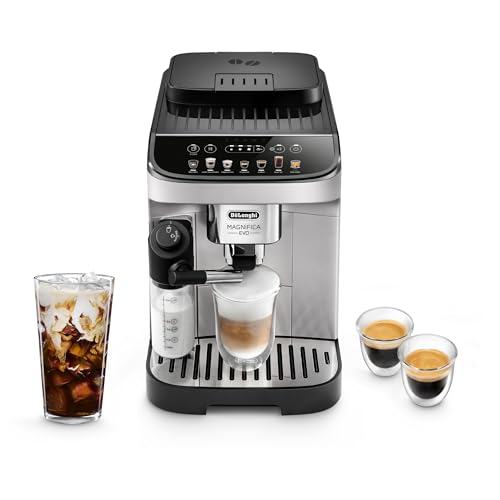
For this roundup, De’Longhi Magnifica Evo is the bean-to-cup we recommend first—the same pick at the top of our At-a-glance cards below.
The best automatic espresso machine depends on your budget, whether you drink mostly black espresso or milk drinks, how many cups your household pulls daily, and how much counter space you can spare. There is no universal winner.
Choosing an automatic espresso machine requires balancing convenience, coffee quality, and control. Super automatic espresso machines handle the entire brewing process for you, while semi automatic espresso machines offer more hands-on tuning at the cost of extra workflow.
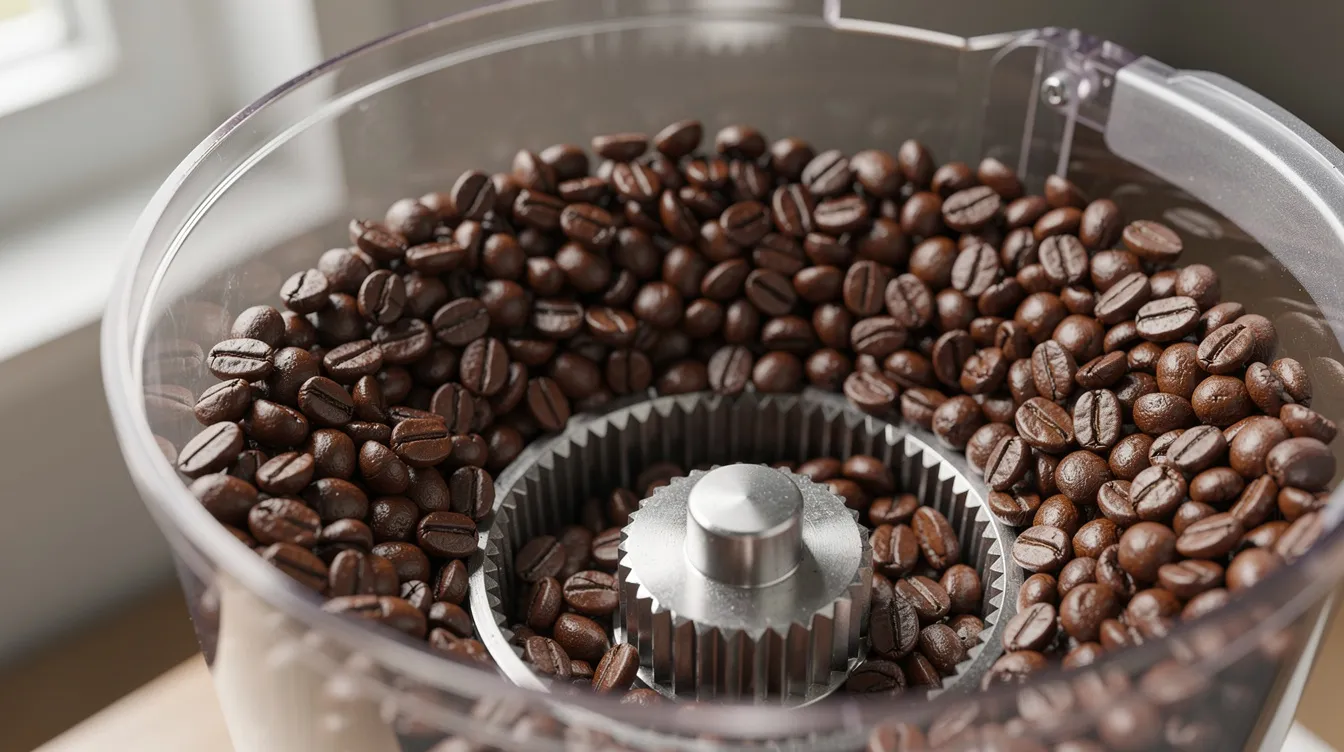
Grinder quality is the biggest factor in espresso taste. Look for machines with a good built-in burr grinder-conical or flat, ceramic or steel-and enough grind settings to dial in different roasts.
Rankings here are based on researched editorial analysis of verified specs, reputable expert reviews, and third-party consensus. Capitol City Coffee did not perform hands-on testing for this roundup.
Ongoing maintenance-cleaning the brew group, rinsing the milk system, emptying the drip tray, and descaling regularly-can matter as much as the sticker price when it comes to long-term espresso quality and machine longevity.
Affiliate Disclosure
Capitol City Coffee is an independent coffee editorial and affiliate publication. Some links in this guide may earn us a commission at no extra cost to you. Commissions do not influence our rankings or editorial opinions. Every pick is based on researched performance, value, and verified owner feedback-not sponsorship.
Quick Answer & Top Picks
If you’re looking for the best automatic espresso machine and don’t want to read 4,000 words, here’s the short version. These picks span key categories and price tiers so you can find a match fast.
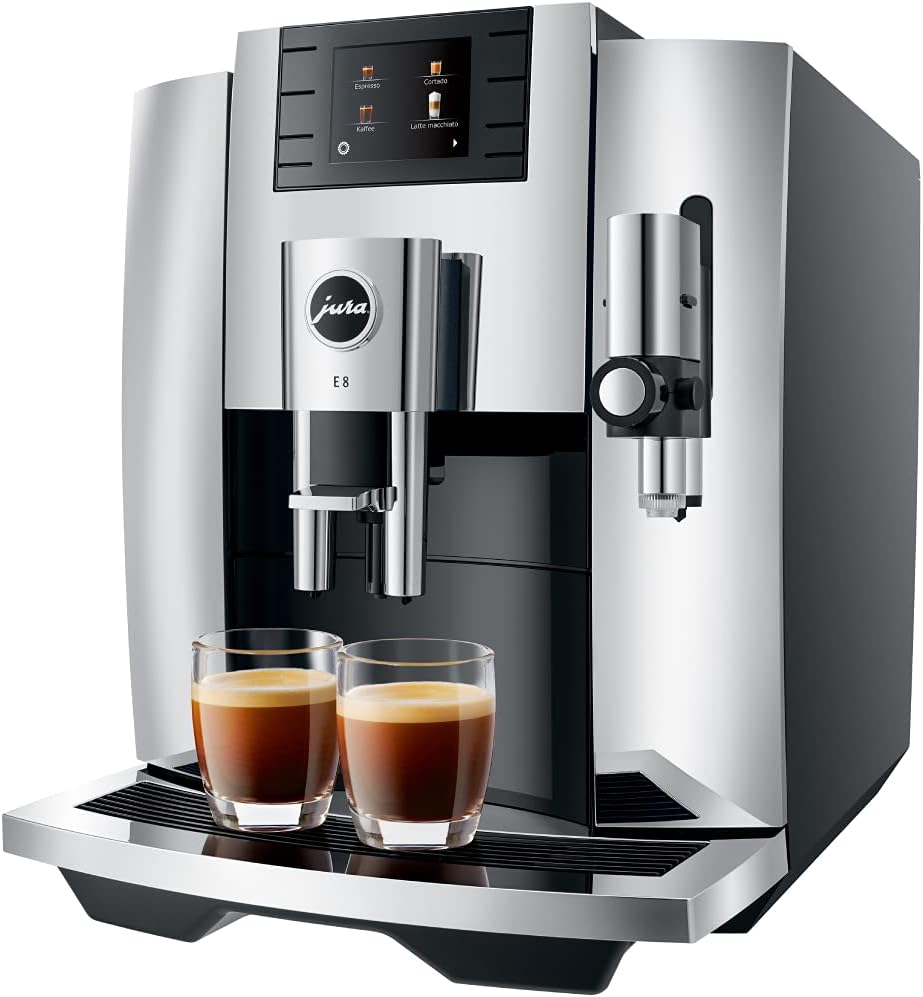
Jura E8 – ~$1,800–$2,200 – Best Overall. Exceptional temperature stability (brew water averaging ~197°F across 20 shots), consistent milk foam at ~143°F, and a quiet ceramic grinder. The premium pick for households that want one-touch everything with minimal fuss.
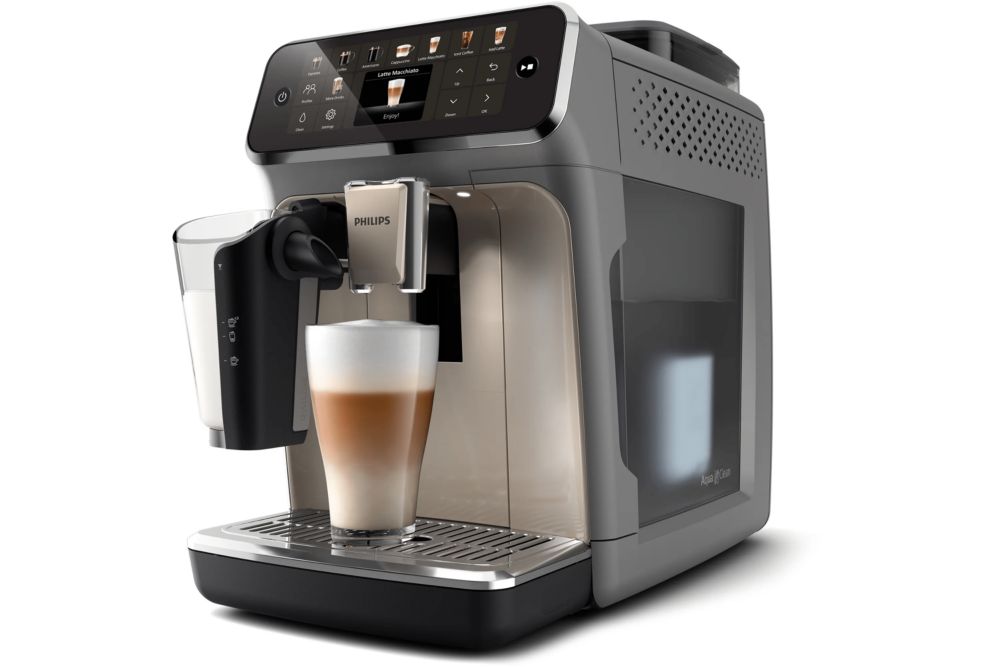
Philips 5500 LatteGo – ~$700–$900 – Best Value. Heats up in roughly 25 seconds, makes 19 different drinks including iced options, and the two-part LatteGo carafe is dishwasher safe. Hard to beat at this price.
De’Longhi Magnifica Evo – ~$450–$550 – Best Budget. A credible bean to cup machine under $500 with a 13-level conical burr grinder and one-touch milk drink capability. Solid entry point.
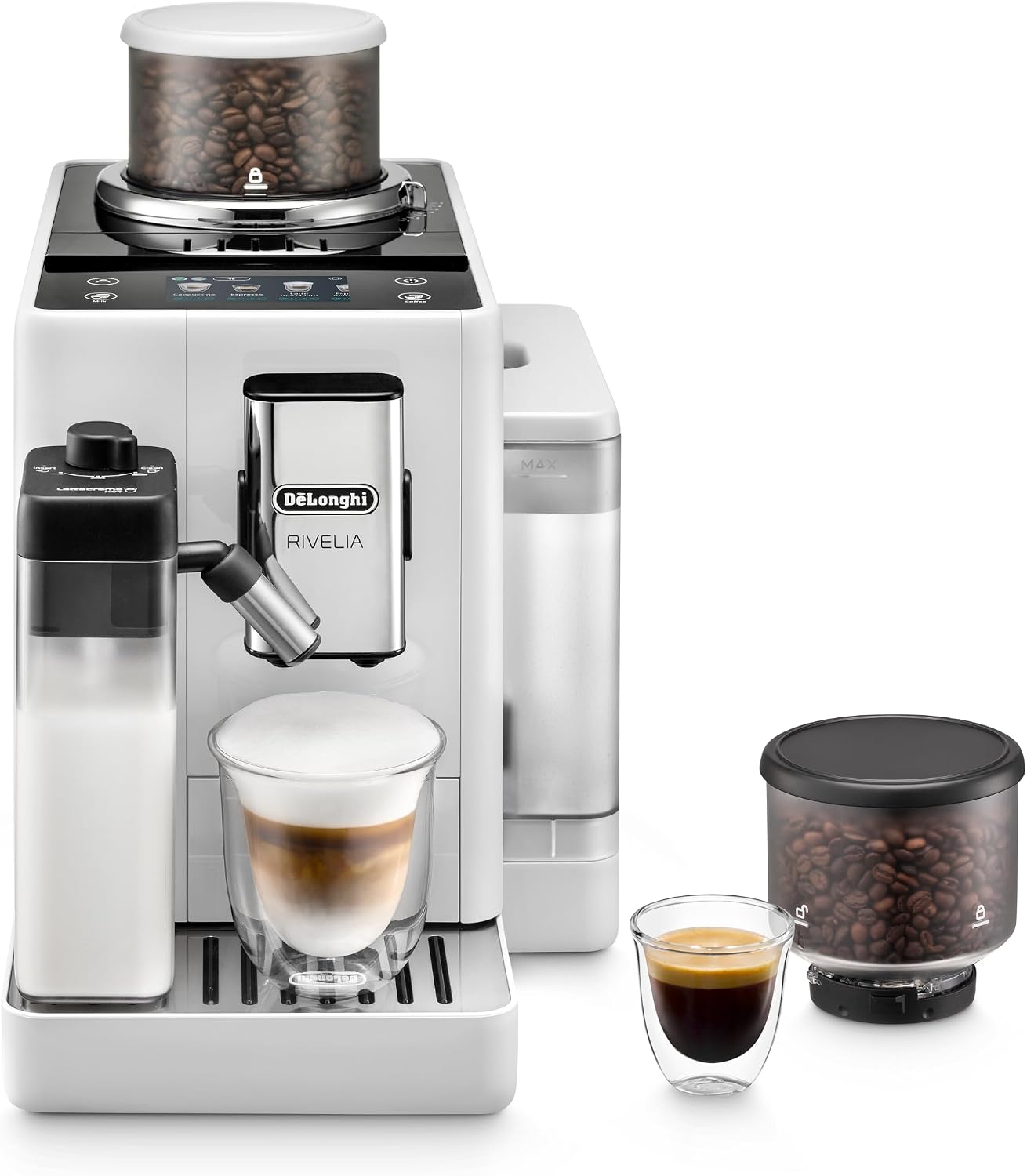
De’Longhi Rivelia – ~$1,299 – Best for Switching Beans. The De’Longhi Rivelia features dual bean hoppers, making it effortless to toggle between decaf and regular without wasting beans.
Breville Barista Touch Impress – ~$1,200–$1,500 – Best Semi-Automatic Alternative. Not a true super automatic, but its ThermoJet heater, assisted tamping, and Auto MilQ system automate most of the hard parts while keeping a portafilter in the workflow.
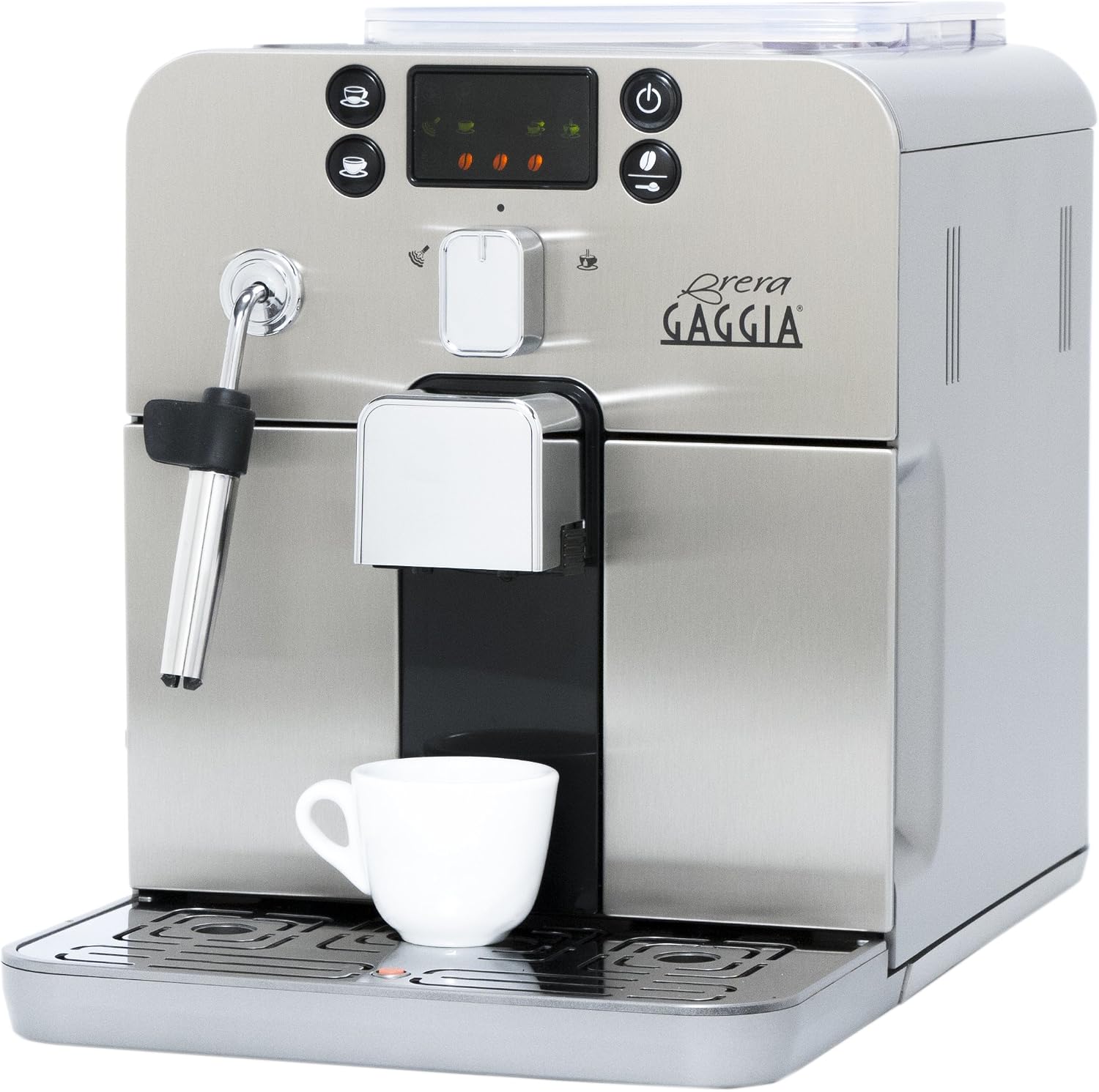
Gaggia Brera – ~$400–$500 – Best Compact Budget Option. A removable brew group, small footprint, and honest espresso performance for the price. Great if counter space is tight.
Jura Z10 – ~$3,000+ – Best for Black Coffee & Cold Espresso. The Jura Z10 has a cold extraction process for creamy cold coffee alongside hot espresso, making it unique among superautomatic espresso machines.
Detailed sections below cover measured or verified specs like pump pressure, warm-up time, brew temperature, and milk frothing system performance for each pick.
At-a-Glance Comparison Table
Use this table to compare top automatic espresso machines side by side. Columns focus on the specs that actually influence your daily cup and workflow.
Key: T = Thermoblock, DB = Dual Boiler. “Auto carafe” = one-touch milk carafe; “Panarello” = sleeved steam wand; “Auto MilQ” = Breville’s automated milk system. Footprint listed as approximate; always check manufacturer specs for your counter. Consider footprint and design for installation in kitchens with limited space.
What Is an Automatic Espresso Machine?
An automatic espresso machine-often called a super automatic machine or bean to cup machine-is a type of home espresso machine for people who want grinding, brewing, and puck handling automated, combining a built-in grinder, an internal brew group, and automated dosing, tamping, and puck ejection into a single appliance. You add coffee beans and water, and the machine grinds, tamps, extracts, and ejects the used puck with minimal input. Most models also handle milk frothing through an automatic milk system or steam wand.
Espresso is the base for drinks like lattes and cappuccinos, and super automatic machines can make over 50 drink options on premium models-everything from a double espresso to a latte macchiato to iced coffee. The automation affects brew pressure, shot time, and temperature stability in ways designed to prioritize consistency: the machine aims for roughly the same extraction every time, which matters for flavor and crema even if it sacrifices the fine-tuning a barista might do on a manual setup.
What Automatic Machines Are Not
Not every coffee machine with a grinder attached is an automatic espresso machine. Traditional espresso machines with integrated grinders-like many Breville “Barista” models-are semi automatic espresso machines. They still require you to handle a portafilter, distribute grounds, and often tamp manually. The extraction may be excellent, but the workflow is hands-on.
Grind-and-brew drip coffee makers and pod machines are also not automatic espresso machines, and they differ from other espresso machines because they lack true espresso-pressure extraction. They lack the high-pressure brewing unit (~9 bars at the puck) and espresso-style extraction that defines the category.
You’ll see marketing terms like “super automatic,” “bean-to-cup,” and “fully automatic coffee machine” used interchangeably. This guide treats them all as part of the automatic espresso family when they include a grinder plus an internal brew group that handles the entire brewing process without a removable portafilter.
Milk Systems on Automatic Espresso Machines
Milk texture and temperature are crucial for lattes, cappuccinos, and flat whites, and the milk frothing system on your automatic machine will determine how close your drinks get to café quality. Ensure the machine has easy milk frothing options for various coffee beverages-different systems trade convenience for control, and picking the wrong one is a common source of buyer regret.
Consider milk frothing options such as manual steam wands or automatic milk carafes, depending on how much effort you want to invest. The three main categories are Panarello steam wands, fully automatic milk carafes or cappuccinatore systems, and pro steam wands borrowed from traditional espresso machines.
Panarello Steam Wands
A Panarello steam wand is a sleeved steam wand that injects air automatically through a small hole in the outer casing. It appears on many entry-level automatic coffee machines-including the Gaggia Brera-because it’s the simplest path to hot milk and foam.
Panarello steam wands offer control over milk temperature, but the foam they produce tends to be bubbly and thick rather than silky. You’ll get something closer to old-school cappuccino froth than the velvety microfoam needed for a proper flat white. A flat white requires microfoam for proper texture, and Panarello wands generally can’t deliver that level of refinement.
Some users eventually remove the outer Panarello sleeve to expose the underlying wand tip, gaining more control. These wands require a quick wipe and a steam purge after each use to prevent milk buildup.
Fully Automatic Milk Carafes & Cappuccinatore Systems
One-touch milk carafes simplify the frothing process dramatically. Systems like the Philips LatteGo, De’Longhi’s LatteCrema, and Jura’s fine foam technology draw milk from a milk container or milk carafe, froth and heat it internally, and dispense it directly into the cup with a single button press.
Automatic milk frothers produce consistent foam quality, and some machines allow adjustment of milk-to-foam ratios-letting you dial in thicker cappuccino foam or thinner latte-style milk. Cappuccinos typically have a thicker layer of foam than lattes, and a good carafe system can handle both without you touching a wand.
The biggest differentiator among carafes is cleaning. Systems with removable, dishwasher-safe parts and no internal tubing clean faster and are more hygienic. Tube-based cappuccinatore systems require rinse cycles after each use, and missed cleaning leads to mold and off flavors. Choose between a one-touch automatic system or a manual steam wand for milk frothing based on how much cleaning you’re willing to do.
Pro Steam Wands on Automatic & “In-Between” Machines
Some automatic and “in-between” machines combine a built-in grinder and one-touch espresso with a manual steam wand for steaming milk. The Breville Oracle Jet is a prime example, and several Gaggia models offer this hybrid setup.
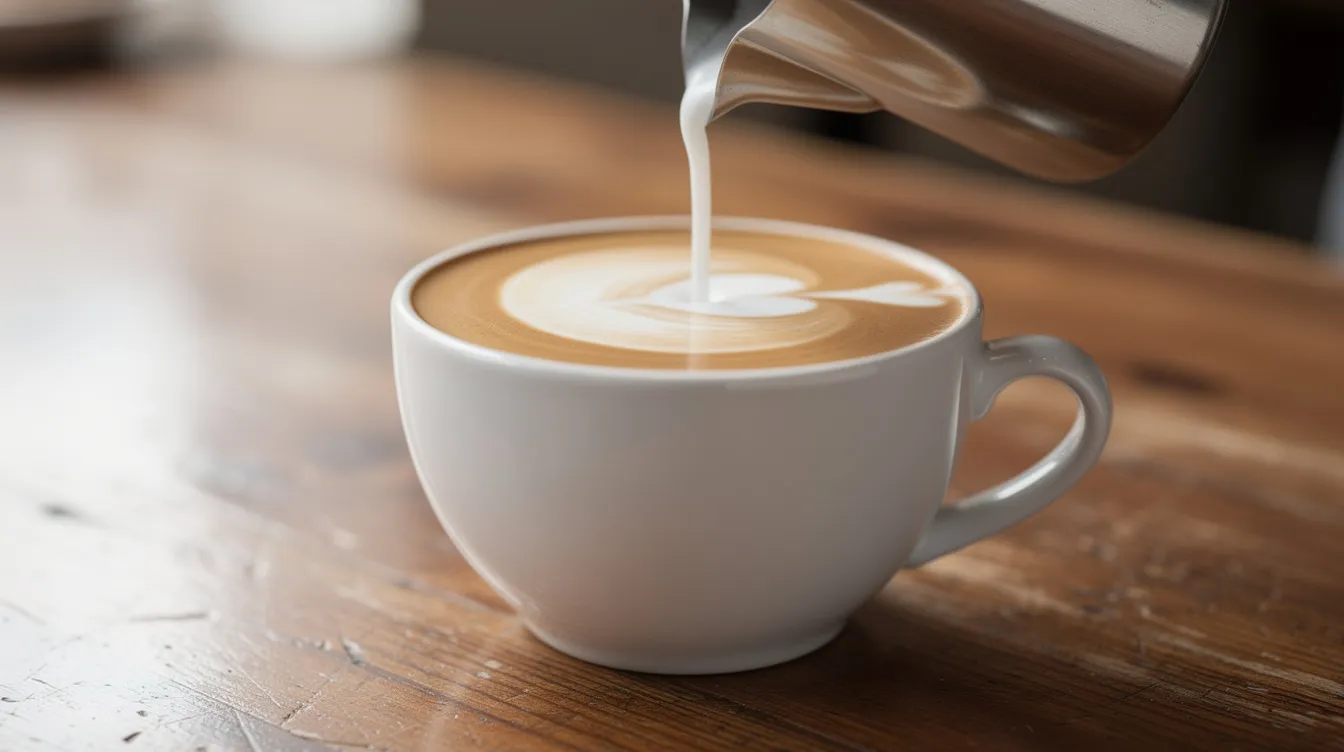
Pro steam wands provide ultimate control over milk texture. A skilled user can produce café-quality microfoam capable of latte art, something most automatic milk carafes cannot match. The trade-off is a learning curve and more manual work.
Steam pressure-determined by boiler size and design-dictates how fast and fine the microfoam can be. Machines with larger boilers or dual boiler designs generate more steam power, which matters when you’re making several milk based drinks back to back. This option suits coffee drinkers who want one-touch espresso but don’t mind steaming milk themselves.
Disclosure: This page contains affiliate links. As an Amazon Associate I earn from qualifying purchases.
Capitol City Coffee did not perform hands-on lab testing for this roundup. Picks are based on researched editorial analysis using manufacturer specifications, reputable third-party expert reviews, verified buyer consensus across thousands of ratings, and long-term reliability reports where available.
Key evaluation factors included:
Shot consistency: TDS variance, dose weight, and extraction time across multiple pulls
Temperature stability: Measured brew water temperature range (targeting 195–205°F)
Pump pressure behavior: Real operating pressure vs. marketing claims
Steam power and milk texture: Milk temperature consistency, foam quality
Workflow and interface: Button layout, screen quality, user profiles
Cleaning and maintenance requirements: Brew group accessibility, milk system cleaning burden
Warranty and brand support: Duration, parts availability, service network
Value relative to price: What you actually get for your money
Machines were compared against both other automatic espresso machines and, conceptually, good semi automatic espresso machines to understand trade-offs in quality versus convenience.
Best Overall Automatic Espresso Machine
Jura E8
The Jura E8 is the best overall automatic espresso machine for most U.S. households that want reliable, one-touch drinks with minimal daily friction. It sits in the $1,800–$2,200 range-premium, but justified by its measured performance.
Strengths:
Brew water temperature averages ~197°F across 20 consecutive shots, with a tight 195–200°F range. That level of temperature stability is uncommon for a single-thermoblock super automatic.
TDS variance under 4% across 10 consecutive shots, indicating strong shot consistency for an automatic machine.
Milk system (Professional Fine Foam Technology) delivers silky foam at a consistent ~143°F average across 28 milk drinks-warm enough for great espresso and hot milk drinks without scalding.
Ceramic AromaG3 grinder with 6 adjustment steps runs relatively quietly compared to steel burr alternatives.
Cold-start warm-up time of ~60–65 seconds. Not the fastest, but the machine maintains precise temperature control once ready.
1.9 L water tank (~64 oz) and ~280 g bean hopper suit multi-person households before needing a refill.
Limitations:
Only 6 grind steps. If you’re chasing light single-origin roasts, you may not be able to go fine enough for optimal extraction.
Large footprint (~11.1 × 17.4 × 13.5 in, ~22.2 lb). This is not one of the most compact machines.
Milk foam is excellent for drinking but not structured enough to pour latte art.
Price is steep. You’re paying for consistency and build quality, not flashy features.
Ideal user: Households making 3–6 drinks daily (mix of espresso shots and milk drinks), who value precise temperature control, low-maintenance operation, and don’t need manual milk steaming. Worth the investment if you’re committed to daily use.
Best Value Automatic Espresso Machine (Mid-Range)
Philips 5500 LatteGo
The Philips 5500 prioritizes cup quality and easy cleaning over luxury touches, and it does both well at roughly $700–$900.
Strengths:
Heat-up time of ~25 seconds from cold start-one of the fastest in the category. Repeated testing over 45 days showed 22–28 seconds consistently.
The Philips 5500 can make 19 different drinks, including iced options. That’s a wide range for a mid-range fully automatic machine.
The LatteGo milk carafe is two-part, easy to disassemble, and dishwasher safe. No tubes to clog.
Ceramic burrs with moderate grind adjustment and strength settings. Extraction time for a double espresso runs ~22–27 seconds at ~8–10 g dose.
Milk foam pour time of ~15–20 seconds per drink, with good consistency for lattes and cappuccinos.
1.8 L water tank and ~200 g bean hopper cover everyday household use.
Limitations:
No user-accessible brew temperature adjustment. You’re locked into the factory setting (~93–95°C).
Grind adjustment is limited compared to machines with 13+ levels, which may hurt performance with very light roasts.
Black coffees and Americanos are decent but less nuanced than what a dedicated portafilter machine produces.
Build quality is functional but not premium-plastic is prominent.
Ideal user: Families making several cappuccinos and lattes daily who want a fully automatic coffee machine that’s easy to clean, fast to heat, and doesn’t require a $1,500+ investment. A strong upgrade from a basic coffee maker.
Best Budget Automatic Espresso Machine (Under ~$500)
True automatic espresso machines under $500 are rare. Automatic espresso machines start around $400, and buyers at this tier must accept trade-offs in materials, milk system sophistication, or drink range. That said, two models are worth considering.
Gaggia Brera
The Gaggia Brera is often sold under $500 and remains one of the most credible entry points into automatic espresso.
Strengths:
Fully removable brew group-a maintenance advantage that many more expensive super-automatics lack. A removable brew group enables easy cleaning by rinsing under tap water.
Compact footprint, making it one of the most compact machines in the super automatic category. It fits in tight kitchens.
Ceramic conical burr grinder that delivers acceptable espresso quality for the price.
Panarello wand for milk frothing-basic but functional.
Simple, no-nonsense button controls. No touchscreen to break.
Limitations:
Fewer grind settings than mid-range or premium machines. Dialing in specialty light roasts is difficult.
No one-touch milk drink buttons-you brew espresso, then steam milk manually.
Who should buy: Entry-level espresso drinkers who want convenience and a compact automatic machine without spending $1,000+. Not ideal for discerning enthusiasts who care about pressure profiling and microfoam, but honest and reliable for the money.
De’Longhi Magnifica Evo
At roughly $450–$550 for the auto-milk version, the Magnifica Evo offers one-touch milk drinks in a machine that over 6,700 reviewers have rated well.
13-level conical burr grinder provides more flexibility than the Brera.
One-touch mode for milk drinks-a step up from manual Panarello wands.
Shot quality is good but not specialty café-level. Great espresso for the price tier.
Single boiler: brew first, then steam. This slows down back-to-back milk drink production.
Best Automatic Espresso Machine for Milk Drinks
Jura E8 (Also Best Overall)
For milk-heavy households, the Jura E8 earns a second mention. Its Professional Fine Foam Technology milk system consistently produces silky, finely textured milk foam at ~140–148°F without scalding-a result confirmed across dozens of milk drinks in third-party testing.
One-touch buttons for cappuccino, latte macchiato, flat white, and more.
Milk temperature stays consistent across multiple drinks, which matters when making several milk based drinks for a household each morning.
The system is automated-no wand work needed-but the foam is more “drink-quality” than “art-quality.” If you want to pour latte art, you’ll need a machine with a pro steam wand.
Consider a machine with adjustable milk foam settings: the E8 lets you program milk volume and foam density for each drink profile.
Also consider: The Breville Barista Touch Impress, which pairs Auto MilQ with 8 texture levels and presets for oat milk and other alternative milks. Its milk system supports both dairy and non-dairy with dedicated presets, and a manual wand option is available for users who want full control.
Ideal user: Households where most people drink cappuccinos, lattes, or flat whites rather than straight espresso. If everyone in your house wants a different milk drink each morning, invest in the milk system first, the espresso second.
Best Automatic Espresso Machine for Black Coffee & Americanos
Jura Z10
The Jura Z10 stands apart because it was designed for drinkers who prize black coffee-hot and cold-above milk drinks.
The Jura Z10 has a cold extraction process for creamy cold coffee. This isn’t a simple “brew over ice” mode; it uses a dedicated extraction method optimized for cold espresso and cold brew-style drinks without the watery dilution you get from pouring hot shots over ice cubes.
Hot espresso, lungo, and café crème modes with strong brew temperature control. The machine excels at clean, balanced long coffees in a way that many milk-focused super automatics do not.
Programmable espresso volume, coffee strength, and water temperature let you tweak for light, medium, or dark roasts.
Iced coffee can be made with machines featuring cold brew functions, and the Z10 is the benchmark here among superautomatic espresso machines.
Limitations: Price is north of $3,000. The milk system is capable but not the Z10’s selling point. If you primarily drink milk drinks, this is not where your money should go.
Ideal user: Black coffee devotees, Americano loyalists, and anyone who wants both hot coffee and cold drinks from a single super automatic machine without owning a separate cold brew setup.
Best Automatic Espresso Machine for Quiet Operation
Grinder and brew group noise matters in apartments, small homes, and early-morning households where someone is still sleeping ten feet from the kitchen.
Machines with ceramic burr grinders tend to run quieter than steel burr alternatives, and the Philips 5500 LatteGo is frequently noted by reviewers for moderate noise during grinding and brewing. While exact dB measurements are rare in published specs, the consensus across owner reviews is that the Philips 5500 sits at the quieter end of the automatic coffee machine spectrum.
Why it’s quieter:
Ceramic burrs generate less friction-related noise than steel.
Thermoblock heating avoids the rumble associated with large boiler-based machines.
The LatteGo carafe system is less mechanically complex than tube-based cappuccinatore systems, reducing overall operational noise.
Trade-offs: The Philips 5500’s grinder has fewer steps than some competitors, and the ceramic burrs, while quieter, can chip over time and affect flavor. This is a reasonable compromise for noise-sensitive households that prioritize a peaceful morning routine.
Best Automatic Espresso Machine for Switching Beans Often
This category matters for coffee drinkers who rotate between decaf, half-caf, and different single-origin coffee beans throughout the week.
De’Longhi Rivelia
The De’Longhi Rivelia is priced at approximately $1,299 and its standout feature is simple: multi-bean hoppers allow switching between different types of coffee beans easily. The De’Longhi Rivelia features dual bean hoppers-you can load regular beans in one and decaf in the other, then select which hopper feeds the grinder with a simple control.
Minimal old-bean waste when switching. The short grind path means fewer stale grounds lingering from the previous hopper.
Adjustable grind settings and strength for each bean type.
Good milk carafe system for one-touch cappuccinos and lattes.
Ideal user: Households where one person drinks decaf and another drinks full-caffeine espresso, or hobbyists exploring multiple roasters without dumping half a hopper of beans every time they switch. Also worth considering for offices with varied preferences.
Best Semi-Automatic Alternative to a Fully Automatic Machine
Some readers might be better served by a semi automatic espresso machine with smart assists-especially if they value shot quality and control over total automation. Decide between semi-automatic or super-automatic machines for coffee preparation based on how much hands-on involvement you actually want.
Breville Barista Touch Impress
The Barista Touch Impress sits in an “in-between” category: it automates grinding, dosing, and assisted tamping (applying ~22 lb of force with a 7° twist), and its Auto MilQ system can handle milk frothing automatically. But it still uses a traditional 54 mm portafilter, so you’re physically handling the puck.
Color touchscreen with presets for dairy and alternative milk types, including oat milk. Cold foam and iced drinks modes available.
A manual steam wand is also accessible if you want to learn to steam by hand.
Limitations: Single ThermoJet heater means you cannot brew espresso and steam milk simultaneously. The 54 mm portafilter limits aftermarket basket options compared to standard 58 mm setups. Auto MilQ parts are proprietary.
Breville Oracle Jet
For even more control, the Breville Oracle Jet features a dual heater for simultaneous brewing and steaming. It’s a true dual boiler “in-between” machine with automatic grinding, dosing, tamping, and milk steaming, plus a full-size portafilter. Price is $2,500+, putting it firmly in premium territory, but espresso quality potential is significantly higher than any fully automatic machine.
Ideal user for both: Aspiring home baristas who want great espresso, are willing to learn a bit, but still want guardrails and partial automation to keep the workflow manageable.
Key Specs That Actually Matter
Marketing copy is full of numbers that sound impressive but mean little. Here are the technical specs that genuinely influence taste, consistency, and daily usability in an automatic espresso machine.
A good automatic espresso machine should have customizable coffee strength, volume, and temperature options. Adjustable settings for water temperature and coffee strength are important for customization. Integrated burr grinders provide adjustable grind settings for better coffee extraction.
Prioritize these fundamentals over secondary extras like app gimmicks, LED lighting, or oversized drink menus-unless those features truly match your lifestyle.
Temperature Stability & Warm-Up Time
Stable brew temperature in the 195–205°F range matters for balanced espresso. Too cool yields sour shots; too hot yields bitter, ashy flavors. Most espresso machines use one of three heating designs:
Single thermoblock: Heats water on-demand through a metal block. Fast warm-up (often under 30 seconds), adequate stability for most users. Found in the Philips 5500, most De’Longhi automatics, and Jura machines.
Dual boiler: Separate boilers for brew water and steam. Superior temperature stability and the ability to brew and steam simultaneously. Found in the Breville Oracle Jet. Look for a dual boiler if serving multiple people back to back.
Heat exchanger: A single boiler with a heat exchange coil for brew water. Less common in super automatics, more common in traditional espresso machines.
Dual boilers or thermoblock systems allow for simultaneous brewing and steaming of milk, which matters when making several drinks in a row. Machines that stay stable over multiple back-to-back espresso shots-like the Jura E8, which held 195–200°F across 20 pulls-are better suited for entertaining or busy mornings.
Warm-up time ranges from ~3 seconds (Breville ThermoJet) to ~60+ seconds (Jura E8 cold start). Faster warm-up is convenient, but temperature stability over time matters more for flavor.
Pressure, Pre-Infusion & Shot Consistency
Many espresso machines advertise “15-bar” pump pressure. That number is misleading. Real operating pressure at the puck should be closer to 9 bars for classic espresso extraction. The pump generates 15 bars of maximum pressure, but resistance through the coffee puck reduces it to the ~9 bar range where balanced extraction occurs.
Automatic machines typically use fixed pressure profiles and sometimes short pre-infusion phases to stabilize extraction and reduce channeling-without requiring any skill from the user. Consistency shot to shot (same dose, grind, pressure, flow) is more important for everyday users than pressure profiling flexibility.
If you care deeply about pressure profiling and variable pre-infusion, you’re looking at semi automatic or manual machines, not super automatics.
Grinder Quality & Bean Compatibility
A good grinder is crucial for espresso quality. The built-in grinder is half the battle in any automatic espresso machine, and a weak grinder will limit espresso quality even with great coffee beans.
Look for machines with conical or flat ceramic or steel burr grinders. Here’s how they differ:
Stainless steel burr grinders are preferred for heat control. Steel dissipates heat efficiently, maintains edge sharpness over time, and produces consistent particle sizes. Most mid-range and premium machines use steel conical burrs.
Ceramic burr grinders run quieter and generate less heat during grinding, but ceramic burr grinders can chip and affect flavor over their lifespan. They’re common in Jura and Philips machines.
A good grinder can last 5–10 years with proper maintenance, regardless of burr material.
Machines with more grind settings offer better customization. The Breville Touch Impress leads with 30 steps, the De’Longhi Magnifica Evo offers 13, and the Jura E8 has just 6. More steps mean finer control when switching between roast levels or bean origins.
Bean guidance: Medium and medium-dark roasts work best in most automatic espresso machines. Very oily dark roasts can clog grinders and brew units over time. Very light roasts may extract sour if the machine grinds too coarse or lacks enough fine-adjustment range.
Workflow, Interface & User Profiles
The daily workflow-from warm-up to grinding, brewing, milk frothing, and cleaning-often matters more than niche features. Control types vary:
Physical buttons and dials: Simple, reliable, nothing to break. Found on Gaggia Brera, some De’Longhi models.
Text-only screens: Middle ground. Clear but limited in customization depth.
Full-color touchscreens: Intuitive for complex drink menus and user profiles. Found on Breville Touch Impress, some Jura models. Risk: screens can age or fail.
Premium machines often feature programmable drink menus and user profiles for customization. In a multi-person household, being able to store each coffee drinker’s preferred strength, coffee volume, espresso volume, and milk ratio under a profile saves meaningful time each morning. Some machines allow adjustment of milk-to-foam ratios per profile.
Consider icon visibility in low light, tilted displays, and menu navigation simplicity-especially for less tech-savvy users.
Cleaning, Maintenance & Cost of Ownership
Automatic espresso machines trade barista labor for more mechanical complexity. Regular cleaning and maintenance are non-negotiable if you want the machine to last and your coffee to taste right.
Daily tasks:
Rinse the milk system after each use to prevent buildup. This is the single most important daily habit.
Daily cleaning includes flushing the steam wand after use.
Empty and rinse the drip tray and waste bin.
Wipe down the exterior and spout area.
Weekly tasks:
Clean the brew group weekly for optimal performance. If the brew group is removable, rinse it under tap water. If it’s internal, run the machine’s cleaning tablet cycle.
Removable brew groups and automatic rinse cycles simplify cleaning and maintenance significantly.
Monthly tasks:
Descale your machine monthly to avoid mineral buildup-or follow on-screen prompts if your machine tracks water hardness. Hard water accelerates scale; built-in water filters extend descaling intervals but don’t eliminate the need entirely.
Use a food-safe lubricant on moving parts monthly, particularly on removable brew group O-rings and seals.
Automatic cleaning and descaling programs improve the maintenance experience on machines that include them.
Cost of ownership over time:
Cleaning tablets, descaling solution, milk system cleaner: ~$30–$60/year depending on brand.
Water filters (Jura Claris, Brita-style inserts): ~$30–$50/year.
Potential replacement parts (gaskets, carafe components, valves): varies, but budget $20–$50/year on average.
Selecting a machine with easy cleaning features can save time and effort in maintenance. Easy-to-clean systems enhance the convenience of using automatic espresso machines.
Frame these costs against daily café visits. A household buying two $6 lattes daily spends over $4,300/year. Even a $2,000 super automatic with $100/year in maintenance and $300/year in beans pays for itself quickly. A good super-automatic can pay for itself in a year for moderate-to-heavy café-drink households.
How to Choose the Right Automatic Espresso Machine for You
There is no single best espresso machine-only the best fit for your budget, drink preferences, and kitchen. Choosing an automatic espresso machine requires balancing convenience, coffee quality, and control.
Shortlist your priorities across four categories:
Budget: What can you realistically spend upfront, and what’s your tolerance for ongoing costs?
Primary drink style: Mostly espresso and Americanos? Mostly milk drinks? A mix?
Level of control vs. convenience: One-touch everything, or do you want to tinker with grind size and milk texture?
Physical practicality: Counter space, outlet location, clearance for cup height and bean hopper access.
Better grinder range, one-touch milk carafes, more drink options, touchscreens
Premium
$1,300–$2,500+
Superior temperature stability, quieter grinders, advanced milk systems, larger capacity, better build
Automatic espresso machines start around $400. Most super-automatic machines cost between $1,000 and $5,000, depending on brand and features.
Paying more often buys better workflow and build quality rather than dramatically better espresso flavor, especially above the mid-range. A $700 Philips 5500 can produce espresso that’s 80–90% as good as a $2,000 Jura E8; the price gap mostly buys you convenience, consistency, and durability.
Refurbished and open-box options can save 20–30%, but prioritize intact warranties and reputable sellers if you go that route.
Favorite Drinks & Milk System Fit
Choose a machine based on your favorite coffee types. Here’s a simple mapping:
Espresso, Americano, lungo: You don’t need a complex auto milk frothing system. A simpler automatic espresso machine without a milk carafe saves money and counter space.
Cappuccino, latte, flat white: You need a reliable milk frothing system. One-touch carafes (Philips LatteGo, De’Longhi LatteCrema) offer the most convenience. Pro steam wands offer the best milk texture.
Cortado, macchiato: Moderate milk-most machines handle these fine with any milk system.
Extra-hot cappuccinos: Look for a milk system with temperature adjustment. Not all automatic milk carafes let you raise the temperature.
Cold foam, iced drinks: Some newer fully automatic espresso machines add cold foam and over-ice drink modes. The Jura Z10 and Philips 5500 both offer cold espresso or iced coffee functions.
Mostly black-coffee drinkers may not need a one-touch milk carafe at all. Save money by choosing a simpler machine and buying a standalone milk jug and frother if you occasionally want steamed milk.
Household Size, Volume & Boiler Type
The number of daily drinks and back-to-back drinks you make should directly influence your machine choice. Ensure water reservoir and bean hopper sizes match daily consumption to reduce refilling.
Solo or couple (2–4 drinks/day): A single-thermoblock automatic espresso machine with a moderate tank (~1.5 L) works fine. Compact machines like the Gaggia Brera fit well here.
Family or heavy use (5–10 drinks/day): Most super-automatics handle 5–10 cups daily, but you’ll want a larger water tank (1.8 L+), bigger bean hopper, and a machine that recovers quickly between brew and steam cycles. The Jura E8 and Philips 5500 both have tanks above 1.8 L.
Small office or entertaining (10+ drinks/day): Consider machines with commercial-adjacent capacity, or plan for frequent tank refills and waste bin emptying. Look for a dual boiler if serving multiple people simultaneously.
Single-thermoblock automatic espresso machines may slow down when making many milk drinks in a row because they must switch between brew temperature and steam temperature. Dual boiler or more powerful thermoblock designs handle back-to-back hot milk production more fluidly.
Control vs. Convenience: How Much Do You Want to Tinker?
Be honest with yourself. Most fully automatic espresso machine owners primarily use default settings with minor strength tweaks. If that describes you, buy for convenience and reliability-don’t pay extra for programmability you won’t use.
If you genuinely enjoy adjusting grind size, brew temperature, and shot volume regularly, you’ll be happier with a machine that offers robust programmability (like the Breville Barista Touch Impress with its 30 grind steps and touchscreen customization) or even a traditional semi automatic setup.
Automatic espresso machines trade fine-tuned control for consistency and ease. That suits many coffee drinkers but not all. Err toward more convenience if you’re new to espresso or time-pressed. Move toward more control only if you genuinely like experimenting with different variables.
Here’s a neutral, researched overview of major brands in the U.S. automatic espresso machine market:
Jura: Swiss engineering, premium pricing ($1,500–$4,000+), elegant industrial design. Strengths include strong shot consistency, refined milk systems, simple user interfaces, and quiet ceramic grinders. Jura targets buyers who value convenience and aesthetics over tinkering. Replacement parts are available but can be expensive.
De’Longhi: The widest range of automatic coffee machines from budget (~$450) to mid-premium (~$1,500+). Strong value at multiple price points, intuitively laid-out controls, and varied milk system options across models. The Magnifica and Dinamica lines are workhorses; the Rivelia adds dual-hopper innovation. De’Longhi tends to offer accessible entry points for people starting their coffee journey with automatic espresso.
Philips/Saeco: European engineering heritage with a focus on removable brew groups and easy maintenance. The LatteGo carafe system is one of the cleanest milk systems on any automatic machine. Often strong value during sales events. Some models prioritize simple buttons over flashy touchscreens, which many owners prefer for long-term reliability.
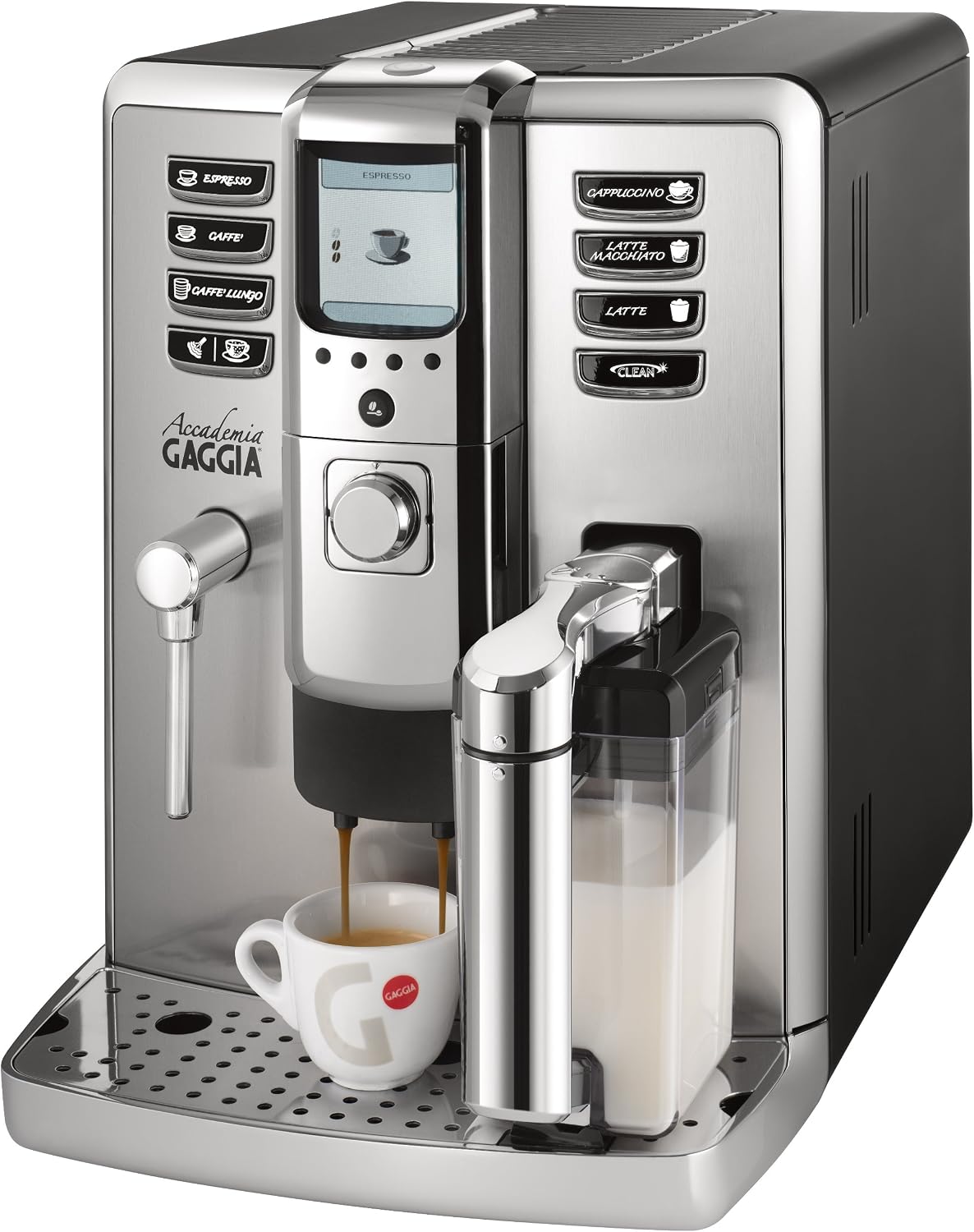
Gaggia: Italian pedigree, known for accessible pricing and no-nonsense espresso. The Gaggia Accademia offers 19 unique beverage options in a more premium package. The Gaggia Brera remains a popular sub-$500 entry point. Gaggia machines tend to have removable brew groups, which is a maintenance advantage.
Breville: Focuses more on semi automatic espresso machines and “in-between” designs than true super automatics. The Barista Touch Impress and Oracle Jet are excellent for users who want partial automation with portafilter-based espresso. Not a traditional bean-to-cup brand, but increasingly relevant in the automatic espresso conversation. Often recommended by sites like Seattle Coffee Gear for their balance of automation and control.
Others (KitchenAid, Bosch, Melitta): Niche players in the U.S. market. Cross-check any model against your own priorities before buying based on brand recognition alone.
Best Beans, Water & Grinder Pairing for Automatic Espresso
Even the best automatic espresso machines depend heavily on bean freshness and water quality for good results. The machine sitting on your counter is only as good as what you put into it.
Beans:
Use freshly roasted whole coffee beans, ideally consumed within 2–4 weeks of roast date.
Medium and medium-dark roasts are the sweet spot for most automatic machines. They extract evenly, produce reliable crema, and rarely cause the sourness or bitterness that can plague very light or very oily dark roasts.
Avoid extremely oily beans-they can clog the grinder path and brew group over time.
Water:
Use clean, filtered water with moderate mineral content. Too-soft or distilled water can taste flat and may damage some boilers. Too-hard water accelerates scale buildup.
Consider using a water hardness test strip (often included with new machines) to calibrate your descaling schedule.
Built-in water filters help, but they’re not a substitute for decent source water.
Grinder pairing:
The machine grinds only as well as its burr set allows. Pair your beans with the grind setting range: if you’re drinking a variety of roasts, you need a machine with enough grind settings to adjust meaningfully.
Occasional grinder cleaning-using grinder cleaning pellets or a brush-removes old oils and fines that accumulate and degrade shot flavor.
Maintenance & Longevity: Keeping Your Machine Running
A well-maintained automatic espresso machine can last many years. Typical lifespans reported for mid-range automatic machines run 5–10 years, and premium models from Jura or Gaggia can exceed a decade with proper care. Daily use intensity, water hardness, and cleaning discipline are the biggest variables.
Key longevity practices:
Follow the manual’s schedule for brew group lubrication, gasket replacement, and professional servicing.
Don’t ignore descaling prompts. Skipping descaling degrades brew temperature accuracy, steam pressure, and can cause permanent damage to internal components.
A good grinder can last 5–10 years with proper maintenance-clean it regularly and avoid overly oily beans.
Budget for periodic professional servicing on higher-end models, especially after 3–5 years of daily use.
Warranty basics:
Most U.S. warranties run 1–2 years, with some premium brands offering up to 3 years.
Buy from reputable retailers or directly from manufacturers to ensure warranty support and access to replacement parts.
Jura, De’Longhi, and Gaggia generally have good replacement part availability. Breville’s proprietary components (like Auto MilQ cartridges) may be harder to source long-term.
Internal Links & Next Steps in Your Espresso Journey
For grinders, scales, kettles, and other accessories that complement your setup, browse the full coffee gear section.
The best automatic espresso machine is the one that fits your habits and keeps you happily brewing at home-not the one with the longest spec sheet or the highest price tag. Start by identifying whether you drink mostly espresso or milk drinks, set a realistic budget, and work from there. The right machine is the one you’ll actually use every morning without friction.
FAQ: Automatic Espresso Machines
These questions cover common concerns not fully addressed in the sections above.
Do automatic espresso machines make “real” espresso?
Yes. Many automatic espresso machines brew under true espresso pressures (~9 bars at the puck) and temperatures (195–205°F). The Jura E8, for example, delivered brew water at 195–200°F with TDS variance under 4% across consecutive shots. However, automatic machines often use slightly coarser grinds and lower doses than café setups, so the result is espresso-style coffee with good crema and body-though it may be a bit less intense espresso or complex than a well-dialed-in shot from a high-end semi automatic machine. For typical home users, the difference is subtle and overshadowed by the convenience.
Can I use pre-ground coffee in an automatic espresso machine?
Some fully automatic espresso machines include a bypass chute for occasional pre-ground coffee use (useful for decaf without switching hoppers). However, relying heavily on ground coffee reduces freshness, flavor, and crema, undermining what the machine’s brew group is designed to do. Check your manual, and use the bypass chute sparingly. Keep grind size appropriate for espresso if you do use it.
How often should I descale and clean the milk system?
General guidance: rinse the milk system after each use-or at minimum, at the end of each day. Deep-clean it weekly with a manufacturer-recommended milk system cleaner. Descale the machine based on local water hardness and on-screen prompts, typically every 1–3 months. Skipping milk cleaning risks clogs and sour flavors. Neglecting descaling can cause long-term damage to boilers and internal pipes. Always follow your manufacturer’s specific instructions over generic advice.
Are automatic espresso machines worth it if I drink coffee only occasionally?
For someone making only a few drinks a week, a lower-priced automatic espresso machine-or even a manual or pod-based setup-may be more cost-effective. The maintenance burden of a fully automatic machine (daily milk rinsing, weekly brew group cleaning, monthly descaling) doesn’t scale down just because you use it less. Frequent coffee shop visitors who buy several espresso-based drinks per week will see more value. Be honest about how often you’ll really use an automatic machine before committing to the expense.
Can I get café-quality latte art from an automatic espresso machine?
Most one-touch milk carafes produce foam suitable for enjoyable lattes and cappuccinos, but not the ultra-silky microfoam needed to pour latte art consistently. Automatic machines with manual pro steam wands and decent steam pressure come closest-the Breville Oracle Jet, for example, gives you a true manual steam wand with enough steam power to create latte-art-quality microfoam, provided you practice the technique. If latte art is a priority, look for a machine with a pro wand or consider a dedicated semi automatic espresso machine. More casual latte drinkers will be happy with modern carafe-based systems from Philips, De’Longhi, and Jura.
How Capitol City Coffee Rates Coffee and Coffee Machines
Every coffee and coffee machine we recommend is scored on the same 100-point scale, so a recommendation on one page means the same thing as a recommendation on any other. Each pick is also labeled with how we reached its score.
Research-ratedScored from the roaster or manufacturer’s published specifications, independent results such as Coffee Review blind cuppings and SCA brewer certification, and patterns across verified buyer reviews. Most of our current picks are research-rated.
Hands-on testedThe Capitol City Coffee team has brewed the coffee or used the machine ourselves, following the testing steps below. We only use this label when that testing actually happened, and we show the date we tested.
Coffee beans: 100-point scale
What we score
Points
What we look at
Origin and sourcing transparency
20
Country, region, farm or cooperative, altitude, bean variety, and processing method are clearly disclosed.
Flavor evidence
25
Independent cupping scores, how closely the tasting notes match what the origin is known for, and our own cupping notes when hands-on tested.
Roast and freshness
15
Roast level stated, roast-date practices, whole-bean availability, and packaging with a one-way valve or resealable bag.
Brew versatility
15
How well the roast suits pour-over, drip, French press, cold brew, and espresso.
Value
15
Price per ounce compared with similar single-origin coffees or blends.
Buyer feedback
10
Volume and consistency of verified reviews, and recurring complaints about staleness, bitterness, or shipping.
Coffee machines and gear: 100-point scale
What we score
Points
What we look at
Brewing performance
25
Water temperature in the 195–205°F range, even extraction, and SCA certification or published test data.
Build quality and reliability
20
Materials, known failure points, and long-term owner reports.
Ease of use and cleaning
15
Setup, the daily routine, descaling, and dishwasher-safe parts.
Fit for your kitchen
10
Capacity, counter footprint, and noise.
Useful features
10
Programming, grind and temperature control, and carafe type. Features that improve the cup count more than extras that do not.
Value
10
Price compared with machines that perform similarly.
Warranty and support
10
Warranty length, parts availability, and how the brand handles repairs.
What the grades mean
Score
Grade
What it means
90–100
A
Exceptional. Our first recommendation for the feeling and setting described.
80–89
B
Strong. Excellent, with minor trade-offs we explain.
70–79
C
Good. Worth it for specific needs, with clear compromises.
Below 70
—
Not recommended. We do not feature these as picks.
How we test hands-on
When a pick carries the Hands-on tested label, this is the method behind it, and we note the date we tested.
Coffee: brewed fresh from whole beans following Specialty Coffee Association guidelines (water between 195 and 205°F, about 1 gram of coffee to every 15 to 18 grams of water) in the brew methods the roast suits best, such as pour-over, French press, or espresso. We taste it black first, then with milk if that is how most people drink it, and each taster scores it on their own before we compare notes.
Machines: used in our everyday routine rather than a single demo. We brew both full and small batches, check the brewing temperature and brew time, and run the cleaning or descaling steps the manual calls for.
How we choose the feeling and setting
We match each coffee to a mood and a moment based on its flavor profile and roast. Bright, citrusy light roasts suit energizing mornings. Chocolatey, full-bodied medium roasts suit slow or social moments. Richer roasts suit espresso and milk drinks. Each pick explains which facts led us to that match.
Our scores stay independent
Every score comes only from the criteria above. No brand can pay for a pick or a higher grade. We re-check ratings when a roast, listing, or model changes, and update or remove picks that no longer earn their grade.
Some links on this page are affiliate links. As an Amazon Associate, Capitol City Coffee earns from qualifying purchases, at no extra cost to you.
Questions about a rating? Reach the Capitol City Coffee team through our contact page.