

Key Takeaways
- The best coffee for AeroPress in 2026 is freshly roasted, light-to-medium roast specialty coffee bought as whole beans in 10–12 oz bags and ground medium fine right before brewing.
- This guide names specific 2026 coffee bags worth buying, organized by “best for” labels: best overall, best value, best fruity and bright, best dark roast, best decaf, and best pre-ground option.
- Recommendations are based on researched editorial analysis of expert reviews, roaster data, and community consensus-not hands-on testing. AeroPress brewing variables like brew ratio, grind size, contact time, and filtration determine which coffees shine.
- All AeroPress models (Original, Clear, Go, XL, Premium, Steel) use the same core brewing principles. Match beans to your preferred cup profile-clean and bright versus rich and syrupy-rather than your specific model.
- If you just want bags to buy now, jump to the at-a-glance comparison table or the detailed picks.
Affiliate Disclosure
Quick Answer: Best Coffee for AeroPress in 2026
The best coffee for AeroPress is freshly roasted Arabica, roasted light to medium, and ground medium fine just before brewing. AeroPress combines immersion brewing with gentle air pressure through a paper filter, which rewards beans with clarity, sweetness, and balanced acidity. Specialty coffee with transparent sourcing and a visible roast date will outperform anything sitting on a shelf for months. Use 15 to 18 grams of coffee for one AeroPress cup, and you’re set for a fantastic cup every morning.
Here are the top bags worth buying in 2026:
- Best overall: Joe Coffee Benchmark (Peru) – a versatile, washed medium-light blend with chocolate and citrus clarity.
- Best value grocery option: Kicking Horse Three Sisters – organic, widely available, and surprisingly good in AeroPress.
- Best for fruity, modern brews: A naturally processed Ethiopian single origin with berry and floral aromatics.
- Best dark roast choice: Lavazza Super Crema – smooth, low-bitterness dark blend that resists over-extraction with short contact time.
- Best decaf: Doma Coffee Jackie Oh Decaf – Swiss Water Process, citrus and malt sweetness, stays clean through paper filters.
- Best pre-ground: Joe Coffee Benchmark with “AeroPress grind” selected at checkout.
All picks come in convenient bags (typically 10–12 oz) suitable for daily AeroPress brewing. Specs like roast date, grind size, and storage matter as much as brand name.
Best Coffee for AeroPress: Top Bags Worth Buying in 2026
This section previews the categories covered in the detailed reviews below. Each pick was chosen because it performs well with standard AeroPress brewing ratios, paper filtration, and the typical capacities of the AeroPress Original, AeroPress Clear, and AeroPress Go.
- Best overall AeroPress coffee bag – a crowd-pleasing medium-light single origin with balanced sweetness.
- Best budget/value bag – an affordable supermarket blend that still delivers a clean cup of coffee.
- Best single origin for bright, fruity brews – a naturally processed Ethiopian with intense berry and citrus notes.
- Best chocolatey, comfort-focused coffee – a medium roast with cocoa, caramel, and nut flavors for easy drinking.
- Best dark roast for AeroPress – a smooth espresso-style blend that works with cooler water and shorter brew time.
- Best decaf for AeroPress – a Swiss Water Process decaf that keeps sweetness intact.
- Best pre-ground option – for coffee lovers without a grinder who still want decent AeroPress coffee.
Every recommendation includes clear pros, cons, and value notes.
At a glance
Compare Amazon-available AeroPress bags and the press itself on a phone first: listing photo, notes, and a Check on Amazon button. Research-rated, not yet brewed by our team.
Best overall bag
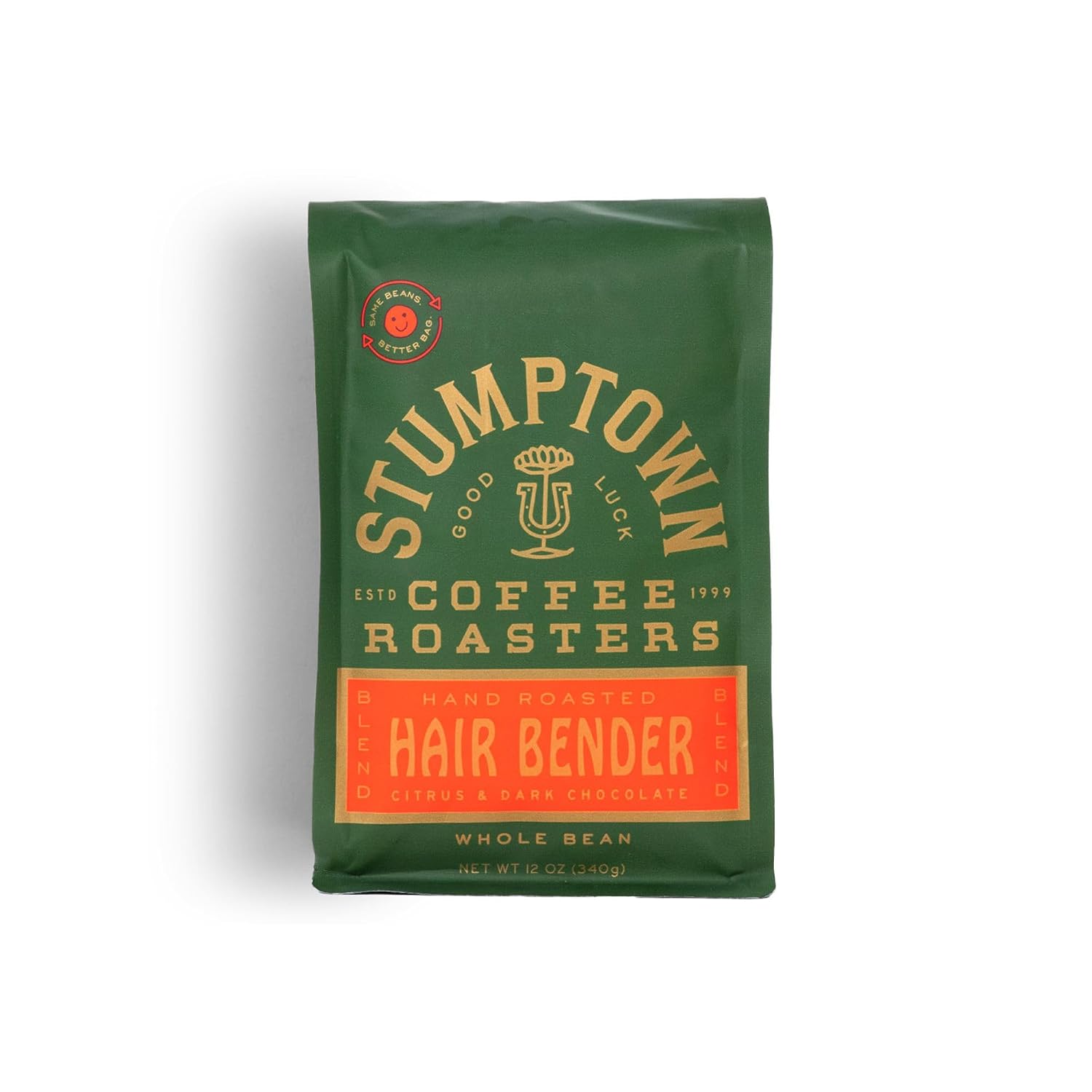
Stumptown Hair Bender
- RoastMedium
- Best forStandard or inverted
Best daily grind
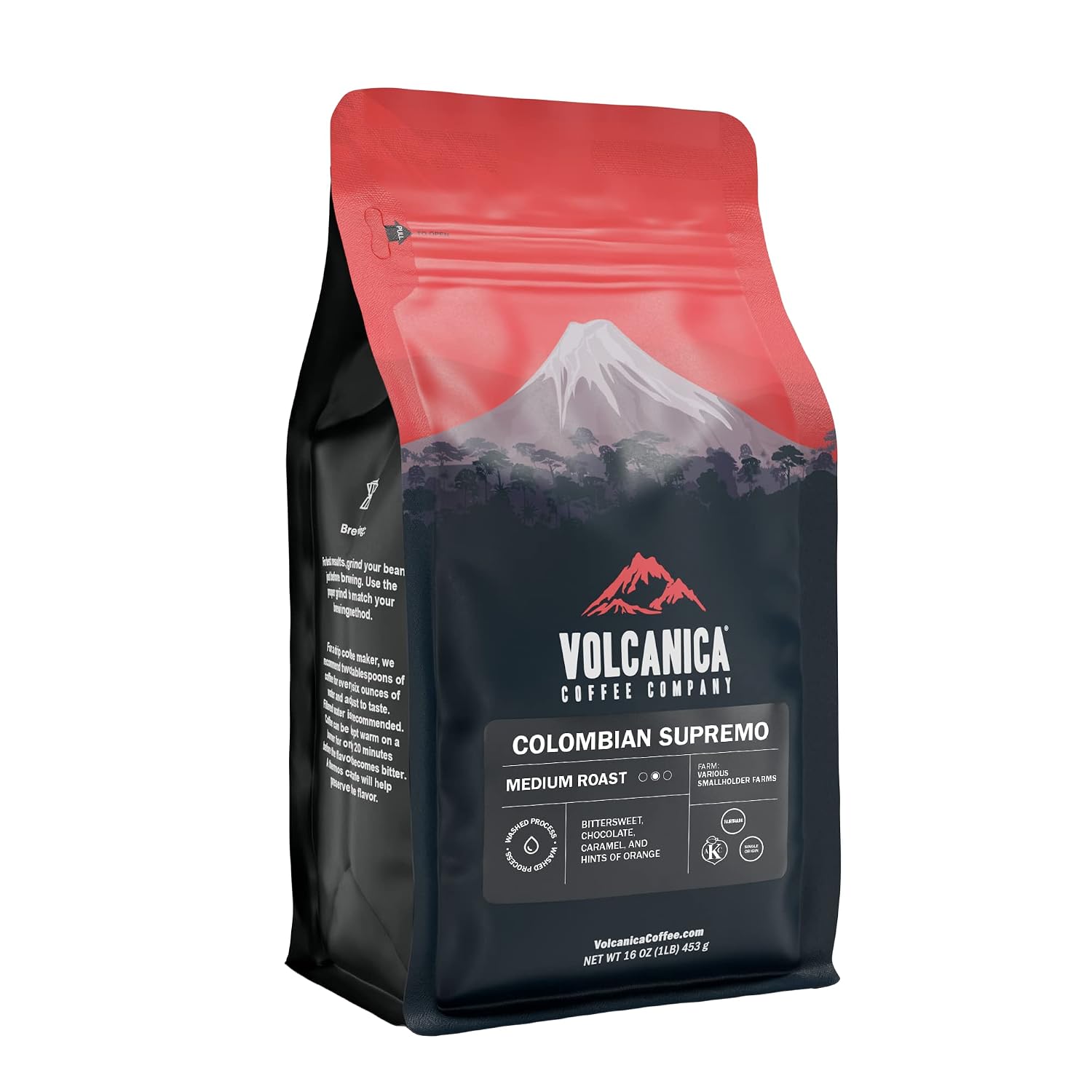
Volcanica Colombian Supremo
- RoastMedium
- Best forMedium-fine AeroPress
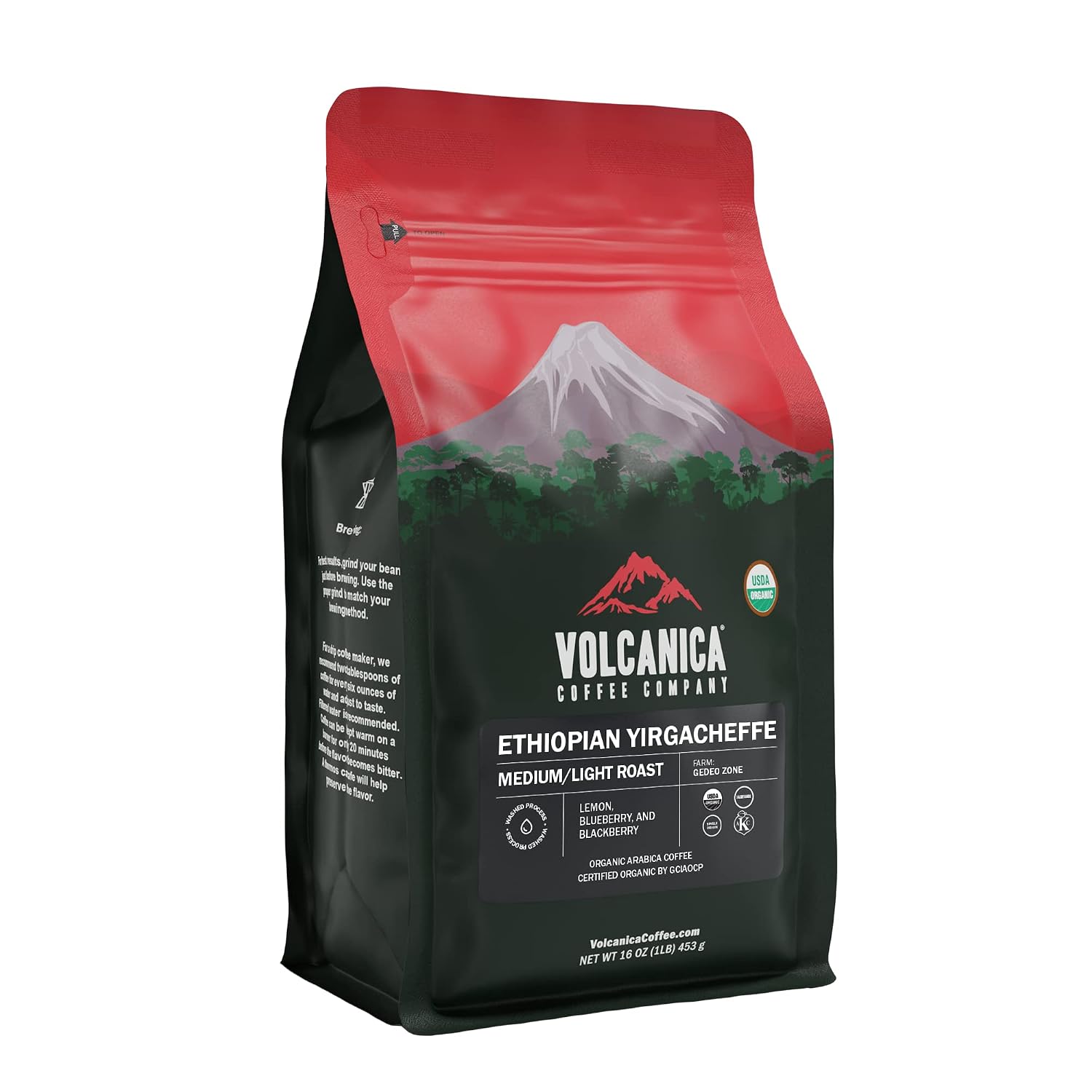
Best light AeroPress
Volcanica Yirgacheffe
- RoastLight
- Best forFloral short brew
Coffee & Roaster | Origin / Blend | Roast Level | Cup Profile | Best For | Bag Size / Price Range | Grind Options | Notable Drawbacks |
|---|---|---|---|---|---|---|---|
Joe Coffee Benchmark | Peru (washed) | Medium-light | Chocolate, citrus, caramel | Best overall | 12 oz / $18–$22 | Whole bean, AeroPress grind | Mid-price; gentle for bold-coffee fans |
Kicking Horse Three Sisters | Blend (Central/South America) | Medium | Stone fruit, cocoa, mild acidity | Best value | 12 oz / $11–$14 | Whole bean | Roast dates less transparent |
Ethiopian Natural (various roasters) | Ethiopia (natural) | Light | Blueberry, strawberry, floral | Best fruity & bright | 10–12 oz / $18–$26 | Whole bean | Can taste sour if under-extracted |
Colipse Mexico Alma de Chiapas | Mexico (sun-dried) | Medium | Dark chocolate, lemon, hazelnut | Best chocolatey comfort | 12 oz / $16–$20 | Whole bean | Not widely stocked in retail |
Lavazza Super Crema | Blend (global) | Dark | Roasted nuts, dark chocolate, mild smoke | Best dark roast | 2.2 lb / $16–$20 | Whole bean | Large bag; staling risk if brewing slowly |
Doma Jackie Oh Decaf | Ethiopian blend (Swiss Water) | Medium | Citrus, malt, chocolate | Best decaf | 12 oz / $18–$22 | Whole bean | Higher price per ounce vs generic decaf |
Joe Coffee Benchmark (ground) | Peru (washed) | Medium-light | Chocolate, citrus, caramel | Best pre-ground | 12 oz / $18–$22 | Pre ground (AeroPress grind) | Stales faster than whole bean |
A few notes: paper AeroPress filters pair especially well with the lighter roasts (Ethiopian, Benchmark) for a tea like cup, while a metal filter adds body to the Lavazza or Colipse picks. The AeroPress XL’s larger brewing chamber works fine with all of these-just scale your dose up.
How We Selected and Evaluated Coffees
These picks are based on researched editorial analysis. We pulled from roaster data, Q-grader notes, AeroPress competition results, and aggregated third-party expert and consumer reviews from 2024–2026. A 2023 study on brewing reproducibility confirmed that AeroPress recipes demand tight control of variables-meaning the beans you choose interact heavily with your grind, ratio, and contact time.
Selection criteria:
- Flavor performance in AeroPress coffee: Clarity, balance, sweetness, and how profiles shift with contact time and brew ratio. Brewing with the AeroPress highlights distinct flavor notes in coffee, so we prioritized beans that reward that transparency.
- Roast level and solubility: Suitability for AeroPress as a brewing method, using immersion brewing with a medium fine grind. The AeroPress can extract flavors uniformly across different roast profiles, but each roast level demands different water temperatures and steep times.
- Freshness and availability: Focus on coffees consistently roasted fresh and shipped across the US-not one-off limited microlots only locals can access. Fresh whole-bean coffees yield the best flavor clarity in AeroPress.
- Value and bag sizes: Fair price per ounce for specialty quality, with common 10–12 oz or 2 lb options that suit daily AeroPress usage.
- Transparency and sourcing: Preference for clearly labeled origins, processing methods, and roast dates. Single origin beans with altitude, varietal, and farm data scored higher.
No recommendation implies health benefits beyond normal coffee. We avoid unsupported wellness claims.
Detailed Picks: Best Coffee Bags for AeroPress in 2026
Each pick below includes a “best for” label, roast level, origin, tasting notes, AeroPress-specific brewing guidance, and honest trade-offs. Where we discuss how a coffee behaves in AeroPress, we’re synthesizing reliable expert recipes and community consensus, not claiming proprietary testing.
Best Overall: Joe Coffee Benchmark (Peru)
Joe Coffee’s Benchmark blend, sourced from Peruvian lots, has earned consistent praise across specialty review sites for its balance and accessibility in immersion brewing. It’s the kind of bag you can hand to anyone and get a delicious coffee result.
- Roast level: Medium-light
- Flavor profile: Cacao, citrus zest, caramel sweetness. Very clean when brewed with paper AeroPress filters-produces a bright yet approachable morning cup.
- AeroPress recipe: Start with a medium fine grind (slightly finer than drip), 16 g coffee to 240 g hot water at 200°F, 1:30 steep plus a 30-second press. This ratio (roughly 1:15) lands squarely in the sweet spot for a single cup.
- Value: Around $18–$22 for 12 oz. Mid-price specialty coffee that offers same quality you’d get from pricier microlots, with reliable availability. Joe Coffee also lets you select “AeroPress grind” at checkout.
- Limitations: May feel too gentle for anyone who prefers dark, smoky flavors. Not the cheapest option for daily high-volume drinkers.
Best Budget Pick: Kicking Horse Three Sisters
If you want more coffee for less money without sacrificing too much coffee quality, Kicking Horse Three Sisters is a strong grocery-aisle option. Independent reviewers on specialty forums consistently rate it above average for AeroPress brewing, especially at its price point.
- Roast level: Medium
- Flavor profile: Stone fruit, cocoa undertones, and low acidity. Medium roasts provide a balanced, chocolatey experience that’s forgiving of minor grind or ratio mistakes. Organic certified.
- AeroPress recipe: Grind slightly finer than typical drip, use a 1:14–1:15 brew ratio for more punch, and keep contact time to 1:00–1:20 to control bitterness. Works well with the standard method.
- Value: Around $11–$14 for 12 oz at most US grocery stores. Hard to beat for daily AeroPress coffee.
- Limitations: Roast dates are often less transparent than small-batch specialty roasters. Check bags for the newest stock. Not as complex or interesting as single origin beans from smaller roasters producing in small batches.
Best Fruity & Bright: Ethiopian Natural Single Origin
For coffee lovers chasing berry-bomb vibrancy, a naturally processed Ethiopian single origin is the quintessential modern AeroPress experience. Multiple specialty roasters across the US (look for names like Counter Culture, Onyx, or Brandywine) offer rotating Ethiopian naturals that consistently score above 85 on cupping scales.
- Roast level: Light
- Flavor profile: Blueberry, strawberry jam, floral aromatics. Light roasts preserve complex acidity and floral flavors in AeroPress brewing. With a paper filter, expect a tea like cup with remarkable transparency. Ethiopian Limu coffee, when available, features floral aromas and a cocoa finish that’s particularly stunning in AeroPress. Kenyan coffee beans, as an alternative, deliver vibrant acidity and fruity notes.
- AeroPress recipe: Use the AeroPress Original or AeroPress Clear with either the standard or inverted method. The inverted method allows for longer steeping times-helpful here. Medium fine grind, slightly cooler water (195–200°F), and 2:00–2:30 contact time to tame sharpness while keeping fruit. Light roasts offer a tea-like transparency in flavor that rewards patience. Immersion time for light roasts should be 1 to 2 minutes in AeroPress.
- Limitations: Can taste too sour or “winey” for those used to traditional dark roast coffee. Requires tighter control of grind size and water temperature. Light roasts require longer steep times for full extraction, so don’t rush the steep.
Naturally processed Ethiopians are a polarizing pick. If you find the fruit notes overwhelming, try a washed Ethiopian instead-cleaner acidity, same origin character.
Best Chocolatey Comfort Coffee: Colipse Mexico Alma de Chiapas
Colipse’s Alma de Chiapas is a sun-dried, hand-harvested Mexican single origin that third-party tasters describe as cocoa-forward with caramel and nut notes. It’s ideal for people upgrading from drip or pod coffee to AeroPress coffee without shocking their palate.
- Roast level: Medium
- Flavor profile: Dark chocolate, lemon brightness, hazelnut. Round body, excellent with milk. A reliable rich coffee for your morning routine.
- AeroPress recipe: 1:15 brew ratio, 1:30 contact time, medium grind leaning slightly finer. Works great with the AeroPress Go for travel lattes and with a metal filter for added heavy body.
- Value: Around $16–$20 for 12 oz, available online. Strong crowd-pleaser.
- Limitations: Not the most complex or “exotic” cup. Not widely stocked in brick-and-mortar retail-you’ll likely order online. But as a daily comfort pick, it’s easy-drinking and forgiving.
Best Dark Roast: Lavazza Super Crema
Dark roasts deliver a heavy, bold body in coffee, and Lavazza Super Crema is one of the most widely available dark blends that avoids tipping into ash and bitterness. Reviewers across the coffee world consistently praise it for espresso machines and immersion brewing alike.
- Roast level: Dark
- Flavor profile: Roasted nuts, dark chocolate, light smokiness without harsh char. Suits drinkers who want a bold AeroPress cup or a concentrated shot for lattes. Medium-to-dark roasts are preferable for concentrated espresso-style AeroPress recipes.
- AeroPress recipe: Grind slightly coarser than for medium roasts. Dark roasts benefit from cooler water to avoid bitterness-aim for 185–195°F, using water just off boiling rather than boiling water directly. Keep contact time short (45–75 seconds) to prevent over-extraction. A metal filter or Fellow Prismo adds body. Aim for a one-minute plunge time for optimal extraction.
- Value: Around $16–$20 for a 2.2 lb bag-excellent per-ounce value. If you’re brewing more than one cup a day, the larger bag makes sense.
- Limitations: Masks subtle origin character. Not ideal for those chasing floral or nuanced fruit notes. The large bag size means you need to use it within a few weeks before it stales. Also check out our guide to best coffee beans for espresso if you want true espresso-forward options.
Best Decaf: Doma Coffee Jackie Oh Decaf
Finding a decaf that doesn’t taste flat or hollow in AeroPress is genuinely difficult. Doma Coffee’s Jackie Oh Decaf uses Swiss Water Process on a natural Ethiopian blend, and independent reviews praise it as sweet and clean-not a compromise cup.
- Roast level: Medium
- Flavor profile: Citrus, malt, finishing chocolate. The AeroPress paper filter removes heavy oils to keep the cup clean and transparent, which flatters this decaf’s subtle sweetness rather than exposing emptiness.
- AeroPress recipe: Same grind and ratio as medium roasts-1:15 to 1:16, medium fine-with 1:30 to 2:00 contact time. Freshness matters even for decaf beans; treat them with the same urgency.
- Who it suits: Evening AeroPress drinkers, people sensitive to caffeine, anyone who wants a perfect cup after dinner without the jitters.
- Limitations: Slightly higher price per ounce versus generic decaf blends. Limited retail distribution-order direct from Doma.
Best Pre-Ground Option: Joe Coffee Benchmark (AeroPress Grind)
If you don’t own a grinder, Joe Coffee’s Benchmark with their “AeroPress grind” option is a solid choice. The grind is calibrated for AeroPress flow resistance, and the roast-to-order model means it ships relatively fresh.
- Roast level: Medium-light
- Flavor profile: Same balanced chocolate and citrus as the whole-bean version, though pre ground coffee will lose some aromatic brightness within days of grinding.
- Usage guidance: Store in the original valve bag, resealed tightly, and use within two weeks of the grind date. Ground coffee stales faster because more surface area is exposed to air.
- Limitations: You lose the flexibility to fine-tune grind size for different AeroPress recipes, different styles of brewing, or different AeroPress models. Freshly ground coffee retains more flavor than pre-ground coffee-always. If you find yourself enjoying AeroPress brewing, a small burr grinder is the single best upgrade you can make.
How to Choose the Best Coffee for Your AeroPress
Choosing beans comes down to matching roast, origin, and processing to your preferred AeroPress cup profile and daily workflow.
- Roast level: Light roasts preserve complex acidity and floral flavors. Medium roasts provide a balanced, chocolatey experience. Dark roasts produce rich, heavy body. AeroPress recommends experimenting across different origins and roast levels to find what you enjoy most. Paper versus metal AeroPress filters change perceived body and oils at every roast level.
- Origin and processing: Washed Latin American coffees taste cleaner and easier-great for beginners. Natural Ethiopians or anaerobic lots are more intense and fruity, rewarding experienced brewers. High-altitude beans are denser and richer in flavor, which AeroPress’s clarity reveals beautifully.
- Brew ratio and capacity: Choose beans that work with 1:14–1:17 ratios in your AeroPress Original, AeroPress Clear, or AeroPress Go cup size. Consider whether you often brew a concentrated shot for milk drinks or single full mugs of brewed coffee.
- Freshness and roast date: Buy from roasters that print dates. Freshly roasted beans peak in flavor 3 to 10 days post-roast. Aim to finish a bag within 2–4 weeks.
- Budget and availability: Balance “wow-factor” single origins with dependable house blends you can easily reorder. The best coffee beans are ones you can buy consistently without breaking your budget. Browse our coffee recommendations by brew method for more ideas across different styles.
Dialing in Your AeroPress Coffee: Brew Ratio, Grind Size, and Contact Time
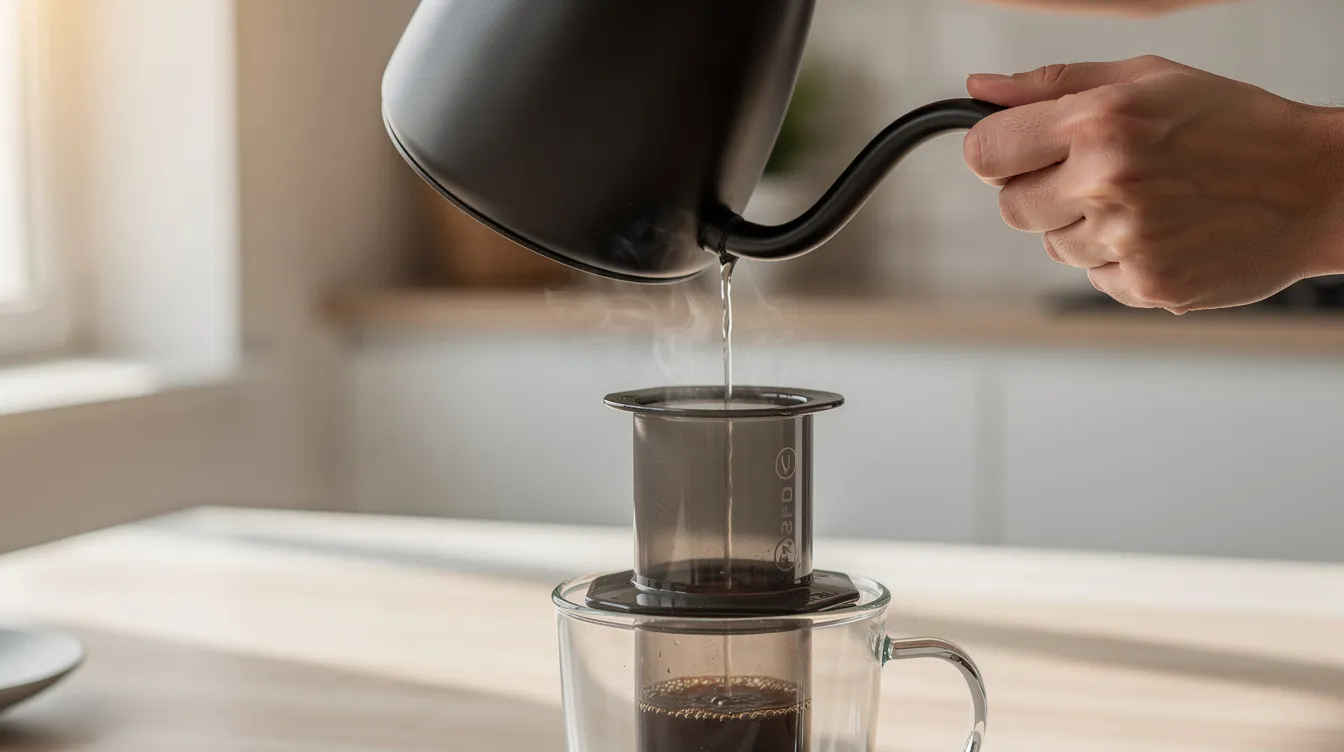
Even the best coffee beans for AeroPress will disappoint without attention to three core variables. Best results in AeroPress come from adjusting steep time and water temperature based on taste-not from switching beans every week.
Brew Ratio
Common AeroPress ratios range from 1:14 for stronger, more concentrated cups to 1:16–1:17 for cleaner, filter-like clarity. A simple baseline: 16 g coffee to 240 g water. For a more intense single cup, try 18 g to 220 g. These ratios work across the AeroPress lineup.
Grind Size
A medium fine grind size is ideal for AeroPress brewing-roughly the texture of table salt, slightly finer than drip and noticeably coarser than espresso. Research on brewing reproducibility measured optimal AeroPress particle size around 800 µm, confirming the medium-fine sweet spot. Grind size should match the type of coffee used: grind a click or two finer for stubborn light roasts, slightly coarser for soluble dark roasts.
Signs your grind is off:
- Too fine: Very hard press, bitter or astringent taste, coffee grounds clogging the filter cap.
- Too coarse: Fast, easy plunge, thin and sour flavor, weak body.
Contact Time
Typical total contact time (steep plus press) falls between 1–2 minutes for most roasts. Longer contact times-up to about 3 minutes-suit dense, light roasts, especially when using the inverted method. Darker roasts need shorter brew time (45–90 seconds) to avoid over-extraction. Water temperature should be between 185°F and 205°F; adjust based on roast type. AeroPress’s own guidance suggests 175–185°F for dark roasts and 195–205°F for light and medium roasts. Water temperature should be adjusted based on roast type in AeroPress-it’s one of the most impactful variables you can control.
The AeroPress Original, AeroPress Go, and AeroPress XL don’t change these fundamentals-just batch size and ergonomics. The brewing chamber dimensions are proportional, so recipes scale cleanly.
Filtration, Materials, and Cup Profile: Paper vs Metal Filters, Original vs Steel
AeroPress filtration choices and body materials subtly change cup profile, heat retention, and workflow-even with the same coffee beans.
Paper vs Metal AeroPress Filters
- Paper filters: Produce a cleaner, brighter cup with less body and fewer oils. The AeroPress paper filter removes heavy oils to keep the cup clean and transparent. This is ideal for fruity, light roasts and high-clarity AeroPress coffee. Standard AeroPress filters and filter papers are cheap and disposable-use a fresh one each brew.
- Metal filters: Deliver more body, fuller mouthfeel, and aromatic oils passing through. Good for chocolatey or dark roast coffee, or when you want something closer to a French press without the sediment.
The AeroPress can highlight delicate notes of light-roast coffee with paper filtration in ways that metal filters sometimes muddy. Choose filtration based on your target cup profile.
Materials and Models
- AeroPress Original and AeroPress Clear: Classic polypropylene or Tritan plastic. Excellent durability, lightweight, good heat retention for a single cup. The clear version lets you watch the brewing chamber fill-useful for learning.
- AeroPress Steel: Uses the least plastic among models. Higher mass means slightly more heat retention, but it’s heavier and sometimes has a narrower chamber requiring more stirring.
- AeroPress Premium: Made of borosilicate glass and aluminum. Stylish, more fragile, potentially slightly different thermal behavior-but broadly similar coffee extraction according to community consensus.
Cup profile changes between models are generally subtler than differences between beans or roast levels. Choose filtration and models around workflow, cleaning, and durability as much as taste.
AeroPress Lineup and Capacity: Matching Coffee to Original, Go, XL, and More
The core AeroPress lineup as of 2026 includes the AeroPress Original, AeroPress Clear, AeroPress Go, AeroPress XL, and premium variants (AeroPress Premium, AeroPress Steel, Go Plus). Here’s how capacity affects your coffee buying.
Capacity by Model
- Original and Clear: Ideal for 1–3 small cups or one 8–10 oz mug per press. The original AeroPress is the most budget-friendly model in the lineup.
- AeroPress Go: The AeroPress Go brews 1–2 cups of coffee. Optimized for a single travel mug–sized AeroPress cup. Great for those buying smaller 8–10 oz bags and brewing daily on the road.
- AeroPress XL and Clear XL: The AeroPress XL brews up to 3–4 cups at once. Higher capacity for couples or larger batches. May benefit from slightly coarser grind and more careful stirring with larger doses.
Bag Size Guidance
- If you brew a single cup daily, a 10–12 oz bag lasts roughly 2–3 weeks-right in the freshness window.
- If you’re making more than one cup a day with an AeroPress XL, a 2 lb bag can make sense, but only if you’ll consume it before it stales.
- Freshly roasted coffee should be used within 14 days for peak flavor. Stale coffee beans lose their carbon dioxide and flavor over time.
Workflow and Cleaning
Most AeroPress models clean up in seconds-pop the filter cap, push the puck into the compost, rinse. The AeroPress Premium often requires hand-wash only due to glass components. Pick coffee and bag volume with your model and morning routine in mind.
Brewing and Freshness Guidance for AeroPress Coffee
The best coffee in the world won’t save a stale bag or sloppy technique. Here’s how to protect your AeroPress experience day to day.
Freshness and Storage
- Buy whole beans in one-way valve bags. Choosing whole beans and grinding them just before brewing enhances coffee freshness dramatically.
- Coffee should be stored in a cool, dark place to maintain freshness. Keep beans in original packaging or an opaque canister-avoid clear jars on sunny countertops.
- Skip the fridge or freezer unless storing an unopened bag long-term. Condensation and odor absorption degrade flavor.
Roast Date and Usage Window
- Coffee beans peak in flavor 3 to 10 days post-roast. Start brewing a few days after roast date for optimal sweetness and clarity.
- Lighter roasts often stay vibrant slightly longer than very dark roasts, but all freshly roasted beans should be consumed within about two weeks.
Workflow Tips
- Use a burr grinder for consistent particle size. Even an entry-level hand burr grinder outperforms blade grinders.
- A basic digital scale ($10–$15) and a kettle with temperature control make your AeroPress coffee repeatable.
- Simple baseline recipe that works across many beans: 16 g coffee, 240 g water at 200°F, 1:30 steep, 30 seconds press. Adjust from there.
Cleaning
Rinse the AeroPress cup, plunger, and filter cap after each brew. Stale coffee grounds and residue in the seal affect future cups. It takes about 10 seconds and keeps every morning cup tasting like the first.
Related Guides and Next Steps
If you’re exploring the coffee world beyond AeroPress, these Capitol City Coffee guides can help:
- Explore all our coffee guides for a full overview of beans, gear, and techniques.
- See coffee recommendations by brew method to find picks tailored to your specific brewer.
- Looking for something bolder? Check out the best coffee beans for espresso machines.
- Prefer richer, unfiltered brews? Our best coffee for French press guide covers heavier-bodied options.
- Want a chilled option alongside your AeroPress routine? See best coffee for cold brew.
Your next step: Pick one recommended bag from this list and brew it with the baseline recipe (16 g coffee, 240 g water, 200°F, 1:30 steep). Adjust grind size by one click at a time until the cup tastes right to you. Change one variable per brew-not everything at once. That’s how you go from decent AeroPress coffee to a perfect cup, every single time.
Our AeroPress Coffee Picks
We matched one coffee to each AeroPress mood below. Tap the image or the coffee name. Research-rated, not yet brewed by our team.
Feeling travel: a versatile house blend
Our pick: Stumptown Hair Bender, whole bean. Holds up to AeroPress immersion whether you brew inverted or standard. Research-rated, not yet brewed by our team.
Feeling everyday: a Colombian press
Our pick: Volcanica Coffee Colombian Supremo, medium roast, Fair Trade, whole bean, 16 oz. Grind medium-fine for AeroPress. Research-rated, not yet brewed by our team.
FAQs: Best Coffee for AeroPress in 2026
These FAQs cover common questions not fully addressed in the main article, focused on AeroPress coffee makers, bags, and brewing details.
Can I use espresso beans or espresso blends in an AeroPress?
Yes. Espresso-labeled beans are typically darker roasts and can work well in AeroPress, especially for strong, syrupy cups or milk drinks. Use cooler water (around 185–195°F), a slightly coarser grind than true espresso, and shorter contact time to avoid bitterness. While an AeroPress coffee maker can produce an “espresso-style” concentrated shot, it cannot reach true 9-bar espresso pressure, so flavor and texture will differ from café espresso. It still makes excellent rich coffee for lattes and cappuccinos.
What grind setting should I use on my grinder for AeroPress?
Start with a medium fine grind roughly similar to table salt. On most burr grinder models, this falls a few clicks finer than the standard drip setting. Small changes-one or two clicks-can significantly change the AeroPress cup profile due to its combination of immersion and pressure. If your grinder has a manufacturer chart, look for the AeroPress or “fine drip” mark as a starting point and fine-tune from there based on taste and plunge resistance.
How many grams of coffee per AeroPress cup is best?
Common ranges are 14–16 g for a lighter, filter-style cup and 17–20 g for stronger or concentrate-style brews. A simple baseline: 16 g coffee to 240 g water. AeroPress scoops hold roughly 11–14 g depending on how heaped they are, so a digital scale is far more reliable than volume measures. If you use the AeroPress XL for larger batches, scale up proportionally-30–36 g for two full mugs, for example.
Is pre-ground supermarket coffee good enough for AeroPress?
AeroPress will brew drinkable coffee with most pre ground supermarket options, but flavor and aroma will be less vibrant than freshly roasted beans ground right before brewing. Choose the freshest-looking bag-ideally with a visible roast or “best by” date-and pick a grind labeled as “fine drip” or “filter” rather than coarse. If you find yourself enjoying the AeroPress and want a noticeable quality jump, a small burr grinder and whole beans is the single biggest upgrade in the coffee business of home brewing.
Do different AeroPress models change which coffee I should buy?
AeroPress Original, Clear, Go, and XL all brew similar-tasting coffee with the same beans. Main differences are capacity, portability, and materials. The AeroPress Go’s smaller capacity may suit smaller 8–10 oz bags if you travel often, while XL brewers pair well with larger bags if you make many cups per day. The AeroPress Clear allows visibility during brewing, which is handy for learning. Roast level, freshness, and flavor profile matter far more than the specific AeroPress model when choosing the best coffee bag. All that really matters is matching beans to your cup preference and brewing with care.