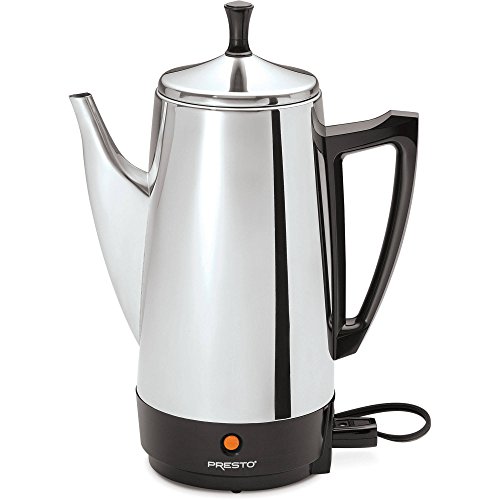
If you want a coffee maker that delivers strong, full-bodied cups without fussing over pods or paper filters, a coffee percolator is worth a serious look. After researching verified specs, expert roundups, and owner feedback across dozens of models, our top pick for the best coffee percolator for most people is the Presto 02811 12-Cup Stainless Steel Electric Percolator – it brews reliably, keeps coffee hot automatically, and costs less than most drip machines.
Below, we break down the best percolators by use case, explain what actually matters for flavor and durability, and help you choose between electric and stovetop models for home brewing, car camping, or feeding a large group.
Best best electric for families pick
For this roundup, Presto 02811 is the best electric for families we recommend first—the same pick at the top of our At-a-glance cards below.
Our researched top pick for most people is a mid-capacity electric percolator with stainless steel construction, automatic keep-warm, and a generous grounds basket that produces a stronger cup than standard drip coffee.
Percolator coffee is bolder and less nuanced than modern drip coffee or pour over, but it excels for large batches, nostalgic flavor, and simple brewing at home or on a camping trip.
Choose between electric and stovetop percolators based on workflow preference (set-and-forget vs. more control over heat), where you brew (kitchen countertop vs. campsite), and capacity needs (solo drinker vs. crowd).
Grind size, brew time, and brew ratio have more impact on your cup of coffee than brand name alone – coarsely ground coffee plus 5–8 minutes of gentle percolation typically delivers the best results.
All recommendations in this guide are based on researched editorial analysis of verified specs and expert/owner consensus, not on Capitol City Coffee’s own lab tests.
Affiliate Disclosure
Capitol City Coffee may earn a small commission if you purchase through links in this guide, at no extra cost to you. Our rankings and opinions are independent editorial analysis – not influenced by commissions or brand partnerships. Product pricing and availability may change after publication, so verify details on the retailer’s page before buying.
Quick Answer: The Best Coffee Percolator for Most People
For most home users in the U.S., the Presto 02811 12-Cup Stainless Steel Electric Percolator is the best percolator overall. It brews up to 12 cups (approximately 60 ounces at 5 oz per “cup”), features an all-stainless interior, switches automatically to keep-warm when finished brewing, and includes a signal light so you know when your coffee pot is ready.
The Presto beats other percolators in its price range because of its simple workflow, reasonable brew time of roughly one cup per minute, and dependable performance over years of daily use. It suits anyone who wants nostalgic, rich coffee with modern safety features – households that routinely brew a full pot, small offices, and coffee drinkers who dislike buying disposable filters. The Presto Percolator brews coffee quickly and shuts off automatically, removing the guesswork from the brewing process.
If you prefer a classic stovetop coffee percolator, you’ll get more control over heat and contact time, but you’ll need to monitor the stove and time the brew yourself.
Top Picks: Best Coffee Percolators by Use Case
These are researched editorial picks covering daily home use, premium builds, budget options, camping, and plastic-free preferences. Popular coffee percolators include electric and stovetop models, and we’ve included both types below. Detailed pros, cons, and ideal users for each pick appear later in the “Detailed Picks” section.
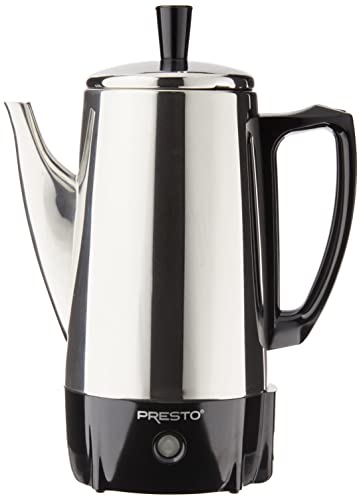
Presto 02811 (Electric, 12-Cup) – Best electric percolator for families. Stainless steel build, automatic keep-warm feature, signal light, brew time around 12 minutes for a full pot. Produces strong, bold percolator coffee with good body.
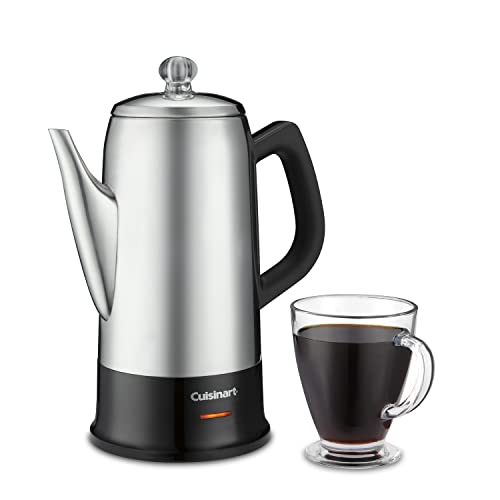
Cuisinart PRC-12N Classic (Electric, 12-Cup) – Best premium electric percolator. Thicker stainless steel body with better heat retention, 1000W heating element, no-drip spout, and detachable cord. The Cuisinart Classic 12-Cup Percolator brews coffee in four minutes for smaller batches.
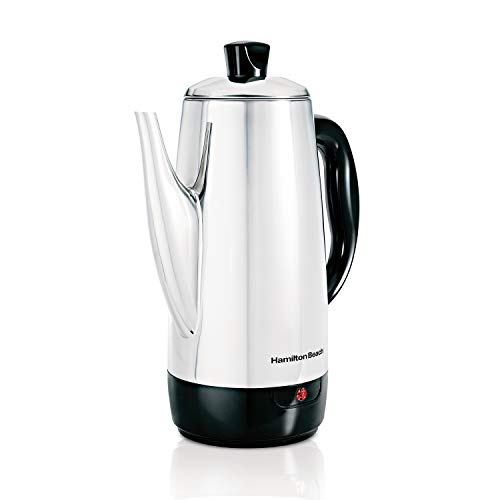
Hamilton Beach 40616 (Electric, 12-Cup) – Best budget electric percolator. The Hamilton Beach percolator has a 12-cup capacity and a stainless steel interior at a lower price. The Hamilton Beach 12-Cup Percolator scored extremely well in tests for basic reliability.
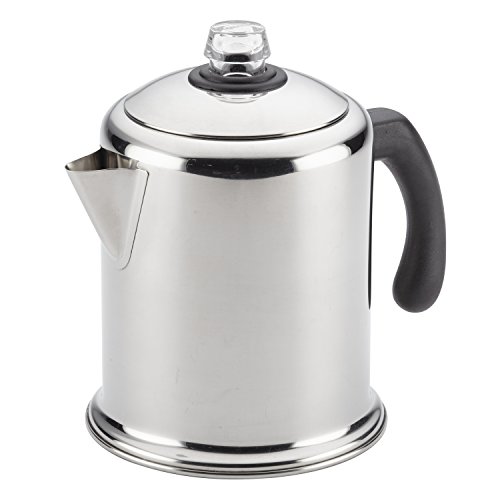
Farberware Classic Yosemite (Stovetop, 12-Cup) – Best stovetop percolator for home use. All-metal build, compatible with most cooking surfaces, and great for brewing coffee for a large group. The Farberware Yosemite has an 80-ounce capacity.
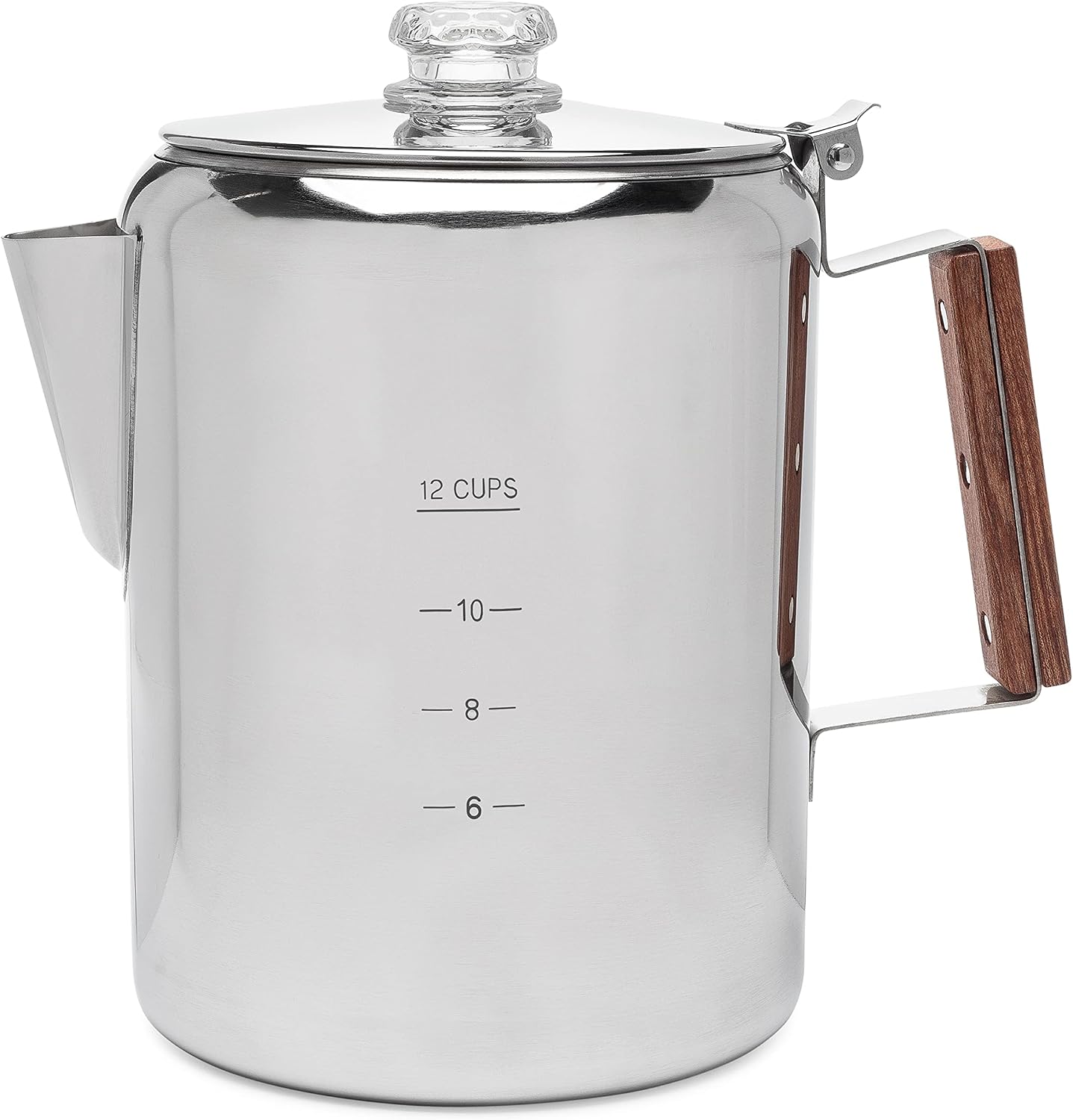
Coletti Bozeman (Stovetop, 12-Cup) – Best plastic-free percolator. All stainless steel with a glass knob, no plastic in the water path, designed for durability on stovetops and camp stoves.
Presto 02822 or Elite Gourmet EC140 (Electric, 6-Cup) – Best for solo drinkers or couples. A smaller percolator is suitable for one or two people, with faster brew time and less waste.
Comparison at a Glance: Percolator Lineup
This table summarizes the main percolators in the guide. Use it to quickly compare capacity, brew time, materials, and price.
The Cuisinart offers the fastest brew time for smaller batches. For the best value per ounce of capacity, the Hamilton Beach and Farberware Yosemite are hard to beat. Stovetop models like the Coletti Bozeman and Farberware Yosemite are the most camping-friendly since stovetop percolators are independent of electricity.
How We Chose These Coffee Percolators
This guide is researched editorial analysis, not hands-on lab testing by Capitol City Coffee. Our conclusions come from cross-referencing manufacturer specs, independent expert reviews, and verified owner feedback across multiple sources.
Selection criteria:
Cup profile and consistency – How strong, bitter, and full-bodied the finished coffee tastes, and how adjustable the output is via ratio and grind.
Filtration quality – Whether the basket design limits fines and silt in the cup or lets excessive sediment through.
Durability and materials – Stainless steel construction, quality of welds and handles, and whether replacement parts (knobs, baskets) are widely available.
Workflow and safety – Auto shutoff, keep warm feature, heat control, cool-touch handles, and secure lids.
Ease of cleaning – How quickly the stem, basket, and body disassemble, and whether parts are dishwasher safe.
Long-term value – Price relative to build quality and expected lifespan.
Both electric percolators and stovetop percolators were considered, with attention to use cases from daily home brewing to car camping. Models with recurring design failures – chronic knob breakage, basket warping, or hard-to-source parts – were deprioritized. We also acknowledge that taste is subjective: some coffee drinkers love the intensity of percolator coffee, while others prefer the cleaner cup from drip coffee or pour over methods.
How Coffee Percolators Work
A coffee percolator is a coffee pot that cycles boiling water up a hollow central stem and over coffee grounds held in a perforated metal basket, using gravity and steam pressure to drive the brewing process. It’s one of the oldest and simplest ways to make coffee at full batch scale.
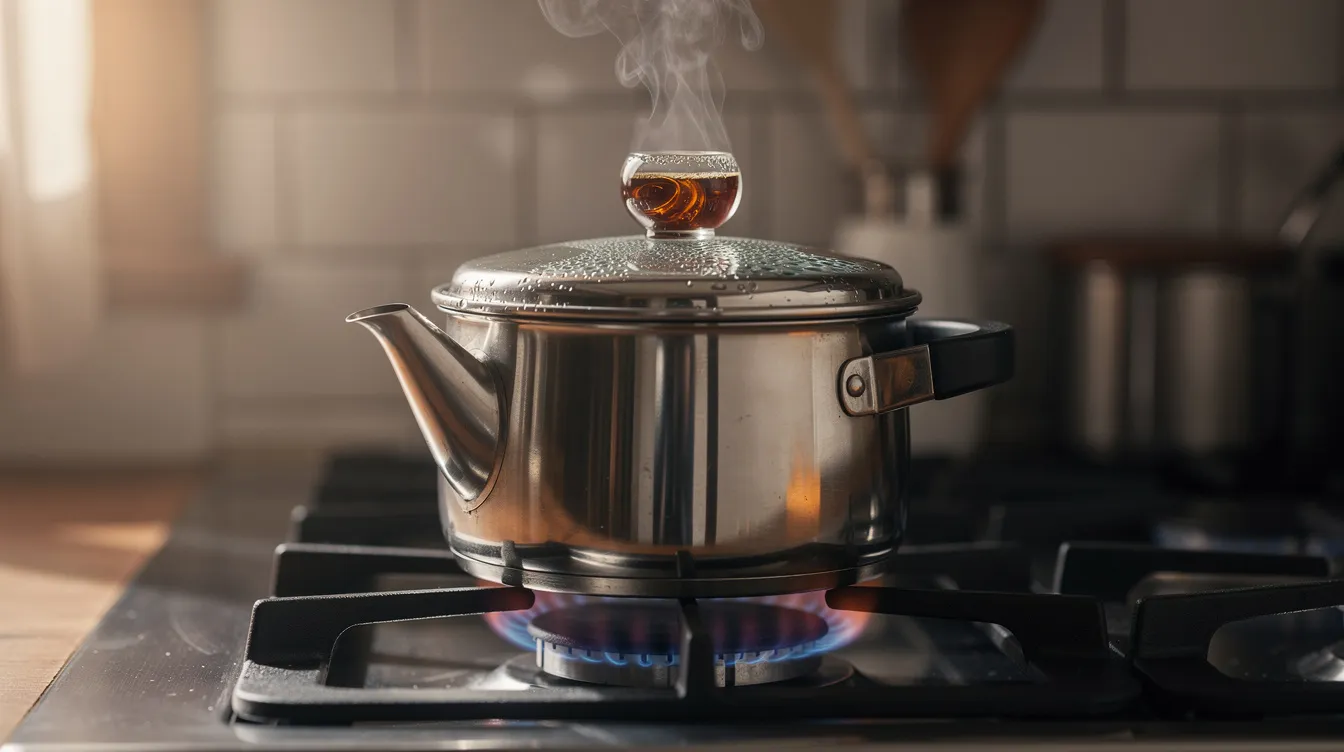
Here’s the cycle in plain language: you fill the reservoir with cold water, place the stem and loaded basket inside, and apply heat. As water heats to a boil, it rises up the stem, spills over a spreader plate onto the grounds basket, and drips through the coffee grounds back into the reservoir below. A percolator’s brewing process recycles coffee multiple times through those same grounds, which is what gives percolator coffee its signature strength – but also what invites overextraction if you let it run too long.
Unlike drip coffee makers that pass water through grounds only once, percolators recirculate brewed liquid repeatedly. This boosts body and intensity but can push bitterness if brew time or heat isn’t managed. Best practice for percolators involves monitoring the brewing process to avoid over-extraction.
The key parts – reservoir, stem, basket, spreader lid, and clear knob – are simple and mostly metal. You can monitor coffee strength by observing the glass dome on top, which lets you see the color and pace of the perking liquid. Metal baskets allow oils and fine particles through, giving more body but less clarity than paper-filtered drip coffee.
Electric vs. Stovetop Percolators
Both electric percolators and stovetop percolators use the same basic brewing principle – recirculating hot water through a grounds basket – but the workflow and best use cases diverge significantly. Coffee percolators are categorized based on brewing method: electric or stovetop.
Electric percolators handle heat automatically. They regulate temperature, switch to keep-warm when finished brewing, and often include a signal light. Electric models often have a keep-warm feature after brewing that lets coffee stay hot without a separate warming plate. Electric percolators brew faster than stovetop models because the heating element reaches boiling temperature quickly. Electric percolators can brew multiple cups at once without any manual adjustment. The downside: electric percolators can overheat coffee if not monitored, especially if left on keep-warm too long, and they need a power outlet – no use on a campfire.
Stovetop percolators give you more control. Stovetop percolators provide control over brewing time and strength because you manage the heat source directly. Stovetop percolators allow for more brewing control – you choose when to reduce heat, when to pull the pot, and how aggressive the perk rate gets. Stovetop models are lighter and more portable than electric versions, and stovetop percolators are independent of electricity, which makes them ideal for off-grid situations. The trade-off: stovetop percolators require the entire pot of water to heat before brewing begins, and you need to stay nearby to watch the perk rate and prevent scorching.
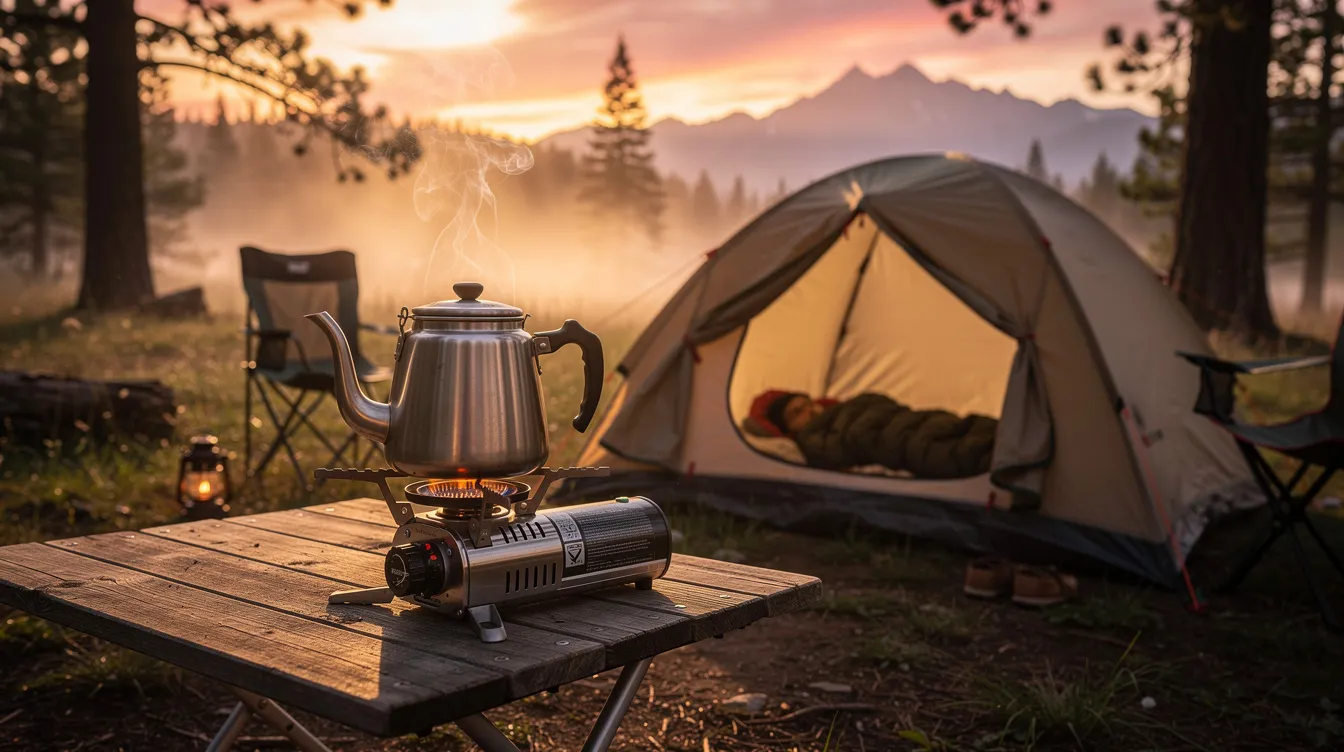
Two quick scenarios: On a weekday morning, an electric percolator on the kitchen counter lets you start brewing and walk away – the machine handles shutoff and keep-warm. On a Saturday morning at the campsite, a stainless steel stovetop model rides over a portable stove or campfire grate, and you adjust flame by eye to maintain a gentle perk.
Detailed Picks: Best Coffee Percolators Reviewed
Each pick below includes verified specs, a flavor profile summary, workflow notes, cleaning details, and who each coffee maker suits best. Assessments come from cross-referencing expert roundups, large-sample customer reviews, and manufacturer details – Capitol City Coffee did not run lab tests on brew time or extraction.
Models are grouped by type and use case. Ranking doesn’t imply perfection – each has trade-offs.
Best Overall Electric Coffee Percolator
Presto 02811 12-Cup Stainless Steel Electric Percolator
The Presto 02811 is the best percolator for most people because it balances brew quality, reliability, speed, and price better than other models in its class.
Capacity: 12 cups (~60 oz at 5 oz per cup)
Brew time: Approximately 12 minutes for a full pot (roughly one cup per minute)
Wattage: ~800W
Materials: Stainless steel body, stem, and basket; glass knob for monitoring; cool-touch handle
Features: Automatic keep-warm, signal light, standard (non-detachable) cord
The cup profile is strong and robust – more body and intensity than drip coffee makers, with some bitterness that deepens if the pot sits on keep-warm for extended periods. Compared to French press coffee, it’s similar in strength but less clean in the cup. The metal basket lets oils through, which adds richness but also means some sediment.
Workflow is straightforward: fill water to the marked fill lines, load the grounds basket with coarsely ground coffee, plug in, and wait. The glass knob lets you watch the perk rate, and the signal light tells you when the pot is done.
Pros: Reliable over years of use, stainless steel interior with no plastic in the hot water path, widely available replacement parts, strong value under $50. Cons: Spout can drip slightly during pours, base gets hot, no strength control beyond adjusting grind and dose, flavor degrades if keep-warm runs more than 20–30 minutes.
Best for: Multi-cup morning households, small offices, anyone who wants a good cup of strong coffee with minimal effort.
Best Budget Electric Percolator
Hamilton Beach 40616 12-Cup Electric Percolator
The Hamilton Beach 40616 delivers reliable percolator coffee at a lower price than the Presto or Cuisinart, making it a solid entry point for budget-conscious buyers.
Capacity: 12 cups (~60 oz)
Brew time: ~12 minutes for a full pot
Materials: Stainless steel interior; some external plastic on handle and base
Features: Keep-warm mode, indicator light
The flavor is comparable to other models – strong and full-bodied – though owner feedback suggests slightly less nuance and occasionally a bit more grounds in the last cup compared to the Presto. The thinner steel body loses heat faster during keep-warm.
Pros: Low price, stainless steel where it contacts coffee, reliable for basic daily use. Cons: Thinner metal, lid fit can feel loose, spout drips more than premium models, glass knob and plastic elements may degrade over time.
Best for: Buyers who want stronger coffee than basic drip coffee makers without investing in a high-end machine, or people who only brew percolator coffee a few times per week.
The Farberware Yosemite is a kitchen workhorse that’s been a staple stovetop model for decades. Its all-metal build handles gas, electric coil, and glass-ceramic cooktops, and the Farberware Yosemite produces ground-free coffee for large groups when paired with the right grind.
Capacity: 12 cups (~80 oz)
Brew time: 7–13 minutes from first perk, depending on heat
Stovetop compatibility: Gas, electric coil, glass-ceramic (check manufacturer specs for induction)
The coffee profile is strong and robust with more control over strength via heat adjustments and contact time. Grind size matters more here than with electric models – use a coarse grind to keep silt out of the cup. Stovetop percolators can be used on various heat sources including campfires, though the Yosemite is best suited to kitchen stovetops.
Workflow involves preheating the stove to medium-high until you see the first perk through the glass knob, then reducing heat to maintain a gentle, steady bubbling for 5–8 minutes. Remove from heat promptly.
Pros: Rugged construction, no electronics to fail, large capacity for hosting, classic design. Cons: Requires manual monitoring, handles can get hot, must time the brew yourself, not induction-compatible in most versions.
Best for: Home cooks who want a great cup of traditional-style coffee and don’t mind watching the stove, or anyone brewing for a large group at breakfast.
For car camping, the Coletti Bozeman is a standout. Heavy-duty stainless steel percolators are designed for rugged outdoor use, and this model delivers with all-metal construction, a secure lid, and compatibility with portable camp stoves.
Capacity: 9 cups (~45 oz)
Materials: All stainless steel; glass knob; no plastic
Camping percolators should be 32 ounces or less for two people, so the 9-cup Bozeman works well for small groups of 2–4. For larger parties, step up to the 12-cup version.
Brew time and heat control differ outdoors – wind and cold air extend heating time, and you’ll need to watch the perk rate more carefully to avoid a rolling boil that scorches coffee grounds. The glass knob is essential for visual monitoring.
Pros: Tough, packable, no plastic, works without electricity, nests reasonably with other camping credit gear. Cons: Handles get hot (bring a pot holder), not induction-compatible, glass knob is the most breakable part, you must supervise the brew.
Best for: Car campers, vanlifers, and RV owners who prioritize simplicity and durability over the ultra-clean cup profile of other brewing methods.
Best Plastic-Free (or Low-Plastic) Coffee Percolator
The 12-cup Coletti Bozeman earns this spot because every surface that contacts water or coffee is stainless steel or glass. There’s no plastic in the interior – the only non-metal part is the borosilicate glass knob on top.
Capacity: 12 cups (~60 oz)
Brew time: 7–13 minutes from first perk
Materials: All stainless steel body, stem, basket, lid; glass knob
The metal basket and filtration give a full-bodied cup with more oils and richness than drip coffee makers that use paper filters. Coffee produced this way has real weight in the mouth. Heat retention in an all-metal coffee pot is decent but not insulated – coffee cools faster than in a thermal carafe, so preheat mugs or transfer to a separate thermal pot if you want hot coffee for longer.
Workflow quirks: the exterior gets hot, so you need a pot holder. Weight is slightly higher than plastic-accented models. Cleaning is simple since all parts are metal or glass.
Best for: Buyers who want to avoid hot plastic contact entirely, people sensitive to off-flavors from plastics, or anyone who prefers classic stainless steel and glass aesthetics in their coffee pot.
Key Features That Matter in a Coffee Percolator
Before choosing a percolator, run through these factors. They matter more for daily satisfaction than brand logos.
Capacity – Measured in cups and ounces; match to your household size.
Materials – Stainless steel construction enhances durability and taste neutrality; avoid aluminum in the water path.
Heat source compatibility – Electric for outlets, stovetop for stoves and campfires; check induction compatibility.
Filtration and basket design – Mesh size affects body, clarity, and sediment.
Workflow and controls – Auto shutoff, keep-warm, signal lights, cool-touch handles.
Durability concerns – Welds, knobs, handles, and availability of replacement parts.
Capacity and Brew Time
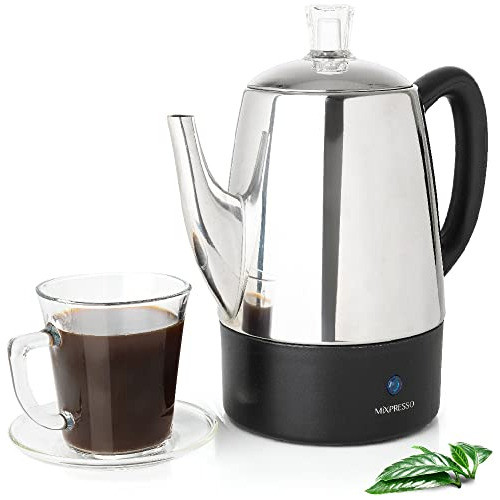
Most manufacturers define a “cup” as 5–6 ounces, not a full 8-ounce mug. A “12-cup” percolator actually produces about 60 ounces – roughly 7–8 real mugs. The Mixpresso electric percolator has a 10-cup capacity, which lands around 50 ounces.
Larger capacity coffee percolators require longer brew time. Percolators typically take 5 to 13 minutes to brew coffee, with smaller pots finishing faster. Electric models generally finish a full pot in about 10–12 minutes, while stovetop units vary more based on heat level.
Match capacity to your group size: 6–8 cups for individuals or couples, 10–12 cups for families or small gatherings. Oversizing wastes ground coffee and time. Brewing coffee in a percolator can take longer than in a Nespresso machine, but you get large batches instead of single servings.
Too short a brew time yields weak coffee that tastes thin and under-extracted. Too long leads to harsh bitterness because brewed coffee keeps cycling through the coffee grounds in the same way, over and over.
Materials, Heat Retention, and Durability
Stainless steel is the preferred material. It handles heat well, doesn’t leach off-flavors, and tolerates scrubbing and descaling. Aluminum interiors – found in some cheaper models – can add a metallic taste over time and are less durable.
Single-wall stainless pots lose heat faster than double-wall or insulated designs, but most percolators are single-wall. If keeping coffee hot matters, electric models with a keep-warm feature are more practical than stovetop units, which cool once removed from the stove.
Durability comes down to details: metal thickness, hinge quality on lids, handle attachments, and the glass knob. Knobs crack, handles loosen, and thin baskets warp – these are the most common failure points. Before buying, check whether the brand sells replacement parts.
Filtration, Grind Size, and Cup Profile
Most percolators use a metal basket with relatively large perforations, which lets coffee oils and small particles through. This gives a fuller-bodied cup but less clarity than paper-filter drip coffee. Percolators produce strong, bold, traditional-style cups of coffee, and percolators are known for producing a fuller-bodied cup compared to drip machines.
Coarse coffee grounds are recommended for percolators. Using coarsely ground coffee is similar to French press methods – aim for a particle size around 690–1,000 microns, roughly the texture of coarse sea salt. A coarser grind helps prevent grounds from passing through filters and keeps the cup cleaner. Finer grinds can lead to silt in percolator coffee and risk overextraction.
The Kidisle percolator allows for finer coffee grounds usage thanks to a denser mesh basket, but for most percolators, sticking with a coarse to medium-coarse grind is the safest bet. Adding a flat paper filter disc inside the basket can further clarify the cup if you want less sediment.
Workflow, Safety, and Ease of Cleaning
Consider how easy it is to fill the coffee pot to the desired level using fill lines, load the grounds basket, and monitor the brew. Strength adjustments happen through grind size, dose, and brew time – not buttons. A clear percolator knob is essential for sight monitoring, letting you see the color of the perking liquid darken as the brew progresses.
Safety matters: look for cool-touch handles, stable bases, secure lids, and appropriate cord lengths on electric models. Loose-fitting lids and hot handles are the most common sources of scalding complaints.
For cleaning, the stem and basket should disassemble easily. Some models have parts that are dishwasher safe, while others require hand washing. Brown scale buildup is inevitable – plan to descale with vinegar or citric acid every few weeks in hard-water areas. Easier cleaning encourages regular maintenance, which keeps finished coffee tasting fresh and extends the life of the coffee maker.
How to Choose the Best Coffee Percolator for You
Before fixating on brand names, think through where you brew, how often, and for how many people.
Electric vs. stovetop: Electric for convenience and consistency; stovetop for portability and control.
Capacity: Match to household size – don’t overbuy.
Indoor vs. outdoor: Kitchen-only buyers can go electric; campers need a stovetop model.
Materials: Stainless steel for durability and taste; minimal plastic if that’s a priority.
Some coffee drinkers may be better served by other brewing methods entirely – a French press for rich but less bitter cups, a pour over for clean clarity, or a cold brew maker for smooth, low-acidity iced coffee. Explore the full range of manual brewers and related gear if you want to compare.
Matching Brew Style: Percolator vs. Other Manual Brewers
Percolator coffee sits at the bold, high-body end of the spectrum. Compared to drip coffee, it’s stronger and more bitter. Compared to French press coffee, it’s similar in body but can run hotter and more extracted. Pour over delivers much cleaner, more nuanced cups where you taste individual origin notes.
Percolator: Strong, old-school breakfast coffee for drinkers who value intensity.
French press: Rich body with less bitterness and more control over steep time.
Pour over: High clarity, showcases lighter roasts and single-origin coffee beans.
Cold brew: Smooth, low-acidity, best for iced coffee.
If you mainly drink lighter-roast specialty coffee, a percolator probably isn’t your primary tool – it shines with medium-dark to dark roasts where the bold, smoky qualities complement the brewing process rather than fight it.
Considering Brew Ratio, Grind, and Contact Time
Start with a brew ratio of about 1:12 to 1:15 coffee to water by weight. A practical starting point: use 4 tablespoons of coffee for 20 ounces of water. Adjust stronger (more coffee) or weaker (less coffee) based on taste.
Coarser grind sizes slow extraction and reduce the risk of overextraction during repeated percolation, while finer grinds intensify flavor but risk bitterness and sediment. A uniform grind from a burr grinder gives the most consistent results – blade grinders create uneven particles that extract at different rates.
Typical contact time ranges from 5–8 minutes after the first perk. Percolators take five to 13 minutes to brew coffee depending on capacity and heat source. Drip coffee makers brew coffee in less than seven minutes on average, so percolators are slower – but they reward patience with intensity.
Keep notes on grind, brew time, and flavor to dial in your recipe. Small changes compound across multiple rounds of percolation.
Maintenance and Cost of Ownership
Regular cleaning and descaling significantly improve flavor and extend the life of any percolator. Neglecting maintenance leads to bitter, stale-tasting coffee even with the same beans and ratio.
Recurring costs are minimal:
Replacement knobs or basket: $5–$15 depending on model
Optional paper filter discs: a few dollars per 100-pack
Descaling solution (or plain white vinegar): negligible
Basic descaling process for a stainless steel coffee pot: Fill with equal parts water and white vinegar, run a full brew cycle (or bring to a boil on the stove), then rinse with two cycles of clean water. In hard-water regions, do this every 2–4 weeks.
For electric percolators, never submerge the base or heating element in water. Avoid abrasive cleaners on the heating plate. For stovetop units, periodically check for warping on the bottom (which affects even heating) and make sure handle screws stay tight.
Compared with some automatic coffee makers that need proprietary filters or expensive descaling pods, percolators have relatively low long-term costs. Reusable metal baskets and simple stovetop model designs mean fewer parts to replace.
Using a Coffee Percolator: Step-by-Step Basics
Here’s how to start brewing in a typical percolator:
Measure water to the fill lines inside the pot. Use cold or room-temperature water.
Dose your coffee – use 4 tablespoons of coarsely ground coffee for every 20 ounces of water as a starting point. Pre ground beans work in a pinch, but freshly ground coffee tastes noticeably better.
Assemble the stem and basket, load the grounds basket, and close the lid.
Apply heat. For electric models, plug in and wait. For stovetop, use medium-high heat until you see the first perk through the glass knob.
Reduce heat (stovetop only) to maintain a gentle, steady perk – not a violent boil. Monitor coffee strength by observing the glass dome on top as the liquid darkens.
Time the brew. Aim for 5–8 minutes of active percolation. Pound for pound, percolators can become bitter if the brew time is too long.
Remove from heat (stovetop) or let the automatic shutoff engage (electric). Pour and serve.
For minimizing grounds in the cup: avoid very fine grinds, don’t overfill the basket, and consider placing an optional paper filter disc over the grounds.
On electric models, coffee can sit on keep-warm for roughly 20–30 minutes before flavors noticeably degrade. After that, the hot coffee starts tasting stale and increasingly bitter.
Percolator Coffee vs. Drip Coffee: What to Expect in the Cup
The repeated cycling of boiling water and brewed coffee through the grounds changes the cup profile fundamentally. Percolator coffee is typically stronger, more bitter, and less nuanced than what drip coffee makers produce. This isn’t a flaw – it’s the point. Percolators are known for producing a fuller-bodied cup compared to drip machines, and many coffee drinkers prefer that intensity.
In terms of body and clarity: percolator coffee has more body, more aroma, and a bolder presence, but muddled flavors. Drip coffee – especially through a glass carafe with paper filters – tastes cleaner and highlights subtle notes in quality coffee beans. The difference is less about “better or worse” and more about what style of cup you enjoy.
Medium-dark to dark roasts work best in percolators. These roast levels handle the aggressive extraction and bring caramelization and sweetness that offset the brewing process’s tendency toward bitterness. Lighter roasts lose their delicate notes. If you drink delicate single-origin beans, other methods like pour over will showcase them better.
Best Coffee Beans and Grind Practices for Percolators
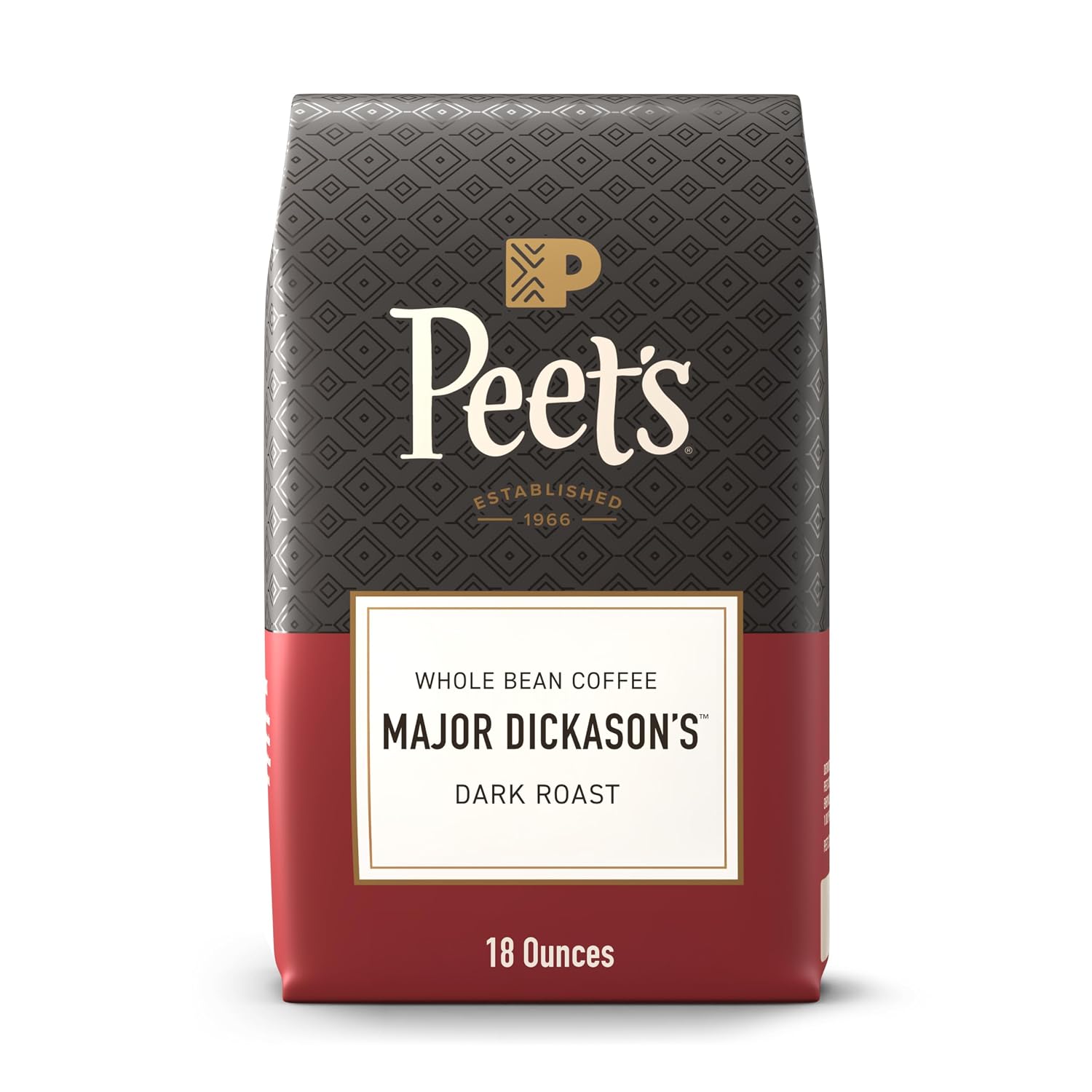
Choose fresh, whole-bean coffee in medium to dark roasts. Blends designed for strong brewed coffee or classic “breakfast” profiles work well. Avoid espresso-only roasts (too fine, too intense for the long contact time) and ultra-light roasts (flavors get lost in the recirculation).
Grind just before brewing using a burr grinder set to coarse – similar to a French press grind. A uniform grind reduces extraction inconsistency, which matters more in a percolator than in a one-pass drip machine since the same water passes through the same beans in the same way repeatedly.
Troubleshooting with grind adjustments:
Coffee too bitter or muddy? Go coarser.
Weak coffee at reasonable brew times? Go slightly finer.
Too much sediment? Coarser grind and/or add a paper filter disc in the basket.
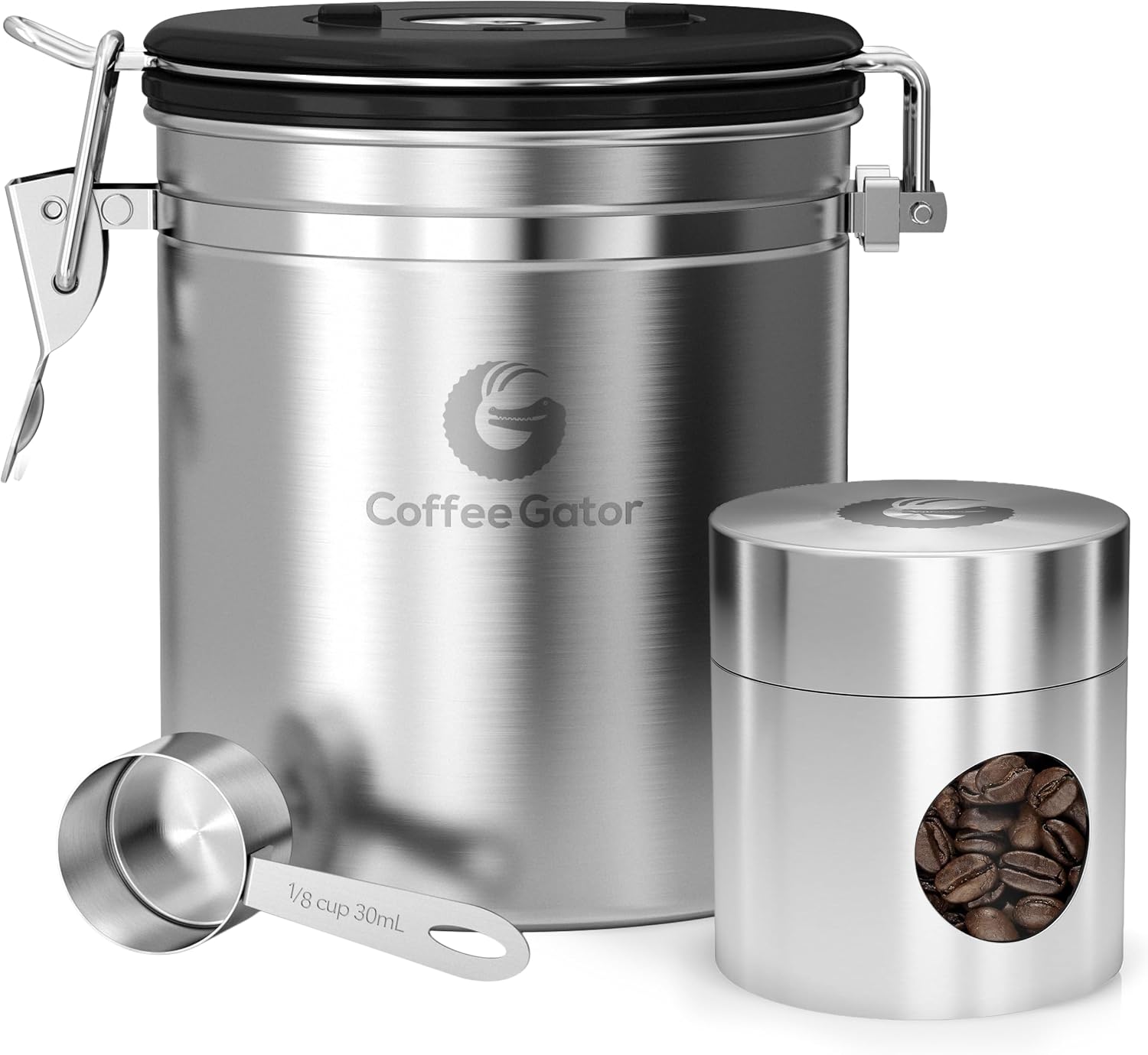
Store coffee beans in an airtight container at room temperature. Skip the fridge and freezer. Buy in small batches – coffee produced from stale beans tastes worse in a percolator than in other methods because the extended contact time amplifies staleness.
Where Percolators Fit in a Manual Brewer Setup
A percolator is one tool among several. It isn’t the only percolator you’ll ever need for every coffee situation – it’s a specialist for batch size, nostalgia, and bold flavor.
Percolators shine for early-morning crowd breakfasts, tailgates, car camping trips, and households where multiple people prefer strong, straightforward coffee in large quantities. They make coffee the same way every time, with minimal parts and no electronics (on stovetop models).
Consider pairing a percolator with at least one other method: a pour over for single-cup clarity when you want a cleaner taste, or a French press for a richer but less space-intensive brewing option that takes up less space on the counter. Exploring the best French press coffee makers, best pour over coffee makers, and best cold brew coffee makers under our manual brewers gear section gives you a more complete setup.
Think of coffee percolators as durable, low-tech gear that holds up over years when maintained – a solid long-term manual brewing investment that earns its keep every time you need a strong pot for a large group or a great cup at the campsite.
Frequently Asked Questions
These questions cover common concerns not fully addressed above, especially for readers new to percolator brewing.
Is percolator coffee bad for you compared with drip coffee?
Percolator coffee, like French press coffee, uses metal filtration that lets more oils through – including compounds called cafestol and kahweol that may modestly raise LDL cholesterol compared with paper-filtered drip coffee. This doesn’t make percolator coffee “bad,” but readers with cholesterol concerns should consult a healthcare professional. Moderate consumption or alternating with paper-filter methods can address this. Paper filters remove most of these compounds, while percolators do not.
Can you use a percolator on an induction cooktop?
Only percolators with magnetic stainless steel bases work on induction stoves. Many stovetop models – including some versions of the Coletti Bozeman – are not induction-compatible despite being fully stainless steel. Check manufacturer specs or test with a magnet on the base before buying. If your favorite stovetop percolator won’t work on induction, consider using a standalone induction interface disk or switching to an electric percolator instead.
How long should you let coffee percolate?
Aim for about 5–8 minutes of active percolation after the first perk for stovetop models. Electric percolators typically handle timing automatically. Shorter times produce milder, thinner coffee. Longer times push past the sweet spot and cause excessive bitterness – especially beyond 10–12 minutes. Experiment within the 5–8 minute window and adjust brew ratio and grind size together to dial in your preferred strength.
Can you make tea or other hot drinks in a percolator?
You can heat water for tea or instant beverages in a percolator, but brewing loose tea in the basket is tricky. Fine tea particles can pass through the metal mesh, and coffee residue left in the pot alters tea flavor. If you want to use a percolator for both coffee and tea, dedicate one to each use – or clean thoroughly with baking soda and hot water between uses. The same applies to flavored coffees, which leave residual aromas in the coffee pot and basket.
Are percolators good for making espresso-based drinks?
No. Percolators cannot create true espresso because they don’t generate the high pressure (around 9 bars) required. They are gravity- and steam-driven coffee makers closer to strong brewed coffee than espresso. Using very fine coffee grounds in a percolator to mimic espresso usually leads to overextracted, bitter, gritty coffee and can clog the basket. For espresso-based drinks, use a dedicated espresso machine or a moka pot. Use the percolator for what it does best: strong brewed coffee in large batches.
Next Steps
Pick a percolator that fits your routine – electric for convenience, stovetop for control and portability. Experiment with brew ratio and grind size to find your sweet spot, and treat percolator coffee as a distinct style rather than a substitute for drip coffee.
Explore our full gear section and manual brewers collection – including guides to the best French press coffee makers, best pour over coffee makers, and best cold brew coffee makers – if you want a more complete setup at home or on the road.
A practical approach: choose one percolator and one complementary manual brewer. The percolator covers bold, nostalgic, large-batch mornings. The second method handles the days when you want a cleaner, more nuanced cup. Between the two, you’ll have every situation covered.
How Capitol City Coffee Rates Coffee and Coffee Machines
Every coffee and coffee machine we recommend is scored on the same 100-point scale, so a recommendation on one page means the same thing as a recommendation on any other. Each pick is also labeled with how we reached its score.
Research-ratedScored from the roaster or manufacturer’s published specifications, independent results such as Coffee Review blind cuppings and SCA brewer certification, and patterns across verified buyer reviews. Most of our current picks are research-rated.
Hands-on testedThe Capitol City Coffee team has brewed the coffee or used the machine ourselves, following the testing steps below. We only use this label when that testing actually happened, and we show the date we tested.
Coffee beans: 100-point scale
What we score
Points
What we look at
Origin and sourcing transparency
20
Country, region, farm or cooperative, altitude, bean variety, and processing method are clearly disclosed.
Flavor evidence
25
Independent cupping scores, how closely the tasting notes match what the origin is known for, and our own cupping notes when hands-on tested.
Roast and freshness
15
Roast level stated, roast-date practices, whole-bean availability, and packaging with a one-way valve or resealable bag.
Brew versatility
15
How well the roast suits pour-over, drip, French press, cold brew, and espresso.
Value
15
Price per ounce compared with similar single-origin coffees or blends.
Buyer feedback
10
Volume and consistency of verified reviews, and recurring complaints about staleness, bitterness, or shipping.
Coffee machines and gear: 100-point scale
What we score
Points
What we look at
Brewing performance
25
Water temperature in the 195–205°F range, even extraction, and SCA certification or published test data.
Build quality and reliability
20
Materials, known failure points, and long-term owner reports.
Ease of use and cleaning
15
Setup, the daily routine, descaling, and dishwasher-safe parts.
Fit for your kitchen
10
Capacity, counter footprint, and noise.
Useful features
10
Programming, grind and temperature control, and carafe type. Features that improve the cup count more than extras that do not.
Value
10
Price compared with machines that perform similarly.
Warranty and support
10
Warranty length, parts availability, and how the brand handles repairs.
What the grades mean
Score
Grade
What it means
90–100
A
Exceptional. Our first recommendation for the feeling and setting described.
80–89
B
Strong. Excellent, with minor trade-offs we explain.
70–79
C
Good. Worth it for specific needs, with clear compromises.
Below 70
—
Not recommended. We do not feature these as picks.
How we test hands-on
When a pick carries the Hands-on tested label, this is the method behind it, and we note the date we tested.
Coffee: brewed fresh from whole beans following Specialty Coffee Association guidelines (water between 195 and 205°F, about 1 gram of coffee to every 15 to 18 grams of water) in the brew methods the roast suits best, such as pour-over, French press, or espresso. We taste it black first, then with milk if that is how most people drink it, and each taster scores it on their own before we compare notes.
Machines: used in our everyday routine rather than a single demo. We brew both full and small batches, check the brewing temperature and brew time, and run the cleaning or descaling steps the manual calls for.
How we choose the feeling and setting
We match each coffee to a mood and a moment based on its flavor profile and roast. Bright, citrusy light roasts suit energizing mornings. Chocolatey, full-bodied medium roasts suit slow or social moments. Richer roasts suit espresso and milk drinks. Each pick explains which facts led us to that match.
Our scores stay independent
Every score comes only from the criteria above. No brand can pay for a pick or a higher grade. We re-check ratings when a roast, listing, or model changes, and update or remove picks that no longer earn their grade.
Some links on this page are affiliate links. As an Amazon Associate, Capitol City Coffee earns from qualifying purchases, at no extra cost to you.
Questions about a rating? Reach the Capitol City Coffee team through our contact page.