
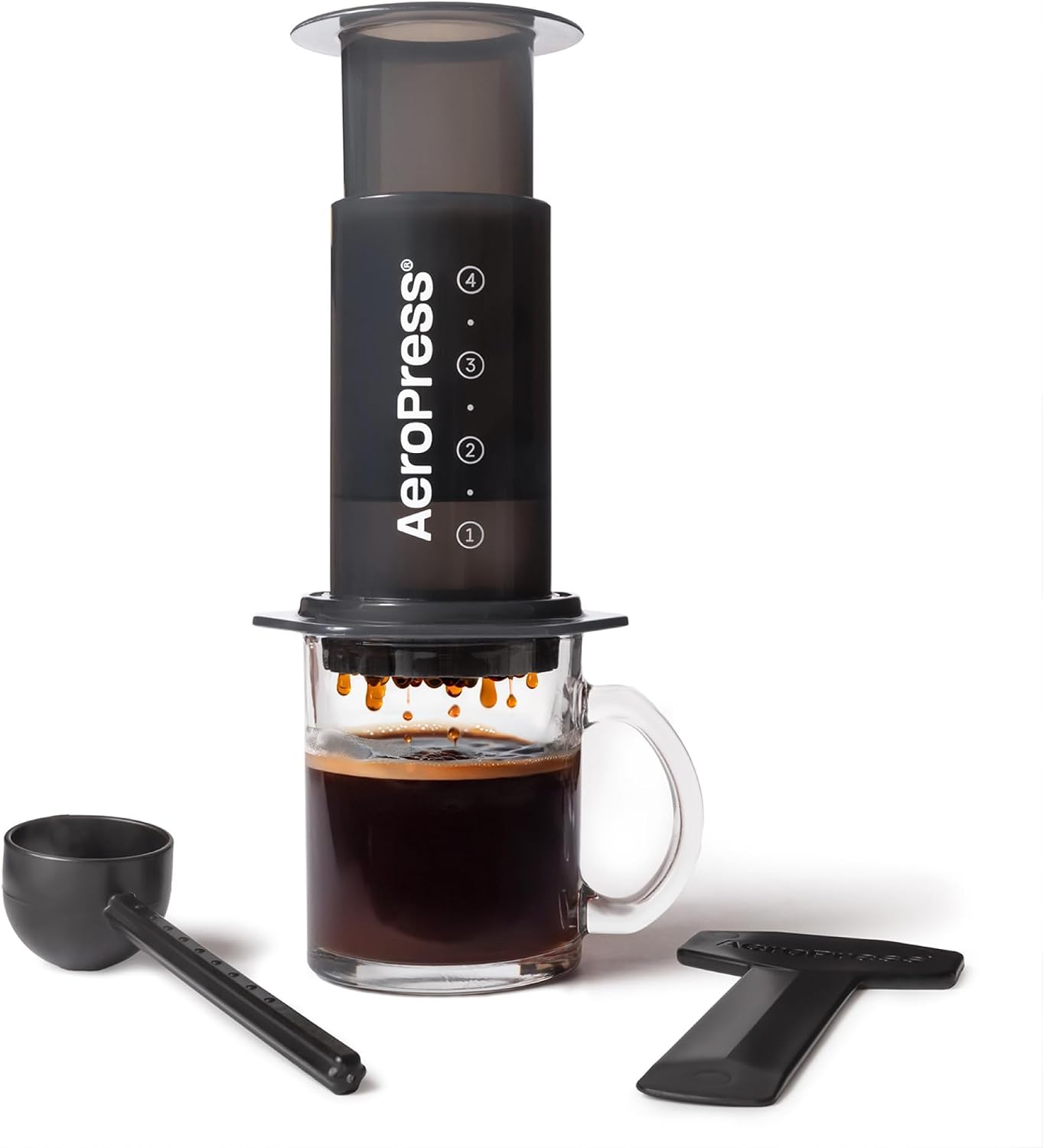
Best manual brewer pick
For this roundup, AeroPress Original is the manual brewer we recommend first—the same pick at the top of our At-a-glance cards below.

Best manual brewer pick
Start smaller: beans and storage
The machine or grinder is the expensive click. If that purchase is waiting, a $20 bag and a canister still upgrade the setup you have.
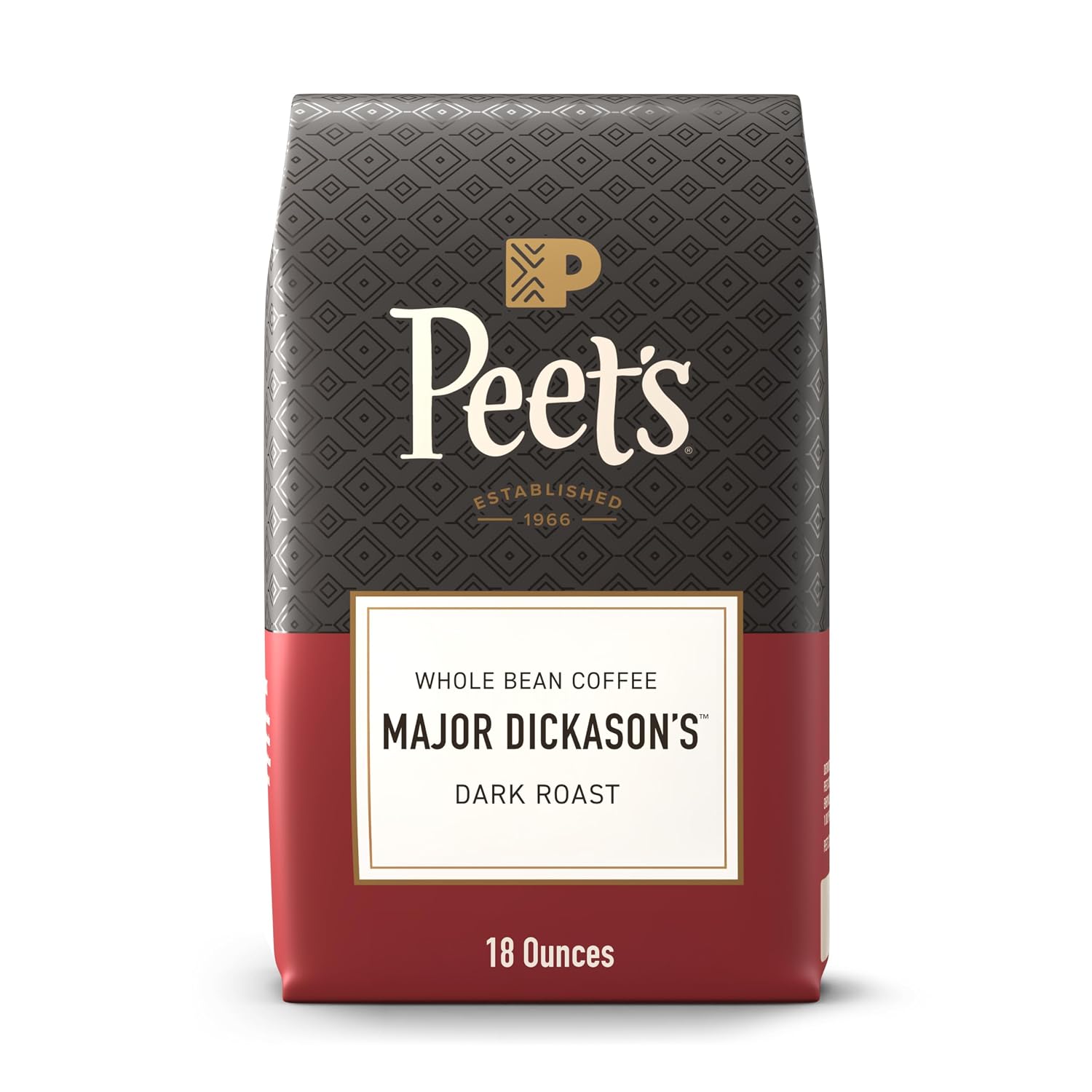
Whole bean (~$15–$25)
Peet’s Major Dickason’s
A cheaper cart than a new grinder or maker. Fresh beans are the fastest cup upgrade.
Check Peet’s on Amazon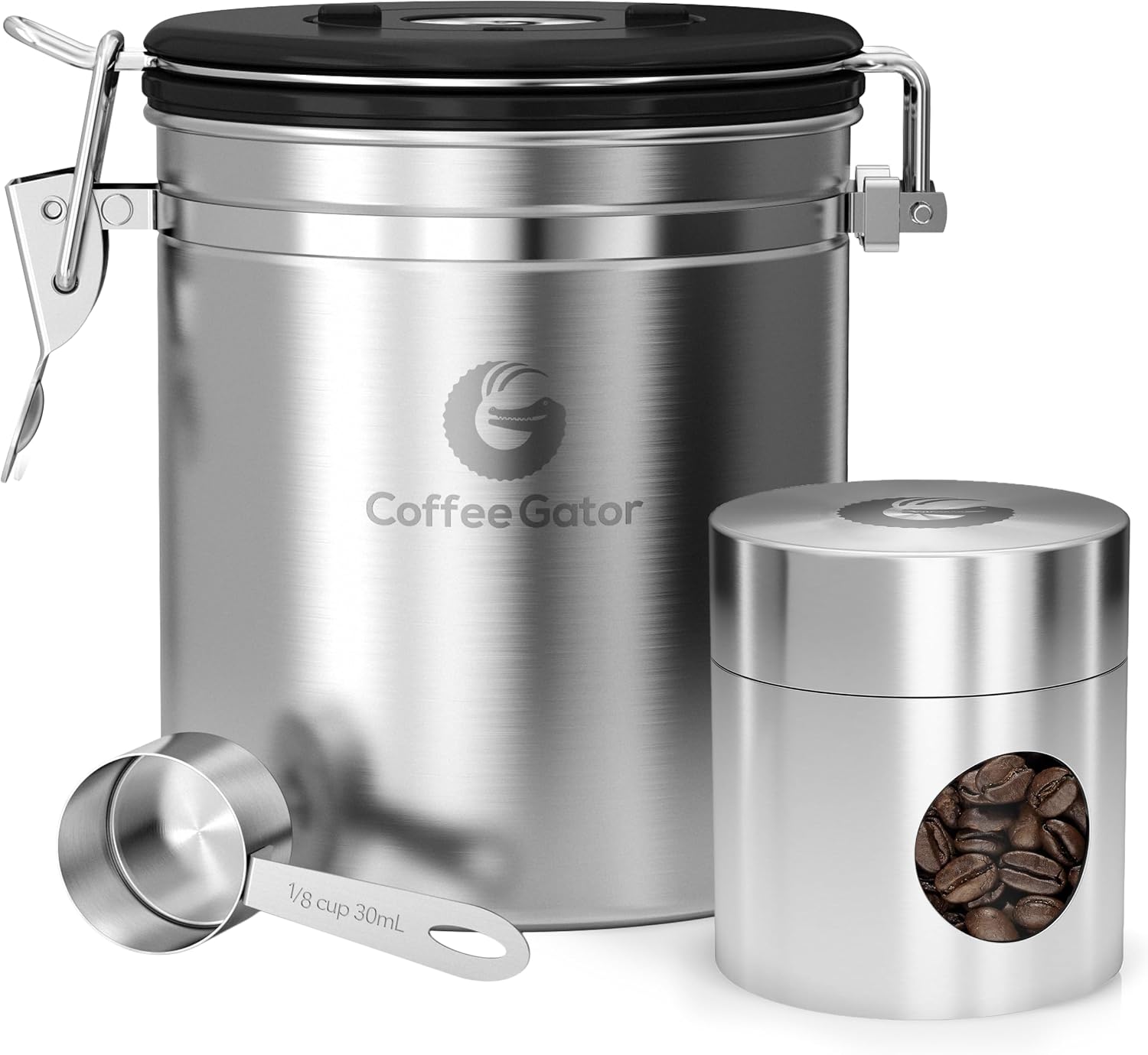
Storage (~$20–$35)
Coffee Gator canister
Keeps opened bags fresh. Cheap add-on if the hero pick did not convert.
Check Coffee Gator on Amazon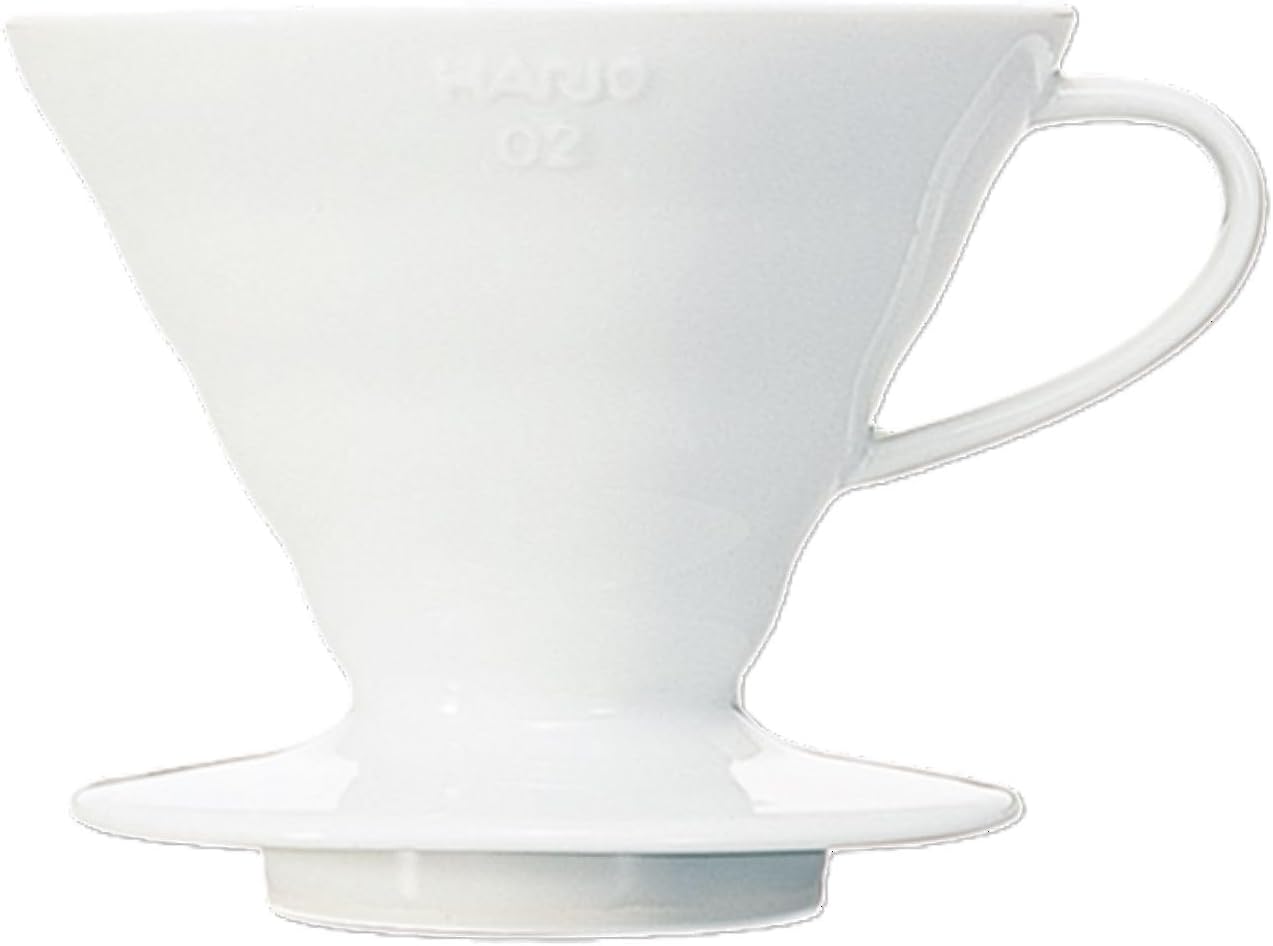
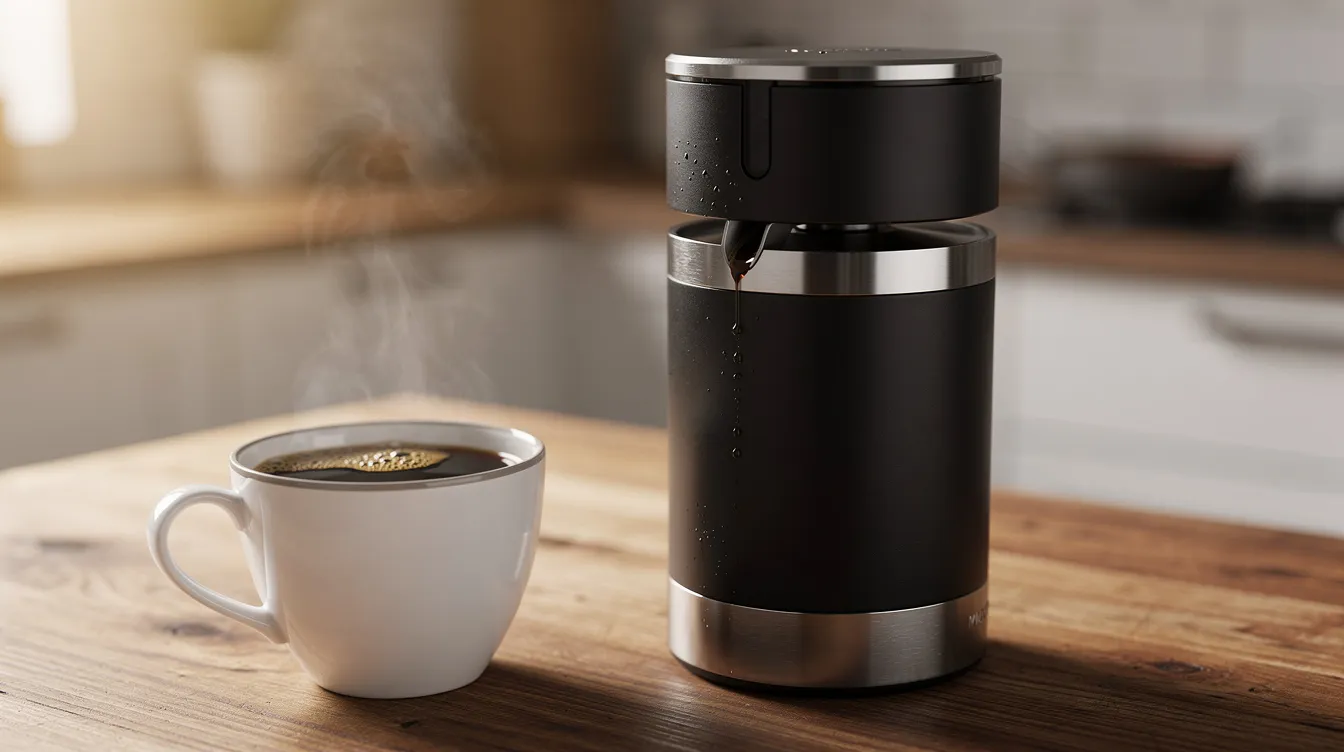
The AeroPress is a compact immersion brewer that uses manual air pressure to push hot water through coffee grounds and a paper filter, producing clean, full-flavored coffee with very little fuss. In 2026, it remains one of the best coffee value buys for anyone brewing a single cup or two at a time.
Across the entire AeroPress coffee maker lineup, the cup profile is consistently smooth and low in bitterness. Short contact time and paper micro-filtration keep harshness at bay, and differences between models are largely about workflow and capacity rather than flavor. AeroPress coffee is similar to espresso in taste intensity when brewed as a concentrate, though it has less body than French press coffee thanks to paper filters removing most coffee oils. Using paper filters enhances subtle coffee flavors that heavier brewing methods can mask.
The main tradeoff is straightforward: excellent workflow speed, solid durability, and impressive versatility versus modest capacity on most models and an aesthetic that leans utilitarian plastic rather than luxury. The AeroPress sits between faster-and-cleaner than a French press, more forgiving than a V60-style pour over, and capable of strong espresso-style coffee – though it cannot replicate true 9-bar espresso with crema. This verdict reflects a researched editorial assessment based on published specs, expert reviews, and broad crowd consensus, not direct instrument measurements or sensory panels by Capitol City Coffee.
Capitol City Coffee may earn a commission if you purchase gear through outgoing links in this article, at no extra cost to you. Our AeroPress rankings and recommendations are based on independent editorial judgment, not on commission size or retailer incentives. Capitol City Coffee does not sell AeroPress coffee makers directly – all links point to third-party retailers.
Disclosure: This page contains affiliate links. As an Amazon Associate I earn from qualifying purchases.
Where to buy: Seattle Coffee Gear · 1st in Coffee · Amazon (affiliate links). Check current price and availability before you buy.
This section helps you quickly decide if any AeroPress model fits your daily habits, whether you brew at home, in an office, on the road, or at a campsite.
Ideal users include people who want good coffee quickly without needing complicated setups. The AeroPress appeals to solo drinkers and couples who brew one or two cups at a time, anyone working in a small kitchen or at a desk, and travelers or campers who value a lightweight, virtually indestructible little coffee maker. AeroPress requires no electricity, which enhances its portability for travel and outdoor use – it operates entirely via manual air pressure.
The AeroPress Original and AeroPress Clear suit home users making 1–2 cups per session, especially experimenters who enjoy tweaking brew ratio, grind size, and contact time across different coffee beans. The AeroPress Go and AeroPress Go Plus are built for frequent travelers, hotel-room brewers, and office users who want everything – mug, coffee scoop, filters – to pack into one compact kit. All AeroPress accessories fit inside the included mug with the AeroPress Go.
The AeroPress XL makes sense for small households wanting 2–4 cups at once without multiple brew cycles. The AeroPress Premium targets design-focused enthusiasts or collectors who want a glass-and-metal showpiece on the counter rather than a utilitarian plastic mug setup.
Who should skip it: families regularly serving many guests, drinkers who want set-and-forget batch brewing with no manual effort, or buyers who refuse any plastic contact with hot water (except at the Premium price point).
Capitol City Coffee did not run its own lab tests or controlled tasting flights for this AeroPress review. Instead, this piece synthesizes reliable third-party data from multiple reputable sources.
Information sources include manufacturer specs for capacity, materials, and dishwasher safety; expert barista and coffee educator guides for recommended brew ratio, grind size, and contact time; and owner reviews for real-world durability and workflow insights. When brew temperature, dose, or timing numbers appear below, they represent ranges drawn from reputable AeroPress recipes and competition-level recipes – not original Capitol City Coffee lab readings.
We judged performance across five criteria: cup profile (clarity, body, bitterness), workflow (setup, plunging effort, brew time), cleaning simplicity, durability of materials, and overall value at typical U.S. retail prices in 2025–2026. Conclusions are editorial analysis reflecting broad consensus rather than one individual reviewer’s personal taste.
All AeroPress models share the same core brewing process: immersion with brief contact time plus gentle pressure through a paper or metal filter. AeroPress provides a simple brewing process that combines immersion, pressure, and micro-filtration into one quick sequence. The AeroPress brews coffee using a plunger mechanism for pressure, and the entire process typically takes about a minute of active work.
Brew ratio and strength. Common AeroPress brew ratios range from roughly 1:14 to 1:17 (coffee to water by weight) for a balanced cup of coffee, and 1:3 to 1:5 for concentrated espresso-style shots meant for dilution or espresso-based drinks. AeroPress coffee typically requires 15 to 22 grams of coffee per 150 ml of water. The brewer is forgiving of small ratio errors, which makes it friendlier than precision-dependent pour-over methods.
Grind size. A medium-fine grind – finer than standard drip but coarser than true espresso – is the consensus starting point. AeroPress allows manipulation of grind size, water temperature, steep time, and brewing orientation. Too fine increases plunging resistance and bitterness risk; a coarser grind yields weaker, under-extracted results.
Contact time. Brewing time for AeroPress coffee is around 30 to 55 seconds of active steeping in most classic recipes, with total brew time (including setup and pressing) under two minutes. Shorter times generally produce brighter cups; longer steeps push toward heavier body but risk more bitterness unless you compensate with a coarser grind.
Filtration. Using a paper filter in AeroPress results in a cleaner cup of coffee with high clarity and minimal sediment. Metal filters let more coffee oils and fines through, adding body and texture at the cost of some sludginess. AeroPress supports both, and standard paper filters fit all models except the XL, which uses its own larger size.
Cup profile consensus. Most users and reviewers describe AeroPress coffee as cleaner and less sludgy than French press, more refined than coffee from manual pour-over methods, and capable of producing an espresso-style concentrate – though without crema. One common note: AeroPress coffee can taste weak if brewed strictly with the included instructions, so many coffee lovers quickly move to community recipes with higher doses or finer grinds.
AeroPress coffee can be brewed in two ways: the standard (upright) method and the inverted method, where the brewer is flipped to prevent drip-through during steeping. Both produce delicious coffee when dialed in.
Model-specific nuances. The AeroPress XL’s larger brewing chamber favors slightly coarser grinds to maintain reasonable plunging effort over a bigger volume. The AeroPress Premium’s heavier hardware doesn’t materially change taste under normal recipes – the premium feel is in the hand, not really in the cup.
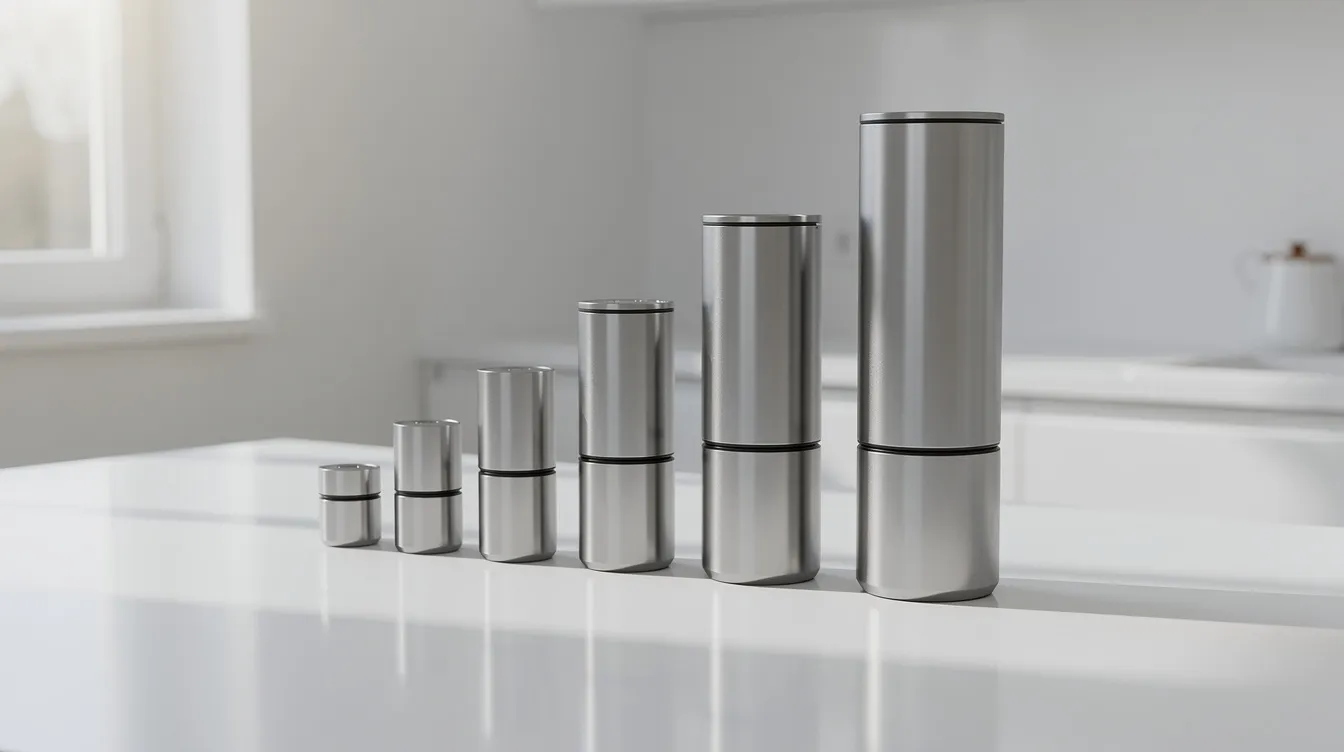
The AeroPress has evolved from the original Aerobie AeroPress invented by Alan Adler in 2005 into a full family of AeroPress models serving different capacity and portability needs. Here’s what separates them:
AeroPress models use different filter sizes except the XL: standard circular paper filters work in Original, Clear, Go, Go Plus, Premium, and Steel, while the XL requires its own larger filters. Most legacy AeroPress accessories don’t fit the XL dimensions.
Taste differences between models are minimal because the core brew geometry and filtration are similar. The real-world differences come down to workflow, heat retention, ergonomics, and capacity.
Here’s what AeroPress coffee makers do exceptionally well for everyday U.S. coffee drinkers:
The AeroPress coffee system is strong but not perfect, and it won’t suit every U.S. coffee habit.
AeroPress is widely recommended as a beginner-friendly path into manual brewing because the brewing process is simple to learn yet supports advanced AeroPress recipes for those who enjoy brewing and want to push further.
Standard workflow: attach the filter cap with a paper filter, add coffee (ground coffee dosed by weight or the included coffee scoop), pour hot water, stir briefly, steep for a short contact time, then gently press the plunger using moderate pressure. The whole sequence takes under two minutes.
New users can start with the recipes printed on the AeroPress box or widely shared AeroPress recipes online. Advanced users often experiment with the inverted method, bypass brewing (diluting a concentrate after pressing), and refined timing adjustments. There’s a learning curve, but it’s gentle.
Cleaning the AeroPress takes seconds after use. The plunger acts as a scraper for easy cleaning – push the puck of spent coffee grounds straight into a bin or compost, rinse the chamber and rubber seal, and you’re done. No heavy scrubbing needed.
The AeroPress is dishwasher safe except for the Premium model, which should be hand-washed due to its glass and metal construction. Most plastic and Tritan parts are top-rack safe. Used filters can be rinsed and reused 10–12 times before they start to restrict flow or tear. The AeroPress components are mostly replaceable except for the Premium, which keeps your brewer running for years.
In travel and office settings, AeroPress produces very little mess or dripping compared to a French press, making it popular on desks, in hotel rooms, and at campsites. Plunging forces are manageable for most users, though finer grinds and the AeroPress XL’s larger chamber can increase resistance.
This section covers what AeroPress brewers are made of, how they hold up, and what that means for heat retention and cup consistency.
Materials by model:
AeroPress is lightweight and virtually indestructible, making it suitable for travel – plastics and Tritan are shatter-resistant and handle drops well. Seals and pistons are designed to be replaceable, and the original AeroPress is lightweight and travel-ready for backpacks or suitcases.
Heat retention is the one area where plastic AeroPress models fall short. Thin polypropylene walls don’t hold heat like ceramic or vacuum-insulated gear. Preheating your cup or brewing quickly matters if you want a hotter final temperature. The Steel model solves this with its insulated shell, while the Premium’s glass body has better thermal inertia than plastic but still benefits from preheating.
With normal use and occasional gasket replacement, an AeroPress coffee maker can remain functionally sound for many years. That makes the relatively low initial price even more attractive over time.
For most U.S. home and travel coffee drinkers who brew 1–2 cups at a time, the AeroPress Original, AeroPress Clear, or AeroPress Go deliver strong value for the quality of coffee and low running costs. It’s a no brainer for anyone who wants great coffee without investing hundreds in gear.
Typical U.S. price ranges (2025–2026):
Ongoing costs are minimal. Paper filters often run under $20 for 700+ filters. Occasional replacement seals are inexpensive. Compare that to pod or capsule systems where per-cup costs add up fast, or to instant coffee that sacrifices flavor for convenience.
On a value basis, a good pour-over dripper and kettle can be similarly priced but demand more precision in technique. A French press can be cheaper upfront but produces more sludge, requires more cleanup, and glass carafes break.
Value shifts by model: Original and Clear represent the best all-round value. AeroPress Go adds convenience for frequent travelers. AeroPress XL adds capacity for a cost. AeroPress Premium offers luxury design and materials for enthusiasts rather than better-tasting coffee – at double the price or more, it makes sense only for those who prioritize aesthetics and non-plastic materials.
Long-term, improving your coffee beans and grind quality typically yields bigger taste gains than upgrading to a more expensive brewer. A $40 AeroPress paired with fresh, well-roasted beans and a decent burr grinder can outperform a $200 brewer fed stale ground coffee.
While AeroPress brewers are strong all-rounders, some readers may be better served by other brewing methods depending on taste, capacity, and convenience priorities.
French press suits drinkers who prefer heavier body, more oils, and full-bodied cups for multiple people at once. Tradeoffs include more sediment, oilier mouthfeel, and more intensive cleaning. AeroPress coffee has less body than French press coffee, but it’s cleaner.
Pour-over brewers like the Hario V60, Kalita Wave, or Chemex produce delicate, high-clarity cups for those willing to invest effort in precise pouring technique and controlled bloom phases. If you’re curious, check out our Chemex review for a detailed comparison of that approach. Pour-over demands more skill but rewards precision with nuanced flavor.
Pod and capsule machines are the ultimate convenience-first option, but they sacrifice flavor control, bean choice freedom, and often cost more per cup than a manual AeroPress coffee maker.
Entry-level espresso machines are the right move if you primarily want true espresso with crema and microfoam-friendly concentrate for lattes and cappuccinos. Pushing AeroPress beyond its sweet spot for espresso will only get you so far.
Browse more manual brewer coverage in our brewer reviews hub for side-by-side comparisons across methods.
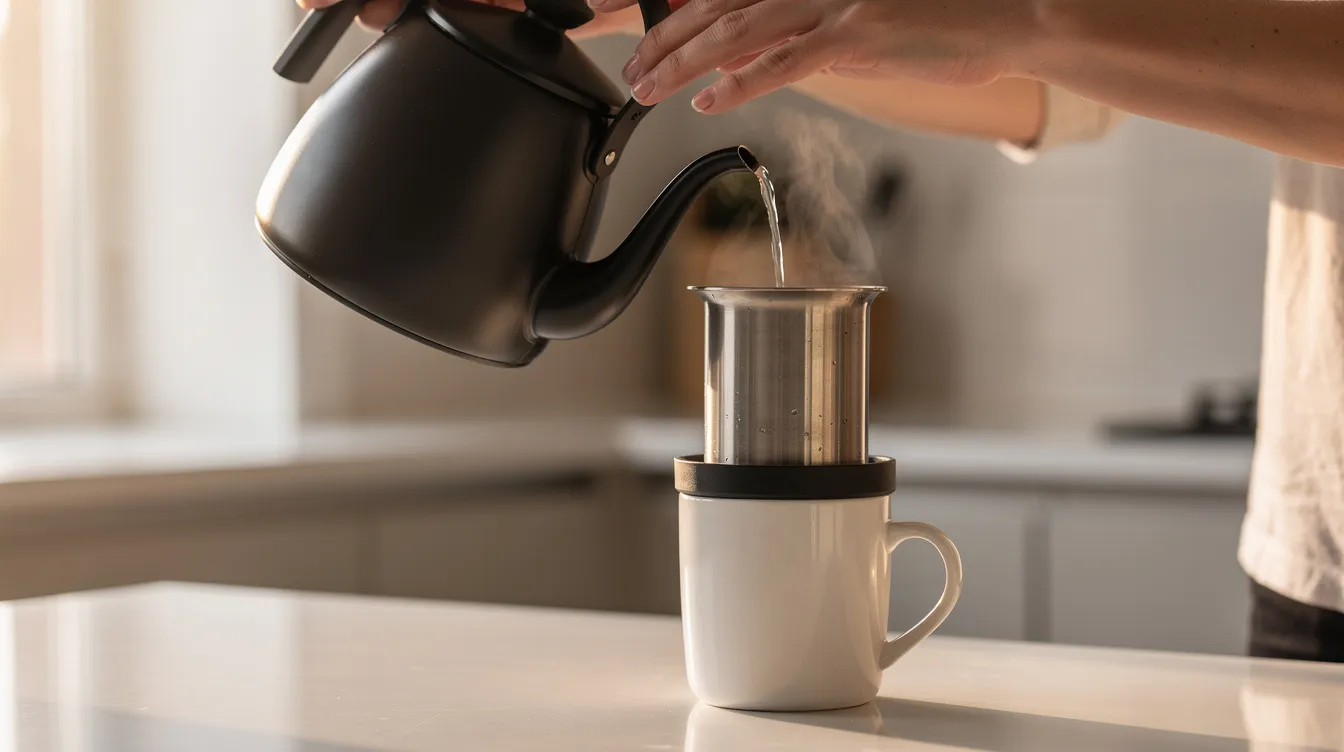
These are reliable starting points, not an exhaustive AeroPress recipes compendium. Treat them as baselines and adjust grind size, contact time, and brew ratio according to taste and bean roast level.
Classic AeroPress coffee recipe (Original or Clear):
Espresso-style concentrate:
Quick cold brew / iced method:
AeroPress XL adjustment: roughly double the doses and maintain similar brew ratios and grind size. Watch plunging resistance – if it gets too stiff, move to a coarser grind.
The AeroPress shines as a flexible testbed for coffee experimentation. Enjoy brewing by trying different coffee beans, water temperatures, and steep times until you find your personal sweet spot.
AeroPress workflow remains similar across environments, but the surrounding gear – kettle, grinder, scale – shapes the daily experience.
At home, pairing an AeroPress coffee maker with a burr grinder and gooseneck kettle is the ideal setup. Brew coffee directly into your favorite mug, and dial in recipes based on roast level and personal taste. At first glance the setup looks minimal, but that simplicity is the point.
At the office, many users brew with pre-ground coffee or a small hand grinder, using shared hot water sources. AeroPress’s minimal mess and quick cleanup over a sink make it far more desk-friendly than a French press.
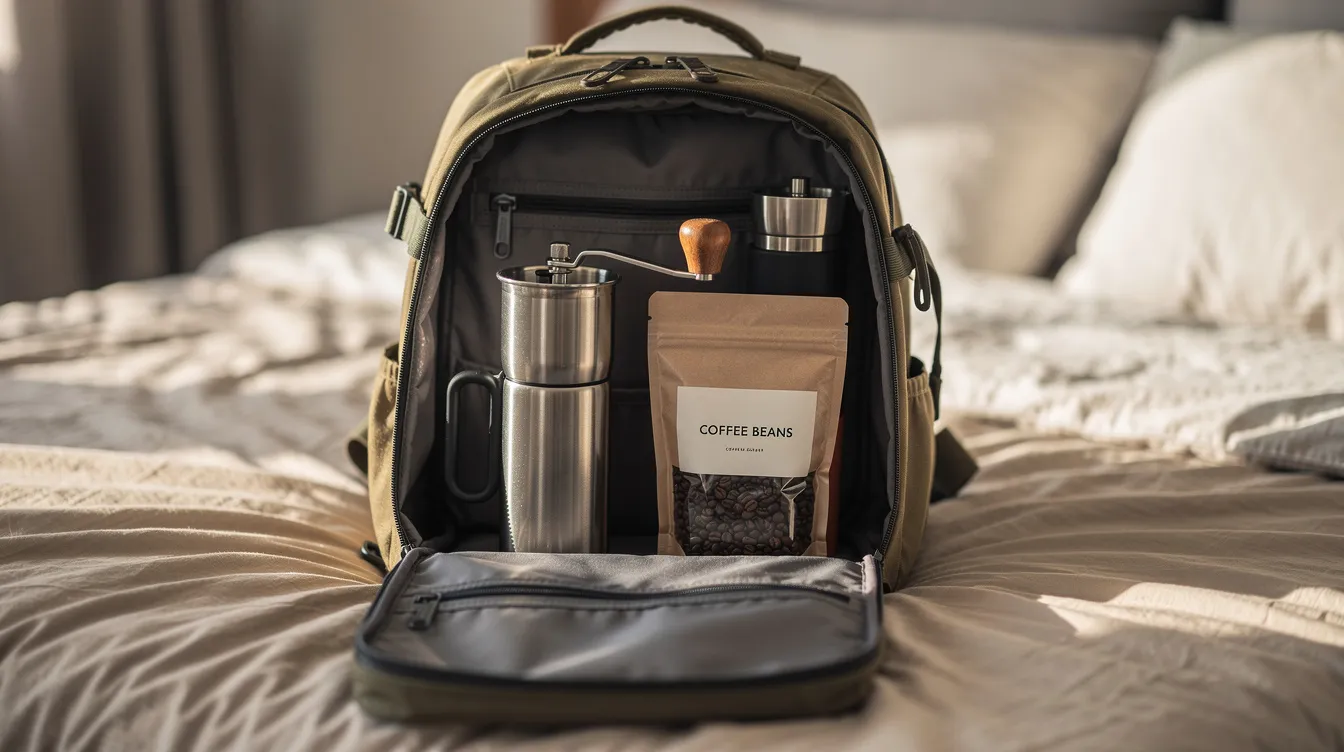
On the road, the AeroPress Go or AeroPress Go Plus excels. Pack filters in the included filter holder, decide between pre-ground coffee and a travel grinder, and brew in hotel rooms, rentals, or campsites. The plunger tube nests accessories inside, keeping packed volume small. The original AeroPress is also compact enough to fit in a backpack if you skip the travel mug.
Real-world compromise: accept slightly less precise recipes when brewing without a scale or temperature-controlled kettle. You’ll still produce good-tasting AeroPress coffee – the brewer is forgiving enough that close-enough measurements yield a great cup.
If you’re a single-serve drinker who wants clean, versatile coffee quickly – and you’re curious about manual brewing without investing in complex gear – an AeroPress belongs in your kitchen. It makes smooth, delicious coffee day after day with almost zero hassle.
Model-specific advice: AeroPress Original or AeroPress Clear as the best default picks for most buyers. AeroPress Go for those who routinely brew coffee while traveling. AeroPress XL for couples or small households tired of brewing twice. AeroPress Premium as a niche, high-priced design piece for collectors and plastic-averse enthusiasts.
The key tradeoffs remain: excellent workflow, versatility, and value versus limited batch size and a plastic-forward look on most models. For the vast majority of coffee lovers, these tradeoffs tilt heavily in the AeroPress’s favor.
Pair your AeroPress coffee maker with freshly roasted coffee beans and a decent burr grinder to unlock its full potential. Bean quality matters more than marginal brewer differences – a tiny capital investment in better beans will transform your morning cup more than any accessory upgrade.
Ready to explore more? Browse our full brewer reviews for side-by-side comparisons, or read our detailed Chemex review if high-clarity pour-over brewing is calling your name.
Not fully. AeroPress cannot generate the 9 bars of stable pressure needed for true café espresso and crema, but it can make strong espresso-style concentrates suitable for milk drinks at home. Using a tighter brew ratio (around 1:3 to 1:4) and a finer grind produces a syrupy shot that stands up reasonably well in small lattes. Accessories like flow-control or metal filter caps can push results a bit closer, but manual pressure and a short brew path still limit what’s possible compared to a dedicated machine.
Yes. The AeroPress coffee maker will brew with any medium-fine pre-ground coffee, including common supermarket blends, and still produce a clean, drinkable cup. Flavor quality usually improves noticeably with freshly roasted, freshly ground coffee, but AeroPress is forgiving enough to make the most of average pre-ground beans. If you start with ground coffee from the shelf and like the results, upgrading to a burr grinder later unlocks more nuanced flavors from the same brewer.
Paper AeroPress filters are designed for single use, but many users rinse and reuse them 10–12 times before they discolor, tear, or restrict flow noticeably. Silicone or rubber plunger seals can often last for years of daily use, and occasional replacement is inexpensive. For most mainstream models (Original, Clear, Go, XL), spare parts like pistons, seals, and filter caps are widely available, supporting a long service life for the brewer body.
While many users perceive AeroPress coffee as smoother and less harsh, credible research does not support sweeping health or acidity claims that elevate it above other manual methods. Short contact time and paper filtration can reduce some bitter compounds and coffee oils compared with long-steep French press or moka pot brews. If you have specific health concerns about acidity or cholesterol, consult medical sources rather than relying on marketing claims about any single coffee maker.
Ask a local roaster or grocery store grinder for “AeroPress” or “slightly finer than drip” if they don’t have an AeroPress-specific setting on the dial. Too-coarse a grind yields weak, under-extracted coffee, while an espresso-fine grind makes plunging difficult and can increase bitterness. Once you own an AeroPress and enjoy the results, a burr grinder tailored to AeroPress grind ranges is a meaningful next step in your coffee journey.
Every coffee and coffee machine we recommend is scored on the same 100-point scale, so a recommendation on one page means the same thing as a recommendation on any other. Each pick is also labeled with how we reached its score.
| What we score | Points | What we look at |
|---|---|---|
| Origin and sourcing transparency | 20 | Country, region, farm or cooperative, altitude, bean variety, and processing method are clearly disclosed. |
| Flavor evidence | 25 | Independent cupping scores, how closely the tasting notes match what the origin is known for, and our own cupping notes when hands-on tested. |
| Roast and freshness | 15 | Roast level stated, roast-date practices, whole-bean availability, and packaging with a one-way valve or resealable bag. |
| Brew versatility | 15 | How well the roast suits pour-over, drip, French press, cold brew, and espresso. |
| Value | 15 | Price per ounce compared with similar single-origin coffees or blends. |
| Buyer feedback | 10 | Volume and consistency of verified reviews, and recurring complaints about staleness, bitterness, or shipping. |
| What we score | Points | What we look at |
|---|---|---|
| Brewing performance | 25 | Water temperature in the 195–205°F range, even extraction, and SCA certification or published test data. |
| Build quality and reliability | 20 | Materials, known failure points, and long-term owner reports. |
| Ease of use and cleaning | 15 | Setup, the daily routine, descaling, and dishwasher-safe parts. |
| Fit for your kitchen | 10 | Capacity, counter footprint, and noise. |
| Useful features | 10 | Programming, grind and temperature control, and carafe type. Features that improve the cup count more than extras that do not. |
| Value | 10 | Price compared with machines that perform similarly. |
| Warranty and support | 10 | Warranty length, parts availability, and how the brand handles repairs. |
| Score | Grade | What it means |
|---|---|---|
| 90–100 | A | Exceptional. Our first recommendation for the feeling and setting described. |
| 80–89 | B | Strong. Excellent, with minor trade-offs we explain. |
| 70–79 | C | Good. Worth it for specific needs, with clear compromises. |
| Below 70 | — | Not recommended. We do not feature these as picks. |
When a pick carries the Hands-on tested label, this is the method behind it, and we note the date we tested.
We match each coffee to a mood and a moment based on its flavor profile and roast. Bright, citrusy light roasts suit energizing mornings. Chocolatey, full-bodied medium roasts suit slow or social moments. Richer roasts suit espresso and milk drinks. Each pick explains which facts led us to that match.
Every score comes only from the criteria above. No brand can pay for a pick or a higher grade. We re-check ratings when a roast, listing, or model changes, and update or remove picks that no longer earn their grade.
Some links on this page are affiliate links. As an Amazon Associate, Capitol City Coffee earns from qualifying purchases, at no extra cost to you.
Questions about a rating? Reach the Capitol City Coffee team through our contact page.