A good espresso tamper is one of the most affordable upgrades you can make to improve shot consistency. After researching dozens of expert sources, barista educator recommendations, and aggregated owner feedback, we found that the Normcore V4 calibrated tamper stands out as the best espresso tamper for most home baristas, with the MHW-3Bomber flat stainless base as a top classic alternative and palm tampers like the MATOW distributor combo for ergonomic needs. These rankings are based on researched editorial analysis, not hands-on testing by Capitol City Coffee.
Best best overall pick
For this roundup, Normcore V4 58.5mm is the best overall we recommend first—the same pick at the top of our At-a-glance cards below.
A well-fitting flat tamper in the 58.3–58.5 mm range paired with good technique matters more than price. Choosing the right espresso tamper ensures an even coffee puck for better extraction, regardless of whether you spend $30 or $200.
Calibrated tampers help beginners and multi-user households achieve consistent pressure without guesswork, while palm tampers and force tampers reduce wrist strain for high-volume use.
This guide focuses on 58 mm baskets common on prosumer and many home espresso machines, but calls out other sizes (51 mm, 53 mm, 54 mm) where relevant. Common portafilter basket sizes include 51 mm, 54 mm, and 58 mm, so always confirm your basket before buying.
Tamping consistency, correct fit to the portafilter basket, and ergonomics are the three biggest drivers of espresso quality from tampers, supported by broad expert consensus across barista educators and independent review sites.
Below you will find a comparison table, our methodology, detailed picks with strengths and limitations, a how-to choosing guide, tamping technique tips, and care advice, all written in an independent editorial voice.
Quick Answer and Top Picks
For most home baristas in the United States, a calibrated spring-loaded 58.5 mm tamper is the safest default choice. It removes pressure guesswork and delivers consistent results every time. If you prefer full manual control, a classic 58.35–58.4 mm stainless steel flat tamper gives experienced users everything they need. And if wrist strain is a concern, a palm tamper with integrated distribution fins offers repeatable depth-based tamping with minimal effort.
Capitol City Coffee may earn a commission from qualifying purchases made through links in this article. Our recommendations are independent and not influenced by commission size.
Based on our editorial research of expert sources and owner feedback, here are our top picks:
For deeper context on each, continue to the detailed picks and how-to-choose sections below.
At-a-Glance Comparison Table
The table below summarizes our top espresso tampers compared on fit, type, pressure style, materials, and value so you can quickly shortlist the right tamper for your setup.
Capitol City Coffee did not run lab or taste tests for these espresso tampers. Instead, we performed researched editorial analysis using verified manufacturer specifications, reputable expert reviews, and aggregated owner feedback from forums and independent publications.
Our “virtual test bench” criteria included:
Basket fit accuracy for standard 58 mm and common non-58 mm home espresso machines, focusing on stainless steel base dimensions and tolerances
Pressure consistency, with emphasis on how calibrated tampers and force tampers deliver repeatable force versus manual alternatives
Ergonomics and usability for daily home baristas, including handle shape, weight, and height
Build quality and materials, prioritizing stainless steel construction and machining precision over marketing claims
Cleaning and maintenance needs, comparing simple wipe-clean designs to tampers with moving parts
Value relative to price and warranty, asking whether the jump from one price tier to the next delivers proportional improvement
We prioritized tampers that support consistent extractions rather than chasing trendy but unproven features. Novelty shapes, gimmicky finishes, and features without functional backing were deprioritized.
When multiple barista educators or review sites converge on the same strengths or flaws, we treated those findings as higher-confidence conclusions.
Best Overall Espresso Tamper for Most Home Baristas
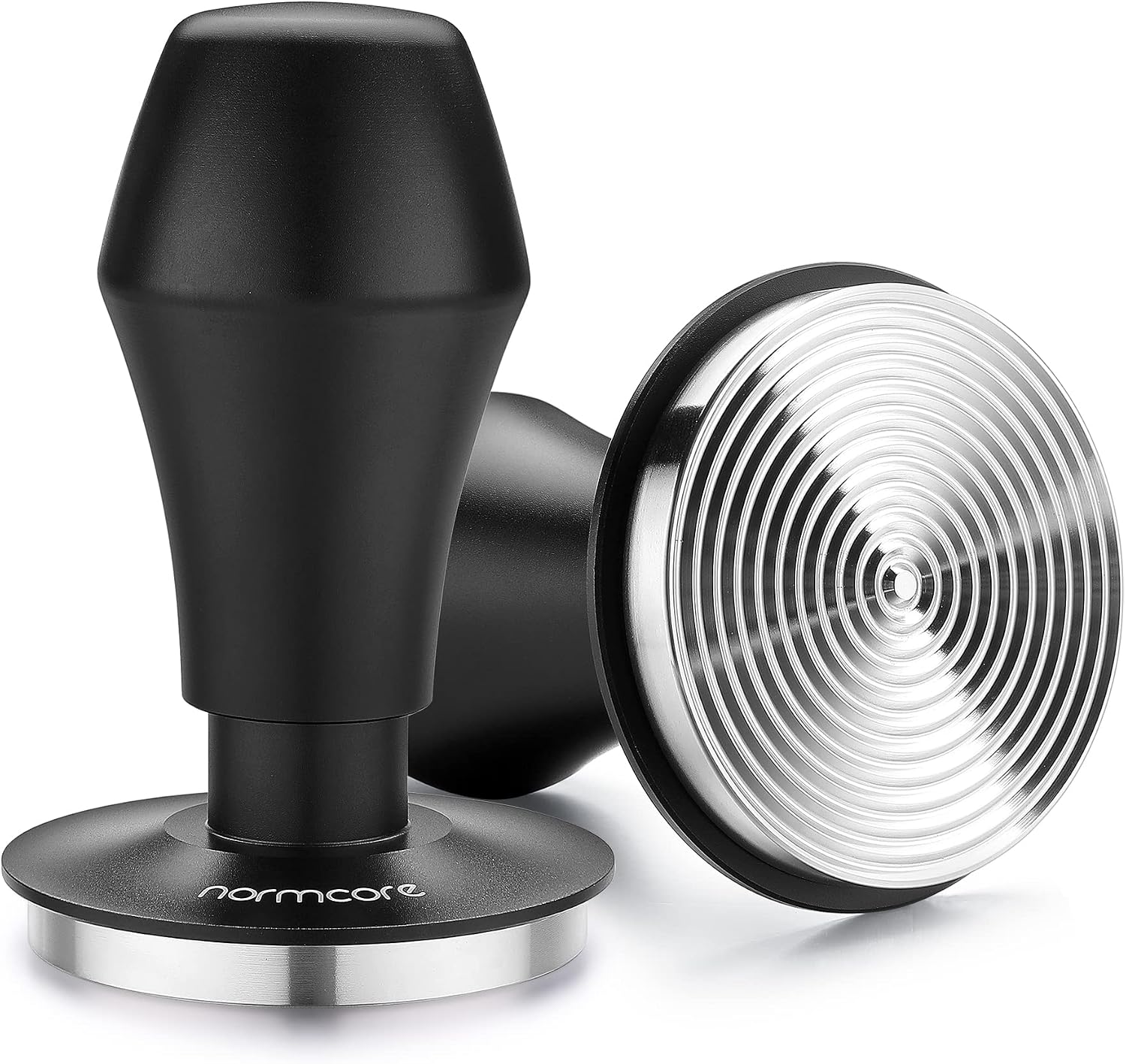
The Normcore V4 calibrated tamper in 58.5 mm earns our “best overall” designation for most home baristas using standard 58 mm baskets. Across converging external reviews and verified specs, it consistently ranks as a favorite tamper among enthusiasts and educators alike.
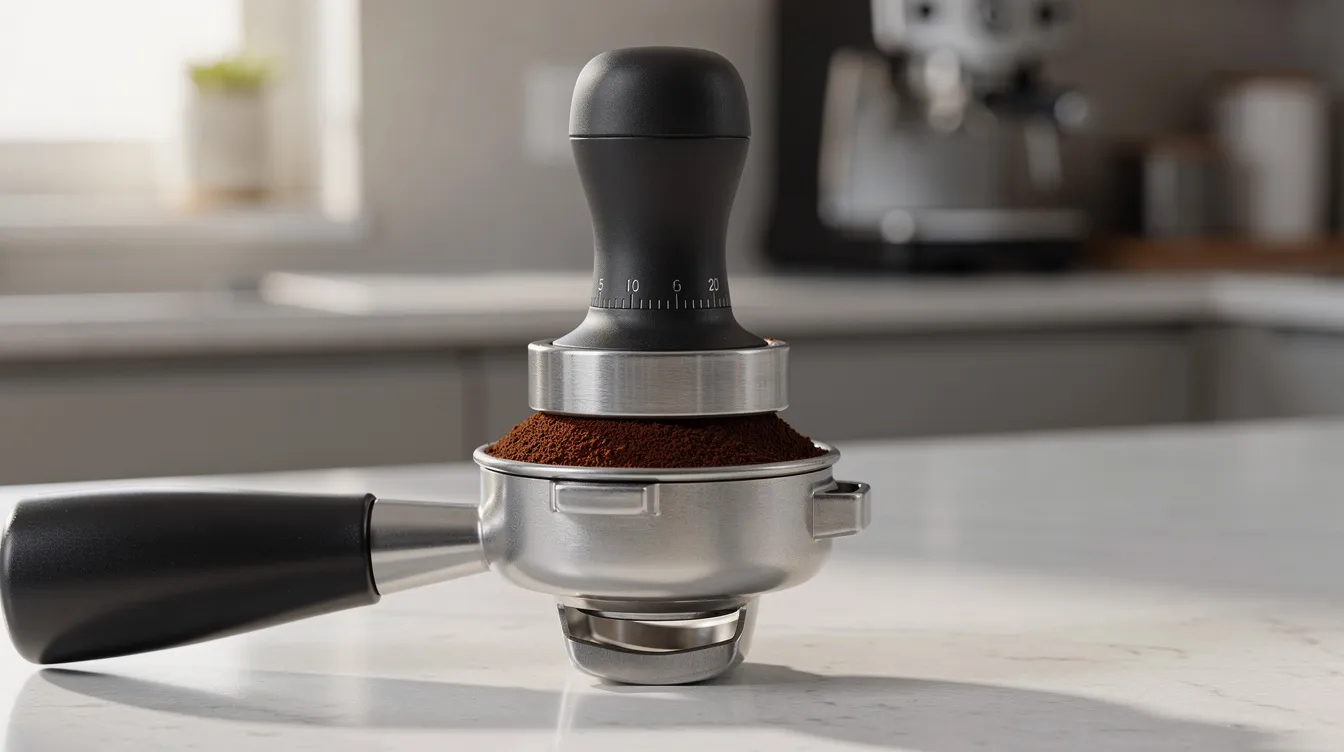
Type and mechanism: A spring loaded push tamper with adjustable pressure. The Normcore tamper includes three interchangeable springs covering approximately 15–30 lb of force, letting you find your preferred setting. A calibrated tamper delivers 30 pounds of pressure consistently when you lift the tamper until the internal spring clicks, indicating optimal compression has been reached, and you should not push past that click because extra force can over-compress the puck.
Fit: The 58.5 mm base fits snugly inside most 58 mm portafilter baskets, pressing coffee grounds all the way to the portafilter’s walls to minimize the loose ring of dry coffee grounds that causes channeling. Self-leveling mechanisms in tampers ensure a flat coffee bed and prevent tilting during tamping.
Usability: Consistent pressure helps smooth out technique differences between users. The classic style handle fits average-sized hands comfortably, and the workflow simplifies considerably when you no longer have to guess at how hard you are pressing on the coffee bed. Spring-loaded tampers help maintain a level coffee bed during tamping and reduce the risk of channeling by ensuring even compression.
Build and durability: Stainless steel base with scratch-resistant body construction. Replacement springs are available from the manufacturer, extending the tamper’s useful life. The flat surface wipes clean easily after each use.
Ideal user: Owners of prosumer espresso machines with 58 mm portafilters who want to remove pressure guesswork. Slightly taller footprint may not fit shallow drawers. Overkill for pressurized baskets.
Best Classic Manual Tamper (Traditional Style)
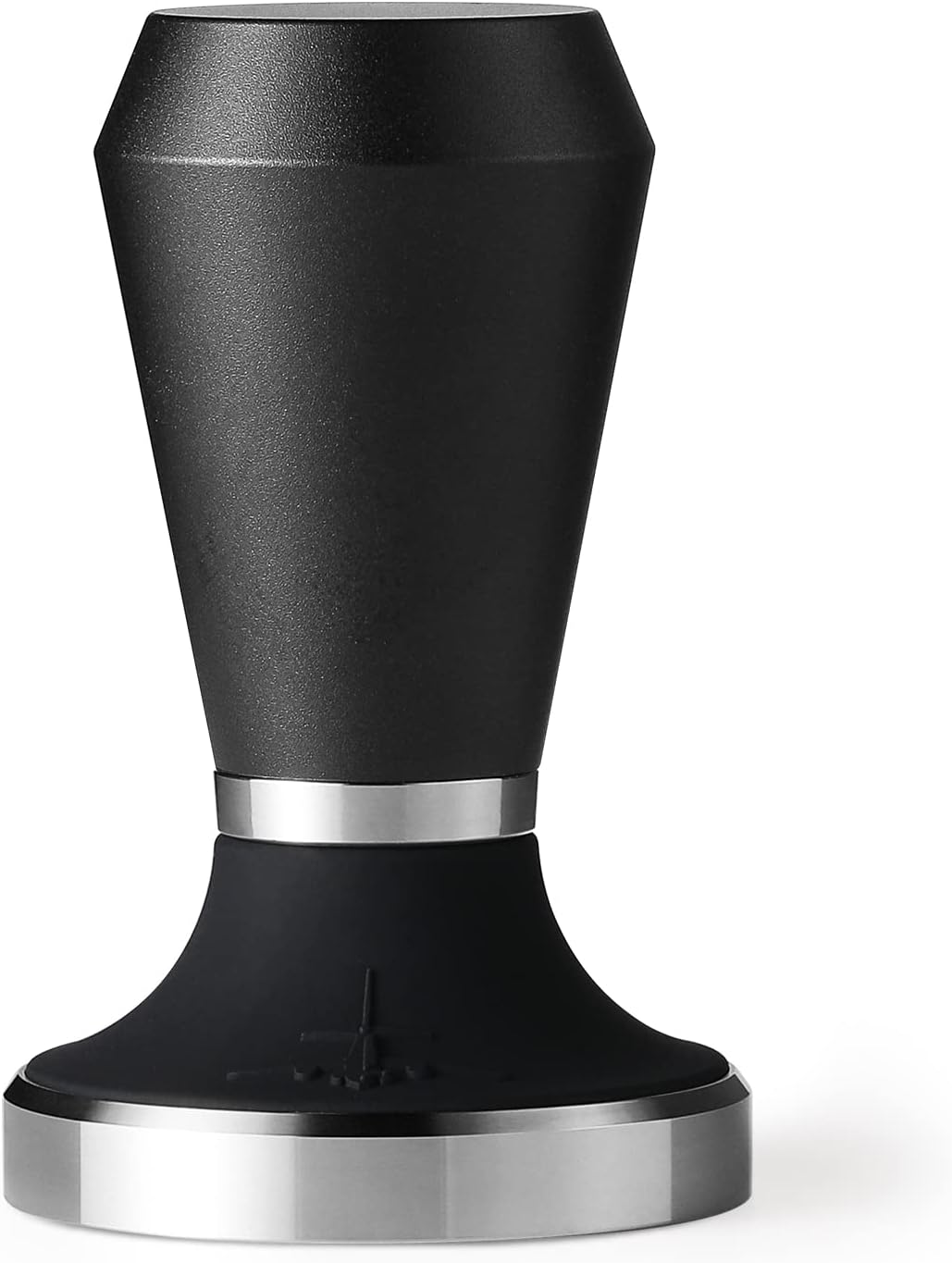
For experienced users who prefer full control and a simpler mechanism, a well-reviewed classic style coffee tamper like the MHW-3Bomber flat base in 58 mm delivers excellent results without moving parts. Among countless tampers on the market, traditional tampers remain popular with baristas who have refined their technique over time.
Base diameter: Available in 58 mm, with 51 mm and 53 mm variants for other baskets. Slightly oversized fits (58.35–58.4 mm) compress coffee grounds evenly all the way to the basket wall, reducing channeling risk. Manual tampers require user technique for effective use, but once you develop consistent muscle memory, the results can rival more complex options.
Ergonomics: The handle shape provides balanced weight distribution, and heavier tampers help achieve better control through added stability without excessive arm force. Stainless steel bases are preferred for durability and weight, giving you natural downward force that minimizes wrist strain when tamping multiple shots.
Performance: No built-in calibrated force, so consistency depends entirely on your tamping technique. Once you practice pressing with the same parameters each time-perhaps trained using a bathroom scale to approximate 30 lb-you can tamp consistently with results that match spring loaded alternatives.
Materials and cleaning: Full stainless steel construction or metal paired with a hardwood handle. No moving parts means virtually nothing to maintain. A quick wipe with a dry cloth after each session keeps the base spotless. These tampers can last over a decade with basic care.
Best Budget Espresso Tamper Under $40
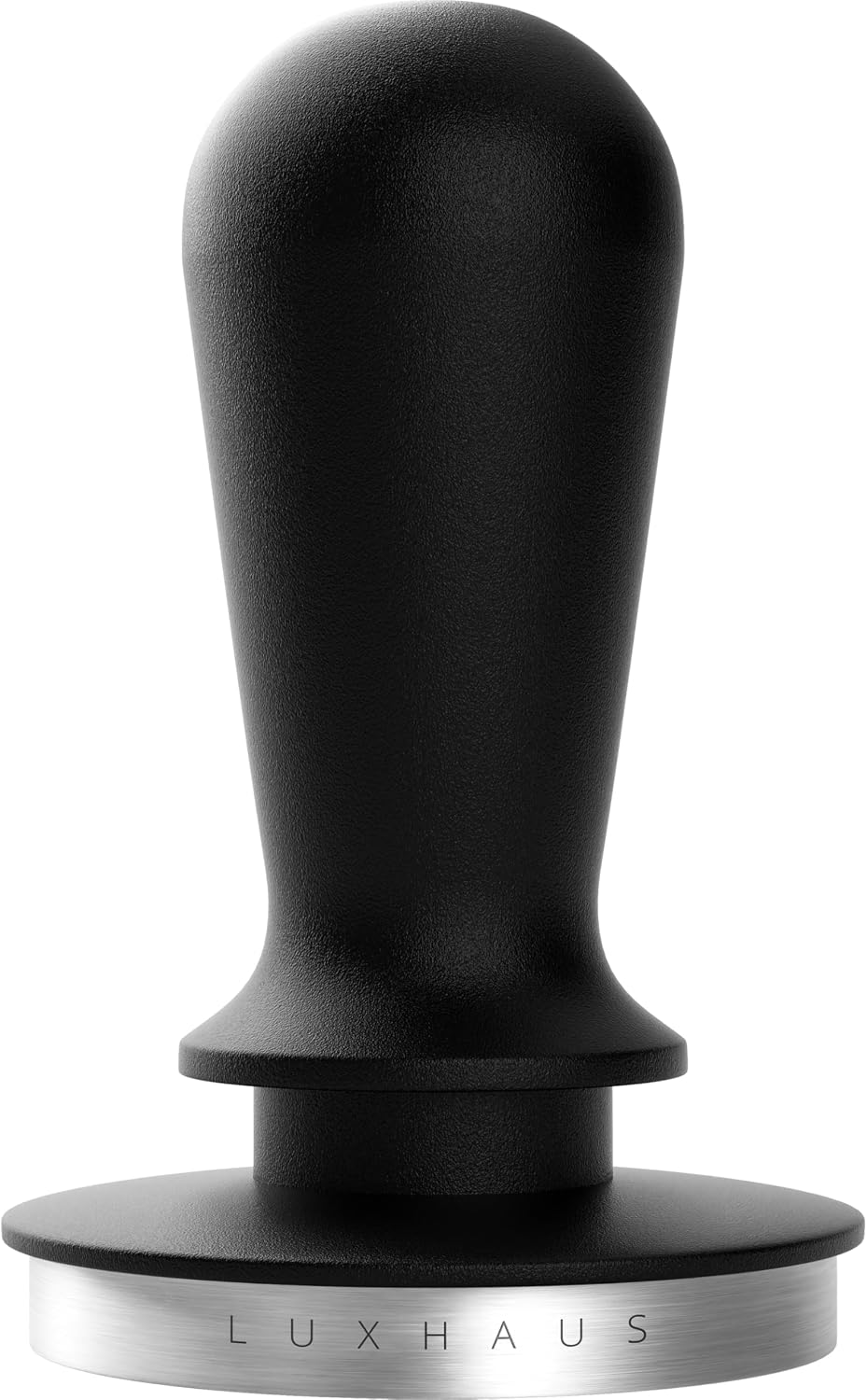
The LuxHaus calibrated tamper in 58 mm sits in the $30–$40 range and represents the best value choice for beginners upgrading from the plastic stock tamper that came with their espresso machine. Avoid plastic or lightweight tamper materials for better stability and consistent pressure application-this is where an affordable stainless steel upgrade pays off immediately.
Type: Basic calibrated tamper with a single fixed spring that clicks at approximately 30 lb. Also available in standard sizes to match popular entry-level espresso machines. A standard tamper size is 58 mm for most machines, making this a safe default.
Performance trade-offs: Reliable enough to produce a level puck and good espresso when your grind size and dose are dialed in. The build quality is solid but slightly lighter than premium tampers, and some users report minor wobble if tamping at a pronounced angle. Still a massive improvement over stock equipment.
Build quality: Stainless steel base with an ergonomic handle that holds up well over months of daily use. No swappable springs-just a single fixed calibration. Warranty and return policies are typical for the price tier.
Who should choose this: New owners of budget espresso machines looking for their first serious coffee tamper. Casual home baristas pulling a few shots a day. Renters or students who want performance without investing in competition-grade gear. If you are just starting your espresso journey, this is a smart first step.
Best Palm Tamper and Distributor Combo
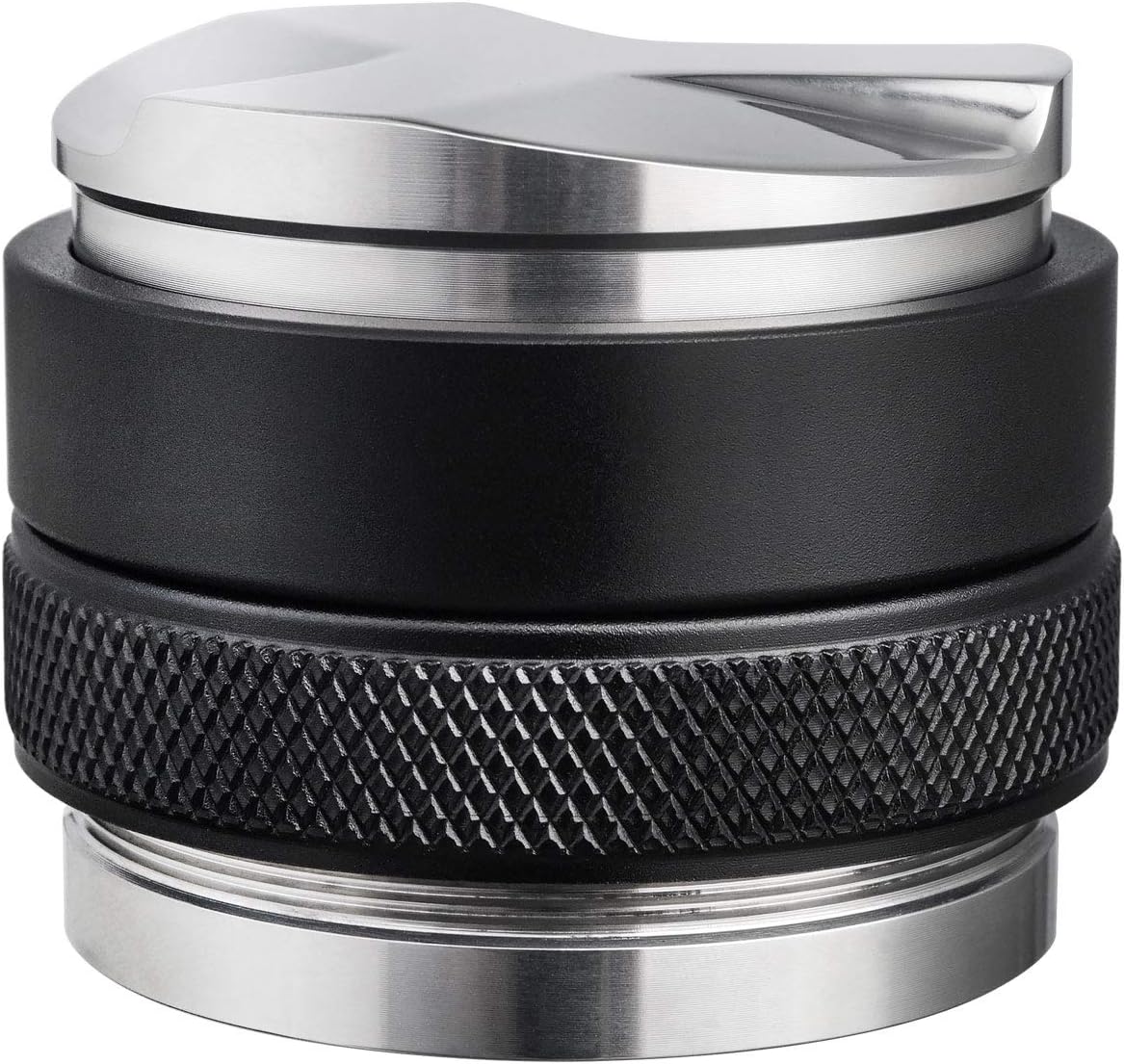
Palm tampers and distributor combos like the MATOW dual-head tool appeal to home baristas who want ergonomic comfort and more automated leveling in one device. Instead of gripping a handle, you press down from the top with an open palm, distributing and tamping in a single motion.
Design: Handleless puck-style top with depth adjustment so you tamp to a set depth rather than guessing at force. Integrated distribution fins level the coffee grounds before the flat tamping surface compresses them, working as both distribution tools and tamper in one piece.
Performance: Strong at producing a perfectly level surface and uniform puck depth. Particularly useful when multiple people use the same espresso machine and need consistency without mastering individual tamping pressure. Ergonomically designed handles-or in this case, the absence of one-reduce wrist strain and improve control during tamping.
Footprint: Easier on wrists and shoulders, but slightly bulkier than a standard tamper and may require more counter storage space.
Limitations: Can feel less intuitive for those used to a classic tamper grip. Does not offer true calibrated pressure in pounds-instead it standardizes depth. Works best on a stable flat surface. Ideal for home baristas nervous about wrist strain or those who prioritize repeatable depth-based tamping over force-based feedback.
Best Force Tamper for High-Volume or Ergonomic Needs
A force tamper (like The Force Tamper or similar impact-style designs) is a premium tool aimed at consistency and reduced strain rather than budget buyers. Professional baristas and serious enthusiasts who pull many shots per day are the primary audience, though they have niche appeal for anyone prioritizing zero-variability results.
Mechanism: An internal spring stores energy and releases a controlled tamping force when triggered, often accompanied by an audible click or impact feedback to signal target force. Some models include a leveling plate that keeps the tamping surface perfectly level against the portafilter basket rim.
Performance: Benefits busy households or small office setups. Consistent compaction of coffee grounds independent of the user’s strength or hand size supports more uniform extractions across different operators. The impact mechanism paired with leveling is praised for delivering top-tier repeatability.
Ergonomics: Upright tamping posture with less wrist torque compared to other tampers. There is a learning curve around the motion, and the tamper pairs well with standard 58 mm filter baskets on prosumer espresso machines.
Trade-offs: Significantly higher price-often $200 or more. Larger footprint that needs counter or stand space. Cleaning may be more involved due to joints and moving parts. Arguably unnecessary for casual home baristas who pull only a couple of shots per day.
Key Features That Actually Matter in an Espresso Tamper
While marketing emphasizes flashy designs and exotic materials, a few core features drive the actual impact on your espresso: fit, base shape, pressure consistency, ergonomics, materials, and compatibility with your espresso machine.
Fit and diameter: The ideal tamper size for 58 mm baskets is 58.3 mm to 58.5 mm. An undersized 58 mm tamper leaves a loose ring of coffee grounds around the edge that causes channeling-water flows through the path of least resistance, bypassing the coffee bed. Oversized tampers (above ~58.6 mm) can create suction, scraping, and puck damage. Precision tamper fit is critical to avoid loose coffee grounds that lead to uneven extraction.
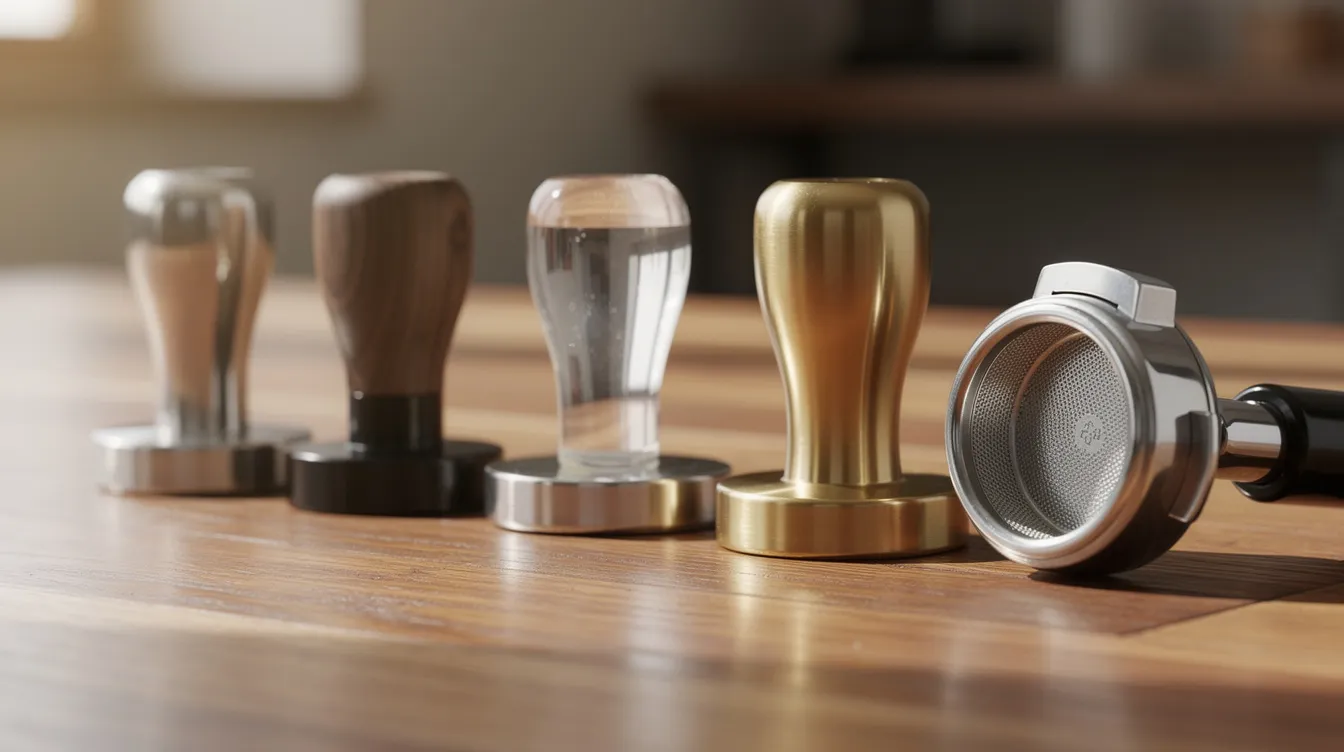
Base shape and finish: A flat tamper is recommended for even compression, and a flat stainless steel base is ideal for most espresso tampers to ensure even compression. Convex tampers can lead to uneven coffee extraction because they pack the center differently than the edges. Most expert sources favor flat bases for predictability and ease of diagnosing angle errors. A smooth, well-machined surface aids even compression and easy cleaning.
Pressure and tamper type: Classic manual tampers rely entirely on barista technique, while the best tool tampers consistently so the puck is compressed the same way shot after shot for more even extraction. Calibrated tampers deliver precise pressure for consistent results via an internal spring that clicks at a set force. Palm tampers standardize depth instead of force. Force tampers deliver a precise impact. The key insight: consistency matters more than hitting exactly 30 lb every time. Spring-loaded tampers apply consistent pressure automatically with less effort than manual alternatives.
Materials and durability: Stainless steel is the best material for tampers-it provides the weight, stability, and longevity that lighter alloys and plastics cannot. Smooth wood or coated metal handles add comfort. Single-piece or low-crevice designs are easier to keep sanitary. Tamping creates resistance for optimal espresso extraction, and the tamper’s weight contributes to how naturally that resistance builds.
How to Choose the Right Espresso Tamper for Your Setup
The right tamper depends on your espresso machine, basket size, physical comfort, budget, and how deep you want to go into the espresso making process. Here is a step-by-step decision framework.
Confirm your basket size: Check your espresso machine manual or measure the portafilter. Most prosumer machines use 58 mm baskets. Some Breville machines use 54 mm. Older Gaggia and smaller machines may use 51 mm or 53 mm. Choose a tamper that fits your portafilter size-tampers should match the portafilter basket size for effectiveness.
Align tamper type with skill level: If you are a new home barista still learning grind size and dose, a calibrated tamper removes one variable from the equation. If you are confident in your tamping technique, a classic style tamper gives you full control. If you have wrist or shoulder issues, palm tampers or force tampers shift the ergonomic load. Spring-loaded tampers provide consistent pressure with less effort, which is why they suit beginners.
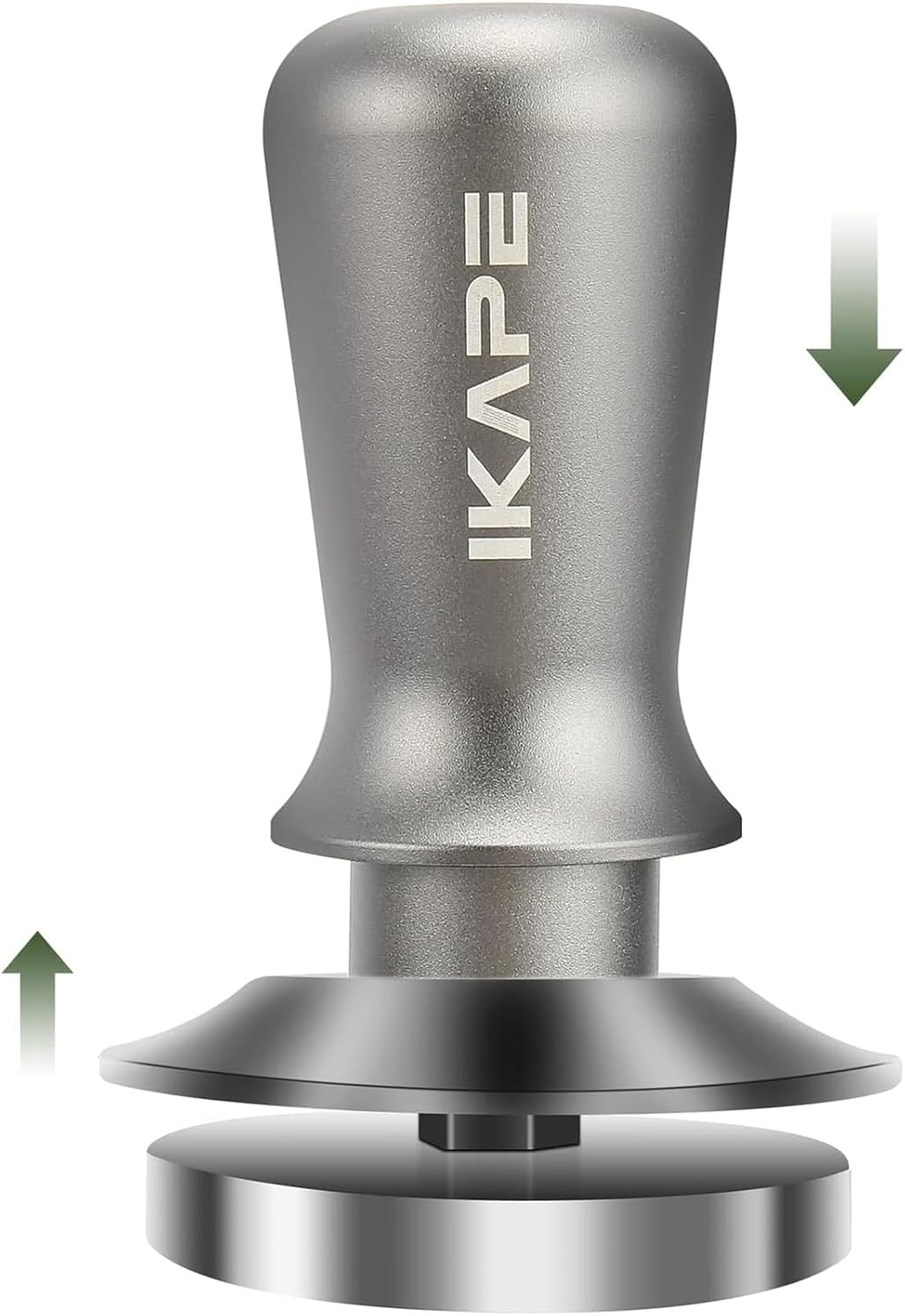
Match to budget: Under $40 gets a functional upgrade from stock tampers (LuxHaus, Ikape, MHW-3Bomber). The $40–$90 range is the sweet spot for a high-quality stainless or calibrated tamper with features like multiple calibrated springs and better machining. Above $100 enters competition-grade and impact tampers where diminishing returns set in unless you pull many shots daily.
Think about the system: A good tamper works best alongside quality coffee grinders that produce consistent grind size, a reliable espresso machine capable of stable pressure, and accurate scales to control dose. Tamping affects the flow rate of water through coffee grounds-so improving your tamper without addressing grind or dose only goes partway.
Tamping Technique, Workflow, and Common Mistakes
No espresso tamper, no matter how premium, can compensate for poor distribution and inconsistent technique. The tamping process is a crucial part of espresso preparation because it helps create an even puck for proper extraction. Good espresso preparation starts before the tamp.
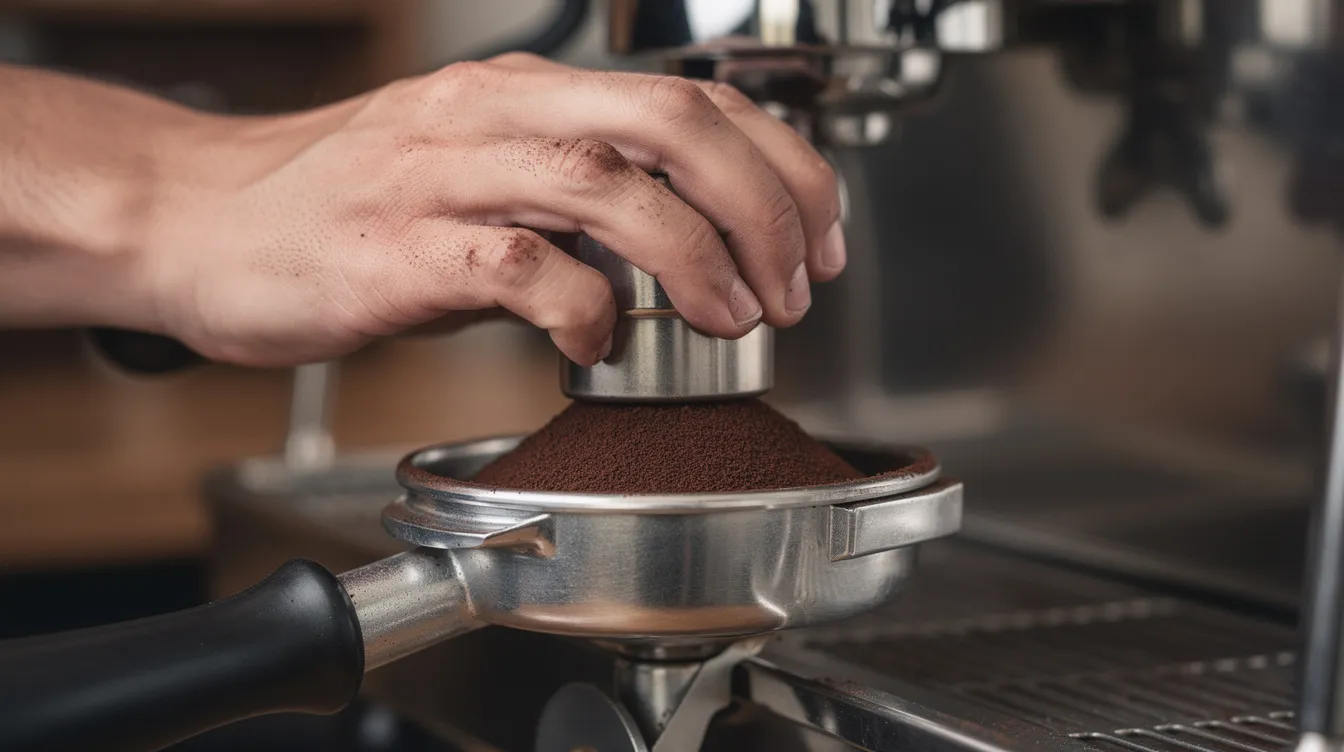
Pre-tamping distribution: Gently settle the portafilter on a flat surface. Use a WDT tool or distribution tool to break up clumps and spread the grounds evenly across the basket. Tamping should occur after leveling the coffee grounds-never tamp directly into a mound of unevenly distributed dry coffee grounds.
Proper tamping posture: Place the portafilter on a stable tamping mat. Keep your wrist straight, elbow near 90 degrees, and press straight down. Proper tamping pressure is around 30 pounds applied consistently. Twisting while tamping creates uneven coffee beds, so avoid the common spin-polish habit. An uneven tamp leads directly to channeling during extraction.
Common mistakes: Using a tamper that is too small for the filter basket. Tamping on a tilt so one side of the coffee puck is higher than the other. Knocking the portafilter after tamping and fracturing the puck. Double tamping is unnecessary if done correctly the first time-one firm, level press is all you need. Do not over tamp; once the spring stops or your flat base has compressed the bed evenly, additional force adds nothing.
Assisted tamping: Some modern espresso machines incorporate automated tamping features. If your machine already handles this, an external tamper becomes less critical, though many users still prefer the control of manual or calibrated tamping. Consistent technique paired with the right tamper produces better espresso than expensive gear alone.
Maintenance, Cleaning, and Cost of Ownership
Espresso tampers are low-maintenance compared to larger espresso machines and coffee grinders, but keeping them clean and undamaged is essential for hygiene and long-term consistency.
Daily care: Wipe coffee grounds and oils off the flat base with a damp cloth after each session. Dry thoroughly with a dry cloth to prevent spotting, especially on stainless steel bases. Cleaning tampers occasionally with mild dish soap handles visible buildup without damaging the finish.
Deeper maintenance: Check that screw-on handles remain tight-loose threads create wobble that undermines a perfectly level tamp. For calibrated or force tampers, lightly lubricate or clean springs per manufacturer instructions. Inspect wooden handles for cracks or finish wear over time.
Cost of ownership: Replacement springs or bases are available for some models like the Normcore V4. Budget tampers may need full replacement sooner if threads strip or bases warp. Investing in a durable stainless steel tamper once is typically cheaper than cycling through multiple inexpensive coffee tampers over several years. Quality stainless steel tampers can last many years with basic care.
Storage: Use a tamping stand when counter space allows. Keep the base protected from drops that could warp the tamping surface. Store away from moisture and aggressive cleaners.
Related Gear to Elevate Your Espresso Setup
A tamper is one piece of a broader espresso workflow. Dialing in espresso also depends on grind quality, measurement precision, water control, and milk texturing.
Precise coffee scales help verify your espresso dose and yield, keeping your shots within the same parameters every time.
Gooseneck kettles complement a full home barista setup, especially if you also brew pourover alongside espresso.
Milk frothing tools help refine lattes and cappuccinos, completing the espresso drink workflow.
Consider compatibility across your system: a tamper size that matches precision baskets, a grinder that produces consistent espresso-fine particles, and an espresso machine capable of stable pressure all work together.
FAQs About Espresso Tampers
These frequently asked questions cover edge cases and nuances not fully addressed in the main sections.
What size tamper should I buy for a “58 mm” basket?
Most modern 58 mm baskets actually measure slightly larger internally, so many experts recommend tampers around 58.3–58.5 mm to better contact the basket wall and reduce the loose coffee ring that causes channeling. Users of very tight precision baskets should check manufacturer specs-in rare cases a full 58.5 mm base may feel too snug, and a 58.35 mm option is safer. Test fit gently when your tamper arrives: it should slide in smoothly with minimal side-to-side play and no scraping. If it sticks or pulls the puck up when removed, it may be slightly oversized for that particular basket.
Do I really need a calibrated or spring loaded tamper?
Calibrated tampers are most helpful for beginners or multi-user households where inconsistent tamping leads to variable shot quality. They standardize the force applied to the coffee grounds and improve shot-to-shot consistency, typically clicking at around 30 lb. Experienced home baristas with well-practiced technique can achieve similar results with a classic style tamper, especially if they have trained their feel using a scale. There is no strict requirement-a calibrated tamper is a convenience and learning aid rather than a mandatory upgrade. Weigh the added cost against how much you currently struggle with repeatable force. Makers like Saint Anthony Industries and Rocket Espresso also produce standard tampers favored by professionals who rely on trained muscle memory.
Is a flat base always better than a convex base?
Most current expert guidance favors flat bases for standard baskets because they simplify distribution, make puck diagnostics easier, and generally produce even extractions. A convex tamper historically aimed to reduce edge channeling by packing the center slightly more, but results can be harder to predict. Many modern precision baskets are designed with flat tampers in mind. Unless your machine manufacturer explicitly recommends convex geometry, a well-machined flat base is the safer and more versatile default.
How often should I replace my espresso tamper?
A quality stainless steel tamper can last over a decade if the base stays flat and free of deep scratches and the handle or mechanism remains structurally sound. Consider replacing or repairing if the base becomes visibly warped from drops, if calibrated mechanisms lose their click accuracy, or if loose threads create wobble. For many home baristas, “replacement” more often means upgrading to a better-fitting or more ergonomic tamper as their espresso machines and technique evolve rather than wearing out a functional tool.
Can a better tamper fix channeling and bitter or sour shots?
A well-made espresso tamper can reduce one source of inconsistency-uneven puck density and air pockets-but it cannot compensate for incorrect grind size, poor distribution, stale coffee, or unstable espresso machine pressure. Think of a tamper upgrade as part of a broader dialing-in process that includes controlling dose with a scale, checking shot times, and adjusting grind. If channeling and flavor issues persist after upgrading the tamper, examine grinder quality, coffee freshness, and potentially your baskets or espresso machine rather than pushing past into ever-pricier tampers. The best tamper in the world cannot fix fundamentally mismatched inputs.
How Capitol City Coffee Rates Coffee and Coffee Machines
Every coffee and coffee machine we recommend is scored on the same 100-point scale, so a recommendation on one page means the same thing as a recommendation on any other. Each pick is also labeled with how we reached its score.
Research-ratedScored from the roaster or manufacturer’s published specifications, independent results such as Coffee Review blind cuppings and SCA brewer certification, and patterns across verified buyer reviews. Most of our current picks are research-rated.
Hands-on testedThe Capitol City Coffee team has brewed the coffee or used the machine ourselves, following the testing steps below. We only use this label when that testing actually happened, and we show the date we tested.
Coffee beans: 100-point scale
What we score
Points
What we look at
Origin and sourcing transparency
20
Country, region, farm or cooperative, altitude, bean variety, and processing method are clearly disclosed.
Flavor evidence
25
Independent cupping scores, how closely the tasting notes match what the origin is known for, and our own cupping notes when hands-on tested.
Roast and freshness
15
Roast level stated, roast-date practices, whole-bean availability, and packaging with a one-way valve or resealable bag.
Brew versatility
15
How well the roast suits pour-over, drip, French press, cold brew, and espresso.
Value
15
Price per ounce compared with similar single-origin coffees or blends.
Buyer feedback
10
Volume and consistency of verified reviews, and recurring complaints about staleness, bitterness, or shipping.
Coffee machines and gear: 100-point scale
What we score
Points
What we look at
Brewing performance
25
Water temperature in the 195–205°F range, even extraction, and SCA certification or published test data.
Build quality and reliability
20
Materials, known failure points, and long-term owner reports.
Ease of use and cleaning
15
Setup, the daily routine, descaling, and dishwasher-safe parts.
Fit for your kitchen
10
Capacity, counter footprint, and noise.
Useful features
10
Programming, grind and temperature control, and carafe type. Features that improve the cup count more than extras that do not.
Value
10
Price compared with machines that perform similarly.
Warranty and support
10
Warranty length, parts availability, and how the brand handles repairs.
What the grades mean
Score
Grade
What it means
90–100
A
Exceptional. Our first recommendation for the feeling and setting described.
80–89
B
Strong. Excellent, with minor trade-offs we explain.
70–79
C
Good. Worth it for specific needs, with clear compromises.
Below 70
—
Not recommended. We do not feature these as picks.
How we test hands-on
When a pick carries the Hands-on tested label, this is the method behind it, and we note the date we tested.
Coffee: brewed fresh from whole beans following Specialty Coffee Association guidelines (water between 195 and 205°F, about 1 gram of coffee to every 15 to 18 grams of water) in the brew methods the roast suits best, such as pour-over, French press, or espresso. We taste it black first, then with milk if that is how most people drink it, and each taster scores it on their own before we compare notes.
Machines: used in our everyday routine rather than a single demo. We brew both full and small batches, check the brewing temperature and brew time, and run the cleaning or descaling steps the manual calls for.
How we choose the feeling and setting
We match each coffee to a mood and a moment based on its flavor profile and roast. Bright, citrusy light roasts suit energizing mornings. Chocolatey, full-bodied medium roasts suit slow or social moments. Richer roasts suit espresso and milk drinks. Each pick explains which facts led us to that match.
Our scores stay independent
Every score comes only from the criteria above. No brand can pay for a pick or a higher grade. We re-check ratings when a roast, listing, or model changes, and update or remove picks that no longer earn their grade.
Some links on this page are affiliate links. As an Amazon Associate, Capitol City Coffee earns from qualifying purchases, at no extra cost to you.
Questions about a rating? Reach the Capitol City Coffee team through our contact page.