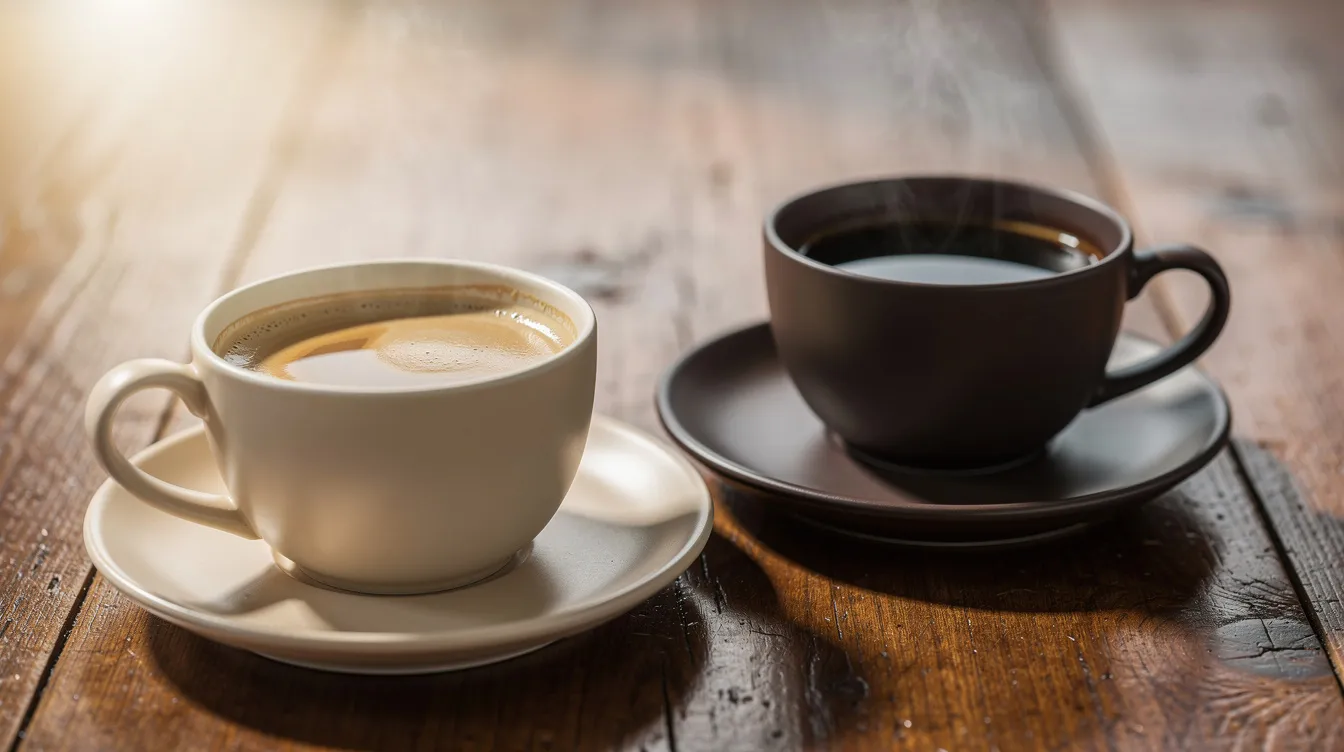
Two iconic pour over brewers, two very different cups of coffee. If you are trying to decide between the Chemex and the Hario V60, the answer depends on how much coffee you make, how hands-on you want to be during the brewing process, and whether you value clarity or body in your cup. For most home barista setups in the U.S., the V60 is the more versatile brewer with lower costs, but the Chemex is worth the investment if you regularly serve several people and love a pristine, tea-like cup.
Best chemex pick
For this roundup, Chemex Classic is the chemex we recommend first—the same pick at the top of our At-a-glance cards below.
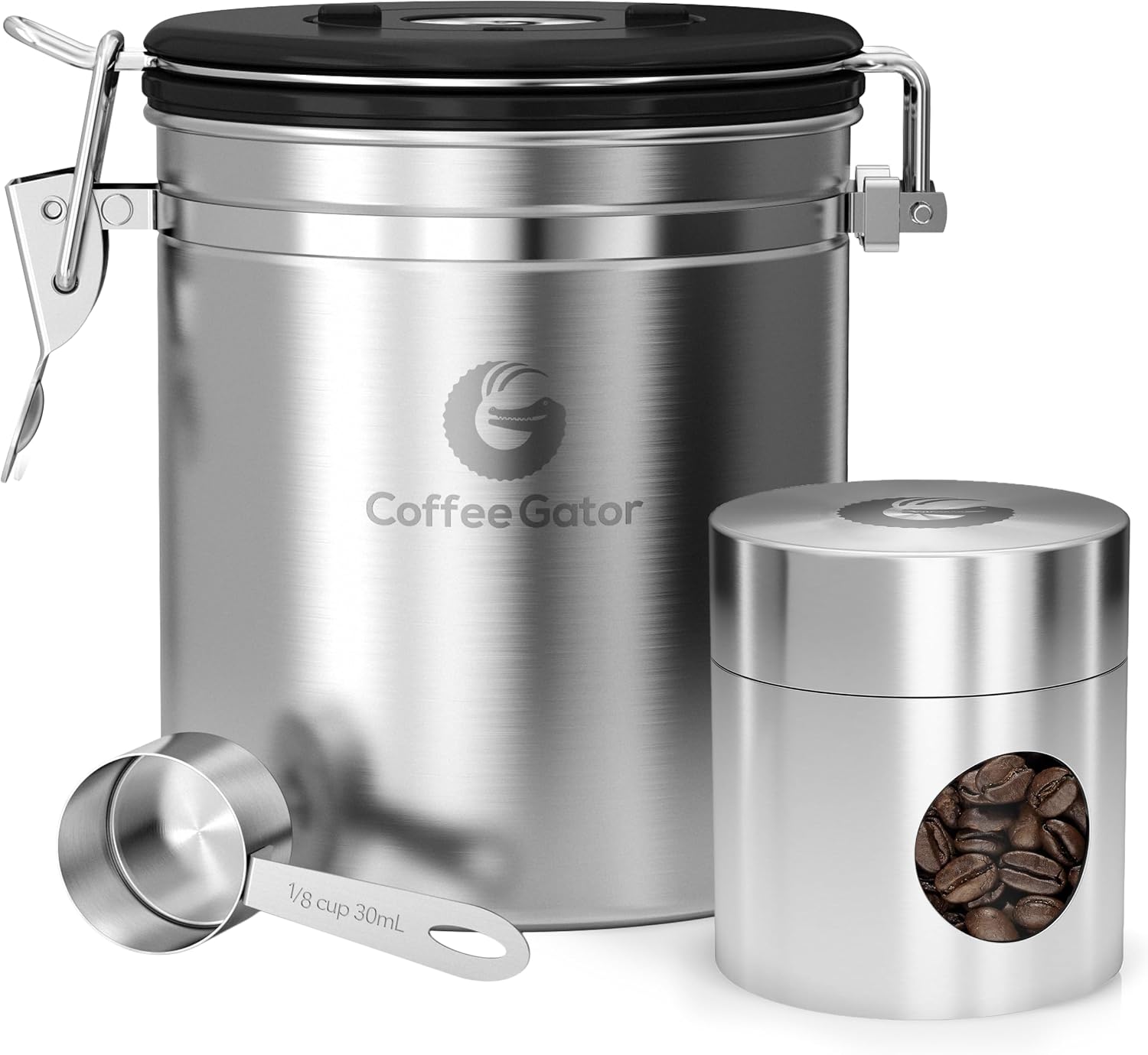
The machine or dripper is the expensive click. If that purchase is waiting, a $20 bag and a canister still upgrade the setup you have—without adding a competing V60 on this Chemex vs V60 page.
Whole bean (~$15–$25)
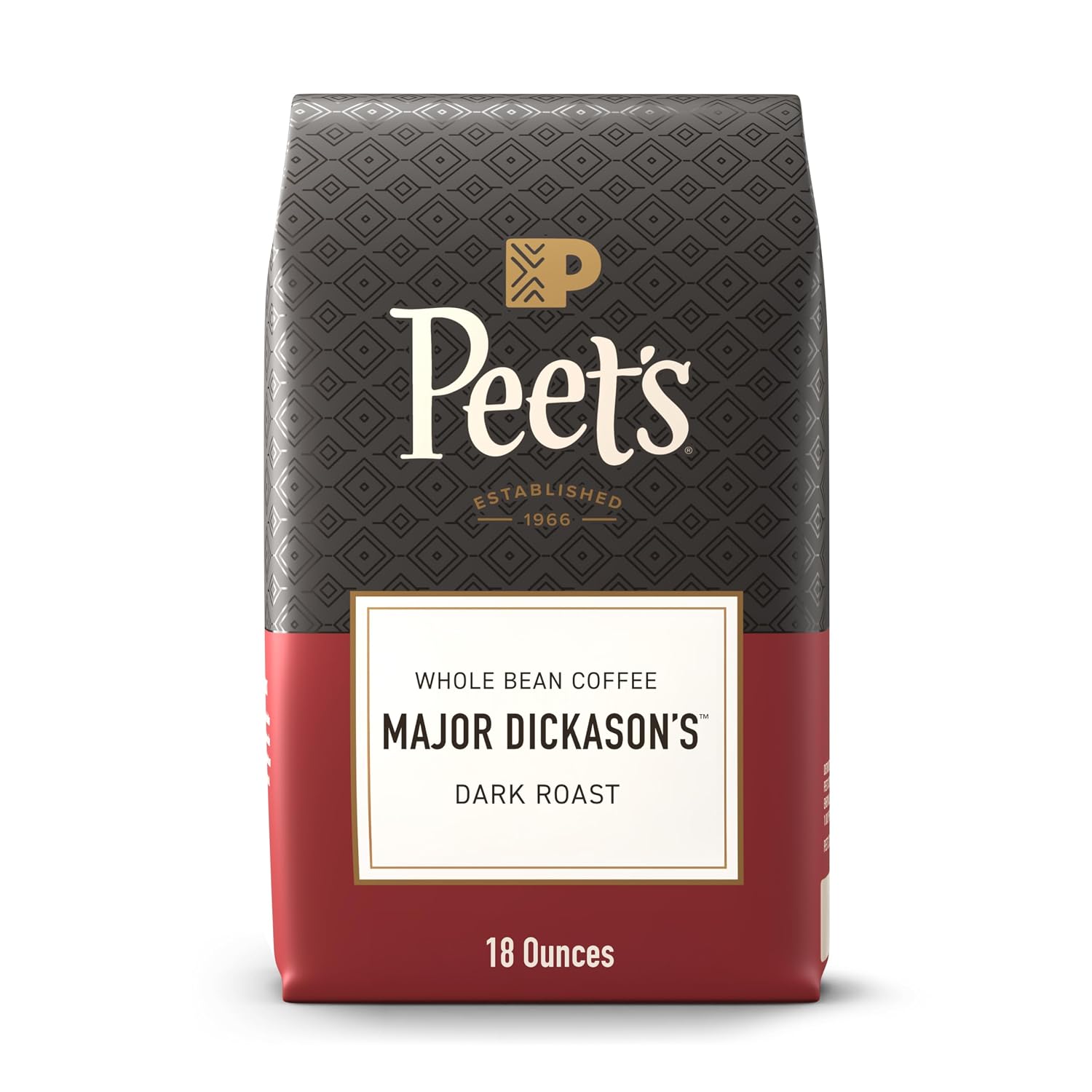
Peet’s Major Dickason’s
A cheaper cart than a new dripper. Fresh beans are the fastest cup upgrade.
The Chemex brewer produces a clean, light body cup by retaining 95–99% of coffee oils through its thicker filter, while the Hario V60 lets 60–80% of oils through for a more aromatic, textured resulting brew.
For most people brewing one cup or two cups at a time, the V60 offers better value: a plastic version starts around $12–13, and filter paper costs less per brew than Chemex bonded paper.
Chemex is more forgiving for beginners because its thicker filter slows the brewing process and buffers imperfect pouring; the V60 punishes every variable in brewing, from grind size to pour speed.
Both the Chemex and V60 can make excellent coffee when grind size, water temperature, and technique are dialed in – the same beans will simply taste different in each brewer.
This guide is a researched editorial analysis based on manufacturer specs, expert consensus, and verified product data – not hands-on testing by Capitol City Coffee.
Affiliate & Editorial Disclosure
Capitol City Coffee may earn a commission from some recommended retailers at no extra cost to you. Rankings and conclusions in this Chemex vs V60 comparison are based on independent editorial research, manufacturer specifications, and third-party expert consensus – not on commission size or sponsorship. This is an independent coffee editorial and affiliate publication, not a coffee gear seller or brand site.
Quick Verdict: Chemex vs V60 for Most People
For most U.S. readers who brew single cups or two cups each morning, the Hario V60 (especially a size 02 in plastic or ceramic) is the stronger first purchase. It costs less upfront, uses cheaper filters, and gives you complete control over extraction to highlight origin character in specialty coffee.
The Chemex becomes the better pick when you regularly brew for three to six people and prefer an ultra-clean cup with minimal oils and sediment. It also doubles as a serving carafe, which simplifies hosting.
Here is the core trade-off: the Chemex delivers a cleaner, lighter-bodied cup with longer brewing time (roughly 4–6 minutes) and requires a medium coarse grind. The V60 is faster (about 2:30–3:30 for a single cup), uses a medium fine grind, and produces more body, aroma, and texture.
If you are choosing between the two methods and are a solo drinker chasing complex single-origin coffees, start with the V60. If you host weekend brunches and want a showpiece carafe, the Chemex wins that scenario. And if you are still unsure, keep in mind that beans and grind size matter more than the device alone – both brewers can outperform a basic drip machine once you learn to dial them in.
Key Differences: Chemex vs Hario V60 (Comparison Table)
The table below summarizes the most important differences. Detailed explanations follow in later sections.
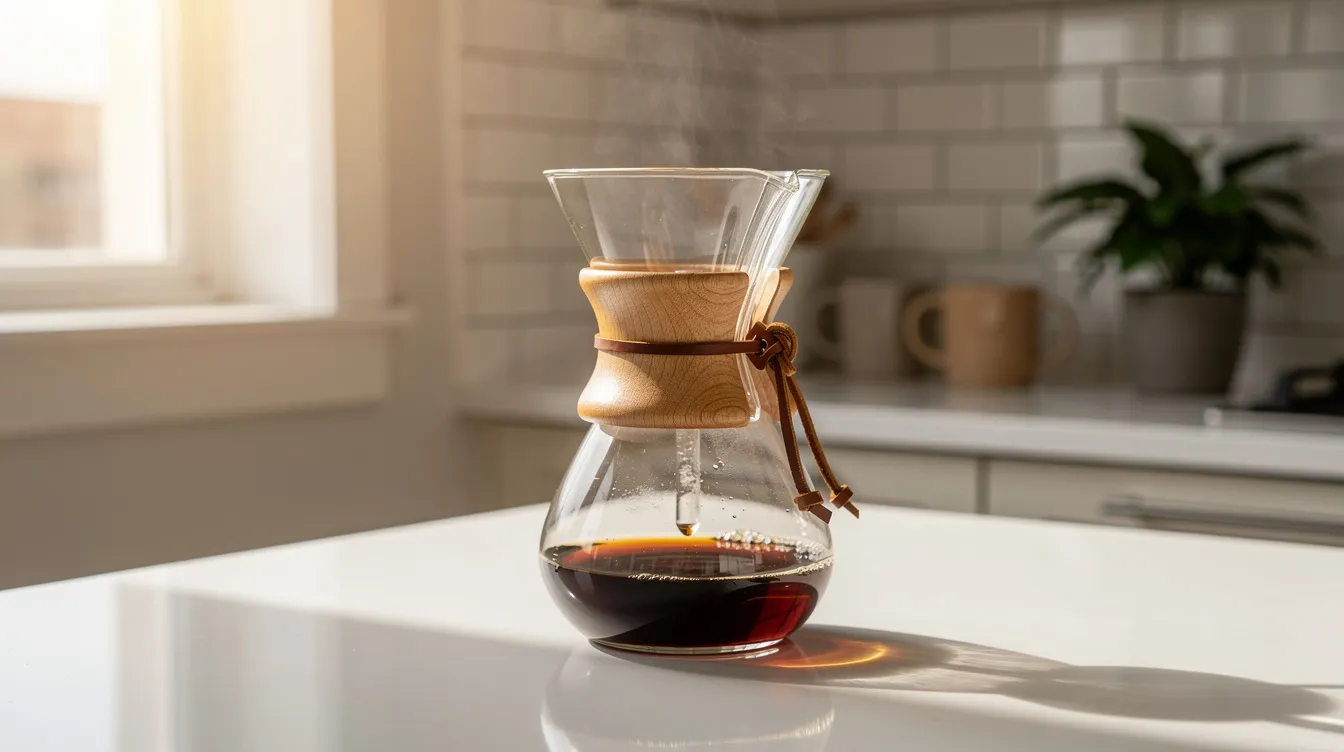
The Chemex is an hourglass-shaped pour over brewer made from borosilicate glass, designed in 1941 by Dr. Peter Schlumbohm. Sometimes called a Chemex glass mug by casual buyers, it features a thick single-piece glass body with a wooden collar and leather tie that serve as a heat-safe handle. The design is widely considered a piece of modern art – it even sits in the permanent collection of the Museum of Modern Art in New York.
The brewing method is straightforward: fold a Chemex filter into the top cone, add medium coarse ground coffee, pour hot water over the coffee bed, and let the brew drip into the bottom chamber. The Chemex functions as both brewer and carafe, so there is no need for a separate carafe.
Capacity options range from a 3-cup model (~15 oz) to a 13-cup version (~65 oz), and the Chemex is ideal for brewing large quantities – typically up to 10 cups in one batch, or roughly 1.5 L. The proprietary Chemex bonded paper filters (available in square and circle shapes) are significantly thicker than standard pour over papers, which is the single biggest factor shaping Chemex coffee’s clean, tea-like character.
Hario V60 Overview: What It Is and How It Works
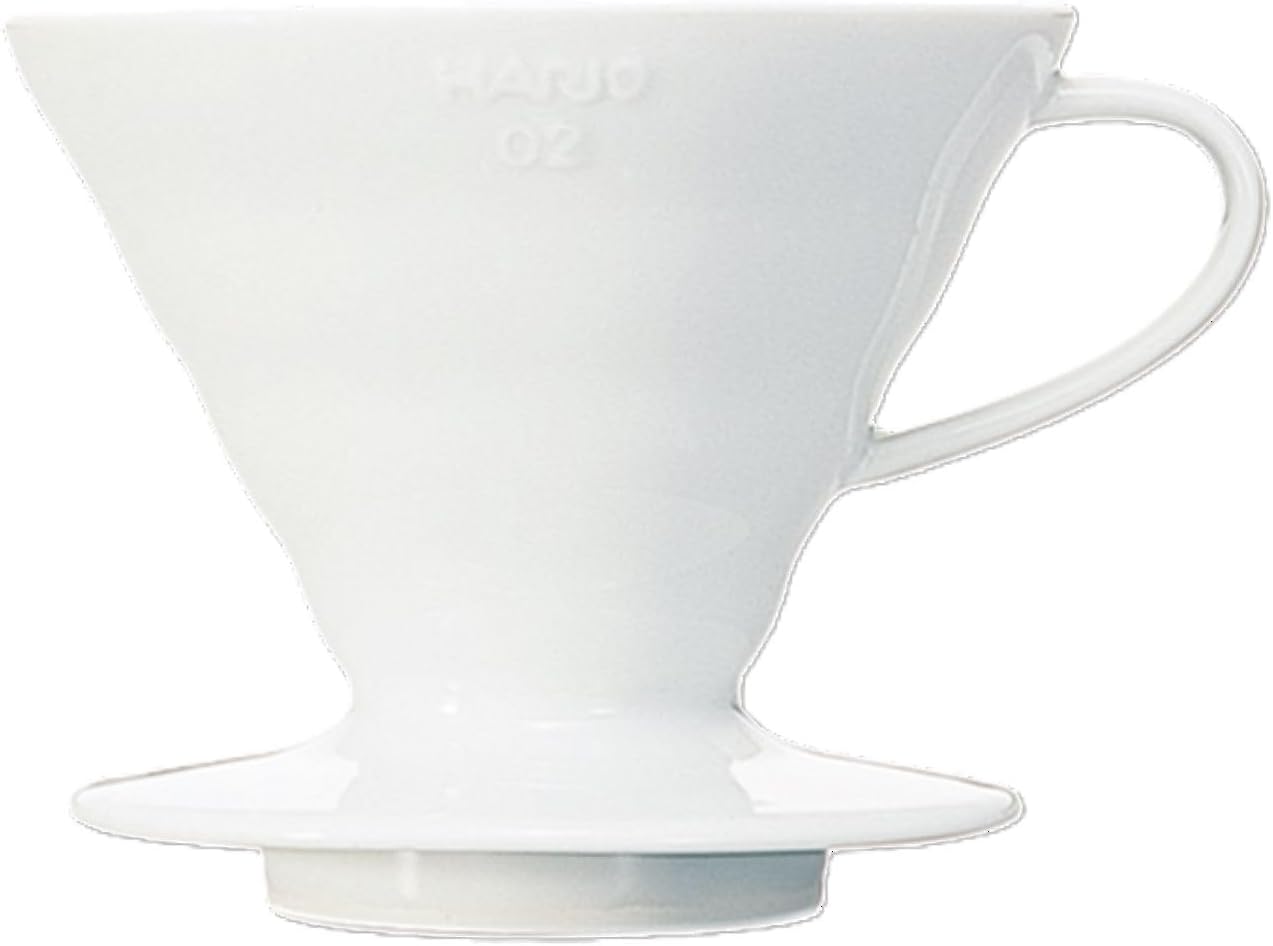
The Hario V60 is a Japanese cone dripper named for its V-shaped, 60-degree angle. It features spiral ribs along the interior walls and a single large drainage hole at the bottom, which together give the brewer its distinctive flow characteristics. The V60 is best suited for single servings or smaller volumes, making it a staple in specialty coffee shops and home kitchens alike.
Sizes include: 01 for 1–2 cups, 02 for 1–4 cups, and 03 for batches up to about 1 L. A plastic version runs around $12–13 and is extremely durable, while ceramic versions cost $25–40 and offer better heat retention. Glass and premium metals (stainless steel, copper) are also available for those who want a particular aesthetic or thermal performance.
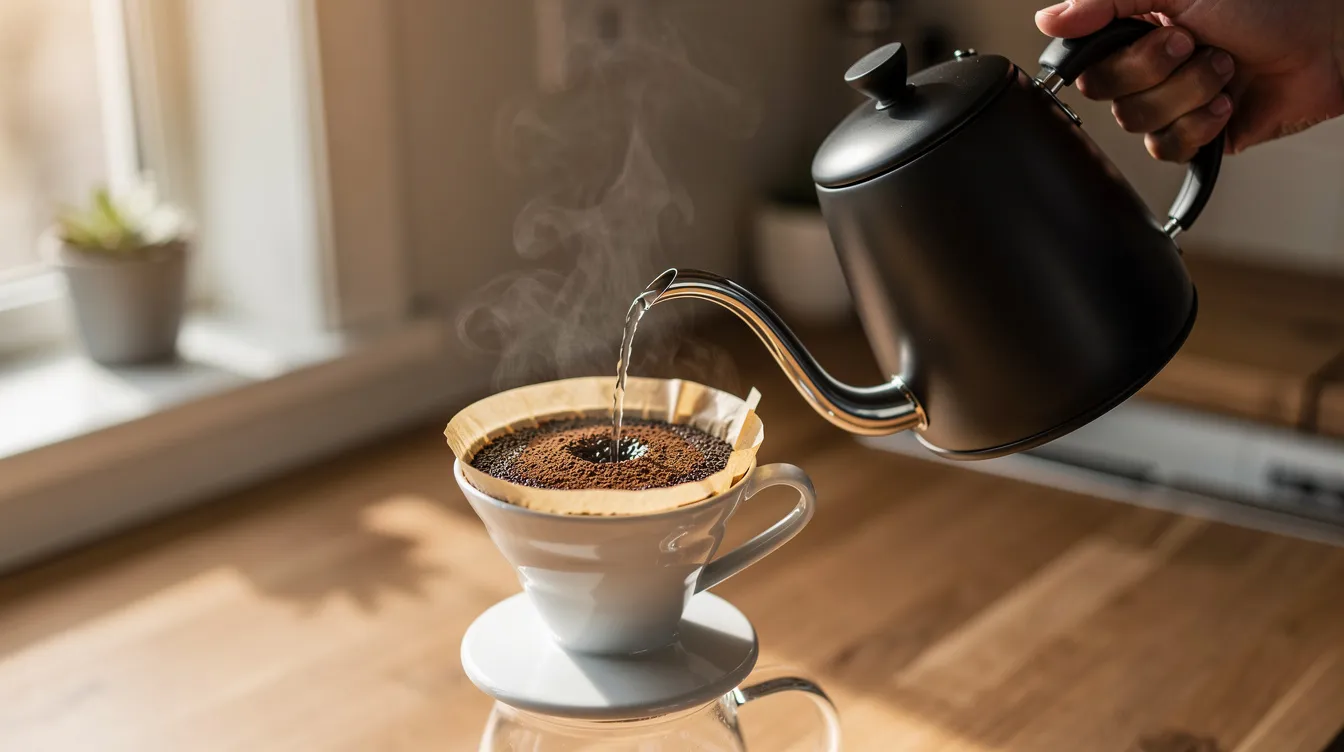
The workflow is simple: place the V60 on a mug or separate carafe, insert a thin cone filter, add medium fine ground coffee, and pour water in stages using a gooseneck kettle. Because the V60 sits on whatever vessel you choose, it is a versatile brewer that adapts to different setups. It is favored in competitions like the World Brewers Cup because it offers precise control over flow rate and extraction – a quality that makes it a favorite among home barista brewers who enjoy tweaking recipes.
Chemex Performance: Taste, Brew Time, and Workflow
The thicker filter is the defining performance feature. Chemex filters retain 95–99% of coffee oils during brewing, stripping out cafestol, kahweol, and fine particles that contribute to body and mouthfeel. The result is a smoother cup because the thicker filter removes more coffee oil from the final cup – Chemex coffee has a clean, tea-like body with low bitterness and minimal sediment.
This filtration also means the Chemex enhances floral notes and accentuated acidity, making it a strong match for light and medium roasts, especially washed-process beans from Ethiopia, Kenya, or Guatemala. Bitter elements that might show up in a heavier brewing method are largely filtered out.
Grind size sits in the medium coarse range – on a Baratza Encore, that is roughly 18–22 clicks, or about 3–6 steps coarser than a V60 setting. The Chemex requires a medium-coarse grind to prevent water from stalling against the thick filter paper. Typical brew ratios hover around 1:15 to 1:17 (e.g., 40 g coffee to 650 g water). Brewing time runs 4–6 minutes for common batch sizes.
The trade-off: heat loss through exposed glass can be significant, especially with smaller batches in a large carafe. Preheating the Chemex with hot water before you start brewing helps, but this adds a step to the workflow.
Hario V60 Performance: Taste, Brew Time, and Control
The V60’s thinner paper plus its single large drainage hole allow 60–80% of oils to pass through, yielding a vibrant cup that preserves more natural oils and aromatic complexity. V60 coffee is more intense and highlights flavor notes better than a Chemex brew – you will often notice more pronounced fruit, caramel, and chocolate depending on the bean.
The Hario V60 highlights brightness and complexity with greater body and texture, producing what many specialty coffee drinkers describe as a balanced cup or a sweet cup when dialed in properly. Where Chemex strips flavor down to its cleanest form, the V60 keeps more of the aromatic compounds that make making coffee with single-origin beans so rewarding.
The Hario V60 handles a medium-fine grind because water flows through it rapidly – around Encore 13–17 or Comandante mid-20s. A standard recipe uses about 15–20 g coffee for 250–300 g water. Brew time lands around 2:30–3:30 for a single cup, and up to roughly 4:00 for two cups. Pour speed and pattern significantly affect drawdown.
But this performance comes at a cost: the Hario V60 is technique-sensitive and rewards precision in pouring. Inconsistent grind or erratic pour can quickly push a brew toward sour under-extraction or harsh over-extraction.
Filters, Grind Size, and Brew Time: The Technical Differences
For pour over, filter design, grind size, and brew time are tightly linked – they form the heart of the Chemex vs V60 comparison.
Chemex filters are 20–30% thicker than V60 filters. This extra thickness reduces pore size, retains more oils and fines, and increases flow resistance. You need substantially more water (often 150 g+) to properly rinse a Chemex filter before you start brewing coffee.
V60 filters are thinner cone papers with a basis weight of roughly 88–100 g/m². The spiral ribs on the dripper walls keep the paper slightly lifted, letting airflow and the coffee bed itself govern flow rate. This design gives the brewer that “open” feel where the grind sits directly in control of how fast hot water moves through.
On the same grinder, a Chemex setting should be about 3–6 clicks coarser than your V60 setting. For example, if your V60 lands at Encore 15, try the Chemex at 20. This compensates for the slower Chemex filter and promotes even extraction across the thicker paper.
Target brew times: V60 around 2:30–3:30 for one to two cups; Chemex around 4:00–5:30 for three to six cups. If your brew finishes too fast, grind finer. If it stalls past those windows, grind coarser.
Ease of Use, Learning Curve, and Everyday Usability
The Chemex is more forgiving for beginners. Its thick filter naturally slows water flow and smooths out minor pouring mistakes, meaning a slightly uneven pour still produces a drinkable cup. The Chemex allows for acceptable results with a regular kettle – you don’t need a specialized spout to get decent filter coffee. Beginners often start with the Chemex for easier brewing.
The V60 is a different story. A gooseneck kettle is essential for the V60 because precision pouring directly controls extraction. Without one, you will likely over-saturate parts of the coffee bed while under-extracting others. The V60 punishes every variable – grind uniformity, water temperature, pour distribution, and timing all show up in the cup immediately.
For your morning routine on a busy weekday, the V60 can actually be faster to set up for a single cup: place dripper on mug, insert paper filter, rinse, brew. Total time from kettle to first sip is under five minutes. The Chemex’s larger batch capacity makes it better for weekend mornings when you can pour water more leisurely and serve multiple people.
Cleanup also differs. The V60 is easier to clean with a quick rinse after brewing – lift the cone, toss the filter, rinse under water. Cleaning the Chemex requires a bottle brush for the interior because of its narrow neck, and the wooden collar should be removed for thorough washing.
Design, Durability, and Countertop Footprint
The Chemex features a thick hourglass-shaped glass body with a single drip point, and its mid-century design has earned a place in museum collections and television sets alike. It sits on the counter like a piece of modern art and doubles as a serving vessel for brunch or dinner parties.
But that full-glass construction is fragile. Drop it in the sink or knock it off the counter, and it shatters. The narrow neck makes it awkward to store in tight cabinets, and it is not practical for travel.
The V60 offers more material flexibility. The plastic version is virtually indestructible and weighs almost nothing – ideal for dorm rooms, offices, or travel kits. Ceramic versions retain heat better during brewing but can chip. Glass V60s are prettier but more fragile, though still easier to handle than a tall Chemex.
Heat retention matters too: ceramic and copper V60s hold temperature better than plastic, while the Chemex’s large exposed glass surface loses heat faster unless you preheat and brew a full batch. For compact kitchens, a V60 cone and small server nest easily into cabinets, while the Chemex demands more vertical space.
Cost, Filters, and Long-Term Value
Here is where the numbers get interesting for daily coffee drinkers.
Brewer cost: Chemex costs $44–54 for the Classic model. Handblown editions start around $120. A plastic V60 costs $12–13, significantly cheaper than Chemex. Ceramic V60s run $25–40, and premium metals top out around $60–72.
Filter cost: Chemex filters cost $11–19 per 100-pack, which works out to roughly $0.11–0.18 per brew. V60 filters cost $8–12 per 100-pack, or about $0.06–0.12 per brew. Daily brewing with V60 saves $15–40 annually compared to Chemex in filter spend alone.
Long-term value: Over a year of daily use, total cost per cup with a V60 (plastic dripper plus paper filters) stays under about $0.12. Chemex tends toward $0.20–0.25 per cup when brewer cost is amortized alongside pricier proprietary filters.
Reusable metal filters exist for both systems and can eliminate per-brew paper costs entirely. However, they change the flavor profile by letting more oils and sometimes coffee grounds through – which may defeat the purpose of choosing a Chemex for clarity. Cloth filters are another option, though they require more maintenance.
Compared to a French press (which needs no paper filters at all), both pour over methods carry ongoing consumable costs. But they also produce a distinctly different style of filter coffee that many drinkers prefer.
Winner by Use Case: Which Brewer Fits Your Routine?
Best for solo drinkers: The V60. It is designed to brew single cups efficiently, and the lower cost of entry makes it easy to justify. You get more body, more aroma, and faster turnaround.
Best for hosting: Chemex wins here. Brew a full 6-cup or 8-cup batch and serve directly from the carafe. It looks great on the table and delivers a clean, crowd-pleasing cup.
Best for travel: V60 plastic, no contest. It weighs almost nothing and survives being tossed in a backpack.
Best for experimentation: V60 again. It gives you complete control over every variable, making it a playground for the home barista who wants to chase that perfect sweet cup. Chemex is more suitable for casual brewing while V60 caters to experimental brewing.
Best for budget buyers: V60. Lower brewer cost, lower filter cost, lower annual spend.
Some enthusiasts eventually buy both, treating them as two brewers with different roles – the Chemex as a batch brewer and the V60 as a precision single cup brewer. But if you are starting out, pick one and learn it well before adding another device.
Alternatives: Other Brewers to Consider
If neither the Chemex nor the V60 quite matches your workflow, a few other options are worth exploring.
The French press uses a metal mesh filter and full immersion, producing heavy-bodied coffee with substantially more oils than either pour over method. It is a lower-tech option with no paper filters to buy, though it delivers a very different cup. You can read more in our French press vs pour over comparison.
The AeroPress is another immersion-style alternative worth considering for those who want ultra-fast cleanup and portability. Our AeroPress vs French press guide covers how it stacks up.
Flat-bottom drippers like the Kalita Wave sit between Chemex and V60 in terms of forgiveness and body – they are worth considering if you want pour over convenience without the V60’s steep technique demands. Even cold brew is an option if you prefer hands-off brewing that produces a completely different flavor profile.
Whatever brewing method you choose, investing in a decent burr grinder and fresh beans will have more impact on your cup than the specific brewer sitting on your counter.
Which Should You Choose? Editor’s Researched Recommendation
Choose based on three things: how much coffee you brew, how involved you want to be, and what kind of cup profile you enjoy.
If you are buying your first manual brewer and usually make one cup or two cups, start with a Hario V60 size 02. It costs less, teaches you more about extraction, and delivers a vibrant, aromatic cup that showcases the beans.
If you regularly brew four or more cups and love a clean, shared pot, a 6-cup or 8-cup Chemex is likely worth the extra filter cost. The Chemex also makes sense if your kitchen aesthetic matters to you and you appreciate having a brewer that looks like it belongs in a design magazine.
This recommendation is based on researched editorial analysis, manufacturer data, and widely reported user consensus – not personal testing or sponsorship. Think about your kitchen reality: time in the morning routine, storage space, willingness to experiment. Then pick the brewer that fits how you actually drink coffee, not whatever is trending.
Your next step: explore other brewer comparisons to continue narrowing down your ideal setup, or dive deeper into grind size and recipe guides for whichever device you choose.
FAQ
Below are common questions about the Chemex vs V60 that were not fully addressed above. Answers are based on aggregated expert guidance and product data, not lab testing by Capitol City Coffee.
Is Chemex worth the price over a V60 for most home brewers?
The Chemex is generally worth it if you value its iconic design, regularly brew for multiple people, and prefer ultra-clean cups with minimal oils. However, if you mostly brew one mug at a time and are budget-conscious, the V60 usually delivers better value. The V60’s lower brewer cost and cheaper filters mean you are not sacrificing performance – just getting a different cup profile.
Can I use Chemex filters in a V60 or V60 filters in a Chemex?
Cross-using filters is technically possible but not recommended. Chemex filters are too thick and large for the V60 cone, which often causes the drawdown to stall and leads to over-extraction. V60 papers are too small and thin for the Chemex, risking filter collapse and uneven extraction. Stick with brewer-specific papers or high-quality third-party equivalents sized correctly for consistent results.
Which is easier for beginners: Chemex or Hario V60?
The Chemex tends to be more forgiving thanks to its thicker filter makes and slower flow rate, which buffer minor pouring inconsistencies. You can get a decent drinkable cup even without perfect technique. The V60 rewards practice and benefits greatly from a gooseneck kettle; beginners willing to invest time in learning technique may grow into the V60 quickly, but they should expect a steeper learning curve.
What grind size should I start with for Chemex vs V60?
Start with a medium fine grind for the V60 – roughly the texture of table salt. For the Chemex, go medium coarse, closer to coarse sand. Use brew time as your feedback loop: if your V60 finishes well under 2:30, grind finer; if your Chemex pushes past 6:00, grind coarser. Adjust until your brews consistently land in the target windows (V60: 2:30–3:30; Chemex: 4:00–5:30).
How do Chemex and V60 compare to a French press?
A French press uses metal mesh and full immersion, so it retains almost all coffee oils and fine particles. This creates a much heavier, more textured cup than either the Chemex or V60. If you prefer a cleaner, more delicate cup, both pour over brewers will suit you better. If you want maximum body and do not mind some sediment, the French press may be more your style. Check out our French press vs pour over guide for a deeper breakdown.
How Capitol City Coffee Rates Coffee and Coffee Machines
Every coffee and coffee machine we recommend is scored on the same 100-point scale, so a recommendation on one page means the same thing as a recommendation on any other. Each pick is also labeled with how we reached its score.
Research-ratedScored from the roaster or manufacturer’s published specifications, independent results such as Coffee Review blind cuppings and SCA brewer certification, and patterns across verified buyer reviews. Most of our current picks are research-rated.
Hands-on testedThe Capitol City Coffee team has brewed the coffee or used the machine ourselves, following the testing steps below. We only use this label when that testing actually happened, and we show the date we tested.
Coffee beans: 100-point scale
What we score
Points
What we look at
Origin and sourcing transparency
20
Country, region, farm or cooperative, altitude, bean variety, and processing method are clearly disclosed.
Flavor evidence
25
Independent cupping scores, how closely the tasting notes match what the origin is known for, and our own cupping notes when hands-on tested.
Roast and freshness
15
Roast level stated, roast-date practices, whole-bean availability, and packaging with a one-way valve or resealable bag.
Brew versatility
15
How well the roast suits pour-over, drip, French press, cold brew, and espresso.
Value
15
Price per ounce compared with similar single-origin coffees or blends.
Buyer feedback
10
Volume and consistency of verified reviews, and recurring complaints about staleness, bitterness, or shipping.
Coffee machines and gear: 100-point scale
What we score
Points
What we look at
Brewing performance
25
Water temperature in the 195–205°F range, even extraction, and SCA certification or published test data.
Build quality and reliability
20
Materials, known failure points, and long-term owner reports.
Ease of use and cleaning
15
Setup, the daily routine, descaling, and dishwasher-safe parts.
Fit for your kitchen
10
Capacity, counter footprint, and noise.
Useful features
10
Programming, grind and temperature control, and carafe type. Features that improve the cup count more than extras that do not.
Value
10
Price compared with machines that perform similarly.
Warranty and support
10
Warranty length, parts availability, and how the brand handles repairs.
What the grades mean
Score
Grade
What it means
90–100
A
Exceptional. Our first recommendation for the feeling and setting described.
80–89
B
Strong. Excellent, with minor trade-offs we explain.
70–79
C
Good. Worth it for specific needs, with clear compromises.
Below 70
—
Not recommended. We do not feature these as picks.
How we test hands-on
When a pick carries the Hands-on tested label, this is the method behind it, and we note the date we tested.
Coffee: brewed fresh from whole beans following Specialty Coffee Association guidelines (water between 195 and 205°F, about 1 gram of coffee to every 15 to 18 grams of water) in the brew methods the roast suits best, such as pour-over, French press, or espresso. We taste it black first, then with milk if that is how most people drink it, and each taster scores it on their own before we compare notes.
Machines: used in our everyday routine rather than a single demo. We brew both full and small batches, check the brewing temperature and brew time, and run the cleaning or descaling steps the manual calls for.
How we choose the feeling and setting
We match each coffee to a mood and a moment based on its flavor profile and roast. Bright, citrusy light roasts suit energizing mornings. Chocolatey, full-bodied medium roasts suit slow or social moments. Richer roasts suit espresso and milk drinks. Each pick explains which facts led us to that match.
Our scores stay independent
Every score comes only from the criteria above. No brand can pay for a pick or a higher grade. We re-check ratings when a roast, listing, or model changes, and update or remove picks that no longer earn their grade.
Some links on this page are affiliate links. As an Amazon Associate, Capitol City Coffee earns from qualifying purchases, at no extra cost to you.
Questions about a rating? Reach the Capitol City Coffee team through our contact page.