


As an Amazon Associate I earn from qualifying purchases. This page contains affiliate links; we may earn a commission if you buy through them.
Bali Blue coffee is a full-bodied Indonesian cup from Kintamani, usually chocolatey and earthy with low acidity. Amazon bags photographed here include Fresh Roasted Coffee Organic Bali Blue Moon.
Blue Bali Coffee is one of the most unique coffee roasts from around the world. In fact, it is so special that the Indonesian government placed heavy regulations on its production years ago. This may seem bad, and there are definitely some downsides to it, but actually, the regulations are the main reason why Blue Bali Coffee has been able to keep consistent with its excellence!
So, what is Blue Bali Coffee? How does it compare to other coffee types and origins? This article will explore one of the unique coffee roasts offered by Bali. By the time you are done reading about it, we hope that you want to give the unique roast a try as well.
What is Blue Bali Coffee?

Blue Bali Coffee is grown in the rich volcanic soil of Bali. The environment, temperature, and climate is part of what makes the beans so unique. The coffee is widely known for its special taste and can be compared to some of the best coffee types and coffee brands around the world.
Bali Coffee is often defined by a unique, smooth, and syrupy taste. It has a unique flavor that elicits a spicy flavor with vanilla and dark chocolate undertones depending on how it is brewed. When roasted, the beans also produce a citrus flavor that ranges in strength depending on the brew as well. This means that it can taste similar to rich coffee types like that Hawaiian Kona coffee, or milder like a light roast. Sumatra coffee flavor profile exploration reveals a complexity that fascinates connoisseurs. This type of coffee is known for its earthy tones, often accompanied by a full body and low acidity. Additionally, the unique growing conditions in Sumatra contribute to a rich and robust taste that enhances the overall coffee experience.
The flavor and taste of the beans also depend on how it is processed. For instance, if you roast wet-processed Blue Bali coffee beans, you will get higher-toned and brighter coffee beans than other coffee types in the same region. Ethiopian coffee flavor profiles are renowned for their complexity and depth. The unique growing conditions in the region contribute to distinctive notes of jasmine, bergamot, and berry. This diversity makes Ethiopian coffee a favorite among coffee enthusiasts seeking a rich and aromatic experience.
The History of Blue Bali Coffee

In the late 1600s coffee plants made their way to Indonesia alongside the Dutch traders and colonists who frequented the island. The seeds, although carried by the Dutch, came way of Yemen.
Java was the first island to grow coffee, hence the popular name and blend of Java coffee. As the Dutch government increased the plantations in Indonesia, specifically around Jakarta, commercial exports also began. By 1711, Java was the preferred country of origin for Europeans for coffee beans.
While most islands were populated by the Dutch, Bali had quite a different story when it came to producing coffee.
Coffee production did not really begin in Bali until the 20th century. Instead of the Dutch bringing coffee bean plants to the island, Lombok traders brought the first plants to Bali.
The Lombok traders brought the Robusta coffee bean to Bali, a coffee type that can handle fighting diseases very well and contains a higher level of caffeine compared to its other coffee type counterparts.
Thanks to the rich volcanic soil and the climate of Bali, particularly in the Kintamani region, coffee production became a popular and ideal export in the region. Production rapidly spread, and the Bali Blue coffee bean became one of the most popular roasts around the world.
Origins of Blue Bali Coffee

The origins of Blue Bali Coffee lies, as its name suggests, in the rich volcanic soils of Bali. But the journey to the now popular coffee bean wasn’t always a peaceful, sweet, and nice beginning, especially for the Balinese people.
In 1963, Mount Agung erupted, devastating the entire land, and eventually hurting and hindering the coffee production in its region. Even worse, the eruption of Mount Agung claimed many lives and demolished many homes of the people living nearby.
To bring back the Balinese coffee production to its feet, the government made a variety of efforts to revitalize the island and the economy. These efforts included providing coffee seeds to farmers and placing a lot of heavy restrictions on them to keep the beans high quality. The restrictions included things such as the strict prohibition of pesticides and ensuring that all fertilizers are fully organic.
While it took some time before the coffee production bloomed again in the Balinese region, they highly benefited from this method in the long-run. The methods they use are not only great for the coffee but also great for the environment. Also, there was an increase in the feeling of community in Balinese coffee farmers as production increased and the economy boomed again.
In 2017 and 2018, Mount Agung erupted again, forcing residents to evacuate. Thankfully, the eruptions that occurred in these years were less devastating compared to the ones in 1963. Today, coffee production keeps on rolling, benefiting both the people that live there, the island, their economy, and, of course, the coffee lovers around the world!
How Bali Blue Coffee is Processed
One of the defining characteristics of Blue Bali Coffee that differentiates it from the rest of the Indonesian coffees is its processing method. Wet-processing is the processing method used for Blue Bali Coffee and other Balinese coffee, whereas dry-processing is used for most Indonesian coffees outside of Bali.
At the beginning of their coffee days, Balinese coffee was often brewed by simply mixing hot water with finely ground coffee. Oftentimes, this would leave a muddy-looking coffee substance on the cup’s bottom after finishing it. Because of this, many people found it hard to enjoy their coffee, but luckily, they changed their brewing methods rather quickly. This got rid of the muddy-looking coffee substance at the bottom of the cup and was replaced by a more traditional pour, like a slow drip or french press.
If you visit or live in Bali, there are a variety of Blue Bali Coffee providers that can provide you with a delicious cup of coffee. If you don’t live in Bali, there are also some options to buy online. See our Bali Blue coffee picks at the end of this article.
Also, if you are planning a trip to Bali, make sure to visit a coffee bean plantation to see how they make their world-famous coffee. Indonesia’s coffeegrowing regions are known for their rich flavors and unique profiles. Each area offers its own specialty beans, making it a paradise for coffee lovers. Additionally, you can learn about the traditional methods used by local farmers to sustainably cultivate their crops.
3 Bali Blue Coffee Recipes to Make at Home
As the temperatures continue to rise, the sound of an iced latte sounds better and better each day. It’s the time of year that we switch out hot coffees for cold ones. Maybe you even add summery flavors like mint and vanilla to your favorite drink. If summer is a busy time of the year for you, check out our “coffee recipes for a busy morning” here, to brew with your Bali Blue coffee.
Here are three iced latte recipes that taste perfectly with Bali Blue coffee.
Bali Blue Iced Vanilla Latte
This iced vanilla latte combines a fusion of delicious flavors that are perfect for summertime. The Bali Blue coffee pairs perfectly with vanilla, creating a savory and delicious iced latte, all made from the comfort of your home.
Ingredients →
- 1 cup of coffee (chilled)
- 1/4 cup milk
- 1/2-1 tbsp vanilla syrup
- 1/2 cup of ice
How to make it →
- Brew a cup of your favorite coffee and refrigerate it until it is chilled.
- Prepare 1 glass by filling it with ice.
- In the glass, pour in the coffee, milk/cream, and vanilla syrup.
- Stir the ingredients until they are combined, and enjoy!
Fresh Mint Iced Coffee
With summer approaching, and the afternoons getting warmer, a fresh mint iced coffee is the perfect summer treat. If you are a fan of the thin mint Girl Scout cookies, then this iced latte is for you! It’s refreshing, delicious, and – not to mention – cost-effective to make at home.
Ingredients →
- 4 Fresh Mint Leaves
- 1 cup of coffee
- 1 tbsp of heavy cream
- 1/4 cup of milk
- 1 tbsp simple syrup
- 1 cup of ice
How to make it →
- Brew a cup of your favorite coffee and refrigerate it until it is chilled.
- Muddle the mint leaves in a large glass.
- Fill the glass with ice, and pour in the coffee, heavy cream, and simple syrup.
- Serve and enjoy!
Maple Iced Coffee
Last but not least, a maple iced coffee is a perfect addition to your summertime drink lineups. Not only is this drink incredibly enjoyable, but it is also nutritious! Maple syrup is full of both zinc and manganese, which both assists in immune-health and bone-health. Because this recipe is iced, and not hot, the vitamins in maple syrup are kept intact, as opposed to being impacted when added to hot drinks.
Ingredients →
- 1 cup of Bali Blue coffee
- 1 tbsp maple syrup
- 1/3 cup of milk of choice (optional)
How to make it →
- Brew your Bali Blue coffee to your preferred intensity.
- Pour coffee into a cup and add 1 tbsp maple syrup.
- Place the brewed coffee in the fridge for a half-hour to an hour after brewing.
- Add milk, cream, or dairy-free substitute of choice.
- Enjoy!
Our Bali Blue Coffee Picks
We matched one coffee to each mood and moment below. Tap the image or the coffee name to see it on Amazon. We chose these from each roaster’s published details rather than from brewing them ourselves yet, so both are labeled research-rated. As an Amazon Associate we earn from qualifying purchases.
Feeling refreshed: an iced vanilla latte on a hot afternoon
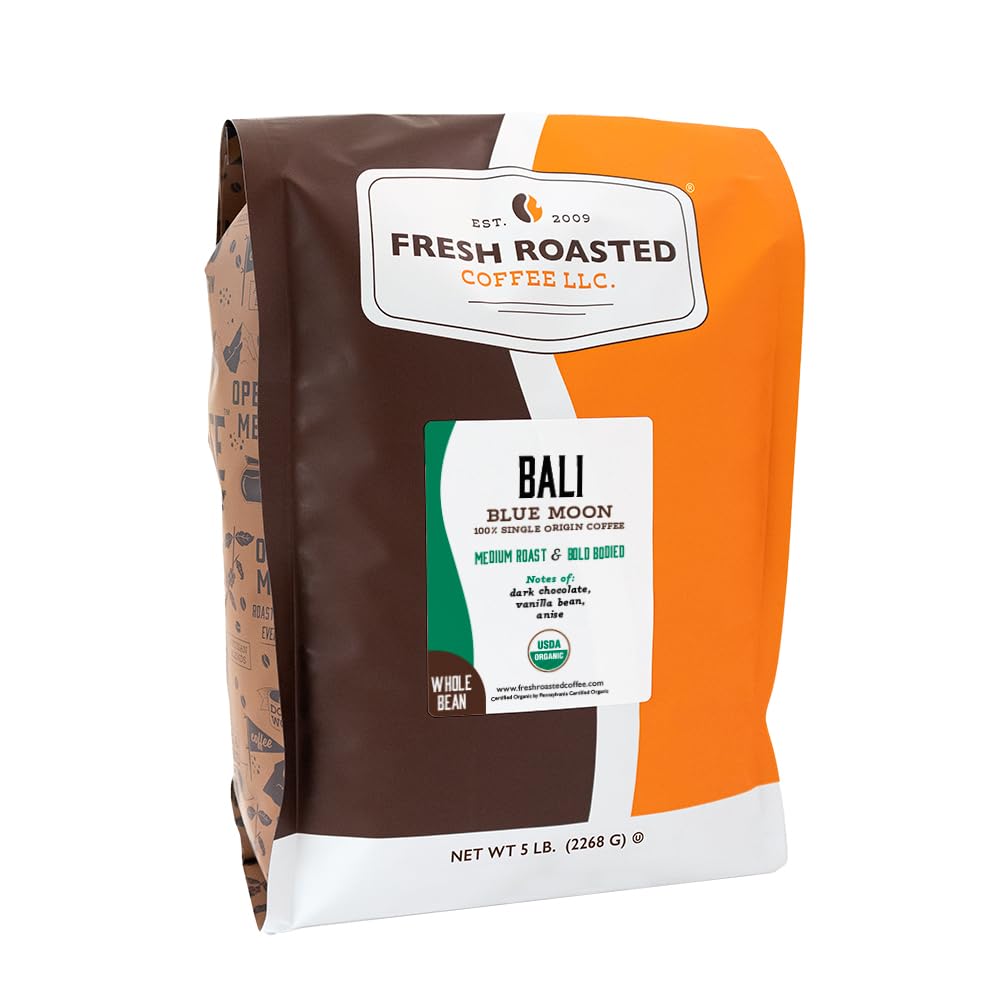
Our pick: Fresh Roasted Coffee Organic Bali Blue Moon, medium roast, whole bean, 5 lb bag.
Why we recommend it: When the afternoon heats up and you want something cool and a little sweet, this is the bag to chill. The roaster describes it as USDA Organic, with syrupy dark chocolate notes, a creamy mouthfeel, and a spicy finish, and says it also develops well as cold brew. This article describes Bali coffee the same way, smooth and syrupy with vanilla and dark chocolate undertones, which is why it pairs so naturally with the iced vanilla latte recipe above. One honest note: this listing is a large 5 lb bag, so it suits a household that makes iced coffee often.
How we reached this: We checked Fresh Roasted Coffee’s published roast, certifications, and tasting notes against this article’s Bali flavor profile and iced latte recipes, using the criteria in our coffee rating system. Research-rated, not yet brewed by our team.
Feeling cozy: a slow, rainy weekend morning
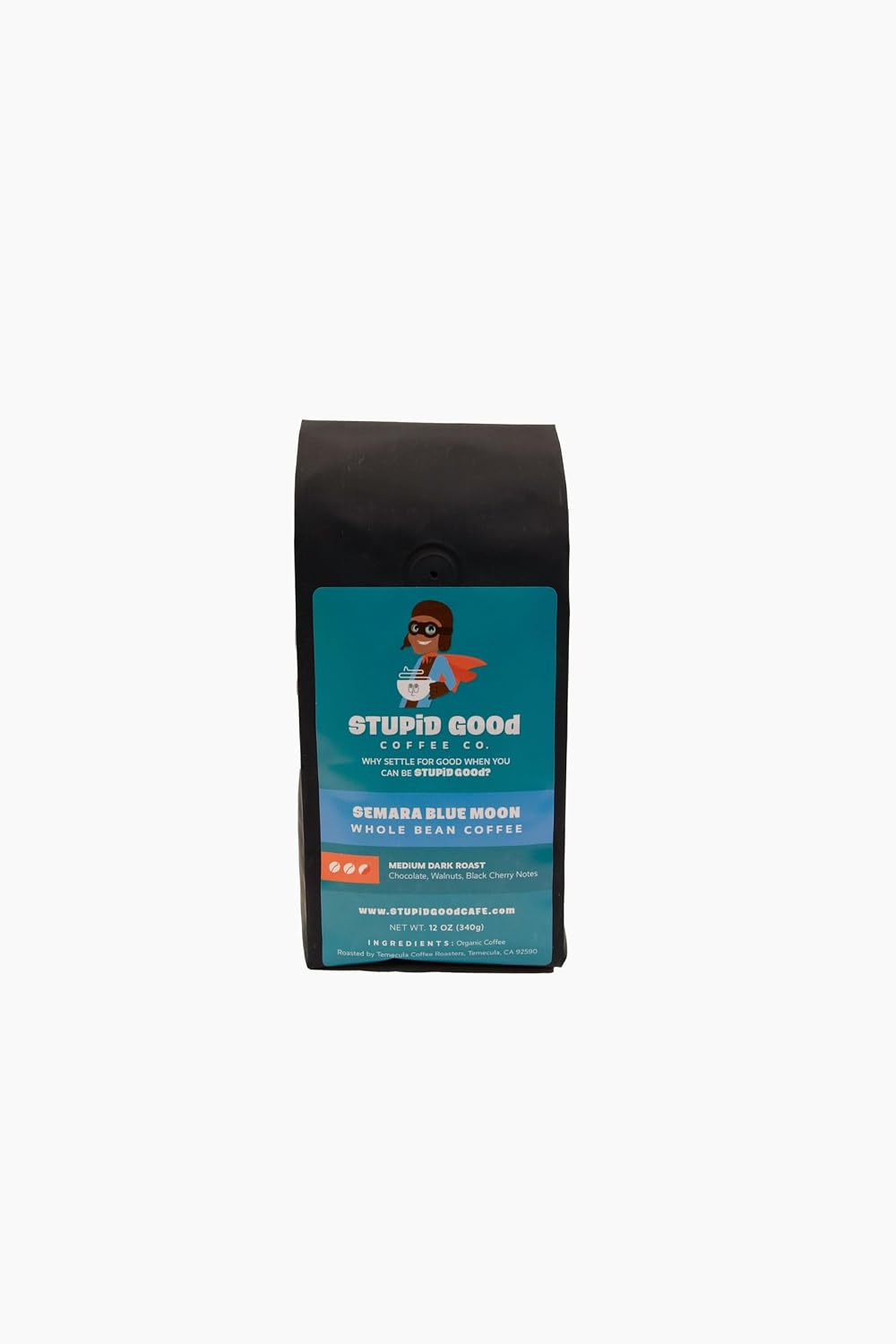
Our pick: Stupid Good Coffee Semara Blue Moon, medium-dark roast, whole bean.
Why we recommend it: For a gray morning when you want a warm, comforting mug that lasts, this darker Bali roast fits. The roaster describes it as specialty-grade, organic, single-origin Bali coffee, roasted to order, with earthy undertones, a hint of cocoa, and a subtly sweet, floral aroma. This article notes that Bali coffee’s spice and dark chocolate come forward depending on how it is brewed, and a medium-dark roast in a French press leans into that rich, chocolatey side.
How we reached this: We checked Stupid Good Coffee’s published origin, roast level, and tasting notes against this article’s description of Bali coffee’s dark chocolate and spice, using the criteria in our coffee rating system. Research-rated, not yet brewed by our team.