

If you own a moka pot and want better-tasting stovetop coffee, the single biggest lever you can pull is choosing the right bag of beans. The wrong roast or grind turns a $30 brewer into a bitterness machine. The right one delivers a rich, concentrated cup that rivals coffee makers costing ten times as much.
This guide breaks down the best coffee for moka pot brewing in 2026, names specific bags worth buying in the U.S., and walks through the roast levels, grind sizes, and brewing habits that actually matter.
Key Takeaways
- The best coffee for moka pot in 2026 is a medium to medium-dark roast with flavor notes of chocolate, nuts, caramel, and brown sugar, ground to a medium-fine texture. Lavazza Espresso Italiano, Bialetti Perfetto Moka Classico, and Balance Coffee’s Level Up Blend are three standout options across different price tiers.
- Moka pots brew at roughly 1–1.5 bars of pressure, producing concentrated coffee that is stronger than drip but not true espresso from an espresso machine. This means the best coffee emphasizes sweetness and body over extreme darkness or delicate floral notes.
- Freshly ground whole coffee beans deliver noticeably more aroma and complexity than stale pre-ground coffee grounds, but well-made moka-specific pre-ground coffee can still produce a satisfying cup.
- Grind size, brew ratio, water quality, and heat control interact with your coffee choice. Even the best beans taste burnt or flat if the grind, temperature, or contact time is off.
- This guide is independent editorial analysis based on public data, expert consensus, and verified product information.
Quick Answer: The Best Coffee for Moka Pot in 2026
The best coffee for moka pot brewing is a medium or medium-dark roast, ideally 100% Arabica or a high-quality Arabica-forward blend, ground to a medium-fine consistency and brewed with a roughly 1:10 coffee-to-water ratio on gentle heat. That combination delivers a balanced cup with enough sweetness, body, and complexity to showcase what a stovetop espresso maker does well, without tipping into bitterness.
Here are the bags worth buying in 2026:
- Lavazza Espresso Italiano – Best overall moka pot coffee (~$20–$25 / 2.2 lb)
- Bialetti Perfetto Moka Classico – Best pre-ground for Bialetti moka pot owners (~$10–$13 / 8 oz)
- Balance Coffee Level Up Blend – Best specialty-grade all-rounder (~$16–$19 / 12 oz)
- Illy Moka Classico – Best supermarket premium pick (~$12–$15 / 8.8 oz)
- Onyx Coffee Lab Monarch Blend – Best for milk drinks (~$18–$22 / 10 oz)
- Lifeboost Espresso – Best single-origin, low-acid option (~$30–$35 / 12 oz)
Capitol City Coffee is an independent editorial and affiliate site. We do not sell coffee. This page does not currently include paid purchase links. If we add them later, they will use rel=”sponsored” and will not change rankings. Last verified: September 1, 2026. Commissions do not influence rankings; picks are based on researched editorial analysis, public expert reviews, and verified product facts. Unless explicitly stated, this publication has not directly tasted each coffee listed. Recommendations synthesize trusted third-party data and expert consensus.
Top Picks: Best Coffee for Moka Pot (Editor’s 2026 Shortlist)
- Best overall – Lavazza Espresso Italiano: medium roast blend, chocolate and floral notes, whole bean, widely available, mid-price.
- Best value – Bristot Moka Oro: medium roast blend, spice and chocolate, pre-ground, budget-friendly, supermarket availability.
- Best dark roast – Rave Coffee Italian Job: dark roast blend, smoky chocolate and roasted nut, whole bean or pre-ground, ideal for moka pots, mid-price.
- Best for milk drinks – Onyx Coffee Lab Monarch Blend: medium-dark roast blend, praised for its syrupy richness, whole bean, premium tier, online ordering.
- Best single-origin – Lifeboost Espresso: medium roast single-origin, smooth and low-acid, whole bean, premium price, direct from roaster.
- Best pre-ground – Bialetti Perfetto Moka Classico: medium roast blend, specifically calibrated for moka pots, pre-ground, budget-friendly, U.S. supermarkets and online.
- Best supermarket premium – Illy Moka Classico: medium roast, made from 100% premium Arabica beans, ground for moka, widely available, mid-price.
- Best specialty all-rounder – Balance Coffee Level Up Blend: medium roast blend, rated 5 stars for moka pots, whole bean, mid-price, online.
At-a-Glance Comparison Table
This table gives you a quick side-by-side view of the leading moka pot coffees so you can match a bag to your taste, budget, and brewing setup.
Coffee | Roast Level | Type | Key Flavor Notes | Bean / Pre-Ground | Ideal For | Bag Size & Approx. Price | Best Moka Pot Fit |
|---|---|---|---|---|---|---|---|
Lavazza Espresso Italiano | Medium | Blend | Chocolate, floral, light nut | Whole bean | Straight black, Americano | 2.2 lb / ~$22 | All moka pots |
Bristot Moka Oro | Medium | Blend | Spice, chocolate, bright finish | Pre-ground | Everyday drinking | 8 oz / ~$11 | Aluminum classic |
Rave Coffee Italian Job | Dark | Blend | Dark chocolate, roasted nut, smoke | Both | Dark coffee fans | 8–12 oz / ~$14 | All moka pots |
Onyx Monarch Blend | Medium-dark | Blend | Syrupy, toffee, milk chocolate | Whole bean | Milk drinks, lattes | 10 oz / ~$20 | All moka pots |
Lifeboost Espresso | Medium | Single-origin | Smooth, caramel, low acid | Whole bean | Sensitive stomachs, straight | 12 oz / ~$32 | All moka pots |
Bialetti Perfetto Moka Classico | Medium | Blend | Mild, sweet, classic Italian coffee | Pre-ground | Beginners, convenience | 8 oz / ~$11 | Bialetti Moka Express |
Illy Moka Classico | Medium | Blend | Caramel, orange blossom, smooth | Pre-ground | Supermarket shoppers | 8.8 oz / ~$13 | All moka pots |
Balance Coffee Level Up | Medium | Blend | Chocolate, hazelnut, lingering caramel sweetness | Whole bean | Specialty enthusiasts | 12 oz / ~$17 | All moka pots |
How We Chose and Evaluated These Coffees
Every recommendation here is based on researched editorial analysis, not hands-on tasting sessions. We cross-referenced consensus from reputable coffee reviewers, roaster specifications, and verified customer feedback across multiple platforms during 2026.
The main criteria:
- Roast level tuned for moka pots: medium to medium-dark roasts that avoid the extremes of sourness or bitterness at moka extraction temperatures.
- Flavor profile: preference for coffees with chocolate, nut, caramel, and brown sugar sweetness, the profiles that moka pot brews tend to showcase best.
- Grind suitability: availability in medium-fine ground coffee or whole bean form that allows proper grind adjustment for moka pot users.
- Freshness and transparency: roast date visibility, clear origin information, and traceable supply chains were favored.
- U.S. availability and value: every bag can be purchased in the U.S. through supermarkets, online retailers, or direct from the roaster at a price that makes sense for its quality tier.
Specialty-grade coffee can have more complexity and flavor for moka pots, so we gave extra weight to coffees with verifiable quality sourcing. Affiliate commissions never override these quality criteria.
Detailed Picks: Best Coffee Bags Worth Buying for Your Moka Pot in 2026
Each recommendation below covers roast level, flavor in a moka pot, who it suits, brewing tips, and honest limitations so you can match a bag to your specific setup and taste.
Best Overall: Lavazza Espresso Italiano
Lavazza Espresso Italiano is a medium roast, 100% Arabica blend that consistently appears near the top of moka pot roundups. Lavazza blends have a chocolatey, traditional Italian blend flavor profile that pairs perfectly with how a moka pot produces concentrated coffee.
Why it works: The roast is developed enough for sweetness and body but stops short of the bitterness zone. Expect balanced milk chocolate, toasted almond, and a gentle floral undertone. It handles minor grind or heat mistakes without falling apart, making it equally reliable in a classic Bialetti moka pot or a stainless steel moka pot.
Who it suits: Everyday drinkers who want a versatile, aromatic cup, straight black or stretched into an Americano. It also holds up decently with a splash of milk.
Limitations: Seasoned dark roast coffee fans may find it too mild. Single-origin complexity is absent since this is a blend designed for consistency, not surprise.
Brew tip: Use a roughly 1:9 coffee-to-water ratio by weight, a medium-fine grind, and low to medium heat. A typical 3–6 cup moka pot should finish extracting coffee in about 3–4 minutes.
Best Value: Bristot Moka Oro
Bristot Moka Oro is a medium roast Italian blend priced around $10–$12 for 8–12 oz, making it one of the most affordable quality options for moka pot coffee at U.S. grocery stores and online.
Cup profile: Straightforward chocolate and spice with a slightly brighter finish than most budget moka pot coffees. The roast level sits right in the middle, avoiding the harshness of dark coffee while providing enough depth for a satisfying stovetop espresso experience.
Value trade-offs: You get less origin transparency and nuance compared to specialty roasters, but the everyday reliability is strong. Large households or frequent moka pot drinkers will appreciate the low cost per cup.
Getting the most from it: Use filtered water and keep heat moderate. Hard tap water and high heat are the two fastest ways to make an affordable blend taste muddy or produce bitter coffee.
Best Dark Roast: Rave Coffee Italian Job
Rave Coffee’s Italian Job is ideal for moka pots and satisfies fans of intense, roasty Italian coffee. This dark roast blend delivers classic moka pot flavors: dark chocolate, roasted nuts, caramelized sugar, and a hint of smoke.
How the moka pot amplifies it: Because moka pots use metal filtration with no paper filter, the oils and body of a dark roast come through in full force. The result is a thick, punchy cup with a creamy texture and robust character. Classic moka pot blends often include this kind of rich profile, and the Italian Job nails it.
Watch out for: Dark roast coffee carries higher risk of a burnt taste if the grind is too fine or if contact time runs long. Moka pot users who don’t clean filters and gaskets regularly will notice increased bitterness with any dark roast.
Brew tip: Use a slightly coarser medium-fine grind than you would for a medium roast, and keep heat low. Remove the pot from heat at the first sign of sputtering.
Best for Milk Drinks: Onyx Coffee Lab Monarch Blend
Onyx Coffee Lab’s Monarch Blend is praised for its syrupy richness and punchy sweetness, two traits that survive dilution with steamed milk. This medium-dark blend leans into toffee, brown sugar sweetness, and dark chocolate, the flavors that hold up when you stretch moka pot coffee into a homemade latte or cappuccino.
Why it works with milk: The body and concentrated sweetness from a moka pot extraction give this blend enough backbone to cut through milk without vanishing. It mimics espresso-based drinks without requiring a real espresso machine.
Straight black?: Monarch can taste slightly heavy or “dessert-like” for those who prefer cleaner, brighter moka pot brews. It is designed for intensity, not subtlety.
Brew guidance: Dose slightly higher within the filter basket (fill to the rim without tamping), keep the grind at medium fine, and stop the brew as soon as the stream blondes to avoid sharpness that becomes unpleasant in milk drinks.
Best Single-Origin: Lifeboost Espresso
Lifeboost offers single-origin coffee known for its smooth, low-acid profile, and the Lifeboost Espresso roast translates beautifully to moka pot brewing. Coffee for moka pot should have a low acidity profile, and Lifeboost consistently delivers on that front.
Flavor in a moka pot: Expect cocoa, caramel, gentle dried fruit, and a round mouthfeel. The medium roast level preserves enough origin character to feel interesting without the sharp acidity that light roasts can produce under moka pressure.
Who it suits: Drinkers with acid sensitivity, those who prefer a clean and smooth cup black, and anyone curious about single-origin coffee in a moka pot without the risk of harsh sourness.
Practical considerations: Lifeboost is whole bean only and priced at a premium (~$30–$35 per 12 oz). You need a burr grinder to get proper medium-fine ground coffee for your moka. Availability is primarily online, direct from the roaster.
Best Pre-Ground: Bialetti Perfetto Moka Classico
Bialetti Perfetto Moka Classico is specifically calibrated for moka pots, both in grind size and roast profile. If you don’t own a grinder and want to skip guesswork, this is the most purpose-built option.
Flavor and roast: A balanced medium roast with mild sweetness, classic Italian coffee character, and low bitterness. Tasting notes lean toward gentle chocolate and toasted grain. Pre-ground coffee options are available specifically for moka pots, and this one is the benchmark.
Compromises: You sacrifice the aroma and complexity of freshly ground beans, and you can’t adjust the grind if your specific pot runs slightly coarser or finer than Bialetti’s default. Use the bag within 1–2 weeks of opening for the best aromatic cup.
Use tips: Store airtight away from moisture and heat. Pair with filtered water and a clean moka pot. Even with pre-ground coffee, good water and clean equipment close the gap meaningfully.
What Actually Makes Coffee “Good” for a Moka Pot?
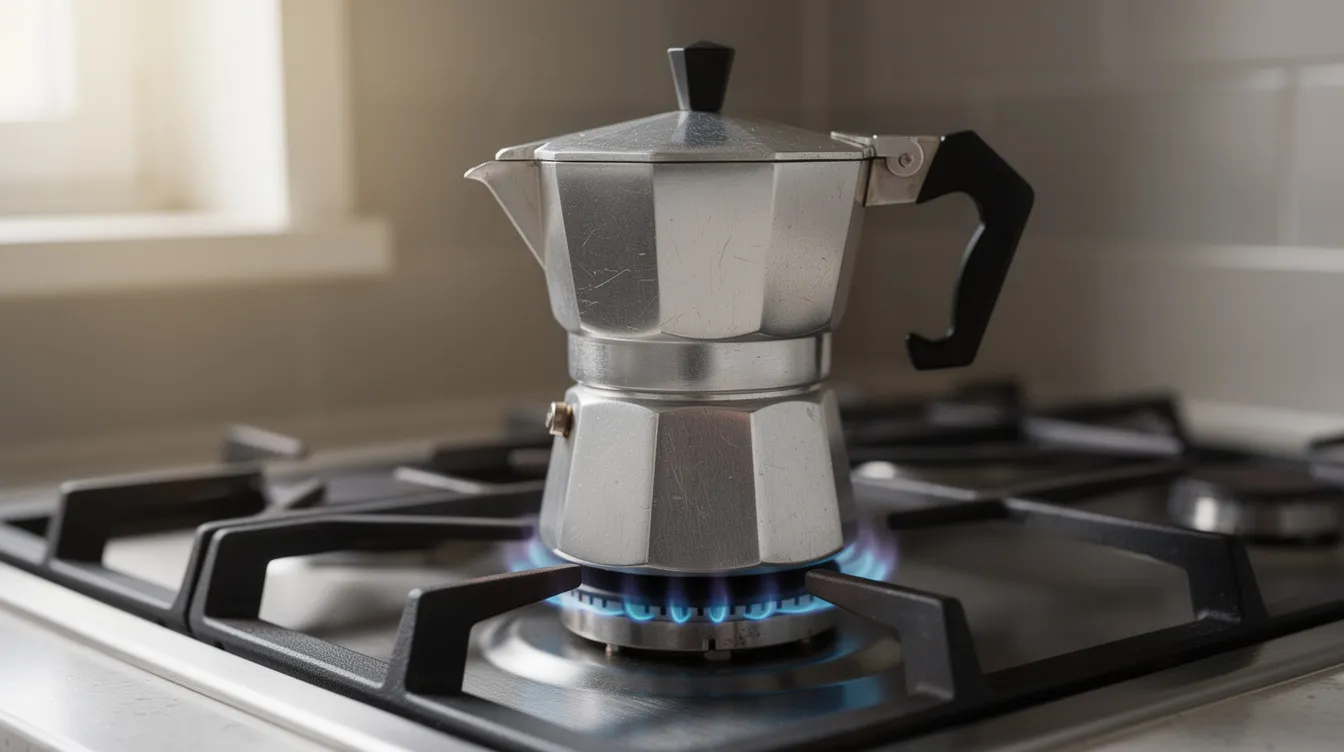
A moka pot works by heating water in the bottom chamber until steam pressure pushes it up through a bed of coffee grounds and into the upper chamber. The pressure is modest, roughly 1–2 bars, which makes moka pot brews stronger and more concentrated than drip but significantly weaker in pressure than an espresso shot from a 9-bar machine.
This matters because the combination of near-boiling temperature, metal filtration, and moderate pressure means a moka pot amplifies coffee acidity due to steam pressure and heat. It also emphasizes body and sweetness while muting delicate floral or citrus origin notes. Crema in moka pot coffee is desirable for its rich mouthfeel, and medium to medium-dark roasts tend to produce the thin layer of crema that moka pots can generate.
The key qualities of good coffee for moka: roast levels between medium and medium-dark, flavors leaning toward chocolate, caramel, and nuts, and a grind size that sits between espresso fine and standard drip. The brewing variables that interact with your coffee choice, grind size, brew ratio, contact time, water quality, and heat control, are covered in the sections below.
Roast Level: Why Medium and Medium-Dark Usually Win
Roast level is the single most important label to check when buying coffee for moka pot brewing. Here is how each level behaves:
Light roasts tend to taste sour in moka pots due to acidity. They lack the caramelization needed for sweetness at moka extraction temperatures, and the bright, delicate flavors they are prized for in pour-over get flattened or distorted. Only worth attempting if you are willing to experiment aggressively with grind size and contact time.
Medium roast coffee is the sweet spot for most moka pot users. It provides enough caramelization for a sweet, rounded cup, preserves some origin character, and resists bitterness at the temperatures a moka pot hits. A 2023 Warsaw University study found that medium roasts yield more phenolic compounds in moka brews compared to darker roasts, contributing to flavor complexity.
Medium-dark and dark roast: A moka pot requires medium-dark to dark roast coffee if you want a richer, full-bodied cup with bold chocolate and roasted nut flavors. Darker roasts produce a richer, full-bodied moka pot coffee. The trade-off is a higher risk of ashy or burnt notes, especially with long contact time or an overheated aluminum pot. Medium to medium-dark roasts are recommended for rich flavors without excessive bitterness.
Practical rule: Start with medium roast. Move to medium-dark if you add milk or want more intensity. Reserve dark roast for experienced moka pot users who control grind and heat carefully.
Grind Size, Brew Ratio, and Contact Time for Moka Pot
Moka pots are sensitive to grind size. Too fine and you risk over-extracted, bitter coffee, potential clogging, and in extreme cases, safety valve issues. Too coarse and the water passes through too quickly, leaving a weak, flat cup.
Medium-fine grind is the target. The ideal grind size for moka pots is medium-fine: slightly finer than standard drip, roughly the texture of table salt. If you pinch it between your fingers, it should feel like fine sand, not powder.
Brew ratio: Moka pots typically have a coffee-to-water ratio of 1:10. Most baskets are sized to a fixed volume, so filling the basket level to the rim without tamping and letting the pot’s design dictate water volume works well for most people. A 3-cup moka pot uses about 15–17 grams of coffee. Moka pots are available in sizes ranging from 3 to 12 cups, with proportionally larger doses for bigger models.
Contact time: A well-tuned 3–6 cup pot should finish brewing in roughly 3–4 minutes from the moment you place it on heat. If coffee finishes much faster, grind slightly finer. If it takes too long, grind coarser. These adjustments let you balance coffee extraction regardless of which beans you choose.
Use a burr grinder set to medium-fine for the most consistent particle size. Blade grinders produce uneven grounds that lead to simultaneously over- and under-extracted flavors in the same cup.
Beans vs. Pre-Ground: What’s Best for Moka Pot Coffee?
Whole bean coffee gives you better freshness, more aromatics, and the ability to fine-tune grind size for your specific moka pot. Freshly ground beans and proper grind size are crucial for moka pot success. If you care about cup quality and are willing to invest in a grinder, whole bean is the clear winner.
Pre-ground coffee grounds make sense when convenience matters more than peak flavor: casual users, limited budgets, or no grinder at home. Espresso-focused blends work well in moka pots by cutting through the intensity, but you need to ensure the grind is labeled for moka or stovetop espresso, not standard espresso fine, which is usually too powdery.
Simple guidance: If using whole beans, a burr grinder set to medium-fine is the one essential tool. If using pre-ground, choose bags specifically labeled for moka or stovetop brewing, and consume them within 1–2 weeks of opening.
For readers who also pull shots on an espresso machine, you can often use the same beans for both brewers as long as you adjust the grind. Our guide to the best coffee beans for espresso covers that territory in more detail.
Matching Coffee to Your Moka Pot and Workflow
Different moka pot designs influence how coffee tastes, which means your hardware should inform your bean choice.
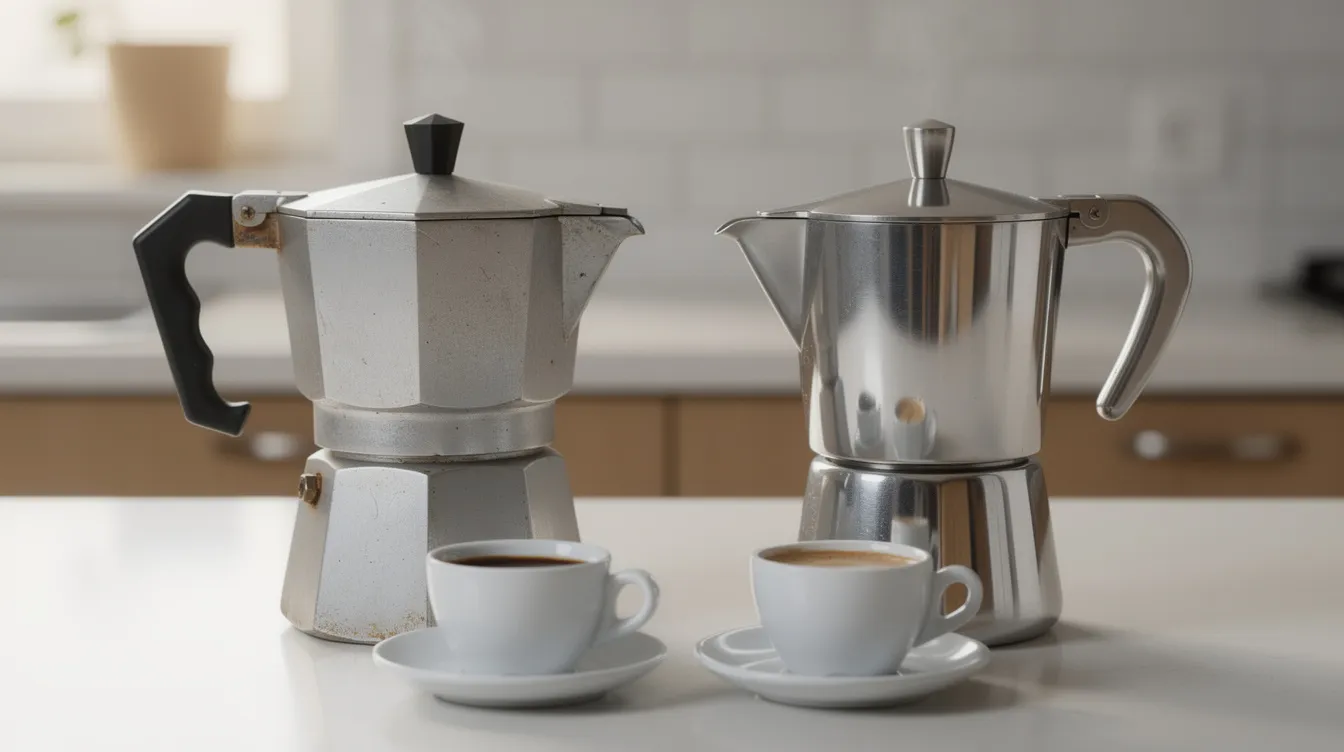
Classic aluminum pots like the Bialetti Moka Express, originally designed in 1933, heat quickly and don’t retain heat for long. Medium or medium-dark roasts with smooth chocolate and nutty profiles are the most forgiving here. The fast heat-up means grounds sit on hot metal briefly, so coffees with natural sweetness and low bitterness perform best.
Stainless steel models like the Bialetti Venus heat a bit more slowly and can accentuate brightness slightly. Balanced medium roast coffee tends to work well, and some moka pot users find that these pots are more forgiving with single-origin coffees because the gentler thermal ramp gives more even extraction.
Workflow preferences matter too. If you want a simple, repeatable morning routine, a forgiving blend like Lavazza Espresso Italiano or Bialetti Perfetto Moka Classico removes variables. If you enjoy tweaking grind and timing each session, single-origins and lighter roasts give you more to explore.
Buying Guide: How to Choose the Best Coffee for Your Moka Pot
Use this mental checklist when shopping:
- Define your flavor preference: Do you want chocolatey, nutty, and sweet? Or are you open to fruity and brighter? Most moka pots reward the first category.
- Whole bean or pre-ground? Whole bean if you own a grinder and want control. Pre-ground if convenience wins.
- Pick a roast level: Medium for balance, medium-dark for intensity with milk, dark for bold traditionalists.
- Set a budget: $10–$15 covers solid everyday blends. $16–$25 gets specialty-grade options. $30+ enters premium single-origin territory.
- Check the bag: Look for a clear roast date, origin details, and tasting notes. Labels emphasizing chocolate, caramel, hazelnut, almond, and brown sugar are safer bets than those highlighting citrus, jasmine, or bergamot for moka brewing.
Start with a versatile, balanced blend. Branch into specific dark roasts or single-origins once you have dialed in grind size and heat control for your particular pot.
Brewing and Freshness: Getting the Most from Your Coffee
Freshly roasted coffee, ideally used within 2–4 weeks of the roast date, makes a noticeable difference in moka pot aroma and sweetness. Stale supermarket stock with no roast date is the most common reason for flat, lifeless stovetop espresso.
Storage: Keep beans in an airtight container, away from light, heat, and moisture. Avoid the freezer unless you vacuum-seal individual portions.
Simple moka pot brewing routine:
- Start with hot water in the bottom chamber. Using hot or boiling water in the moka pot’s bottom chamber can prevent a bitter taste because the grounds spend less time absorbing heat before actual extraction begins; starting with cold water keeps them over heat longer and can lead to bitterness or a burnt taste.
- Fill the filter basket to the rim with medium-fine ground coffee. Do not tamp. The grounds sit loosely and water passes through evenly.
- Assemble the pot (use an oven mitt if the base is hot) and place on medium heat, not high heat.
- Remove the moka pot from heat when sputtering starts. The residual steam finishes extraction gently.
How much coffee you use depends on pot size, but the basket is designed to be your measuring tool. Fill it level, adjust grind if the coffee brewed tastes too weak or too bitter, and let the process stabilize over a few brews.
Water, Cleaning, and Filtration: Hidden Factors in Moka Pot Coffee
Water makes up over 90% of your finished cup. Moderately mineralized, filtered water tends to yield sweeter, clearer moka pot coffee compared to very hard or very soft tap water.
In hard-water areas, basic pitcher filtration or bottled water helps prevent scale buildup in the pot and reduces metallic off-flavors. Distilled or extremely soft water goes too far in the other direction, producing a flat, under-extracted cup.
Cleaning workflow:
- Rinse all parts (base, basket, upper chamber, gasket, filter plate) after every use.
- Avoid harsh detergents on aluminum pots, they strip the protective patina.
- Descale occasionally with a mild citric acid solution if you notice mineral buildup.
- Replace the rubber gasket and metal filter screen when they show wear. A dirty or clogged filter screen amplifies bitterness and reduces body.
Some moka pot users place a thin paper filter disk on top of the coffee grounds to reduce sediment in the cup. This slightly changes the cup profile toward cleaner, lighter body, a matter of personal preference.
How Moka Pot Coffee Compares to Espresso and Other Brew Methods
A moka pot is a stovetop espresso maker in name only. Moka pots brew at 1–1.5 bars of pressure, while a real espresso machine operates around 9 bars. The result is strong, concentrated coffee with good body, but without the thick crema or ultra-fine texture of true espresso.
Here is how cup profiles compare:
Brew Method | Pressure | Body | Clarity | Best For |
|---|---|---|---|---|
Moka pot | 1–1.5 bar | Heavy | Low (metal filter) | Rich, strong daily coffee |
Espresso machine | ~9 bar | Very heavy | Medium | Café-style shots, milk drinks |
French press | None (immersion) | Heavy | Low | Full-bodied, oily cups |
Pour-over | None (gravity) | Light–medium | High | Origin clarity, delicate notes |
Espresso beans and espresso blends often work well in moka pots since the roast profiles overlap. The main adjustment is grind size: espresso ground coffee is too fine for most moka pots, so coarsen it toward medium fine when switching brewers.
When to choose a moka pot: You want a relaxed, no-electricity morning routine, you prefer a budget moka pot over a $500+ espresso machine, or you want something portable for travel. A Bialetti moka pot sits comfortably in a suitcase and works on any stovetop or camping burner.
For more brew-method comparisons, see our guides to the best coffee for French press and the best coffee for cold brew.
Related Capitol City Coffee Guides
Capitol City Coffee covers multiple brew methods with independent editorial roundups, never as a product seller. Here are the most relevant:
- Explore all brewing methods in our brew-method hub
- Find espresso-optimized beans in Best Coffee Beans for Espresso
- Discover lighter, smoother options in our Best Coffee for Cold Brew guide
- Browse the full Capitol City Coffee library for all independent bean and gear advice
Frequently Asked Questions
These questions cover moka pot coffee topics that go beyond the main guide, focusing on common issues U.S. home brewers run into. Answers are concise and based on general expert consensus, not brand marketing. If you are new to moka pots, skim these before choosing a bag to avoid common pitfalls.
What roast level should I buy if my moka pot coffee always tastes bitter?
Switch from dark roast to a balanced medium roast with chocolate and nut tasting notes. Bitterness in a moka pot usually comes from over-extraction: too-fine grind, too-long contact time, or too-high heat, not just the coffee itself. A medium roast gives you more margin for error. Coarsen your grind slightly, reduce heat to medium, and remove the pot from the burner at the first sputter. If your coffee still tastes bitter, check your water (very hard water contributes) and make sure your filter screen is clean.
Can I use the same coffee for my espresso machine and my moka pot?
Yes. Many espresso beans work well in a moka pot, especially medium and medium-dark blends. The critical difference is grind size: what works for an espresso machine (very fine, almost powdery) is too fine for a moka pot and will cause over-extraction. Adjust your burr grinder to produce a medium-fine grind closer to table salt texture. If you want to optimize for both brewers, choose a flexible blend and dial in the grind individually. For espresso-specific recommendations, see our espresso beans guide.
How much coffee goes into a typical Bialetti Moka Express?
A 3-cup Bialetti Moka Express takes approximately 15–17 grams of coffee, filling the basket to the rim without tamping. A 6-cup model holds roughly 28–32 grams. Most moka pots are available in sizes ranging from 3 to 12 cups, and the basket volume scales accordingly. While weighing with a kitchen scale improves consistency, many home brewers simply fill the basket level and focus on grind and heat control to fine-tune taste.
Is pre-ground “espresso” coffee too fine for moka pot use?
Usually, yes. Most coffee labeled as espresso ground is finer than ideal for moka pots, which can cause over-extraction, a bitter taste, and in extreme cases, clogging and safety valve activation. Look for grind labeled specifically for moka or stovetop espresso. If no moka-specific grind is available, you can blend some coarser drip-ground coffee into espresso-fine grounds to approximate a medium fine grind, though buying the correct grind upfront is far simpler.
How long does an opened bag of moka pot coffee stay fresh?
Once opened, whole coffee beans stay reasonably fresh for about 2–4 weeks when stored in an airtight container away from light and heat. Pre-ground coffee loses aroma much faster and is best consumed within 1–2 weeks of opening. Buy bag sizes that match your actual consumption rate. If you brew one moka pot daily, a 12 oz bag of whole bean coffee is a practical size. Avoid oversized bulk bags unless you are brewing multiple pots daily or storing portions in sealed, individual containers.