

Capitol City Coffee is an independent editorial and affiliate site. We do not sell coffee. This page does not currently include paid purchase links. If we add them later, they will use rel=”sponsored” and will not change rankings. Last verified: September 12, 2026. Commissions do not influence rankings; picks are based on researched editorial analysis, public expert reviews, and verified product facts. Unless explicitly stated, this publication has not directly tasted each coffee listed. Recommendations synthesize trusted third-party data and expert consensus.
Whole coffee beans stay fresh for about two to four weeks after the roast date when stored at room temperature, with the best flavor usually showing up around days 7 to 21. Ground coffee fades much faster, so after opening you can expect noticeable flavor loss within one to two weeks. For coffee lovers, home brewers, and anyone trying to get better flavor from every bag, that difference matters: coffee doesn’t expire the same way milk or meat does, but it steadily loses the aroma, sweetness, and body that make a great cup worth drinking. This guide breaks down how freshness changes by bean type and form, what makes coffee go stale, how to store it well, how to spot stale beans by smell and taste, and the buying habits and common mistakes that most affect how your brew tastes and what you get for your money.
Key Takeaways
- Coffee beans are freshest within 2 to 4 weeks after roasting. Whole-bean coffee is best between 7 to 21 days after roasting for peak aroma and flavor complexity, and remains good (though fading) out to about 6 weeks.
- Ground coffee should be used within 1 to 2 weeks after opening, since grinding increases surface area and exposes coffee to rapid oxidation.
- Coffee does not spoil unless it becomes wet and grows mold. Stale beans are safe to drink but taste flat, papery, or overly bitter.
- Store coffee beans in an opaque, airtight container in a cool, dark place-and buy only as much freshly roasted coffee as you’ll use in 2 to 4 weeks.
- Roast level, origin, and processing nudge freshness windows slightly, but proper storage habits matter most for keeping coffee beans fresh.
Direct Answer: How Long Do Coffee Beans Stay Fresh?
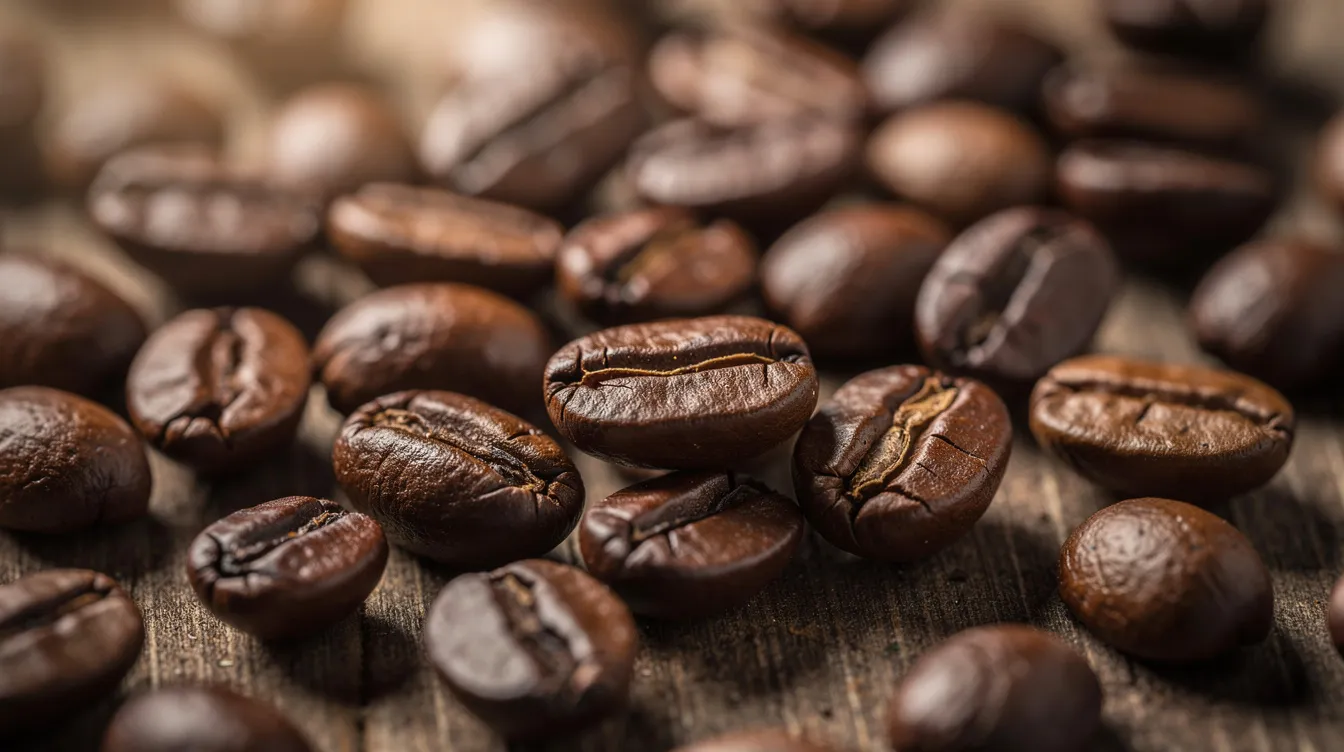
So how long do coffee beans stay fresh in practice? At normal U.S. room temperature (around 68–72°F), freshly roasted whole beans deliver peak flavor roughly 7 to 21 days after the roast date. Coffee beans are best within 2 to 6 weeks after roasting, with quality fading gradually beyond that window.
- Lighter roast coffee generally holds nuanced flavor a bit longer than darker roasts, because lighter beans retain more cell structure and experience slower oxidation.
- Dark-roasted beans oxidize faster than light-roasted beans due to higher porosity and more surface oil migration.
- Pre-ground coffee stales significantly faster than whole beans. Ground coffee loses most flavorful compounds within 15 to 30 minutes of grinding, and once a bag is opened, flavor drop is noticeable after just a few days and pronounced after 1 to 2 weeks.
- Old coffee beans and old grounds are usually safe to consume but taste flat, papery, or bitter—unlike perishable foods, freshness is a quality issue rather than a safety one.
Why Coffee Bean Freshness Matters for Better Coffee
Coffee bean freshness isn’t a marketing gimmick. It’s the single biggest variable between a cup that tastes vibrant and one that tastes like hot cardboard. Freshly roasted coffee retains volatile aromatics-the compounds responsible for fruit, floral, chocolate, and caramel notes that define a bean’s origin character and roast level. Once those compounds start breaking down, no brewing technique can bring them back.
Staling dulls sweetness and body while increasing perceived bitterness or introducing flat, papery flavors. Bright acidity becomes vague or sour. According to the Specialty Coffee Association’s literature review on staling, lipid oxidation and volatile loss are the primary drivers of this decline. Coffee is most flavorful after it has had time to release carbon dioxide post-roasting-usually a few days of resting-but then the clock starts ticking.
Different brew methods reveal staleness differently. Making espresso with stale beans is particularly unforgiving because the concentrated extraction amplifies flat or off notes. A French press or cold brew is more forgiving with slightly older beans. But regardless of method, fresh beans deliver a better cup.
There’s also a value argument: old coffee beans effectively raise your price per ounce for the cups you actually enjoy. Buying smaller bags more often costs slightly more upfront but delivers consistently flavorful coffee instead of weeks of mediocre mugs from one big bag that went stale.
How Long Coffee Beans Stay Fresh by Type and Form
How long coffee beans last depends on form (green, roasted whole, ground), roast level, and packaging. Here are realistic timeframes:
- Green (unroasted) beans: Stored cool, dry, and dark, green beans can hold usable flavor for 1 to 2 years, with specialty producers targeting use within 12 months of harvest for best quality.
- Roasted whole beans (unopened): Vacuum-sealed bags of whole beans can retain flavor for months after roasting. Coffee retains acceptable quality longer in valve-sealed bags after roasting. A polyphenol stability study found vacuum-packed roasted beans had a quantified chemical shelf life of roughly 3 months at 25°C-though sensory quality peaks much earlier. Properly stored, unopened whole beans can be usable for 6 to 12 months.
- Roasted whole beans (opened): Whole coffee beans stay fresh for 2 to 4 weeks after opening when stored in an airtight, opaque container. Darker the roast, the shorter the window. Lighter roast origins from high elevations (washed Ethiopia, Colombia) can stay lively slightly longer.
- Ground coffee (unopened): Factory-sealed pre ground coffee may taste acceptable for 2 to 5 months from roast date.
- Ground coffee (opened): Ground coffee loses freshness within 1 to 2 weeks after opening. Ground coffee has a larger surface area, increasing oxidation speed dramatically.
- Niche cases: Single-origin espressos often taste best between days 7 and 21 post-roast, when degassing has settled but volatile aromatics remain vivid. Whole coffee beans can last up to several months if unopened, but the same beans won’t deliver the same experience at month three as they did at week two.
What Makes Coffee Beans Go Stale?
Coffee beans don’t rot on your shelf, but they do lose everything that made them worth buying. Here’s what drives staling:
- Oxidation: Oxygen exposure accelerates staling of coffee due to oxidation. Coffee beans lose flavor due to oxidation after roasting-lipids go rancid, volatile aromatics degrade, and you’re left with flat, papery notes. Research using Weibull hazard analysis found that increasing oxygen partial pressure from 0.5 to 21 kPa accelerated deterioration roughly 20-fold.
- Degassing: Right after roasting, beans off gas carbon dioxide. A few days of resting improves flavor, but as CO₂ escapes, protective internal pressure decreases and oxygen infiltrates the bean structure.
- Light: Coffee beans are degraded by light, which affects their chemical structure. UV and visible light catalyze oxidation of natural oils on bean surfaces-especially problematic in clear jars or bags near windows.
- Heat: Heat speeds up the degradation of coffee’s flavor and aroma. The same Weibull study showed a 10°C temperature rise increases deterioration rate by roughly 15–23%. Keeping beans near heat sources like ovens, dishwashers, or kettles that generate heat shortens the freshness window.
- Moisture: Moisture can lead to mold growth and rapid degradation of coffee beans. Coffee is hygroscopic-it absorbs ambient moisture and nearby odors. A water activity increase of just 0.1 can accelerate deterioration by about 60%.
- Roast level and structure: Dark roasts with more surface oil and porous cells go stale faster. Processing method (washed vs natural) and bean density also shift how long complex flavors stay vivid, though the effect is smaller than the environmental factors above, so beans last longer when stored properly.
How to Store Coffee Beans for Maximum Freshness
Storing coffee the right way isn’t complicated-it just requires a few deliberate habits that most people skip.
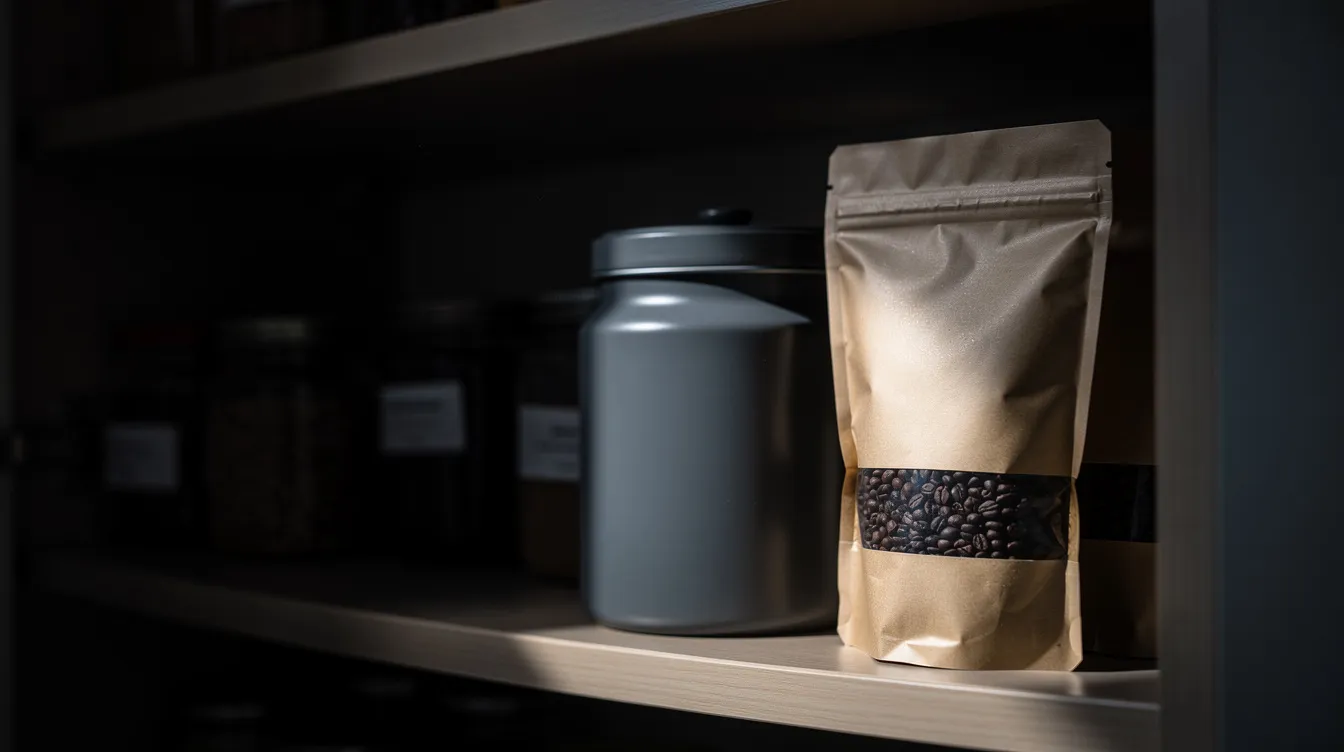
- Container: Store opened coffee beans in an opaque, airtight container to block light. Canisters with one-way valves are ideal, allowing residual CO₂ to escape without letting oxygen in. A resealable bag with a valve works fine short-term if you squeeze out excess air before sealing.
- Location: Keep coffee beans in a cool, dark place. A dark pantry or cabinet away from ovens, dishwashers, sunny windows, and steam sources is perfect for pantry storage at room temperature.
- Portioning: If you buy a big bag, divide it into smaller bags or containers so you aren’t repeatedly opening the full stash, exposing everything to oxygen and ambient humidity.
- Avoid the refrigerator: Avoid storing coffee beans in the refrigerator. Temperature swings, condensation, and food odors all degrade beans faster than a stable, cool cabinet.
- Freezer use: Freezing coffee beans can preserve freshness for up to six months. Whole beans can stay fresh in an airtight freezer-safe container for 3 to 6 months. Vacuum sealing before freezing is ideal. Freezing vacuum-sealed coffee can preserve its quality for several months. The key: portion into one-week or one-brew bags, thaw them unopened to avoid condensation, and never refreeze. This is a legitimate strategy for preserving freshness when you’ve bought more than you can use quickly.
How to Tell When Coffee Beans Are Past Their Prime
Think of this as a quick sensory checklist before you commit to brewing.
- Aroma: Freshly roasted beans smell vibrant-chocolate, nuts, fruit, florals, spice. Stale coffee beans produce little to no aroma when opened, and beans that are no longer fresh smell muted rather than lively. Musty or moldy notes are a red flag.
- Appearance: Fresh coffee beans may have a subtle sheen from natural oils. Dull, matte beans indicate loss of natural oils and freshness. Pre ground coffee may clump less and feel powdery when stale.
- Brewed flavor: Stale coffee tastes flat, dull, and lacks complexity-less sweetness, muted acidity, a shorter finish, or exaggerated bitterness.
- Safety: Coffee does not spoil unless it becomes wet and grows mold. Any visible mold, sour or funky odor, or wet clumping means discard immediately.
- Repurposing: Older but not spoiled beans can be used for cold brew (where subtle flavors matter less), baking, coffee scrubs, or compost. Reducing waste when flavor is past peak flavor is practical, not precious.
How to Choose and Use Coffee for the Freshest Flavor
The freshest flavor starts at the point of purchase, not in your pantry. Your shopping choices-roast date, origin, roast level, whole bean vs ground, and how much you buy-determine whether you’re setting yourself up for great coffee or a slow march toward a stale cup.
- Buy by roast date: Look for clearly labeled roast dates, not just “best by” dates. Prefer bags roasted within the last 7 to 14 days. “Best by” dates are often optimistic and based on shelf life rather than peak flavor.
- Choose whole beans: Whole beans protect oils and aromatics far longer than pre ground coffee. Grinding coffee increases its surface area and exposes it to rapid oxidation. For a deeper comparison, see our whole bean vs ground coffee guide.
- Match roast to timeline: If you use beans over several weeks, a lighter roast from a dense, high-elevation origin holds nuanced flavor longer than very dark, oily blends. If you drink quickly, any roast level works.
- Consider brew-method fit: Espresso is most sensitive to freshness (days 7–21 post-roast). Drip and French press are more forgiving. Cold brew handles slightly older beans well.
- Buy fresh, buy smaller: Buying smaller bags more often might raise price per ounce slightly but delivers consistently better coffee. A 12 oz bag used within a few weeks beats a warehouse-sized bag that spends about a month (or more) going stale.
Common Mistakes That Make Coffee Beans Go Stale Faster
Most coffee freshness problems aren’t about the beans-they’re about habits. Here’s what to stop doing:
- Clear bags and decorative jars on the counter: Light and air exposure in thin supermarket bags or mason jars on a sunny countertop accelerate staling. Transfer beans to proper storage immediately.
- Loading grinder hoppers for the week: Beans sitting in a hopper are exposed to oxygen, residual heat from grinding, and often direct sunlight. Add only what you’ll use that session.
- Buying in bulk without a plan: A big bag that lasts months means most of your coffee is stale before you finish it. Buy what you’ll use in 2 to 4 weeks whenever possible. Buy fresh and buy often.
- Fridge/freezer cycling: Repeatedly taking beans in and out of cold storage causes condensation, speeding staling. If you freeze coffee beans, commit: portion once, thaw once, use.
- Ignoring roast dates: Relying solely on “best-by” dates can mislead you. The aging process starts at roast, not at purchase.
Practical Examples, Recommendations, and Internal Links
Here are a few real-world scenarios that show how to keep coffee beans fresh at home:
Capitol City Coffee may receive a commission if you buy through our links; this doesn’t affect our editorial opinions. Product mentions below are based on researched editorial analysis, not hands-on testing.
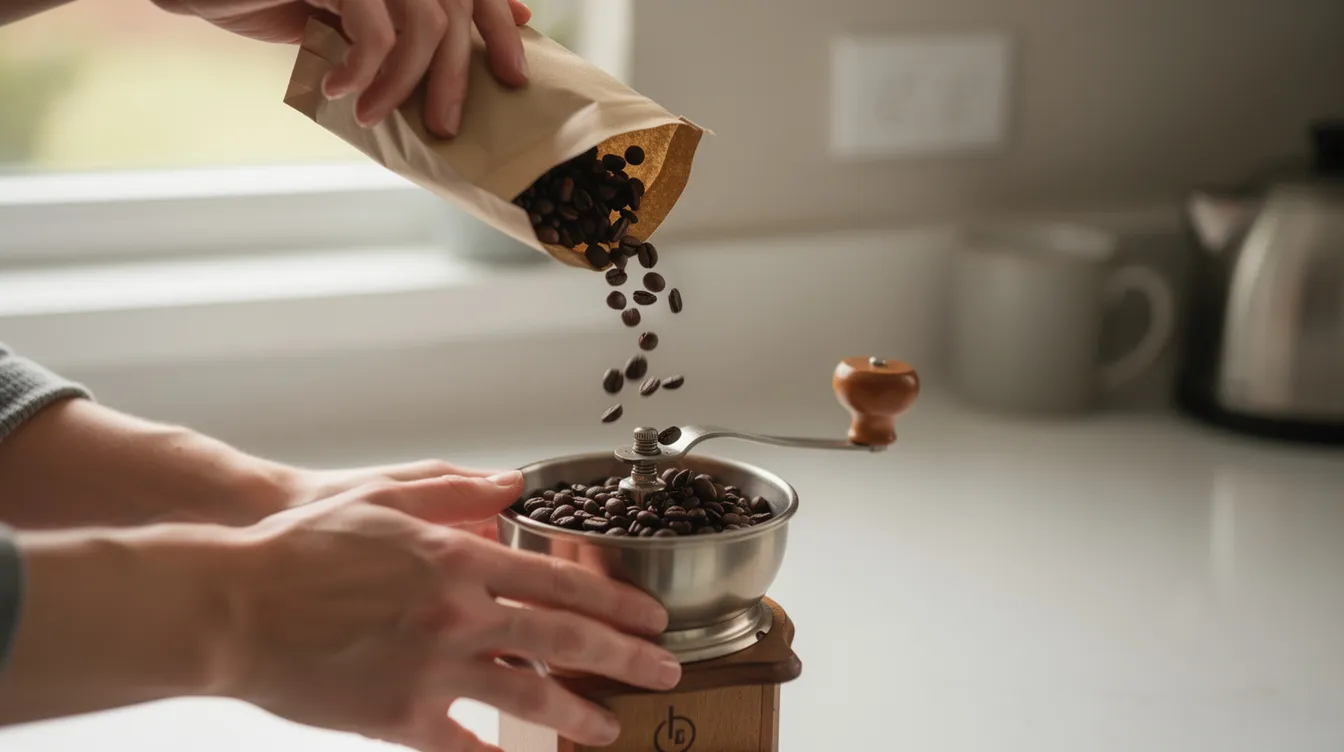
- Daily drip drinker (1–2 cups/day): A 12 oz bag of whole beans lasts roughly 2 to 3 weeks-right in the sweet spot. Store in an airtight container in a dark pantry. Grind each morning. No freezer needed.
- Weekend espresso enthusiast: Buy 8–12 oz bags roasted within the past week. Use within about 14–21 days for the freshest flavor in espresso, where staleness is most exposed.
- Cold brew batch maker: Cold brew is more forgiving with good beans that are slightly past peak. Roasted beans 3 to 5 weeks old still work well here. This is also a smart way to use older beans before they become fully stale.
For storage gear, look for airtight canisters (opaque, with quality seals), vacuum canisters, or simple one-way valve bags. The features that matter: seal quality, opacity, and ease of cleaning. A resealable bag with a valve works in a pinch.
For more guidance, browse our coffee buying guides hub, our guide to the best coffee for beginners, or our coffee gifts guide if you want to share fresh coffee with a coffee lover. And for broader coffee coverage, visit our main coffee section.
FAQs: Freshness, Storage, and Old Coffee Beans
These FAQs cover edge cases and specific scenarios that didn’t get a full treatment above.
Is it okay to drink coffee made from beans that are several months old?
Beans stored dry and free of mold are generally safe for months, but flavor will likely be muted or flat after 2 to 3 months at room temperature, especially for darker roasts. Brew a small test cup: if aroma is faint but clean and flavor is acceptable to you, it’s fine. If it tastes harsh, papery, or unpleasant, demote those beans to cold brew or cooking.
How should I store coffee beans in a small apartment kitchen?
Use a single opaque, airtight container kept in the coolest, darkest cabinet available-away from the oven and under-cabinet lights. Buy smaller bags more frequently to avoid long-term coffee storage challenges. Avoid countertop glass jars near windows or stoves, even if they look nice.
Do flavored coffee beans stay fresh as long as regular beans?
Flavored coffee often uses added oils or flavorings that can oxidize and go off faster, so use flavored beans within about 2 to 3 weeks of opening. Store them separately from regular coffee in their own airtight, opaque container to prevent aroma transfer, because coffee begins absorbing nearby scents quickly.
Do more expensive or specialty coffee beans stay fresh longer?
Price and quality don’t change the basic chemistry of staling. Specialty beans still follow similar freshness windows, though they start from a higher flavor baseline-meaning the decline is more noticeable. The advantage: specialty roasters are more likely to print clear roast dates and use better packaging, helping you manage coffee freshness more precisely.
What can I do with really old coffee beans besides brewing?
Practical reuses include making cold brew (where subtle notes matter less), using grounds in baking rubs, creating DIY scrubs, deodorizing spaces, or composting. Any beans with visible mold, a sour or rotten smell, or wet clumping should not be used at all-not even for non-drinking purposes. Way milk goes bad is obvious; the way coffee goes stale is quieter, but the same “when in doubt, toss it” rule applies.
The simplest upgrade to your daily coffee? Check the roast date on whatever bag you’re currently using. That one habit-combined with an airtight container and a cool, dark pantry-will get you closer to a consistently great cup than any gadget or technique. Experiment within these freshness guidelines, and you’ll find what stored correctly and brewed promptly tastes like the good beans you paid for.