

Capitol City Coffee is an independent editorial and affiliate site. We do not sell coffee. This page does not currently include paid purchase links. If we add them later, they will use rel=”sponsored” and will not change rankings. Last verified: September 12, 2026. Commissions do not influence rankings; picks are based on researched editorial analysis, public expert reviews, and verified product facts. Unless explicitly stated, this publication has not directly tasted each coffee listed. Recommendations synthesize trusted third-party data and expert consensus.
The short answer: keep your coffee beans whole, sealed in an airtight container or quality one-way valve bag, and tucked inside a cool, dark cabinet at stable room temperature. That single habit protects against the biggest factors that destroy flavor-air, moisture, heat, and light-and keeps your cup tasting vibrant for weeks instead of days.
Key Takeaways
- Open your coffee beans only when you’re ready to start using them, then keep them sealed airtight in a cool, dark cabinet at room temperature for the freshest flavor.
- Whole bean coffee stays vibrant for about 2–4 weeks after roast at room temperature; ground coffee stales within days, so grind just before brewing whenever possible.
- Freeze coffee beans only when you have more coffee than you can drink in a few weeks, and always portion, vacuum-seal or tightly bag, and let portions come back to room temperature unopened before using.
- A simple opaque coffee canister or the roaster’s quality one-way valve bag is usually enough; focus on good coffee storage habits over expensive gadgets.
- Origin, roast level, and processing all affect how long coffee tastes fresh, but consistent storage and buying what you can finish in 1–3 weeks matter most.
Direct answer: how to store coffee beans for maximum freshness
Coffee beans can go stale within days without proper storage, and coffee begins to lose its best aromatics quickly. The best everyday coffee storage method is straightforward: buy whole bean coffee with a clear roast date, store beans in their original one-way valve bag or an opaque airtight container, and place them in a dark place at a stable temperature between 50°F and 70°F. Coffee stays fresh for about 2–4 weeks after roasting when handled this way.
The four enemies of coffee freshness are air, moisture, heat, and light. Reducing oxygen exposure helps keep coffee fresh by limiting oxidation. Moisture introduces mold risk and off-flavors. Heat accelerates the chemical breakdown of coffee beans. Light breaks down the flavor of coffee beans, especially UV exposure through clear containers. Good storage simply means reducing exposure to all four.
Most people don’t need to refrigerate or freeze coffee for daily use. Refrigerators introduce frequent temperature swings and high humidity, making them a poor choice. Freezing is reserved for surplus or long-term storage and must be done carefully. The rest of this guide covers containers, freezing methods, roast-level differences, and how grind size affects your storage decisions.
What you need for ideal coffee storage at home
You don’t need much. Here’s your checklist:
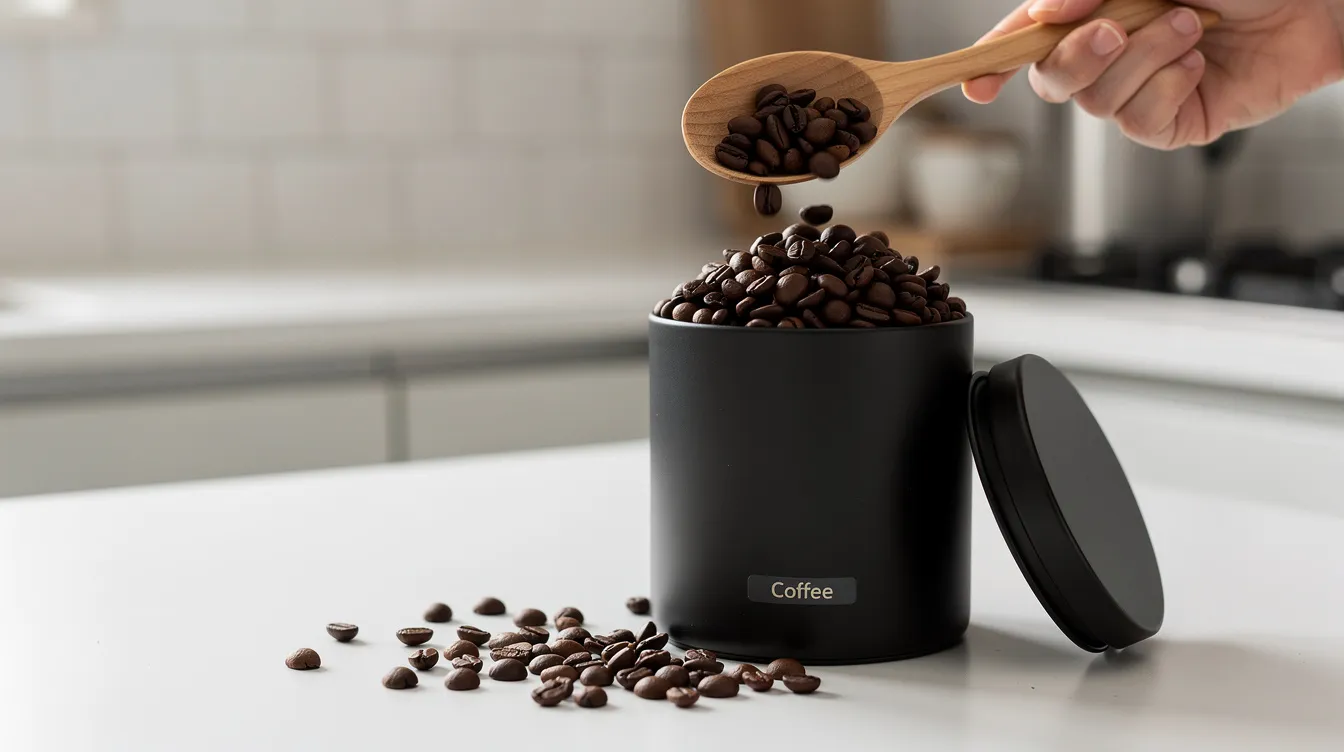
- Container: a resealable foil bag with a one-way valve from your roaster, an opaque airtight container (stainless steel or ceramic), or mason jars stored deep in a dark cabinet (avoid clear glass on countertops, as it allows UV rays to degrade flavor)
- Environment: stable room temperature, low humidity, away from direct sunlight, stovetops, dishwashers, and other heat sources-an interior pantry or cupboard works best
- Clean, dry scoop: prevents introducing moisture into the bag
- Optional for bulk or rare beans: vacuum sealer, freezer-safe bags, or small jars for portioning beans you can’t drink within a few weeks
No special “coffee saver” gadgets are required. Consistent habits-resealing promptly, buying smaller quantities you can finish, and storing beans in locations away from strong odors-matter more than branded storage products.
Coffee, water & grind: how storage connects to your brewing parameters
Fresher, well-stored coffee beans extract more evenly. Standard ratios like 1:15 to 1:17 (coffee to water by weight) for pour-over or drip, and around 1:2 for espresso, will taste clearer and more balanced when beans are at peak freshness.
- Grind size should match your brew method: coarse for French press, medium for drip, fine for espresso. Grinding coffee right before brewing is the single most important freshness step you can take, because grinding releases aromatic compounds quickly and exposes more surface area to air.
- Older or poorly stored coffee often needs a slightly finer grind or a bit more coffee to compensate for lost aromatics and carbon dioxide. Coffee loses most of its CO₂ content after about 16 days post-roast, which affects extraction and crema.
- Light-roast, high-acidity beans (like washed Ethiopia or Kenya) lose vibrant flavor notes faster than fuller-bodied, lower-acidity blends, so they benefit from careful storage and small, frequent purchases.
Step-by-step: daily coffee storage routine (from bag to brewer)
Follow this routine to keep beans stay fresh from purchase to cup over a short period for best flavor retention:
- Buy smart: choose whole bean coffee with a roast date within the last 7–21 days. Pick origin, roast level, and flavor notes suited to your brew method and taste.
- First open: open the bag cleanly along the seal. Press excess air out, close any zip, or roll the bag tightly. If the bag is flimsy or non-resealable, transfer beans to a clean, dry airtight container.
- Daily dose: open the bag or canister, measure only what you plan to brew, especially if you plan to drink coffee the same day, since repeated opening speeds staling (by weight if possible), grind immediately, and reseal the container right away. Don’t leave it sitting open on the counter.
- Placement: store in a dark, cool cabinet-never on a sunny windowsill, above the oven, or next to a warm refrigerator compressor. Avoid frequent temperature changes in the storage spot.
- Small habits: keep scoops dry, never return beans that touched condensation, and resist topping up older beans with a new bag. Use new coffee separately to appreciate each bag’s character.
The four enemies of coffee freshness: air, moisture, heat & light
Roasted coffee beans are chemically fragile. After roasting, volatile aromatic compounds begin escaping immediately, and oils on the bean surface start reacting with the environment. Here’s what accelerates the damage:
Air (oxygen): oxidation dulls sweetness and body, flattens flavor, and creates papery or rancid aroma in both whole bean and ground coffee. Coffee beans lose their flavor when exposed to oxygen. Use snugly sized containers and reseal quickly to minimize headspace. Airtight containers can increase coffee’s shelf life by up to 20 times compared to leaving beans exposed to air.
Moisture: coffee beans are hygroscopic and absorb moisture rapidly from the surrounding environment. This can ruin coffee beans and cause mold in extreme cases. Use only completely dry scoops and avoid refrigerators for day-to-day coffee storage because of condensation risk. Store beans away from sinks and humidifiers.
Heat: elevated or fluctuating temperatures speed up staling dramatically. Studies show that degassing rates increase roughly 1.5× for every 10°C rise in temperature. Choose an interior cabinet that stays consistently around normal room temperature, well away from ovens and toasters.
Light: bright light and UV exposure break down aromatic compounds and warm beans. Opaque containers protect coffee from light degradation. If you use transparent mason jars, keep them deep inside cupboards.
The best coffee storage approach addresses all four at once: airtight, opaque container, cool cabinet, and quick, clean handling.
Whole bean vs ground coffee: what should coffee beans look like when you store them?
Every time coffee is ground, the surface area exposed to oxygen multiplies dramatically. Grinding increases coffee’s surface area exposed to air, causing faster loss of aroma, acidity, and sweetness. Ground coffee typically stays fresh for about one week after opening-whole bean coffee lasts far longer.
- Whenever possible, buy bean coffee and always grind coffee right before brewing, especially for methods that highlight delicate flavor notes like pour-over, AeroPress, and espresso.
- If you must use pre ground coffee, buy smaller bags you can finish within 5–7 days of opening. Press excess air out before resealing and store in a cool, dark place.
- Keep grind size consistent across the bag for your brew method. Frequent regrinding or “double grinding” creates dust that stales faster and brews more bitter.
- Serious espresso drinkers are especially sensitive to coffee freshness and body. They often buy 10–12 oz bags and aim to finish them within 1–3 weeks of roast while storing beans airtight at room temperature-never leaving beans sitting in the grinder hopper for days.
Room temperature vs freezing: when should you freeze coffee beans?
For most U.S. home brewers, room temperature storage in a sealed bag or canister is the right call. Finish an opened bag in roughly 1–3 weeks for peak flavor and consistent results.
When freezing makes sense:
- You bought more coffee than you can brew within a month (sales, gifts, rare single-origins)
- You want to preserve a specific roast level or flavor profile for later
Safe freezing method:
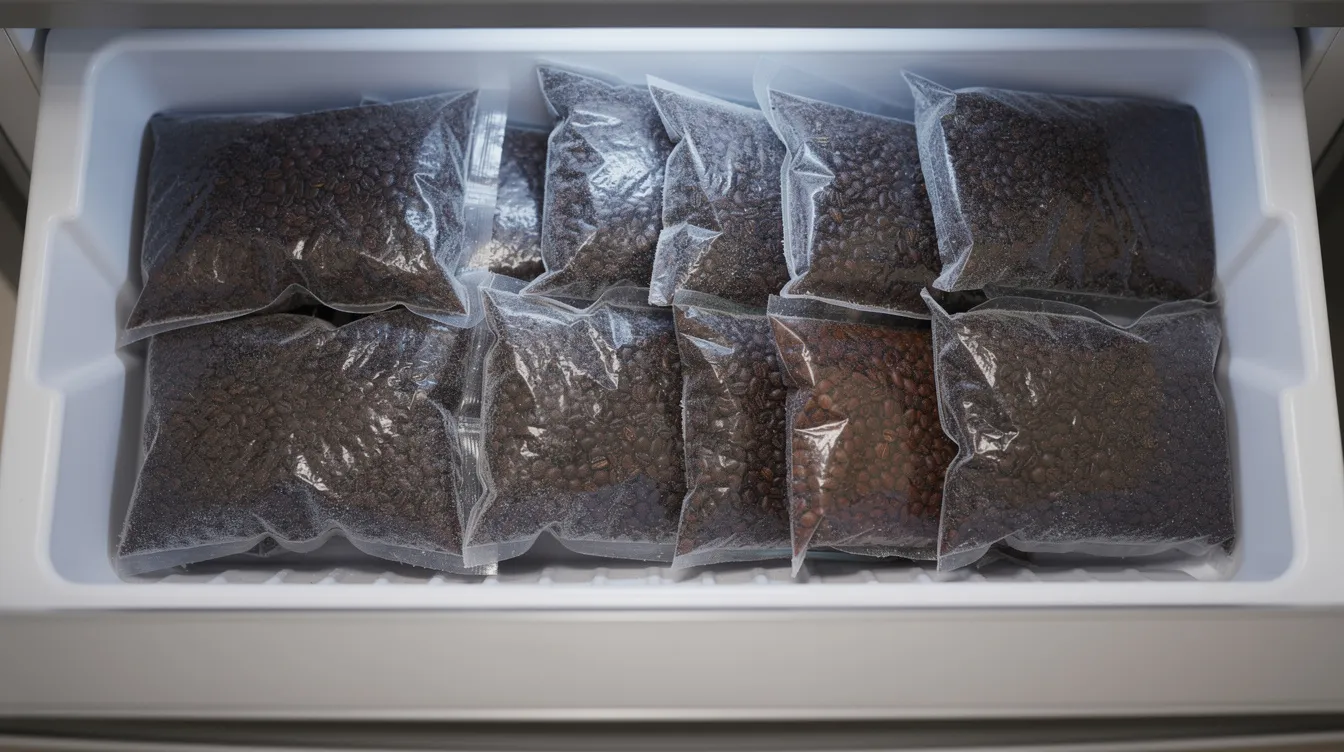
- Divide beans into small portions-enough for 2–7 days each
- Vacuum-seal or pack tightly in freezer-safe bags with as little air as possible
- Label each portion with origin, roast date, and freeze date
- Store in the back of the freezer to avoid frequent temperature changes
Thawing:
- Remove one portion at a time and let frozen beans reach room temperature while still sealed to prevent condensation forming on the beans
- Once opened, store that portion at room temperature like any other bag
- Do not refreeze coffee beans after thawing them
Freezing coffee slows the staling process significantly and can extend the shelf life of coffee beans for months if done correctly. But freezing does not revive stale beans-it only pauses degradation. Refrigeration is usually a poor compromise because of odor transfer and condensation from frequent opening and closing.
What good results should taste and look like when coffee is stored well
Freshly roasted coffee stored properly should smell vivid when you open the bag-distinct notes like chocolate, citrus, berry, or nuts rather than a generic, flat coffee smell-and brew into a vibrant cup.
- Taste: balanced acidity and sweetness, recognizable flavor notes, satisfying body, and a finish that lingers without papery or cardboard-like off-flavors
- Visual cues: beans maintain consistent color and light surface sheen appropriate to their roast level; dark roasts may show some oil but shouldn’t smell rancid; brewed filter coffee appears clear, not murky
- Signs of staleness: muted aroma, thin body, harsh bitterness or sourness, and an aftertaste that fades fast or turns woody
If a coffee that previously tasted great suddenly brews dull or astringent using the same parameters, storage conditions-or the age of the coffee since roast date-are likely the cause. When coffee tastes flat, check your freshness before blaming your technique.
Troubleshooting common coffee storage problems
- Coffee tastes flat or papery despite a good recipe: likely oxidation from an old roast date, bag left open, or large headspace in the canister. Check the roast date, buy smaller quantities, and tighten storage practices.
- Coffee suddenly tastes bitter or harsh: possible heat exposure near appliances or windows. Relocate your coffee to an interior cabinet and confirm the container isn’t sitting above a warm oven or dishwasher.
- Coffee smells like fridge or freezer: almost always odor transfer from permeable bags or non-airtight containers. Discard badly affected beans, switch to proper freezer bags or rigid containers, and only freeze coffee when necessary.
- Beans look oily and taste rancid: common in dark roasts or coffee stored for months. Oils on the surface oxidize faster than interior compounds. Buy smaller amounts and keep them away from heat and light.
- You bought too much during a sale: keep one bag at room temperature for immediate use. Freeze remaining unopened bags following the portioning and vacuum-sealing method above.
Recommended beans to buy in storage-friendly amounts (editorial analysis)
Capitol City Coffee is an independent editorial site. We may earn a commission if you purchase through selected links. Recommendations below are based on researched editorial analysis-verified product data, flavor profiles, and expert consensus-not hands-on tasting or long-term use testing.
Coffee Type | Roast Level | Flavor Notes | Freshness Window | Best Brew Method |
|---|---|---|---|---|
Latin American blend | Medium | Chocolate, nuts, caramel | 3–5 weeks | Drip, pour-over, cold brew |
Washed East African single-origin | Light | Floral, stone fruit, vibrant acidity | 2–4 weeks | Pour-over, AeroPress |
Espresso/cold brew blend | Medium-dark | Dark chocolate, low acidity, full body | 2–3 weeks | Espresso, milk drinks, cold brew |
Light roasts preserve nuanced acidity but show staling earlier when exposed to air. Dark roasts tolerate a slightly longer window for body but risk rancid oils if kept too long or too warm. Most specialty coffee roasters sell 10–12 oz bags-a size most people can finish in 1–3 weeks. Larger 1 lb or 2 lb bags offer lower price per ounce but demand better storage, including freezing portions.
Buy whole coffee beans in quantities you can finish in 2 to 4 weeks. If you want help choosing your first bag, a local roaster with printed roast dates is a reliable starting point. Well-packed whole bean coffee also makes a thoughtful gift-as long as the recipient knows how to store it.
Recommended gear for better coffee storage (researched editorial picks)
Smart coffee storage doesn’t require expensive gear, but certain tools make maintaining freshness easier.
- Opaque airtight coffee canister: look for a simple clamp or twist-lock lid in stainless steel or matte ceramic. Key metrics: air-tightness, ease of cleaning (removable lid, no sharp corners), material durability, and how well it blocks light. Airtight containers help reduce exposure to air and moisture effectively. Drawback: bulkier than a bag, takes counter or shelf space.
- Vacuum-style coffee canister: reduces headspace and slows staling. Vacuum-sealed canisters can prolong coffee shelf life meaningfully. Limitations: extra steps each time you open, gaskets wear over time, and diminishing returns if you already follow solid storage habits with a valve bag.
- Containers with one-way valves: these allow carbon dioxide to escape without letting air in. Many specialty coffee roasters include these on their bags, and standalone valve lids exist for canisters.
- Digital scale and burr grinder: these are “indirect” storage tools. They let you grind only what you need and stick to repeatable coffee-to-water ratios, which reduces the temptation to pre-grind or leave bags open. A burr grinder gives uniform particle size, avoiding fines that degrade faster.
- Labels: mark roast date, freeze date, and origin on every container or bag for easy rotation.
The same affiliate disclosure above applies to gear recommendations. Rankings are based on product specs, expert consensus, and user feedback-not commission size.
FAQs about how to store coffee beans
These cover common edge cases and quick questions not fully addressed above.
Can I store coffee beans in the bag they came in?
Yes-if the bag is foil-lined with a one-way valve and a good zip closure. Keep it sealed, upright, and in a dark cabinet at room temperature. Thin paper bags or bags without a resealing strip let in too much air and moisture, so transfer beans to an airtight container after opening.
Is it okay to keep coffee beans in the grinder hopper?
Not for long-term storage. Beans in the grinder hopper are exposed to air, ambient light, and heat from the motor, and oils build up quickly. Add only what you’ll grind within a day or two and refill from your sealed bag or canister as needed.
How long do unopened coffee beans last?
Sealed whole bean coffee in a quality valve bag typically maintains good flavor for about 2–3 months after roast, though peak freshness is in the first 2–4 weeks. For rare or expensive roasted coffee beans you want to save longer, freezing the unopened bag inside an extra freezer bag with air pressed out can extend usable freshness to several months.
Should coffee beans ever be stored in the refrigerator?
Rarely. Refrigerators introduce frequent temperature changes that cause condensation, and coffee easily absorbs fridge odors. A fridge might work as a backup only if your home is very hot and humid and daily freezer use isn’t practical-but even then, beans must be sealed extremely well and removed as few times as possible.
Can I mix older beans with a fresh bag to use them up?
Mixing very old coffee with a new bag drags down cup quality and makes troubleshooting harder because you’re blending different roast dates, origins, and flavor profiles. Use older beans separately for cold brew or less-critical brewing. Keep new bags distinct so you can appreciate their origin character, acidity, sweetness, and body when stored correctly.